How to choose the best Hai Phong souvenirs for your journey home
A bag of dried rice noodles can travel across several countries without much trouble, but a bottle of fish sauce or a box of spicy baguettes is a different story. The best souvenir is one that suits the person receiving it and survives the journey home without causing trouble at the airport.
 19 min read
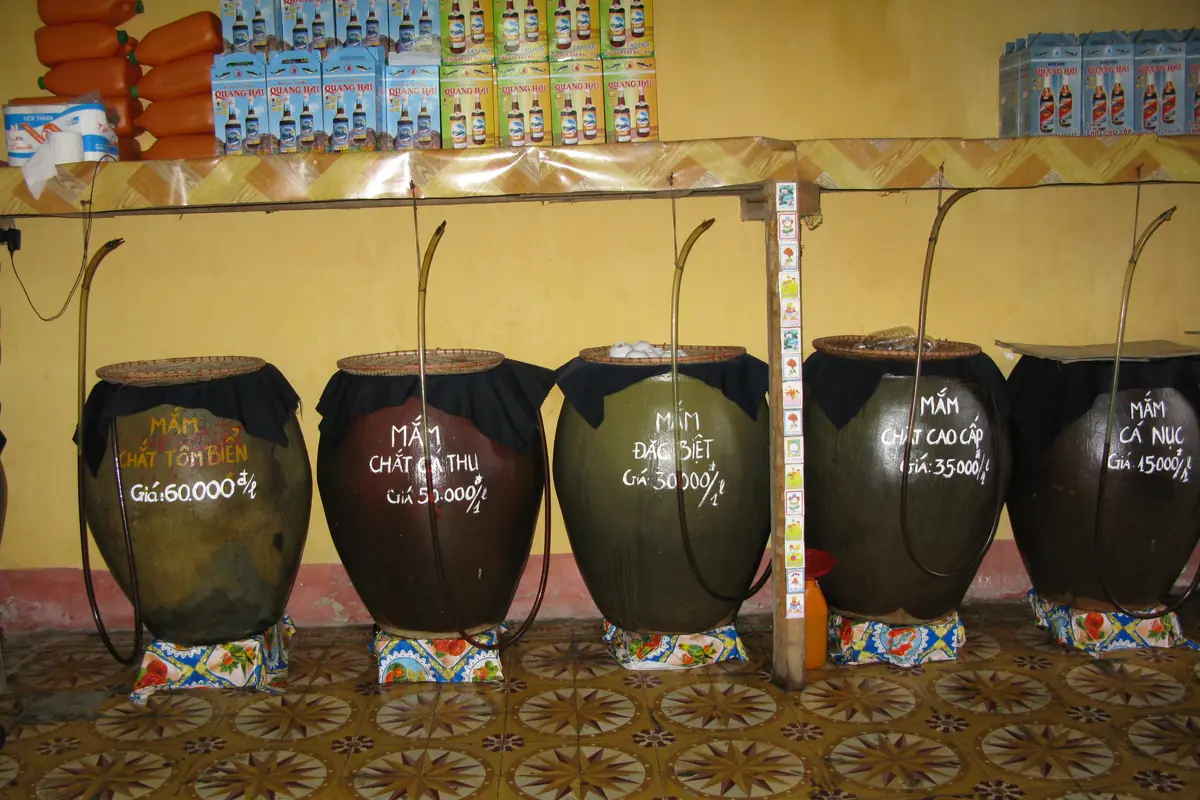
Each jar is hand-painted with the fish type and a price per litre, but the boxed bottles on the shelf above are the version that travels home.
You’re packing your suitcase on your last evening in Hai Phong when you suddenly remember that you haven’t bought anything for friends or family back home. Only have a few hours before heading to the train station or airport? Start with dried red rice noodles, mung bean cakes, or a small piece of pottery. They’re relatively easy to pack, while Cat Hai fish sauce and Cat Ba honey deserve a closer look at airline and customs rules before you buy.
Which Hai Phong souvenirs should you choose?
Hai Phong’s gifts fall into three groups: some are meant to be cooked at home, others go with a cup of tea, and a few can sit on a shelf for years.
| Souvenir | Best For | What to Keep in Mind |
|---|---|---|
| Dried red rice noodles | Home cooks, families, food lovers | Keep dry and protected from moisture |
| Cat Hai fish sauce | Anyone who enjoys Vietnamese cooking | Strong smell, special packing rules, and customs restrictions |
| Cat Ba honey | Honey lovers, family gifts | Liquid restrictions and possible biosecurity checks |
| Mung bean cakes | Colleagues, friends, tea lovers | Easy to share; check ingredients and expiry dates |
| Chu Dau ceramics | Art lovers, home decoration | Fragile and needs protective packaging |
| Hai Phong spicy baguettes | Friends living nearby in Vietnam | Contains pork pâté and does not keep well |
Taking a train or driving back to Hanoi? You can be fairly flexible with your choices. But if you’re flying abroad, commercially packaged dry foods and small ceramic gifts travel better than anything containing meat.
Hai Phong became a much larger city on July 1, 2025, when the former Hai Duong Province was merged into it. That means mung bean cakes and Chu Dau ceramics are now officially made within Hai Phong’s administrative boundaries, although their cultural roots remain closely tied to the old Hai Duong region.
1. Hai Phong Red Rice Noodles: The Easiest Gift for Home Cooks
Hai Phong red rice noodles
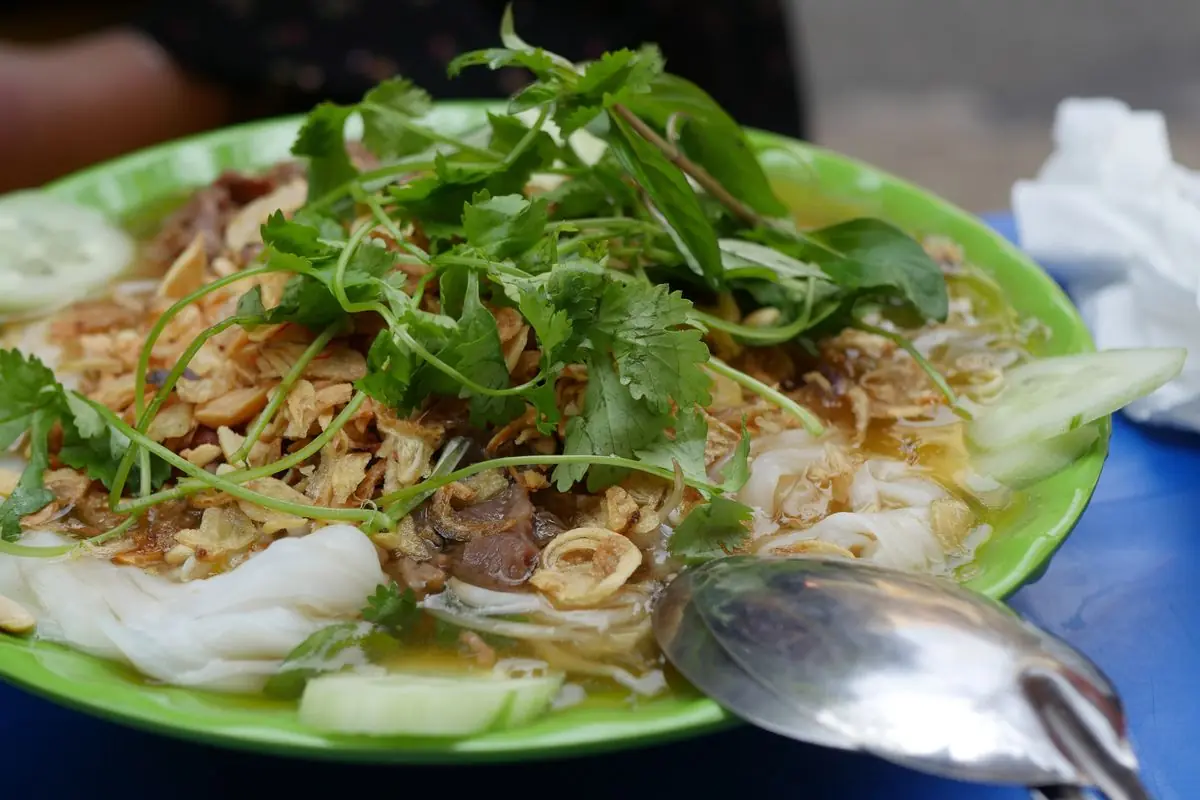
Those flat, reddish-brown rice noodles are one of the first things you’ll notice in Hai Phong’s local food scene. They are most famously used in bánh đa cua, the city’s crab noodle soup.
But if you’re shopping for souvenirs, look for dried red rice noodles (bánh đa đỏ khô) rather than the fresh noodles served in restaurants.
The noodles are traditionally made by grinding rice into flour, steaming the batter into thin sheets, drying the sheets, and cutting them into strips. In some traditional recipes, concentrated sugarcane syrup helps give the noodles their distinctive reddish-brown color. Recipes vary between producers, though, so check the ingredient label.
The craft has long been rooted in several areas of Hai Phong, including Du Hang Kenh, now part of Le Chan Ward.
The person receiving them cooks the noodles their own way: red rice noodles work with broth, vegetables, mushrooms, pork, seafood, or even in a simple noodle salad.
Tell them these are dried noodles that need to be prepared and cooked. They’re not an instant noodle meal with seasoning already included.
Where to Buy Dried Red Rice Noodles in Hai Phong
You can find packaged dried noodles at specialty food shops, supermarket dry-food sections, and local producers.
One producer to try is Pham Ngoc Quy, at 25/93 Ho Sen Moi Street, Du Hang Kenh area, Le Chan Ward, Hai Phong. The business offers dried red rice noodles in 1 kg packages.
Contact: +84 912 520 061
Call before visiting to confirm availability and opening hours.
If you’re only in the city for a short time, a sealed package from a supermarket or specialty shop is usually more convenient than visiting a workshop.
Before buying, check that:
- The package is properly sealed, with no holes or loose edges.
- The noodles are dry, with no unusual smell or visible moisture.
- The label includes the producer, ingredients, net weight, production date, expiry date, and storage instructions.
- The package fits inside your luggage without needing to be folded or crushed.
If you’re taking the noodles overseas, keep their original commercial packaging. Dried rice noodles without meat-based ingredients are generally easier to deal with than animal products, but they still need to meet the destination country’s food import rules.
2. Cat Hai Fish Sauce: A Taste of Hai Phong’s Coastal Traditions
Cat Hai fish sauce
A bottle of Cat Hai fish sauce (nước mắm Cát Hải) suits anyone in your family who cooks Vietnamese food.
Traditional fish sauce production in Cat Hai is closely connected to the island’s fishing heritage. The basic process involves fermenting fish with salt and collecting the flavorful liquid over time.
Open a bottle of traditional fish sauce and you’ll notice a rich, unmistakable aroma. It is quite different from the lighter, sweeter dipping sauces often found in supermarkets.
In June 2026, two traditional fish sauce products from Hai Phong received Vietnam’s national five-star OCOP recognition:
- Cat Hai fish sauce made from concentrated nhâm fish extract, produced by Cat Hai Seafood Processing and Services Joint Stock Company.
- Traditional fish sauce made from concentrated mackerel extract, produced by Quang Hai Co., Ltd.
The recognition brought Hai Phong’s total number of five-star OCOP products to ten.
Not every bottle carrying the words "Cat Hai" is one of these nationally recognized products. Check the exact product name, producer, and certification information on the label.
Where to Buy Cat Hai Fish Sauce
Cat Hai Seafood Processing and Services Joint Stock Company lists these sales locations:
- Sales and distribution center: 7 Ngo Quyen Street, Ngo Quyen Ward.
- Product showroom: 43 Tam Bac Street, Hong Bang Ward.
- Production facility: Luc Do residential area, Cat Hai Special Zone.
Official website: https://www.nuocmamcathai.com.vn/
The first two locations are more convenient if you’re staying downtown and don’t plan to travel toward Cat Hai Island.
Contact the company before visiting to confirm which varieties are available and when the shops are open.
Air travellers should ask about the packaging before paying.
Some traditional premium fish sauces come in glass bottles, including a 650 ml concentrated nhâm fish sauce product. However, glass bottles do not meet Vietnam Airlines’ specific checked-baggage requirements for fish sauce.
Buy the manufacturer’s own plastic-bottle version if it has one that meets the airline’s requirements.
Avoid pouring fish sauce into an unlabelled bottle yourself. Besides the risk of leaks, it makes the product’s origin and ingredients harder to verify at customs.
3. Cat Ba Honey: A Sweet Gift with an Island Story
Cat Ba honey
Cat Ba honey suits someone who likes natural food products, and a small jar takes little space in a suitcase.
Honey production on Cat Ba Island is connected to local beekeeping and the island’s forest vegetation. Depending on the flowering season, weather, and harvesting methods, the honey may vary in color, aroma, and consistency.
Color and thickness say little about quality or whether a product is authentic.
Look for the "Cát Bà Xanh" (Green Cat Ba) certification mark.
This geographical branding and certification system is used for eligible local products. Trademark protection covering Cat Hai fish sauce dates from 2018, while Cat Ba honey was certified in 2020.
When buying honey, check whether the particular producer and product are authorized to use the relevant certification mark. A shopkeeper simply calling something "forest honey" isn’t enough to establish its origin.
Where to Buy Cat Ba Honey
On Cat Ba Island itself, start with local product shops or established producers that provide clear traceability information.
If you’ve already returned to central Hai Phong, a reputable specialty shop with properly labelled products and receipts is the easier option.
One product to ask about is Cat Ba wildflower honey from Truong Xanh Food Trading Joint Stock Company, which comes in a 250 ml jar. Call to confirm where it is sold before setting out.
For air travel, honey counts as a liquid.
A 250 ml jar exceeds the usual 100 ml individual-container limit for liquids in international carry-on baggage.
Checked baggage may be possible depending on the airline, but the jar should be securely sealed, protected against leaks, and packed to prevent breakage.
4. Hai Duong Mung Bean Cakes: An Easy Gift to Share
Mung bean cakes
Traditionally, bánh đậu xanh, or mung bean cakes, are associated with Hai Duong. Since the administrative merger on July 1, 2025, their place of origin is now within the expanded city of Hai Phong.
The cultural story remains the same, however: they’re still a specialty of the former Hai Duong region.
Mung bean cakes are one of the simplest choices when you need something to share among colleagues or friends.
They usually come in small portions with a soft, crumbly texture and a sweet, nutty flavor. They go with tea or coffee.
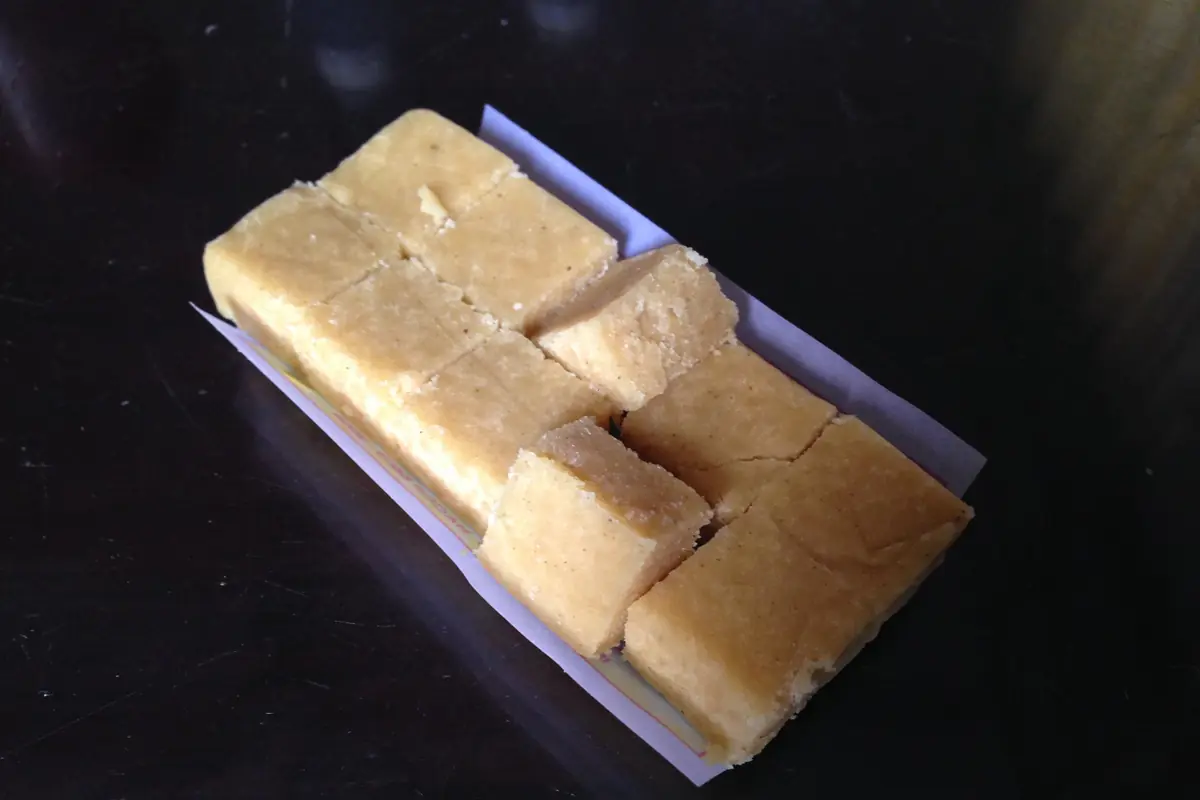
A few familiar brands include Rong Vang Hoang Gia, Rong Vang Minh Ngoc, and Nguyen Huong.
Among them, Rong Vang Hoang Gia mung bean cakes received national five-star OCOP recognition in June 2024. The brand has been in business since 1997.
Where to Buy Mung Bean Cakes
Rong Vang Hoang Gia products are sold through retail chains including GO!/Big C, WinMart, Co.opmart, Lotte Mart, AEON, and MM Mega Market.
Visitors heading to the former Hai Duong city area can also enquire about the brand’s showrooms at:
- 209C Tue Tinh Street.
- 9 Bach Dang Street.
These addresses are in the former Hai Duong urban area, now part of Hai Phong.
Contact: +84 934 362 658
Confirm the current address and opening hours before travelling there.
Staying in downtown Hai Phong and heading to Cat Bi Airport soon? Checking a nearby supermarket is usually more practical.
Before buying, look at the net weight, production date, expiry date, and ingredient list.
Not every mung bean cake contains only mung beans and sugar. Some recipes include vegetable oil, sesame, flavorings, or other ingredients.
Read that list closely if you’re buying for someone with food allergies or particular dietary requirements.
Commercially packaged mung bean cakes are generally more travel-friendly than fresh, unlabelled sweets. Still, follow the storage instructions and expiry date on the exact product you buy.
5. Chu Dau Ceramics: A Souvenir That Lasts for Years
Chu Dau ceramics
A small piece of handmade pottery has no expiry date and can sit on a shelf for years.
Chu Dau ceramics (gốm Chu Đậu) come from a traditional pottery-making area near the Thai Binh River, in what used to be Hai Duong Province.
Today, Chu Dau Ceramic Joint Stock Company’s production facility is located in Chu Dau Hamlet, Thai Tan Commune, Hai Phong.
The ceramics are known for traditional glazes and decorative motifs.
You may come across pieces featuring lotus flowers, dragons, phoenixes, calligraphy, and delicate floral patterns. White glazes, celadon-style finishes, and crackle glazes are among the craft’s distinctive styles.
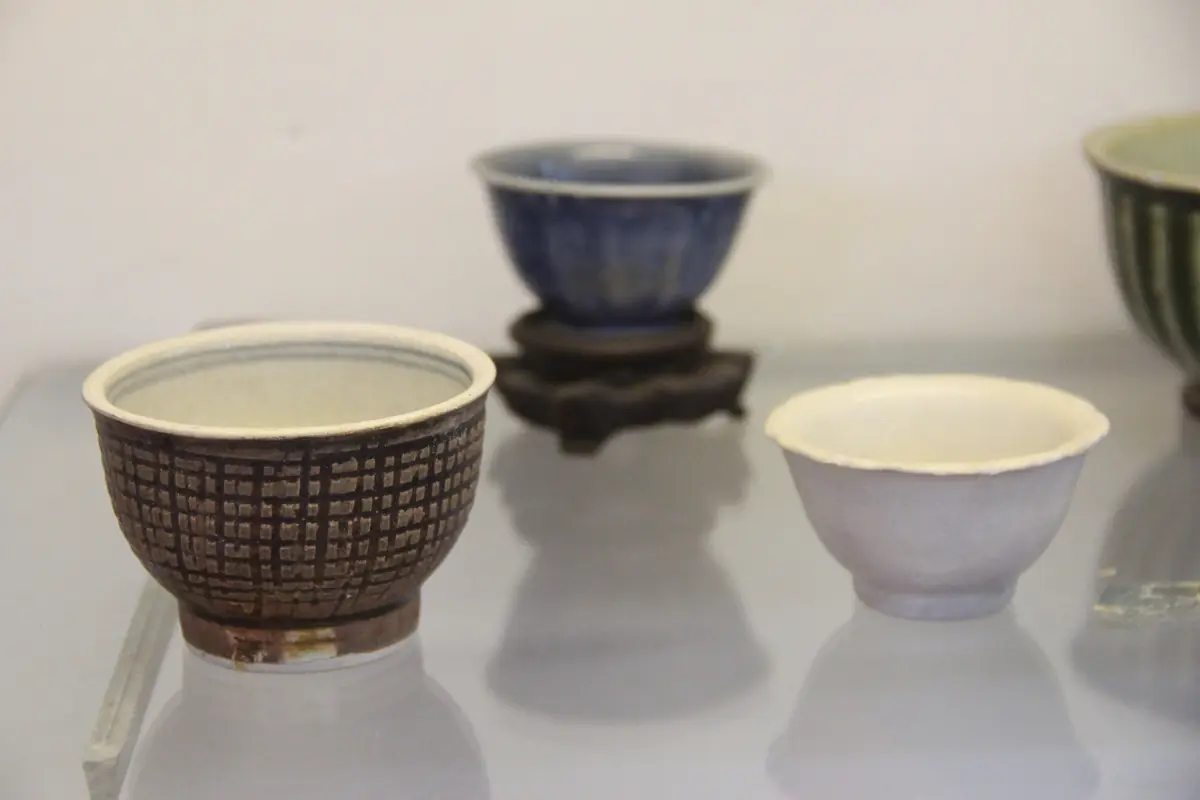
For international visitors, pick the smaller pieces: a decorative plate, a tea cup, or a modest flower vase.
They’re easier to carry than a large display vase, and they give you a story to tell about Vietnamese craftsmanship.
Should You Buy Chu Dau Ceramics at the Workshop or a Shop?
If you’re exploring western Hai Phong and have some free time, visit the production facility.
Depending on the activities available, visitors may be able to learn about the pottery-making process, see finished pieces, or enquire about opportunities to paint ceramics.
The main production site is:
Chu Dau Ceramic Joint Stock Company, Chu Dau Hamlet, Thai Tan Commune, Hai Phong.
Official website: https://chudauceramic.vn/
Contact: +84 220 354 1257
Before going, call to ask whether the workshop is taking visitors or running painting sessions that day, plus visiting hours and any fees.
Shoppers who only want a gift should ask about official showrooms or authorized distributors.
Wherever you shop, request protective packaging.
Ceramics raise no food-quarantine issues, but they break easily. Keep vases away from heavy bottles and the corners of your suitcase.
For particularly valuable pieces, consider insured shipping or another suitable transport arrangement.
6. Hai Phong Spicy Baguettes: Delicious, but Best for Short Journeys
Hai Phong spicy baguettes
Hai Phong’s spicy baguettes, known locally as bánh mì cay or bánh mì que, are among the city’s most recognizable snacks.
These small, narrow baguettes are filled with pâté and typically served with chí chương, Hai Phong’s distinctive chili sauce.
Visitors often buy a few dozen before heading home. You’ll still hear prices of around VND 3,000 per baguette at some shops, but prices vary, so check the board at the shop itself.
Where to Buy Spicy Baguettes
Look around Hang Kenh Street and other neighborhoods with established bánh mì que shops.
Buying a large quantity? Ask whether the shop accepts advance orders and how the baguettes and pâté should be stored.
Spicy baguettes are fresh food: the pâté filling usually contains pork and moisture, so storage conditions matter. Don’t leave them for hours in a hot car or suitcase without knowing how long they can safely be kept.
If you’re returning to Hanoi or another nearby Vietnamese city, freshly purchased baguettes can be a fun gift.
If you’d rather enjoy local dishes before leaving, have a look at our what to eat in Hai Phong guide instead of trying to turn every delicious snack into a souvenir.
Should You Buy Hai Phong Souvenirs at a Supermarket or Directly from the Producer?
Choose by your schedule, how much you’re buying, and whether you want to see how the product is made.
If you only have a few hours left
Choose a supermarket or an official product showroom in central Hai Phong.
You’ll usually find it easier to compare packaging, check expiry dates, buy several gifts in one place, and pay conveniently.
AEON at AEON MALL Hai Phong Le Chan, 10 Vo Nguyen Giap Street, is one shopping option.
The AEON supermarket operates daily from 8:00 AM to 10:00 PM. Not every local brand is always in stock, so call ahead if you want something specific.
If you want to see how the souvenir is made
Try visiting a noodle producer, pottery workshop, or manufacturer’s showroom.
With time to spare, you can ask about ingredients, production techniques, and the story behind the craft.
Some producers may also offer more packaging options or assistance with bulk orders.
If You’re Buying Gifts for a Large Group
Contact the manufacturer or an authorized distributor.
Ask for an updated price list by product type and package size, along with any gift-box or protective-packing costs.
Price a 170 g box of mung bean cakes against another 170 g box, not a 300 g one. The same goes for fish sauce: compare products of similar volumes and the same grade or variety.
Some manufacturers’ official sites still list prices only on enquiry, and some show VND 0 as a website placeholder, not an actual retail price.
Prices copied from travel blogs or booking platforms are no basis for a budget either; ask the shop for its current price.
Five Things to Check on a Food Souvenir Label
Read the back of the package before it goes in your basket, particularly if you’re flying internationally.
1. Product name and manufacturer
For Cat Hai fish sauce, check the exact brand, variety, and company. Mung bean cakes need the same care: check the actual manufacturer rather than relying on similar-looking packaging.
2. Ingredient list
Does the product contain milk, eggs, sesame, pork, seafood, or other animal ingredients?
This matters for allergies, dietary preferences, and import restrictions.
3. Net weight or volume
Two boxes may look almost identical but contain very different amounts of food. For fish sauce and honey, the volume also affects packing and baggage considerations.
4. Production date, expiry date, and storage instructions
Choose products with enough shelf life for your journey. Avoid damaged seals, swollen packaging, missing labels, or products that show signs of moisture.
If your journey involves several long transfers, shelf-stable products are generally more convenient than anything requiring refrigeration.
5. Origin, certification, and traceability
OCOP labels, the Cat Ba Xanh certification mark, and QR codes only mean something when they match the product and producer.
A traceability code that doesn’t work, or unclear label information, is a reason to ask the seller before buying.
Can You Bring Hai Phong Souvenirs on a Plane?
There are two separate questions:
Will your airline carry the item?
And:
Will customs and biosecurity authorities in your destination country allow it to enter?
A product being accepted into checked baggage in Vietnam does not guarantee that you’ll be allowed to keep it when you land overseas.
Dried Rice Noodles, Mung Bean Cakes, and Pottery
Commercially packaged dried red rice noodles and mung bean cakes may be suitable for carry-on or checked baggage, depending on the airline’s rules, baggage allowance, and airport security requirements.
Keep the original labels, particularly on international flights.
Pack dried noodles near the top of your suitcase so they don’t get crushed. Mung bean cakes are often better protected inside their original cardboard boxes than in loose plastic bags.
Chu Dau ceramics aren’t food products, so ordinary food quarantine rules generally aren’t the main concern.
However, they are fragile, and unusually shaped or large objects may need additional security checks.
Ask the shop to wrap each piece properly, and confirm the airline’s carriage requirements if you’re transporting expensive or oversized ceramics.
Can You Put Cat Hai Fish Sauce in Checked Baggage?
Vietnam Airlines publishes specific conditions for fish sauce and other strong-smelling items.
On applicable flights, each passenger may carry a maximum of 3 liters or 3 kg of fish sauce, fermented fish products, or other strong-smelling liquids as checked baggage.
Vietnam Airlines does not accept these strong-smelling items on ATR72-operated flights under this policy.
The airline also advises passengers not to place fish sauce in carry-on baggage.
The 3-liter or 3-kg allowance is an airline carriage limit, not an international customs allowance.
Vietjet also advises against carrying strong-smelling food such as fish sauce in cabin baggage and requires suitable packaging for items with strong odors in checked baggage.
Vietnam Airlines’ 3-liter allowance doesn’t carry over to Vietjet or other carriers, so check the operating airline’s current rules.
If you have a connecting flight with another airline, confirm its requirements too. A package accepted by your first carrier may not meet the conditions of the next one.
What About Cat Ba Honey and the 100 ml Liquid Rule?
For most international flights, the usual carry-on rule limits liquids to containers of 100 ml or less, with a combined total of up to 1 liter, subject to applicable exceptions.
Vietnamese domestic flights do not generally apply the same blanket liquid-volume limits as international flights, although airline-specific rules for strong-smelling or restricted items still apply.
A 250 ml honey jar exceeds the standard international carry-on container limit.
For checked baggage, make sure the container is tightly sealed and packed to prevent leaks or breakage.
Then check the destination country’s food import rules before buying it.
Taking Hai Phong Food Souvenirs to South Korea, the US, Australia, China, Thailand, or Europe
Customs rules turn on ingredients, so even a professionally packaged food product may be restricted.
Bringing Food Souvenirs into South Korea
South Korea tightly controls the import of meat and livestock products.
Fresh meat, ham, sausages, dried meat, and many other meat-based products are subject to strict quarantine rules and may be prohibited.
That makes pork pâté baguettes, pork-based fermented rolls, and similar snacks poor choices for souvenirs.
Travelers carrying animal products that require declaration must report them to quarantine officers.
For dried rice noodles, mung bean cakes, and honey, keep the original packaging and verify the rules for the exact ingredients; a sealed commercial package is still inspected.
Bringing Food Souvenirs into the United States
The United States requires travelers to declare all food, agricultural products, and relevant animal or plant products brought into the country.
The USDA restricts many pork products from areas affected by serious animal diseases, including African swine fever.
Cooked, dried, or used as a filling, pork is still covered, so pork pâté baguettes and pork-based snacks stay behind unless their import eligibility is confirmed.
Dried noodles, mung bean cakes, honey, and condiments also need to be declared.
Customs officers may inspect the items, and prohibited products may have to be surrendered or destroyed.
Declaring everything honestly is the best way to avoid problems over undeclared goods.
Bringing Food Souvenirs into Australia
Australia has some of the world’s strictest biosecurity controls.
Declare all food products, including packaged, dried, and cooked foods. Once you declare an item, biosecurity officers assess whether it meets the import conditions, and it can be let through if it does.
Australia has separate rules for different food categories.
For example, some commercially sterilized canned fish products may be allowed in quantities of up to 10 kg per person when all conditions are met.
Dried prawns may also be assessed under specific requirements and can be inspected on arrival.
For Cat Hai fish sauce, check the ingredients and applicable import conditions through Australia’s BICON system rather than applying the canned-fish rule.
Official BICON database: https://bicon.agriculture.gov.au/
Honey also has its own biosecurity requirements.
Unless you’ve confirmed that they meet the rules, avoid bringing pork pâté baguettes, fermented meat products, or poorly labelled homemade foods into Australia.
Bringing Food Souvenirs into China
China prohibits travelers from bringing various meat and meat products into the country, including cooked meat, under its prohibited-items regulations.
That can include products which might look harmless after processing, such as dried meat or bread filled with meat.
Some processed seafood sauces may fall under specific exceptions, depending on their preparation and ingredients. Whether a given fish sauce qualifies depends on the current official requirements, so check them for anything containing fish, meat, or other animal-derived ingredients.
Commercial packaging helps identify a product, but it does not override import prohibitions.
Bringing Food Souvenirs into Thailand
Thailand regulates food imports through customs and relevant specialist authorities.
Certain foods for personal consumption may be permitted under specific conditions, while products containing meat or other animal ingredients can be subject to additional controls.
If you’re taking Cat Hai fish sauce, Cat Ba honey, or packaged cakes into Thailand, check the current guidance from Thai Customs and the Thai Food and Drug Administration.
The product’s exact ingredients, quantity, packaging, and intended use may affect which rules apply.
Bringing Food Souvenirs into the European Union
Travelers entering the European Union from Vietnam generally cannot bring ordinary meat or dairy products in their personal luggage.
Certain fishery products, honey, and other animal-derived foods may be permitted within specific limits and conditions.
For example, general EU guidance allows up to 2 kg of honey per person from non-EU countries, subject to applicable rules.
Seafood sauces and mixed-ingredient foods fall under their own categories: if a product contains fish, meat, milk, or other animal ingredients, check the right one before buying it.
Bringing Food Souvenirs into the United Kingdom
The UK has its own food import regulations.
For travelers entering Great Britain from Vietnam, meat and meat products are subject to strict prohibitions.
Some ordinary bread, biscuits, and dried noodles without restricted meat or dairy ingredients may be allowed.
Current UK guidance also permits honey within a limit of 2 kg per person, subject to the relevant conditions.
Great Britain and Northern Ireland can have different rules.
If you’re connecting through another country, also check the regulations of the place where you first enter or clear customs.
Three easy ways to shop before leaving Hai Phong
A packet of red rice noodles for someone who loves cooking and a few boxes of mung bean cakes for friends make a complete Hai Phong gift bag.
With an extra morning before leaving, visit a traditional workshop or the Chu Dau pottery area and see how your gifts are made.
It focuses on local dishes and seafood rather than souvenirs suitable for long journeys.
Frequently asked questions
What are the easiest Hai Phong souvenirs to take on a plane?
Commercially packaged dried red rice noodles, mung bean cakes, and small ceramic items are generally easier to pack than fish sauce or pork pâté baguettes. However, you still need to follow your airline's baggage rules and your destination country's customs and biosecurity regulations. Keep original labels and receipts when travelling internationally.
Can I pack Cat Hai fish sauce in checked baggage?
Vietnam Airlines allows up to 3 liters or 3 kg of fish sauce and other strong-smelling items per passenger on applicable flights, provided they meet specific packing requirements. Bottles must be plastic, tightly closed, taped, filled to no more than 95% capacity, and packed inside a sealed foam box. Glass bottles are not accepted under this policy, and the rule does not apply to ATR72 flights. Other airlines may have different conditions.
Can I bring Hai Phong spicy baguettes, fermented pork rolls, or pâté to South Korea, Australia, or the US?
Leave them behind unless the destination's authorities have explicitly confirmed that the product meets import requirements. These foods commonly contain pork or processed meat, which is tightly controlled or prohibited in many countries. Cooking, vacuum-sealing, or commercial packaging doesn't change that.
Are mung bean cakes and Chu Dau ceramics really specialties of Hai Phong?
Yes, under the city's current administrative boundaries. On July 1, 2025, the former Hai Duong Province was merged into Hai Phong. However, mung bean cakes and Chu Dau ceramics remain culturally and historically associated with the old Hai Duong region, which is worth mentioning when you hand them over.
Is it better to buy Hai Phong souvenirs at a supermarket or directly from a workshop?
Supermarkets and official showrooms are convenient when you need packaged products with visible labels and expiry dates. A workshop suits you better if you want to see how something is made, explore different designs, or place a larger order. Compare prices using the same weight, volume, product variety, and packaging requirements rather than relying on old travel-blog prices.