What to do in Hai Duong: 4 places worth visiting on a day trip
Hai Duong has more to offer than a quick stop, from centuries-old pottery and peaceful bird sanctuaries to caves filled with historical inscriptions. But if you only have one day, choosing the right area is far more rewarding than rushing between distant attractions.
 15 min read

Painters decorate unglazed vases in the middle of the room, close enough for visitors to follow each brushstroke.
Late in the afternoon at Stork Island, the still waters of An Duong Lake suddenly come alive as flocks of white birds return to the trees. Wondering what to do in Hai Duong? You can watch the birds come back, try traditional pottery making in Chu Dau, read the ancient inscriptions of Kinh Chu Cave, or walk the grounds of Mao Dien Temple of Literature. The four sit in three separate areas, so one area per day is about right.
Is Hai Duong still a province? What visitors should know
On July 1, 2025, Hai Duong Province officially merged with Hai Phong City as part of Vietnam’s administrative restructuring. Hai Duong is therefore no longer a separate province, although the name remains widely used by locals, travel websites and mapping services.
For international visitors, this can make searching for attractions a little confusing. Places traditionally described as being in Hai Duong are now officially part of Hai Phong, and many have new commune or ward names.
When booking a taxi or private car, send the exact attraction name, its updated commune or ward, and a map pin. Simply telling your driver that you want to go to "Hai Duong" may lead you to the former city center rather than the attraction you actually want to visit.
1. Chu Dau pottery - the best stop for a hands-on cultural experience
Chu Dau Pottery
Location: Chu Dau Hamlet, Thai Tan Commune, Hai Phong (formerly Nam Sach District, Hai Duong).
If you’d like to make something with your own hands, give Chu Dau pottery a morning.
This traditional Vietnamese ceramic art dates back to around the 13th and 14th centuries. It flourished during the 15th and 16th centuries, when finely decorated ceramics became an important part of the region’s cultural and commercial life.
The craft gradually declined from the 17th century onward, but archaeological discoveries and restoration efforts helped bring it back.
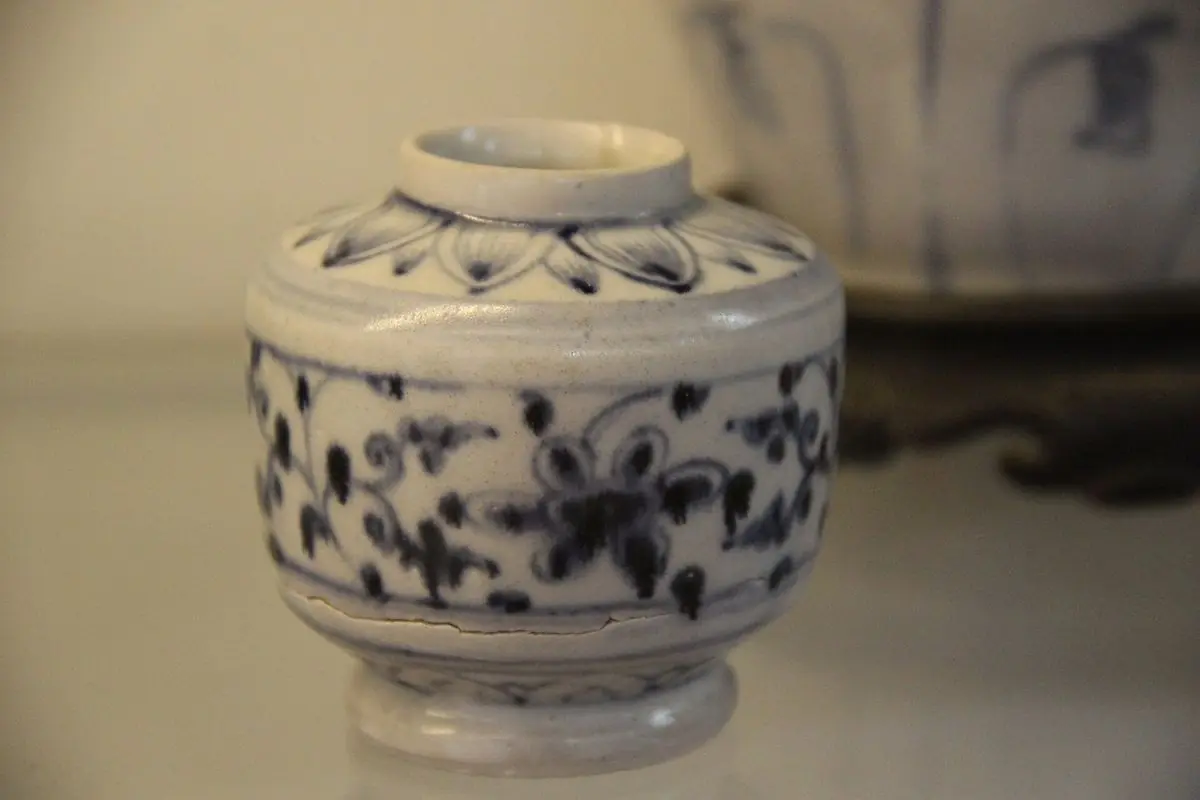
Today, Chu Dau ceramics are admired for their delicate patterns, graceful shapes and carefully painted details. You’ll see lotus flowers, birds, landscapes and traditional motifs decorating vases, plates, tea sets and other pieces.

Chu Dau Pottery Joint Stock Company has also received national five-star OCOP recognition for five of its products.
Can you make your own pottery at Chu Dau?
Yes, but arrange it with the workshop in advance.
Depending on the activities offered on your chosen date, visitors may have the opportunity to learn about shaping clay, decorating ceramics and watching skilled artisans at work.
Children get to shape something themselves and see the work behind a finished piece.
A pottery showroom displays completed pieces, while the production area is where ceramics are actually made. Walking into the showroom doesn’t get you into the workshop or a hands-on session; those need arranging.
Before traveling, contact the company to confirm whether they are accepting visitors, what experiences are available, how long they last and whether English-speaking assistance can be arranged.
Can you take your handmade pottery home the same day?
Usually not.
Freshly shaped pottery often needs drying, glazing and firing before it becomes a finished ceramic piece. Depending on what you make, the process may take considerably longer than your visit.
To take home your own cup, plate or decorative item, ask the workshop how long completion takes and whether they can ship the finished piece to your hotel or home address.
Entrance fees and opening hours: the workshop doesn’t publish a fixed price list or schedule for its pottery experiences. Contact the workshop before visiting through the Chu Dau Pottery official website.
Best time to visit: a prearranged morning session is a comfortable choice, leaving plenty of time for another stop later in the day. Pottery experiences can be enjoyed throughout the year, subject to workshop availability.
2. Chi Lang Nam Stork Island - watch thousands of birds return at sunset
Chi Lang Nam Stork Island
Location: An Duong Lake, Nam Thanh Mien Commune, Hai Phong (formerly Chi Lang Nam Commune, Thanh Mien District).
Stork Island is a cluster of small, tree-covered islands in the middle of a freshwater lake, surrounded by the countryside of northern Vietnam.
The atmosphere is very different from central Hai Phong. There are no busy shopping streets or large entertainment complexes here, just open water, greenery and the sounds of birds moving through the trees.
An Duong Lake covers more than 90,000 square meters of water within a protected landscape of nearly 60 hectares.
The area provides habitat for several kinds of egrets, herons, night herons and other waterbirds. Commonly mentioned species include cattle egrets, pond herons and grey herons, with occasional records of less frequently seen birds.
The bird population is estimated at around 20,000-30,000 individuals at different times. Actual numbers vary with the season, habitat conditions and bird movements.
What time should you visit Stork Island to see the birds?
The two best times are around sunrise and shortly before sunset.
Early in the morning, many birds leave their roosting areas to search for food. In the late afternoon, flocks fly back across the lake to the trees.
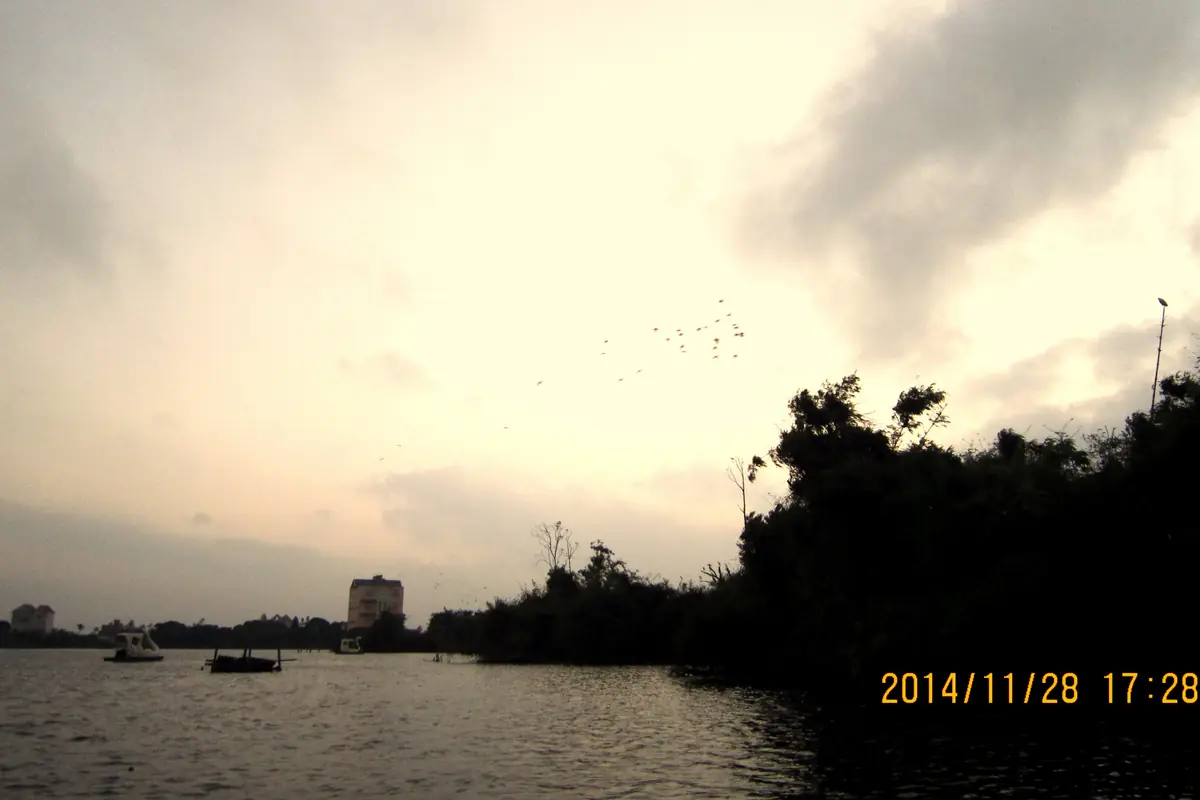
Some night herons also become active around dusk, adding to the movement and sounds of the island.
Day-trippers from Hanoi or central Hai Phong will usually find the late afternoon easier to fit in.
Try to arrive around 45-60 minutes before sunset. Find a comfortable viewing spot, settle in and allow yourself some time to watch.
Midday is less rewarding if your main goal is to see large groups of birds flying. Many will be away feeding or resting, and the lake can feel much quieter.
What is the best season to visit Stork Island?
Autumn through early spring is generally considered a favorable period for birdwatching, although the exact peak season is not clearly fixed.
Because the area supports both resident and seasonally moving birds, the experience can change noticeably throughout the year.
If birdwatching is the main reason for your trip, contact the local management team shortly before visiting to ask about current activity.
A calm afternoon with clear visibility is generally more comfortable for watching birds and taking a boat ride than a windy or rainy day.
Stork Island entrance fees and boat trips
Since January 1, 2026, Stork Island entrance fees have been:
- Adults: VND 5,000 per visit.
- Children aged six and above in the applicable child-ticket category: VND 2,500 per visit.
- Children under six: free admission.
These are entrance fees only, not an all-inclusive boat tour price.
There’s no official published boat fare.
Ask at the entrance about the full cost, including admission, boat services and parking, before paying.
If you take a boat, wear a life jacket and avoid going out during thunderstorms or unsafe weather conditions.
Stork Island is a protected bird habitat. Avoid shouting at the birds, throwing objects, disturbing nests or attempting to attract them.
Flying drones or other aerial filming equipment should only be considered after obtaining the necessary permission.
Bring binoculars if you have them, and watch quietly from a distance.
3. Kinh Chu Cave - ancient poetry hidden in a limestone mountain
Kinh Chu Cave
Location: Duong Nham Residential Area, Pham Su Manh Ward, Hai Phong (formerly Kinh Mon, Hai Duong).
If you enjoy history, cave exploration and places with a strong sense of the past, Kinh Chu Cave is one of the most interesting attractions in the former Hai Duong area.
The cave is located within the limestone mountains of Duong Nham and forms part of the An Phu - Kinh Chu - Nham Duong historical and scenic complex.

Even from below, the rocky cliffs and large cave entrance are impressive.
Inside, the walls and ceiling hold a collection of ancient inscriptions carved directly into the stone.
Known in Vietnamese as bia ma nhai, these include poems, literary passages and historical writings created by scholars and notable figures who visited the site over the centuries.
Among the most significant historical connections is Pham Su Manh, a prominent scholar and official of the Tran Dynasty.
In 2017, the cave’s system of stone inscriptions was recognized as a National Treasure of Vietnam.
For international travelers interested in Vietnamese history, traditional literature and calligraphy, this is arguably the most rewarding part of the visit.
Go in slowly and look closely at the carved characters, some of them centuries old.
To protect the inscriptions, never touch the writing, rub chalk onto the stone or wet the carvings to make them easier to photograph.
What else can you see at Kinh Chu Cave?
From the main cave, visitors can continue up 117 stone steps toward Bat Bo Son Trang, an elevated area with its own place in local religious and folk traditions.
One intriguing feature is the Fairy Chessboard, a chessboard carved into a stone slab measuring approximately 45 by 60 centimeters. Local folklore connects it with immortals who supposedly descended to the mountain to play chess.
Other features in the area include Co Chin Well on a rocky wall, Bo Le Cave with its narrow entrance, and Hang Nuoc, or Water Cave, containing a natural well extending approximately 13 meters into the rock.
Some passages and rocky areas are not suitable for casual exploration.
Avoid entering narrow caves or climbing difficult sections without a knowledgeable local guide. Wear shoes with good grip and save the more challenging paths for dry weather.
Kinh Chu Cave entrance fees in 2026
The following entrance fees took effect on January 1, 2026:
- Adults: VND 10,000.
- Children aged 6 to under 16: VND 5,000.
- Children under 6: free admission.
- Vietnamese citizens aged 60 and above: eligible for a 50% discount under the applicable policy.
Published parking fees are VND 4,000 for motorcycles, VND 15,000 for cars with fewer than 10 seats, and VND 20,000 for vehicles with 10 to fewer than 25 seats.
Allow around one to two hours for the main cave and its inscriptions. You’ll need more time if you want to visit the surrounding areas or explore additional paths with a guide.
Opening hours: confirm current visiting arrangements with the site management before traveling, especially if you plan to arrive late in the afternoon.
Best season: dry autumn, winter and early spring days are comfortable for walking and climbing the stone steps. Avoid slippery paths during heavy rain.
4. Mao Dien Temple of Literature - a peaceful window into Vietnam’s scholarly past
Mao Dien Temple of Literature
Location: Mau Tai Hamlet, Mao Dien Commune, Hai Phong (formerly Cam Giang District, Hai Duong).
Hanoi has its famous Temple of Literature; the historic eastern region of northern Vietnam has its own center of Confucian learning at Mao Dien.
Mao Dien Temple of Literature honors Confucius and distinguished Vietnamese scholars whose contributions helped shape the country’s education and literary traditions.
Its history is closely connected with the scholarly culture of the former Hai Duong region.
In 1801, the temple was relocated to Mao Dien, where it became associated with a regional imperial examination center. The site was recognized as a Special National Relic in 2017.
There are no shops or activities here; Mao Dien is a place to walk slowly.
Its courtyards, traditional architecture and ceremonial spaces offer a quiet setting to learn about the respect traditionally given to education and scholarship in Vietnam.
Plan around 45-90 minutes for your visit.
Dress respectfully, keep your voice low around worship areas and follow any signs restricting photography.
When is the Mao Dien Temple festival?
The 2026 Mao Dien Temple of Literature Festival took place from April 4 to 6, corresponding to the 17th-19th days of the second lunar month.
The festival includes traditional ceremonies and cultural activities celebrating the region’s scholarly heritage.
To attend in a future year, check the official schedule for that particular year rather than assuming the Gregorian dates remain unchanged.
Entrance fees and opening hours
The published 2026 fee information does not list a separate admission charge for Mao Dien Temple of Literature.
However, parking fees apply:
- Motorcycles and electric motorcycles: VND 4,000.
- Cars with fewer than 10 seats: VND 15,000.
- Vehicles with 10 to 25 seats: VND 20,000.
Check posted information at the entrance for any additional services or charges.
For a visit at a fixed time, especially with a group or private guide, confirm the current opening arrangements beforehand.
Mao Dien can be visited throughout the year, although festival days tend to be busier.
What to do in Hai Duong in one day: 3 suggested itineraries
With one day, pick the thing you most want time for: pottery and history, the birds at Stork Island, or the caves of Kinh Mon. Each route below starts from Hanoi or central Hai Phong.
- Itinerary 1
Mao Dien Temple of Literature and Chu Dau pottery
Best for: travelers interested in Vietnamese culture, families, and anyone who wants to try pottery making.
Start the morning at Mao Dien Temple of Literature, taking your time to explore the grounds and learn about the region’s educational history.
Then travel toward the former Nam Sach area, stop for lunch and spend the afternoon discovering Chu Dau ceramics.
Travelers who have managed to reserve a morning pottery workshop can simply reverse the order and visit Mao Dien later.
The workshop booking sets the order of the day.
The two sites aren’t next to each other, so a private car or hired driver is the most straightforward option.
Leave Stork Island and Kinh Chu Cave for another day.
- Itinerary 2
Countryside exploring and sunset at Stork Island
Best for: nature lovers, photographers, couples and travelers looking for a slower day.
If you’re coming from Hanoi, you could stop at Mao Dien Temple of Literature in the morning if it fits your route.
After lunch, head toward Nam Thanh Mien Commune and spend the afternoon around An Duong Lake.
Travelers starting from central Hai Phong can go directly toward the former Thanh Mien area, perhaps taking time for a local meal before visiting the lake.
The highlight of this itinerary comes in the late afternoon, when the birds begin returning to their roosting areas.
Avoid scheduling another attraction immediately afterward. Bird activity depends on daylight and natural conditions, so keep the evening open.
Once the sun has set, return to Hanoi or Hai Phong. To avoid driving after dark, consider hiring a car with a driver.
- Itinerary 3
Kinh Chu Cave and Cao An Phu Temple
Best for: history enthusiasts, active travelers and people who enjoy scenic mountain landscapes.
Begin at Kinh Chu Cave, spending the morning exploring the main chamber and its ancient inscriptions.
If the weather is good and you’re comfortable with the terrain, you can continue toward Bat Bo Son Trang or other suitable parts of the surrounding site.
After lunch, visit Cao An Phu Temple on An Phu Mountain.
This Special National Relic is dedicated to Tran Lieu, the father of Tran Hung Dao, one of Vietnam’s most celebrated military commanders.
From January 1, 2026, the published entrance fees for Cao An Phu Temple are VND 10,000 for adults and VND 5,000 for children aged 6 to under 16. Parking is charged separately.
Both attractions are located in Pham Su Manh Ward, making them a more convenient pairing than traveling across to Stork Island on the same day.
Can you visit Chu Dau pottery, Stork Island and Kinh Chu Cave in one day?
Technically, you could travel between all three locations in a single day with a private car and an early start.
But you’d only get a quick look at each.
Chu Dau needs time to watch artisans at work and join a prearranged activity.
Kinh Chu Cave deserves a slower visit, particularly if you want to appreciate the historic stone inscriptions and explore the surrounding paths.
Stork Island is different again. Its best moments depend on the birds’ natural daily rhythm, especially around sunrise and sunset.
These attractions are spread across separate parts of the former Hai Duong Province. Trying to visit all three could mean spending much of your day in a vehicle and constantly checking the time.
A better plan is to choose one main attraction and, at most, one additional stop along a convenient route.
If you have two days, consider spending one around Kinh Chu and the former Kinh Mon area, then another visiting Chu Dau pottery or Stork Island.
How to get to Hai Duong from Hanoi or central Hai Phong
For most international travelers visiting the countryside, a private car with a driver is the easiest way to explore these attractions.
The sites are spread out, some are reached by smaller local roads, and traveling between them by public transportation can take more planning than expected.
From Hanoi
You can travel toward the former Hai Duong city area by train or intercity bus, then arrange onward transport to your chosen attraction.
For Stork Island or Kinh Chu Cave, though, changing transport in the old city center often takes longer than going direct.
For families, small groups or visitors with limited time, arranging a direct private transfer can be more convenient.
From central Hai Phong
You can travel by private car, taxi or motorbike, depending on your experience and comfort level.
Check the driving route to the exact attraction rather than simply searching for Hai Duong city center.
For international visitors, sharing a map pin with your driver is especially helpful because the official administrative names changed in 2025.
Hoping for an English-speaking guide at a pottery workshop or historical site? Ask about availability before booking your trip.
Not every attraction has English-speaking staff on duty throughout the day.
Do you need to stay overnight?
No. All three suggested itineraries can work as day trips when properly planned.
If you prefer to stay overnight, the former Hai Duong urban center generally offers more accommodation and dining choices than the smaller surrounding villages.
Staying closer to Stork Island may be worth considering if you’re particularly interested in birdwatching at both sunset and sunrise the following morning.
Make sure to check the exact location and transport arrangements before booking accommodation in a rural area.
What about Con Son - Kiep Bac?
Con Son - Kiep Bac, located in Tran Hung Dao Ward in the former Chi Linh area, is another major historical destination in northern Hai Phong.
It needs a day of its own.
Chí Linh Star Golf & Country Club is also better suited to a separately planned golf outing, especially if you need to reserve a tee time.
Practical tips before visiting Hai Duong
For Chu Dau pottery, confirm your workshop appointment before anything else. If making your own ceramics is the highlight of your trip, arrange that activity first and build the rest of your itinerary around it.
At Stork Island, check the weather, recent bird activity and boat availability. Calm conditions are preferable, and you should never take a boat onto the lake during thunderstorms.
For Kinh Chu Cave, comfortable shoes are essential. Stone steps can become slippery after rain, and some surrounding areas are not suitable for visitors without local guidance.
Carry drinking water, sun protection and a little cash in small Vietnamese dong denominations for entrance fees, parking and local services.
The distances between the attractions are longer than they look: a short hop on a regional map can mean a long drive on local roads.
Before you lock in your plans, pick one: watching an artisan paint flowers on a ceramic bowl at Chu Dau, waiting for the birds to return across An Duong Lake, or reading centuries-old poetry carved into the walls of Kinh Chu Cave.
Frequently asked questions
What are the best things to do in Hai Duong with children?
Chu Dau pottery is a good option if the workshop confirms that it offers suitable activities for your children's ages. Stork Island is also enjoyable for children who love animals and nature, although close supervision is essential near the lake and on boats. Kinh Chu Cave has stone steps and uneven terrain, making it better suited to children who are confident walkers.
Is Hai Duong still a province in Vietnam?
No. Since July 1, 2025, the former Hai Duong Province has been incorporated into the expanded Hai Phong City. However, Hai Duong remains a widely recognized geographical and cultural name, and many tourism websites still use it.
Can I make pottery at Chu Dau and take it home immediately?
Hands-on pottery experiences may be available with advance arrangements, but you shouldn't expect to take home a freshly made, fully fired ceramic piece on the same day. Pottery usually requires additional drying, glazing or firing. Ask the workshop about completion times and delivery options before booking.
What time is best for visiting Chi Lang Nam Stork Island?
Sunrise and the period just before sunset offer the best opportunities to watch birds leave or return to their roosts. For an afternoon visit, aim to arrive approximately 45-60 minutes before sunset. Bird activity varies with the season and weather, so sightings are never guaranteed.
Do international visitors need to book attraction tickets in advance?
Not every attraction has an online reservation system. For Kinh Chu Cave and Stork Island, check the current ticket arrangements and availability of any additional services with local management. For Chu Dau pottery, advance booking is strongly recommended if you want to join a workshop, see production activities or arrange English-language assistance.