Hai Phong (Hải Phòng) Food Guide: What to Eat, Hour by Hour
Hai Phong eats by the clock: crab noodle soup (bánh đa cua) at breakfast, square crab rolls at lunch, spicy banh mi and Cat Bi (Cát Bi) market in the afternoon, snails after dark. Know what is served when and where, and you can plan each meal without chasing the single "best" stall.
 9 min read
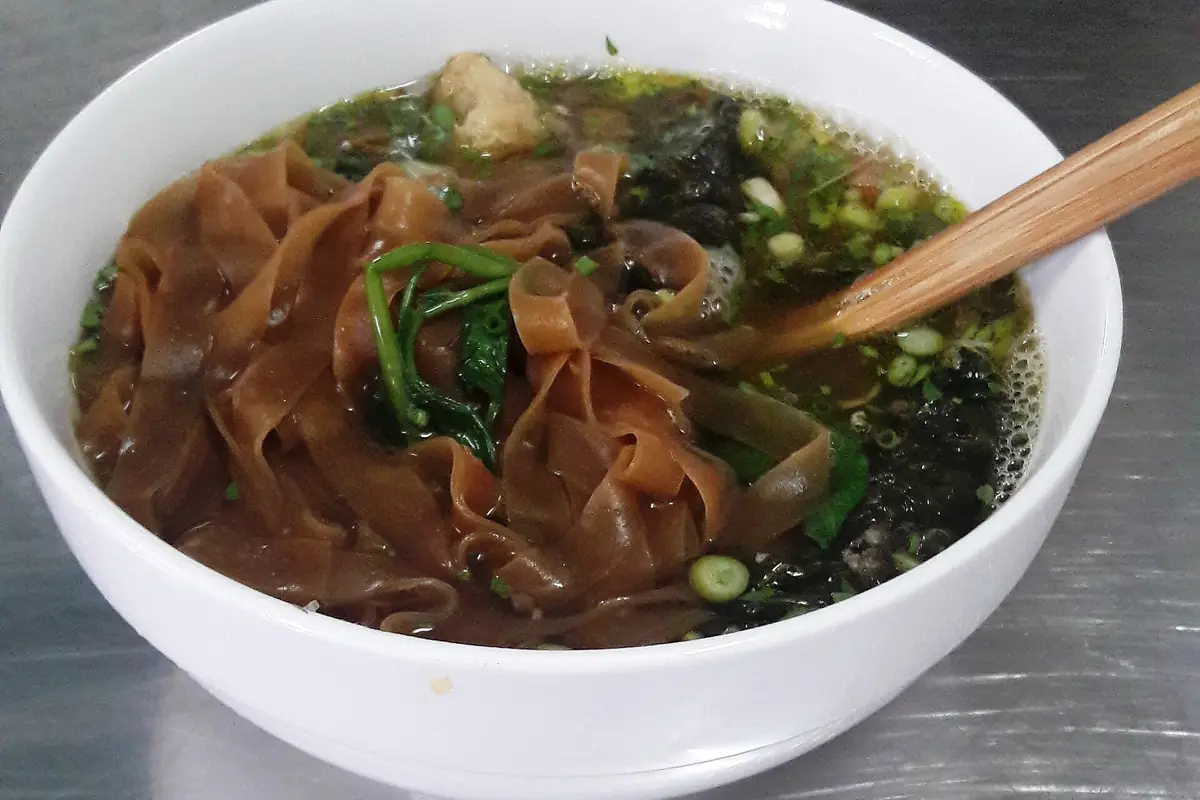
A bowl of crab noodle soup, the breakfast most Hai Phong locals grow up on.
At six in the morning the plastic stools are already out at the mouth of the alley. A pot of crab broth simmers next to a basket of brick-red rice noodles and a heap of greens, and people sit knee to knee, order a bowl with everything and reach for the chilli themselves. By noon the same corner may be selling noodles of a different kind; by mid-afternoon it is a cart of skinny baguettes. Hai Phong, northern Vietnam's big port city, is an easy trip from Hanoi, and its food runs on that kind of timetable.
Where to eat in town
Most of what you want sits within a few kilometres of the old centre. Crab noodle and fish noodle stalls tend to sit at alley entrances with no real sign, and locals often point visitors to exactly those rather than the famous names. If you would rather head straight to an address, try Bun Cha Phuong Mai on Cat Cut (Cát Cụt) street, Banh Beo May at 65 Chu Van An (Chu Văn An), the late crab noodle stall at 48 Lach Tray (Lạch Tray) or Cat Bi market at 34 Ly Hong Nhat (Lý Hồng Nhật); hours and prices are listed with each dish below.
| Area | Good for | Worth knowing |
|---|---|---|
| Cau Dat (Cầu Đất), Le Loi (Lê Lợi), Pham Ngu Lao (Phạm Ngũ Lão) | Crab noodles, spicy fish noodles, stick baguettes in the morning | The older stalls are busiest before 9am; come earlier or later to skip the wait |
| Lach Tray (Lạch Tray) road, Chu Van An street | Crab noodles (one stall runs into the evening), banana-leaf rice cakes, fish noodles, coconut dessert | Busy road: look carefully and cross at marked crossings or lights |
| Phan Boi Chau (Phan Bội Châu), Minh Khai | Chrysanthemum tea, coffee | A sit-down after breakfast, close to the French quarter |
| Cat Bi market (34 Ly Hong Nhat / Lý Hồng Nhật) | Rice cakes, giá bể shellfish, grilled sausage, sweet soups, snails | Near the airport; each stall keeps its own hours. Afternoon suits a snack stop, but check the stalls you want before making a special trip |
Morning: crab noodles, fish noodles, chrysanthemum tea
Bánh đa cua is the reason many people in Hai Phong get up early. The flat rice noodles are reddish brown and chewier than ordinary rice noodles, blanched and topped with a broth made from pounded freshwater paddy crabs. A full bowl usually brings crab roe, pork wrapped in betel leaf, shrimp, fish cake and greens, with fried dough sticks and chilli on the side. At the well-known stalls on Lach Tray and Cau Dat it runs about VND50,000 a bowl; fewer toppings, smaller bill.
Spicy fish noodle soup (bún cá cay) is for people who like it sour and hot: perch or mackerel, fish cake, crispy fried fish, taro stem and water dropwort in a fish-bone broth, VND30,000-50,000 a bowl.
Afterwards, locals drift to a tea stall for chrysanthemum tea (trà cúc). A proper cup is amber-brown and carries three tastes at once: the bitter, grassy flowers, sweet liquorice root and a little tannin from the tea. You sit on a low stool facing the traffic and take your time.
Lunch: square crab rolls, or seafood by the sea
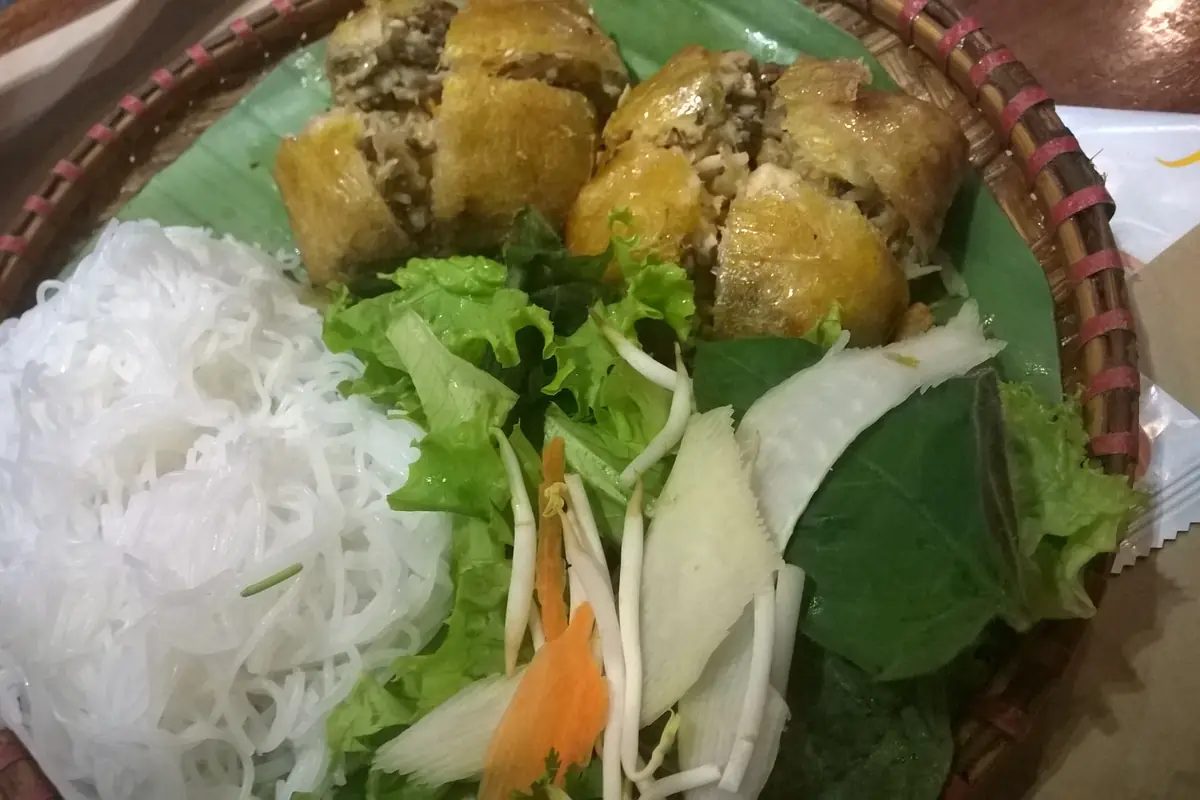
Hai Phong's crab spring rolls (nem cua bể) are square: rice paper wrapped around sea crab, shrimp, pork and whatever else the family recipe calls for, folded into a big square, fried golden and cut up to eat with rice vermicelli, herbs and a sweet-sour dipping sauce. In town you usually find them at noodle-and-grilled-pork shops. Share a plate between two or three.
Bun Cha Phuong Mai (Bún chả Phương Mai)
Cat Cut (Cát Cụt) street · large crab rolls; ask the price before you order
The draw here is the square crab-and-shrimp roll, generously filled, alongside squid cake and grilled pork. Weekends are busy, so groups should call ahead.
If you are spending the day at Do Son beach, make lunch seafood instead. Seafood restaurants there start from about VND200,000 a person. Ask the price per kilo and the cooking charge before anything goes on the scales, then watch it being weighed.
Afternoon: spicy banh mi, rice cakes, Cat Bi market
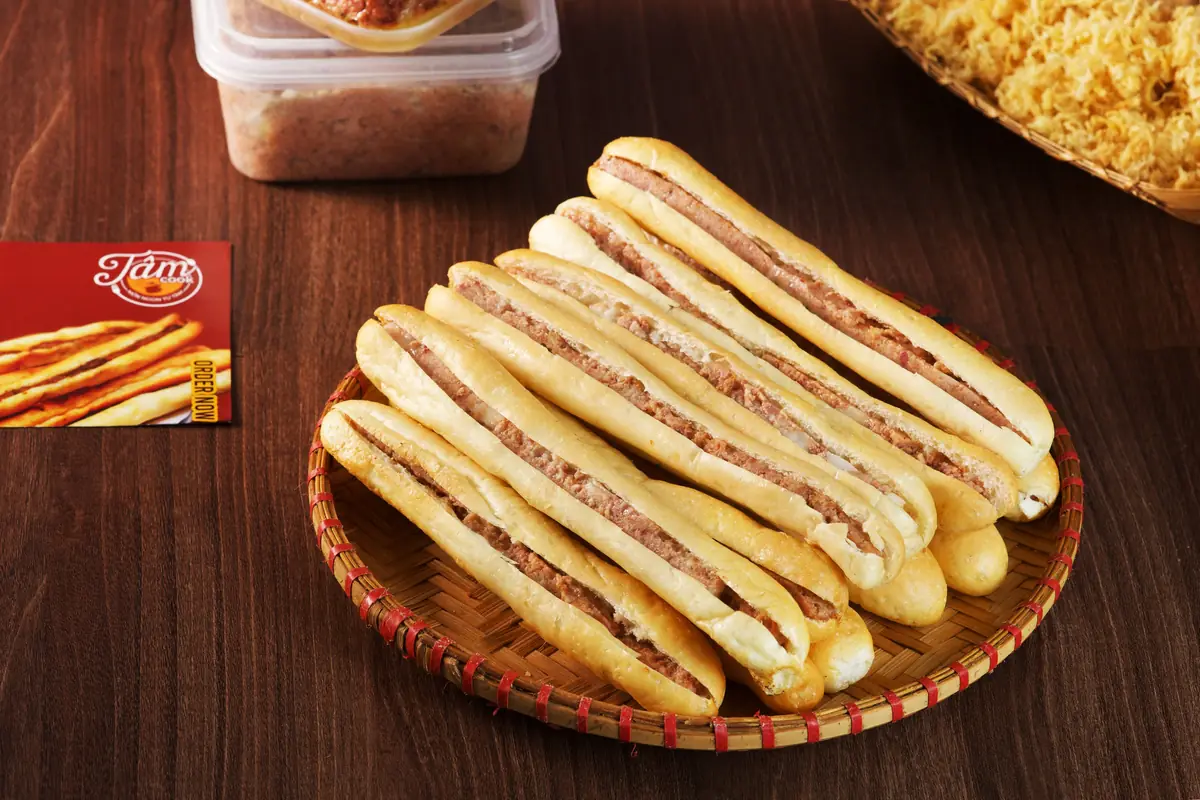
Spicy banh mi (bánh mì cay), also called stick bread, is a baguette barely wider than two fingers, toasted, split and spread with pâté, then eaten with a local chilli sauce. Each one is gone in a few bites, so people order three or four. Expect VND3,000-7,000 each depending on the bakery; long-running names include Ba Gia (Bà Già), Ong Cuong (Ông Cuông) and Khanh Nap (Khánh Nạp). Eat them hot or they go soft.
Summer afternoons are hot and sticky, which is what coconut dessert (dừa dầm) is for: young coconut, coconut jelly, tapioca pearls, condensed milk and shaved ice, VND20,000-25,000 a cup along Lach Tray and Mieu Hai Xa (Miếu Hai Xã) streets. It is sweet; ask for less milk if you prefer.
Hai Phong's bánh bèo look nothing like the little saucers of central Vietnam. They are steamed in banana-leaf moulds, usually filled with minced pork, wood ear mushrooms and fried shallots, and served with a warm dipping sauce made from bone stock; each stall guards its own sauce recipe. Expect about VND20,000-30,000 a portion at local markets.
Banh Beo May (Bánh bèo Mây)
65 Chu Van An street, behind Lach Tray stadium · four cakes with pork roll, usually around VND20,000-30,000
Selling starts around 12.30pm and runs until the cakes are gone, which can be before 4pm on busy days, so come early in the afternoon. The sauce is ladled hot from a pot on the stove, with cinnamon pork roll, meatballs and fried shallots on the side.
Chinese-style rice cake (bánh đúc tàu), a trace of the city's Chinese community, makes a good afternoon snack: warm steamed rice cake cut into pieces, topped with shrimp, crisp-fried pork belly, wood ear mushrooms and diced papaya, then finished with a sweet-sour dressing of fish sauce and vinegar, with chilli if you like. Opening hours vary and some stalls are busy from 8am; look around Co Dao (Cố Đạo) and Cat Bi markets and Du Hang (Dư Hàng) street.
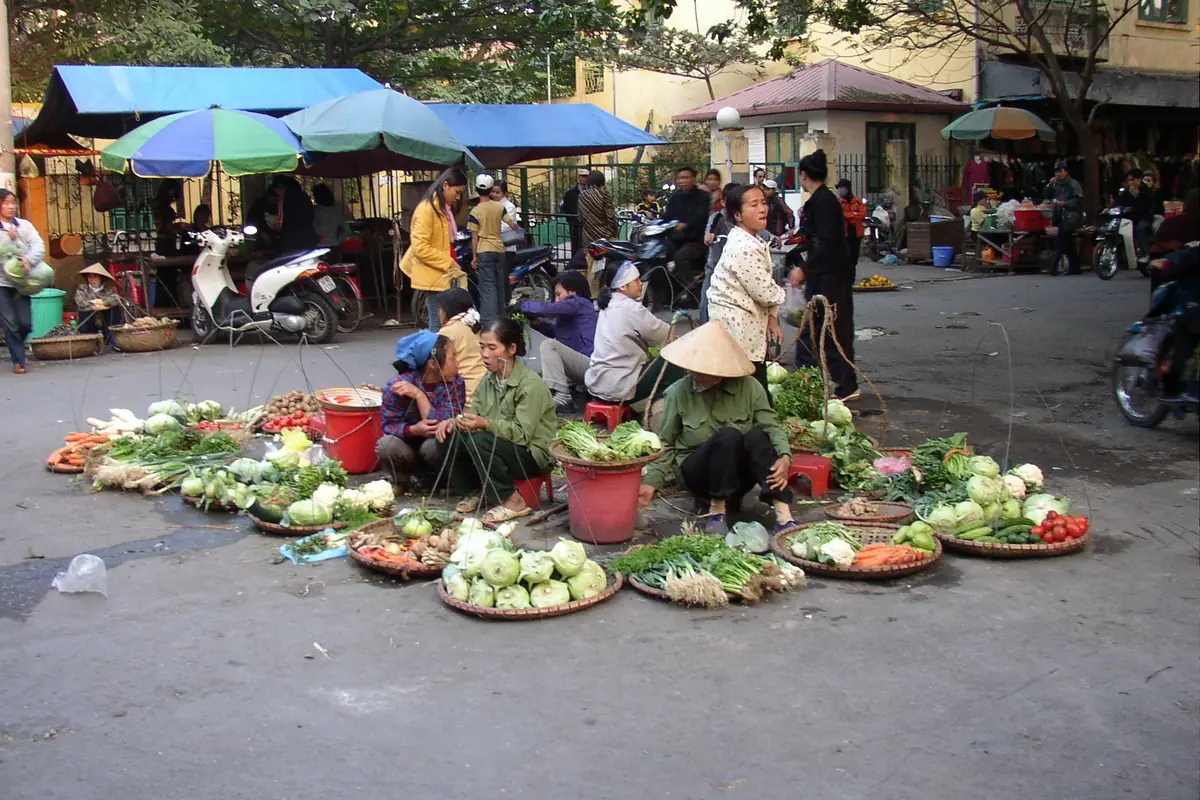
To try many things in one sitting, head to Cat Bi market at 34 Ly Hong Nhat street, near the airport and about 8 km by road from the Opera House (map distance). The food section serves banana-leaf rice cakes, giá bể, grilled sausage studded with crunchy pork cartilage (dồi sụn), sweet soups, snails and coconut dessert; around VND100,000 usually fills you up. Sources disagree on when the food section opens, some saying 10am and others 3pm, and each stall keeps its own hours. Keep lunch light and come in the afternoon, when most stalls are open, and check before making a long trip.
While you are there, order a plate of giá bể, a local burrowing shellfish dug from the sandy shore. It is stir-fried with galangal, lemongrass, turmeric and vinegar, VND20,000-50,000 a plate at Luong Van Can (Lương Văn Can) market. Share a small plate the first time.
Evening and late night: snails, crab noodles, ginger rice balls
Evenings belong to snails (ốc): boiled, stir-fried with tamarind or simmered in fermented rice sauce, with clams steamed in lemongrass on the side, and everyone mixing their own ginger-chilli dip. Snails are priced by the plate, and prices vary a lot by type and by shop, usually from a few tens of thousands of dong to over VND100,000 a plate. Ask the price of each plate before ordering a lot, and only eat snails that are thoroughly cooked, freshwater ones above all.
Missed breakfast? The crab noodle stall at 48 Lach Tray opens roughly 3pm-11pm. Later still, there is Cot Den (Cột Đèn) pâté banh mi at 1 Chua Hang (Chùa Hàng) street (roughly 7pm-3am) and crispy pan-fried rice noodles at 1 Le Chan (Lê Chân) street (roughly 6pm-2am). Hours change, so check a map app before you go.
On a cold, windy night, order ginger rice balls (sủi dìn): sticky rice dumplings filled with peanuts, black sesame and coconut, floating in a ginger syrup made with dark cane sugar, sprinkled with more sesame and peanuts. The bowl warms your hands and the ginger bites gently, best in December and January.
Jellyfish salad: a seasonal dish to think twice about
In spring, seaside restaurants may offer red jellyfish salad, sliced thin with herbs and served with shrimp paste. Since 2014, Vietnam's Food Safety Department has advised against eating sea jellyfish during its spring-summer breeding season, against eating it raw or as a raw salad, and against giving it to children. As the catch falls in that very season, we leave jellyfish salad off our list of dishes to try.
Ordering and asking prices
Breakfast stalls usually sell one dish: hold up a finger for one bowl and point at the toppings you want or don't. You pay when you finish, mostly in cash, though more and more stalls also take bank transfers by QR code. At snail and seafood places, order two or three plates, then more if you are still hungry. For anything sold by weight, ask the price per kilo, how much they suggest for your group and the cooking charge. If there is a printed menu, take a photo so you can check the bill.
Between meals, walk off a bowl or two in the French quarter around the Opera House. With only one day, we would eat and walk the old centre in the morning, head to Do Son after lunch and come back for snails.
What to take home
The easiest thing to carry is dried red rice noodles (bánh đa đỏ), the base of crab noodle soup, which cook up well at home with any good stock. Stick baguettes travel in a bag and crisp up again in the oven; for a big batch, order ahead at the long-running bakeries. Fresh items such as uncooked crab rolls or fish cake need to stay cold all the way: only take them on a same-day road trip with a cool box, straight into the freezer on arrival.
On Vietnam Airlines, fish sauce and shrimp paste count as strong-smelling items: up to 3 litres or 3 kg per passenger, in tightly capped plastic bottles wrapped with tape and filled no more than 95%, inside a sealed foam box, ideally in checked baggage, and not accepted on ATR72 flights. Read the airline's rules on carrying food (in Vietnamese) before you buy. Other airlines and connecting flights have their own rules. For international trips, also check what your home country allows in; many countries restrict meat, seafood and dairy products.
Frequently asked questions
What can I eat in Hai Phong if I don't eat seafood?
Spicy banh mi, coconut dessert and chrysanthemum tea are the safer bets, but still ask: the pâté is made from liver, chilli sauces and dips may contain fish sauce, and the coconut dessert contains milk. Ginger rice balls are filled with peanuts and sesame.
I only have one evening in Hai Phong. What should I eat?
Start with crab noodle soup at a stall that opens in the late afternoon, move on to a pavement snail place, and finish with a few spicy banh mi, or ginger rice balls if the night is cold. Pick all three in the same neighbourhood so you are not crossing town.
Is Hai Phong street food safe for visitors?
Busy stalls with a quick turnover are a good sign, as is food cooked in front of you. Stick to bottled or boiled water, and skip jellyfish in spring and summer and any undercooked shellfish. If you have a sensitive stomach, go easy on raw herbs for the first day or two.