Trying Hai Phong spicy fish noodle soup: should you order the special?
A regular bowl with fried fish and fish cake is a good first breakfast, especially if you have more food stops planned. Choose the special if you want to try fish stomach, swim bladder and other extras, but check what comes with it before ordering.
 12 min read

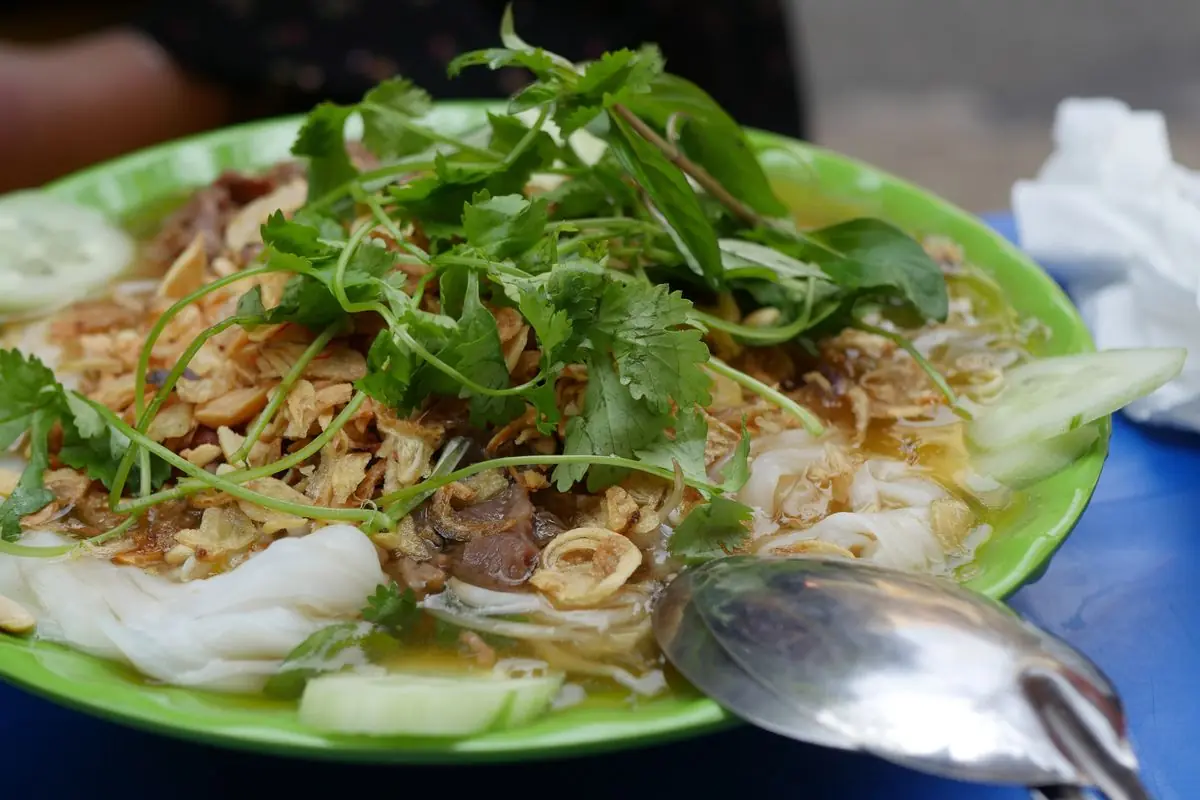
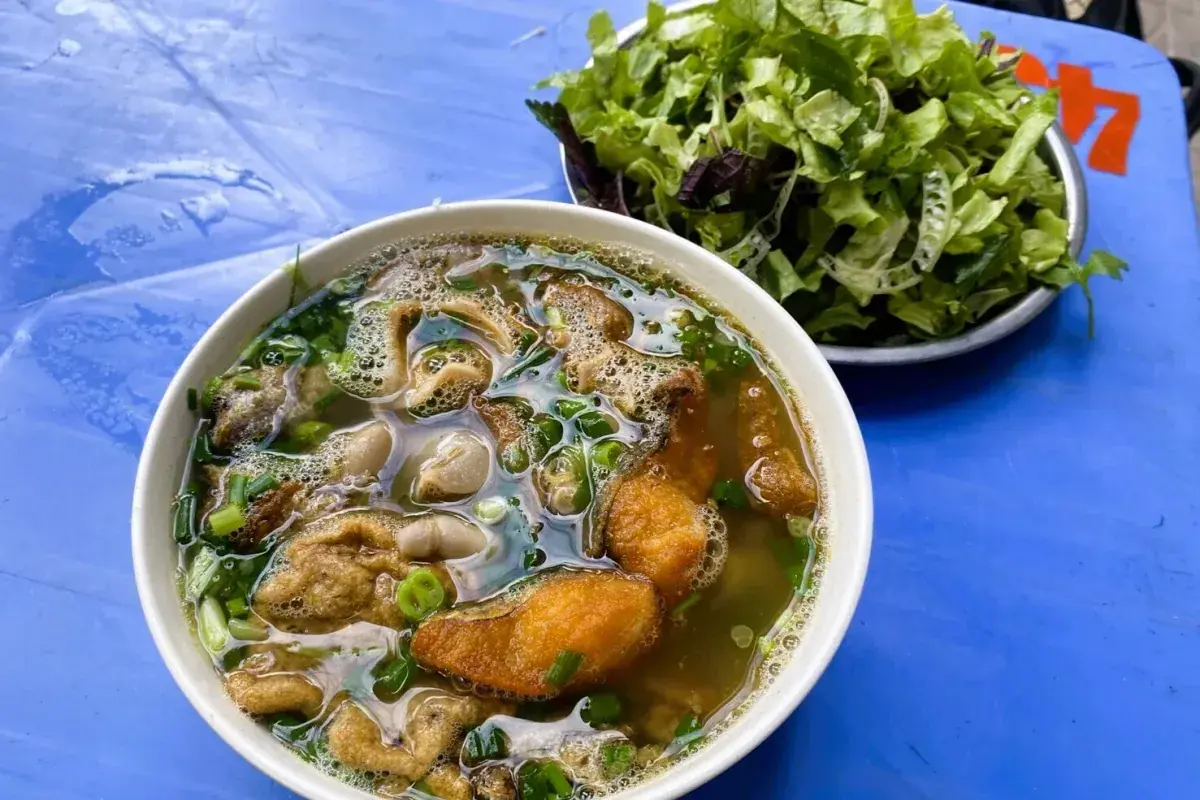
A northern fish noodle bowl with fried fish, fish cake, tomato, dill and crispy shallots, served with fresh greens.
Asking for “not spicy” does not necessarily get you a chili-free bowl of Hai Phong fish noodle soup: the broth or the sauce coating the fish may already contain chili. Known locally as bún cá cay, this is a soup with rice noodles, fried fish, fish cake and vegetables. For a mild version, ask about both the broth and the toppings before the vendor puts your bowl together.
What is in Hai Phong spicy fish noodle soup?
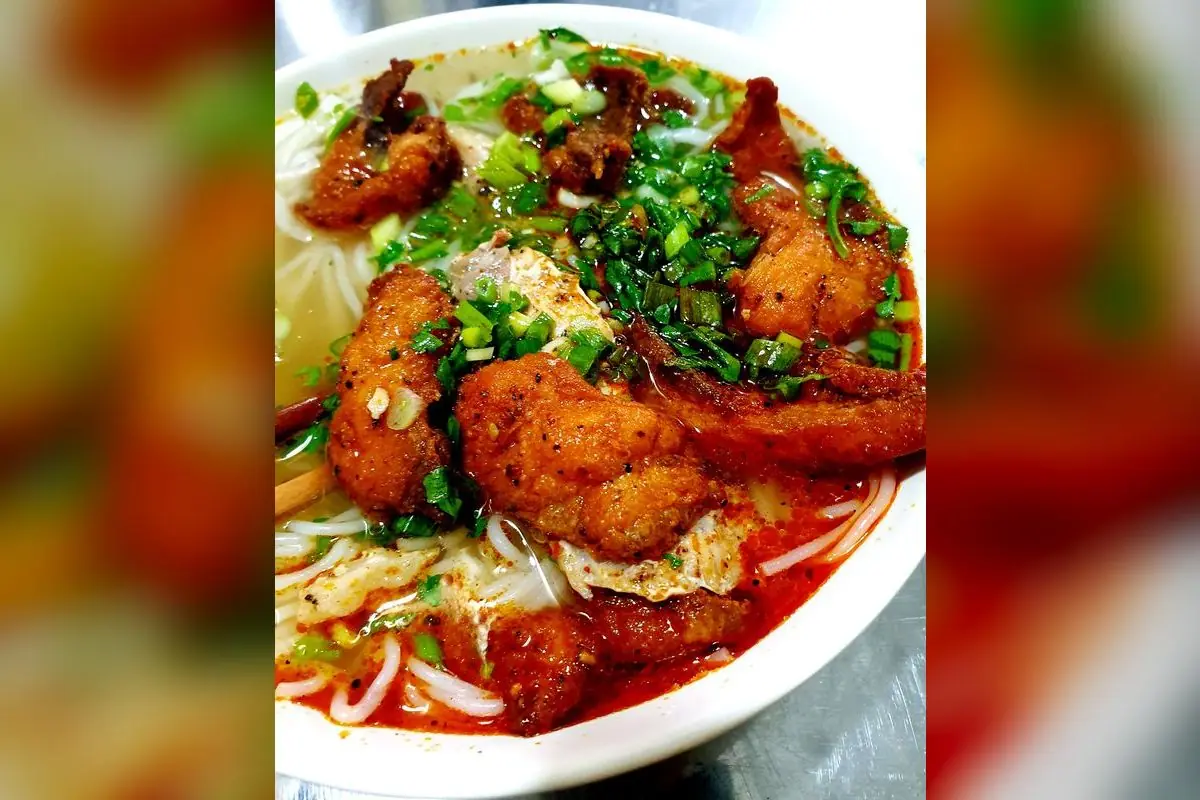
The first things you notice are usually golden pieces of fried fish sitting above rice noodles, with fish cake and green vegetables tucked between them. The broth often has an orange-red tint and a sour, savory flavor, with a level of heat that varies by shop. The less familiar pieces beside the fish might be stomach, swim bladder or a sliced stuffed sausage.
There is no single ingredient list shared by every bún cá cay shop. Earlier versions were simpler, built mainly around fried fish and fish cake. Some modern special bowls add several kinds of fish, roe and offal; certain shops also offer shrimp, mantis shrimp or squid cake. “Special” describes the shop’s own combination, so two places can serve rather different bowls under the same name.
Fried fish and fish cake are an easy place to start
The fried fish is cut into pieces, seasoned and cooked until golden. Depending on the shop, it may be tilapia, climbing perch, carp or a sea fish such as mackerel. Fish cake, called chả cá, is made from minced or pounded fish shaped into pieces, sometimes with dill and other seasonings.
Fried fish has distinct flakes and a crisp surface before it soaks up the broth. Fish cake has a firmer, springier bite. A bowl with these two toppings gives you plenty to try without committing to the whole counter, particularly if you are unsure about offal.
Fish stomach, swim bladder and sausage are different toppings
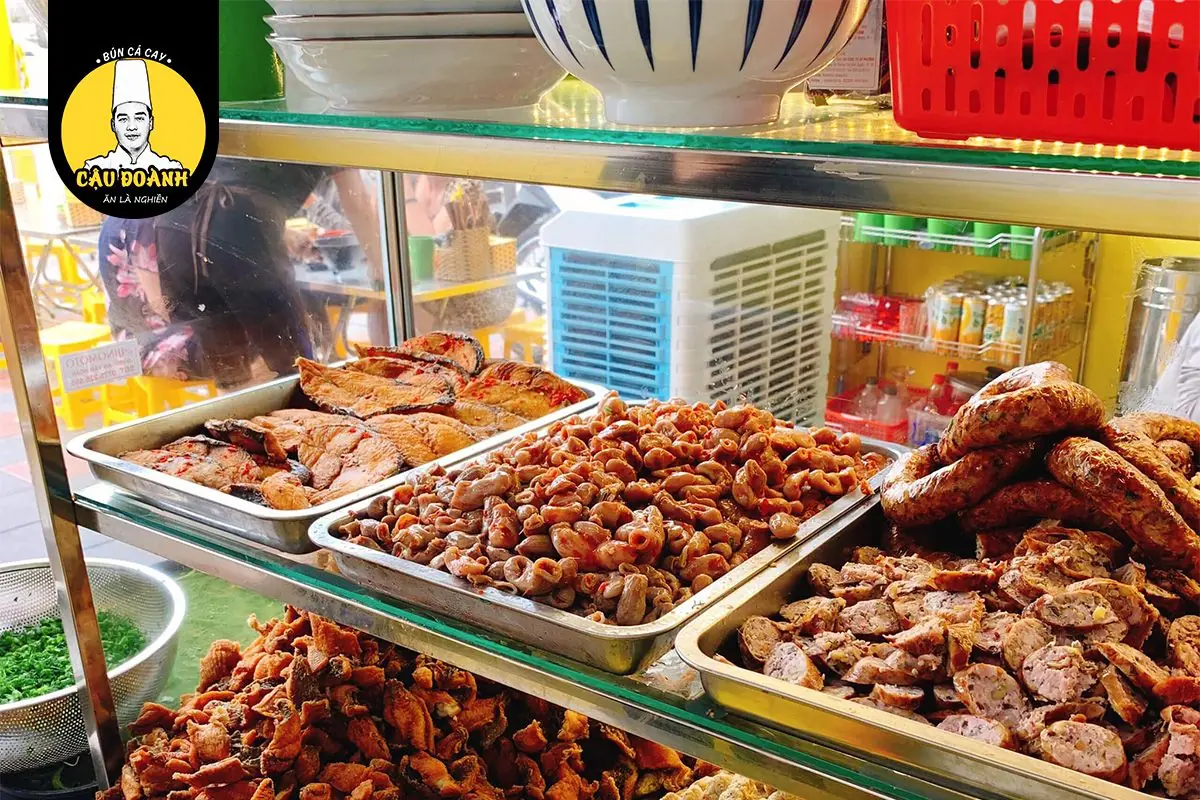
Dạ dày cá means fish stomach. Depending on the preparation, it may be blanched or briefly fried and has a pleasantly firm, chewy bite. Bóng cá is the swim bladder, also called fish maw, with a texture quite different from a fillet.
Dồi is a stuffed sausage whose filling depends on the recipe. A name containing the word “fish” does not guarantee that every ingredient comes from fish. This distinction matters if you avoid pork as well as if you simply dislike offal.
To leave these toppings out, say, “Không lòng, không dạ dày, không dồi.” That asks for no intestines, stomach or sausage. If you want to try just one unfamiliar item, ask whether the shop can add a small portion to a regular bowl, and check the extra charge before agreeing.
The broth may contain pork
Fish noodle soup is not necessarily a pork-free meal. Many versions combine fish bones with pork bones, and some use dried seafood for extra flavor. At Miền Duyên Hải on Văn Cao Street, the broth has been made with crucian carp and pork bones.
Sourness can come from tamarind, fermented rice vinegar or the shop’s combination of tomatoes and seasonings. The orange-red color is not a reliable measure of heat: tomatoes, chili sauce and seasoned oil can all contribute. A bright bowl may be manageable for you, while a less colorful one may already contain more chili than you expect.
Vegetables often include blanched water celery and prepared dọc mùng, the pale, spongy stalk used in Vietnamese soups. Shredded banana blossom, other greens, scallions and dill may be added or served alongside. If you dislike dill, mention it separately rather than assuming a request for no scallions will cover both.
Should you order a regular or a special bowl?
A bát thường, or regular bowl, makes sense for a first visit, a smaller appetite or a morning with several food stops. A bát đặc biệt, or special bowl, suits someone who wants to sample more toppings and is comfortable eating the ingredients included.
“Special” does not necessarily mean more noodles. The difference may mostly be the variety of fish and extras on top. Before ordering, ask what comes in each version, or point to the fried fish and fish cake if those are the only two toppings you want.
You can also ask for fewer noodles while keeping the fish, or request more vegetables if available. Changing the combination does not automatically change the price in your favor. A special bowl without sausage may still cost the special-bowl price, while substituting extra fish may cost more. Agree on the contents, then ask the price of that particular bowl.
How spicy is it, and how should you season it?
Heat varies from shop to shop. Some leave much of the chili for customers to add at the table; others season the broth or fish in advance. Someone used to hot food may find a bowl mild, while another diner notices the chili in the first spoonful.
For less heat, ask for no added chili or sa tế, the seasoned chili paste or oil, and request chili separately. If you cannot eat chili at all, also ask whether it is already in the broth. A vendor working from one seasoned stockpot may not be able to make a genuinely chili-free portion.
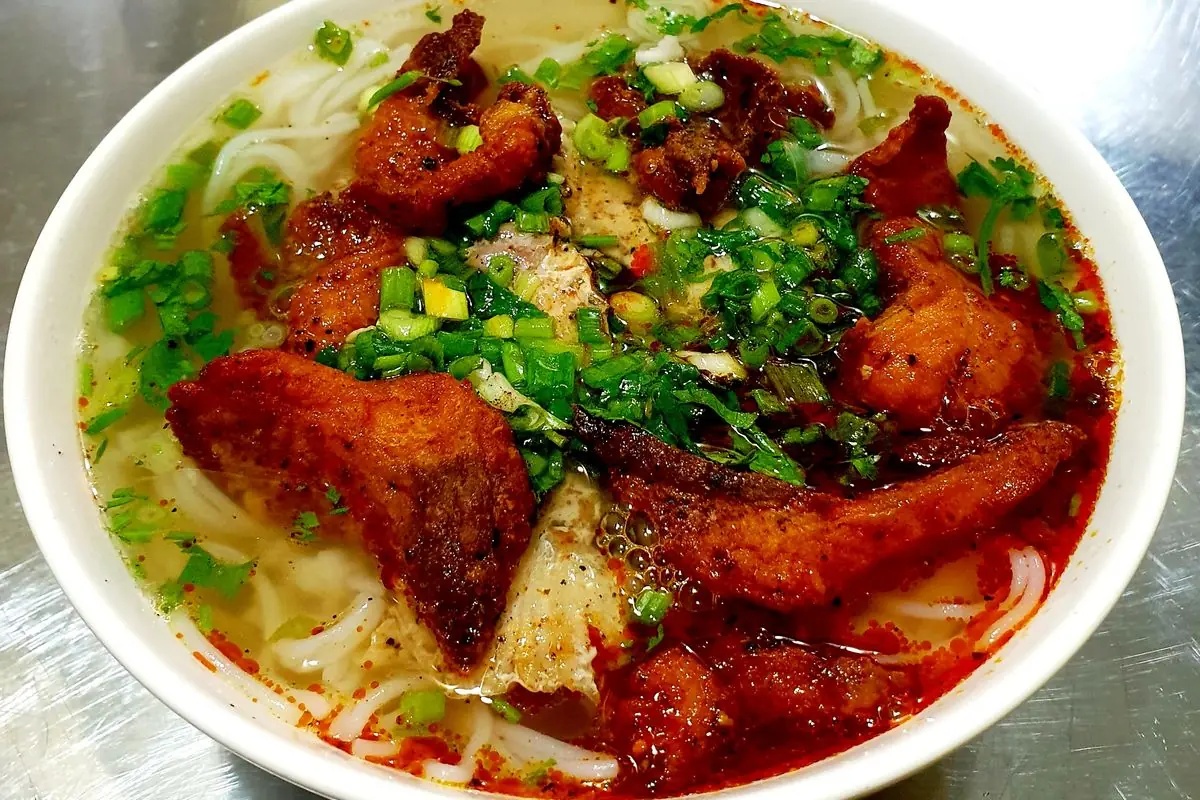
When the bowl arrives, taste the broth before reaching for the condiments. Add a little chili if you want more heat, stir, then taste again. If the soup is already sour enough, leave the lime alone. Pickled bamboo shoots and garlic vinegar can also change the balance quickly.
Eat a piece of fried fish early if you want its surface to stay crisp. For a softer bite, push it into the broth and let it soak while you eat the noodles. Either way works; you do not need to follow a special sequence beyond adding condiments gradually.
Where to eat bún cá cay in Hai Phong
For a short visit, start with the area where you are staying or spending the morning. Văn Cao is convenient if your accommodation is nearby; Hồ Sen is another option for a bowl with plenty of toppings. Around the central streets, Lê Lợi and Lạch Tray give you other addresses to consider without crossing town for every meal.
Miền Duyên Hải, 227 Văn Cao
Wide choice of fish, busiest 7:30-10 am
Miền Duyên Hải is worth considering if you want a broad selection of fish and extras. In 2026, the shop opens 6:00 am to 1:00 pm and 4:00 pm to 9:00 pm, with a full bowl at approximately VND 50,000. Treat that as a 2026 reference, rather than a direct menu quote covering every possible addition.
The usual busy period is 7:30 am to 10:00 am. Go then if you want to eat during the breakfast rush. If you have children with you or need a quicker stop, aiming for around 6:30 am to 7:00 am may help you miss the main peak, though it cannot guarantee an empty table.
Look at the toppings before asking for everything, especially if you do not eat stomach or sausage. Save the full address, Miền Duyên Hải, 227 Văn Cao, Hải Phòng, so you can distinguish it from other fish noodle shops on the same street.
Cậu Đoành, 151 Hồ Sen
Seven toppings, broth soured with tamarind
Cậu Đoành’s Hồ Sen shop is another option for a varied bowl. In 2024, it offered seven toppings, including roe, sausage, fish stomach, mackerel and fish cake, with tamarind providing the broth’s sourness.
That year, a regular bowl cost VND 30,000 and a full bowl VND 50,000, with hours of 6:00 am to 2:00 pm and 5:00 pm to 9:30 pm. These are historical reference figures, not confirmed 2026 prices or hours. The brand’s website still lists its main branch at 151 Hồ Sen; check with that branch before planning around a late arrival.
Busy weekend evenings, waits for seats and limited car parking are also common. If you arrive with a driver, have someone ask about seating and parking before the whole group gets out.
Lê Lợi and Lạch Tray
Handy if you are near the centre
In the centre, fish noodles at 66 Lê Lợi and Thắng Tô at 47 Lạch Tray, also known as Thắng Tồ, have been on the city’s food map since 2022. These are useful names to look up if you are already nearby, rather than a list you need to complete in one morning.
Older directory hours should not be treated as a confirmed 2026 schedule. Match the street number and shop sign when checking a map listing, and look for recent information about the specific premises.
Vietnam’s 2025 administrative changes also mean older articles may show former district or ward names. 151 Hồ Sen is now in Lê Chân Ward. For navigation, use the shop name, street number and street name rather than trying to update an old address yourself.
What should you budget, and how do you pay?
For a specific 2026 reference, allow approximately VND 50,000 for the full bowl at Miền Duyên Hải, 227 Văn Cao. This is not a citywide fixed price. A regular bowl, a bowl with selected fish or a separate serving of stomach may be priced differently.
At Cậu Đoành, the VND 30,000 and VND 50,000 figures above are 2024 prices at the Hồ Sen branch. Check the menu or ask the person taking your order for the current amount. Prices at another branch may also differ.
Once you have chosen your toppings, ask, “Bát này bao nhiêu tiền?” It means, “How much is this bowl?” Ask separately about drinks and extra portions if no price is displayed. Pointing to an extra tray can be understood as ordering it, so ask the price before confirming.
When paying, identify how many bowls and extras you had. If you use a bank transfer, check the recipient and amount, then show the successful transaction to the shop. Small-denomination Vietnamese cash is useful, especially for overseas visitors: a QR code at the counter does not mean every foreign banking app or wallet can pay it. Ask before relying on your phone as your only payment method.
How to order without speaking Vietnamese
Save the phrases you need and show them on your phone. You do not need to pronounce everything perfectly or hand over the entire table. One sentence for the bowl, followed by your specific request, is usually clearer.
| What you want to say | Vietnamese to show the vendor |
|---|---|
| One regular bowl, please. | Cho tôi một bát thường. |
| One special bowl, please. | Cho tôi một bát đặc biệt. |
| Fried fish and fish cake only, please. | Tôi chỉ lấy cá rán và chả cá. |
| Less spicy, please. | Cho tôi ít cay. |
| No added chili or chili paste. Chili on the side, please. | Không thêm ớt hay sa tế. Cho ớt riêng. |
| Does the broth already contain chili? | Nước dùng đã có ớt chưa? |
| No intestines, stomach or sausage, please. | Không lòng, không dạ dày, không dồi. |
| No scallions or dill, please. | Không hành, không thì là. |
| Fewer noodles, please. | Cho tôi ít bún. |
| How much is this bowl? | Bát này bao nhiêu tiền? |
| I would like to pay, please. | Cho tôi thanh toán. |
If two of you order different combinations, indicate which person each bowl is for. “One without chili” and “one without offal” can become muddled during a rush. Confirm the two requests before the vendor adds the broth.
Pointing at the trays is helpful for choosing fish, but it is not enough for communicating allergies. Those need a separate, explicit explanation.
Pork, halal requirements and food allergies
If you avoid pork, ask about the broth, fish cake and sausage, not just visible meat. Pork bones may be used in the stock, while prepared toppings may contain pork fat or other pork ingredients. Show the vendor this sentence: “Tôi không ăn thịt lợn, mỡ lợn hay nước hầm xương lợn. Món này có những thứ đó không?” It asks whether the dish contains pork, pork fat or pork-bone broth.
For halal diners, the name “fish noodle soup” does not establish that the meal meets your requirements. If the shop cannot clarify the ingredients and preparation, choose somewhere else. Vegetarian diners also cannot turn an animal-based broth into a vegetarian meal by asking for the fish to be removed.
This dish is unsuitable if you have a fish allergy. With shrimp, crab or other seafood allergies, ingredients may also be present in broth, prepared toppings or condiments. Chili pastes have their own recipes, so ask about peanuts, sesame or shrimp if those are allergens for you.
Tell staff explicitly that you have an allergy. Removing a topping does not eliminate cross-contact from broth, utensils or preparation surfaces. If the shop cannot confirm the ingredients and how it prevents cross-contact, choose a different meal.
How does it differ from Hanoi fish noodles?
Fish noodle soups in Hanoi and Hai Phong share plenty of ingredients: rice noodles, fried fish, fish cake, tomatoes, greens and broth. Many Hanoi versions lean toward a gently sour broth with a simpler selection of fish toppings. Hai Phong’s spicy version is often associated with a more pronounced sour-and-hot flavor and extras such as stomach, swim bladder and sausage.
These are broad tendencies, not rules. A Hanoi restaurant may serve Hai Phong-style noodles, while a shop in Hai Phong may season its broth quite lightly. The menu and the contents of the counter tell you more than the city name alone.
Bún cá chấm is different in the way it is served. Fried fish, noodles and a dipping sauce come separately, usually with broth alongside. It suits someone who wants the fish to stay crisp and prefers to control how much sauce goes on each bite. Bún cá cay arrives with broth already poured over the noodles, so the fish gradually softens as you eat.
If you want Hai Phong-style fish noodles while staying in Hanoi, look for the words “bún cá cay Hải Phòng” on the sign and check the toppings available. If you are looking for a brand you tried in Hai Phong, confirm the exact Hanoi branch. Do not assume its prices, hours or special bowl are identical to the original shop’s.
How many calories are in a bowl?
There is no reliable single calorie figure for every bowl of bún cá cay. For fish noodle soup in general, around 450 kcal is a common estimate, but this is not a measured nutrition value for a bowl at Miền Duyên Hải or Cậu Đoành.
A small serving with fewer noodles and fried toppings differs from a special containing several pieces of fried fish, fish cake, sausage and fried stomach. Portion sizes, absorbed frying oil and how much broth you consume all affect the total. Logging every special bowl as exactly 450 kcal would give a misleading impression of precision.
If you want a smaller breakfast because you are planning more food stops, ask for fewer noodles and choose only the toppings you want to eat. Ordering the special just to sample one bite of everything can leave you full much sooner than expected. A closer calorie estimate would require actual ingredient weights and preparation details, which these shops do not publish.
Save one shop address that fits your route and the Vietnamese phrases you need. At the counter, confirm the bowl’s contents and price, then explain your chili preference before the broth goes in.
Frequently asked questions
What is in Hai Phong spicy fish noodle soup?
The usual base is rice noodles, fried fish, fish cake, vegetables and a sour, savory broth with varying chili heat. Special bowls may add fish stomach, swim bladder, sausage, roe or other seafood. The broth often contains pork bones, so ask if you avoid pork.
Is bún cá cay very spicy?
It depends on the shop and the toppings. Ask for “ít cay” for less heat, or “không thêm ớt hay sa tế, cho ớt riêng” for no added chili or chili paste, with chili on the side. Also ask whether the broth already contains chili; chili already in the broth or coating the fish cannot simply be removed.
Which shops are well known, and what are the 2026 prices?
Miền Duyên Hải at 227 Văn Cao and Cậu Đoành at 151 Hồ Sen are two well-known names. In 2026, a full bowl at Miền Duyên Hải cost approximately VND 50,000. Cậu Đoành’s VND 30,000 regular and VND 50,000 full bowls are 2024 prices and need checking for a 2026 visit.
How is it different from Hanoi fish noodles or bún cá chấm?
Hai Phong-style bowls often have a stronger sour-and-spicy character and more optional fish parts, although recipes vary. Bún cá chấm is served with fish and noodles separate from the dipping sauce and broth. Bún cá cay is a noodle soup with the broth already added.
How many calories does a bowl contain?
Around 450 kcal is a rough estimate for fish noodle soup in general, not a verified figure for these shops. A larger special bowl with more fried toppings may contain considerably more. Exact values depend on portion size and preparation.