Hai Phong in winter: 9 things to know from November to February
Hai Phong has a real winter, with the coldest weather usually arriving between December and February. It's still a lovely time to explore the city and enjoy local food, although trips to Cat Ba Island and Do Son Beach require more flexibility when cold winds arrive.
 21 min read

The Opera House and central square flower beds at night.
Before planning a winter trip to Hai Phong, check the temperature and wind forecast for your travel dates, especially if you’re heading to the islands. Walking around the city on a sunny 68°F (20°C) afternoon feels very different from stepping outside on a windy 54°F (12°C) morning. There’s plenty to enjoy even when it’s cold, but coastal activities need a little more flexibility than a city food tour.
1. Is Hai Phong cold in winter? Weather from November to February
Yes. Hai Phong is in northern Vietnam, where the tropical monsoon climate brings a distinct winter season. Cold air moving south from China can cause noticeable temperature drops, although the city doesn’t experience the snowy winters familiar to travelers from colder countries.
Visitors from northern Europe or North America might find temperatures around 59-68°F (15-20°C) comfortable. But after spending time in Ho Chi Minh City, Phu Quoc, or southern Thailand, you may be surprised by how chilly northern Vietnam feels.
The weather also changes considerably throughout the season. November can still be pleasantly warm during the day. December feels more like winter, while January is generally the coldest month.
Average winter temperatures in Hai Phong
| Month | Average high | Average low | Rainfall |
|---|---|---|---|
| November | 27°C (81°F) | 20°C (68°F) | 46 mm |
| December | 22°C (72°F) | 16°C (61°F) | 21 mm |
| January | 21°C (70°F) | 15°C (59°F) | 38 mm |
| February | 22°C (72°F) | 16°C (61°F) | 28 mm |
November: pleasantly cool, with occasional cold spells
November is one of the easiest months for combining city sightseeing with a trip to the coast.
The average daytime high is around 81°F (27°C), warm enough to explore comfortably without the intense summer heat. Evenings are cooler, but a light jacket is usually sufficient.
That doesn’t mean every November day is warm. Early-season cold fronts can bring sudden temperature drops, particularly around ferry terminals, waterfront promenades, and other exposed areas.
For travelers who enjoy walking, photography, and outdoor sightseeing, November offers a good balance.
December: cooler days and relatively little rain
December brings an average high of 72°F (22°C) and a low of 61°F (16°C).
With approximately 21 mm of rainfall, it’s the month with the lowest average rainfall total in the 2015-2024 dataset. It also has the fewest days with at least 1 mm of rain, averaging around five.
However, low rainfall doesn’t guarantee sunshine. Some days are cloudy, gray, or windy, especially when a new cold front moves through.
December is a good time for exploring old streets, trying local food, and enjoying Christmas decorations. On a first visit to northern Vietnam, bring a warm jacket rather than relying entirely on summer clothes.
January: usually the coldest month
January has an average high of 70°F (21°C) and a low of 59°F (15°C).
A sunny afternoon can still feel pleasant, but early mornings and evenings may be considerably colder than those monthly averages suggest.
This is also when stronger cold spells become most important for travel planning. Low temperatures, wind, and limited sunshine can make long periods outdoors uncomfortable.
January is still worth visiting, especially for food and sightseeing. Just don’t plan your itinerary around swimming or other water activities.
February: gradually warming, but sometimes damp
February averages around 72°F (22°C) during the day and 61°F (16°C) at night.
Winter hasn’t completely disappeared, and cold fronts can still arrive. Between them, however, warmer and more humid air may bring mist, drizzle, and a weather phenomenon known locally as nồm.
You might notice moisture collecting on tiled floors, windows fogging up, or clothes taking much longer than expected to dry.
2. How cold does Hai Phong actually get during a cold spell?
Monthly averages tell you what winter is generally like, but they don’t show the coldest days.
According to ERA5 data for central Hai Phong from 2015 to 2024, an average winter has approximately 15 days when the daily mean temperature is 59°F (15°C) or lower.
Around five days per winter have a daily mean below 55°F (13°C).
These colder days tend to cluster into several cold spells, mainly between December and February. They don’t occur evenly throughout the winter, and some winters in the dataset had no days with a daily mean below 55°F (13°C).
The lowest temperature in this modeled series was approximately 39°F (4°C), during the night of January 24, 2016. This is a gridded ERA5 value, not an official record from a weather station in Hai Phong.
What’s the difference between intense cold and severe cold?
Vietnamese weather reports often use two terms that can be confusing when translated into English.
- Rét đậm (intense cold): Weather reports commonly associate this with daily mean temperatures around 59°F (15°C) or lower.
- Rét hại (severe cold): Associated with daily mean temperatures below approximately 55°F (13°C). Vietnam’s national rules on disaster forecasting and warnings use temperature and duration criteria to assess weather-related disaster risk from severe cold.
These classifications concern the average temperature over an entire day, not just the lowest temperature recorded before sunrise.
For example, a morning temperature of 50°F (10°C) doesn’t automatically mean that the entire day qualifies as severe cold.
What happens when a northeast monsoon cold front arrives?
The temperature isn’t the only thing that changes. Wind often makes the biggest difference to how comfortable you feel outdoors.
Between buildings, conditions may seem manageable. But on an open waterfront, at a ferry terminal, or beside the sea, continuous wind can make your face, ears, and hands feel much colder.
For planning purposes, think about three situations.
Mild weather with sunshine and light winds: Keep your city walking tour, visit Do Son, or consider Cat Ba Island. You’ll still need to check ferry, cable car, and boat operations before leaving.
A cold, windy day: Spend more time in museums, restaurants, cafes, and sheltered attractions. Short outdoor walks are fine, but you don’t need to spend hours beside the water.
A day with dangerous marine weather warnings: Change or postpone affected sea activities according to official notices. Ferries, sightseeing boats, and cable cars may be suspended, sometimes on different schedules.
The seasonal outlook issued by Hai Phong’s meteorological authorities on October 19, 2026, suggests that winter 2026-2027 could be warmer than the long-term average, with approximately one or two spells of intense or severe cold around late December 2026 and early January 2027.
That’s a seasonal forecast, not a guarantee. Check the latest weather bulletin shortly before your journey.
3. What to wear in Hai Phong during winter
You don’t need to fill your suitcase with heavy winter coats. But bringing only a thin cardigan for a January trip isn’t a great idea either.
The easiest approach is layering. You can add clothing when the wind picks up and remove a layer when the afternoon sun comes out.
What to pack for November
For most November days, start with T-shirts or long-sleeved shirts, comfortable pants, and a light jacket.
A thin sweater is useful for evenings, whether you’re planning to visit the waterfront or spend time outdoors after dark.
Comfortable sneakers are a better choice than thin sandals if your itinerary includes several hours of walking.
What to pack for December and January
Bring a base layer, a sweater or fleece, and an outer jacket that blocks wind.
A lightweight insulated jacket is especially useful during stronger cold spells. You don’t necessarily need an expedition-style winter coat, but some protection from cold air and wind makes sightseeing much more comfortable.
A scarf, warm socks, and closed-toe shoes are also worth packing.
If you’re traveling by motorbike or spending time in Do Son or Cat Ba, prioritize wind protection. A knitted sweater may feel warm inside a cafe, but it won’t necessarily keep out strong coastal winds.
What to pack for February
Keep the warm jacket, but add clothes that dry relatively quickly.
Humidity can rise toward the end of winter, and thick cotton clothing may take a surprisingly long time to dry indoors.
Shoes with good grip are also useful when tiled surfaces become damp.
A few things worth adding to your suitcase
For a two- or three-day trip, a compact umbrella, lightweight rain jacket, moisturizer, and lip balm can come in handy.
If you’re sensitive to cold, thin gloves are worth bringing for motorbike rides and waterfront walks.
It’s also worth checking your accommodation’s heating arrangements.
Not every hotel in Hai Phong has the kind of central heating found in Europe or North America. An air conditioner with a heating function, a warm duvet, and well-sealed windows may be more useful during a cold spell than a large balcony or an outdoor swimming pool.
4. What to do in Hai Phong in winter: the best places in the city
If you have just one or two days in Hai Phong during winter, staying around the city center is a practical choice.
Several attractions are close enough to combine without spending too much time on transportation. You can walk for a while, stop for something warm to eat, and continue when you’re ready.
Hai Phong Opera House and the central gardens
Hai Phong Opera House sits in the city’s central square and is one of its most recognizable French-era buildings.
It’s a good place to begin a walking tour, particularly on a bright morning with little wind.
From the square, continue toward the old streets, Quán Hoa flower kiosks, and the central gardens. You’ll find a mix of colonial-era architecture, local shops, and everyday city life.
Winter daylight can fade earlier than visitors expect. For architectural photography, aim for around 9-11 a.m. or early afternoon when conditions are favorable.
The square itself is freely accessible. Entry into the Opera House interior, however, depends on performances or authorized visits, so don’t assume it’s open for casual sightseeing every day.
Hai Phong Museum on a cold or rainy afternoon
Hai Phong Museum, at 66 Dien Bien Phu Street, is a useful stop when you want a break from the weather.
The building has distinctive European-style architecture, and its exhibitions introduce the city’s history, cultural heritage, and development.
The museum opens in two sessions, around 8-11 a.m. and 2-5 p.m., with free admission. Confirm the current opening schedule and which exhibitions are accessible before visiting, particularly around public holidays.
You can easily combine the museum with the Opera House area and a nearby cafe.
Museums aren’t everyone’s thing, and there’s no reason to force the visit. A warm drink in the city center may be a better way to spend a windy afternoon.
Du Hang Pagoda and Hang Kenh Communal House
These are two good choices if you’re interested in traditional northern Vietnamese architecture.
Du Hang Pagoda is on Du Hang Street and is known for its religious buildings, statues, and traditional decorative details.
Hang Kenh Communal House, at 55 Nguyen Cong Tru Street, is especially interesting for its intricate wooden carvings and communal-house architecture.
Both fit into a relaxed morning or afternoon, with no need to squeeze every temple in the city into one itinerary.
Remember that these sites have outdoor courtyards and stone or tiled surfaces. During drizzle or humid weather, some areas may be slippery.
Dress respectfully inside places of worship.
A winter evening at the 53 Lach Tray night street
Hai Phong opened a new commercial, cultural, and food street at 53 Lach Tray, Gia Vien Ward, on October 30, 2026.
The area connects Lach Tray Street with the An Bien Lake neighborhood. It includes food and drink stalls, souvenir vendors, and spaces for cultural activities.
The container-style stalls make the area easy to recognize.
Opening hours are 5 p.m. to midnight daily, under a six-month pilot program running from late October 2026 to April 2027.
Arriving around 6-8 p.m. is a convenient option for dinner and a short walk before the evening gets too late and cold. This is a suggested visiting time, not a confirmed schedule for performances.
One detail matters if you’re following older travel guides: the previous central flower-garden night food street had a pilot period ending October 24, 2026. Check its later operating schedule before going rather than treating it as a guaranteed open night market.
5. Is Cat Ba Island worth visiting in winter?
Yes, provided you’re interested in limestone scenery, hiking, nature, or a quiet island stay rather than swimming.
Cat Ba in winter feels quite different from the busy summer season.
The sky may be gray, beaches are generally quieter, and boat activities depend more heavily on weather and operating conditions.

Places such as Cat Co Beach, the waterfront near Cat Ba Town, and trails in Cat Ba National Park can still be enjoyable on suitable days.
Hiking is often less exhausting in cooler weather, although rocky paths and steps can become slippery when wet. For longer routes, ask a local guide about current trail conditions.
Taking the Dong Bai - Cai Vieng ferry
The main ferry connection from the Hai Phong side to Cat Ba is the Dong Bai - Cai Vieng route.
According to the Bayview Cat Ba operating schedule effective from September 1 through December 31, 2026:
| Departure point | First ferry | Last ferry |
|---|---|---|
| Dong Bai | 5:30 a.m. | 6 p.m. |
| Cai Vieng | 5 a.m. | 5:30 p.m. |
The published 2026 one-way fares include:
| Passenger or vehicle | Fare |
|---|---|
| Foot passenger | 10,000 VND |
| Motorbike | 45,000 VND |
| Car with fewer than 9 seats | 190,000 VND |
Passengers traveling with vehicles should confirm their total fare at the terminal, including any applicable passenger charges.
After reaching Cai Vieng, you still have roughly 20-23 km to travel by road before arriving in Cat Ba Town. By car, this usually takes another 30-40 minutes, depending on traffic and road conditions.
This schedule is valid only through December 31, 2026. Travelers visiting in January or February 2027 should check the updated timetable rather than assuming the same last departure still applies.
Taking the Cat Hai - Phu Long cable car
The Sun World Cat Ba cable car is another option if you don’t need to bring your own car or motorbike onto the island.
The standard one-way fare published for 2026 is 70,000 VND per person, with free admission for children under 1 meter tall.
Since October 19, 2026, the cable car has been closed on Tuesdays.
Operating periods are limited rather than continuous throughout the day. The published final service ends at 2:45 p.m. on Monday and Wednesday through Friday, while Saturday and Sunday include an additional 3:30-3:45 p.m. service period.
Confirm the actual last boarding time with the operator before traveling.
The cable car connects Cat Hai with Phu Long. You will still need road transportation from Phu Long to Cat Ba Town and your accommodation.
Can you take a Lan Ha Bay cruise in winter?
You can, provided marine conditions allow boats to operate and the trip has been confirmed.
Many sightseeing trips depart from Ben Beo, close to Cat Ba Town.
Before booking, ask the operator about the route, time aboard, included activities, and what happens if weather conditions force a cancellation.
6. Do Son Beach in winter: worth the trip or better to stay in the city?
Do Son is closer to central Hai Phong than Cat Ba, and you don’t need a ferry to get there.
That makes it much easier to include in a half-day trip when the weather is favorable.
The distance from central Hai Phong to the Zone 2 beach area is a little over 20 km. Driving usually takes approximately 30-45 minutes in normal traffic.
During winter, Do Son is best for coastal walks, sea views, photography, and seafood rather than swimming.
Sea surface temperatures in January and February are around 66°F (19°C), based on modeled data. That’s cold enough to make swimming unappealing for most visitors, especially when northeast winds are blowing.
What’s the best time of day to visit Do Son?
A sunny late morning or early afternoon is usually more comfortable than an early-morning visit.
You could leave the city after breakfast, spend an hour or two walking around the beach area, stop for lunch, and return before dark.
If the forecast calls for strong winds or persistent drizzle, there’s little reason to force a half-day at the beach.
The city has plenty of places to eat and visit without standing on an exposed shoreline.
What about Hon Dau Island?
Hon Dau Island lies just offshore from the Do Son Peninsula and is known for its lighthouse and wooded surroundings.
It’s an interesting option for visitors who want a short island excursion.
However, reaching Hon Dau requires a boat. Services depend on marine conditions and current operating arrangements, which makes it a poor choice to rely on during a strong monsoon event.
If boat services are confirmed, ask whether the quoted price includes the return crossing, island admission, and access to the areas you want to visit.
7. What to eat in Hai Phong in winter
Winter is an excellent time to explore Hai Phong’s food scene.
Hot broths, spicy noodles, ginger desserts, and freshly cooked seafood all feel especially satisfying on a chilly day.
Street food is a major part of the city’s appeal, but on the coldest evenings, choosing a place with sheltered seating can make your meal more comfortable.
Banh da cua: a great way to start a cold morning
Bánh đa cua is one of Hai Phong’s signature dishes.
It typically combines reddish-brown rice noodles, a crab-based broth, pork rolls wrapped in betel leaves, greens, and a variety of other toppings.
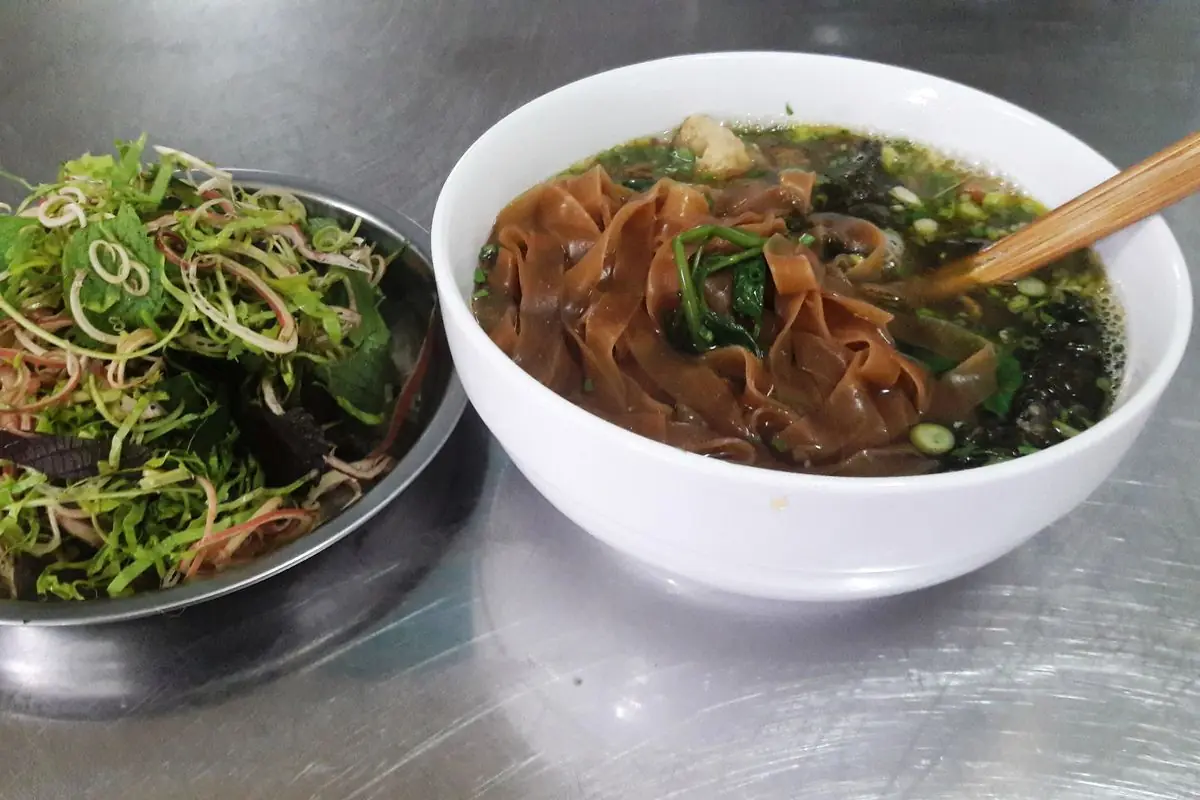
A hot bowl is filling enough for breakfast and gives you a good introduction to local flavors.
One well-known address is Banh Da Cua Ba Cu, 179 Cau Dat Street. The restaurant appears on the city’s food tour listings and also serves nem cua be, the local square crab spring rolls.
In 2026, common bowls of bánh đa cua there cost approximately 40,000-50,000 VND, depending on toppings. Treat that as an indicative range, not a guaranteed current menu price.
The Hang Kenh area is another place to look for smaller neighborhood noodle shops.
Bun ca cay: spicy fish noodle soup for a chilly day
Bún cá cay is another Hai Phong specialty that tastes best in cold weather.
The soup commonly features fried fish, fish cakes, vegetables, and a savory broth with a spicy, slightly sour flavor.
One address included in the city’s food tour listings is Bun Ca Cay Thang To, 47 Lach Tray Street.
You’ll also find fish noodle shops around Le Loi Street and the Ho Sen area.
Spice levels vary by restaurant. If you’re not used to Vietnamese chili, ask for a less spicy version or request that extra chili be served separately.
Sui din: the winter dessert worth seeking out
If there’s one sweet dish to look for on a cold Hai Phong evening, it’s sủi dìn.
These small glutinous rice balls usually contain fillings such as black sesame or peanuts. They’re served in a hot, sweet ginger syrup.
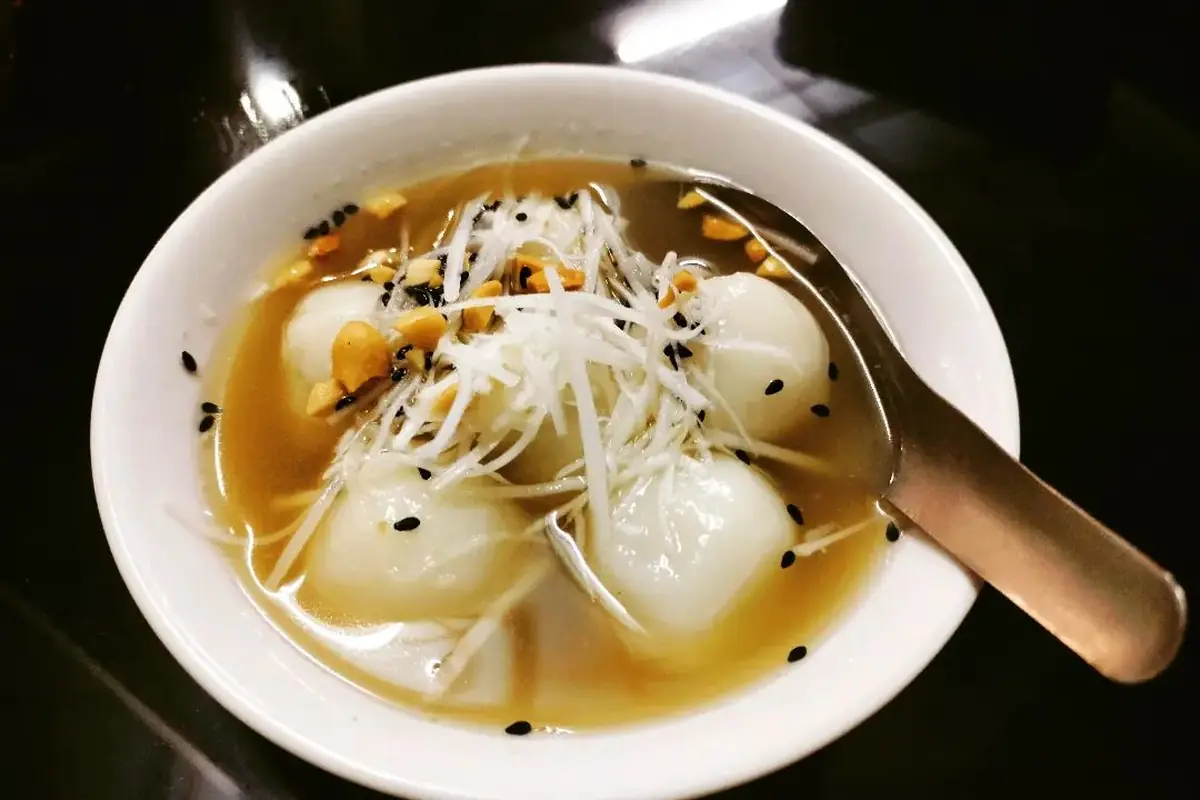
The portions aren’t particularly large, making sui din a good choice after dinner or during a short evening food walk.
You’ll find it at dessert shops and street-food stalls around central Hai Phong, although specific vendors and hours can change seasonally.
Rather than crossing the entire city to find an old recommendation, look for a currently operating dessert shop near your dinner location.
If you’re sharing with someone who hasn’t tried ginger-flavored desserts, order one bowl first.
Banh duc tau: a savory street-food snack
Bánh đúc tàu is another local dish worth trying.
It features soft rice-flour pieces served with toppings such as shrimp, meat, and papaya, accompanied by a flavorful sauce or broth.
It’s quite different from the hot minced-pork rice cake commonly found in Hanoi.
Bánh đúc tàu is sold around Phan Boi Chau Street and in central street-food areas.
Because small food stalls may have limited service hours, check that the vendor is operating before building your afternoon around a particular address.
Nem cua be, hot snails, and seafood dinners
Nem cua bể is Hai Phong’s distinctive square crab spring roll.
The outside is fried until crisp, while the filling typically combines crab with other ingredients. It’s especially good served freshly cooked.
If you enjoy seafood, look for shops offering boiled or stir-fried snails. Ordering a small selection first is a practical way to try different preparations without ending up with too much food.
For groups, a steaming hotpot is another good winter dinner option. Crab, fish, and seafood hotpots are popular choices for people who want to share a long, relaxed meal.
In winter, the simplest adjustment is to start the day with hot noodle soup, save snacks for the afternoon, and finish with sui din after dinner.
8. Christmas, New Year’s, and late-winter humidity in Hai Phong
Traveling between November and February also means encountering several important holidays.
These celebrations change the atmosphere of the city, but they can also affect opening hours, transportation demand, and your choice of places to visit.
Christmas in Hai Phong: where to go on December 24
Hai Phong Cathedral, at 46 Hoang Van Thu Street, is one of the city’s important Catholic landmarks.

The area is associated with Christmas celebrations and offers an opportunity to see the church architecture and seasonal atmosphere.
On Christmas Eve, December 24, it may be particularly busy with worshippers and visitors. Remember that this is an active religious space, so be considerate when taking photographs or approaching people attending services.
The Opera House square and nearby central streets are also natural places for an evening walk.
However, Christmas Mass schedules, outdoor entertainment, and other organized events for 2026 should be checked against official announcements.
Don’t assume a concert or fireworks display from a previous year will automatically happen again.
New Year’s Eve and January 1, 2027
New Year’s Day in 2027 falls on Friday, January 1.
For people who normally have Saturdays and Sundays off, that creates a convenient three-day weekend.
It’s a good opportunity for a short trip from Hanoi, perhaps with one night in Hai Phong or an additional visit to Cat Ba if the weather cooperates.
On December 31, you could plan dinner in the city center, visit the Lach Tray night street, or walk around the Opera House area.
Don’t rely on a countdown concert or fireworks at a particular location unless the official 2026-2027 program has been announced.
Lunar New Year 2027: a different travel experience in February
Vietnamese Lunar New Year, or Tết, begins on Saturday, February 6, 2027.
The announced holiday schedule for government agencies and public service units runs from February 4 through February 10, 2027. Private-sector holiday arrangements may vary.
For travelers, the important difference is that some small restaurants, shops, and services may close or operate on reduced schedules around the holiday.
Meanwhile, temples and religious sites can become much busier as people visit during the opening days of the lunar year.
If your main goal is a food tour, consider visiting before the holiday period or contact the restaurants you want to try.
Opening hours from an ordinary Wednesday in November shouldn’t be used as a reliable guide to what will be open on Lunar New Year’s Day.
If you’re visiting specifically for Tet, focus on the festive atmosphere, decorations, and traditional places of worship.
What is nồm? Why late February can feel so humid
Toward the end of winter, northern Vietnam can experience a damp-weather phenomenon called nồm.
It happens when warm, humid air comes into contact with surfaces that are still cold, causing moisture to condense.
In Hai Phong, these conditions are most commonly associated with the period from February through April, although there’s no fixed annual start date.
One week may still feel distinctly wintry. Another may bring mild temperatures, foggy windows, damp floors, and clothes that refuse to dry.
If you’re staying in a hotel for several nights, a room with good ventilation and a dehumidifying function can make a noticeable difference.
Be careful on smooth tiled floors, which may become slippery even without visible rainfall.
9. A practical 2-day winter itinerary for Hai Phong
For a two-day, one-night trip, choose one main focus each day rather than trying to see everything.
Cat Ba makes this even more important, since the ferry crossing and onward road transportation take up a meaningful part of your schedule.
Option A: cold weather, food, and sightseeing in the city
This is the easiest plan for first-time visitors, international travelers, and anyone who wants to explore local food without depending on marine weather.
Day 1
| Suggested time | Activity |
|---|---|
| 8-9 a.m. | Breakfast with banh da cua in the city center |
| 9:30-11 a.m. | Explore the Opera House, Quán Hoa, and old streets |
| 11:30 a.m.-1 p.m. | Lunch, with nem cua be as an option |
| 2-4 p.m. | Visit Hai Phong Museum if open, or stop at a cafe |
| 6-8 p.m. | Dinner and a walk around 53 Lach Tray |
| After 8 p.m. | Try sui din or return to your hotel |
These are suggested itinerary times, not confirmed restaurant opening hours or attraction schedules.
If you’re arriving by train from Hanoi, start sightseeing after you reach Hai Phong Railway Station and have somewhere to leave your luggage.
There’s no point planning breakfast at 8 a.m. if your train is scheduled to arrive later.
Day 2
Start with bun ca cay for breakfast, then choose either Du Hang Pagoda or Hang Kenh Communal House.
Have lunch in the city before returning to Hanoi or continuing to your next destination.
This itinerary is easy to adjust if the weather turns wet or windy.
Option B: a mild day with a half-day trip to Do Son
This option suits visitors who have already explored central Hai Phong or would like to see the sea without staying overnight on an island.
Spend your first day in the city, visiting the old streets and trying local food.
On the second day, have breakfast and leave for Do Son around 9:30-10 a.m.
Spend an hour or two enjoying the coastal scenery, then stop for lunch before heading back to the city.
Don’t feel obliged to stay until late afternoon if the wind picks up.
And if you have a train or bus back to Hanoi, leave enough time for traffic and finding the correct departure point.
Option C: Cat Ba Island in winter
Staying overnight on the island generally makes more sense than visiting Cat Ba for just a few hours.
On the first day, travel to the island, check into your accommodation, and explore Cat Ba Town or the Cat Co beach area if the weather permits.
On day two, choose a nature walk or a confirmed Lan Ha Bay sightseeing boat trip.
Avoid combining a lengthy bay cruise with the last ferry of the day and a tightly scheduled onward bus to Hanoi.
Weather-related changes are an important consideration when planning travel at sea.
With only two days and one night, staying in Hai Phong city may be the more enjoyable option if marine conditions look unfavorable.
Conclusion: when should you visit Hai Phong in winter?
Choose November for comfortable walking weather and easier coastal sightseeing. Visit in December or January if you enjoy northern Vietnam’s winter atmosphere, hot local food, and quieter streets, while February is better suited to travelers interested in late-winter scenery and Lunar New Year traditions who don’t mind the possibility of damp weather.
Frequently asked questions
Does Hai Phong have winter?
Yes. Hai Phong is in northern Vietnam and experiences a distinct winter influenced by northeast monsoon winds. The coldest period is generally between December and February, although temperatures vary from day to day and warmer spells still occur.
Is Hai Phong cold in November?
November is generally mild rather than particularly cold. The average high is around 81°F (27°C), with an average low of 68°F (20°C). However, early cold fronts can lower temperatures quickly, so bringing a light jacket is sensible.
What are the best things to do in Hai Phong during winter?
On cold or rainy days, explore the Opera House area, Hai Phong Museum, traditional temples, local restaurants, and cafes. On sunny days with light winds, consider a coastal walk in Do Son or a trip to Cat Ba Island, provided transportation and sightseeing services are operating.
What is the best food to eat in Hai Phong in winter?
Banh da cua, bun ca cay, sui din, and banh duc tau are all excellent choices. Sui din, served in hot ginger syrup, is particularly enjoyable on cold evenings, while banh da cua makes a satisfying breakfast.
Does it snow in northern Vietnam in winter?
Snow occasionally occurs in some high-altitude mountain areas of northern Vietnam under unusual weather conditions, but it is rare and doesn't happen every year. Hai Phong itself doesn't normally experience snow. If you're interested in the possibility of snow or frost, Sapa is the place to look, but don't plan a trip expecting snowfall to be guaranteed.