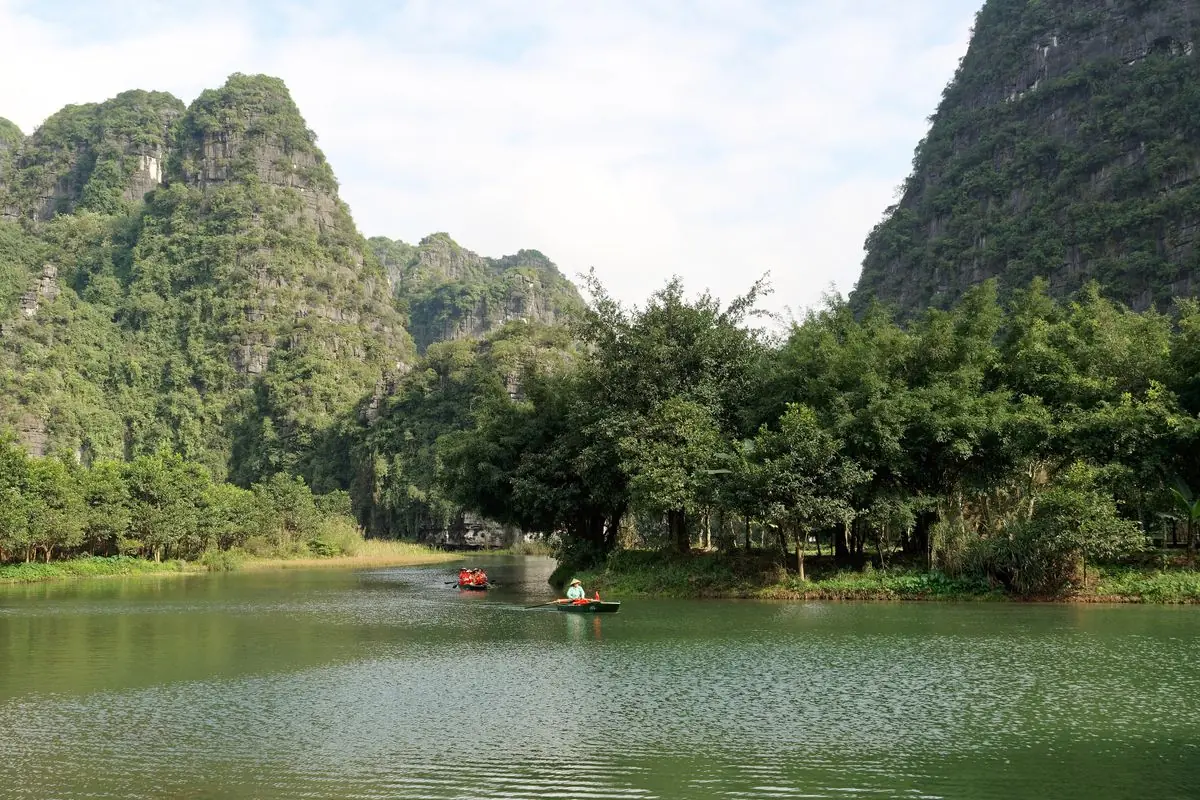
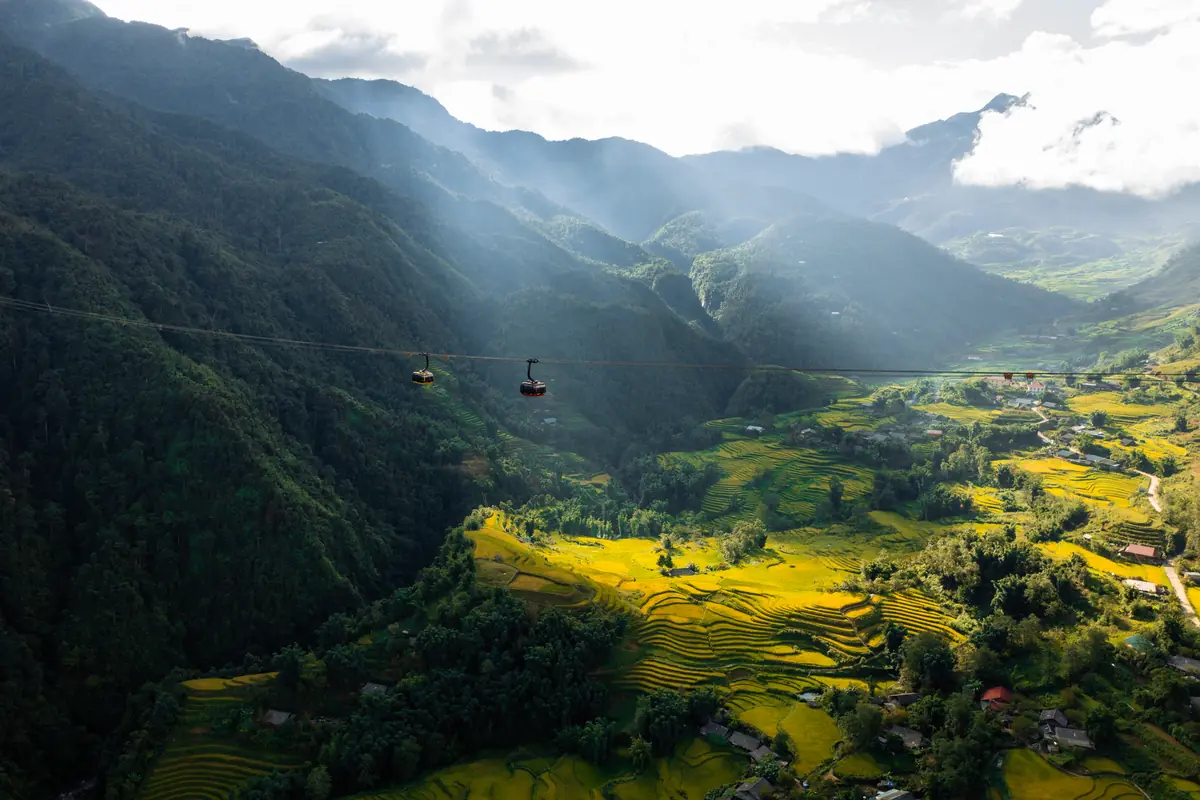
Why is autumn the best season in Northern Vietnam, yet December is still worth visiting?
Every season brings something different to Northern Vietnam. This guide helps you choose the right month for Hanoi, mountain adventures, boat trips, and a holiday around Christmas or Tet.
 20 min read
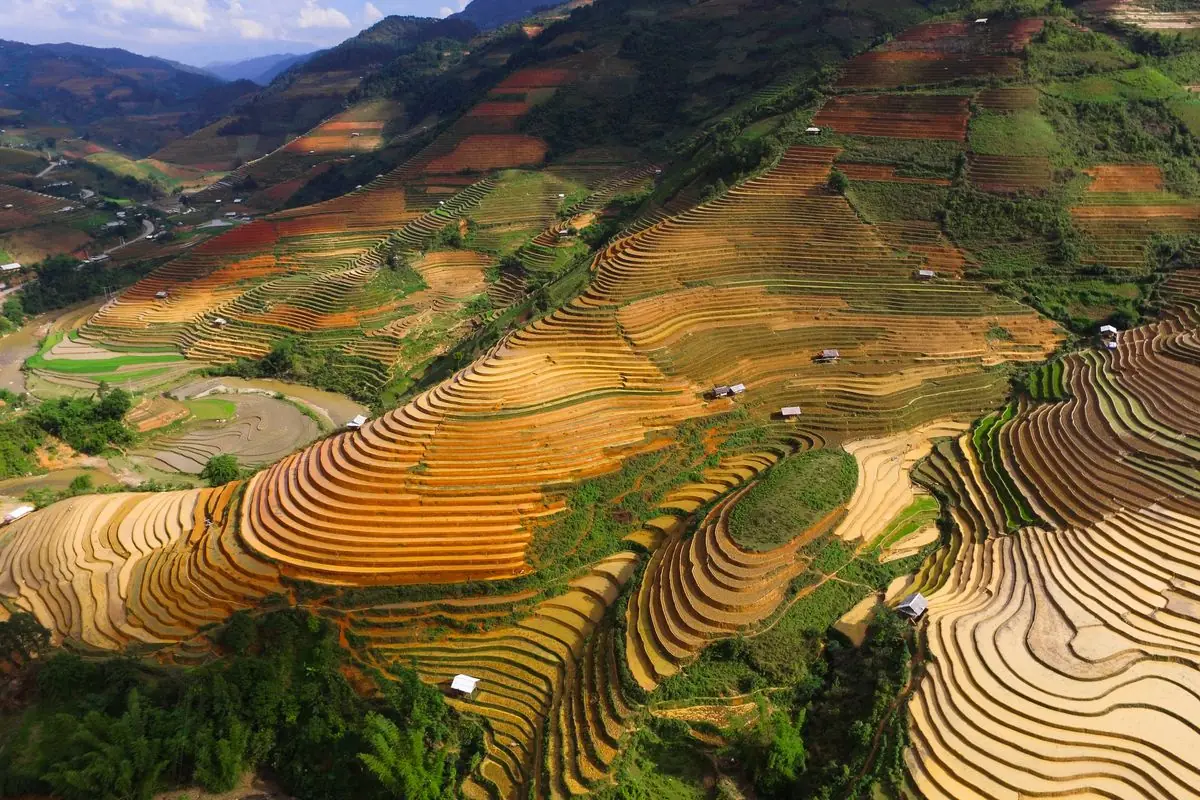
The Che Cu Nha terraces in Mu Cang Chai turning gold, with a few patches still green and small huts scattered across the slope.
The best time to visit Northern Vietnam is generally October to November or March to April, especially if you want to explore several destinations in one trip. But those aren’t the only months worth considering. December brings buckwheat flowers in Ha Giang, white mustard flowers in Moc Chau, and pleasantly chilly days in Hanoi. Meanwhile, late May is when the rice fields around Tam Coc turn golden. There isn’t one perfect season for the entire region, and matching your destinations to the calendar matters more than squeezing everything into a single itinerary.
What is the best month to visit Northern Vietnam?
For a first trip to Vietnam combining Hanoi, Ninh Binh, and Ha Long Bay, March-April and October-November are generally the easiest periods to plan around.
March and April suit travelers who enjoy walking, visiting historic sites, taking boat rides, and spending long days outdoors. October and November offer more comfortable temperatures after the summer heat, making them appealing for both the lowlands and the mountains.
Of course, your vacation dates might fall outside these months. Rather than changing your entire trip, consider changing where you go.
| Months | Where to go | What to consider |
|---|---|---|
| December-February | Hanoi, Ninh Binh, Moc Chau, Ha Giang | Cold weather, mountain fog, and Tet holiday closures |
| March-April | Hanoi, Ninh Binh, Ha Long Bay, Lan Ha Bay, Sapa | Humid days in Hanoi and occasional early-spring drizzle |
| May-June | Tam Coc, Cat Ba, Ha Long Bay, Pu Luong, Mu Cang Chai | Increasing heat and rainfall; check marine forecasts |
| July-September | Sapa, Mu Cang Chai, rice terrace regions | Heavy rain, mountain landslides, and possible bay cruise cancellations |
| October-November | Hanoi, Ha Long Bay, Lan Ha Bay, Sapa, Ha Giang, Cao Bang | Colder temperatures in the highlands toward late November |
This table is meant to help you choose a season, not predict the weather on your travel dates. A week in November can still be rainy, while a December afternoon might be beautifully sunny.
Rice harvests, flower seasons, and beach weather don’t follow the same calendar. You can’t realistically expect to see golden rice terraces in Mu Cang Chai, harvest-ready fields in Tam Coc, and early-summer conditions in Ha Long Bay during the same week.
Spring, March-April: one of the easiest times to explore the north
March and April are particularly suitable for a seven- to ten-day trip around Northern Vietnam, with a reasonable chance of enjoying outdoor activities across several destinations.
In Hanoi, March can still bring drizzle and humid weather. By April, temperatures generally rise, making walks around Hoan Kiem Lake, the Old Quarter, and historic neighborhoods more comfortable.
Hanoi also experiences a period of very high humidity, locally known as nom, usually between mid-February and early April. Floors can feel damp, windows may collect condensation, and clothes take longer to dry.
Ninh Binh is another good choice during spring. You can take a boat ride through Trang An, climb Hang Mua, or cycle around Tam Coc without the strongest summer heat.
The rice fields won’t be golden yet, but the limestone mountains, rivers, and open countryside make the area well worth one or two days.
For Ha Long Bay and Lan Ha Bay, April marks the beginning of a particularly attractive period for cruising. Cat Ba is also a good choice in April and May, especially if you’re interested in kayaking, limestone scenery, and spending a night on a boat.
With an extra two or three days, consider Sapa. Spring brings fresh greenery to the mountains, although the rice terraces haven’t reached their golden harvest stage.
A practical seven-day spring itinerary
A manageable route looks like this:
- Days 1-2: Explore Hanoi.
- Days 3-4: Stay in Ninh Binh, combining Trang An or Tam Coc with Hang Mua.
- Days 5-6: Visit Ha Long Bay or Lan Ha Bay and spend one night on a cruise.
- Day 7: Return to Hanoi before continuing your journey.
Mountain lovers can replace the two days on the bay with Sapa.
Trying to include Hanoi, Ninh Binh, Ha Long Bay, and Sapa in just seven days means spending a significant amount of time in transit.
For international travelers planning to continue south through Vietnam, April is particularly convenient. You can travel onward to Hue, Hoi An, and Southern Vietnam without encountering as much seasonal conflict as you might in late autumn.
May-June: golden rice in Tam Coc and early summer on the bays
May isn’t the most comfortable time for long walks around Hanoi. Temperatures rise, humidity increases, and streets without much shade can become exhausting by midday.
But travel a couple of hours outside the capital, and the scenery changes completely.
From mid-May to early June, the rice fields around Tam Coc turn golden.
Boats depart from Van Lam Wharf and follow the Ngo Dong River between limestone mountains and fields of ripening rice. Visiting Ninh Binh specifically for the harvest scenery is a good reason to prioritize Tam Coc rather than automatically choosing Trang An.
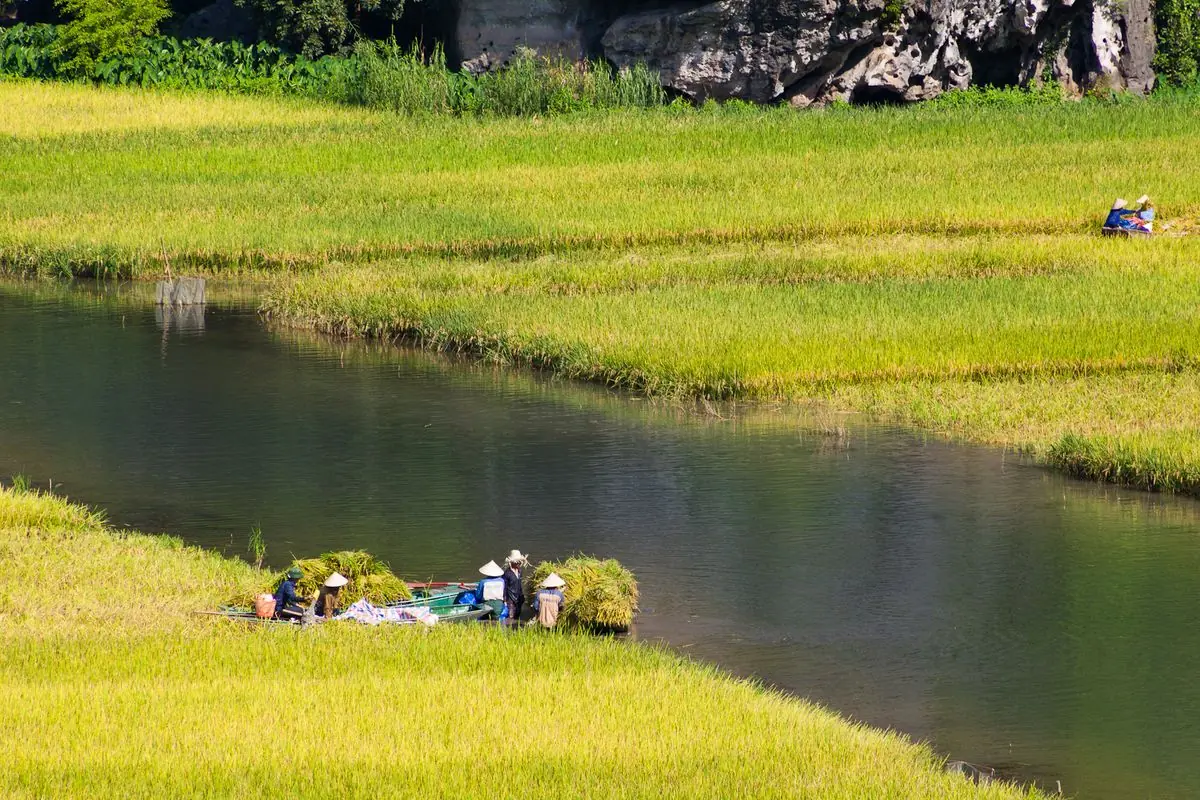
Hang Mua offers a broad view of the surrounding landscape. The climb is best tackled in the morning, before the exposed stone steps become uncomfortably hot.
June and July also bring lotus flowers to the Hang Mua area, although the peak flowering period varies from year to year.
Along the coast, Ha Long Bay and Cat Ba enter their warmer season, making swimming, kayaking, and boat-based holidays more appealing.
The usual beach season around Ha Long Bay runs approximately from May to October. However, summer also brings a greater possibility of thunderstorms, tropical depressions, and typhoons.
Lan Ha Bay is popular with travelers looking to combine Cat Ba Island, Viet Hai Village, and quieter areas surrounded by limestone islands.
May offers an attractive balance of warmer temperatures and outdoor activities, while June requires closer attention to the marine forecast.
Further inland, late May and June mark the water-pouring season in Mu Cang Chai. The flooded rice terraces reflect the sky and surrounding hillsides, creating a completely different landscape from the golden fields of autumn.
Pu Luong and Mai Chau are also lush and green during this period. Hikers and cyclists should start early rather than spending the hottest part of the afternoon on exposed trails.
Choose May or June if your priorities include photographing Tam Coc’s golden rice fields, seeing flooded rice terraces, or combining coastal activities with countryside sightseeing.
July-September: beautiful landscapes, but more rain and typhoon risks
Summer isn’t a season you need to avoid entirely in Northern Vietnam. The important question is how much your planned activities depend on stable weather.
Hanoi is generally hot and humid, with substantial rainfall during the May-October period. Ninh Binh becomes particularly wet between July and September, while mountain regions can experience prolonged heavy rain.
In Sapa, Ha Giang, or on mountain motorbike routes, rain is more than an inconvenience that can be solved with a waterproof jacket.
Mountain roads may become slippery, fog can reduce visibility, and heavy rainfall increases the risk of landslides and traffic disruptions.
If you’re planning the Ha Giang Loop, Cao Bang Loop, or journeys to remote villages, avoid scheduling your return so tightly that one road closure could cause you to miss an international flight.
That said, late August and September are among the most interesting months for rice terrace photography.
Sapa’s rice harvest generally takes place around late August to early September.
Mu Cang Chai reaches its famous golden-rice season from September to early October.
The exact timing can shift by several weeks depending on the weather and planting schedule.
Is seeing rice terraces your main goal? Choose one region and give it enough time. Two nights in Mu Cang Chai will often be more rewarding than constantly changing hotels while rushing between Sapa, Mu Cang Chai, and Ha Giang.
Can you visit Ha Long Bay during typhoon season?
Yes, but you shouldn’t assume that a scheduled cruise will definitely depart.
Typhoons affecting the bay area are generally concentrated between June and September. When dangerous weather is forecast, local authorities may temporarily suspend permits for sightseeing boats and overnight cruises.
For example, on August 18, 2025, Quang Ninh suspended permits for sightseeing and overnight tourism vessels from 1:00 PM because of a tropical depression.
This illustrates why even a cruise booked well in advance may need to be rescheduled.
Monthly rainfall averages don’t tell you how many typhoons will occur. Whether boats can depart depends on actual wind, waves, visibility, and official safety restrictions.
October-November: a great time for Hanoi, the bays, and the mountains
When you can choose your vacation dates freely, October and November deserve serious consideration.
In Hanoi, this is an especially pleasant period for walking through the Old Quarter, around Hoan Kiem Lake, through the French Quarter, and along the streets surrounding West Lake.
Temperatures are generally more comfortable than in summer, so you don’t need to build your entire sightseeing day around escaping the midday heat.
Ha Long Bay often offers attractive cruising conditions in October and November, with opportunities for clearer skies and comfortable temperatures.
Lan Ha Bay is another good November option, particularly if you enjoy sitting on the deck, kayaking, and watching the limestone islands rather than spending most of your time swimming.
Cao Bang is especially appealing from mid-September to early October. To visit Ban Gioc Waterfall, Nguom Ngao Cave, and the surrounding mountain roads, consider traveling a little earlier than you would for an autumn trip focused on Hanoi and Ha Long Bay.
Sapa generally offers comfortable trekking conditions in October and November, but there’s an important distinction between trekking season and rice harvest season.
By October, many terraces have already been harvested. They won’t necessarily resemble the bright golden fields you see in photographs taken in September.
Ha Giang offers something different.
Buckwheat flowers typically appear from October through December, depending on the location and weather. The mountain roads through Dong Van, Sung La, and Ma Pi Leng remain spectacular even when flowers aren’t blooming everywhere.

When golden rice terraces are the priority, plan for late September or early October in Mu Cang Chai.
If you’d rather combine Hanoi, Ha Long Bay, Ninh Binh, and Ha Giang in generally comfortable conditions, late October to mid-November is a more balanced choice.
Is Northern Vietnam cold in December? Where should you go?
December is a popular time for international visitors traveling during the Christmas and New Year holidays.
Northern Vietnam is entering winter, but the difference between Hanoi and the mountains is substantial.
Hanoi and Ninh Binh generally remain comfortable for daytime sightseeing. Ha Long Bay and Cat Ba can feel colder when you’re exposed to wind on a boat.
Sapa and Ha Giang require proper winter clothing, especially for early mornings and evenings.
Northern Vietnam weather in December
| Destination | Average high/low temperature | Average monthly rainfall |
|---|---|---|
| Hanoi | 22°C / 15°C | 34 mm |
| Ha Long Bay | 22°C / 17°C | 19 mm |
| Cat Ba Island | 21°C / 18°C | 32 mm |
| Sapa | 16°C / 8°C | 49 mm |
| Ninh Binh | Average highs around 21-22°C during December-February | - |
These figures are based on 2016-2025 averages using ERA5 reanalysis data accessed through Open-Meteo. They’re useful for understanding seasonal conditions, not predicting the weather on a particular day.
A sunny 22°C afternoon in Hanoi can feel comfortable for walking.
On the deck of a Ha Long Bay cruise, the combination of wind and humidity may make a jacket necessary.
In Sapa, nights are considerably colder. If your hotel doesn’t have adequate heating, indoor temperatures may also feel uncomfortable.
The best places to visit in Northern Vietnam in December
Hanoi
December works well for shorter walks through the Old Quarter, visits to the Temple of Literature, museums, and warm meals such as pho, bun thang, or rice porridge. On chilly or drizzly days, spend more time at indoor attractions.
Ninh Binh
Trang An, Tam Coc, Hang Mua, and the ancient capital of Hoa Lu are worth exploring on relatively dry days. However, December isn’t rice harvest season, so don’t expect the bright golden fields shown in late-May photographs.
Ha Long Bay and Lan Ha Bay
Cruises are still possible, but winter can bring low cloud, mist, and overcast skies. Focus on limestone scenery, cave visits, and spending time aboard rather than planning a swimming holiday.
Sapa
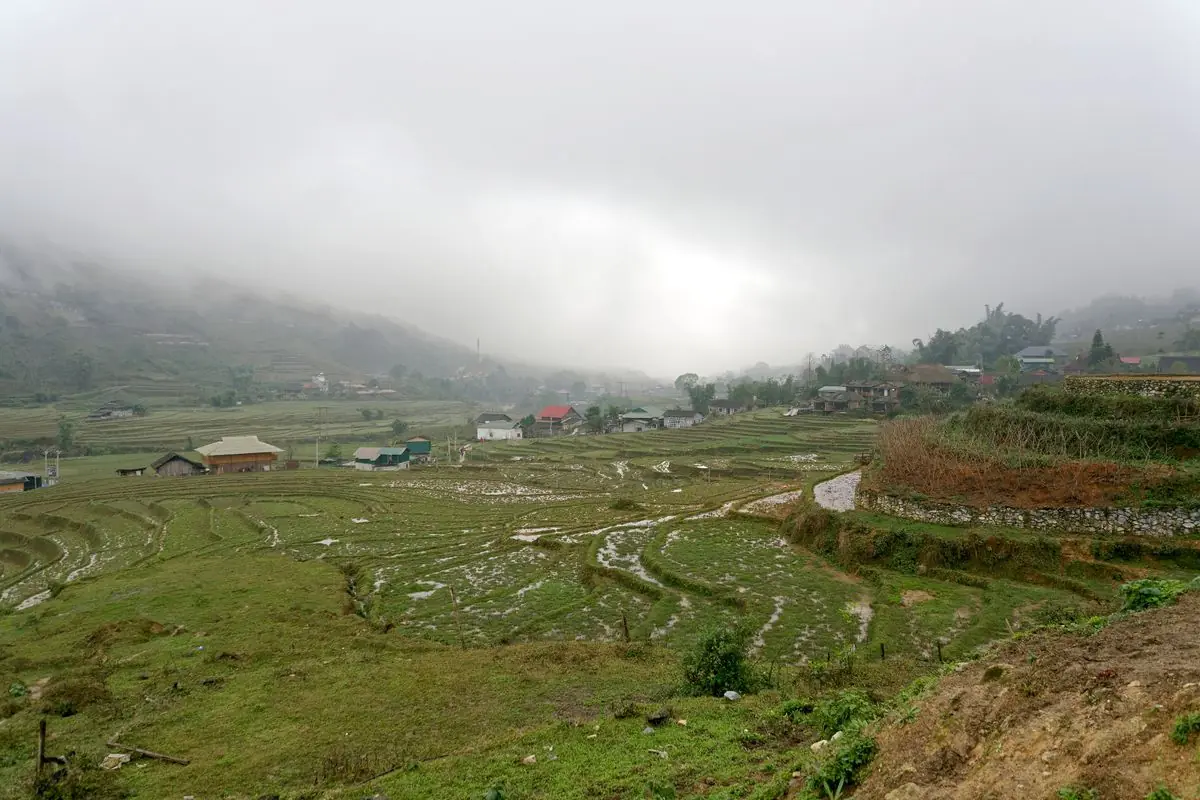
December suits travelers who enjoy cold mountain air, cozy accommodation, and winter scenery. The rice terraces have already been harvested. Frost and snow are possible during severe cold spells, but they’re not something you can reliably plan a holiday around.
Ha Giang
December can still offer buckwheat flowers, particularly earlier in the month. Fog can become dense on mountain passes around Dong Van and Ma Pi Leng. If you’re unfamiliar with mountain roads, consider hiring an experienced local driver.
Beyond these familiar destinations, Moc Chau is another attractive December option.
White mustard flowers generally appear in November and December, while plum blossoms can begin blooming in late December and continue until around mid-February.
A seven-day Northern Vietnam itinerary for December
For a relatively relaxed journey:
- Days 1-2
Hanoi
Explore Hanoi, including the Old Quarter, Hoan Kiem Lake, the Temple of Literature, and central neighborhoods.
- Days 3-4
Ninh Binh
Visit Ninh Binh, staying overnight around Tam Coc or Trang An.
- Days 5-6
Ha Long Bay or Lan Ha Bay
Take an overnight cruise in Ha Long Bay or Lan Ha Bay, preferably on a boat with comfortable indoor spaces.
- Day 7
Back to Hanoi
Return to Hanoi.
Travelers more interested in mountain winters can replace Ninh Binh and the bay with Sapa.
Ha Giang deserves several days of its own. It isn’t a destination to squeeze into a spare afternoon between other stops.
What is traveling around Northern Vietnam like at Christmas and New Year?
Christmas on December 25 and New Year’s Day on January 1 fall close together, but they’re very different from Vietnam’s Lunar New Year, known as Tet.
During Christmas, most regular tourist attractions in Hanoi, Ninh Binh, and Ha Long Bay can still be visited.
Areas around churches, shopping centers, and major streets may become busier in the evenings.
In Hanoi, St. Joseph’s Cathedral and the surrounding streets are among the easiest places to experience the Christmas atmosphere.
The neighborhood can become particularly crowded on December 24, especially around religious services and evening celebrations.
International visitors often combine Christmas and New Year with a longer trip through Vietnam.
For that reason, check hotel availability and cruise cabins in advance, particularly if you want a specific room category, balcony, or sailing date.
Rates and availability depend on the operator, accommodation type, and dates. A regular weekday price shouldn’t be treated as a reliable estimate for December 24 or December 31.
Is Northern Vietnam worth visiting during Tet?
Yes, especially if you’re interested in Vietnamese culture.
However, Tet isn’t necessarily the easiest time for an itinerary involving frequent hotel changes, long-distance buses, and visits to many small restaurants.
In the days leading up to Tet, Hanoi and Hai Phong are busy with flower markets, shopping, and preparations for the Lunar New Year.
Roads around markets, bus stations, and major city exits can become crowded as people travel home to visit family.
From the final afternoon of the lunar year through the first few days of Tet, some family-run shops, traditional restaurants, and smaller services close.
Don’t assume that a famous pho restaurant or a neighborhood coffee shop will follow its usual opening hours.
On the other hand, Tet offers an opportunity to see a different side of Hanoi.
Some streets become unusually quiet, families visit relatives, people wear traditional ao dai for photographs, and temples and pagodas welcome visitors coming to pray for the new year.
How to plan a trip around Tet 2027
For international travelers, there are three reasonable approaches.
Arrive before February 4: Spend time exploring Hanoi and visiting flower markets, then remain in one city during the main holiday.
Stay in Northern Vietnam between February 6 and 10: Choose accommodation and attractions that have confirmed their holiday opening schedules. Avoid planning too many intercity transfers or tightly connected tours.
Arrive after February 10: This is generally more convenient if conventional sightseeing is your priority. Some smaller businesses may still reopen later than the official public holiday period.
For destinations such as Ha Long Bay and Ninh Binh, confirm the operating schedules of boats, wharves, and tour providers directly.
Tourist services may continue operating during Tet, but last year’s schedule isn’t a guarantee for the following year.
Rainy and typhoon seasons in Northern Vietnam: what should you avoid?
When looking at Northern Vietnam’s weather, it’s useful to separate three different concerns: heavy urban rainfall, dangerous marine conditions, and mountain roads affected by prolonged rain.
Hanoi, Hai Phong, and Ninh Binh
Summer rain can interrupt outdoor sightseeing, but city itineraries are usually easier to adjust.
Move a museum visit or cafe break into a rainy afternoon, and save dry weather for walking tours, temples, and scenic viewpoints.
In Ninh Binh, attractions involving many stone steps, such as Hang Mua, require extra caution after rainfall.
If the steps are still wet and slippery, there’s little reason to force the climb just because it appears on your itinerary.
Ha Long Bay and Cat Ba
Sightseeing boats in the bays operate under maritime safety regulations.
When conditions become unsafe, authorities may suspend departures even if you’ve already paid for a cruise.
This is why dedicating an entire three-day vacation to a single overnight cruise during typhoon season can be risky.
If the cruise is canceled, you’ll want enough time to switch to land-based activities.
Sunny weather in Hanoi doesn’t necessarily mean boats are allowed to depart from Quang Ninh.
Sapa, Ha Giang, and Cao Bang
Mountain routes require additional caution during heavy rain.
Slippery roads, low visibility, and landslide risks can have a direct impact on transportation.
Considering riding a motorbike on the Ha Giang Loop in July or August? Think carefully about your experience on steep, winding roads.
For visitors unfamiliar with manual motorcycles, mountain driving, or Vietnam’s traffic conditions, traveling with an experienced local driver is usually the more suitable choice.
Whether a road has reopened safely must be confirmed through current local information, not just a sunny weather icon on your phone.
What is the best month to visit Northern, Central, and Southern Vietnam together?
A trip across Vietnam involves at least three distinct climate zones.
The best month for Hanoi isn’t always ideal for Hue, Hoi An, or Phu Quoc.
March-April: one of the best periods for all three regions
This is an excellent time to consider a two- or three-week journey.
Northern Vietnam is generally suitable for Hanoi, Ninh Binh, Ha Long Bay, and Sapa.
Central Vietnam enters a more favorable period for Hue, Hoi An, and Da Nang, while many Southern Vietnam destinations are still in their relatively dry season.
You could begin in Hanoi, travel through Ninh Binh and Ha Long Bay, fly to Da Nang, visit Hoi An and Hue, and continue to Ho Chi Minh City or the Mekong Delta.
Put weather ahead of a particular flower or rice harvest, and March and April offer a good balance.
October-November: great for the north, less predictable in Central Vietnam
October and November are attractive months for Northern Vietnam, particularly Ha Giang, Sapa, Hanoi, and Ha Long Bay.
But Central Vietnam can experience heavy rain, typhoons, and flooding during this period.
Hue and Hoi An have a later rainy season than Northern Vietnam, with greater flood risk generally concentrated around September to November.
A trip beginning in Hanoi in late October could therefore have excellent conditions in the north but encounter substantial rain around Hoi An later on.
Flexible travelers can spend more time in Northern Vietnam before flying directly south.
If Hue and Hoi An remain essential stops, check forecasts close to departure and avoid committing too early to services that cannot be changed.
December-February: winter in the north, sunshine in the south
This period is attractive to visitors from Europe, North America, and other places with cold winters.
Northern Vietnam offers chilly city breaks and mountain landscapes, provided you pack appropriately.
Southern Vietnam is much warmer, with generally lower rainfall around Ho Chi Minh City, the Mekong Delta, and Phu Quoc.
Hue and Hoi An can still experience rain and overcast conditions in December.
Hoi An generally becomes more favorable from around February, while March is often more comfortable for outdoor sightseeing around Hue.
With only 12-14 days in December, Hanoi - Ninh Binh - Ha Long Bay - Ho Chi Minh City - Phu Quoc may make more sense than trying to include every major Central Vietnam destination.
May-August: possible, but expect heat and rain
Summer is suitable for many beach activities in Central Vietnam, but Northern and Southern Vietnam both experience periods of heat, humidity, and significant rainfall.
An itinerary combining Ha Long Bay cruises, Sapa trekking, and the mountain roads of Ha Giang is particularly sensitive to changing weather.
You don’t have to rule out summer entirely.
Just allow more flexibility, reduce unnecessary hotel changes, and avoid transport connections with very little time between them.
Choose your month based on what you actually want to see
Sometimes choosing the right month becomes much easier once you start with one question: what kind of scenery do you most want to experience?
| What you want to see or do | Best period to consider |
|---|---|
| Explore Hanoi on foot | March-April, October-November |
| Cruise around Ha Long Bay | April-May, October-November |
| Explore Lan Ha Bay from Cat Ba | April-May, November |
| Swim around Cat Ba and Ha Long Bay | Approximately May-October, weather permitting |
| See golden rice in Tam Coc | Mid-May to early June |
| See lotus flowers around Hang Mua | June-July |
| Trek in Sapa | October-November |
| See Sapa’s golden rice terraces | Late August to early September |
| See flooded terraces in Mu Cang Chai | Late May-June |
| See golden rice in Mu Cang Chai | September-early October |
| See buckwheat flowers in Ha Giang | October-December |
| See white mustard flowers in Moc Chau | November-December |
| See plum blossoms in Moc Chau | Late December-mid-February |
| Explore Cao Bang | Mid-September-early October |
These are typical seasonal windows, not guaranteed flowering or harvesting dates.
Looking for a relaxing holiday with less time spent traveling? Ha Long Bay or Cat Ba during the more favorable cruising months may be enough.
For trekking through villages and photographing rice terraces, Sapa, Mu Cang Chai, Pu Luong, or Mai Chau may suit you better.
Just make sure you’re choosing the correct stage of the rice-growing season. A green terrace, a flooded terrace, and a golden terrace are three very different scenes.
Travelers who love winding mountain roads and dramatic limestone landscapes might prefer Ha Giang, Cao Bang, or Ba Be Lake.
For these destinations, prioritize periods without prolonged heavy rainfall and allow enough time to travel between places.
Three Northern Vietnam itineraries for different seasons
Seven to eight days: Hanoi - Ninh Binh - Ha Long Bay
This route is particularly suitable for March-April and October-November.
It also works in December if you’re comfortable with cooler temperatures and the possibility of mist over the bay.
Spend two days in Hanoi, two in Ninh Binh, and two around Ha Long Bay or Lan Ha Bay.
Leave the remaining time for travel and a little breathing room.
It’s a manageable introduction to Northern Vietnam, especially for first-time visitors who aren’t accustomed to long road journeys.
Eight to ten days: Hanoi - Sapa - Ha Giang
This is a good choice for travelers who want mountains and trekking, particularly in October and November.
The journey requires more travel time than it may initially appear.
Getting from Sapa to Ha Giang isn’t a short transfer, and the Ha Giang Loop itself needs several days to explore the main mountain routes properly.
To see golden rice in Sapa, move the trip to late August or early September and monitor the rainfall.
Don’t keep a November itinerary unchanged while expecting to see the golden rice valleys often featured in promotional photographs.
Ten to fourteen days: Hanoi - Ninh Binh - Ha Long Bay - mountains
This route works well if you want a mixture of city life, countryside, coastal scenery, and mountains.
In October and November, choose Sapa or Ha Giang for the mountain section.
April is generally more suitable for a spring visit to Sapa, while December makes Moc Chau or Ha Giang worth considering for flowers and winter scenery.
Choose one major mountain region rather than attempting to include Sapa, Ha Giang, Cao Bang, and Mu Cang Chai in the same ten-day trip.
Distances in the mountains can’t be judged by kilometers alone. Winding roads, weather, and local conditions can make a relatively short journey take much longer than expected.
Three things to check before choosing your travel dates
First, consider the main purpose of your trip.
If you want golden rice fields, your dates need to follow the agricultural calendar.
Dreaming of an overnight cruise instead? Marine weather conditions should carry more weight.
Those two experiences don’t always share the same ideal season.
Next, identify the activities most dependent on weather. Cruises, long treks, and mountain motorbike journeys should have a backup plan.
A cruise canceled because of a storm is very different from a city attraction that you can simply visit the following afternoon.
Finally, check the holiday calendar.
Christmas, New Year’s Day, and Tet affect travel services in different ways.
For Tet 2027, it’s especially important to confirm bus schedules, tour departures, and restaurant opening dates before booking accommodation.
There’s no reason to cancel a Northern Vietnam trip simply because you can’t visit in October. But for December, pack a jacket for the evenings. For the mountains in January, bring proper warm layers. And for a summer cruise around Ha Long Bay, always leave yourself an alternative if boats cannot depart.
Frequently asked questions
What is the best month to visit Northern Vietnam?
March-April and October-November are generally the most convenient periods for combining several Northern Vietnam destinations. If golden rice terraces are your main priority, late August to early October may be better, depending on the area. For buckwheat flowers, white mustard flowers, and winter scenery, November and December are worth considering.
Where should I go in Northern Vietnam in December? Is it cold?
Hanoi, Ninh Binh, Ha Long Bay, Ha Giang, and Moc Chau are all good possibilities. Hanoi's average December high and low are around 22°C and 15°C, while Sapa averages approximately 16°C and 8°C. Daytime temperatures in the lowlands are often manageable, but mountain trips require thermal layers, a warm jacket, and suitable footwear.
Is Northern Vietnam a good place to visit during Tet 2027?
Yes, particularly if you're interested in Vietnamese culture. Tet falls on February 6, 2027, and the announced holiday for civil servants and public employees runs from February 4 to 10. Some restaurants, shops, and transportation services may operate on different schedules. Confirm important bookings in advance rather than assuming everything will be available when you arrive.
When is typhoon season in Northern Vietnam? Can I still cruise Ha Long Bay?
Northern Vietnam's wetter months generally fall in summer and early autumn, while typhoons affecting the bay region are usually concentrated between June and September. Many days remain suitable for cruising, but boats may be suspended when dangerous weather develops. Check the operator's cancellation policy and official marine weather updates before departure.
What is the best time to visit both Northern and Southern Vietnam?
March and April offer a good balance, particularly if you also want to visit Hue and Hoi An. December through February is another attractive period for combining Northern Vietnam with Ho Chi Minh City, the Mekong Delta, or Phu Quoc. If Central Vietnam is part of your late-year itinerary, be aware that Hue and Hoi An have a different rainy season from the north.