Do Son weather made simple: when is the best time to visit the beach?
May and June are excellent choices for swimming in Do Son, while April, October, and November are better suited to sightseeing and seaside walks. The sea stays warm through early autumn, but heavy rain, strong winds, and occasional storm restrictions can change your plans.
 26 min read
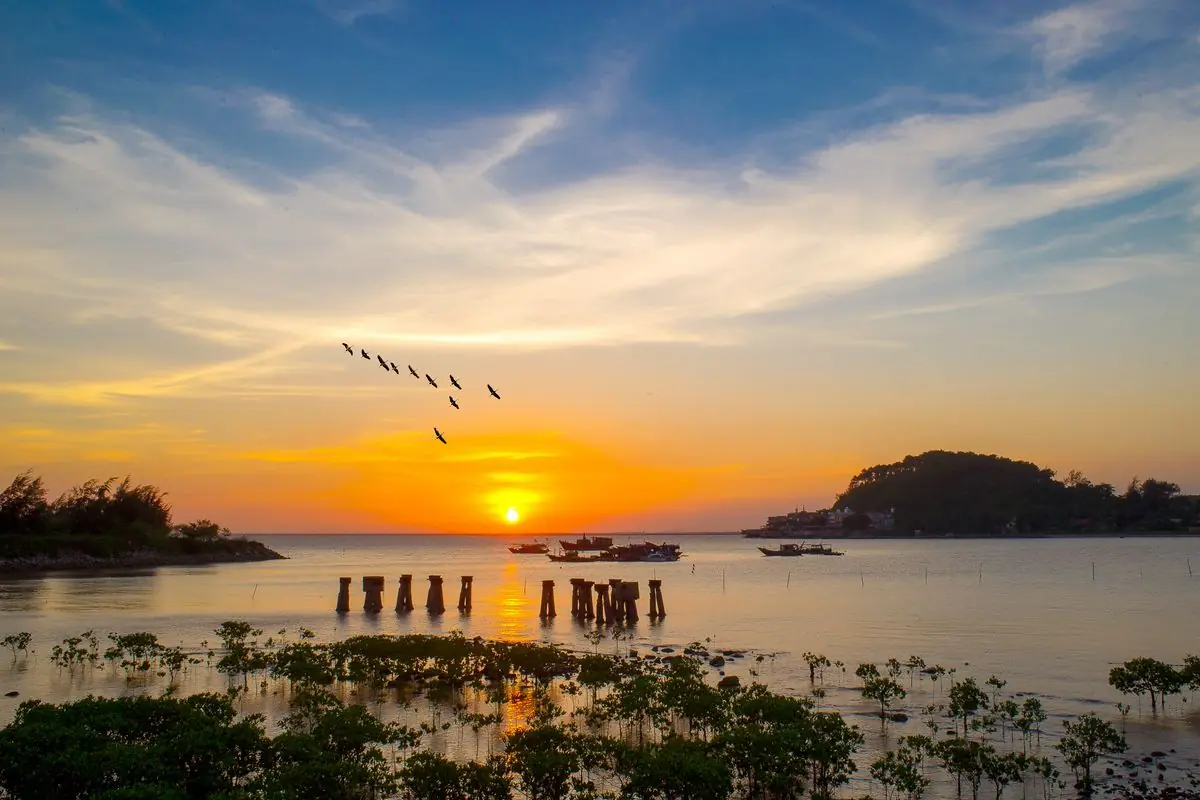
Sunset over the sea at Do Son, boats moored near shore.
At around 7 AM on Do Son’s Zone 2 Beach, the water can still look brown with river sediment even when the morning sky has cleared. In June, the sea averages about 31°C; by January, it drops to around 19°C. It’s the same stretch of coastline, but those two temperatures make for very different holidays.
1. What is the best month to visit Do Son?
May and June are two of the best months for a swimming holiday in Do Son. The sea averages around 29°C in May and 31°C in June, making both months comfortable for spending time in the water. However, rainfall becomes increasingly common as summer approaches.
If swimming isn’t your main priority, April, October, and November are also good choices. Temperatures are more comfortable for walking along the coast, sightseeing, and enjoying seafood. October stands out because the sea remains warm at around 29°C, even as northeasterly winds begin returning.
Here’s how to choose your travel dates based on what you actually want to do.
| Your main activity | Recommended months | What to keep in mind |
|---|---|---|
| Family beach holiday | May-June | Warm water, but occasional showers and thunderstorms |
| Swimming in the warmest water | June-September | Very warm sea, with frequent rain in August and September |
| Boat trip to Hon Dau Island | April-June, October | Only when sea conditions and boat operations permit |
| Coastal walks and photography | March-April, October-November | March can still be cloudy and windy |
| Seafood and a relaxing weekend | Year-round | Winter requires warmer clothing; rainy days favor indoor restaurants |
| Visiting in winter | November-February | Better for sightseeing than swimming |
Do Son sits along the Gulf of Tonkin and experiences a tropical monsoon climate. As a result, air temperature alone doesn’t tell you whether it’s a good day to go to the beach.
A sunny 30°C afternoon might be perfectly pleasant for relaxing on the sand but unsuitable for a boat trip if the wind is strong.
On the other hand, a cloudy day at 26°C may be much more comfortable for sightseeing than a hot summer afternoon.
2. Do Son weather by month: temperature, rainfall, and sea conditions
The following table uses climate data calculated specifically for Do Son rather than substituting temperatures from central Hai Phong.
Air temperatures and rainfall represent averages for 2015-2024, derived from ERA5 data covering the Do Son Peninsula and part of the surrounding sea. Sea temperatures are based on modeled nearshore waters averaged over 2023-2025.
| Month | High/Low (°C) | Rainfall (mm) | Rainy days | Sea temperature (°C) | Swimming conditions |
|---|---|---|---|---|---|
| January | 20/16 | 47 | 9 | 19 | Not recommended |
| February | 20/17 | 29 | 6 | 19 | Not recommended |
| March | 23/20 | 36 | 8 | 21 | Still cold |
| April | 26/23 | 58 | 9 | 25 | Possible on suitable days |
| May | 30/27 | 150 | 16 | 29 | Excellent |
| June | 32/29 | 214 | 17 | 31 | Excellent when the sea is calm |
| July | 32/28 | 296 | 20 | 31-32 | Warm water, frequent rain |
| August | 31/28 | 438 | 25 | 31-32 | Choose your dates carefully |
| September | 31/27 | 372 | 23 | 31 | Warm, but rain and wind remain concerns |
| October | 28/24 | 186 | 14 | 29 | Generally good early in the month |
| November | 26/22 | 51 | 10 | 26 | Better for sightseeing |
| December | 21/17 | 31 | 6 | 22 | Not recommended |
Three things stand out.
First, February has the lowest average rainfall in this dataset, at around 29 mm, but the sea is only about 19°C. A relatively dry month is not necessarily a good swimming month.
Second, August has the highest average rainfall, reaching approximately 438 mm over 25 rainy days. That’s why an August beach holiday needs more flexibility, even though the water remains very warm.
Third, October’s sea temperature is still around 29°C. You don’t necessarily have to put away your swimsuit after September, but wind conditions and the marine forecast become increasingly important.
Why are Do Son temperatures different from central Hai Phong?
During summer, daytime temperatures in the Do Son dataset are generally about 1-2°C lower than those recorded in central Hai Phong. In winter, nighttime temperatures may be roughly 1°C warmer because of the nearby sea.
Part of this difference comes from the dataset itself. The grid cell takes in some sea surface as well as the land where visitors walk or stay.
These figures are therefore useful for comparing seasons and choosing when to travel, not for predicting that every June afternoon in Do Son will reach exactly 32°C.
3. What is Do Son like in each month?
January: cold sea water and northeasterly winds
January averages around 20°C during the day and 16°C at night, while the sea remains close to 19°C. This is not a suitable month for a typical swimming holiday.
Northeasterly and easterly winds are common. When a strong cold air mass arrives, the exposed beachfront can feel considerably colder than the number displayed on your weather app.
Spending a long time beside the sea in the early morning or late afternoon can leave your hands and face feeling cold. A wind-resistant jacket, long trousers, and closed-toe shoes are much more useful than swimwear.
On clear days, Do Son is still good for seafood, coastal views, and short walks. On windy days, indoor activities are a better choice, particularly when traveling with young children.
February: less rain, but the sea is still cold
February receives an average of around 29 mm of rain over six rainy days, the lowest monthly rainfall in the 2015-2024 dataset. However, the water remains around 19°C, and average air temperatures are approximately 20/17°C. That’s still too cold to spend an afternoon swimming.
February works better for a short excursion from Hai Phong or Hanoi. You could choose a clear day, have lunch near the coast, and return before evening.
Don’t rely only on the sunshine symbol in your weather forecast. A bright afternoon with strong northeasterly winds can still feel surprisingly chilly beside the water.
March: warmer weather and a good time for sightseeing
Temperatures rise to around 23/20°C in March, with an average of 36 mm of rain. The sea reaches approximately 21°C, which most casual beachgoers will still find cold.
March is a transitional month. One day may feel mild and pleasant, while another may bring a fresh northeasterly breeze or a late cold spell.
For visitors interested in Hon Dau Island, March can also coincide with the traditional Hon Dau Island Festival, which is held during the second lunar month.
In 2026, the festival took place from March 19 to 27. The festival period may attract larger crowds than ordinary weekdays, so confirm boat operations, weather conditions, and visitor arrangements before setting off.
April: comfortable weather for a mixed beach and sightseeing trip
April averages around 26/23°C, while the sea reaches approximately 25°C. This is when swimming begins to become a reasonable option on warm, calm days. Average rainfall is about 58 mm over nine rainy days, substantially lower than in the following summer months.
For a group of friends who want a combination of sightseeing and coastal relaxation, April is a good choice.
A morning visit to Hon Dau Island, followed by a seaside walk and seafood later in the day, can make for a pleasant day trip, provided the boat schedule allows it.
Water at 25°C may still feel cool, particularly in the morning or when the wind is strong. Families with young children may prefer the warmer part of the day.
May: one of the best months for swimming
May is one of the strongest choices for a traditional beach holiday.
Average air temperatures reach approximately 30/27°C, and the sea warms to around 29°C.
For most swimmers, that’s a comfortable water temperature.
Rainfall increases to approximately 150 mm over 16 rainy days. However, a rainy day doesn’t necessarily mean continuous rain from morning until night.
Short tropical showers are possible, and some days offer plenty of sunshine between periods of rain.
Watch out for thunderstorms.
A beautiful morning doesn’t guarantee a safe swimming afternoon, since storm clouds can develop quickly.
When beach conditions are suitable and swimming is permitted, approximately 7-10 AM is often a more comfortable time for outdoor activities than the hottest part of the day.
A late-afternoon swim may also work, provided there are no dangerous weather warnings.
June: very warm sea water and hot summer days
June’s average temperatures reach approximately 32/29°C.
The sea is around 31°C, making it very warm compared with winter and early spring.
Rainfall rises to roughly 214 mm over 17 rainy days, while southerly and southeasterly winds become more common.
June is a popular month for family beach holidays, but spending the entire day outdoors isn’t a great idea.
Between about 11 AM and 3 PM, the heat and sunshine can become intense. Returning to your hotel, eating lunch indoors, or taking a break is more comfortable than remaining on an exposed stretch of sand.
The warm water doesn’t guarantee calm conditions, either.
Thunderstorms, tropical depressions, and strong winds can still interrupt beach activities.
July: warm water, but weather warnings matter
July averages approximately 32/28°C, with sea temperatures of 31-32°C.
Rainfall increases to about 296 mm, spread across roughly 20 rainy days.
School holidays and summer travel can make Do Son busy on weekends. Yet a change in the weather can empty a beach surprisingly quickly.
In July, don’t assume that sunshine means it’s safe to swim.
If official forecasts warn of strong winds, high waves, or a tropical cyclone affecting the Gulf of Tonkin, check the latest information from meteorological authorities and local officials.
On July 3, 2026, Hai Phong introduced restrictions on certain marine activities from 4 PM in response to Typhoon Maysak.
These restrictions affected tourist vessels, passenger transport, and recreational activities in coastal and island areas, including Do Son.
August: the rainiest month in the dataset
August records the highest average monthly rainfall, approximately 438 mm over 25 rainy days.
Air temperatures remain around 31/28°C, while the sea is still very warm at 31-32°C.
Having many rainy days doesn’t mean rain falls continuously every day.
It does mean there’s a greater chance of weather interfering with outdoor plans than during relatively less rainy months.
If you’re booking a family holiday, consider accommodation that allows date changes or cancellation close to arrival rather than committing to a completely inflexible itinerary.
Boat trips to Hon Dau Island also require separate confirmation. Sea temperature alone cannot tell you whether a boat will operate.
September: still hot, with frequent heavy rain
September averages approximately 31/27°C, and the sea remains around 31°C.
Average rainfall is still substantial at 372 mm, with approximately 23 rainy days.
This is a transitional period, and conditions can differ considerably from one week to another.
Some days are sunny and calm. Others can bring heavy rain, strong winds, or weather associated with tropical storms.
For travelers taking a day trip from Hanoi or Hai Phong, September can work well if you have the flexibility to choose a date shortly before departure.
If you’ve booked transport and accommodation for a large group, agree on cancellation or rescheduling arrangements in advance.
The traditional Do Son Buffalo Fighting Festival is associated with the eighth lunar month, so its dates don’t fall in the same Gregorian month every year.
October: the sea is still warm, but northeasterly winds return
October’s average air temperatures are around 28/24°C, with sea temperatures still close to 29°C.
Rainfall decreases to approximately 186 mm over 14 rainy days.
October can be slightly misleading.
Looking only at temperature, you might think summer is still in full swing. But the prevailing winds are beginning to change.
Northeasterly and easterly winds become more common from October onward.
Some days remain warm enough for relaxing beside the beach, yet the wind and waves may make swimming unsuitable.
Swimming can still be an option early in October when conditions are favorable.
Toward the end of the month, it’s more sensible to think of Do Son as a destination for seafood, relaxation, and coastal scenery rather than a holiday built entirely around swimming.
November: good for seaside walks and seafood
November averages approximately 26/22°C, with about 51 mm of rain.
The sea remains around 26°C, which isn’t especially cold on its own, but wind can make getting out of the water uncomfortable.
The northeasterly wind season becomes more noticeable.
On windy afternoons, spending a long time on an exposed seafront is less pleasant than it would be in September or early October.
For foreign residents in Hanoi looking for a change of scenery over the weekend, November can still be an excellent time for a short trip.
You probably won’t need much swimming equipment, but a light windproof jacket will come in handy.
Land-based activities are generally easier to plan than boat excursions. Check the marine forecast separately if you intend to visit the island.
December: a cold sea and quiet coastal getaways
December averages approximately 21/17°C, while the nearshore sea temperature drops to around 22°C.
Rainfall is relatively low at 31 mm over approximately six rainy days. Northeasterly winds account for nearly half of the days in the wind-direction dataset.
That helps explain why December can feel much colder beside the sea than the air temperature suggests.
A thin sweater may not always be enough. A wind-resistant outer jacket, long trousers, and closed-toe shoes are more practical, especially early in the morning.
Families with young children may prefer sightseeing around midday or early afternoon.
There’s little reason to stretch a winter beach visit into the evening simply to spend more time outdoors.
4. How warm is the sea in Do Son, and when can you swim?
Sea temperatures in Do Son change considerably throughout the year.
They average around 19°C in January and February, rising to approximately 31-32°C during summer.
These are modeled sea-surface temperatures for nearby coastal waters, averaged over 2023-2025.
The actual temperature at the water’s edge can be different, depending on tidal conditions, water depth, and local weather.
| Sea temperature | How it generally feels | Typical months in Do Son |
|---|---|---|
| Around 19-21°C | Cold for most recreational swimmers | January-March |
| Around 22-25°C | Cool to chilly, depending on wind and personal tolerance | April, December |
| Around 26-29°C | Generally comfortable in favorable weather | May, October-November |
| Around 31-32°C | Very warm | June-September |
These temperatures are useful for estimating how comfortable the water might feel. They do not indicate whether swimming is safe.
For example, the sea may reach 32°C in August, but a thunderstorm with strong wind gusts can still make swimming dangerous.
Conversely, a sunny April afternoon with water at 25°C may be suitable for a healthy adult to take a short swim, provided the beach is open and conditions are safe.
Children and anyone sensitive to cold water may have different limits.
For a typical beach holiday, May through October is the main period worth considering.
May and June offer pleasantly warm water. July through September require closer attention to rainfall, while October brings the growing influence of northeasterly winds.
Why is Do Son’s sea water brown and murky?
Do Son’s water frequently looks light brown, yellowish-brown, or grayish rather than clear blue.
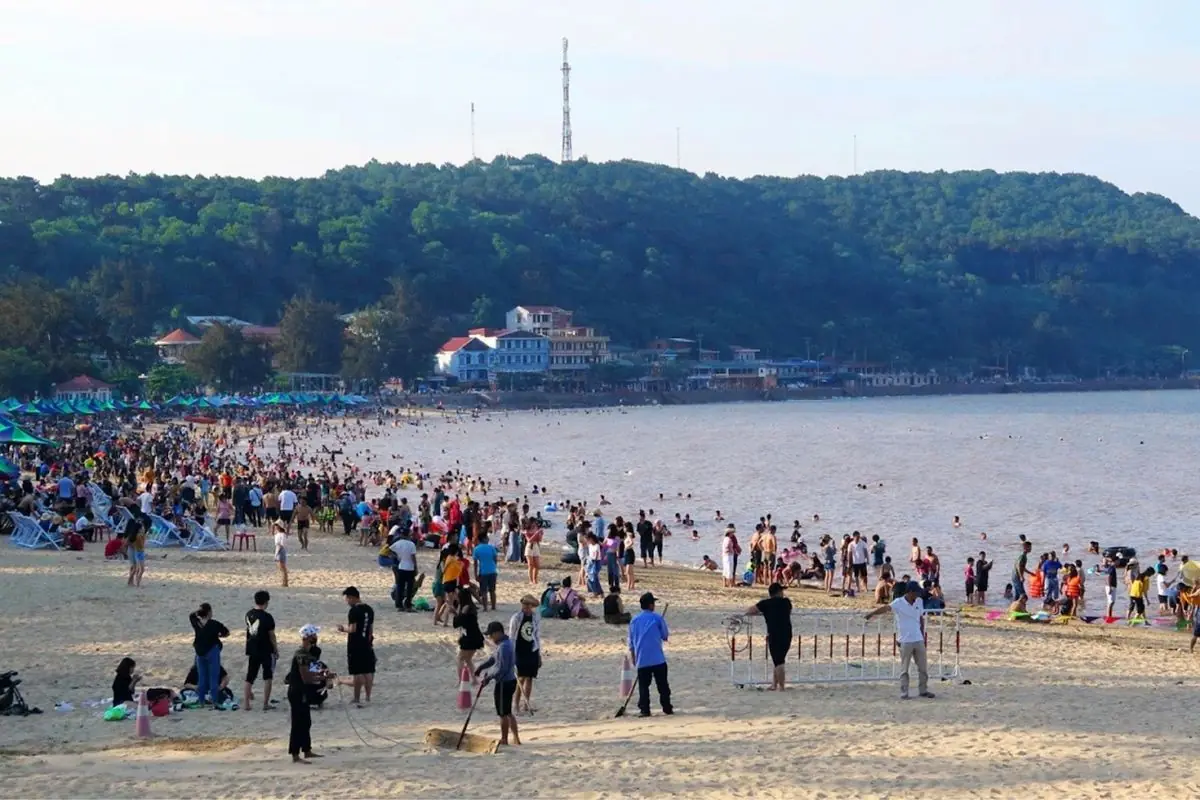
This is largely because of its location near river mouths carrying sediment into the sea.
Waves, tidal currents, and coastal water movement also stir up mud and sand from the seabed.
Water color varies with weather and sea conditions, but Do Son is not a destination where you should expect consistently transparent turquoise water.
During the rainy season, rivers may carry more suspended material into coastal waters.
Strong winds and waves can also stir up more sediment from the bottom.
However, naturally murky water does not automatically mean polluted water. Equally, its appearance cannot confirm that the water meets bathing-water quality standards.
Water quality depends on other factors and should be assessed using official monitoring results and local warnings.
If your priority is clear water, underwater photography, or being able to see the seabed while swimming, Do Son may not match your expectations.
5. How do northeasterly monsoon winds affect Do Son?
Wind is one of the most important factors visitors overlook when checking Do Son weather.
According to the wind-direction distribution in the climate dataset, northeasterly and easterly winds are most common from October through February.
From May through August, winds more frequently come from the south and southeast.
March, April, and September are transitional periods.
For travelers, these seasonal changes have three practical consequences.
Winter winds make the coast feel colder
December’s average high and low temperatures are approximately 21/17°C.
Looking only at the daytime temperature of 21°C, you might think a T-shirt will be enough for a walk along the beach.
But wind blowing across an exposed shoreline increases heat loss and can make conditions feel much colder.
During strong northeasterly winds or cold-air outbreaks, a wind-resistant jacket becomes more useful than a thin sweater alone.
If you’re traveling with children, avoid spending too long on exposed seafronts in the early morning or late afternoon.
Strong winds affect boat trips more than coastal walks
On land, you might still enjoy walking around Do Son in moderate wind.
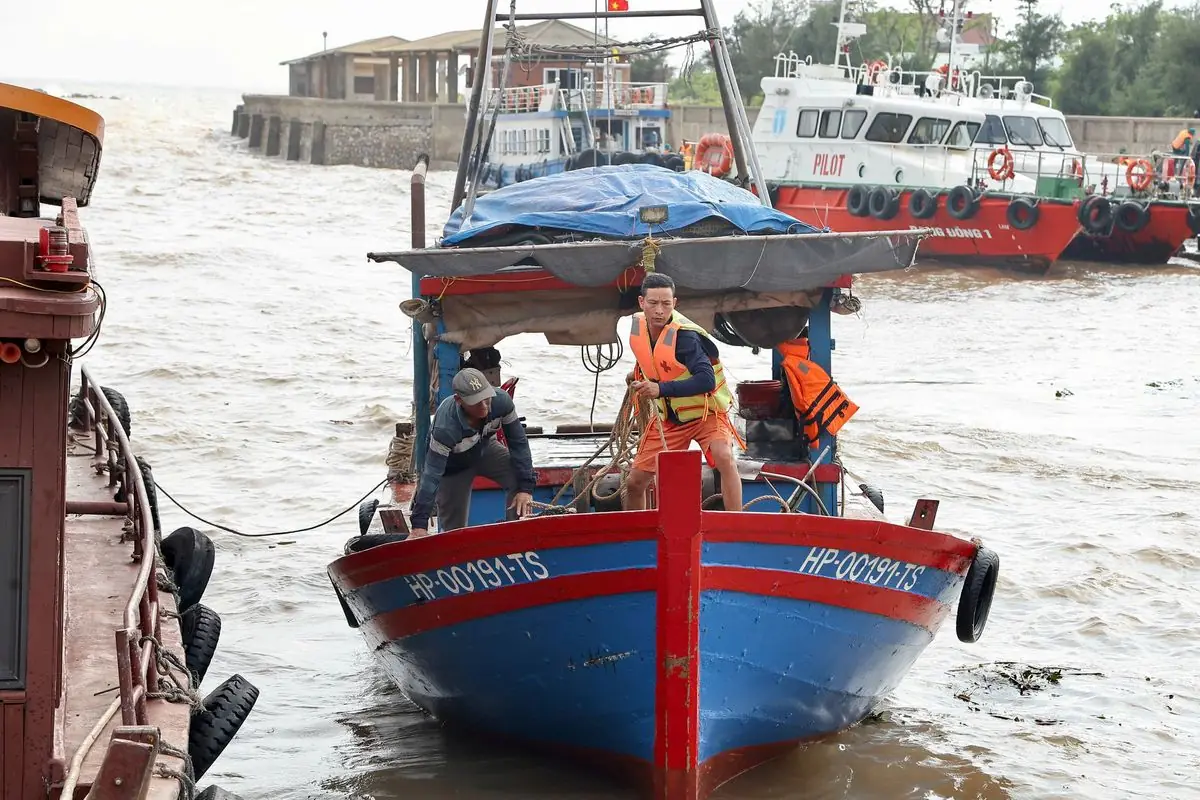
At sea, wind and waves directly affect whether a vessel can operate safely.
A forecast showing 24°C with no rain doesn’t mean a boat to Hon Dau Island will necessarily run.
You also need to check wind strength, wave conditions, marine warnings, and information from the transport operator.
Changing wind directions can bring rapid weather changes
During transitional months such as March, April, and September, weather conditions can change noticeably over just a few days.
That’s one reason why weekend visitors should check the forecast again shortly before departure.
Look beyond the maximum temperature to thunderstorms, wind direction, and any incoming cold air.
6. When does it rain most in Do Son? What happens during a typhoon?
According to the 2015-2024 climate dataset, Do Son’s rainfall increases substantially from May, remains high through July, August, and September, and decreases noticeably during November and December.
August records the highest average rainfall at 438 mm, followed by September at 372 mm and July at 296 mm.
These are long-term monthly averages, not a guarantee that August will be the wettest month every year.
It would also be misleading to assume that a particular month is guaranteed to bring a typhoon.
Tropical storms must be assessed through current forecasts and official warnings, not simply the calendar.
Does a rainy forecast mean you should cancel?
Not necessarily.
A forecast showing scattered showers can still leave several dry hours during the day.
You may be able to enjoy coastal walks, seafood, and indoor breaks between periods of rain.
Ordinary rain showers are very different from thunderstorms, strong wind gusts, high waves, or prolonged rainfall associated with a tropical depression or typhoon.
When thunderstorms are forecast or developing nearby, leave the swimming area and avoid exposed places beside the sea.
Heavy rain all day makes traveling all the way from Hanoi purely to swim hard to justify.
Can boats still run to Hon Dau Island during a typhoon or sea ban?
They may be suspended. When an official sea restriction covers passenger transport and marine tourism, activities within its scope must stop.
A recent example was Typhoon Maysak, Storm No. 1 of 2026.
On July 3, 2026, Hai Phong introduced restrictions on certain activities in estuaries, coastal waters, and offshore areas starting at 4 PM.
The affected activities included tourist vessels, passenger boats heading out to sea, and recreational or sightseeing activities in coastal and island areas.
By midday on July 5, 2026, the city had announced the lifting of the restrictions following the final bulletin concerning the storm.
Within roughly two days, travel arrangements can change, even when you’ve already booked accommodation, transport, or a boat excursion.
However, a typhoon warning does not automatically mean that every form of transport in Hai Phong stops.
The exact restrictions, their geographical coverage, and their starting and ending times depend on the official notice.
It’s useful to distinguish between three situations:
- A weather warning is in place: review your plans and check whether the beach and boat services remain safe and operational.
- An official sea restriction is in force: do not use vessels or participate in marine activities covered by the restriction. Do not swim where bathing activities have been suspended.
- Restrictions have been lifted: some activities may resume, but boat schedules and actual safety conditions still need confirmation.
7. What weather is best for visiting Hon Dau Island?
Hon Dau is a small island off the Do Son Peninsula, known for the Nam Hai Than Vuong Temple and its lighthouse.
Because visitors travel there by water, wind and wave conditions matter much more than they do for an ordinary coastal walk.
April through June and periods of settled weather in October are worth considering.
However, no month guarantees that boats will operate every day.
What should you confirm before traveling?
Start by confirming the actual departure pier and current boat schedule.
During previous Hon Dau Island Festival periods, passenger services have operated from the pier at Hon Dau International Tourist Area.
Pier arrangements and operators may change, so don’t assume an old timetable is still valid.
When contacting the operator or ticket counter, ask about the departure to the island, the last return trip, the ticket price on the day, and what happens if weather forces the service to stop.
Suppose you intend to reach the island at 9 AM and return after lunch.
That plan only works if the available boat services actually fit your timetable.
If departures depend on passenger numbers or change because of sea conditions, you’ll need to adjust the rest of your day.
During the rainy season, it makes sense to schedule the boat trip earlier in your visit once safe conditions and operating times have been confirmed.
Land-based activities such as eating seafood or walking along the seafront are generally easier to reschedule.
During the 2026 festival, Do Son authorities also emphasized that all passengers on festival transport vessels must wear life jackets before departure.

8. Where should you check the Do Son 10-day weather forecast?
Searching for "Do Son weather 10 days" will bring up several forecasting websites and apps showing temperatures, rainfall, and sunshine icons.
Those forecasts are useful for choosing dates, but a coastal trip requires a little more information.
There are three types of forecast and advisory to check before a Do Son trip.
Step 1: check the land weather forecast
Start with Vietnam’s National Center for Hydro-Meteorological Forecasting.
Look for the 10-Day Weather Forecast section or the forecast covering Hai Phong.
Pay attention to the following:
- Daily maximum and minimum temperatures.
- Expected rainfall over your travel dates.
- Thunderstorm or heavy-rain warnings.
- Incoming cold-air outbreaks, particularly from October through March.
In an international weather app, search specifically for Do Son, Hai Phong, rather than relying on the forecast for central Hai Phong City.
Even a location-specific forecast has limits.
Actual conditions outside a beachfront hotel may differ from those represented by the forecast grid.
Step 2: check the marine and wave forecast
On the National Center for Hydro-Meteorological Forecasting website, look for the 24-Hour Marine Weather Forecast.
The relevant broader marine area is the Northern Gulf of Tonkin, often labeled Bắc Vịnh Bắc Bộ in Vietnamese.
This forecast provides information that matters particularly for boat travel, including wind direction, wind force, gusts, wave height, and rough-sea warnings.
The meteorological agency also publishes multi-day wave forecasts.
These help identify changing conditions, but a wave-height forecast for the entire Northern Gulf of Tonkin is not a direct measurement at Do Son’s Zone 2 Beach.
Nearshore waves vary according to coastal geography, tides, and local conditions.
Treat a regional marine forecast warning of strong winds or high waves as a reason to investigate further, and don’t assume a particular beach will be safe.
Step 3: check typhoon warnings and Hai Phong notices
If a tropical depression or typhoon is affecting the Gulf of Tonkin, official storm bulletins and notices from Hai Phong authorities should take priority.
Sea restrictions, the lifting of restrictions, and changes to passenger transport operations are usually published through government portals and relevant agencies.
A weather app cannot replace an official decision about whether a beach or passenger pier may operate.
When should you check the forecast?
About 7-10 days before traveling: look for general weather trends. This is a reasonable time to consider accommodation and transport with flexible booking conditions.
About 2-3 days before traveling: check the rain forecast, thunderstorms, wind, and waves again. If dangerous weather is developing, consider changing your dates.
The evening before and the morning of departure: check the latest bulletins, especially if swimming or taking a boat is part of your itinerary.
Forecasts for days eight through ten are generally more uncertain than forecasts for the next day or two.
A sunshine icon for next Saturday is not enough to guarantee that a boat to Hon Dau Island will operate.
One other detail matters: Saturday and Sunday can have very different weather. If your family can switch the trip from one day to the other, comparing the daily forecasts tells you more than a general prediction for the whole weekend.
9. How should you plan a Do Son trip when rain is forecast?
A visit to Do Son is relatively easy to rearrange compared with an island trip farther offshore.
You don’t need to force every activity into the original schedule.
When the weather is good and the sea is calm
Beach in the morning, land in the afternoon
From about 7 to 10 AM, you could walk along the coast or swim, as long as conditions are stable, no dangerous weather warnings are in effect, and swimming is permitted.
Afterward, have lunch, take a break, and leave the afternoon for sightseeing on land.
A Hon Dau Island excursion should be planned around the confirmed boat schedule, not squeezed between two tightly timed activities.
When the morning looks good but afternoon thunderstorms are possible
Move outdoor plans earlier
Move outdoor activities to the earlier part of the day and keeping lunch, coffee, or hotel time for later.
However, if thunderstorms are already forecast for the morning or sea conditions are unsafe, skip the water activities altogether.
Don’t stay in the sea for another half hour simply because you’ve already rented swimming equipment or changed into your swimsuit.
Thunderstorms and strong gusts can develop quickly.
When rain is expected throughout the day
A seafood trip can still work
If there are no travel restrictions or dangerous road conditions, a trip focused on seafood, relaxation, or meeting friends may still be reasonable.
Choose a restaurant with indoor seating, and avoid planning the entire meal at an exposed waterfront table. Before departure, check the hotel’s dining areas and indoor facilities if you’re staying overnight.
On the other hand, a trip whose only goal is swimming is usually a poor reason to make a long journey on a day of persistent rain.
When a typhoon or sea ban is in effect
Skip swimming and boat trips
Cancel swimming and boat activities covered by the restriction.
If heavy rain, strong winds, or transport disruption are expected, consider postponing the whole trip rather than simply replacing water activities with another exposed outdoor attraction.
10. What should you pack for Do Son in each season?
You don’t need an enormous suitcase for Do Son.
However, the things you’ll need in June are quite different from what makes sense in December.
March-April
Light layers and wind protection
Daytime temperatures can be warm enough for a T-shirt, while mornings and sudden windy spells may still feel cool.
Bring a light jacket, comfortable trousers, and suitable walking shoes.
If you plan to swim in April, pack a dry towel and a change of clothes.
For Hon Dau Island, a compact backpack is more convenient than carrying several loose bags.
May-September
Sun protection and rain essentials
This is the season for swimwear, sun hats, sunglasses, sunscreen, and drinking water.
A lightweight long-sleeved top can help protect you from the sun during coastal walks.
Footwear with a good grip is also useful on wet paths and slippery surfaces.
Consider a waterproof pouch for your phone and documents, along with a complete change of dry clothes.
A compact raincoat can be useful during ordinary showers, but it is not protection that makes it safe to remain outdoors during dangerous thunderstorms.
Families with young children should make sure properly sized life jackets are available for permitted water activities.
Inflatable pool toys are not substitutes for certified life jackets.
October-November
Prepare for both warmth and wind
October can still feel like summer during the day, while November is more likely to bring chilly winds.
A light windproof jacket is useful for evening meals and coastal walks.
Bring a large towel and dry clothes to change into straight after a swim.
You won’t usually need a full winter wardrobe, but packing only shorts and flip-flops may leave you uncomfortable.
December-February
Dress for windy winter weather
A wind-resistant jacket is the most useful item for winter visits.
Depending on the cold spell, you may also want a sweater, scarf, and long trousers.
Closed-toe shoes are more practical than sandals for extended walks in the early morning.
There’s little reason to plan hours of sitting directly beside the sea during winter, particularly when traveling with children or older relatives.
11. Choosing where to stay in Do Son based on the season
During summer, visitors often prioritize hotels close to permitted swimming areas so they can return to their rooms easily around midday.
A short walk back to the hotel is especially useful when the heat becomes intense or rain arrives unexpectedly.
In winter, being as close as possible to the beach is less important than having comfortable indoor facilities, protection from the wind, and convenient access to restaurants.
Booking accommodation for a summer visit
For weekends between May and August, decide whether your priority is swimming, resort relaxation, or sightseeing.
Families with young children may prefer accommodation with easy access to a permitted beach and a comfortable place to rest during the hottest hours.
With a Hon Dau Island excursion planned, check the journey from your hotel to the confirmed departure pier.
One of the most important booking details is the cancellation policy during severe weather.
Different hotels have different conditions, and the suspension of boat services does not automatically mean your accommodation booking will be refunded.
Choosing accommodation during the rainy season or winter
From October through March, consider accommodation with appropriate heating or climate control, indoor dining, and comfortable shared spaces.
A beachfront hotel that requires a long walk in cold rain may be less convenient than a property slightly farther inland with easier vehicle access.
12. What to check before leaving Hanoi or Hai Phong
Do Son is convenient for a weekend getaway, but a relatively short journey doesn’t mean every planned activity will go ahead.
From Hai Phong itself, you can often make your decision closer to the travel date.
For a simple seafood lunch and coastal walk, a few hours of pleasant weather may be enough.
Visitors traveling from Hanoi need to allow more time for transport.
That’s why a day trip should ideally include at least one alternative activity in case swimming isn’t possible.
For example, say you reach Do Son around 9 AM: spend the morning at the beach when conditions permit, then have seafood for lunch.
But if you’ve already confirmed a morning boat to Hon Dau Island, prioritize the boat schedule rather than trying to swim first and rush to the pier afterward.
When arriving at the beach, follow posted signs, warning flags, and the instructions of local safety personnel.
Only swim in permitted areas, during authorized operating periods, and when conditions are safe.
A day with little rain doesn’t automatically mean the water is clean, the waves are small, or swimming is currently permitted.
Each of those questions needs to be checked separately.
13. Which month should you choose for your kind of Do Son trip?
The easiest way to choose is to start with the activity you want to spend the most time doing.
For swimming and a relaxing beach holiday: choose May or June where possible. Sea temperatures average around 29-31°C, but you’ll still need a day without dangerous thunderstorms or marine warnings.
For visiting Hon Dau Island: consider April-June or suitable weather windows in October. A confirmed boat schedule and safe wave conditions matter more than the month itself.
For a weekend with young children: May offers warm water and lower average rainfall than July-September. You’ll still need to plan for rain showers and avoid prolonged exposure to midday sunshine.
For seaside walks, photography, and seafood: March-April and October-November are worth considering. Temperatures are generally less intense, although some days can still be windy or cool.
For a winter visit: December through February still works well for sightseeing and dining, as long as you don’t plan the trip around swimming.
If July-September is your only available window: there’s no need to rule out Do Son entirely. Keep your dates flexible, check forecasts before finalizing bookings, and have an indoor alternative ready.
The season helps determine what you should pack, which activities deserve priority, and what might need to be dropped from your itinerary.
Choosing the right month improves your chances of a pleasant trip. Choosing the right day is what makes the final difference.
Before a boat excursion, confirm the latest arrangements at the tourist boat pier serving Hon Dau International Tourist Area in Do Son, Hai Phong, including departures, return services, and any marine restrictions. For emergencies involving natural disasters or other urgent incidents in Vietnam, the national emergency hotline 112 operates free of charge, 24 hours a day.
Frequently asked questions
Where can I find the most reliable 10-day weather forecast for Do Son?
Use Vietnam's National Center for Hydro-Meteorological Forecasting: check the 10-day forecast for Hai Phong and the marine forecast for the Northern Gulf of Tonkin. If you plan to swim or take a boat, also check wave forecasts and official notices from Hai Phong authorities. A 10-day forecast is useful for planning, but you should check again shortly before departure.
What months can you swim in Do Son?
May through October generally offers the most suitable sea temperatures for swimming. May and June are particularly good choices, while July through September have very warm water but frequent rain. Swimming may still be possible on favorable October days. November through March is generally less suitable for visitors wanting to spend a long time in the sea.
How warm is the sea in Do Son during summer and winter?
Based on modeled nearshore temperatures averaged over 2023-2025, the sea is around 19°C in January and February, 25°C in April, 29°C in May, and 31-32°C from June through August. It remains around 29°C in October before dropping to approximately 22°C in December. Actual temperatures at the beach can differ from these modeled averages.
Can you swim or take a boat to Hon Dau Island during a typhoon or sea ban?
When official restrictions cover marine tourism, recreation, or passenger transport, the affected activities must stop. Hon Dau boat services may also be suspended because of unsafe conditions or an operator's safety decision, even without a wider sea ban. Wait for official restrictions to be lifted and confirm that the service has resumed before traveling. Do not arrange an alternative private boat to bypass a suspension.
What should I wear in Do Son during winter?
From December through February, bring a wind-resistant jacket, suitable warm layers, long trousers, and closed-toe shoes. January averages around 20/16°C, but northeasterly winds can make the beachfront feel considerably colder. If you're traveling with children, plan outdoor activities during the warmer part of the day and avoid long periods outside during cold spells.