Is Chu Dau Pottery Village worth a half-day trip?
If you love antique ceramics, traditional craftsmanship, or maritime history, give Chu Dau half a day. For just a piece of Vietnamese pottery to take home, a showroom in the city saves the trip.
 16 min read
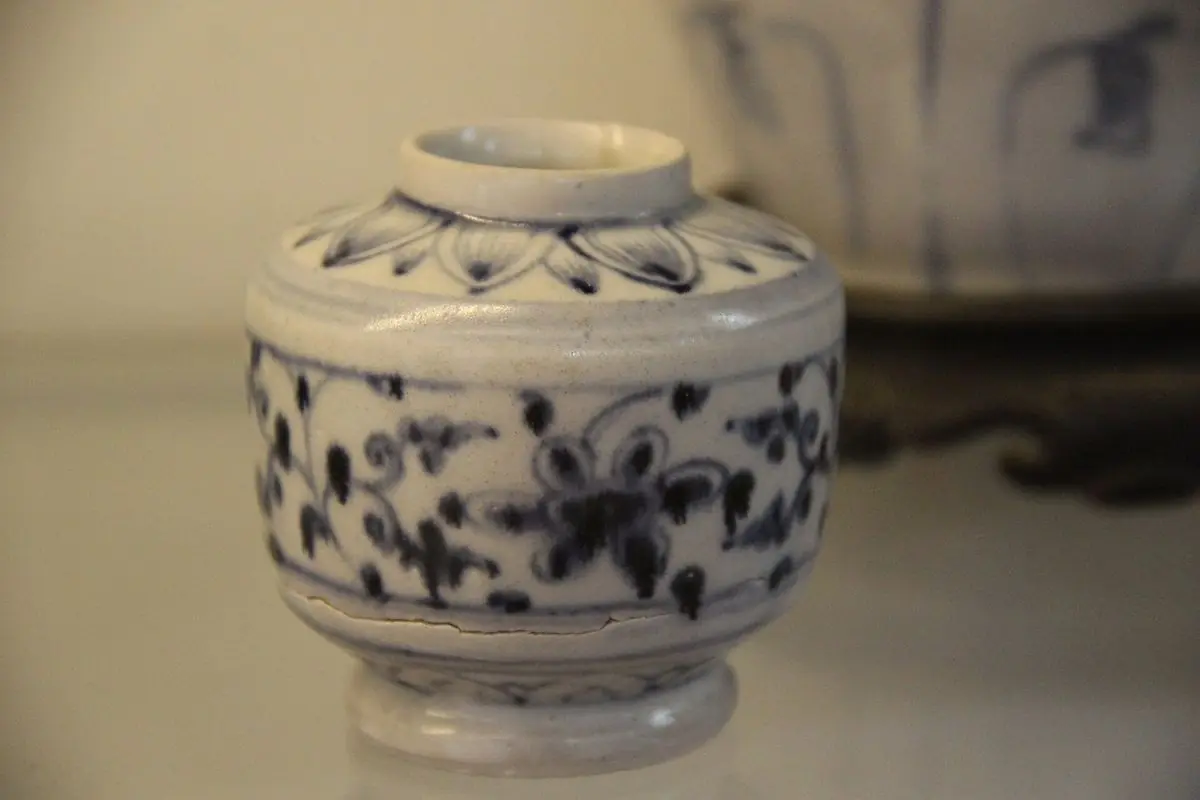
A 15th-16th century Chu Dau jar with blue floral painting on a white glaze, on display at the Museum of Vietnamese History in Ho Chi Minh City.
How did a Vietnamese porcelain vase end up in a palace in Istanbul, thousands of kilometers from the village where it was made? That village is Chu Dau Pottery Village, now in Hai Phong, a historic center of blue-and-white ceramics that once supplied trading ships sailing across Asia. Today, visitors come to see its pottery, learn how it is made, and book a hands-on pottery painting session.
Where is Chu Dau Pottery Village? Is it in Hai Phong or Hai Duong?
Chu Dau Pottery Village is located in Chu Dau Hamlet, Thai Tan Commune, Hai Phong City, Vietnam. Before Vietnam’s 2025 administrative reorganization, the village belonged to Nam Sach District in Hai Duong Province.
On July 1, 2025, Hai Duong Province merged with Hai Phong City. The new Thai Tan Commune was also formed by combining the former communes of Thai Tan, Minh Tan, and An Son.
As a result, older maps and travel guides may still show the address as "Chu Dau Pottery Village, Nam Sach District, Hai Duong Province." Both addresses refer to the same area.
Give your taxi or private driver these details:
The village lies near the Thai Binh River. Its name, Chu Dau, is commonly interpreted as a place where boats once moored, a reminder of the river routes that connected local pottery workshops with seaports and distant trading destinations.
Another place worth knowing is My Xa, a neighboring village where archaeologists discovered the remains of ancient pottery kilns. My Xa belonged to the former Minh Tan Commune, but following the administrative changes, both villages are now part of Thai Tan Commune.
Why is Chu Dau pottery famous as far away as Istanbul?
Chu Dau pottery dates back to around the 14th century and flourished during the 15th and 16th centuries. It became one of Vietnam’s important centers of high-quality glazed ceramics, particularly known for its white surfaces, cobalt-blue decoration, and hand-painted scenes inspired by life in the Red River Delta.
Its best-known story begins with a vase far from Vietnam.
The blue-and-white vase dated 1450 at Topkapi Palace
The Topkapı Palace Museum in Istanbul, Turkey, holds a Vietnamese blue-and-white ceramic vase approximately 54 centimeters tall.
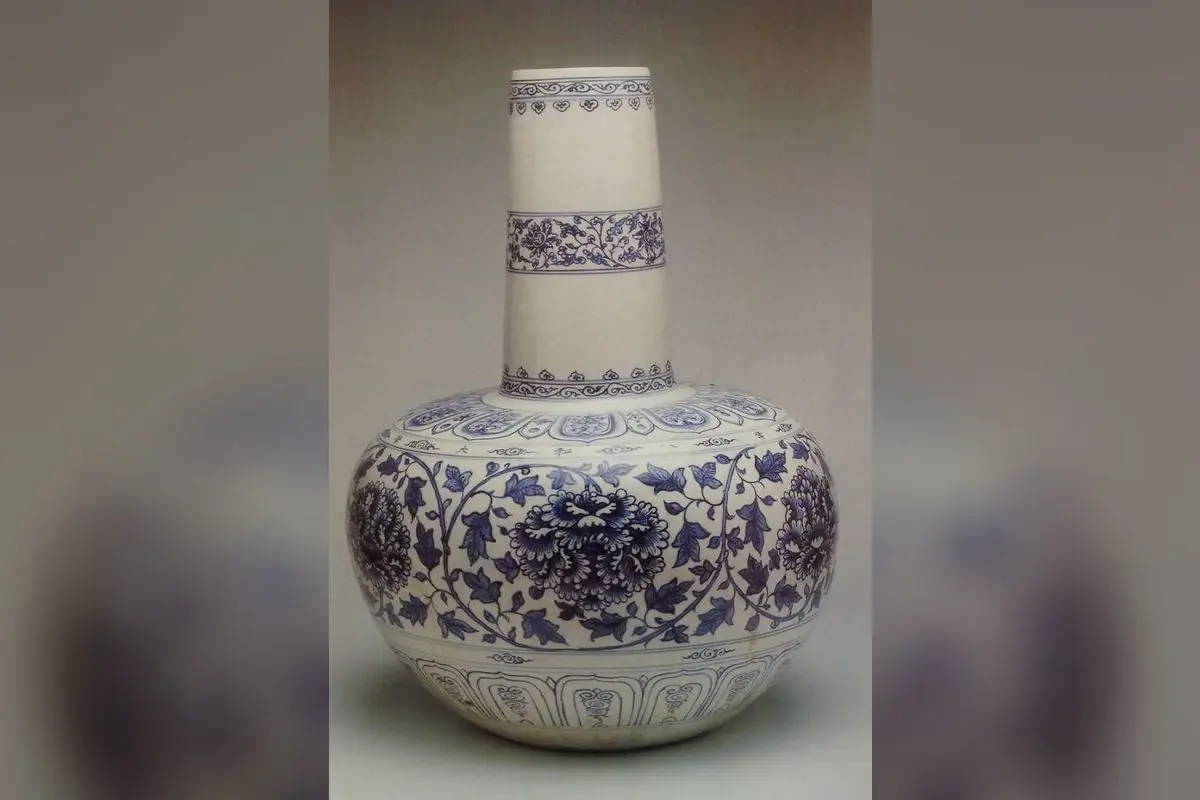
An inscription on the vase dates it to 1450, the eighth year of the Dai Hoa, also known as Thai Hoa, reign era under Emperor Le Nhan Tong.
The inscription refers to Nam Sach and a pottery painter with the surname Bui. Its final phrase, commonly transcribed as "Bui thi hy but," has been interpreted in different ways. Some understand it as a playful signature by an artisan surnamed Bui, while others identify the painter as a woman named Bui Thi Hy.
In Chu Dau, Bui Thi Hy is honored as an ancestral figure of the pottery-making tradition. Stories of her life are preserved in family genealogical records, although scholars have offered different interpretations of the inscription and the identity of the vase’s painter.
In 1980, Makoto Anabuki, a Japanese diplomat, encountered the vase during a visit to Istanbul. Intrigued by its Vietnamese inscription, he wrote to officials in the former Hai Hung Province, asking them to investigate where it had been produced.
That letter helped renew interest in the forgotten pottery-making tradition around Nam Sach.
Beginning in April 1986, archaeologists conducted a series of excavations in Chu Dau and nearby areas. Across several investigations, they uncovered pottery kiln remains and tens of thousands of ceramic objects, including bowls, plates, teapots, and vases.
These discoveries confirmed that the area had once been a major ceramic production center.
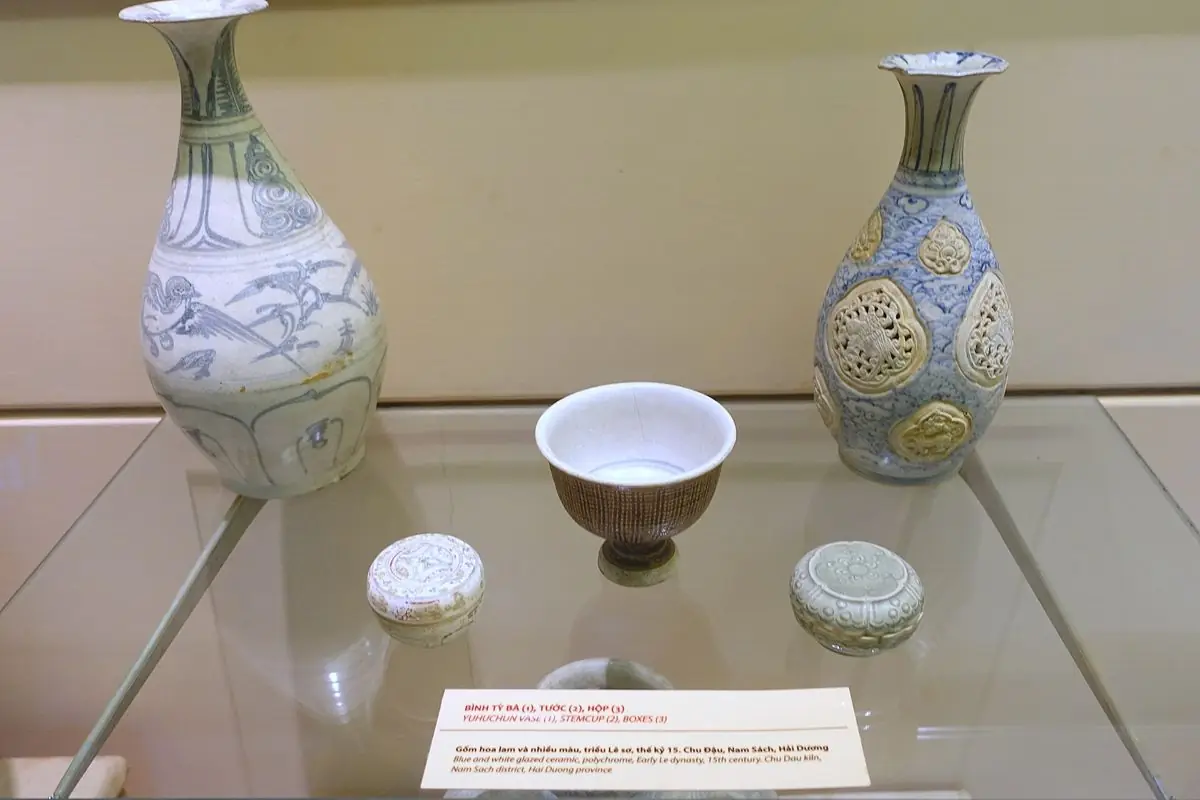
The flowers, birds, leaves, and countryside scenes on the recreated blue-and-white vases made in Chu Dau today look simple. Similar designs once decorated valuable objects that ended up in collections thousands of kilometers away.
What does the Cu Lao Cham shipwreck have to do with Chu Dau pottery?
The second story begins underwater, off the coast of Cu Lao Cham Island near Hoi An.
In the early 1990s, fishermen discovered evidence of an old shipwreck in the area. Underwater archaeological excavations began in 1997 and continued in subsequent years, at a depth of more than 70 meters.
Researchers recovered more than 240,000 artifacts, along with numerous broken pottery fragments.
Most of the cargo originated from ceramic production centers in the Hai Duong region and Thang Long, the historical name of Hanoi. Among these ceramics were pieces from the Chu Dau tradition.
The recovered objects included bowls, plates, covered boxes, pear-shaped vases, and vessels decorated with birds and animals.
A small number of Cham, Chinese, and Thai ceramics were also discovered. Some researchers believe these may have been personal belongings or everyday objects used by the crew.
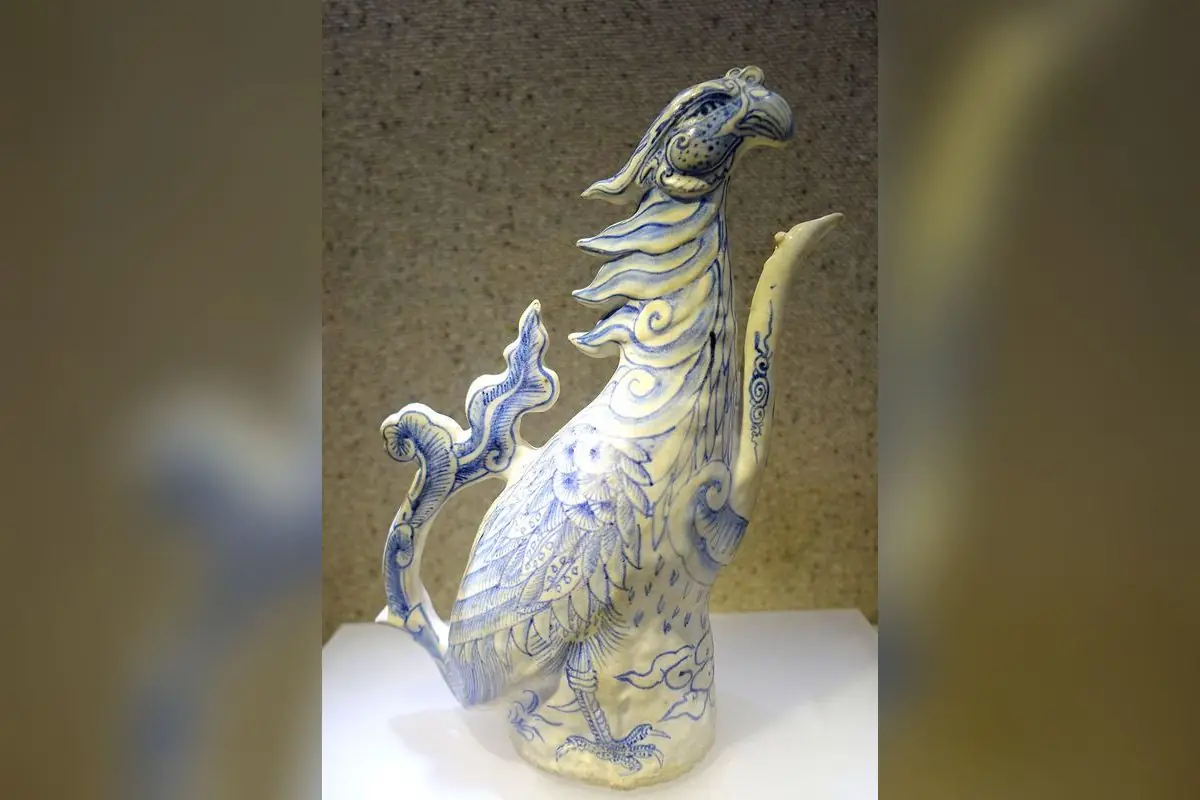
The date of the shipwreck remains a subject of scholarly discussion, with estimates generally ranging from the middle of the 15th century to the early 16th century.
The ship carried ceramics in huge quantity, a commercial cargo rather than a few gifts for a royal court, which shows how Vietnamese ceramics formed part of international maritime trade.
One of the most celebrated discoveries was a blue-and-white ceramic vase decorated with swans, now preserved at the Vietnam National Museum of History in Hanoi. The vase was officially recognized as a National Treasure in 2012.
Its painted swans appear in different poses, rendered in flowing blue brushstrokes against a pale background.
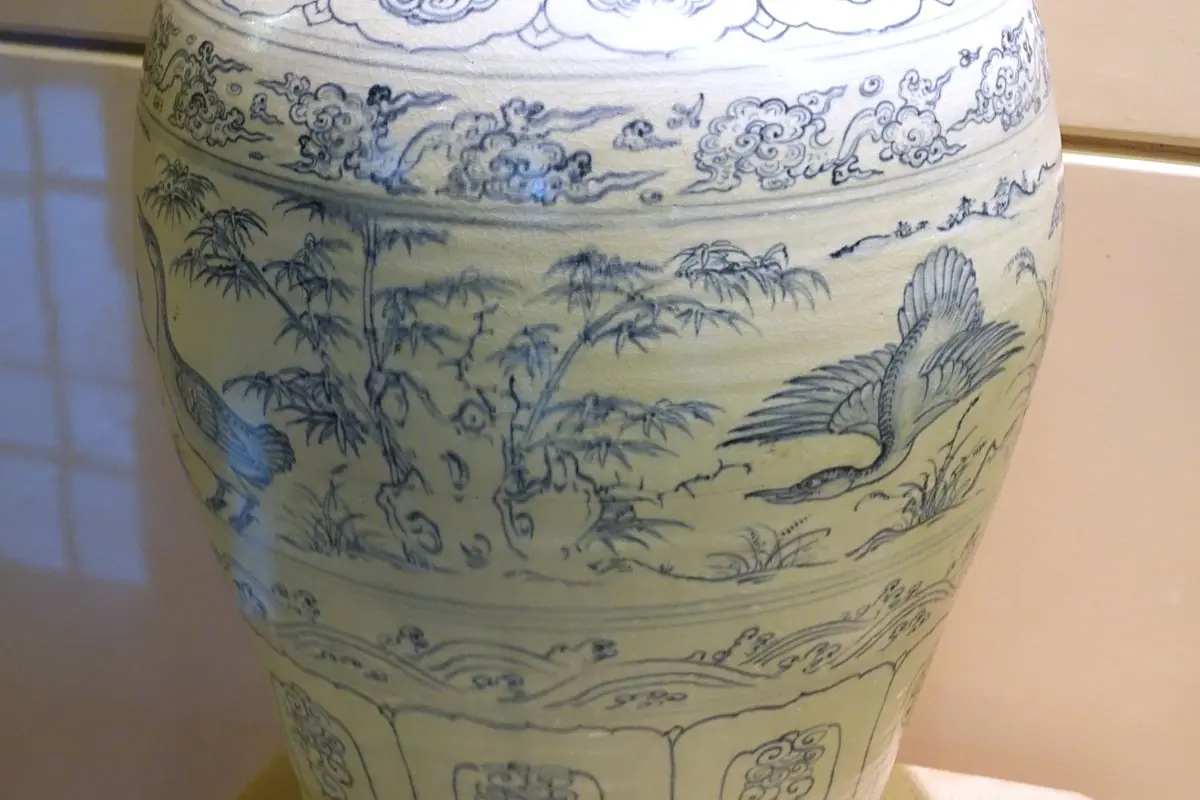
Scholars have discussed whether this particular vase was produced in Chu Dau or Thang Long, but it shows the level Vietnamese blue-and-white ceramics had reached in that period.
Maritime history fans come to Chu Dau for this: the quiet village beside the Thai Binh River was once connected to a much wider world of merchants, ships, and international trade.
What can you see at Chu Dau Pottery Village today?
Chu Dau’s traditional pottery industry declined from around the 17th century and eventually disappeared as an active production center.
It was not until the early 2000s that pottery production returned to the historic village on a significant scale.
In 2001, Hapro established the Chu Dau pottery enterprise and invited artisans from different ceramic-producing regions to research traditional glazes, shapes, and decorative techniques.
In May 2003, the revived enterprise shipped its first export order to Spain.
The operation later developed into Chu Dau Ceramics Joint Stock Company, now part of BRG Group, with a production facility and showroom in Chu Dau Hamlet.
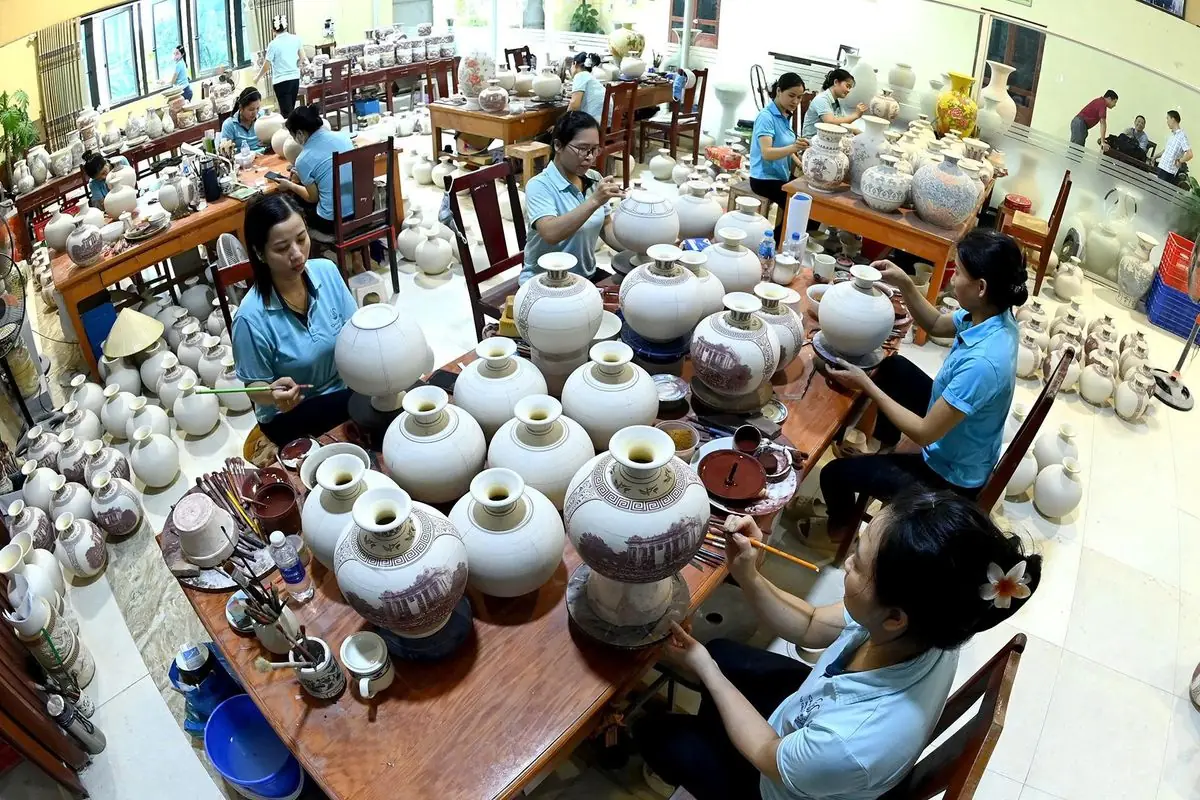
Watch how traditional Vietnamese pottery is made
Booking ahead gets you into the production areas, not just the room of finished pieces.
Chu Dau artisans have a traditional saying: "First the materials, second the firing, third the shaping, and fourth the painting."
White clay is sourced from the Truc Thon area of Chi Linh. It undergoes several stages of preparation and purification before artisans use it to shape pottery on wheels, with molds, or through other appropriate techniques.
Visitors tend to linger longest at the painting stage.
Using brushes, artisans carefully paint motifs onto unfired or partially fired ceramic surfaces. Flowers, birds, lotus blossoms, chrysanthemums, and scenes of rural life gradually appear around the bodies of vases and bowls.
Chu Dau ceramics are also associated with a traditional glazing technique that uses ash from the husks of Nep Cai Hoa Vang sticky rice.
After firing, the decoration lies beneath a translucent glaze, giving the blue brushstrokes their characteristic depth and softness.
Alongside traditional blue-and-white pottery, the company now produces gold-decorated ceramics, household items, and decorative gifts.
Explore the exhibition area and showroom
The factory showroom shows the full range of modern Chu Dau ceramics.
You will find tall decorative vases, traditional blue-and-white pottery, small tea sets, household ceramics, ceremonial objects, and gift collections.

Some pieces recreate historical forms, while others are designed for contemporary homes.
Look at the pieces by decorative style. Some vases are painted all over, from neck to base. Others feature only a few delicate branches or flowers, leaving plenty of white space around the design.
A closer look also reveals the subtle differences between hand-painted brushwork and industrially printed decoration.
The showroom is where you can ask about prices, compare sizes, and choose a piece to take home. Larger works, artist-made ceramics, and custom products may require a direct quotation from the sales staff.
Can you make your own pottery at Chu Dau?
Hands-on pottery experiences are available at Chu Dau, but advance arrangements are necessary. There are no fixed drop-in workshop times for individual visitors.
On July 16, 2025, international guests in Hai Phong for the APEC Business Advisory Council’s third meeting came to Chu Dau to watch ceramic production and try a few of the steps themselves. Foreign visitors are nothing new at the factory, as long as you book ahead.
Independent travelers should ask about two separate activities:
- Pottery painting: Decorating a prepared ceramic piece with your own patterns. This is particularly suitable for visitors who enjoy painting or want a shorter creative activity.
- Pottery shaping or modeling: Not every factory tour includes time with clay, so ask whether individuals can try it on the day you plan to come.
Also confirm the number of participants, workshop duration, fees, availability of an instructor, and whether English-language assistance can be arranged.
Freshly painted or shaped pieces usually can’t leave with you the same day. Depending on the activity, the pieces may still need to dry, receive glaze, or be fired.
Ask how long the finishing process takes and whether completed items can be delivered to your hotel, another address in Vietnam, or overseas.
Opening hours and entrance fees
There’s no fixed visitor schedule, factory entrance fee or standard workshop price for walk-in visitors.
Whether a factory visit costs anything, and how much, is settled when you book, so don’t assume it’s free.
Shopping only? Check the showroom hours too, especially on weekends.
How to get to Chu Dau Pottery Village from Hanoi or Hai Phong
Chu Dau is conveniently located for a day trip from either Hanoi or central Hai Phong.
The two most practical options are traveling directly by car or taking a train to Hai Duong Station and continuing by taxi.
From Hai Phong city center to Chu Dau
The distance from the Hai Phong Opera House area to Thai Tan Commune is approximately 50 kilometers by road.
Hiring a private car with a driver is convenient for families, small groups, or visitors planning to continue to Con Son - Kiep Bac later in the day.
You choose your departure time, stop for lunch, and travel between attractions without relying on local transport schedules.
The journey passes through the former Hai Duong area. Your driver can follow the current map directions to Chu Dau Ceramics Factory.
Alternatively, take a train from Hai Phong Station to Hai Duong Station, then continue by taxi.
The final stretch from Hai Duong Station to the village is approximately 9-10 kilometers.
From Hanoi to Chu Dau Pottery Village
Chu Dau is approximately 65 kilometers by road from the Hoan Kiem Lake area in central Hanoi, depending on the route.
For small groups, a private car is a comfortable way to make the journey and return the same day. Spend the morning at the factory, stop for lunch, and visit another attraction in the afternoon.
Travelers who prefer trains can take a Hanoi-Hai Phong service that stops at Hai Duong Station, then continue to the pottery village by taxi.
Departure times vary; pick a train that reaches Hai Duong early enough to leave time for the factory.
Look up schedules, departure stations, and ticket prices on the Vietnam Railways website.
There is currently no convenient direct public bus service from central Hanoi or Hai Phong to the pottery village itself.
Travelling independently, arrange a taxi pickup in advance, particularly when leaving the village or continuing to another destination.
How much does Chu Dau pottery cost, and where should you buy it?
Modern Chu Dau ceramics come in a wide range of prices, from a few hundred thousand Vietnamese dong for a small tea set to several million or even tens of millions of dong for larger or more elaborate pieces.
Reference prices for a few pieces in the company’s online store:
| Product | Reference price |
|---|---|
| Two-person tea set with countryside design | 380,000 VND |
| Two-person tea set with hibiscus design | 380,000 VND |
| Thien Huong vase | 420,000 VND |
| Tuyet Lan vase | 750,000 VND |
| Phu An vase | 880,000 VND |
| Gold-decorated blue-and-white vase | 1,800,000 VND |
| Swan Flower vase | 3,800,000 VND |
| Premium gold-decorated Swan vase | 17,900,000 VND |
These are prices for particular products, not fixed prices for every item in the same category.
Showroom prices may also vary depending on the design, product version, and any ongoing promotions.
For a souvenir that’s easy to carry, pick a small tea set or a compact decorative vase. Both are recognisably Chu Dau and fit in a suitcase.
Larger vases, gold-decorated collections, and artist-made pieces are better suited to collectors or visitors looking for a more formal gift.
Buying directly from the factory
The factory showroom in Chu Dau Hamlet is a good place to purchase ceramics because you can examine their glazes, shapes, and actual sizes before deciding.
Address: Chu Dau Ceramics Joint Stock Company factory and showroom, Chu Dau Hamlet, Thai Tan Commune, Hai Phong City.
Many products have similar silhouettes but differ in size, decorative techniques, or the complexity of their hand-painted details.
The sales team can help identify product codes and provide quotations for items without publicly listed prices.
Where to buy Chu Dau pottery in Hanoi and Hai Phong
The company has its own showrooms and authorized dealers in both Hanoi and Hai Phong, so buying doesn’t require a trip to the village.
In Hanoi:
- Showroom and transaction office, 3rd floor, 38-40 Le Thai To Street, Hoan Kiem Ward.
- Store at 111 Le Duan Street.
- Dealer at 7 Thai Ha Street.
In Hai Phong:
- Nguyen Trinh dealer, 52A Ha Doan Street, Dong Hai Ward.
- Thuan Vu dealer, 7/418 My Khe Tay Street, Kien An Ward.
- Dealer at 26 Thong Nhat Street, Phu Thai Commune.
- Duy Bao dealer, An Dien Kim Hamlet, An Phu Commune.
Chu Dau is also home to several independent ceramic producers and businesses.
Different companies use "Chu Dau" in their names after the local pottery tradition, and many of them are unrelated businesses.
Can you have pottery delivered to your hotel?
Chu Dau Ceramics provides domestic delivery services, which can be convenient if you would rather avoid carrying fragile pottery during the rest of your trip.
Orders delivered outside the Hanoi and former Hai Duong areas usually cost 50,000 VND to ship.
For Hanoi and the former Hai Duong area, orders below 20 million VND are charged according to the delivery provider’s rates.
Interprovincial deliveries usually take around two to five working days, depending on the destination.
If you are staying at a hotel in Vietnam, ask the sales staff whether the ceramics can be delivered to reception, how they will be packaged, and when the shipment is expected to arrive.
Confirm with your hotel before providing its address for delivery.
Flying home soon? Ask separately about overseas shipping: the company delivers within Vietnam, but not every order can be sent abroad.
What else can you visit on a full-day trip to Chu Dau?
Half a day is generally enough to explore Chu Dau’s exhibition area, observe the production process, and browse the showroom, provided the visit has been arranged in advance.
You can then combine it with another nearby destination to make a full day of sightseeing.
Itinerary 1: Chu Dau Pottery Village - Hai Phong Museum Branch 2
This route is especially suitable for travelers interested in archaeology, antique ceramics, and local history.
- Morning
Chu Dau Ceramics factory
Visit Chu Dau Pottery Village. Walk through the showroom and any production areas included in your arranged tour. Learn about ceramic techniques, study the traditional decorations, and choose a souvenir.
- Midday
Lunch, then move on
Have lunch in the former Hai Duong area before heading toward western Hai Phong.
- Afternoon
Hai Phong Museum Branch 2
Visit Hai Phong Museum Branch 2 at 11 Hong Quang Street, Thanh Dong Ward, approximately 10 kilometers from Chu Dau.
This was formerly the Hai Duong Museum before the administrative merger.
Its collections cover local history and archaeology, with ceramics from the Hai Duong region, including Chu Dau, forming an important part of the area’s cultural heritage.
The outdoor grounds also contain historical objects and architectural features such as stone steles, ancient tombs, and traditional buildings.
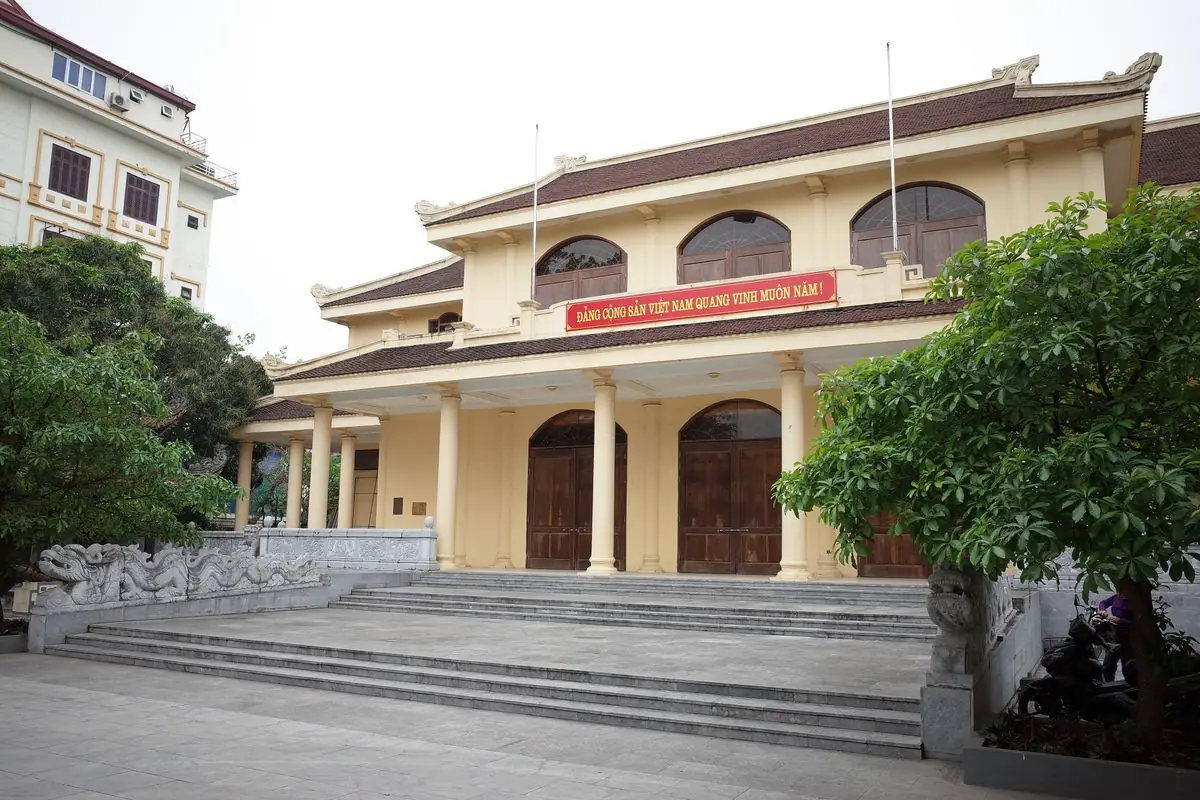
Branch 2 was still receiving visitors during Vietnam’s National Day holiday in September 2026.
However, exhibition rooms and access arrangements may change, particularly during renovation or exhibition updates.
Call the museum before you go to make sure the ceramics rooms are open, and ask about hours and fees while you’re on the phone.
This route shows Chu Dau pottery twice: as a working craft at the factory, then as part of northern Vietnam’s archaeology at the museum.
Itinerary 2: Chu Dau Pottery Village - Con Son - Kiep Bac
This route combines traditional craftsmanship with historical monuments and peaceful scenery.
Con Son Pagoda is approximately 28 kilometers from Chu Dau, while Kiep Bac Temple is around 34 kilometers away.
- Morning
Chu Dau Pottery Village
Visit Chu Dau Pottery Village, watch the artisans at work, and browse the showroom for handmade ceramics.
- Midday
Lunch and a short break
Stop for lunch and a short break before continuing toward the Con Son - Kiep Bac heritage area in Tran Hung Dao Ward, Hai Phong.
- Afternoon
Con Son Pagoda
Visit Con Son Pagoda, walk through its tree-shaded grounds, and see the historical sites linked to notable Vietnamese figures, particularly the scholar and poet Nguyen Trai.
With more time, you can continue to Kiep Bac Temple, dedicated to the revered military commander Tran Hung Dao, also known as Tran Quoc Tuan.
Visiting both Con Son and Kiep Bac in a single afternoon is possible with an early start and a fairly active schedule.
A slower option is to spend most of the afternoon at one of the two sites.

From January 1, 2026, entrance to the Con Son - Kiep Bac heritage area costs:
- Adults: 20,000 VND per visit.
- Children aged 6 to under 16: 10,000 VND per visit.
Tickets are per visit, so check the rules at the gate of each site you enter.
The heritage area welcomes visitors throughout the year, although access to particular monuments and facilities may change during festivals or special events.
Is Chu Dau Pottery Village worth half a day?
Chu Dau is worth half a day for anyone interested in Vietnamese blue-and-white ceramics, traditional craftsmanship, or the history of objects that have appeared in museums around the world.
There are no rides or shows here. You come for the history behind the pottery, the production process, the painted details, and the people who keep the craft going.
Visitors hoping to make their own pottery will need to arrange the experience more carefully.
For travelers who simply want a ceramic souvenir without spending half a day outside the city, the company’s showrooms in Hanoi and Hai Phong offer a practical alternative.
Frequently asked questions
Is Chu Dau Pottery Village in Hai Phong or Hai Duong?
Chu Dau Pottery Village is now in Chu Dau Hamlet, Thai Tan Commune, Hai Phong City. Before July 1, 2025, it belonged to Nam Sach District, Hai Duong Province. Both the old and new addresses may appear on maps and travel websites.
Is there an entrance fee for Chu Dau Pottery Village?
There's no fixed entrance fee or standard workshop price for walk-in visitors; costs are agreed when you book. Call the factory on +84 988 529 888 before you go to arrange a date and ask about charges.
Can foreign tourists make their own pottery at Chu Dau?
Yes, though you'll usually need to book ahead. Foreign groups have already tried pottery painting here. For clay modeling, English-speaking instruction, or delivery of finished pieces after firing, ask the factory directly when you book.
How far is Chu Dau Pottery Village from Hanoi?
Chu Dau is approximately 65 kilometers by road from the Hoan Kiem Lake area in central Hanoi. You can travel directly by car or take a train to Hai Duong Station and continue by taxi for another 9-10 kilometers.
Was all the pottery found in the Cu Lao Cham shipwreck made in Chu Dau?
No. Most of the ceramics recovered from the shipwreck originated from production centers in the Hai Duong region and Thang Long, including pottery associated with Chu Dau. Researchers continue to discuss the precise production origins of some individual objects. The shipwreck nevertheless provides important evidence of Vietnam's role in maritime ceramic trade during the medieval period.