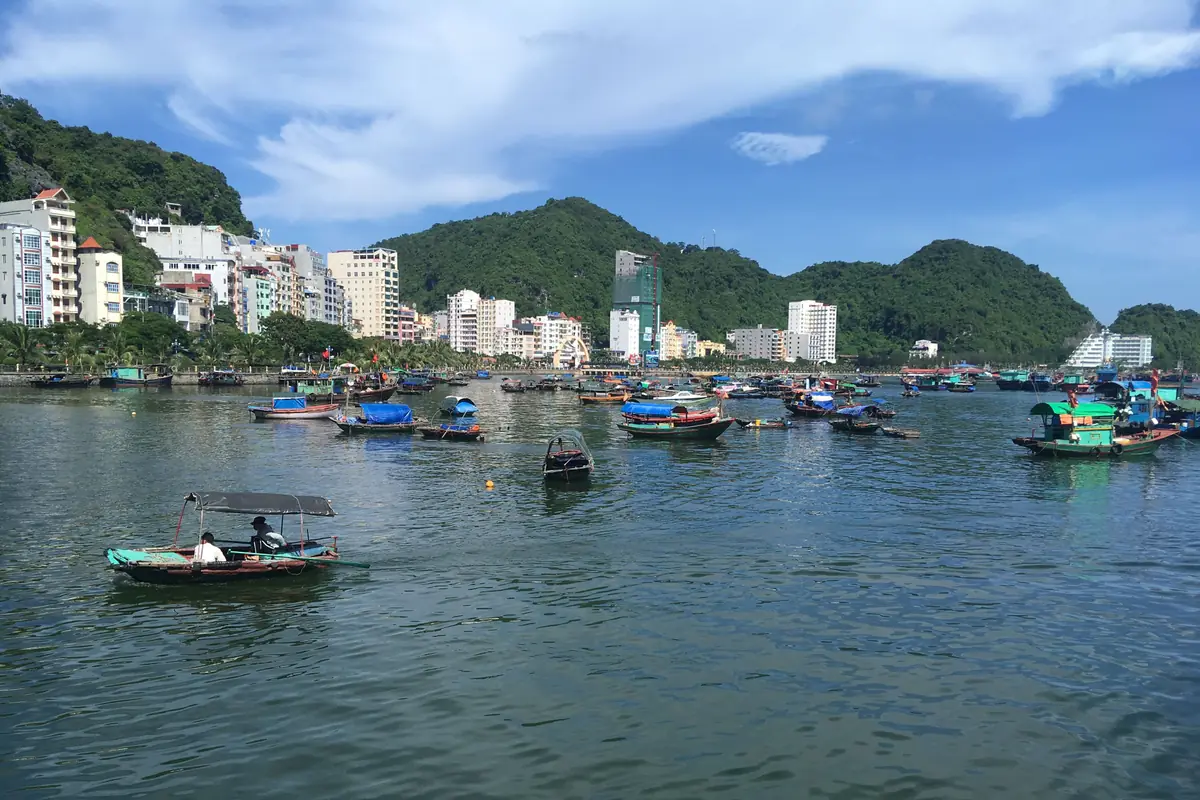
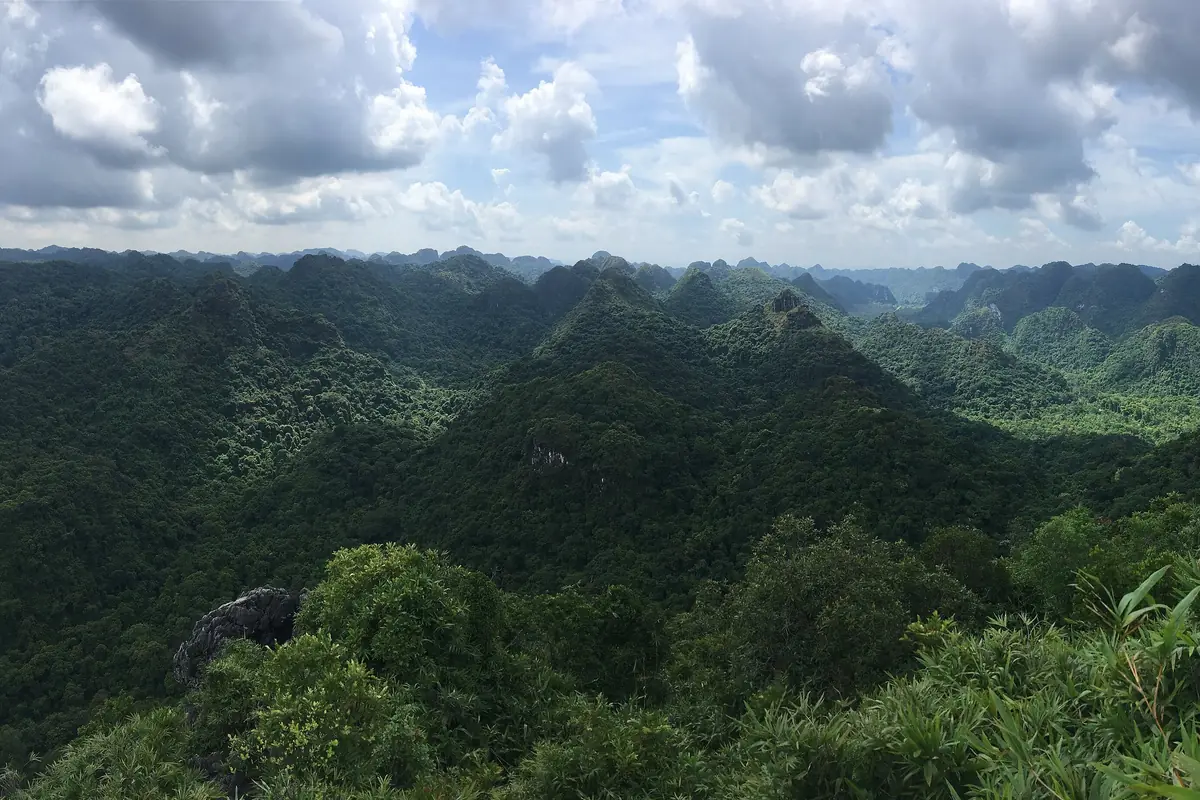
Con Son (Côn Sơn) and Kiep Bac (Kiếp Bạc): A Day Trip Guide
Pine-covered hills at Con Son and the riverside temple at Kiep Bac make an easy day trip from Hai Phong (Hải Phòng), with about 9 km between them. Climb in the cool of the morning, then spend the afternoon above the Luc Dau (Lục Đầu) river.
 9 min read
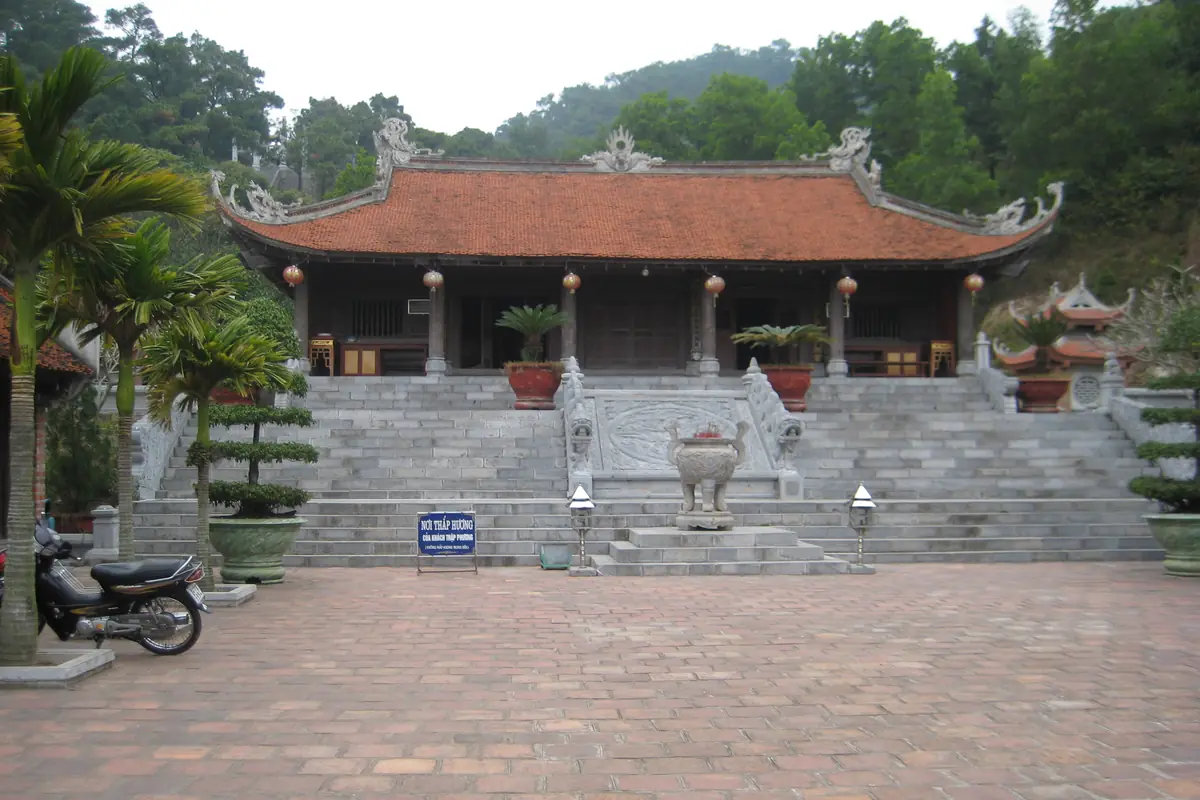
Stone steps up to the temple of Nguyen Trai (Nguyễn Trãi) at Con Son.
On one side of a low range of hills are pine woods, an old pagoda and the stream where the poet-statesman Nguyen Trai (Nguyễn Trãi) wrote verse. On the other is the temple to Tran Hung Dao (Trần Hưng Đạo), the general who beat back the Mongols, looking out over the river where six waterways meet. Con Son tells a story of Zen monks and a poet in retreat; Kiep Bac, of a river-and-road stronghold built for war.
How a day here works
The two sites lie on either side of a stretch of hills, about fifteen minutes apart by car. We suggest Con Son first, in the morning: the pagoda, a sacred well and a stupa sit together at the foot of the mountain, and the climb is far nicer before the sun gets strong. Up, a rest at the top and down another way past the big flat rocks takes around half a day. After lunch, drive over to Kiep Bac: the temple is on flat ground and an hour or two covers the halls and the river. From Hanoi, flip the order, since Kiep Bac is slightly closer.
For the climb, we suggest October to December or April, when the weather around Hai Phong is cooler and drier than in midsummer; February and March are damp, and the stone steps get slick.
Con Son pagoda and the climb to the Fairy Chessboard
Con Son pagoda, locally called Hun pagoda, was a centre of the Truc Lam (Trúc Lâm) school of Zen, founded under the Tran dynasty by the king-turned-monk Tran Nhan Tong (Trần Nhân Tông). Its third patriarch, Huyen Quang (Huyền Quang), took charge of the pagoda in 1330. Behind it are the Jade Well, clear to the bottom, and the stupa that holds his relics.
From the stupa a paved stone path climbs straight up through pine forest. Con Son is barely 200 m high, but it is steps nearly all the way: hundreds of them, about an hour's climb depending on fitness, so go slowly and take a few breaks. There used to be a gentler, longer trail to the right past the flat rocks and Nguyen Trai's house site; paths change, so check the map board at the entrance.
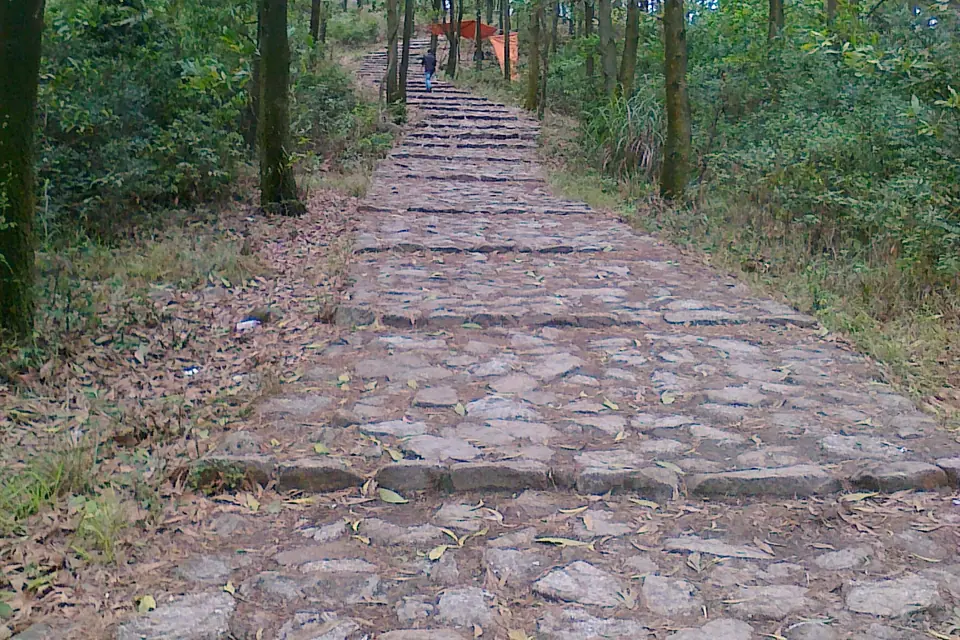
At the top is a small level clearing called the Fairy Chessboard, with a memorial stele house for Nguyen Trai (built in 1992) and a view over the whole Con Son area. It is the most rewarding part of the day: the pines shade nearly all of the climb, and the sky only opens up at the summit.
The flat rocks, Thanh Hu and Nguyen Trai's temple
Beside the Con Son stream lie two flat slabs of rock known as Thach Ban (Thạch Bàn); the larger is about 6 m wide and 26 m long, and legend says Nguyen Trai sat here to write. Next to it is the base of the house where he lived from 1435 to 1442. In the dry season the stream can shrink to bare rock.
Thanh Hu "cave" (Thanh Hư Động) is not a cave at all: the hills here are earth, not limestone, and Thanh Hu is a stretch of mountainside where Nguyen Trai's grandfather, the statesman Tran Nguyen Dan (Trần Nguyên Đán), built a retreat; his shrine stands there today. Nguyen Trai's own temple, in the cover photo, sits at the foot of Ngu Nhac (Ngũ Nhạc) mountain and opened in 2002.
Kiep Bac temple and the worship of Tran Hung Dao
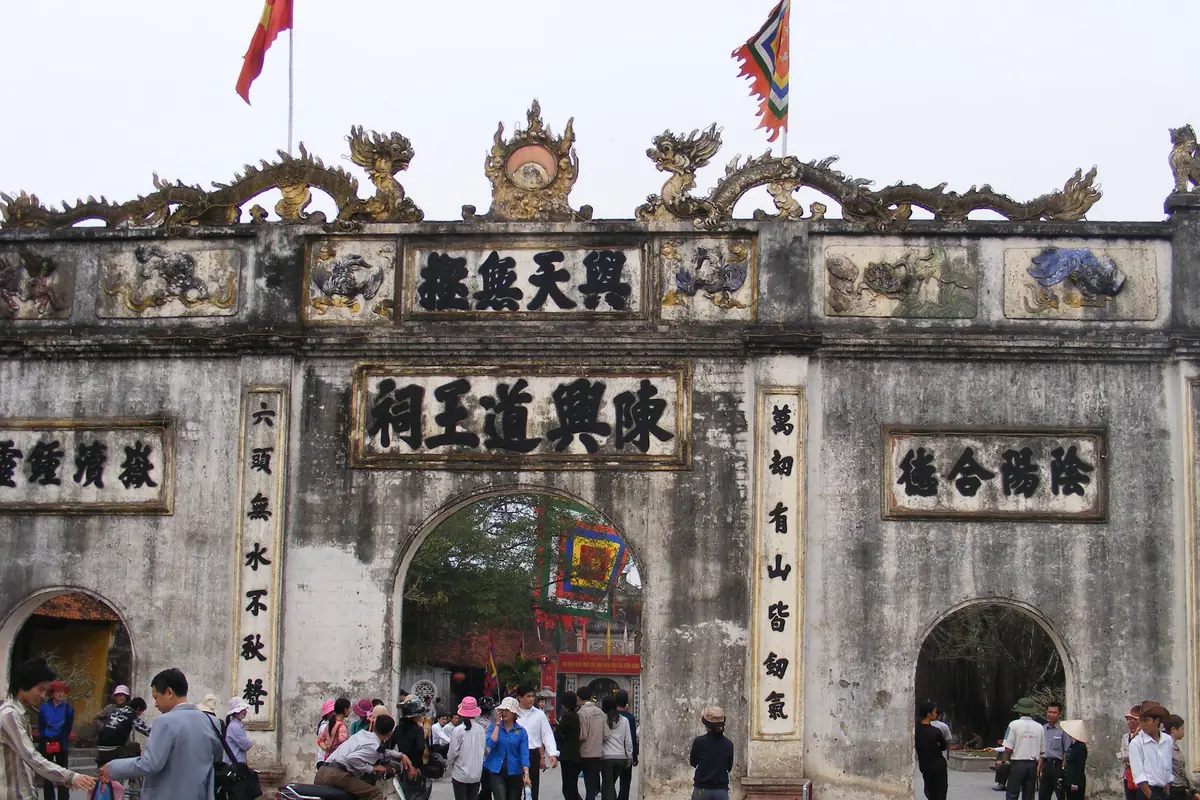
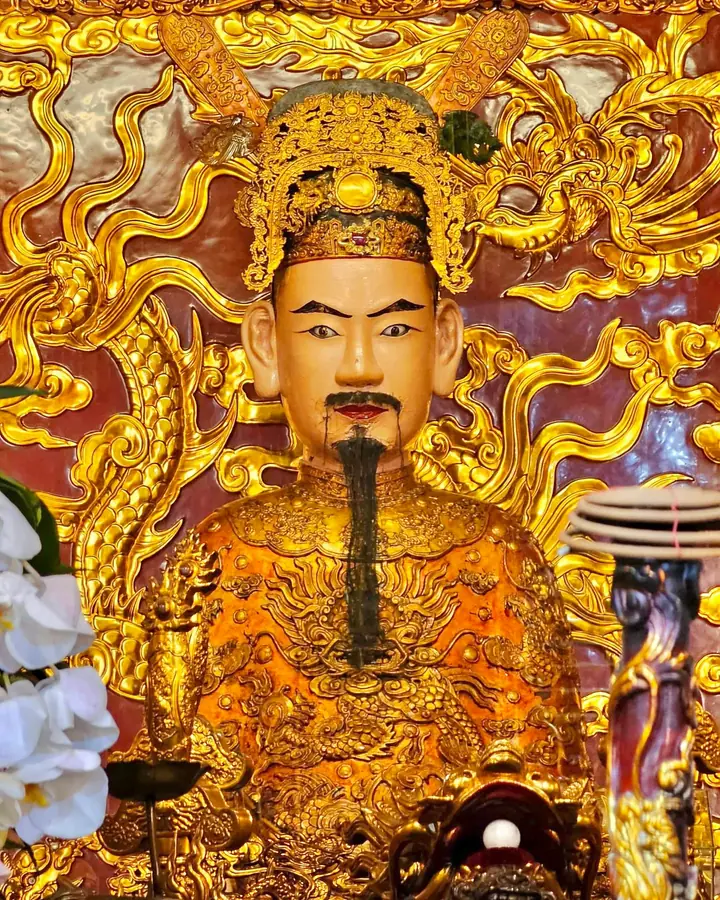
Kiep Bac temple honours Tran Hung Dao, worshipped across Vietnam as Đức Thánh Trần (Saint Tran), together with his family. It sits in a valley ringed by the Dragon hills, facing the Luc Dau. Command of both river and road routes is why he made Van Kiep his base against the Mongol-Yuan invasions of the 13th century.
It feels very different from Con Son: less walking, more devotion, and packed with worshippers on the 1st and 15th of each lunar month. With energy to spare, walk about 800 m southeast to the riverside shrine built in his lifetime, or up to the Nam Tao and Bac Dau pagoda-temples on Duoc Son hill. Inside the halls, ask the temple keeper before taking photos.
Part of the Yen Tu World Heritage site
On 12 July 2025, at its 47th session in Paris, UNESCO inscribed the Yen Tu (Yên Tử) - Vinh Nghiem - Con Son, Kiep Bac Complex of Monuments and Landscapes on the World Heritage List. It spans Quang Ninh (Quảng Ninh), Bac Ninh and Hai Phong and is built around the Truc Lam Zen tradition. Con Son, where the patriarchs taught, and Yen Tu, where Tran Nhan Tong retreated as a monk, are two chapters of the same story.
Spring and autumn festivals
| Festival | Lunar dates | What happens |
|---|---|---|
| Kiep Bac spring festival | 15th-20th day, 1st month | Incense offerings and rites; wrestling, human chess, quan họ folk singing |
| Con Son spring festival, Huyen Quang memorial | 16th-23rd day, 1st month | Water procession, statue bathing, rites at the Ngu Nhac mountain shrine; wrestling, calligraphy |
| Kiep Bac autumn festival, Tran Hung Dao memorial | 10th-30th day, 8th month; main days 15th-20th | Seal-giving ceremony, a re-enacted naval muster on the Luc Dau, lanterns, processions; memorial on the 20th |
The actual festival usually runs longer than the traditional dates: in 2026 the spring festival ran from 26 February to 11 March (the 10th to 23rd days of the first lunar month) and the autumn festival from 26 September to 4 October (16th to 24th of the eighth), with a memorial for Nguyen Trai at Con Son.
For spring 2027, Lunar New Year (Tết) falls on 6 February. Converted to the solar calendar, the traditional Kiep Bac dates (15th-20th of the first month) come out at roughly 20-25 February 2027, and Con Son's (16th-23rd) at roughly 21-28 February. These are conversions, not the announced programme; the management board publishes that nearer the time, so wait for it before fixing your dates.
Car parks fill at festival weekends. To watch the rites with room to breathe, go on a weekday and arrive early; for a quiet climb, avoid both festival months.
Entry fees, parking and opening hours
Entry fees in force from 1 January 2026, under city council resolution 47/2025, are 20,000 VND per adult per visit, 10,000 VND for children from 6 to under 16, and free for under-6s. They apply to Vietnamese and foreign visitors alike; the 50% senior discount is for Vietnamese citizens aged 60 and over. The city's fee table lists Con Son and Kiep Bac as two separate lines, while the management board's notice of 25 June 2026 uses one combined name, "Con Son - Kiep Bac World Heritage". Budget per site, about 40,000 VND per adult for both, and ask at the ticket desk what one ticket covers.
Parking is 4,000 VND for a motorbike and 15,000 VND for a car under 10 seats per visit (from 1 January 2026). The two sites are 9 km apart with their own car parks, so expect to pay twice.
The site is open every day including holidays, but the board publishes no fixed hours, so call ahead if you plan to arrive very early or stay late. Parking rates for larger vehicles are on the management board's fees page (in Vietnamese).
What to wear and how to behave
The board's visitor rules ask for neat, clean clothing that is not too short; quiet voices, no smoking and no hats inside the monuments; incense only where it is meant to be burned; no litter and no breaking branches; no fires or flammable items on Con Son and Ngu Nhac mountains; and no palm reading or fortune sticks.
Beyond the rules, we suggest covering your shoulders and wearing shorts or skirts below the knee, and bringing a small bag to carry your rubbish back down from the climb.
Worth it for
 Worth it for
- A pine-forest climb right behind the pagoda, doable in a morning
- Two major sites close together, an easy day from Hai Phong or Hanoi
- Pairs naturally with Yen Tu for a Truc Lam Zen trip
Know before you go
 Know before you go
- Hundreds of stone steps, slippery after rain; hot in summer, so start early
- Festival weekends are very crowded and car parks fill
- Limited public transport right to the gates
Address and getting there from Hai Phong or Hanoi
Since 1 July 2025, when Hai Duong (Hải Dương) province merged into Hai Phong, both sites have been in Tran Hung Dao ward of Hai Phong; before that they were filed under Chi Linh (Chí Linh), Hai Duong. Many maps and road signs still use the old address, so search for "Côn Sơn pagoda" or "Kiếp Bạc temple" instead.
From central Hai Phong it is about 65 km by road to Con Son pagoda, usually a little over an hour depending on traffic. The usual route follows Highway 5, turns right onto Highway 37 at the Tien Trung (Tiền Trung) junction, turns right again at the Sao Do (Sao Đỏ) crossroads towards Quang Ninh, then left at the Con Son petrol station.
From Hoan Kiem (Hoàn Kiếm) Lake in Hanoi it is about 75 km to Con Son and 65 km to Kiep Bac, via the Hanoi - Bac Giang expressway or Highway 1, then the link road to Highway 18 towards Pha Lai (Phả Lại) and on to Sao Do. The simplest option is a car with a driver or a taxi-app ride. There are also Hai Phong - Sao Do and Hanoi - Quang Ninh coaches and local bus 208; confirm routes and stops with the operator, and expect a taxi for the last stretch.
What else is nearby
With half a day left, the Chu Van An (Chu Văn An) temple on Phuong Hoang mountain is only about 10 km from Con Son, reached by another set of stone steps through forest. Thanh Mai pagoda, about 21 km away, has a maple forest that the management board runs guided walks in. Kinh Chu (Kính Chủ) cave is about 30 km away, with a 10,000 VND adult fee. For the full Truc Lam story, Yen Tu is about 50 km away and deserves a day of its own. Back in the city by evening, there is still time for crab noodle soup or a plate of snails on the pavement.
Frequently asked questions
With only half a day, should I pick Con Son or Kiep Bac?
For a walk through the pines and the climb to the Fairy Chessboard, pick Con Son; up and down takes about half a day. For the temple and its rituals with little climbing, pick Kiep Bac: an hour or two is enough, with time left for the riverside shrine.
Is the climb suitable for older travellers or anyone with health issues?
The pagoda courtyard, Nguyen Trai's temple and Kiep Bac are all easy on the legs. The path to the Fairy Chessboard is continuous steep stone steps; if you have heart, blood pressure or knee problems, or are pregnant, ask your doctor first, and consider staying around the pagoda and stream instead.
Do I need a guide?
Not to find your way: the main paths are paved and the two sites are compact. A guide, or a translation app pointed at the information boards, helps most with the history behind the shrines and the old stone steles, which are easy to walk past without context. The board takes requests for guided commentary at the site's duty office.