Only half a day in Hai Phong? Take a walk through its French Quarter
A walk through Hai Phong's French Quarter suits a cool morning or an unhurried afternoon when you have time for architecture and photography. Heavy rain and intense midday heat make it less enjoyable, as most historic buildings are best viewed from outside.
 16 min read
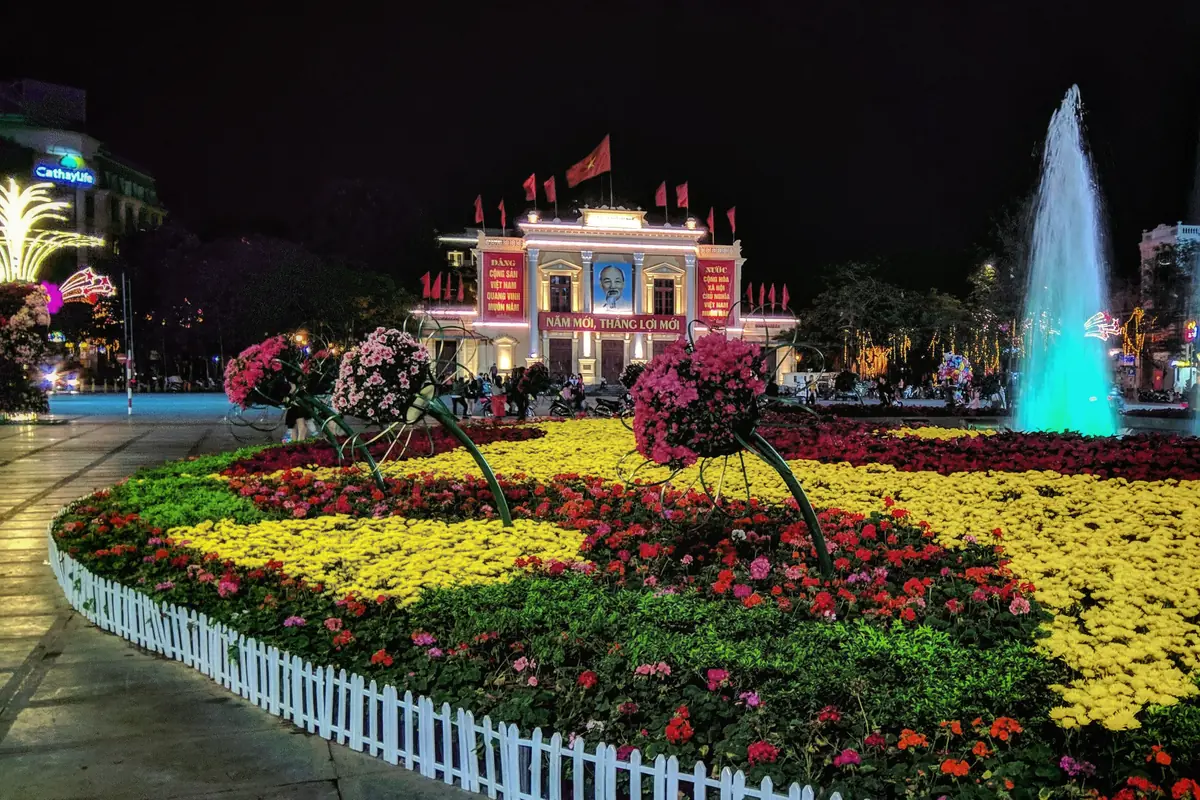
Hai Phong Opera House lit up behind the flower beds of the central square.
Hai Phong’s French Quarter sits right in the city center, around the Opera House and the streets of Hoang Van Thu, Dien Bien Phu, Nguyen Tri Phuong, and Minh Khai. Start at the Opera House Square, follow a loop past the old colonial buildings, and you’ll be back near the gardens in about two to three hours. The scenery changes fast: one minute you’re looking at a European-style theater, and a few streets later there’s a Gothic cathedral, a colonial post office, or a row of flower stalls inspired by traditional Vietnamese communal houses.
Where is Hai Phong’s French Quarter?
The French Quarter lies mainly in Hong Bang Ward, extending into part of the former Ngo Quyen district area, between the Cam River and the central garden strip.
Unlike Hanoi’s Old Quarter, it has no obvious entrance or clearly marked tourist boundary. French colonial buildings stand alongside modern shops, family homes, banks, and government offices that are still in use.
To understand how this neighborhood developed, look at the long stretch of gardens running past the Opera House.
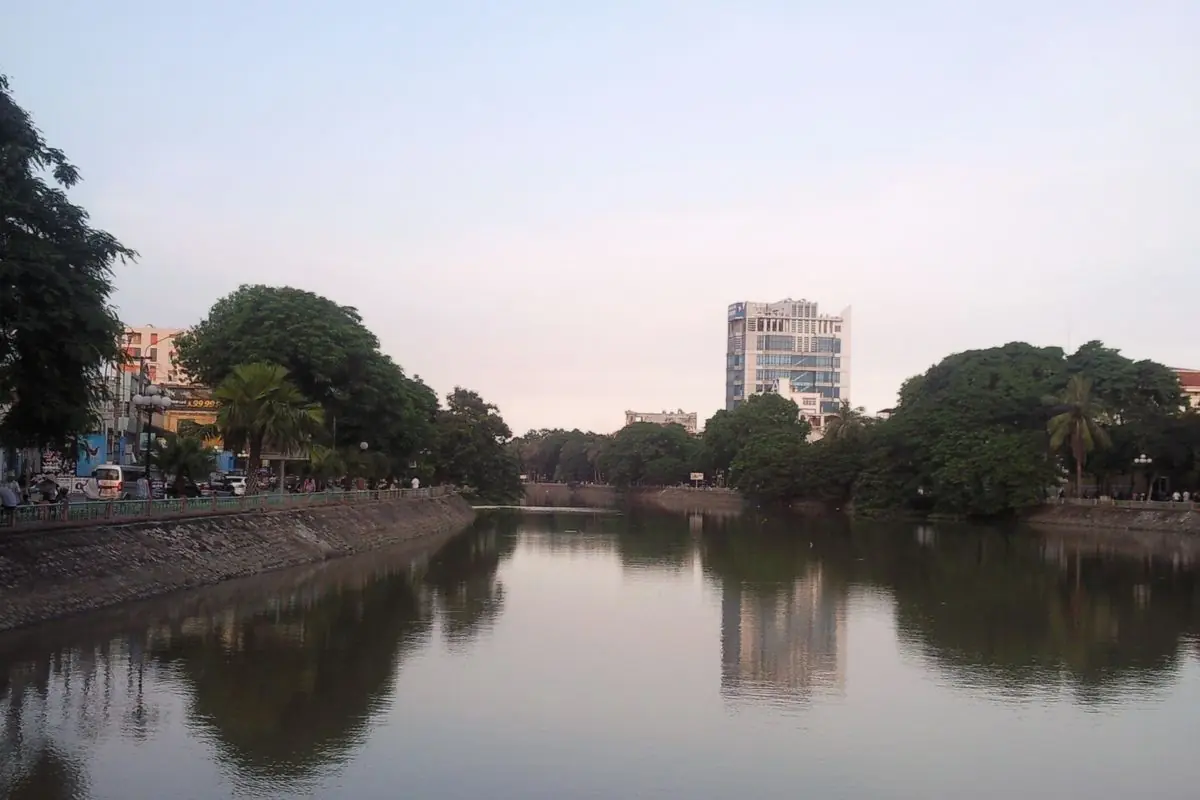
In 1885, the French colonial administration began digging the Bonnal Canal, connecting the Tam Bac waterway with the Cam River. The canal helped separate the planned European district from surrounding residential neighborhoods.
As Hai Phong expanded, most of the canal was filled in between approximately 1918 and 1925 to make way for roads and public gardens. Today’s Tam Bac Lake is part of what remains of that old waterway system.
The most interesting streets include:
- Dien Bien Phu Street: Formerly Paul Bert Boulevard, one of the grandest colonial avenues, lined with important commercial, administrative, and banking buildings.
- Hoang Van Thu Street: Once Amiral Courbet Street, home to Hai Phong Cathedral and several historic buildings.
- Minh Khai Street: A route connecting the old commercial area, post office, and buildings closer to the Cam River.
- Tran Hung Dao Street: Part of the former Chavassieux axis, near the central gardens, where some old villas have become cafés.
Not every colonial building is a tourist attraction. Many French-style villas were divided into family homes or converted into government offices after 1955. Most are still occupied, so admire their architecture from the public sidewalk.
A 2-3 hour walking route through Hai Phong’s French Quarter
The route starts at the Opera House: it’s easy to find, has an open square, and is a convenient place to get dropped off. From there it connects the most recognizable colonial landmarks without too much backtracking.
Allow around 15-20 minutes for major landmarks and shorter stops for buildings where you’re only photographing the exterior.
The total walk covers several kilometers, depending on the crossings and side streets you choose. Two to three hours is a comfortable estimate with photo stops and a short coffee break. A detailed museum visit will add more time.
Hai Phong Opera House
Start at the city's historic square
Address: 28 Tran Hung Dao Street, Hong Bang Ward.
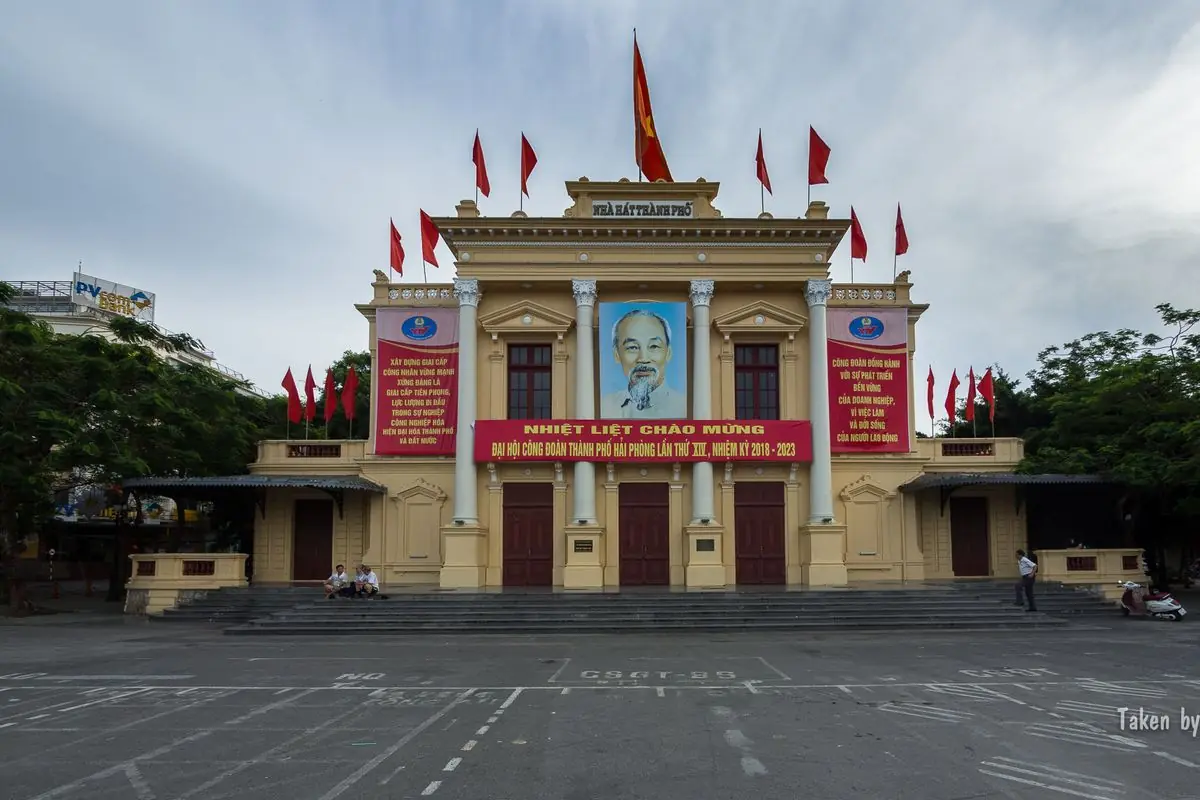
Standing in the middle of the square is Hai Phong Opera House, officially known as the City Theater.
Its yellow facade, tall columns, broad staircase, and classical decorative details make it one of the most recognizable buildings in central Hai Phong.
The theater was built on the site of an old market belonging to An Bien Village. French architects and administrators oversaw its design and construction, while Vietnamese craftsmen carried out much of the building work. Many materials and fittings were brought from France.
When was Hai Phong Opera House built?
The exact construction dates remain disputed.
The commonly cited timeline says construction began in 1904 and was completed in 1912. However, research drawing on French colonial archives suggests that planning and construction started earlier, around 1897-1898, with the building completed around 1900.
Originally, the Opera House hosted theatrical performances and cultural events for the European community in colonial Hai Phong.
The building and its square later witnessed several defining moments in the city’s history, including a revolutionary rally on August 23, 1945, fighting to defend the theater beginning on November 20, 1946, and celebrations marking Hai Phong’s liberation on May 13, 1955.
In December 2015, the Opera House was designated a national historical relic.
Today, it continues to host performances, conferences, commemorations, and cultural events.
Can you go inside? The square outside is a public space and normally requires no ticket, but there is no clearly published schedule for regular interior sightseeing visits.
To see the auditorium, look for a performance or another event that admits the public.
For photos, stand on the opposite side of the square to capture the entire facade. Move closer to the staircase for details of the columns, doors, and decorative reliefs.
Quan Hoa Flower Kiosks
Five little Vietnamese roofs in the French Quarter
Location: Central garden strip beside the Opera House Square.
The Flower Kiosks, known locally as Quan Hoa, are just a short walk from the Opera House.
Their architecture looks nothing like the European buildings nearby.
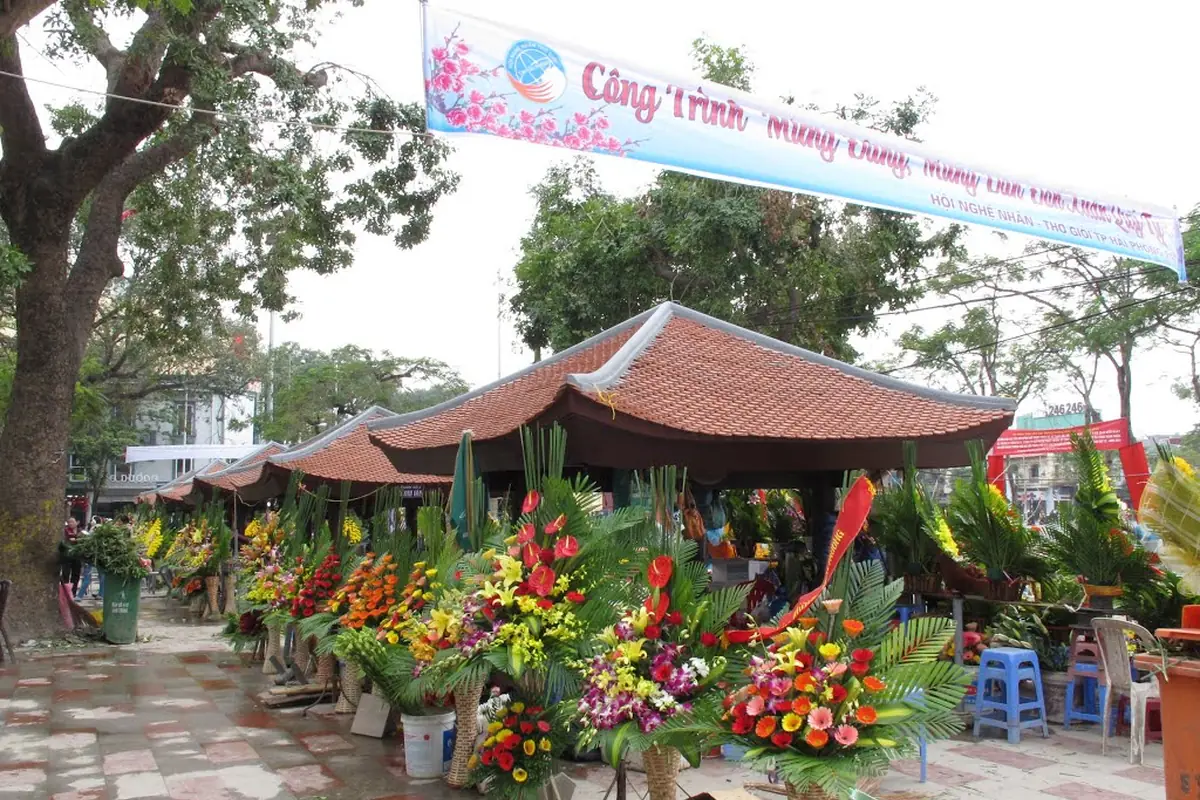
Five small kiosks stand in a row, each covering nearly 20 square meters and reaching roughly four meters in height. They feature ironwood columns, traditional timber frames, and gently curved roofs covered with dragon-scale tiles.
The kiosks were built in the mid-1940s. Some historical records give 1944, during the administration of Mayor Luciani, while others mention 1946.
Although built during the colonial period, their design draws on the architecture of traditional northern Vietnamese communal houses.
That explains why this little row feels distinctly Vietnamese despite its location in the heart of the old European district.
The kiosks originally served flower sellers, particularly during festivals and theater performances.
Commercial activities were temporarily suspended in late 2024 for restoration and improvements. The renovation was completed in early 2026, preserving major architectural features while adding new lighting for the evening.
Visitors can walk around the kiosks, admire their tiled roofs and wooden columns, and take photographs from public areas. Whether individual stalls are selling flowers may vary following the renovation.
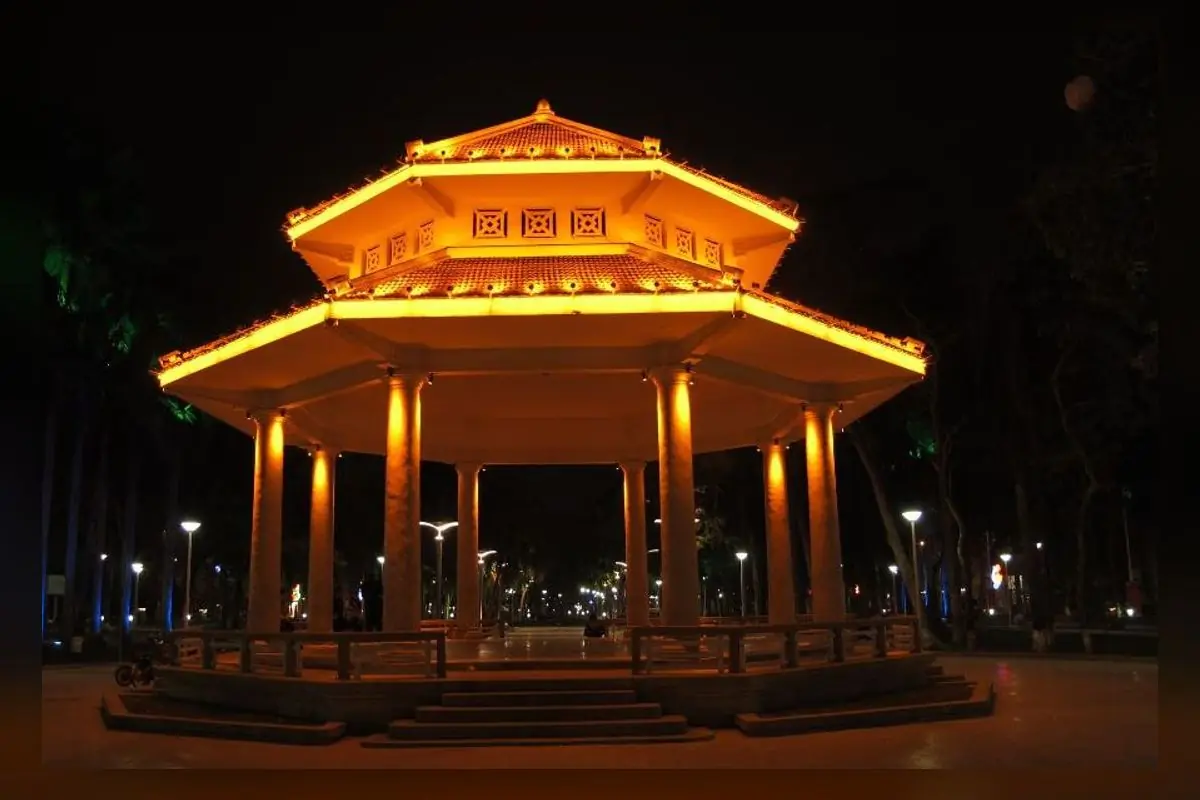
Nearby, look for Nha Ken, the old bandstand in the central gardens.
The original eight-roofed pavilion was built by the French in the early 20th century, demolished around 1960, and reconstructed in its former style in 1985.
It once provided a setting for outdoor musical performances.
Hai Phong Cathedral
Gothic architecture on Hoang Van Thu Street
Address: 46 Hoang Van Thu Street, Hong Bang Ward.
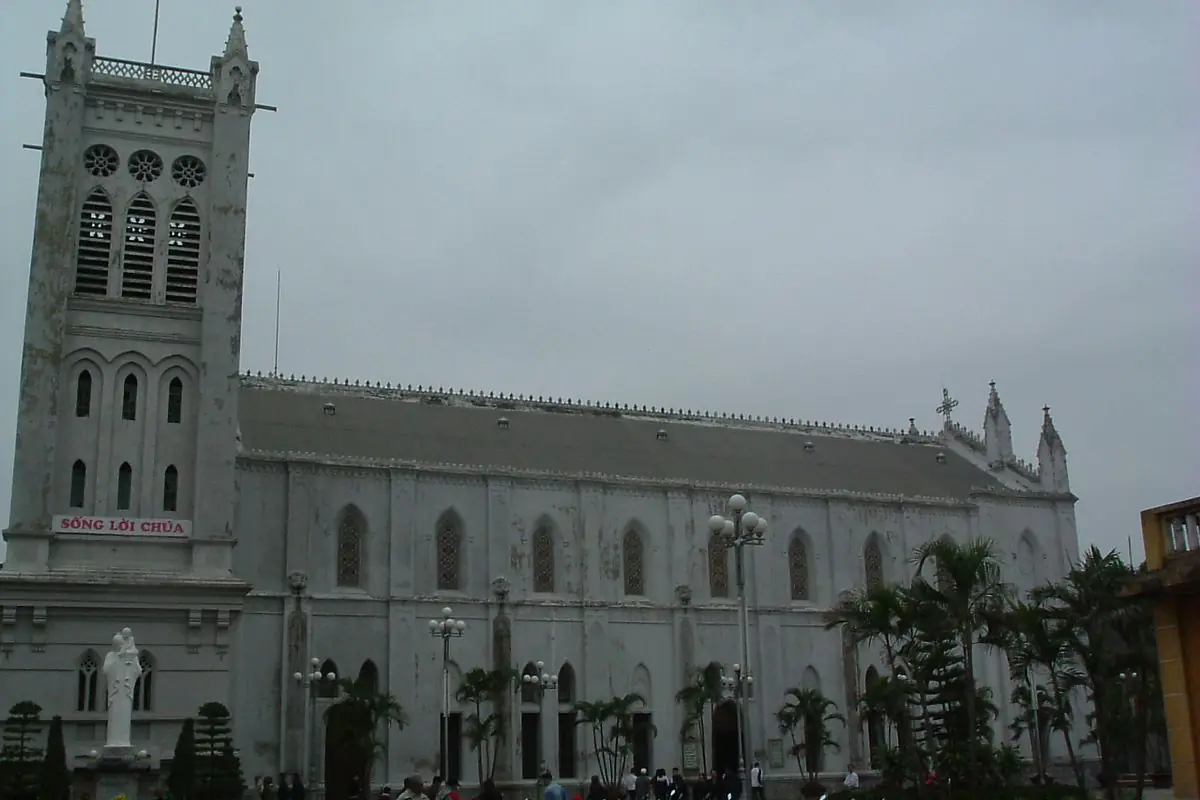
Leaving the Opera House area, follow Hoang Van Thu Street to Hai Phong Cathedral, also called the Cathedral of Our Lady of the Rosary or simply Hai Phong’s Great Church.
Its tall bell tower, pointed arches, and Gothic-inspired details are easy to recognize.
Inside, the main worship space feels unusually open because large rows of columns do not divide the central nave.
The cathedral’s history is closely associated with Spanish Dominican missionaries.
Some travel descriptions date the building to 1890, but the Diocese of Hai Phong’s historical account states that Father Salvador Masso built the main church in 1880. The year 1890 marks the relocation of the episcopal residence from Hai Duong to Hai Phong.
Today, the cathedral remains an active place of worship and the seat of the Diocese of Hai Phong.
Visitors may enter the grounds when the gates are open and access the church interior during permitted hours, including when attending Mass. It is a functioning religious building rather than a museum, so sightseeing access may not always coincide with service times.
The published regular Mass schedule is:
- Weekdays: 5:30 AM and 6:30 PM.
- Sundays: 6:30 AM, 10:00 AM, and 6:30 PM.
The 10:00 AM Sunday Mass is generally intended for children and families. Special religious celebrations may have different schedules.
For photographs, the front courtyard gives a good view of the bell tower and Gothic facade.
Dress respectfully, avoid disturbing worshippers, and keep photography discreet during religious services.
Hai Phong Central Post Office
A colonial building still in everyday use
Historic address: 5 Nguyen Tri Phuong Street, near Hoang Van Thu Street.
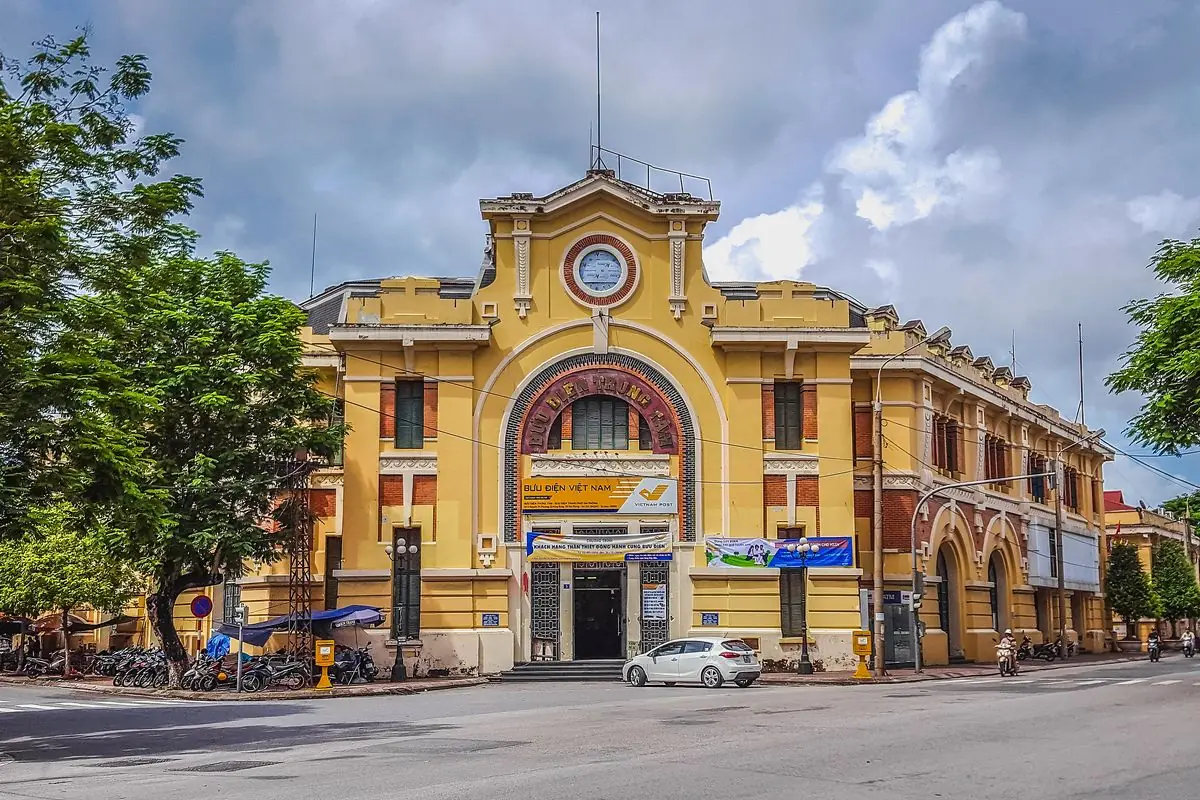
From the cathedral, continue toward Nguyen Tri Phuong Street to find Hai Phong’s historic Central Post Office.
Completed in 1905, the building was an important postal and communications hub during the French colonial period.
Its symmetrical layout, tall arched windows, yellow facade, and prominent clock give it the appearance of a classic colonial public building.
The post office also has historical connections to the transfer of control in 1945 and the city’s communications activities during the revolutionary and wartime periods.
Unlike the Opera House, the building still serves its original general purpose.
You can enter the public service area during working hours, see parts of the old interior, and observe architectural details that have survived over the decades.
Opening times can vary between service counters, particularly on weekends. Weekday mornings or early afternoons are generally more convenient for visiting.
Some current address listings may refer to another frontage of the same building complex, so searching for Hai Phong Central Post Office by name is often easier than relying on the historical street number alone.
You can photograph the exterior freely from public areas. Inside, avoid including customers’ addresses, parcels, or private documents in your pictures.
Former Bank of Indochina
A stone landmark near Lac Long Bridge
Address: 4 Nguyen Tri Phuong Street.
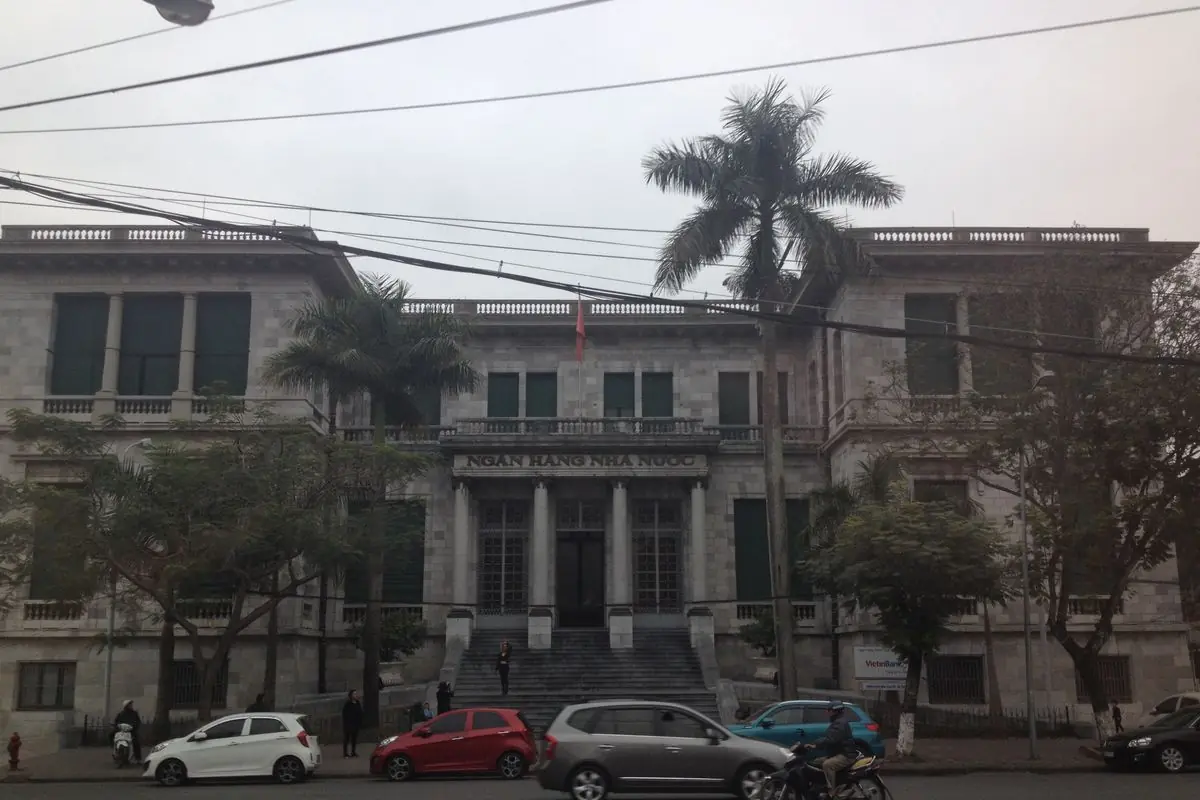
Close to the Central Post Office stands a much more imposing building: the former Bank of Indochina.
The bank’s Hai Phong branch began operating in 1885 and became part of the colonial financial network that supported trade through the port.
Instead of the plastered yellow walls seen on many colonial buildings, the exterior is built from large blocks of blue-gray stone sourced from Thuy Nguyen and Thanh Hoa.
The entrance has four substantial stone columns, elevated steps, and tall doors with decorative metalwork.
Some historical descriptions place construction of the building around 1884-1885, though the year the branch opened and the year the building was finished are two separate dates.
Since 1955, the building has served as the headquarters of the State Bank of Vietnam’s Hai Phong branch.
This is still a banking facility, not an attraction open for casual interior tours.
Admire the stonework from the public sidewalk, and don’t enter the entrance steps or security-controlled areas without permission.
Former Town Hall
The administrative heart of colonial Hai Phong
Address: 18 Hoang Dieu Street, near the Cam River.
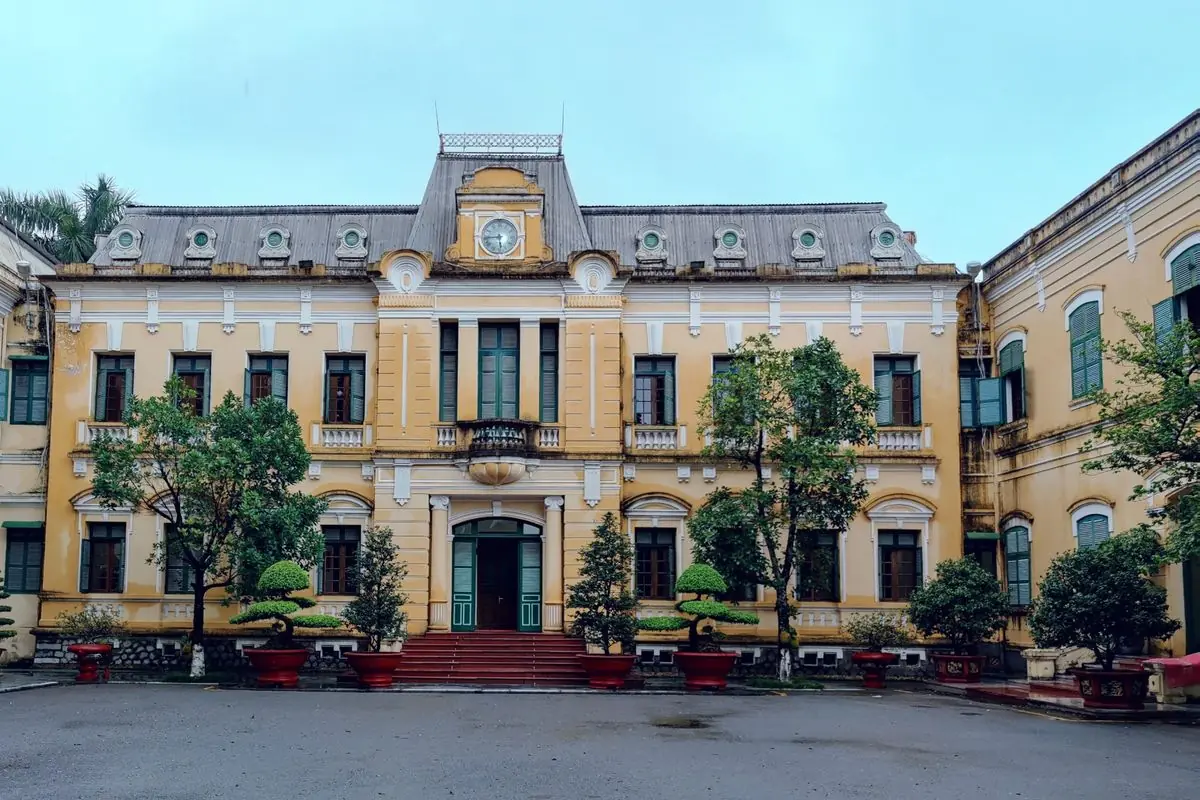
From Nguyen Tri Phuong Street, continue toward Hoang Dieu Street to reach the former Town Hall, historically known as the Tòa Đốc lý.
This was among the first administrative sites established by the French in Hai Phong.
The earliest offices were simple temporary structures made with lightweight materials. A permanent building was completed in 1905.
Its two-story design, symmetrical facade, wide corridors, and European decorative elements reflected the architectural preferences of the colonial administration.
Large openings and ventilated spaces also helped the building adapt to the hot, humid climate.
During the French period, the Town Hall stood at the center of a district containing important administrative and military institutions.
After 1955, the building continued serving local government for many decades.
Around July 2025, major municipal offices relocated to Hai Phong’s new Political and Administrative Center north of the Cam River.
The historic structure is therefore often referred to as the former headquarters of the Hai Phong People’s Committee.
Visitors can admire its facade from the opposite side of Hoang Dieu Street.
The grounds remain under government management and are not open for sightseeing.
Dien Bien Phu Street
Old Paul Bert Boulevard and Hai Phong Museum
Main stop: Hai Phong Museum, 66 Dien Bien Phu Street.
From the Hoang Dieu area, walk through the streets near Minh Khai to reach Dien Bien Phu Street.
During the French colonial era, this was Paul Bert Boulevard, one of the most prominent streets in the European quarter.
Banks, commercial offices, shipping companies, and administrative institutions lined the boulevard as the port grew.
Today, some of those old facades remain among modern hotels, shops, and contemporary buildings.
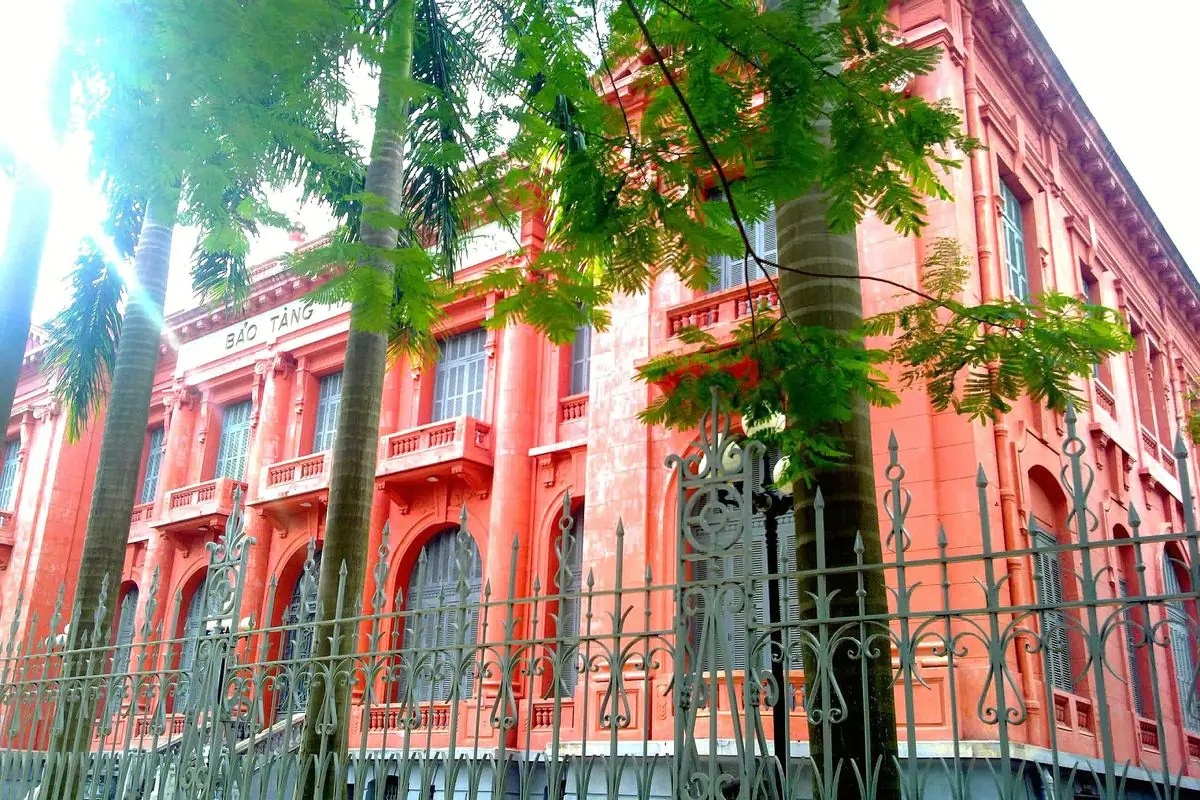
The main stop here is Hai Phong Museum, at 66 Dien Bien Phu Street.
Its building originally housed the Franco-Chinese Bank and features Gothic-inspired architecture mixed with other early 20th-century European elements.
The construction date varies between historical descriptions: 1919 is commonly mentioned, while some sources give 1911.
After the building was converted into a museum, it became a place for preserving and displaying objects related to Hai Phong’s history and culture.
Unlike the bank buildings still used as offices, Hai Phong Museum is intended to welcome visitors.
The museum opens Tuesday to Sunday, approximately 8:00-11:00 AM and 2:00-5:00 PM, with free general admission.
Hours and exhibitions do change, so check the museum’s latest announcements before planning a longer interior visit.
Further along Dien Bien Phu Street, you may also spot the building known locally as the Three-Bell Clock Building.
It was once linked to the city’s Chamber of Commerce, dating back to the late 19th century. Its distinctive clock tower helps it stand out from the surrounding facades.
Five-Star Bank Building
Traces of colonial trade and shipping
Location: Dien Bien Phu - Tran Phu intersection.
Continue along Dien Bien Phu Street toward Tran Phu, where two buildings share the local nickname Nam Sao, meaning Five Stars.
The building commonly called the Five-Star Bank was once the headquarters of the French and Colonial Finance Company, known by its French abbreviation SFFC.
Construction began in 1926 and was completed in 1927.
Today, the building is tied to VietinBank’s banking operations.
Across the street stands a former office of the French shipping company Chargeurs Réunis.
The company used a flag featuring five stars, which led local residents to call the building the Five-Star Shipping Company. Over time, the nickname also spread to the bank building opposite.
Maritime trade, shipping businesses, finance, and international commerce shaped these streets as much as the colonial administration did.
Neither building is generally open for casual interior sightseeing.
For photographs, stay on the sidewalk and choose a safe position near the intersection, where traffic can be busy.
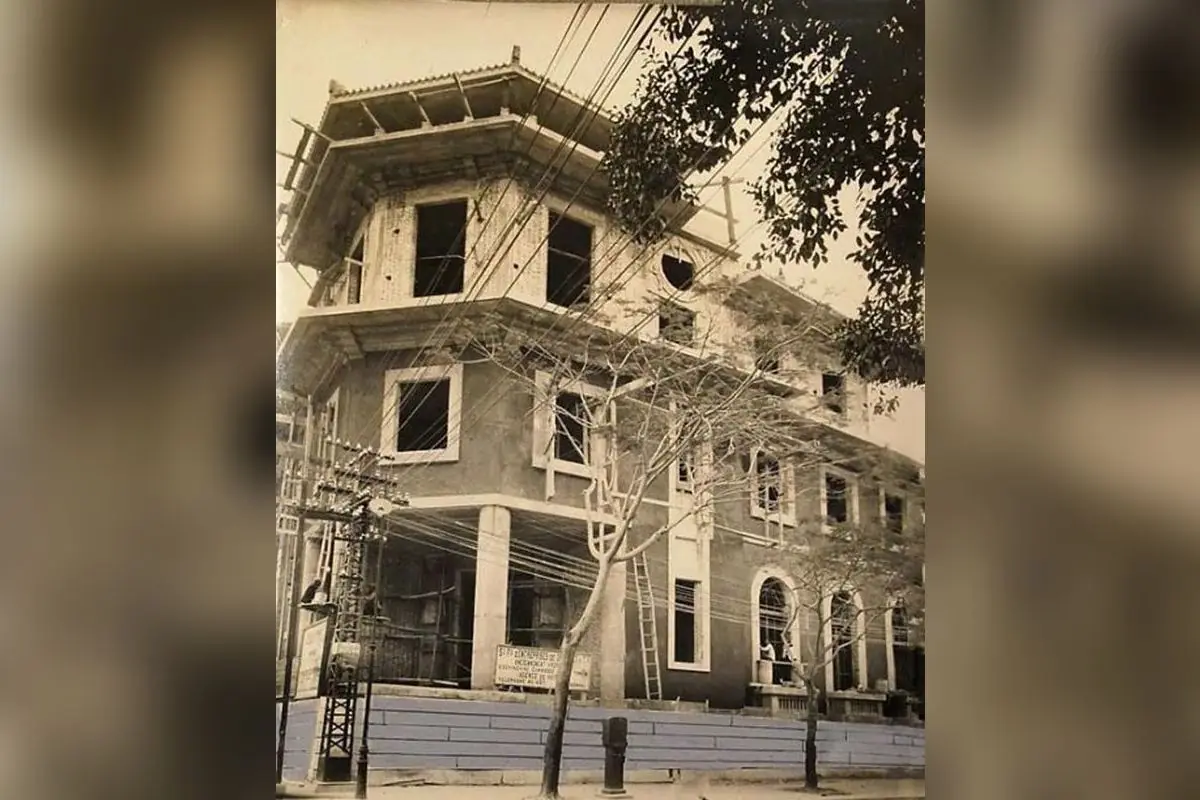
Return walk
Through Minh Khai and Tran Hung Dao streets
After the Five-Star Bank area, follow the connecting streets toward Minh Khai, then return through Tran Hung Dao to the Opera House Square.
Slow down on this stretch. Between the larger institutional buildings, you’ll notice old wooden shutters, wrought-iron balconies, tiled roofs, and colonial villas set back behind small gardens.
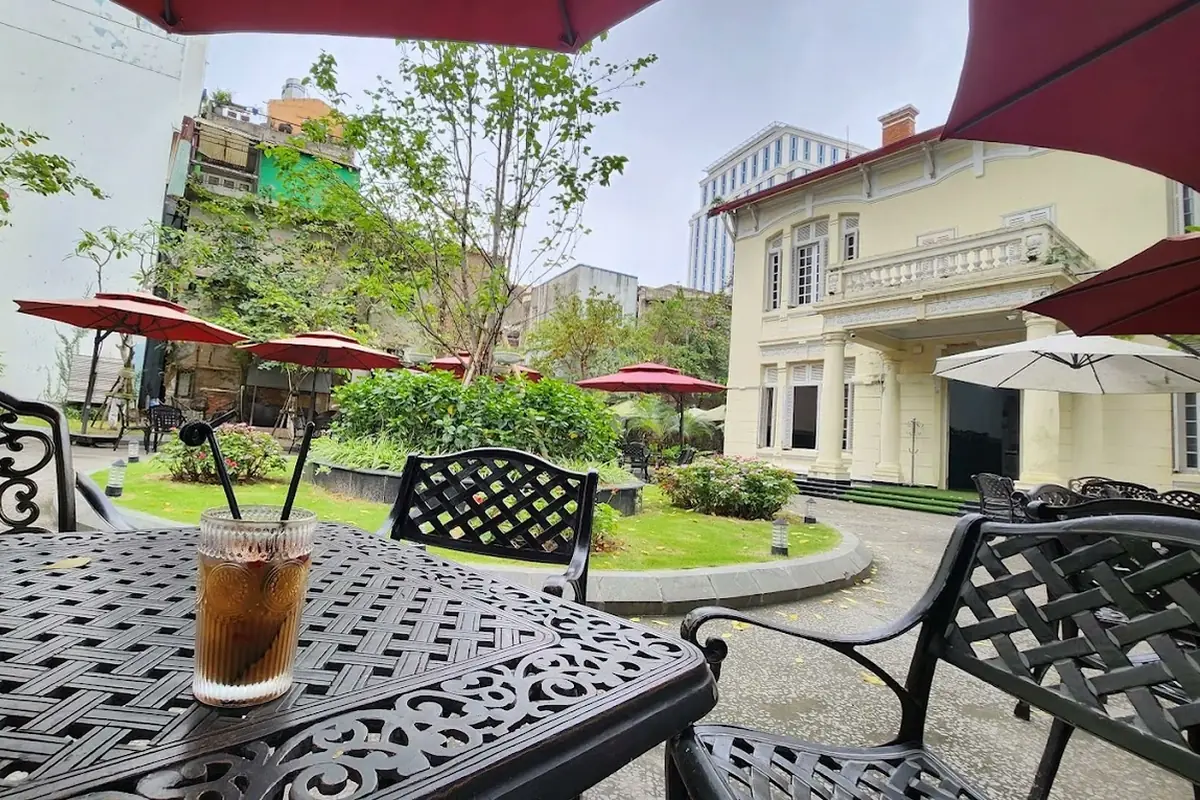
Some French-style villas on Tran Hung Dao Street have been converted into cafés.
Pick one that’s open near the Opera House area, order a Vietnamese coffee, and enjoy watching the street outside.
The route doesn’t hinge on one particular café, since businesses in these older properties change over time.
From here, the Opera House Square is close by, and there’s still the option of walking a little farther through the central gardens.
Understanding old French street names in Hai Phong
While browsing historical photographs or colonial maps, you’ll come across street names that no longer appear on modern signs. Recognizing a few of them makes it easier to connect old pictures with places you see today.
| Current street name | Former French name |
|---|---|
| Dien Bien Phu | Paul Bert |
| Hoang Van Thu | Amiral Courbet |
| Hai Ba Trung | O’Dendhal |
| Luong Khanh Thien | Clémenceau |
| Tran Hung Dao | Chavassieux |
| Nguyen Tri Phuong | Félix Faure |
Street names and boundaries changed across different periods, so one historical name may not correspond perfectly to the entire length of today’s road.
On old maps, you may also encounter names such as Canal Bonnal, Boulevard Bonnal, and Place Paul-Bert.
Hai Phong’s French Quarter and the city’s older commercial neighborhoods are separate areas.
The European district developed around streets such as Hoang Van Thu, Minh Khai, Le Dai Hanh, and Dien Bien Phu.
The Chinese commercial quarter was more concentrated around areas including Phan Boi Chau, Lan Ong, and streets near the Tam Bac waterfront.
What’s the best time to photograph Hai Phong’s French Quarter?
Morning: 6:30-9:00 AM
Early morning works particularly well for photographing the Opera House, the cathedral, and rows of colonial buildings while the streets are relatively quiet.
The light is softer, temperatures are more comfortable, and you can cover a longer distance without getting too tired.
Cafés begin opening, while the areas around government offices and banks are generally less crowded than later in the working day.
Afternoon: 3:30-6:00 PM
Late afternoon suits the full walking route. As the harsh sunlight fades, yellow walls, tiled roofs, and tree-lined streets take on warmer colors.
It’s also a good time to combine architectural photography with the evening illumination around the Flower Kiosks and Opera House Square.
Hai Phong can be hot and humid during summer, particularly around midday. Rainy weather makes the walk less comfortable, as some sidewalks collect water and much of the route is outdoors.
Is there a weekend pedestrian street around Hai Phong Opera House?
Hai Phong introduced a nighttime pedestrian and food street along its central garden area in 2026.
The trial operation took place on Friday and Saturday evenings from August 28 through October 24, 2026, with scheduled activities between 6:00 PM and midnight.
The event area extended from the Quang Trung Street section near the Le Chan Monument toward Tran Hung Dao Street, connecting with the Opera House Square.
During the trial, visitors could enjoy food stalls, cultural performances, and evening entertainment.
After October 24, 2026, city authorities agreed in principle that Hong Bang Ward should take over and continue operating the project.
Management, funding and long-term operations are still being worked out.
Even without a pedestrian street event, the Opera House Square and central gardens remain pleasant places for an evening stroll wherever public access is permitted, though the surrounding roads may stay open to normal traffic.
How to walk safely around central Hai Phong
Many streets in Hai Phong’s French Quarter have sidewalks, but they can become narrow where motorbikes are parked, trees take up space, or businesses extend toward the street.
For international visitors, a phone with mobile data or an offline map is usually enough to navigate the main route.
Searching for the Vietnamese names Nhà hát lớn Hải Phòng, Bưu điện Hải Phòng, and Nhà thờ Chính tòa Hải Phòng may produce more reliable map results than searching for their former French names.
At the end of the walk, you can book a Green SM electric taxi, formerly known as Xanh SM before its April 2026 rebranding, or use another ride-hailing app available in Hai Phong.
Green SM’s customer service number is 1555, with English-language assistance accessible through its phone menu. Estimated fares depend on the route and booking time shown in the app.
Have more time? Visit Hai Phong Railway Station
Travelers arriving by train from Hanoi can begin their architectural walk at Hai Phong Railway Station.
Located at 75 Luong Khanh Thien Street, the station was built around 1902 in a French architectural style.
It became an important transport hub linking Hanoi with Hai Phong’s port and still serves passenger trains today.
On May 10, 2025, Hai Phong Railway Station was officially recognized as a tourist destination.
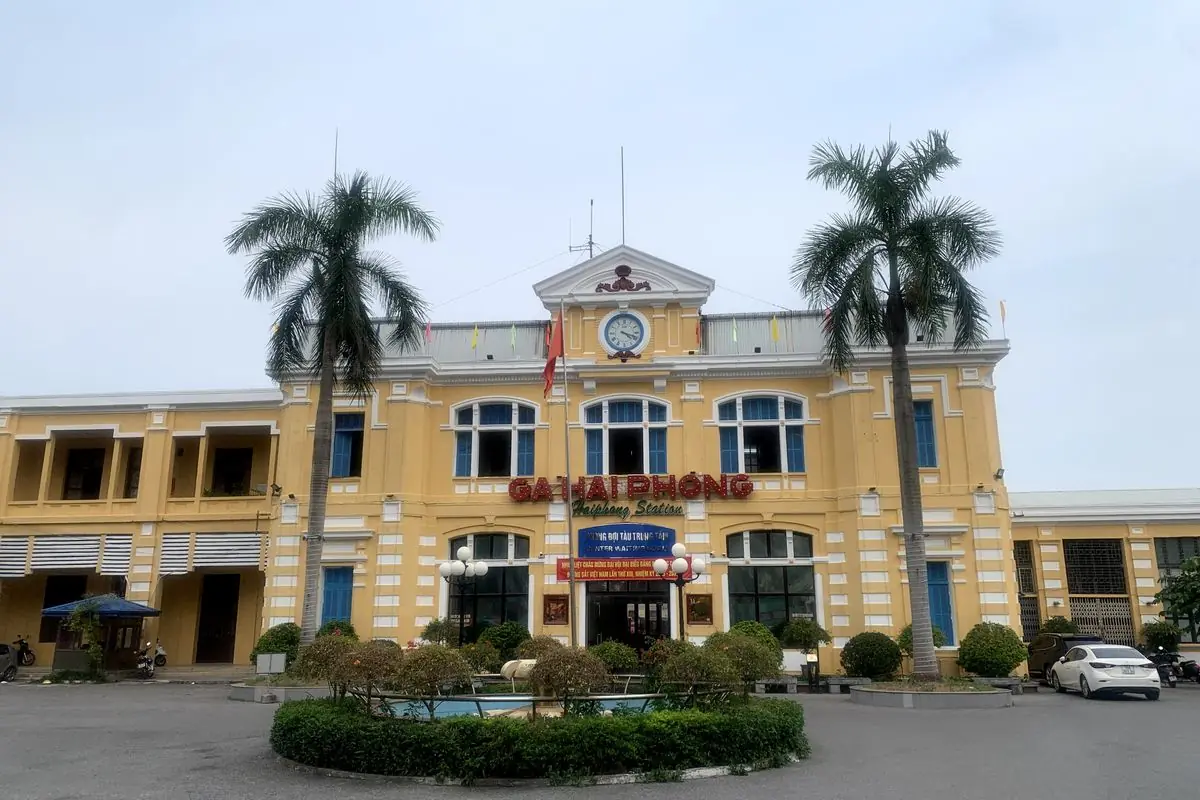
The building has a symmetrical facade, large windows, and the recognizable features of an early 20th-century railway station.
Visitors can enter public passenger areas, while platforms, tracks, and operational rooms remain subject to railway access rules.
From the station, continue toward the Opera House to join the main walking route.
This extra stop works particularly well for travelers with more than three hours or anyone combining sightseeing with a return train journey to Hanoi.
Conclusion
Back at the Opera House Square, you’ll find the five curved roofs of the Flower Kiosks beside a yellow theater that has stood for more than a century. Stay a little longer as evening approaches, and watch the kiosks light up against the fading sky.
Frequently asked questions
Where is Hai Phong's French Quarter, and how long does it take to explore?
Hai Phong's French Quarter is in the city center, mainly around Dien Bien Phu, Hoang Van Thu, Minh Khai, Nguyen Tri Phuong, and the Opera House. A self-guided walk covering the main landmarks takes approximately two to three hours. Allow extra time for a museum visit or a longer meal.
Can visitors go inside Hai Phong Opera House?
The Opera House does not have a clearly published schedule for regular interior sightseeing tours. Visitors usually admire the architecture from the public square outside. To see the auditorium, check for upcoming performances or contact the venue about events that admit visitors.
When was Hai Phong Opera House built?
The most widely cited construction dates are 1904-1912. However, archival research suggests an earlier period, around 1897-1900. The two accounts come from different records and have not been reconciled.
Is the pedestrian street around the Opera House open on weekends?
The 2026 trial operated from 6:00 PM to midnight on Fridays and Saturdays, ending on October 24, 2026. Local authorities have been preparing plans to continue the project, but the schedule after the trial period requires confirmation through the latest Hong Bang Ward announcements. The trial hours should not be treated as a permanent weekend timetable.
What time is Mass at Hai Phong Cathedral?
The regular published schedule at Hai Phong Cathedral, 46 Hoang Van Thu Street, is 5:30 AM and 6:30 PM on weekdays. Sunday Masses are scheduled for 6:30 AM, 10:00 AM, and 6:30 PM. Special religious celebrations may follow different times, so check the Diocese of Hai Phong's announcements when planning to attend a particular service.