Hanoi weather for first-time visitors: what to wear in all 12 months
December in Hanoi has an average low of around 15°C (59°F) and a high of about 22°C (72°F), although strong cold spells can bring much lower temperatures. If you're visiting between November and February, pack a warm jacket and check the forecast shortly before departure.
 22 min read
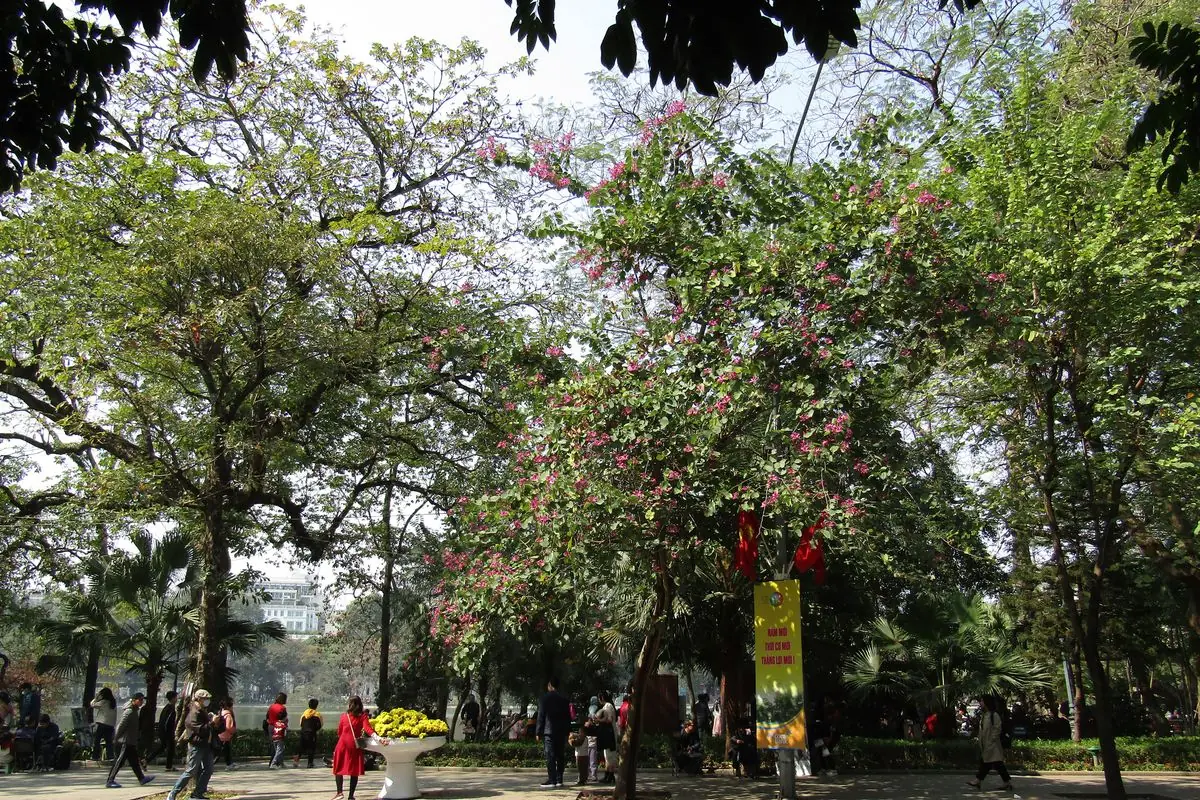
A sunny January morning by Hoan Kiem Lake: walkers in warm jackets and a pot of yellow chrysanthemums on the pavement.
Walking around Hoan Kiem Lake or West Lake is usually comfortable in October and November, but December evenings beside the water can feel surprisingly cold. October-November and March-April are among the best periods to explore Hanoi on foot. December through February suits visitors who enjoy winter weather, provided they bring enough warm clothing. Summer trips are still manageable, though longer walks are better saved for early morning or late afternoon.
How is Hanoi’s weather different from southern Vietnam?
Hanoi has a distinct cold season, unlike Ho Chi Minh City and many destinations in southern Vietnam. Someone leaving Ho Chi Minh City in temperatures close to 30°C (86°F) might arrive in Hanoi on a cloudy, windy day at just 13°C (55°F). Both cities are in Vietnam, but packing the same clothes for each can leave you seriously underprepared.
Hanoi’s climate is generally divided into four seasons:
- Spring, around March-April: Temperatures gradually rise. Cloudy skies, drizzle, and damp conditions are common before the first hot spells of the year.
- Summer, around May-August: Hot, humid, and rainy. Daytime sunshine can be intense, while showers and thunderstorms sometimes develop quickly.
- Autumn, around September-November: Temperatures gradually fall. September remains warm and wet, but October and November usually feel more comfortable.
- Winter, around December-February: Cold weather, occasionally including severe cold spells. Late winter can bring prolonged drizzle, fog, and damp conditions.
These seasons don’t begin or end on fixed dates. Some years bring strong cold fronts in November, while December can also have sunny afternoons warm enough to walk comfortably without a heavy coat.
Monthly average temperatures don’t tell you how hot or cold a particular day will feel.
January may have afternoons above 20°C (68°F), followed by a cold front that keeps temperatures low throughout the next day. Similarly, June has an average daily high of around 33°C (91°F), but temperatures can exceed 35°C (95°F) during heat waves.
When choosing clothes, look at overnight lows, daytime highs, wind, and the rain forecast for your actual travel dates.
Hanoi climate by month: temperature and rainfall
The following table compares average temperatures and rainfall throughout the year, helping you choose your travel dates before booking flights or accommodation.
| Month | Average low | Average high | Average rainfall |
|---|---|---|---|
| January | 14.2°C (58°F) | 21.0°C (70°F) | 62 mm |
| February | 15.2°C (59°F) | 22.1°C (72°F) | 51 mm |
| March | 18.7°C (66°F) | 25.6°C (78°F) | 71 mm |
| April | 21.6°C (71°F) | 29.0°C (84°F) | 103 mm |
| May | 24.6°C (76°F) | 31.3°C (88°F) | 225 mm |
| June | 26.5°C (80°F) | 33.2°C (92°F) | 281 mm |
| July | 26.3°C (79°F) | 32.8°C (91°F) | 329 mm |
| August | 25.8°C (78°F) | 31.7°C (89°F) | 433 mm |
| September | 24.8°C (77°F) | 30.8°C (87°F) | 352 mm |
| October | 22.0°C (72°F) | 28.3°C (83°F) | 203 mm |
| November | 18.9°C (66°F) | 25.9°C (79°F) | 59 mm |
| December | 14.8°C (59°F) | 21.7°C (71°F) | 34 mm |
Data note: These reference figures are based on ERA5 historical weather data accessed through Open-Meteo for central Hanoi near Hoan Kiem Lake, covering 2016-2025. Temperatures represent monthly averages of daily highs and lows, not historical extremes. Rainfall represents average monthly totals, not the number of rainy days. These are historical climate estimates, not observations from the Lang weather station or forecasts for specific travel dates.
Three things stand out.
First, December, January, and February are noticeably cooler than the rest of the year. Visitors unfamiliar with cold weather should pack a jacket even when their weather app shows several sunny days ahead.
Second, rainfall increases sharply from May and remains relatively high through October. August has the highest average rainfall in this dataset, while December has the lowest.
Finally, October and November bring temperatures that are generally more comfortable for walking. Early October can still be warm and rainy, however, so your exact travel dates matter.
Hanoi weather month by month: what to expect and wear
January: cold days and occasional dry sunshine
January falls in the middle of Hanoi’s winter. Mornings are often cold, many days are cloudy, and sunny afternoons can feel noticeably more pleasant.
An average low of around 14°C (58°F) doesn’t mean every morning stays at that temperature. When a strong cold front arrives, Hanoi can drop close to 10°C (50°F), sometimes lower during particularly severe cold spells.
Walking around Hoan Kiem Lake at 7 a.m. can feel very different from visiting at 2 p.m. You’ll probably appreciate a warm jacket in the morning, while afternoon sunshine may be enough to make you remove a layer.
January is a good time to explore the Temple of Literature, the Old Quarter, and Hanoi’s museums. Walking is generally less tiring than in summer, although particularly cold days are better suited to shorter periods outdoors.
What to pack: A sweater or fleece, warm jacket, long trousers, socks, and closed-toe shoes. Add a scarf and beanie when the forecast drops to around 10-12°C (50-54°F).
February: still cold, with drizzle and increasing humidity
Don’t assume Hanoi’s winter has ended just because February has arrived. Cold fronts remain possible, particularly early in the month.
What changes is the moisture in the air. Some mornings bring mist, fog, or very fine drizzle. The pavement may stay wet even though you haven’t seen any heavy rain.
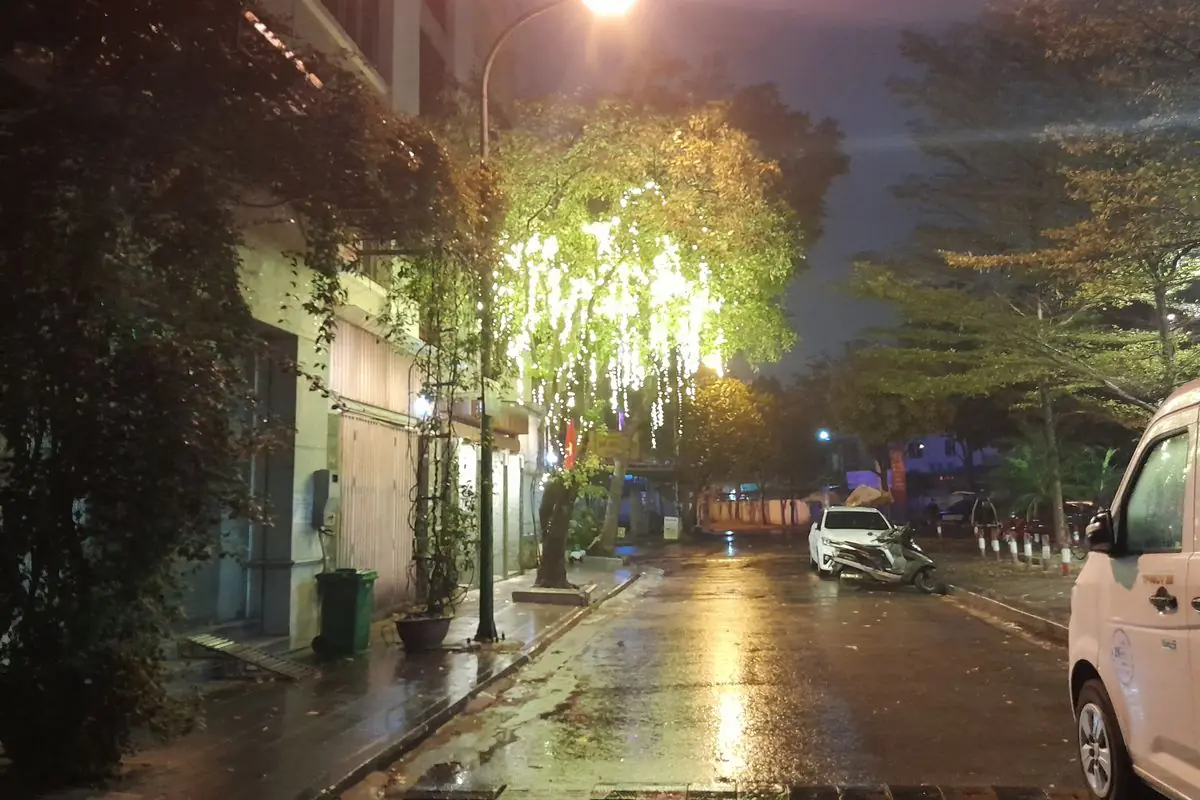
From around mid-February, Hanoi can also experience a weather condition locals call nồm, a period of excessive dampness.
You might notice condensation on tiled floors, towels taking longer to dry, and clothes still feeling damp after hanging overnight. This is worth considering when booking a homestay or apartment rather than a hotel.
February often overlaps with Tet, Vietnam’s Lunar New Year holiday. In 2027, Lunar New Year’s Day falls on February 6, 2027.
If your trip coincides with Tet, confirm hotel services, restaurant opening hours, and transport arrangements before you arrive. Holiday schedules can affect your itinerary even more than the weather.
What to pack: A warm jacket, layers, shoes with decent grip, and a compact umbrella. Bring spare clothes if you’re staying somewhere without a tumble dryer.
March: warmer temperatures but damp conditions
March is generally warmer than January, although the weather can still make choosing clothes tricky.
Mornings may be cool, afternoons pleasantly warm, and evenings cloudy with occasional drizzle.
This is also one of the months when damp weather becomes especially noticeable. Thick canvas shoes can take a long time to dry after getting wet, and hand-washed laundry may remain damp inside poorly ventilated rooms.
You could spend the morning at the Temple of Literature, then visit the Vietnam Fine Arts Museum at 66 Nguyen Thai Hoc Street if light rain starts. The two attractions are close together, so there’s no need to travel across the city.
Photographers should be prepared for cloudy skies rather than expecting sunshine every morning. Overcast weather often creates soft light, but distant views can be hazy.
What to pack: A lightweight jacket, long-sleeved shirts, trousers, a folding umbrella, and shoes with good traction. Heavy winter coats are usually unnecessary unless a late cold front is forecast.
April: warm weather and the first hot days
April is a good choice for visitors who dislike winter cold but don’t want the intense heat of June or July.
Average daily highs reach around 29°C (84°F). Midday can feel hot, while early mornings and evenings are generally better for outdoor activities.
April can also bring transitional showers and thunderstorms. A sunny morning doesn’t guarantee that the afternoon will remain dry.
For a walking itinerary, start around Hoan Kiem Lake in the morning, continue along Trang Tien Street, and visit the Hanoi Opera House area.
By midday, consider moving indoors for lunch or a museum visit instead of pushing through a long walk under the sun.
What to pack: T-shirts, breathable clothes, comfortable walking shoes, sunscreen, and a compact umbrella. A lightweight jacket is useful on cooler days.
May: the start of hotter, wetter weather
May brings a noticeable change. Sunshine becomes stronger, the air feels more humid, and rainfall increases compared with April.
Some days feel hot almost as soon as you leave your hotel, especially when standing in traffic or walking along streets with little shade. Showers can also develop quickly, sometimes accompanied by thunderstorms.
Walking through the Old Quarter is still enjoyable, but starting around 6:30-8:00 a.m. is usually more comfortable than waiting until midday.
Save museums, indoor attractions, and longer meals for the hottest part of the day.
What to pack: Lightweight, breathable clothes, a compact raincoat, sunscreen, and quick-drying shoes.
June: hot days and afternoon thunderstorms
June is one of Hanoi’s hottest months. The average daily high is around 33°C (92°F), and temperatures can exceed 35°C (95°F) during heat waves.
The heat can feel more intense along busy streets with little airflow. Waiting at a traffic light or bus stop around noon may leave you exhausted before you’ve walked very far.
A better approach is to split sightseeing into two sessions.
Explore Hoan Kiem Lake early, have breakfast, then rest at your accommodation or visit a museum. Return outdoors in the late afternoon when temperatures begin to ease.
Rainstorms can briefly cool the city, but don’t treat rainfall as a reason to head outside while thunder, lightning, or strong winds are still present.
What to pack: Thin clothing, a hat, sunglasses, sunscreen, drinking water, and a folding raincoat. If you’re sensitive to heat, schedule regular breaks somewhere air-conditioned.
July: hot, humid, and prone to heavy rain
July remains hot, with average daily highs close to 33°C (91°F) and average monthly rainfall above 300 mm.
Unlike the fine drizzle of spring, summer rain often arrives in heavy bursts, sometimes accompanied by thunderstorms.
A strong downpour can cause temporary flooding, slow traffic, and make ride-hailing services harder to book.
Avoid scheduling attractions too tightly together, particularly on days when you also need to travel to Noi Bai International Airport. Your flight has a fixed departure time, but the journey to the airport during heavy rain may not go as planned.
If significant rainfall is forecast, consider visiting the Vietnamese Women’s Museum at 36 Ly Thuong Kiet Street or another indoor attraction near your accommodation.
Save longer outdoor activities for days with better forecasts.
What to pack: Lightweight clothing, a raincoat, a waterproof pouch for your phone and documents, and quick-drying footwear.
August: heavy rain and the need for flexible plans
August has the highest average rainfall in the table, around 433 mm.
That doesn’t mean it rains every day, nor does it mean August necessarily has the most typhoons.
Some days begin with strong sunshine before heavy rain develops in the late afternoon or evening. Other weather systems can bring unsettled conditions for several consecutive days, making outdoor sightseeing and photography less convenient.
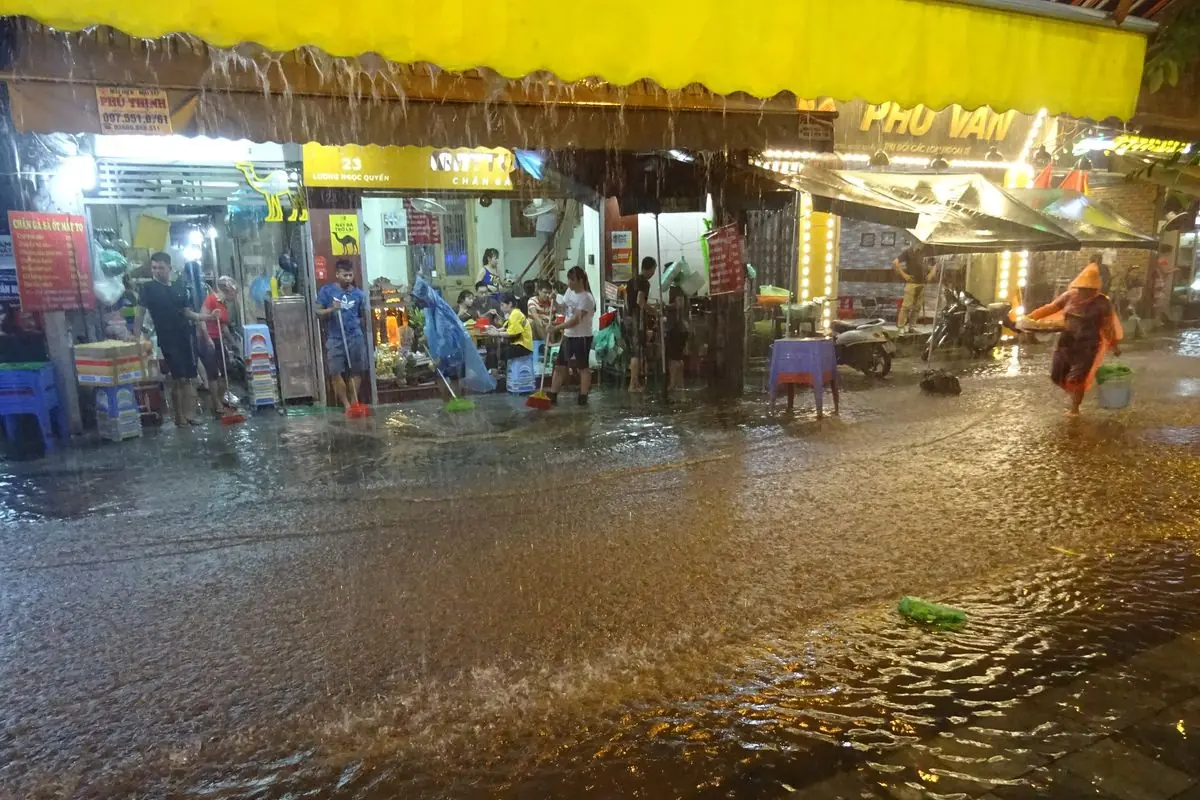
When visiting Hanoi in August, choose accommodation with easy transport access and relatively short journeys to your planned attractions.
A hotel close to the Old Quarter can reduce the number of longer trips you need to make in bad weather.
More importantly, avoid committing every day to outdoor activities that cannot be moved.
For a three-day visit, keeping at least one flexible period in your itinerary makes it easier to rearrange plans around the forecast.
What to pack: A lightweight raincoat, waterproof bags, quick-drying clothes, and spare shoes or sandals.
September: still warm, not quite the cool autumn people imagine
September is often associated with Hanoi’s autumn, but early September can remain almost as hot and rainy as summer.
Average daily highs are around 31°C (87°F), and rainfall remains relatively high. Strong thunderstorms can still disrupt travel.
Conditions tend to become more comfortable towards the end of the month. Some mornings and evenings feel less humid, making lakeside walks and outdoor cafés more appealing.
If your priority is walking around the Old Quarter in cooler weather, late September is generally a better choice than early September, although checking the rain forecast remains important.
What to pack: Breathable clothes, rain protection, and sunscreen. You don’t need a heavy jacket simply because the calendar says autumn has arrived.
October: one of the best months for exploring Hanoi on foot
October is one of the best months to consider if your travel dates are flexible.
Temperatures fall compared with summer, and walking becomes more comfortable, particularly during the second half of the month.
However, average rainfall remains around 203 mm, so sunny weather isn’t guaranteed.
You could spend the morning walking from Hoan Kiem Lake through the Old Quarter, exploring Hang Gai, Hang Dao, and Hang Ngang streets before lunch.
In the afternoon, continue to the Temple of Literature or another part of central Hanoi without needing as many breaks from the heat as you would in June.
Early October can still bring heavy rain, while the end of the month may see the arrival of cooler air.
That difference is worth considering when looking at the forecast.
What to pack: T-shirts, comfortable trousers, walking shoes, a light jacket, and an umbrella.
November: pleasant temperatures and less rain
If you could choose just one month to explore Hanoi on foot, November deserves serious consideration.
Average highs are around 26°C (79°F), while lows are about 19°C (66°F). Rainfall drops sharply compared with October.
Mornings around Hoan Kiem Lake are generally more comfortable than during the hot season.
After breakfast, you can walk through the Old Quarter, stop at a café, and continue towards the Hanoi Opera House without spending the whole day trying to escape the heat.
Evenings can be cooler than expected, particularly after a cold front.
A light jacket is sufficient on many days, but late November sometimes calls for something warmer.
November suits first-time international visitors, older travellers who prefer to avoid intense heat, and anyone hoping to visit several outdoor attractions in a single day.
What to pack: Long-sleeved shirts, a light or medium-weight jacket, trousers, and walking shoes. Check for incoming cold fronts before departure.
December: cold weather, less rain, and plenty of cloudy days
December brings Hanoi firmly into winter.
The average daily low is around 15°C (59°F), while the average high is close to 22°C (72°F).
For visitors from Singapore, Bangkok, Ho Chi Minh City, or other warm destinations, these temperatures may already feel cold enough to require a jacket, especially early in the morning and after sunset.
Strong cold fronts can bring temperatures down to around 10-12°C (50-54°F), occasionally lower.
On other days, sunshine makes the afternoon relatively mild.
December has the lowest average rainfall in the table, but light rain, cloudy skies, and damp cold conditions are still possible. Less rain doesn’t mean clear blue skies every day.
A morning walk through the Old Quarter, a bowl of hot pho, and a few attractions in central Hanoi make a suitable winter itinerary.
During particularly cold spells, shift longer walks towards midday and early afternoon.
What to pack: Thermal or long-sleeved tops, a sweater, a warm jacket, trousers, socks, and closed-toe shoes. A scarf and beanie are useful for visitors who aren’t accustomed to cold weather.
How cold does Hanoi get from December to February?
This is the part worth reading carefully if you’re booking a trip between the end of the year and Tet.
Average winter temperatures are not the same as cold-spell temperatures
During December, January, and February, Hanoi can have relatively ordinary days with temperatures around 15-22°C (59-72°F), depending on the month and time of day.
But strong cold fronts can cause temperatures to fall quickly.
Hanoi has experienced cold spells with forecast lows around 8-11°C (46-52°F).
A cloudy, windy day at 10°C (50°F) feels very different from a sunny afternoon at 20°C (68°F).
Don’t rely on monthly averages when deciding whether to leave your warm jacket at home.
Do you need a heavy jacket in Hanoi during winter?
Yes, bringing a reasonably warm jacket is a good idea, especially if you’re visiting between December and early February and don’t usually experience cold weather.
That doesn’t necessarily mean everyone needs a bulky down coat.
Wearing several layers is more flexible:
- Start with a long-sleeved top or thermal base layer.
- Add a sweater, fleece, or warm sweatshirt.
- Finish with a wind-resistant jacket suitable for the forecast temperature.
On days around 18-22°C (64-72°F), many visitors will be comfortable in long sleeves and a light jacket.
When temperatures are expected to fall to 10-12°C (50-54°F), add a thermal layer and a thicker outer jacket.
Travellers from tropical climates often feel cold even at 15°C (59°F), especially when standing outdoors for long periods.
It’s also worth checking whether your accommodation provides heating or a reversible air conditioner with a heating function. Don’t assume every hotel or homestay room in Hanoi has heating during winter.
How do drizzle and damp cold affect sightseeing?
Winter drizzle is often too light to force you to cancel an entire day’s itinerary.
The inconvenience comes from how long it can last.
Pavements remain wet, jackets become damp, and shoes may take longer to dry.
A walk around the lake may still be pleasant during very light rain, but sitting outside for hours becomes less appealing.
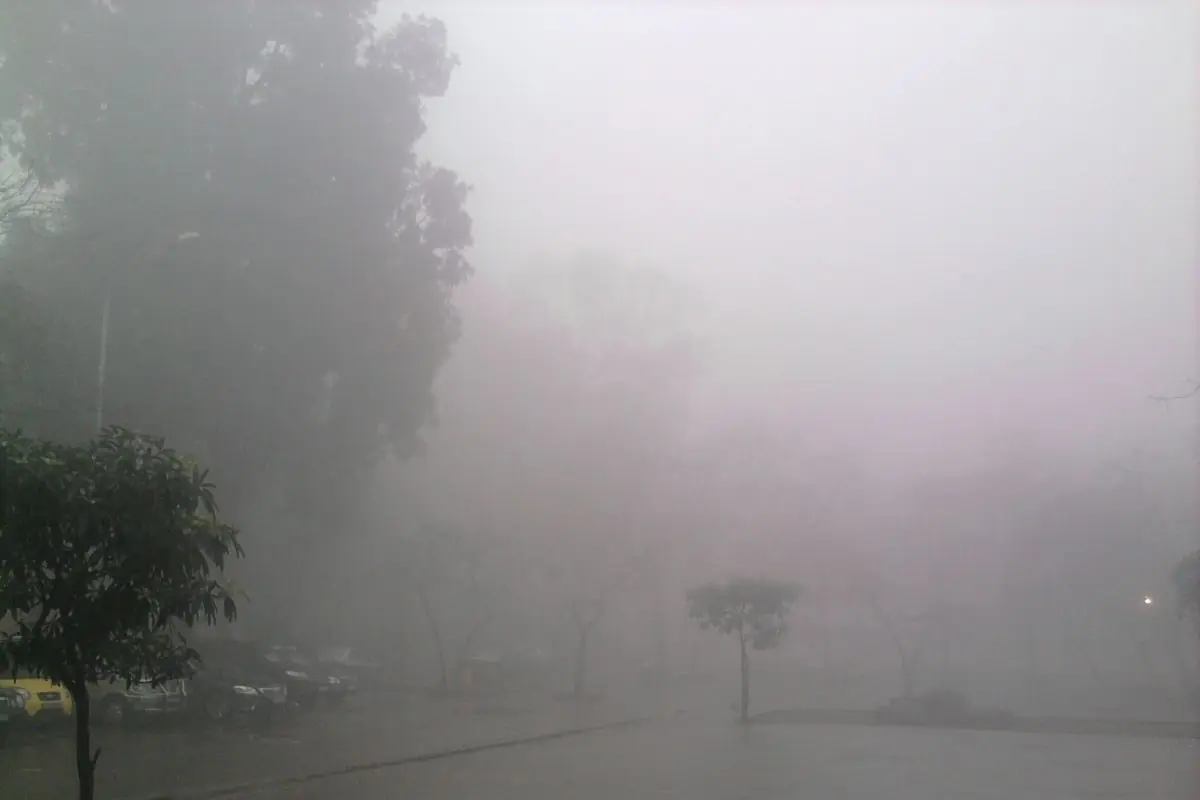
Cloudy skies and mist can also reduce visibility and make photographs look darker than expected.
A jacket with a water-resistant outer layer, a compact umbrella, and shoes with good grip are often more useful than packing several extra bulky sweaters.
When is Hanoi’s humid and damp season?
Hanoi’s damp conditions, commonly known as nồm, usually appear between approximately mid-February and early April.
They are particularly associated with warm, moisture-laden air arriving after a period of colder weather.
The most obvious signs often appear inside your accommodation.
Tiled floors can look as though someone has just mopped them. Mirrors collect condensation, towels take ages to dry, and clothes may feel damp despite spending the night on a hanger.
These conditions can last several days or sometimes longer before changing with a new cold front or a spell of sunny weather.
Short-stay hotel guests may notice fewer practical problems than travellers renting an apartment and washing their own clothes.
If you’re spending a week in Hanoi in March, accommodation with a tumble dryer, dehumidifier, or air conditioning that includes a drying mode is particularly useful.
Opening every window isn’t necessarily the solution. When outdoor air is very humid, bringing more of it inside can make condensation worse.
Damp weather also doesn’t always involve significant rainfall.
You may see almost no rain while the floor remains slippery and your laundry refuses to dry.
That’s why monthly rainfall statistics alone cannot fully describe what spring feels like in Hanoi.
What is the best month to visit Hanoi?
There’s no single month that suits every traveller.
The best choice depends on whether you want long walks, comfortable temperatures, winter atmosphere, or a trip during school holidays.
| Travel preference | Best months to consider | What to watch for |
|---|---|---|
| Walking around the Old Quarter and Hoan Kiem Lake | October-November | Early October can still be rainy |
| First-time visit with comfortable weather | November | Cold fronts may arrive late in the month |
| Spring sightseeing | March-April | Drizzle, damp conditions, and thunderstorms |
| Experiencing northern Vietnam’s winter | December-January | Warm clothing is necessary |
| Visiting during Tet | January or February, depending on the year | Cold weather and holiday opening hours |
| Travelling during summer holidays | June-August | Heat, heavy rain, and thunderstorms |
Choose October-November for walking and outdoor sightseeing
This period is particularly convenient for visitors who want to spend much of their time outside.
You can walk from the Old Quarter to Hoan Kiem Lake, continue along Trang Tien Street towards the Opera House, and return to your hotel without scheduling constant breaks from the heat.
November generally has an advantage over October in terms of rainfall.
The trade-off is that late November can already feel chilly, especially after sunset.
Choose March-April for warmer conditions
March suits travellers who enjoy mild weather and don’t mind cloudy skies.
April is warmer, making lighter clothing more practical and outdoor sightseeing comfortable on many days.
The main drawback in March is the possibility of drizzle and damp weather.
By April, pay attention to early heat waves and thunderstorms associated with seasonal changes.
If you’re hoping for photographs under clear sunshine, check the forecast a few days before departure rather than assuming spring always brings bright skies.
Choose December-January for a winter experience
Hanoi’s winter suits a slower itinerary: breakfast, a few nearby attractions, a café stop, and walking during the warmest part of the day.
You’ll need extra luggage space for jackets and long-sleeved clothing.
On dry days, however, the cooler weather can make walking far less tiring than during the middle of summer.
If you only own a very thin jacket and don’t want to buy more winter clothing, November or April may be a more convenient choice.
When does Hanoi’s rainy season start and end?
Hanoi’s rainy season generally runs from May through October, with particularly high rainfall during the middle and later parts of summer.
Summer rain has several characteristics worth preparing for.
Heavy downpours can develop within a short period, making motorbike journeys and walking difficult.
Some roads may experience temporary flooding. Even after the water recedes, traffic can remain slow.
Thunderstorms are another concern.
A sunny morning doesn’t guarantee that lightning, gusty winds, or heavy rain won’t arrive a few hours later.
You don’t need to cancel an entire holiday simply because the forecast mentions rain.
A 60% chance of rain doesn’t mean rain is expected for 60% of the day. It describes the probability of measurable rainfall under the forecast’s criteria and coverage, not the duration of the rain.
Similarly, a forecast of 30 mm of rainfall means something very different from a 30% chance of rain.
When heavy rain warnings are issued, look at the expected timing, rainfall intensity, and any thunderstorm or flooding alerts.
If you’re travelling from the Old Quarter to Noi Bai International Airport, don’t estimate your departure time solely from a map showing normal traffic conditions.
Heavy rain during rush hour can make the journey considerably longer.
What to pack for Hanoi in each season
For a three- to five-day trip, you don’t need an enormous suitcase.
Packing the right items matters more than bringing a large number of outfits.
November to February: prepare for cooler weather
This is the period when warm clothing deserves the most attention.
A practical packing selection might include two or three long-sleeved tops, a sweater or fleece, a warm jacket, trousers, and closed-toe shoes.
For December and January, add a scarf or thermal base layer, especially if you’re unfamiliar with cold weather.
A wind-resistant outer jacket is useful for evening walks beside the lakes.
You don’t need a completely different heavy winter outfit for each day. Several layers that can be removed when the sun comes out are more convenient than one extremely thick jacket.
March to April: pack for changing conditions
Choose moderate-weight clothing and include a light jacket.
Comfortable walking shoes with good grip are more useful than shoes that look attractive only in photographs.
Drizzle, damp pavements, and humid weather can leave shoes wet or slippery.
Consider packing a separate laundry bag for damp or unwashed clothing so it doesn’t affect everything else in your suitcase.
May to September: prioritise breathable clothing
T-shirts, lightweight clothes, and quick-drying footwear will probably be your most frequently used items.
Include a compact raincoat, a waterproof pouch for your phone, and any personal medication you need.
Keep important documents in a sealed compartment rather than directly inside a fabric bag that can absorb rainwater.
On hot days, a hat, sunscreen, and a small water bottle make longer walks more manageable.
An umbrella is useful for light rain and sunshine, but during thunderstorms with strong winds, sheltering inside a safe building is the better choice.
Should you bring an umbrella or raincoat?
Both can be useful in Hanoi, but they suit slightly different situations.
A folding umbrella works well for short walks during light rain, particularly winter and spring drizzle.
A lightweight raincoat is more practical when moving through crowded streets or trying to keep more of your clothing dry.
Whichever you choose, don’t continue outdoor activities during lightning simply because you have rain protection.
How should you adjust your Hanoi itinerary to the weather?
A walking itinerary for winter doesn’t need to follow the same schedule as a summer trip.
Winter: plan longer walks around midday
Between December and February, you might have breakfast at 8 a.m., begin outdoor sightseeing around 9-10 a.m., and spend the afternoon visiting attractions close to one another.
During particularly cold spells, starting a long walk at 6 a.m. may be uncomfortable, especially for young children or people who aren’t accustomed to low temperatures.
Evening walks around Hoan Kiem Lake or the Old Quarter are still possible.
Just bring your jacket, even if the afternoon was sunny.
Summer: start early and avoid long midday walks
Around 6:30-9:00 a.m. is a useful window for longer walks during the hotter months.
By midday, switch to lunch, museums, or a break at your accommodation.
You can head outside again towards the end of the afternoon as temperatures begin to fall.
That doesn’t mean every late afternoon will be cool. During a heat wave, the early evening can remain uncomfortably hot.
Rainy days: group nearby attractions together
From Hoan Kiem Lake, you can choose central attractions such as the Opera House area, Trang Tien Street, or the Vietnamese Women’s Museum.
When heavy rain is forecast, combining an attraction in western Hanoi with another in the city centre during the same short period may cost you a lot of time in traffic.
Don’t plan journeys using straight-line distances alone.
Hanoi has busy roads, one-way streets, and areas where congestion becomes worse during rainfall.
If you’re combining Hanoi with Sa Pa, Hai Phong, or Cat Ba, check the weather separately for each destination. Temperatures, rainfall, and travel conditions can differ substantially even on the same day.
Where can you check Hanoi’s current weather and forecast?
Monthly climate tables are useful when choosing travel dates well in advance.
Once your departure approaches, you need an actual weather forecast.
Two useful sources are the Vietnam National Center for Hydro-Meteorological Forecasting and Open-Meteo.
Vietnam National Center for Hydro-Meteorological Forecasting
This should be your priority when checking warnings about cold fronts, severe cold spells, heavy rain, thunderstorms, tropical storms, and other dangerous weather.
Visit its website and look for mainland weather forecasts or medium-range forecast bulletins covering Hanoi and northern Vietnam.
When a warning is issued, read the full bulletin rather than relying only on a sunny or rainy weather icon.
A forecast that looks fairly ordinary at first glance may still include important warnings about strong winds or heavy rainfall.
Open-Meteo
Open-Meteo is convenient for checking temperature trends, rainfall, and wind conditions over the coming days.
Open the weather forecast section, search for Hanoi, and review daily highs and lows, precipitation probability, and expected rainfall.
The service can provide forecasts extending up to 16 days, but uncertainty generally increases further into the future.
A forecast made two weeks before your trip is useful for understanding possible trends, not for deciding with certainty which day will have perfect weather.
When should you check the forecast?
About seven days before departure: Look at the general trend, particularly any incoming cold front or period of significant rainfall.
Two or three days before departure: Adjust your warm clothing, rain protection, and outdoor activities. The forecast is considerably more useful at this point than it was when you originally booked your flights.
The evening before sightseeing: Check the expected timing of rain, overnight minimum temperatures, and thunderstorm warnings.
A small change in your sightseeing order may save you from spending an afternoon walking through heavy rain.
Remember to check both the daily high and low.
Seeing 20°C (68°F) on your phone doesn’t mean Hanoi will stay at that temperature throughout the day.
Choosing your travel month and packing for Hanoi
For first-time visitors, November is one of the easiest months for walking and sightseeing.
October is another strong option, particularly during its second half. March and April suit travellers who prefer warmer conditions and don’t mind the possibility of drizzle, damp weather, or seasonal thunderstorms.
Between December and February, you’ll encounter a Hanoi that is noticeably colder than many cities in Southeast Asia.
Don’t leave your jacket behind simply because the forecast shows a daytime high around 20-22°C (68-72°F).
Summer is still a perfectly reasonable time to explore the city, provided you avoid long midday walks and leave room to change plans when thunderstorms arrive.
Have you chosen your travel month for the weather you enjoy, or simply because those were your available holiday dates?
Frequently asked questions
Is Hanoi cold in December?
Yes. December has an average low of around 15°C (59°F) and an average high of about 22°C (72°F). Strong cold fronts can bring temperatures close to 10°C (50°F), sometimes lower. Pack a warm jacket, trousers, and closed-toe shoes, particularly if you plan to walk outdoors in the morning or evening.
How cold is Hanoi in winter? Do I need a down jacket?
During December-February, ordinary days may have temperatures around 15-22°C (59-72°F), but strong cold spells can bring lows of 8-11°C (46-52°F). A down jacket or thick coat can be very useful for visitors who aren't used to cold weather, especially in December and January. Wearing several layers makes it easier to adjust as temperatures change throughout the day.
What is the best month to visit Hanoi?
October and November are among the best months for walking around the Old Quarter and visiting outdoor attractions. March and April are also good options for warmer weather, although drizzle, humid conditions, and transitional thunderstorms are possible. Travellers who enjoy winter can choose December or January.
When is the rainy season in Hanoi?
Hanoi's rainy season generally runs from May to October. In the 2016-2025 historical dataset, August has the highest average monthly rainfall at approximately 433 mm. Summer rain can arrive quickly, occasionally bringing thunderstorms and gusty winds. Bring rain protection, keep electronic devices dry, and allow extra travel time during heavy downpours.
Where can I check Hanoi's weather today and for the next seven days?
You can check official forecasts and severe-weather warnings on the Vietnam National Center for Hydro-Meteorological Forecasting website. Open-Meteo also provides daily forecasts for temperature, rainfall, and wind, which are useful for planning sightseeing. When dangerous weather is expected, prioritise official warnings and check for updates shortly before heading outside.