How to plan a Sapa winter trip: best months, what to wear and how to get there
December suits travelers who enjoy Christmas atmosphere and relatively drier winter days, while January brings the coldest weather and February brings peach blossoms and Lunar New Year celebrations. No month guarantees snow.
 19 min read
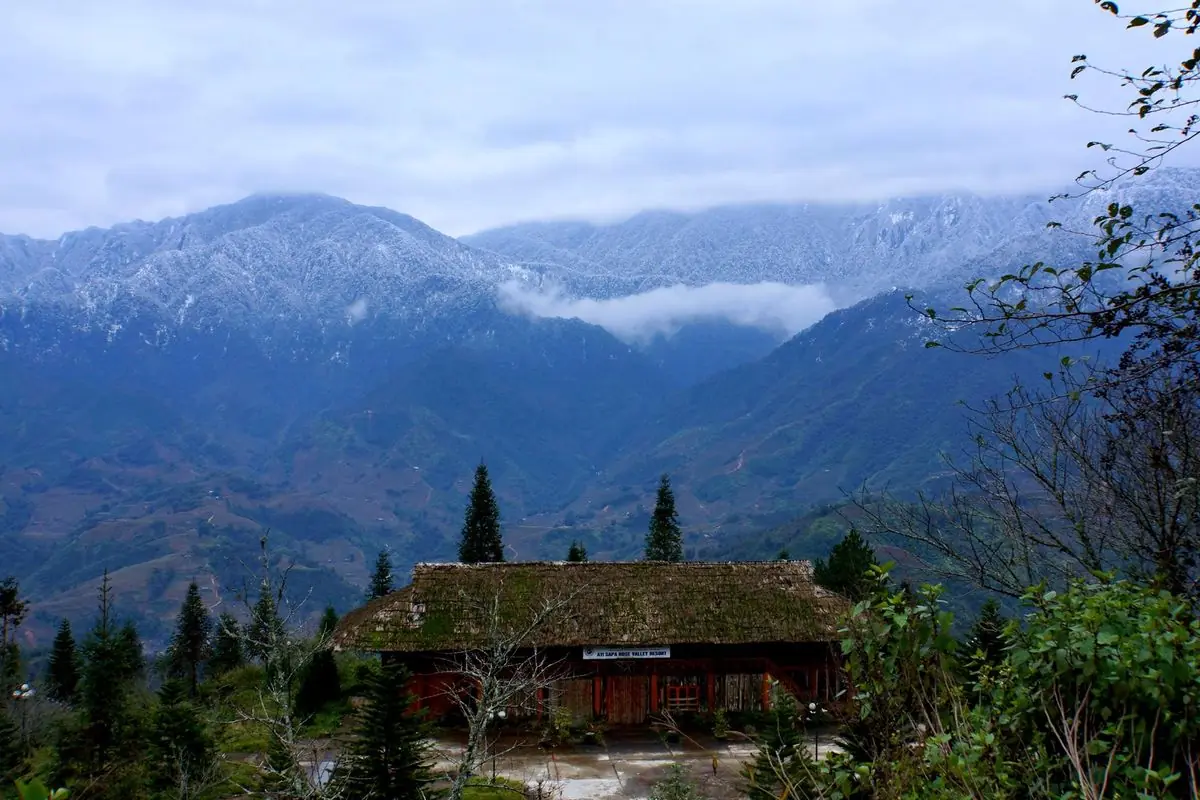
Mountain peaks around Sa Pa dusted with snow after a December cold snap, a band of white cloud across the slopes behind a resort's wooden roof.
You’re planning a trip to northern Vietnam in December, January or February, and those photos of snow-covered Sapa have caught your attention. Is it worth heading into the mountains in winter? Yes, if you like chilly weather, misty valleys and quiet walks through mountain villages, though snow is much rarer than those photos suggest. Below: which month to pick, what to pack and how to get there from Hanoi.
1. When is the best time to visit Sapa in winter?
Winter in Sapa generally runs from December through February. During these months, the Hoang Lien Son mountain range experiences colder temperatures, frequent mist and occasional frost or ice at higher elevations.
The three winter months aren’t quite the same, though. December tends to be drier, January is the coldest, and February gradually brings spring flowers and Lunar New Year celebrations.
Sapa weather in December, January and February
| Month | Average daytime high | Average nighttime low | Monthly rainfall | Rainy days |
|---|---|---|---|---|
| November | 20°C (68°F) | 12°C (54°F) | 55 mm | 11 |
| December | 16°C (61°F) | 8°C (46°F) | 49 mm | 10 |
| January | 15-16°C (59-61°F) | 7°C (45°F) | 98 mm | 14 |
| February | 17°C (63°F) | 8°C (46°F) | 78 mm | 14 |
| March | 21°C (70°F) | 11-12°C (52-54°F) | 126 mm | 18 |
These figures are based on ERA5 climate reanalysis data for 2016-2025, using coordinates 22.336°N, 103.844°E. The data uses a grid cell at 22.25°N, 103.75°E, adjusted to an elevation of 1,514 m. Highs and lows represent averages of daily maximum and minimum temperatures; rainfall is the average monthly total, and rainy days are those receiving at least 1 mm of precipitation. These are modeled climate statistics, not observations from a local weather station or forecasts for specific dates.
Sapa isn’t a place where temperatures remain below freezing throughout winter, unlike some mountain destinations in Europe, Japan or South Korea.
However, the combination of cold air, high humidity, mist and wind can make Sapa feel considerably colder than the thermometer suggests. Clothes that become damp during a walk may also take longer to dry.
Conditions change significantly with elevation. At 3,143 m, the summit of Fansipan can be much colder than central Sapa, so an outfit suitable for exploring town may not be warm enough for a mountain excursion.
Sapa in December: best for Christmas and a relaxing mountain escape
December suits first-time winter visitors. Average daytime highs reach around 16°C (61°F), while nighttime lows are approximately 8°C (46°F).
It’s cold enough to experience northern Vietnam’s mountain winter, yet many days remain comfortable for sightseeing with the right clothing.
December also has the lowest average rainfall of the three winter months in the dataset, although damp and foggy weather can still occur.
A pleasant day might begin with a walk through Cat Cat Village, followed by a warm drink at a café overlooking the mountains. In the evening, you can stroll around Sapa Stone Church and the surrounding streets.
Around Christmas, hotels and cafés often add festive lights, Christmas trees and seasonal decorations.
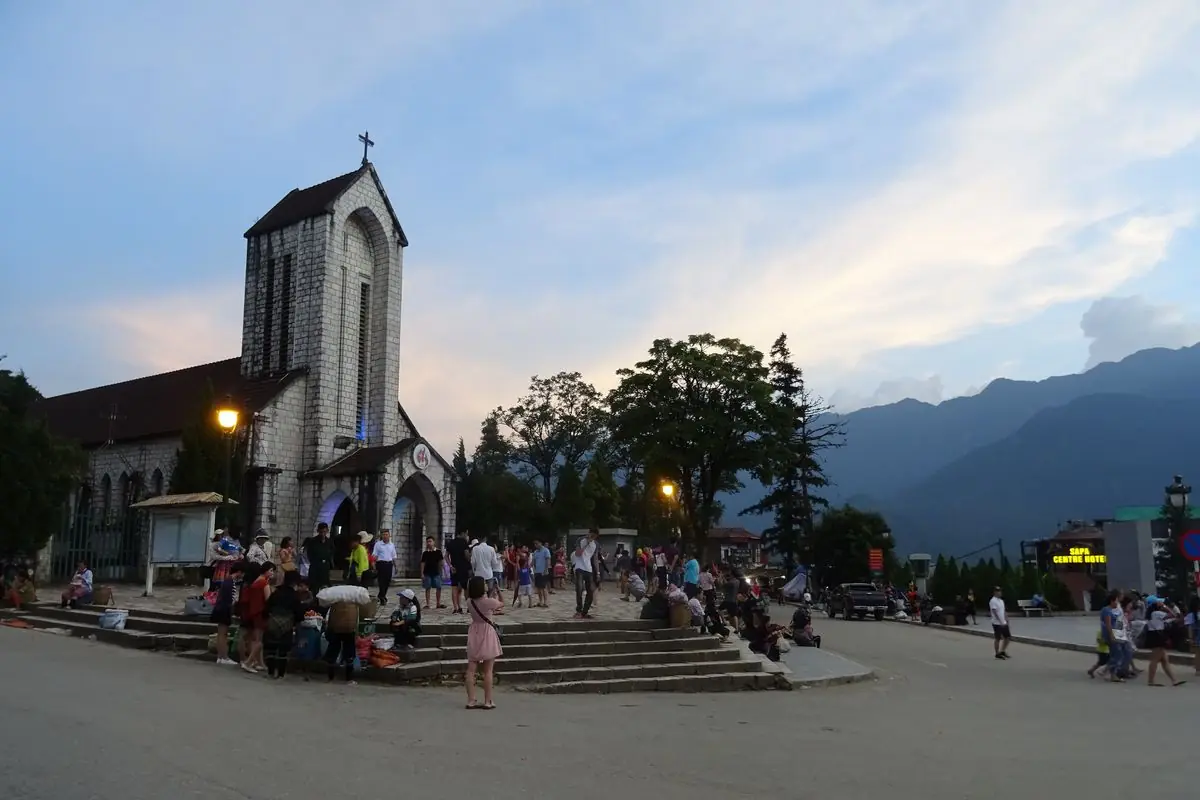
Is Sapa worth visiting in December? Yes, particularly for travelers who enjoy cool weather, mountain views and a slower pace.
Just don’t plan the entire trip around seeing snow. A white Christmas in Sapa is far from guaranteed.
Sapa in January: the coldest month and the best time to watch for frost
January is generally Sapa’s coldest month, with an average nighttime low of around 7°C (45°F) based on 2016-2025 climate data.
During strong cold spells, temperatures can fall much further, especially in higher areas such as Fansipan and O Quy Ho Pass.
January suits travelers hoping to photograph frost, ice-covered vegetation and winter landscapes.
On the other hand, January averages around 14 rainy days and 98 mm of precipitation. Thick fog can hide entire mountain ranges, sometimes even after you’ve reached the top of Fansipan.
For longer hikes, pick a dry day over the coldest day of the trip: the paths are safer and the views clearer.
Sapa in February: peach blossoms and Lunar New Year
By February, temperatures begin to rise slightly. Average daytime highs reach around 17°C (63°F), while nighttime lows remain close to 8°C (46°F).
Late cold spells are still possible, but the landscape gradually starts showing signs of spring.
February brings the peach blossom season. Around Ham Rong Mountain and other higher areas, flowering can begin before Lunar New Year and continue into early spring.
Blooming dates vary with the weather each year, so don’t assume the flowers will peak exactly during the holiday.
In 2027, Vietnamese Lunar New Year’s Day falls on Saturday, February 6. The public-sector holiday runs from February 4 to February 10, meaning Sapa is likely to attract many domestic visitors during this period.
February suits travelers interested in local celebrations, mountain villages and the first colors of spring.
2. Does it snow in Sapa? When are frost and ice most likely?
Yes, Sapa does receive snow, but significant snowfall covering the town center is rare and doesn’t happen every winter.
Two of the most memorable snow events in recent history occurred in December 2013 and January 2016.
On December 15, 2013, snow fell across Sapa and several surrounding mountain areas. Parts of the town center accumulated around 5-8 cm, while some areas near O Quy Ho Pass received much heavier snowfall, with accumulations of approximately 50 cm in places.
The conditions disrupted traffic, and travel through the mountain pass was restricted.
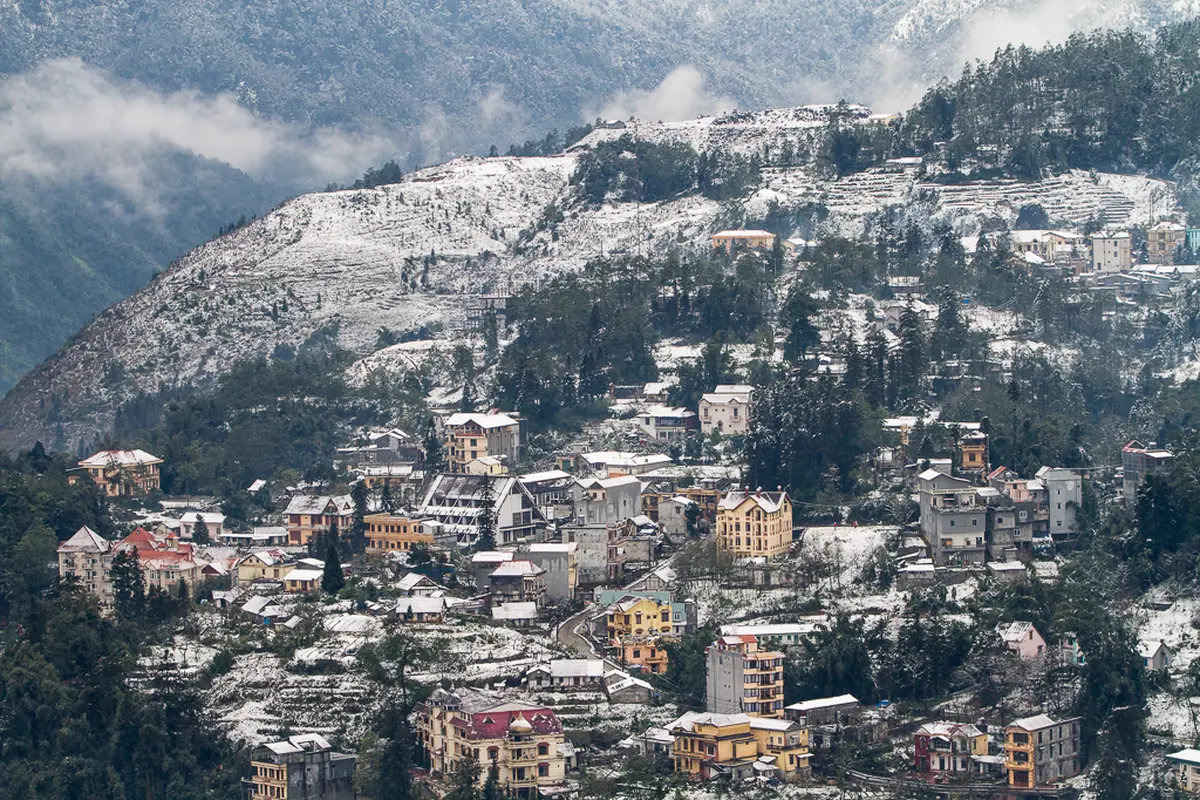
Another major cold wave arrived on January 24, 2016, bringing snowfall to Sapa again.
During that event, the local meteorological station recorded -4.2°C (24.4°F), the lowest temperature in its observational record dating back to 1956.
Both were rare events, not a typical winter.
How often does Sapa actually reach freezing temperatures?
The ERA5 model data for the ten years from 2016 through 2025 shows how few freezing nights there have been at the elevation of central Sapa.
| Month | Nights at or below 0°C (32°F) | Nights at or below 2°C (36°F) |
|---|---|---|
| December | 1 | 9 |
| January | 3 | 15 |
| February | 0 | 7 |
These are totals across all ten years, not averages for a single winter.
The lowest temperature in the modeled dataset was -2.5°C (27.5°F) on January 25, 2016, compared with the -4.2°C measured at the local weather station during the same cold spell. Gridded climate data doesn’t perfectly reproduce conditions at an individual station.
The model’s snowfall data identified a notable event on January 24-25, 2016. Smaller or highly localized snow events may not be represented accurately, so the model cannot establish that snow never occurred on other days.
These figures also cannot be converted into a reliable percentage chance of seeing snow during a two- or three-day trip.
For a short visit, the probability of arriving exactly during a snowfall event in central Sapa is very low.
Snow, frost and rime ice are not the same thing
Winter photos from Sapa can show any of three things:
- Snow: ice crystals that form in clouds and fall to the ground as precipitation.
- Frost: ice crystals that develop directly on cold surfaces, such as leaves, grass or exposed objects.
- Rime ice: ice that accumulates when supercooled fog droplets freeze on contact with trees, railings, buildings and other surfaces.
Rime ice can build thick white coatings that look very like snow.
Will Sapa get snow during the 2026-2027 winter?
Climate outlooks for November 2026 through January 2027 indicate a roughly 96% probability that a very strong El Niño will persist.
Average temperatures across Vietnam in December 2026 and January 2027 are expected to be generally 0.5-1.5°C above the long-term average.
Cold air outbreaks may be weaker overall, with prolonged severe cold in northern Vietnam potentially arriving later and lasting fewer days than usual.
That lowers the odds of snow further.
However, an El Niño winter can still bring snow. The historic January 2016 cold spell occurred during another exceptionally strong El Niño.
Short but intense cold waves can still develop even during a warmer-than-average winter.
There’s no such thing as a "guaranteed snow trip" for the 2026-2027 season.
Monitor cold-air forecasts three to five days before your visit, check local warnings and keep your itinerary flexible enough to respond to changing conditions.
3. Is Fansipan worth visiting in winter?
Yes, if you enjoy high-altitude scenery, cloud formations and the mountain’s spiritual complex. Fansipan’s weather, though, can be very different from conditions in central Sapa.
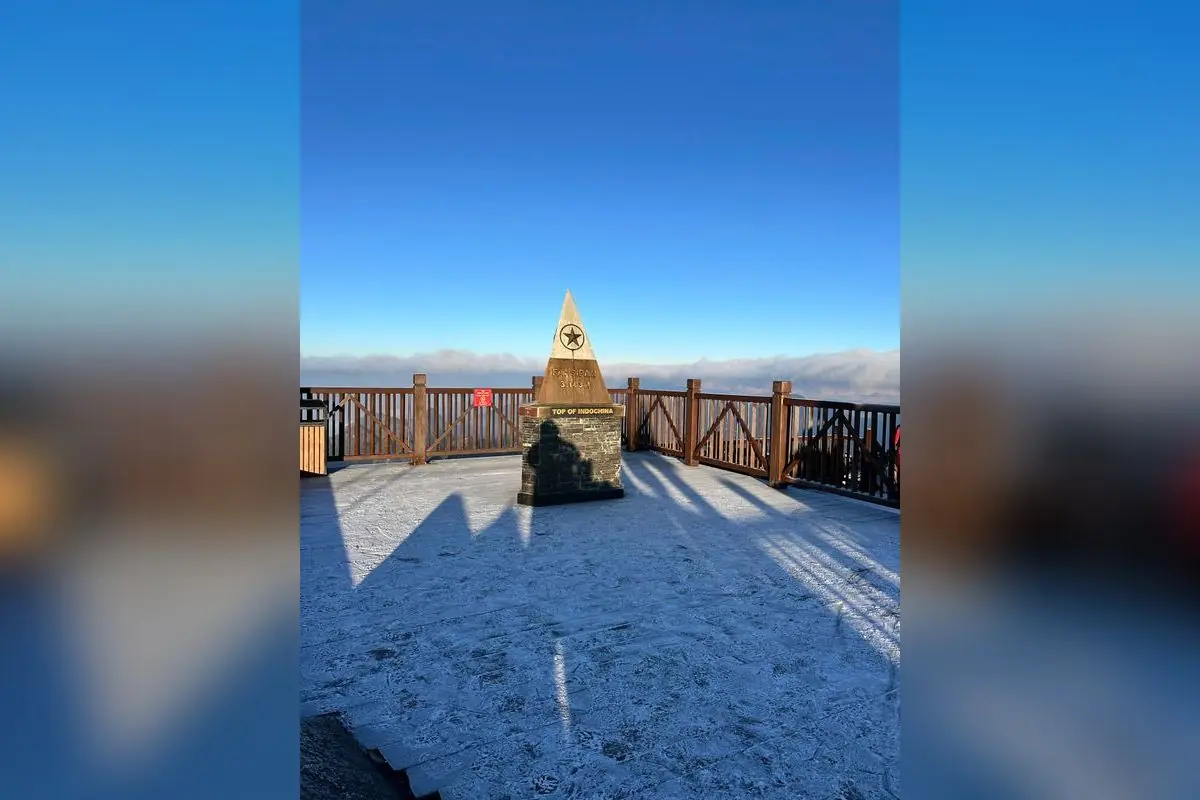
On January 7, 2026, temperatures near the summit fell to -3°C (27°F) at approximately 6 a.m., with ice covering vegetation, railings, stone steps and walkways.
Meanwhile, central Sapa recorded around 4.4°C (40°F) at 5:30 a.m.
In recent winters, frost and snow have mostly stayed on the summit:
- January 26, 2025: snow began falling on Fansipan around 2:30 p.m., with temperatures near -2°C (28°F).
- December 18, 2025: light snow fell on the summit for approximately five minutes.
- December 25, 2025: thick ice covered stone surfaces, pathways and areas near the flag tower before beginning to melt after sunrise.
- January 7, 2026: frost and ice returned as summit temperatures dropped below freezing.
On icy mornings the summit turns white, but icy steps, reduced visibility and strong winds make proper preparation essential.
How to reach Fansipan by cable car
Fansipan’s cable car system stretches approximately 6,292.5 m, with a one-way journey taking around 15 minutes.
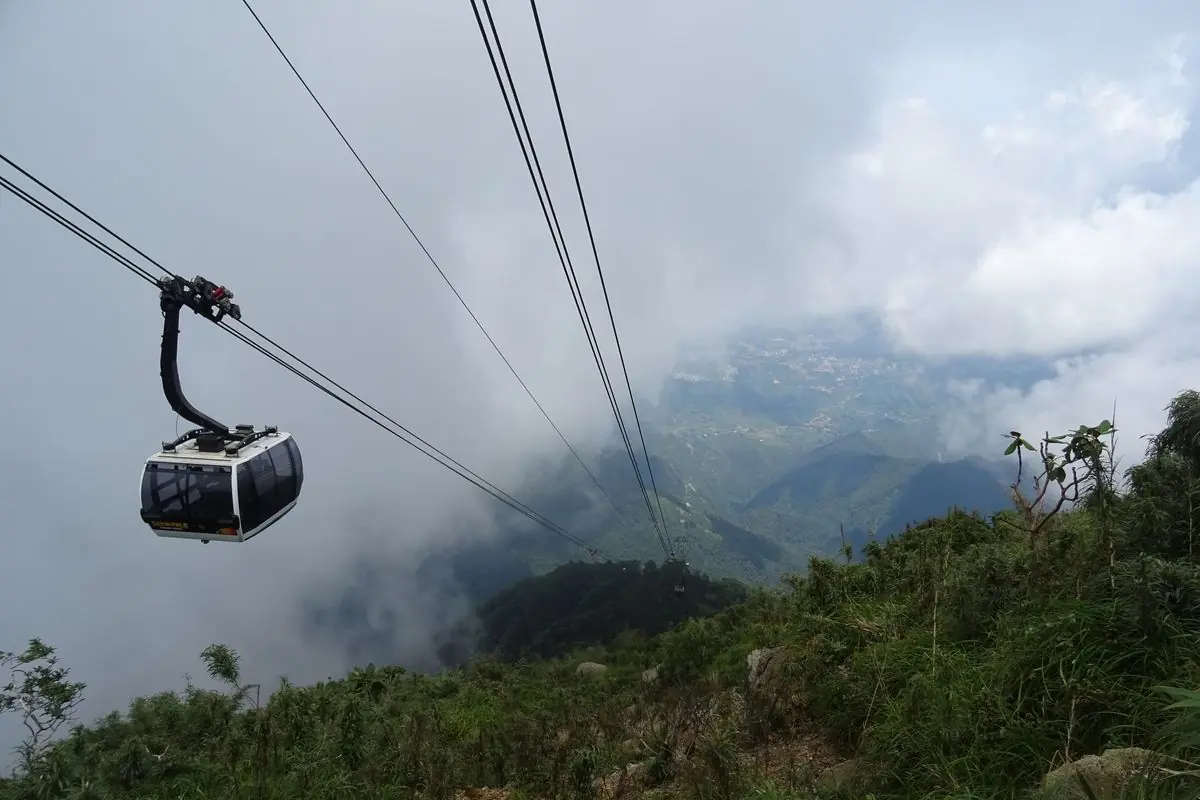
A typical trip from central Sapa involves three stages:
- Take the Muong Hoa mountain railway from the Sun Plaza area to the cable car station, or travel there by road.
- Ride the cable car from Hoang Lien Station to the upper Fansipan station.
- Climb approximately 600 stone steps to the summit, or use the Do Quyen mountain railway to shorten the walk.
Climbing the remaining steps can take around 30-45 minutes, depending on your fitness and the weather.
The Do Quyen railway brings visitors closer to the top, leaving approximately 50 final steps to climb.
Fansipan ticket prices for winter 2026-2027
| Service | Reference price |
|---|---|
| Adult round-trip cable car ticket | VND 850,000 |
| Child cable car ticket, 1 m to under 1.4 m | VND 550,000 |
| Children under 1 m | Free |
| Muong Hoa mountain railway, round trip | VND 200,000 |
| Do Quyen mountain railway, uphill | VND 150,000 |
| Do Quyen mountain railway, downhill | VND 120,000 |
These are Sun World’s reference prices. Actual fares can vary by date, ticket category, promotions, bundled packages and holiday periods. Check the official booking platform before purchasing.
The operating schedule from September 28, 2026, is:
| Day | Last uphill admission | Last downhill service |
|---|---|---|
| Monday-Thursday | 8:00 a.m.-2:30 p.m. | 4:00 p.m. |
| Friday | 8:00 a.m.-3:30 p.m. | 5:00 p.m. |
| Saturday | 7:30 a.m.-3:30 p.m. | 5:00 p.m. |
| Sunday | 7:30 a.m.-2:30 p.m. | 4:00 p.m. |
Should you go to Fansipan when it’s foggy?
That comes down to whether you’re going up for the view or for the mountain atmosphere.
If your main goal is a panoramic view of the Hoang Lien Son mountains and Muong Hoa Valley, thick fog can be disappointing. Even from the summit, you may see little beyond a white wall of cloud.
On a two-day trip, check the cloud forecast and visibility before deciding which day to go up.
On the other hand, the spiritual complex and the high-mountain cold are still there on a foggy day.
Choose a day when the cable car is operating normally, dress warmly and respect all barriers around icy or restricted areas.
Cable car visitors can only go up during operating hours, from 7:30 or 8:00 a.m., and thin layers of ice can disappear quickly once sunlight reaches the summit, so even the first cable car may miss the frost.
4. Is winter trekking in Cat Cat, Lao Chai and Ta Van still worth it?
Yes, but the landscape looks very different from the golden rice terraces you’ll see in photographs taken during late summer.
Sapa’s terraced fields generally produce one main rice crop each year.
Rice starts turning golden around mid-August to early September, while the water-filled terraces appear earlier in the year when seasonal rains return.
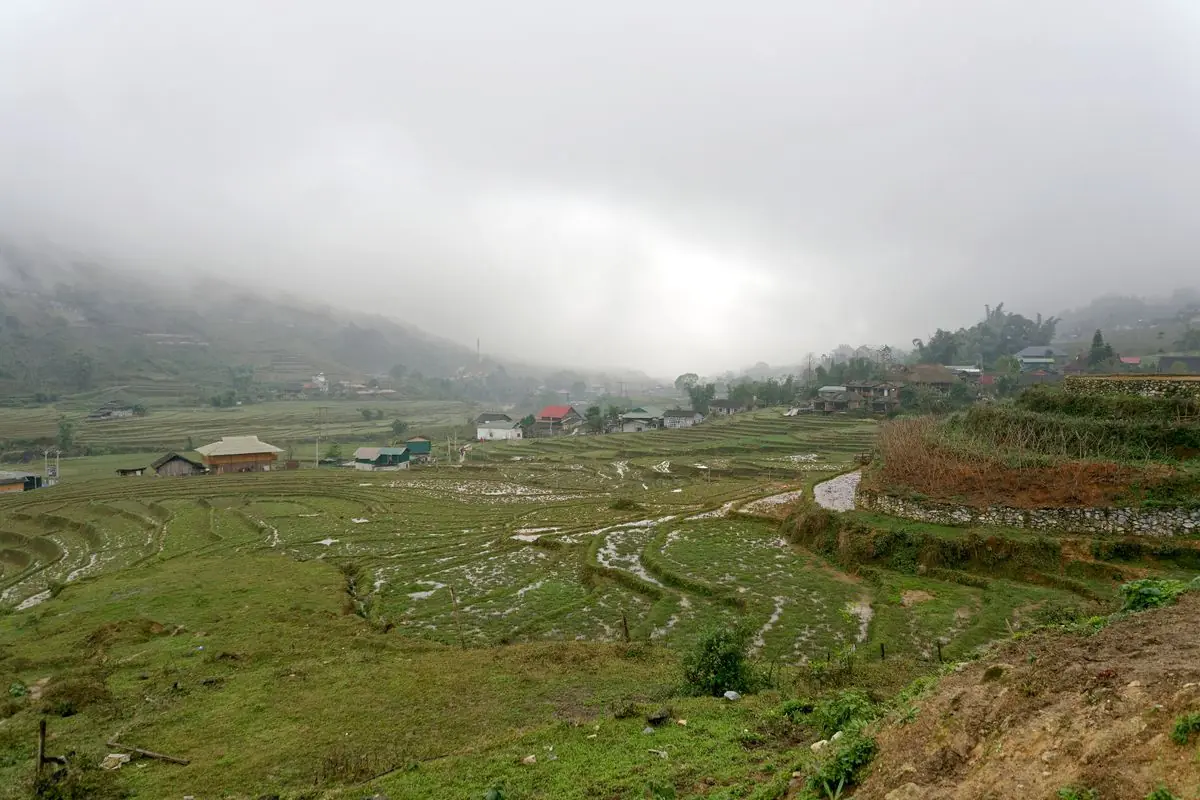
From December through February, the rice has already been harvested.
Instead of bright green or golden fields, you’ll see exposed terraces, brown earth, mountain paths and villages surrounded by mist.
Cat Cat Village
Easy to visit in half a day
Cat Cat Village is approximately 1.5-2 km from central Sapa, making it one of the most convenient options for a short excursion.
The visitor route includes steep steps, wooden buildings, viewpoints, craft displays and spaces about local customs.
Allow around two to three hours to explore, take photographs and stop for a rest.
Adult admission is listed at around VND 150,000 in 2026. Check the current rate at the entrance before visiting.
During drizzle or misty weather, stone steps can become slippery, and the downhill sections may feel especially cold.
Comfortable shoes with good grip are far more useful than fashionable footwear chosen purely for photographs.
Lao Chai and Ta Van
Best for village walks and local experiences
Lao Chai is approximately 9.5 km from central Sapa by road, while Ta Van is roughly 10.7 km away.
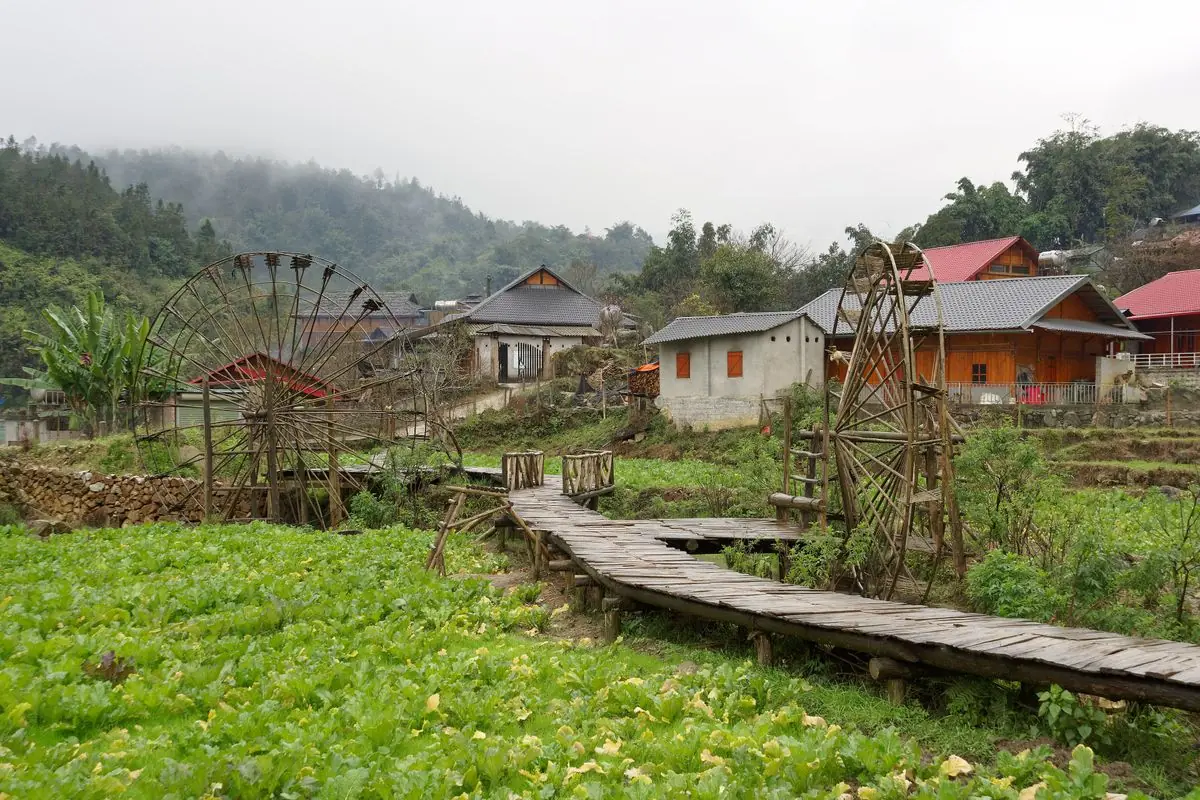
Both are located along Muong Hoa Valley, an area known for terraced fields, mountain scenery and villages inhabited by local ethnic minority communities.
A common trekking route between Lao Chai and Ta Van covers approximately 5-6 km, usually taking two to three hours depending on the chosen path and number of stops.
Winter suits travelers interested in village life, mountain views and rural landscapes. After harvest, the terraces are bare and brown, nothing like the harvest-season photographs.
However, avoid trekking during prolonged rain or when fog severely reduces visibility. Wet soil and muddy paths can become slippery.
A local guide can help you choose a suitable route, understand local customs and avoid walking through cultivated land or private residential areas without permission.
Some village routes have ticket checkpoints or entrance fees, and arrangements may change. Ask locally before starting.
Is winter a good time to hike Fansipan on foot?
Hiking Fansipan is a very different undertaking from a walk through Sapa’s villages.
The route passes through Hoang Lien National Park, including steep forest trails, exposed mountain sections and potentially cold, wet or icy terrain.
Winter isn’t the ideal season for someone attempting their first demanding mountain hike.
Entry into the national park requires the appropriate permits and compliance with local regulations. Arrange the climb through a properly authorized guide or porter and pay the required fees.
Don’t attempt to bypass official checkpoints using unofficial forest trails.
Your group will also need suitable clothing, equipment, food, drinking water and a plan for deteriorating weather.
Carry all rubbish out of the forest and comply with fire prevention rules. Unauthorized open flames are particularly dangerous during dry periods.
On a typical two- or three-day holiday from Hanoi, the cable car is the practical choice.
A full hiking ascent makes more sense for experienced trekkers who can dedicate sufficient time and preparation to the climb.
5. What to wear in Sapa in winter
Dress for Sapa’s winter in several layers. That lets you adjust your clothing as you move between town, mountain viewpoints, heated cafés and outdoor walking routes.
Essential winter clothing
For sightseeing around central Sapa, a thermal top, sweater and warm jacket will work for many winter days.
For Fansipan or a strong cold spell, bring additional insulation, thermal leggings, proper gloves and a warmer outer jacket.
Wear layers you can remove as your body warms up, not one very heavy coat.
During trekking, sweat can soak your clothing. Once you stop moving, those damp layers may make you feel cold surprisingly quickly, which is where a moisture-wicking base layer helps.
Small items worth packing
A compact umbrella or lightweight raincoat, waterproof phone pouch, lip balm, moisturizer and spare socks can make your trip considerably more comfortable.
Phone batteries may drain faster when exposed to cold temperatures for long periods. Carry a power bank and keep your phone in an inside pocket when you’re not using it.
For travelers from tropical climates, such as Thailand or warmer parts of Australia, Sapa’s damp cold may feel unfamiliar.
Visitors from colder countries may already be accustomed to winter weather, but should still prepare for humidity, slippery paths and the temperature difference between the town and Fansipan’s summit.
6. Hanoi to Sapa: sleeper train or bus?
From Hanoi, the two most popular options are traveling directly to Sapa by road or taking an overnight train to Lao Cai and continuing by car.
Sleeper bus, VIP cabin or limousine
The road distance from Hanoi to Sapa is approximately 315-320 km, depending on your starting point.
Most services use the Noi Bai-Lao Cai Expressway before continuing along mountain roads to Sapa.
Travel time usually ranges from around 4.5 to 6.5 hours, depending on the operator, stops and traffic.
Reference fares in 2026 are approximately VND 250,000-600,000 per seat or berth, depending on whether you choose a standard sleeper bus, private VIP cabin or limousine-style vehicle.
The biggest advantage is convenience: the bus travels directly to Sapa without requiring a transfer in Lao Cai.
Some companies also offer pickup points near Noi Bai International Airport, which can be helpful for international visitors arriving in Hanoi.
Standard sleeper buses are suitable for budget-conscious travelers, while VIP cabins offer greater privacy on overnight journeys.
Limousine vehicles with reclining seats are a good choice for people who prefer not to lie down on a bus or want to travel during the day.
The final approach to Sapa involves winding mountain roads, though. Travelers prone to motion sickness should keep that in mind, especially during rain or heavy fog.
Overnight train from Hanoi to Lao Cai
The overnight train is an appealing option for travelers who enjoy rail journeys and prefer sleeping in a proper train berth.
Since October 10, 2026, the Hanoi-Lao Cai railway has operated three regular passenger train pairs.
Hanoi to Lao Cai train schedule:
| Train | Departure from Hanoi | Arrival in Lao Cai |
|---|---|---|
| SP15 | 9:45 p.m. | 5:20 a.m. next day |
| SP3 | 10:00 p.m. | 5:50 a.m. next day |
| SP7 | 10:40 p.m. | 6:27 a.m. next day |
Lao Cai to Hanoi train schedule:
| Train | Departure from Lao Cai | Arrival in Hanoi |
|---|---|---|
| SP16 | 9:25 p.m. | 5:15 a.m. next day |
| SP4 | 9:50 p.m. | 5:40 a.m. next day |
| SP8 | 12:05 p.m. | 7:30 p.m. same day |
Departure times may be adjusted during peak travel periods.
Check the official Vietnam Railways ticketing system before booking.
Many Sapa hotels can arrange station pickups. Taxis and other transfer services are also available.
Because overnight train passengers often reach Sapa around 7 a.m., ask your hotel about early check-in or luggage storage before arrival.
What is Chapa Express, and how is it different?
Chapa Express operates privately managed tourist sleeping carriages attached to Vietnam Railways trains, not a separate train service.
The company offers two-berth and four-berth sleeping compartments, suited to couples, families and small groups who prefer a more private journey.
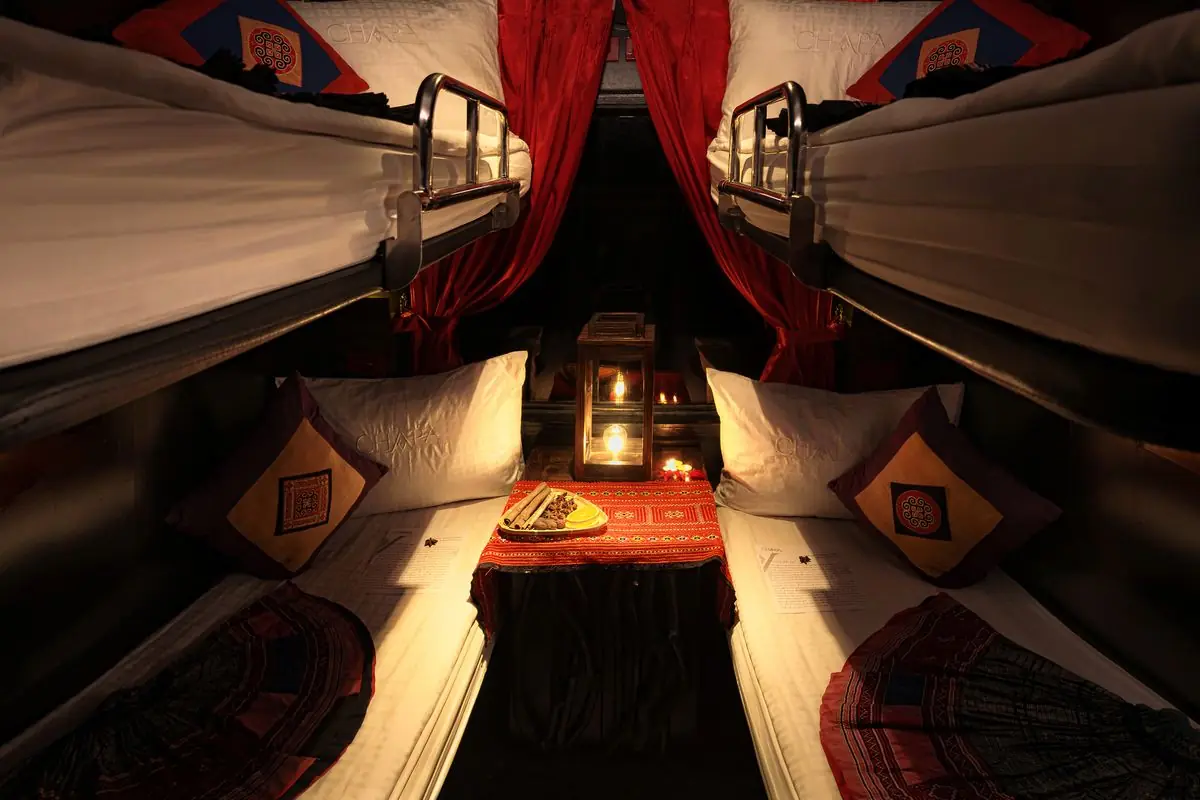
Chapa Express carriages on the Hanoi-Lao Cai route run on the SP3 and SP7 services, departing Hanoi at approximately 10:00 p.m. or 10:40 p.m.
Passengers arrive in Lao Cai the following morning before continuing to Sapa by road.
Passengers can use Chapa Express lounges at Hanoi and Lao Cai stations.
Facilities, compartment types and prices vary by booking, so check the details before choosing a cabin.
You’ll still spend roughly eight hours on the train, then need another road transfer.
Travelers who value convenience and a shorter overall journey may still prefer a direct bus.
Which is better: train or bus?
| Factor | Overnight train | Direct bus or limousine |
|---|---|---|
| Travel time | Around 7.5-8 hours by train, plus road transfer | Around 4.5-6.5 hours |
| Arrival point | Lao Cai Station | Sapa |
| Transfer required | Yes | Usually no |
| Experience | Sleeping berth, private compartments available | Sleeper berth, VIP cabin or reclining seat |
| Best for | Rail enthusiasts and overnight travelers | Travelers prioritizing speed and convenience |
| Main drawback | Longer journey and extra transfer | Winding mountain roads and possible motion sickness |
For international travelers with a busy northern Vietnam itinerary, a daytime limousine or direct VIP cabin bus is simpler: you arrive in Sapa, check in and start exploring without changing vehicles.
If the overnight railway journey is part of the experience you’re after, look at Chapa Express.
Travelers starting from Hai Phong can also take a coach or connect through Hanoi.
7. Suggested 3-day, 2-night Sapa winter itinerary
Three days and two nights provide a comfortable introduction to Sapa during winter.
This itinerary starts in Hanoi and balances mountain scenery, village experiences and time to relax.
- Day 1
Hanoi - Sapa - Cat Cat Village
Leave Hanoi in the morning and travel directly to Sapa.
After arrival, drop off your luggage or check into your hotel, have lunch and take some time to rest.
Spend the afternoon exploring Cat Cat Village.
It’s relatively close to town, so you won’t need another long transfer after your journey from Hanoi.
In the evening, return to central Sapa for a hot pot dinner, a walk around the Stone Church area and an early night.
Giving yourself time to adjust to the chilly weather will make the next day more enjoyable.
- Day 2
Fansipan - central Sapa
Reserve the morning for Fansipan, preferably on a day with clear visibility and normal cable car operations.
Take the Muong Hoa railway, ride the cable car and choose between climbing the remaining steps or using the Do Quyen railway.
Avoid planning your visit too close to the final cable car departure, especially during weekends and holidays.
Return to town in the afternoon for coffee, shopping or a relaxed walk through the misty streets.
If Fansipan is heavily clouded over or the cable car is suspended, switch to Ham Rong Mountain, attractions around town or a restful day at your accommodation.
- Day 3
Lao Chai - Ta Van - Hanoi
Spend the morning exploring Muong Hoa Valley and the villages of Lao Chai and Ta Van.
A manageable guided walk gives you more time to appreciate the rural landscape and village surroundings than simply driving through.
After lunch, return to central Sapa, collect your luggage and take an afternoon bus to Hanoi.
Alternatively, spend a little longer in Sapa before traveling down to Lao Cai Station for an overnight train, provided you’ve booked the tickets in advance.
Swap the Fansipan and trekking days if the weather calls for it.
8. Things to prepare before your Sapa winter trip
Choose accommodation with proper heating
Winter nights in Sapa can be cold, and not every hotel or homestay offers the same level of heating.
Before booking, ask whether your room has heating or a reverse-cycle air conditioner, reliable hot water and adequate blankets.
Ask especially at village homestays, where a wooden room can get very cold overnight.
Book early for Christmas, New Year and Tet
Christmas, the Western New Year holiday and Vietnamese Lunar New Year are all popular times to visit Sapa.
Well-located hotels, family rooms, private sleeper train compartments and VIP bus cabins can attract considerable demand.
Reserve your transportation and accommodation early, and check the cancellation or rescheduling policies.
For Fansipan, keep your schedule flexible where possible, because weather conditions at the summit can change quickly.
Check the weather at two different elevations
Check conditions separately for central Sapa and the Fansipan summit, not a single forecast labeled "Sapa."
Besides temperature, pay attention to wind, precipitation, fog, visibility, frost warnings and cable car operating updates.
Following Vietnam’s administrative restructuring on July 1, 2025, central Sapa is officially part of Sa Pa Ward, Lao Cai Province.
Cat Cat, Lao Chai and Ta Van are now within the newly organized Ta Van Commune.
When checking hotel addresses or maps, you may encounter both older and newer administrative names.
Don’t make snow the only reason for going
Without snow, a winter trip still has clouds drifting across Muong Hoa Valley, a walk between Lao Chai and Ta Van and hot tea on a chilly afternoon. Snow is a rare bonus.
Frequently asked questions
How cold is Sapa in December, and is it worth visiting?
In December, Sapa's average daytime high is around 16°C (61°F), while the average nighttime low is approximately 8°C (46°F), based on climate data from 2016-2025. It suits travelers who enjoy Christmas atmosphere, mountain scenery and cool weather. Bring warm layers, a suitable jacket and shoes with good grip.
Does it snow in Sapa? Which month is best for frost?
Snow does fall in Sapa, but significant snowfall in the town center is rare. December and January are the main months to watch for strong cold spells, with January generally being the coldest. Frost and ice are more likely at higher elevations such as Fansipan, although no particular date guarantees snow or frost.
Is Fansipan worth visiting in winter when it's foggy?
Yes, particularly if you're interested in the mountain atmosphere and spiritual complex. However, thick fog may completely obscure panoramic views. Check visibility and cable car operations before visiting, prioritize a clearer day when possible and be prepared to change your plans.
What should I wear in Sapa in winter?
Wear a thermal base layer, fleece or sweater, and a warm wind-resistant jacket. Bring a hat, scarf, gloves, thick socks and comfortable shoes with good grip. For Fansipan, add more insulation and protection against wind and moisture. Spare dry clothes are useful after trekking.
Should I take Chapa Express or a sleeper bus from Hanoi to Sapa?
Chapa Express is a good option for travelers who enjoy overnight train journeys and prefer private sleeping compartments. However, you'll need an additional road transfer from Lao Cai Station to Sapa. A sleeper bus, VIP cabin or limousine is generally faster and more convenient because it travels directly to Sapa, usually in around 4.5-6.5 hours. Travelers prone to motion sickness should consider the winding mountain roads before choosing.