Why is some of Hai Phong's seawater brown while other beaches are crystal clear?
Do Son and Cat Ba both belong to Hai Phong, yet their beaches look surprisingly different. From the sediment-rich waters of Do Son to the limestone-framed coves of Cat Ba, choosing the right coastline can make all the difference to your seaside holiday.
 22 min read

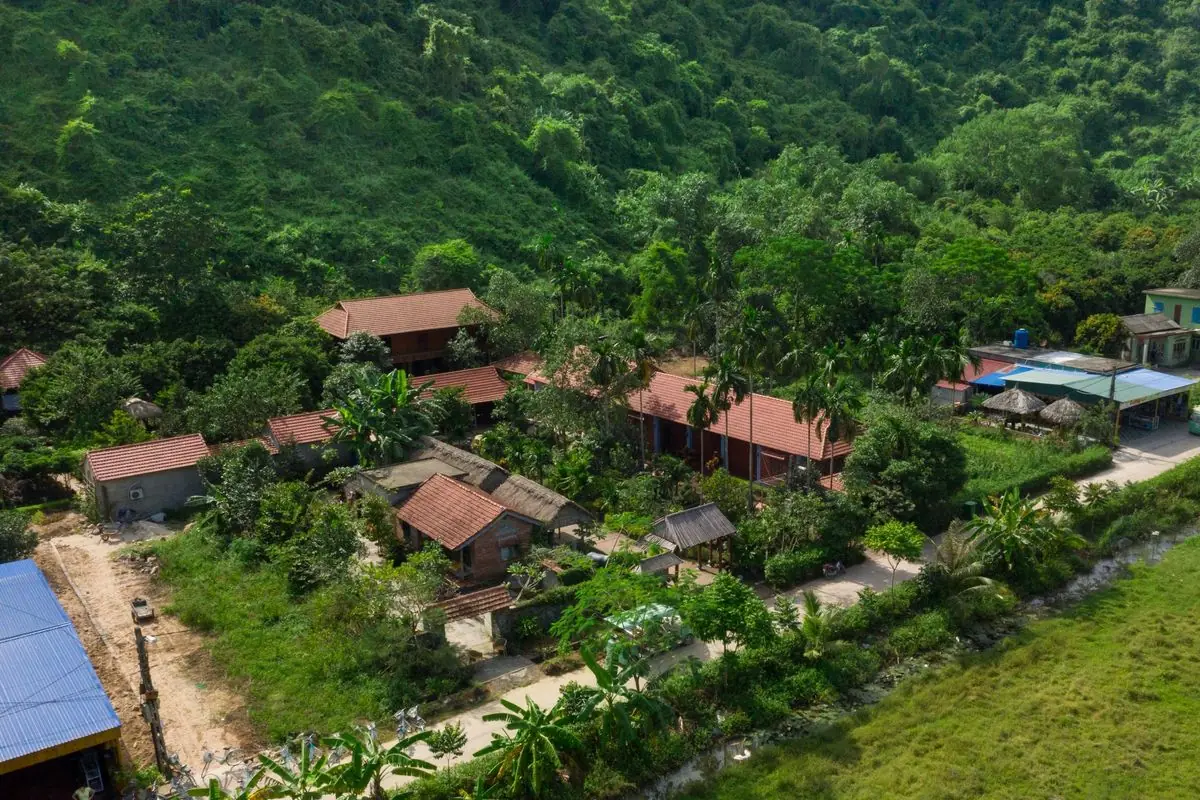
From above, Lan Ha Bay's jade-green water between limestone islands, with fish farms and boats in sheltered coves.
Do Son Beach is roughly 20 km from central Hai Phong, while reaching Cat Ba Island involves an additional ferry, cable car or speedboat journey. Yes, you can swim at Hai Phong’s beaches, but not every beach has clear blue water or white sand. For an easy day trip, Do Son is usually the better choice. For turquoise coves, limestone scenery and a proper island holiday, Cat Ba and Lan Ha Bay deserve at least two days.
1. Are Hai Phong’s beaches beautiful? Is the water clear?
Hai Phong has several very different coastal landscapes. There are beaches connected to the mainland, sandy coves on nearby islands and remote stretches of coastline far out in the Gulf of Tonkin.
The difference is particularly noticeable between Do Son and Cat Ba.
At Do Son, the seawater is often brownish or yellowish rather than blue. This comes largely from river sediment entering the Gulf of Tonkin, combined with waves and currents stirring up fine material from the seabed.
Even on a sunny day, the sea can look muddy.
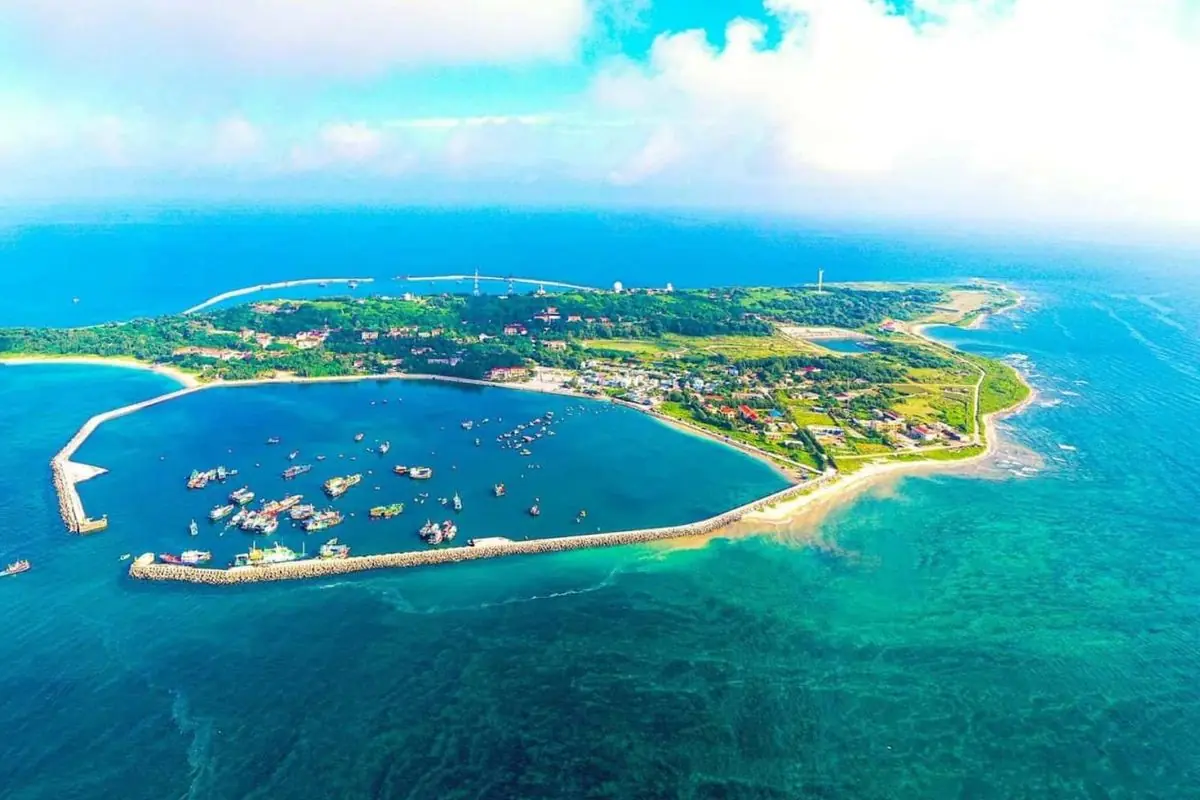
That does not make Do Son an unattractive destination. Viewed from above, its coastline curves around a green peninsula, with hills behind the beaches and seaside roads running past restaurants and hotels.
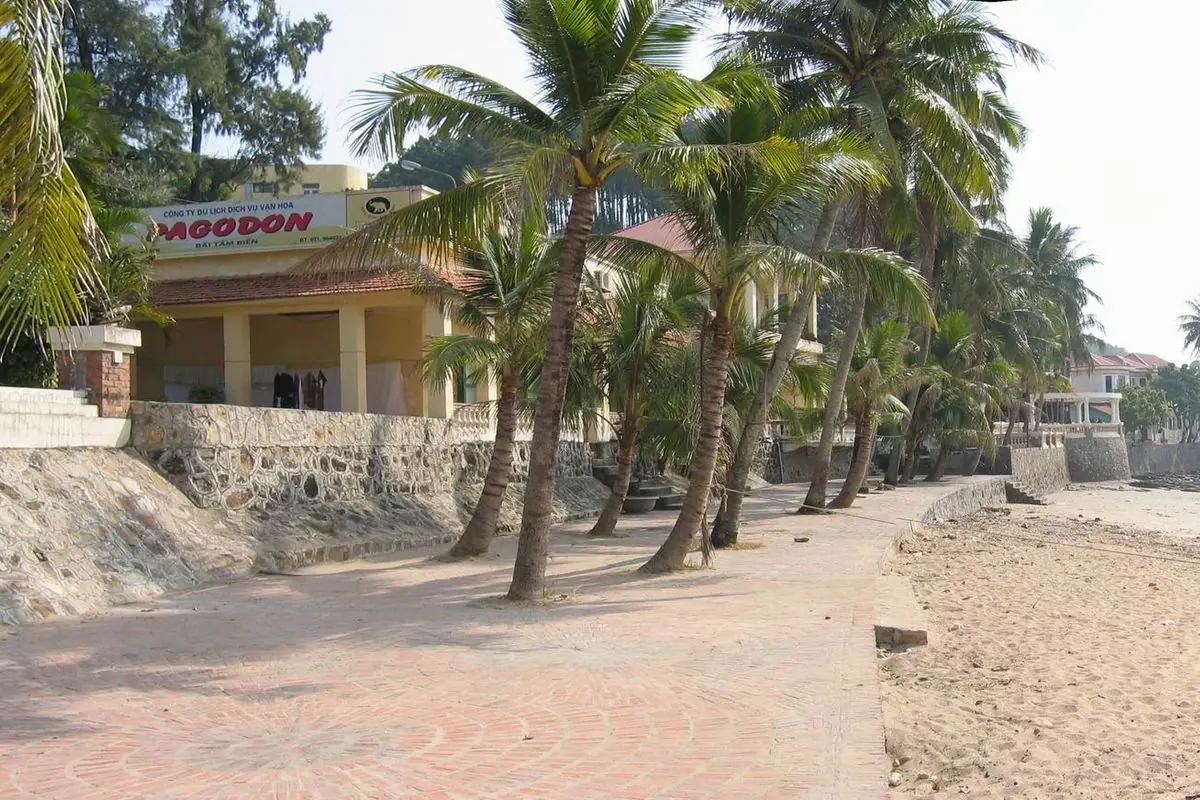
It has the atmosphere of a traditional Vietnamese beach resort, especially in summer when local families come for seafood dinners and evenings by the water.
Cat Ba looks quite different.
Its beaches sit in sheltered bays surrounded by limestone formations. On calm, sunny days, the water is often noticeably greener and clearer than at Do Son.
Travel farther into Lan Ha Bay, and you will find small sandy beaches beneath towering cliffs, with stretches of water that can appear turquoise or emerald green.
But clear water does not automatically mean clean or safe swimming conditions.
Water color changes with sediment, rainfall, waves and tides. Swimming safety also depends on water quality, depth, currents and any warnings issued by beach authorities.
If your priority is beautiful beach photography, Cat Ba and Lan Ha Bay generally offer more of what you are looking for.
If you simply want to reach the coast quickly, enjoy seafood and return to Hai Phong the same evening, Do Son is much more convenient.
2. Which Hai Phong beach should you choose?
Before booking accommodation, compare the main coastal destinations.
| Destination | Best for | Water conditions | Travel time from central Hai Phong | Recommended season |
|---|---|---|---|---|
| Do Son Beach | Families, day trips, seafood lovers | Usually brownish and sediment-rich | Around 30-50 minutes by car | May-September, weather permitting |
| Cat Ba Beaches | Couples, families, weekend holidays | Generally greener and clearer than Do Son | Around 2-3 hours, depending on transport and waiting time | April-September |
| Lan Ha Bay | Boat trips, kayaking, scenic swimming spots | Often clear and green in sheltered areas | Travel to Cat Ba, then continue by boat | April-June and other calm-weather periods |
| Bach Long Vi Island | Organized expeditions and remote-island exploration | Clearer offshore water in some areas, rocky coastline | Several hours by boat, depending on the arranged sailing schedule | Calm-sea periods; not a typical weekend destination |
These are estimated travel times, not guaranteed arrival times.
For Cat Ba, ferry queues can significantly extend the journey on busy weekends and public holidays.
There is also a major difference in accessibility.
Do Son and the main Cat Ba beaches have established accommodation, restaurants and public swimming areas. Beaches in Lan Ha Bay usually require a boat trip, while Bach Long Vi has much more restricted transport and visitor arrangements.
For most first-time visitors, the real decision is between Do Son and Cat Ba.
3. Do Son Beach: the closest seaside escape, but don’t expect turquoise water
Do Son sits south of central Hai Phong. The usual route follows Pham Van Dong Road toward the peninsula, a journey of roughly 20 km.
When traffic is light, the drive normally takes around 30-50 minutes.
That convenience is Do Son’s biggest advantage.
You do not need to catch a ferry, arrange an island transfer or book a boat tour simply to spend a few hours beside the sea.
Who should visit Do Son?
Do Son is well suited to families with young children who prefer shorter journeys.
It also works for groups of friends staying in Hai Phong who want to head to the beach in the afternoon, have dinner and return to the city.
From Hanoi, driving to Do Son usually takes around 2-3 hours, depending on where you start and traffic conditions.
Leaving early gives you enough time for a full day by the coast.
The peninsula has several established beach areas, traditionally known as Zone I, Zone II and Zone III.
Zone II is among the better-known areas for beach tourism, with restaurants, seaside services and a concentration of visitors during summer.
You can combine a beach visit with a stop at K15, the historic departure site associated with Vietnam’s secret maritime supply route, or explore attractions around Hon Dau.
An easy schedule is to spend the morning near the water, have lunch and rest during the hottest part of the day, then return to the seaside in the late afternoon.
Is Do Son’s seawater really brown?
Yes, so set your expectations before you go.
The natural beaches around Do Son commonly have brown or yellowish water because of suspended sediment.
After heavy rain or during rougher seas, the water may become even cloudier.
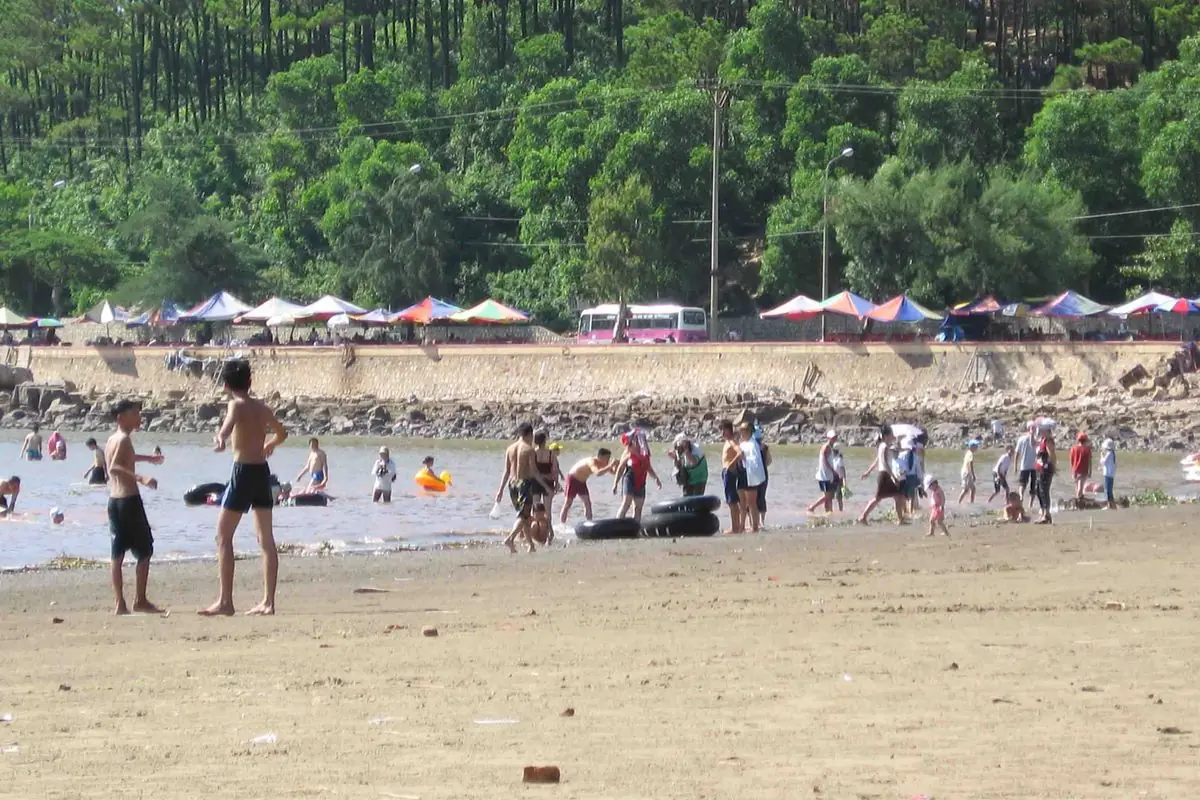
However, brown water does not necessarily mean that a beach is polluted. Equally, it would be misleading to claim that a beach is clean simply because its water looks clear.
Some sandy areas also contain shells and small stones.
When entering the sea, especially with children, pay attention to the seabed and stay within designated swimming areas.
Is Dragon Hill beach different?
Quite different.
Dragon Hill, also called Doi Rong, is a developed tourist complex with an artificial beach designed to offer a different experience from Do Son’s natural coastline.
The artificial beach began welcoming visitors in 2020.
That distinction matters when looking at photographs online.
A picture showing blue water at Dragon Hill does not represent the natural water conditions throughout Do Son.
Access to attractions, beach facilities and entertainment areas depends on the operator’s current arrangements. Some services may require separate tickets.
Check what is open and what is included before planning your visit.
Hon Dau is another nearby area worth considering, particularly for its greenery and sightseeing attractions. However, not every section of its coastline is suitable or permitted for swimming.
4. Cat Ba beaches: a better choice for beautiful coastal scenery
Cat Ba is usually the stronger option when you want greener seawater, natural beaches and dramatic limestone scenery.
The main island has four familiar public beaches: Cat Co 1, Cat Co 2, Cat Co 3 and Tung Thu.
Other beaches, including Cat Dua and Nam Cat, are on smaller islands and generally require a boat to reach.
One of Cat Ba’s advantages is that you can combine swimming with other activities.
Spend the morning exploring a bay, return to town in the afternoon for a swim, then have dinner near the waterfront.
You do not have to spend your entire holiday sitting on the sand.
Cat Co 1, 2 and 3: beautiful beaches close to town
The three Cat Co beaches lie southeast of central Cat Ba, nestled between rocky headlands.
Cat Co 1 is among the island’s best-known beaches and attracts substantial crowds during the summer.
Cat Co 2 and Cat Co 3 are in the same coastal area, although their access routes, facilities and beach layouts differ.
The typical scenery includes pale golden sand, limestone cliffs and green seawater when conditions are favorable.
You can stay in central Cat Ba and reach these beaches on foot, by electric shuttle or by taxi, depending on your hotel’s location.
However, not every hotel advertised as being in Cat Ba is within easy walking distance of the beach.
During busy holidays, access roads may be subject to temporary traffic arrangements.
For example, during the April 30-May 1 holiday period in 2026, local authorities introduced traffic restrictions on parts of Cat Tien Road to ease congestion around the Cat Co beaches.
Drivers bringing their own car should check current access and parking arrangements rather than relying entirely on navigation apps.
Families with strollers, elderly travelers and visitors carrying several bags of beach equipment should ask their accommodation about the easiest route to the sand.
Tung Thu Beach: spacious and convenient
Tung Thu Beach is approximately 2 km from central Cat Ba.
It sits inside a small bay with a relatively open sandy shoreline.
Compared with some beaches surrounded closely by cliffs, Tung Thu can feel more spacious.
Visitors can walk along the sand, relax by the water and use available beach services when they are operating.
There is no entrance fee for the public section of Tung Thu Beach.
However, sun loungers, food, drinks, water activities and facilities operated by nearby businesses may have separate charges.
Tung Thu is a convenient option if you want a relaxed swimming session without traveling far from town.
It can also suit families who want to return to their hotel whenever the children get tired.
As with every beach, actual swimming conditions depend on tides, waves and local safety instructions.
Which is better: Cat Co or Tung Thu?
Cat Co is usually more striking for scenery.
The cliffs enclosing the sandy coves provide a dramatic backdrop, especially for travelers who want beach photographs with visible limestone formations.
Tung Thu is a good choice for a more open beach setting and a relatively straightforward visit.
Neither beach is guaranteed to have clearer water every day.
Rain, tides and wave conditions can change the appearance of the sea within hours.
Two nights on Cat Ba leave room for Cat Co one afternoon and Tung Thu another.
You can then decide which beach you prefer based on the actual weather rather than choosing everything in advance.
5. What exactly is TiTi Beach Cat Ba?
This name causes considerable confusion when travelers search for beaches around Cat Ba.
TiTi Beach Cat Ba is not the official name of a separate public swimming beach.
It commonly refers to TiTi Beach Pods, a beachfront accommodation property with rental cabins in the Tung Thu Beach area.
The property is advertised with seaside cabins, beach access and facilities for guests.
Some listings also describe a dedicated beachfront area for people staying at the property.
It helps to distinguish three things:
- TiTi Beach Pods: A beachfront accommodation business offering cabins or rooms.
- Tung Thu Beach: The public beach in the surrounding area, approximately 2 km from central Cat Ba.
- Guest beachfront facilities: Areas and services managed by the accommodation property, which may have their own access conditions.
You do not need to book a room at TiTi Beach Pods to visit the public section of Tung Thu Beach.
Likewise, booking a cabin does not automatically mean every public beach service is included in your accommodation price.
There is another name worth distinguishing: Ti Top Beach, also written as Titov Beach.
Ti Top is in Ha Long Bay, Quang Ninh Province, not on Cat Ba Island.
Navigate straight to the public beach when your plan is simply to swim or take photographs at Tung Thu.
If you want to wake up in a cabin close to the sand, that is when the TiTi Beach Pods accommodation listing becomes relevant.
6. Lan Ha Bay: beautiful swimming spots that require a boat
Beyond Cat Ba’s main beaches lies Lan Ha Bay.
The bay is known for limestone islands, small sandy coves, floating fishing communities and sheltered waterways.
Many visitors come here not only for swimming but also for kayaking and sightseeing.
Unlike Do Son, you cannot simply drive up to any beach in Lan Ha Bay and walk into the water.
The usual approach is to join a boat tour, often departing from Ben Beo Pier on Cat Ba Island.
Depending on the route, tours may pass Cai Beo Floating Village, kayaking areas and designated swimming stops.
Which beaches are worth visiting?
Cat Dua Island, sometimes called Monkey Island, lies relatively close to Cat Ba and has long appeared on local boat itineraries.
It has sandy areas and attractive limestone scenery, although whether visitors can land, explore or swim depends on current operating conditions and local restrictions.
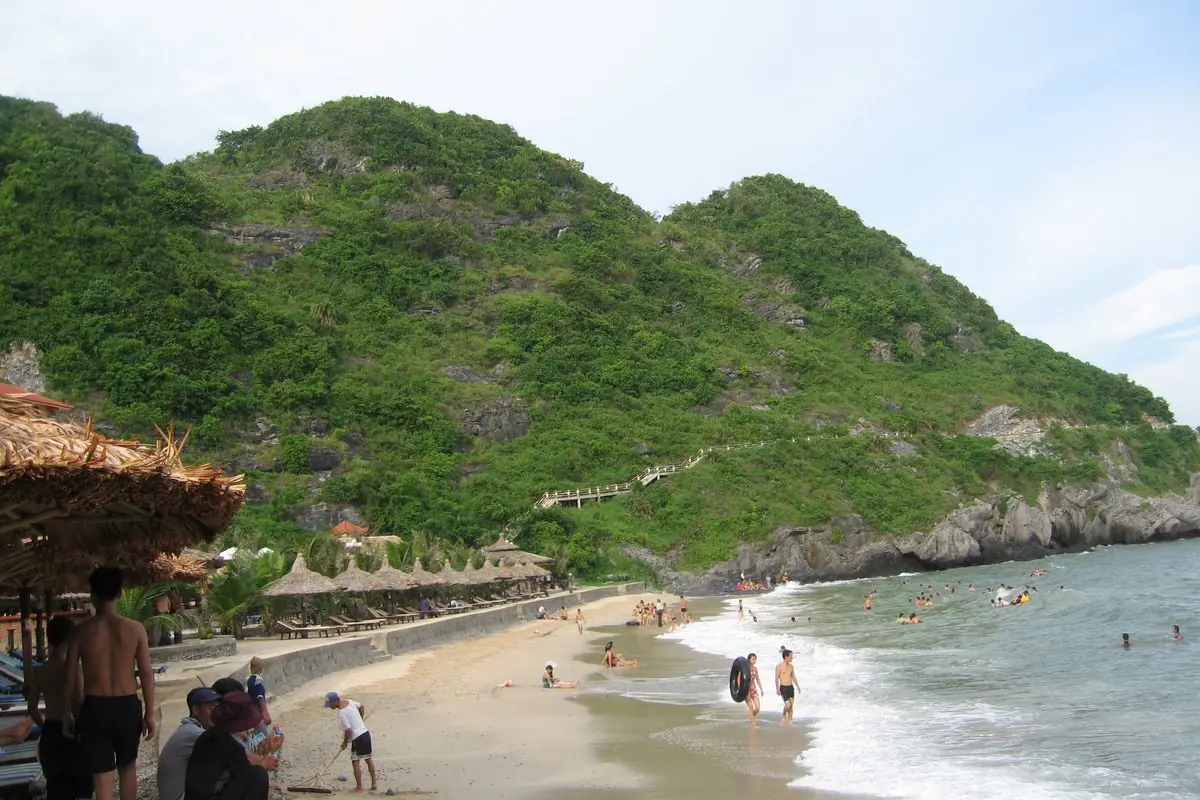
Nam Cat Island is another small island with a beach facing the bay.
It is especially appealing to travelers who prefer a quieter coastal atmosphere. Some accommodation providers and tour operators arrange transfers or visits.
Other tours may include swimming or kayaking areas around Van Boi and Ba Trai Dao, subject to access rules, tides and weather.
However, not every Lan Ha Bay tour visits these places.
Some boats pass scenic beaches without stopping. Others focus on kayaking rather than allowing passengers onto the sand.
A photograph of a secluded beach in a tour advertisement does not guarantee that the tour includes a stop there.
Lan Ha Bay entrance fees in 2026
Under Hai Phong’s sightseeing fee schedule, the fees for routes through the Cat Ba archipelago’s bays took effect on January 1, 2026.
The rates include:
| Visitor category | 2026 sightseeing fee |
|---|---|
| Adults | VND 120,000 per visit |
| Children aged 6 and above | VND 60,000 per visit |
| Children under 6 | Free under the applicable regulations |
Boat transport, meals, kayaking and other services can cost extra.
For example, a full-day Lan Ha Bay tour costs approximately VND 550,000-1,050,000 per person in 2026, depending on the boat and included services.
Some packages include the sightseeing fee; others charge it separately.
When comparing tours, check the inclusions rather than choosing solely on the advertised price.
Can you visit Lan Ha Bay on a day trip from Hanoi?
It is possible with a properly arranged tour, but a large part of the day will be spent traveling.
Independent travelers must first reach Cat Ba, continue to Ben Beo Pier and arrive before their boat departs.
An unexpected ferry delay can disrupt the entire itinerary.
A more relaxed option is to stay overnight on Cat Ba.
Take a Lan Ha Bay tour the following morning, then return to town in the afternoon for dinner and a rest.
Groups keen on kayaking should choose a tour that gives them enough time for it.
Booking the cheapest short cruise may mean spending most of the journey sightseeing from the boat, with little time on the water.
7. Bach Long Vi: a remote island, not an ordinary weekend beach resort
Bach Long Vi lies far offshore in the Gulf of Tonkin.
It lies approximately 110 km from the Hon Dau area and about 135 km from Hai Phong Port.
The island has an important role in maritime economic activity, national defense and security.
Its scenery includes rocky shores, a harbor, a lighthouse and a small island community.
People go to Bach Long Vi for its remote setting and the experience of reaching an island far from the mainland.
But it would be a mistake to see photographs of blue water and assume this is another beach resort like Do Son or Cat Ba.
How long does it take to reach Bach Long Vi?
Travel time depends on the vessel and the confirmed sailing schedule.
A sea journey can take approximately 7-8 hours.
This is not a fixed duration for every sailing.
Transport arrangements are also much less flexible than the regular Dong Bai-Cai Vieng ferry route.
Vietnamese visitors should arrange their trip through an organized group or operator with a confirmed boat schedule, bring valid identification and comply with applicable island access requirements.
Accommodation availability, departure dates and return transport should all be confirmed before leaving the mainland.
Can foreign tourists visit Bach Long Vi?
Bach Long Vi is subject to special regulations because of its location within a maritime border area.
Entry to the relevant border area requires the appropriate permit issued by the competent police authority.
Applications are commonly handled through a sponsoring Vietnamese organization, agency or individual. Certain personal-purpose applications follow separate direct-submission procedures, subject to the applicable conditions.
If you are a foreign visitor interested in Bach Long Vi, contact the trip organizer and the relevant immigration authorities before making travel arrangements.
A visa exemption does not replace a required border-area entry permit.
Bach Long Vi is also not a place where visitors should independently choose an empty stretch of coastline and go swimming.
Sightseeing and access to coastal areas must follow local rules, permitted zones and safety instructions.
For international travelers based in Hanoi, Cat Ba and Lan Ha Bay are much easier destinations to organize.
8. What is the best month to swim at Hai Phong beaches?
Hai Phong’s beach season generally begins as the weather warms up around April and continues through summer.
May and June are often good months to plan a swimming holiday.
However, conditions change considerably through the year.
| Period | Typical conditions | Recommended activities |
|---|---|---|
| March-April | Temperatures rise, but the water can still feel cool | Coastal walks, sightseeing and swimming on suitable warm days |
| May-June | Warmer weather and generally better conditions for water activities | Do Son, Cat Ba and Lan Ha Bay |
| July-August | Hot weather with possible thunderstorms and heavy rain | Swimming when safe; check marine forecasts |
| September-October | Gradually cooler temperatures, with continuing storm and rain risks | Flexible beach trips based on daily forecasts |
| November-February | Cooler weather, northeast monsoon winds and colder seawater | Sightseeing and relaxing rather than swimming |
What about typhoon season?
The period from roughly June to October brings the possibility of tropical storms and depressions affecting northern Vietnam’s coastal waters.
That does not mean storms occur continuously throughout these months.
There can be many sunny, calm summer days, followed by periods of strong winds, large waves or heavy rainfall.
It would also be misleading to say that July or August is always the stormiest month. Seasonal storm activity varies from year to year.
When authorities issue restrictions on maritime activities, boat operators and visitors must follow them.
For Cat Ba, ferries, speedboats or cable cars may temporarily suspend operations depending on conditions and decisions made by the relevant operators or authorities.
These three transport services do not necessarily stop operating at the same time.
That is why you should check two separate things before departure: the marine weather forecast and the operating status of the specific transport service you plan to use.
Can you swim in October or November?
Some early October days may still be warm enough for swimming, especially for people comfortable in cooler water.
As the year progresses, however, both air and sea temperatures generally decrease.
November is not an ideal month to plan a holiday focused entirely on swimming.
Cat Ba can still be appealing for its island scenery, walking and land-based sightseeing when the weather is favorable.
If swimming is your main priority, May and June are usually the safest starting point for choosing dates, followed by other months when the forecast supports your plans.
9. How long does it take to reach Hai Phong beaches from Hanoi?
Do Son and Cat Ba may belong to the same city, but the journeys from Hanoi are quite different.
Hanoi to Do Son Beach
The usual driving route follows the Hanoi-Hai Phong Expressway before continuing south toward Do Son.
Expect approximately 2-3 hours by car, depending on traffic and your starting point in Hanoi.
For example, leaving Hanoi around 6:30 AM could put you in Do Son at approximately 9:00-9:30 AM when traffic is favorable.
That is a reasonable planning estimate, not a guaranteed arrival time.
You could spend the morning near the beach, enjoy a seafood lunch, rest in the afternoon and return to Hanoi later in the day.
An overnight stay is optional rather than essential.
Hanoi to Cat Ba Island
Cat Ba requires an additional sea crossing.
Travelers can use buses combined with ferries, the cable car with onward road transport, or suitable speedboat services.
For the complete journey from Hanoi to central Cat Ba, allow approximately 3.5-5 hours under ordinary conditions.
On crowded weekends, particularly if you are taking a private car across by ferry, the trip can take longer.
This is one of the biggest differences between the two destinations.
At Do Son, you may be on the beach relatively early. For Cat Ba, much of the first day can be taken up by transport.
Dong Bai-Cai Vieng ferry
This is a major route for travelers bringing motorbikes or cars to Cat Ba.
From Hai Phong, travel toward Dong Bai Ferry Terminal on Cat Hai Island and take the ferry across to Cai Vieng.
From Cai Vieng, there is still approximately 25 km of road travel to reach central Cat Ba.
For the period September 1-December 31, 2026, the ferry operating window is approximately 5:00 AM-6:00 PM, with the last scheduled departure around 5:30 PM and arrival at the opposite terminal around 6:00 PM.
Schedules remain subject to adjustments.
Reference fares in 2026 include:
| Ticket category | Reference fare in 2026 |
|---|---|
| Foot passenger | VND 10,000 per person, one way |
| Motorbike | VND 45,000 per vehicle, one way |
| Car with fewer than 9 seats | VND 190,000 per vehicle, one way |
Confirm the current fare, passenger charges and vehicle rules when purchasing tickets.
The ferry crossing itself may take only a few dozen minutes, but the full journey includes traveling to the terminal, waiting in line and driving across Cat Ba Island after arrival.
On busy holidays, those extra stages matter.
Cat Hai-Phu Long cable car
The cable car connects Cat Hai Station with Phu Long Station.
The cabin journey takes approximately 10-15 minutes.
From Phu Long, you still need onward road transport to reach central Cat Ba.
In 2026, one-way cable car fares start from VND 70,000.
The operating schedule includes departures beginning around 9:00 AM, with some afternoon services extending to approximately 3:45 PM. Actual services may vary by date, and some days may have no operations.
Check the schedule for both your arrival and departure dates before choosing this option.
Arriving at Cat Hai Station at 4:00 PM does not guarantee that you can still board a cable car.
If you have booked a transfer on Cat Ba, make sure its pickup time matches the expected cable car arrival.
10. Do Son or Cat Ba: which is better for families with children?
When traveling with young children, the beach with the bluest water is not necessarily the easiest choice.
For families already staying in Hai Phong, Do Son reduces travel time considerably.
There are fewer transport stages, and you can usually drive relatively close to your accommodation or dining area.
A half-day beach visit is also practical.
Children who become tired can head back to the city without having to coordinate a ferry departure or island transfer.
The trade-off is that Do Son’s natural seawater is generally murky.
Children excited about seeing clear blue sea like the pictures they have found online may find that Cat Ba better matches their expectations.
For families traveling from Hanoi with one night available, Cat Ba can be a rewarding option.
Spend the first day getting to the island and enjoying a beach, then choose a lighter activity the following day before heading home.
However, trying to visit all three Cat Co beaches, Tung Thu and a long Lan Ha Bay cruise in two days can make the trip unnecessarily tiring.
If you are considering a boat tour with children, check whether the operator accepts their age group, provides correctly sized life jackets and explains how long passengers will be on the water.
Young children who are not accustomed to boats may struggle with rough seas or lengthy journeys.
You should also consider toilets, changing facilities and the distance between parking or drop-off points and the sand.
11. Where should groups of friends go for beautiful beach photos?
For friends looking for scenic beaches, Cat Co and Lan Ha Bay are generally the strongest options.
At Cat Co, limestone cliffs rise directly around the sandy coves, creating attractive natural backgrounds without needing a boat trip.
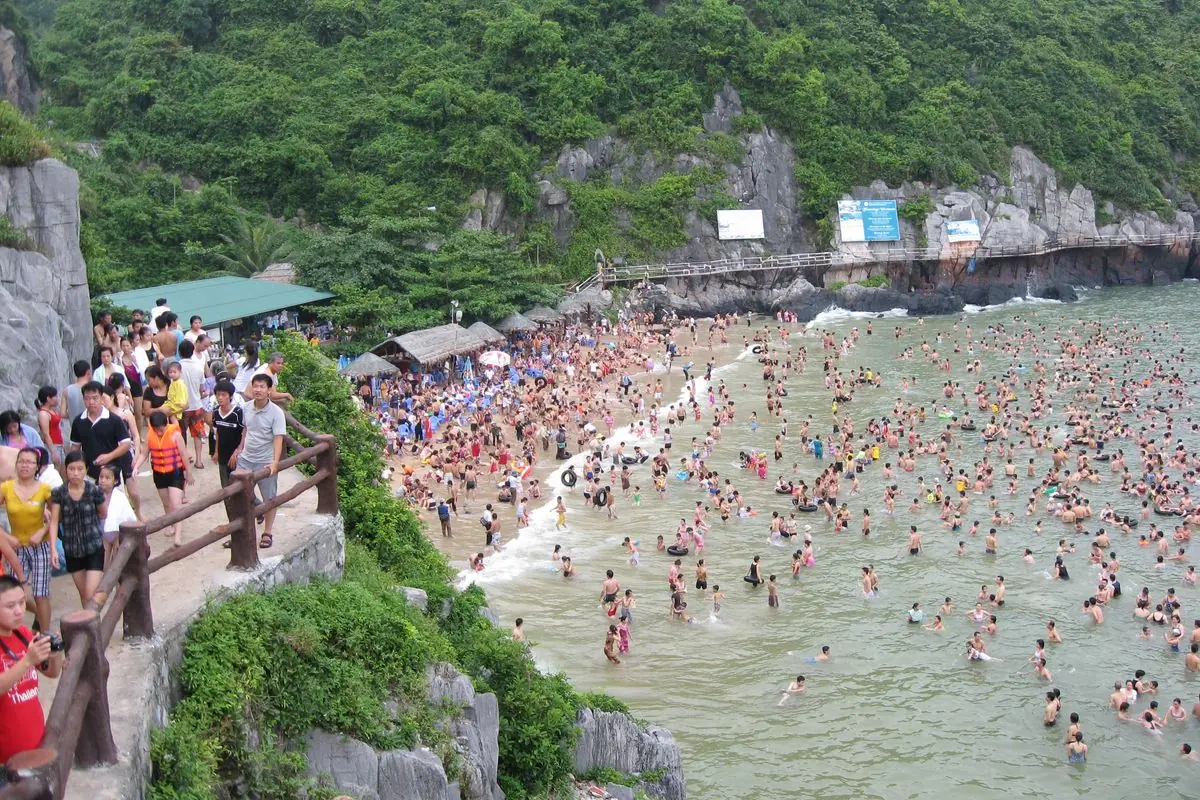
The downside is crowding.
During busy summer weekends, finding a quiet spot for photographs can be difficult.
Early mornings and weekdays are often more comfortable for photography than weekend afternoons.
For a more active holiday, book a Lan Ha Bay trip that includes kayaking.
You can enjoy the scenery between the islands, paddle through suitable waterways and stop at designated swimming areas.
Just be careful about judging tours entirely by advertising photos.
Some pictures may have been taken at low tide, outside the busy season or at locations that are not included in the itinerary you are booking.
Do Son offers a different type of group trip.
Think seafood meals, seaside walks, resort stays and entertainment at Dragon Hill when the relevant attractions are operating.
It is a good destination for an easy afternoon with friends.
It is less suitable for a group expecting the natural beaches to look like the clear turquoise coves of offshore islands.
12. One day, two days or three days: how should you plan your trip?
One day from Hai Phong: choose Do Son
You can leave central Hai Phong around 7:30-8:00 AM and spend the morning exploring Do Son.
Have lunch, take a break during the hottest hours and visit another point on the peninsula or around Hon Dau if you still have time.
Return to the city later in the afternoon.
The benefit of this itinerary is flexibility.
You are not dependent on ferry departures, and it is relatively easy to adjust your plans if the weather changes.
One day from Hanoi: Do Son is easier
With convenient expressway access, Do Son is generally the more realistic choice when you have only one free day.
A day trip to Cat Ba is possible, but the transport can consume a large proportion of your time.
Be especially careful about booking a bay cruise based only on a bus company’s estimated arrival time.
You still need to reach the pier and complete boarding arrangements.
A bus scheduled to reach Hai Phong at 9:00 AM does not necessarily mean you will be standing at the boat pier at 9:00 AM.
Two days and one night: choose Cat Ba
Use the first day for travel, hotel check-in and swimming at Cat Co or Tung Thu.
On the second day, you can join a Lan Ha Bay excursion if the schedule works with your return transport.
Otherwise, keep the morning for a simpler island activity before leaving.
If you particularly want a full-day Lan Ha Bay cruise, adding another night often makes the schedule much more comfortable.
Trying to finish an all-day cruise and then catch the last convenient ferry or bus can leave little room for delays.
Three days and two nights: combine Cat Ba and Lan Ha Bay
Three days provide enough time to separate beach relaxation from exploring the bay.
On the first day, travel to Cat Ba and settle in.
Use the second day for a Lan Ha Bay cruise, kayaking and swimming stops according to the tour itinerary.
Spend the final morning walking around, having breakfast and preparing for the journey back.
This is also a good option for international visitors based in Hanoi who want a short northern Vietnam coastal holiday without rushing through every activity.
13. Don’t confuse Hai Phong beaches with water parks or islands in other provinces
Searching for "beautiful beaches near Hai Phong" can sometimes bring up places that are not natural swimming beaches.
Vu Yen Island is one example.
The area includes VinWonders and recreational attractions, including water park activities, but it is not a destination for natural sea swimming.
Vu Yen may be a better fit for a family day of water slides and organized entertainment rather than saltwater swimming.
Travelers searching for clearer offshore beaches may also come across Co To and Quan Lan.
Both islands belong to Quang Ninh Province, not Hai Phong.
They are separate destinations with their own ports, transport arrangements and recommended itineraries.
Similarly, Hon Dau, Dragon Hill, Cat Co, Tung Thu and Lan Ha Bay are all associated with Hai Phong’s coastal area, but they do not offer the same type of swimming experience.
A beach-sounding name on Google Maps is not enough to confirm that swimming is permitted.
14. Choosing the right Hai Phong beach before booking accommodation
If you are staying in Hai Phong and simply want a few hours by the sea, Do Son is the most straightforward option.
Its short travel time leaves more of the day for eating, walking and relaxing.
If you are based in Hanoi and want a weekend that combines swimming with beautiful coastal scenery, Cat Ba is a stronger choice when you have at least two days.
Travelers primarily interested in turquoise water and beaches surrounded by limestone islands should make time for Lan Ha Bay.
Bach Long Vi is better treated as a separate remote-island expedition, with its own transport arrangements and visitor requirements.
Before booking accommodation, check the exact beach nearest to your hotel rather than relying only on descriptions such as "a few minutes from the sea."
A hotel in central Cat Ba and a beachfront cabin at Tung Thu may both advertise a Cat Ba address, but getting to the sand in the morning can be a very different experience.
One final tip: Save both your accommodation and your chosen beach as separate locations on Google Maps before departure. You will quickly see whether the route is an easy walk, requires a taxi or involves an additional boat journey.
Frequently asked questions
Can you swim at Hai Phong beaches?
Yes. Popular designated swimming areas include beaches in Do Son and Cat Ba's Cat Co 1, Cat Co 2, Cat Co 3 and Tung Thu. Some Lan Ha Bay boat tours also include swimming stops. Only enter the water where swimming is permitted, conditions are safe and no relevant warnings are in place.
Is Do Son or Cat Ba better?
Do Son is better for a short journey, a day trip and easy access to seafood restaurants, provided you are comfortable with its naturally sediment-rich water. Cat Ba is better for limestone scenery, generally greener seawater and a beach holiday lasting at least two days. From Hanoi, Do Son is usually more practical when you only have a few hours to spend by the sea.
What is the best month to visit Hai Phong beaches?
May and June are often good months for swimming because the weather is warm. July through September remains popular for beach holidays, but heavy rain, thunderstorms and tropical storms are possible. From June through October, pay particular attention to marine weather forecasts and transport announcements before traveling.
How long does it take to travel from Hanoi to Hai Phong beaches?
Driving from Hanoi to Do Son usually takes about 2-3 hours. Reaching central Cat Ba from Hanoi generally requires approximately 3.5-5 hours because of the sea crossing and onward island transport. For Lan Ha Bay, allow additional time to reach Ben Beo Pier and join a boat tour. These are estimates rather than guaranteed journey times.
Is Titi Beach Cat Ba a separate beach?
No. TiTi Beach Pods is a beachfront accommodation property in the Tung Thu area. The public beach there is Tung Thu, approximately 2 km from central Cat Ba. The public section has no entrance fee, although facilities operated by accommodation providers or other businesses may have their own charges.