Hon Dau Island in Do Son: the right pier and 3 stops in half a day
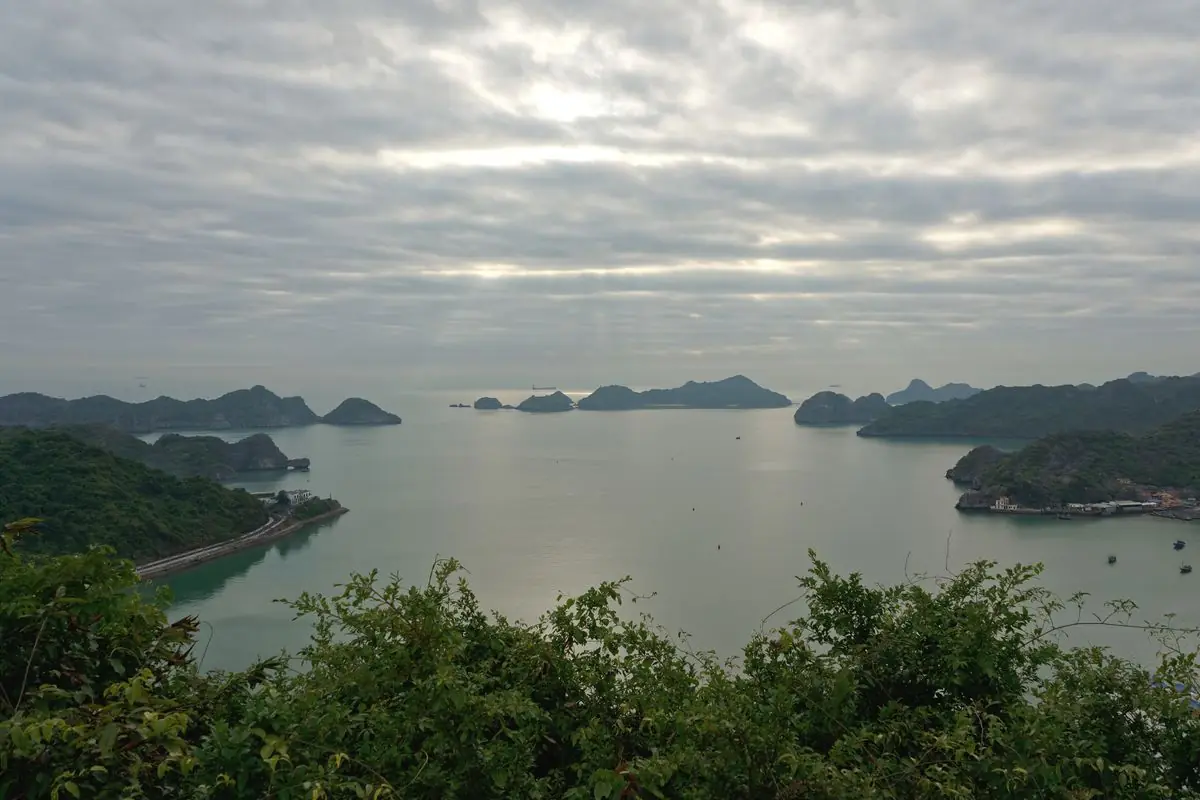
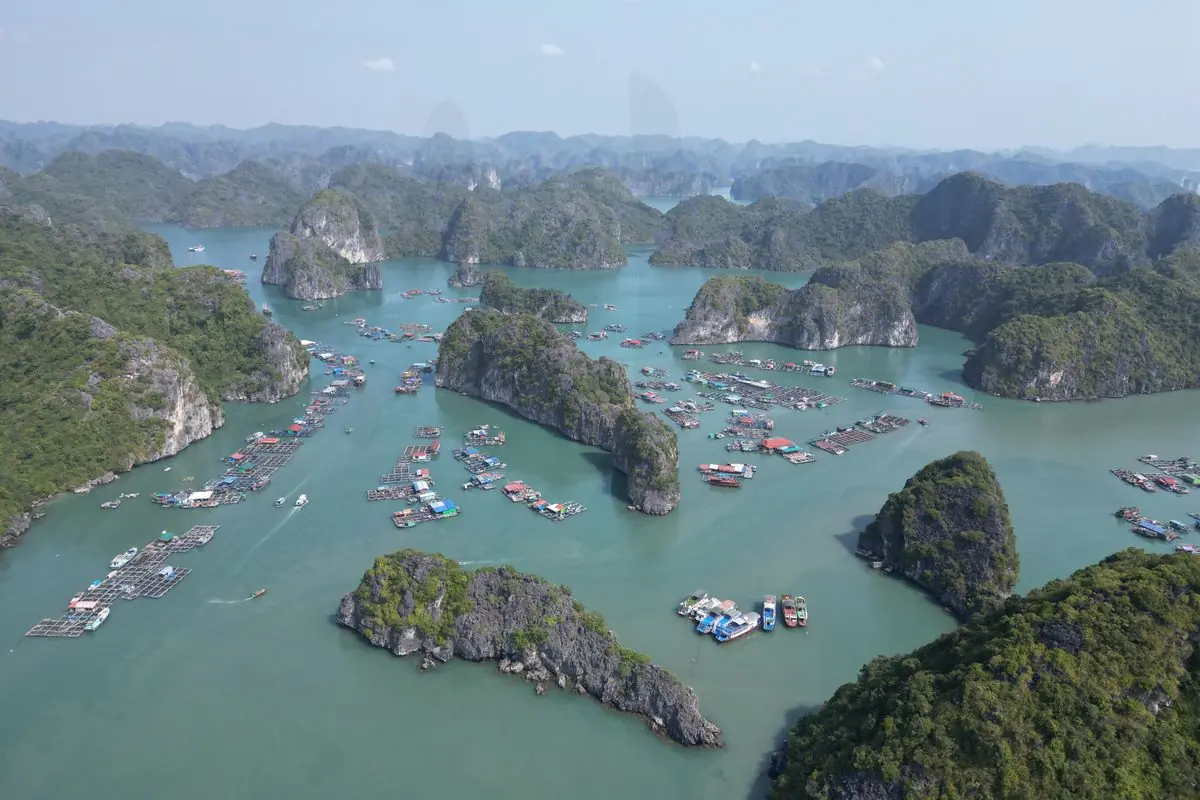
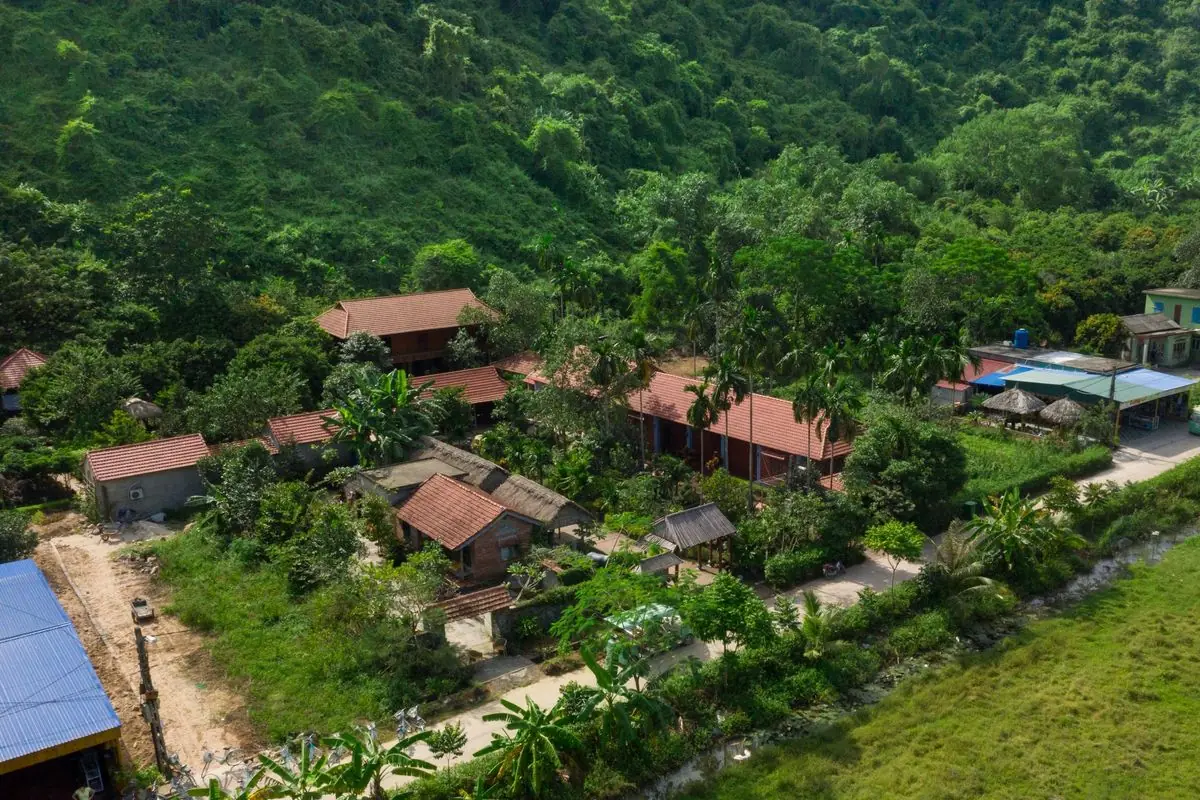
For a mix of history, sea views, and peaceful walks beneath ancient trees, start with Hon Dau Island and Bao Dai Villa. Travelers looking for beaches, photo spots, or family entertainment can spend the rest of their time at Dragon Ocean.
 17 min read
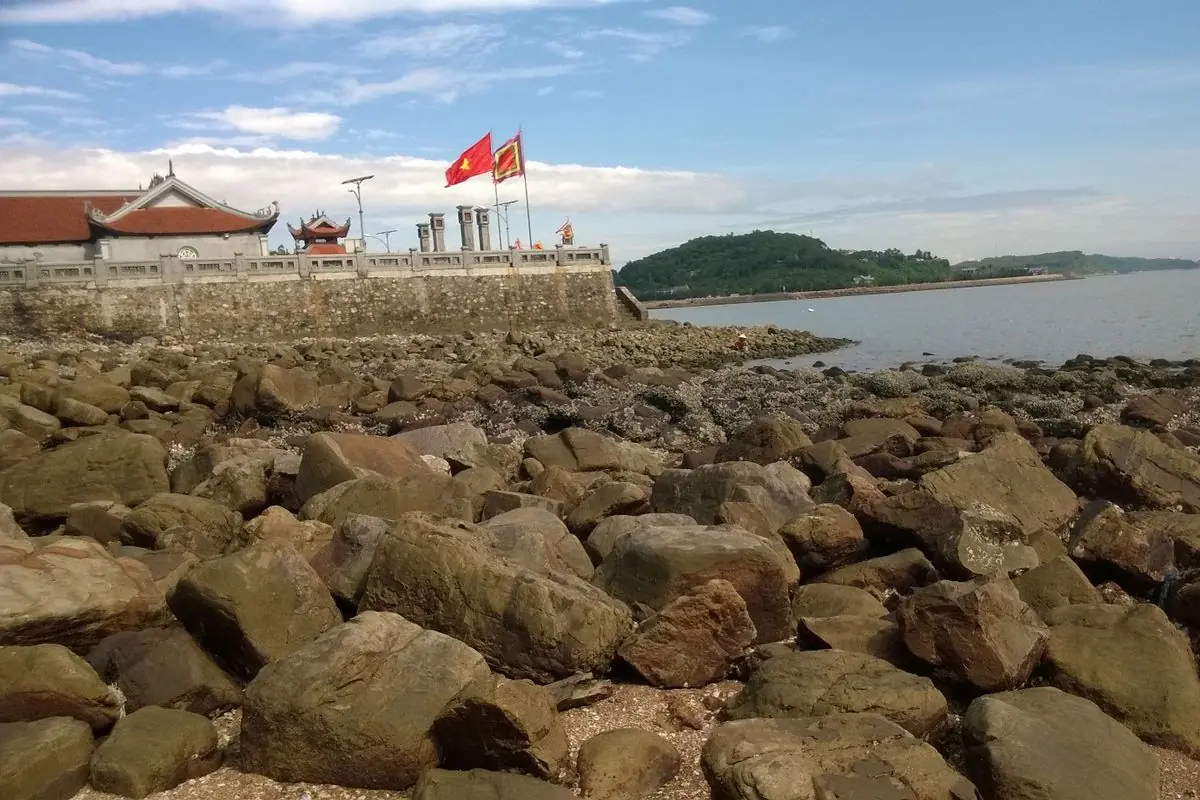
Nam Hai Than Vuong temple's red tiled roofs and flags rise above a stone sea wall on Hon Dau, with the old boulder shore in front.
At Do Son Beach, you can step out of your car and walk straight toward the sea. Hon Dau Island is different: although it sits just offshore, reaching it requires a boat ride. With half a day, start with Hon Dau Island, return to the mainland to visit Bao Dai Villa on Vung Hill, and finish at Dragon Ocean. The three stops cover ancient forest, a century-old lighthouse, French colonial architecture, and a modern seaside resort.
1. Where is Hon Dau Island, and what makes it different?
Hon Dau Island lies off the southern tip of the Do Son Peninsula in Hai Phong, northern Vietnam. Locals often pronounce its name as Hon Dáu or simply call it Dau Island. Historical records also refer to it as Song Ngu Island or Con Dua.
One explanation for the name is that the island served as a recognizable marker on nautical charts, helping ships navigate toward the entrance to Hai Phong’s port. Its maritime importance is still visible today in the lighthouse standing above the trees.
Covering nearly 14 hectares, Hon Dau is a small, densely wooded island with no permanent residential community. The people regularly stationed here mainly work at the lighthouse, the border guard post, and the meteorological and hydrological observation station.
Unlike tourist islands lined with restaurants, accommodation, and seaside promenades, much of Hon Dau remains covered by protected forest. Visitors generally follow designated paths connecting the landing pier, Nam Hai Than Vuong Temple, and the lighthouse. Other parts of the island are managed and protected, with no public walking trails.
In 2009, Hon Dau received national recognition as a historical and scenic site. Hai Phong subsequently recognized it as an official tourist destination in 2020.
The island is small, but a short walk takes you through local fishing traditions, French colonial architecture, and an important chapter of Vietnam’s maritime history.
2. How to get to Hon Dau Island: boat pier, tickets, and safety
There is no road bridge connecting Hon Dau Island to the mainland. Visitors reach it by passenger boat, with the crossing usually taking around 10-15 minutes, depending on sea conditions and the departure point.
Where to catch the boat to Hon Dau Island
The main departure point used for tourist services is Nam Do Son Tourist Pier (Bến tàu Nam), located within the Hon Dau International Tourist Area in Zone 3 of Do Son.
From central Do Son, head toward Zone 3 and follow signs for Hon Dau Resort. The tourist area includes ticket facilities, passenger controls, and a pier serving boats to the island.
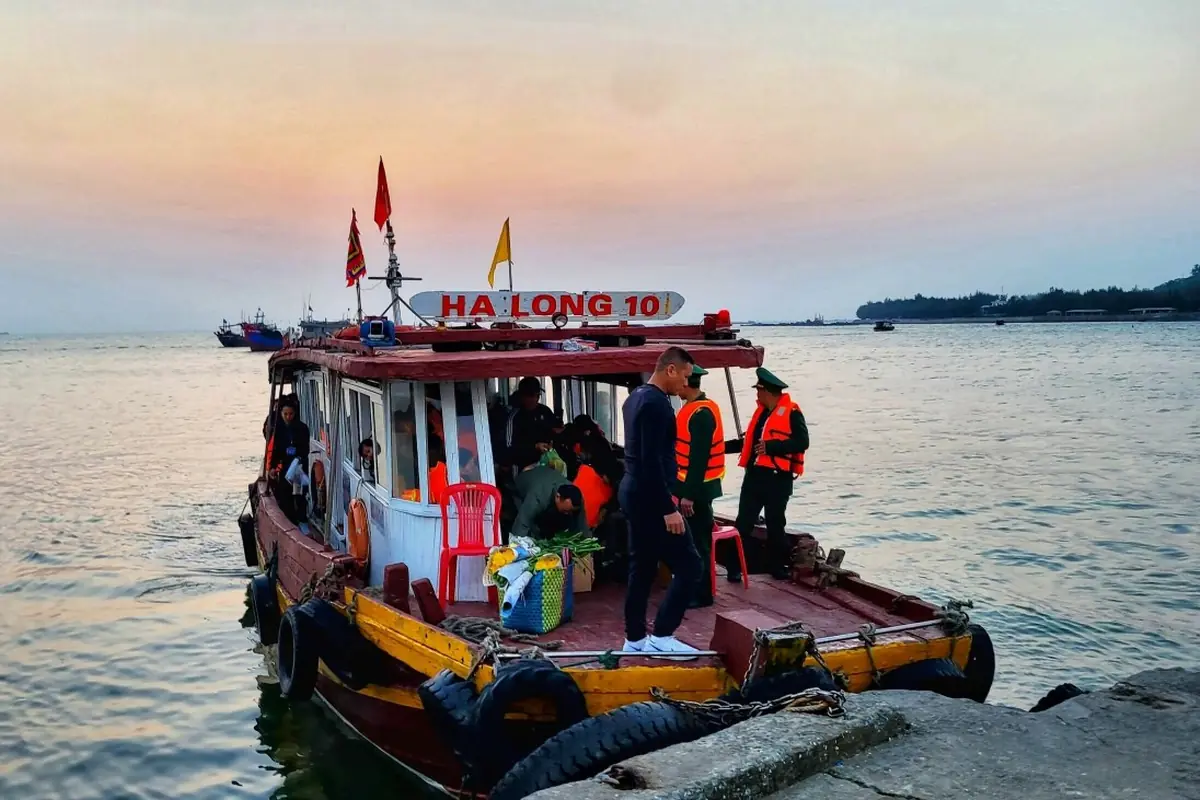
Some older travel guides still mention Nghieng Pier (Bến Nghiêng) in Zone 2. This is a real and historically significant landmark, but tourist boats to Hon Dau now leave mainly from Nam Pier.
How much are Hon Dau Island boat tickets in 2026?
The fees for the March 2026 Hon Dau Island Festival included three separate charges:
| Ticket type | Published price per person |
|---|---|
| Return boat ticket | VND 68,730 |
| Island admission | VND 20,000 |
| Lighthouse admission | VND 6,000 |
| Total for all three | VND 94,730 |
These were the festival-period rates in March 2026; on ordinary days the fares at the pier may differ. Check the current ticket board at the pier and ask which charges are included before paying.
Admission discounts and exemptions also apply to certain groups. Under the rules applied for the 2026 festival, children under six, eligible people with disabilities, and school pupils covered by the regulations were exempt from admission fees. Children aged 7-15, people aged 60 and above, university students, and several other groups qualified for a 50% reduction.
Boat tickets may be priced separately from these admission discounts. Families traveling with children or older adults should confirm the total payable amount at the ticket counter.
Independent travelers can generally buy tickets directly at the pier without booking a complete guided tour. Boat departures depend on passenger demand, operating arrangements, and weather conditions, so there is no fixed timetable like a train’s.
When do boats stop running?
The crossing is short, but it takes place in a coastal area where wind and waves can change quickly.
Boats may suspend operations during thunderstorms, strong winds, tropical depressions, or typhoon warnings. A departure can be canceled even when the island looks perfectly close and accessible from the shore.
Passenger vessels must comply with their authorized capacity limits, and everyone on board is required to wear a life jacket before departure.
3. What to see on Hon Dau Island
The main visitor route connects Nam Hai Than Vuong Temple, the ancient banyan forest, and Hon Dau Lighthouse.
Allow approximately 1.5-2 hours for sightseeing on the island, excluding the boat crossing and any waiting time.
Nam Hai Than Vuong Temple
A sacred place for local fishermen
From the landing pier, walk approximately 100 meters and turn left to reach Nam Hai Than Vuong Temple.
Facing the sea, this relatively small temple has a traditional Vietnamese layout, with three front worship bays and two inner sanctuary bays arranged in a Dinh-shaped plan.
The temple honors Nam Hai Than Vuong, a sea deity associated with a local legend about a military commander from the Tran Dynasty who died and was carried to the island by the waves. In local tradition, the deity is also known as Lao Dao Than Vuong.
A fishing basket and fishing rod sit near the altar, the everyday gear of the fishermen who worship here.
For generations, fishermen from Do Son have visited the temple to pray for safety before setting out to sea.
There are also smaller places of worship on the island, including a Mother Goddess temple.
Foreign visitors are welcome to observe the temple when it is open, even without participating in religious rituals. Dress respectfully, speak quietly, and follow local customs. Offering incense is a personal choice rather than a requirement.
The ancient banyan forest
Hon Dau's most beautiful walk
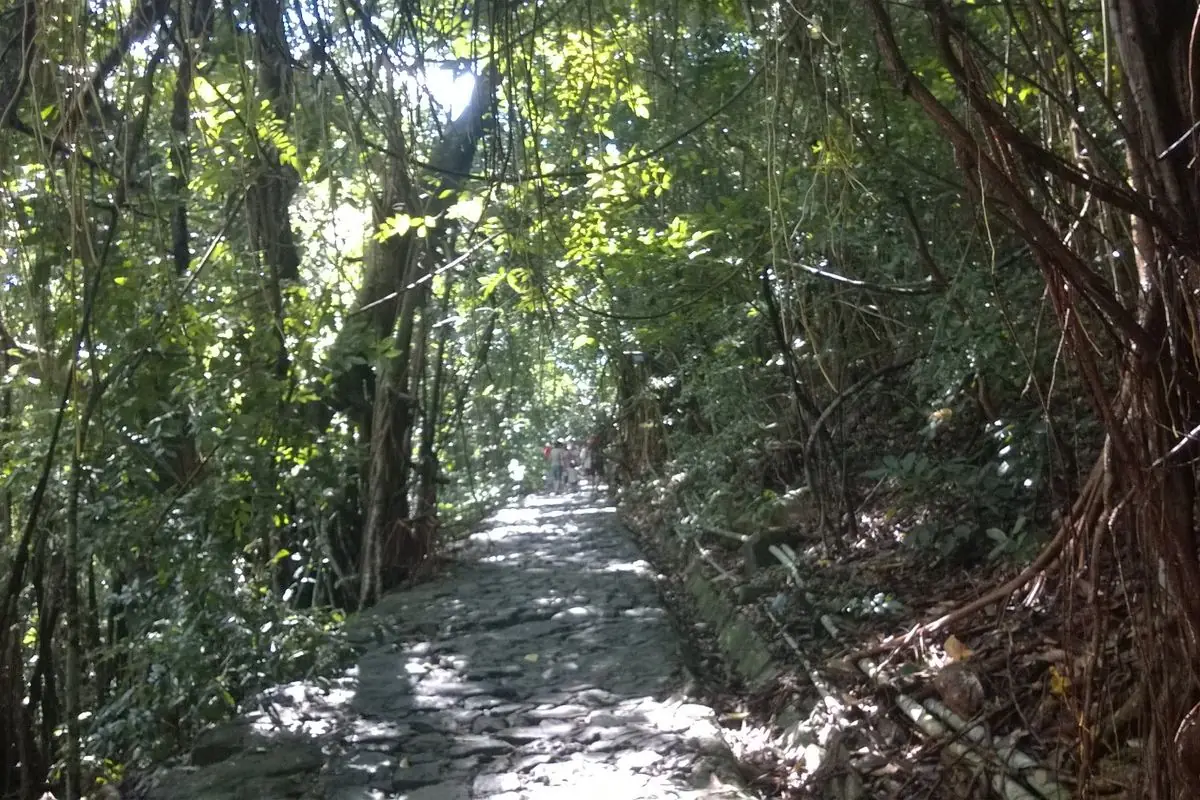
Leaving the temple area, a stone-paved path climbs gently toward the lighthouse beneath a canopy of banyan trees.
The island is known for a group of 35 ancient banyan trees, estimated in local records to be around 400-700 years old. The trees were recognized as Vietnamese Heritage Trees in 2013.
Some have enormous trunks surrounded by tangled aerial roots, creating shapes that look almost sculptural. On sunny days, light filters through the leaves while the dense canopy keeps much of the path pleasantly shaded.
Walking from the landing area to the lighthouse normally takes around 15-20 minutes at a relaxed pace.
Certain sections include slopes, stone steps, and damp surfaces. The rocks near the island’s shoreline can also become slippery after rain, so shoes with good grip are more practical than smooth sandals.
You may notice monkeys and goats roaming freely. These animals are kept by the staff stationed on the island. Watch them from a comfortable distance, avoid feeding them, and stay out of restricted areas.
Hon Dau Lighthouse
A historic beacon still guiding ships
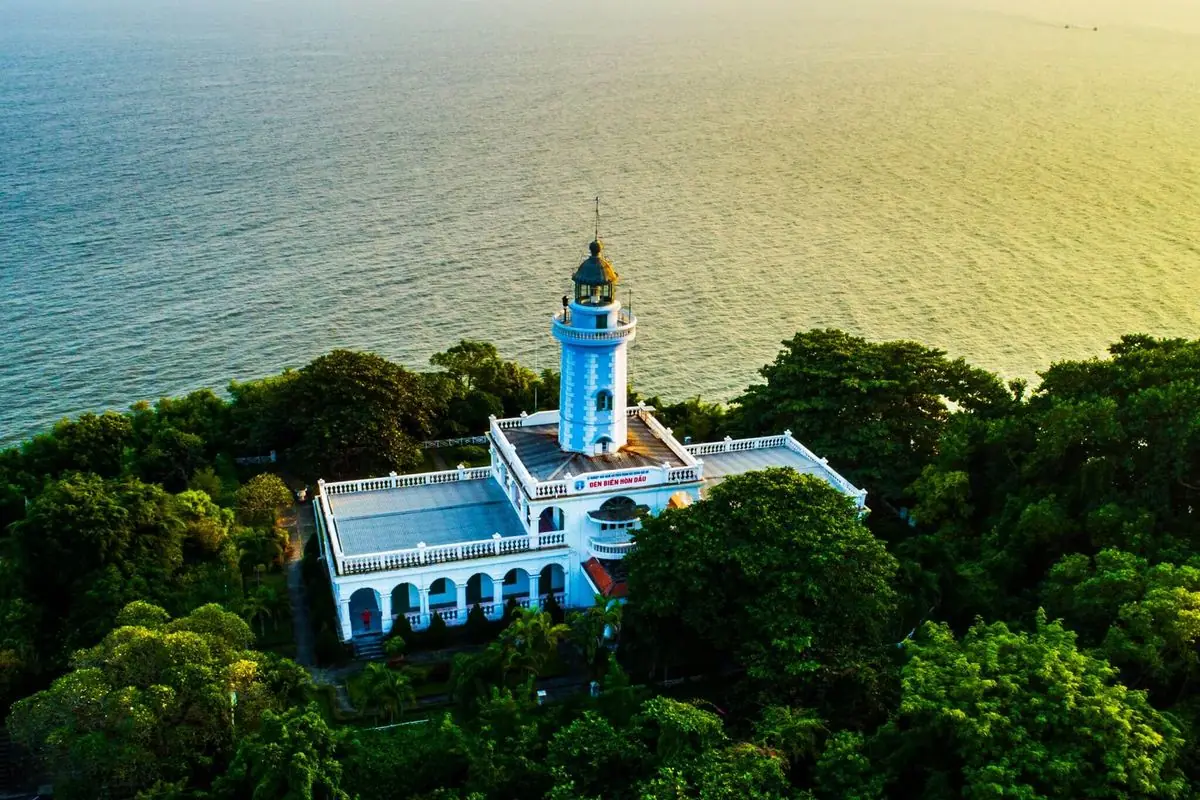
Hon Dau Lighthouse is the island’s most recognizable landmark.
Built during the French colonial period in the late nineteenth century, the lighthouse was completed in 1896 and officially began operating in June 1898. Its location made it an important navigational aid for ships approaching Hai Phong Port.
The architecture retains a distinctly French colonial appearance, with tiled roofs, arched corridors, and a lighthouse tower rising above the surrounding buildings.
During the air war over northern Vietnam, Hon Dau suffered repeated bombing. In 1967, the original lighthouse structure was damaged and brought down by bombing, before being rebuilt and restored to maritime service.
Today, the navigational light remains operational, with a nominal visibility range of approximately 20-22 nautical miles under standard conditions.
Visitors may climb Hon Dau Lighthouse when access is authorized by the station.
Inside, a spiral wooden staircase of 125 steps leads toward the lantern area. From the observation gallery, you can look out across the sea and toward the Do Son Peninsula.
The staircase is relatively narrow. Travelers who experience dizziness, fear heights, or have difficulty with stairs should consider the climb carefully. Access to upper sections may also be restricted depending on operational and safety requirements.
Near the base of the lighthouse, a small exhibition presents photographs, documents, and objects connected to Vietnam’s maritime safety services, including material from the wartime period.
4. What is the zero-elevation benchmark on Hon Dau Island?
Hon Dau is famous for its lighthouse, but the island also plays a much less visible role in Vietnam’s national surveying system.
The Hon Dau zero-elevation reference is associated with the national height datum established using long-term average sea-level observations at the Hon Dau tide-gauge station.
When a map states that a location is 100 meters above sea level, that measurement needs to be based on a standardized reference surface.
Vietnam’s national height system uses a reference connected to sea-level measurements made at Hon Dau.
Before 1975, different height references were used in parts of Vietnam, including Hon Dau in the north and Mui Nai in Ha Tien in the south. Following reunification, the Hon Dau reference became the basis for a unified national height system.
Hon Dau contains facilities and reference points connected to surveying, meteorology, and hydrological observation. The national zero-elevation benchmark itself, however, has no public viewpoint of its own.
You can ask local staff whether any related markers are visible from permitted visitor areas. Technical facilities and border guard zones are not open for unrestricted exploration.
5. Bao Dai Villa in Do Son: a French colonial residence on Vung Hill
After returning to the mainland, Bao Dai Villa is a convenient next stop.
Also known as Bao Dai Palace or Bao Dai Mansion, the historic property stands on Vung Hill in Zone 2 of Do Son, nearly 40 meters above sea level.
Its elevated position offers views across the coastline and the hills of the peninsula.
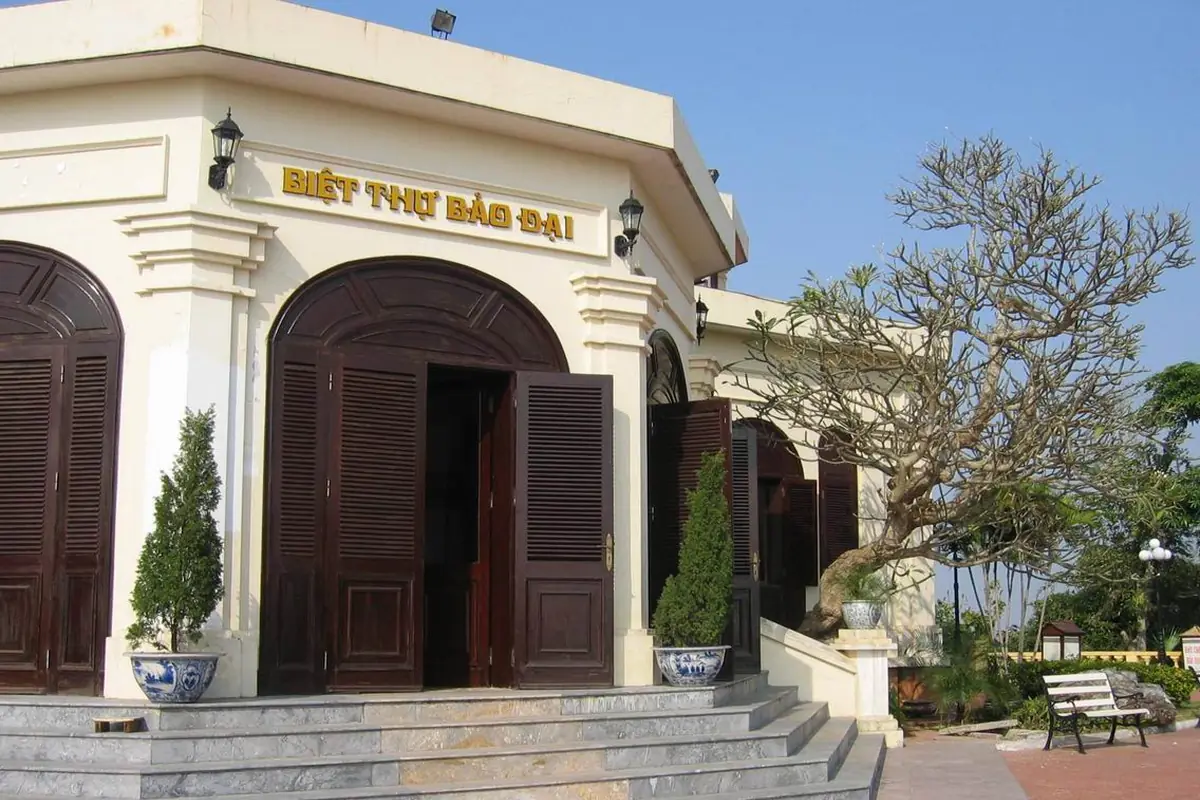
The villa was built in 1928 during the French colonial period, originally serving as a residence for the Governor-General of French Indochina. It later became associated with Emperor Bao Dai, particularly after the property was handed over to him in 1949.
It is a notable former royal residence connected to the Nguyen Dynasty in northern Vietnam, with architecture typical of early twentieth-century French seaside villas.
What is inside Bao Dai Villa?
The property occupies more than 3,700 square meters of grounds, while the building itself covers approximately 1,000 square meters of floor space.
It has two above-ground floors and a basement.
The interior layout reflects the lifestyle of the former royal household. Rooms on the lower level include spaces for receptions, work, dining, and the private lives of Emperor Bao Dai and Empress Nam Phuong. Upper rooms were set aside for other members of the royal family.
Today, the furniture and interior arrangements have been restored or recreated to reflect the building’s historical character.
The rooms are reconstructions, and not every object on display is original.
The approach to the villa is also worth exploring. The path passes old stone walls, greenery-covered sections near the basement, and shaded slopes before reaching the main building.
It provides a peaceful contrast to the busy beaches below.
Is Bao Dai Villa still open, and how much is admission?
Bao Dai Villa was still welcoming visitors in 2026. Its managers, though, don’t post daily opening hours or an official price list online.
Admission usually runs about VND 20,000-30,000 per person, and some places quote VND 30,000. Use it for budgeting; the ticket counter sets the actual price.
Before including the villa in your itinerary, ask your hotel or the attraction’s operator to confirm its opening hours, admission fee, and which interior spaces are accessible.
A typical visit takes around 30-45 minutes. Travelers interested in architecture, colonial history, or the life of Vietnam’s last emperor may want to stay longer.
6. What is there to do at Dragon Ocean Do Son?
Dragon Ocean is the newly built side of Do Son, with an artificial beach, a water park, and a resort.
Officially known as the Do Son International Dragon Hill Tourist Area, or Dragon Ocean Do Son, this large tourism and leisure development is located in the Van Huong coastal area of the peninsula.
Development began in 2019, and the resort area started welcoming visitors in the summer of 2020.
Dragon Ocean is not Hon Dau Island, and Bao Dai Villa is not located inside the Dragon Ocean complex.
All three are separate destinations, although they can be combined during the same outing.
Main attractions at Dragon Ocean
Dragon Beach is a developed artificial beach with landscaped facilities and a seawater treatment and filtration system. It offers a more organized beach environment than some of the peninsula’s natural shoreline areas, along with leisure facilities and beach services.
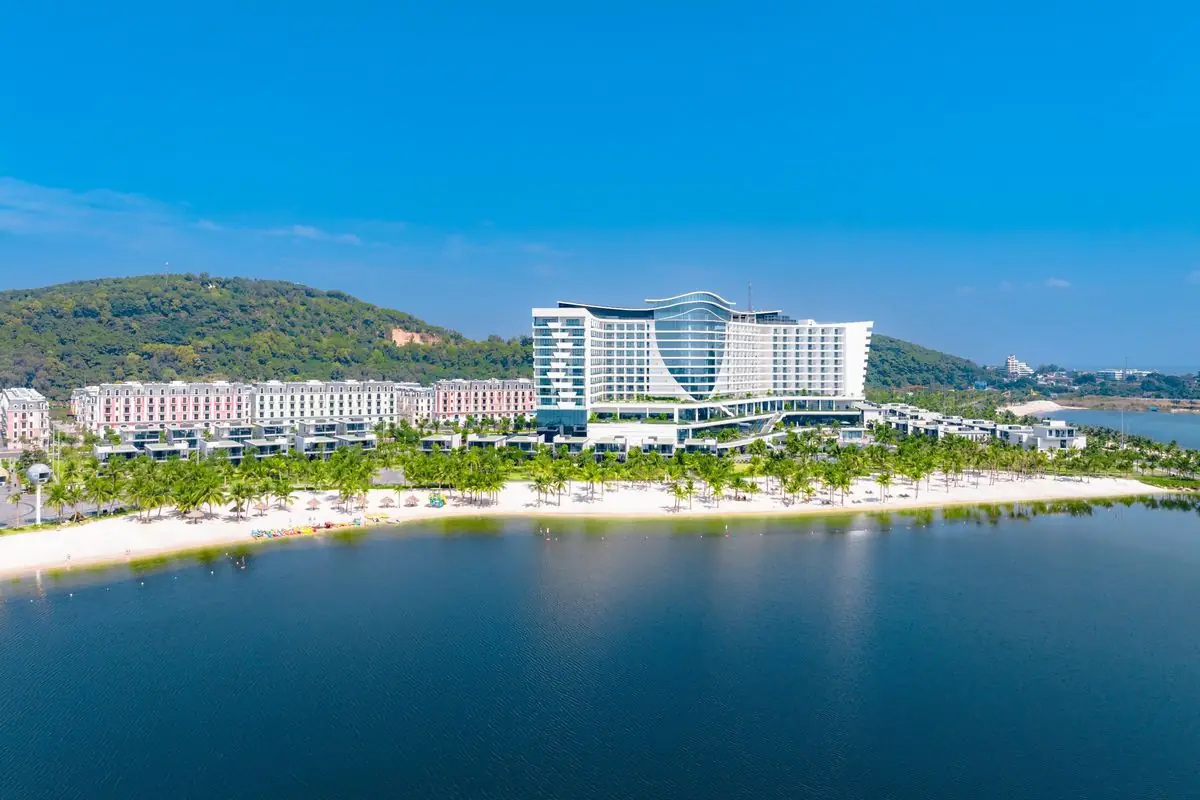
Legend Park is a themed entertainment complex inspired by the Vietnamese legend of Son Tinh and Thuy Tinh, the Mountain God and the Water God. Attractions include Thuy Tinh Water Park, dinosaur-themed experiences, and activities designed for families.
The Light Park features decorative lighting installations and numerous illuminated scenes. Come in the late afternoon or evening to photograph the lights.
Dragon Mangrove Forest offers a quieter experience. Its long wooden boardwalks pass through the mangroves, an easy walk with views over the coast.
The broader development also includes Dragon Golf Links, Dream Dragon Resort, public squares, and spaces used for festivals, concerts, and special events.
Is Dragon Ocean free to enter?
There is generally no overall admission fee to enter the main Dragon Ocean area; individual attractions and services charge their own fees.
Dragon Beach, the water park, Light Park, and mangrove experiences may have separate admission tickets or combination packages. Prices and operating schedules can vary by season, and some facilities may operate only on selected days.
For a half-day trip that already includes Hon Dau Island and Bao Dai Villa, one relaxed activity at Dragon Ocean is enough.
You might spend 45-60 minutes walking through accessible public areas, enjoying a drink, or looking out over the sea.
The water park and larger entertainment zones deserve a separate visit, especially when traveling with children.
7. How to visit Hon Dau Island, Bao Dai Villa, and Dragon Ocean in half a day
Although the three attractions are all in Do Son, they require different planning.
Hon Dau Island depends on boat operations and sea conditions. Bao Dai Villa and Dragon Ocean are on the mainland and can be reached by road.
For a day with calm seas, the most convenient order is:
Hon Dau Island → Bao Dai Villa → Dragon Ocean
Morning: visit Hon Dau Island first
- Early morning
Nam Pier, Hon Dau
Begin at Nam Do Son Tourist Pier, buy your tickets, and check the return boat schedule.
Once on the island, visit Nam Hai Than Vuong Temple before walking through the banyan forest toward the lighthouse.
Allow around 1.5-2 hours for the island itself, plus the boat journey and waiting time.
Those who enjoy photography or want to spend more time examining the lighthouse exhibition should allow a little longer.
- Back ashore
Bao Dai Villa
After returning to the mainland, take a taxi or your own vehicle to Bao Dai Villa in Zone 2.
This is a relatively short stop for exploring the historic building, viewing the rooms that are open, and enjoying the hilltop scenery.
- Late morning
Dragon Ocean
Finish your morning or early afternoon at Dragon Ocean.
Lunch, a seaside stroll, or one relaxed leisure activity all fit well into this final stop.
Under favorable boat conditions and with limited waiting, the complete journey will usually take approximately 4-5 hours.
Visitors planning to use the water park or experience several attractions at Legend Park should allow at least another half-day.
Can you visit in the afternoon instead?
An afternoon visit is possible, but the return boat schedule becomes especially important.
Start by checking whether a suitable island service is running and when the final boat returns.
When boat timings allow, visit Hon Dau first, then continue to Bao Dai Villa if it is still open. Dragon Ocean works well toward the end of the day because some public spaces and entertainment areas are more enjoyable in the late afternoon or evening.
When boats are suspended, a sensible alternative is to explore Bao Dai Villa, walk around Dragon Ocean, and enjoy a meal in Do Son.
Don’t hire an unofficial small boat to reach the island when authorized services have stopped.
Do you need a private car?
Taxis and private vehicles are convenient for moving between attractions in Do Son.
International travelers staying in central Hai Phong can arrange a taxi or private transfer to the peninsula and visit all three places in one trip.
Vietnamese destination names are useful when communicating with drivers because Hon Dau Island, Hon Dau Resort, and Dragon Ocean are sometimes confused.
In late 2026, Ly Thai To Road in Zone 1 is being widened, including the section from the area around 15 May Square toward Dragon Ocean.
Construction work began in October 2026 and is expected to continue afterward.
Temporary traffic arrangements may cause delays or diversions. Check live navigation on the day to estimate driving time.
8. When is the best time to visit Hon Dau Island?
Hon Dau can be visited during much of the year, although weather conditions strongly influence the experience.
May to August is the main summer beach season in Do Son.
Sunny days are excellent for coastal views, photography, and combining the island visit with swimming at Dragon Ocean. Summer weekends can become crowded, especially around the tourist pier and entertainment facilities.
October to April generally brings cooler conditions. These months can be pleasant for walking beneath the banyan trees, admiring architecture, and exploring historical attractions.
Swimming becomes less appealing during colder periods.
Northern Vietnam’s typhoon season is generally concentrated between June and October. Strong northeast monsoon winds can also produce rough seas during the cooler months.
As a result, boats may stop operating even on days without rain.
When is the Hon Dau Island Festival?
The Hon Dau Island Festival takes place during the second lunar month and is tied to the worship of Nam Hai Than Vuong.
The main festival period traditionally runs from the first through the ninth day of the second lunar month.
The ninth day ends with a late-night incense-offering ritual that draws local worshippers and visitors.
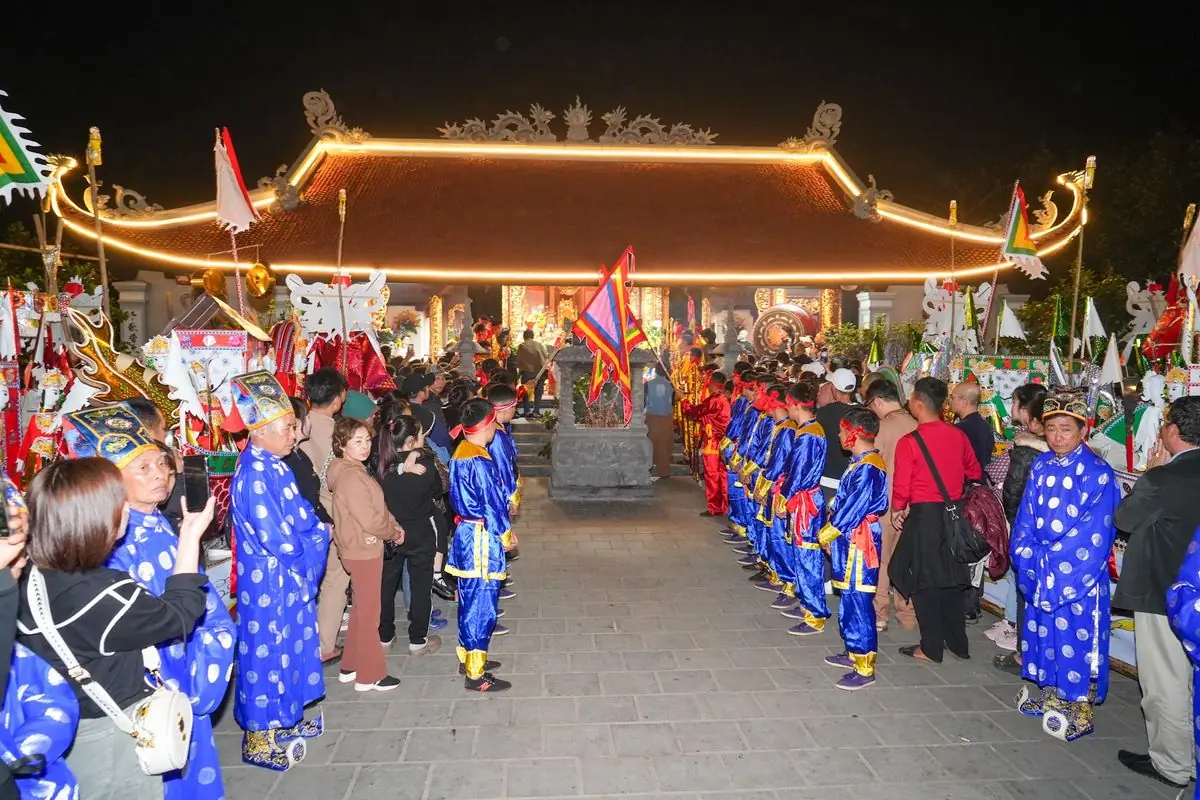
In 2026, the opening flag ceremony took place on March 19, followed by the principal incense-offering ceremony on the night of March 27.
Local authorities will announce the Gregorian-calendar dates for the 2027 festival.
Vietnamese visitors traveling during the early-year festival season may particularly enjoy the lively atmosphere, traditional ceremonies, and cultural activities.
Travelers looking for a quiet walk through the forest or uninterrupted views from the lighthouse will generally prefer ordinary weekdays outside the festival period.
For international visitors, the festival provides an interesting opportunity to observe the religious traditions of northern Vietnam’s fishing communities.
Nighttime festival activities require transport arrangements approved by the organizers. Do not assume that regular tourist boats will continue operating late into the evening.
9. What should you bring to Hon Dau Island?
There are few visitor services on the island compared with the mainland. Bring drinking water, a small snack if needed, and a bag for your rubbish.
Carry your waste back to the mainland and dispose of it in an appropriate bin.
Shoes with good grip are particularly useful for the stone paths, stairs, and potentially slippery sections near the shoreline.
A light jacket can also be helpful on windy days, even when the weather feels warm in central Hai Phong.
Because the island contains an active border guard post and technical facilities, visitors must remain on approved routes.
Respect warning signs and ask staff before photographing any areas with restricted access.
Families with young children should also consider the terrain and the lighthouse staircase. The tower has limited interior space, and climbing is subject to the instructions of the station’s staff.
10. Is Hon Dau Island worth half a day in Do Son?
Hon Dau suits travelers who want to see more of Do Son than its beaches.
Nam Hai Than Vuong Temple introduces the maritime beliefs of local fishing communities. The lighthouse has guided ships into Hai Phong since 1898, and the 400-700-year-old banyans shade the path up to it.
Bao Dai Villa and Dragon Ocean add two contrasting experiences to the itinerary: one centered on architecture and history, the other on contemporary leisure and seaside entertainment.
Begin at Nam Do Son Tourist Pier, visit Hon Dau while the sea is calm, then take the two mainland stops in that order. Leave slack for the return boat and half a day covers all three.
Frequently asked questions
How do I get to Hon Dau Island, and how much is the boat ticket?
Take a passenger boat from Nam Do Son Tourist Pier inside the Hon Dau Resort area in Zone 3. The crossing usually takes 10-15 minutes. During the March 2026 festival, rates were VND 68,730 for a return boat ticket and VND 20,000 for island admission, totaling VND 88,730 per person. Confirm the current fares at the pier.
Can visitors climb Hon Dau Lighthouse?
Yes, when the lighthouse station permits public access. A spiral wooden staircase with 125 steps leads toward the upper observation area. Lighthouse admission was listed at VND 6,000 per person during the March 2026 festival. Access may be restricted because of weather, maintenance, or operational requirements.
What is the Hon Dau zero-elevation benchmark, and can tourists see it?
It is the reference associated with Vietnam's national height system, based on long-term average sea-level measurements at Hon Dau. Surveying and technical facilities are not automatically accessible to tourists. The national zero-elevation benchmark has no dedicated public photo stop either.
Is Bao Dai Villa in Do Son still open, and what is the entrance fee?
Bao Dai Villa still welcomed visitors in 2026. Admission is roughly VND 20,000-30,000 per person, though the villa doesn't post an official price list online. Check its opening hours and accessible rooms before visiting.
What can I do at Dragon Ocean Do Son, and is entry free?
Dragon Ocean includes Dragon Beach, Thuy Tinh Water Park, the Light Park, dinosaur-themed attractions, mangrove walkways, and resort facilities. General access to the main development area is free, but individual attractions and services charge separate admission fees. Ticket prices and opening schedules depend on the season.