Hai Phong banh mi cay: 7 common ordering mistakes and how to avoid them
For your first taste, start with 3-5 breadsticks, ask for them toasted crispy, and keep the chili sauce on the side. Five or six make a more filling snack, while travelers buying souvenirs may prefer fresh pate sold by weight, with proper refrigeration.
 14 min read
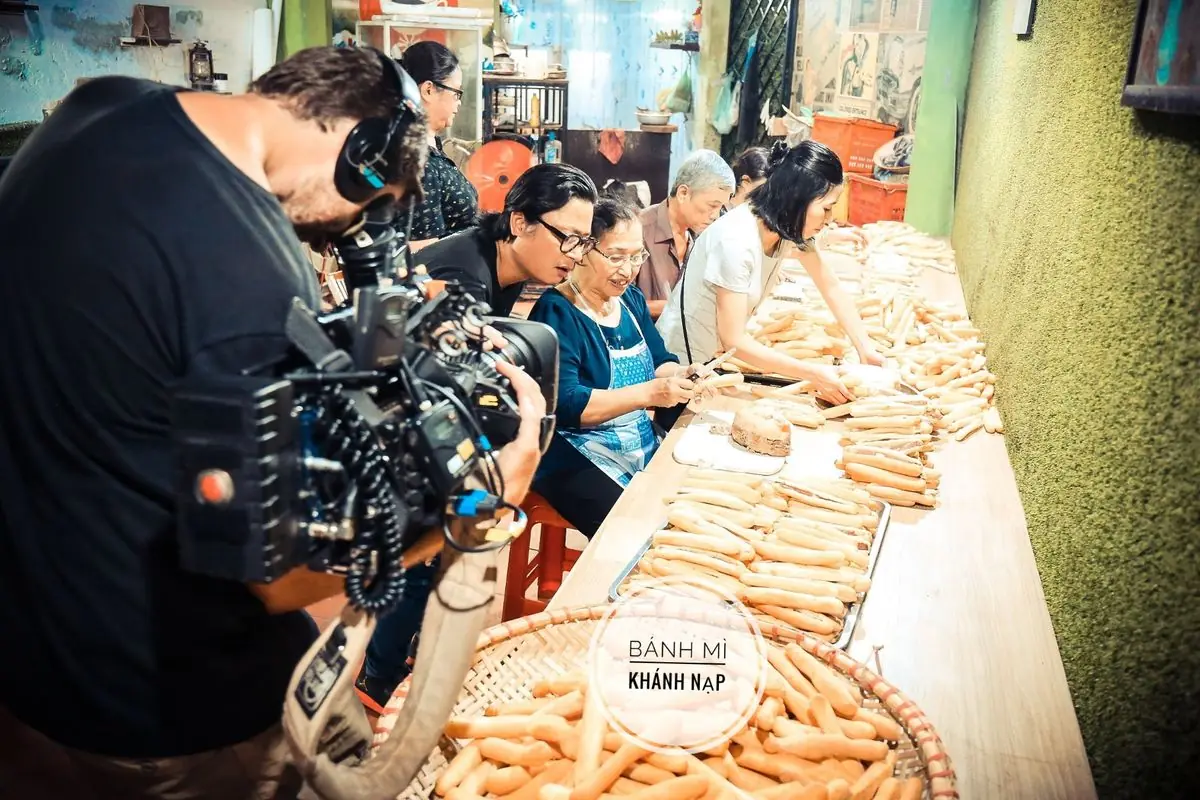
At a long table, workers split each slim breadstick and spread it with pate cut from a large block; filled sticks crowd the steel trays, plain ones fill a bamboo basket, and a film camera rolls in the foreground.
In Saigon, one banh mi sandwich can hold almost an entire meal. In Hai Phong, one of the city’s most memorable snacks is barely two fingers wide. Known as banh mi cay or banh mi que, these little breadsticks have crispy crusts, creamy pate fillings, and a punchy local chili sauce called chi chuong. At the counter, you order by the number of breadsticks, not by the sandwich.
1. Mistaking Hai Phong banh mi cay for a Saigon-style banh mi
Both belong to Vietnam’s banh mi family, but they differ in size, filling, and how you eat them.
Visitors from the United States, the United Kingdom, or Australia may already know Vietnamese banh mi as a generously filled baguette sandwich, complete with meat, vegetables, and pickles. In Hai Phong, the vendor hands you a slender little loaf containing little more than a spread of pate.
A typical Saigon-style banh mi might include butter, pate, cold cuts, Vietnamese pork sausage, shredded chicken, or pork floss. Cucumber, pickled carrots and daikon, herbs, onions, and chili add freshness and crunch. One sandwich is often enough for breakfast or lunch.
Traditional Hai Phong banh mi cay, on the other hand, keeps things simple: a small, narrow breadstick, a layer of savory pate, and chili sauce. There are no fresh vegetables, pickles, or layers of different meats. Locals usually buy several breadsticks at once, eating them while chatting or carrying them between stops around the city.
The name banh mi cay, which translates roughly to "spicy bread," can also be misleading. The bread and pate carry little heat of their own. Most of it comes from chi chuong, so ordering the breadsticks without chili sauce works fine.
For international visitors, the easiest way to picture the dish is a freshly toasted breadstick filled with pork and liver pate, served with a local chili sauce. Think of it as a handheld street snack rather than a full-sized sandwich.
2. Focusing on the bread and overlooking the pate and chili sauce
A Hai Phong breadstick looks very plain. What sets one shop apart from the next is the pate and the little bowl of chili sauce beside it.
The bread should be crispy, not overly dry
Banh mi cay is long, slim, and narrow enough to hold comfortably in one hand. Bakers prepare batches throughout the day, while many vendors warm the breadsticks over charcoal grills or in other toasting equipment before serving.
A good breadstick has a light golden to golden-brown crust that crunches lightly when you bite into it. The inside should remain soft enough to hold the pate. Bread that’s been sitting around too long loses its crispness, while excessive toasting leaves it dry or burnt.
The best ones come straight off the grill, still warm between your fingers. The crust breaks gently with the first bite, followed by the smooth, rich pate underneath.
Pate is the heart of the filling
Hai Phong-style pate is commonly made with ground pork, pork liver, and pork fat. Many family recipes also include fish sauce, soy sauce, black pepper, fried shallots or garlic, and a little bread to help create the right texture.
The mixture is seasoned and steamed for several hours. Some traditional recipes take around five hours, although cooking times and ingredient ratios vary from one family to another.
Good pate is smooth, creamy, and fragrant, with noticeable liver and aromatics. It should taste rich without feeling overwhelmingly greasy. Depending on the recipe, you may notice a pinkish-brown color and little flecks of white fat.
Long-running shops often prepare their own pate, which explains why two breadsticks that look nearly identical can taste quite different.
You might also see butter or pork floss beside the pate tray. These are optional extras offered by some vendors, not essential ingredients in traditional banh mi cay.
Chi chuong isn’t ordinary sweet chili sauce
Chi chuong is Hai Phong’s local name for a distinctive chili sauce, commonly made with chili peppers, tomatoes, garlic, and salt. It is usually thick and red, with a pronounced heat and sometimes a gentle sweetness or tanginess, depending on the recipe.
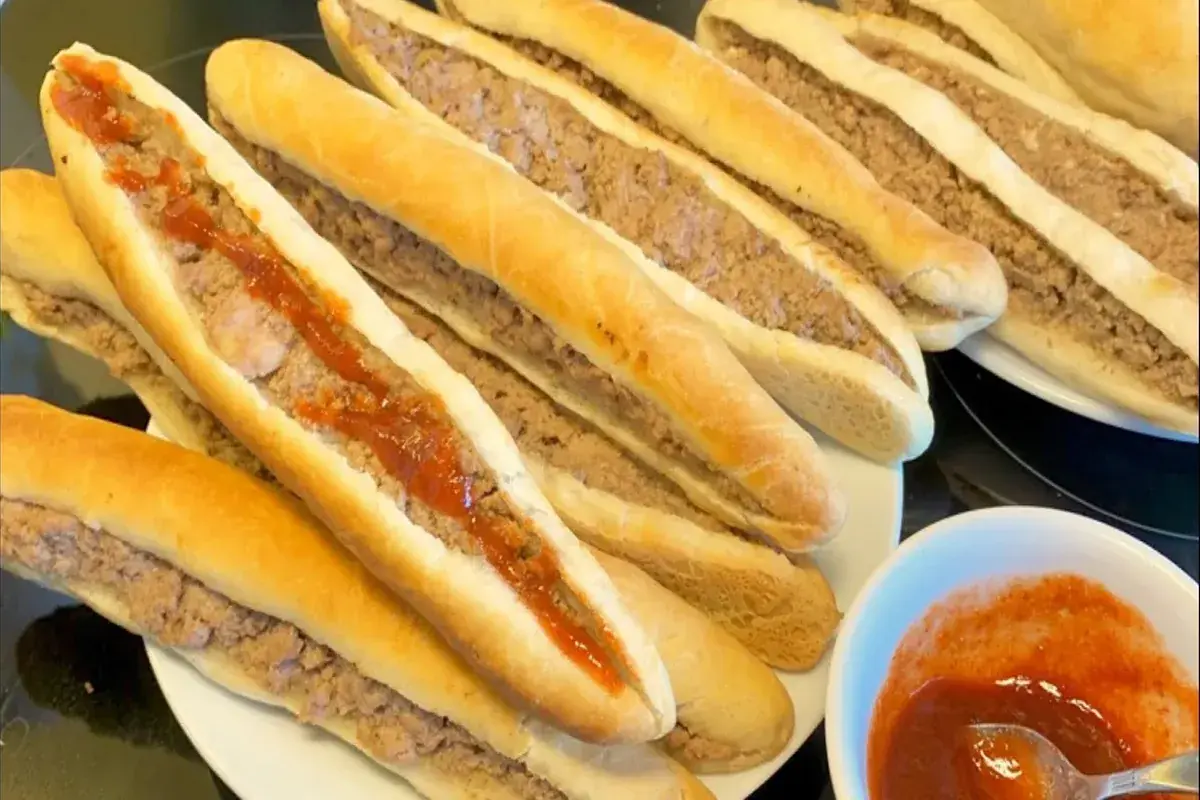
That spicy kick helps balance the richness of the pate. For many locals, a breadstick simply isn’t complete without at least a little chi chuong.
Vendors may spread the sauce inside the bread, drizzle it over the filling, or serve it separately in a small bowl or packet. Some shops also offer pickled vegetables on the side to refresh your palate between bites.
3. Ordering too few or too many breadsticks
Anyone used to a full-sized Saigon banh mi who orders just one finishes it in a couple of bites.
Hai Phong banh mi cay is sold individually, but people usually eat several pieces in one sitting. The right amount depends on whether you’re having breakfast, grabbing a quick snack, or saving room for more local dishes.
| Quantity | Best for | Approximate bread cost |
|---|---|---|
| 1-2 pieces | A quick first taste | 3,000-6,000 VND |
| 3-5 pieces | Light breakfast or mid-morning snack | 9,000-15,000 VND |
| 5-6 pieces | A more filling snack or small meal | 15,000-18,000 VND |
| 10 pieces | Two people or takeaway | Around 30,000 VND |
| 20 pieces | A group of friends or family | Around 60,000 VND |
Prices are calculated at 3,000 VND per breadstick, excluding extras and drinks. Individual appetites will vary.
How much does Hai Phong banh mi cay cost in 2026?
During the April 30-May 1 holiday period in 2026, many traditional breadstick vendors in central Hai Phong maintained an average price of approximately 3,000 VND per piece, without increasing prices for the holiday.
Fresh pate sold by weight at several local businesses was priced at around 180,000-200,000 VND per kilogram.
The online menu of Khanh Nap (Nha Co) also lists traditional pate breadsticks at 3,000 VND each, versions with added pork floss at 4,500 VND, and a one-kilogram portion of pate at 180,000 VND. Some other shops have offered breadsticks for as little as 2,500 VND each.
Prices vary a little from shop to shop. Breadsticks with extra pork floss or butter, as well as orders through delivery apps, may cost more.
For anyone wondering what to eat for a quick, inexpensive breakfast in Hai Phong, five breadsticks and a glass of soy milk take a few minutes to eat, and the bread comes to around 15,000 VND.
If you’re on a food tour, however, three pieces should be enough to tide you over before trying something else.
4. Forgetting to ask for crispy bread, separate chili sauce, or extra prices
At a banh mi cay counter in Hai Phong, the vendor mainly asks three things: how many pieces you want, whether you’ll eat them now or take them away, and how you’d like your chili sauce.
The simplest way to order is:
"Cho mình năm cái, nướng giòn nhé. Chí chương để riêng giúp mình."
That means: "Five breadsticks, please. Make them crispy, and put the chili sauce on the side."
For extra pork floss, add:
"Có bánh thêm ruốc không? Một cái bao nhiêu tiền vậy?"
This asks whether pork floss is available and how much each breadstick costs with that extra topping.
Some shops prepare their breadsticks with pate in advance, then toast them when customers order. Others toast and fill the bread continuously throughout the day. A freshly heated batch is worth the short wait.
International visitors can save these four phrases on their phones and show them to the vendor.
Pointing to the number you want with your fingers also works at many small street stalls.
Not a fan of heat? Ask for the sauce on the side from the start. Chi chuong contains garlic, so anyone avoiding garlic should also ask about the ingredients before eating.
Butter, pork floss, and pickled vegetables vary from stall to stall. Ask before the vendor prepares your breadsticks, so you know what’s on offer and what the extras cost.
5. Choosing the wrong banh mi cay shop because of similar names or addresses
Ask locals where to find good banh mi cay in Hai Phong, and you’ll hear plenty of recommendations, especially around Hang Kenh Street.
This neighborhood is home to several long-running breadstick businesses, including shops with similar names. Pick one by your sightseeing route, the time you want to eat, and whether you’ll eat on the spot or take the food away, rather than by the length of the queue.
Ba Gia banh mi cay
Le Loi Street
- Address: 57 Le Loi Street, Gia Vien Ward, Hai Phong.
- Typical opening hours: 6:30 AM-8:00 PM daily.
- Best for: breakfast, a quick snack, or takeaway.
Ba Gia is one of Hai Phong’s familiar banh mi cay names, with a family business that has been passed down through generations.
The shop is known for its small breadsticks, pate filling, and characteristic chili sauce. It opens at 6:30 AM, early enough for breakfast before sightseeing.
You’ll also find sweet desserts and drinks in the surrounding area.
Ong Cuong banh mi cay
Hang Kenh Street
- Address: 184 Hang Kenh Street, Le Chan Ward, Hai Phong.
- Typical opening hours: 6:00 AM-11:00 PM daily.
- Best for: afternoon snacks, a light evening bite, or food after sightseeing.
Ong Cuong is another established name on Hang Kenh Street. Its breadsticks are known for rich pate fillings served with chi chuong, and takeaway is available.
It stays open until 11:00 PM, so missing breakfast is no problem. The counter can get busier in the late afternoon and evening, particularly around the after-work rush.
Khanh Nap banh mi cay
Hang Kenh area
- Area: around 172-192 Hang Kenh Street, Le Chan Ward, Hai Phong.
- Typical hours for Khanh Nap (Nha Co): 6:00 AM-10:00 PM.
- Best for: traditional family-style pate or larger takeaway orders.
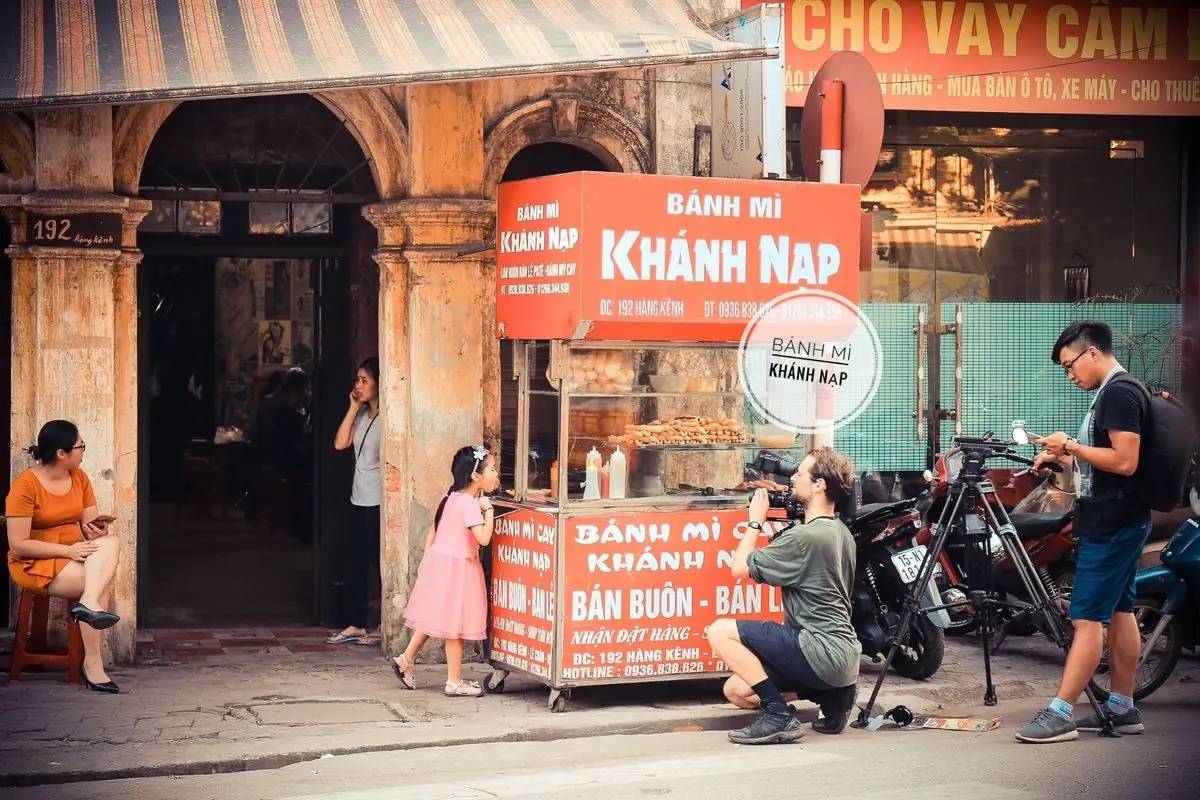
Khanh Nap is a well-known name shared by several breadstick shops around Hang Kenh Street. One notable establishment is at 192 Hang Kenh, inside an old house near a street junction.
Vietnamese-Australian chef Luke Nguyen visited Khanh Nap while exploring Vietnamese cuisine in a television program broadcast in 2019. He spent time learning how the shop prepared its pate breadsticks and spoke highly of the flavors.
There are several businesses using the Khanh Nap name, or variations of it, around addresses such as 172, 174, 181, and 192 Hang Kenh.
Before placing a large order, check the exact signboard, address, and phone number of the particular shop you’re contacting.
Other streets worth exploring
Beyond these three established names, you’ll find banh mi cay around Dinh Tien Hoang Street, including familiar spots near numbers 28 and 37.
For fresh pate sold by weight, head to the area around Chua Hang Street and Nguyen Cong Tru Street.
Hang Kenh and Chua Hang streets are now part of Le Chan Ward. Some older maps and reviews may still display previous ward or district names following administrative changes, so navigate by street name and building number.
6. Relying only on your phone for payment and forgetting a drink
Banh mi cay is cheap enough to pay for with one small banknote.
Five breadsticks at 3,000 VND each cost around 15,000 VND, and a drink adds only a little.
Hai Phong has been encouraging local food businesses to participate in its Digital Food Map initiative and expand QR-code and bank-transfer payments. Some smaller pavement stalls still take cash only.
Carry Vietnamese cash in denominations of 5,000, 10,000, or 20,000 VND. Before transferring money, check the QR code and confirm the amount with the vendor.
Visitors from China may be able to use supported cross-border systems such as Alipay or Weixin Pay through VIETQRGlobal at participating merchants. South Korea also has supported QR payment connections, while Thailand has established cross-border QR payment links with Vietnam.
What should you drink with Hai Phong banh mi cay?
A glass of soy milk pairs best. Its gentle flavor balances both the spiciness of chi chuong and the richness of the pate.
You could also try a sweet dessert soup known as che, Thai-style che, or kumquat tea, depending on what’s available nearby. A few crispy breadsticks followed by a cold, sweet che covers an afternoon snack.
Some shops and nearby cafes also offer coconut coffee, dua dam (a creamy coconut dessert), and other popular Hai Phong refreshments. Not every breadstick stall sells these drinks, but they’re often easy to find in lively food neighborhoods.
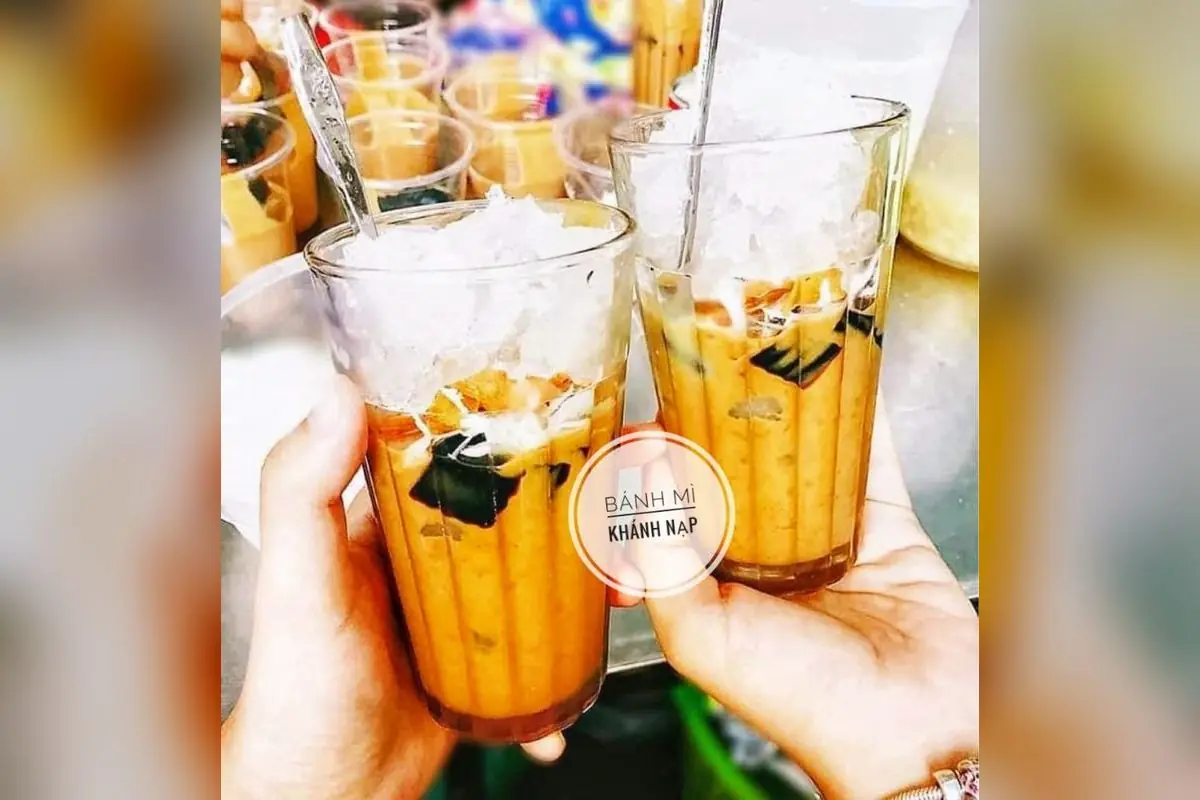
Still hungry after three or four breadsticks? Save room for a bowl of banh da cua, Hai Phong’s famous crab noodle soup, or bun ca cay, a spicy fish noodle soup.
7. Confusing traditional Cot Den pate with canned pate and storing it incorrectly
Hai Phong banh mi cay is closely tied to Cot Den pate.
This long-standing local specialty has its roots at Cot Den Market, around Chua Hang Street and neighboring roads.
The name Cot Den originally referred to the area and several established pate sellers near the Chua Hang-To Hieu intersection. Over time, it came to stand for an entire stretch of shops selling pate and bread.
Along part of Chua Hang Street, you’ll find businesses selling fresh pate by weight, pre-filled breadsticks, and containers holding roughly half a kilogram.
Each family may have its own recipe, with different proportions of liver, pork, fat, and seasonings.
Is Cot Den pate safe after the 2026 canned-food investigation?
The question comes from the investigation involving Ha Long Canned Food Joint Stock Company.
In early 2026, authorities investigated the company’s use of pork contaminated with African swine fever in canned-food production. The products involved included an industrially canned item labeled "Pate Cot Den Hai Phong."
The similar name created confusion with traditional pate sold around Cot Den Market.
On January 12, 2026, local authorities clarified that fresh Cot Den pate made by traditional household businesses was not connected to the industrial canned product manufactured by Ha Long Canned Food Joint Stock Company.
These are different products, made by different businesses using different production, packaging, and storage methods.
Traditional Cot Den pate is a fresh product, often prepared by hand from pork liver, meat, and fat. It has a relatively short shelf life and requires refrigeration.
Fresh pate is still a perishable food, whatever the canned-food case found.
Choose a business with a clear address, clean food-handling practices, proper refrigeration, and specific storage instructions.
Appearance and smell alone cannot establish whether food is safe. Pate that looks and smells normal may still be unsafe after improper storage.
How to buy Hai Phong banh mi cay and pate for takeaway
Hai Phong’s little breadsticks are easy to pack into bags or bundles, making them popular souvenirs for people traveling home by train or car to Hanoi and other nearby destinations.
During the 2026 holiday period, some vendors received orders for hundreds or even thousands of pieces.
You can buy 10-20 breadsticks for your family on the spot. For larger orders, particularly when you need to collect them early in the morning or before a train departure, call the shop the day before.
When ordering, specify whether you want breadsticks already filled with pate or would prefer to buy the bread and pate separately.
Once the bread has cooled, you can warm it in an oven or air fryer to help restore some crispness. Filled breadsticks need the pate heated thoroughly as well, rather than burning the crust while leaving the center cold.
Fresh pate needs to stay chilled throughout your journey.
Some businesses advertise storage periods of approximately seven days in a refrigerator at 0-5°C or around three months when frozen. However, these figures aren’t universal safety limits for all homemade pate.
General food-safety guidance for cooked leftovers is stricter: keep refrigerated pate at 4°C or below and use it within approximately three to four days. Alternatively, divide it into smaller portions and freeze it promptly.
Food that has spent too long at room temperature shouldn’t simply be placed back in the refrigerator for later consumption.
International travelers should check the food import regulations of their destination country before buying pate to take home.
Many countries have their own restrictions concerning products containing meat or animal organs.
Vacuum sealing only keeps pate fresh longer. It has no bearing on whether customs will let pork or liver pate in.
Who should avoid traditional Hai Phong banh mi cay?
The pate commonly contains pork, pork liver, pork fat, and sometimes fish sauce.
As a result, traditional versions aren’t suitable for vegetarians, people avoiding pork, or travelers who follow a halal diet.
Anyone avoiding garlic should also check the ingredients in chi chuong.
Pregnant travelers and people at higher risk of illness from Listeria should be particularly cautious with refrigerated pate, especially when eaten cold. It’s safer for these groups to avoid products without clear preparation and storage information.
People who dislike spicy food can simply have the chili sauce left out.
What makes a simple Hai Phong breadstick so memorable?
You can eat Hai Phong banh mi cay standing by the counter in a few minutes.
A few freshly toasted breadsticks, a rich layer of pate, and a little chi chuong are enough to understand why the snack has remained such a familiar part of life in this port city.
On a first visit, order five breadsticks and a glass of soy milk. Eat the first one while it’s still warm, add the chili sauce gradually, and then decide whether you’d like another round.
Frequently asked questions
What's the difference between Hai Phong banh mi cay and Saigon-style banh mi?
Hai Phong banh mi cay consists of small, narrow breadsticks traditionally filled mainly with pate and served with chi chuong chili sauce. People usually buy several at a time. Saigon-style banh mi is much larger and may include cold cuts, sausage, vegetables, pickles, herbs, and multiple fillings, making it substantial enough for a full meal.
How much does Hai Phong banh mi cay cost in 2026, and how many should I order?
Traditional breadstick prices in 2026 are approximately 2,500-3,000 VND each, with an average of 3,000 VND recorded during the May holiday period. Three to five pieces make a light snack, while five or six may be enough for a small meal, depending on your appetite.
What's a quick, cheap, and authentic breakfast in Hai Phong?
Banh mi cay is inexpensive, sold all over the city, and served in minutes. Try five freshly toasted breadsticks with a glass of soy milk. You'll find long-running shops opening early along Le Loi and Hang Kenh streets.
Is traditional Cot Den pate safe to eat after the 2026 canned-food investigation?
Traditional fresh Cot Den pate sold around Cot Den Market was not connected to the similarly named industrial canned product involved in the Ha Long Canned Food Joint Stock Company investigation in early 2026. However, the safety of individual fresh products still depends on ingredients, hygiene, cooking, and storage. Choose reputable sellers with clear sourcing, refrigeration practices, and shelf-life instructions.
Can I take Hai Phong banh mi cay home to Hanoi or bring it overseas?
You can buy breadsticks to take back to Hanoi, and it's worth ordering ahead for larger quantities. Fresh pate must be kept chilled, while the bread tastes best when eaten soon after purchase. For international travel, products containing pork or liver may be restricted or prohibited, so check your destination country's import rules before buying.