See Ha Giang's buckwheat flowers from late October to mid-November
Late October to mid-November is the best time to go, Sung La is the easiest flower stop to fit into the Ha Giang Loop, and three to four days is about right for the trip. Many fields charge their own photo fee, buses run direct from Hanoi and Hai Phong, and early mornings on the passes call for a base layer and a windproof jacket.
 19 min read
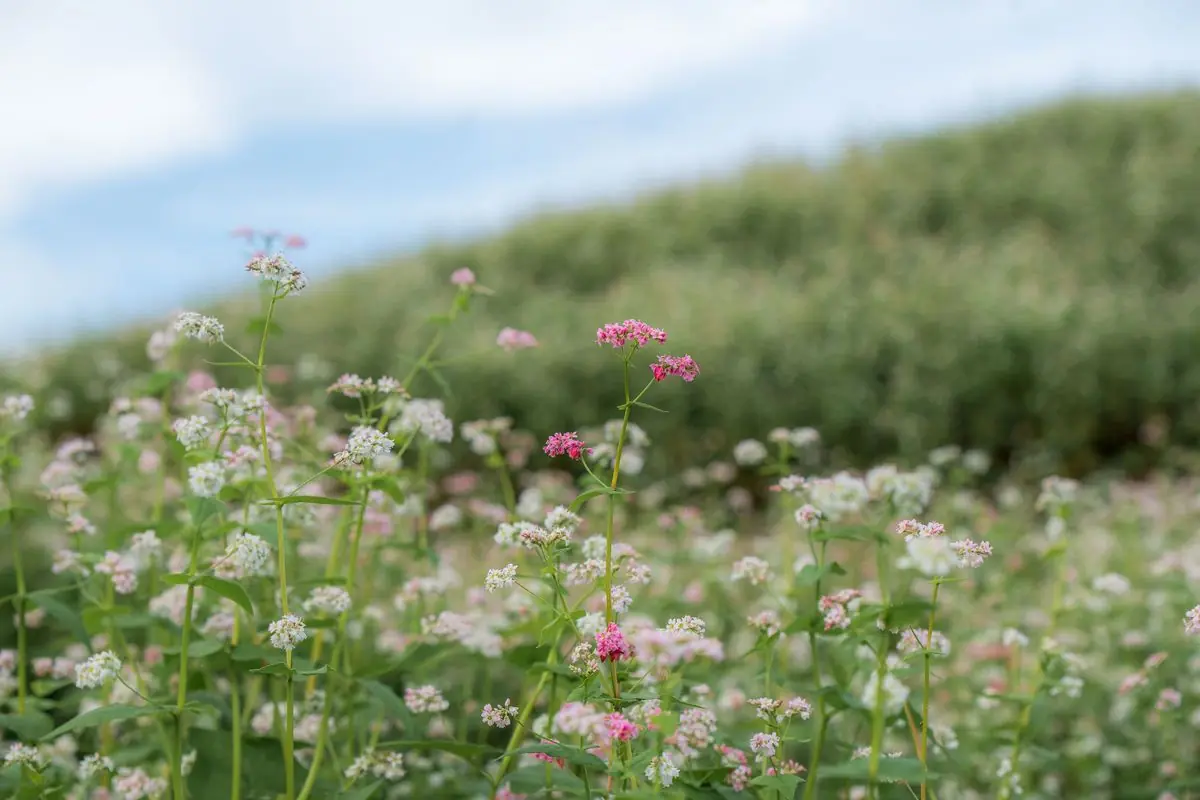
Pink and white buckwheat flowers on a hillside.
Buckwheat flower season in Ha Giang: October or November?
Signs along Highway QL4C say “hoa tam giác mạch”, but whether the field next to one looks good depends on the week you arrive. In the Ha Giang highlands, the main flowering window runs through October and November, with some later fields lasting into early December. For the highest chance of finding several good fields, aim for late October through the middle of November and allow at least three days on the mountain route.
What are buckwheat flowers, and why are they so closely tied to Ha Giang?
Buckwheat is a crop grown for its seeds. The plant commonly seen on the Dong Van Karst Plateau is Fagopyrum esculentum, and despite its English name, it is not a type of wheat. The flowers are tiny rather than showy. Look closely and you will see small, delicate clusters on slim green stems. Step back to the edge of a valley, however, and hundreds of plants create a soft wash of white, pale pink and mauve against the dark limestone.
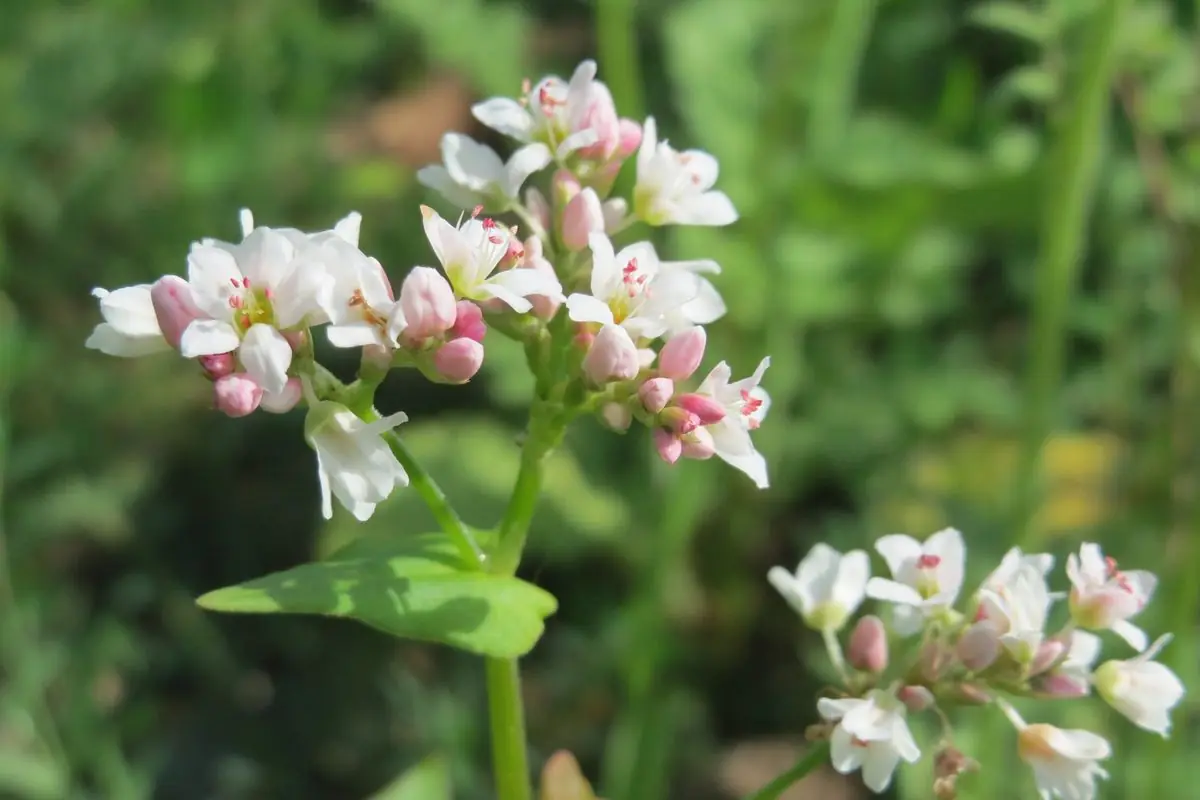
The Vietnamese name, tam giác mạch, refers to the three-sided shape of the grain. In the northern highlands, the seeds have long been dried and ground into flour for food. Today visitors know the plant for its flowers, but plenty of fields still have a practical purpose. They are part of someone’s working land. That matters when you are deciding where to walk, whether you can pick a stem, or whether a field is genuinely open to photographers.
Color also changes with the crop’s stage of growth. Early clusters often look white or only faintly pink. Later flowers can take on deeper pink and reddish-purple tones, while older plants begin to form seeds. A spectacular magenta photograph from a previous season is therefore not proof that the same plot will look that way this weekend. Two neighboring plots may have been sown on different dates and may look completely different on the same morning.
There is another reason to come all this way when there are flower gardens closer to a city. Ha Giang’s fields sit among stone fences, earthen houses, narrow roads and jagged mountain slopes. The plants are modest; the landscape around them does much of the work. A small patch beside a village wall can make a better picture than a large, heavily decorated tourist garden. The trip is still worth it without a photo of you standing in the middle of the crop.
When do buckwheat flowers bloom in Ha Giang?
The broad season is October to December, but there is no single day when every buckwheat field turns pink. Farmers sow at different times, and conditions vary between the lower valleys and higher villages. An early planting may already be flowering in October while another has barely started growing. Weather and field management can shift the view by days or weeks.
Early October is possible but uncertain if buckwheat is the whole reason for your journey. By late October, you generally have more chances around the Dong Van area. November is the classic choice for visitors asking about buckwheat flowers in Vietnam, particularly those combining the flowers with a first Ha Giang Loop. A few later plots may remain attractive at the start of December, but the trip becomes more dependent on current local reports and colder weather.
Choosing between a late-October weekend and a November weekday comes down to what you want from the trip. Late October can bring festival events and larger crowds. A normal November weekday gives you more freedom to wait for soft light and to take photographs without a queue forming behind you. Missing the festival does not mean missing the flowers.
In 2026, the 12th Ha Giang buckwheat flower festival, themed “Echoes of the Stone Highlands” (Âm vang miền đá), opened at 8 p.m. on 25 October in Dong Van. The provincial authorities also scheduled related tourism and cultural activities across the later part of the year. More than 240 hectares were planted across the Dong Van Karst Plateau for the festival season. Dong Van, Sa Phin and Lung Cu have some of the largest plantings.
Where to see buckwheat flowers in Ha Giang
The best strategy is not to mark ten flower gardens and chase every one. Most of the familiar areas lie along, or slightly off, the road from Quan Ba and Yen Minh to Pho Cao, Sung La, Dong Van and Lung Cu. The flower fields themselves can change from year to year. Choose two or three priority places and leave space for an unplanned stop when a field is actually blooming.
Loading map…
- Quan Ba Heaven's Gate: Viewpoint on Highway QL4C
- Twin Mountains: Tam Son, Quan Ba
- Pho Cao: Village between Yen Minh and Dong Van
- Pho Bang: Old town off the main road
- Sung La: Valley on the Yen Minh to Dong Van road
- Pao's House: Highway QL4C, Sung La
- Lung Cam: Cultural village in the Sung La valley
- Lung Cu Flag Tower: Near the northern border
- Lo Lo Chai: Village below the flag tower
- Dong Van Old Quarter: Overnight base
- Ma Pi Leng Pass: Lookout over the Nho Que River
Quan Ba
A gentle introduction to the flower season
Quan Ba is one of the first major stops as the road climbs away from the former Ha Giang city. You pass the Heaven’s Gate viewpoint and head towards Tam Son, with the famous Twin Mountains in the surrounding landscape. Seasonal buckwheat plots can appear around the valley and near roads or visitor sites. Ask locally where they are this year and how they look.
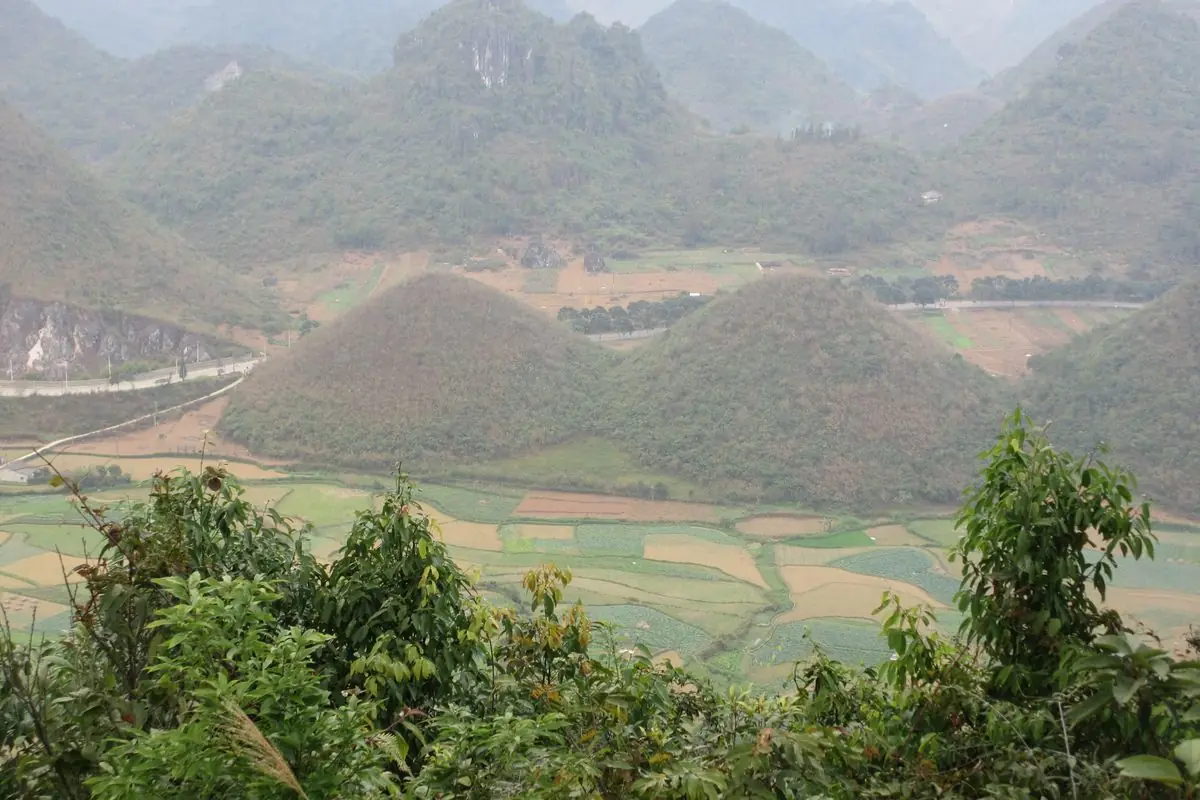
This is a convenient place to stop for lunch, stretch your legs or take your first landscape pictures. It is especially useful if your group is still getting comfortable on mountain roads. But do not spend your only good photo morning hunting for a particular field here without confirmation that it is flowering. The more famous buckwheat settings lie farther north around the Dong Van plateau.
Some travelers have only a short time and prefer not to continue all the way to Dong Van. Quan Ba and Yen Minh can make a shorter mountain getaway, with a clear trade-off. You will get hills, valleys and a taste of the road journey; you will have fewer opportunities to visit the classic Sung La and Lung Cu flower areas.
Pho Cao and the road towards Pho Bang
Fields among village houses
The stretch between Yen Minh and Dong Van is often as memorable as the flowers themselves. Around Pho Cao, small cultivated plots sit near traditional earthen houses and dry-stone boundaries. The contrast works well in photos, especially when a little morning sun reaches the valley. Pho Cao has no ticket booth or shared opening hours for its flower fields.
Near Pho Bang, the side road leads towards an older settlement with distinctive houses and a slower atmosphere than the main highway. This detour suits travelers who enjoy the details of a place: doorways, walls, lanes and the occasional patch of seasonal flowers. It is a less reliable choice if your only objective is a very large pink field. Decide whether the extra driving time fits your day before turning off the main route.
Give a foggy valley some time. Mountain mist can hide a field from a viewpoint, then reveal it gradually as the clouds lift. Photograph from an established roadside stop or a path people already use, and stay off planted ground.
Sung La and Lung Cam
The easiest classic flower stop
For many visitors, Sung La is the most sensible answer to where to see buckwheat flowers in Ha Giang. It sits along the usual Yen Minh-Dong Van route, so it is easier to fit in than a stop that needs a long detour. The valley combines fields, mountain walls, earthen houses and the cultural village of Lung Cam. The well-known “Pao’s House” is in this area, although entering the house and entering a privately managed flower plot are separate activities with potentially separate charges.
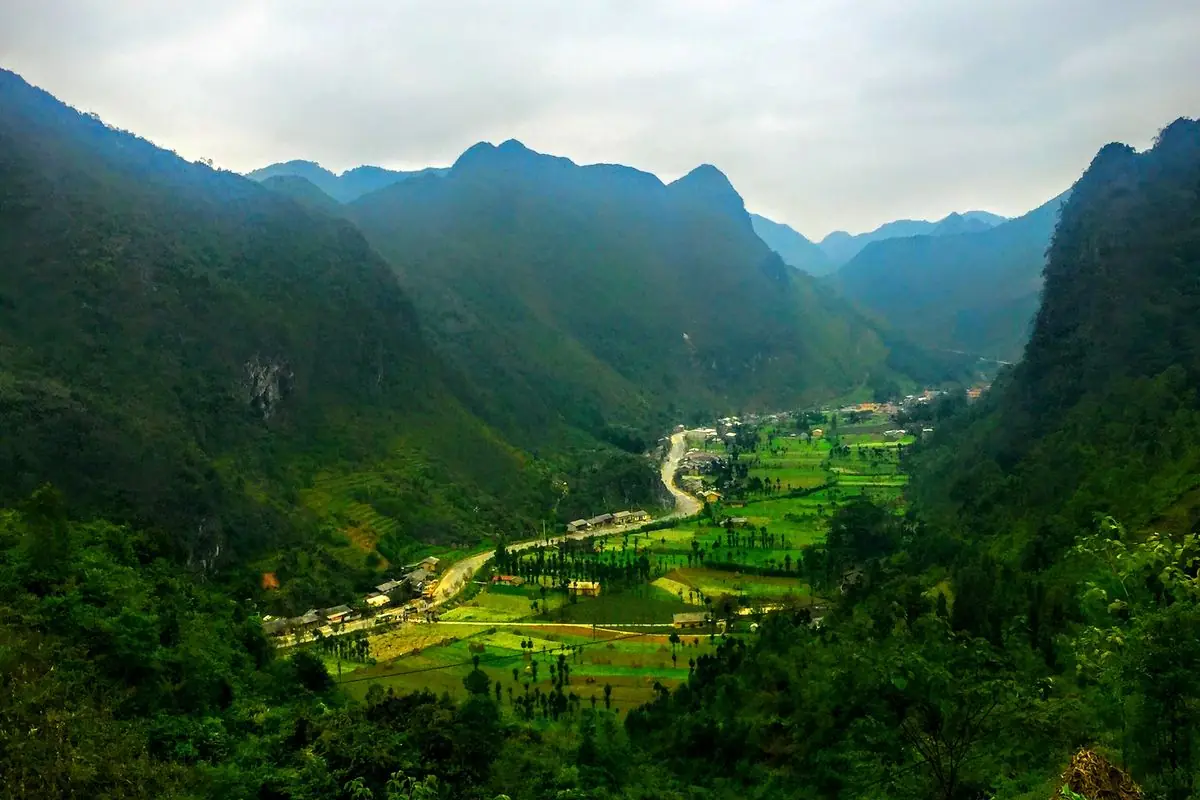
Try to give Sung La a proper stop instead of leaning out for a photograph from a moving vehicle. You may want one wider shot from a roadside viewpoint, a few close-ups of the flowers and a village scene. On a clear morning, this can take an hour or longer once you include walking and waiting for friends. It is a good place to slow down before continuing towards Sa Phin and Dong Van.
Don’t break stems or push between tightly planted rows. A path through the field gives you a cleaner composition and keeps the crop intact. Put one person on that path, keep the mountains or a stone wall in the background and let the flowers frame the image. The result usually feels much more like Ha Giang than a picture taken beside a plastic prop.
Lung Cu
Flowers plus the northern border atmosphere
Lung Cu is worth the trip for its whole setting, with flowers as a bonus. The journey branches off the main route towards the northern border, where the Lung Cu Flag Tower and nearby villages, including Lo Lo Chai, are well-known stops. Depending on the season’s planting, buckwheat can appear around the approach roads and inhabited valleys.
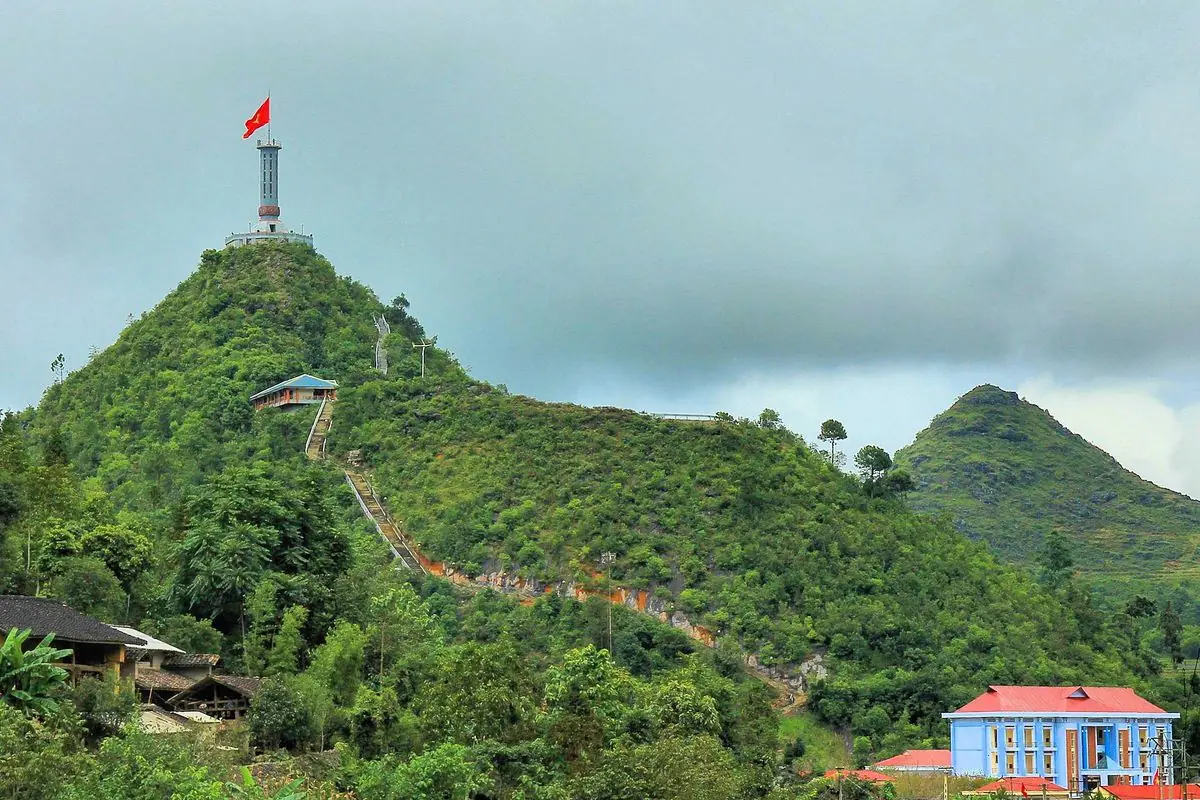
Online photos may show fields that are closed or past flowering. Ask your accommodation in Dong Van which plots are looking good and whether visitors can enter. Even with the flowers fading, the flag tower and the village walk can still make the detour worthwhile.
Lung Cu takes more than a quick roadside stop. It adds driving time, walking time and the return towards your overnight base or onward route. On a three-day loop, decide early whether Lung Cu is essential. With four days, it is far easier to include without racing towards Dong Van at dusk.
Dong Van, Ma Pi Leng and Meo Vac
Do not confuse the landscape with a flower garden
Dong Van is a practical overnight base. Accommodation owners can often tell you which nearby fields have recently been planted, which are already pink and which welcome photographers. A photo taken a day or two ago is more helpful than a generic list of the “best ten flower fields” repeated from previous years.
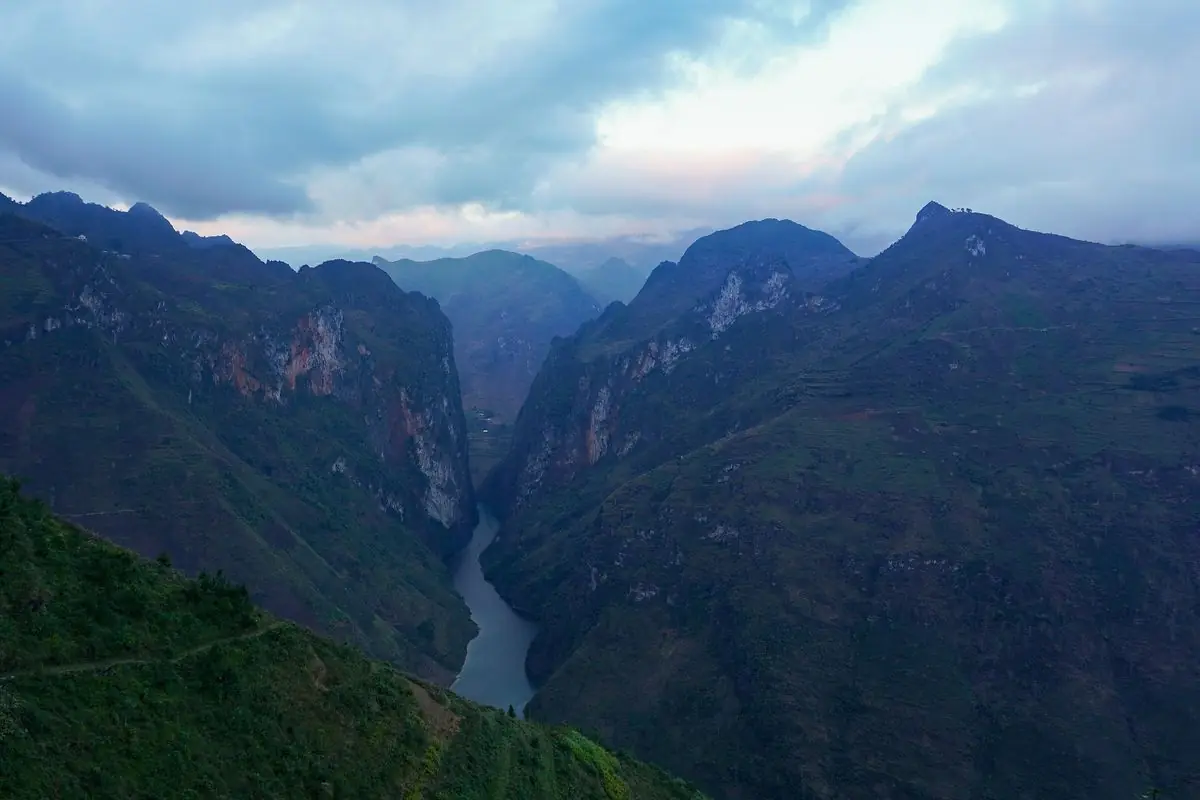
After Dong Van, the journey over Ma Pi Leng Pass towards Meo Vac is famous for dramatic mountains, the Tu San Gorge and views of the Nho Que River. These views deserve time even if you see no buckwheat at all on that section. Buckwheat beside the road on the pass comes and goes. Pull over only where stopping is safe, and keep the camera away while actively riding.
Getting to Ha Giang from Hanoi
The usual way to start is to take a coach or sleeper bus from Hanoi to the former Ha Giang city area, then begin the loop the next morning. The transfer generally takes about six to seven hours, depending on the operator, stops and traffic. Many companies serve the route, including services leaving from or near My Dinh. The place where you board matters: a bus station bay and an operator’s own office may share a general area name but be different places.
Quang Nghi sleeper buses from Hanoi to Ha Giang start at around VND 285,000. Cabins and some departures cost more. One daytime bus leaves My Dinh Bus Station at 7 a.m. and reaches a Ha Giang office around 1:30 p.m. Times, seat types, pickup points and fares change by travel date. Confirm the departure point, seat type, actual fare and arrival location when you book.
An overnight bus saves time on paper but can arrive in Ha Giang in the early hours. Arriving between 2 and 4 a.m. is no time to collect a motorbike and start climbing the mountain passes. Arrange somewhere to rest, eat breakfast and start riding in daylight. With a tour that bundles the transfer and accommodation, check whether the first proper riding day starts that morning or the next.
For travelers flying into Hanoi, allow extra time to get from the airport to the correct pickup location. Hotel and airport pickups are not standard on every bus. The Ha Giang part of the trip is long enough without a missed overnight departure.
Getting to Ha Giang from Hai Phong
From Hai Phong, you can go direct without passing through Hanoi. Bang Phan and a few other operators run the route. Bang Phan sleepers start at around VND 285,000, depending on the departure. The journey commonly takes around nine hours, but the actual arrival time depends on the specific service.
Buses usually pick up at Vinh Niem Bus Station or at the operator’s office. Read the exact address printed on your booking confirmation. A familiar street name is not sufficient if the operator is using a different office that day.
A night departure can put you in Ha Giang before sunrise. Make a plan for those hours before reserving a vehicle: will your accommodation let you in early, can you leave your luggage, and when will the motorcycle or driver be available? It is much more comfortable to begin the loop after a proper rest than to arrive sleepy and immediately negotiate steep roads.
Driving yourself from Hanoi or Hai Phong lets you stop when you like, but reaching Ha Giang is only the approach. The slow, winding highland road starts afterwards. Avoid treating the highway transfer and a long mountain riding day as one continuous leg simply to save a hotel night.
Three days or four days on the Ha Giang Loop for flower season?
For a buckwheat-focused trip, three complete days on the loop can cover some of the best-known fields and the key landscapes. Four days gives you a much more forgiving schedule, especially if you want to take photographs, detour to Lung Cu or travel with people who prefer a slower pace. Count the transfers from Hanoi or Hai Phong separately. A three-day holiday including two long bus journeys does not provide three full days in the mountains.
A practical three-day flower route
On the first day, leave the Ha Giang starting area in daylight, ride north on QL4C and stop around Quan Ba and Tam Son. Continue towards Yen Minh and decide whether you want to sleep there or make more progress towards the Dong Van region. Use this day to settle into the curves at an easy pace. A small field already in bloom, with an owner who welcomes visitors, deserves the stop more than a supposedly better field far away.
Use the second day for Pho Cao, Sung La, Lung Cam, Sa Phin and Dong Van. Pick no more than two flower stops that you genuinely want to spend time photographing. Each stop adds parking, walking, waiting and getting everyone back on the road. A detour to Lung Cu is possible only with careful choices about what to skip and how much daylight remains. Spend the evening in Dong Van, where you can eat and walk around without getting back on a mountain road.
The third day usually brings Ma Pi Leng, Meo Vac and the journey back towards the starting area by your planned route. Do not underestimate this day because the points look close together on a small map. Stopping at viewpoints, eating lunch and navigating the mountain roads all take time. For inexperienced riders, a complete three-day loop can feel rushed; choosing an experienced driver or extending the trip may be more sensible.
A calmer four-day flower route
Day one is Ha Giang to Quan Ba and Yen Minh, with time for food and rest. On day two, continue through Pho Cao and Sung La, see the best available field and include Lung Cu if conditions and daylight allow. Spend a night in or near Dong Van. On the third day, enjoy the Dong Van area and the drive over Ma Pi Leng to Meo Vac, without sacrificing every viewpoint to a tight schedule. Return towards Ha Giang on day four using a route suited to current road conditions and your chosen vehicle.
This extra time has real value in November. Fog can delay a photo session, a cold morning may make a late start more comfortable, and somebody in the group may need a longer break on the winding roads. For anyone traveling mainly for the flowers, a second unhurried hour in Sung La may be more rewarding than another attraction added only to fill a checklist.
Are buckwheat flower fields free to enter?
Some plots can be viewed from public roads without any fee. Others have been prepared by families for visitors, with paths or small photo areas and an entrance charge. There is no single ticket that covers all the buckwheat fields in Ha Giang. Some flower gardens around Sung La charge about VND 10,000-30,000 per person. Each farmer sets their own price.
Keep different charges separate. An entrance fee for Pao’s House, a parking charge, a costume rental and a photo-field contribution are not necessarily the same payment. A small banknote is handy because not every rural entrance has a card machine or reliable digital payment. When a farmer says a field is closed, photograph it from outside or find another place.
Avoid picking a handful of flowers for a portrait, stepping between rows, moving stones from a boundary or climbing on a house wall. For most photographs, an existing path is enough. Ask permission before photographing local people closely, especially anyone working in a field. Permission to photograph the crop is not permission to photograph the farmer.
How to photograph the flowers without damaging the crop
Try the morning for soft light, but don’t expect an unobstructed panorama at a fixed hour. Mist can sit in a valley long after sunrise. When it starts to clear, a few moments of diffused light can be especially flattering for tiny pale flowers. Late afternoon can work too, although mountains may throw the field into shadow well before the sunset time shown on your phone.
For a close-up, hold the camera near flower level and keep the background simple. For a wide frame, stand at the outside edge and include something that makes the place recognizable: a stone wall, an earthen house, the slope of the mountains or a lane through the village. The real flowers are subtle. Heavy color editing that turns them fluorescent purple just makes the picture look fake.
Friends traveling together should agree on how long the group wants to spend at each stop. One person may want portraits in a rented outfit, while another wants to reach the Lung Cu Flag Tower before dark. Both plans are reasonable, but daylight is finite. Give everyone a chance to take a few photographs, and settle on a few good locations.
What is Ha Giang weather like in November?
November can bring pleasant sunshine during the day and noticeably colder conditions early and late, particularly at higher places such as Dong Van and Lung Cu. Exposed roads feel colder on a motorbike because of the wind. During cold spells, highland temperatures may drop into single digits Celsius. The forecast for the former Ha Giang city area says little about the colder, higher plateau.
Layering works better than one bulky outfit. Pack a base layer, a long-sleeved top, something warm and a wind-resistant outer jacket. Gloves, closed shoes and dry socks are practical for riders. A compact waterproof layer is worth carrying even if the forecast looks encouraging. Take a layer off at photo stops and put the wind protection back on before you ride.
Keep your phone charged and carry a power bank. Maps, camera use and cold conditions can drain the battery faster than expected. Save offline maps and the address of your accommodation before leaving the main town. Carry a little cash for small entrances, food and unexpected stops. If you are prone to motion sickness, eat something light before the winding sections and allow time for breaks.
What is buckwheat cake, and where can you try it?
The cake is made from flour ground from buckwheat seeds; the flowers play no part. In the highlands you may see round cakes stacked at a market stall and warmed over charcoal. The flavor tends to be earthy and nutty rather than rich and sugary. It is a simple snack that connects the pretty flower fields to the crop’s everyday use.
Dong Van and Meo Vac are good places to look, particularly around the markets. Their Sunday morning markets are also worthwhile for the bustle of local trade, food and village life. On a Sunday, start early enough to visit the market before a long riding day. Not every stall sells buckwheat cake every day of the week. Ask what is freshly made; a stall in an old travel video may not be open now.
At highland markets, a cake costs around VND 10,000-15,000 as a rough guide. Size and preparation vary from place to place. Ask the seller for the current price before ordering. Buying one warm cake to try is a better introduction than buying a large stack just because it seems like the souvenir everyone is supposed to bring home.
Are there buckwheat flowers elsewhere in Vietnam?
Yes. Cao Bang, farther east in northern Vietnam, also has buckwheat-growing areas, including parts of Trung Khanh and Quang Hoa. A late-autumn trip there can combine rural scenery with Ban Gioc Waterfall and surrounding villages. However, Cao Bang is a separate route that does not fit into a three-day Ha Giang Loop. Trying to fit both into the same short holiday leaves more time in vehicles than among flowers.
Moc Chau in Son La has also had seasonal buckwheat plantings for visitors. The main caution is that these gardens are site-specific: farmers and tourism businesses may change the crops they grow each year. Check that a particular garden actually has buckwheat and welcomes visitors before making it the center of a trip. Its planting calendar also differs from the Dong Van plateau’s.
For anyone searching for buckwheat flowers in Vietnam, Ha Giang remains especially appealing because the crop fits the limestone scenery and local agricultural traditions. The destination offers more than a garden photograph. Even when one field is past its best, the winding route, villages and highland markets make the journey worthwhile.
A few things to check before booking your trip
Contact your homestay or a local tour operator with specific questions. Which field has bloomed in the past few days? Is it open to visitors? Is it better in the morning or afternoon? Can someone send a recent picture? A current answer may save you an unnecessary detour.
Check the weather for the higher stops, not just the city where the bus drops you. Check road conditions and leave a margin before your return coach. During festival periods and busy autumn weekends, accommodation in Dong Van may require earlier booking. Once you have decided between a three- and four-day loop, plan each day to end before dark so nobody rides at night.
The best photograph may well be the one taken from a legal path at the edge of a field. In Sung La on a foggy morning, wait for the mist to clear and stay out of the crop, even for a better angle. If visibility deteriorates on a pass and the cold starts to bite, reaching your accommodation before dark is more important than one final pink field.
Frequently asked questions
What month do buckwheat flowers bloom in Ha Giang?
The broad season runs from October into December. Late October and November usually give visitors the best chances, though individual fields flower according to planting dates and weather. Check recent local photographs before deciding on a specific field.
Where are the best places to see buckwheat flowers in Ha Giang?
Sung La and Lung Cam are convenient for fields and village scenery along the main route. Pho Cao and the Pho Bang road offer stone fences and traditional houses. Lung Cu is a longer detour that combines flower opportunities with the flag tower and nearby villages. Quan Ba is an easy early stop.
Is three days enough for the Ha Giang Loop in flower season?
Three full days on the loop can cover several flower stops and the main Dong Van-Ma Pi Leng scenery, but you will need to choose carefully. Four days are more comfortable if you want to photograph the flowers slowly and include Lung Cu. Add the bus transfers from Hanoi or Hai Phong separately.
Do you have to pay to photograph buckwheat fields?
Not always. Some fields are visible from public roads, while privately managed visitor plots charge an entry fee. Some Sung La gardens charge about VND 10,000-30,000 per person, but the farmer decides the fee and which paths you can use, so ask before entering.
Is November too cold for the Ha Giang Loop?
November is still a popular month to travel, but mornings, evenings and exposed mountain passes can be cold, and fog is possible. Bring layers, gloves and a windproof jacket, and check the forecast for Dong Van and Lung Cu instead of relying only on a lowland forecast.