Cao Bang 3-day itinerary: why fewer stops make a better trip
Three days cover the main sights of Cao Bang, but not every corner at a relaxed pace. This plan keeps Pac Bo, Ban Gioc Falls and the mountain roads, and leaves Ba Be Lake for a four-day trip.
 20 min read
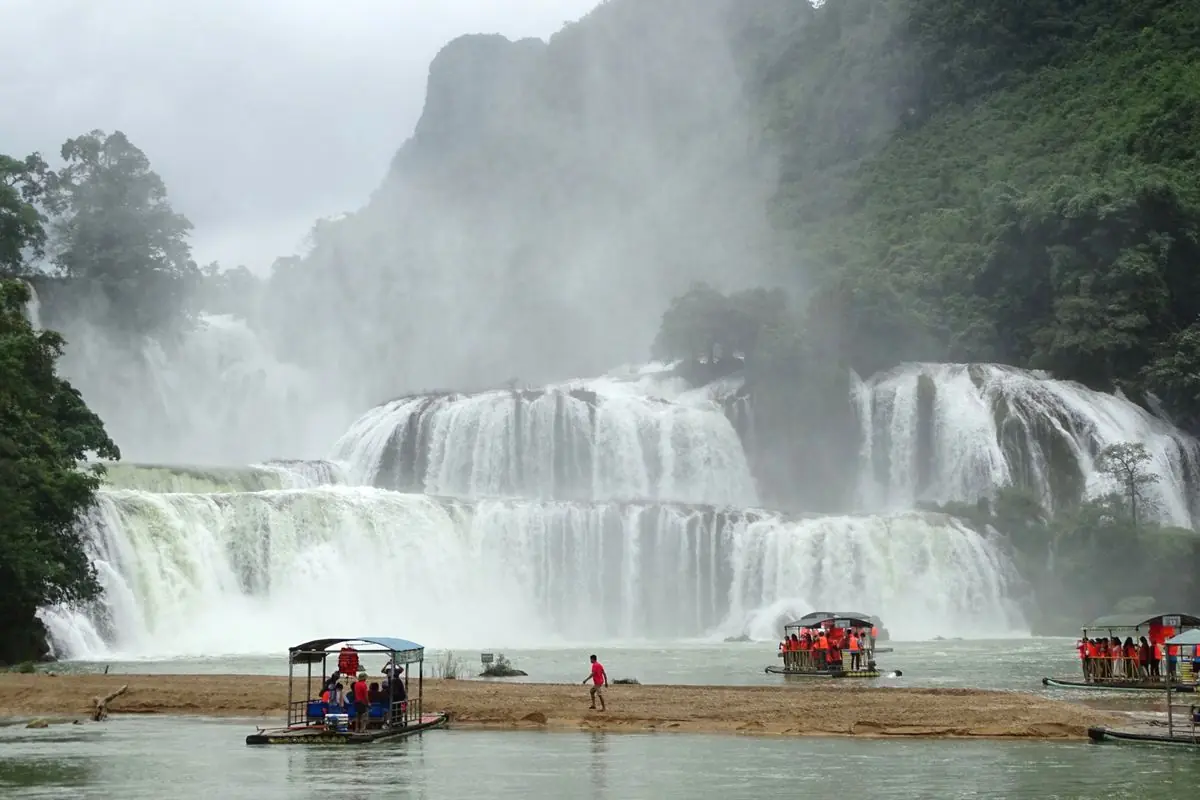
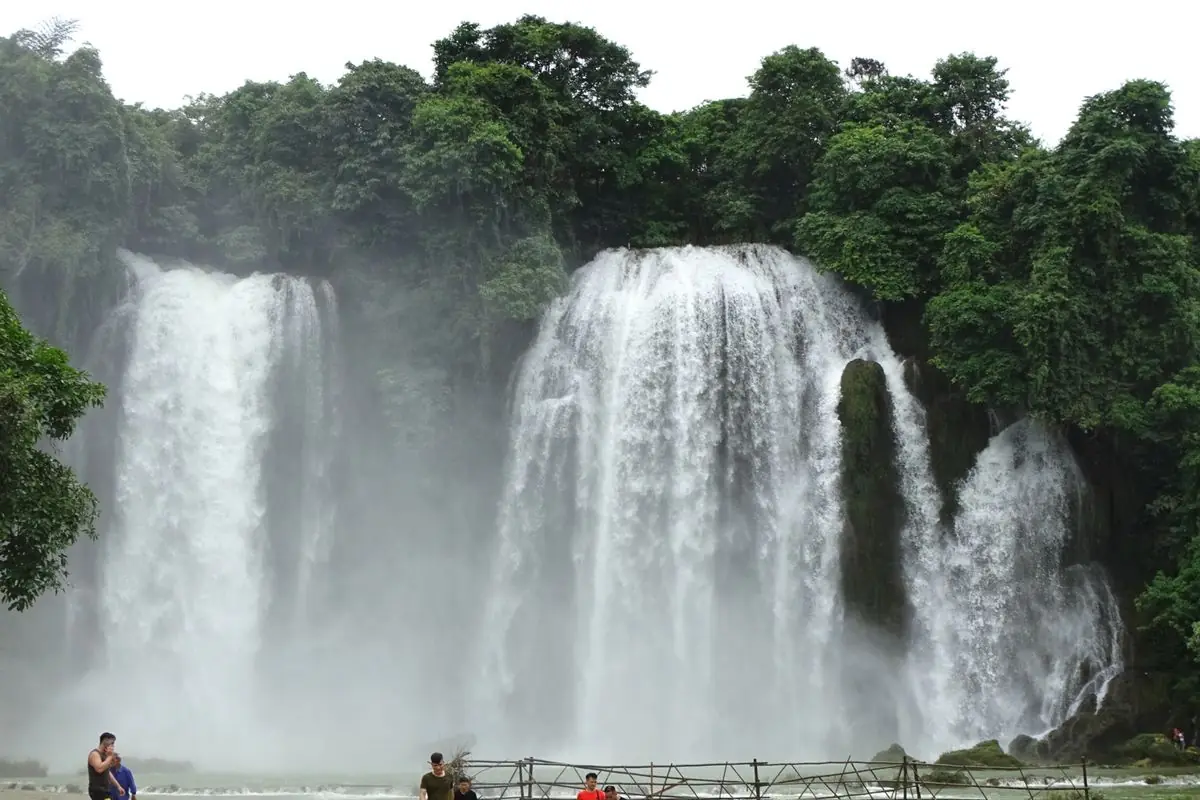
Ban Gioc Falls in late June, white water pouring over several tiers and spray hiding the cliff behind; bamboo rafts with visitors in orange life jackets wait just below the falls.
A well-planned Cao Bang 3-day itinerary takes you from Hanoi to Pac Bo, over Ma Phuc Pass, through Nguom Ngao Cave and all the way to Ban Gioc Falls without spending every waking hour on the road. Get the route wrong, and you could lose half a day doubling back through the mountains. Get it right, and you’ll have time to enjoy the Quay Son River, share a traditional Tay meal and wake up surrounded by mountain scenery.
What makes the Cao Bang Loop different from the Ha Giang Loop?
After experiencing the famous mountain passes of Ha Giang, many travelers look for somewhere quieter. The Cao Bang Loop has winding roads, limestone mountains and wide viewpoints too.
The route winds through rice-growing valleys, traditional craft villages, lakes tucked among limestone peaks and quiet roads near the Vietnam-China border, with fewer famous high passes than Ha Giang. Some sections open onto broad fields, while others pass through green mountains with just a few houses resting at the foot of the hills.
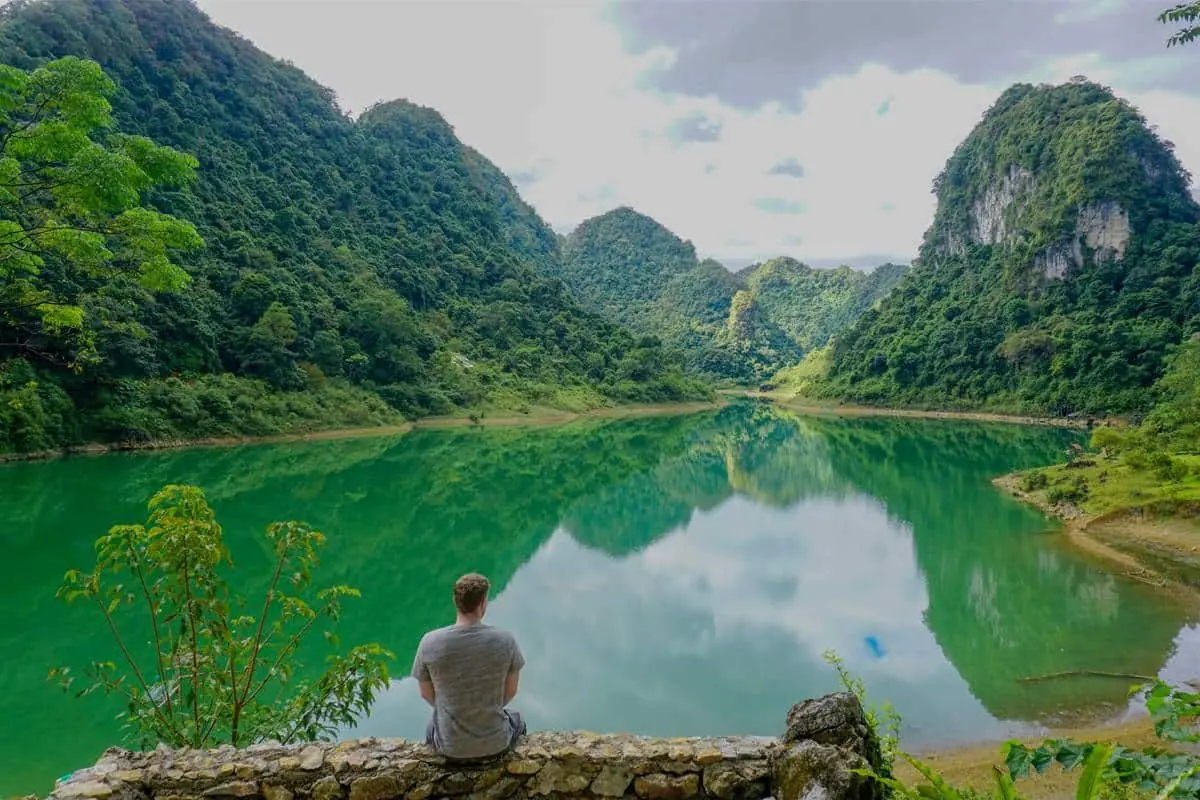
The main highlights of the Cao Bang Loop include:
- Pac Bo Historical Site: A historic area known for Lenin Stream, Karl Marx Mountain and Coc Bo Cave.
- Ma Phuc Pass: A winding pass between limestone peaks on the road toward Tra Linh.
- Thang Hen Lake: A peaceful lake surrounded by limestone mountains.
- Ban Gioc Falls: The main sight of the loop, on the Quay Son River.
- Nguom Ngao Cave: A limestone cave with enormous chambers and striking rock formations, close to Ban Gioc Falls.
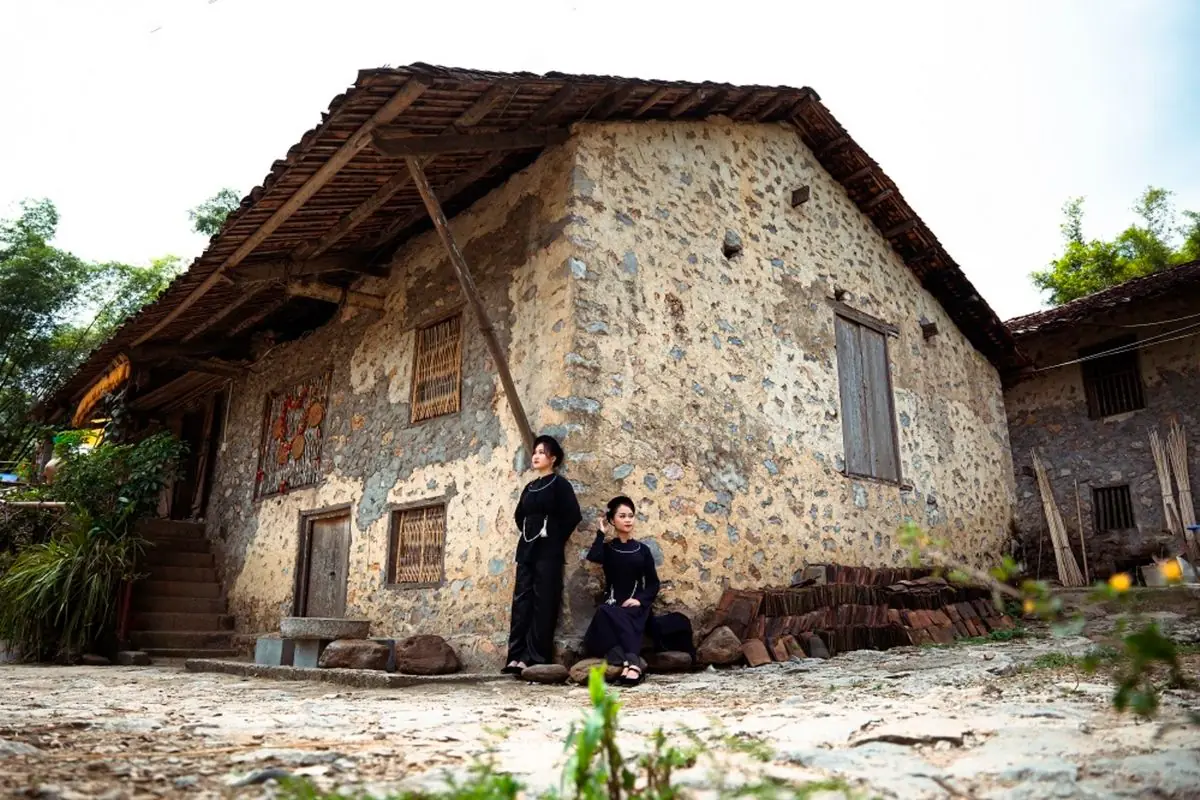
- Khuoi Ky Stone Village: A traditional Tay village known for its stone-built stilt houses.
- Phuc Sen Blacksmith Village: A traditional craft village where local blacksmithing techniques are still practiced.
Unlike the well-established Ha Giang Loop, the Cao Bang Loop doesn’t follow one fixed route. You can plan a shorter circuit focused on Ban Gioc Falls or extend the journey through the eastern valleys and toward Ba Be Lake.
The roads between the stops, especially when the rice fields begin turning golden, are as good as the stops themselves.
How many days do you need for the Cao Bang Loop?
| Duration | What you can experience |
|---|---|
| 2 days, 1 night | Ban Gioc Falls, Nguom Ngao Cave and a few nearby stops; quite rushed from Hanoi |
| 3 days, 2 nights | Pac Bo, Ma Phuc Pass, Thang Hen Lake, Ban Gioc Falls and Nguom Ngao Cave |
| 4 days, 3 nights | A more relaxed version of the main loop or an extended trip including Ba Be Lake |
| 5 days or more | Slower travel through villages, valleys and quieter mountain roads |
Three days suits a first Cao Bang trip. It’s possible to combine Ban Gioc Falls and Ba Be Lake in a three-day guided tour, but you’ll spend a significant portion of each day inside a vehicle. For travelers who enjoy photography, short walks and village visits, four days provide a much more comfortable experience.
How to get from Hanoi to Cao Bang
The driving distance from central Hanoi to central Cao Bang is approximately 270 km. The journey generally takes around 6-8 hours, depending on your transportation, chosen route and road conditions.
By bus or limousine
Easiest for visitors based in Hanoi
Taking a bus is one of the easiest options for international travelers staying in Hanoi, particularly those who want to explore northern Vietnam without driving long distances themselves.
Several companies operate between Hanoi and Cao Bang, including Thanh Ly, Trung Khanh Limousine, Tan Mai Limousine, Thuan An Travel and Bon Hai. Depending on the operator, you can choose from standard seats, limousine vans, sleeper buses and private sleeper cabins.
Ticket prices generally range from 280,000 to 780,000 VND one way, depending on the vehicle type, pickup location and travel date. Many standard and limousine services fall within the 300,000-500,000 VND range.
Common pickup locations include My Dinh Bus Station, Gia Lam Bus Station, selected points around central Hanoi and Noi Bai International Airport. Some operators continue beyond central Cao Bang to Trung Khanh, closer to Ban Gioc Falls.
Check exactly where your bus terminates: central Cao Bang and Trung Khanh suit different itineraries.
An overnight bus can save valuable daylight hours. The catch is an early arrival, before your accommodation allows check-in. After a night on a bus, give yourself time for breakfast and rest rather than immediately starting a long motorbike ride.
Driving from Hanoi
Via National Highway 3 or 4A
There are two main approaches to Cao Bang.
Via Thai Nguyen, Cho Moi and National Highway 3: This route follows the expressway from Hanoi toward Thai Nguyen, continues through Cho Moi and the former Bac Kan area, then passes Ngan Son before reaching Cao Bang. It’s a familiar route, although the mountain sections beyond Ngan Son become narrower and more winding.
Via Lang Son and National Highway 4A: This alternative travels toward Lang Son before continuing north to Cao Bang. It suits trips combined with Lang Son or starting from Hai Phong.
The Dong Dang - Tra Linh Expressway is still being built. Its Dong Dang - Dong Khe section is targeted for substantial completion during 2026, with a trial opening being considered around Lunar New Year 2027. Plan your drive around National Highway 3 or National Highway 4A for now, rather than relying on the new expressway.
Before entering a long mountain section, fill your fuel tank and check your tires and brakes. Petrol stations and roadside services can be much farther apart than around Hanoi.
Exploring Cao Bang by motorbike
Or take the bus and rent locally
For experienced riders, traveling from Hanoi to Cao Bang by motorbike offers plenty of freedom. Reaching Cao Bang is only the start, though: the loop itself adds several hundred kilometers.
A less tiring option is to take a bus from Hanoi and rent a motorbike in Cao Bang. Standard manual motorcycles commonly cost around 150,000-200,000 VND per day. Larger motorcycles and models designed for mountain riding may cost more.
Choose a bike with reliable brakes, tires in good condition and working lights. Mountain roads in Cao Bang aren’t the ideal place to learn how to operate a manual motorcycle for the first time.
Continuing from Hai Phong or Cat Ba Island
After a few days by the sea
Just finished exploring Hai Phong or Cat Ba Island and want to continue toward Cao Bang? The simplest option is to return to Hanoi and catch a bus or arrange private transportation.
Travelers driving their own vehicle can also consider the Hai Phong - Lang Son - Cao Bang direction instead of returning through central Hanoi.
From Cat Ba, allow extra time for the ferry or cable car connection and the journey back to the mainland. Leaving the island in the morning and then driving mountain roads until late evening is too much for one day.
Cao Bang 3-day, 2-night itinerary
The following itinerary is built for travelers leaving Hanoi by private car or with a driver. Bus travelers can keep the same sightseeing order and adjust the first day to their arrival time.
Day 1: Hanoi - Cao Bang - Pac Bo
Distance: Approximately 270 km from Hanoi to Cao Bang, followed by around 51 km each way to Pac Bo.
- 5:30-6:00 AM
Leave Hanoi
Leaving Hanoi around 5:30-6:00 AM gives you a little more flexibility once you reach Cao Bang.
After the mountain journey, stop for lunch and take a short break before continuing toward Pac Bo.
- Afternoon
Pac Bo Historical Site
Pac Bo Historical Site is located in Truong Ha Commune, Cao Bang Province, about 51 km from the central Cao Bang area.
This is where Ho Chi Minh returned to Vietnam on January 28, 1941, after spending 30 years abroad. The area’s best-known spots are Coc Bo Cave and Lenin Stream.
The year 2026 marks the 85th anniversary of that historical event.
Since July 4, 2026, admission to Pac Bo has been free for both Vietnamese and international visitors. Electric shuttle services within the site may still have separate charges.
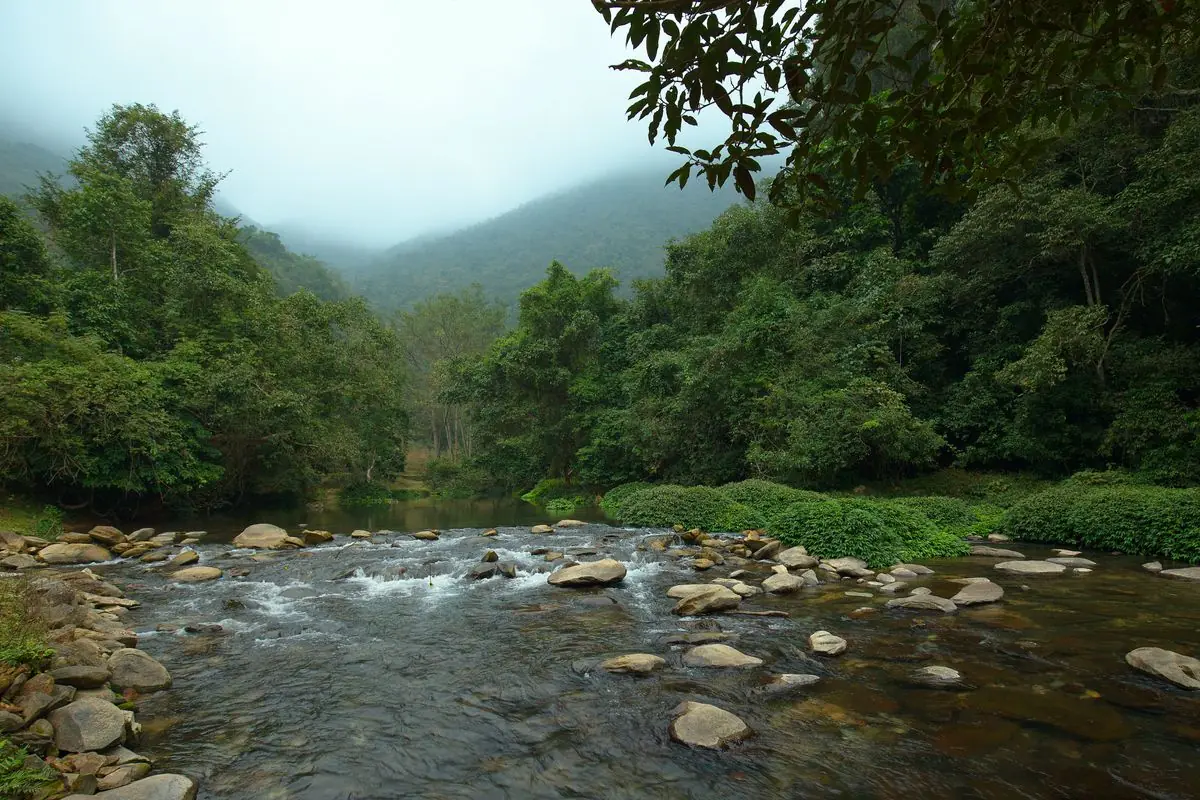
At Pac Bo, spend the time walking beside Lenin Stream rather than chasing photos at every viewpoint. The turquoise water flowing between rocks and trees looks nothing like the waterfalls you’ll see the following day.
Allow roughly 1.5-2 hours to explore the historical site, excluding transportation.
Return to central Cao Bang in the late afternoon, have dinner and stay overnight.
- Evening
Dinner in Cao Bang
Some local dishes worth trying include Cao Bang-style steamed rice rolls, sour pho, roasted duck and dishes made with Trung Khanh chestnuts.
Day 2: Ma Phuc Pass - Thang Hen Lake - Nguom Ngao Cave - Ban Gioc Falls
Distance: Approximately 87 km from central Cao Bang to Ban Gioc Falls along the main route, excluding sightseeing detours.
Day 2 has the best scenery of the trip. After breakfast, leave central Cao Bang and head toward Tra Linh and Trung Khanh.
- Morning
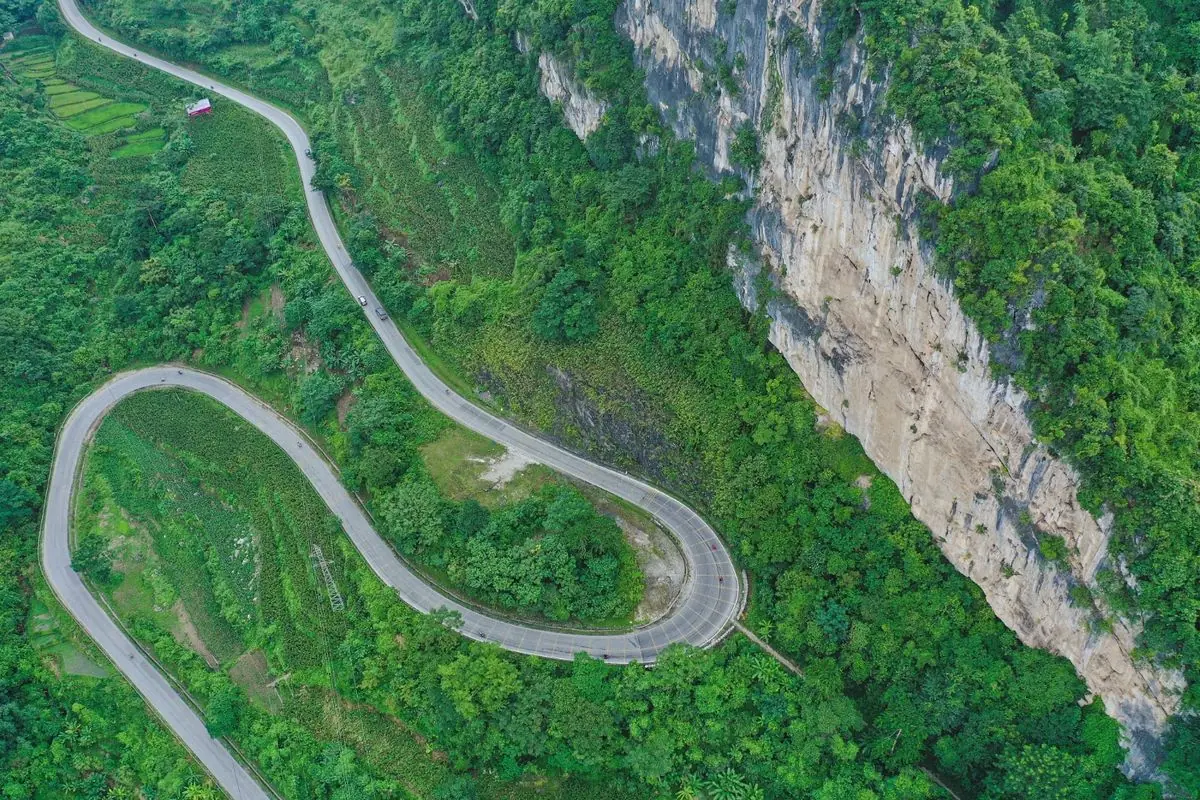
Ma Phuc Pass
Stop first at Ma Phuc Pass, approximately 21 km from the central area.
Located along National Highway 3, the pass is known for winding bends between limestone mountains. Pull over somewhere safe to look across the valleys, never on a blind corner.
- Morning
Thang Hen Lake
Continue toward Thang Hen Lake, approximately 29 km from central Cao Bang and now within Tra Linh Commune.
Surrounded by limestone peaks, the lake makes a peaceful place for a short break and some photography. It’s a detour from the main road, so allow time to return to your route afterward.
- On the way
Phuc Sen Blacksmith Village
On your way toward Ban Gioc, consider stopping at Phuc Sen Blacksmith Village, now part of Quang Uyen Commune. It’s a chance to learn about the region’s traditional knife-making craft. Add it if the group has time to spare.
- Afternoon
Nguom Ngao Cave
In the afternoon, focus on Nguom Ngao Cave and Ban Gioc Falls.
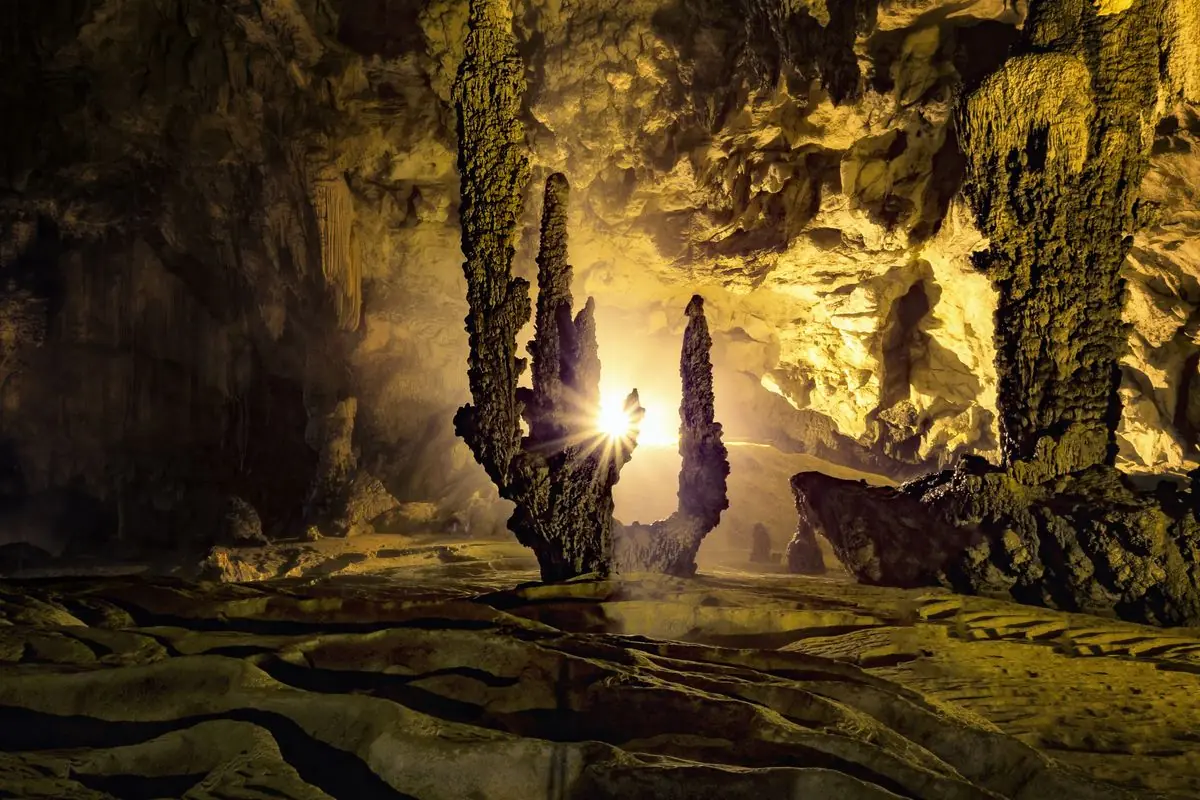
Nguom Ngao Cave is located in Dam Thuy Commune, approximately 4 km by road from Ban Gioc Falls. The cave extends for around 2,144 meters, although the standard visitor route covers roughly 1 km.
Inside, you’ll find large limestone chambers, stalactites and stalagmites, and several damp stairways. The standard route usually takes about 45-60 minutes.
The cave generally opens around 7:30 AM and closes at 5:00 PM. In the rainy season, go in early so you aren’t rushing through near closing time.
- Afternoon
Ban Gioc Falls
Afterward, head to Ban Gioc Falls, one of the most recognizable natural landmarks in northeastern Vietnam.
The waterfall sits on the Quay Son River, along the Vietnam-China border, with multiple tiers of water cascading into a landscape of limestone mountains and rice fields.
The entire waterfall system is more than 300 meters wide and approximately 30 meters high.
You can admire it from the Vietnamese riverbank or pay for a bamboo raft ride closer to the base when operating conditions are safe.
- End of day
Sleep near the falls
Stay the night around Ban Gioc, Khuoi Ky Stone Village or Trung Khanh. That leaves the next morning for the fields and river, and spares you a nearly 90 km drive back to central Cao Bang that evening.
Day 3: Khuoi Ky Stone Village - Ban Gioc - Hanoi
- Morning
Khuoi Ky Stone Village
Start the morning with a walk through Khuoi Ky Stone Village.
This traditional Tay settlement is known for its unusual stone stilt houses, surrounded by mountains and greenery.
Morning is also a good time to revisit the Ban Gioc area or take a short drive through the rice fields along the Quay Son River.
- Afterward
Back to Hanoi
Afterward, begin the journey back to Hanoi.
From Ban Gioc, you’ll generally travel back toward central Cao Bang before continuing south, making the full return journey approximately 350-370 km, depending on your route. That’s a long driving day.
Self-drivers should leave the waterfall area in the morning or around midday to cut down on mountain driving after dark.
Bus travelers should return to their confirmed pickup point and check departure times in advance. Not every Hanoi-bound service stops in Trung Khanh.
Cao Bang and Ba Be Lake in 4 days: is it worth adding?
Yes, but Ba Be Lake fits far better into four days than three.
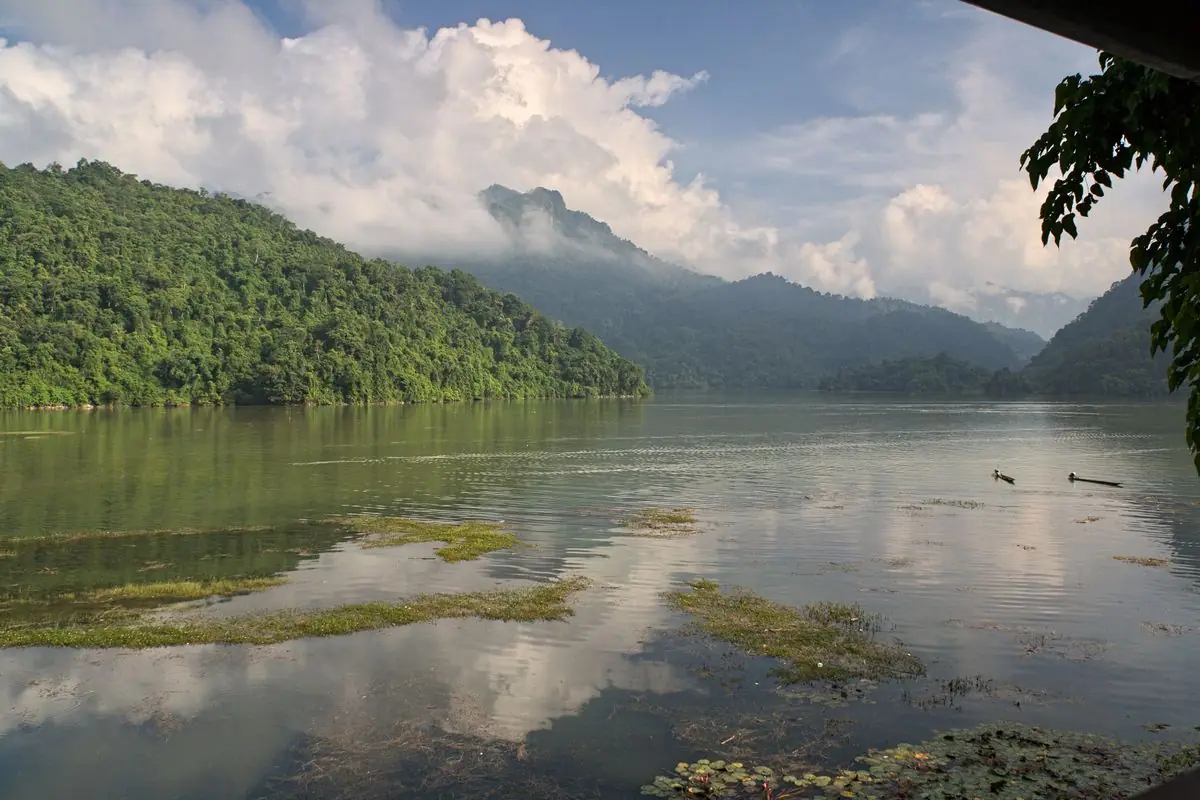
Ba Be Lake sits inside Ba Be National Park, now located in Ba Be Commune, Thai Nguyen Province. Before the administrative reorganization in 2025, the area belonged to Bac Kan Province.
The drive from central Cao Bang to Ba Be Lake is approximately 124 km. From Ba Be, it’s another 213 km back to Hanoi. These distances might not look particularly intimidating on a map, but winding mountain roads can make the journeys longer than expected.
Suggested 4-day, 3-night itinerary
| Day | Route |
|---|---|
| Day 1 | Hanoi - Cao Bang - Pac Bo; overnight in central Cao Bang |
| Day 2 | Ma Phuc Pass - Thang Hen Lake - Nguom Ngao Cave - Ban Gioc Falls; overnight near Ban Gioc |
| Day 3 | Ban Gioc - Cao Bang area - Ba Be Lake; overnight in Pac Ngoi Village |
| Day 4 | Boat trip on Ba Be Lake - return to Hanoi |
The overnight stay in Pac Ngoi is the calmest part of this itinerary. Choose a local homestay, have a home-cooked dinner and spend the evening near the lake. The following morning, take a boat trip across the water, surrounded by forested mountains, before returning to Hanoi.
National park admission and boat services are charged separately. Prices depend on the route and type of boat, so check directly at the departure point.
Some operators offer three-day group tours that cover Pac Bo, Ban Gioc Falls, Nguom Ngao Cave and Ba Be Lake. These tours save a day of vacation, but sightseeing stops are often shorter and the amount of driving can be considerable.
Independent travelers are better off with four days, so they can keep the best morning hours at both Ban Gioc and Ba Be.
Guided Cao Bang tour or self-drive: which is better?
The choice comes down to whether you mainly want to enjoy the mountain scenery or ride the roads yourself.
| Travel style | Best for | Main trade-off |
|---|---|---|
| Shared guided tour | First-time visitors, solo travelers, people who prefer easy planning | Fixed schedule and limited freedom to stop |
| Bus + rental motorbike | Experienced riders who want flexibility | Requires valid licensing and confident mountain riding |
| Private car with local driver | Families, groups and international travelers unfamiliar with Vietnamese traffic rules | More expensive for small groups |
| Self-drive car from Hanoi | Vietnamese travelers comfortable with long-distance mountain driving | Tiring first and final days |
How much does a 3-day Cao Bang tour cost?
Some shared tours from Hanoi covering Pac Bo, Ban Gioc Falls, Nguom Ngao Cave and Ba Be Lake are advertised at approximately 2,490,000-2,590,000 VND per adult for standard packages. Other tours may cost more depending on accommodation and services.
Packages typically include transportation, a tour guide, two nights of accommodation, selected meals and admission tickets listed in the itinerary.
Tours including Ba Be Lake may provide one night in a Cao Bang hotel and another at a homestay in Pac Ngoi, together with a boat excursion.
Drinks, electric shuttle rides, tips, single-room supplements and optional activities may cost extra.
International visitors should confirm whether the tour includes an English-speaking guide or only Vietnamese-language commentary. Ask the operator, too, to confirm any border-area procedures that apply to foreign guests.
For international visitors, a guided tour or a private car with a local driver makes more sense than renting a motorbike straight away. You still see the mountain roads without having to deal with unfamiliar traffic rules, licensing requirements or tricky bends.
Travelers from South Korea, China and Thailand should also check whether their specific driving documents are valid in Vietnam before booking a self-drive vehicle.
When is the best time to visit Ban Gioc Falls?
Late September to early October is the best time for a Cao Bang trip. The waterfall usually still has a substantial flow following the rainy season, while rice fields in parts of Trung Khanh, Tra Linh and the Ban Gioc area begin turning golden.
| Period | Scenery and weather | Things to consider |
|---|---|---|
| February-April | More dry days, generally lower waterfall flow | Check upstream water-release conditions |
| May-August | Lush green landscapes and powerful waterfalls | Heavy rain, muddy water and landslide risks |
| Mid-September - early October | Good waterfall flow and golden rice fields in some valleys | Harvest timing changes from year to year |
| November-December | Cooler weather, clearer mountain views and seasonal wildflowers | Water levels gradually decrease |
Golden rice season in Cao Bang
Some of the best rice-field scenery can be found around Trung Khanh, Tra Linh and the valleys of Ngoc Con, Ngoc Khe and Phong Nam. Following administrative changes, Ngoc Con, Ngoc Khe and Phong Nam are now within Dinh Phong Commune.
Cao Bang has few of the vast terraced rice fields that made Mu Cang Chai famous.

Here the rice lies on broad valley floors beside a turquoise river, with tall limestone mountains behind.
Check the harvest conditions in the exact area you plan to visit roughly a week before departure. Rice may already be cut in one valley while the next is still golden.
Does Ban Gioc Falls have water during the dry season?
Yes, but the amount of water and the appearance of the falls can change significantly.
The waterfall’s flow also depends on water regulation upstream.
During some dry-season periods in previous years, the falls carried noticeably more water around midday when upstream releases occurred. Visitors arriving early sometimes found much less water than expected.
Visiting between February and April? Ask your accommodation or the local attraction management about current waterfall conditions and possible release schedules.
In the rainy season, high water looks spectacular but can be muddy, and certain riverside activities may be suspended during dangerous conditions.
Cao Bang 3-day trip costs in 2026
Your overall budget depends heavily on transportation. A solo traveler joining a group tour may spend less than someone hiring a private vehicle, while friends sharing accommodation and riding rental motorbikes can reduce costs considerably.
Attraction entrance fees
| Attraction or service | Reference price |
|---|---|
| Pac Bo Historical Site | Free |
| Ban Gioc Falls - adult | 40,000 VND |
| Nguom Ngao Cave - standard adult admission | 40,000 VND |
| Children aged 6 to under 16 at Ban Gioc or Nguom Ngao | 20,000 VND per attraction |
| Bamboo raft at Ban Gioc Falls | Approximately 50,000 VND per person |
| Guided experience route at Nguom Ngao Cave | Around 190,000 VND; ask again at the counter |
| Electric shuttle at Pac Bo | Check at the entrance |
| Ba Be National Park and boat services | Check locally |
The 40,000 VND standard admission fee for Ban Gioc Falls and Nguom Ngao Cave took effect on July 4, 2026.
Children under six and certain eligible groups receive free admission, while other qualifying visitors may receive reductions under the applicable regulations.
Additional activities, guided routes and operating hours can change, so confirm the current details at the ticket counter.
Estimated independent travel budget
| Expense | Bus + rental motorbike, per person |
|---|---|
| Return bus ticket, Hanoi - Cao Bang | 560,000-1,560,000 VND |
| Motorbike rental for 2 days | 300,000-500,000 VND |
| Petrol for local sightseeing | 150,000-300,000 VND |
| Two nights’ accommodation, sharing a room | 300,000-700,000 VND |
| Meals for 3 days | 450,000-900,000 VND |
| Basic admission and activities | 80,000-200,000 VND |
| Estimated total | Approximately 1.8-4.2 million VND |
These are planning estimates rather than guaranteed package prices. Shopping, private guides and additional activities aren’t included.
Groups driving their own car can share fuel, road tolls and accommodation costs, but should allow for parking, vehicle maintenance and unexpected expenses.
Prices for a private car with a driver depend on group size, vehicle type, number of days and pickup or drop-off locations.
Keep a little room in the budget; don’t spend it all on upgraded rooms or extra activities. In the mountains, weather or bus schedule changes can force last-minute adjustments.
What documents do foreign visitors need for the Cao Bang Loop?
Do foreigners need a border permit to visit Ban Gioc Falls?
Foreign visitors entering the designated Ban Gioc tourist area on the Vietnamese side through permitted tourist routes are not automatically required to obtain a separate border-area permit simply to purchase an entrance ticket.
An authorized tourist attraction and the rest of the land-border area follow different rules.
Since November 17, 2025, foreign nationals residing permanently or temporarily in Vietnam who enter land-border areas outside the exempted tourism, service and economic zones may need permission from the provincial police.
Vietnamese organizations arranging travel for foreigners into regulated border areas may also have obligations involving introduction letters and advance notification to the police and provincial Border Guard Command, generally at least 24 hours in advance in applicable cases. On an organized tour, the operator should handle this for you.
For remote border roads outside established tourist areas, contact the Immigration Management Division of Cao Bang Provincial Police before traveling. A permit obtained for the Ha Giang border region, now part of Tuyen Quang Province, does not carry over to Cao Bang.
Can you cross from Ban Gioc Falls into China?
The Ban Gioc - Detian Transboundary Landscape Scenic Area officially began operating on October 15, 2024.
It provides a regulated cross-border sightseeing arrangement for Vietnamese and Chinese visitors through organized and registered programs.
Under this arrangement, eligible visitors use the appropriate passport or border travel document, return on the same day and cannot freely stay overnight on the opposite side. This is not an unrestricted international crossing open to all nationalities.
The visa-free arrangement is designed for visitors from the two participating countries. Travelers holding other passports should check the specific immigration requirements with the operator and relevant authorities before booking any cross-border activity.
Can foreigners legally ride motorbikes in Cao Bang?
Yes, provided they hold a driving license recognized in Vietnam and meet all other legal requirements.
Not every International Driving Permit (IDP) is valid in Vietnam.
Vietnam recognizes qualifying international driving permits issued under the 1968 Vienna Convention when accompanied by the corresponding valid national driving license. Other recognized licensing arrangements may also apply under relevant agreements.
Travelers from the United Kingdom, South Korea, China and Thailand should check the exact type of permit they hold, the accompanying national license and the relevant rules for their circumstances.
Under Vietnam’s motorcycle licensing categories, motorcycles with engines above 125 cc or electric motor power above 11 kW require an appropriate Category A license.
Motorized vehicles designed for speeds not exceeding 50 km/h with engines of no more than 50 cc, or qualifying electric vehicles of no more than 4 kW, fall into a category that does not require a driving license. Other legal operating conditions still apply.
Foreign visitors staying overnight must also have their temporary stay registered by the accommodation provider. Bring your passport when checking into hotels and homestays, including smaller family-run properties.
Updated Cao Bang addresses after Vietnam’s 2025 administrative changes
Cao Bang remained a separate province following Vietnam’s provincial administrative reorganization in 2025.
Many of its commune and ward names changed, though, when the two-tier local government system took effect on July 1, 2025.
| Attraction | Current administrative address |
|---|---|
| Pac Bo Historical Site | Truong Ha Commune, Cao Bang Province |
| Ma Phuc Pass | Tra Linh Commune, Cao Bang Province |
| Thang Hen Lake | Tra Linh Commune, Cao Bang Province |
| Ban Gioc Falls | Dam Thuy Commune, Cao Bang Province |
| Nguom Ngao Cave | Dam Thuy Commune, Cao Bang Province |
| Khuoi Ky Stone Village | Dam Thuy Commune, Cao Bang Province |
| Phuc Sen Blacksmith Village | Quang Uyen Commune, Cao Bang Province |
| Former Trung Khanh Town area | Trung Khanh Commune, Cao Bang Province |
| Former Cao Bang City center | Thuc Phan, Nung Tri Cao and Tan Giang wards |
| Ba Be Lake | Ba Be Commune, Thai Nguyen Province |
Many older maps and travel articles still list Ba Be Lake under Bac Kan Province. That name remains useful for identifying the historical region, but the current administrative address is in Thai Nguyen Province.
Similarly, some mapping apps may continue showing former district or city names around Trung Khanh and Cao Bang. Search by attraction name, then check the new commune address when booking accommodation or arranging transport.
What to pack and prepare before visiting Cao Bang
Cao Bang’s mountain roads are manageable for experienced drivers, but weather and distances are easy to underestimate.
Pack a light jacket, raincoat, comfortable shoes with good grip, a power bank, drinking water, some cash and any personal medication.
Winter travelers should bring warm layers, while those visiting during the rainy season will benefit from waterproof bags for phones and documents.
Download offline maps before leaving major towns, check road conditions before heading into the mountains and let your accommodation know approximately when you’ll arrive.
When authorities issue landslide or flash-flood warnings, change your itinerary and drop stops.
Vietnamese travelers should carry a valid identity document, while foreign visitors should bring their passport, relevant immigration or residence documents, and a recognized driving license when operating a vehicle.
Don’t turn Cao Bang into a checklist of attractions. Leave an afternoon for watching the sun settle over a rice field or drinking tea beside a traditional stilt house.
Frequently asked questions
Is 3 days enough for the Cao Bang Loop?
Yes. Three days are enough to visit Pac Bo, Ma Phuc Pass, Nguom Ngao Cave, Ban Gioc Falls and a few nearby attractions. Start early, plan your overnight stops carefully and avoid too many long detours. Four days are more comfortable if you want to include Ba Be Lake.
How long does it take to travel from Hanoi to Cao Bang?
The journey typically takes around 6-8 hours by bus or car, depending on road conditions, your route and pickup location. Some limousine services advertise shorter travel times, but it's sensible to allow extra time for delays.
Do foreigners need a border permit for Ban Gioc Falls?
Foreign visitors can generally enter the authorized Vietnamese tourist area through permitted routes without automatically needing a separate border permit just to visit the waterfall. However, other parts of the land-border area may require permission under applicable regulations. Carry your passport and check any routes beyond designated tourist areas in advance.
When is Ban Gioc Falls at its fullest, and when are the rice fields golden?
The falls usually have more water during the rainy season, particularly from June to September, although the water may become muddy. Mid-September to early October often offers a good balance of strong waterfall flow and golden rice fields in valleys around Trung Khanh.
Should I book a Cao Bang tour or ride a motorbike myself?
A shared tour or private car with a local driver is the easier option for first-time visitors and many international travelers. Riding a motorbike makes sense for experienced riders with valid licensing who want flexibility. Taking a bus from Hanoi and renting a motorbike locally can also save you a long day of riding before the sightseeing even begins.