When is the winter solstice in Vietnam in 2026, and what do people eat?
Late December in Vietnam brings the winter solstice, a good excuse to try local Chinese food traditions or share something warm with friends. Most Vietnamese households do not celebrate it formally, so there is no festival or family ritual to plan around.
 16 min read
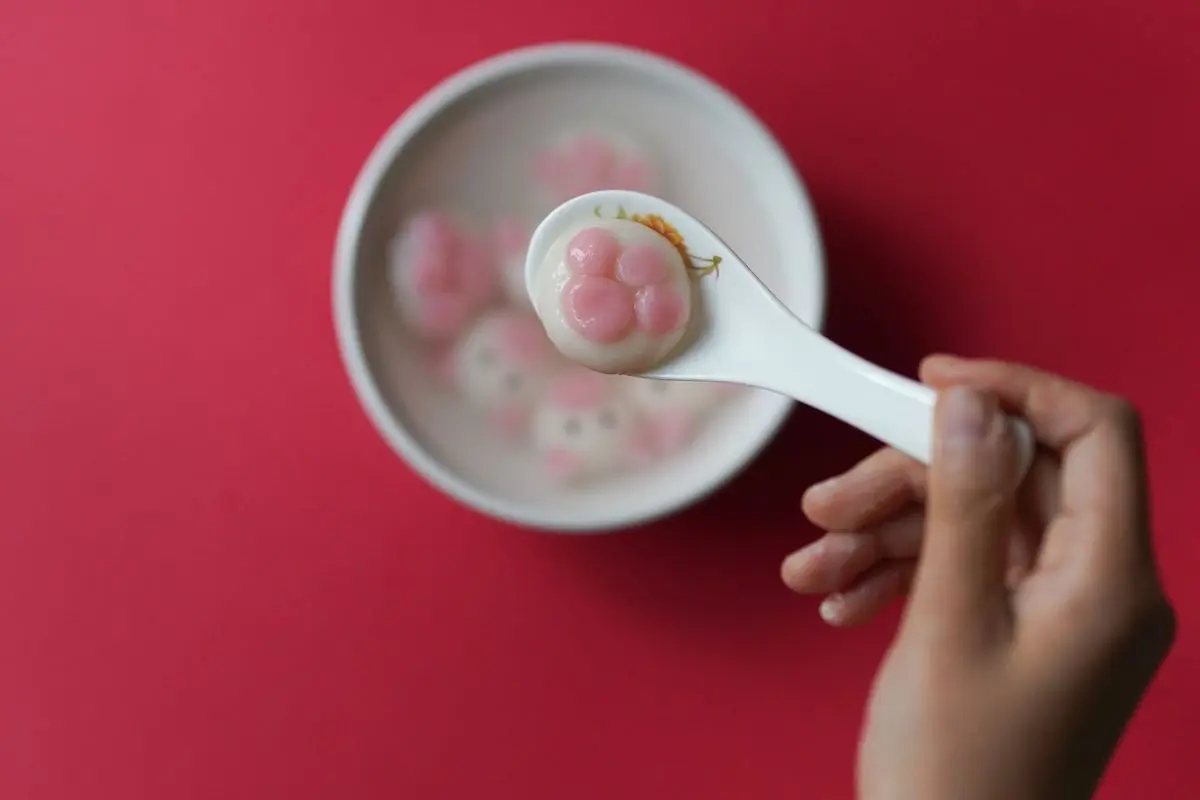
Tangyuan, a round rice-ball dessert for Dongzhi.
This year, Vietnam’s winter solstice falls on Tuesday, December 22, 2026. The astronomical event takes place at 3:50 am Vietnam time, when the Northern Hemisphere reaches its shortest daylight period of the year. In Hanoi, sunrise is around 6:29 am and sunset around 5:20 pm; whether anyone prepares a special meal depends on the household.
When is the winter solstice in Vietnam in 2026?
The winter solstice in Vietnam falls on Tuesday, December 22, 2026, corresponding to the 14th day of the 11th lunar month in the Vietnamese calendar. The exact astronomical moment is 3:50 am, Indochina Time (UTC+7). It is a precise point in Earth’s annual journey around the Sun, and no national ceremony starts then.
You may see December 21 on an English-language calendar and wonder why Vietnam says December 22. The event happens at 8:50 pm UTC on December 21. Vietnam is seven hours ahead of UTC, so the same instant is already early morning on December 22. The whole world shares the same solstice moment; only the clock time differs.
For anyone asking “when is Dong Chi in 2026?”, the useful answer is December 22 in Vietnam. The date usually falls around December 21 or 22, depending on the year and time zone.
There is also a distinction between a solstice as a single moment and the traditional solar-term period called Dong Chi. In the East Asian system of 24 solar terms, each term occupies a portion of the year. In everyday talk, Dong Chi also means the calendar day that contains the solstice moment.
The timing matters for astronomy and calendars. Families who observe a food tradition generally make their own arrangements rather than following an official Vietnam-wide timetable.
Dong Chi and the longest night of the year
Dong Chi is the Vietnamese name for the winter solstice and one of the 24 traditional solar terms used across parts of East Asia. The solar terms describe positions in the Sun’s apparent annual movement. They helped people mark seasonal changes long before a weather app could show a forecast for the coming week.
The science is straightforward once you picture a slightly tilted globe. Earth’s rotation axis is tilted by about 23.4 degrees relative to its orbit. During the December solstice, the Northern Hemisphere is tilted farthest away from the Sun. The Sun follows a lower, shorter apparent arc across the sky, so it spends less time above the horizon.
That produces the shortest day and longest night of the year in the Northern Hemisphere. Vietnam lies north of the equator, so the description applies here too. But it does not feel equally dramatic in every place. At tropical latitudes, changes in daylight are much smaller than at high northern latitudes.
The solstice is not caused by Earth reaching its greatest distance from the Sun. Seasons are principally the result of axial tilt, the angle at which sunlight reaches the ground, and how long daylight lasts.
Neither does “longest night” mean that the city is dark all day. Hanoi still has a normal morning and afternoon. Its daylight window is simply shorter than at other points in the year. People heading to work will see sunrise, and shops will open as usual, but dusk arrives comparatively early.
After the winter solstice, daylight gradually increases in the Northern Hemisphere. At first, the difference from one day to the next is tiny. You probably will not notice it during a single walk home. The change becomes easier to feel over several weeks as sunsets shift and the seasonal cycle continues.
Warmer weather does not arrive on December 23 just because daylight grows. Air temperature responds to seasonal heat storage, winds, clouds, and local geography. In northern Vietnam, cold spells can arrive after the shortest day.
The longest night in Hanoi and Ho Chi Minh City
On December 22, 2026, Hanoi has roughly 10 hours and 51 minutes of daylight. Sunrise is around 6:29 am, with sunset around 5:20 pm. Subtract that daylight span from 24 hours, and the remaining period without the Sun above the horizon is about 13 hours and 9 minutes.
Ho Chi Minh City, farther south, has about 11 hours and 30 minutes of daylight near the solstice. That leaves roughly 12 hours and 30 minutes without direct daylight under the same definition. Both cities share the same solstice instant, yet their day lengths differ because they sit at different latitudes.
Do not use Hanoi sunset times to plan an outing in Da Nang or Ho Chi Minh City. A sunrise-and-sunset search should include the city and date, particularly if you want to be outside for the last light.
The shortest day and the year’s earliest sunset are two different things. Sunrise and sunset do not change symmetrically on either side of the solstice.
For most people, there is nothing spectacular to watch in the sky at 3:50 am. A solstice is not a meteor shower or eclipse. A pleasant way to notice it is to take a familiar late-afternoon walk and compare how quickly evening comes compared with the long days of June.
Do Vietnamese people celebrate the winter solstice?
Some do, but it is not a nationwide Vietnamese holiday. There is usually no time off, no presents and no formal Dong Chi celebration. Schools and businesses generally continue their normal routines.
The occasion is more visible among some ethnic Chinese communities in Vietnam. Families may prepare offerings, remember ancestors, gather for a meal, or eat glutinous rice balls. Customs depend on family background and the degree to which they have been passed between generations.
In Hoi An, che troi nuoc, Vietnamese sweet glutinous rice balls, was once used for winter-solstice offerings by some Chinese and Minh Huong families. Over time, it became an everyday specialty enjoyed by the wider community in the old town.
In Hoi An, the solstice is also a time for tending ancestral graves, particularly within parts of its Chinese community. Not every Hoi An household follows the same ritual, though.
In Ho Chi Minh City, Cholon, the historic Chinese-influenced district, is another place where food traditions associated with the occasion may be familiar. Many such foods are available all year, and the exact way families recognize the day is private.
For a foreign visitor, the safest social approach is simple curiosity. Ask a friend or shopkeeper whether Dong Chi means anything in their family. You may hear about a grandmother’s pot of ginger syrup, a family gathering, or no tradition at all.
The festival is also different from Tet, the Vietnamese Lunar New Year. Tet is a major national holiday and a defining family occasion. Dong Chi has no equivalent nationwide status. Describing it as “Vietnam’s winter Christmas” would be misleading on both cultural and practical grounds.
What do people eat for Dong Chi in Vietnam?
The most recognizable food is che troi nuoc, a warm Vietnamese dessert of glutinous rice balls in sweet ginger syrup. Larger balls often contain cooked mung bean paste. Depending on the cook or shop, you might also find small unfilled balls, toasted sesame seeds, or coconut milk.
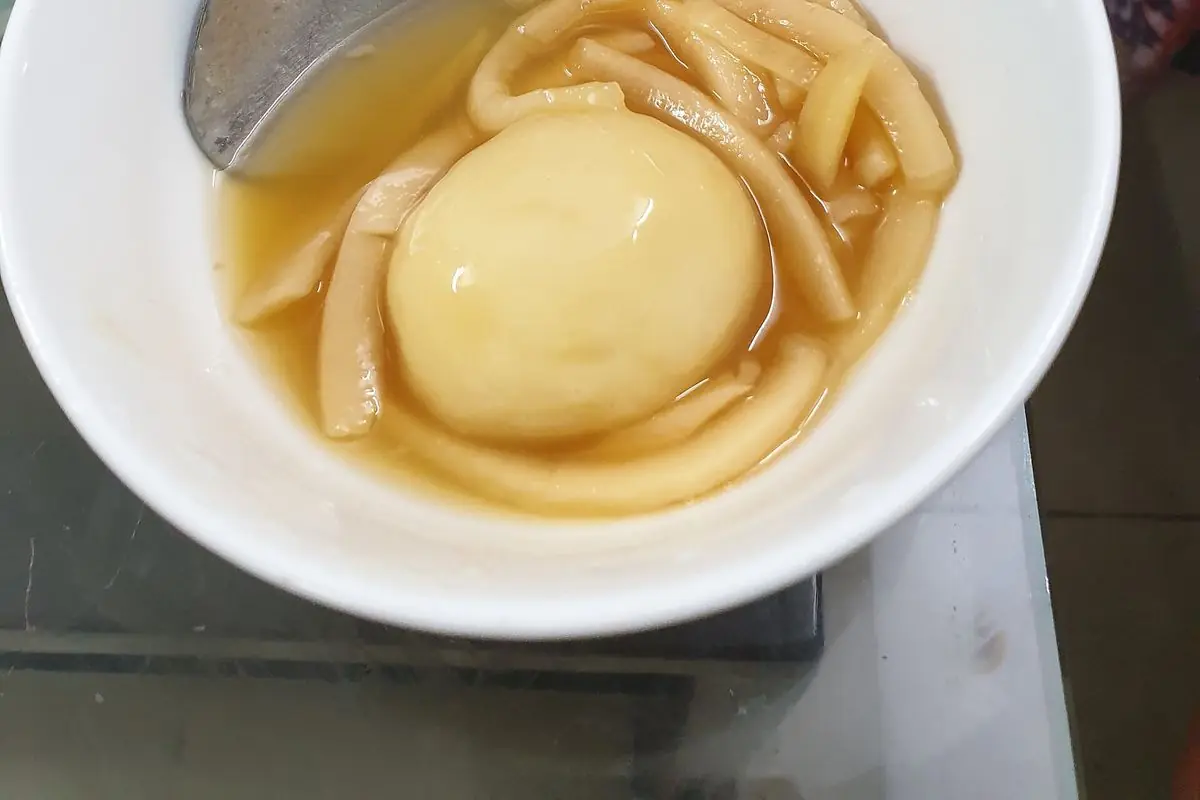
A bowl typically arrives with soft, slightly chewy rice dough and a fragrant ginger broth. It is an easy food to associate with a cool evening, but the connection is not purely about warmth. Round rice balls can symbolize completeness and togetherness in traditions related to Chinese tangyuan.
There is no single standardized winter-solstice recipe across Vietnam. The dish changes from region to region and between homes. In some places you may encounter a name such as che y, while elsewhere people simply ask for che troi nuoc. Those names are not always interchangeable, so looking at the actual bowl tells you more than relying on a loose translation.
Making it at home on December 22 is manageable. Make a pliable dough from glutinous rice flour and water. Prepare cooked mung bean filling if you want stuffed balls. Wrap the filling securely, roll the dough into spheres, and cook them in boiling water until fully done. Separately simmer ginger and sugar, then serve the cooked balls in the syrup.
Some people prefer smaller, unfilled rice balls. Others like a stronger ginger taste or a topping of sesame and coconut. The important culinary detail is to cook the dough thoroughly and serve it warm.
Ordering a bowl from a neighborhood dessert shop works just as well. There is no rule saying it must be eaten before sunset or at the exact astronomical solstice. If a Vietnamese friend invites you for sweet rice balls, enjoy the gesture without turning every ingredient into an elaborate symbolic claim.
You can also skip dessert altogether and share a normal dinner. For someone living away from home, calling family while cooking something familiar might capture the feeling of togetherness better than chasing an unfamiliar ceremonial recipe.
Dumplings in northern China, tangyuan in the south
China has several important Dongzhi food traditions, and regional differences matter. Across many parts of northern China, jiaozi, or Chinese dumplings, are strongly associated with the winter solstice. They may be filled with pork, vegetables, or other ingredients, then boiled or otherwise cooked according to family preference.
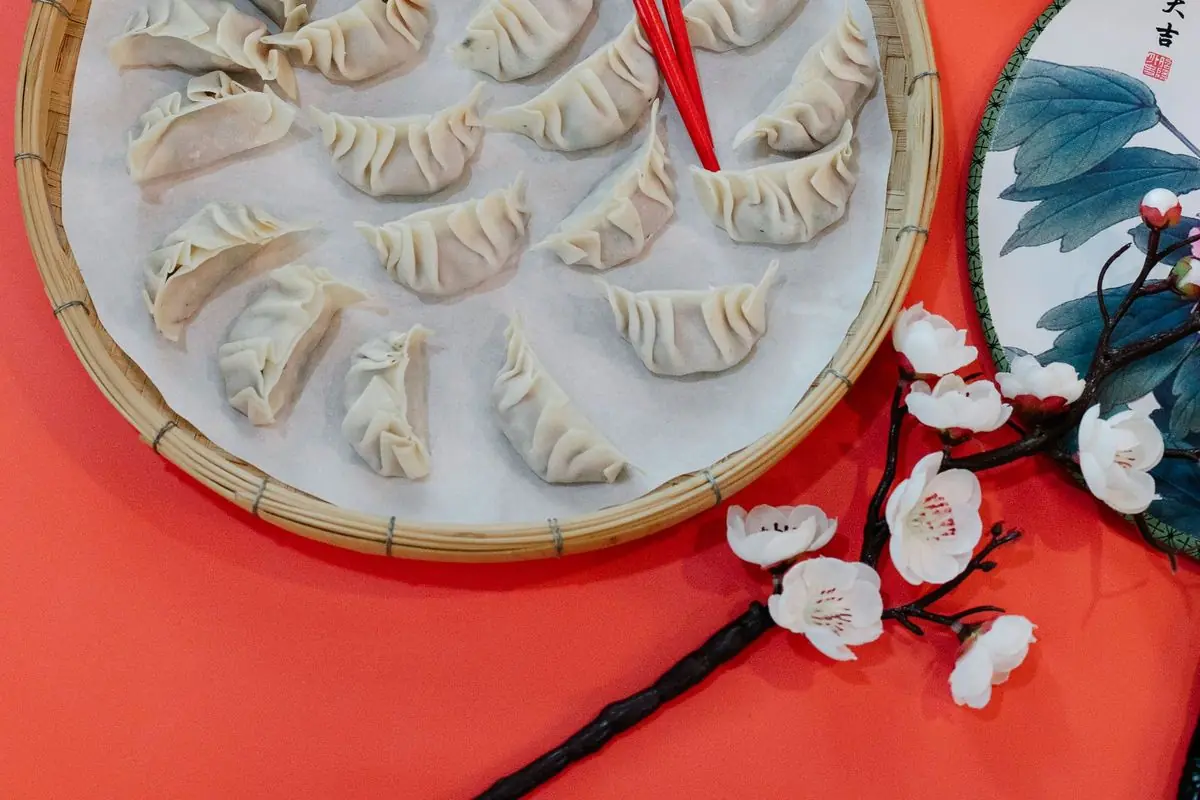
There is an old folk association between dumplings and keeping one’s ears from freezing in winter. The idea appears in traditional stories and sayings. The practical appeal is easy to see: a hot dish that can be made in batches and shared around a table.
In many parts of southern China, tangyuan are the better-known seasonal food. These are rounded glutinous rice balls, sometimes filled with black sesame, peanuts, or other sweet fillings. Some versions are small and unfilled. A warm soup or syrup accompanies them, although ingredients and serving styles differ between regions.
Their rounded shape is often connected to family reunion and wholeness. That gives them a cultural resemblance to Vietnamese sweet rice balls, particularly in communities where customs developed through long contact with Chinese traditions. But resemblance does not make every Chinese and Vietnamese recipe identical.
A visitor from northern China may mention dumplings immediately when asked about Dongzhi. Someone with a family background in Shanghai or another southern region may think first of tangyuan. Other areas have their own dishes and rituals. China is too large and varied for one sentence about a single nationwide winter-solstice menu.
In Mandarin, the occasion is called Dongzhi. The name is also used for the corresponding solar term. You may encounter the English phrase Dongzhi festival, but that label covers activities ranging from a simple family meal to more formal ancestral observances or cultural programs. It does not guarantee public celebrations in every neighborhood.
If you are in Vietnam and want to taste a northern-style dumpling, a Chinese restaurant may serve jiaozi at any time of year. Likewise, sweet rice balls are not limited to December. The food offers a way into the tradition, but the menu alone cannot tell you how a particular household marks the solstice.
Korea’s red bean porridge for Dongji
In Korea, the winter solstice is known as Dongji. Its signature dish is patjuk, a thick red bean porridge often served with small rice-flour balls called saealsim. The look is distinctive: pale little balls sitting in a deep red porridge, which may be less sweet than visitors expect from a dessert-style bean soup.
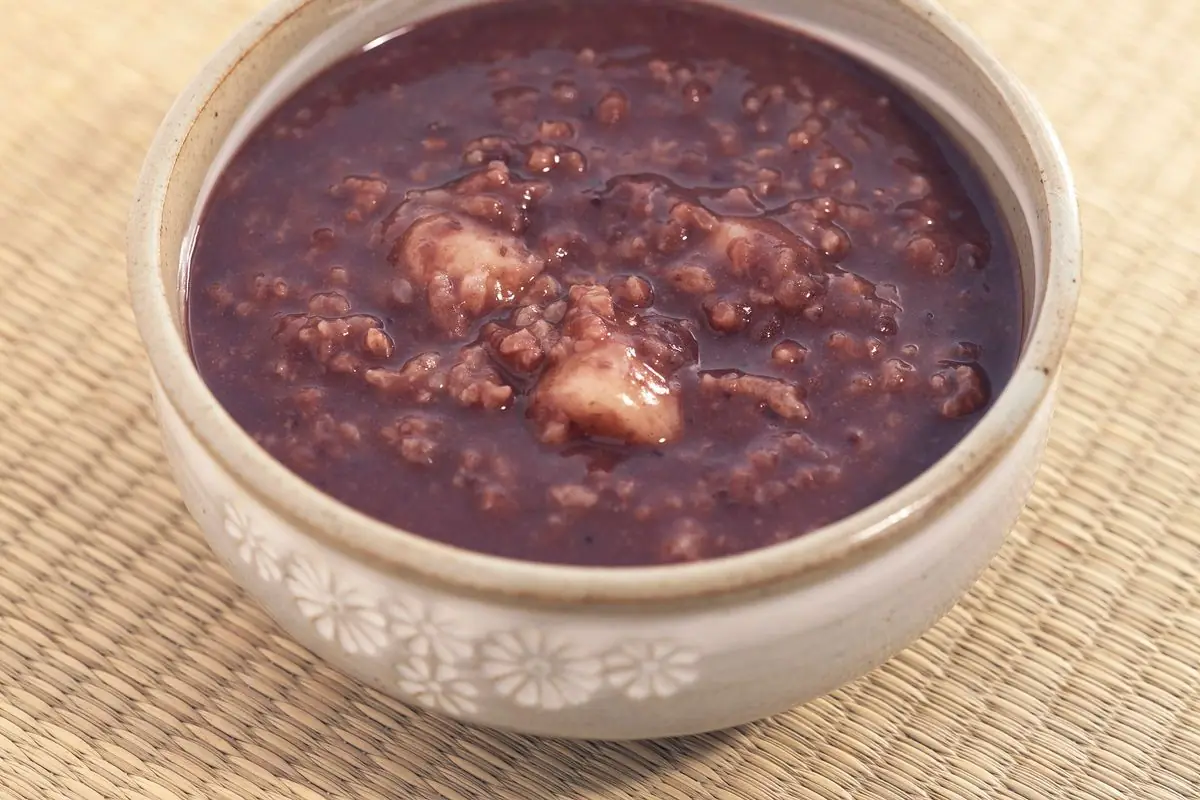
The color red has a traditional protective meaning. In Korean folk belief, red was associated with the power to drive away harmful spirits and bad fortune. Some old household practices involved placing porridge at particular points around the home or making offerings.
The dish also reflects the weather of a Korean December. A pot of beans and rice balls makes substantial hot food that can be shared. At certain heritage events and community programs, visitors may see patjuk prepared or distributed to mark Dongji. That is one reason the dish appears so frequently in Korean winter-solstice photographs.
Korean sources sometimes describe Dongji as a “little New Year”. It has historically been seen as a seasonal turning point associated with a renewed cycle of sunlight. That expression should not be confused with Seollal, Korea’s major Lunar New Year celebration. Today, each household marks Dongji in its own way.
If you want to try making patjuk, start by cooking red beans until soft, then work them into a thick soup or porridge. Small rice-flour balls are cooked in the mixture or prepared according to the recipe. Seasoning varies; some versions are served with salt or sugar to taste. It is worth looking up a Korean recipe specifically, rather than assuming it should taste like Vietnamese ginger-syrup dessert.
The tiny rice balls provide an interesting link between Korean and Chinese solstice foods, yet their textures and surrounding flavors differ. Patjuk is primarily a bean porridge, a different dish from tangyuan. Knowing that distinction makes it more enjoyable to compare winter solstice food in Asia without flattening every regional dish into one generic rice-ball tradition.
And while patjuk is strongly associated with Dongji, Korean people can eat it on other days too.
Winter solstice food differs across Asia
The clearest common thread is that food can give people a reason to gather at a turning point in the year. Some Chinese families wrap dumplings together, others share tangyuan, some Vietnamese-Chinese households prepare sweet glutinous rice balls, and many Koreans recognize patjuk as a traditional Dongji food.
The ingredients overlap in interesting ways. Rice flour appears in several of these dishes, and beans are used for both sweet fillings and savory or lightly seasoned porridge. But the recipes evolved in different settings. A round shape might carry a reunion meaning in one community while being an ordinary culinary choice in another.
Even within a single country, families may disagree about what is essential. One may see a ritual as important, another only remembers a dish, and a third treats the solstice as an astronomical fact. Traditions change as people move, work different schedules, or pass family practices to younger generations.
Online searches can make Dongzhi seem like one giant pan-Asian festival with matching rituals everywhere. In real life, many customs happen privately. Many photos come from cultural museums, where ceremonies are reconstructed or demonstrated for visitors.
For travelers and residents, the practical lesson is to avoid treating one Instagram image as a complete guide to Asia. Start with the city, community, and dish. When a restaurant calls a rice-ball dessert a Dongzhi special, ask how they prepare it. And when someone says their family does nothing, that answer is part of the real picture too.
This is especially useful in Vietnam, where the country’s climate and ethnic diversity make the experience of December very different from place to place. The winter solstice is a shared astronomical event, but it is not a single shared national celebration.
Northern Vietnam’s weather around the solstice
Late December is winter in northern Vietnam, but December 22 is not automatically the coldest day of the year. The solstice marks the minimum in daylight; temperature follows its own pattern. Cold surges, northeast monsoon winds, cloud cover, local terrain, and moisture all affect what the day actually feels like.
In December, Hanoi averages a low of about 15.4°C and a high of 22.1°C. A sunny afternoon can feel mild; a windy evening after a cold front may feel much colder.
For an early-morning walk in Hanoi, carry a jacket you can remove later. On a motorbike, protection from wind matters. A scarf or light gloves may be more useful than dressing only according to the midday high displayed by a weather app.
The north also has plenty of overcast winter days. To see the sunset on the solstice, check cloud forecasts rather than expecting a clear golden horizon. On a gray evening, the sunset will not look like the dramatic photographs you may have seen online.
Southern Vietnam is different. In Ho Chi Minh City, December does not bring the same kind of northern winter chill. The shorter daylight is measurable, but you may spend the day in familiar warm-weather clothing. There is no need to search for snow, frost, or a Korean-style winter feeling to acknowledge the solstice.
The central coast follows yet another seasonal pattern, with local rain and cloud conditions that cannot be inferred from Hanoi or Ho Chi Minh City. Anyone traveling on December 22 should look up the actual forecast for their destination closer to the date. Seasonal averages help with packing; they cannot tell you whether an outdoor dinner will get rained on.
Small things worth doing on December 22
Choose one small activity that makes the day memorable. Buy a bowl of warm che troi nuoc, invite a friend to dinner, call someone at home, or spend a few minutes understanding why daylight changes. None of these requires a religious belief or a family tradition you have never practiced.
In Hanoi, head outside before 5:20 pm and notice how early the afternoon closes. A familiar neighborhood walk is enough. Find a place with a reasonably open view of the western sky and arrive with time to spare.
You could also make a few glutinous rice balls with friends. One person prepares mung bean filling, another rolls the dough, and someone watches the ginger syrup. It is simply an excuse to learn a dish and share the cooking, with no complicated festive schedule.
Food lovers can pick one traditional recipe and learn where it comes from. Vietnamese che troi nuoc, Chinese jiaozi, southern Chinese tangyuan, and Korean patjuk each have enough history and technique to fill an evening. Sampling every dish at once is optional and does not make the occasion more authentic.
Ask a Vietnamese friend whether their household has ever marked Dong Chi. The answer may introduce a regional habit, a Chinese-Vietnamese family memory, or an entirely different perspective. A personal account can be more revealing than a generic list of “Asian solstice customs,” provided you respect that it describes one family rather than everyone.
And if you simply want a quiet evening, that works too. Read, make tea, finish work early if you can, or share dinner without phones. Astronomy does not require you to reset your life, cleanse your body, or follow an elaborate ritual on the shortest day.
Things visitors often mix up
First, do not confuse the solstice with Christmas. The dates are close, but their histories are different. Christmas is a religious and social holiday with its own traditions. Dong Chi is an astronomical marker that has acquired varied cultural customs in East Asia.
Second, Dong Chi is not the same as the Vietnamese Lunar New Year. Vietnam’s major Tet holiday brings family travel, business closures, special meals, and a nationwide festive period. The winter solstice does not. Visitors looking for official Dong Chi parades or a countrywide holiday timetable will probably be disappointed.
Third, a reference to “gaining a year” by eating rice balls should be understood in its cultural context. Some communities have traditional sayings linking solstice foods with age or the passing year. It is not how legal age is calculated, and it is not a practice shared by every person in Vietnam or China.
Fourth, winter does not start the same way everywhere in Vietnam on that date. Astronomy defines the December solstice for the Northern Hemisphere; weather and lived seasons vary locally. A cold evening in Hanoi, a rainy day on part of the central coast, and a warm day in Ho Chi Minh City can all happen during the same solstice.
Finally, remember that the 24 solar terms are calendar divisions, not 24 public holidays. Many people encounter Dong Chi only through a calendar app or short online post. Others know it through food and family.
On December 22, 2026, try a warm bowl of che troi nuoc at a nearby dessert shop or make one at home. Anyone in Hanoi can step outside before the approximately 5:20 pm sunset: the short afternoon is the simplest way to experience the winter solstice without a special event.
Frequently asked questions
When is the winter solstice in Vietnam in 2026?
It is on Tuesday, December 22, 2026, at 3:50 am Vietnam time (UTC+7). The same moment is 8:50 pm UTC on December 21, explaining why some international calendars show the previous date.
What does Dong Chi mean?
Dong Chi is the Vietnamese name for the winter solstice, one of the 24 East Asian solar terms. It marks the shortest daylight period and longest night of the year in the Northern Hemisphere.
What food is eaten during the winter solstice in Vietnam and Asia?
Some Chinese-Vietnamese families prepare sweet glutinous rice balls such as che troi nuoc. Northern Chinese traditions prominently feature jiaozi dumplings, parts of southern China favor tangyuan, and Korea is known for red bean porridge called patjuk.
Is Dong Chi a public holiday in Vietnam?
No. It is not a nationwide public holiday, and most Vietnamese people work and study as usual. Certain communities and families, especially those with Chinese cultural traditions, may observe it privately.
Is the winter solstice the coldest day in Vietnam?
No. It is the year's shortest day in the Northern Hemisphere, not a forecast of the lowest temperature. Northern Vietnam can experience colder weather later in winter, while southern Vietnam remains much warmer.