Ha Giang Loop: 3 or 4 days, Easy Rider or self-drive?
Three or four days cover the Ha Giang Loop's famous mountain roads. Three days fit the main highlights, four give first-timers time for villages and slower stops, and your riding experience and license decide whether you go with an Easy Rider or ride yourself.
 17 min read
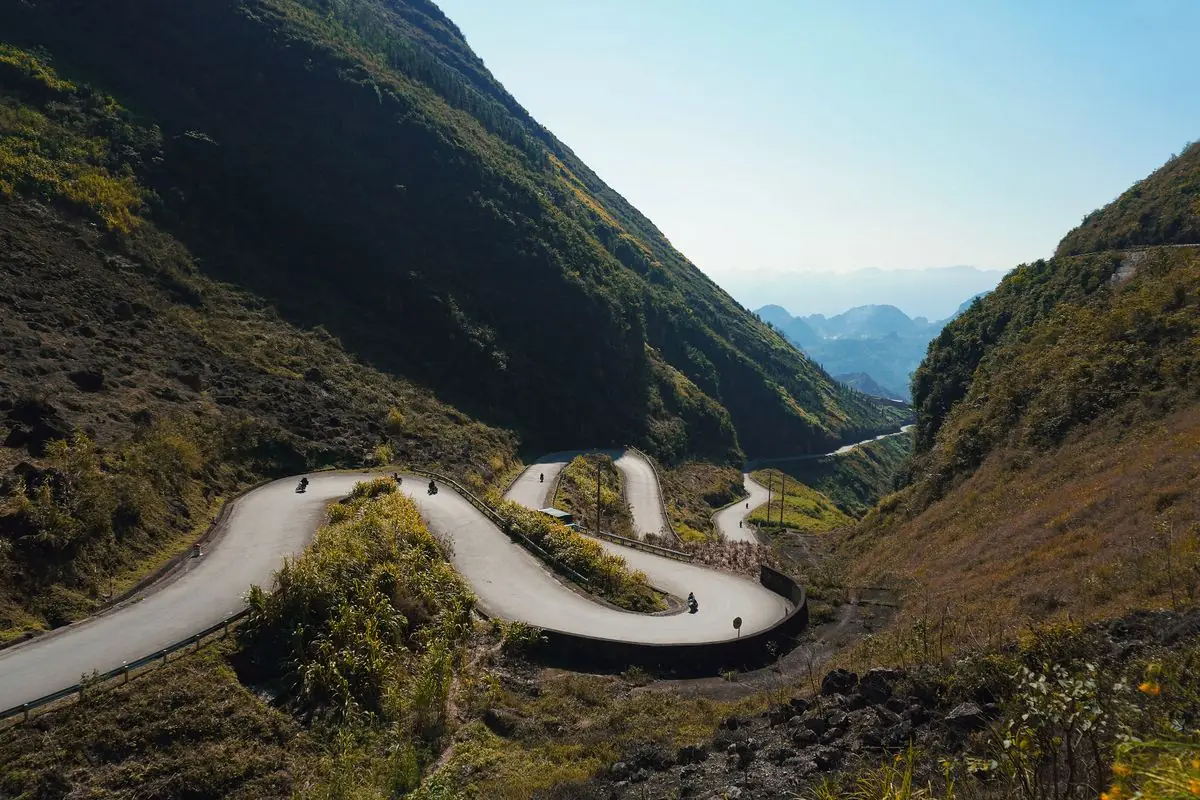
Tham Ma slope folds into tight hairpins against the mountainside, with a few riders heading down on a sunny February day.
Planning the Ha Giang Loop starts with deciding whether to spend three or four days on the road. Three days work well for a shorter trip, while four days give you more time to enjoy the scenery, visit mountain villages, and rest between winding mountain passes. Once you’ve chosen your itinerary, you can decide between an Easy Rider tour, riding your own motorbike, or traveling by car based on your experience, driving license, and comfort level.
What is the Ha Giang Loop, and where is it?
The Ha Giang Loop is a scenic circular route through the mountains of northern Vietnam, starting and ending in the former Ha Giang City. The popular circuit covers approximately 350 kilometers, depending on the route and detours, and is famous for its twisting mountain roads, deep valleys, traditional villages, and the UNESCO Global Geopark of Dong Van Karst Plateau.
When booking transport or accommodation, watch for the new administrative names: on July 1, 2025, the former Ha Giang Province merged with Tuyen Quang Province to form the new Tuyen Quang Province. The old Ha Giang City center is now part of administrative areas including Ha Giang 1 and Ha Giang 2 wards. You may see Tuyen Quang on official documents and addresses, although travelers and tour operators still commonly use the name Ha Giang Loop.
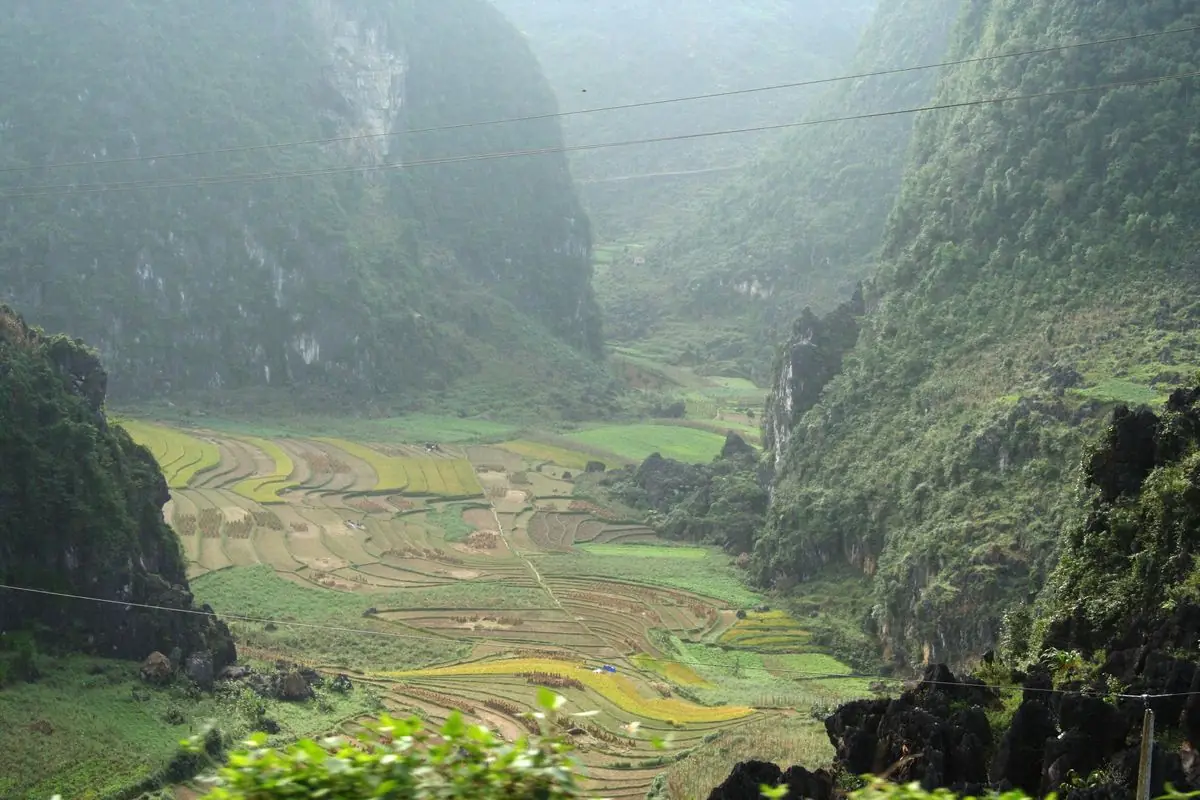
The scenery changes fast. Shortly after leaving town, you’ll find limestone mountains, terraced fields, and roads following the curves of the hillsides. As you approach Dong Van, rugged limestone formations crowd closer to the road.
Should you spend 3 or 4 days on the Ha Giang Loop?
Both itineraries can cover major highlights such as Quan Ba, Yen Minh, Dong Van, Ma Pi Leng Pass, and Meo Vac. The extra day changes how much time you get for sightseeing and how long you ride each day.
| Feature | 3 days, 2 nights | 4 days, 3 nights |
|---|---|---|
| Best for | Travelers with limited time | First-time visitors who prefer a slower pace |
| Travel pace | Relatively busy | More relaxed |
| Attractions | Major highlights | More villages and scenic stops |
| Photography time | Requires careful planning | More opportunities to stop |
| Overall experience | Many highlights in a short trip | Less rushed and more flexible |
| Cost | Generally cheaper | Higher due to the extra day |
Choose 3 days to see the main highlights
The 3-day, 2-night Ha Giang Loop itinerary is particularly popular among international travelers exploring Vietnam on a tight schedule. You’ll still experience the most impressive mountain passes and stay in local homestays, although you’ll spend a significant amount of time on the road each day.
This itinerary works best when you choose a few places you genuinely want to visit instead of trying to include Lung Cu, a Nho Que River boat trip, and every photography stop along the way. Long mountain journeys become much more tiring when you’re constantly racing against sunset.
Choose 4 days for a more relaxed adventure
Four days and three nights suit first-time visitors to the Dong Van Karst Plateau better. The extra day allows you to divide the journey into shorter sections, enjoy meals without rushing, spend a quiet morning watching the mist, and adjust your schedule when the weather changes unexpectedly.
You’ll also have more time to explore Dong Van Old Quarter, visit H’Mong and Lo Lo villages, or spend a night in Du Gia.
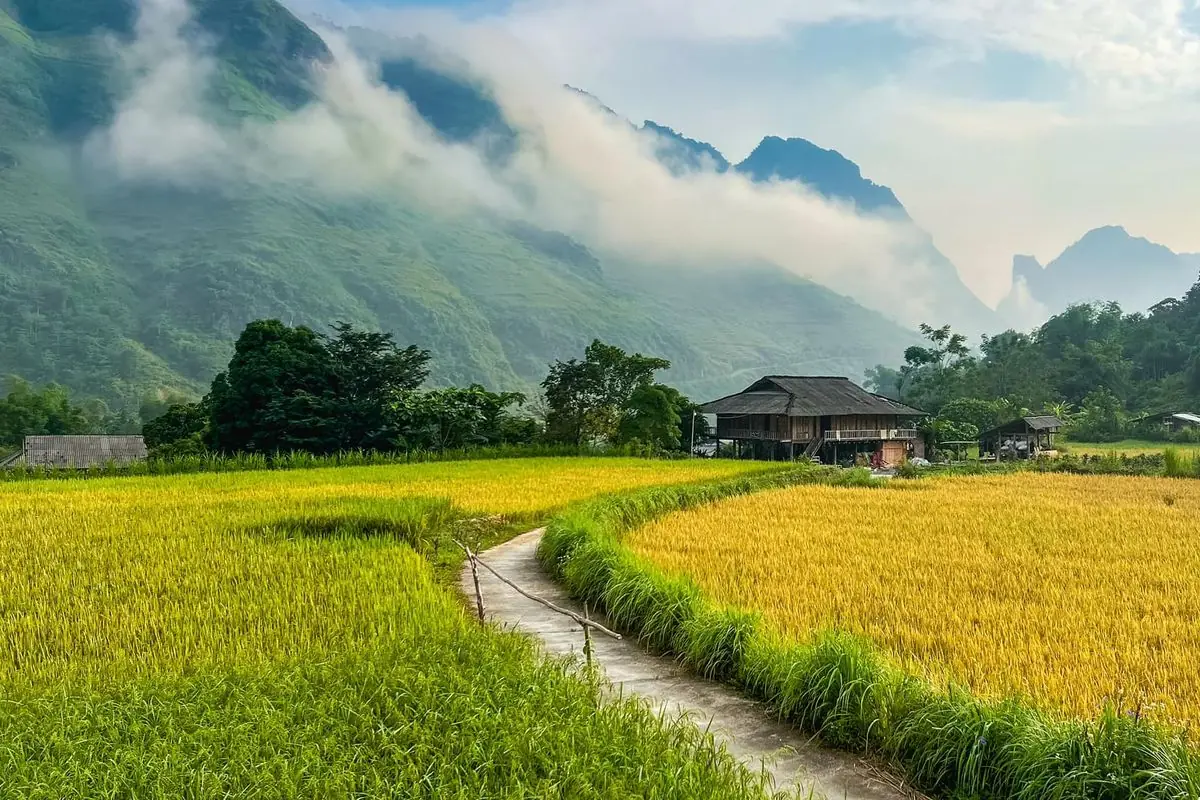
Safety, on three days or four, comes down to your actual route, the driver’s condition, weather, road conditions, and avoiding nighttime travel.
3-day Ha Giang Loop itinerary
This suggested itinerary covers many of the famous highlights in a relatively short time. The exact route may change depending on road conditions and accommodation arrangements.
- Day 1
Ha Giang - Quan Ba - Yen Minh - Dong Van
Start from central Ha Giang in the morning and follow National Highway 4C toward Quan Ba. The road gradually climbs into the mountains, the air becomes cooler, and winding bends appear one after another.
Your first memorable stop is Quan Ba Heaven Gate, where you can admire the Tam Son Valley and the surrounding mountain ranges. After lunch around Tam Son, continue through Yen Minh, Tham Ma Slope or the Nine-Turn Slope, and eventually reach Dong Van.
The road near Dong Van has plenty of photo stops, but leave enough time to reach your accommodation before dark. In the evening, take a walk through Dong Van Old Quarter and enjoy a warm local meal in the cool mountain air.
- Day 2
Dong Van - Ma Pi Leng Pass - Meo Vac - Du Gia
For many travelers, this is the most anticipated day of the entire journey.
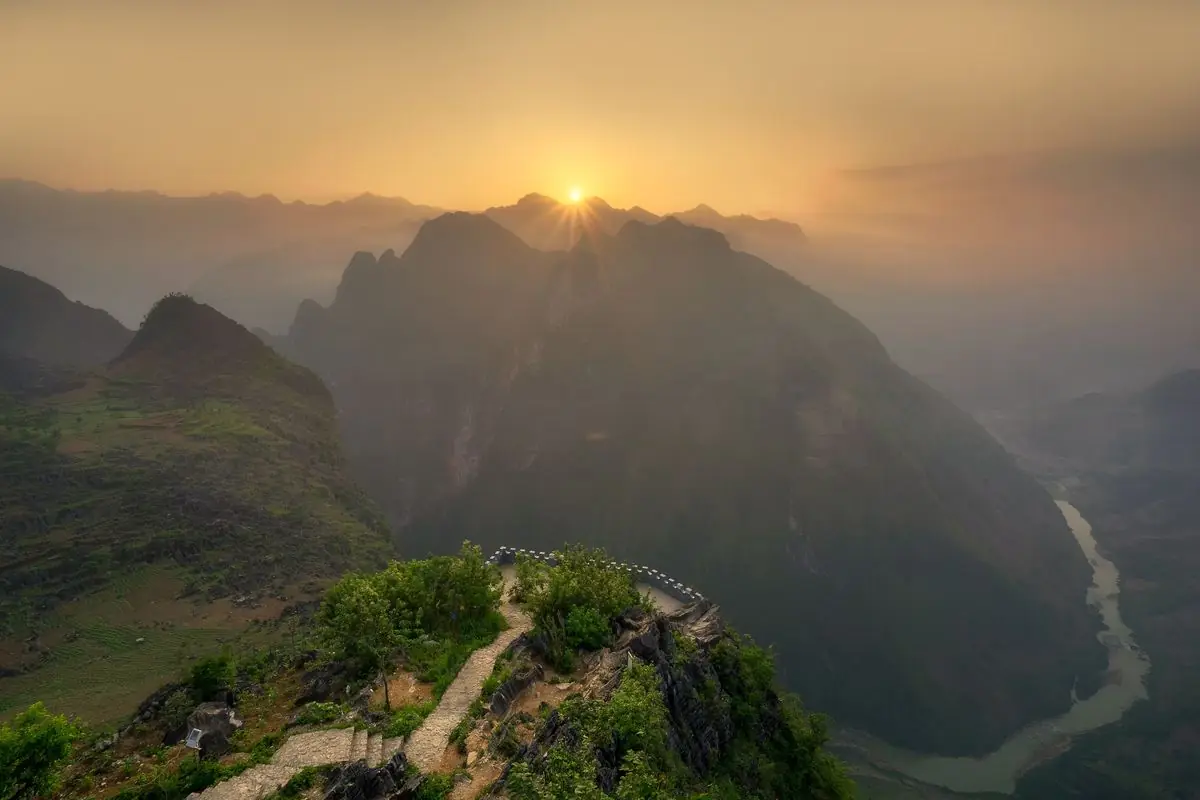
Leaving Dong Van, you’ll enter Ma Pi Leng Pass, where towering limestone mountains open onto views down into the deep valley and the turquoise Nho Que River below.
After enjoying the scenery, continue to Meo Vac before traveling through the Mau Due area toward Du Gia. Depending on road conditions and your group’s schedule, you may have time to stop at a viewpoint overlooking Tu San Canyon or take a boat trip on the Nho Que River. Reaching the boat dock adds extra travel and walking, which some three-day itineraries leave out.
Du Gia’s quiet villages and green valleys make it the overnight stop after a long day.
- Day 3
Du Gia - Ha Giang
Your final day takes you from Du Gia back to central Ha Giang.
After breakfast at your homestay, enjoy a little time around the village before setting off. It’s best not to add too many distant attractions on this day. The return journey still includes mountain roads and sections that require slow, careful riding.
Most tours aim to arrive in Ha Giang during the afternoon, giving you time to shower, relax, and prepare for your bus journey back to Hanoi.
4-day Ha Giang Loop itinerary
A four-day itinerary divides the loop into more manageable sections and is particularly suitable for travelers interested in local culture and village life.
- Day 1
Ha Giang - Quan Ba - Yen Minh
After leaving Ha Giang, spend time at Quan Ba Heaven Gate, admire the Twin Mountains, and enjoy lunch in Tam Son.
In the afternoon, continue toward Yen Minh along scenic roads winding between forests and valleys. Staying overnight in Yen Minh makes the first day less demanding, especially for travelers who have just arrived on an overnight bus from Hanoi.
- Day 2
Yen Minh - Sa Phin - Lung Cu - Dong Van
The day’s highlights include Tham Ma Slope, the Sa Phin area with the Vuong Family Mansion, and traditional villages scattered across the rocky plateau.
You can also take a detour to Lung Cu Flag Tower, near the Vietnam-China border. This side trip usually requires approximately three additional hours, including travel and sightseeing.
Afterward, return to Dong Van for the night. This arrangement leaves enough time to wander around the old quarter before the long day catches up with you.
- Day 3
Dong Van - Ma Pi Leng Pass - Meo Vac - Du Gia
Dedicate the morning to Ma Pi Leng Pass and the Nho Que River. Stop at designated viewpoints to appreciate the landscape, and consider visiting the boat dock when weather and road conditions allow.
From Meo Vac, have lunch before continuing through Mau Due toward Du Gia. Along the way, the landscape gradually changes from dramatic limestone mountains to greener valleys, farmland, and small villages.
Spend the night in Du Gia and enjoy the quieter atmosphere of rural northern Vietnam.
- Day 4
Du Gia - Ha Giang
Your final morning can be relatively relaxed. Enjoy breakfast, take a short walk around the village, and begin the return journey once daylight provides good visibility.
Another option for a four-day itinerary is traveling from Meo Vac through Bao Lam, spending the night there, and returning via National Highway 34 through Bac Me. This route offers different scenery from the Du Gia section, so check the exact itinerary before booking.
What makes Ma Pi Leng Pass so special?
Ma Pi Leng is one of the most spectacular sections of the Ha Giang Loop, connecting Dong Van and Meo Vac. The pass stretches for approximately 20 kilometers along steep mountain slopes, offering dramatic views of the Nho Que River and Tu San Canyon.
The best scenery is rarely confined to a single famous viewpoint. Sometimes, you’ll see mountain ranges stretching endlessly toward the horizon. Then, just one bend later, the river suddenly appears far below the road.
Easy Rider tour or self-driving: which should you choose?
You can do the Ha Giang Loop as a passenger with an Easy Rider, on your own motorbike with a guide, or by car or jeep with a driver.
Ha Giang Easy Rider tours
No riding experience needed
An Easy Rider tour means sitting behind a local motorbike driver who handles the riding while you enjoy the scenery. The driver is responsible for controlling the motorbike, allowing you to focus on the mountains, villages, and viewpoints.
This option is particularly suitable for travelers who have never ridden a motorbike, aren’t familiar with mountain roads, or don’t hold a motorcycle license legally recognized in Vietnam.
As a passenger, you can ride without a motorcycle license. However, your driver must hold the appropriate license, the motorbike must meet legal requirements, and both rider and passenger must wear suitable helmets.
An Easy Rider helps you avoid the risks that come from your own lack of riding experience, but motorcycle travel still carries a risk of accidents. That’s why the driver’s qualifications and the tour operator’s safety standards matter far more than attractive promotional photos.
Self-driving the Ha Giang Loop
For experienced riders
Riding your own motorbike gives you more independence and a direct connection with the journey. You can experience the winding roads yourself and adjust your pace according to your ability.
The Ha Giang Loop isn’t the place to learn how to ride a motorbike for the first time. Beyond its continuous bends, the route includes steep climbs, wet surfaces, trucks approaching from the opposite direction, fog, and sections undergoing road repairs.
For international visitors, riding experience alone isn’t enough. You also need a motorcycle driving license legally recognized in Vietnam and valid for the vehicle category you’re riding. Joining a guided self-driving tour doesn’t remove this legal requirement.
Car or jeep tours
A comfortable alternative
A car tour with a professional driver is worth considering for families, groups of friends, or anyone uncomfortable spending several hours a day on a motorbike.
You can still visit Quan Ba, Dong Van, Ma Pi Leng Pass, and many of the main scenic viewpoints.
Traveling by car also means less exposure to rain, strong winds, and cold temperatures, although mountain driving still carries risks.
Some operators offer open-top jeep tours for a more adventurous experience. Before booking, ask about the vehicle type, seat belts, weather protection, and passenger capacity.
Which international driving licenses are valid in Vietnam?
International travelers planning to ride themselves should check this before anything else.
Under the general rules, Vietnam recognizes International Driving Permits (IDPs) issued under the 1968 Vienna Convention by participating countries, provided they’re accompanied by the appropriate valid national driving license. Separate recognition agreements may apply to certain countries.
Your IDP must also cover the correct motorcycle category. A car-only driving license doesn’t authorize you to ride a motorbike, even when you have an international driving permit.
Driving license rules for travelers from the US, UK, Australia, South Korea, China, and Thailand
| Country | Can you legally ride a motorbike in Vietnam? |
|---|---|
| United States | A standard US-issued 1949 IDP isn’t recognized through Vietnam’s 1968 Convention framework. You’ll need another driving license recognized under Vietnamese law. |
| United Kingdom | You can use a valid 1968 IDP together with your UK driving license, provided both cover the correct motorcycle category. |
| Australia | A standard Australian 1949 IDP doesn’t meet Vietnam’s general 1968 Convention requirements. |
| South Korea | A bilateral agreement allows recognition of qualifying Korean 1949 IDPs together with the national license, subject to the motorcycle category and applicable conditions. |
| Mainland China | A regular Chinese driving license isn’t automatically recognized for riding motorcycles in Vietnam, and the standard 1968 IDP mechanism doesn’t apply in the same way. |
| Thailand | A valid 1968 IDP can be used alongside a Thai driving license covering the appropriate motorcycle category. |
For South Korean citizens, the bilateral agreement allows qualifying IDPs to be used for up to one year from the date of entry, without exceeding the permit’s validity. Anyone planning to ride a motorcycle needs the appropriate category indicated on their permit.
Travelers from Canada and New Zealand should also avoid assuming that their standard 1949 IDPs are valid in Vietnam.
For Vietnamese riders, licenses issued under the new classification system introduced in 2025 include category A1 for motorcycles up to 125cc and category A for motorcycles above 125cc. Older A1 and A2 licenses issued before 2025 remain subject to transitional rules governing which motorcycles their holders can operate.
Certain low-powered motorbikes with engines no larger than 50cc and a maximum design speed of 50 km/h don’t require a driving license for riders aged 16 or older. These bikes struggle on the Ha Giang Loop’s steep mountain roads and long distances.
Before renting a motorbike, make sure your license is valid for the exact vehicle you’ll be riding. Don’t rely solely on a rental company’s verbal assurance that your license is acceptable.
What insurance do you need for the Ha Giang Loop?
The insurance on the bike and the insurance covering you are separate things:
- Compulsory third-party liability insurance: Covers certain legal liabilities arising from damage or injuries caused to third parties.
- Travel or personal accident insurance: May cover medical treatment, emergency assistance, medical evacuation, or other benefits depending on your policy.
Some travel insurance policies exclude motorcycle accidents when the rider doesn’t have a valid license, isn’t wearing a helmet, or is operating a motorcycle above the policy’s permitted engine capacity.
Even when you’re joining an Easy Rider tour, check whether your policy covers you as a motorcycle passenger. Don’t assume you’re protected simply because the tour description says "travel insurance included."
Is the Ha Giang Loop dangerous?
Yes, the Ha Giang Loop involves genuine risks, even when you’re traveling as an Easy Rider passenger.
On March 29, 2026, a 19-year-old British tourist was involved in a motorcycle accident while riding as a passenger with a driver on National Highway 4C in the Thuan Hoa area. She died from her injuries on April 2. In late May 2026, investigators initiated criminal proceedings against the driver over allegations that he failed to pay attention and maintain a safe following distance, resulting in a collision with a motorcycle ahead and then an oncoming truck.
The case demonstrates that having a local driver doesn’t guarantee complete safety.
There are no widely published official statistics specifically documenting the total number of deaths or injuries across the entire Ha Giang Loop. Figures circulating online shouldn’t be treated as verified accident rates without reliable supporting data.
Since April 2026, local authorities have increased vehicle inspections and enforcement along the route. Violations receiving attention include speeding, driving in the wrong lane, alcohol-related offenses, and operating vehicles without the required documentation.
How to choose a reliable Ha Giang Loop tour operator
Before booking, check the following:
- Licensed operator: The company should hold the appropriate travel service business license rather than operating solely as a motorbike rental shop or homestay selling informal tours.
- Clear arrangements: Driver details, guides, contracts, vehicles, and itineraries should be clearly documented.
- Motorbike maintenance: Bikes should be inspected and maintained, with properly fitting helmets, protective equipment, and suitable rain gear available.
- Safety procedures: The operator should provide a safety briefing, prohibit drinking and riding, and avoid riding mountain passes after dark.
- Insurance and emergencies: Ask for clear insurance information, accident response procedures, and emergency contact details.
Ask whether the company will change the itinerary or stop the journey during heavy rain, landslides, or road closures. A responsible operator will drop planned attractions to keep the group safe.
What’s the best month to do the Ha Giang Loop?
The season you choose can make a big difference to the scenery and your experience. Ha Giang has flower seasons, rainy months, cold misty winters, and stretches of clear mountain weather.
| Months | Typical conditions | What to keep in mind |
|---|---|---|
| January-February | Cold weather, possible peach and plum blossoms | Bring warm clothing and watch for fog |
| March-April | Generally more comfortable spring conditions | Rain is still possible |
| May-September | Lush green mountains and frequent rainfall | Greater risk of slippery roads and landslides |
| October-November | Buckwheat flower season, cool to cold weather | Popular travel period |
| December | Some remaining buckwheat flowers, colder temperatures | Good thermal clothing is essential |
October-November: the buckwheat flower season
October and November bring fields of small buckwheat flowers scattered among the limestone mountains.
For the 2026 Ha Giang buckwheat flower season, approximately 400 hectares were planted in three phases to extend flowering from October through December. Popular flower-viewing areas include Lung Cam Village, Pao’s House, Tham Ma Slope, Lung Cu, and several locations along National Highway 4C.

The 12th Buckwheat Flower Festival, themed "Echoes of the Rocky Plateau," opened on October 25, 2026, in Dong Van, with activities scheduled through the end of December.
This is a busy season, so book homestays early, especially for weekends.
May-September: beautiful green scenery but more rain
During the rainy season, the mountains turn deep green and streams run full. Mountain roads, though, can become slippery, with increased risks of falling rocks and landslides.
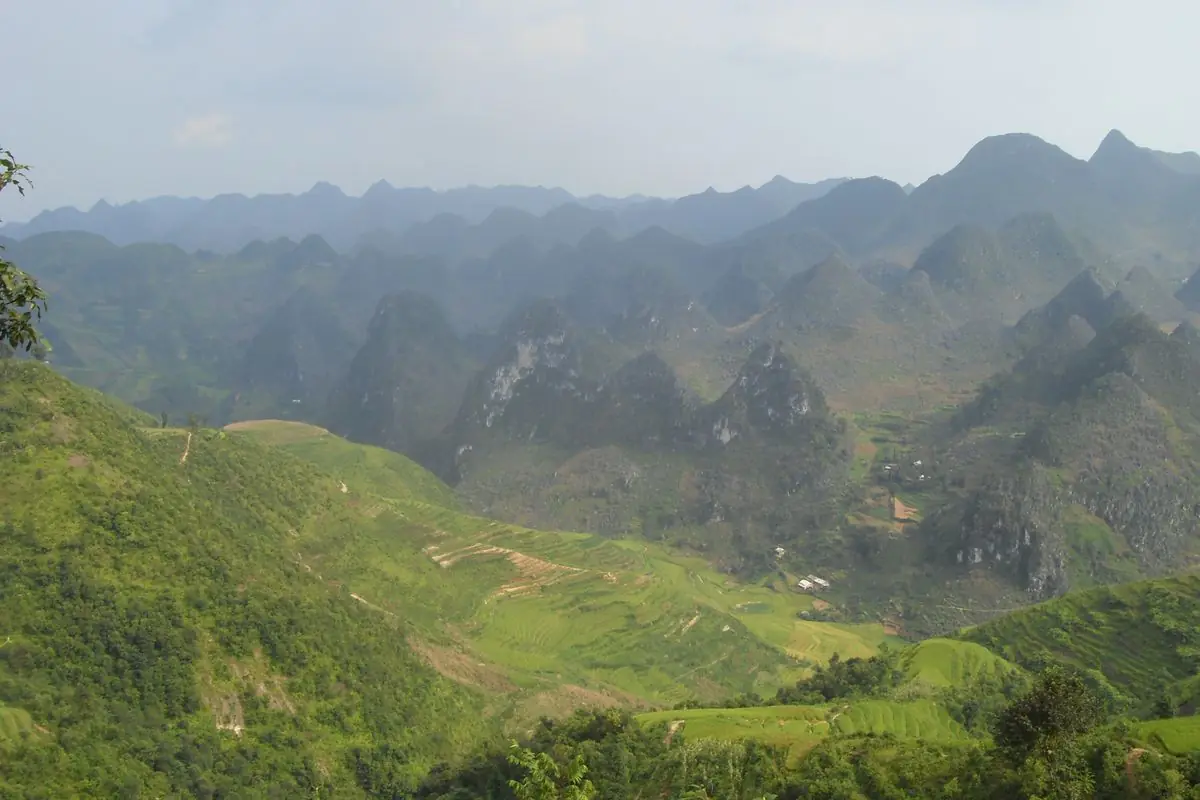
National Highway 4C experienced landslide-related disruptions in 2025 and again during the 2026 rainy season. A flexible itinerary is particularly important when heavy rainfall continues for several days.
December-February: for travelers who love winter scenery
Winter in Dong Van is significantly colder than Hanoi, especially when riding a motorbike across high mountain passes. In January, daytime temperatures can sometimes remain only a little above 10°C, with considerably colder conditions at night.
Bring a windproof jacket, long trousers, gloves, thick socks, and thermal layers. Sunshine in central Ha Giang says little about the plateau, where temperatures and wind can change noticeably.
How much does a Ha Giang Loop tour cost in 2026?
Tour prices depend on the number of days, transportation, accommodation quality, and included services.
Approximate per-person prices from advertised packages:
| Tour type | 3 days, 2 nights | 4 days, 3 nights |
|---|---|---|
| Easy Rider from Ha Giang | VND 4.2-4.7 million | VND 5.2-5.7 million |
| Guided self-driving from Ha Giang | VND 3.6-3.75 million | VND 4.55-4.6 million |
| Easy Rider from Hanoi, including transfers | Approximately USD 195-250 | Approximately USD 215-285 |
Each operator sets its own rates.
Easy Rider packages commonly include the motorbike, local driver, fuel, meals, homestay accommodation, and helmet. Some packages also include an English-speaking guide, round-trip sleeper buses from Hanoi, entrance tickets, insurance, or private rooms.
Before paying, confirm the total price and whether it includes:
- Round-trip transportation between Hanoi and Ha Giang.
- Accommodation before the tour, especially when your overnight bus arrives before dawn.
- Private room supplements, Nho Que River boat tickets, and attraction entrance fees.
- Border-area permits where required for your itinerary and circumstances.
- Personal expenses, drinks, and optional tips.
Once every extra is added, a cheaper tour can end up costing more. A transparent price breakdown and reliable safety arrangements are worth more than a small discount.
How do you get from Hanoi to Ha Giang?
The distance from Hanoi to Ha Giang is approximately 280-300 kilometers. The usual way up is by bus, limousine, or sleeper cabin, then a motorbike or tour from Ha Giang itself.
| Transport | Approximate travel time | One-way price |
|---|---|---|
| Standard sleeper bus | 5.5-7 hours | VND 250,000-350,000 |
| Limousine | 5-6 hours | VND 320,000-450,000 |
| VIP cabin bus | 5.5-7 hours | VND 380,000-650,000 |
Prices and journey times vary by operator, travel date, pickup location, and seat type.
Some buses advertise seats starting at approximately VND 200,000-260,000 one way, while more comfortable services generally cost more.
Many overnight buses depart between 9 PM and 11 PM, arriving in Ha Giang around 4 AM to 6 AM. Depending on the operator, pickup points may include My Dinh, Giap Bat, Gia Lam, Hanoi’s Old Quarter, or Noi Bai International Airport.
Should you take an overnight bus and start the loop that morning?
An overnight bus saves time, though sleeping on it is hit and miss. Arriving in Ha Giang at 4 AM and immediately heading into the mountains can leave you exhausted before the first day is over.
A more comfortable approach is choosing a tour that provides somewhere to rest, shower, and have breakfast before departure. For self-driving travelers, getting enough sleep and thoroughly checking your motorbike before setting off are especially important.
What should you pack for the Ha Giang Loop?
Leave the large suitcase at home and pack what you’ll actually use in the mountains.
- Documents: Passport or national identification, the correct driving license and valid IDP when self-driving, plus any required border-area permit.
- Clothing: Windproof jacket, long trousers, closed-toe shoes, rainwear, and seasonal warm layers.
- Protective equipment: Proper motorcycle helmet, gloves, and elbow and knee protection.
- Personal essentials: Regular medication, sunscreen, portable charger, drinking water, and cash.
- Phone preparation: Download offline maps, save your tour operator’s contact details, and keep your accommodation address accessible.
Before departure, check the weather forecast and current road conditions along National Highway 4C. Agree on the day’s stops with your driver or guide so everyone understands the plan.
If the weather turns bad, postpone or shorten the day’s ride, however good the photos online look.
Frequently asked questions
Is 3 or 4 days better for the Ha Giang Loop?
Three days and two nights are suitable for travelers with limited time who want to see the main highlights. Four days and three nights are more comfortable for first-time visitors, photography enthusiasts, and travelers interested in exploring villages or spending more time in Dong Van, Ma Pi Leng, and Du Gia.
Can I do the Ha Giang Loop without a motorcycle license?
Yes. You can join an Easy Rider tour as a passenger or travel by car with a professional driver. The person operating the vehicle must meet the legal driving requirements. International visitors wishing to ride their own motorbikes need to check their national license, IDP, and any recognition agreements applicable to their country.
Have people died on the Ha Giang Loop?
Yes. One documented case involved a 19-year-old British tourist who died following a motorcycle accident on March 29, 2026. However, there are no widely published official statistics for the total number of deaths specifically across the entire Ha Giang Loop, so there's no reliable fatality rate for individual tour types.
How much is a Ha Giang Easy Rider tour from Hanoi?
A three-day, two-night Easy Rider tour with transfers from Hanoi generally costs around USD 195-250 per person based on 2026 reference prices. Four-day tours are usually more expensive. Actual prices depend on accommodation, group size, attraction fees, insurance, and what's included in the package.
What is the best month to visit the Ha Giang Loop?
October and November are popular choices because of the buckwheat flower season and relatively cool weather. March and April are also worth considering for spring scenery. The rainy season, roughly May to September, brings lush landscapes but increased landslide risks, while December through February can be very cold on high mountain passes.