Where should first-time visitors eat banh cuon in Hai Phong?
Hai Phong's steamed rice rolls are a good breakfast when you want something freshly made, soft and savoury without a heavy meal. Not every famous shop is serving at dawn, so anyone leaving before 7 am needs a place that genuinely opens early.
 17 min read
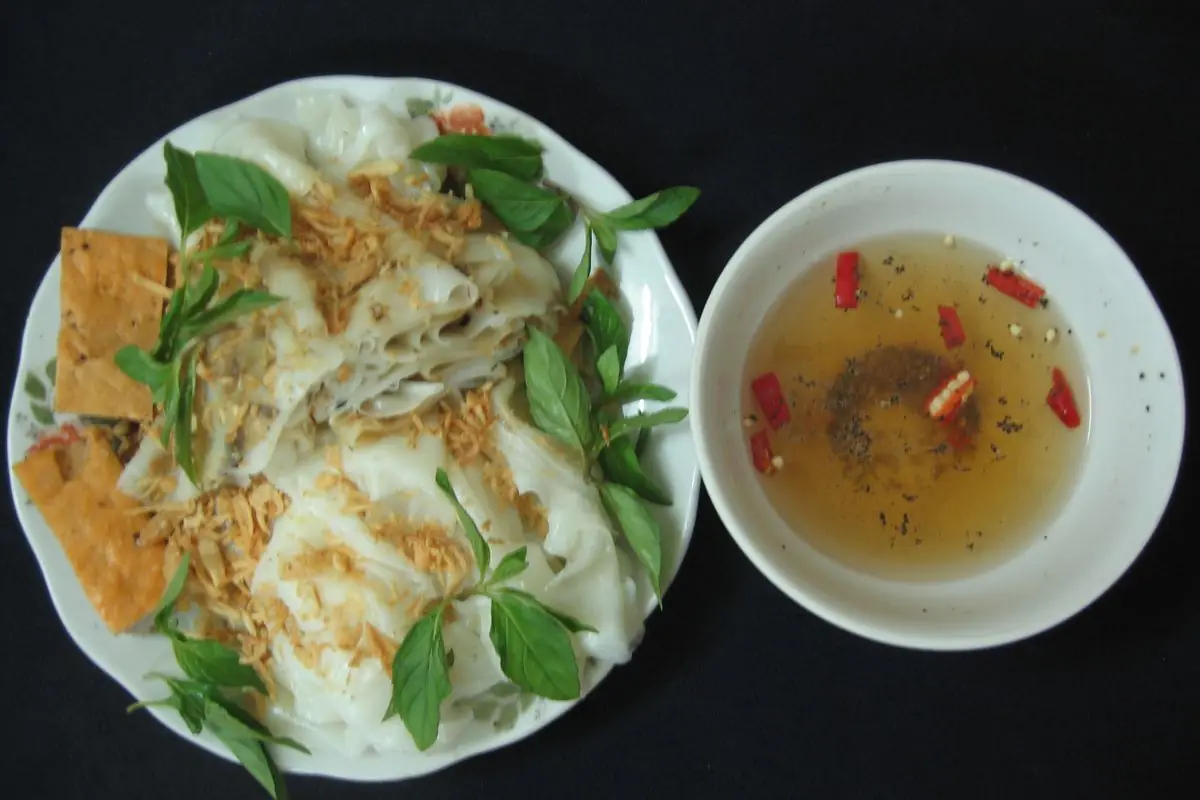
Rice rolls with fried shallots and a dipping bowl.
For an easy first breakfast, head to Banh cuon Quyen at 222 Hai Ba Trung, which opens around 7 am. Banh cuon Tinh at 144B Da Nang Street opens even earlier, around 5 am. Start with pork-and-wood-ear-mushroom rice rolls, ask for cha que if available, and taste the warm dipping sauce before adding chilli.
What exactly is banh cuon in Hai Phong?
Banh cuon is a Vietnamese dish made from a thin sheet of steamed rice batter. The cook ladles a small amount of liquid batter onto a stretched cloth above a steaming pot, spreads it into a delicate round and covers it briefly. Once cooked, the sheet is lifted away, folded or rolled, and served while warm. You may see the cook making several portions one after another instead of preparing every plate ahead.
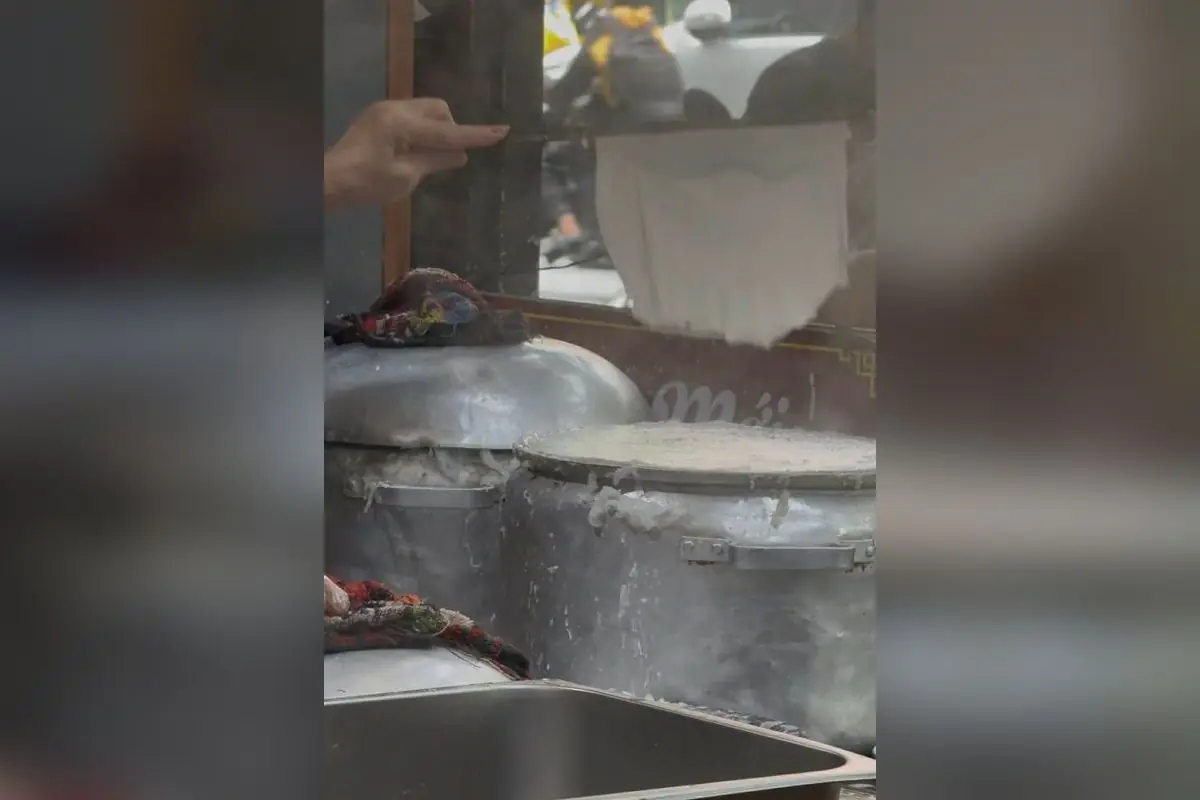
The technique is simple to watch, but the result depends on timing. A good rice sheet should be soft and moist, with just enough elasticity to hold together when lifted with chopsticks. It should not be brittle or gummy. At a busy stall, a fresh batch often travels straight from the steaming cloth to the plate. That short journey matters because the rice sheets are nicest before they cool and stick together.
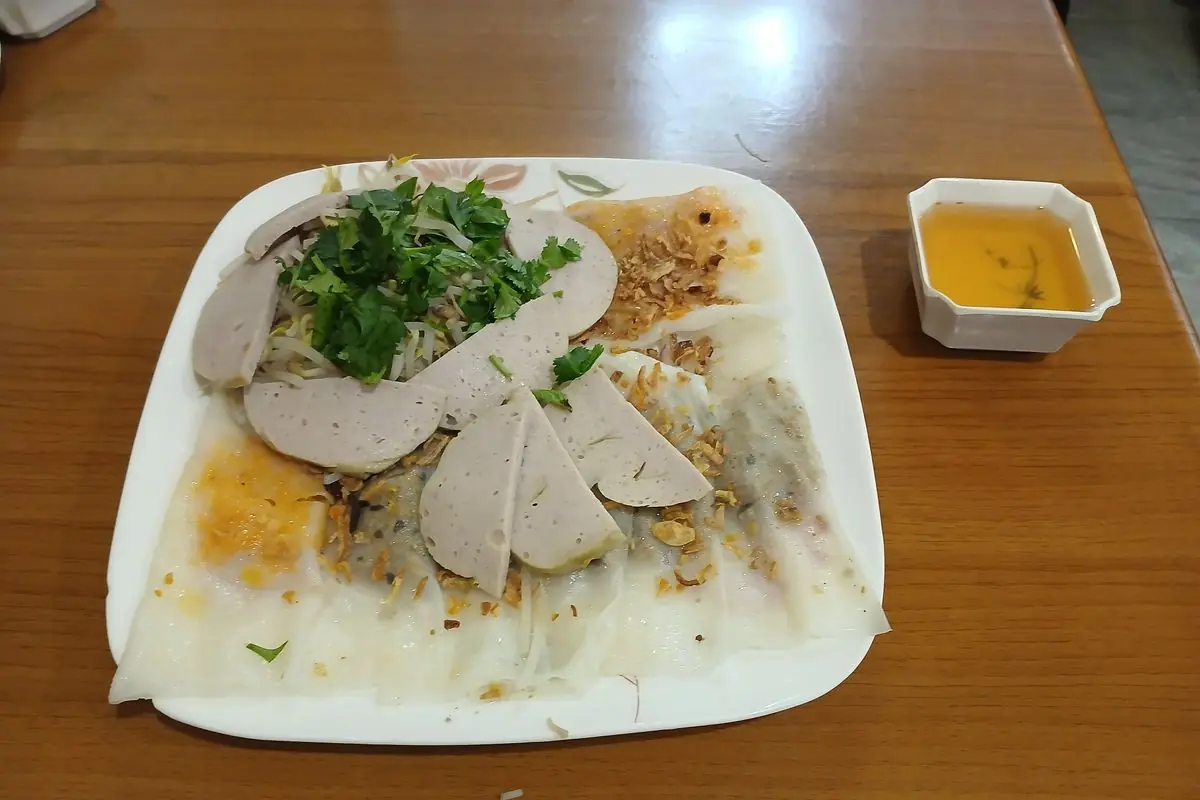
There are two useful starting orders. Banh cuon nhan thit has a savoury filling, usually minced or chopped pork with wood-ear mushrooms. The mushrooms contribute a slightly crunchy texture, while the cooked pork adds flavour without needing a thick sauce inside the roll. Banh cuon khong nhan is the plain version without a filling. It lets you focus on the rice sheets, fried shallots and dipping bowl.
Some menus call plain rice rolls banh cuon chay. Be careful with that wording if you are vegetarian. In everyday ordering, chay on a rice-roll menu can describe an unfilled sheet, not a fully vegan dish. The dipping sauce may contain pork-bone stock and the plate may be topped with pork floss or served with pork sausage. Ask about each component; the dish name alone tells you little.
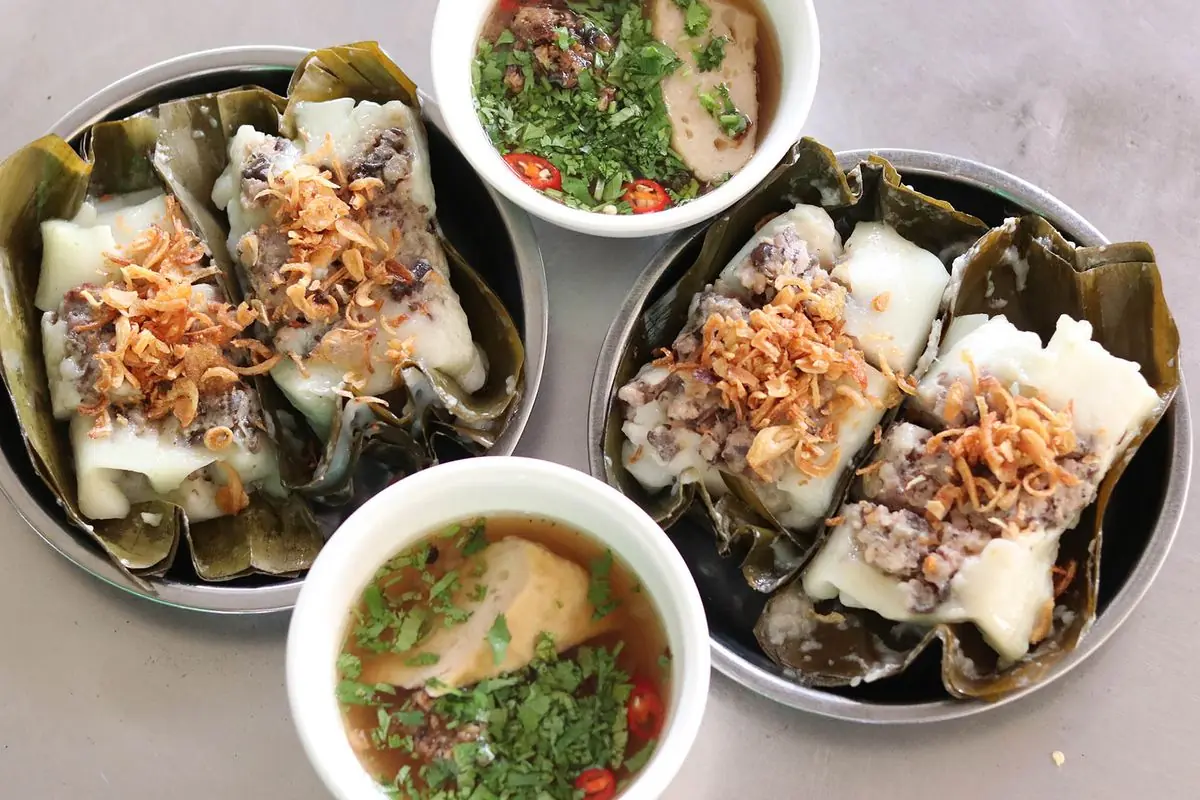
A typical plate can come with crisp fried shallots scattered over the rice sheets. Depending on the shop, you might also see pork floss, sliced pork sausage, a small serving of herbs or a separate bowl holding meatballs. There is no single compulsory set of toppings across every Hai Phong restaurant. That makes the first look at the menu, or at a nearby table, surprisingly helpful.
The warm dipping sauce is the detail to notice
At many Hai Phong shops, the thing you notice first is the warm or hot dipping sauce. Instead of relying only on diluted fish sauce, cooks may combine fish sauce with pork-bone stock, producing a savoury liquid with a gentle sweetness. Some use local Cat Hai fish sauce. The balance of salt, sweetness and acidity varies from shop to shop.
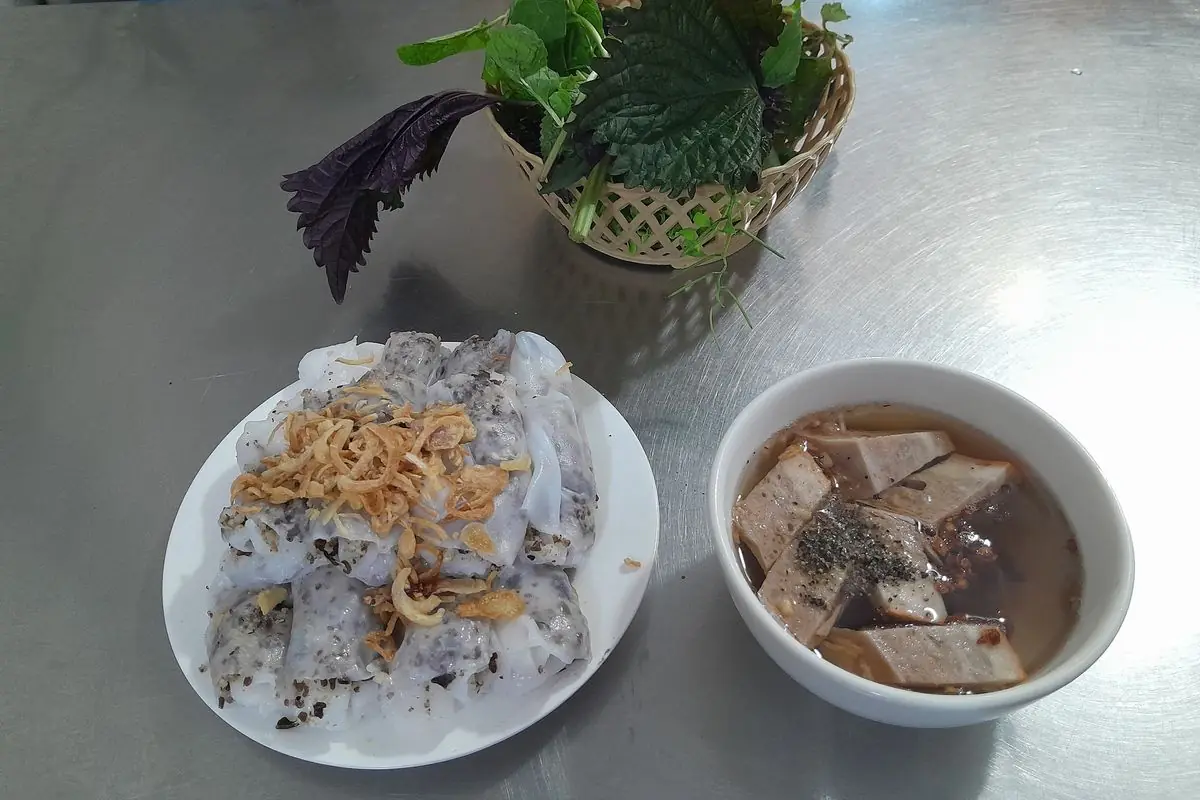
Start with one small piece of rice roll. Dip it lightly, try it, and then take another bite with a slice of pork sausage. Chilli, vinegar, garlic or citrus may be available for adjustment. Add them gradually. When a dipping bowl has been carefully seasoned, tipping in a large amount of chilli before your first taste can mask the flavour you came to discover.
The bowl sometimes contains small pork meatballs or pieces of sausage. This is not a separate soup course, although some diners enjoy sipping the warm liquid. Its main purpose is to season the rice sheets and meat. It can taste rich without needing to be aggressively salty, especially when bone stock forms part of the mixture.
How is Hai Phong banh cuon different from Hanoi’s?
You will find steamed rice rolls throughout northern Vietnam, so it would be misleading to say that only Hai Phong uses pork, mushrooms or cinnamon pork sausage. Hanoi has all of those things too. Its familiar hot rice rolls often contain pork and wood-ear mushrooms, and some shops offer plain Thanh Tri-style rice sheets or egg variations. The broader family resemblance is obvious as soon as the plate arrives.
A more useful comparison is the serving style and sauce. Many Hanoi stalls offer a sweet-sour fish sauce mixture at room temperature. Many Hai Phong sellers prefer a warm fish-sauce dipping bowl with a noticeable contribution from pork stock. The distinction is a general tendency, and cooks in both cities vary. You can find warm broths accompanying rice rolls elsewhere in northern Vietnam as well.
Another mistake is trying to identify a city by whether the cook folds the sheet into a square or rolls it into a tube. Both are practical ways of serving steamed batter, and individual shops have their own methods. The texture of the filling, the dipping bowl and the available pork sides tell you more about the meal than the precise shape of each roll.
If you have eaten banh cuon in Hanoi before, there is no need to arrive expecting an entirely different food. Instead, pay attention to how the warm sauce changes each bite. A plain roll dipped in a stock-enriched bowl may taste more savoury than the same sheet with a sharper, cooler sauce. That is the sort of small regional variation worth traveling for.
And how does it compare with Lang Son egg rice rolls?
Lang Son is especially associated with banh cuon trung, a rice-roll variation built around a chicken egg. The egg is cracked onto the steaming rice sheet, which is then folded around it. Some versions leave the yolk soft. A hot bowl of broth or meat-based dipping liquid is part of the experience at many Lang Son stalls, although recipes differ.
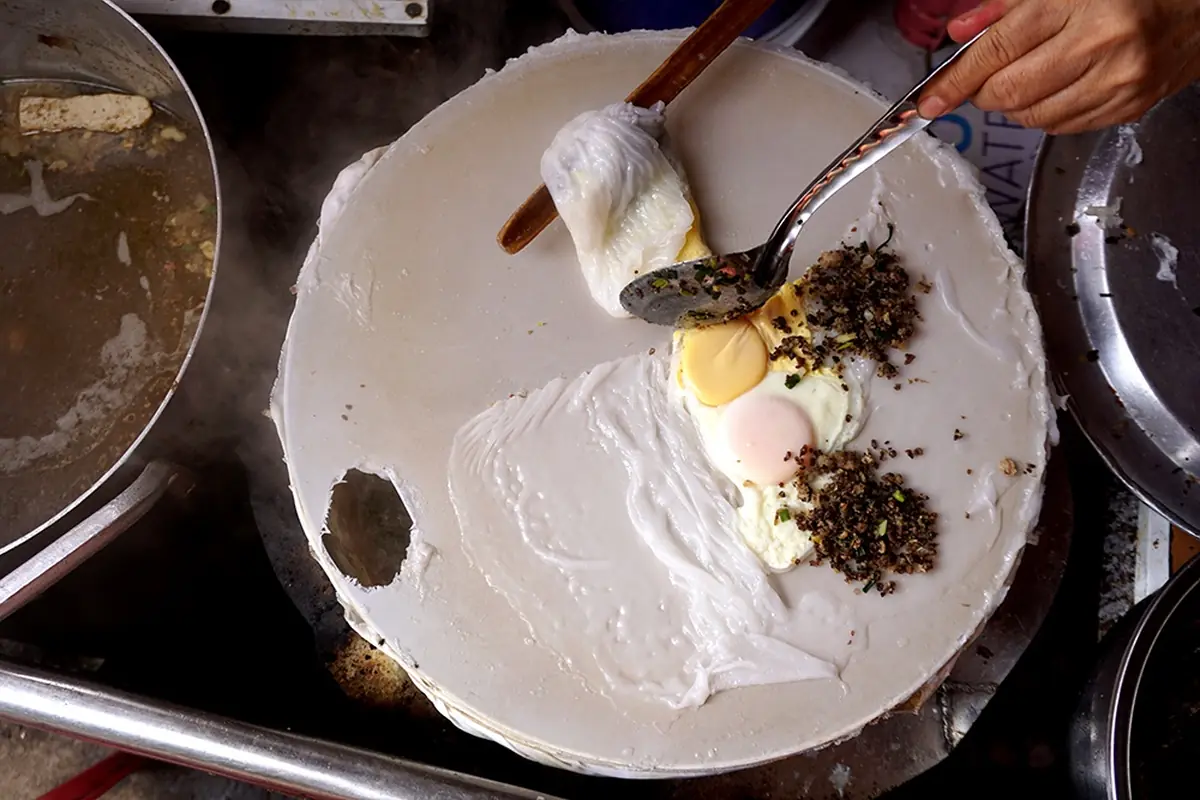
For a first taste of Hai Phong itself, the straightforward pork-and-mushroom version with cha que and warm dipping sauce is a more reliable starting point. Save the egg comparison for a second plate if the restaurant lists it, or for a separate trip to Lang Son. Both destinations have their own ways of making the same rice-sheet technique feel local.
Which toppings should you try first?
Cha que is the first extra to consider. It is Vietnamese pork sausage with a cinnamon aroma, usually sliced before serving. The firm texture provides contrast against the soft rice roll, and its savoury seasoning works well with the warm dipping sauce. If your plate already includes a few slices, taste them before ordering more.
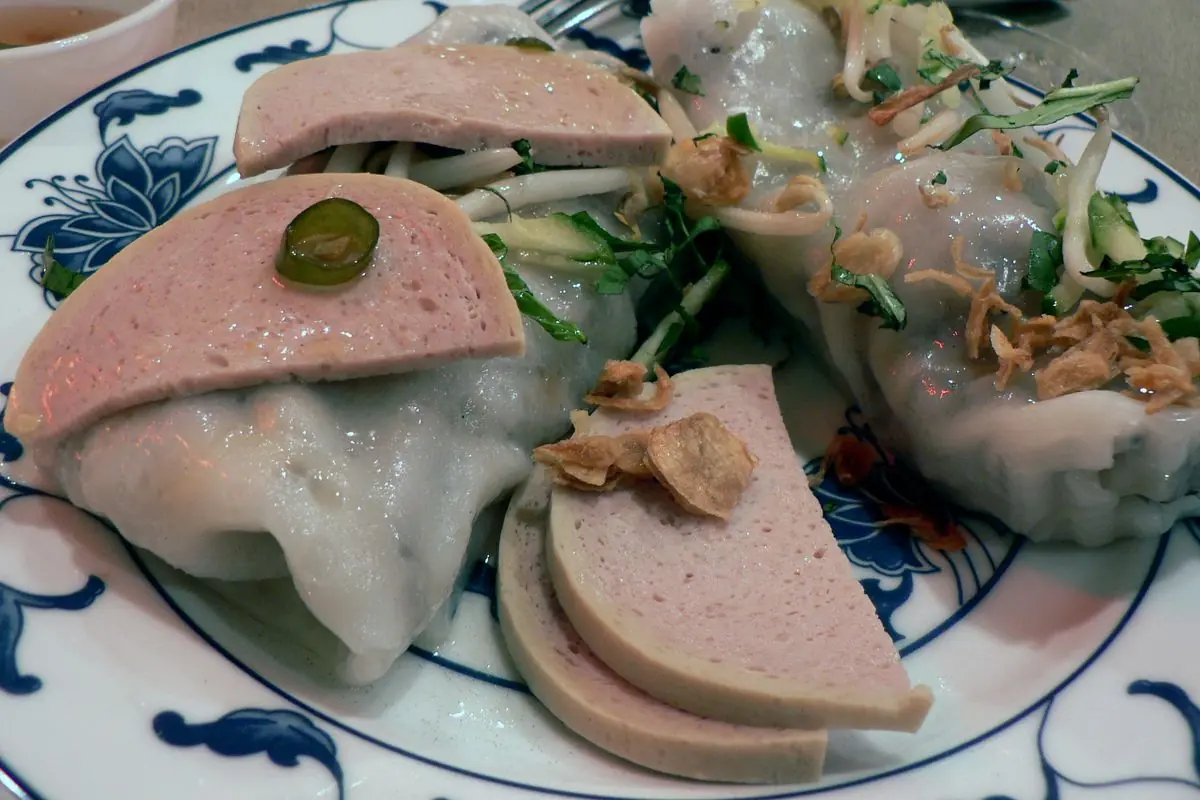
Cha vien refers to pork meatballs or formed pork pieces. At some Hai Phong stalls these sit in the warm dipping bowl, taking on the flavour of the sauce. They are not guaranteed at every restaurant. Gio lua is a smoother Vietnamese pork sausage with a milder taste, which can be a good option for diners who find cinnamon-flavoured sausage too assertive.
Ruoc, or pork floss, adds a light, savoury topping. Hanh phi, fried shallots, provides aroma and crunch. Neither is the same as the filling inside the rolls. The restaurant may add them automatically, so tell the cook in advance if you do not eat shallots or pork floss.
Egg rice rolls make a heartier breakfast, but availability is menu-dependent. A small street-side shop may specialise in only plain and pork-filled rolls, while a larger restaurant may have several egg or meat options. Order from what is actually being prepared that morning, since not every dish described online is always available.
Is banh cuon with squid cakes a Hai Phong speciality?
The phrase banh cuon cha muc appears frequently in food searches, and it sounds plausible in a major port city. The pairing of steamed rice rolls with fried, hand-pounded squid cakes is best known as a Ha Long speciality in Quang Ninh. In Hai Phong, the more familiar accompaniments at traditional rice-roll shops are pork sausage, pork meatballs and warm fish sauce.
Some Hai Phong restaurants do offer squid cakes, and seafood is readily associated with the region’s wider food culture. They are not the default side on a normal banh cuon order. Ask explicitly whether the shop has cha muc before planning a meal around it.
If you are visiting both Hai Phong and Ha Long, it makes sense to try the typical pork-side version in Hai Phong and save the squid-cake version for Ha Long. You will get two distinct food experiences instead of searching for an exact match in the wrong city.
Where to eat banh cuon in Hai Phong, by neighborhood
Most travelers planning a short Hai Phong breakfast will be choosing between the older central streets, the traditional Le Chan area and the Ngo Quyen side of the city. The addresses below are practical reference points. Opening times are a guide and can change during holidays, quiet days or when a shop runs out of food.
Loading map…
- Banh cuon Quyen: 222 Hai Ba Trung
- Banh cuon Ba Bay: 66 Cat Cut
- Banh cuon Tinh: 144B Da Nang Street
- Banh cuon Quyen, Van Cao: 99 Van Cao
- Banh Cuon Hai Phong 1987: 8 Alley 99 Cau Dat
- Banh cuon Bich Hieu: 51 Du Hang
- Banh cuon Ha Chi: 72 Hang Kenh
| Area | Shop and address | Typical hours | Best reason to go |
|---|---|---|---|
| Old center, Hai Ba Trung | Banh cuon Quyen, 222 Hai Ba Trung | 7 am-9:30 pm | Easy first stop, central location, breakfast after 7 am |
| Le Chan, Cat Cut | Banh cuon Ba Bay, 66 Cat Cut | Sometimes 6-10:30 am and 3-10:30 pm, sometimes 10 am-9:30 pm | Established name; phone ahead for morning plans |
| Ngo Quyen, Da Nang Street | Banh cuon Tinh, 144B Da Nang | 5-11 am and 4:30-10 pm | A very early breakfast |
| Ngo Quyen, Van Cao | Banh cuon Quyen, 99 Van Cao | Phone this branch for its hours | Convenient if staying near Van Cao |
| Old center, Cau Dat | Banh Cuon Hai Phong 1987, 8 Alley 99 Cau Dat | 10:30 am-2 pm and 5-10:30 pm | Lunch or dinner, not an early breakfast |
| Le Chan, Du Hang | Banh cuon Bich Hieu, 51 Du Hang | 6 pm-2 am | Late-night rice rolls |
| Le Chan, Hang Kenh | Banh cuon Ha Chi, 72 Hang Kenh | About 5-11 pm, sometimes different | Neighborhood option, hours should be confirmed |
For first-time visitors: Quyen, 222 Hai Ba Trung. This address is on Hai Phong’s official food-tour list, and the phone number is 0934 222 788. Its morning opening makes it easy to fit into an ordinary day. Ask for pork-filled rolls and whatever pork sausage is being served that day. Quyen also has other branches, so type the complete street number into your map, not just the brand name.
For a traditional stop in Le Chan: Ba Bay, 66 Cat Cut. The name appears in Vietnamese as Bà Bảy or Bà Bẩy; the street address is the more dependable way to identify the shop. The shop is known for thin rice rolls, pork-and-mushroom filling and warm dipping sauce. Its hours are not settled: sometimes it opens early in the morning and reopens in the afternoon, sometimes service begins at 10 am. Call 0982 127 138 if you are counting on a 6:30 am breakfast.
For a particularly early start: Tinh, 144B Da Nang Street. It serves from around 5 am until 11 am, then again in the late afternoon and evening. That suits people leaving the city early.
Near Van Cao: Quyen, 99 Van Cao. This branch saves you a trip back to Hai Ba Trung. The hours at number 222 do not apply to every branch; check this one separately.
Later meals near Cau Dat: Hai Phong 1987, 8 Alley 99 Cau Dat. It opens in the late morning, closes after lunch and reopens for the evening. It suits somebody whose train arrives near noon or who wants steamed rice rolls for dinner. Early risers should look elsewhere. The shop’s phone number is 078 838 0380. The city’s food-tour list names Ngoc Huong for the Alley 99 Cau Dat area instead, so go by the address and the sign on arrival to be sure you have found the right shop.
For a late dinner: Bich Hieu, 51 Du Hang. Opening from evening until 2 am, it suits night owls. For the Hang Kenh area: Ha Chi, 72 Hang Kenh. With unclear opening hours, it works best as a handy stop when you happen to be nearby. There is no benefit to crossing town for a closed shop when you could choose a venue closer to your accommodation.
How much does a plate cost in 2026?
At well-known rice-roll shops in central Hai Phong, budget VND 30,000-50,000 per ordinary serving. Prices vary by shop, and this is only a guide. Plain rolls may cost less, while egg, extra pork sausage, meatballs or a drink can increase the bill.
Expect about VND 15,000-35,000 at Ba Bay, 66 Cat Cut, and VND 30,000-50,000 for Quyen at 208 Hai Ba Trung. The Quyen range for number 208 may not match the price at number 222, even though both belong to the same brand.
Older search results still repeat 2023 prices, and some delivery menus include prices for small add-ons rather than complete meals. A low number next to a photograph does not always represent a full plate. Delivery, packaging and extra toppings can also change the total. Ask how much the basic portion costs before agreeing to additional sausage or egg.
Two people planning to taste several Hai Phong dishes in one morning can start with one regular portion each and leave the extra toppings for later. You can see how filling the rice rolls are and then decide whether to have another small snack later. This usually makes the morning more enjoyable than trying to complete a long food checklist at the first table.
What time should you go for breakfast?
Before 7 am, there are fewer dependable choices. Banh cuon Tinh opens at 5 am, but confirm first if you have a bus or boat to catch. Ba Bay’s opening times are inconsistent, so phone ahead before relying on it this early. A famous name is not useful if the doors are still closed.
From 7 to 9 am is the easiest window for visitors staying centrally. Quyen at 222 Hai Ba Trung opens at 7 am, which makes a straightforward breakfast easy to plan. Bear in mind that fresh rice sheets are made in batches. When several tables order together, your plate may take longer than a pre-prepared takeaway meal.
From 9 to 11 am, check the type of shop before leaving your hotel. A breakfast-only stall may stop when its ingredients run out, while an all-day restaurant may continue serving. If you wake up late, a place such as Hai Phong 1987, which starts around 10:30 am, may fit better than a stall closing its morning session.
After lunch and into the evening, banh cuon remains an option in Hai Phong. Quyen serves into the evening, Hai Phong 1987 has a separate late session, and Bich Hieu is a night-time spot. Opening beyond midnight can be confusing on digital listings, so confirm which calendar day the hours refer to when you are going out late.
How to order when you do not speak Vietnamese
At a small rice-roll shop, show the cook a Vietnamese sentence on your phone, indicate the number of plates and confirm the price of any extras. These phrases are practical for a first visit:
| Show this in Vietnamese | What you are asking for |
|---|---|
| Cho tôi một suất bánh cuốn nhân thịt. | One serving of pork-filled rice rolls. |
| Cho tôi bánh cuốn không nhân. | Plain rice rolls without a filling. |
| Cho tôi thêm chả quế, nếu có. | Extra cinnamon pork sausage, if available. |
| Quán có bánh cuốn trứng không? | Do you serve egg rice rolls? |
| Không cho ớt, cảm ơn. | No chilli, thank you. |
| Không hành phi, cảm ơn. | No fried shallots, thank you. |
| Nước chấm có ninh xương không? | Is the dipping sauce made with bone stock? |
| Một suất này bao nhiêu tiền? | How much is this portion? |
| Cho tôi nước chấm để riêng. | Please pack the dipping sauce separately. |
You might hear the seller ask nhan hay chay? (filled or plain?), co cha khong? (with sausage?) or may suat? (how many servings?). A gesture and a clear number are usually enough to continue the conversation. Pointing at a neighboring table helps with unfamiliar items, but confirm whether the dish includes pork or egg before ordering it.
Anyone avoiding chilli needs to say so before the dish is finished. Shops often keep sliced chillies on the table, but you cannot assume they always add heat only at the end. The same applies to fried shallots. Ask early if you want the garnish left off.
Can vegetarians and people with allergies eat it?
Plain rice sheets are made primarily from rice batter, but the finished meal may still contain animal products. Pork may be present in the filling, stock, sliced sausage or floss. Fish sauce is also an animal-derived ingredient. Asking for khong nhan solves only the filling question; it says nothing about the dipping bowl.
Vegans will want to ask whether a separate plant-based sauce exists and whether all toppings can be omitted. If the cook cannot verify the ingredients, choose a different place rather than treating a plain-looking plate as safe. The same principle applies to possible shared surfaces and utensils for anyone with a serious food allergy.
The ordinary pork-filled version need not contain egg, but recipes and preparation practices differ. The clearest approach is to explain the ingredient you must avoid rather than relying on a general description such as “light breakfast” or “vegetarian-looking”.
How to combine banh cuon with other Hai Phong breakfast foods
Hai Phong is also famous for banh da cua, its crab noodle soup made with distinctive reddish-brown noodles. It is tempting to order a big plate of rice rolls and then immediately eat an entire noodle bowl. Both are substantial carbohydrate-based dishes, and sausage or crab toppings make the combination heavier still. A better food walk leaves some space between meals.
A gentle morning might be a normal plate of banh cuon followed by a cup of chrysanthemum tea, known locally as tra cuc. Hai Phong’s official food-tour list includes tea sellers around Dien Bien Phu and Phan Boi Chau streets. Check the drinks shop’s own opening hours; it may not keep the same times as your breakfast place.
If you want to compare the city’s savoury specialities, save banh da cua for lunch. It is an interesting contrast: steamed rice sheets dipped into a warm fish sauce mixture in the morning, followed by a bowl of crab-based broth and red noodles later. You get a clearer impression of each dish and avoid treating breakfast like a competitive eating session.
Banh mi cay, Hai Phong’s small spicy baguettes, can make a later snack. Sweet choices such as dua dam (a coconut dessert) or sui din (warm glutinous rice balls) are better slotted in when you actually feel hungry again. There is no need to eat every famous local food before 10 am.
Staying around the older streets makes for a simple plan: visit Quyen on Hai Ba Trung after 7 am and explore the center before stopping for tea somewhere that is open. If your accommodation is in Ngo Quyen, choosing Da Nang Street or Van Cao may be more convenient than crossing town merely for a familiar shop name.
Common mistakes visitors can avoid
The first is choosing by reputation but ignoring opening hours. Quyen at 222 Hai Ba Trung serves breakfast, while the Cau Dat location known as Hai Phong 1987 starts considerably later. Other businesses specialise in the evening. Always look at the hours for the exact address, not just a similar name or the restaurant brand.
The second is assuming every dish called banh cuon is the same across northern Vietnam. The rice-sheet method travels widely, but the sauce, fillings and sides are regional. Taste the bowl in front of you before deciding that it should be sweeter, spicier or more like the version you tried in Hanoi.
The third is ordering plain rolls as a guaranteed vegan meal. A bowl containing pork stock or fish sauce changes that immediately. Ask specifically about the stock and toppings, not just the rice batter.
The fourth is expecting squid cakes by default because Hai Phong is a coastal city. The famous squid-cake pairing belongs most strongly to the Ha Long food scene. There is plenty to enjoy in Hai Phong without forcing that particular combination onto the menu.
The fifth is treating every internet price as a current quote. Listings may be copied from much older guides, may describe a different branch or may cover only a basic serving without extras. Ask for the current menu, then decide whether additional pork sausage or egg is worth ordering.
Finally, do not wait too long after a plate arrives. Fresh banh cuon is made to be eaten soft and warm. The best bite is often the simple first one: a small piece of rice sheet, a little filling, a slice of sausage if you want it, and enough dipping sauce to bring everything together.
One address you can use right away
For a straightforward first stop, save Banh cuon Quyen, 222 Hai Ba Trung, Hai Phong, open daily 7 am-9:30 pm, phone +84 934 222 788. Start with pork-filled steamed rice rolls, ask whether cha que is available, and try the warm dipping sauce as served.
Frequently asked questions
Where should I eat banh cuon in Hai Phong for the first time?
Quyen at 222 Hai Ba Trung is an easy place to start and is included in the city's official food-tour list. It opens around 7 am. Tinh at 144B Da Nang Street opens around 5 am, handy if you are staying in Ngo Quyen and need a much earlier breakfast.
What comes with Hai Phong steamed rice rolls?
The rice sheets may be plain or filled with pork and wood-ear mushrooms. Fried shallots, cinnamon pork sausage, pork meatballs, smooth pork sausage and pork floss are common accompaniments depending on the shop. Many stalls serve a warm dipping sauce flavoured with fish sauce and pork-bone stock.
How much is a plate of banh cuon in Hai Phong?
Allow roughly VND 30,000-50,000 for a standard serving as a planning guide. Ba Bay at 66 Cat Cut charges about VND 15,000-35,000 and the Quyen location at 208 Hai Ba Trung about VND 30,000-50,000. Check the price at your chosen branch and ask about added toppings.
What time do banh cuon shops close in Hai Phong?
There is no single closing time. Quyen at 222 Hai Ba Trung closes around 9:30 pm, Tinh has morning and evening sessions, Hai Phong 1987 on Cau Dat opens in late morning and again for dinner, and Bich Hieu on Du Hang serves until about 2 am. Hours may change on holidays or when food sells out.
Can I order banh cuon without meat or chilli?
You can ask for banh cuon khong nhan, khong ot, meaning unfilled rolls without chilli. However, you still need to check whether the dipping sauce contains pork stock or fish sauce and whether any pork toppings are included. Plain rolls are not automatically vegan.