Why does one Hai Phong crab hot pot come with so many separate plates?
In Hai Phong, the advertised price of a field crab hot pot may cover the broth but not all the ingredients you cook in it. Ask about the set menu before ordering for a group.
 16 min read
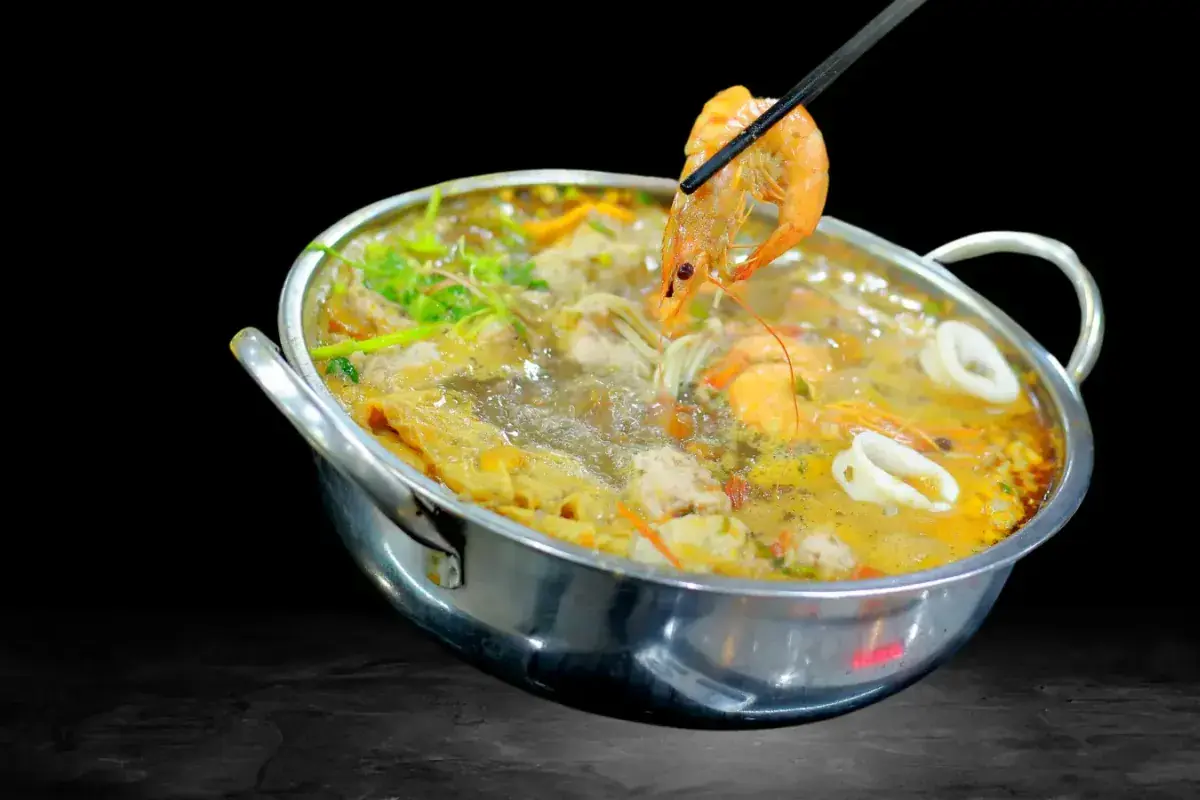
Lifting a prawn from a bubbling crab hot pot.
Crab hot pot in Hai Phong is not simply a bowl of the city’s famous crab noodles made bigger. Lẩu cua đồng, often written lau cua dong without Vietnamese accents, is a shared meal built around a bubbling broth made with small freshwater field crabs. Meat, fish cakes, tofu and vegetables are cooked at the table, and the city’s distinctive red rice noodles often finish the meal. Since the July 2025 administrative changes, local addresses may also appear under newer ward names even when older restaurant websites still use former district names.
What exactly is Hai Phong field crab hot pot?
The key ingredient is the field crab, a small crab quite unlike the big sea crabs served with claws and a shell cracker. Small freshwater crabs are cleaned, pounded or ground, then strained into water. As the liquid heats, proteins from the crab gather into soft clusters known as riêu cua. These delicate, savoury curds float in the pot and give the meal its unmistakable character.
Tomatoes, onion and a gentle sour note often help balance the broth. Some kitchens use fermented rice vinegar, called giấm bỗng, and some round out the stock with pork bones. The result can range from relatively light and clean to richer, tangier and more intensely seasoned. If you are particular about sourness, taste the broth before adding chilli or dipping sauce.
The pot itself is only one part of the meal. Around it come plates of thinly sliced beef, pork paste, fish cakes, tofu and vegetables. Certain restaurants also offer pork cartilage ribs, offal, prawns or squid. Depending on the menu, these can be included in a group set or charged as separate portions. That difference matters more to your budget than the number printed beside “crab hot pot” on the first page of the menu.
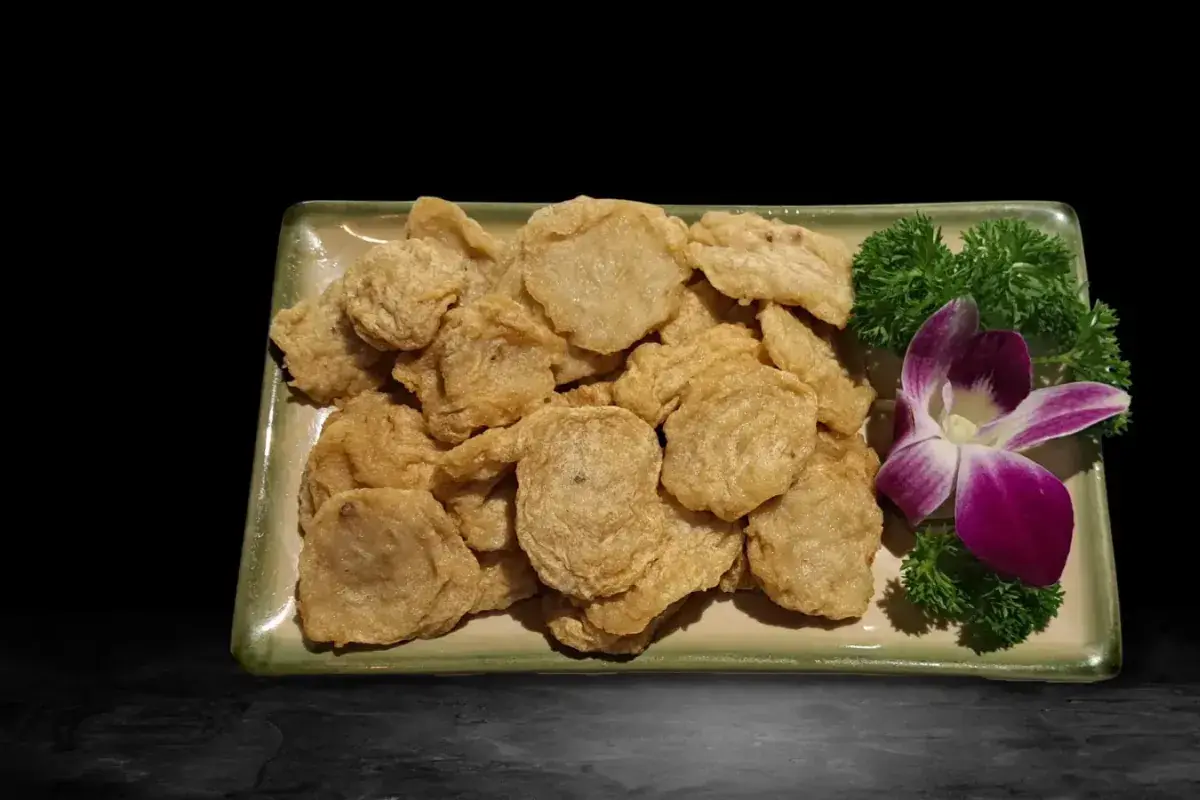
Beef shank, called bắp bò, is a particularly useful choice. Thin slices cook quickly and contribute flavour without overwhelming the crab stock. Beef belly or brisket-style cuts bring more fat. Pork paste, giò sống, may arrive as a soft mixture to be shaped into small balls and cooked thoroughly. Fish cakes add a different texture; look for chả cá thu if you would like to try a version made with mackerel.
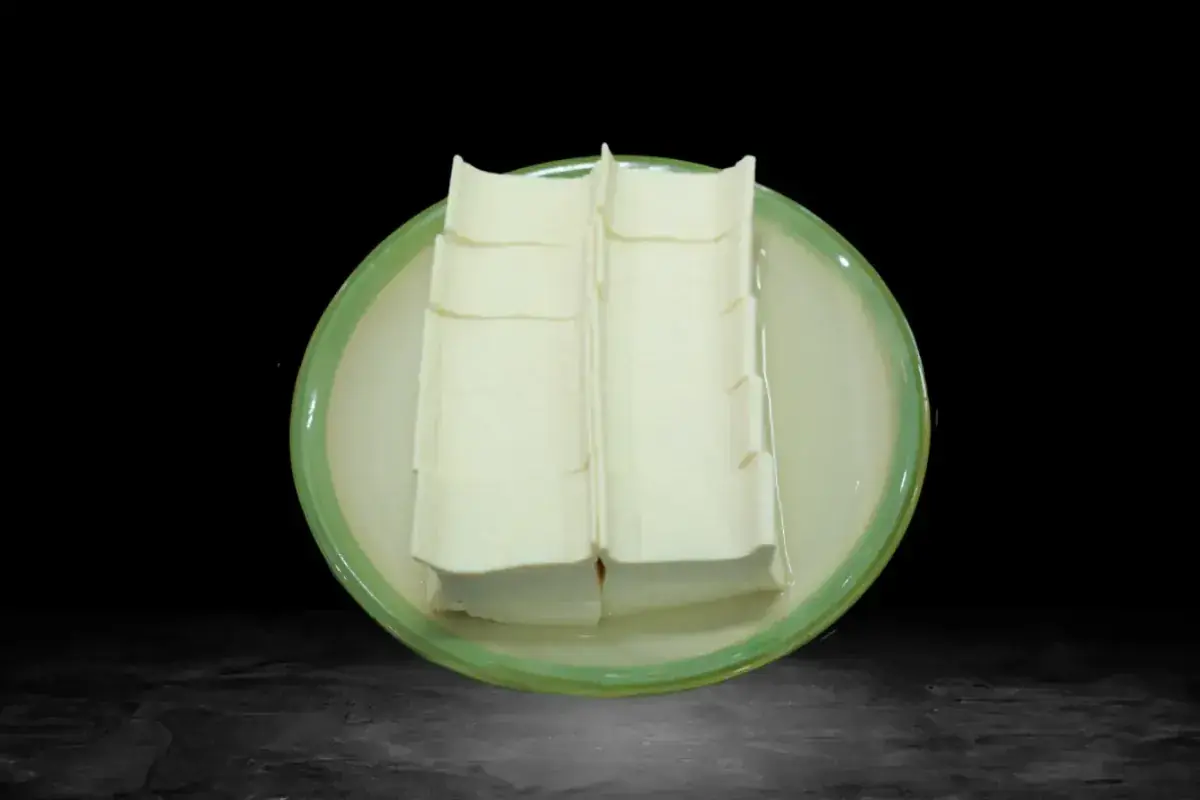
Tofu absorbs the broth and keeps the meal from becoming too meat-heavy. Dried tofu skin, or váng đậu, is another familiar addition. Mushrooms, water spinach, mustard greens, banana blossom, water mimosa and sliced bottle gourd may appear, depending on the season and restaurant. The exact vegetables are worth asking about because they sometimes come in a mixed platter that is already part of a set.
Then there are the noodles. Hai Phong’s bánh đa đỏ are flat, reddish-brown rice noodles with a firmer bite than ordinary thin white rice vermicelli. They are associated with the city’s celebrated crab noodle dish, but also make an excellent finish to a hot pot. Add them in modest batches so they stay pleasantly chewy instead of sitting in boiling broth throughout dinner.
What makes the Hai Phong version different?
Field crab is not exclusive to Hai Phong. Northern Vietnam has many dishes made from these small crabs, including crab noodle soups and hot pots. So it would be misleading to say that every local pot follows a recipe unavailable anywhere else. What makes eating it in Hai Phong distinctive is the combination of local eating habits, the selection of dipping ingredients and the easy availability of red rice noodles.
In many restaurants the crab broth remains the centrepiece, while the surrounding plates make dinner substantial enough for a group. Sliced beef, pork paste, mackerel fish cakes, vegetables and tofu are all common options. Because Hai Phong is a coastal city, seafood additions such as prawns and squid are also easy to find on some menus. They can be delicious, but ordering too much seafood at once can make the original field-crab flavour harder to notice.
It is also useful to distinguish this dish from a sea-crab hot pot. In the latter, you might expect pieces of large crab, claws and chunks of seafood. With lau cua dong, the crab has usually been processed into the broth and its soft curds. The pleasure lies in the flavour of that broth and what you cook in it, not in cracking open a big crab at the table.
Another difference is how the bill is organized. A bowl of noodle soup is generally sold as one complete serving. A hot pot table is more flexible: one pot for everyone, then as many or as few extra plates as the group wants. Travelers used to set-price meals may find this flexibility confusing. Think of the pot as a shared base rather than an automatically complete dinner.
What should you cook first in the hot pot?
Start by letting the broth come to a steady boil. Notice the crab curds before stirring everything together. If you want to taste the crab on its own, gently scoop some broth and curds into your bowl before adding many other ingredients. Vigorous stirring breaks the soft curds into tiny pieces, so there is no reason to churn the entire pot as soon as it arrives.
Next, add ingredients that require a longer cooking time. Cartilage ribs, raw pork paste balls, uncooked fish cakes and certain mushrooms should go in early enough to cook all the way through. The raw pork paste might look like a soft mousse when it arrives; it is not ready to eat until fully cooked. The same food-safety rule applies to offal and raw seafood. Keep utensils that have touched raw food away from food you are about to eat.
For thin beef slices, cook small batches rather than dropping the whole plate in at once. Too much cold meat lowers the temperature of the stock and causes slices to clump together. People may have different preferences for how long beef is cooked, but for children, pregnant diners and anyone who needs to avoid undercooked meat, fully cooked portions are the sensible choice.
Tofu goes in gently once the broth is hot. Leave it long enough to absorb flavour, then lift it out without breaking the pieces. Tofu skin needs time to soften but should not be forgotten in the pot. This is why ordering a modest number of items at the beginning often works better than having every plate arrive at once.
Vegetables are best added in rounds. Water spinach and leafy greens need to cook properly; banana blossom may be served for dipping or as a separate accompaniment, depending on the kitchen. Avoid piling in a whole tray of vegetables while raw meat is still cooking, since it becomes harder to tell what is ready. Wait for the broth to return to a boil between batches.
Finish with a portion of red rice noodles, or add a little midway through if somebody is especially hungry. The broth will taste slightly different by then because it has absorbed flavours from beef, vegetables and fish cakes. So for the pure crab taste, try a spoonful near the start of dinner.
Which vegetables, sauces and sides are worth ordering?
Good crab broth does not need to be buried under a strong sauce. Beef can be paired with fish sauce and chilli, while tofu and noodles often taste best with the stock itself. Hai Phong also has a local chilli sauce commonly called chí chương, associated with several noodle dishes. You may find it at a hot pot restaurant; if it is not on the table, just ask the staff.
Keep sauces in a separate little bowl. Pouring a large amount of chilli straight into your own soup can drown out the gentle crab flavour. It is easier to taste the food first, then add heat to individual bites. Anyone who avoids spicy food can ask for a mild pot and let chilli lovers season their own bowls.
A mixed vegetable plate can be more interesting than a huge serving of one green. Ask whether the set already includes mushrooms, greens, banana blossom or gourd. Water spinach is familiar and versatile; softer greens work well for children and older diners; banana blossom adds crunch.
Some local menus also offer fertilised duck eggs, fried seafood rolls and other snacks. They round out the meal but are easy to skip. A couple who have spent the afternoon eating street food may be happier skipping the starter and ordering a few well-chosen dipping plates instead.
Where to eat crab hot pot in Hai Phong
Loading map…
- Minh Quynh: 188 Van Cao
- Bong, Lach Tray: 278B Lach Tray
- Bong, Ho Sen: 12 Ho Sen
- Bong, Le Hong Phong: Lot 28, Le Hong Phong
- Dat Cang: 22 Du Hang
- Sen Viet: 151 Vu Trong Khanh
- Quan Huong: 7 Pham Ba Truc
Minh Quynh
188 Van Cao, good for a larger shared meal
Lẩu Cua Đồng Minh Quỳnh, 188 Văn Cao, Gia Viên ward is a well-known name for field crab hot pot in Hai Phong. The menu lists field crab hot pot alongside chicken, seafood and beef hot pots, plus tofu, mushrooms, fish cakes and other side dishes. Call +84 225 3501 533 or +84 904 639 391.
It is open 09:00-23:00 daily. Van Cao is a street with multiple restaurants, so use the full street number when giving a destination to a driver. Ask about the group combinations before arriving, especially if you want a table for four or more.
Bong Lau Cua Dong
278B Lach Tray, 12 Ho Sen, lot 28 Le Hong Phong
Bống Lẩu Cua Đồng has branches at 278B Lạch Tray and 12 Hồ Sen. These are convenient choices for people staying around Le Chan and the southern part of central Hai Phong. There is another branch at lot 28 on Lê Hồng Phong, in the Gia Viên area.
The Lach Tray branch usually opens around 09:00-14:00 and 16:00-23:00 or 23:30, while Ho Sen opens around 09:00-23:00. Both the Lach Tray and Ho Sen branches use +84 936 938 579. Planning a late lunch at 15:00? Call first, as each branch takes its own mid-afternoon break.
Dat Cang field crab hot pot
22 Du Hang
Lẩu Cua Đồng Đất Cảng, 22 Dư Hàng is a practical option in the Le Chan area. The pot comes with crab curds and a gentle sourness, plus additions such as beef, cartilage ribs and red rice noodles. The number is +84 936 104 626.
Opening hours are unclear: it may serve two sittings, 10:00-13:30 and 17:00-22:30, or stay open all day. If you plan to arrive after 13:30 or mid-afternoon, call ahead.
Sen Viet
151 Vu Trong Khanh
Lẩu Cua Đồng Sen Việt, 151 Vũ Trọng Khánh, Gia Viên ward puts field crab hot pot first and suits groups around Van Cao and Le Hong Phong who would rather avoid the main road. It opens 09:00-23:30, and the phone number is +84 934 329 255. Diners praise the generous portions, but confirm plate sizes and current prices with the restaurant.
Quan Huong
7 Pham Ba Truc
Quán Ăn Hương, 7 Phạm Bá Trực, in the Hong Bang area, serves field crab hot pot and grilled dishes. Hours are 10:30-22:30, and the number is +84 941 422 799. If you are staying on the Hong Bang side, it saves crossing town to Van Cao or Lach Tray. State that you want lau cua dong when booking, rather than just asking for a dinner table.
The restaurants above are simply grouped by area. Following the 2025 ward reorganization, an old website, a map listing and a current address may use different administrative labels. The street name and building number are usually the most helpful details when traveling by taxi.
How much does Hai Phong crab hot pot cost?
The pot price is the part most people misread. Some restaurants charge for the base crab pot separately from the meat and vegetable plates. At Minh Quỳnh, a basic field crab pot costs from VND 120,000. Beef shank, beef belly, pork paste or cartilage ribs are around VND 130,000 per plate, vegetables, red rice noodles or tofu skin VND 20,000 per serving, tofu VND 10,000 and mushrooms VND 25,000.
A few items may differ from the restaurant’s posted prices, so treat these as rough figures.
Minh Quỳnh also has a set for two to three people at VND 675,000 and a set for four to five at VND 955,000. The smaller set includes the crab pot, beef shank, pork paste, cartilage ribs, three fertilised duck eggs, vegetables, red rice noodles, tofu, mushrooms and tofu skin. The larger combination includes a different selection, such as offal, beef belly, fish cake, prawns and five eggs, alongside the pot and plant-based sides.
Expect to spend about VND 150,000-300,000 per person at Minh Quỳnh, VND 120,000-250,000 at Đất Cảng on Dư Hàng and VND 100,000-300,000 at Bống. Extras, drinks, special offers and portion sizes will affect the real total.
| Group size | What to order | Reference cost |
|---|---|---|
| 2 diners | A basic pot, one beef plate, tofu, vegetables and red rice noodles; compare with a small set | The Minh Quỳnh set for 2-3 costs VND 675,000, or VND 337,500 each when shared by two, excluding drinks and extra dishes. |
| 3 diners | One pot, two protein dishes, vegetables and noodles; check the 2-3-person set | The same VND 675,000 set works out to VND 225,000 each when divided three ways, before extras. |
| 4 diners | A pot, roughly three types of dipping ingredients, vegetables, tofu and noodles; compare the larger set | The 4-5-person Minh Quỳnh set at VND 955,000 comes to VND 238,750 each for four, before drinks and extras. |
Do not add a basic-pot charge on top of a set that already includes the pot. Confirm what the set contains, whether additional taxes or service charges apply, and how much extra broth or toppings would cost.
How to order for two, three or four people
For two diners, start small. Ask whether the base pot includes crab curds, then pick one main protein plate. Beef shank is a good choice if you prefer a leaner, cleaner flavour; beef belly makes the meal richer. Add tofu, a vegetable plate and a portion of red rice noodles. There is little reason to order beef, ribs, pork paste, prawns, squid and fish cakes at once before you know the restaurant’s portion sizes.
Three people can pair beef with pork paste or fish cake for variety without turning the table into an oversized feast. Vegetables and tofu keep the meal balanced. If a set menu includes foods your group actively wants, it may be worth choosing. When nobody eats offal or fertilised duck eggs, ordering individual plates may suit you better.
With four people, think in categories: a beef dish, one fish cake or pork-paste dish, and vegetables with tofu and noodles. A seafood-loving group can replace one meat plate with prawns or squid instead of adding another entire plate. After the first round, look at what people are still eating before ordering more. Most groups have one clear favorite that becomes obvious as dinner progresses.
For families, tell the restaurant how many adults and children are coming. A young child may eat much less than an adult, while a table of four hungry adults may finish its first plates quickly. Make sure meat, seafood and eggs are fully cooked, and keep chilli out of the shared pot if children prefer milder food. Hard, chewy cartilage may not be suitable for very young diners.
When should you go, and should you book?
Hot pot takes longer than grabbing a quick bowl of noodles. You need time to sit down, order, bring the broth to a boil and cook food in batches. It is not the best choice for a 20-minute gap before a bus or train. To plan ahead, allow extra time around the typical lunch period of 11:30-13:00 and the dinner period of 18:30-20:00.
Arriving around 11:00 for lunch or 17:30-18:00 for dinner can make the meal feel less rushed, provided the chosen kitchen is open. Some restaurants close between lunch and dinner, so check the hours of the one you pick. Bống on Lach Tray breaks around 14:00-16:00, which matters if you get back from a day trip and want to eat straight away.
If somebody needs ground-floor seating or room for a stroller, mention it when booking. Some restaurants occupy several floors, and the most convenient table may not be available without advance notice. Travellers with crab or shellfish allergies need particular care: the broth is made from crab, so removing visible curds does not make the dish crab-free. Do not count on separate utensils or a crab-free cooking area unless the restaurant confirms it.
How to order when you do not speak Vietnamese
The clearest English description is field crab hot pot or Vietnamese freshwater crab hot pot. The Vietnamese name, lẩu cua đồng, is more useful when speaking to local staff. Saying only “crab hot pot” can cause confusion with a hot pot made from larger sea crabs. You can point to the phrases below on your phone.
| Vietnamese | English |
|---|---|
| Cho mình một nồi lẩu cua đồng cho ba người. | One field crab hot pot for three people, please. |
| Nồi này đã có rau, đậu và bánh đa chưa? | Does this include vegetables, tofu and red rice noodles? |
| Cho thêm một đĩa bắp bò và một đĩa chả cá. | One extra plate of beef shank and one plate of fish cake, please. |
| Cho mình xem tổng giá trước khi gọi. | Please show us the total price before we order. |
| Không cay, không lòng, và nấu chín kỹ giúp mình. | Not spicy, no offal, and please cook everything thoroughly. |
Useful menu words include riêu cua for soft crab curds, gạch cua for the richer crab material, bắp bò for beef shank, giò sống for uncooked finely minced pork paste, chả cá thu for mackerel fish cake, váng đậu for tofu skin, bánh đa đỏ for the reddish-brown rice noodles, and rau nhúng for vegetables cooked in the broth.
If you cannot read the price list, point at a figure and ask, “Giá này là một nồi hay một người?” That means “Is this price for one pot or one person?” Then ask which plates are already included in the combination. At the end, check how many extra dishes and drinks appear on the bill.
Fitting crab hot pot into a Hai Phong food trip
If you have only one full day in the city, hot pot makes more sense as a shared dinner than as a quick stop between several street-food stalls. You could have a bowl of bánh đa cua in the morning, try smaller snacks during the afternoon, then settle in for a longer crab hot pot dinner. Both meals use field crab, but they are very different experiences: the first is an individual noodle bowl; the second revolves around one shared pot.
In warm weather, ask whether the restaurant has air-conditioned seating. In cooler weather, a bubbling pot is especially appealing, but staying near your accommodation is still a practical advantage after a late dinner. If your hotel is around Lach Tray, the Bong branches on Lach Tray or Ho Sen make more sense than driving across town for a top-ten list.
Staying around Van Cao or Le Hong Phong gives you several area-based options, including Minh Quynh, Sen Viet and the Le Hong Phong Bong branch. Around Du Hang, Dat Cang is right in the neighborhood. Travelers on the Hong Bang side can try Quan Huong on Pham Ba Truc. Proximity does not guarantee the best bowl of broth, but it reduces the chance that dinner becomes a race against last orders or a long ride home.
Finally, resist the temptation to build the biggest possible order before you have tasted anything. One table might love mackerel fish cakes and leave most of the beef. Another might want more banana blossom and tofu skin. Ordering another favorite after the first round is often more satisfying than trying to predict every person’s appetite at the beginning.
Final planning note
For dinner at Minh Quynh on a Saturday at 19:00, book your table and check the set price ahead. It closes at 23:00; find out the last-order time before arranging your ride back.
Frequently asked questions
Where can I eat good crab hot pot in Hai Phong?
Good places to try include Minh Quynh at 188 Van Cao, Bong at 278B Lach Tray or 12 Ho Sen, Dat Cang at 22 Du Hang, Sen Viet at 151 Vu Trong Khanh and Quan Huong at 7 Pham Ba Truc. Choose by neighborhood and confirm that the restaurant is serving field crab hot pot when you plan to arrive.
What is included in lau cua dong?
The base is freshwater field-crab broth with soft crab curds, usually seasoned with aromatics and sometimes tomatoes or fermented rice vinegar. Beef, pork paste, fish cakes, tofu, vegetables and red rice noodles are common additions. The exact combination depends on the restaurant and whether you order a set.
How much is one pot of field crab hot pot?
At Minh Quynh, a basic pot starts from VND 120,000, and many dipping ingredients are charged separately. The restaurant also has a two-to-three-person set for VND 675,000 and a four-to-five-person set for VND 955,000. These are reference prices, so confirm with the restaurant before you order.
What should I dip into the crab hot pot?
For a first meal, try sliced beef shank, tofu, fish cake or pork paste, greens and Hai Phong red rice noodles. Groups can add cartilage ribs, prawns or squid. Begin with fewer seafood dishes if you want to taste the original crab broth clearly.
Do I need a reservation for crab hot pot in Hai Phong?
Booking ahead is sensible for weekend dinners and larger groups. Tell the restaurant your date, arrival time and party size, and ask when the kitchen stops taking orders.