Hai Phong banh beo is best eaten hot, with its savory dipping broth
Banh beo in Hai Phong is a substantial steamed rice cake, usually made in a banana-leaf mold with pork and wood ear mushrooms. Many traditional stalls serve it with a separate bowl of warm, savory dipping broth.
 21 min read
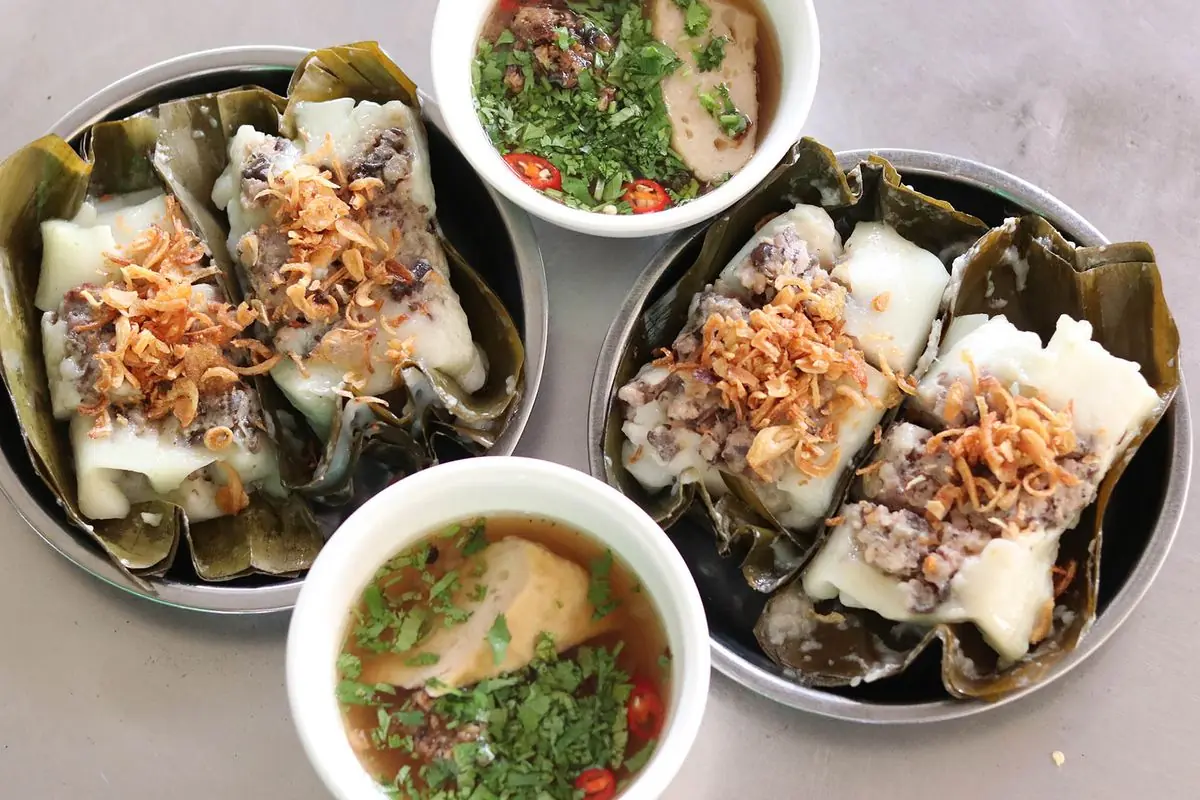
Sliced cake with a warm dipping broth and pork sausage.
Banh beo Hai Phong is not the little rice cake you may know from Hue
With one afternoon in town, go to Co May near Chu Van An Market, behind Lach Tray Stadium, for your first banh beo Hai Phong. The rice cakes arrive in pieces with fried shallots, and a small bowl of warm dipping broth and Vietnamese pork sausage on the side. For several snacks without crossing town, head to Cat Bi Market and build your afternoon around whatever the stalls are cooking that day.
Those two choices offer different experiences. Co May is a named stall that makes the dish the focus of the stop. Cat Bi is a busy local market where banh beo can be the opening act before a bowl of stir-fried gia be seafood, Chinese-style rice cake known as banh duc tau, or a sweet coconut dessert. Neither requires a formal restaurant booking. Both make more sense when you arrive hungry enough for a snack, but not so hungry that you order everything at once.
The key thing to know before ordering is that Hai Phong’s version bears little resemblance to the small cup-shaped cakes many visitors have seen in central Vietnam. Here, the cake is thicker and filling enough to feel like a light meal. The pork, mushrooms and warm dipping liquid matter as much as the rice batter. That difference is what makes it one of the city’s most interesting afternoon foods.
What exactly is banh beo in Hai Phong?
A rice cake steamed in banana leaves
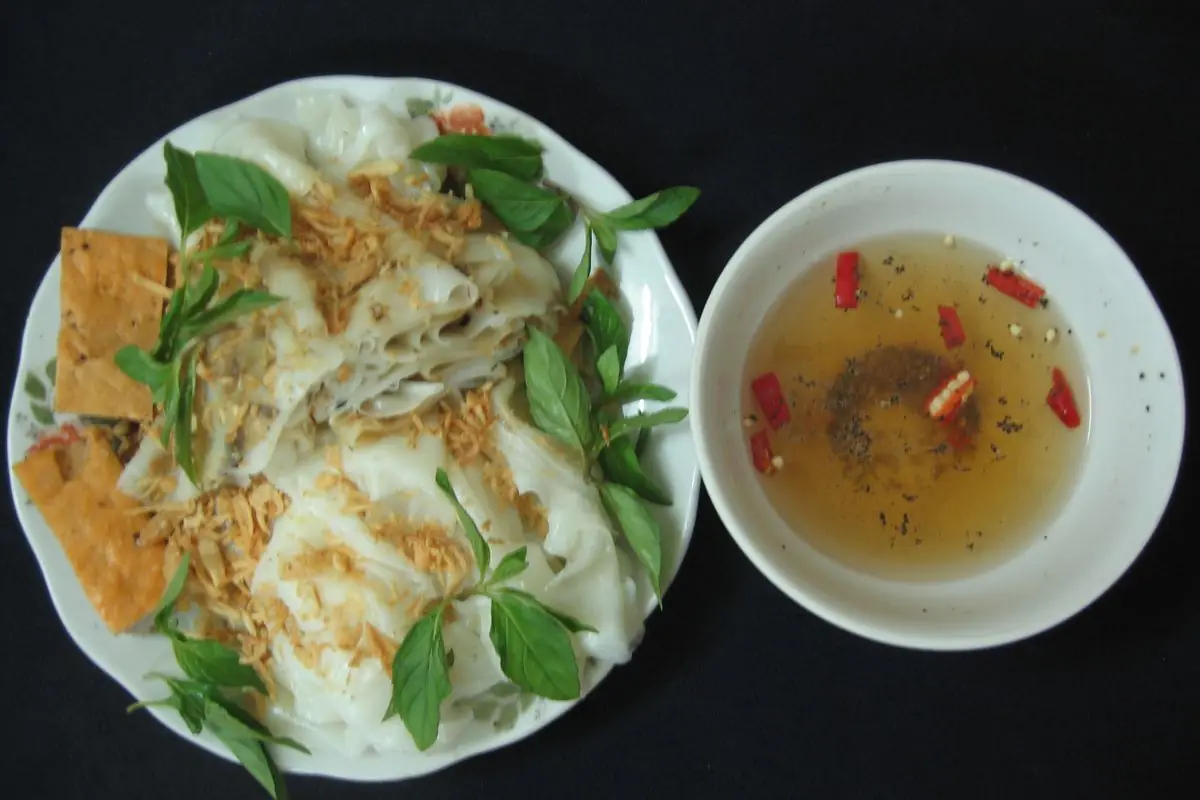
A typical Hai Phong banh beo starts with a rice-flour batter. The vendor folds banana leaves into a shallow, elongated mold, adds the batter and savory filling, and steams the cake until it holds together. The finished cake is pale, soft and slightly springy. It does not come to your table in a stack of small ceramic cups. Instead, the vendor usually opens the leaf and cuts the larger cake into manageable pieces.
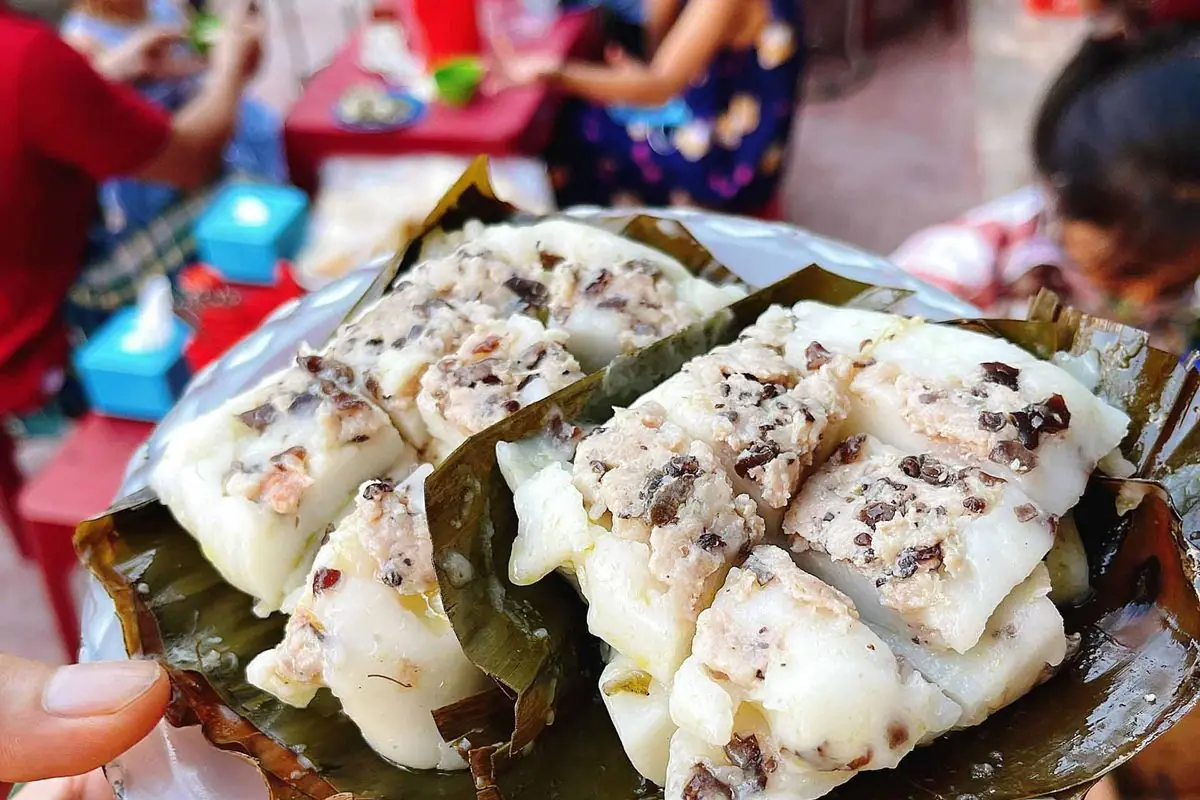
The shape can look vaguely rectangular or like a tiny boat, depending on how the leaf is folded. That is more than a visual detail. The leaf helps contain the batter during steaming and contributes a faint aroma to the cooked cake. It also explains why photographs of Hai Phong banh beo sometimes look more like a sliced parcel than the dainty rice cakes shown in general Vietnamese food guides.
Co May is a useful example of how seriously a traditional stall can take the preparation. In its kitchen, ordinary rice is soaked and ground, the batter is stirred until smooth, and the filling is prepared separately before steaming. Some cakes are a little denser, while others are softer. The proportions of rice batter and filling also vary.
A good piece should be tender enough to cut easily but not dissolve when lifted. A cake that has sat too long loses some of the pleasure of eating steamed rice batter while it is warm. For that reason, sitting down for a small portion often works better than buying several portions to carry around for the rest of the day.
Pork, wood ear mushrooms and fried shallots
The filling commonly contains minced pork and finely chopped wood ear mushrooms. You may also notice onion or shallot and a little seasoning. Pork provides the rich, savory flavor; wood ear mushrooms add a gentle bite that stops the filling from feeling too smooth. Fried shallots often appear over the sliced cake or alongside it.
Although the outside is made with rice flour, banh beo Hai Phong is normally not vegetarian. The meat can be inside the cake, the dipping liquid may be prepared with pork bones, and the accompanying pieces of cha are also meat-based. Anyone avoiding pork should ask about every part of the plate, including the broth and cha.
Some versions include shrimp or other toppings, and two stalls can have noticeably different balances of filling and batter. The familiar traditional combination, however, is pork and wood ear mushrooms. When a menu or review simply says “Vietnamese water fern cake,” it does not tell you which regional preparation the vendor serves. In Hai Phong, look for the banana-leaf cake with its savory filling.
The warm dipping bowl is half the meal
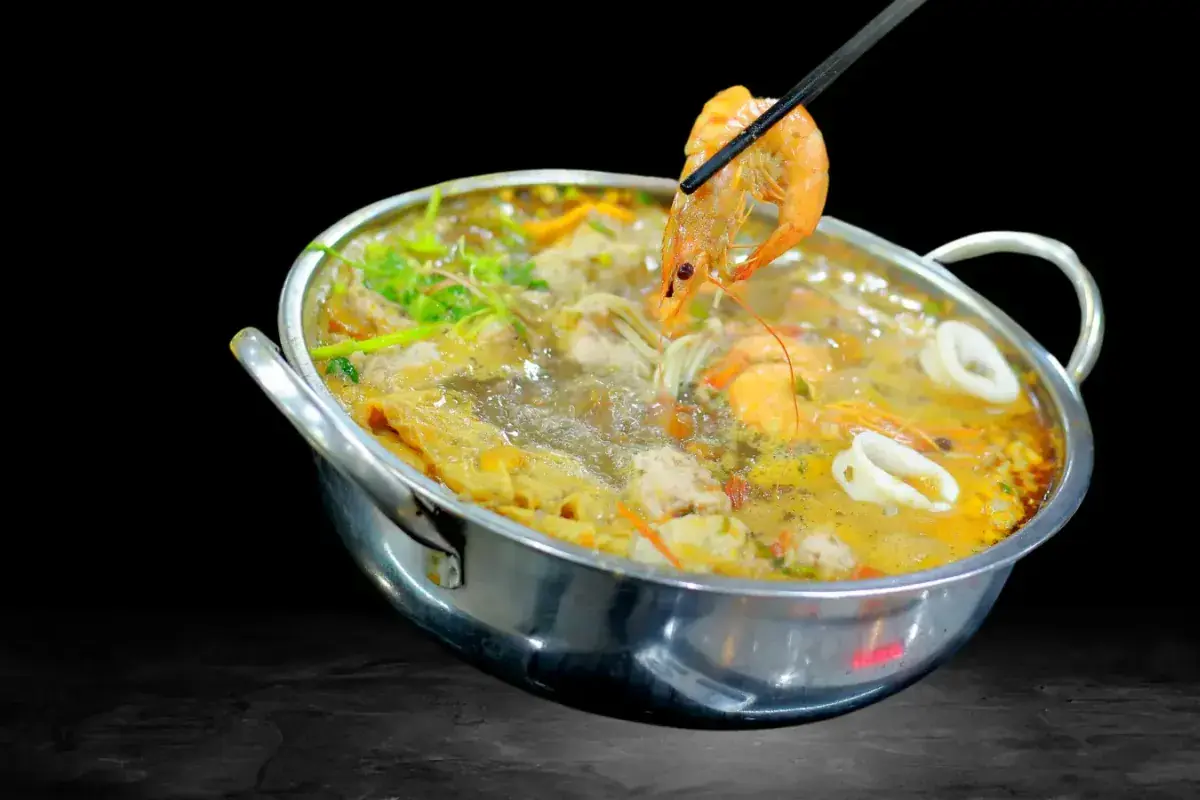
At many older stalls, the cake is served with a bowl of hot, lightly brown dipping liquid. The base is often simmered bone broth seasoned with fish sauce, served with slices of cinnamon-scented pork sausage, small pork balls, coriander or other herbs. There may be fried shallots, chili and small citrus fruits available to adjust the taste.
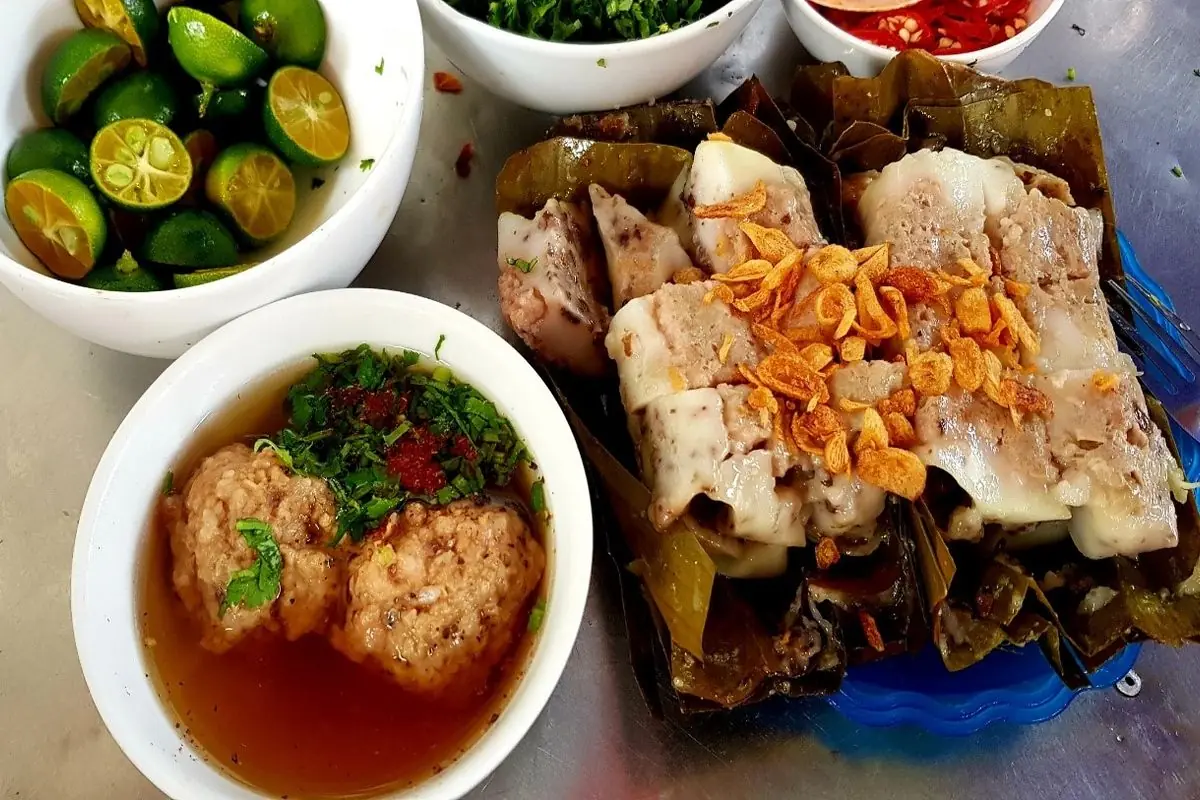
Calling this simply a dipping sauce hardly describes it. It is thinner and more generous than the few drops of fish sauce you might add to an individual Hue-style cake. You pick up a piece of rice cake, dip it into the hot liquid, eat it, then perhaps take a bite of sausage. The broth softens the edges and brings the meat, rice and aromatics together.
The flavor is not identical across town. Some bowls taste sweeter from the stock, while others are more strongly seasoned with fish sauce. A stall may also put more chili powder on the table than you expect. Taste the broth first. Then add chili or a squeeze of kumquat if you want more sharpness. That way you taste the stall’s recipe before the heat covers it.
The warm bone-based dipping broth is what Co May is known for. Many shops around Lan Ong and Lach Tray serve the same basic cake-and-broth combination. You are not buying just a rice cake; you are buying the way that shop assembles the whole plate.
How is Hai Phong banh beo different from Hue banh beo?
Hue’s well-known version is delicate. Rice batter is poured into small cups and steamed into thin rounds. The cakes are commonly finished with finely crumbled dried shrimp, scallion oil, and sometimes crisp pork skin or pork fat. Diners eat the cakes one by one, adding seasoned fish sauce and ordering more cups as they go.
Hai Phong changes almost every part of that presentation. The cake is larger and steamed in a banana-leaf mold. The filling is substantially meatier, often including pork and mushrooms. It is cut into pieces and eaten with a separate bowl of warm dipping liquid, which can contain slices of sausage or pork balls. Here you order a portion, a plate, or sometimes a pair of cakes.
| What to compare | Hai Phong style | Common Hue style |
|---|---|---|
| Shape | Thicker cake from a banana-leaf mold | Thin individual cakes in small cups |
| Main savory ingredients | Minced pork, wood ear mushrooms, fried shallots | Crumbled dried shrimp and scallion oil, sometimes crispy pork skin |
| Liquid served with it | Often a separate warm, stock-based dipping bowl | Seasoned fish sauce added to the cakes |
| How it is eaten | Cut into pieces and dipped | Taken from individual cups |
| Portion | Usually more filling as an afternoon snack | Small bites often ordered in several rounds |
Neither version needs to be treated as the original that the other failed to imitate. They are regional foods that share a name. You might even like them for opposite reasons: Hue’s cakes for the light, shrimp-forward topping and Hai Phong’s for the richer filling and hot savory broth.
For a first-time visitor, the safest English description is Hai Phong-style steamed rice cake with pork and mushrooms. The literal translation Vietnamese water fern cake is useful background, but it is too broad to communicate what will arrive. Add the city name when searching for photos or food stalls, especially if you have previously eaten banh beo elsewhere in Vietnam.
Where to eat banh beo in Hai Phong
Loading map…
- Co May: Chu Van An Market area
- Hoang Thu: 22 Lan Ong
- Ba Dung: 41 Le Dai Hanh
- Thanh Thao: 294 Lach Tray
- U Dung: 147 Hang Kenh
- Luong Van Can Market: banh beo and gia be
- Cat Bi Market: snack stalls, 34 Ly Hong Nhat
- An Duong Market: gia be at Ms Hien's stall
- Co Chuyen: banh duc tau, 159 Hai Ba Trung
Co May at Chu Van An Market: the clearest first stop
Where: the Chu Van An market area, behind Lach Tray Stadium. Co May is near 65 Chu Van An, though maps may show neighboring numbers such as 66 or 25 within the same market area. Search for the stall by its name and the market landmark instead of trusting an old street number alone.
When: from about 12:30 pm; maps may list a later closing time in the evening. On busy days, though, the cakes can sell out by 4 pm. Price: VND 20,000-30,000 a portion.
For a one-off taste of Hai Phong rice cake, Co May makes the most sense. Its traditional plate combines the cake, fried shallots, meat accompaniments and a bowl of hot dipping broth, so you can understand the whole dish without choosing from a long list of toppings. It is also a convenient starting point for a central-city snack route.
A sensible plan is to arrive in the early afternoon and make the cake your first stop. Do not visit three other shops, return at the end of the day, and assume there will still be a serving waiting.
Hoang Thu on Lan Ong Street: a central-city alternative
Where: 22 Lan Ong, close to the junction with Phan Boi Chau Street. Hours: roughly 2-7 pm, though some days it closes around 6-6:30 pm. Ask the price per serving at the stall.
Visitors exploring the older central streets will find it handy. The familiar combination of pork-and-mushroom rice cake, warm broth and cha is what brings people to the stall. Lan Ong is also relatively easy to identify by street name and junction, which helps when you do not speak Vietnamese.
Stalls on this street sometimes change names. Hoang Thu is the current name. Use the street number and storefront sign together to make sure you have found the intended place, and keep a backup stop nearby if you arrive near the end of the afternoon.
Ba Dung on Le Dai Hanh: one for a downtown route
Where: 41 Le Dai Hanh. An older city food map lists it at number 4. Hours: the shop opens roughly 8 am-7 pm, but banh beo is mostly sold in the afternoon, around 3-6 pm. Call ahead to check when the cakes are on.
Ba Dung serves meat-filled cakes with a warm bone-broth dip. Its biggest advantage for an afternoon snack route is location: you can keep the outing in the central streets instead of traveling across town for one plate. The two numbers may not be the same shop, so check the name, storefront photo or phone number before setting off.
Budget according to the city’s general banh beo range, then confirm the actual portion and cost with the vendor.
Thanh Thao at 294 Lach Tray: useful if you are already nearby
Where: 294 Lach Tray. It opens roughly 11 am-7 pm, but the cakes are on from early to mid-afternoon and can sell out before closing. The location is convenient for readers staying near Lach Tray and looking for a straightforward local food stop.
Expect the familiar pork-and-wood-ear filling and dipping broth with pork accompaniments. The menu sticks to a few traditional local cakes. For one plate of banh beo before heading elsewhere, it is easier than a separate trip to Cat Bi.
Lach Tray is a fairly long street, so keep the number 294 in your directions. Do not use “Lach Tray banh beo” alone and expect every search result to indicate the same stall. The area has enough casual food that you can still find another snack if the cakes have sold out.
U Dung on Hang Kenh and the stalls at Luong Van Can Market
U Dung is a traditional snack name associated with Hang Kenh Street. The stall is at 147 Hang Kenh and sells in the afternoon, around 3-6 pm. Some maps show 141 Hang Kenh, so check the sign before choosing a taxi drop-off point. The menu includes banh beo and other traditional rice cakes, handy if you want to compare similar dishes.
Luong Van Can Market is different: it is a food area rather than one named restaurant. Banh beo is sold in the market around 2-6 pm. Vendors in and near this market also sell gia be seafood. For someone who wants cake followed by something from the sea, this combination can be more practical than returning across town between dishes.
At a market stall, the most useful question is not “Is this the best banh beo in Hai Phong?” but “How many cakes come in one portion, and is cha included?” Portion size is not uniform. The price of a small pair may look attractive on a photo, but it is not directly comparable with a larger plate and sausage served at another stall.
Cat Bi Market: the best choice for several Hai Phong street snacks
Cat Bi Market is in the Hai An area, with the food section at 34 Ly Hong Nhat. It is a traditional local market with a big cluster of food stalls, and each vendor keeps its own hours.
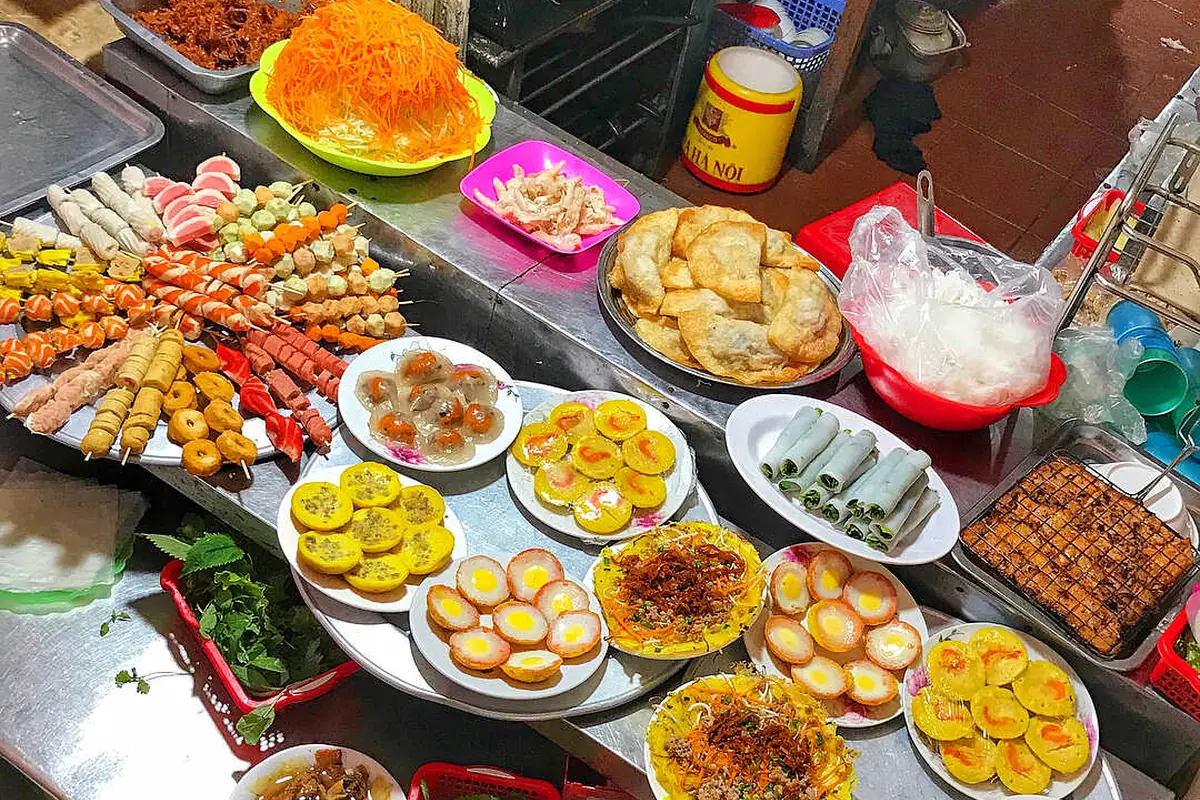
Some food stalls open from about 10 am. For an afternoon snack crawl, however, 3-5 pm is the more useful window. You can see what is actually available, eat while the area is lively and finish before some of the earlier closing stalls begin packing up.
Cat Bi is a good answer to the search “where to eat banh beo in Hai Phong” if your real goal is variety rather than a particular named chef or restaurant. You can look for the banana-leaf cakes, order a plate, then explore other counters selling seafood, steamed or fried cakes, sausages and desserts. There is no need to pay for a set menu or commit to five dishes in advance.
Banh beo vendors may have banana leaves, trays or containers of steamed cakes and bowls of warm dipping broth. Ask for banh beo Hai Phong, then check whether the listed price is for a pair, a plate or a complete serving with pork sausage. You can also point to the plate that another customer has ordered if you are unsure about the Vietnamese terms.
The VND 10,000 for a pair you may see online is an old price. Budget VND 20,000-30,000 per serving, then check the stall’s sign.
What does an afternoon snack crawl cost?
Hai Phong remains a place where several small snacks can cost less than a full restaurant meal. Serving sizes vary, which makes prices hard to compare.
| Dish or vendor | Typical price |
|---|---|
| Co May banh beo, Chu Van An Market | VND 20,000-30,000 per serving |
| Banh beo at ordinary Hai Phong markets and stalls | VND 20,000-30,000 per serving |
| Stir-fried gia be at Ms Hien’s stall, An Duong Market | About VND 45,000-50,000 per serving |
| Gia be salad at Ms Hien’s stall, An Duong Market | About VND 70,000 per serving |
| Banh duc tau around Co Chuyen, 159 Hai Ba Trung | Around VND 15,000-20,000 a bowl |
| Coconut dessert around Lach Tray and Mieu Hai Xa | Around VND 20,000-25,000 a cup |
| Banh mi cay at established small-baguette shops | Around VND 3,000 each |
Banh beo itself is easier to plan for. VND 20,000-30,000 is a useful reference for an ordinary plate, but extra sausage or a larger serving can change the total. The word pair can also refer to a very different quantity from the word serving. Asking what comes with the price makes comparisons more meaningful than simply choosing the smallest number displayed.
For a practical example, suppose you spend VND 25,000 on banh beo, split a VND 50,000 plate of gia be with a friend and buy a VND 25,000 coconut dessert. Your share would be about VND 75,000. Allowing VND 100,000-130,000 per person gives more room for banh duc tau, drinks or extra toppings.
Gia be is the unusual seafood worth pairing with banh beo
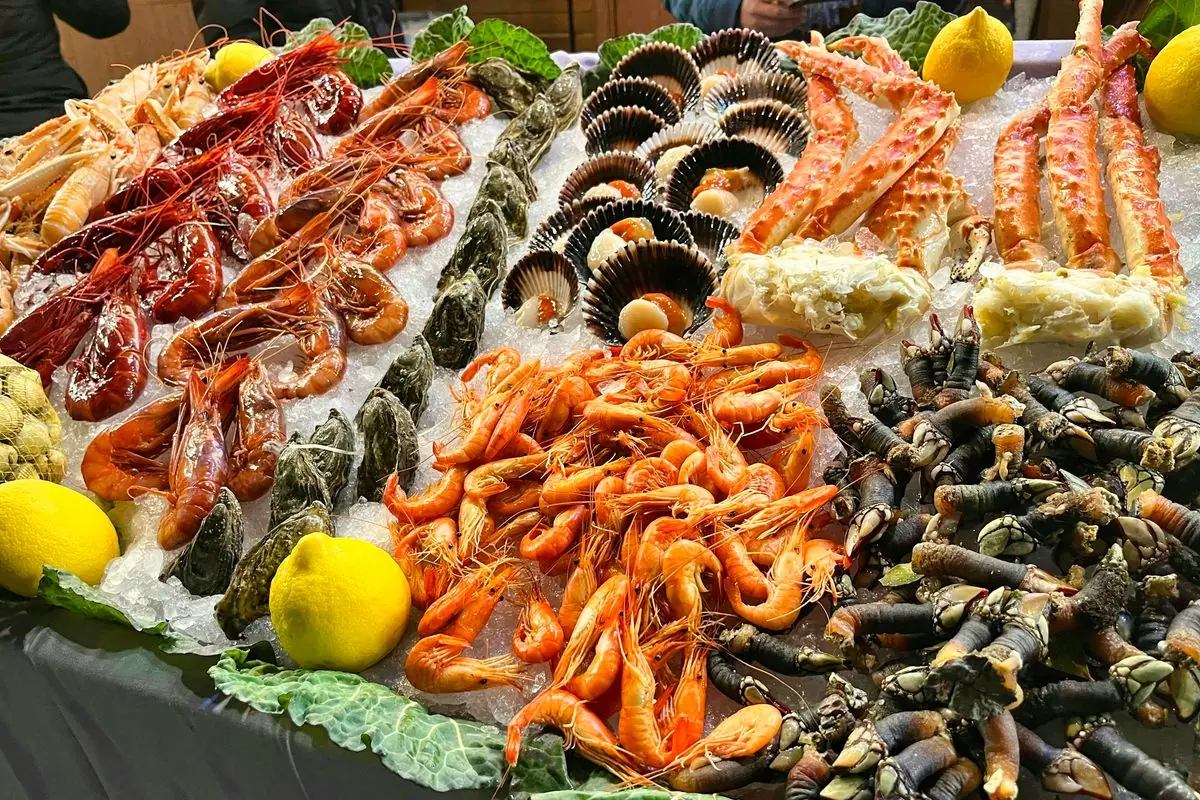
One of the best follow-up dishes after a warm rice cake is gia be xao, a local seafood preparation. The name can be confusing. Gia sounds like the Vietnamese word for bean sprouts, but gia be is not a vegetable. It is a small marine creature that lives buried in coastal sand. A long, slender part projects from its shell and resembles a bean sprout, which helps explain the local name.
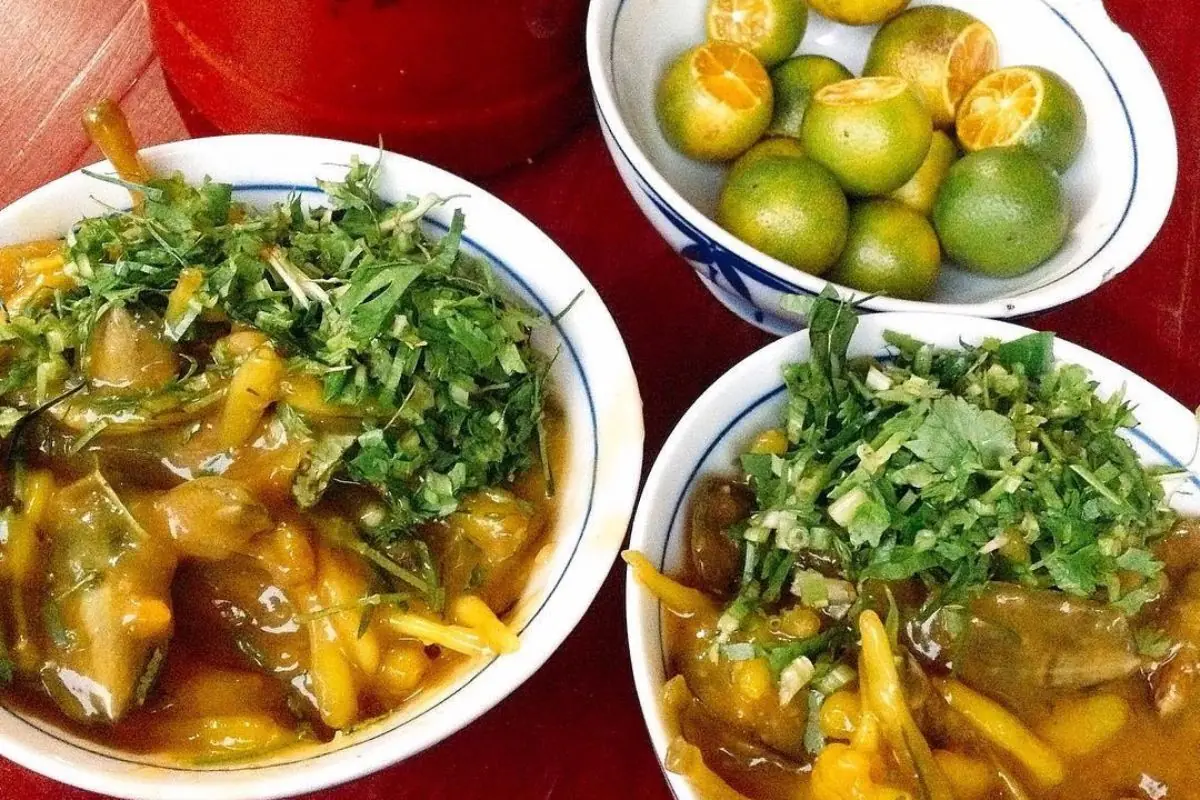
The dish is strongly associated with Hai Phong’s coastal food culture. The creatures are cleaned carefully because they come from sandy areas, then prepared in several ways. In Hai Phong it is mostly made into two dishes: stir-fried gia be and gia be salad. You may encounter seasonings such as galangal, garlic, turmeric, vinegar and chili, depending on the stall.
The stir-fried version is usually rich, savory, slightly sour and sometimes quite spicy. The sauce may cling to the shells instead of running thinly to the bottom of the bowl. Eating it is slower than eating a plate of rice cake because you have to deal with the small shells. Don’t order it with five minutes left before a train or a taxi pickup. It is better enjoyed seated, with time to work through the portion.
As for what gia be Hai Phong tastes like, expect a seafood flavor. The texture and preparation are different from a plate of fully shelled clams. Some people enjoy the slow process; others find the tiny shells troublesome. Neither reaction is unusual. Ask the vendor for help with how to eat it if you have never tried it before.
Look for it at Luong Van Can Market or at Ms Nguyen Thi Hien’s stall in An Duong Market. Cat Bi Market also has stalls selling gia be. Stock depends on the day and the seafood supply, so check availability before traveling to a market solely for this dish.
Anyone avoiding shellfish or with a seafood allergy should skip gia be. There is no reason to force it into an itinerary simply because it is an unusual local specialty. Hai Phong has plenty of other snacks that make a good second stop after banh beo.
What else should you eat in the same afternoon?
Banh duc tau: another rice cake, but a different dish
Banh duc tau is a good follow-up to banh beo because the two foods start from a familiar rice-cake idea and finish in very different ways. Banh duc tau is cut into pieces and served with ingredients such as small shrimp, pork, diced papaya or other vegetables, plus a sweet-sour seasoned liquid. The result is a more mixed bowl of soft rice cake, savory topping and crunchy vegetables.
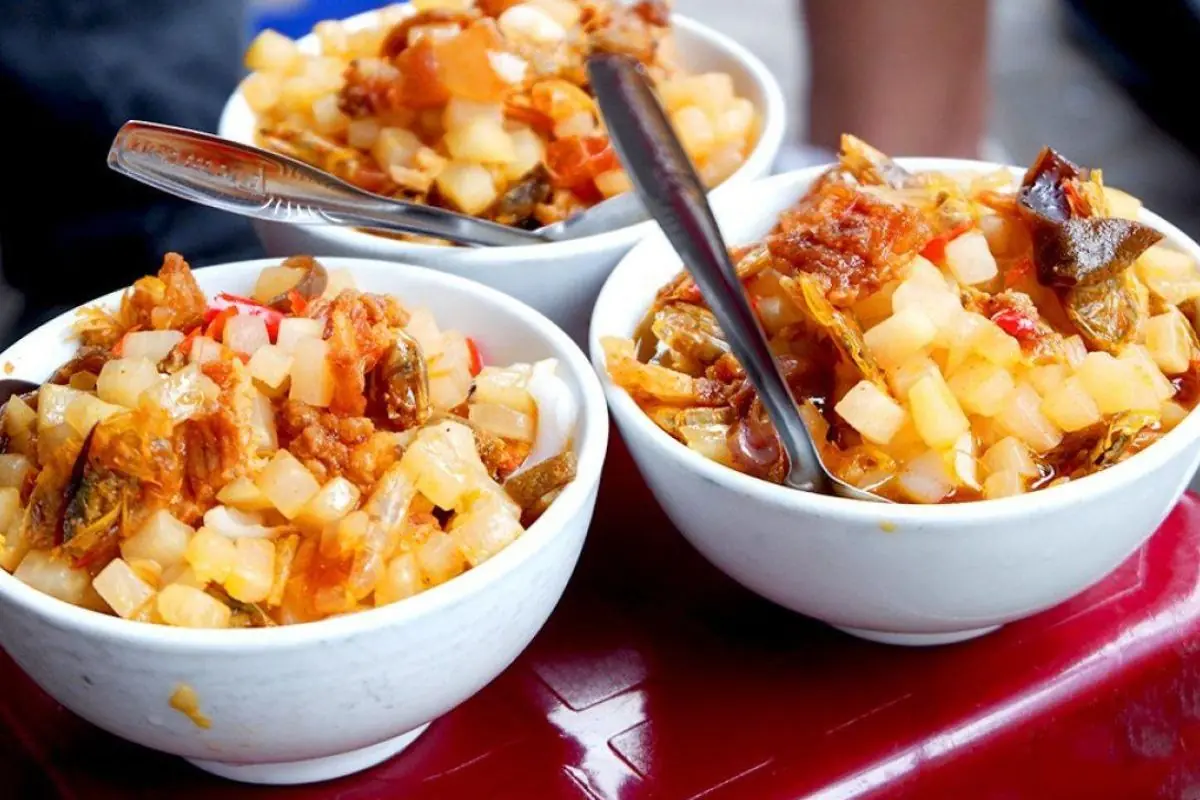
The Co Chuyen stall around 159 Hai Ba Trung, also known by the old name Cat Dai, is a well-known place for it. It opens in the morning and usually finishes around 5 pm, sometimes a little later. Fit it in early, before a long seafood stop and dessert.
If two of you have already eaten a full serving of banh beo each, one bowl of banh duc tau to share is often a more enjoyable way to compare the dishes. Pay attention to the rice cake’s texture and the sourness of the sauce. You will probably find they have less in common than their appearance suggests.
Banh mi cay: a crisp contrast to the soft cake
Hai Phong’s banh mi cay is a slim, crunchy baguette, typically filled with pork pate and eaten with a chili condiment called chi chuong. It is easy to buy one or two, although three to five small baguettes can become a fairly filling snack. Established sellers are found on streets such as Le Loi and Hang Kenh.
This works well if you want a crisp texture after two soft rice-based dishes. It is also one of the more portable parts of an afternoon food crawl. A bowl of banh beo dipping broth does not travel well; a small baguette can be eaten while taking a break between stops. The pate is made from meat and the chili can be strong, so ask before ordering if you avoid either.
Dua dam: a cool finish
For something sweet, choose dua dam, Hai Phong’s chilled coconut dessert. A typical cup contains pieces of young coconut with milk, jelly or chewy pearls and ice. It is a useful change after the pork-and-rice flavors of banh beo and the sharper seasoning of gia be.
Lach Tray and Mieu Hai Xa have plenty of dessert stalls, including Hien Beo around 124 Lach Tray. A cup costs about VND 20,000-25,000 at the stalls in those areas.
A cold dessert is not compulsory. On a cool or rainy afternoon, you might prefer a hot drink or a small bowl of sweet soup. An afternoon of snacks does not need every famous dish to feel complete.
Three ways to spend one afternoon eating in Hai Phong
Route 1: stay at Cat Bi Market
3:00 pm - Start with banh beo. Enter the market food section, find a stall serving hot cakes and ask how much one complete serving costs. Eat it there instead of putting the plate aside while you search for other food. Two people still full from lunch can share one serving before deciding what comes next.
3:40 pm - Look for gia be. Ask whether the stall has the stir-fried version and check the price. Allow time to deal with the shells. If seafood is unavailable or not appealing to your group, swap this stop for another savory market snack without leaving the area.
4:20 pm - Share banh duc tau. A small bowl gives you a second rice-cake style without making the afternoon too heavy. By 4:50-5:00 pm, choose a drink or dessert and finish the market visit. Of the three, this route is the most convenient for someone looking for a Hai Phong snack market where the dishes are close together and the itinerary can change as vendors sell out.
Route 2: Co May first, then a downtown snack
1:30-2:30 pm - Eat at Co May. Go early: on busy days the stall can run out of cakes by about 4 pm. Starting here means the main dish of your trip is less likely to be missed.
3:15 pm - Choose a second food area. Lan Ong is an option if you want to see another traditional banh beo neighborhood. Luong Van Can Market is a better choice if you would rather look for stir-fried gia be. Skip a second round of banh beo; an unrelated dish makes a more interesting food afternoon.
4:30 pm - End with something small. Banh mi cay or a coconut dessert can finish the route without turning a snack crawl into a five-course meal. This version suits travelers staying around Lach Tray Stadium or the central city, especially if they have other sightseeing plans later in the day.
Avoid squeezing Cat Bi Market into the final half-hour simply because it is a popular name on food-tour lists. The value of Cat Bi is wandering between stalls. If you only have a few minutes there, you miss the reason to choose that market over an individual street vendor.
Route 3: Lan Ong, then the Hai Ba Trung area
2:00 pm - Start on Lan Ong Street. Look for the banh beo stall at number 22, confirm the actual portion price and try the broth before adding chili. 3:15 pm - Continue toward Hai Ba Trung and Cat Dai. If Co Chuyen is serving, order a bowl of banh duc tau and compare it with your first rice cake. 4:00-4:30 pm - Pause for a drink or dessert.
This route works for people who prefer smaller street-side stops to a crowded market. You still get two distinct local foods and enough time to sit down between them. If there is no banh duc tau left, switch to another snack instead of spending the afternoon hunting for one vendor.
How to order and avoid the common food-tour mistakes
Check what one serving includes
At one stall, a portion may include several slices of rice cake and pork sausage. At another, the price displayed may be for a pair of smaller cakes only. Before comparing stalls, ask: Mot suat co may cai, co cha khong? - “How many cakes are in one serving, and does it include sausage?” You can also simply point to the whole plate and ask for its price.
Order one portion first, especially when the vendor offers extra cha. A serving with several pieces of sausage may already be enough for a small meal. Groups sharing dishes can ask for an extra bowl or small plate and avoid buying more than anyone can finish.
Do not confuse three different rice-flour foods
Banh beo Hai Phong, banh duc tau and banh gio may all involve steamed or cooked rice-flour batter, but they are not interchangeable. Banh beo is the banana-leaf cake with a pork-and-mushroom filling and a separate dipping bowl. Banh duc tau is a cut rice cake combined with toppings and a seasoned liquid. Banh gio is another distinct wrapped rice-flour snack with a different shape and serving style.
At a crowded counter where several cakes are displayed together, asking for banh beo Hai Phong is clearer than pointing at any pale rice-flour cake. When comparing photos online, look at what comes alongside, not just the white cake.
Bring enough cash, but plan around the food rather than the total
A little cash in smaller notes helps in busy market lanes, even where QR payments are available. Set aside roughly VND 30,000 for a basic serving of banh beo, more for extra sausage, and more again for gia be. The exact price will depend on the vendor and day.
Going on your own is enough to eat banh beo, gia be and banh duc tau in a local market; a paid food tour is optional. A self-guided afternoon works well when you have the street names and are happy to ask a few short questions. Travelers with limited mobility, children or a lot of luggage may value a comfortable stall with clear seating more than saving a small amount on each plate.
Before you finish, fix your return time
Travelers returning to Hanoi on train HP2, which leaves Hai Phong Railway Station at 6:40 pm, should buy the ticket before choosing one last snack stop. You can take your time over a hot plate of banh beo, but do not build your evening around an unconfirmed train seat.
Frequently asked questions
Where is the best place to try banh beo in Hai Phong?
For a named stall, start with Co May in the Chu Van An market area, Hoang Thu at 22 Lan Ong, or Thanh Thao at 294 Lach Tray. For several different Hai Phong street snacks in one outing, Cat Bi Market is a more flexible choice. Try to arrive in the afternoon and check that the cakes have not sold out.
Is banh beo Hai Phong the same as Hue's Vietnamese water fern cake?
No. The common Hue style consists of thin rice cakes steamed in small cups, often topped with dried shrimp and scallion oil. Hai Phong's version is typically a thicker banana-leaf-steamed cake with minced pork and wood ear mushrooms, cut into pieces and served with a warm dipping broth. Sharing a name does not make them the same dish.
How much does banh beo cost in Hai Phong?
An ordinary portion costs roughly VND 20,000-30,000. Co May charges about the same. Prices and portion sizes differ by stall, especially where sausage is included or added separately. Confirm the current price before ordering.
What is gia be, and should I eat it after banh beo?
Gia be is a small marine creature that lives in coastal sand and has a long, sprout-like part. Hai Phong vendors serve it stir-fried or as a salad. The stir-fried version is a good second stop if you enjoy seafood and have time to deal with the shells. At Ms Hien's stall in An Duong Market, a serving of stir-fried gia be costs about VND 45,000-50,000.
What time should I start a Hai Phong afternoon snack tour?
Around 2-3 pm works well for traditional banh beo stalls in the city, while 3-5 pm is a useful window for wandering the food area at Cat Bi Market. On busy days Co May can sell out by 4 pm, so start there earlier in the afternoon.