Eat your way through Hai Phong and still catch the train back to Hanoi
The HP2 train leaves Hai Phong at 6:40 PM. That gives you enough time to try five or six local food stops in the city center, provided you don't squeeze in a trip to Do Son or Cat Ba Island.
 25 min read
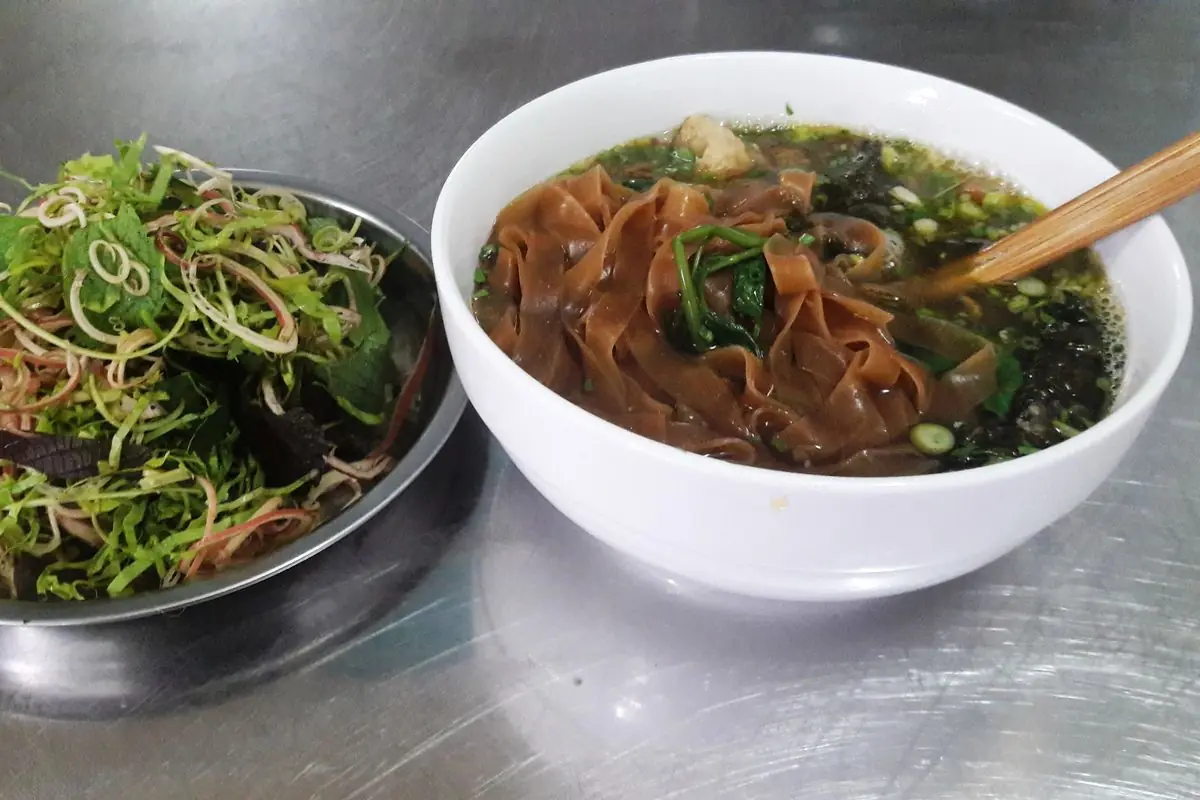
Wide-noodle banh da cua with a plate of shredded greens.
Take the HP1 train from Hanoi and you’re stepping out of Hai Phong Railway Station at 8:25 AM. From there, a day of crab noodle soup, crispy breadsticks, crab spring rolls, steamed rice cakes, and coconut desserts is entirely possible without leaving the city center. How many restaurants you visit matters less than visiting them in a sensible order and leaving enough time to catch your train home.
1. Should you book a guided Hai Phong food tour or explore on your own?
Go independently if you’re comfortable using Google Maps, booking rides, and ordering food with a little help from translation apps. Many of Hai Phong’s best-known food spots are clustered around the central districts, making it relatively easy to combine walking with short taxi rides.
You can stop whenever you’re full, spend longer at a restaurant you enjoy, or skip a dish that doesn’t appeal to you.
Book a guided tour if it’s your first visit to Hai Phong, especially as a foreign visitor who doesn’t speak Vietnamese. A local guide can take care of the small but sometimes frustrating details: finding the correct entrance to a food stall, explaining ingredients, ordering smaller portions, and helping you understand the difference between dishes that look similar.
For example, bánh đa cua is a local crab noodle dish, while bún cá cay is a spicy fish noodle soup. Both can appear on a food tour itinerary, but they offer quite different experiences.
Traveling from Hanoi adds another decision: train or car.
| Type of food tour | Best for | Main consideration |
|---|---|---|
| Train tour from Hanoi | Visitors who want a railway experience and local food | Fixed departure and return times |
| Car tour from Hanoi | Families, groups, and travelers wanting hotel pickup | May spend more time sightseeing than eating |
| Private local guide in Hai Phong | Visitors already staying in the city | Food and transportation may cost extra |
| Evening food tour | Travelers staying overnight | Not practical with a same-day return train |
| Self-guided food tour | Independent travelers and small groups | You’ll arrange restaurants, transport, and train tickets yourself |
On a simple eat-and-return day from Hanoi, going by train on your own makes the most sense.
Hai Phong Railway Station is close to the central food districts. The train drops you right there, with no lengthy transfer from an outlying bus terminal before beginning your food tour.
A guided package becomes more worthwhile when you’re traveling with children, older relatives, or people who need English-language assistance.
In return for the higher price, someone else sorts out the train tickets, food stops, taxis, and ordering.
2. How much does a guided Hai Phong food tour cost?
There’s no standard price for a Hai Phong food tour.
A 12-hour excursion from Hanoi is a different product from hiring someone to guide you around the city for four hours. Even tours with similar names can have different inclusions and prices depending on the booking platform.
LEAD TRAVEL: full-day food tour from Hanoi by car
LEAD TRAVEL runs a one-day Hai Phong food tour by car from Hanoi, priced per person by group size:
| Group size | Price per person |
|---|---|
| 40 or more adults | 510,000 VND |
| 29-33 adults | 530,000 VND |
| 25-29 adults | 540,000 VND |
| 10-14 adults | 690,000 VND |
| 4-6 adults | 1,010,000 VND |
These are 2026 prices; for a firm quote on a specific date, you still need to contact the operator. The group-size bands also overlap; if your group sits near a boundary, request a written quote.
The package includes transportation, a guide, insurance under the operator’s conditions, drinking water, and a food experience valued at 150,000 VND per person.
VAT, additional food, and personal expenses are not included in the package.
On a tour costing more than one million dong per person, only 150,000 VND of it goes on food. The rest pays for transport, guiding, organization, and other services.
If you’re booking for four to six people, ask for the exact menu before committing.
Find out whether it’s a food-focused trip with plenty of time at restaurants or a sightseeing tour with a few local dishes added.
Both might be sold as a Hai Phong food tour, but the time spent actually eating can differ a lot.
KKday: Hai Phong Bites & Sights by car
KKday lists a package called Hai Phong Bites & Sights, which lasts approximately 12 hours.
It begins at 8:00 AM and finishes at around 8:00 PM.
The package includes private round-trip transportation between Hanoi and Hai Phong, English- or Vietnamese-speaking guidance, meals and snacks according to the itinerary, and admission fees.
Guests staying in Hanoi’s Old Quarter can be picked up at their hotel. Everyone else meets at Hanoi Opera House.
The itinerary combines food such as crab noodles, spicy fish noodles, and crispy breadsticks with attractions including Du Hang Pagoda, Do Son, Hai Phong Opera House, and a local market.
You only see the price once you pick a date and package on KKday.
Do Son lies outside the central food loop, and a good chunk of this tour goes on driving and sightseeing rather than food stalls.
That suits travelers who want an introduction to the wider city, less so those whose main goal is trying as many local dishes as possible.
KKday: Hai Phong Train Ride with Market Tour and Local Food
Another KKday listing, Hai Phong: Train Ride with Market Tour and Local Food, focuses on traveling from Hanoi by train.
The experience lasts approximately 11 hours and 30 minutes, with English-language guidance.
The tour includes round-trip train travel from Hanoi, a market visit, Du Hang Pagoda, Hai Phong Opera House, crab noodles, and local breadsticks.
This one suits anyone after a Hai Phong food tour by train: the ride itself is part of the day, not only a way to get there.
The price changes with the travel date.
Before booking, confirm whether the package includes both train tickets, where you meet the guide, which meals are covered, and whether there is a minimum number of participants.
Older itineraries may still refer to Cho Sat, or Sat Market, without explaining that the original market building in central Hai Phong has been demolished.
The temporary Sat Market operates at 20 Truong Chinh Street in Kien An.
Ask the operator which market you’ll actually visit; the market name in an old itinerary may be out of date.
HDV Local: private guide in Hai Phong
HDV Local guides visitors around Hai Phong’s food spots, by the hour or for part of a day.
In 2026, four to five hours of guiding costs about 600,000-900,000 VND.
That covers the guide fee only; food, transport, and admission fees are extra. They also have other packages at different rates; check with them directly which days they’re free.
This type of arrangement is useful if you’re already staying in Hai Phong and only want assistance for one part of your day.
A private guide could help you visit several restaurants, understand local dishes, and communicate with vendors before you explore independently.
It’s also an option for travelers arriving from Hanoi around lunchtime.
Viator: Hai Phong evening food and nightlife tour
Viator lists an experience titled Hai Phong: Market, Street Food & Nightlife Tour, run by Hai Phong Street Food Tours.
The tour lasts approximately three to four hours, with English-language guidance.
The program includes visits to local markets, food tasting, and a coffee stop around Tam Bac Lake.
The price includes dinner, drinks, coffee or tea, local beverages on the program, air-conditioned transport, and fees and taxes.
The final booking price depends on the date, group size, and selected conditions.
It’s an evening experience within Hai Phong, with no round-trip transport from Hanoi.
You’ll need accommodation in Hai Phong or a separately arranged journey afterward.
3. Six questions to ask before booking a food tour
A tour listing can look appealing, with photographs of steaming noodle bowls, busy markets, and smiling local guides.
But the details that matter most are often buried in the booking conditions.
1. Who actually operates the tour?
Ask for the name of the company running the experience, a contact number for the travel day, and the person responsible for your group.
The booking platform and the local operator may be different businesses.
2. Are we traveling by train or car?
Some packages are promoted broadly as food tours from Hanoi without making the transportation method immediately obvious.
For train tours, ask for the train numbers, departure stations, arrival stations, and seating class.
3. Which dishes are included in the price?
Request the names of the dishes, the number of food stops, portion sizes, and included drinks.
A food allowance is not the same as an all-inclusive tasting menu.
4. Which market will we visit?
If the itinerary says Cho Sat, ask for the exact address.
The former central market building has been demolished, while the temporary market is in Kien An. Some older descriptions may not reflect this change.
5. Can the tour accommodate dietary restrictions?
Crab noodles, seafood spring rolls, and fish-based broths may contain shellfish, fish, or other allergens.
Hai Phong’s crispy breadsticks commonly contain pâté, which may include pork and other animal ingredients.
Vegetarian travelers, people avoiding pork, and anyone with food allergies should request ingredient confirmation for individual dishes.
6. Will the tour finish in time for my train?
A tour that finishes at 6:00 PM won’t have you standing at the railway station at 6:00 PM.
Ask where the tour ends and how much time is allowed for returning to the station.
For international travelers, requesting the itinerary and inclusions in written English is especially useful.
For Vietnamese travelers booking as a group, the price per person at the actual group size often deserves the closest attention.
4. Hai Phong food tour from Hanoi: train or car?
Why the train works well for a food-focused day trip
Hai Phong Railway Station is on Luong Khanh Thien Street, within the central urban area.
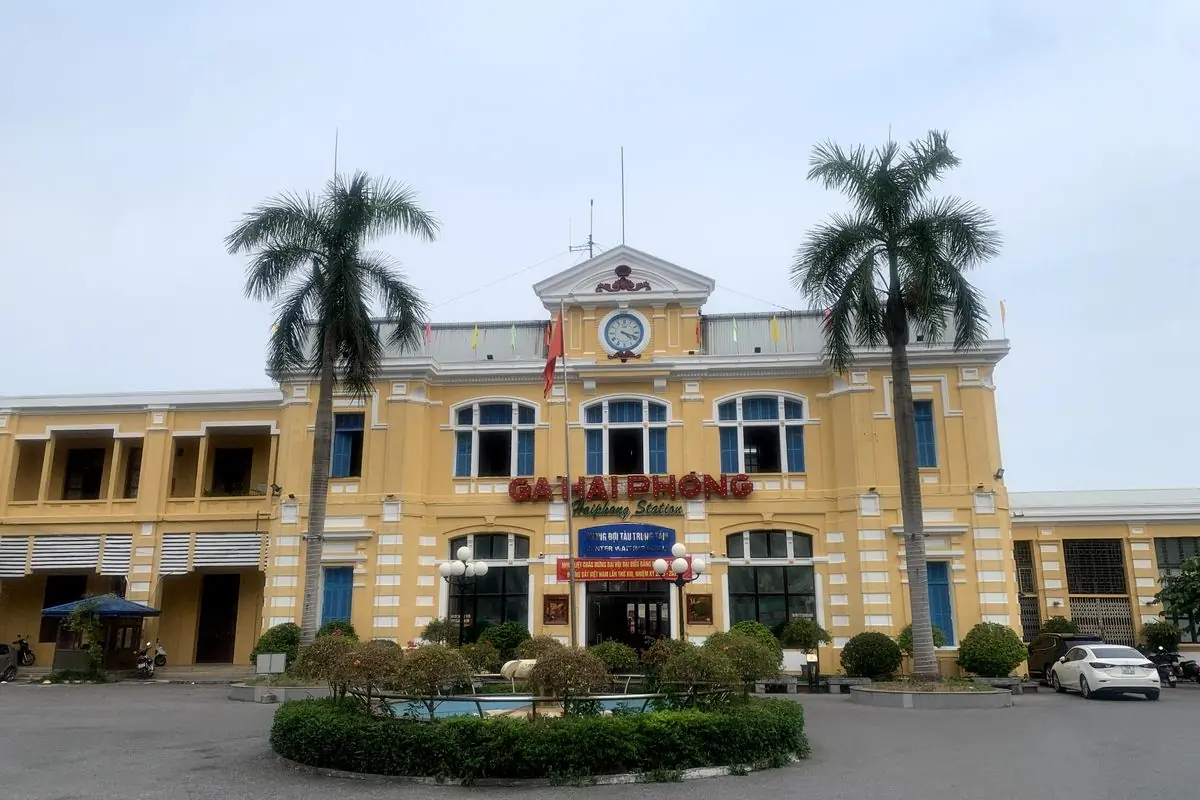
You can get off the train, arrange a short ride to your first restaurant, and begin eating without transferring through a distant transport terminal.
The timetable in effect from February 10, 2026 has these useful trains:
| Hanoi → Hai Phong | Departure | Arrival |
|---|---|---|
| HP1 | 6:00 AM | 8:25 AM |
| LP3 | 9:25 AM | 12:00 PM |
| LP5 | 3:15 PM | 6:00 PM |
| Hai Phong → Hanoi | Departure | Arrival |
|---|---|---|
| LP8 | 3:00 PM | Depends on the destination station |
| HP2 | 6:40 PM | Hanoi at approximately 9:15 PM |
For the self-guided route below, the best pairing is HP1 out and HP2 back, as long as both run on time on your chosen date.
You get most of the day in Hai Phong, but the evening train back means your main meals need to finish early.
When traveling by car makes more sense
A private car, limousine, or coach is useful if you’re staying far from Hanoi’s railway stations, traveling with a family, or combining food stops with sightseeing.
You can also travel to Hai Phong by road and return by train.
It suits anyone who’d rather skip the early start but still wants to take the train back.
By car, you won’t always arrive sooner.
Journey time depends on your pickup location, the route into Hai Phong, traffic, and any stops along the way.
Even with a 9:00 AM arrival in Hai Phong, add time for getting off and reaching your first restaurant.
5. Self-guided Hai Phong food tour: a full-day route from the train station
It runs from HP1’s arrival at 8:25 AM to HP2’s departure at 6:40 PM.
The meal times below are suggested itinerary slots and don’t follow each restaurant’s opening hours.
Check whether each business is operating before your travel date.
Suggested one-day itinerary
- 8:25-8:45 AM
Hai Phong Railway Station
Arrive and arrange a ride
- 9:00-9:40 AM
Banh Da Cua Ba Cu, 51 Lach Tray
Crab noodle breakfast
- 10:00-10:25 AM
Banh Mi Cay Ba Gia Loi, 57 Le Loi
Crispy breadsticks with pâté
- 10:40-11:20 AM
Hai Phong Opera House
Walk around and take a break
- 11:40 AM-12:30 PM
Thuan Yen, 88 Tran Nhat Duat
Crab spring rolls
- 12:30-2:00 PM
Cau Dat and Lan Ong area
Steamed rice cakes or a local snack
- 2:15-3:00 PM
Dua Dam Hien Beo, 124 Lach Tray
Coconut dessert
- 3:00-5:15 PM
Central Hai Phong
Coffee, a snack, or free time
- 5:30-6:00 PM
Hai Phong Railway Station
Return and prepare to board
- 6:40 PM
HP2, reference schedule
Train back toward Hanoi
The long break before the return train is deliberate.
It gives you room for slow service, unexpected rain, a restaurant change, or simply sitting down because you’ve eaten enough.
9:00 AM - start with Hai Phong crab noodles
Your first stop is Banh Da Cua Ba Cu, 51 Lach Tray Street.
Bánh đa cua is one of Hai Phong’s signature dishes. It typically combines reddish-brown rice noodles, a crab-based broth, greens, and various toppings depending on the version ordered.
Some bowls include shrimp, fish cakes, pork wrapped in betel leaves, mantis shrimp, or other seafood.
When ordering, tell apart bánh đa cua đồng, made with freshwater field crab, and versions featuring cua bể, or sea crab.
For a first taste of traditional Hai Phong food, a field-crab-based bowl is a sensible choice.
Ask the restaurant about the available versions and their current prices before ordering.
Ba Cu is famous, but reviews are mixed, mostly on portion size for the price and on service.
For this route, the draw is a clear address that’s easy to find and handy from the station.
After a substantial bowl of crab noodles, there’s no need to squeeze in a second bowl of spicy fish noodles immediately afterward.
Save that dish for another day, or substitute it for crab noodles if you prefer fish.
10:00 AM - try banh mi cay at 57 Le Loi
Bánh mì cay is a very different experience from the large Vietnamese baguette sandwiches many travelers know from Hanoi or Ho Chi Minh City.
Hai Phong’s version is small and narrow, with a crisp crust and a pâté filling.
It’s commonly served with chí chương, a local-style chili sauce that gives the bread its distinctive kick.
At Banh Mi Cay Ba Gia Loi, 57 Le Loi Street, order a few pieces to eat while they’re still freshly toasted.
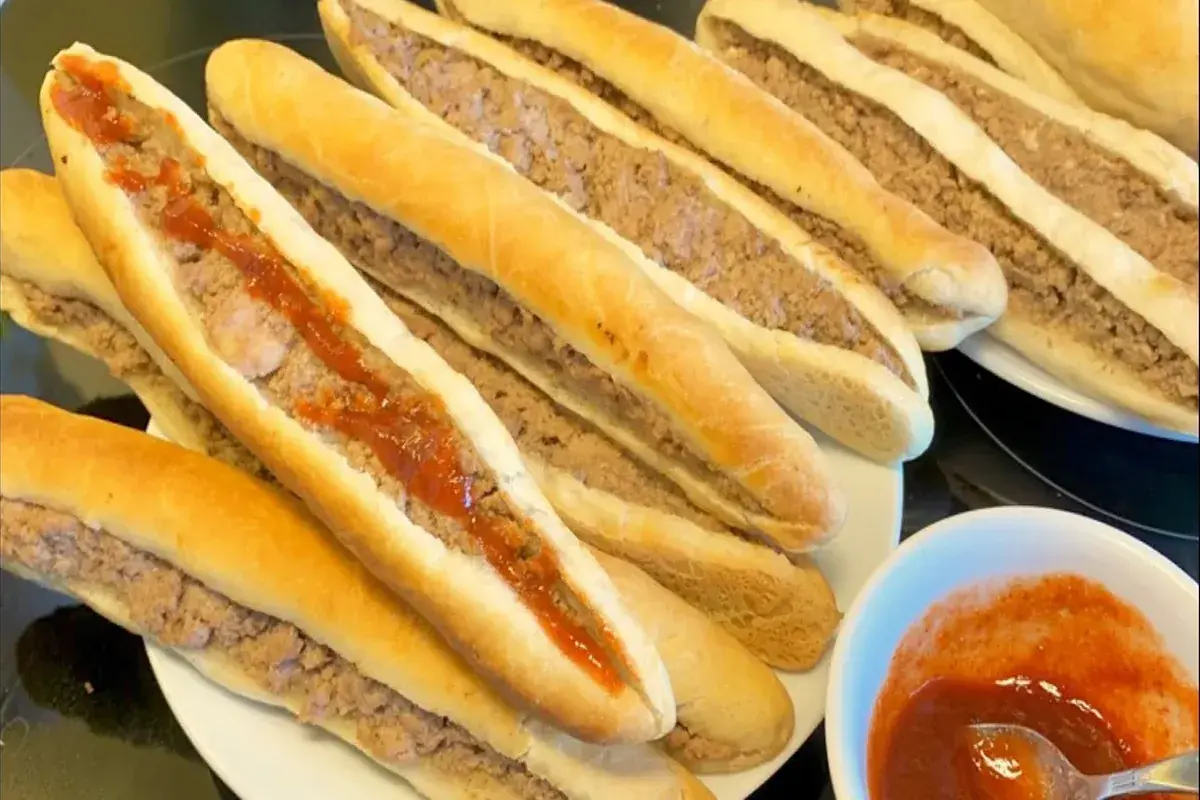
These little breadsticks are easy to share.
A group of four can order a small batch rather than buying a large bag immediately. You’ll still have crab spring rolls ahead of you.
Vegetarians and anyone avoiding pork should ask about the pâté before ordering.
You can buy some to take home at the end of the day, but a few hours in a bag and they lose their fresh-toasted crunch.
10:40 AM - take a walk around Hai Phong Opera House
After two food stops, spend some time around Hai Phong Opera House, at the central square near 28 Tran Hung Dao Street.
The Opera House is one of the city’s most recognizable buildings and a useful landmark for navigating the center.
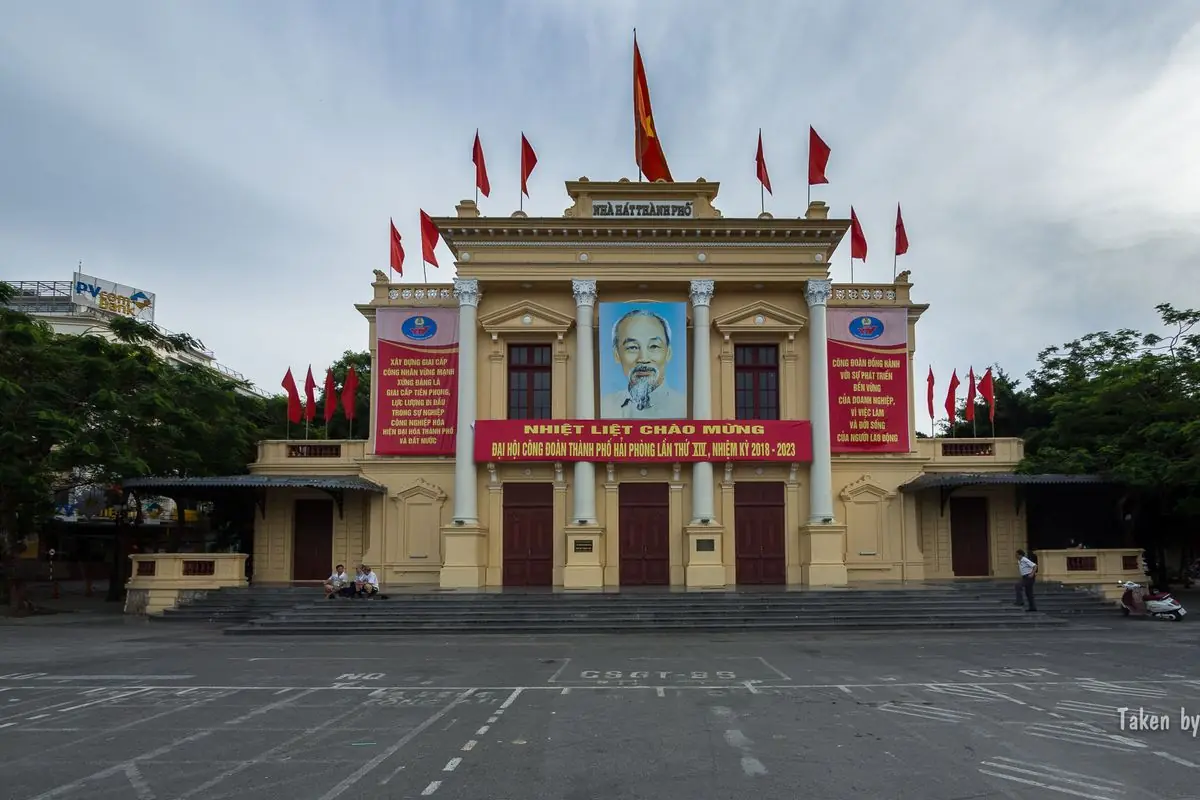
You can admire the exterior, walk through the nearby garden areas, or find somewhere to sit with a drink.
This stop gives your stomach a rest before the crab spring rolls.
In scorching heat or rain, take a taxi for the next leg rather than walking.
11:40 AM - crab spring rolls at Thuan Yen, 88 Tran Nhat Duat
Thuan Yen Restaurant, 88 Tran Nhat Duat Street, serves nem cua bể, Hai Phong’s square crab spring rolls.
Unlike the long, narrow fried spring rolls commonly served elsewhere in Vietnam, this version is folded into a square.
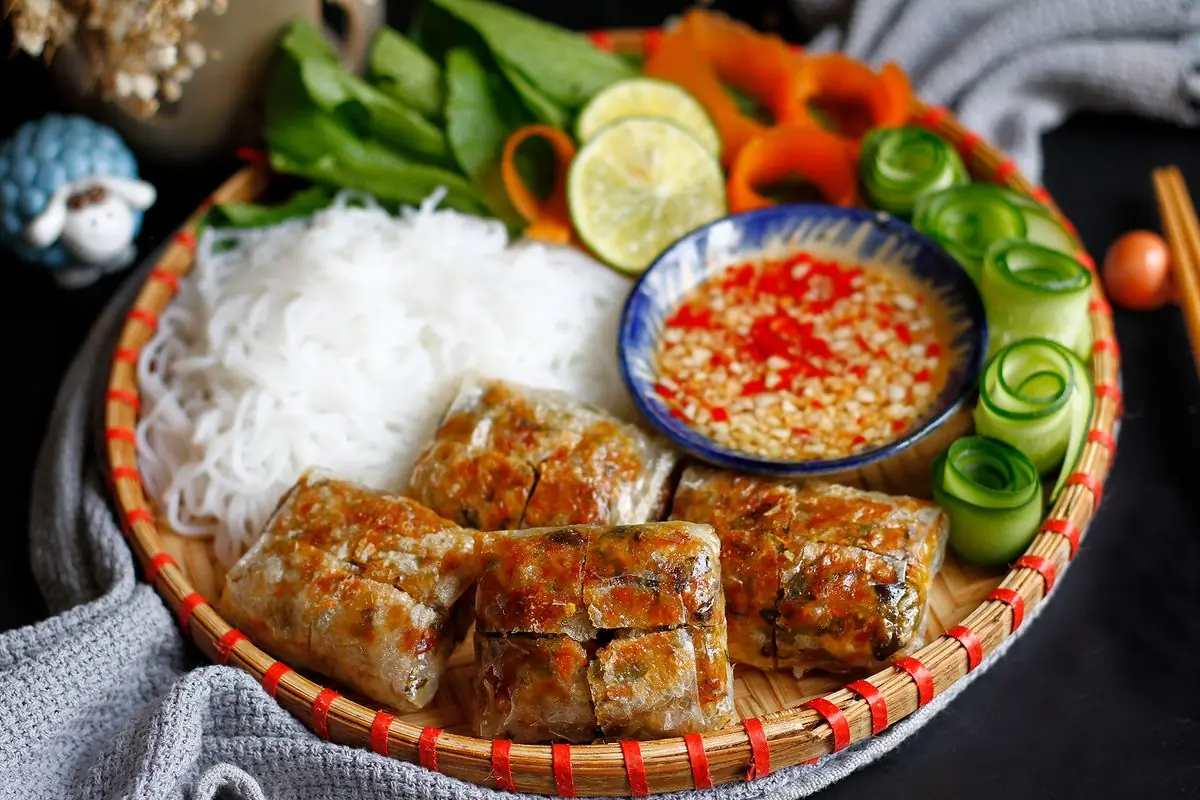
The filling combines crab or other seafood with meat and additional ingredients according to the restaurant’s recipe.
It’s fried until crisp and commonly eaten with rice vermicelli, fresh herbs, and dipping sauce.
This is one of the heavier dishes on your food tour, especially after crab noodles and pâté breadsticks.
Split a portion between two and you’ll still have room for other dishes later.
Before ordering, ask whether spring rolls are sold individually or as a set, and whether the listed price includes noodles, vegetables, and dipping sauce.
International travelers with seafood allergies should pay attention to the entire filling and sauce rather than only the word "crab" in the dish’s name.
The wider Tran Nhat Duat and Co Dao Market area also has local food options.
It’s better to find an alternative nearby than lose an entire hour waiting for one spring roll at an extremely crowded restaurant.
12:30-2:00 PM - choose between banh beo and another noodle dish
By now, appetite matters more than a checklist.
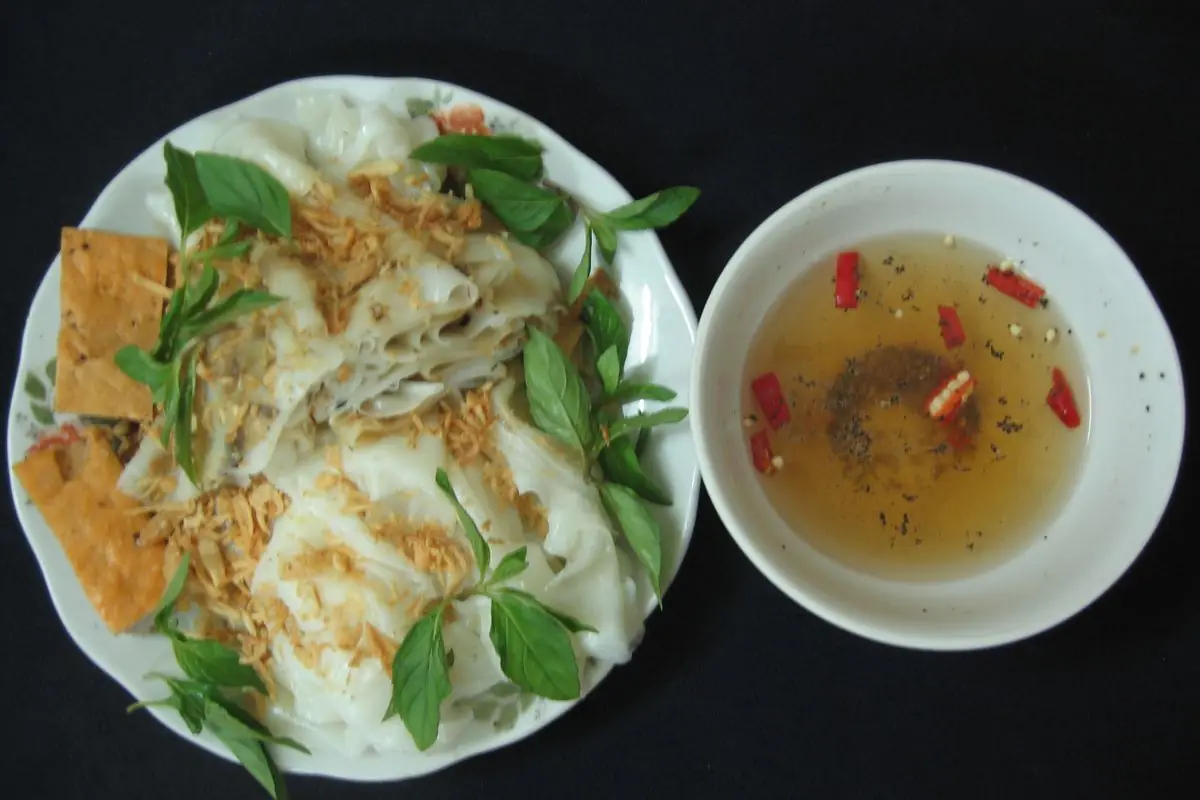
Three substantial dishes in, it’s time to switch to bánh bèo Hải Phòng, a savory steamed rice cake.
Try Banh Beo Chi Trang at 22 Lan Ong Street.
Hai Phong’s bánh bèo is different from the small rice cakes served in individual bowls in central Vietnam.
The local version is generally soft, served in a leaf container, and filled or topped with savory ingredients such as minced meat. It’s eaten with dipping sauce.
There’s a bánh đúc tàu shop at 159 Hai Ba Trung Street.
Bánh đúc tàu consists of pieces of rice cake served with toppings such as shrimp, meat, and green papaya, depending on the vendor, with a flavorful sauce.
It’s a good dish to share if several people want to try a little.
Alternatively, if you skipped crab noodles earlier, this is a good time to try bún cá cay, Hai Phong’s spicy fish noodle soup.
A typical bowl contains fish, noodles, greens, and a broth with spicy and tangy notes. Ingredients vary by restaurant.
Avoid ordering a full bowl of fish noodles, steamed rice cakes, and bánh đúc tàu all at once simply because they’re famous.
Choose one, enjoy it, and see how hungry you are afterward.
2:15 PM - coconut dessert at 124 Lach Tray
After fried spring rolls and pâté bread, a cold dessert is a welcome change.
The afternoon stop is Dua Dam Hien Beo, 124 Lach Tray Street, for dừa dầm, one of Hai Phong’s best-known sweet treats.
This dessert usually combines coconut flesh, coconut milk, jelly, and other ingredients depending on the recipe.
It’s served chilled.
Although it may look like a light drink, a full serving can be surprisingly rich, especially if you’re not used to sweet coconut-based desserts.
A group can order one to sample before deciding whether everyone wants their own.
If you’re planning to try coconut coffee later, there’s no need to order the largest dessert available.
Lach Tray is also a good spot to grab a ride back to the station.
3:00-5:15 PM - leave room for coffee, snacks, or nothing at all
It looks empty on paper, but a one-day food tour needs this block of free time.
You could return toward the Opera House for coffee, explore the Cau Dat area, try another local snack, or simply sit down and relax.
If you’re still hungry, consider bánh bèo, bánh đúc tàu, or a cup of chrysanthemum tea.
Some stalls selling seasonal or evening dishes such as sủi dìn, a sweet glutinous rice ball dessert, haven’t set up yet in the early afternoon.
If you’re full, stop eating.
There’s no prize for finishing a food tour with an extra bowl of noodles you didn’t actually want.
6. Hai Phong food tour map: the simplest route through the city center
The main self-guided route follows these stops:
Hai Phong Railway Station → Banh Da Cua Ba Cu, 51 Lach Tray → Banh Mi Cay Ba Gia Loi, 57 Le Loi → Hai Phong Opera House → Thuan Yen, 88 Tran Nhat Duat → Dua Dam Hien Beo, 124 Lach Tray → Hai Phong Railway Station.
Loading map…
- Hai Phong Railway Station: arrive, take a ride into town
- Lach Tray Street: crab noodles at no. 51, coconut dessert at no. 124
- Le Loi Street: breadsticks at no. 57
- Hai Phong Opera House: a walk between meals
- Tran Nhat Duat Street: crab spring rolls at no. 88
For Google Maps, enter each restaurant name with its street address rather than relying only on the business name.
This is not intended as an entirely walking-based itinerary.
Some streets near the Opera House are convenient for walking, while other transfers are easier by taxi or ride-hailing app.
The Lan Ong, Cau Dat, and Hai Ba Trung snack stops are optional branches: add one when it’s convenient and leave it out when time is running short.
Hai Phong released a food tour map in 2022. In 2026, the city kept working on a digital food map that pulls restaurant listings together to help people find places to eat online.
Those maps can help you discover more places, but for a day trip tied to a return train, a small custom route is usually more manageable than a list of dozens of restaurants.
7. What if you arrive on the LP3 train at noon?
The LP3 service is useful for travelers who don’t want to leave Hanoi at 6:00 AM.
The trade-off is that you’ll miss nearly the entire morning in Hai Phong.
A shorter itinerary might look like this:
- 12:00 PM
Arrive at Hai Phong Railway Station
- 12:20-1:10 PM
Crab spring rolls around Tran Nhat Duat
- 1:30-2:00 PM
Crispy breadsticks on Le Loi
- 2:00-3:00 PM
Walk around the Opera House
- 3:00-3:45 PM
Crab noodles or spicy fish noodles
- 4:00-4:45 PM
Coconut dessert or another local snack
- 5:15-6:00 PM
Return to the station
- 6:40 PM
HP2 departure under the reference schedule
You can still try approximately four local dishes, but the day will require more discipline.
Don’t add Do Son, Du Hang Pagoda, or a museum visit just because there’s an empty slot on paper.
If you’re traveling with young children, drop one food stop and allow more time between the others.
Twenty minutes of waiting at one restaurant and another twenty minutes getting into a taxi can quickly use up your afternoon.
8. How much does a self-guided Hai Phong food tour cost?
A self-guided trip has three main expenses: round-trip transportation, food and drinks, and getting around Hai Phong.
Train tickets
Check the fare for your exact date on the official Vietnam Railways booking system, since it depends on the train service, seating category, and ticket conditions.
If you’re comparing a self-guided trip with a package tour, remember to include both the outbound and return tickets.
Food
Different dishes are priced in different ways.
Crispy breadsticks are commonly sold by the piece.
Crab noodles are sold by the bowl, with prices varying according to toppings.
Crab spring rolls may be sold individually or as a meal with noodles and vegetables.
Coconut desserts are sold by the serving.
Rather than adding up old prices, look at each stall’s menu or get a price from the vendor before you order.
Sharing portions can reduce the cost and make it easier to try more dishes.
Local transportation
The itinerary combines walking and short car rides rather than requiring a private vehicle for the full day.
The amount you spend depends on how much you’re willing to walk, the weather, and which optional food stops you add.
For a fair comparison with a guided tour, calculate the full cost of your train tickets, meals, local rides, and other expenses.
A private guide can feel expensive for a solo traveler but become more reasonable when several people share the guiding fee.
9. Practical food tour tips for international visitors
For foreign visitors, the hard part is usually not finding the restaurants but knowing what’s in the food and ordering something you can eat.
Here are the main names worth recognizing:
| Vietnamese name | Simple English explanation |
|---|---|
| Bánh đa cua | Red rice noodles in crab-based broth |
| Bún cá cay | Spicy fish noodle soup |
| Bánh mì cay | Small crispy breadsticks with pâté and chili sauce |
| Nem cua bể | Square fried crab spring rolls |
| Bánh bèo Hải Phòng | Savory steamed rice cakes |
| Dừa dầm | Chilled coconut dessert |
The table only helps you recognize each dish; ingredients vary from one restaurant to the next.
A few Vietnamese phrases will help when ordering:
| Vietnamese | English |
|---|---|
| Cho tôi một phần này. | I’d like one portion of this. |
| Món này có tôm, cua không? | Does this contain shrimp or crab? |
| Làm không cay giúp tôi. | Please make it non-spicy. |
| Bao nhiêu tiền một phần? | How much is one portion? |
| Tôi không ăn thịt lợn. | I don’t eat pork. |
| Tôi ăn chay. | I’m vegetarian. |
Bring some cash
Many restaurants in Vietnam take QR bank transfers, which you can’t use without a Vietnamese bank account.
Carry Vietnamese dong in smaller denominations, particularly when visiting informal food stalls.
Use ride-hailing apps carefully
When booking a ride, double-check the pickup point and license plate before entering the vehicle.
In streets lined with shops and food stalls, your driver may stop across the road or at a nearby location where it’s easier to pull over.
This is another reason to avoid planning every transfer down to the minute.
Decide whether language support is worth paying for
An English-speaking guide can be particularly useful for visitors with dietary restrictions or those interested in learning how dishes are prepared and eaten locally.
Before booking, confirm that the guide will accompany you throughout the food stops rather than simply provide transportation or meet you at the beginning.
10. Already staying in Hai Phong? Choose a half-day food tour
A hotel in Hai Phong means you won’t have to squeeze everything into a train timetable.
You can choose the time of day that best matches what you want to eat.
Morning to early afternoon
A morning food tour works well for crab noodles, crispy breadsticks, and crab spring rolls.
You can begin after a light breakfast, spend three or four hours exploring central food streets, and finish with a drink.
This is a good option for visitors who want the rest of the afternoon free for museums, coffee shops, or sightseeing.
Afternoon to evening
An afternoon food tour makes more sense if you’re interested in steamed rice cakes, bánh đúc tàu, sweet desserts, and restaurants that become busier later in the day.
This schedule doesn’t work particularly well for someone catching the HP2 train back to Hanoi, but it’s convenient if you’re sleeping in the city.
Evening tour with a local guide
An evening guided tour is particularly suitable for visitors who want to explore markets, try unfamiliar foods, and understand local dining customs.
A three- or four-hour experience is enough for a relaxed evening.
You don’t need to turn it into a full sightseeing itinerary.
Not every famous restaurant opens throughout the day. Ask your guide to create a route based on the actual hours of the places you want to visit.
11. Staying two days and one night? Where to eat in Hai Phong after dark
Spending a night in Hai Phong changes the food tour experience.
You don’t have to finish dinner early for a return train, and you can spread heavier dishes across two days.
The night food street at 53 Lach Tray
Hai Phong opened a new commercial, cultural, and night food street at 53 Lach Tray on October 30, 2026.
The area is in Gia Vien Ward, extending from Lach Tray Street toward the road beside An Bien Lake, around the Children’s Cultural Palace and surrounding public spaces.
The area has 52 stalls operated by 33 businesses, offering food, drinks, souvenirs, and other services.
Some stalls use decorated container-style structures inspired by Hai Phong’s port-city identity.
Opening hours are 5:00 PM to midnight every day.
It’s a pilot running from October 2026 into April 2027, ending on April 15, 2027.
This is a convenient place to wander between different vendors without arranging transport between several streets.
Not all of the 52 stalls sell traditional Hai Phong food, though.
Some sell drinks, souvenirs, or other products. Check which stalls are open and what they’re actually serving before making it your main dinner plan.
Opera House and central garden night food area
Hai Phong also piloted a pedestrian and night-food space around the Opera House and central garden strip.
The program ran on Friday and Saturday evenings from August 28 to October 24, 2026.
That initial trial period has ended.
The plan mentioned handing it over to local authorities to keep running, but it isn’t a permanent fixture yet.
Only plan a night out here once the city or ward announces it’s back.
The Opera House is still a central landmark, but the event food stalls may no longer be there every weekend.
What about seafood, snails, and crab hotpot?
An evening in Hai Phong is a good opportunity to sit down for dishes that take longer to enjoy.
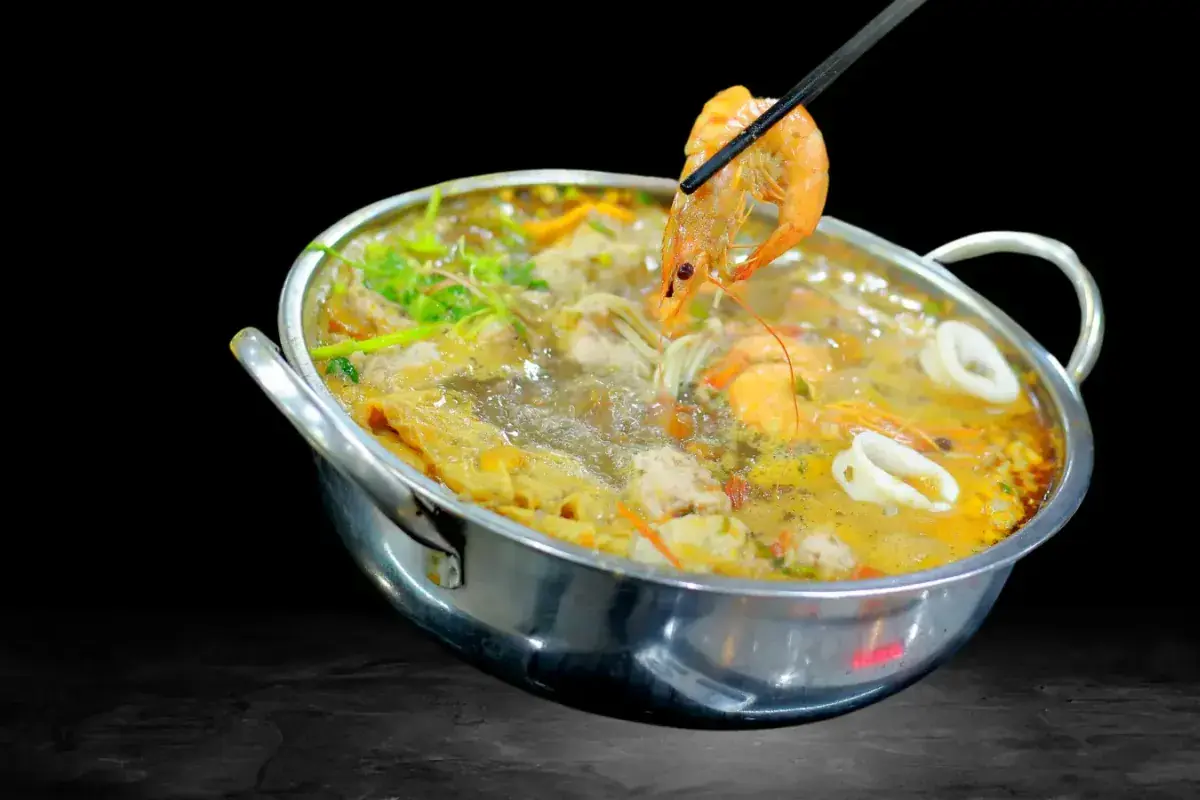
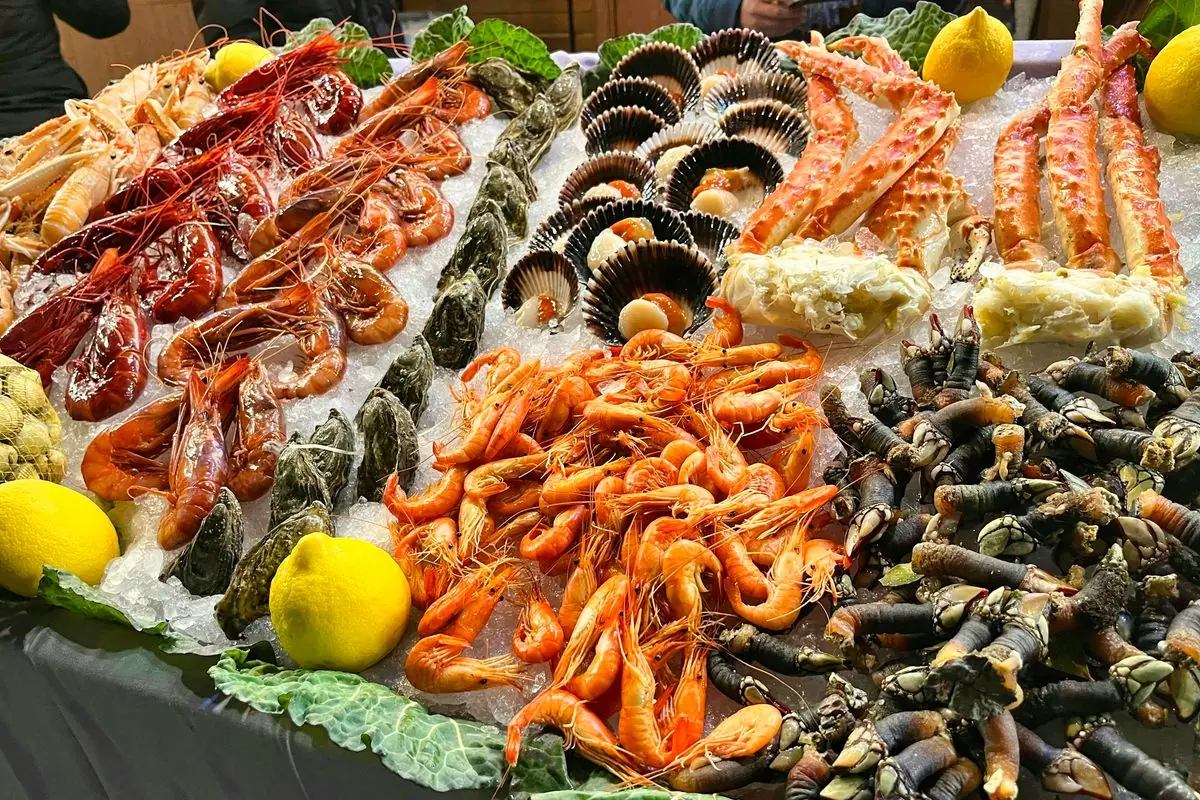
Seafood, snails and shellfish, and freshwater crab hotpot are among the options.
Areas such as Lach Tray, Hang Kenh, Le Loi, and Du Hang have a variety of restaurants.
Hours vary from place to place; check the restaurant you have in mind, especially after 9:00 PM.
If you’ve spent the afternoon eating fried dishes, choosing something lighter for dinner may also make the next morning more enjoyable.
You can save spicy fish noodles or another version of crab noodles for breakfast on your second day.
12. Mistakes that can ruin a Hai Phong food tour
Planning too many food stops
A list of 15 famous dishes doesn’t automatically make a good one-day itinerary.
Every restaurant takes time.
You’ll need to find it, order, wait for the food, eat, pay, and move to the next place.
For a day trip from Hanoi, around four to six food stops is a more realistic target.
You can always add another if things go smoothly.
Choosing restaurants by popularity instead of location
A restaurant on Lach Tray, another around Cat Bi Market, a stop in Do Son, and then a trip back to the Opera House creates unnecessary travel.
Keep your one-day food route inside the central urban area.
Save more distant places for another trip.
Trusting old menus and opening hours
Breadstick prices and late opening hours in articles from December 2023 are out of date.
Don’t plan a 2026 budget around 2,000 VND breadsticks or late-night hours from back then.
Buying only the outbound train ticket
An early train to Hai Phong is convenient, but you still need a seat for the return journey.
Weekend day trips can be popular.
Check return availability before paying for your outbound ticket.
Don’t leave the return decision until you’re standing outside a restaurant late in the afternoon.
Adding sightseeing too far from the center
A train-based Hai Phong food tour is not the best day to visit Do Son or Cat Ba Island as well.
Do Son is better combined with a separate coastal sightseeing itinerary.
Cat Ba requires additional travel to the island and careful timing of transfers.
For either destination, a two-day, one-night trip or longer is generally a better fit than trying to squeeze everything into a single day of eating.
13. What should you actually eat on your first Hai Phong food tour?
For a first visit, a manageable selection is:
Crab noodles, crispy breadsticks, square crab spring rolls, and a coconut dessert.
Add bánh bèo or bánh đúc tàu if you still have room.
If you’re more interested in fish noodle soup, substitute bún cá cay for crab noodles; two large bowls close together is a lot to finish.
Travelers who already know Hai Phong can plan a second visit around less familiar dishes such as giá bể (a local shellfish delicacy), cháo khoái (a savory porridge), red jellyfish, or regional market snacks.
There’s no need to repeat every famous dish simply to complete another checklist.
Final tip: book your return before planning another restaurant
Secure your round-trip tickets a day or two before you travel to leave time to adjust your plans if seats are unavailable. Before you set off, check the HP2 departure time and station printed on your ticket.
Frequently asked questions
Is one day enough for a Hai Phong food tour from Hanoi?
Yes. HP1 arrives in Hai Phong at 8:25 AM and HP2 leaves at 6:40 PM, which gives you time for four to six food stops in central Hai Phong. Double-check the timetable and tickets for your date, and allow 40 minutes or more to get back to the station.
How much does a guided Hai Phong food tour cost?
That comes down to the kind of tour and how many of you are going. In 2026, LEAD TRAVEL's car tours from Hanoi cost 510,000-1,010,000 VND per person, depending on group size. A four- to five-hour guide from HDV Local costs about 600,000-900,000 VND, usually not including food or transport. Prices can vary by departure date, and it's worth requesting a quote before booking.
Is it better to take the train or a car for a Hai Phong food tour?
The train is especially convenient if your plan is to explore restaurants in central Hai Phong. A private car is more useful for hotel pickup, larger groups, and itineraries that include attractions outside the center. For a food-only day trip, the train is the one to take when the times suit you.
Can foreigners do a self-guided Hai Phong food tour without speaking Vietnamese?
Yes. Google Maps, a translation app, a ride-hailing service, and a little cash can make an independent trip manageable. If you have severe food allergies or a special diet, an English-speaking local guide can ask the restaurant what goes into each dish.
Where should I eat at night if I stay in Hai Phong?
The night food street at 53 Lach Tray is one option, open 5:00 PM to midnight daily during its pilot period, which began in October 2026. You can also look for seafood, snail restaurants, or crab hotpot around central neighborhoods. The Opera House pedestrian food street ended its trial on October 24, 2026, so check whether it's still open before you go.