Should you give VND 500,000 or VND 1 million at a Vietnamese wedding?
There is no single correct amount to put in a Vietnamese wedding envelope. Your relationship with the couple, the venue and your own budget matter far more than an unwritten rule.
 17 min read
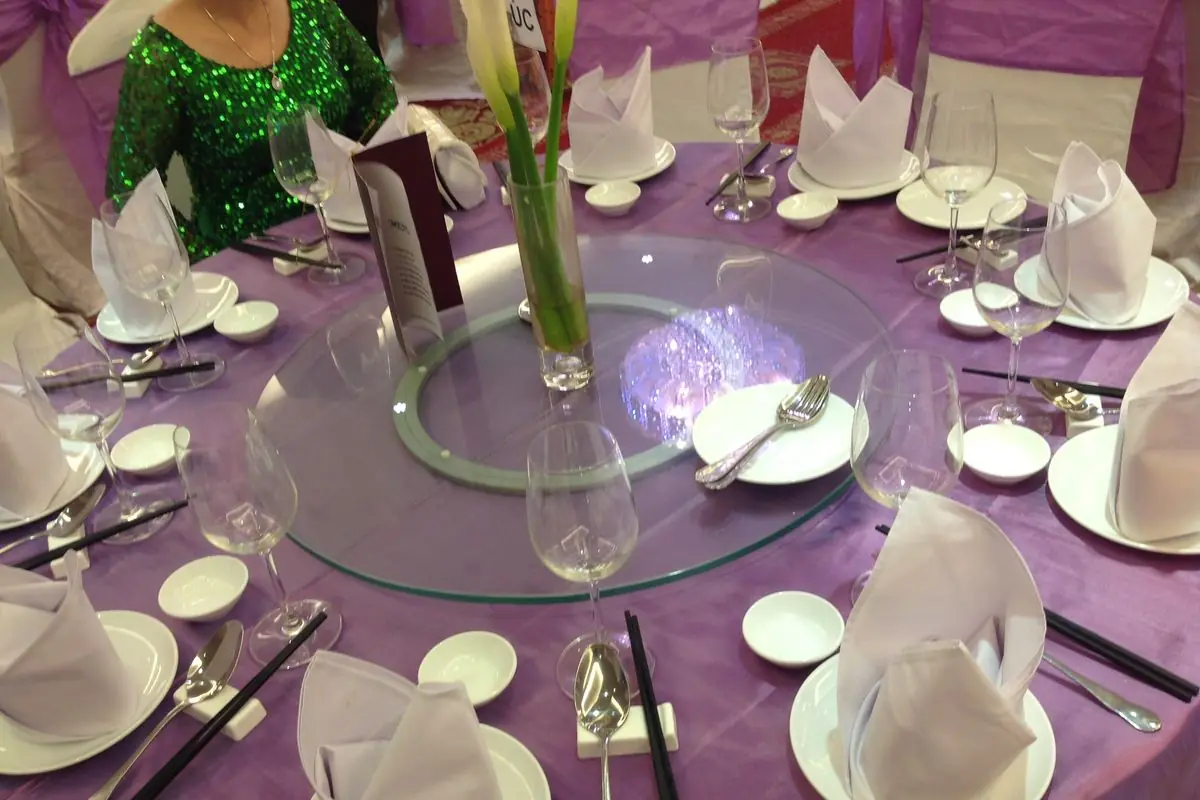
A round banquet table with a lazy Susan.
An invitation reads “Đón khách 17:30 - Khai tiệc 18:30”: guests are welcomed at 5:30 p.m., and the banquet is scheduled for 6:30 p.m. At a city wedding in Vietnam in 2026, VND 500,000-1,000,000 is a useful starting range for one guest, while VND 1-2 million may suit a close friend. Smaller home celebrations can have different expectations, and nobody is required to reimburse the couple for the exact cost of a restaurant meal.
How much to give at a Vietnamese wedding
The envelope is called phong bì, and the money inside is tiền mừng cưới, a cash gift celebrating the marriage. Giving cash is familiar in Vietnam. It is not an admission fee, however, and the reception is not a restaurant bill split among guests. A couple may choose a lavish hotel ballroom, a simple neighborhood venue or a meal cooked and served at home. Their choices should not automatically set your gift amount.
Start by thinking about how you know the bride or groom. Are you on friendly terms at work but rarely meet outside the office? Did you grow up together? Are you attending as a member of the family? Those relationships usually have a bigger influence than the chandeliers in the ballroom.
The figures below are suggested ranges for one attending guest in 2026. They can overlap, and expectations vary by family and location.
| Your relationship with the couple | Suggested reference amount | Something else to consider |
|---|---|---|
| Casual acquaintance or coworker you barely know | VND 300,000-500,000 | A smaller home event or local custom |
| Coworker on your team or ordinary friend | VND 500,000-700,000 | The usual range within your friend group |
| Good friend or close coworker | VND 700,000-1,000,000 | Whether you are bringing another invited guest |
| Close friend | VND 1,000,000-2,000,000 or more | Your means and the closeness of the friendship |
| Close relatives and siblings | No reliable standard amount | Family traditions, gold gifts and shared wedding expenses |
The same envelope can mean different things in different settings. VND 500,000 might be a generous contribution at a small family gathering and a fairly ordinary amount at an urban restaurant. Giving VND 1 million to a close friend does not obligate everyone in the room to do the same.
You might hear about reciprocity: people remember how much they received at their wedding and later give something similar when the other person marries. This happens, but it is better understood as a social habit than a debt with interest. Your finances may be very different from those of someone who married five years ago.
How much should you give a Vietnamese coworker?
For a fairly casual coworker at a restaurant wedding in a big city, VND 500,000 is a practical 2026 benchmark. In some towns, rural communities and home-based receptions, VND 300,000-500,000 can also be appropriate. A teammate who has become a genuine friend might get VND 700,000 or VND 1 million.
Several people in your office have probably received the same invitation, so ask one trusted colleague discreetly what the group normally gives. Asking simply tells you the local habit.
A group can attend together and still use separate envelopes. Separate envelopes also make the couple’s record-keeping easier. A collective office gift may replace individual envelopes or simply be a voluntary extra, so check which before you add your own. Someone who joined the company last month is not expected to match a senior manager.
Not all invitations come from close friendships. A colleague might invite an entire department as a way of sharing good news. You can decline politely if your schedule or budget does not allow you to attend.
Giving to a close friend
VND 1-2 million is a useful reference range for a close friend at many urban weddings in 2026. You can give more if you genuinely want to and can afford it. Giving less when money is tight is fine too. The couple may remember that you helped with decorations, transport, the guest list or the morning ceremony just as much as they remember the envelope.
A close friendship is not a bidding contest. Imagine having three coworker weddings and one best friend’s wedding in the same month, all while paying rent and travel expenses. Planning the month ahead is more sensible than choosing a number that leaves you struggling until payday.
Bridesmaids, groomsmen and bê tráp tray bearers may need to commit to early mornings, coordinated clothing and travel between family homes. Ask about those arrangements beforehand. Your practical help and cash gift are separate gestures, but there is no universal rule demanding a particular total from somebody who has already spent a great deal of time helping.
Siblings, cousins and other relatives
Family wedding gifts can be more complicated than the ordinary guest envelope. Some households give substantial cash gifts. Others include gold jewelry, ceremonial presents, or direct help with hiring a marquee, preparing food or transporting relatives. Senior family members may also keep careful records of exchanges between households.
That is why a fixed online figure for “how much a relative must give” can be misleading. Ask a parent or family member involved in the arrangements whether you are invited personally or representing your household. Find out whether a family envelope has already been prepared and whether a separate gift is expected in your particular family.
Relatives traveling a long distance have real transport and lodging costs too. A flight, a bus ticket and a hotel room already make attending a significant gesture, even when the envelope is smaller than another relative’s.
Hometown, restaurant or hotel venues
The venue does matter, but it only nudges the amount up or down a little. For an acquaintance at a smaller hometown or countryside celebration, VND 300,000-500,000 may be normal in some communities. At a typical restaurant in Hanoi, Ho Chi Minh City or another large city, people often consider VND 500,000-1,000,000 for one attendee. A formal hotel reception may make you lean toward the upper end of the range if that works for your budget.
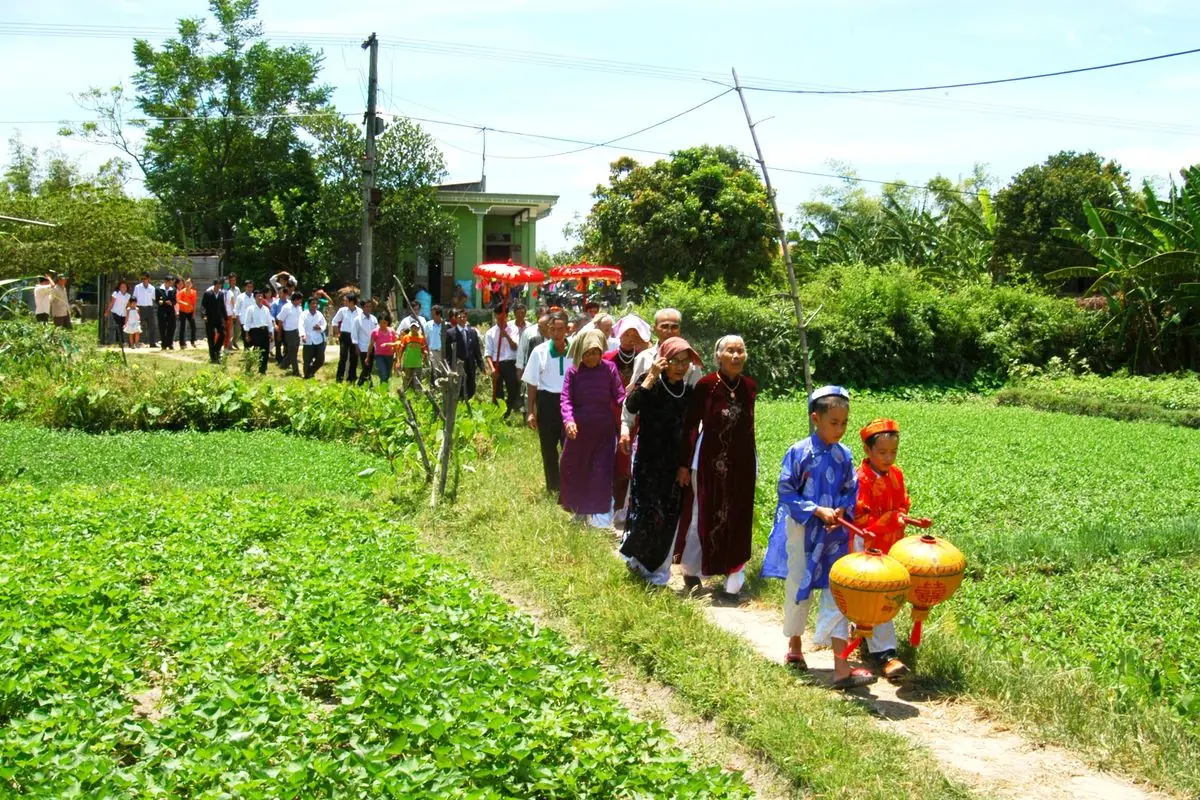
Some home weddings are expensive, too. Families sometimes set up large marquees, hire caterers, invite hundreds of guests and hold meals over more than one session. Meanwhile, a restaurant event can be small and deliberately modest. You rarely know the actual cost per guest, and the gift is not based on it anyway.
A reasonable process is to choose an amount based on your relationship, then consider the venue, the number of people in your party and your budget. Suppose you intended to give a coworker VND 500,000 but then remembered that you have worked closely together for years and the event is in a particularly formal setting. You might raise your gift to VND 700,000 or VND 1 million. Keeping the original amount is fine too.
A wedding in another province can mean considerable travel expenses. A thoughtful couple normally values the effort it took you to attend; the envelope need not become more expensive simply because you bought a long-distance ticket.
How much should two people give at a Vietnamese wedding?
When you and your partner are both invited, it makes sense to account for two seats at the table. VND 1-1.5 million together is a reasonable starting point at many ordinary urban restaurant receptions in 2026. A close relationship or a more formal celebration could push that to VND 1.5-2 million or more, depending on what you can afford.
Two guests rarely means exactly twice a single envelope. Many couples give one joint gift from their shared budget. Check whether the invitation actually includes your partner; “You and family” covers more people than a card addressed to one individual.
With an invitation addressed only to you, ask the couple before their guest-count deadline about bringing a spouse, boyfriend or girlfriend. Do the same for children: let the hosts know how many people are coming and whether they will need seats or meals. An unannounced extra guest can create a real seating problem, even when you bring additional cash.
Joint and separate envelopes
Married couples and households often give a single envelope. Write both names or a clear label such as “Minh and Hoa’s family.” Friends can also pool money if they agree in advance, but the names of everyone contributing should appear on the envelope or a card inside.
Colleagues who decide individually how much to spend usually find separate envelopes simpler. Imagine one person hands you their share to bring along, but the envelope only carries your name. The newlyweds may never know who that money came from. With a big guest list, working out who sent what afterward can be hard.
A group can make one gift without revealing the individual amounts to the entire reception desk. Keep that information within the group. The couple only needs to know who is offering the gift and what the congratulatory message says.
Writing and handing in the envelope
At the reception entrance, look for a welcome table, a guest book, a photo backdrop and a decorated box for gift envelopes. Some events have separate boxes for the bride’s and groom’s sides; others use just one. Ask the greeters which box is yours before dropping anything in.
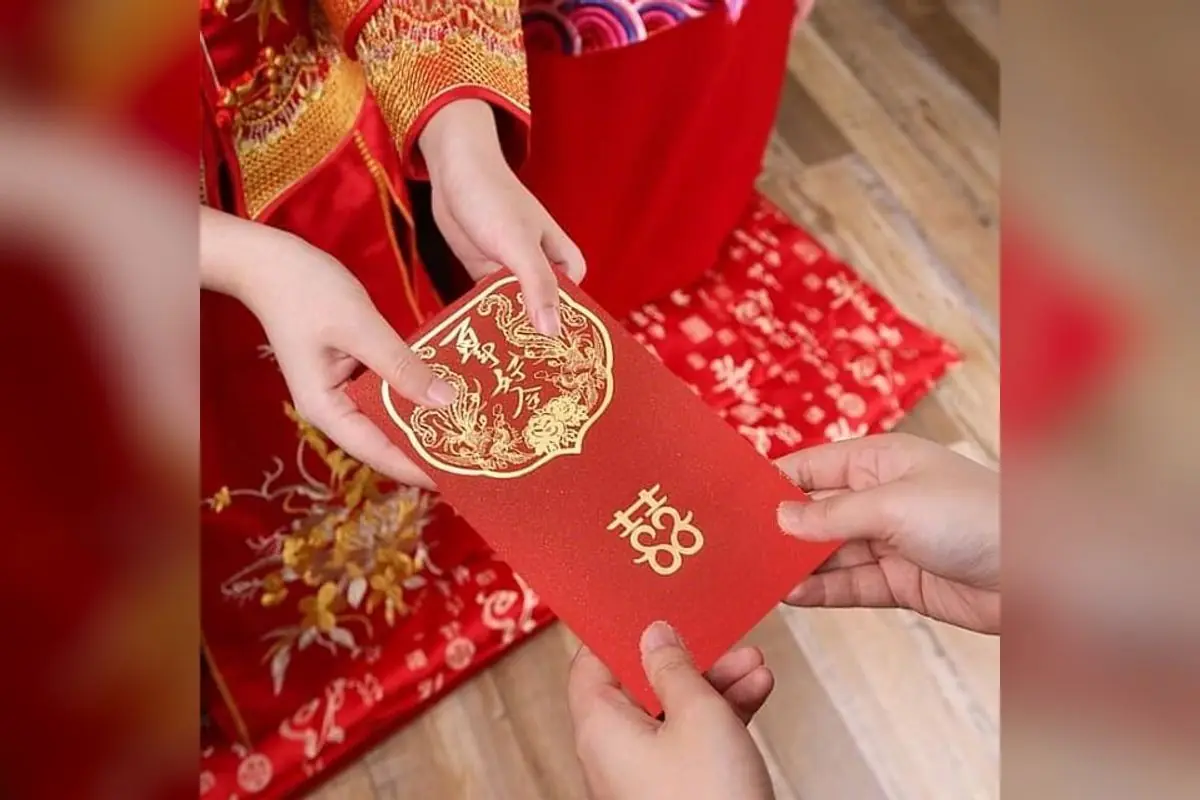
A message can be very short. For example:
From: Alex Morgan - Lan’s coworker
Message: Chúc mừng hạnh phúc, Lan và Huy! (Congratulations and best wishes for a happy marriage.)
Write your name clearly; neat handwriting is optional. If the couple knows you by a nickname, add that nickname or the office where you work. Leave the amount off the outside of the envelope. A clean, sealed envelope is enough; it does not have to be a particular shade of red, even though red and celebratory designs are common.
Some printed wedding invitations include an envelope that can be reused for the cash gift. Prepare yours before arriving, count the cash privately and seal it. At the entrance, greet the hosts, deposit the envelope in the appropriate box and sign the guest book if one is provided.
Avoid holding up the photo line to explain the exact amount in your envelope. The couple may be greeting dozens of people. Take your photo, offer a quick congratulations and let the next guests through. A staff member or relative will usually help you find a table.
Is sending Vietnamese wedding gift money by QR code rude?
Not necessarily. Digital wedding invitations sometimes include a bank account or QR code for guests who live far away or cannot attend. Transfers are now a familiar alternative, especially among younger couples. More traditional families may still prefer an envelope handed in at the reception.
A QR code the couple put on their own invitation is fine to use. Put your name and a simple wish in the payment reference, such as “Alex mung cuoi Lan Huy - chuc hanh phuc”. Then send a brief private congratulations so the couple can identify the payment, especially if your bank account uses a different name.
When attending in person, a physical envelope is the simplest option if the hosts have not indicated that they accept digital gifts. A transfer and a cash envelope would be a double gift; one is enough. Once the transfer is done, simply greet the couple and enjoy the reception.
International visitors should also remember that many local payment QR systems are designed for Vietnamese bank accounts. Do not depend on being able to pay with a foreign card or overseas banking app at the wedding entrance.
Do you need to send money if you cannot attend?
There is no universal rule requiring payment whenever someone sends an invitation. A close friend, relative or coworker you know well will often appreciate a gift even if you cannot attend. For a distant acquaintance you have not spoken to in years, a warm message may be enough.
For an ordinary connection, VND 300,000-500,000 is one amount to consider in 2026 when you cannot go. Close friends might still get the amount you had originally planned.
Avoid cancelling at the last minute after confirming attendance unless something genuinely unexpected comes up. The couple may already have allocated you a seat, and a quick reply weeks earlier would have helped them plan.
What to wear to a Vietnamese wedding
First, follow any dress code on the invitation. Without one, aim for neat, festive clothes that fit the venue. A midi dress, modest evening dress, tasteful jumpsuit or áo dài works well for many women. Men can wear a pressed shirt and tailored trousers, a blazer or a full suit depending on the formality of the reception.
Foreign guests are not expected to buy an áo dài. Wearing one is welcome; just ask the couple about colors and formality first. Wear it with suitable trousers, and avoid something so elaborate that it could be mistaken for the bride’s or an official wedding party costume.
Think about the practical setting too. A hotel ballroom might involve polished floors and air conditioning; a countryside celebration may have a temporary marquee, steps and uneven ground. Shoes you can walk and stand in are often a better decision than the highest heels you own. Outdoor events in the rainy months call for an extra layer and reliable footwear.
Arrival time is on the invitation
Pay attention to two phrases on the invitation. Đón khách means guest reception or arrival time. Khai tiệc means the formal start of the banquet. With a card that reads “Đón khách 17:30 - Khai tiệc 18:30,” arriving around 6:10-6:20 p.m. allows time for greetings and finding your table before the scheduled start.
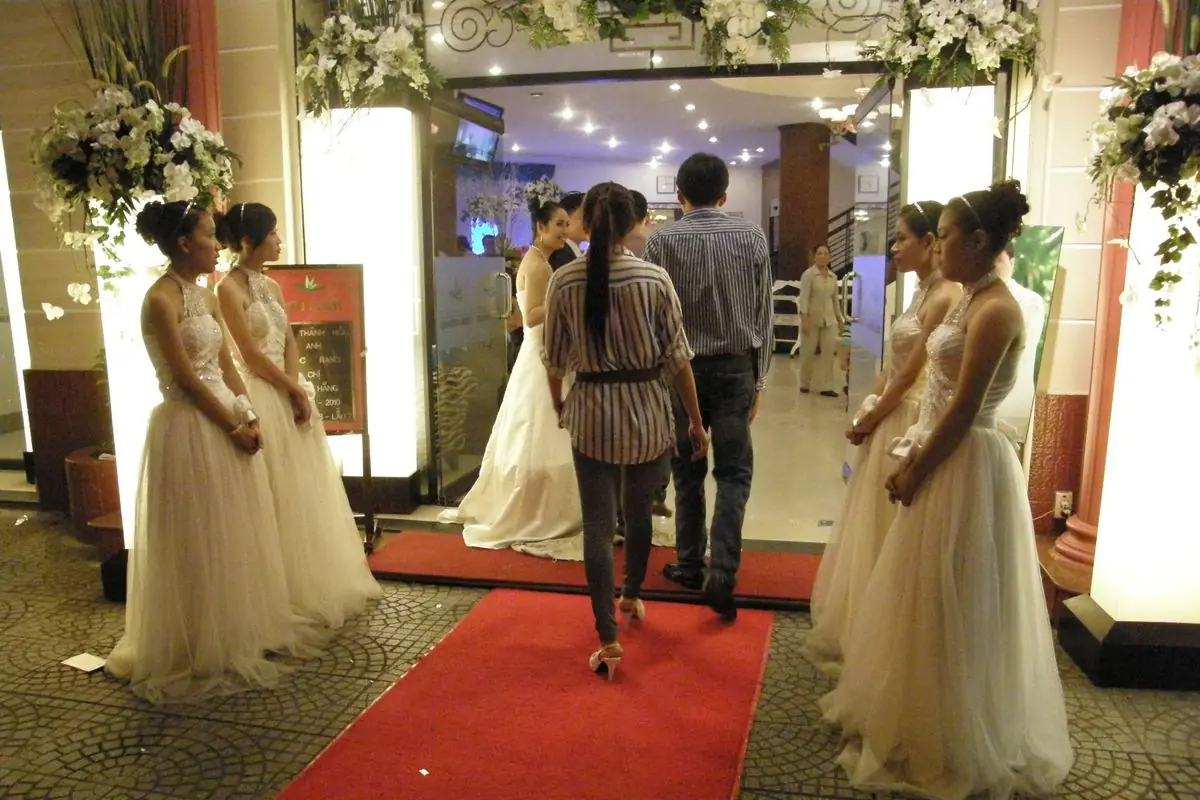
Some weddings do run later than the printed time because guests arrive gradually. That happens at certain large-city banquets, but it is a poor rule to rely on. Hotel receptions, church services and morning family ceremonies can begin on time. An hour’s lateness could cause you to miss an important part of the celebration.
For context, lunch receptions may have guest-arrival times around 10:30-11:30 a.m., while evening receptions may welcome guests sometime around 5:30-7:00 p.m. If your invitation lists only one time, ask whether it is the welcome time or the ceremony time.
Large wedding centers sometimes host several events on the same day. Check the couple’s names and the correct hall rather than walking into the first brightly decorated room you see. You can also allow a few extra minutes for the entrance photo and any guest book.
Be punctual for an engagement ceremony, an ancestor ceremony or the bridal procession you are specifically invited to. Those gatherings may follow a carefully coordinated family schedule and are not interchangeable with a casual evening banquet.
How lễ ăn hỏi differs from the wedding reception
Vietnamese weddings can involve several distinct occasions. The lễ ăn hỏi, sometimes called đám hỏi, is an engagement ceremony, commonly held at the bride’s family home. The groom’s family brings formal gifts agreed upon by both households. These may include betel and areca nuts, tea, cakes, fruit and other offerings displayed on decorated trays. Relatives exchange formal greetings, and some families include rites at the ancestral altar.
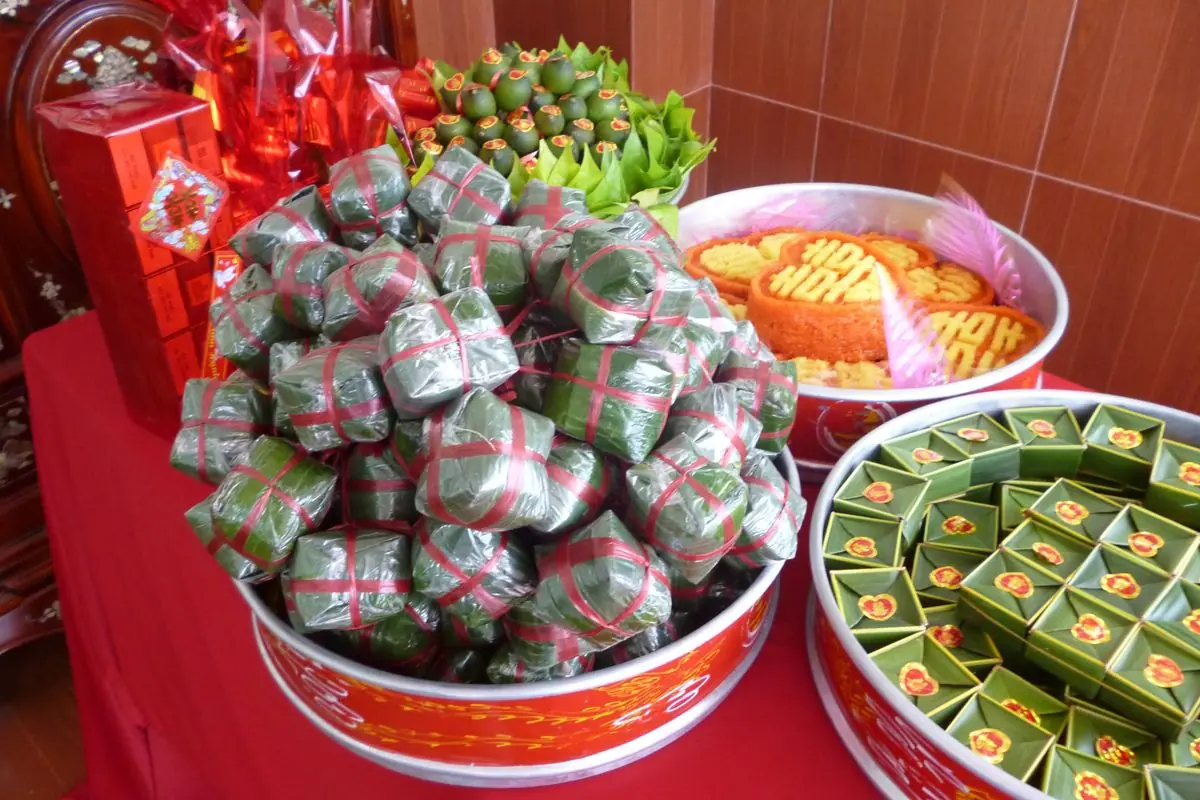
The lễ gia tiên is a family ceremony honoring ancestors. The rước dâu is the procession to collect the bride. Exactly when and how these happen varies by region, religious background and family preference. Some ceremonies are combined, shortened or organized across different days. No single internet checklist describes every Vietnamese wedding.
The tiệc cưới is the wedding banquet or reception. This is often the part that friends and work colleagues attend: entrance photos, an MC introducing the families, possibly ceremonial moments on a stage, a multi-course meal, toasts and a visit from the newlyweds to each table.
An invitation only to a restaurant reception means you do not need to attend the earlier engagement ceremony. Ordinary reception guests are also not automatically expected to give cash at both events. Formal engagement gifts are usually arranged by the families. Tray bearers and guests invited to a smaller family ceremony should ask their host what is appropriate.
Where to sit, how to eat and when to toast
At a restaurant with a seating plan, find a staff member or family representative near the entrance. Guests may be grouped by workplace, university friends, relatives or which side of the family invited them. Some events have assigned tables, while others allow guests to choose a place. An empty chair at a family table may already be taken; ask first.
Food is often served in several shared courses around a round table. There is no need to wait for a personal invitation to start every dish, but leave room for older guests and use the serving utensils when provided. Dietary restrictions are best mentioned to the couple in advance.
When the newlyweds arrive at your table, it is normal to stand, smile, congratulate them and raise your glass. A short “Chúc hai bạn hạnh phúc!” (Wishing you both happiness!) is quite enough. They have many tables to greet; keep it brief and skip the request for a private photo session.
Taking photos is usually welcome, but avoid blocking the official photographer, standing between family members during a ceremony or posting private moments without permission. Take extra care with photographs of children. Let the couple decide which backstage images they want to share publicly.
Try to stay through the main ceremony and meal even if you need to leave early. Quietly say goodbye to the person who invited you or a nearby family member. Leave the bride alone while she is changing clothes or greeting another table.
Budgeting for wedding season in Vietnam
In many parts of Vietnam, the north above all, October through December is a busy period for weddings. Southern locations also benefit from the drier months extending into the early part of the following year. In central Vietnam, late-year rain can complicate outdoor plans. The phrase wedding season in Vietnam does not refer to exactly the same months in every province.
In a large office, invitations can arrive in clusters. Put them in your calendar and set an envelope budget before the month begins. As an example, three coworker weddings at VND 500,000 each plus one close friend’s wedding at VND 1.5 million would mean VND 3 million in cash gifts before transport or clothes.
The same smart outfit can be worn more than once. You can also decline an event rather than committing to two weddings on the same evening in distant parts of the city. Responding early helps the couple and makes your own budget easier to manage.
Keep travel costs separate in your calculations. A reception in another province could require a bus, train, hotel room or time off work. Guests who have made a long journey should not feel they must add those expenses to their cash gift as though they were an extra charge from the hosts.
A first-time foreign guest’s quick guide to a Vietnamese wedding
Attending respectfully takes no long list of rituals: read the invitation, note the location and guest-arrival time, dress smartly and prepare a suitable gift. For a solo attendee at a typical city reception in 2026, VND 500,000-1,000,000 is a sensible range to consider. A smaller hometown event or a particularly close friendship can change that number.
Carry Vietnamese dong if you do not have local banking. A clean envelope is easier to handle than trying to use an overseas bank app at the reception. Write your name and, if helpful, how you know the couple. The Vietnamese phrase “Chúc mừng hạnh phúc” is a simple, friendly wedding wish. Ask your host or a greeter where the envelope goes: “Cho mình gửi phong bì ở đâu?” (Where may I leave my gift envelope?).
There may be a line for photos with the couple at the entrance. At other times the couple is backstage getting ready or attending a family ritual. Follow the welcome staff and find the right table. Some receptions have an MC, family introductions and toasts, then many dishes served one after another.
You will not always understand what is being announced, and that is fine. Watch the other guests when they stand for the couple, applaud or raise their glasses. A warm smile and a short congratulation are more useful than pretending to know every detail of the ceremony.
For a morning rite at the family home, check the dress expectations and photography etiquette in advance. The atmosphere can be more intimate and formal than a large restaurant party. Avoid treating the family’s ancestral space or ceremonial gifts as props for social media.
A modern wedding in Ho Chi Minh City, a church ceremony, a small village banquet and a family event with traditional rites may follow very different schedules. The couple’s instructions take priority over any generic rule in a wedding guide.
One small thing to do after the wedding
The next day, a simple message such as “Thank you for including me. Wishing you both a wonderful life together!” is a kind follow-up. Before leaving home, photograph the outside of your labeled envelope if you tend to mix up several weddings in one month; keep that record private, and never post the money or gift amount online.
Frequently asked questions
How much should I give a Vietnamese coworker for their wedding?
For one attendee at a city reception, VND 500,000-700,000 is a helpful reference range for an ordinary coworker. VND 300,000-500,000 may fit some home or local celebrations. A close teammate might receive VND 1 million or more, depending on your relationship and means.
How much money should I give a close Vietnamese friend?
VND 1-2 million is a common reference for a close friend at many urban celebrations in 2026. Give more only if you want to and can comfortably afford it. Genuine help during wedding preparations may matter as much as a generous envelope.
How much should a couple give at a Vietnamese wedding?
Two invited guests can start from VND 1-1.5 million together at an ordinary city restaurant; for a close relationship or more formal reception, you could consider VND 1.5-2 million or more. Confirm that the invitation includes both of you before arriving together.
Do I have to send a gift if I cannot attend?
No. It is optional, though friends and close colleagues often appreciate a thoughtful gesture. VND 300,000-500,000 is one possible reference for an ordinary connection; a close friend might receive your original planned amount. Either way, reply early and send your good wishes.
Is a bank transfer or QR payment rude at a Vietnamese wedding?
Not if the couple has provided a genuine payment option or you cannot attend in person. Include your name in the transfer note, verify the account holder and send a personal congratulations. When in doubt at a traditional reception, a sealed cash envelope is still the simplest approach.