When to tip in Vietnam and how much is enough
From VND 20,000-50,000 for hotel staff to VND 50,000-100,000 for a massage, tips in Vietnam are generally modest and entirely voluntary. Know when to leave something extra and when a thank-you will do, and paying gets a lot less awkward.
 23 min read
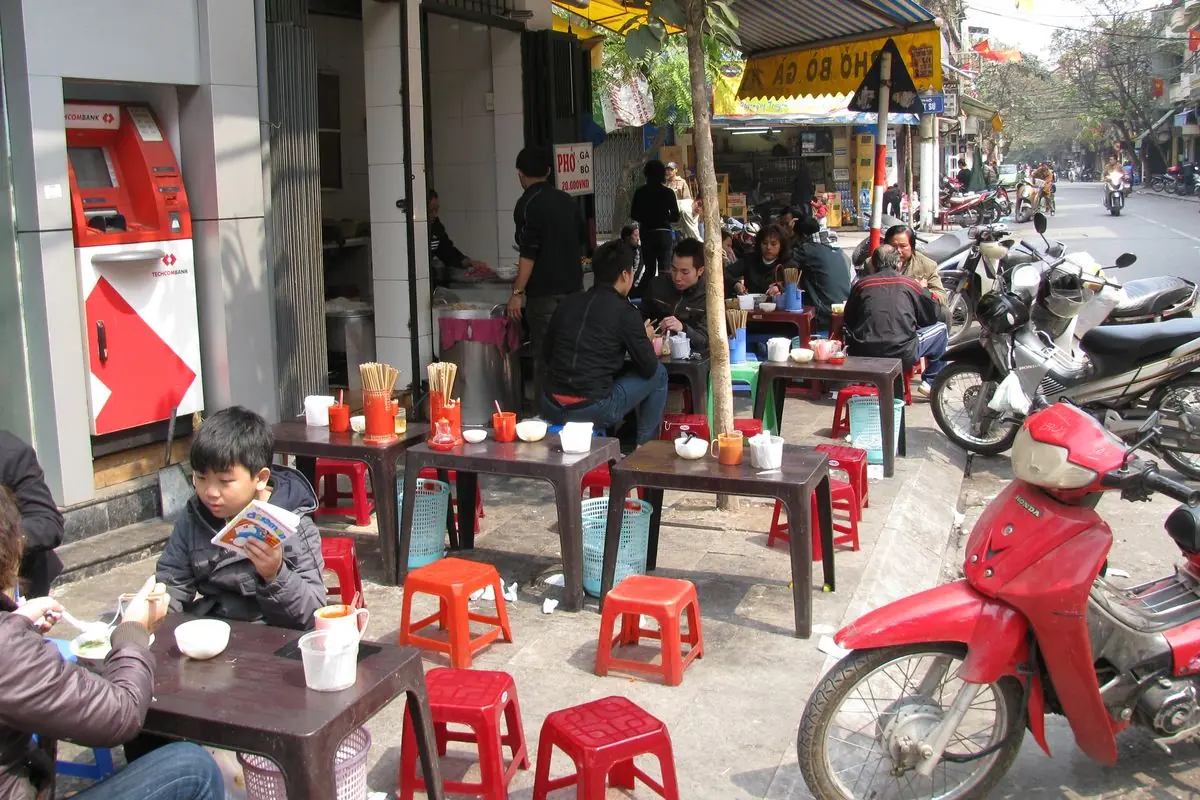
At a sidewalk pho shop, paying the quoted price is enough.
Order a bowl of fish noodle soup near Cau Dat Street in Hai Phong, and you can pay the exact amount on the bill before leaving. Book a stay at Hotel Nikko Hai Phong, however, and you may find packages that already include a 5% service charge and VAT. Two different ways of paying, but one thing in common: tipping in Vietnam is not mandatory, and being served is no reason to add extra.
1. Is tipping expected in Vietnam?
No. There is no general rule requiring customers to tip at restaurants, hotels, spas, or in taxis across Vietnam. Most Vietnamese people are accustomed to paying the stated price, collecting their change, and saying thank you.
Vietnamese tipping culture is quite different from that of the United States, where customers often leave a percentage of their bill for service staff. In Vietnam, a tip is usually seen as a gesture of appreciation rather than an expected part of the payment.
Tipping is more common for tour guides and at spas, while restaurant staff generally do not expect customers to leave anything extra.
The biggest difference comes down to the type of service.
At a neighborhood pho shop serving hundreds of bowls a day, customers aren’t expected to leave a percentage of their bill behind. You order, eat, pay, and go. Nobody should expect you to calculate an additional 10% or 15%.
At an upscale spa, with a private tour guide, or in an international hotel that regularly welcomes overseas guests, tipping is more familiar. Some travelers prepare a few VND 50,000 notes in advance, while others only tip when someone has gone out of their way to help.
Both approaches are perfectly acceptable.
A small amount to a traveler isn’t necessarily insignificant to the person receiving it. For scale, a cheap local meal costs about VND 30,000-40,000. A VND 50,000 tip already means something; several hundred thousand dong to look generous would be overdoing it.
2. How much should you tip in Vietnam? A 2026 guide
Vietnam has no official tipping rate. The amounts below are just for planning your 2026 trip budget; go up or down depending on the service.
Staff have no right to demand these amounts from you.
| Service | Is tipping expected? | Suggested amount |
|---|---|---|
| Street food stalls, local noodle shops, casual eateries | No | VND 0 |
| Cafés and bakeries | No | VND 0-20,000 if you wish |
| Sit-down restaurants | Not mandatory | VND 20,000-50,000, or around 5-10% when no service charge applies |
| Hotel porters | Optional | VND 20,000-50,000 per occasion |
| Hotel housekeeping | Optional | VND 20,000-50,000 per room per night |
| Spa or massage, 60-90 minutes | Fairly common at tourist-oriented spas | VND 50,000-100,000 per therapist |
| Shared group tour guide | Worth considering | VND 50,000-100,000 per guest per day |
| Private tour guide | More common | VND 100,000-200,000 per guest per day |
| Private tour driver | Optional | VND 50,000-100,000 per vehicle per day |
| Taxi or Grab driver | No | VND 0, or an extra VND 10,000-20,000 |
| Overnight cruise crew, two days and one night | Optional | Around VND 100,000-200,000 per cabin for a shared tip fund |
You could spend an entire day exploring Hanoi, eat three meals, stop at two cafés, and take several Grab rides without tipping anyone.
On the other hand, a private guide who spends a full day showing you around, explaining local history, adjusting the itinerary, and helping your group with unexpected problems is worth a bigger thank-you.
Pay attention to whether a suggested amount is per person, per room, or per vehicle. Tipping VND 100,000 to one tour guide isn’t the same as tipping VND 100,000 per person in a group of six.
Traveling as a family or with friends, pool one amount and hand it over once, so nobody ends up tipping twice.
3. Tipping at restaurants and cafés in Vietnam
Street food and casual restaurants: paying the bill is enough
At local pho shops, banh mi stalls, rice restaurants, and food markets, almost nobody tips.
Imagine ordering two bowls of fish noodle soup, a plate of fried dough sticks, and two glasses of iced tea. The owner tells you the total, you pay, and that’s it.
You don’t need to look around to see whether other customers are leaving money behind.
Even when someone kindly explains the menu or recommends another dish, a warm thank-you goes down well.
Suppose your bill is VND 185,000 and you hand over VND 200,000. You can let them keep the VND 15,000 change by saying:
"Anh chị cứ giữ tiền lẻ giúp em nhé."
It means something like, "Please keep the change."
Only do this when you genuinely want to. Some owners will still hand back every last dong because they think you forgot your change; it’s not that the tip was too small.
Paying is simple; don’t turn it into a long explanation.
Sit-down restaurants: check the bill first
At restaurants with table service, where staff refill drinks, replace plates, recommend dishes, and respond to special requests, tipping is more commonly appreciated.
Suppose you have dinner at a restaurant in Hanoi. Your food bill comes to VND 800,000 before any service charge, and the staff have been particularly attentive.
Leaving VND 40,000-50,000 is a nice touch.
It’s an optional reward, not another item on the menu.
Many people suggest 5-10% at restaurants in Vietnam, but that’s not a rule.
On a VND 2 million bill, leaving VND 50,000 rather than adding VND 200,000 by default is perfectly fine.
This is especially relevant at hotel restaurants, upscale dining venues, and establishments that frequently serve international visitors, where a service charge may already be included.
Cafés, bakeries, and takeaway counters
Order a Vietnamese iced coffee, pay by QR code, and take it away. No tip is necessary.
The same goes for bubble tea shops, bakeries, ice cream counters, and other places where you order and collect your own food or drinks.
Some cafés place a tip jar beside the register. Drop in VND 10,000 or VND 20,000 if you like; skip it and nobody will notice.
At cocktail bars or restaurants where staff provide more personalized table service, a small tip may feel more appropriate, particularly when someone spends time helping you choose a drink or takes special care of your table.
4. Service charges vs. tips: what’s the difference in Vietnam?
Service charges and tips are one of the most common sources of confusion for international travelers.
A service charge is an amount determined by the business and included in the price or added to the bill under its own pricing policy.
A tip, sometimes called a gratuity, is additional money voluntarily given by a customer to thank someone for their service.
On a Vietnamese restaurant or hotel bill, you might see:
- Service charge
- SVC or SC
- Phí phục vụ - service charge
- VAT or thuế GTGT - value-added tax
- Net price - a price that includes the specified taxes and charges
A 5% service charge is not a nationwide requirement. Some restaurants and hotels apply one; others don’t. Some establishments use different rates or build the charge into their prices.
A real example: Hotel Nikko Hai Phong in 2026
Hotel Nikko Hai Phong offers a Rest & Revel package with a booking and stay period running from April 1 to December 31, 2026.
Its family VinWonders package starts at VND 3,400,000 net and includes one night in a Deluxe room, breakfast, and the additional benefits specified in the package.
The hotel states that the package price includes a 5% service charge and VAT.
That means you don’t add another 5% service charge to the net package price.
Surcharges outside the package still depend on the booking conditions.
And even though the room package already includes a service charge, you can still give VND 30,000 directly to a staff member who helps carry your heavy luggage upstairs.
That VND 30,000 is a tip you choose to give, and the hotel doesn’t charge it.
How to read a restaurant bill
Imagine a restaurant bill with VND 1,000,000 in food charges before taxes and fees, a 5% service charge, and an applicable VAT rate of 8%.
For this example, assume the service charge is included in the VAT taxable amount.
| Item | Amount |
|---|---|
| Food | VND 1,000,000 |
| Service charge, 5% | VND 50,000 |
| VAT, 8% of VND 1,050,000 | VND 84,000 |
| Total | VND 1,134,000 |
This is only an illustrative calculation and isn’t based on a real restaurant invoice. The treatment of specific items depends on the type of goods or services, the taxable amount, and the establishment’s pricing structure.
Many goods and services normally subject to 10% VAT receive a temporary reduction to 8% from July 1, 2025, through December 31, 2026.
Ordinary accommodation and restaurant services can fall within this reduction, although some categories are excluded. You shouldn’t assume that everything appearing on an invoice qualifies for 8% VAT.
After December 31, 2026, items normally subject to 10% VAT would return to that rate unless new legislation extends or changes the policy.
When reading your bill, you just need to tell apart taxes, business-imposed charges, and any extra amount you personally choose to give staff.
5. Tipping at hotels in Vietnam: who should you tip?
Not every hotel employee is accustomed to receiving tips.
At small guesthouses, family-run homestays, and budget hotels, guests generally pay for their rooms and use the services included in the rate.
When a host gives you a room key, explains the breakfast hours, or recommends a restaurant, that isn’t something people tip for.
At four- and five-star hotels, however, some types of direct personal service are more commonly rewarded.
Hotel porters and bell staff
When a porter collects your luggage, takes it to your room, or helps move several heavy bags, you might leave VND 20,000-50,000 for the assistance.
There’s no need to calculate an amount for every suitcase.
For example, if your family has three suitcases and one porter takes all of them upstairs, giving that person VND 50,000 is simpler than working out VND 20,000 per bag.
A natural moment to tip is when the luggage has been placed inside your room and the staff member is about to leave.
You could say:
"Cảm ơn anh đã giúp mang hành lý. Anh nhận chút tiền cảm ơn nhé."
That means, "Thank you for helping with the luggage. Please accept a little something as a thank-you."
If staff politely decline because the hotel doesn’t allow it, take the money back without pushing.
Housekeeping
For a multi-night stay, VND 20,000-50,000 per room per night is a reasonable optional amount to consider when housekeeping has done a good job.
On longer stays, tip after each clean; that way the money reaches whoever did the work.
Leave it all for the last morning, and whoever cleaned earlier in the week may not see a dong.
Fresh towels and a routine clean are part of the room rate, though, and on their own aren’t a reason to tip.
Receptionists and concierge staff
Receptionists generally don’t expect tips for checking you in, checking you out, printing invoices, or providing the Wi-Fi password.
If someone spends considerable time solving a difficult problem, such as coordinating the return of lost luggage or reorganizing transport after a major disruption, VND 50,000-100,000 could be an appropriate thank-you, provided hotel policy allows it.
But calling you a taxi or pointing out the way to a restaurant doesn’t call for a tip.
6. How much should you tip for a massage or spa treatment in Vietnam?
Of all the situations visitors encounter, spa and massage tipping is among the most common in Vietnam’s tourism industry.
Many spas in Hanoi, Hoi An, Da Nang, Nha Trang, and Phu Quoc welcome both Vietnamese and international customers.
During a treatment, you might be asked about your preferred massage pressure, room temperature, or areas that need extra attention.
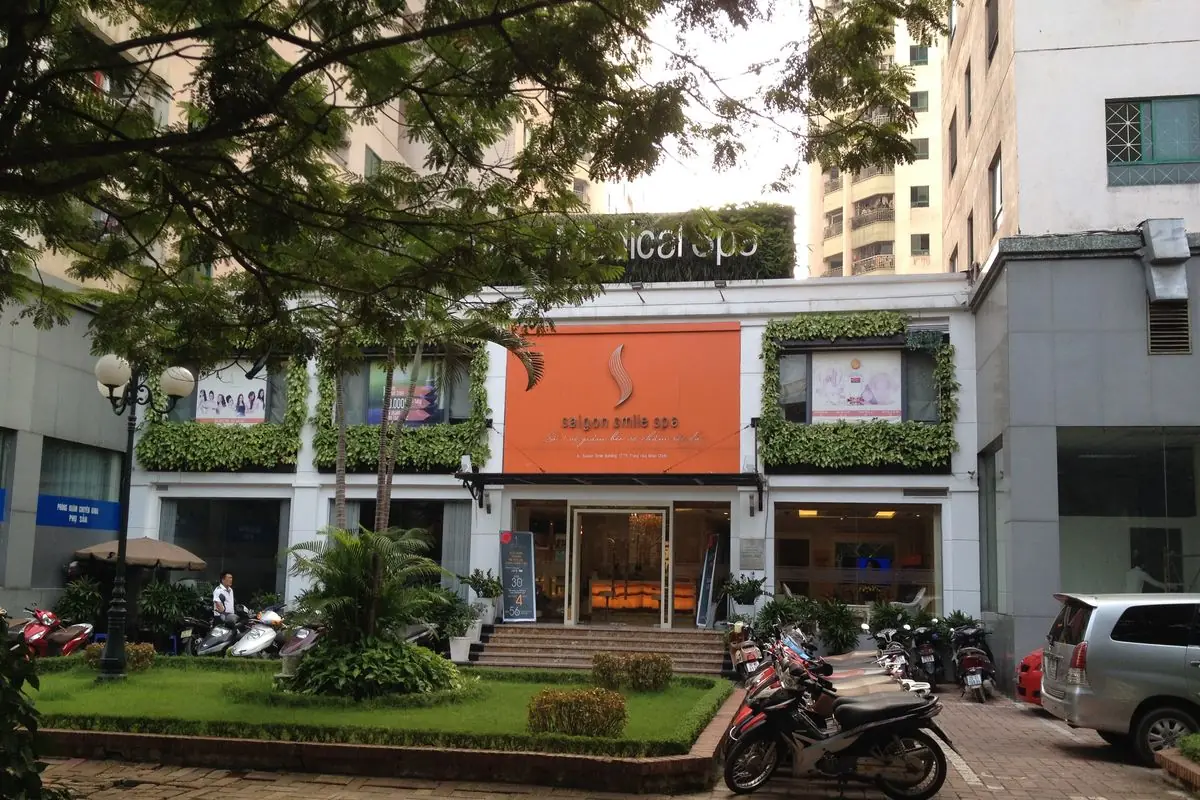
A practical 2026 tipping range for a relaxing 60-90 minute massage is VND 50,000-100,000 per therapist.
Spa tips here aren’t worked out as 15% or 20% of the treatment price, as they might be in some other countries.
For example, suppose you book a VND 500,000 massage, appreciate the therapist’s work, and decide to add VND 50,000.
With the VND 500,000 price already covering all taxes and fees, you spend VND 550,000 in total.
There’s no reason to round that up to VND 600,000 simply because you feel uncomfortable leaving a smaller tip.
At a luxury spa, after a longer treatment, or when someone has provided especially attentive service, you might consider VND 100,000-150,000.
Ask about extra charges before your massage
Spas handle pricing and tipping differently.
Some offer fully inclusive treatment prices. Others have separate tipping arrangements or may present additional fees as part of their service policy.
Where there’s a compulsory extra, get the full final price and the terms before you agree.
Better that than finding a surprise charge at the end.
Should you tip the therapist or the receptionist?
If you want to thank a particular person, giving the tip directly to your therapist after the session is usually the simplest approach, as long as the spa permits it.
Some spas use tip envelopes, a shared tip box, or a collection system managed by reception.
In that case, you can ask whether the amount goes to your therapist or is shared among employees.
Some treatments use two therapists, and you can prepare separate tips for both. There’s no universal rule about how the money should be divided.
And don’t feel pressured just because the receptionist hands you an envelope or a feedback form includes a space marked "Tip".
A service review and a monetary reward are two different things.
7. Tipping tour guides in Vietnam
Tour guides often spend significantly more time working directly with travelers than restaurant staff do.
A guide on a Ha Long Bay tour might meet the group early in the morning, check everyone’s names, explain the day’s activities, coordinate boarding, and keep the itinerary running smoothly.
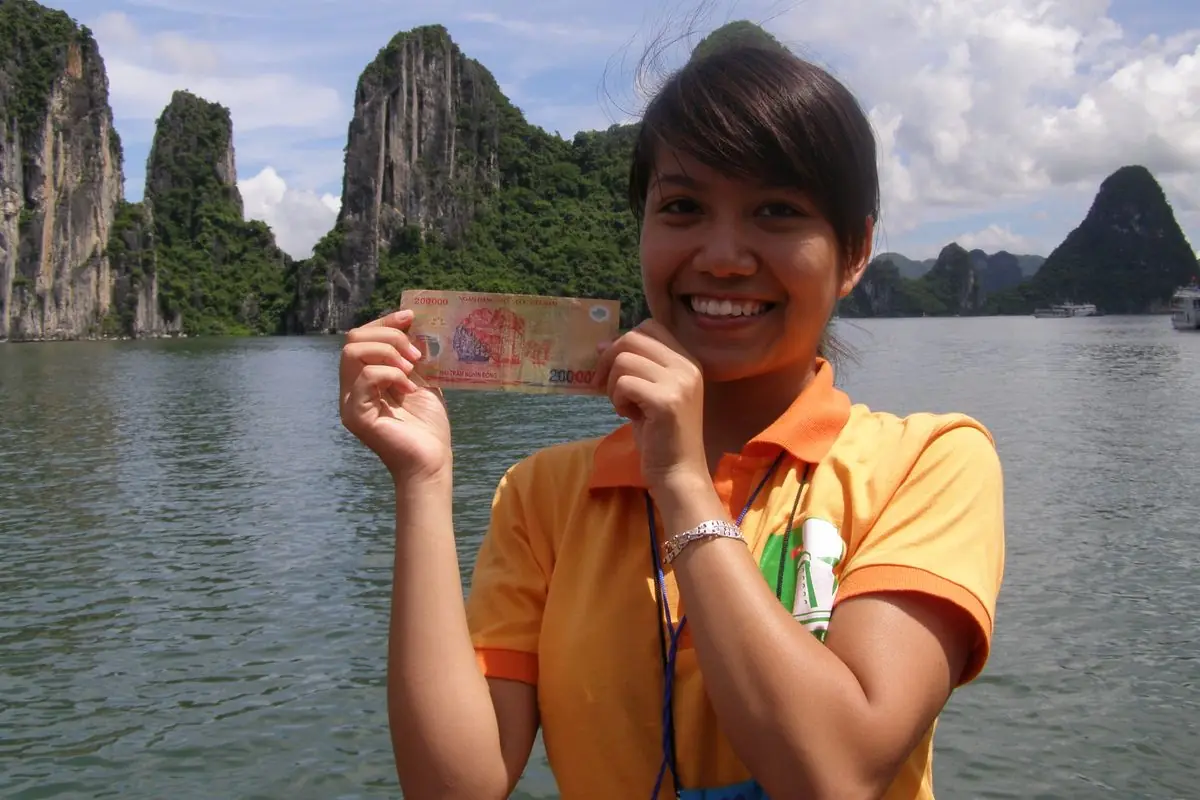
On a multi-day trip through Ha Giang or the northern mountains, the guide may also organize accommodation, meals, transport, and visits to remote locations.
These responsibilities are part of the paid tour service, but when a guide does an excellent job, a tip at the end of the trip is a familiar way to show appreciation.
Shared group tours
On a one-day group tour, around VND 50,000-100,000 per guest works.
A couple might prepare VND 100,000-200,000 together if they’re happy with the guide.
You don’t need to tip after each attraction or every time the guide explains something interesting.
Waiting until the end allows you to judge the whole experience: whether the itinerary was well organized, the explanations were useful, and unexpected issues were handled properly.
Private tour guides
Private tours involve more individual attention.
A guide might change the itinerary to match your interests, assist older family members, or provide detailed explanations about Vietnamese history and culture.
For a typical full day, about VND 100,000-200,000 per guest is fine.
A family of six, though, doesn’t have to hand over a full VND 1.2 million.
Families and groups can agree on a collective amount based on the guide’s time and the quality of service, rather than multiplying a figure mechanically by every traveler.
When booking, read both the "Included" and "Not Included" sections.
Some tour operators explicitly state that guide tips aren’t included in the package price. That tells you the tip hasn’t been prepaid; it doesn’t turn the tip into a fixed obligation unless a specific additional payment is part of the booking agreement you’ve accepted.
Ask the tour operator about any tipping policy of its own before paying a deposit.
8. Should you tip taxi, Grab, and private drivers?
Taxis and Grab rides
You don’t need to tip a taxi or Grab driver in Vietnam.
The fare comes from the meter, the ride-hailing app, or another legitimate agreement made before the trip.
When you arrive, paying the amount shown is enough.
Imagine your ride costs VND 92,000 and you hand over VND 100,000.
If the driver helped with your luggage and you’d like them to keep the VND 8,000 change, just say so.
Taking back all your change is nothing to feel awkward about.
For longer journeys, assistance with heavy luggage, or particularly helpful service, VND 10,000-20,000 is a modest optional thank-you.
There’s no reason to add 10% to every taxi fare.
How to tip your Grab driver through the app
Grab lets you send a tip after a completed trip.
For eligible bookings and app versions, passengers can rate their trip, choose a tip amount, and complete the payment within the app.
Check the available options as follows:
- Open Grab after finishing your ride.
- Go to Activity or your trip history.
- Select the completed trip.
- Look for a Tip option in the rating or trip details, if available.
- Review the amount and payment method before confirming.
On eligible rides, you have 72 hours after the trip to send a tip.
The interface and payment rules can change, so go by what your app actually shows.
Older Grab instructions still mention the Moca e-wallet.
Moca on Grab shut down on July 1, 2024, and can’t be used to tip anymore.
Tips sent through the app go to the driver in full; Grab takes no cut. Tipping is voluntary, and drivers aren’t allowed to ask passengers for extra.
If a tipping button isn’t available, you can simply thank the driver, leave an appropriate rating, or offer cash directly.
Private drivers for day tours
A driver hired for a full-day trip provides a different service from someone completing a short Grab ride.
A private driver may transport your family between attractions, wait throughout the day, and help with bags or other practical needs.
For that, you might tip around VND 50,000-100,000 per vehicle per day.
For demanding mountain routes, longer days, or particularly helpful service, giving more is fine too.
Prepare separate amounts if your tour has both a driver and a guide and you want to thank them both.
Give it all to the guide and hope they split it with the driver, and the driver may miss out.
9. Do you need to tip on Ha Long Bay and Lan Ha Bay cruises?
Cruises are one situation where checking the booking conditions matters.
A two-day, one-night Ha Long Bay cruise may include accommodation, meals, sightseeing activities, and an onboard guide.
But drinks, spa treatments, transfers, and crew gratuities may appear separately under expenses not included in the booking price.

For example, the Heritage Line Ylang cruise lists gratuities for crew and guides among expenses outside the cruise fare.
The tip sits outside the fare, and each guest still decides what to give.
How much should you tip cruise staff?
A commonly suggested amount is approximately VND 200,000 per cabin for a two-day, one-night cruise and VND 250,000 per cabin for a three-day, two-night itinerary when travelers are genuinely satisfied with the service.
For a shorter overnight cruise, you could budget around VND 100,000-200,000 per cabin as a voluntary crew tip.
Dropping money into the boat’s communal tip box, if there is one, near the end of the trip is a simple way to thank several people who have helped during your stay, including dining and housekeeping staff.
A crew member who has been exceptionally helpful can be thanked in person, but first ask whether the cruise line lets crew accept tips.
Small sightseeing boats and local boat operators
On smaller boats or sightseeing routes, the ticket price and any tip are separate matters.
Once you’ve paid the official fare, you aren’t required to give extra money to the boat operator.
When the boat operator has been really helpful and the site allows tips, VND 20,000-50,000 after the trip is a fair thank-you.
Some tourist attractions and boat piers have their own rules governing payments and gratuities.
Follow what the ticket office or management says, and ignore figures passed around by word of mouth.
Charges for transfers, drinks, spa treatments, and holiday surcharges are not tips.
They need to be checked against the cruise operator’s booking conditions and shouldn’t be lumped together with voluntary gratuities.
10. Is it better to tip in cash or by bank transfer?
Cash in Vietnamese dong is still the simplest way to tip someone directly.
Notes worth VND 10,000, 20,000, 50,000, and 100,000 are useful for everyday tipping situations.
Set aside a few smaller notes before a guided day trip or spa appointment.
A VND 500,000 note is inconvenient if you’re only trying to tip VND 50,000. Asking them to make change turns a thank-you into a bit of arithmetic.
At larger restaurants, you can pay the main bill by card and leave a little cash separately for the server, provided the establishment allows it.
At spas, hotels, and on private tours, cash also makes it easier to know exactly who has received your tip.
Can you tip with a QR code?
Yes, provided the recipient agrees and the payment method works for both of you.
Bank transfers, VietQR payments, and digital payments are widely used in Vietnam.
However, the QR code displayed at a restaurant or shop is usually meant for payments to the business.
Money sent there lands in the business’s account.
Before sending a transfer, ask the person:
"Em muốn gửi anh/chị chút tiền cảm ơn, chuyển khoản có tiện không ạ?"
This roughly means, "I’d like to send you a little thank-you. Would a bank transfer be convenient?"
The person may agree, ask you to pay through reception, or decline altogether.
Don’t press anyone into sharing their personal bank details.
International travelers without a Vietnamese bank account shouldn’t feel obliged to set up a local payment app simply to tip someone a few dollars.
When booking taxis or ride-hailing services, make sure you understand the fare and accepted payment method first. Tipping should always be a separate decision.
11. How to give a tip politely in Vietnam
Tipping in Vietnam involves no special ritual. In most situations, giving the money discreetly, saying thank you, and avoiding unnecessary attention is enough.
Timing matters more than finding the perfect phrase.
At a restaurant, you can leave a small amount inside the bill folder after paying.
At a spa, wait until your treatment is finished.
With a guide, the end of the trip works better than the moment everyone is scrambling onto the bus.
A few useful Vietnamese phrases:
| Vietnamese phrase | Meaning |
|---|---|
| Cảm ơn anh/chị nhiều nhé. | Thank you very much. |
| Em gửi anh/chị chút tiền cảm ơn ạ. | Here’s a little something to say thank you. |
| Hôm nay anh/chị hỗ trợ nhiệt tình quá, em cảm ơn. | You’ve been really helpful today. Thank you. |
| Anh/chị cứ giữ tiền lẻ giúp em nhé. | Please keep the change. |
| Cảm ơn anh/chị đã chăm sóc gia đình em trong chuyến đi. | Thank you for looking after our family during the trip. |
A simple "Cảm ơn" - thank you - accompanied by a friendly smile is perfectly fine.
Vietnamese pronouns vary according to age and relationship. Words such as anh, chị, cô, and chú are used for different people.
When you’re unsure which to use, a quick, friendly thank-you beats worrying about the right pronoun.
Avoid waving money around, loudly announcing the amount you’re giving, or turning a private gesture into a performance.
An envelope is perfectly acceptable for hotel housekeeping or when thanking a tour guide, but it’s not necessary for every small tip.
Some employees will accept the money immediately. Others may politely decline, and certain businesses have rules against staff receiving personal gratuities.
If they say no, pocket the money and thank them anyway.
A positive review, a compliment passed on to the manager, or a thoughtful comment mentioning the staff member’s service can also be valuable.
12. When should you avoid tipping in Vietnam?
Not every service is an appropriate setting for a monetary reward.
At traditional markets, convenience stores, supermarkets, ticket counters, and self-service attractions, tipping also isn’t customary.
Just pay the correct amount.
Don’t feel obliged to tip because someone pressures you, demands more money, or suggests that foreign visitors are required to pay extra.
What if a driver or service worker demands a tip?
There are three cases.
First, an employee politely mentions that tips are appreciated or points out a tip box.
You can simply decline.
Second, a company clearly discloses an additional charge before booking, and you agree to it as part of the transaction.
That should be treated as a stated payment condition, not merely an optional tip.
Third, someone unexpectedly demands extra cash after the service has ended, even though that amount was never disclosed or agreed.
In this case, ask the business to explain the charge.
You can say:
"I’ve already paid the agreed price. What is this additional charge for, and where is it mentioned in my booking?"
For a ride-hailing trip, compare the amount requested with the fare displayed in the app and use the platform’s support service if there’s a dispute.
For a spa or tour, keep your booking confirmation and receipt, then speak to the manager or tour operator.
There’s no need to get into a heated argument in public.
Being pushed to pay more, sudden price hikes and made-up compulsory fees are rip-offs, nothing like normal tipping in Vietnam.
13. What if you’re Vietnamese and traveling with foreign friends?
This situation comes up often when someone visiting from the United States, Canada, or another country with a strong tipping culture travels with Vietnamese friends.
Your foreign friend might instinctively want to add 15-20% to every restaurant bill, whether you’re having pho at a small local shop or dinner at a hotel restaurant.
Meanwhile, the Vietnamese members of the group are used to paying exactly what’s on the bill.
There’s no need to argue about which approach is more polite.
Before the meal, explain that most casual restaurants in Vietnam don’t expect tips.
Leaving a small amount for particularly good service is welcome, but it isn’t necessary.
For example, four friends have a meal costing VND 600,000 at a local restaurant.
One visitor suggests leaving VND 120,000 because they’re accustomed to tipping 20%.
You could tell them VND 30,000-50,000 is already plenty, and skipping the tip is fine too.
At upscale restaurants, agree to check the bill first.
If a service charge is already included, the group may decide not to leave anything extra.
With a private tour guide, tipping at the end of the trip is often easier for everyone to agree on because the group has spent several hours experiencing the service directly.
If one person wants to tip and another doesn’t, don’t add the gratuity to everyone’s share of the bill without asking.
The person who wants to leave something extra can pay that amount separately.
14. How much tipping money should you budget for a Vietnam trip?
Tips don’t need to be treated as a fixed expense in the same way as accommodation, train tickets, or entrance fees.
Imagine two people traveling around Vietnam for three days.
- Day 1
Grab and local food
On the first day, they take Grab rides, eat at local restaurants, and stop for coffee. They may spend nothing on tips.
- Day 2
Private tour
On the second day, they hire a private tour guide and driver. If they’re satisfied with the experience, they decide to give VND 200,000 to the guide and VND 100,000 to the driver.
- Day 3
Massage
On the third day, both book a massage and tip their therapists VND 50,000 each.
Their total voluntary tipping budget for those activities comes to VND 400,000.
That’s only an example to help you decide how much cash to carry, not a suggested spending target for every three-day trip.
Another couple may spend less, leave no tips, or give more after receiving particularly good service.
For trips involving specialist activities, keep gratuities separate from the price of the activity itself.
Golf is one example: tipping a caddie at a Vietnamese golf course can follow different customs and venue-specific arrangements. It shouldn’t be calculated using the same figures as hotel housekeeping tips.
Likewise, a cruise package may have several separately priced services that have nothing to do with tipping.
Whether you’re visiting Hai Phong, Da Nang, Nha Trang, or Phu Quoc, the basic approach is the same.
Check what’s included in the price, consider who has helped you directly, and choose a thank-you that feels appropriate.
There’s no reason to set aside a large tipping budget out of worry that tourists are expected to pay extra everywhere.
15. Three things to remember before paying
First, tipping in Vietnam is not mandatory. At casual restaurants, cafés, in taxis, and in many everyday situations, paying the correct price is all that’s expected.
Second, a tip should reflect the service you’ve received. Giving VND 50,000 after an excellent massage or thanking a guide who has looked after your group all day makes more sense than automatically adding a fixed percentage to every bill.
Third, service charges and tips are different. Whether a bill shows a 5% service charge, an applicable 8% VAT rate, or a net price including those charges, you aren’t obliged to pay an additional gratuity.
International travelers on their first trip to Vietnam aren’t being rude when they skip the tip at a small noodle shop.
For Vietnamese travelers using a luxury spa or international hotel for the first time, there’s no need to worry about knowing the perfect amount in advance.
Check the full price before receiving the service, enjoy the experience, and decide afterward.
The best tip is one you genuinely want to give, not one you pay because you feel awkward saying no. Once you’ve settled the bill and considered the service, would you still like to say thank you with a little something extra?
Frequently asked questions
Is tipping mandatory in Vietnam?
No. In Vietnam, tipping is entirely up to you. Most local restaurants, cafés, and everyday transportation services don't expect tips. Spas, private guides and hotel staff get tipped more often, but whether you tip is still your call.
How much should I tip in Vietnam?
As a 2026 reference, consider VND 20,000-50,000 for hotel luggage assistance, VND 50,000-100,000 for a 60-90-minute massage, and approximately VND 50,000-100,000 per person per day for a shared group tour guide. Use these to plan how much cash to carry, and tip more or less as you see fit. Pho shops, cafés and Grab rides can go without a tip.
How much should I tip for a spa or massage in Vietnam?
For a 60-90-minute massage at a tourist-oriented spa, tipping the therapist around VND 50,000-100,000 is about right. Before the session, ask whether the price covers all fees. Give the tip after the treatment, once you know you're happy, as long as the spa allows it.
Should I tip Grab drivers and tour guides in Vietnam?
Grab drivers don't need a tip; the fare is already shown in the app. You can round up by VND 10,000-20,000, or use the in-app tip feature on rides that support it. Travelers tip tour guides more often, especially on private and multi-day tours; how much depends on the time spent and the quality of service.
Do I need to tip if my bill already includes a 5% service charge?
No. A 5% service charge is something the restaurant or hotel puts on the bill, while a tip is extra money you choose to give. If the bill already has a service charge, or the net price covers service charges and VAT, you don't need to tip on top. You can still thank an individual staff member with a tip if you genuinely want to.