How to celebrate Tet 2027 from Kitchen Gods Day to the first full moon
Following every Tet tradition can turn the last days of the year into a race, but skip too much and the holiday loses its meaning. Know which customs come first and which are up to each family, and Tet gets much easier to prepare.
 25 min read
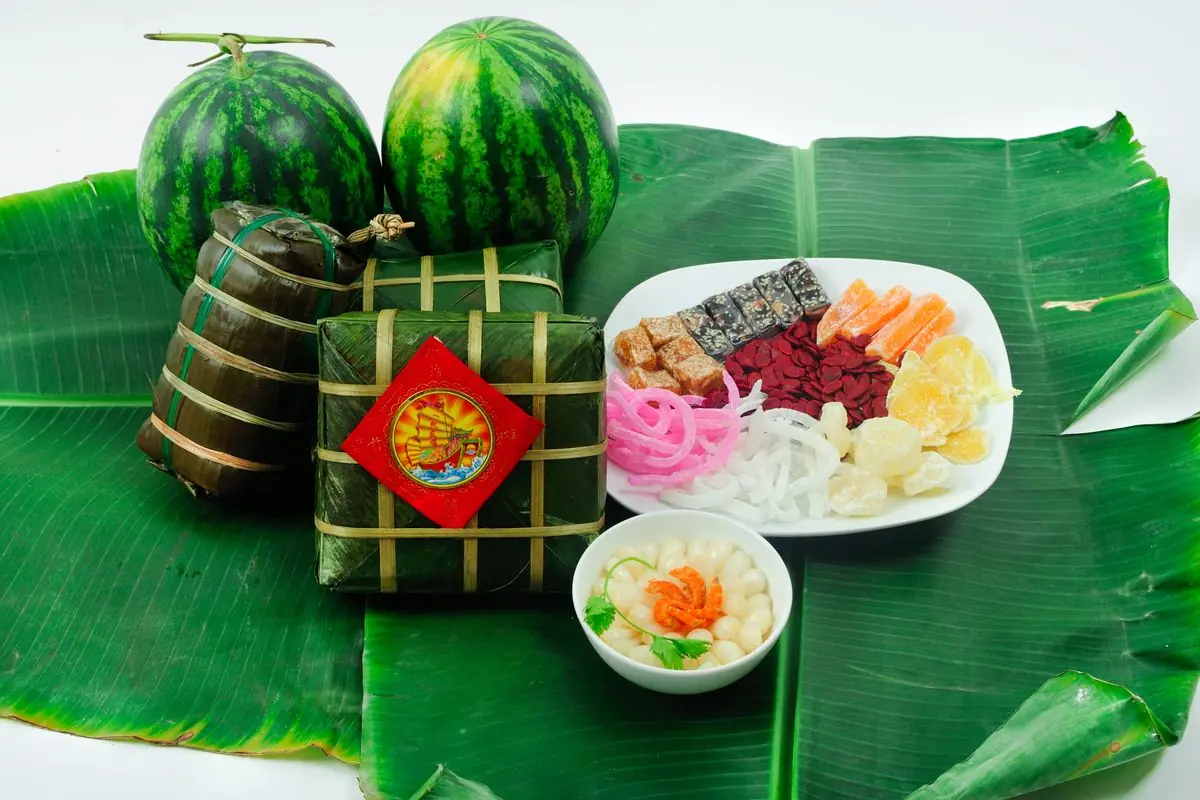
Banh chung, banh tet, watermelon, sweets, pickled shallots.
Start by marking January 30, February 5, February 6, and February 20, 2027, on your calendar. These are the key dates for Kitchen Gods Day, New Year’s Eve, the first day of Tet, and the First Full Moon Festival. In 2027, the final lunar month has only 29 days, so there is no traditional 30th day of Tet preparations.
1. Vietnamese Lunar New Year 2027: important dates and traditions
Tet Nguyen Dan, commonly called Tet, is Vietnam’s most important traditional holiday. It brings families together, honors ancestors, and marks the beginning of a new lunar year.
Preparations often begin during the final lunar month, while family visits, religious activities, and spring festivals may continue well into the first lunar month.
The Vietnamese zodiac year 2027 is the Year of the Goat, known as Dinh Mui. The first day of Tet falls on Saturday, February 6, 2027.
| Lunar date | Gregorian date | Traditional activities |
|---|---|---|
| 1st day of the 12th lunar month, Binh Ngo year | Friday, January 8, 2027 | Begin cleaning, shopping, and preparing for Tet |
| 23rd day of the 12th lunar month | Saturday, January 30, 2027 | Kitchen Gods Day |
| 24th-28th days of the 12th lunar month | January 31-February 4, 2027 | Clean the house, visit ancestral graves, make traditional cakes, arrange fruit offerings |
| 29th day of the 12th lunar month | Friday, February 5, 2027 | Year-end family meal and New Year’s Eve ceremonies |
| 1st day of the 1st lunar month | Saturday, February 6, 2027 | First-footing, New Year greetings, lucky money, ancestor worship |
| 2nd day of the 1st lunar month | Sunday, February 7, 2027 | Visit relatives, maternal family members, and friends |
| 3rd day of the 1st lunar month | Monday, February 8, 2027 | Visit teachers and relatives; some families hold the ancestral farewell ceremony |
| 7th day of the 1st lunar month | Friday, February 12, 2027 | Some communities perform the Khai Ha ceremony |
| 15th day of the 1st lunar month | Saturday, February 20, 2027 | First Full Moon Festival, family offerings, and temple visits |
The table shows traditional dates; to plan time off, book transport, or see which businesses stay open, use the Tet 2027 public holiday schedule.
The days leading up to New Year’s Eve still belong to the lunar year of Binh Ngo. The Year of the Goat officially begins at midnight on February 6, 2027.
Year-end ceremonies, grave visits, and the ancestral farewell ritual also vary in timing from family to family. Customs vary by region, religion, and household.
2. Kitchen Gods Day 2027: January 30
For many Vietnamese families, the 23rd day of the final lunar month is when Tet really starts to feel close.
According to Vietnamese folk beliefs, the Kitchen Gods, known as Ong Cong Ong Tao, watch over the household and its kitchen. Near the end of the year, they are believed to travel to heaven to report on the family’s activities before returning for the new year.
In northern Vietnam, this tradition is closely associated with carp, which are believed to carry the Kitchen Gods to heaven.
When is Kitchen Gods Day in 2027?
Kitchen Gods Day falls on Saturday, January 30, 2027, corresponding to the 23rd day of the 12th lunar month.
Many families prepare their offerings in the morning, traditionally before noon. Some households perform the ceremony a day earlier, on January 29, because of work or other commitments.
Nobody has to keep to that exact hour.
As a guest staying with a Vietnamese family, you won’t need to prepare the ceremony yourself. Ask your hosts whether they’d like help washing vegetables, arranging dishes, or buying ingredients.
What is included in a Kitchen Gods offering?
A simple offering may include incense, fresh flowers, fruit, clean water, and dishes prepared according to family tradition.
Households that prepare a savory meal might include sticky rice, boiled chicken, Vietnamese pork sausage, or other homemade dishes. Some families prefer vegetarian offerings.
Paper hats and clothing representing the Kitchen Gods may also be used.
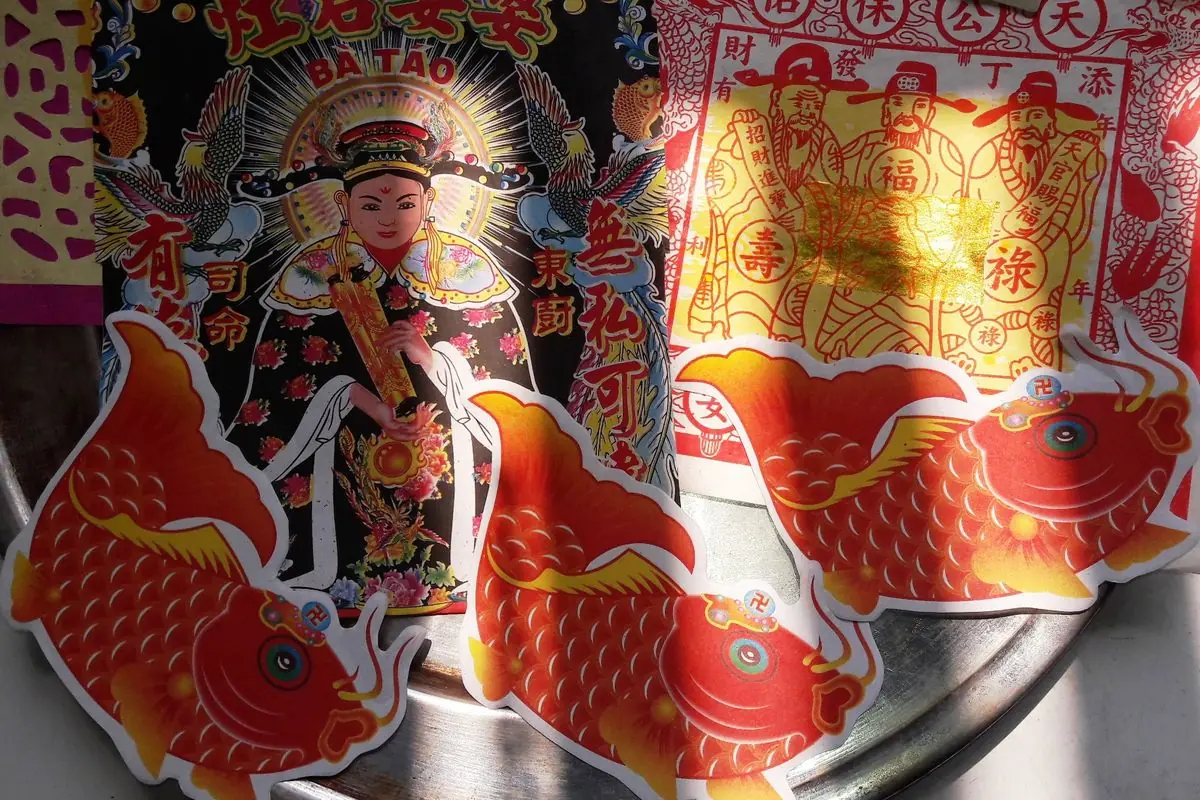
Live carp are particularly common in northern Vietnam. After the ceremony, families take the fish to a suitable body of water and release them.
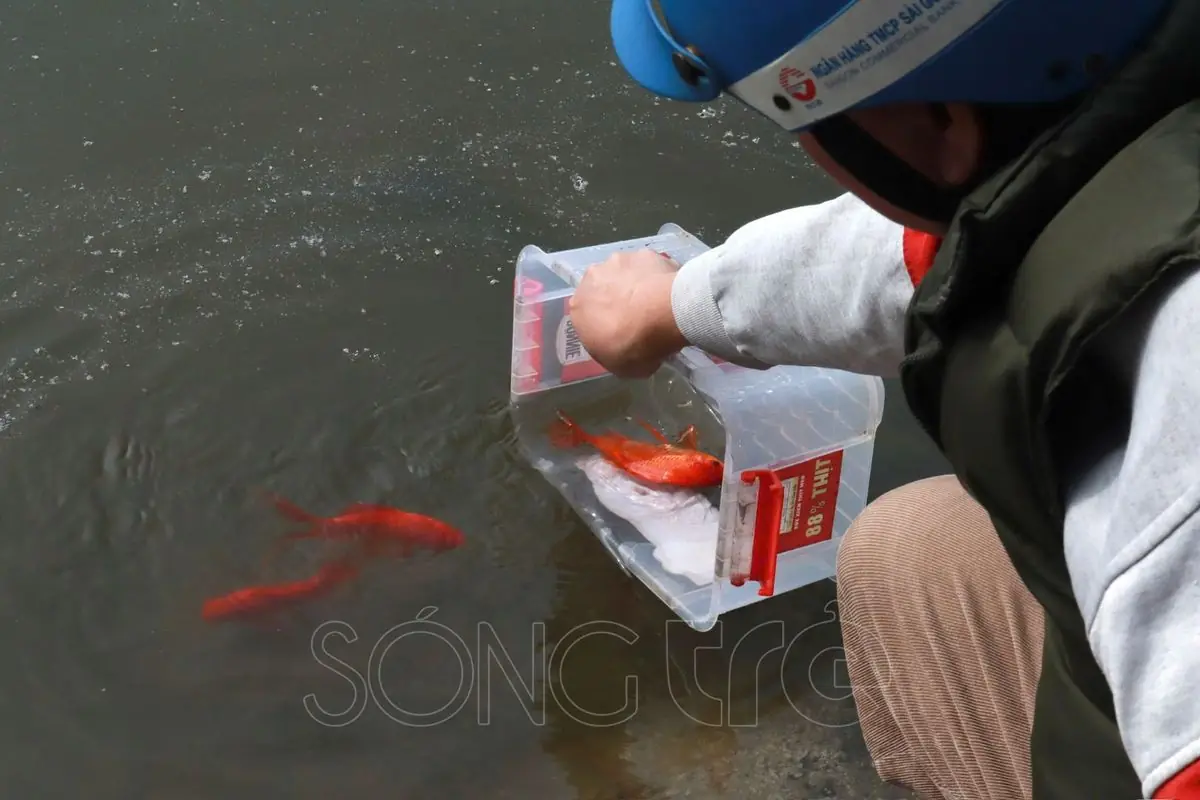
Traditions differ in central and southern Vietnam. Some families do not use carp, while others prepare different ceremonial objects or keep the offering simple.
Rather than insisting on a checklist found online, follow the customs of the household you are visiting.
3. Cleaning the house and visiting ancestral graves before Tet
During the final days of the lunar year, Vietnamese households often undertake a thorough cleaning.
Wardrobes are reorganized, windows wiped, damaged items repaired or discarded, bedding washed, and kitchens given extra attention.
The tradition symbolizes leaving behind the old year and making room for a fresh beginning.
A Vietnamese expression for this idea is tong cuu nghenh tan, meaning to bid farewell to the old and welcome the new.
When should you clean the house for Tet 2027?
January 31 to February 4, corresponding to the 24th through 28th days of the final lunar month, is a practical period for completing major household cleaning.
Start with the kitchen, bathrooms, and storage areas. Then move on to the living room, furniture, doors, and decorations.
Fresh flowers, fruit arrangements, and table decorations are better prepared closer to Tet so they still look good on New Year’s Day.
Try not to leave everything until February 5. Many families will already be busy preparing the year-end meal and New Year’s Eve offerings.
Cleaning the family altar
Many families clean their ancestral altar after Kitchen Gods Day, although others do so earlier.
The process may involve removing dust, changing the water, arranging fresh flowers, and preparing new offerings.
Moving incense bowls or rearranging sacred objects, however, is usually a decision for the household member responsible for the altar.
As a guest, do not move statues, incense bowls, or ceremonial objects without permission, even if you are only trying to help.
What is tao mo?
Tao mo is the Vietnamese custom of visiting and caring for family graves before Tet.
Relatives may remove weeds, clean gravestones, replace flowers, burn incense, and spend time remembering family members who have passed away.
Some families visit graves in the middle of the final lunar month, while others go closer to New Year’s Eve.
The timing depends on family tradition, religious beliefs, and where relatives are buried.
4. Decorating for Tet: peach blossoms, apricot blossoms, and the five-fruit tray
As Tet approaches, flowers and colorful decorations begin appearing in homes, markets, and public spaces.
In northern Vietnam, peach blossoms and kumquat trees are especially popular.
In southern Vietnam, yellow apricot blossoms, chrysanthemums, and marigolds are common choices.
Other families decorate with orchids, gladioli, or whatever flowers suit their homes.
These decorations represent vitality, prosperity, and hopes for a good year ahead.
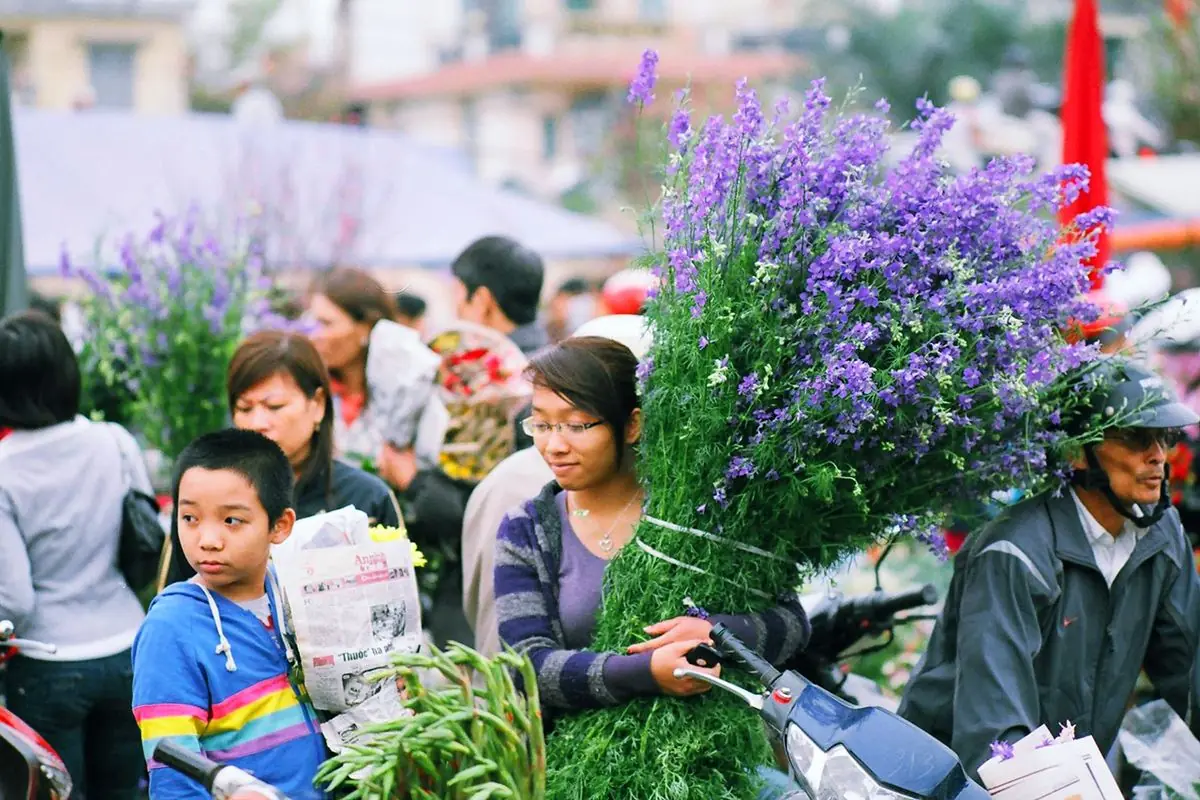
For travelers, a trip to a flower market before Tet can explain this custom faster than any amount of reading. You may see buyers examining peach blossom buds, the shape of apricot branches, or the number and color of kumquats on a tree.
What fruits go on a Vietnamese Tet fruit tray?
The traditional five-fruit tray, or mam ngu qua, is a fruit arrangement placed in a prominent position, often on the family altar.
The Vietnamese word ngu means five. The arrangement symbolizes harmony, abundance, and wishes for good fortune.
Despite the name, some modern households use more than five varieties.
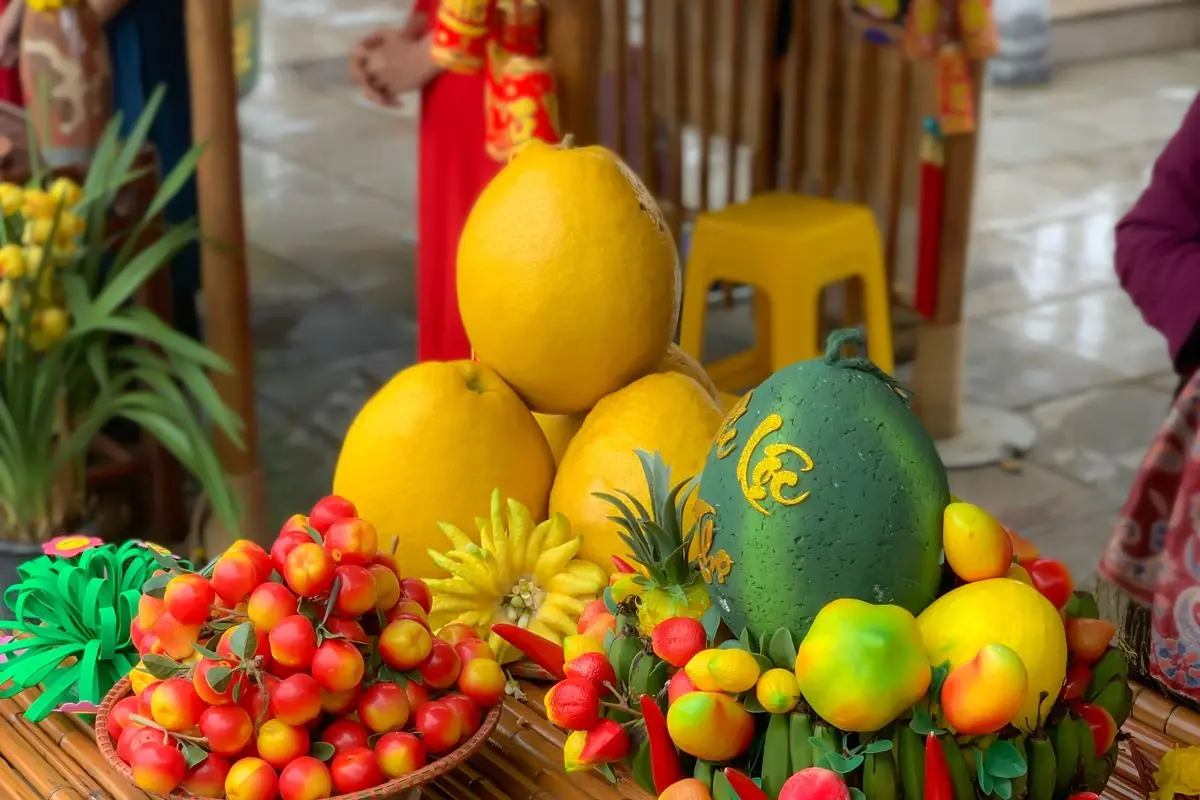
The fruits chosen vary considerably across Vietnam.
Northern Vietnam
A traditional northern fruit tray may include:
- Green bananas
- Pomelo or Buddha’s hand citron
- Tangerines
- Persimmons
- Peaches or other seasonal fruit
Green bananas are often placed at the bottom, their curved shape forming a base for the larger fruits.
Pomelo or Buddha’s hand citron usually sits near the center, while smaller fruits fill the spaces around it.
Color and balance are important. Green bananas, yellow pomelo, orange tangerines, and red persimmons create a bright arrangement.
Southern Vietnam
In southern Vietnam, families often choose fruits based on a playful combination of Vietnamese words.
A popular arrangement includes:
- Custard apple (mang cau)
- Fig (sung)
- Coconut (dua)
- Papaya (du du)
- Mango (xoai)
Together, their names resemble a phrase expressing the wish to have enough prosperity and resources for a comfortable life.
Some families add pineapple or watermelon.
Certain fruits are avoided in some southern households because their Vietnamese names are associated with undesirable meanings. Bananas, for example, may be linked through wordplay with falling or declining.
Central Vietnam
Central Vietnamese families tend to be more flexible with fruit arrangements.
Depending on the region and season, a tray may include dragon fruit, bananas, pineapple, oranges, tangerines, custard apples, papaya, or pomelo.
There is no single arrangement required across central Vietnam.
How to arrange a five-fruit tray
Choose fresh, undamaged fruit that will remain attractive for several days.
Wash it if needed and let it dry completely before arranging.
Place larger, sturdier fruits at the bottom and lighter fruits above. If using green bananas, select a bunch with a balanced shape.
A clean, simple, carefully prepared tray suits many families, even without expensive imported fruit or five particular varieties.
Before shopping, ask older relatives which fruits they prefer. Small details, such as where to place the pomelo or which varieties to include, may be part of a tradition passed down through generations.
5. Banh chung, banh tet, and the traditional year-end meal
Sticky rice, mung beans, pork, and wrapping leaves are familiar ingredients in Vietnamese kitchens before Tet.
In northern Vietnam, the most recognizable traditional food is banh chung, a square sticky rice cake usually wrapped in dong leaves.
Its filling typically contains mung beans and pork, surrounded by glutinous rice.
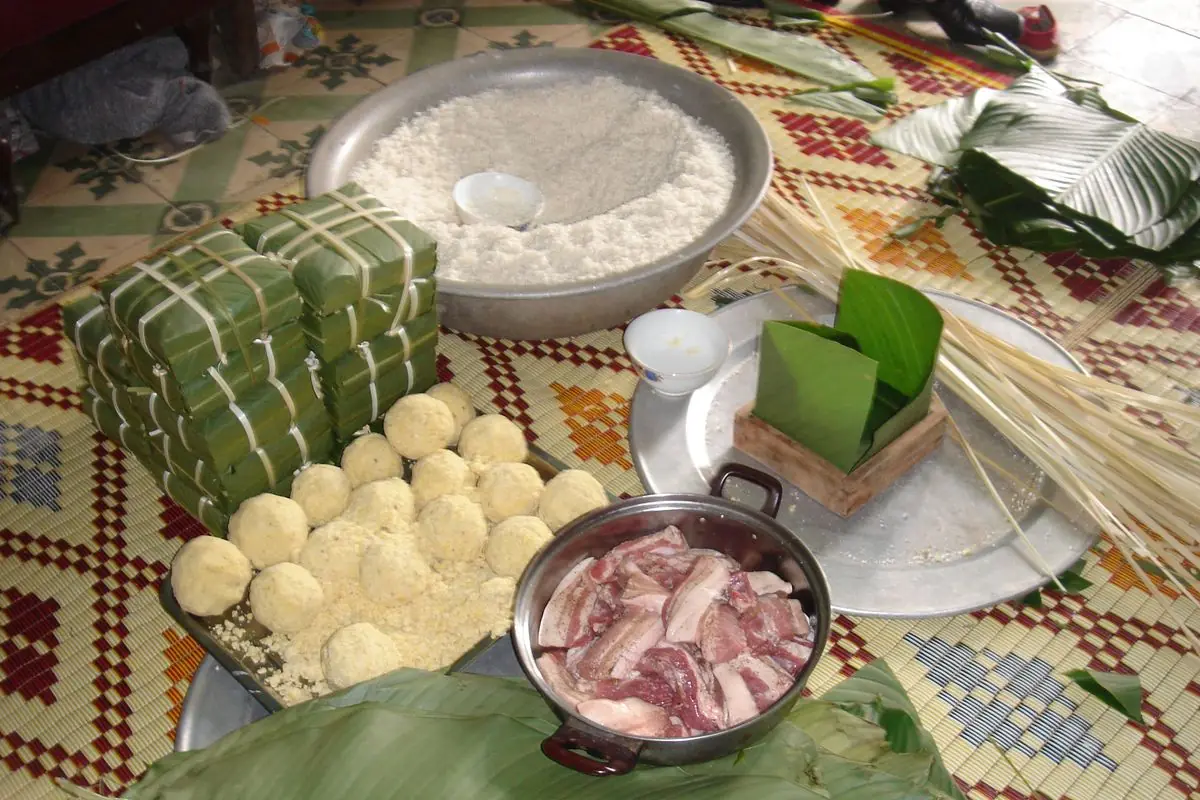
In southern and many central provinces, banh tet is more common. This cylindrical sticky rice cake may have savory fillings or sweet fillings such as banana and beans.
Banh chung is associated with the legend of Lang Lieu during the era of the Hung Kings. The story emphasizes the importance of rice and agricultural life.
Today, preparing and cooking these cakes together remains an opportunity for several generations to spend time with one another.
When do families make Tet cakes in 2027?
Many households prepare their cakes between February 2 and February 4, corresponding to the 26th through 28th days of the final lunar month.
Traditional boiling takes several hours, depending on the size of the cakes and cooking method.
The process requires enough water, regular monitoring, and appropriate fire safety precautions when using wood or charcoal.
Many families skip making them and buy from trusted food producers or neighborhood shops instead.
If you are invited to join a cake-making session, you may be asked to wash rice, clean leaves, prepare fillings, or tie the cakes.
Do not worry if your first cake looks uneven. Learning to fold the leaves and keep the rice and filling in place takes practice.
What do Vietnamese families eat during Tet?
Northern Vietnam
A traditional northern Tet meal may include banh chung, boiled chicken, Vietnamese pork sausage, fried spring rolls, bamboo shoot soup, glass noodles, and pickled onions.
Central Vietnam
Popular dishes include banh tet, fermented pork rolls, Vietnamese sausages, pickled vegetables, and preserved or braised meats, depending on the province.
Southern Vietnam
A typical holiday meal may feature banh tet, caramelized pork and eggs, bitter melon soup, and pickled scallions.
Bitter melon soup is particularly meaningful because the Vietnamese name kho qua can suggest hardships passing.
In Hai Phong, crab spring rolls known as nem cua be are a familiar specialty that may turn up at family gatherings or festive meals.
There is no mandatory menu for every Vietnamese family.
Households with vegetarians, elderly relatives, or young children may prepare simpler dishes or adjust recipes to their needs.
The shared meal matters more than the number of dishes on the table.
6. Tet New Year’s Eve 2027: what happens on February 5?
What is tat nien?
Tat nien means the end of the year.
For many families, it is an occasion to gather for the last shared meal of the lunar year, reflect on the months gone by, and prepare for the next chapter.
Some households place food offerings on the ancestral altar before dinner.
Others organize their year-end gathering several days earlier so relatives returning from other cities can attend.
Arrive at the agreed time for a Vietnamese family’s year-end meal.
A box of sweets, fruit, or a small thoughtful gift is appropriate, but there is no need to bring anything elaborate.
What time is Vietnamese New Year’s Eve in 2027?
The transition into the Year of the Goat occurs at midnight between February 5 and February 6, 2027.
This moment is called giao thua.
Traditionally, it marks the farewell to the old year and the arrival of the new one.
Some households conduct an outdoor offering and a separate ceremony at their indoor altar.
Offerings may include incense, flowers, fruit, water, sticky rice, boiled chicken, or dishes selected according to family tradition.
Not every family performs both ceremonies.
Some simply light incense for their ancestors, observe their own religious practices, or spend the moment together.
If your host is conducting a ceremony, speak quietly and avoid stepping into the worship area to take photos or record videos.
Is watching fireworks part of Tet?
Watching fireworks is a popular New Year’s Eve activity, but it is not a required traditional ritual.
Some Vietnamese cities organize public fireworks displays. Where, when, and how big they are is announced officially each year.
Setting off fireworks yourself falls under separate rules, whatever the city puts on.
7. First-footing in 2027: how do Vietnamese families choose their first visitor?
After midnight, some Vietnamese families pay special attention to the first person who enters their home.
This custom is known as xong dat, xong nha, or dap dat, often translated as first-footing.
According to folk beliefs, the first visitor represents the kind of luck and energy the household will welcome in the coming year.
For this reason, some families invite a particular relative or friend to visit shortly after midnight or on the morning of the first day of Tet.
How is the first-footing visitor chosen?
Some families select their first visitor according to zodiac compatibility, the lunar calendar, or traditional beliefs about the relationship between the visitor’s birth year and the homeowner’s.
However, there is no universally agreed list of lucky birth years for Tet 2027.
In everyday life, many families prefer someone who is cheerful, healthy, kind, positive, and enjoying a stable or happy life.
The tradition expresses hope for a good beginning.
It does not determine whether a household will experience financial success, happiness, or difficulties throughout the year.
What if nobody has a compatible zodiac sign?
The family can invite someone they trust and enjoy spending time with.
Some households have a family member leave before midnight and return after the new year begins, effectively becoming the first person to enter the home.
Many modern families do not worry about zodiac compatibility at all.
Instead of searching for a supposedly perfect birth year, ask whether the family follows the first-footing tradition and how they usually celebrate it.
Can foreign visitors join the first-footing tradition?
Yes, but only when invited.
Avoid arriving unexpectedly at a Vietnamese home immediately after midnight or early on New Year’s Day.
Your host may already have arranged for a particular person to be the first visitor.
Even close friends can accidentally put a family in an awkward position by arriving at the wrong moment.
A simple question is enough:
"What time would be convenient for me to visit and wish your family a happy new year?"
If you are invited to be the first visitor, arrive on time, dress neatly, greet everyone warmly, and offer a positive New Year wish.
You could say:
"Chúc cả nhà năm mới mạnh khỏe, bình an và nhiều may mắn."
It means: "Wishing the whole family good health, peace, and plenty of good luck in the new year."
8. Lucky money and New Year greetings: how much should you give?
Li xi, also known as mung tuoi, is one of the most recognizable Vietnamese Tet traditions.
Adults usually place money inside red or colorful envelopes and give them to children as a symbol of good fortune.
Adult children may also give lucky money to parents or grandparents to wish them health and longevity.
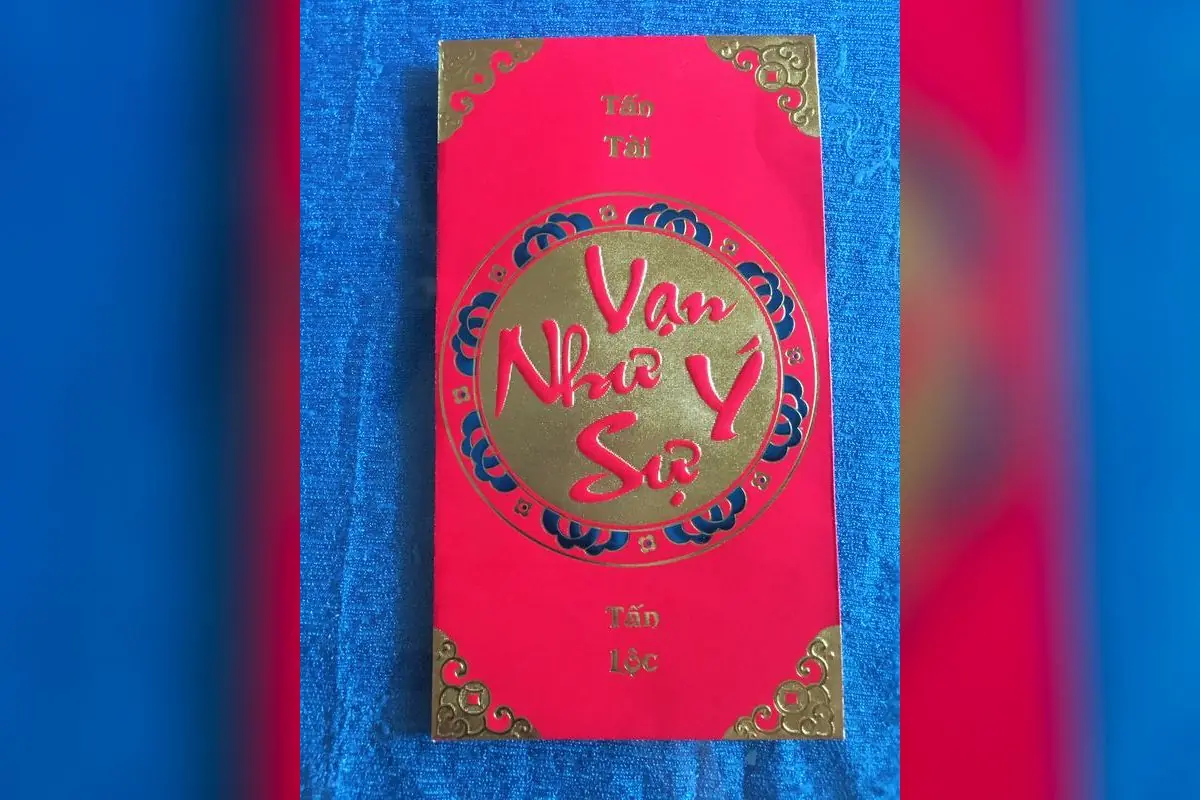
Traditionally, the gesture is about sharing blessings rather than the value of the cash.
How much lucky money should you give during Tet 2027?
There is no mandatory amount.
For families planning a budget, the following amounts can serve as practical examples:
- 20,000-50,000 VND: a symbolic gift for children, particularly those of friends or acquaintances.
- 100,000-200,000 VND: an option for children in the immediate family or close relatives, depending on your budget.
- Larger amounts: sometimes given to parents, grandparents, or close relatives according to family custom.
These are just budgeting guides; every family does it differently.
A family may happily give 10,000 VND, while another might prefer a small present or a thoughtful greeting.
Foreign visitors are not expected to hand out lucky money to everyone they meet.
To join in, ask your host how many children will be there and whether envelopes would be appropriate.
Do you need brand-new banknotes?
New and clean banknotes are popular because they represent a fresh start.
However, undamaged and neatly kept notes are also perfectly suitable.
For new notes for Tet 2027, ask your bank directly whether they have any and in which denominations. Not every branch will have a large supply of crisp notes, particularly during the busy holiday period.
Lucky money etiquette
When giving a lucky-money envelope, include a short greeting.
For a child:
"May you have a healthy, happy year and learn lots of wonderful things."
For grandparents:
"Wishing you good health, happiness, and many joyful moments with the family."
Recipients may accept the envelope with both hands and say thank you.
In some households, children are discouraged from opening envelopes, counting money, or comparing amounts in front of guests.
It isn’t a rule, but it’s worth keeping in mind.
As a visitor, avoid asking children how much money they received or encouraging them to open their envelopes for photographs.
Useful Vietnamese New Year greetings
Vietnamese people generally appreciate a warm, appropriate greeting more than a complicated speech.
9. What happens on the first three days of Tet?
A traditional Vietnamese saying goes:
"Mùng một Tết cha, mùng hai Tết mẹ, mùng ba Tết thầy."
It refers to honoring the paternal family on the first day, the maternal family on the second, and teachers on the third.
The saying reflects the importance of family relationships and gratitude toward teachers.
In modern Vietnam, however, visiting schedules are often much more flexible.
First day of Tet: Saturday, February 6, 2027
The first day is usually reserved for immediate family members and close relatives.
Many people wear new clothes, light incense at the ancestral altar, greet their parents and grandparents, and give lucky money to children.
In some families, the New Year’s Day meal is a rare occasion when several generations can gather around the same table.
Unless you are part of the household, wait for an invitation or arrange a visit in advance.
Second day of Tet: Sunday, February 7, 2027
The second day is traditionally associated with visiting the maternal side of the family, although many people also visit other relatives and friends.
Those who live far from their hometowns may use this time to see family members they rarely meet.
If you are invited along, a small gift such as fruit, tea, or sweets is usually suitable.
No need for a gift for each person unless your host suggests it.
Third day of Tet: Monday, February 8, 2027
Traditionally, the third day is associated with showing appreciation to teachers.
Former students may visit or send greetings to people who have taught and supported them.
Not every teacher receives visitors on the third day, however, so it is best to make arrangements first.
Some families also conduct the ancestral farewell ceremony on this day, while others choose a later date.
10. Vietnamese Tet taboos: what should you avoid?
Alongside celebrations, Vietnamese Tet includes a number of traditional taboos.
Most reflect the desire to keep the beginning of the year peaceful, avoid unpleasant experiences, and welcome good fortune.
Not every family follows every taboo.
Younger households in major cities may be less concerned about customs that remain important to older relatives in rural communities.
Avoid sweeping the house on New Year’s Day
According to a common folk belief, sweeping the house on the first day of Tet may symbolically sweep away good fortune.
Families that follow this tradition complete their cleaning before New Year’s Eve.
If something spills or there’s rubbish to clear, it still needs cleaning up. Some households simply collect the rubbish and dispose of it later.
Avoid arguments and unpleasant conversations
Many Vietnamese families try to keep the first days of the year cheerful.
People may avoid arguments, complaints, or repeated discussion of unhappy events.
When visiting, avoid personal questions that could make someone uncomfortable.
Questions such as "When are you getting married?", "How much do you earn?", or "Why haven’t you had children yet?" are unlikely to be appreciated.
Conversations about food, travel, health, or enjoyable plans for the coming year are generally more welcome.
Avoid breaking household objects
Breaking a bowl, plate, or mirror is considered unlucky in some families because it symbolizes separation or disruption.
It’s only a folk belief; one broken glass won’t decide anyone’s luck for the year.
If you break something while visiting, apologize and help the host clean it up safely.
There is no need to invent a special ritual to reverse the supposed bad luck.
Avoid borrowing or collecting debts at the start of the year
Some families prefer not to discuss debts during the first days of Tet.
They want the year to begin without financial disputes or uncomfortable conversations.
Try to settle important payments before the holiday or agree on a clear date with the other person.
Traditional customs do not cancel existing financial obligations.
Should you avoid black and white clothing?
Some families prefer bright colors such as red, yellow, or pink because they represent happiness and prosperity.
Black and white clothing may be avoided in certain households because of associations with mourning.
However, many Vietnamese people now wear these colors during Tet without concern.
For a traditional family visit, clean, modest clothing in pleasant colors is a sensible choice.
Are haircuts, hair washing, fire, and water also taboo?
Depending on the region and household, some people avoid cutting their hair, giving away fire or water, or eating particular foods during the first days of the year.
These beliefs vary widely and are not universal requirements of Vietnamese Lunar New Year.
If you are staying with a family that follows traditional customs, skip the online lists of dozens of taboos and simply ask whether there is anything they’d prefer you not to do during the first few days.
11. Visiting temples and pagodas at the beginning of the year
After New Year’s Eve, many Vietnamese families visit pagodas, temples, or religious sites to pray for health, peace, and a good year.
These visits also offer an opportunity for reflection after the busy days of preparation.
Buddhist pagodas are generally associated with Buddhist worship, while temples and other shrines may honor historical figures, local deities, or other religious traditions.
Should you visit on the first day of Tet?
There is no requirement to visit a temple or pagoda on New Year’s Day.
Some people prefer going shortly after midnight or early on the first morning.
Others choose the second or third day, or another day during the first lunar month.
New Year’s Eve, the morning of the first day, and major festival dates can be particularly crowded.
An ordinary weekday after the main Tet celebrations suits a quiet visit focused on architecture and history.
What should you wear and bring?
Dress modestly and comfortably.
Inside religious sites, speak quietly, follow posted instructions, and respect worshippers.
Do not touch statues, ceremonial objects, or historical artifacts without permission.
Photography rules vary by location.
If you would like to bring an offering, flowers, fruit, or other items appropriate to that particular religious site are often suitable.
Each temple or pagoda may accept different offerings.
Some Buddhist pagodas organize prayers for peace, religious talks, or charitable activities during the early part of the year.
Foreign visitors are welcome to observe respectfully where permitted, and nobody expects you to join rituals outside your own beliefs.
Where can you visit temples near Hai Phong?
In Hai Phong, you can explore temples and pagodas within the city or around the Do Son area.
Different sites have different histories and religious traditions, so choose based on whether you want to worship, learn about local culture, or admire architecture.
For a longer excursion, consider Yen Tu in Quang Ninh or the Con Son-Kiep Bac heritage area.
Both destinations have considerable historical and cultural significance and deserve more time than a brief stop between other attractions.
Check opening hours, festival schedules, and transport arrangements for each site before traveling.
12. Hoa vang, Khai Ha, and the first full moon: when does Tet end?
For many families, Tet goes on past the first three days.
Traditional ceremonies may continue through the first lunar month, including the ancestral farewell ritual, the Khai Ha ceremony, and the First Full Moon Festival.
What is hoa vang?
Hoa vang is a ceremony performed by some families to mark the conclusion of their Tet ancestral worship period.
According to traditional beliefs, ancestors are welcomed home symbolically during the holiday and then respectfully bid farewell.
Some families perform this ceremony on the third day of Tet, February 8, 2027.
Others choose the fourth, fifth, or another day according to household tradition.
Some families simply light incense and prepare a small meal without burning paper offerings.
Burning votive paper isn’t essential to every form of ancestor worship, and anyone who does burn it should follow local fire safety and environmental rules.
The seventh day: Khai Ha
The seventh day of the first lunar month falls on Friday, February 12, 2027.
Traditionally, this may be the day for lowering the cay neu, a bamboo pole erected during Tet in certain communities.
The ceremony is known as Khai Ha and symbolizes the conclusion of some New Year rituals.
Today, erecting and lowering a ceremonial bamboo pole is no longer common in every household.
However, the custom remains part of the cultural heritage of some villages, religious sites, and traditional festivals.
First Full Moon Festival 2027: Saturday, February 20
The first full moon of the lunar year is called Ram thang Gieng, Tet Nguyen Tieu, or the First Full Moon Festival.
It is considered an important date in Vietnamese cultural and religious life.
Many families prepare offerings for their ancestors, visit pagodas, or take part in prayers for peace.
Offerings may be vegetarian, savory, or simple, depending on family beliefs.
Even on such an important date, a simple offering is enough.
For travelers interested in Vietnamese culture, the First Full Moon Festival offers another opportunity to experience early spring traditions after the busiest Tet celebrations have passed.
That said, it isn’t automatically a day off work.
If you are planning to visit a distant religious site or attend a local festival, arrange your schedule accordingly.
13. Visiting a Vietnamese family for Tet: essential etiquette
Visitors to Vietnam during Lunar New Year may find some customs unfamiliar.
There may be family ceremonies, formal greetings, lucky-money envelopes, particular dining habits, and traditions about the first visitor of the year.
But you don’t need to know them all to be a welcome guest.
Before your visit
Confirm the date and time with your host.
Avoid arriving unexpectedly immediately after midnight or early on the first day of Tet, especially if the household observes first-footing traditions.
A gift such as tea, sweets, or fruit is appropriate for many family visits.
Ask beforehand about any dietary restrictions or family preferences.
Wear clean, respectful clothing.
Ao dai look beautiful at Tet, but visitors aren’t expected to wear them.
When you arrive
Greet older family members first, followed by the others.
Vietnamese family titles can be confusing for newcomers.
Ask your host to help if you are unsure whether to address someone as co, chu, bac, anh, or chi.
Remove your shoes if requested.
Avoid walking into private rooms or worship areas without permission.
If family members are performing a ceremony, observe quietly from an appropriate place.
You are not required to take part in religious practices that conflict with your beliefs.
During the Tet meal
Vietnamese families often exchange invitations to begin eating, particularly when grandparents or older relatives are present.
Ask about any dish you do not recognize.
Food is a natural conversation starter during Tet, and many hosts enjoy explaining their favorite dishes.
Tell your host in advance about allergies or dietary restrictions.
Banh chung, banh tet, and other traditional dishes may contain pork, beans, sticky rice, or different ingredients depending on the recipe.
No one expects you to finish every dish to show appreciation.
When leaving
Thank your host for the meal and the invitation.
A simple farewell is entirely appropriate:
"Thank you for having me. I wish your family good health and happiness in the new year."
If the family gives you cakes or a small gift to take home, accept graciously and say thank you.
Returning a gift of equal value immediately is not expected.
14. How to celebrate Tet at home without following every ritual
Not everyone has a large family nearby or the time to organize an elaborate Tet celebration.
People living alone, young couples, and foreigners staying in Vietnam can still enjoy the holiday without arranging multiple ceremonial meals.
For Tet 2027, it helps to divide preparations into three stages.
- Jan 30-Feb 3
Prepare the home
Clean and organize your home, prepare gifts, buy essential groceries, and arrange any family visits.
If your household follows the Kitchen Gods tradition, perform the ceremony according to your family’s customs.
- Feb 4-5
Prepare for New Year's Eve
Buy fresh flowers, arrange a fruit tray, and prepare or purchase banh chung or banh tet.
Cook a meal you enjoy.
Contact relatives and friends before the evening celebrations begin.
If you are hosting guests, confirm their arrival times in advance.
- Feb 6-8
Enjoy the first three days of Tet
Wear something you like, send New Year greetings, give lucky money within your budget, and visit friends or family members by arrangement.
You can also visit a pagoda or temple if that interests you.
You can skip the bamboo pole, the dozens of rice cakes, the several large feasts, and the zodiac-chart first-footer, and still celebrate Tet meaningfully.
A clean home, a favorite meal, thoughtful greetings, and time spent with people you care about are already important parts of the holiday.
A practical note for travelers
Tet can significantly affect travel plans in Vietnam.
Some restaurants and shops close temporarily. Transportation can become busy, while operating hours may differ from normal schedules.
Check transportation arrangements, restaurant opening times, and accommodation details before the holiday rather than leaving everything until New Year’s Day.
It is also sensible to prepare some cash in advance.
The same approach that helps you understand Vietnamese Tet traditions is useful when attending village festivals, family memorial gatherings, or other important occasions in Vietnam: learn what the tradition means, ask how your hosts observe it, and participate in a way that feels respectful. A little understanding and a few thoughtful questions usually go further than trying to memorize every ritual.
Frequently asked questions
When is Kitchen Gods Day in 2027?
Kitchen Gods Day falls on Saturday, January 30, 2027, corresponding to the 23rd day of the final lunar month of the Binh Ngo year. Many Vietnamese families prepare offerings in the morning, traditionally before noon, though each household keeps its own timing.
How do Vietnamese families choose a first-footing visitor for Tet 2027?
No birth year is the luckiest for every household. Some families consider zodiac compatibility between the visitor, homeowner, and Year of the Goat. Others simply choose someone who is cheerful, healthy, kind, and enjoying a good life. It is a custom for luck, and no birth year can guarantee a successful year.
What fruits are included in a Vietnamese Tet five-fruit tray?
In northern Vietnam, common choices include green bananas, pomelo or Buddha's hand citron, tangerines, persimmons, and seasonal fruit. Southern families often select custard apples, figs, coconuts, papayas, and mangoes because their Vietnamese names form a playful wish for prosperity. Central Vietnamese arrangements vary according to region and available fruit. The tray doesn't need exactly five kinds of fruit, either.
How much lucky money should you give during Vietnamese New Year?
Amounts such as 20,000-50,000 VND are reasonable symbolic gifts for children, while 100,000-200,000 VND may suit closer relatives, depending on your budget. Give whatever suits you; crisp new notes aren't essential. The greeting and goodwill behind the envelope matter more than the money itself.
What should you avoid during the first three days of Tet?
Common traditional taboos include sweeping the house on New Year's Day, arguing, saying unpleasant things, breaking household items, and borrowing or collecting debts. Some families also avoid haircuts, giving away fire or water, or wearing certain colors. Each region and family keeps its own taboos, and none of them is a nationwide rule.