Vietnam plug type: plug straight in or pack an adapter?
Vietnam has several outlet types, but the most common ones take both flat and round two-pin plugs, so most phone chargers fit. That said, a plug that fits the wall can still be unsafe with an appliance built for American 120V power.
 21 min read
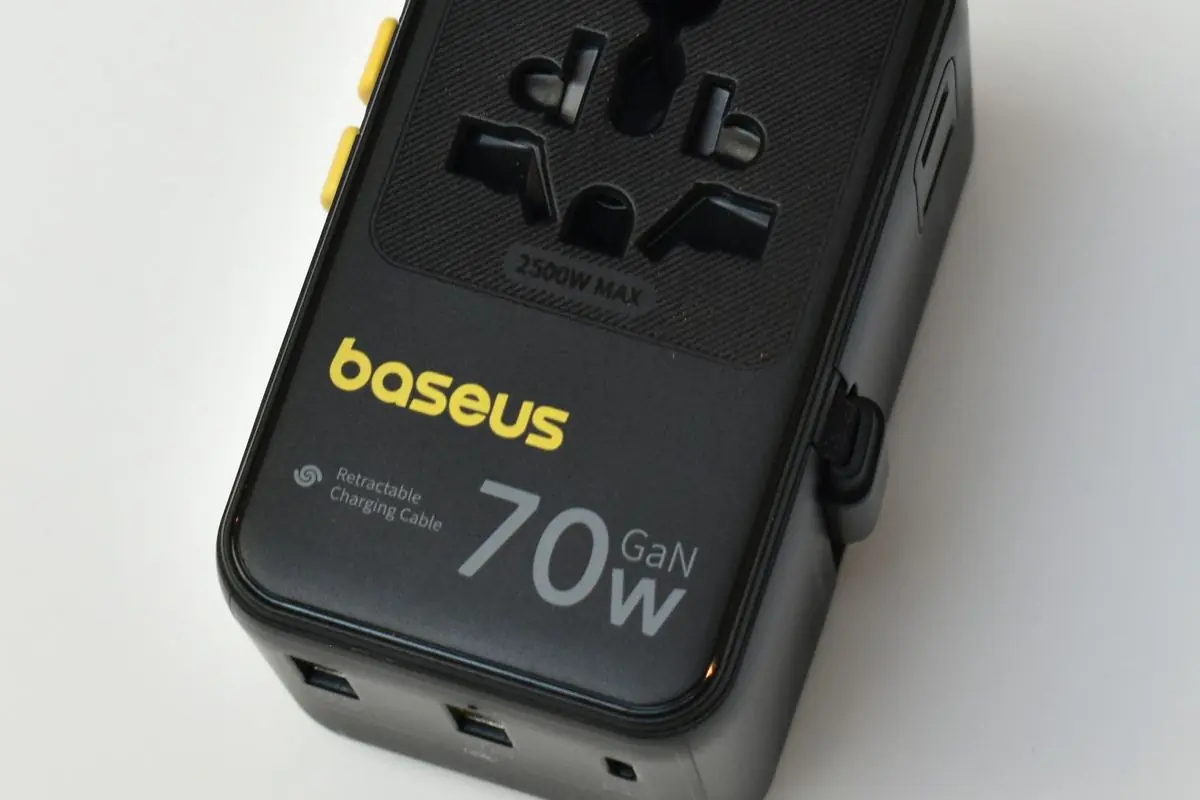
A universal adapter with a socket and USB ports.
You’re waiting for train SE1 at Hanoi Railway Station and want to top up your phone before boarding. Your American charger’s two flat pins may well fit a Vietnamese wall outlet, but the power coming out of it is much stronger than back home. A phone charger marked 100-240V will charge normally, but a 120V-only hair dryer can’t go straight into the wall.
What plug type does Vietnam use?
Vietnam uses several outlet designs rather than a single national one.
The two most useful types for travelers to recognize are Type A, with two flat parallel pins, and Type C, with two small round pins.
Many wall outlets in Vietnam are designed to accept both styles. These combination sockets are handy in places that host a lot of international guests.
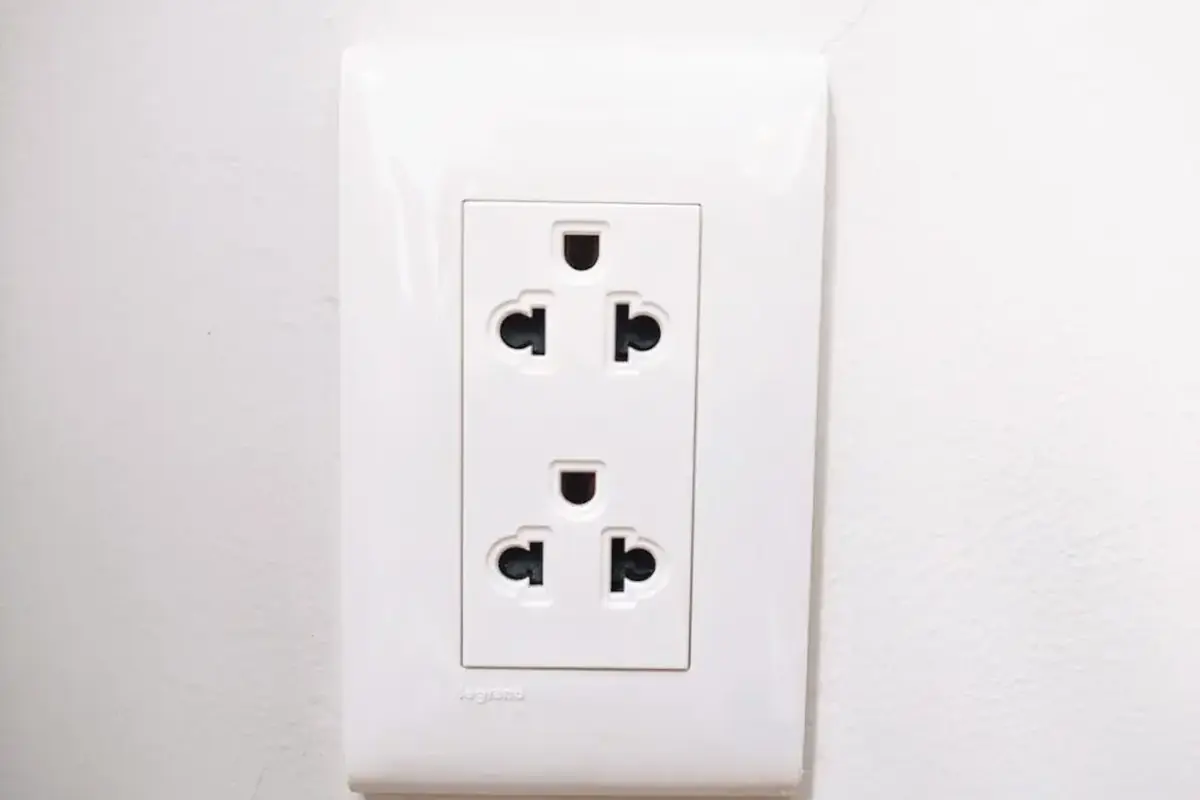
Not every room, café or guesthouse has one, though.
| Plug type | What it looks like | What to expect in Vietnam |
|---|---|---|
| Type A | Two flat parallel pins | Often fits combination sockets |
| Type B | Two flat pins and one round grounding pin | Needs an outlet that supports all three pins |
| Type C | Two small round pins | Widely compatible with local outlets |
| Type D | Three round pins in a triangle | Less common |
| Type E/F | Larger round pins with grounding features | Some sockets take them, some don’t; grounding matters |
| Type G | Three rectangular pins used in the UK | Usually requires an adapter |
| Type I | Angled flat pins used in Australia and China | Usually requires an adapter |
You may see references listing Vietnam as using Type A, B and C. Other travel guides mention Type A, C and F, with Type D occasionally appearing in older installations.
Both lists can be right. The country has a mixture of outlet designs, including multi-standard sockets, and what you encounter depends on the building.
For packing purposes, focus on the plugs you actually carry rather than trying to memorize every possible Vietnamese outlet.
A slim two-round-pin Europlug is a useful shape for many chargers. A flat two-pin American plug can also work. British and Australian plugs are less likely to fit without an adapter.
Are hotel sockets different from those in homestays?
They can be.
Some international hotels provide universal outlets near the desk or bedside table. Others offer a combination of ordinary Vietnamese sockets and USB charging ports.
A hotel may also provide a British-style Type G socket in rooms set up for international guests. Whether you get one depends entirely on the property.
Smaller homestays and guesthouses may have ordinary two-round-pin outlets or combination A/C sockets. Some rooms rely on an extension lead rather than several wall sockets.
You might find a power outlet beside the bed, under a desk or near the television. In other rooms, the only convenient socket may already be occupied by a lamp.
Bring a compatible adapter for a work laptop rather than relying on the property having exactly the right outlet.
What about cafés in Vietnam?
Cafés are even harder to predict.
Even at chains such as Highlands Coffee or The Coffee House, only some tables have a socket nearby.
Independent cafés may offer sockets along the walls, while smaller street-side coffee shops may not have accessible outlets for customers.
Before settling in for several hours of work, check whether charging is allowed.
A charger with a reasonably long cable is useful, but don’t stretch a lead across a walkway or leave a bulky adapter hanging loosely from a socket.
Vietnam voltage: is it 220V or 230V?
Vietnam’s domestic electricity is commonly described as 220 volts at 50 hertz.
Some international electrical reference tables list the nominal supply as 230V, also at 50Hz.
Pack as if the supply is 220-230V at 50Hz and you’ll be covered.
| Electrical specification | Vietnam |
|---|---|
| Commonly stated domestic voltage | 220V |
| Nominal voltage in some international references | 230V |
| Frequency | 50Hz |
| Power supply | AC |
| Common compatible charger rating | 100-240V, 50/60Hz |
Whether the figure is 220V or 230V makes no difference to a charger designed to accept 100-240V.
Both figures fall within its supported input range.
But there is a much bigger difference between Vietnamese mains electricity and the 120V supply used in the United States.
A device rated only for 120V can’t be used here, even if its American-style plug fits a Vietnamese outlet perfectly.
This is the single most important electrical distinction for North American travelers.
Does the 50Hz frequency matter?
Sometimes.
Frequency refers to the number of cycles of alternating current per second. Vietnam uses 50Hz, while the United States and South Korea use 60Hz.
Many modern phone chargers, laptop power supplies and camera chargers are marked 50/60Hz. They are designed to accept both frequencies.
Certain motors, clocks and older electrical appliances can behave differently when connected to the wrong frequency.
An electric motor designed exclusively for 60Hz may run differently, overheat or fail when operated on 50Hz, depending on its design.
A voltage transformer does not normally change frequency.
So for any specialized appliance, check the frequency rating as well as the voltage. Converting 220V to 120V doesn’t fix a frequency mismatch.
Travel adapter vs voltage converter: what’s the difference?
These two devices perform different jobs.
A travel plug adapter changes the physical connection between your plug and the wall socket.
A voltage converter or transformer changes the voltage supplied to an appliance.
For example, an adapter may allow a British three-pin plug to connect to a Vietnamese two-pin outlet. It does not normally lower the voltage.
Plug a simple travel adapter into a 220V Vietnamese outlet and its AC socket still delivers about 220V.
This matters because a big "100-240V" label on some products describes the adapter’s own operating range or its built-in USB charger, and the AC outlet passes mains voltage straight through.
Always check the product description carefully.
| Device input rating | Safe on Vietnamese mains? | What you need |
|---|---|---|
| 100-240V, 50/60Hz | Yes | Plug adapter if necessary |
| 220-240V, 50Hz | Yes | Plug adapter if necessary |
| 220-240V, 50/60Hz | Yes | Plug adapter if necessary |
| 110-120V, 60Hz | Not directly | Appropriate step-down equipment; frequency must also be considered |
| 120V only | Not directly | Suitable transformer or a different appliance |
| 100V only | Not directly | Appropriate voltage conversion and compatibility checks |
Tourists carrying only a smartphone, laptop, headphones and camera can skip the voltage transformer.
You may only need an adapter to change the plug shape.
The more difficult cases involve hair dryers, curling irons, electrical grooming tools and other high-power appliances.
Do you need an adapter in Vietnam? Country-by-country guide
Whether you need an adapter comes down to the plug and power rating on each device more than the country you’re flying from.
Here is how the most common situations compare.
| Coming from | Common plug types | Home supply | What to bring |
|---|---|---|---|
| United States | A, B | 120V, 60Hz | Adapter may be needed; check voltage carefully |
| United Kingdom | G | 230V, 50Hz | Usually a plug adapter |
| Australia | I | 230V, 50Hz | Usually a plug adapter |
| South Korea | F | 220V, 60Hz | Bring a matching adapter; mind grounding and frequency |
| Mainland China | A, C, I | 220V, 50Hz | Depends on the exact plug |
| Thailand | A, B, C, O | 230V, 50Hz | Many A/C plugs fit; others need checking |
Travelers from the United States
American travelers need to be the most careful about voltage.
The United States uses Type A and Type B plugs. Type A has two flat pins, while Type B adds a round grounding pin.
Vietnam has many combination outlets that accept Type A, so an American phone charger may plug straight into the wall.
This is where the confusion starts.
Vietnam plug type can be the same as the US, but the voltage is not.
US household electricity is 120V/60Hz, while Vietnam uses approximately 220-230V/50Hz.
A modern USB charger rated 100-240V works with both.
A single-voltage American hair dryer rated 120V does not.
Never cut off the grounding pin of a Type B plug or use an ungrounded two-pin adapter just to make it fit.
Bring a properly grounded adapter where required, or use a suitable approved alternative power cable.
Travelers from the United Kingdom
British Type G plugs have three rectangular pins. They do not normally fit Vietnam’s standard two-round-pin or two-flat-pin outlets.
A UK-to-Vietnam travel adapter belongs in your bag.
UK mains electricity is 230V/50Hz, so most British appliances won’t need a voltage transformer.
You still need to confirm the appliance rating and the adapter’s power capacity.
For a phone, a dedicated USB-C charger with a suitable local plug may be more convenient than carrying a bulky Type G adapter.
For a laptop with a grounded power supply, make sure your solution preserves the necessary earth connection.
Travelers from Australia
Australia uses Type I plugs, with two angled flat pins and sometimes a third grounding pin.
These won’t usually fit ordinary Vietnamese Type A/C sockets.
An Australian-to-Vietnam adapter is therefore worth bringing.
Australia runs on about 230V/50Hz, and most Australian appliances cope fine with Vietnamese power.
The usual issue is plug shape rather than voltage.
Read the label on a hair straightener, electric shaver or hair dryer anyway. A product sold in Australia may have specifications that differ from an otherwise identical-looking model sold elsewhere.
Travelers from South Korea
South Korea commonly uses Type F plugs, with two round pins and grounding contacts.
These pins are larger than those on the slimmer Type C Europlug.
Some Vietnamese combination outlets may accept the Korean plug, while others may not. Even when the pins fit, the socket may not provide the grounding connection required by the appliance.
Avoid forcing a thick round-pin plug into a narrow socket.
South Korea operates on 220V/60Hz, while Vietnam uses 50Hz.
That difference doesn’t matter for a charger labeled 100-240V, 50/60Hz.
A motorized device rated only for 60Hz is a different matter: check with the manufacturer before connecting it to Vietnamese power.
A suitable travel adapter can help with plug compatibility, but it cannot change the frequency.
Travelers from mainland China
Mainland China uses several plug designs, including Types A, C and I.
A charger with two small round pins or two flat parallel pins may work directly in a compatible Vietnamese socket.
A Type I plug, with angled flat pins, will normally need an adapter.
China’s household supply is 220V/50Hz, close to Vietnam’s.
The main concern is therefore the plug.
Check your laptop charger and phone charger separately. They may have different plug shapes even if both were purchased in China.
Travelers from Thailand
Thailand uses Types A, B, C and O.
A Thai charger with a Type A or Type C plug will often fit a Vietnamese combination outlet.
Type B and Type O plugs, with their grounding pins, need a socket that actually takes them.
Thailand uses 230V/50Hz, which is close to the power system in Vietnam.
Most chargers rated for 220-240V or 100-240V will be fine, provided the plug and grounding arrangement are suitable.
You may not need to buy anything if all your chargers already have compatible two-pin plugs.
Can you charge your phone in Vietnam?
Yes. For most international visitors, charging a smartphone in Vietnam is uncomplicated.
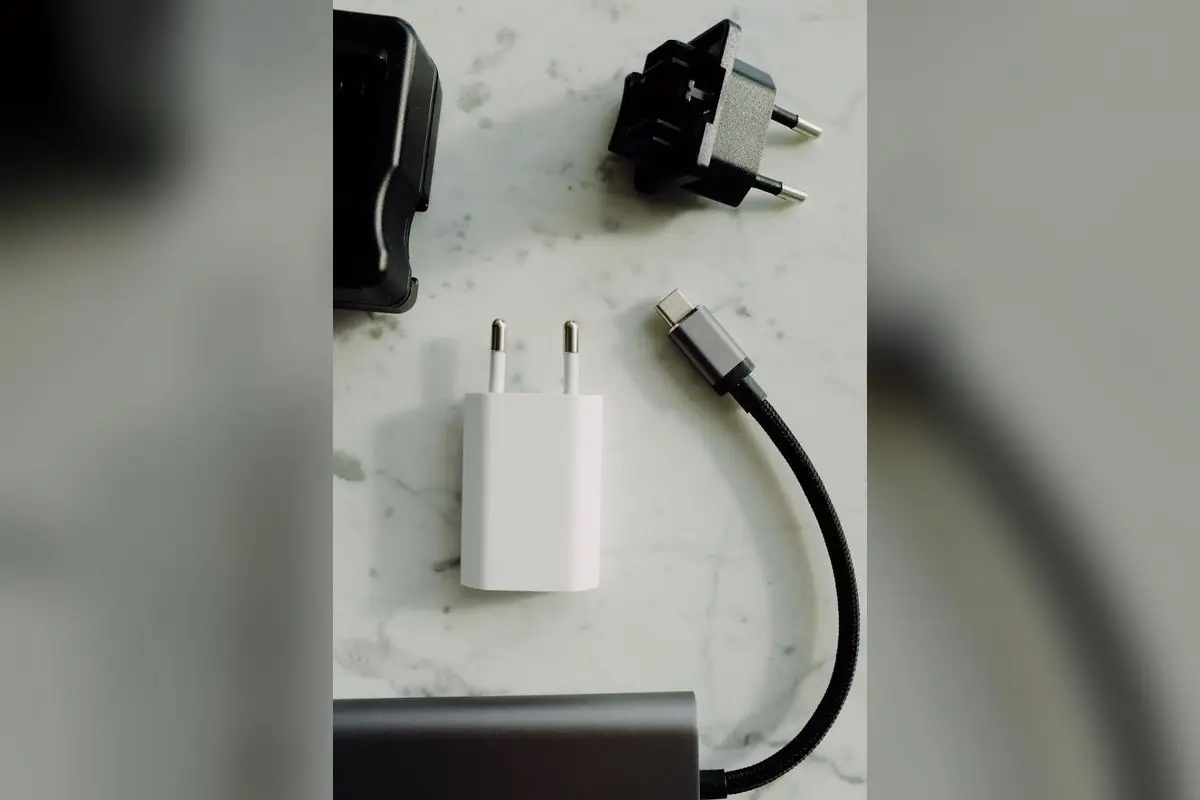
Modern phone chargers are commonly designed to work across a wide voltage range.
For example, Apple’s USB power adapters support mains input from 100V to 240V at 50-60Hz.
Other reputable phone chargers often match that, but look at the rating on the one you’re actually bringing.
Look for something like:
INPUT: 100-240V~ 50/60Hz
A label like that means it can handle Vietnamese mains electricity.
You just need a compatible physical plug.
That goes for many iPhone, Samsung Galaxy, Google Pixel and other smartphone chargers too.
Do you need a different charging cable?
Normally, no.
A USB-C or Lightning cable does not connect directly to the wall’s AC electricity. It connects to a charger, power bank or other suitable USB power source.
Your main concern is the wall charger’s input rating and plug shape.
Make sure your cable is in good condition, and use charging equipment from a reputable manufacturer.
With only one cable, a spare is often more useful than several plug adapters.
Is USB-C the same as a Type C wall plug?
No. The names are similar, but they refer to completely different connections.
Understanding the difference will make shopping for a replacement charger much easier.
Can you charge a laptop in Vietnam?
Most modern laptops use power supplies that can handle Vietnamese electricity, but you should always check the adapter.
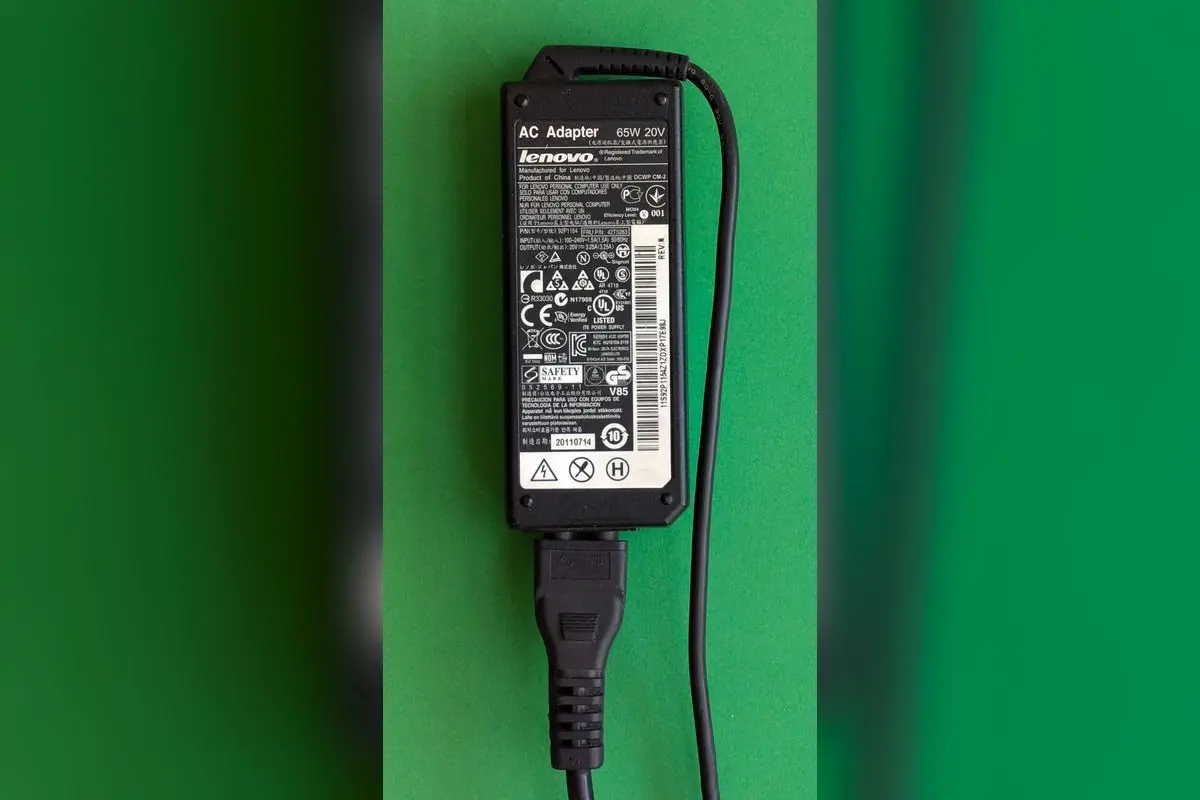
Many MacBook USB-C power adapters accept 100-240V at 50-60Hz.
A wide range of Dell, HP, Lenovo, Asus and Acer laptops also use universal-voltage power supplies.
Models differ, though, and the rating on your own charger is what counts.
Check the label printed on the power brick. The input rating may look like:
INPUT: 100-240V~ 1.5A 50-60Hz
A rating like that covers the Vietnamese supply, leaving only the plug to sort out.
What if your laptop charger has a three-pin plug?
Some laptop power supplies require a grounded mains connection.
Don’t remove the earth pin or use an ungrounded adapter simply because it’s smaller.
Instead, use a suitable grounded travel adapter or an approved power cable that works with the laptop power supply and an appropriately grounded local outlet.
Some universal wall sockets have no working earth connection at all.
That’s worth checking in guesthouses with older wiring.
Can hotel USB ports charge a laptop?
Not always.
A USB socket built into a bedside panel may provide enough power for a phone but not enough for a laptop.
A laptop that supports USB-C Power Delivery can charge from a USB-C PD charger with enough wattage.
Check the wattage recommended by the laptop manufacturer.
A 20W or 30W USB-C output may not be an adequate replacement for a 65W or 100W laptop charger.
Some laptops will charge slowly or only while sleeping. Others may refuse to charge.
Bring the recommended charger, or a properly rated alternative, for a laptop you rely on for work.
Can you use an American hair dryer in Vietnam?
Only if the hair dryer is designed to accept the local voltage and frequency.
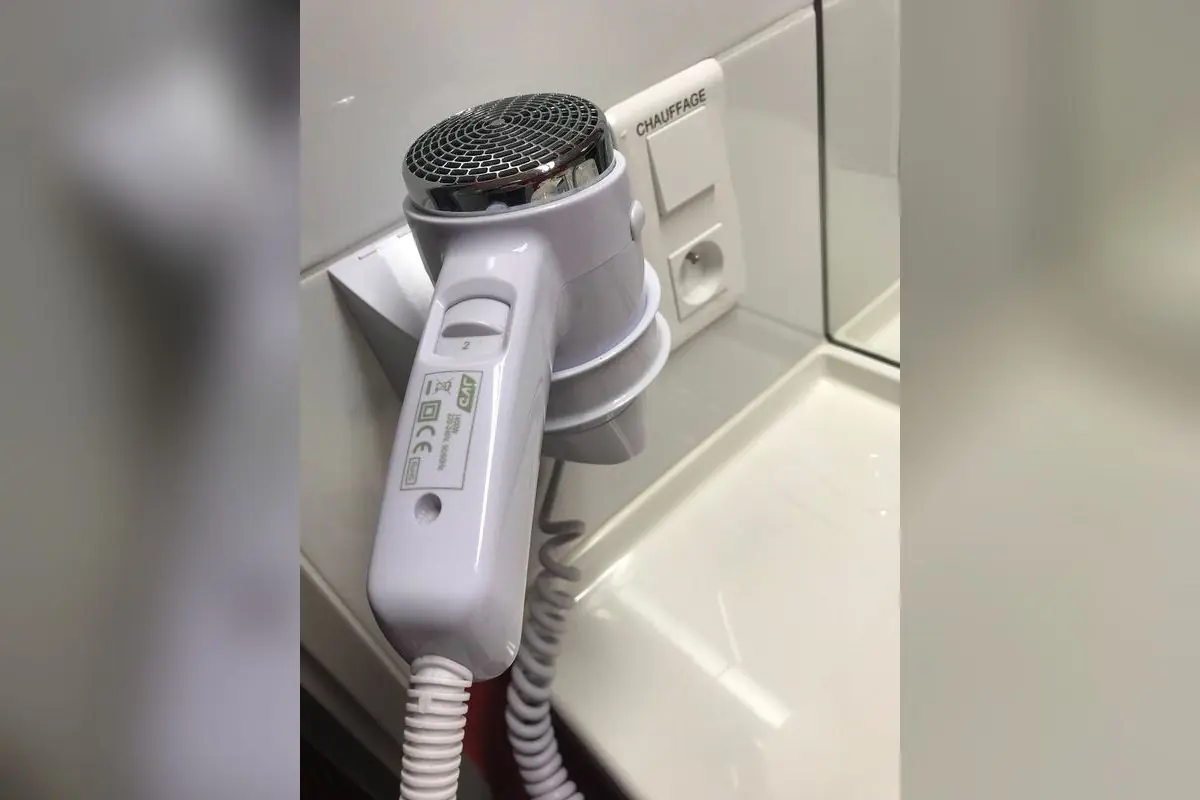
A hair dryer marked 120V only should never be plugged directly into Vietnamese mains electricity.
The problem is not the plug shape.
Even when the flat American plug fits the socket perfectly, the appliance itself may be incompatible.
Option 1: use the hotel’s hair dryer
For most travelers, this is the simplest approach.
Many hotels provide hair dryers, either in the room or on request.
Check the amenities before booking. At a budget homestay or small guesthouse, send a short message to confirm.
This may save you carrying a relatively heavy appliance and an even heavier transformer.
Option 2: bring a dual-voltage travel dryer
Some travel hair dryers are designed for both 120V and 220-240V supplies.
They may have an automatic universal-voltage design or a manual voltage selector.
Set the selector to the right voltage before plugging it in.
Also check the manufacturer’s frequency requirements and operating instructions.
Travel-sized hair dryers aren’t all dual-voltage.
Option 3: use a suitable step-down transformer
A transformer can reduce the voltage from Vietnamese mains to the level required by certain North American appliances.
It must be rated for the appliance’s load and power consumption.
Hair dryers frequently require high power, and many compact travel adapters or low-wattage converters are unsuitable.
A transformer also does not normally change 50Hz electricity into 60Hz.
For a short holiday, using the hotel dryer or buying a suitable dual-voltage model is often more practical than transporting high-capacity voltage-conversion equipment.
What about hair straighteners, electric shavers and other devices?
These are worth checking individually because products in the same category can have very different electrical requirements.
Hair straighteners and curling irons: Some travel models accept 100-240V, while others are single-voltage. Look for the exact input rating, especially with models purchased in North America.
Electric shavers: USB-rechargeable shavers are often straightforward when paired with a compatible USB charger. Models using a dedicated AC charging base may have different input requirements.
Electric toothbrushes: The charging stand may be designed for one voltage range only. Check the rating on the base or power supply; it may not match your phone charger.
Camera battery chargers: Many support universal input, but older or specialized chargers may not.
Gaming consoles: Some use external universal-voltage adapters, while others have country-specific power supplies. Always confirm the manufacturer’s specifications.
Portable kettles and coffee makers: These draw relatively high power. A small travel adapter may be unsuitable even when the voltage is correct.
Clothes irons and steamers: Check both voltage and wattage. Using the accommodation’s equipment is often simpler.
Without a readable electrical rating, don’t test the appliance by plugging it in.
How to choose the right Vietnam travel adapter
Ports and price matter less than whether the adapter suits your devices.
Start with the plug type you actually use.
A British traveler may need a Type G input, while an Australian traveler needs Type I compatibility.
Someone traveling from the US with only two-flat-pin phone chargers may already have plugs that fit many Vietnamese outlets.
A South Korean traveler with a grounded Type F plug should be more careful about pin size and earthing.
Look for 220-240V compatibility
Make sure the adapter is rated for the local mains supply.
Check the maximum current, which may be shown in amperes, and the maximum power, shown in watts.
These ratings are especially important if you plan to connect more than a small USB charger.
For example, an adapter rated at 6A may not handle a 1,800W hair dryer.
The AC outlet and the built-in USB ports also have separate power limits.
Decide whether you need built-in USB ports
A simple adapter and your existing charger may cover a single phone.
Traveling with a partner, you can cut down on accessories with a multi-port USB-C charger.
The catch is that a multi-port charger may split its power between devices.
A 65W charger may not deliver 65W to every port when several devices are connected.
Read the combined-output specifications before buying.
Don’t overlook grounding
A travel adapter may accept a three-pin plug without actually providing a complete earth connection.
That matters for equipment whose design requires grounding.
Choose an adapter that supports the appropriate grounding arrangement when necessary, and make sure the wall outlet itself has a suitable earth connection.
An adapter made only for ungrounded or double-insulated equipment is no good for an appliance that needs protective earthing.
Avoid loose or overloaded connections
The adapter should fit firmly without excessive force.
Avoid cheap products with loose contacts, exposed metal or unclear electrical ratings.
A bulky charger hanging sideways from a wall socket can place unnecessary strain on the connection.
Move a charger that keeps slipping out to another socket instead of trying to hold it in place.
Where can you buy a travel adapter in Vietnam?
Forgetting an adapter isn’t usually a major problem in a large Vietnamese city.
Your first stop can be the hotel reception desk.
Some hotels keep travel adapters for guests or can suggest a nearby electronics shop.
Mobile phone accessory retailers, electronics stores and reputable electrical supply shops all sell them.
In Hanoi and Ho Chi Minh City, there are more shopping options than in remote mountain towns or small islands.
Before leaving the city for Cat Ba, Ha Giang, Sa Pa or a remote island, sort out your adapter.
How much does a travel adapter cost in Vietnam?
Prices vary considerably depending on the brand, power rating, charging ports and safety features.
For example, the LMS CF-071 international travel adapter with two USB ports sells at Trọng Phú Mobile for VND 191,040 on promotion, down from VND 199,000.
It’s a 6A adapter with an AC power limit of about 1,300W, depending on input voltage.
It does not convert mains voltage and is not intended for high-power appliances such as hair dryers.
Trọng Phú Mobile has several stores in Ho Chi Minh City, including one at 216 Nguyen Xi, Binh Thanh. Its contact hours are 8:30 AM to 10:00 PM; call ahead to check stock and opening hours.
At the higher end, the Anker A9212 multi-port travel adapter costs VND 889,000 at AnkerVietNam.vn.
Prices vary from shop to shop; treat these figures as a rough guide.
For charging one phone, a basic reputable adapter or a compatible local USB charger may be all you need.
Can you buy an adapter at the airport?
Possibly, depending on the airport, terminal and available retailers.
Some airport shops carry electronics accessories, though the exact adapter you need can be hard to find, especially after a late-night arrival.
It may be easier to check the sockets in your room first, as long as your phone has enough battery to get you there.
You might discover that your existing charger already fits.
How to use hotel power outlets safely
A modern hotel room can have several different charging options: ordinary wall sockets, universal outlets and built-in USB ports.
Before plugging anything in, check the socket and your power adapter.
Keep mains-powered appliances away from water. Don’t connect or disconnect plugs with wet hands.
A hair dryer should never be used near a sink, bathtub or shower where contact with water is possible.
A charger or travel adapter that turns unusually hot should be disconnected when it’s safe to do so, and not used again.
Should you bring a power strip from home?
Usually not for a short trip.
A power strip designed only for American 120V electricity may not be suitable for Vietnam’s 220-230V supply.
Buy a properly rated power strip made for the local electrical system when you need extra outlets.
Avoid connecting multiple extension leads together or using several adapters in a chain.
Don’t overload a single hotel socket with high-power devices.
Are universal hotel outlets always safe?
No.
A universal outlet is convenient because it accepts different plug shapes, but compatibility still depends on voltage, current rating and grounding.
Some outlets accept the live pins of a grounded European plug without providing the necessary earth connection.
Others may have loose contacts after extensive use.
Use another socket when a plug fits poorly or needs force to go in.
Charging on trains, buses and in cafés
Vietnam has plenty of long journeys where a portable battery is more useful than a wall adapter.
On trains, sockets depend on the carriage and cabin design, and not every seat has its own.
Some sleeper buses and limousine vans have USB charging ports, but their availability and output depend on the operator and vehicle.
Don’t count on a bus USB port to fast-charge, either.
Charge your devices before an overnight trip from Hanoi to central Vietnam or a long ride from Ho Chi Minh City to Da Lat.
Keep your charging cable in your day bag rather than buried in checked luggage.
A power bank can provide a useful backup, subject to your airline’s current rules for carrying batteries.
At cafés, ask staff if you’re unsure whether an outlet is intended for customer use.
With unfamiliar public USB ports, it’s safer to plug your own charger into an AC outlet or use your power bank than to connect your phone directly to an unknown data port.
Common mistakes when using power adapters in Vietnam
One of the most common mistakes is assuming that a familiar-looking outlet means a familiar voltage.
American travelers fall into this one most. Type A plugs may fit, but the electricity is much higher voltage than at home.
Another mistake is assuming that a travel adapter converts voltage.
Most do not. Even if the adapter says 100-240V, the AC output may simply pass through the local mains supply.
A third mistake is overlooking grounding. A three-pin appliance should not be made to operate through an unsafe two-pin connection.
The fourth is using a small adapter with a high-power appliance. Hair dryers, kettles and irons may exceed the adapter’s limits.
The fifth is buying a transformer without checking frequency. Stepping down the voltage still leaves you with 50Hz, not 60Hz.
Finally, travelers sometimes buy a universal adapter without checking whether it physically accepts their actual plug.
Test the fit before you travel, or right there in the shop.
Three packing scenarios that make the decision easier
An American traveler with an iPhone, MacBook and hair dryer
Check the input rating of the iPhone charger and MacBook power supply first.
Chargers marked 100-240V, 50/60Hz run on Vietnamese mains electricity without a converter.
Bring an adapter if their plugs may not fit the available sockets.
Next, check the hair dryer. A dryer marked 120V only should stay at home, or be replaced with something that runs on Vietnamese power.
A travel adapter will not solve the hair dryer’s voltage problem.
A British couple carrying two phones and one laptop
Their main job is getting Type G plugs into Vietnamese sockets.
A compatible travel adapter and a good multi-port USB-C charger may be a compact solution for the phones.
For the laptop, check whether the multi-port charger provides enough USB-C PD power or whether its original charger is needed.
With correctly rated equipment, a separate voltage transformer is usually unnecessary.
A South Korean group staying in hotels and homestays
Check whether the chargers use Type F plugs, especially if they have grounding contacts.
Vietnamese two-round-pin sockets vary in size, and not all are properly grounded.
Bring a suitable adapter if necessary.
Phones, cameras and laptops with universal-voltage chargers are the easy part.
Devices containing motors deserve an extra frequency check because South Korea uses 60Hz and Vietnam uses 50Hz.
Your pre-trip charging checklist
A few minutes of preparation can save a surprising amount of inconvenience after arrival.
- Read the INPUT label on every charger and mains-powered appliance.
- Check for 100-240V and 50/60Hz compatibility.
- Identify your plug shape before buying an adapter.
- Bring a grounded adapter if your equipment requires one.
- Check the adapter’s maximum current and wattage.
- Pack the correct USB-C, Lightning or other charging cables.
- Confirm whether your hotel provides a hair dryer.
- Charge your devices before long train or bus journeys.
- Keep a suitable power bank available for travel days.
- Avoid bringing unnecessary single-voltage high-power appliances.
Most visitors don’t need a complicated electrical kit.
A reliable charger, the appropriate plug adapter and an understanding of voltage compatibility are usually enough.
Before leaving home, take a photo of the INPUT rating on every charger and electrical appliance you’re packing. If you need to buy an adapter in Vietnam, that photo makes it much easier to explain exactly what you need at the shop.
Frequently asked questions
What plug type does Vietnam use?
Vietnam commonly has outlets compatible with Type A two-flat-pin plugs and Type C two-round-pin plugs. Some outlets also take Type B, Type F or other designs, but not all of them do. Travelers with UK Type G or Australian Type I plugs should normally bring an adapter.
Is the Vietnam plug type the same as the US?
Partly. Some Vietnamese sockets accept American Type A plugs, but the electricity is different. Vietnam uses approximately 220-230V at 50Hz, compared with 120V at 60Hz in the United States. Always check the voltage rating before plugging in a US appliance.
Do I need an adapter in Vietnam?
You may not need one if your charger already has a compatible Type A or Type C plug. Travelers using Type G, Type I or certain grounded plugs will generally need an appropriate adapter. The adapter must also meet your equipment's power and grounding requirements.
What is the voltage in Vietnam?
Vietnam's household electricity is commonly described as 220V at 50Hz, while some international references list 230V at 50Hz. A charger rated 100-240V, 50/60Hz is designed to handle both figures.
Can I use a US hair dryer in Vietnam?
Not if it is rated only for 110-120V. You would need a suitably rated dual-voltage hair dryer or appropriate voltage-conversion equipment, taking frequency and wattage into account. The easiest option is usually the hotel's hair dryer.