Vietnam is fairly safe to visit, but watch the traffic, petty theft and storms
Vietnam is generally a safe country to visit, including for first-time travelers and people traveling on their own. The real things to prepare for are busy roads, your belongings, seasonal weather and a few predictable tourist scams.
 18 min read
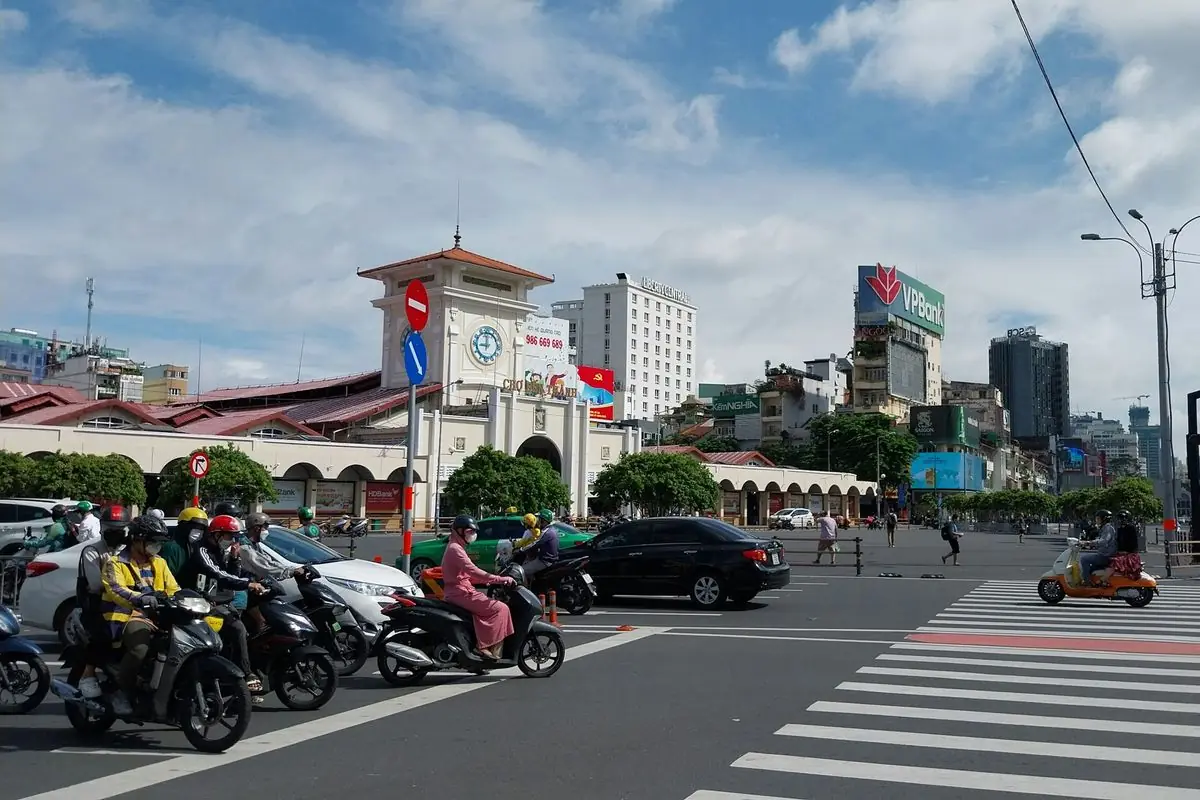
Motorbikes ride straight over a zebra crossing downtown.
Is it safe to travel to Vietnam?
Yes. Vietnam is generally a safe destination for tourists, including people visiting Southeast Asia for the first time and those traveling independently. The US State Department rates Vietnam Level 1, meaning travelers should exercise normal precautions; Australia also recommends normal safety precautions. Even so, you still need to watch the traffic, keep your phone guarded and stay off flooded mountain roads.
For a straightforward trip, three habits make an immediate difference: arrange an airport pickup you can verify, keep your valuables away from passing motorbikes, and check the forecast for each stop on your route. The rest comes down to watching the situations most likely to disrupt a holiday.
Is Vietnam safe for American, British, Australian and Asian tourists?
Visitors from the United States, United Kingdom, Australia, South Korea, China and Thailand can reasonably plan popular itineraries through Hanoi, Ha Long Bay, Da Nang, Hoi An, Nha Trang, Ho Chi Minh City and Phu Quoc. It would be misleading to call an entire country unsafe because there are places where you should watch your bag or change plans during severe weather.
The UK’s travel advice describes violent crime against foreigners as rare, while warning that pickpocketing and bag-snatching do happen. A few habits cover it: in a busy old quarter or night market, keep your phone off street-facing tables and your wallet out of open back pockets.
Travelers with young children may find it easier to book accommodation close to the places they want to see, even if that costs more than a room requiring several major road crossings each day. Older travelers may prefer daytime transfers and hotels with a staffed reception. For someone traveling alone, arriving in daylight makes the first encounter with a new city’s traffic and transport system less stressful.
Your nationality matters most for passports, consular services and driving permits. US guidance is useful background for everyone, but it is not a substitute for the advisory issued to British, Korean, Chinese, Thai or Australian passport holders. Save the details of your own embassy or consulate before flying, and check entry permissions against the passport you will actually use.
Is it safe to travel to Vietnam right now?
Ordinary trips are still safe, but routes through central Vietnam need a second look on days of heavy rain. On November 11, 2026, Vietnam’s national meteorological service forecast heavy to very heavy rain from that evening into the morning of November 12 in Hue, Da Nang and eastern Quang Ngai. Significant rainfall was also expected in parts of Gia Lai, Dak Lak and Khanh Hoa. Flooded streets, flash floods and landslides are possible in the affected places.
Travelers bound for Hoi An, Hue or Da Nang over those dates can call their accommodation and ask whether the access road is flooded. Confirm your flight status and ask the bus or transfer company whether the road is open. A planned rural drive or hike is worth reconsidering where slopes, streams or local warnings make the route uncertain. A road still visible on a mapping app is not proof it remains passable.
Rain and floods change from day to day; check the Vietnam National Center for Hydro-Meteorological Forecasting, the airline and local transport providers again before each leg. A national travel advisory and a local flood warning answer different questions; you need both when deciding whether to travel today.
Road safety in Vietnam: the risk you will notice first
The first surprise in Hanoi or Ho Chi Minh City may be the number of motorbikes. Scooters move through junctions, turn across pedestrian routes and sometimes occupy space that visitors expect to remain clear. Many vehicles roll through zebra crossings without fully stopping, and copying the way locals cross does not guarantee your safety either.
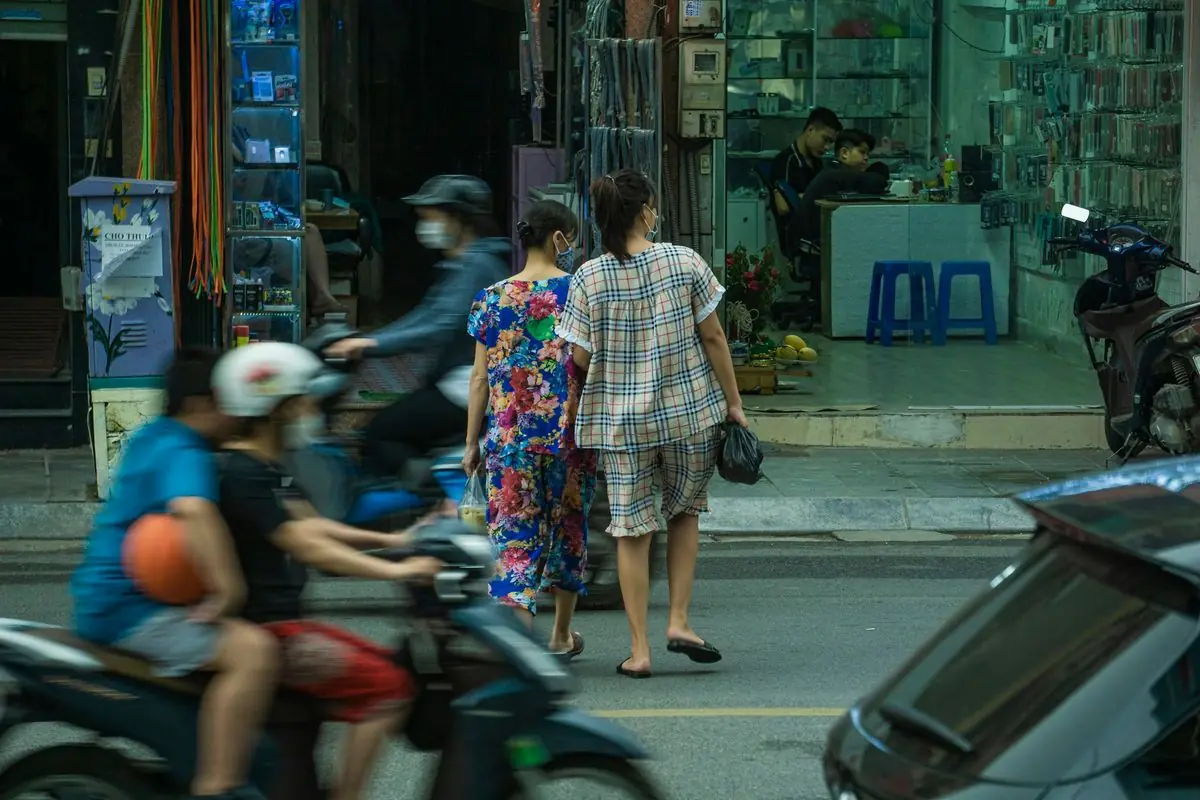
How to cross the street in Vietnam more safely:
- Look for traffic lights, pedestrian bridges or crossings with a clear view before attempting an unprotected crossing.
- Stop at the curb and put away your phone. Remove headphones so you can hear approaching vehicles.
- Check both directions and watch for turning traffic, even if you have a green pedestrian signal.
- Wait for a genuinely safe opportunity, then walk at a steady, predictable pace while continuing to look around.
- Never dash unexpectedly, reverse direction or stop abruptly in the path of a moving motorbike.
- Do not step out from behind a bus, parked car or other large obstruction.
- A road that is fast, wide or simply beyond your comfort level calls for a different crossing point.
For short city journeys, booking a car through Grab or Green SM, or using a clearly identified licensed taxi, is usually easier to manage than negotiating with an unknown driver. Check the driver’s name, license plate and car description before opening the door. At an airport, do not accept an offer from someone claiming to work for your ride-hailing app who asks you to cancel the booking and pay privately.
Rail is worth considering on longer journeys if you would rather avoid extended highway travel. Overnight buses and sleeper coaches are common, but you should research the operator, use a seat belt where available, and keep your passport, wallet and phone close rather than in luggage stored out of sight. Rural roads at night can have poor lighting; rain adds visibility and flooding hazards. Leave a sensible buffer before a flight when a long road transfer stands between you and the airport.
Is renting a motorbike a good idea?
Not automatically. It can be a memorable way to see Vietnam, but it is also one of the easier ways for an inexperienced visitor to suffer a serious injury. You need genuine riding experience, a license valid in Vietnam for the class of vehicle and insurance that covers the activity. A rental shop offering you keys does not prove you are legally entitled to ride.
Rules are not identical for all nationalities. UK guidance tells British travelers to carry their UK license together with a 1968-convention international driving permit. Australian advice says Australian driving licenses and Australian-issued international driving permits are not accepted for riding motorbikes of 50cc and above in Vietnam. Verify your own country’s rules rather than taking a blanket answer from another traveler online.
Helmets are required for motorcycle riders and passengers. Wear a good-quality helmet that fits and fastens properly, inspect the brakes, tires, lights and horn, and photograph existing damage before accepting the vehicle. Get the deposit and damage terms in writing. Never leave your original passport as a rental deposit. City traffic that feels intimidating on foot will not feel any easier on an unfamiliar scooter.
Read your insurance wording before you ride. Some policies exclude motorcycling or refuse claims involving an invalid license, alcohol, missing protective equipment or a vehicle outside an approved category. Finding that out after a crash is a particularly expensive surprise.
Petty theft and tourist scams: what to watch for
Crowded shopping and nightlife areas deserve extra awareness. Think of Hanoi’s Old Quarter and the streets around Hoan Kiem Lake, Ben Thanh Market and Bui Vien Street in Ho Chi Minh City, or the passenger pickup areas outside major stations and airports. They are still well worth visiting. Their crowds simply make it easier for someone to approach your belongings unnoticed.
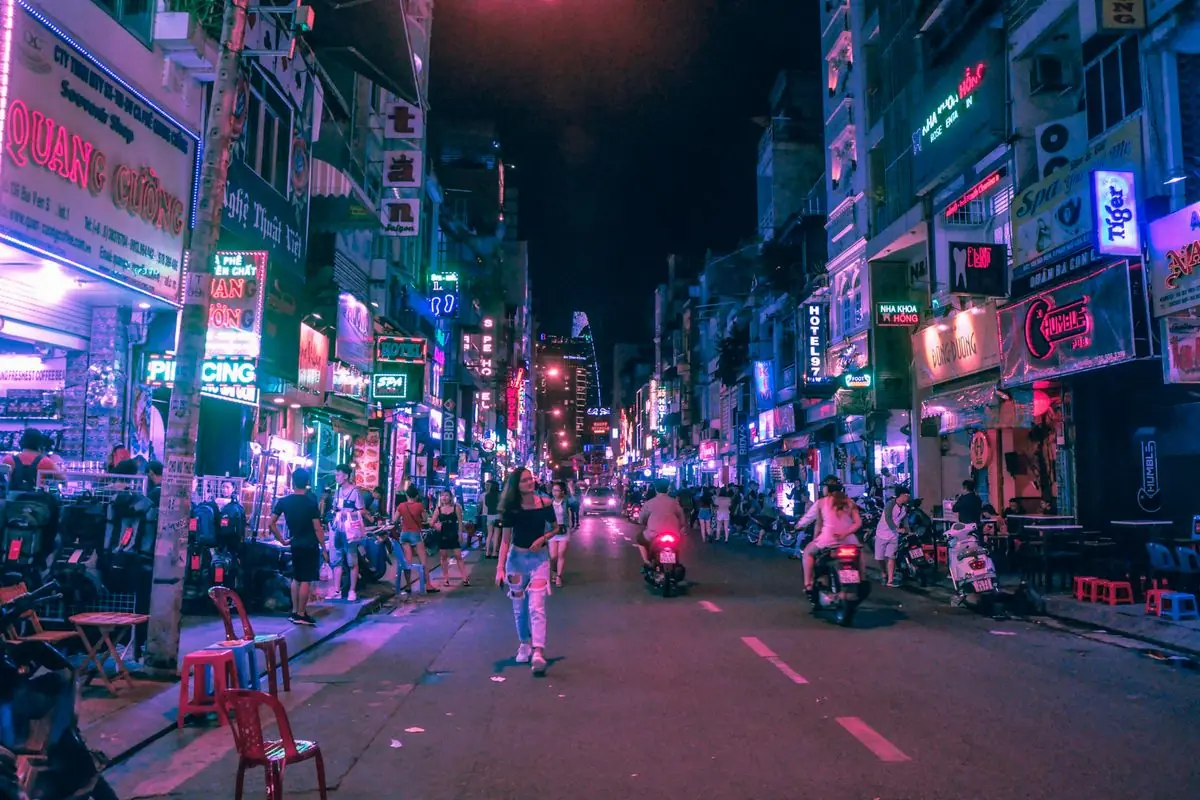
Phone and bag snatching. A motorbike passing close to the curb can put a bag or a phone at risk. Stand back from the traffic before checking directions or taking a picture. Keep a crossbody bag in front of you, with the strap secure and the bag on the side farther from passing vehicles when possible. If someone grabs an item from a moving motorcycle, do not cling to it or chase the rider into traffic. Preventing injury comes first.
Airport taxi confusion. At Noi Bai Airport in Hanoi and Tan Son Nhat Airport in Ho Chi Minh City, use the official taxi area, a transfer booked with your hotel, or the collection point shown by your ride-hailing app. The driver and license plate should match the booking. Ride-hailing prices in 2026 vary with distance, traffic, pickup point and demand; go by the amount the app shows for your actual trip and ignore any fixed airport fare passed around online. With a metered taxi, confirm the company and check that the meter is running.
Overcharging and unclear prices. Before accepting a market purchase, massage, tour or meal without displayed prices, ask what the total will be. At a seafood restaurant, establish whether the quote is per kilogram or per dish, how the fish or shellfish is weighed, and whether cooking charges are extra. Read the bill before paying. A high price on its own is not a scam, but a price changed after the service without explanation is a real warning sign.
ATM and bank-card fraud. Choose ATMs at banks, shopping centers or reputable hotels. Cover your PIN, keep payment cards in sight and enable transaction notifications. Contact the card issuer immediately about any unfamiliar charge and freeze the card where possible. Separate your backup card from the wallet you use daily, so one missing bag does not leave you without access to money.
Friendly strangers with an expensive plan. Some scams begin with an invitation to a private home for a card game or an unusually profitable deal. You can decline without feeling rude. Equally, unofficial visa websites may resemble government sites while collecting additional fees. Use the official Vietnamese immigration portal for e-visa applications and check every passport detail carefully before submission.
Where should travelers be especially careful?
| Place or situation | Main practical concern | A better choice |
|---|---|---|
| Hanoi Old Quarter and busy markets | Pickpockets, phone snatching, complex traffic | Carry your bag in front and cross at controlled points |
| Ben Thanh, Bui Vien and busy pickup areas in Ho Chi Minh City | Theft, unverified rides, nightlife risks | Match the license plate and keep drinks in sight |
| Hue, Da Nang, Hoi An and central coastal roads during heavy rain | Flooding, blocked roads, travel cancellation | Check the local forecast and confirm your transfer |
| Sa Pa, Ha Giang and northern mountain passes | Fog, steep roads, landslides in wet weather | Use a skilled local driver and avoid uncertain routes |
| Ha Long Bay, Cat Ba and island trips | Weather at sea, boat safety equipment | Check life jackets, operator safety and sailing restrictions |
| Beaches, waterfalls and river swimming spots | Strong currents, surf, slippery rocks | Swim in supervised areas and obey warning signs |
This table is not a list of dangerous places. Conditions change with the hour and the weather. A calm morning in Hoi An is nothing like a flooded street at night, while an isolated mountain location might be quiet yet a long way from professional medical care. Pick your precautions according to the actual activity.
Tropical storms, floods and seasonal weather
Vietnam’s north, center and south have different rainfall patterns. The tropical storm season affects coastal regions from around May or June through November or December, with particularly serious weather possible in the central part of the country during the later months. The north and south often receive their heaviest seasonal rain during the warmer part of the year; central Vietnam can experience heavy rain and floods in October and November. Storms and floods can still happen outside those months.
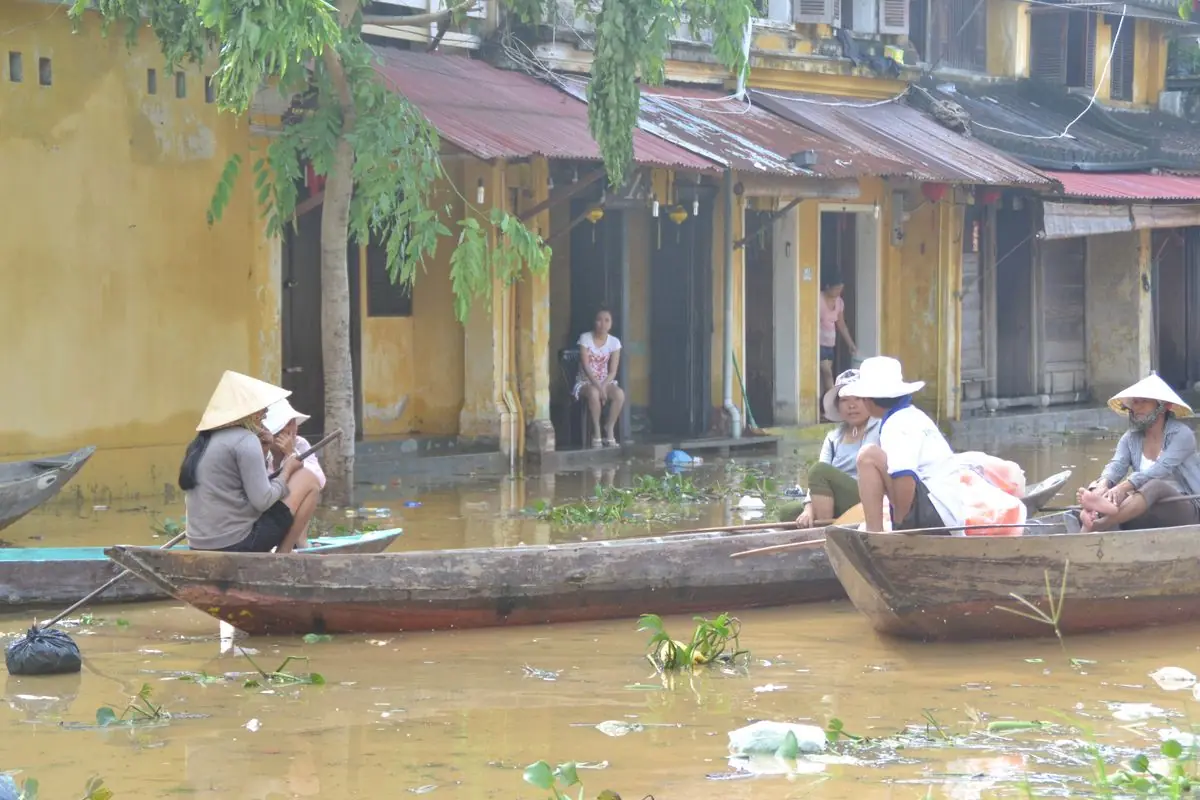
For a central Vietnam itinerary covering Hue, Da Nang, Hoi An or Nha Trang, keep a flexible day if you intend to take boat tours, visit rural areas or travel over passes. In Sa Pa, Ha Giang and other mountainous areas, check for landslide warnings and road closures before setting off. Never drive through floodwater just because another vehicle appears to have made it across. You cannot know whether the road surface beneath the water is still intact.
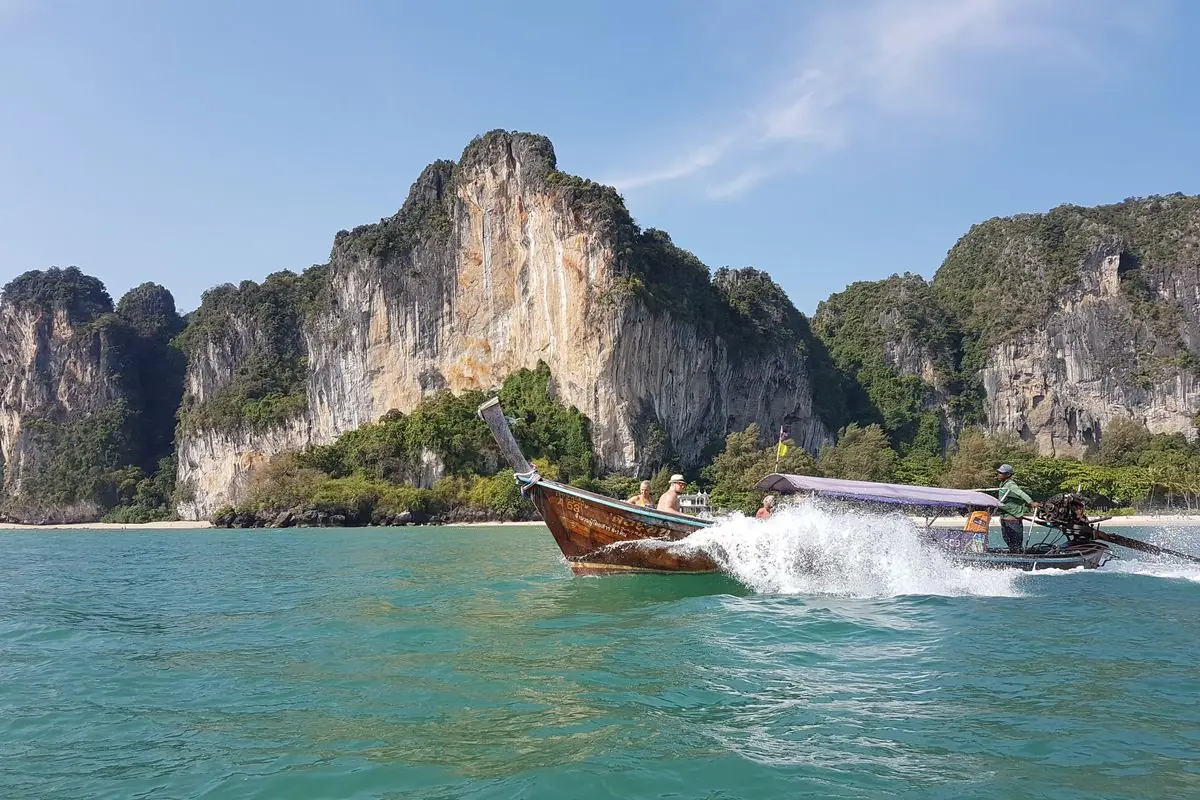
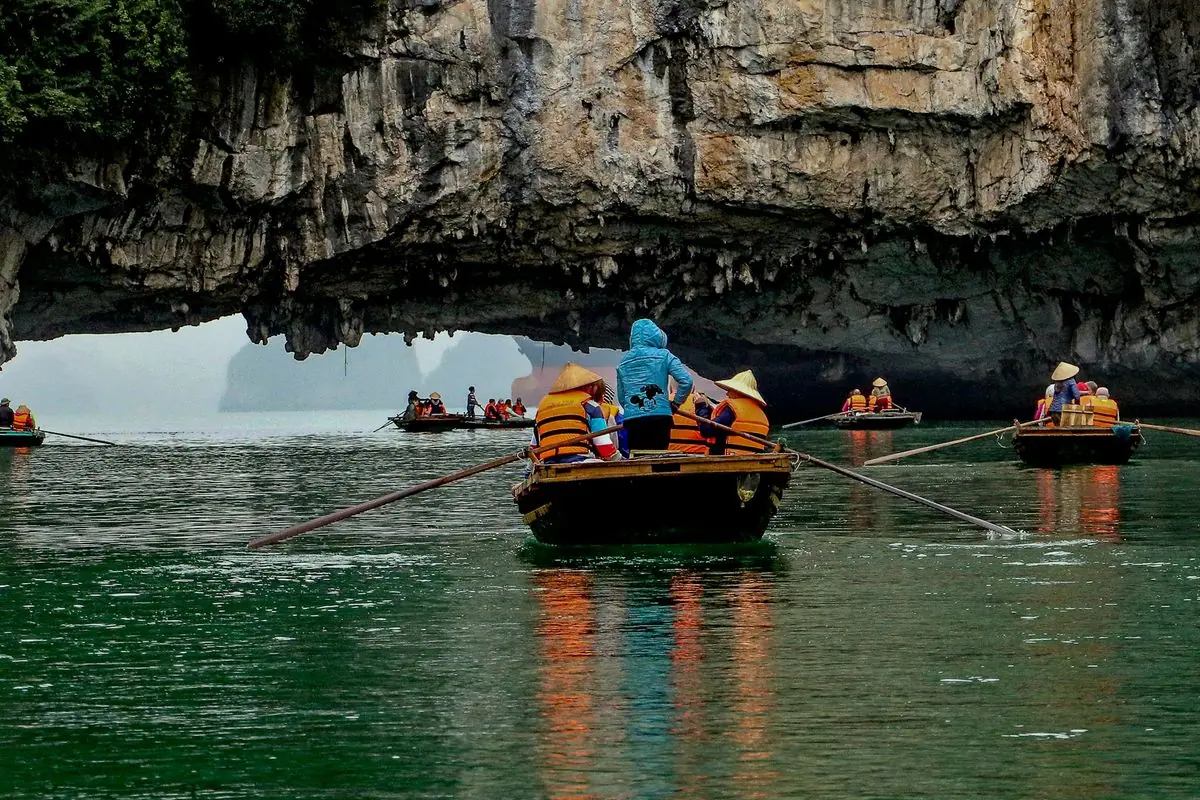
Boat trips around Ha Long Bay, Lan Ha Bay and the islands should be booked with operators who explain their safety procedures. Ask whether there are life jackets in appropriate sizes, what happens when sailings are suspended and how weather-related cancellations are handled. The sea can be rough even on a clear day in town. If the authorities stop departures, changing your schedule is the sensible option; finding a smaller boat willing to sail is not.
Heat and mosquitoes deserve attention too. Carry safe drinking water, take shade breaks and watch for symptoms of dehydration, especially when traveling with children. Dengue occurs in Vietnam throughout the year, although conditions can be more favorable for mosquito transmission during rainy periods. Use an appropriate repellent and cover exposed skin where practical, including during daytime activities.
Before visiting a waterfall, hiking trail or cave, ask whether access is currently permitted and whether the route requires an authorized guide. Avoid swollen streams, cliff edges in heavy rain and any unexploded or unfamiliar metal objects encountered in remote former conflict areas. Urban visitor attractions present very different risks from remote terrain.
Is food and drinking water safe in Vietnam?
Food is a highlight of visiting Vietnam, whether you plan to try pho, bun cha, banh mi, com tam or fresh seafood. Street food is part of that, and worry alone is no reason to skip it. What makes a meal safe is how the food is handled, and a famous name or a viral video says little about that.
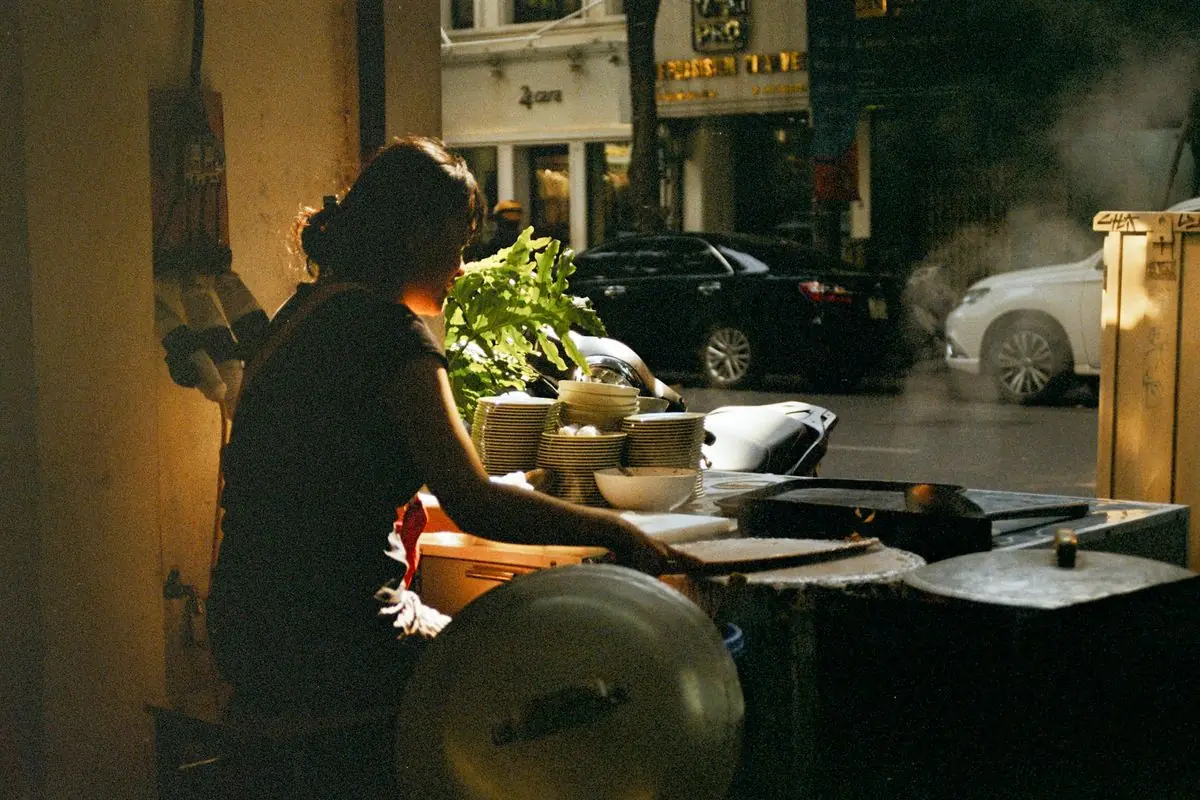
Choose meals that are freshly cooked and served steaming hot. Be more cautious with raw or undercooked meat and seafood, blood-based dishes, food left warm at room temperature and uncooked vegetables washed in uncertain water. Fruit you can peel yourself is a useful option. A busy stall where you can watch the cooking may be easier to assess, but popularity does not guarantee that every ingredient is safe.
Travelers with a food allergy should save a clear Vietnamese translation specifying the ingredient and the consequences of exposure. Peanuts, fish sauce, shellfish and other ingredients can be present in sauces or broths even when they do not appear in the dish name. Show the message before ordering, and do not rely entirely on a translation app to confirm that cross-contact is impossible.
Alcohol brings a separate set of risks. Keep your drink within sight, avoid unknown homemade spirits and be cautious with bottles or glasses offered already opened by strangers. There have been serious cases of methanol poisoning linked to alcoholic drinks in Vietnam. It cannot reliably be detected by smell or taste. Severe headache, vomiting, visual changes, confusion or other concerning symptoms after drinking need urgent medical attention; do not wait until morning.
Most minor stomach upsets can be managed with rest and appropriate hydration, but persistent vomiting, bloody diarrhea, high fever, worsening weakness or signs of dehydration are reasons to seek medical advice promptly. Children, older people and travelers with existing health conditions can become dehydrated faster. Carry any essential medication in its original packaging and review vaccination or other travel-health recommendations before departure.
Is Vietnam safe for solo female travelers?
Vietnam can be a good destination for a woman traveling alone, and many of the practical choices are the same ones any solo traveler should make. Still, it would be dishonest to claim harassment or sexual assault never occurs. Official British and Australian advice reports incidents involving unwanted touching, assaults, drink spiking and unlicensed drivers. Precautions should lower your exposure to those risks without taking away your freedom to enjoy the trip.
Choose accommodation using recent reviews, paying particular attention to the entrance at night, reception arrangements, room locks and proximity to transport. Late arrivals at Noi Bai, Tan Son Nhat or Cam Ranh are easier with a pickup booked through your hotel or an official app, which spares you sorting through competing offers while exhausted. Share your lodging address and expected arrival time with someone you trust. Location sharing is useful if you are comfortable using it.
In nightlife areas such as Bui Vien in Ho Chi Minh City or Ta Hien in Hanoi, buy your own drinks, keep them close and book a car through the app for your return. You do not owe a stranger an explanation when a conversation becomes uncomfortable. A staffed hotel, restaurant or shop is a better place to request help than an empty side street. If someone appears to be following you, move toward people and ask staff for assistance instead of leading the person directly to your room.
You can also be selective about what you share with new acquaintances. A casual contact does not need to know that you are staying alone, your room number or your real-time itinerary. For trekking, diving or boat excursions, choose an identifiable operator and tell someone when you expect to return. Those habits apply to solo men as well, but they are particularly useful if you are concerned about unwanted attention.
If an assault occurs, get to a safe place and seek medical care. Ask your embassy or consulate for support and information about reporting options. A translator may be necessary for a police report. Preserve messages, receipts and any other evidence you feel able to keep; your immediate physical safety and medical needs are the priority.
Keeping your passport, money and phone secure
A lost passport creates far more trouble than a lost shopping bag. Store encrypted digital copies of your passport information page, entry stamp, visa or e-visa and insurance details somewhere you can access from another device. Keep a paper copy separate from the original. British guidance says you should carry photographic identification and that a printed copy of the passport photo page and visa can be accepted for routine identification checks. However, domestic flights may require the passport used to enter Vietnam, so plan accordingly.
Do not put your passport, all your cash, two bank cards and your phone into one bag. Carry enough Vietnamese dong (VND) for the day and keep a separate emergency amount. Confirm the total before you tap your card, particularly when a price contains several zeros. ATM fees vary by machine, card issuer and transaction; read the on-screen fee before accepting rather than assuming all ATMs charge the same.
With Grab or Green SM, the price in the app is the price of the exact ride you book; there is no single fixed fare for everyone. Check any additional airport, toll or route charges communicated by the service. Use reputable authorized money-changing services or banks, count the notes before leaving and avoid currency exchanges offered by strangers on the street.
Protect your phone with a strong passcode, enable device-finding tools and keep important photographs backed up. A working SIM or eSIM helps with maps, translation and booking transport, but download offline maps too. Save your accommodation address in Vietnamese, not merely in an English-language itinerary. A charged power bank is useful for long train days and unexpected delays.
Emergency numbers in Vietnam
| Number | When to call |
|---|---|
| 112 | National line for disasters, accidents, major incidents and urgent requests for coordinated assistance; available around the clock |
| 113 | Police, including reporting theft, assault and serious incidents requiring police assistance |
| 114 | Fire services and rescue |
| 115 | Medical emergencies and ambulance assistance |
Vietnam’s nationwide 112 emergency coordination line began operating on August 23, 2025 and can refer cases to the established police, fire and ambulance numbers. It is still useful to save all four. Emergency operators may communicate only in Vietnamese, so asking hotel reception, a guide or a Vietnamese-speaking bystander to help can be important.
Also store your insurer’s 24-hour assistance number, your hotel, your transport provider and the emergency contacts of your own embassy or consulate. In a serious situation, attend to immediate safety and medical needs first; billing and paperwork can follow.
What to do if your passport, phone or money is stolen
If your passport disappears, check your last accommodation and transport first. Report a suspected theft to local police and request written documentation, ideally with help from a translator. Contact the embassy or consulate of the country that issued the passport to arrange a replacement or emergency travel document. Then contact Vietnamese immigration authorities about replacement entry or exit documentation. US passport holders may need both a replacement passport and a replacement Vietnamese visa to leave Vietnam legally.
A photo of your passport will not get you onto an international flight. Avoid booking a nonrefundable departure until you understand the processing requirements. Public holidays and distance from a consular office can complicate the process. Keep receipts, police paperwork and a record of the people you contacted; your insurer may ask for them.
If your phone is stolen, lock it remotely from another device, protect accounts with financial access and contact your mobile provider about the SIM. Freeze any cards or mobile payment credentials that could be misused. Never chase a motorbike thief into the street. Record the place and time of the incident while you can still remember them clearly, then ask police for a report if appropriate.
If you are involved in a road accident, call 115 for injuries and 113 if police assistance is needed. Avoid leaving a serious accident scene without guidance from authorities. Tell your insurer and your embassy or consulate about any incident that may lead to legal proceedings. Do not sign a document you do not understand; request translation and appropriate legal advice.
Do you need travel insurance for Vietnam?
It is strongly advisable, even for a short holiday. The biggest expenses are not necessarily routine clinic visits. A traffic accident, hospital admission, medical transfer from a remote location or a rearranged itinerary after severe weather can be costly. Your embassy generally will not pay hospital bills for you.
Look for emergency medical treatment, evacuation, repatriation, theft and trip interruption coverage. Read the exclusions rather than relying on a headline claiming “comprehensive protection.” Specifically check coverage for storms that were already forecast when you purchased the policy, pre-existing conditions and activities such as motorcycling, trekking, diving, kayaking or other adventure tours.
Keep the policy number and emergency helpline in two places. Some hospitals or clinics may require a deposit or payment before treatment. Contact the insurer early to ask whether direct billing can be arranged and what records must be retained. Make sure a partner or family member traveling with you can find the policy when you are unable to call.
A simple safety routine for your first day
Before your flight, check the entry rules for your passport, download your itinerary and save the address of the first hotel in Vietnamese. Review weather for the exact cities and roads on your route. A central coast beach trip or island cruise in storm season needs some slack in the schedule; leave a few days free of nonrefundable activities.
After landing at Noi Bai, Tan Son Nhat, Da Nang or Cam Ranh, take a moment to connect your phone and locate the official pickup area. Match the car and driver details to your booking before getting in. If you are unsure, return to an airport information desk or message your hotel; do not follow a stranger who says they can fix your ride-hailing problem outside the app.
At your accommodation, locate the exit, decide where you will store your documents and identify an easy route back after dark. Start with a freshly cooked meal and safe drinking water. Withdraw or exchange only the cash you expect to need initially, then get familiar with how prices are written in Vietnamese dong. A holiday is still a holiday: handle the decisions that are hardest to make when tired, then enjoy the trip.
Save a screenshot showing your hotel’s Vietnamese address, the details of your booked car and the numbers 112, 113, 114 and 115. If your connection fails or you need a local person to help, that single image can be more useful than trying to pronounce a long address from memory.
Frequently asked questions
Is Vietnam safe for tourists?
Generally, yes. Normal precautions are appropriate for many standard trips, although road traffic, petty theft and seasonal weather still require attention. The US lists Vietnam at Level 1 and Australia recommends normal safety precautions.
Is it safe to travel to Vietnam right now?
Yes, but heavy rain was forecast for Hue, Da Nang and surrounding parts of central Vietnam on November 11-12, 2026. Before setting off, check the latest local warnings, road conditions and transport schedules for your actual travel day.
How do I cross a road safely in Vietnam?
Use a controlled crossing whenever possible. Look for turning vehicles, put away your phone and move steadily only when it is safe. Do not rely on motorbikes automatically moving around you or suddenly run between lanes.
Is Vietnam safe for solo female travelers?
Many solo trips can be planned safely, but harassment and assault risks are not zero. Choose well-reviewed accommodation, use an app or an official taxi, keep drinks in sight and share your expected return time with someone you trust.
What are the emergency numbers in Vietnam?
Call 112 for urgent incidents and disaster assistance, 113 for police, 114 for fire and rescue, or 115 for an ambulance. Emergency calls may be handled in Vietnamese, so ask a local speaker for help if necessary.