Booking taxis, exchanging money and taking tours in Vietnam: how to avoid scams
Vietnam is generally a safe country to visit, but travelers can still encounter fake taxis, misleading visa websites, currency confusion and unexpected service charges. Most of these problems are easier to avoid when you know what to check before paying and who to contact when something goes wrong.
 22 min read

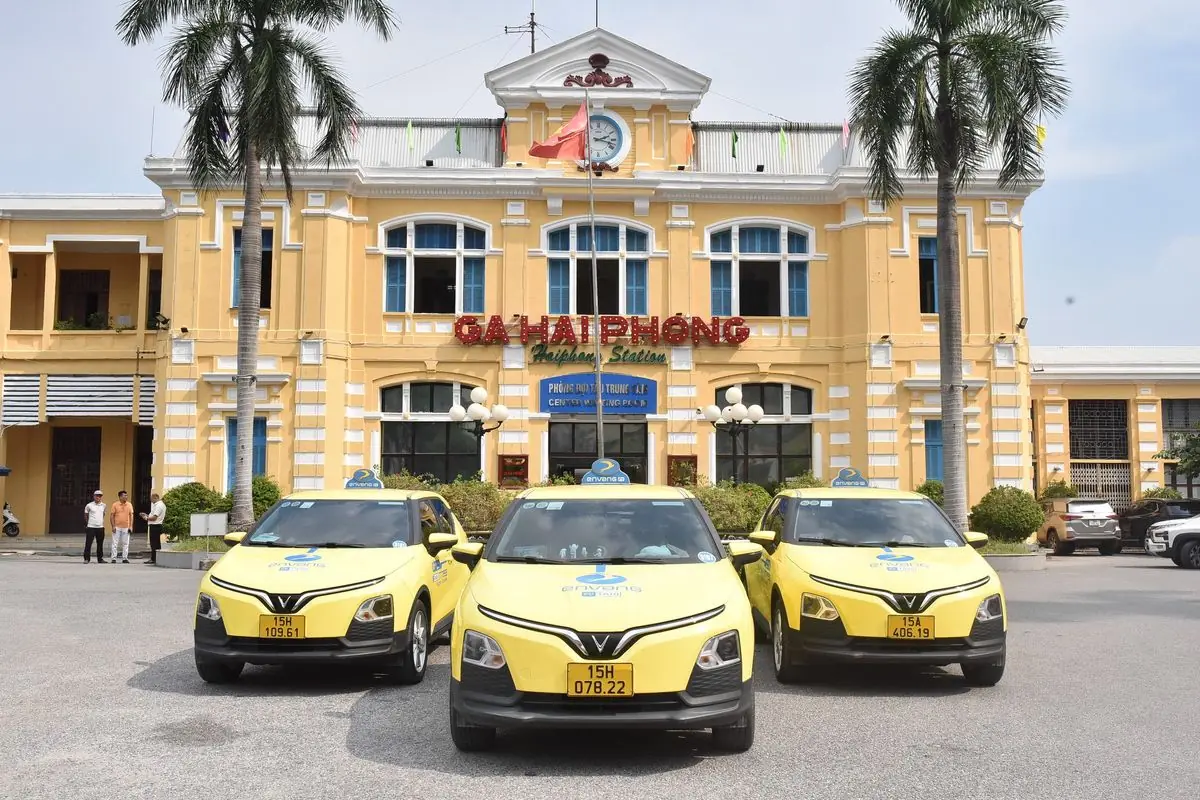
An electric taxi under the old Xanh SM name, now Green SM.
A car is waiting outside the airport, with a "Taxi" sign on its roof and a driver offering to carry your suitcase. Everything looks normal, but none of that proves it’s a legitimate taxi. When traveling in Vietnam, check the license plate, fare and booking details before getting into a vehicle or handing over money.
Similar situations can come up when exchanging currency, booking tours, renting motorbikes or buying attraction tickets. Not every expensive offer is a scam, but certain warning signs are worth taking seriously: unclear prices, pressure to pay immediately, requests to surrender your passport or last-minute changes to an agreed destination.
1. Is Vietnam safe for foreign tourists?
Yes. Vietnam is generally considered a safe destination for international travelers. The main risks visitors should prepare for are petty theft, bag snatching, pickpocketing, payment fraud and online scams.
In its travel advisory issued on June 24, 2026, the U.S. Department of State placed Vietnam at Level 1 - Exercise Normal Precautions, the lowest of its four travel advisory levels.
Violent crime against foreigners is relatively uncommon. However, pickpocketing and bag snatching can occur, particularly in crowded places and popular tourist areas.
Solo travelers, first-time visitors and people unfamiliar with Vietnamese dong may find themselves more vulnerable when someone approaches them with an unsolicited offer.
In Hanoi, situations worth watching for include airport transfers from Noi Bai International Airport, services around the Old Quarter and crowded sightseeing areas. In Hai Phong, pay attention to transport around Cat Bi International Airport and busy tourist areas such as Do Son. On Cat Ba Island, boat prices, bay tours and motorbike rentals deserve a little extra checking.
These are places where it’s sensible to verify information, though not every business there deserves suspicion.
2. Taxi scams in Vietnam: what to check before getting in
For many international visitors, a taxi is the first service they use after landing in Vietnam. That makes airport transfers a common point of confusion, particularly when you’re tired, carrying luggage and trying to reach your hotel.
Someone pretends to be your ride-hailing driver
You’ve booked a Grab car, and the app shows the driver’s name, vehicle details and license plate. As you approach the pickup area, someone asks for your hotel’s name and claims they’ve been sent as a replacement driver.
That’s a reason to verify the booking before you get into the car.
To avoid this situation:
- Book directly through the official ride-hailing app.
- Compare the license plate and vehicle details with your booking.
- Don’t enter a different vehicle simply because someone knows your destination.
- Be cautious if a driver asks you to cancel the app booking and pay privately.
- Share your trip details with someone you trust when traveling late at night.
Using Grab is generally a convenient option because you can check your trip details before boarding. Still, an app cannot eliminate every risk, especially if you move the transaction outside the platform.
A taxi driver won’t explain the fare
Another common dispute begins with a reassuring promise that the ride will be quick and cheap.
When you arrive, the driver demands more than expected, perhaps citing airport pickup fees, luggage charges or other extras that weren’t mentioned earlier.
For metered taxis, check that the meter is running correctly and ask about additional charges. For app-based rides, review the estimated fare and any conditions that might affect the final price.
Don’t agree to a price with a nod unless you’re certain you understood the amount.
Vietnamese dong has several zeros, and hearing a price in an unfamiliar language can easily lead to confusion.
At Noi Bai, Cat Bi and other transport terminals
At Noi Bai International Airport in Hanoi, follow the airport signs or app instructions to the designated pickup area. Not every vehicle parked near the arrivals exit is authorized to collect passengers there.

At Cat Bi International Airport, Hai Phong Police issued a warning on November 3, 2026, about unauthorized transport services and aggressive passenger solicitation. Travelers were encouraged to use official transport counters or ride-hailing apps and board vehicles in the appropriate pickup zones.
Be careful with unsolicited offers of a "free shuttle to your hotel" as well. Only use a hotel transfer after confirming it directly with your accommodation or the transport operator.
Grab and Green SM, the electric taxi service previously known as Xanh SM, are among the options visitors may encounter.
Green SM’s customer service number is 1555, available around the clock. Calls cost VND 1,000 per minute, and callers can press * for English-language assistance.
There is no single fixed fare for every journey. Check the estimated price in the app when booking.
3. Currency exchange, similar banknotes and card payments
Vietnamese dong comes in several denominations, many with long strings of zeros. It’s easy to make a mistake when you’re new to the currency, particularly when paying quickly in a busy shop or restaurant.
Confusing VND 20,000 with VND 500,000
The VND 20,000 and VND 500,000 polymer banknotes both have blue tones, although their sizes and designs are different.

In poor lighting, look at the printed denomination rather than relying on color alone.
A disagreement can arise when a customer hands over a large banknote and the seller claims to have received a smaller one.
To reduce the chance of confusion, hold the banknote where both you and the seller can see it, check the denomination and then hand it over.
Count your change while you’re still at the counter. Once you’ve walked away, proving which banknote was exchanged becomes much harder.
Where should you exchange money?
Banks and licensed foreign-exchange counters are the safer places to exchange currency.
Check the buying exchange rate and confirm the total amount you’ll receive before handing over your cash.
Be wary of strangers approaching you at airports, on the street or through messages promising unusually favorable exchange rates.
In Hanoi or Hai Phong, there’s no rush to exchange your entire travel budget on the first day. Having enough cash for your initial expenses, then using a bank or ATM when necessary, may make your money easier to manage.
Should you choose VND or your home currency at an ATM?
Some ATMs and card terminals offer to convert the transaction into your home currency. This is commonly called Dynamic Currency Conversion, or DCC.
The exchange rate offered by the terminal operator may be less favorable than the rate used by your card issuer.
For cash withdrawals, use ATMs located at banks or other places where staff assistance is available.
4. Fake Vietnam e-visa websites: check the address before applying
Foreign visitors searching for a Vietnam visa online may come across dozens of websites offering application services.
Some are legitimate commercial intermediaries that charge processing fees. Others imitate government portals, exaggerate the need for additional payments or attempt to collect personal information.
The official Vietnam e-visa website is evisa.gov.vn.
The Immigration Department also announced thithucdientu.gov.vn as an official domain effective November 11, 2024.
Type the official address into your browser to apply, rather than clicking the first sponsored search result and assuming it belongs to the Vietnamese government.
The official e-visa fees are:
- USD 25 for a single-entry e-visa.
- USD 50 for a multiple-entry e-visa.
These are the government application fees. They don’t include any optional processing charges from a third-party visa service.
Before submitting payment, carefully review your full name, date of birth, passport number, visa validity and number of permitted entries.
A successfully submitted application still has to be approved before your visa is issued.
Be cautious if a website claims to be the only authorized visa agent, guarantees approval or asks you to transfer money to a personal bank account.
5. Can hotels in Vietnam keep your passport?
When checking into accommodation in Vietnam, foreign guests are normally asked to show their passports so the property can verify their identity and register their temporary stay.
This is a normal procedure. Accommodation providers have responsibilities for reporting foreign guests to the relevant authorities.
However, checking your passport doesn’t mean the hotel must keep the original document throughout your stay.
After the registration process, ask for your passport back. There is no general legal requirement for hotels to hold guests’ passports until checkout.
Another risk involves fraudulent messages requesting an additional hotel deposit.
For example, you may receive a message claiming that your reservation will be canceled unless you make an immediate payment outside the original booking platform.
Before paying, contact the hotel using its official contact details and compare the request with the terms on your booking confirmation.
For apartments or homestays booked through social media, check the location on a map, recent reviews, property photos and the identity of the person requesting payment.
Nice pictures are not enough when you cannot verify where the accommodation is or who operates it.
6. Motorbike rental scams: never leave your passport as a deposit
Motorbike rental is popular on Cat Ba Island, in Hai Phong and at many other destinations around Vietnam.
Problems sometimes arise when returning the vehicle. A rental operator might claim there are new scratches, missing accessories or other damage, even though the condition of the motorbike wasn’t documented when it was collected.
Before riding away, take photos or a short video showing the entire motorbike, including the body panels, lights, mirrors, license plate and existing scratches.
Check the brakes, tires, lights, horn and fuel level.
You should also confirm the daily rental price, return time, fuel policy and how any damage would be assessed.
Foreign travelers also need to check whether their driving licenses are legally valid for the specific vehicle they intend to use in Vietnam.
A rental shop agreeing to hand over the keys doesn’t mean you’re legally permitted to ride.
On Cat Ba Island, some roads have steep gradients and blind bends. If you have little motorbike experience, a taxi or a vehicle with a driver may be a better choice than renting a scooter just to save money.
7. Seafood restaurants in Do Son and Cat Ba: ask about weight and price
Fresh seafood displays can be tempting, especially after a day at the beach. It’s easy to select a crab, fish or shellfish before checking exactly how the price will be calculated.
Problems can arise when the displayed price is per 100 grams rather than per kilogram, or when the seafood served is not the size or variety the customer expected.
Confirming the details before cooking begins makes this one of the easiest situations to manage.
Before ordering seafood in Do Son or Cat Ba, ask:
- Is the price per kilogram, 100 grams, piece or plate?
- What species and size of seafood am I choosing?
- Is the weight measured before or after cleaning?
- Is cooking included in the price?
- Are sauces, side dishes or service charges extra?
For live seafood sold by weight, watch the scale before the food goes to the kitchen.
Ask before ordering if the menu doesn’t clearly explain the pricing unit.
Not every restaurant without a large printed price board is dishonest. But a place where staff refuse to explain the price, won’t let you check the weight or keep pressuring you to order is one you can walk out of.
During the 2026 peak tourism season, Do Son authorities implemented measures to strengthen tourism management, including action against aggressive solicitation and overcharging.
If a dispute occurs, keep the receipt, photograph the displayed prices and record the business name and address before making a complaint.
8. Cat Ba and Lan Ha Bay tours: check whether kayaking is actually available
Ben Beo Pier is a familiar departure point for sightseeing trips into Lan Ha Bay from Cat Ba Island.
Visitors may encounter a wide range of boat offers with different routes, durations and included services.

A tour labeled as a "full-day cruise" may not include every activity shown in its promotional photos.
Before booking, ask whether the total price includes the bay entrance fee, boat transport, lunch, drinks, hotel transfers and any water activities.
Under Hai Phong’s sightseeing fee regulations effective January 1, 2026, the fee for visiting designated bay routes around the Cat Ba Archipelago is:
- VND 120,000 per adult visit.
- VND 60,000 for eligible children aged six and older.
- Children under six are exempt under the applicable regulations.
These are sightseeing entrance fees, not the full cost of a guided cruise or private boat.
When arranging a private boat or purchasing services at Ben Beo Pier, confirm whether the quoted price is for the whole group or per passenger.
You should also know the planned route, duration, departure point and return location before paying.
Watch out for tours that still advertise kayaking
Kayaking activities in the bays around the Cat Ba Archipelago have been subject to a temporary suspension while management and safety requirements are being addressed.
Cruise operators have continued to announce that kayaking remains suspended until further guidance is issued.
A tour that says "kayaking included" may therefore offer no kayaking at all.
Before paying a deposit, ask whether kayaking is authorized at the specific location and on your travel date.
Also ask what alternative activity will be offered if kayaking cannot take place.
If an individual area has separate permission to operate, the tour provider should be able to explain the applicable arrangements.
Don’t pay a deposit solely because the advertisement includes a photo of someone paddling between limestone islands.
A written confirmation of the route, duration, included services and cancellation policy is much more useful than a promise that everything will be arranged when you arrive.
9. Hanoi Train Street: an invitation is not permission to enter
The railway areas around Tran Phu, Phung Hung and nearby streets in central Hanoi have attracted international visitors because trains pass close to residential buildings.
You may encounter invitations to enter a café, take photos or wait for a train with someone promising to guide you.
However, these railway corridors are subject to strict safety requirements.
In March 2025, Hanoi’s tourism authorities instructed travel businesses not to take visitors into railway-side café operations that violated safety regulations.
An invitation from a café operator doesn’t make an area legally open to tourists.
Follow any barriers, warning signs or instructions from officials to leave.
Don’t pay anyone who promises access to restricted railway sections or a place to stand close to the tracks while a train passes.
10. Tinder and dating app scams in Vietnam
Using Tinder or other dating apps in Vietnam isn’t inherently dangerous. Many people meet and socialize through these platforms without problems.
The concern is with individuals who use dating apps to bring visitors to unfamiliar establishments, pressure them into making payments or steal their belongings.
One warning sign is someone you’ve just met online insisting on a specific bar or private venue, rejecting every alternative and repeatedly urging you to arrive immediately.
Another situation starts with friendly conversation but gradually turns into requests for loans, emergency payments or banking information.
Criminals may use dating apps to approach potential victims for robbery or assault.
For a first meeting:
- Consider a short video call beforehand.
- Choose a public café or other well-known venue.
- Arrange your own transport there and back.
- Tell someone you trust where you’re going.
- Avoid immediately visiting a new acquaintance’s apartment, hotel room or isolated location.
- Order your own drinks and keep them in sight.
Someone pressuring you to drink alcohol, repeatedly changing the meeting location or preventing you from contacting friends is giving you a good reason to leave.
If you feel unsafe, seek help from staff, security personnel or people nearby.
Don’t stay and argue over a payment when you believe you’re being threatened.
11. Suspicious job offers and the risk of passport confiscation
Not every scam starts with a hotel reservation, taxi or sightseeing tour.
Some begin with an unexpected job offer, perhaps through a social media contact, a recruitment message or someone you meet during your travels.
The work may be described as easy, highly paid and requiring no experience. Accommodation and transport might be offered as additional benefits.
Later, the supposed recruiter asks for your passport, a processing payment or travel to a different location.
There have been cases of people being deceived by high-paying job offers in the Mekong region, then transported across borders, deprived of their passports and forced into online scam operations.
This doesn’t mean every overseas job opportunity is suspicious.
However, you should independently verify the company, contract, workplace, visa requirements and legal permission to work before agreeing.
Never hand your passport to a recruiter simply because they say they’ll keep it safe.
Don’t sign documents in a language you don’t understand.
A recruiter who refuses to let you independently contact the company or insists you immediately travel somewhere different from the original workplace is your cue to stop the process.
If someone threatens, confines or coerces you, the situation is no longer an ordinary employment dispute. Contact police, your embassy or someone you trust as soon as you can safely do so.
12. Tourist SIM cards, public Wi-Fi and fake delivery messages
Most visitors need a SIM or eSIM soon after arriving in Vietnam, whether for maps, ride-hailing, hotel bookings or staying in touch with family.
When buying a SIM card, check the data allowance, validity period, activation requirements and total cost.
Don’t rely on the word "unlimited" alone.
Some mobile packages reduce connection speed after the high-speed data allowance has been used.
Purchase from an official mobile operator channel or a reputable dealer. Ask for the SIM to be activated and test the data connection before leaving the shop.
Another risk comes from messages impersonating delivery services, hotel staff or couriers.
You might be asked to click a link and pay a small processing or delivery fee.
If you’re not expecting a delivery, particularly one involving your passport or other documents, don’t enter card details, one-time passwords or personal information through a link received unexpectedly.
Even a tiny fee can be used as an excuse to send you to a fraudulent payment website.
13. Pickpocketing, phone snatching and losing belongings on transport
Not every loss involves an elaborate scam.
In busy tourist areas, ordinary theft and misplaced belongings may be more likely than a complicated impersonation scheme.
In Hanoi, take extra care while walking through the Old Quarter, crossing busy streets or taking photos near traffic.
Someone holding a phone near the edge of the sidewalk may be vulnerable to a passing motorbike rider snatching it.
Carry your bag away from the traffic side and avoid holding valuables out toward the road.
In crowded places, keep important items in compartments that are difficult to open and move your backpack to the front when necessary.
On overnight trains or long-distance buses, keep your passport, phone and wallet close to your body while sleeping.
Don’t put all your cash, cards and travel documents in one bag.
When something goes missing, first check the places you’ve recently visited and contact your driver or transport operator through the original booking channel.
If you suspect theft, report it to the police.
14. What to do if you get scammed in Vietnam
Get out of danger first. A lost passport, stolen money or a disagreement over a service can be dealt with after that.
- Step 1
Get somewhere safe
If someone is threatening you, trying to force payment or becoming aggressive, leave the situation as safely as possible.
Look for hotel employees, airport information staff, security personnel or a busy public area where you can ask for help.
If there is an immediate threat, call 113.
Don’t stay in a dangerous location simply because you want to recover the money you’ve already paid.
- Step 2
Preserve evidence
Once you’re safe, collect information that may help establish what happened:
- Receipts and payment records.
- Screenshots of bank transactions.
- Tour, taxi or accommodation booking messages.
- Vehicle license plates and trip information.
- Business names and addresses.
- The time and amount involved.
- Photos of displayed prices or written service conditions.
Save relevant conversations before deleting messages or blocking suspicious contacts.
At a location with CCTV, report the incident promptly so the footage may be preserved.
Whether the footage can be provided will depend on applicable rules and the investigation process.
- Step 3
Contact your bank
If you’ve entered card information into a fake website or sent money to someone you suspect is a scammer, contact your bank immediately.
Ask about freezing the card, securing your account, checking transactions and starting a dispute or payment investigation.
For card payments, ask whether a chargeback or other transaction dispute process is available.
For bank transfers, request guidance on attempting to recover the payment.
There is no guarantee that a bank can recover stolen funds, but reporting the problem quickly can help prevent further unauthorized transactions.
Change any exposed passwords from a trusted device and review the linked authentication methods.
- Step 4
Report the incident to the police
Where should tourists report scams in Vietnam?
Call 113 in an emergency, or visit the local police office responsible for the area where the incident occurred, to report suspected theft, fraud, threats or physical violence.
On Cat Ba Island, for example, you can seek assistance from the police authorities of the Cat Hai Special Administrative Zone.
In Hanoi, ask your hotel to help identify the police office responsible for the location of the incident rather than traveling to an unrelated station.
Foreign travelers may find it useful to have a trusted hotel employee, guide or interpreter help with communication.
Emergency lines in Vietnam primarily operate in Vietnamese, so the operator may not speak English.
When making a formal report, ask for guidance about obtaining confirmation that your report has been received.
Keep any report number, receipt or contact details provided by the receiving officer.
Police documentation may be needed for insurance claims or replacement travel documents.
- Step 5
Contact your embassy if your passport is missing
Report the lost or stolen passport to local police and contact your country’s embassy or consulate.
Consular officials can explain how to apply for a replacement passport or emergency travel document.
Depending on your nationality and immigration status, you may need additional procedures with Vietnamese immigration authorities before leaving the country.
Don’t assume that a photograph of your old passport will be enough to board an international flight.
- Step 6
Contact the booking platform and travel insurer
If a dispute involves an app-booked taxi, report the issue through the app’s trip support section.
Provide the booking reference, time and details of any charges outside the agreed arrangement.
For hotel and tour disputes, contact the platform where you originally booked and keep screenshots of the service description and cancellation terms.
If you have travel insurance, contact the insurer’s assistance number to find out which documents are required.
Not every policy covers scams or lost cash, so check the specific terms rather than assuming reimbursement is guaranteed.
- Step 7
Be wary of people offering to recover your money
After being scammed, you might receive messages from someone claiming to be a lawyer, bank employee or recovery specialist.
They promise to return your money if you first pay a processing fee.
This could be a second scam targeting the same victim.
Don’t send more money or share authentication codes with someone whose identity you haven’t independently verified.
15. Emergency phone numbers in Vietnam
Save these five numbers before your trip. They are official Vietnamese emergency or assistance numbers, and domestic calls are free under the applicable arrangements.
| Number | Service | When to call |
|---|---|---|
| 113 | Police and emergency assistance, including routing of medical emergency requests under the new system | Threats, assaults, robbery or serious emergencies |
| 114 | Fire and rescue services | Fires, people trapped or incidents requiring rescue personnel |
| 115 | Medical emergency services | Serious injuries, unconsciousness or urgent ambulance assistance |
| 112 | Disaster, incident and search-and-rescue assistance | Storms, flooding, major incidents and rescue requests |
| 111 | Child protection hotline, also receiving reports related to human trafficking | Children in danger, suspected trafficking or related protection concerns |
Important changes from November 1, 2026
From November 1, 2026, requests for out-of-hospital emergency medical assistance received through 113 can be transferred to medical personnel for assessment and dispatch.
That means 113 can also be used to request emergency medical assistance.
During the transition toward an integrated emergency response system, 114 and 115 remain available. Don’t assume these older numbers have already stopped working.
Number 112 operates as a nationwide contact point for incidents, disasters and search-and-rescue assistance.
What if you don’t speak Vietnamese?
Try to communicate your location, the type of emergency and the number of people who need help.
Open your map application, identify a nearby street or landmark, and ask a trustworthy local person to help explain the situation if needed.
A few useful Vietnamese phrases:
- "Tôi cần công an. Tôi đang ở…" - I need the police. I’m at…
- "Có người bị thương. Cần xe cấp cứu." - Someone is injured. We need an ambulance.
- "Tôi bị mất hộ chiếu." - I’ve lost my passport.
- "Tôi không biết tiếng Việt. Xin giúp tôi." - I don’t speak Vietnamese. Please help me.
On a foreign SIM while roaming, check whether the network you’re connected to can reach emergency numbers.
Don’t rely solely on messaging apps in an urgent situation.
For non-emergency disputes, such as an unexpected restaurant charge or a tour that differs from its advertisement, start with the provider or booking platform.
You can also contact local tourism authorities or seek police guidance if you believe an offense may have occurred.
16. Three situations to watch for in Hanoi, Hai Phong and Cat Ba
Hanoi
A stranger offers a ride from Noi Bai Airport to the Old Quarter
You’ve just landed, your phone isn’t connected to the Internet yet, and someone approaches you offering a car into the city.
Connect to the airport Wi-Fi or activate your travel SIM, then check the estimated fare on a ride-hailing app.
You can also use official transport services according to airport instructions.
Before departure, make sure you know the vehicle’s license plate, driver’s details and your hotel’s exact address.
Save the hotel name and address in writing rather than relying only on spoken directions.
Call the hotel to confirm before handing your luggage to someone claiming to be its driver.
Hai Phong
Someone approaches you outside Cat Bi Airport
Visitors arriving in Hai Phong may be heading directly into the city center, to Do Son Beach or onward to Cat Ba Island.
Don’t take the first car offered just because the driver says it can leave immediately or is cheaper than every app.
Hai Phong Police issued a specific warning about unauthorized transport and passenger solicitation at Cat Bi Airport in November 2026.
Aggressive solicitation or suspected overcharging at the airport can be reported directly to the police officers on duty there.
Confirm the pickup location, phone number and driver’s name when you pre-book transport.
A written message containing these details makes it easier to identify the correct vehicle in a busy pickup area.
Cat Ba
A bay tour promises kayaking and entrance tickets
You find an advertisement for a Lan Ha Bay cruise including lunch, kayaking and several well-known sightseeing stops.
Before transferring a deposit, ask whether the total price includes the bay entrance fee.
Also confirm whether kayaking is actually authorized and operating on your intended travel date.
Choose another operator when the provider can’t give you a clear itinerary or only promises to arrange everything once you arrive at the pier.
You don’t want to reach Ben Beo Pier only to discover that the sightseeing fee wasn’t included or that the activity you were most looking forward to cannot take place.
17. A quick safety checklist before visiting Vietnam
International visitors don’t need a complicated set of rules to enjoy Vietnam. A few practical preparations can prevent many everyday problems.
- Keep secure digital copies of your passport, visa, insurance and flight details.
- Arrange a SIM or eSIM with mobile data.
- Install any ride-hailing apps you’ll need before arriving.
- Save your accommodation address in Vietnamese.
- Learn the main Vietnamese banknote denominations.
- Pay deposits only after verifying the service.
- Never use your original passport as security for a rental or job offer.
- Save the emergency numbers 113, 114, 115, 112 and 111.
- Keep your embassy or consulate’s contact information accessible.
- Agree on a way to contact someone you trust if something goes wrong.
For Vietnamese travelers accompanying international friends, helping them book transport, recognize banknotes and understand tour conditions is often more useful than constantly warning them to be careful.
Final thoughts: choose the right precautions for your trip
First-time visitors will generally find it easiest to use app-booked transport, written service confirmations and official visa websites. Independent travelers staying longer should pay extra attention to cash handling, motorbike rentals, tours and passport security. If something does go wrong, prioritize personal safety, contact the police where appropriate and seek consular assistance when travel documents are involved.
Frequently asked questions
Is Vietnam safe for foreign tourists?
Yes. The U.S. Department of State placed Vietnam at Level 1 in its June 24, 2026 travel advisory, recommending normal precautions. The main concerns for travelers include pickpocketing, bag snatching, online fraud and disputes involving tourist services. Confirm prices before purchasing services and keep important travel documents secure.
Is Grab safer than taking a taxi off the street in Vietnam?
Booking through Grab makes it easier to review the estimated fare, driver's information, vehicle registration and trip history. However, you should still verify that you're entering the vehicle shown in your app, avoid unofficial replacement drivers and keep transactions within the platform whenever possible.
What is the official website for a Vietnam e-visa?
The official websites are evisa.gov.vn and thithucdientu.gov.vn, as announced by the Vietnam Immigration Department. Check the domain carefully before submitting passport information or payment. Websites offering commercial visa assistance are not necessarily government-operated portals.
Is it dangerous to use Tinder in Vietnam?
Not necessarily. Many people use dating apps without experiencing problems. However, be cautious when a new acquaintance insists on meeting at an unfamiliar bar, pressures you to visit a private location or requests money. For a first date, choose a public place, arrange your own transport, tell someone where you're going and keep your drinks in sight.
Who should I call if I get scammed or lose my belongings in Vietnam?
Call 113 if you're in immediate danger and need police assistance. For suspected fraud or theft, preserve evidence and report the incident to local police. Contact your bank immediately if your card or account information has been compromised. If your passport is lost or stolen, report it to police and contact your embassy or consulate for replacement document guidance.