Traveling to Vietnam? Check visa exemptions and apply for the right e-visa
Foreign visitors may enter Vietnam without a visa for 14 to 90 days, depending on their nationality, or apply for an e-visa valid for up to 90 days. Before booking your flight, check your passport type, purpose of travel, and planned departure date.
 22 min read

The Noi Bai apron seen from the terminal: a Bamboo Airways jet taxis past a Vietnam Airlines plane being loaded, with the Soc Son hills behind.
Three working days is the official processing period for a Vietnam e-visa application. But submitting your application on Friday evening and booking a flight for Tuesday morning is still a risky plan. Before flying to Hanoi, Hai Phong, Ho Chi Minh City, or anywhere else in Vietnam, check whether your passport qualifies for visa-free entry, how long you can stay, and which documents you need at immigration.
1. Do foreign visitors need a visa to enter Vietnam?
There are three common situations for international travelers visiting Vietnam.
Situation one: you qualify for visa-free entry. You do not need to apply for a visa before traveling if your nationality, passport type, and purpose of entry meet Vietnam’s visa exemption rules. Depending on the agreement, your permitted stay may be 14, 21, 30, 45, or 90 days.
Situation two: you need a Vietnam e-visa. Travelers who are not covered by a visa exemption can apply online. Vietnam’s electronic visa is available to citizens of all countries and territories, with a maximum validity of 90 days and options for single or multiple entries.
Situation three: you need another type of visa. Travelers coming to Vietnam for employment, long-term study, paid activities, or extended residence may need a different visa, work permit, or residence document. A tourist e-visa does not automatically authorize employment in Vietnam.
For example, a German citizen visiting Hanoi for 20 days can generally use the 45-day visa exemption. An American tourist visiting Hai Phong for just 10 days will usually need an e-visa.
A Polish traveler planning to spend 60 days exploring Vietnam, meanwhile, should arrange a suitable visa because the 45-day exemption will not cover the entire trip.
One detail matters more than where you currently live: the nationality shown in your passport.
An Indian citizen holding a German residence permit does not automatically qualify for the visa exemption available to German citizens.
Travelers with dual citizenship should also decide which passport they will use to enter Vietnam. The passport submitted for an e-visa application must match the passport presented at immigration.
2. Which countries qualify for Vietnam’s 45-day visa exemption?
Vietnam has two visa exemption programs covering a total of 24 countries, established under government resolutions issued in 2025.
Both programs allow eligible travelers to stay for up to 45 days, but they differ in their permitted purposes of entry and validity periods.
Group 1: 12 countries eligible for 45-day visa-free entry
Citizens of the following 12 countries can enter Vietnam without a visa and stay for up to 45 days from their date of entry.
| Country | Visa-Free Stay |
|---|---|
| Germany | 45 days |
| France | 45 days |
| Italy | 45 days |
| Spain | 45 days |
| United Kingdom | 45 days |
| Russia | 45 days |
| Japan | 45 days |
| South Korea | 45 days |
| Denmark | 45 days |
| Sweden | 45 days |
| Norway | 45 days |
| Finland | 45 days |
This policy applies from March 15, 2025, through March 14, 2028.
It covers eligible citizens regardless of passport type or purpose of entry, provided they satisfy Vietnam’s immigration requirements.
There is one important exception for British travelers: British National (Overseas), or BNO, passport holders do not qualify for this exemption solely because their passports were issued by the United Kingdom.
For example, a French tourist arriving at Noi Bai International Airport on December 5, 2026, and leaving Vietnam on December 25, 2026, can generally travel under the 45-day exemption.
There is no reason to pay USD 25 for an e-visa for that particular trip if all visa-free entry conditions are met.
Group 2: 12 additional European countries eligible for 45-day visa-free tourism
The government also introduced a further visa exemption program for citizens of 12 countries as part of Vietnam’s tourism promotion policy.
| Country | Visa-Free Stay |
|---|---|
| Belgium | 45 days |
| Bulgaria | 45 days |
| Croatia | 45 days |
| Czechia (Czech Republic) | 45 days |
| Hungary | 45 days |
| Luxembourg | 45 days |
| Netherlands | 45 days |
| Poland | 45 days |
| Romania | 45 days |
| Slovakia | 45 days |
| Slovenia | 45 days |
| Switzerland | 45 days |
This exemption is effective from August 15, 2025, through August 14, 2028.
It applies to travelers entering Vietnam for tourism, subject to the country’s immigration requirements.
Unlike an earlier tourism exemption arrangement in 2025, visitors from Poland, Czechia, and Switzerland are no longer required to join a tour organized by a Vietnamese international travel company to benefit from this policy.
A Dutch traveler can independently book a hotel in Hanoi, take a train to Ninh Binh, and continue south to Hue without joining an organized tour.
However, the exemption for this group is specifically linked to tourism. Travelers planning paid employment or activities outside the scope of the exemption should check which visa category applies to their visit.
3. Which countries have 14-day, 21-day, 30-day, or 90-day visa exemptions?
Vietnam also maintains bilateral visa exemption agreements with several countries.
For ordinary passport holders traveling for tourism, the following are among the most relevant arrangements.
| Country | Visa-Free Stay | Important Conditions |
|---|---|---|
| Thailand | 30 days | Under a bilateral agreement |
| Malaysia | 30 days | For purposes permitted under the agreement |
| Singapore | 30 days | Conditions include onward travel and sufficient funds |
| Indonesia | 30 days | Under a bilateral agreement |
| Laos | 30 days | Under a bilateral agreement |
| Cambodia | 30 days | Under a bilateral agreement |
| Myanmar | 30 days | Does not cover employment or commercial activities requiring a visa |
| Philippines | 21 days | Passport validity and onward ticket conditions apply |
| Brunei | 14 days | For ordinary passport holders |
| Chile | 90 days | Does not cover income-generating activities |
| Panama | 90 days | Does not cover income-generating activities |
| Belarus | 30 days | Maximum total stay of 90 days per calendar year |
| Kazakhstan | 30 days | Maximum total stay of 90 days within each 180-day period |
| Mongolia | 30 days | Does not cover income-generating activities |
| Kyrgyzstan | 30 days | Subject to the current bilateral agreement |
This table focuses on arrangements relevant to ordinary tourists. It does not include agreements that apply exclusively to diplomatic passports, official passports, or airline crew members.
Some conditions deserve a closer look.
Filipino citizens, for example, may enter Vietnam without a visa for up to 21 days. However, the relevant agreement includes requirements concerning passport validity and a return or onward ticket.
Kazakh citizens can make visa-free visits of up to 30 days per entry, but their total stay must not exceed 90 days within a 180-day period.
Belarusian citizens also have a limit on total permitted stays within a calendar year.
These restrictions become particularly important for travelers who visit Vietnam several times a year. The number of days allowed for a single visit is not necessarily the total number of days available across repeated trips.
What about travelers from China, the United States, Australia, Canada, and India?
Tourists holding ordinary passports from these countries generally need a visa to enter mainland Vietnam.
For most short tourist visits, an e-visa is the simplest option.
An exception may apply to travelers visiting only Phu Quoc Island under its separate visa exemption arrangement, provided all relevant conditions are met.
A nationality missing from the tables above does not automatically mean you need a visa. Vietnam has additional bilateral agreements and special arrangements.
Check the Vietnamese Ministry of Foreign Affairs’ official visa exemption list for the precise rules that apply to your nationality and passport type.
4. What if you qualify for 45-day visa-free entry but want to stay longer?
This question comes up frequently among travelers planning a long trip through Vietnam.
A route covering Hanoi, Sa Pa, Ninh Binh, Hue, Hoi An, Da Lat, and Ho Chi Minh City can easily stretch beyond 45 days, particularly if you prefer traveling slowly.
Even if you hold a German, French, or Japanese passport, your visa exemption does not automatically extend to match your itinerary.
Already know that you want to stay for 50, 60, or 75 days? Consider applying for an e-visa with a validity of up to 90 days before entering Vietnam.
That is generally more straightforward than entering under a 45-day exemption and trying to arrange additional permission after arrival.
The actual validity of your e-visa depends on the dates approved by the authorities. Not every approved e-visa automatically grants a full 90-day stay.
Anyone who has already entered Vietnam without a visa and wants to remain beyond the permitted period should contact the Vietnamese immigration authorities to ask which procedure applies to their circumstances.
Do not assume an extension will automatically be granted.
You should also avoid relying on a quick trip across the border as a guaranteed way to restart your permitted stay. Re-entry remains subject to Vietnam’s immigration requirements and checks at the border.
For travelers planning a longer stay from the beginning, arranging the correct visa before departure is usually the safer choice.
5. What is a Vietnam e-visa, and how long is it valid?
A Vietnam e-visa is an electronic visa issued by the Immigration Department under Vietnam’s Ministry of Public Security.
Eligible foreign travelers outside Vietnam can submit their applications, upload documents, pay the government fee, and check their results online.
There is no need to visit a Vietnamese embassy simply to submit a standard e-visa application.
Two options are available:
| E-Visa Type | Maximum Validity | Government Fee in 2026 |
|---|---|---|
| Single-entry | 90 days | USD 25 |
| Multiple-entry | 90 days | USD 50 |
These fees are maintained under the fee schedule effective April 1, 2026.
When is the USD 25 single-entry e-visa enough?
Suppose you fly into Noi Bai International Airport, visit Hanoi, Ninh Binh, Ha Long Bay, and Hai Phong, then depart Vietnam from Noi Bai or another authorized exit point.
You remain inside Vietnam throughout the trip.
A single-entry e-visa is generally sufficient.
Domestic flights do not count as leaving Vietnam. Flying from Hanoi to Da Nang and then continuing to Ho Chi Minh City does not require a multiple-entry visa.
When should you choose the USD 50 multiple-entry e-visa?
A multiple-entry visa makes sense when you plan to leave Vietnam and return during the validity period of your visa.
For example:
- Days 1-8: Hanoi and Ninh Binh.
- Days 9-14: Travel to Laos.
- Days 15-25: Return to Vietnam for Hue and Hoi An.
A multiple-entry e-visa is the more appropriate choice for this itinerary, provided both entries occur within the approved validity period.
The USD 25 and USD 50 amounts are government visa fees. Your bank or payment provider may also apply foreign exchange or transaction charges.
6. What is the official Vietnam e-visa website?
The official website for foreign travelers applying independently is:
evisa.gov.vn
It is operated as part of Vietnam’s electronic visa system under the Immigration Department of the Ministry of Public Security.
Since 8:00 AM on November 11, 2024, the Vietnamese authorities have identified two official domains:
- evisa.gov.vn
- thithucdientu.gov.vn
Typing either address directly into your browser is safer than choosing the first sponsored result from a search engine.
How to avoid websites impersonating the government
Search for "Vietnam e-visa" and you may find several sponsored websites placed above ordinary search results.
Some are visa application agencies. Others may use government-style designs, Vietnamese flags, official-sounding language, or domain names that closely resemble the government’s address.
A website displaying the word "official" does not automatically make it a government website.
Some private companies legitimately offer assistance with e-visa applications and charge service fees. However, travelers can easily confuse these service charges with the government’s actual visa fee.
Before uploading your passport, check the following:
- Does the domain exactly match evisa.gov.vn or thithucdientu.gov.vn?
- Does the website request an unusually high payment before displaying the official application?
- Does it promise guaranteed approval?
- Does the payment process match the instructions on the official portal?
- Does the website claim to be a Vietnamese government agency while using an unrelated commercial domain?
Private visa services cannot independently approve a Vietnamese e-visa. Approval decisions belong to the relevant Vietnamese authorities.
For anyone who can complete an online form in English, applying directly through the government portal is usually the most economical option.
7. What documents and photos do you need for a Vietnam e-visa?
The e-visa application process is relatively simple, but your photographs and passport information must be accurate.
You should prepare a suitable portrait photo, a clear image of your passport’s information page, and the personal and travel details required by the online form.
Portrait photo: 4 × 6 cm
The portrait photograph should meet these basic requirements:
- A recent photograph in a 4 × 6 cm ratio.
- Plain white background.
- Face looking directly at the camera.
- Full face clearly visible.
- No hat or glasses.
- Appropriate clothing.
- JPG or JPEG format, with a maximum file size of 2 MB under the information published on Vietnam’s National Public Service Portal.
Avoid heavily filtered selfies, photographs with sunglasses, or images that significantly alter the appearance of your face.
A higher-resolution photograph is not necessarily better if it exceeds the portal’s file size limit.
A clear image in the correct format is more useful than a very large file.
Passport information page
You must provide a clear photograph or scan of the page containing your personal details.
This typically includes:
- Full name.
- Date of birth.
- Nationality.
- Passport number.
- Issue and expiration dates.
- Passport photograph.
- The two machine-readable lines at the bottom of the page.
Those two lines are known as the Machine Readable Zone (MRZ).
Do not crop out the MRZ when preparing your passport image.
The photograph should show all four corners of the information page, with no glare, fingers covering the text, or blurred passport numbers.
You normally do not need to upload every page containing previous visas unless the application system or immigration authorities specifically request additional documents.
How much passport validity do you need?
For ordinary tourist travel, you should use a passport with at least six months of remaining validity from your planned entry date.
This is also a requirement under many visa exemption arrangements and is reflected in consular guidance concerning e-visas.
With only four months left on your passport, check whether you should renew it before paying the e-visa fee.
Obtaining a visa does not necessarily prevent problems at airline check-in or immigration if your passport fails to meet entry requirements.
If you renew your passport after receiving an e-visa, do not assume that the visa issued against the old passport number remains usable without further action.
Check the requirements before traveling.
Enter your name according to the MRZ
Names can be particularly confusing when passports contain accents, special characters, or a name order that differs from standard English forms.
Compare the information in your application with the machine-readable lines at the bottom of your passport.
For example, a passport may display accented characters in the printed name while representing them differently in the MRZ.
Follow the official form’s instructions on how to enter each name field.
Do not rearrange your surname and given names simply because another format looks more familiar.
If your passport has no separate surname field or uses an unusual naming structure, consult the immigration portal’s instructions before submitting your application.
You should also have access to your email address, planned arrival and departure dates, accommodation details in Vietnam, and a suitable online payment method.
8. How to apply for a Vietnam e-visa step by step
You can complete the application using a phone or computer.
A computer is often more convenient because you will need to check several personal details while uploading passport images.
Step 1: open the official e-visa portal
Visit evisa.gov.vn by typing the address directly into your browser.
Look for the application section for foreign nationals applying independently, which may appear with wording such as "For foreigners outside Viet Nam applying for an e-Visa personally" or an "Apply now" button.
Read the instructions and confirm that you understand them before proceeding to the application form.
Step 2: upload your portrait and passport images
Upload the two prepared files:
- Portrait photograph.
- Passport information page.
Even when the portal automatically extracts information from your passport image, review every field.
Optical character recognition can mistake the letter O for the number 0, or the letter I for the number 1.
A mistake that looks insignificant on your computer screen can become a serious problem at immigration.
Step 3: enter your personal information
Complete the required fields, including your full name, date of birth, gender, nationality, and passport details.
Pay particular attention to:
- Passport number.
- Date of birth.
- Passport expiration date.
- Full name according to the MRZ.
- Current nationality.
- Email address used for the application.
An incorrect email address can make it difficult to receive updates or requests for additional information.
Step 4: select the visa type and validity dates
Choose between a single-entry and multiple-entry e-visa according to your itinerary.
Then enter the requested start and end dates.
Suppose you plan to arrive in Vietnam on December 10, 2026, but your airline might reschedule the flight to December 9.
You should consider this possibility when selecting your requested visa validity period.
An e-visa cannot be used to enter Vietnam before its approved start date.
Arriving later than that start date does not automatically extend the visa’s expiration date. It simply reduces the remaining time available for your stay.
Step 5: review the entire application
Before submitting, read the form again from beginning to end.
Check more than spelling.
Confirm your arrival date, intended entry point, purpose of travel, passport information, and visa type.
A practical method is to keep a photograph of your passport open beside the application and compare each field directly.
Do not rely entirely on memory.
Step 6: save your application code and pay
After you submit the form, the system provides an application or registration code for checking your visa status.
Save it somewhere accessible, such as your email inbox or a notes app.
Complete the payment through the official portal:
- USD 25 for a single-entry e-visa.
- USD 50 for a multiple-entry e-visa.
Only follow payment instructions presented through the official application process.
Step 7: check your result and download the e-visa
Return to the e-visa portal and use its application status function.
You will generally need details such as your application code, registered email address, and date of birth.
Do not rely solely on receiving an email.
Check the portal directly so you can identify any request to correct or supplement your application.
Once your e-visa is approved, download it and check the information carefully.
Keep a PDF copy on your phone and print at least one paper copy for travel.
9. How long does a Vietnam e-visa take to process?
Vietnam’s published administrative procedure states that an e-visa application should be processed within three working days after the authorities receive the complete application information and payment.
However, three working days are not the same as three calendar days.
Weekends and public holidays do not count as ordinary processing days.
Major holiday periods, especially Tet (Vietnamese Lunar New Year), require additional planning.
For example, an application completed and paid for on Friday evening should not be assumed to receive approval by Monday morning.
The timing depends on when the application is received, the number of actual working days available, and whether any additional information is requested.
The Vietnamese Embassy in India also warns that processing times can exceed the standard period when further verification or corrections are required.
When should you apply before your flight?
A reasonable preparation schedule looks like this:
| Time Before Departure | What to Do |
|---|---|
| 2-4 weeks | Apply once your itinerary, passport, and requested validity dates are clear |
| 7-10 working days | Leave a reasonable processing buffer for a complete application outside major holidays |
| 2-3 days | Treat the timing as risky, particularly if payment is incomplete or information needs correction |
These are planning recommendations, not guaranteed approval deadlines.
When flights and accommodation are not yet booked, consider flexible or refundable reservations while waiting for your visa approval.
A non-refundable international flight combined with an unapproved e-visa can be an expensive problem.
What if your e-visa has not arrived before departure?
First, check your application status through the official portal.
Should the system request corrections, follow those instructions and monitor the updated status.
Avoid submitting multiple duplicate applications without understanding what has happened to your original application.
If the status remains unclear, use the support channels published by the Vietnamese Immigration Department.
10. Can you enter Vietnam with an e-visa through Noi Bai, Cat Bi, and other border crossings?
Yes. Both Noi Bai International Airport in Hanoi and Cat Bi International Airport in Hai Phong are authorized entry and exit points for travelers holding valid Vietnamese e-visas.
From December 2, 2025, Vietnam added 41 international border checkpoints to its e-visa entry and exit system.
Following that expansion, e-visas can be used at 83 designated international checkpoints.
| Type of Checkpoint | Number |
|---|---|
| Airports | 17 |
| Land border crossings | 27 |
| Seaports | 39 |
| Total | 83 |
Major international airports where e-visa holders can enter include Noi Bai, Cat Bi, Da Nang, Tan Son Nhat, and Cam Ranh, along with other airports listed under the current regulations.
Not every small land border crossing accepts travelers using e-visas.
If you plan to enter from Laos, Cambodia, or China, check the exact border checkpoint before booking transportation.
Arriving at Noi Bai International Airport
Travelers arriving on an international flight to Hanoi must present their passports and appropriate entry documents at immigration.
Passengers holding an approved e-visa can follow the immigration process for travelers with valid visas.
They should not assume that they need to apply for a visa on arrival at the airport.
If your itinerary includes Hanoi, Ha Long Bay, or Ninh Binh, choosing Noi Bai instead of Cat Bi does not change the government’s e-visa application fee.
Arriving at Cat Bi International Airport
International travelers arriving directly at Cat Bi International Airport can enter Vietnam using a valid e-visa.

If your international flight first lands at Noi Bai, however, you normally complete immigration formalities at Noi Bai before continuing on a domestic journey.
Cat Bi would not be your first immigration entry point in that situation.
The visa rules at Cat Bi remain part of Vietnam’s national immigration system.
Entering Vietnam by land or sea
Travelers arriving by bus from Laos or Cambodia should check which border crossing their transport company uses.
A crossing may look convenient on a map without being authorized for entry under an e-visa.
Cruise passengers should also verify the designated international seaport used for immigration, rather than relying only on the name of the city where the ship docks.
11. Does Phu Quoc’s 30-day visa exemption apply to all of Vietnam?
No. The 30-day visa exemption for Phu Quoc Island is a separate immigration arrangement.
Foreign visitors arriving in Phu Quoc from overseas may qualify for visa-free entry for up to 30 days, subject to the relevant conditions.
There are also provisions for certain travelers who transit through a Vietnamese international border checkpoint before continuing to Phu Quoc.
However, being exempt from a visa for Phu Quoc does not automatically allow you to travel throughout mainland Vietnam without one.
For example, an Indian tourist planning to visit only Phu Quoc and then depart Vietnam may be eligible for the island’s visa exemption.
But if the same itinerary includes Hanoi, Hai Phong, or Da Nang, the traveler needs suitable immigration permission to travel beyond the scope of the Phu Quoc exemption.
For trips combining Hai Phong and Phu Quoc, check the visa requirements before purchasing flights between the two destinations.
12. Entry dates and visa expiration dates: two things you must not confuse
Many travelers see "90 days" on their e-visa and assume they will receive 90 full days starting from the moment they arrive in Vietnam.
That is not how visa validity works.
You must follow the approved start and expiration dates printed on your e-visa.
Suppose your visa is valid from December 1, 2026, until February 28, 2027.
You can enter during the permitted validity period, but arriving on December 20 does not extend the expiration date into March.
Your permitted stay should also be checked against the immigration permission granted upon entry.
Do not calculate your departure date solely by counting hotel nights.
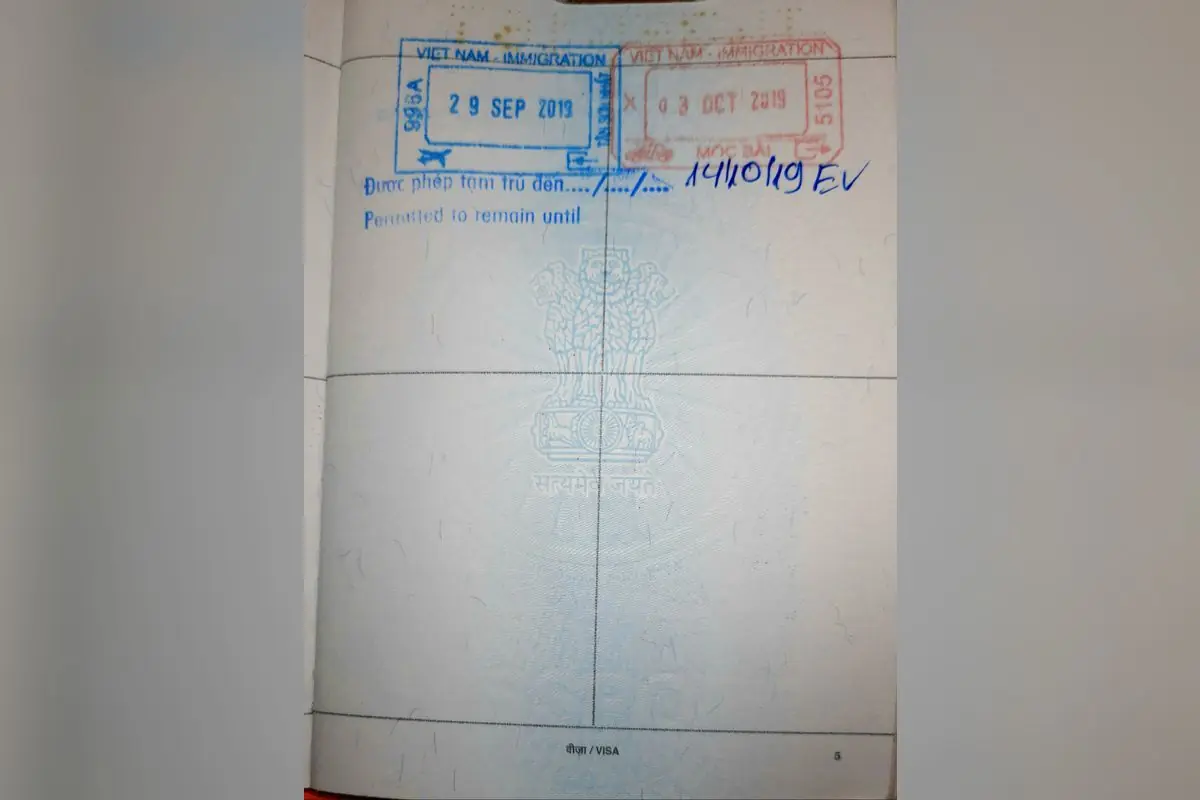
With a 45-day visa exemption, the arrival date counts toward the permitted stay.
A 45-day exemption does not mean you can spend 45 nights in Vietnam and then stay one additional day to reach the airport.
Pay special attention to flights leaving shortly after midnight.
A flight departing at 12:30 AM the next day has a different departure date from one leaving at 11:30 PM, even if you head to the airport on the same evening.
13. What happens if you overstay your Vietnam visa or visa exemption?
Foreign visitors who remain in Vietnam beyond their authorized stay may face administrative penalties and other immigration consequences.
There is no single penalty that applies to every overstay.
The length of the violation and the circumstances involved may affect how the authorities handle the case.
Once you notice that your permission to stay is about to expire, contact the immigration authorities before the deadline to ask about the correct procedure.
If you have already overstayed, seek guidance from the relevant authorities rather than assuming you can simply buy a flight ticket and resolve everything at the departure counter.
Be cautious of services promising guaranteed same-day extensions or the automatic removal of all overstay violations.
Can you extend a Vietnam e-visa online?
Travelers already in Vietnam should not assume that an existing e-visa can be extended simply by logging in and clicking a renewal button.
Vietnamese consular guidance indicates that some travelers who entered with an e-visa may be considered for a new visa when an eligible Vietnamese organization or individual provides the required invitation or sponsorship.
This is a separate procedure that depends on the circumstances of the application.
It is not an automatic e-visa extension.
Foreign nationals planning to live or work in Hai Phong or elsewhere in Vietnam should also distinguish tourist visas from employment-related visas, work permits, and temporary residence cards.
These documents have different eligibility rules and application procedures.
14. Common Vietnam visa mistakes that can disrupt your trip
Checking your country of residence instead of your nationality
An Indonesian citizen living in Australia and traveling on an Indonesian passport should check the rules applying to Indonesian citizens.
An Australian residence permit does not make that person an Australian citizen for visa exemption purposes.
Entering the wrong passport number
The number 0 and letter O, or number 1 and letter I, can be difficult to distinguish in a blurry passport photograph.
Even one incorrect character can cause your visa information to differ from the passport checked by the airline or immigration officers.
Cropping out the MRZ
Your passport photograph might clearly show your face and passport number but still be incomplete because the two machine-readable lines at the bottom have been cut off.
Photograph the entire information page, not just its upper half.
Choosing a single-entry visa for a trip that includes re-entry
Someone planning to visit Vietnam, travel onward to Cambodia, and then return to Vietnam should not choose a single-entry visa just to save USD 25.
The cost of changing flights or fixing an unsuitable visa can easily exceed that difference.
Booking a flight before the e-visa becomes valid
If your visa starts on December 10, a flight landing in Vietnam on December 9 could create an immigration problem.
Check the scheduled arrival date, not just your flight’s departure time.
Applying immediately before a public holiday
An application submitted just before a long holiday may not be processed according to an ordinary working-week schedule.
Allow more time for travel around Tet or other major Vietnamese public holidays.
Trusting guaranteed approval within a few hours
The government publishes a processing period measured in working days.
Promises of unusually fast or guaranteed approval should be treated carefully, particularly when the website is not an official government portal.
Avoid submitting passport photographs, dates of birth, and other personal details to a service whose identity you cannot verify.
15. Vietnam entry checklist for international travelers
You can use this checklist before departure or send it to friends, relatives, or business contacts visiting Vietnam.
| What to Check | Completed |
|---|---|
| Confirm nationality and passport type | ☐ |
| Check whether visa-free entry applies and for how many days | ☐ |
| Ensure sufficient passport validity, preferably at least six months | ☐ |
| Confirm the itinerary fits within the permitted stay | ☐ |
| Obtain an approved e-visa if required | ☐ |
| Check that the name, date of birth, and passport number are correct | ☐ |
| Confirm that e-visa validity dates cover the trip | ☐ |
| Verify that the entry checkpoint accepts e-visas | ☐ |
| Save and print the approved e-visa if applicable | ☐ |
| Keep accommodation details and onward travel documents available | ☐ |
It is also useful to keep your hotel’s address written in Vietnamese.
This can help when speaking with airport staff, immigration officers, or taxi drivers.
Imagine arriving at Noi Bai at 11:45 PM and discovering that your e-visa only becomes valid the following day. That single line of dates on a PDF can make the difference between a smooth arrival and a seriously disrupted journey.
Should you use visa-free entry or apply for a Vietnam e-visa?
If your nationality qualifies for visa-free entry and your trip fits within the permitted period, you generally do not need an e-visa. If you are not exempt, want to stay longer, or plan to leave and re-enter Vietnam, choose the appropriate e-visa, apply through the official government portal, and make sure it is approved before your flight.
Frequently asked questions
Which countries can enter Vietnam visa-free for 45 days?
Citizens of 24 countries are covered by two current 45-day visa exemption programs. The first group includes Germany, France, Italy, Spain, the United Kingdom, Russia, Japan, South Korea, Denmark, Sweden, Norway, and Finland. The second covers Belgium, Bulgaria, Croatia, Czechia, Hungary, Luxembourg, the Netherlands, Poland, Romania, Slovakia, Slovenia, and Switzerland, for tourism purposes.
What is the official Vietnam e-visa website, and how much does it cost?
The official application website is evisa.gov.vn. A single-entry e-visa costs USD 25, while a multiple-entry e-visa costs USD 50. Both can be issued with a maximum validity of 90 days. The government fee is non-refundable if the application is rejected.
How many days does a Vietnam e-visa take to process?
The published administrative processing period is up to three working days after the authorities receive a complete application and payment. Actual processing may take longer if corrections, additional checks, or holidays are involved. Applying approximately two to four weeks before departure is a sensible precaution when your travel plans are confirmed.
What passport and photo requirements apply to a Vietnam e-visa?
You need a recent 4 × 6 cm portrait photograph with a white background, facing forward without a hat or glasses, and a clear image of your passport information page including the MRZ. Your passport should preferably remain valid for at least six months from your arrival date. All personal details must match your passport and the official form's instructions.
Can I stay in Vietnam for 60 days if my nationality qualifies for the 45-day exemption?
You can consider applying for an e-visa with a suitable validity period before traveling. An approved e-visa may be valid for up to 90 days. Do not enter under the 45-day exemption and assume you can automatically extend your stay by another 15 days. If you are already in Vietnam, contact the immigration authorities to ask which procedure applies to your situation.