Find Cat Ba Island on the map and choose the best route from Hanoi, Hai Phong, or Ha Long
Cat Ba Island lies south of Ha Long Bay and belongs to Cat Hai Special Zone, Hai Phong City. Depending on where you start, you can reach the island from Hai Phong or cross the water from Tuan Chau in Quang Ninh.
 23 min read

The seafront road in central Cat Ba, on the south of the island, with boats packing the harbor and islands beyond.
Planning to visit Hanoi, Ha Long Bay, and Cat Ba Island on the same Northern Vietnam trip? Start by finding Cat Ba on the map: it lies east of Hai Phong City, just south of Ha Long Bay, and belongs to Hai Phong rather than Quang Ninh Province. Once you understand its location, choosing between the Dong Bai ferry, the Tuan Chau ferry, and other island transfers becomes much easier.
1. Where is Cat Ba Island in Vietnam?
Cat Ba Island is located in Hai Phong City, northeastern Vietnam, in the Gulf of Tonkin. It is the largest island in the Cat Ba Archipelago, situated south of Ha Long Bay and east of the Hai Phong mainland.
Hai Phong is a centrally governed municipality, not part of Quang Ninh Province. Although Cat Ba and Ha Long Bay are close together and frequently appear on the same travel itinerary, they belong to different administrative areas.
To understand the geography, picture Cat Ba in relation to three directions:
- West and southwest: Mainland Hai Phong, Cat Hai Island, and the road connections from the city toward the coast.
- North: Waters bordering Ha Long Bay in Quang Ninh Province.
- East and southeast: Limestone islands, sheltered waterways, beaches, and the scenic landscapes of Lan Ha Bay.
On Google Maps, search for Cat Ba Island to find the main island. Search for Lan Ha Bay and you will see the bay immediately to its east and southeast. Ha Long Bay lies farther north, within Quang Ninh Province.
There is one naming detail worth understanding before booking accommodation.
Cat Ba can refer to the main island or, more generally, the surrounding tourist destination. When a hotel advertises its location as Cat Ba, it often means the built-up central area on the southern side of the island, where most hotels, restaurants, and travel services are concentrated.
That is not the same as being anywhere within the wider archipelago.
Which province does Cat Ba Island belong to after Vietnam’s 2025 administrative changes?
Since July 1, 2025, Cat Ba has officially belonged to Cat Hai Special Zone (Đặc khu Cát Hải), Hai Phong City, Vietnam.
Vietnam introduced a new two-tier local government system on that date, removing the district administrative level. At the same time, the former Hai Duong Province merged with Hai Phong to form the expanded Hai Phong City.
The former Cat Hai District was reorganized into Cat Hai Special Zone, an administrative unit at the commune-equivalent level.
The new special zone was formed from the former Cat Hai and Cat Ba townships and ten communes: Dong Bai, Hoang Chau, Nghia Lo, Van Phong, Gia Luan, Hien Hao, Phu Long, Tran Chau, Viet Hai, and Xuan Dam.
Following the reorganization, Hai Phong has 114 commune-level administrative units, including 45 wards, 67 communes, and two special zones: Cat Hai and Bach Long Vi.
The current administrative address for places on Cat Ba Island is therefore:
Cat Hai Special Zone, Hai Phong City, Vietnam.
You may still encounter older addresses such as:
Cat Ba Town, Cat Hai District, Hai Phong.
Those names were correct under the previous administrative system and remain common in hotel listings, travel guides, transport services, and everyday conversations.
The name "Cat Ba Town" is still widely used to describe the island’s central urban and tourist area. It does not mean that the island has moved or changed its geographical location.
For international visitors, it comes down to this: Cat Ba has always been associated with Hai Phong, not Quang Ninh, and its current official administrative designation is Cat Hai Special Zone.
2. Are Cat Hai Island and Cat Ba Island the same place?
No. Cat Hai Island and Cat Ba Island are two different islands, even though both belong to Cat Hai Special Zone.
This distinction matters more than it might seem when arranging transportation.
Cat Hai Island: the gateway from mainland Hai Phong
Cat Hai Island is closer to the mainland.
It is home to Lach Huyen Port, Dong Bai Ferry Terminal, and the Cat Hai cable car station.
The Tan Vu-Lach Huyen Bridge connects mainland Hai Phong directly to Cat Hai Island, allowing cars, buses, and motorcycles to reach the island by road.
However, this bridge does not continue all the way to Cat Ba Island.
Cat Ba Island: the main tourist destination
Cat Ba Island lies farther east, across a stretch of water from Cat Hai.
This is where you will find the central tourist area, Cat Co beaches, Cat Ba National Park, and many of the departure points for trips into Lan Ha Bay.
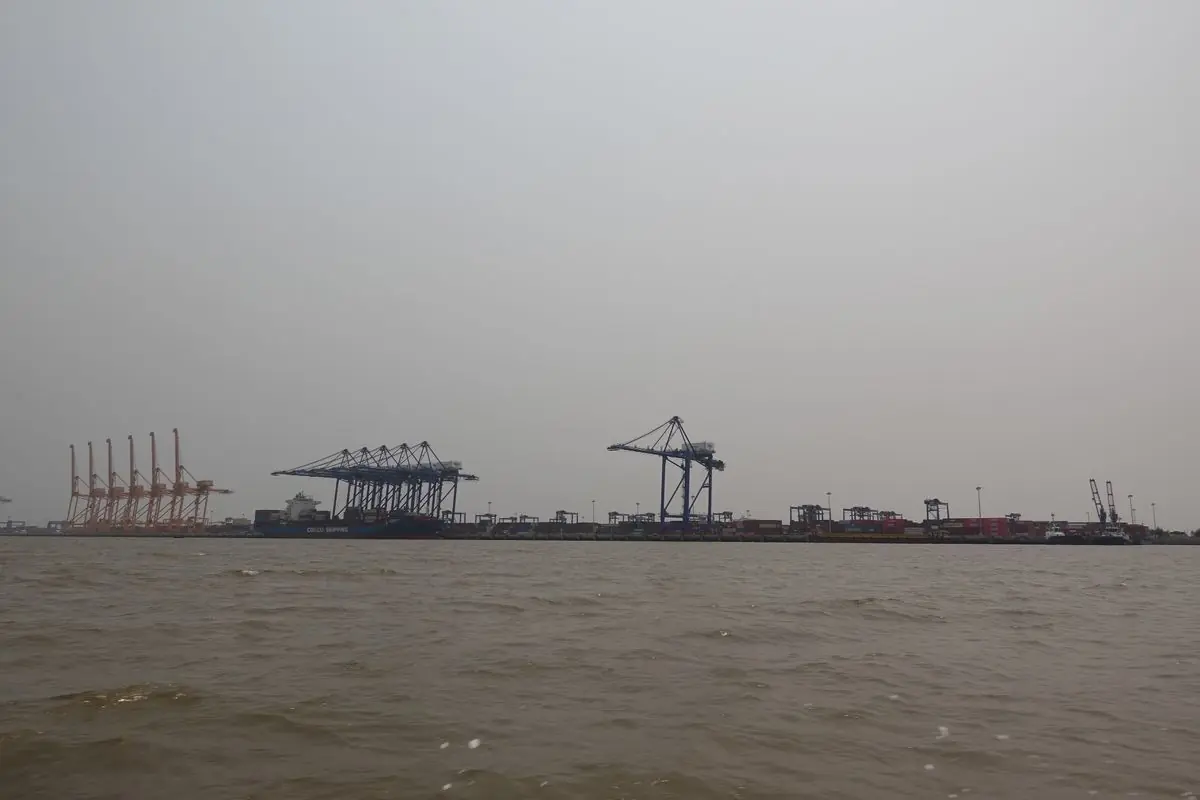
To reach Cat Ba from Cat Hai, travelers must cross the water using an available ferry, cable car, or another suitable transport connection.
For example, if your driver drops you at Dong Bai Ferry Terminal, you are still on Cat Hai Island. You have not yet reached Cat Ba.
You must cross to Cai Vieng Ferry Terminal on Cat Ba and then continue by road toward the central tourist area.
The same applies to the cable car. Arriving at the Cat Hai cable car station is not the end of your journey. The cable car takes passengers to Phu Long on Cat Ba Island, with another road transfer needed to reach most hotels.
3. What is the Cat Ba Archipelago?
The Cat Ba Archipelago consists of 367 islands and islets. Cat Ba is the largest island in the group.
Many of the smaller islands are uninhabited limestone formations rising directly from the sea.
Limestone cliffs, caves, forested hills, narrow channels, and sheltered bays give the archipelago its distinctive scenery.
For travel planning, it helps to divide the area into four main parts.
Cat Ba Island: the main island with hotels and roads
Cat Ba Island is the largest and most developed island in the archipelago.
Its main urban area sits along the southern coast, facing the sea.
Around the central waterfront and 1 Thang 4 Street, you will find many hotels, restaurants, shops, tour offices, and transport services.

Roads extend northward through the island, connecting the central area with Phu Long, Gia Luan, and the forested interior.
Although the island may look relatively compact on a map, some roads pass through hilly terrain with frequent bends.
A destination 20 km away may take longer to reach than a similarly distant place along a flat city road.
Lan Ha Bay: the scenic bay beside Cat Ba
Lan Ha Bay lies immediately east and southeast of Cat Ba Island, adjoining the southern part of Ha Long Bay.
It is one of the most popular places to explore from Cat Ba.
The bay contains limestone formations, sheltered waters, small sandy beaches, and channels between islands.

Popular experiences include boat cruises, kayaking, swimming, and visiting fishing communities.
Places frequently included in Lan Ha Bay itineraries include the Ba Trai Dao area, Cai Beo fishing village, and Viet Hai village.
Many excursions depart from the Ben Beo area or other designated tourist ports, depending on the operator and itinerary.
When booking accommodation, keep in mind that staying on Cat Ba Island does not mean staying in the middle of Lan Ha Bay.
Most hotels are on land. To explore the bay’s islands and waterways, you will usually need a separate boat trip.
Cat Ba National Park: the forested interior
Cat Ba National Park covers part of the main island’s mountainous interior.
It is not a separate island.
The park is known for its limestone forests, caves, natural habitats, and walking trails.
Commonly visited sites include Trung Trang Cave, the Kim Giao forest, and the trekking route to Ngu Lam Peak.
Visiting the national park is quite different from exploring Lan Ha Bay.
For the park, you travel inland by road before starting your walk. For Lan Ha Bay, the main activity usually begins at a boat departure point.
Cat Ba is therefore a good destination for travelers who want both coastal scenery and forest walks within the same trip.
Smaller islands and surrounding waters
Not every island in the archipelago is accessible to independent visitors.
Many are steep limestone outcrops without public landing facilities. Others lie within protected areas or along regulated sightseeing routes.
This explains why an island may appear close to your hotel on Google Maps but have no obvious road, ferry, or public boat connection.
Before planning to visit a smaller island, check whether boats are permitted to land there and which tour route serves it.
Distance alone is not enough to determine accessibility.
4. Is Cat Ba Island part of Ha Long Bay?
Cat Ba is not part of Ha Long City or Quang Ninh Province.
Ha Long Bay belongs to Quang Ninh Province, while Cat Ba Archipelago and Lan Ha Bay belong to Hai Phong City.
The two coastal areas are adjacent and share similar limestone landscapes.
This geographical connection explains why international travel itineraries often mention Ha Long Bay, Lan Ha Bay, and Cat Ba Island together.
On September 16, 2023, UNESCO recognized Ha Long Bay - Cat Ba Archipelago as a World Natural Heritage Site.
It became Vietnam’s first interprovincial natural World Heritage property, spanning parts of Quang Ninh and Hai Phong.
Earlier, in 2004, the Cat Ba Archipelago had already been designated a UNESCO World Biosphere Reserve.
These designations recognize the connected natural environment of the area. They do not mean that Ha Long Bay and Cat Ba are one administrative destination or that all tourist boats follow the same routes.
For example, a cruise advertised as a "Ha Long Bay cruise" may depart from Tuan Chau or another port in the Ha Long area.
A "Lan Ha Bay cruise" may depart from Cat Ba or another nearby port, depending on the operator.
Some itineraries include waters in both areas.
The most important information to check is where your cruise starts and where it finishes.
A traveler staying on Cat Ba might book a cruise that requires boarding somewhere else. Likewise, a cruise passing near Cat Ba may begin on the Quang Ninh side.
Before booking a hotel for the night before your cruise, confirm the actual departure terminal.
The bay name in the tour title does not always tell you where you need to be in the morning.
5. How far is Cat Ba from Hanoi, Hai Phong, and Ha Long?
Distances to Cat Ba are best understood as travel distances rather than straight lines on a map.
Because the journey involves crossing water, the total time depends on the departure point, transport service, sea crossing, and onward transfer to your hotel.
The table below gives approximate distances to central Cat Ba, unless another destination is specified.
| Starting point | Approximate distance | Estimated travel time |
|---|---|---|
| Hoan Kiem Lake, Hanoi | 150 km | Around 3-3.5 hours on an integrated bus service |
| Hai Phong Opera House | 50 km | Allow roughly 1.5-2.5 hours |
| Bai Chay, Ha Long | Around 80 km on routes via Hai Phong | Often 2.5-4 hours or longer, depending on the route |
| Cat Bi International Airport | 25 km to Dong Bai Ferry Terminal | Around 35-50 minutes to the terminal |
| Cai Vieng Ferry Terminal | 20-25 km to central Cat Ba | Around 35-45 minutes by road |
| Gia Luan Ferry Terminal | 21 km to central Cat Ba | Around 35-45 minutes by road |
| Phu Long Cable Car Station | 20-25 km to central Cat Ba | Around 35-45 minutes by road |
These distances are rounded estimates based on common routes. Actual times depend on traffic, the precise pick-up and drop-off points, and the transport service used. Ferry waiting time is not included in the road estimates.
How far is Cat Ba Island from Hanoi?
Cat Ba is approximately 150 km from the Hoan Kiem Lake area of central Hanoi via the common route through Hai Phong.
The journey usually follows the Hanoi-Hai Phong Expressway, continues across the Tan Vu-Lach Huyen Bridge, and then includes a sea crossing to Cat Ba.
Integrated bus operators commonly advertise a total travel time of around 3-3.5 hours.
For example, Cat Ba Express runs Hanoi departures at 6:00 AM, 7:45 AM, 10:45 AM, and 2:00 PM, with an estimated journey time of about 3 hours and 15 minutes.
That is the operator’s scheduled duration, not a guarantee that every journey will arrive at exactly the advertised time.
Another detail worth checking is how the sea crossing works.
Some bus operators use a combination of road transport and speedboats or cable cars rather than taking the same bus across on a ferry.
Passengers may need to change vehicles along the way.
With an integrated Hanoi-Cat Ba ticket, confirm whether the fare covers all transfers and whether the final drop-off point is in central Cat Ba.
For travelers visiting Hanoi before heading to the coast, going directly to Cat Ba is often the simplest arrangement.
You do not need to spend a night in central Hai Phong just to change transportation unless you want to explore the city.
How far is Cat Ba from Hai Phong City?
From Hai Phong Opera House to central Cat Ba, the commonly used route covers approximately 50 km.
Travelers head east toward Dinh Vu, cross the Tan Vu-Lach Huyen Bridge, and arrive on Cat Hai Island.
From there, they can take the Dong Bai-Cai Vieng ferry or the Cat Hai-Phu Long cable car, depending on their transport arrangements.
After arriving on Cat Ba Island, another road journey takes them to the central tourist area.
For visitors staying in downtown Hai Phong without a private vehicle, a speedboat from Ben Binh may be worth considering.
But 50 km does not translate directly into an ordinary city driving time.
You must account for the water crossing and any waiting or transfer involved.
How far is Cat Ba from Ha Long Bay?
The distance depends on which route you take.
From Bai Chay in Ha Long to central Cat Ba, a road itinerary looping through the Hai Phong side may be estimated at around 80 km on some route references. The actual distance varies with the starting point, bridge crossings, and ferry terminal.
However, traveling around via Hai Phong is not your only option.
You can travel from Bai Chay to Tuan Chau Island, board the ferry to Gia Luan on northern Cat Ba, and continue approximately 21 km by road to the central area.
The Tuan Chau-Gia Luan ferry crosses the waters between Quang Ninh and Hai Phong.
The crossing usually takes around 45-50 minutes, excluding waiting and boarding time.
This is a useful option for travelers who have just finished exploring Ha Long Bay and want to continue to Cat Ba without returning to mainland Hai Phong.
The Tuan Chau ferry, however, operates according to scheduled departures, and the timetable varies by season.
Check the latest schedule before leaving your hotel in Ha Long.
How do you get from Cat Bi Airport to Cat Ba?
Cat Bi International Airport is located on mainland Hai Phong, not on Cat Ba Island.
The airport is approximately 25 km from Dong Bai Ferry Terminal.
From the terminal, travelers still need to cross the water and continue by road to their accommodation.
This matters if you are flying into Hai Phong from Ho Chi Minh City, Da Nang, or another destination.
Afternoon and evening arrivals need to match the last available ferry or other island transfer, so check it before booking accommodation on Cat Ba for that night.
For example, a flight scheduled to land at 5:00 PM does not mean you will be standing at the ferry terminal at 5:00 PM.
You still need time to collect your luggage, leave the airport, and travel to the departure point.
A delayed flight may change the plan entirely.
6. What are the main ways to reach Cat Ba Island?
There are four main approaches to Cat Ba for tourists.
Loading map…
- Central Cat Ba: hotels, restaurants, tourist piers
- Dong Bai Ferry Terminal: Cat Hai Island, ferry to Cai Vieng
- Cai Vieng Ferry Terminal: Cat Ba Island, 20-25 km from the center
- Phu Long Cable Car Station: cable car from Cat Hai, 20-25 km from the center
- Gia Luan Ferry Terminal: northern Cat Ba, about 21 km from the center
- Tuan Chau Ferry Terminal: Quang Ninh, ferry to Gia Luan
- Ben Binh: near central Hai Phong, speedboats
The right one depends on whether you are traveling from Hanoi, Hai Phong, or Ha Long, and whether you are bringing a vehicle.
Dong Bai-Cai Vieng ferry: the main route from Hai Phong
This is the familiar ferry crossing for travelers using cars, motorcycles, and many road transport services through Cat Hai Island.
The journey follows this sequence:
Hai Phong → Tan Vu-Lach Huyen Bridge → Dong Bai Ferry Terminal → Cai Vieng Ferry Terminal → Central Cat Ba.
The ferry carries passengers and vehicles, with the crossing generally taking around 20-30 minutes.
The operating schedule for September 1 through December 31, 2026 runs from 5:00 AM to 6:00 PM.
Departures are generally spaced around 30-40 minutes apart. Operations may be extended until 7:00 PM depending on conditions, but travelers should not assume that an evening extension will be available.
The 2026 ferry fares include:
| Passenger or vehicle | Reference fare in 2026 |
|---|---|
| Foot passenger | VND 10,000 per person, one way |
| Motorcycle | VND 45,000 per motorcycle, one way |
| Car with fewer than 9 seats | VND 190,000 per vehicle, one way |
Check the current ticket conditions, including any separate passenger charges or vehicle-specific rules, before traveling.
Tuan Chau-Gia Luan ferry: the route from Ha Long
Tuan Chau Ferry Terminal is in Quang Ninh Province, while Gia Luan Ferry Terminal is on northern Cat Ba Island in Hai Phong.
This is particularly useful for travelers moving between Ha Long Bay and Cat Ba.
The crossing generally takes about 45-50 minutes.
Once you arrive at Gia Luan, you still have approximately 21 km of road travel to reach central Cat Ba.
The 2026 low-season timetable lists departures from Tuan Chau at 7:30 AM, 11:30 AM, and 3:00 PM, and departures from Gia Luan at 9:00 AM, 1:00 PM, and 4:00 PM.
These times are seasonal references rather than a fixed year-round schedule.
Weather, passenger demand, and operating arrangements may affect departures.
If you have a flight, train, or long-distance bus connection afterward, avoid relying entirely on an old ferry timetable.
The ferry also does not drop you directly at the main Cat Ba hotel area.
Unless your transport ticket includes the onward transfer, you will need to arrange a vehicle from Gia Luan to your accommodation.
Cat Hai-Phu Long cable car: a crossing without taking a vehicle
The Cat Hai-Phu Long cable car is operated by Sun World.
It connects Cat Hai Island with the Phu Long area of Cat Ba Island.

The line is approximately 3,955 meters long, and the cable car journey takes around 10-15 minutes.
The cable car carries passengers, not private motorcycles or cars.
After arriving at Phu Long Station, you need to continue to central Cat Ba by bus, electric vehicle, or another suitable transport service.
Sun World’s 2026 adult one-way ticket costs VND 70,000, while children under one meter travel free.
The updated operating timetable took effect on October 19, 2026. Check the applicable operating days and departure hours before choosing this route.
The cable car works well for travelers without vehicles, particularly those using integrated bus services that provide onward connections.
Anyone planning to drive their own car around Cat Ba needs a vehicle-carrying ferry; the cable car is not a substitute.
Speedboat from Ben Binh: a convenient option from central Hai Phong
Ben Binh is located close to downtown Hai Phong and is a familiar departure point for speedboat services to Cat Ba.
Speedboats on the Ben Binh-Cat Ba route generally take around 45-60 minutes, depending on the vessel and arrival point.
Some operators or booking services refer to Ben Beo or another Cat Ba pier as the arrival terminal.
It is worth checking the exact destination because not every pier is equally close to your hotel.
For travelers already staying in central Hai Phong, this can be an attractive alternative to traveling all the way to Cat Hai Island for the ferry.
You can avoid some of the road transfers, particularly if you are traveling without a car or motorcycle.
Schedules vary by operator, season, and weather.
Before buying a ticket, confirm the company, departure time, arrival pier, luggage rules, and any onward transport you may need.
7. Should you visit Cat Ba before or after Ha Long Bay?
Cat Ba’s location makes it relatively easy to combine with Hanoi, Hai Phong, and Ha Long Bay.
However, the best order depends on where you arrive, what you want to see, and where you are going afterward.
Option 1: Hanoi → Cat Ba → Hanoi
This is one of the simplest routes for travelers who want a coastal escape from Hanoi.
You can book an integrated bus service from Hanoi directly to central Cat Ba.
That removes much of the work involved in coordinating individual road, ferry, and island transfer tickets.
For international visitors unfamiliar with local transport arrangements, having one operator manage the journey can be especially convenient.
A practical two-night schedule: travel and settle in on the first day, explore Lan Ha Bay or Cat Ba National Park on the second, and return to Hanoi on the third.
A day trip from Hanoi is possible with an organized service, but a significant amount of time will be spent traveling.
For anyone who wants to enjoy Cat Ba rather than simply tick it off the itinerary, staying at least one night makes more sense.
Option 2: Hanoi → Ha Long Bay → Cat Ba
This route works well if you want to experience both Ha Long Bay and Cat Ba.
Travel from Hanoi to Ha Long first, explore the bay, and then transfer to Tuan Chau for the ferry to Gia Luan.
The advantage is that you may avoid traveling back through the Hai Phong mainland just to reach Cat Ba.
However, the ferry schedule must fit the end of your Ha Long activities.
Suppose your overnight cruise is scheduled to return to port around midday and you hope to catch an afternoon ferry.
Before booking, confirm the cruise’s actual disembarkation arrangements, the time needed to collect luggage, and the transfer to Tuan Chau Ferry Terminal.
A cruise advertised as finishing at noon does not necessarily mean you will be in a taxi at exactly noon.
This is particularly important if you are using separate companies for the cruise and ferry.
Option 3: Hanoi → Cat Ba → Ha Long Bay
The reverse order also works.
You can begin with a stay on Cat Ba, explore Lan Ha Bay, and then travel to Ha Long via Gia Luan and Tuan Chau.
This may suit travelers who prefer to start their coastal trip with a relaxed island stay before moving on to a larger cruise or other activities in Ha Long.
The main thing to watch is the connection between the ferry and your onward transportation.
Avoid scheduling a flight or long-distance bus too close to your expected ferry arrival.
Ferries operate as separate services and may be affected by sea conditions.
When timing matters, leaving a reasonable buffer or spending an additional night in Ha Long or Hai Phong is usually more comfortable than trying to connect everything down to the last minute.
Option 4: fly into Hai Phong and visit Cat Ba first
If you arrive through Cat Bi International Airport, Cat Ba can be the first coastal stop on your Northern Vietnam itinerary.
From the airport, travel toward Dong Bai Ferry Terminal or the departure point arranged by your transport operator.
After the sea crossing, continue to your hotel on Cat Ba.
For flights arriving late in the day, an overnight stay in Hai Phong may be more practical than trying to catch the final island transfer.
Hai Phong’s food scene and city attractions belong in a separate part of the itinerary.
A visit to downtown Hai Phong is not a compulsory stop on every route to Cat Ba.
8. Where should you stay on Cat Ba Island?
The best area depends on whether you want easy access to restaurants, beaches, boat tours, or quieter natural surroundings.
For most first-time visitors, central Cat Ba is the easiest place to stay.
This is where you will find a wide range of hotels, restaurants, travel agencies, and transportation services.
It is also convenient for arranging Lan Ha Bay excursions and getting around the island.
If swimming is a priority, look for accommodation around the Cat Co beaches or the roads leading to them.
Check the actual walking route to the beach before booking. A hotel advertised with a sea view is not necessarily next to a swimmable beach.
Travelers after a quieter stay might look at accommodation around Xuan Dam or other areas farther from the central waterfront.
Viet Hai village is another possibility for travelers interested in nature and a slower pace, but access is different from that of hotels in the main town area.
Travel to Viet Hai may involve a boat journey or a route through the island’s interior. It is worth understanding those arrangements before reserving a room.
If this is your first visit, you have only two nights, and you plan to take a Lan Ha Bay cruise, central Cat Ba will usually be the easiest base.
9. What can you do on Cat Ba Island, and how long should you stay?
Cat Ba has more to offer than beaches.
One of its advantages is that you can spend one day among limestone islands and sheltered bays, another exploring forests and caves, and return to a lively coastal area in the evening.
Popular activities include cruising Lan Ha Bay, kayaking, swimming at Cat Co beaches, walking in Cat Ba National Park, visiting Trung Trang Cave, and exploring Viet Hai village.
These places are not all clustered together.
The Cat Co beaches are relatively close to the central tourist area.
Ben Beo provides access to many sightseeing routes on the water.
Cat Ba National Park lies farther inland and requires road transport.
Viet Hai is best approached as a separate excursion or as part of a suitable boat-based itinerary rather than squeezed into a short gap in the day.
Is one night on Cat Ba enough?
For 2 days and 1 night, choose one main activity.
A Lan Ha Bay boat trip is a popular option, leaving the remaining time for travel, hotel check-in, meals, and a little time around the waterfront.
Trying to combine the national park, several beaches, a full bay cruise, and a village visit in that timeframe will feel rushed.
Is two nights better?
With 3 days and 2 nights, you have more flexibility.
You can spend one day on the water, another exploring the interior of the island, and still have time to enjoy the beaches or rest.
For travelers combining Ha Long Bay and Cat Ba, the transfer between the two destinations should count as a genuine part of the itinerary.
The bays are adjacent, but changing hotels, reaching the ferry terminal, waiting for a sailing, and traveling from Gia Luan into central Cat Ba can still take a substantial portion of the day.
10. Three things to confirm before booking your trip to Cat Ba
Once you know where Cat Ba is, three practical details can still make a big difference to your journey.
Where exactly will your transport drop you off?
Cai Vieng Ferry Terminal, Phu Long Cable Car Station, and Gia Luan Ferry Terminal are not the same as central Cat Ba.
All three require additional road travel to reach most hotels in the central area.
A ticket that only takes you to one of these locations may not include the final transfer.
A written confirmation with your hotel name and map location can prevent confusion on arrival.
Does the ticket include the sea crossing?
An integrated bus ticket, ferry ticket, cable car ticket, and speedboat ticket are different products.
Some bus companies include a speedboat crossing and onward transportation in one fare.
Others sell the different legs separately.
For travelers bringing a private vehicle, ferry charges may depend on the vehicle category and applicable passenger rules.
As an example, Cat Ba Express advertised 2026 fares starting from VND 300,000 per passenger for its Hanoi-Cat Ba service combining bus and speedboat transport.
Its bus-and-cable-car option was advertised from VND 350,000 per passenger.
These are Cat Ba Express prices, not standard fares for every operator.
When comparing tickets, look at the actual pick-up location, drop-off point, and included transfers.
A cheaper ticket that leaves you at a ferry terminal or cable car station might not be cheaper once you add the remaining transportation.
Will you arrive before the last crossing of the day?
This is particularly important when arriving from Cat Bi Airport, Ha Long, or another distant destination.
The Dong Bai ferry, Tuan Chau ferry, and Cat Hai cable car do not share one timetable.
You cannot assume that a cable car is operating simply because the Dong Bai ferry is still running, or that ferries from Tuan Chau depart as frequently as those from Dong Bai.
Before departure, send your hotel name and Google Maps location to your transport company.
Ask them to confirm the final drop-off point, sea-crossing method, and departure time in writing.
That small step is much easier than arriving at a terminal with your luggage and discovering that the remaining journey has not been arranged.
Conclusion: where should Cat Ba fit into your northern Vietnam trip?
If you are coming from Hanoi and mainly want an island holiday, the direct route through Hai Phong is usually the simplest choice. If you are already staying in Ha Long, check the Tuan Chau-Gia Luan ferry before taking a longer road route; if you are flying into Cat Bi Airport, match your arrival time with the available sea crossings before confirming a hotel on Cat Ba.
Frequently asked questions
Where is Cat Ba Island, and which province is it in?
Cat Ba is the largest island in the Cat Ba Archipelago, located south of Ha Long Bay in the Gulf of Tonkin, northeastern Vietnam. Administratively, it belongs to Cat Hai Special Zone, Hai Phong City, not Quang Ninh Province.
Is Cat Ba Island the same as Ha Long Bay?
No. Ha Long Bay belongs to Quang Ninh Province, while Cat Ba Island and Lan Ha Bay belong to Hai Phong. However, the two areas are adjacent and form the UNESCO-listed Ha Long Bay - Cat Ba Archipelago World Natural Heritage Site, recognized in 2023.
How far is Cat Ba Island from Hanoi, and how long does it take?
Cat Ba is approximately 150 km from the Hoan Kiem Lake area of central Hanoi using the common route through Hai Phong. Integrated bus services typically advertise a journey of around 3-3.5 hours, although traffic, ferry waiting times, and transfers may make the trip longer.
How many islands are in the Cat Ba Archipelago?
The Cat Ba Archipelago contains 367 islands and islets. Cat Ba is the largest island and home to the main tourist area, roads, and Cat Ba National Park.
Do you have to take a ferry to reach Cat Ba Island?
No. Besides the Dong Bai-Cai Vieng and Tuan Chau-Gia Luan ferries, travelers can use the Cat Hai-Phu Long cable car or suitable speedboat services. If you want to bring a private car or motorcycle onto Cat Ba Island, you need a ferry service that accepts your type of vehicle.