Living in Hai Phong: 12 things to know before you move
Hai Phong can be a comfortable place to settle for the long term, but pick the neighborhood around your commute before you pick the apartment. If your job is in an industrial park, the bridge or container-truck route between home and work decides how much of your day is left.
 16 min read
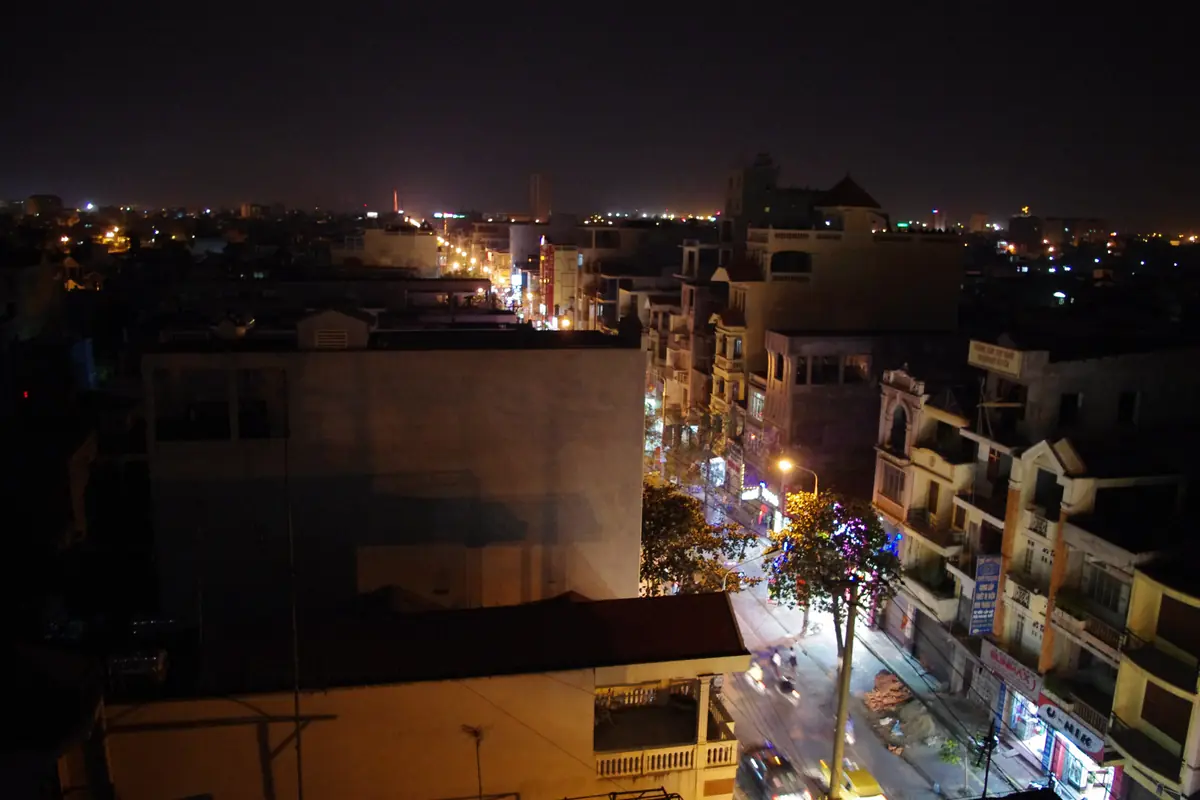
From a seventh floor, yellow street lamps and shop signs light up one long street while the tube-house rooftops fade into darkness behind.
There’s a strange thing about living in Hai Phong: two people can work in the same city yet spend completely different amounts of time commuting, simply because they live on opposite sides of a bridge. Anyone moving here for work, especially to an industrial park, should start with their workplace location before searching for an apartment, then work out rent, living costs, and residence paperwork.
1. First, understand how big Hai Phong actually is
Since July 1, 2025, Hai Phong has included the territory of the former Hai Duong Province following an administrative merger. That means an office or factory listed as being in "Hai Phong" could be a long way from the old port-city center.
Central Hai Phong has the Opera House, Tam Bac Lake, established residential neighborhoods, and many of the services that international residents tend to use. Areas around Thuy Nguyen, Hai An, and An Duong are home to industrial parks, port facilities, and newer residential developments.
Further west, the former Hai Duong area has its own urban centers and industrial zones, some a considerable distance from downtown Hai Phong.
Foreign professionals relocating for manufacturing, logistics, engineering, or management jobs should get the exact address of their workplace before looking for a home, including the industrial park and the entrance they’ll use each day. A company’s registered office may not be where you actually work.
Administrative addresses also changed after the 2025 restructuring. Many older property listings still use former district names, while official addresses now use the new ward and commune names.
An address on a rental listing that looks different from the one on your employment documents may simply reflect the administrative changes. Still, have the landlord or your company’s HR team confirm the current address before signing anything.
2. Choose your neighborhood around your commute
An apartment might look close to your factory on Google Maps, but the actual journey could involve a bridge, a busy truck route, or an intersection that becomes congested during shift changes.
Shortlist two or three residential areas along your commuting route first, then compare the apartments available within them.
If you’re working at VSIP Hai Phong, begin by exploring residential developments around Thuy Nguyen, north of the Cam River. The industrial park covers a substantial area, so check the exact factory entrance rather than assuming every VSIP facility belongs to the same ward or has the same journey time.
Staff at Trang Due Industrial Park can look at neighborhoods around the former An Duong area and roads that connect conveniently to your workplace.
If your job is at Dinh Vu or DEEP C Hai Phong, residential areas around Hai An, Dong Hai, and developments with good access to the port roads may be more convenient.
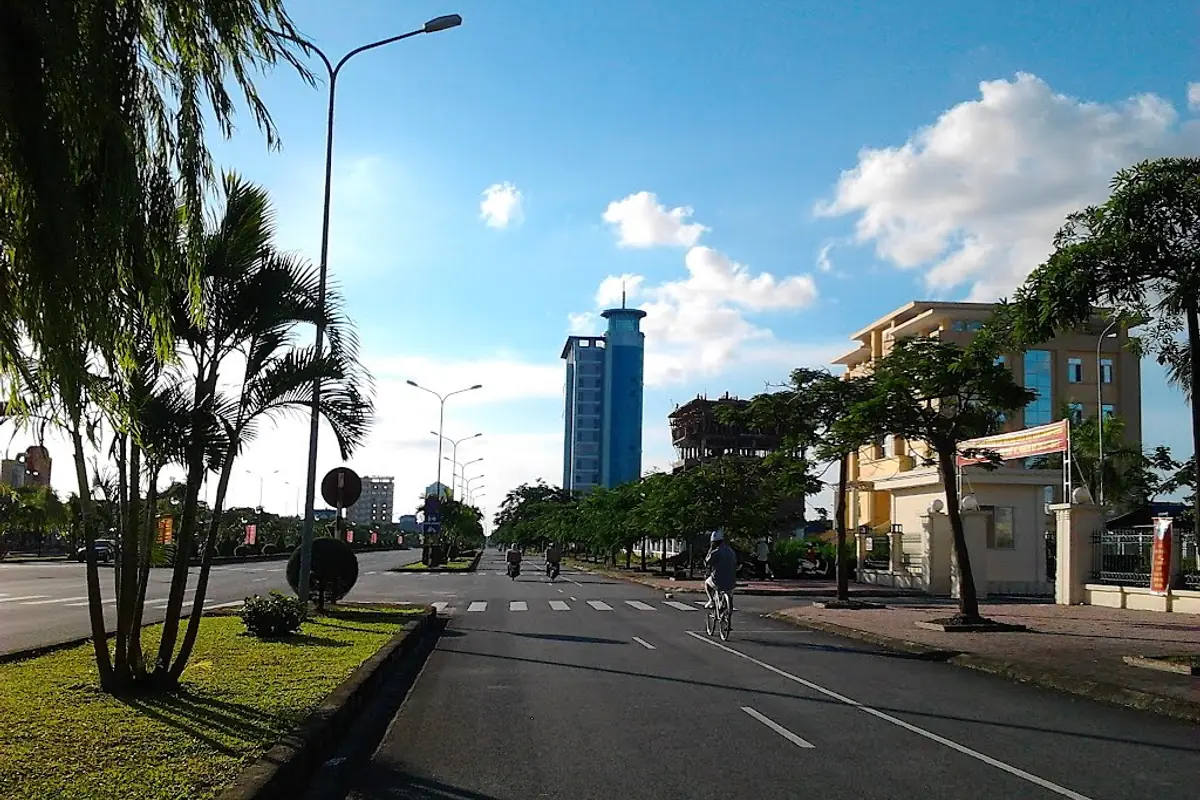
People based at Dai An, Tan Truong, Phuc Dien, or other factories in the former Hai Duong area are better off living near that part of the city. Renting an apartment in downtown Hai Phong and commuting west every day can become exhausting.
Test the route at your actual working hours, since mid-afternoon traffic may be much lighter than at shift change.
Also, ask whether your employer provides a company shuttle. Some industrial employers arrange transport for staff, which can significantly expand your housing options.
3. Is it better to live downtown or near an industrial park?
The central neighborhoods may suit you better if you live alone, regularly meet clients, enjoy eating out, and want somewhere to walk after work.
Areas around Le Chan, Hong Bang, Gia Vien, and An Bien have established shopping streets, cafés, supermarkets, restaurants, gyms, and other everyday conveniences. The streets around Tam Bac Lake and the old city center are particularly pleasant when you want to get out without planning a full evening.
Developments such as Vinhomes Imperia, Vinhomes Marina, and the Van Cao area are also worth exploring. They offer different combinations of modern apartments, restaurants, residential facilities, and access to surrounding neighborhoods.
But if you start work early, finish late, or frequently need to visit the factory outside normal office hours, living closer to your workplace may be the more comfortable option.
You might have fewer restaurants within walking distance, but you’ll get back hours of personal time each week.
Families also have the school run to plan: check the journey from home to school and then to work. An apartment halfway between the two can beat one right next to the factory.
In the first few months, prioritize an easy commute. Once you know the city better, you can move to a different neighborhood when your rental agreement allows it.
4. When viewing an apartment, look beyond the furniture
Rental photographs usually show a home at its best: curtains open, floors polished, and every room freshly tidied.
Live there for a year, though, and what you notice is the leaking air conditioner, the weak shower, or the damp corner.
If possible, view the property during the day and visit the surrounding neighborhood again in the evening.
Daylight makes it easier to spot damp walls, leaks, poor ventilation, and problems with windows. An evening visit gives you a better sense of noise levels, security, and what the neighborhood feels like after dark.
Hai Phong experiences humid weather, heavy rain, and occasional storms, so look closely at ceilings, exterior walls, balconies, and drainage.
In a standalone house, ask who pays for repairs to plumbing, pumps, roofing, and electrical systems.
If you’re renting a serviced apartment, confirm exactly which services are included. Cleaning, laundry, bedding changes, and maintenance visits may be charged on top of the advertised monthly price.
When you move in, take photographs or a video of every room, including existing scratches or damage.
That footage is what you’ll point to when you move out and ask for your security deposit back.
5. Understand the rental agreement and your first month’s payment
There are several ways to find a home in Hai Phong: through a local property agent, directly from a landlord, or via a serviced-apartment operator.
Does your employer regularly recruit international staff? Ask the HR department whether they have recommended properties or agents who can communicate in English, Korean, Chinese, or Japanese.
Before paying a deposit, confirm that the person offering the property has the right to rent it out.
Ask for a contract in a language you understand. A bilingual Vietnamese-English agreement, or another suitable bilingual version, can help avoid misunderstandings later.
Make sure the contract clearly explains the monthly rent, lease duration, deposit, payment dates, renewal terms, rent increases, building fees, utilities, repair responsibilities, and the notice required to end the tenancy.
When an agent is involved, agree in advance who pays the commission, the tenant or the landlord.
Use a payment method that provides a record, keep copies of the contract and receipts, and document the inventory and electricity and water meter readings when you receive the keys.
6. What is the monthly cost of living in Hai Phong?
Rent is likely to be your largest regular expense, but it’s also the easiest to plan for once you’ve chosen a property.
The rest of your budget depends on whether you’re living alone or with family, how often you use air conditioning, your eating habits, and how you travel to work.
Serviced-apartment listings in Hai Phong in October 2026 included advertised rents of roughly VND 7-25 million per month.
Smaller studios and modest apartments tend to sit toward the lower end of that range, while larger, better-equipped units in premium developments can cost substantially more. These are asking prices on listings; the agreed rent may differ.
Your cost of living in Hai Phong is easier to estimate category by category:
| Expense | What to budget for |
|---|---|
| Housing | Monthly rent, initial deposit, and any management fees |
| Electricity and water | Metered consumption, billing method, and taxes or related charges |
| Internet and mobile | Home broadband, SIM, and mobile data |
| Food | Groceries, supermarkets, eating out, and deliveries |
| Transport | Company shuttle, taxis, ride-hailing, or personal vehicle |
| Healthcare | Insurance, outpatient visits, and costs not covered by direct billing |
| Family expenses | School fees, transport, and extracurricular activities |
Someone living alone can keep spending manageable by choosing a reasonably priced apartment and cooking at home.
International or bilingual schooling may become one of a family’s largest expenses and should be budgeted separately from everyday living costs.

When comparing apartments, ask how much you’ll actually pay each month, including every recurring fee, not just the rent.
7. How do electricity and water bills work in a rented home?
Utility billing is something to clarify before signing a lease, especially if you’re unfamiliar with how household electricity and water are charged in Vietnam.
Household electricity prices
The household electricity tariff is divided into consumption ranges.
The following rates are in Vietnamese dong per kilowatt-hour (kWh), excluding VAT:
| Monthly electricity consumption | Price (VND/kWh) |
|---|---|
| 0-50 kWh | 1,984 |
| 51-100 kWh | 2,050 |
| 101-200 kWh | 2,380 |
| 201-300 kWh | 2,998 |
| 301-400 kWh | 3,350 |
| 401 kWh and above | 3,460 |
The listed prepaid household-meter rate is VND 2,909/kWh, excluding VAT.
With progressive electricity pricing, consumption is charged within each applicable range. Using more than 400 kWh won’t push your entire bill to the highest rate.
Tenants in rented homes have their own billing rule.
Where the landlord provides the required information about the people living in the property, the electricity allocation can be calculated according to the number of occupants, with four people counted as one household equivalent.
The 12-month rental-contract threshold is relevant to circumstances in which a tenant can enter into a direct electricity supply contract. It isn’t a general requirement for household allowances based on occupancy.
When the landlord holds the electricity contract, ask to see the underlying utility bill and confirm how the cost is divided if multiple apartments share a meter.
Under the applicable rules, the landlord cannot collect more in total electricity charges from tenants than the amount shown on the electricity supplier’s bill.
Household water prices
For urban households served under Hai Phong Water Supply Company’s applicable tariff, water prices are calculated by monthly consumption per meter.
The published rates are:
| Monthly water consumption | Price (VND/m³) |
|---|---|
| Up to 10 m³ | 10,900 |
| Over 10-20 m³ | 13,500 |
| Over 20-30 m³ | 18,000 |
| Above 30 m³ | 21,500 |
These rates exclude VAT, drainage-service charges, and applicable environmental protection fees for domestic wastewater.
Properties in the former Hai Duong area or neighborhoods supplied by different water companies may follow other tariffs. Always check the actual supplier and bill for your address.
Apartment buildings may also add monthly management fees, parking charges, internet subscriptions, or housekeeping costs.
Ask the landlord to list these separately in the contract so you know what to expect at the end of each month.
8. Temporary residence in Hai Phong: who is responsible for declaring it?
Foreign nationals staying in Vietnam are subject to temporary residence declaration requirements, including for stays as short as one night.
For a rented home, the person directly managing or operating the accommodation is responsible for making the declaration. This may be the landlord, property manager, or an authorized representative.
The foreign tenant, in other words, may not have to complete the entire declaration process independently.
Vietnam has introduced a unified online system for foreign nationals’ temporary residence declarations at:
https://tbltkbtt.bocongan.gov.vn/
Proof of lawful accommodation is a separate matter.
Vietnamese citizens registering their residence can use a rental agreement to prove lawful accommodation. That agreement doesn’t have to be notarized or certified, and authorities may retrieve information already available in official databases rather than requesting duplicate paperwork.
However, Vietnamese citizen residence registration and foreign national temporary residence declaration are different legal procedures.
Your rental contract is useful evidence of where you live, but it does not replace the accommodation operator’s obligation to declare your stay.
9. Visas, work permits, and temporary residence cards: the basics
Moving to Hai Phong for work means keeping three permissions apart: entering Vietnam, working, and remaining in the country.
Vietnam’s electronic visa scheme has been available to citizens of all countries and territories under the policy introduced on August 15, 2023.
An e-visa can be valid for up to 90 days and may allow single or multiple entries.
The official application portal is now https://evisa.gov.vn, following the move away from the previous e-visa portal in November 2024.
Some nationalities benefit from a 45-day visa exemption.
The first group covers 12 countries, including Japan, South Korea, Germany, France, and the United Kingdom, for the period from March 15, 2025, to March 14, 2028.
From August 15, 2025, to August 14, 2028, a further 12 European countries, including Belgium, the Netherlands, Poland, and Switzerland, also get 45 days visa-free for tourism.
The United States, Australia, and China are not included in those two visa-exemption lists, although other entry arrangements may apply depending on the traveler’s circumstances.
Your sponsoring company will generally coordinate the necessary work authorization and residence documentation for longer employment assignments.
Work-related temporary residence cards in the LD1 and LD2 categories can be valid for up to two years and must expire at least 30 days before the holder’s passport expires.
Before starting work, ask your employer’s HR or legal team which documents apply to your position, who is responsible for each application, and what you need to prepare.
To confirm the legal position, consult your sponsoring company and Vietnam’s immigration or other competent authorities rather than relying solely on advice from a property agent.
10. Healthcare in Hai Phong: which hospitals should you know?
Save these contacts in your phone during your first week, before you or a family member needs one.
Viet Tiep Friendship Hospital
Public hospital, two locations
Viet Tiep Friendship Hospital is a major public hospital in Hai Phong, operating at two locations:
- Facility 1: No. 1 Nha Thuong Street, Le Chan Ward.
- Facility 2: Cai Tat Residential Area, An Hai Ward.
When booking an appointment, confirm which facility provides the specialist service you need.
Vinmec Hai Phong International General Hospital
Bui Vien Street, An Bien Ward
For private healthcare, Vinmec Hai Phong International General Hospital is located on Bui Vien Street, An Bien Ward.
Its contact number is 0225 7309 888.
Vinmec publishes information about international insurance and assistance partners, including International SOS, Fullerton Health, Prestige International, and Care of Asia.
However, a hospital’s relationship with an insurance provider doesn’t guarantee that every insurance policy will qualify for direct billing.
Green International Hospital
738 Nguyen Van Linh Street, An Bien Ward
Another option is Green International Hospital, at 738 Nguyen Van Linh Street, An Bien Ward.
The hospital advertises a 24-hour emergency service, with an emergency contact number of (0225) 3 786 333.
If you need a consultation in English, Korean, Chinese, or Japanese, contact the hospital beforehand to ask whether a suitable doctor or interpreter is available during your preferred appointment time.
For international insurance, confirm your insurer, outpatient and inpatient coverage, direct-billing arrangements, and the documents required.
In a serious emergency, call Vietnam’s emergency medical number, 115, and prioritize appropriate emergency care rather than choosing a hospital solely for language convenience.
11. Which international schools are available in Hai Phong?
Families relocating with children should research schools before committing to a long rental contract.
An apartment can seem ideal until you discover that the school run takes far longer than expected.
Singapore International School (SIS) Hai Phong
Vo Nguyen Giap Street, An Bien Ward
Singapore International School (SIS) Hai Phong was inaugurated on May 11, 2025.
The school is located in the former Le Chan district area, at Lot CCO/54-1B on Vo Nguyen Giap Street, now in An Bien Ward.
It offers educational pathways based on Singaporean and Cambridge international frameworks, alongside bilingual options depending on the grade level and program.
Vinschool Imperia
Vinhomes Imperia, Hong Bang Ward
For families interested in Vietnamese-English education within a planned residential community, Vinschool Imperia, in the Vinhomes Imperia development in Hong Bang Ward, is another school worth researching.
Check the current grades, available programs, language of instruction, admission requirements, and tuition directly with the school. Don’t assume every bilingual school delivers a fully international curriculum.
Shattuck-St. Mary's International School Vietnam
Hung Dao Ward
Another option is Shattuck-St. Mary’s International School Vietnam, in Hung Dao Ward.
The school was ordered to suspend enrollment in January 2026 due to licensing issues.
On May 29, 2026, Hai Phong authorities announced that the school had obtained permission for its establishment and educational operations. It also held an opening ceremony for the new school year in August 2026.
Before paying tuition, ask about the school’s current operating approval, curriculum, qualifications, teaching language, extra fees, transport, transfer policies, and support for children who don’t speak Vietnamese.
Parents unsure about a school’s authorization can verify its current status with the Hai Phong Department of Education and Training instead of relying on old news articles.
12. Getting around every day: do you need a motorbike?
A company shuttle, taxis, and ride-hailing apps cover the daily trips during your first months in Hai Phong.
If your employer runs a staff shuttle, it may be the simplest option for industrial-park workers. You’ll have a predictable schedule, avoid navigating unfamiliar roads, and perhaps get to know your colleagues along the way.
In the central urban areas, taxis and ride-hailing services are convenient for many everyday journeys.
Green SM, which operates electric taxi services, has a national contact number of 1555. Grab also provides transport services in Hai Phong, and its app allows users to check estimated fares before confirming a ride.
Foreign nationals who want to ride a motorbike need to make sure they hold a driving license legally recognized in Vietnam and valid for the vehicle category concerned.
An International Driving Permit (IDP) recognized under an applicable international agreement must be carried together with the corresponding national driving license. Both documents must be valid.
For South Korean visitors and residents, the bilateral agreement between Vietnam and South Korea provides for recognition of eligible IDPs for up to one year from the date of entry, subject to the agreement’s conditions and relevant vehicle categories.
Motorcycles above 50 cc require an appropriate valid license.
A foreign car license, a photograph of a driving permit, or an internationally marketed license document won’t let you ride a motorcycle legally in Vietnam.
If local traffic is new to you, spend your first few weeks in taxis or the company shuttle and watch how the roads and commutes work before deciding whether to rent or buy your own vehicle.
Settling into your first few weeks in Hai Phong
After collecting your keys, confirm your temporary residence has been declared, save a copy of your rental agreement, record your utility meter readings, and test the journey from home to work at your usual commuting time.
Then keep the contact details of your landlord, building manager, company HR team, nearby hospital, and someone who can help with translation if needed.
A Vietnamese SIM card, a suitable payment arrangement, and a ride-hailing app will also make everyday tasks much easier.
Hai Phong has a rhythm of its own: busy roads leading toward the ports, lively food streets after sunset, and quiet evenings around Tam Bac Lake.
A short commute leaves time after work to stop for a coffee, walk through the neighborhood, or find a small restaurant you hadn’t noticed before, instead of knowing the city only as the road between home and the factory.
Frequently asked questions
Should foreigners live downtown or near an industrial park in Hai Phong?
If you're working at a factory every day, living close to your workplace or company shuttle route is usually more practical. Downtown neighborhoods may be better for those who regularly meet clients, enjoy urban amenities, or need convenient access to schools. Check actual commuting routes before deciding.
Who is responsible for temporary residence declarations for foreigners in Hai Phong?
The person directly managing or operating the accommodation, or an authorized representative, is responsible for submitting the temporary residence declaration. Online declarations must be made as soon as the foreign guest arrives. Tenants should provide accurate information and ask for confirmation that the declaration has been completed.
Can landlords charge whatever they want for electricity and water?
Electricity billing must comply with applicable regulations, and landlords cannot collect more in total from tenants than the amount on the electricity supplier's bill where tenants do not contract directly with the supplier. Water charges depend on the supplier, meter arrangement, and related services. Ask for clear meter readings and billing terms in your rental agreement.
Are there English-speaking hospitals in Hai Phong that accept international insurance?
Vinmec Hai Phong publishes information about international insurance partners, while Green International Hospital is another private healthcare option. However, English-language services, interpreter availability, and direct insurance billing should always be confirmed before your appointment.
Can foreigners legally ride motorbikes while living in Hai Phong?
Yes, provided they meet Vietnam's licensing requirements and hold a valid driving license recognized for the type of motorcycle they intend to ride. A recognized IDP must be used together with the relevant national license. South Korean IDP holders should also check the specific provisions of the Vietnam-South Korea agreement.