Sapa weather month by month: what to pack before your trip
August receives an average of 426 mm of rain, while December gets just 49 mm. If you want comfortable walks and clear mountain views, check both the number of rainy days and evening temperatures before choosing your dates.
 23 min read
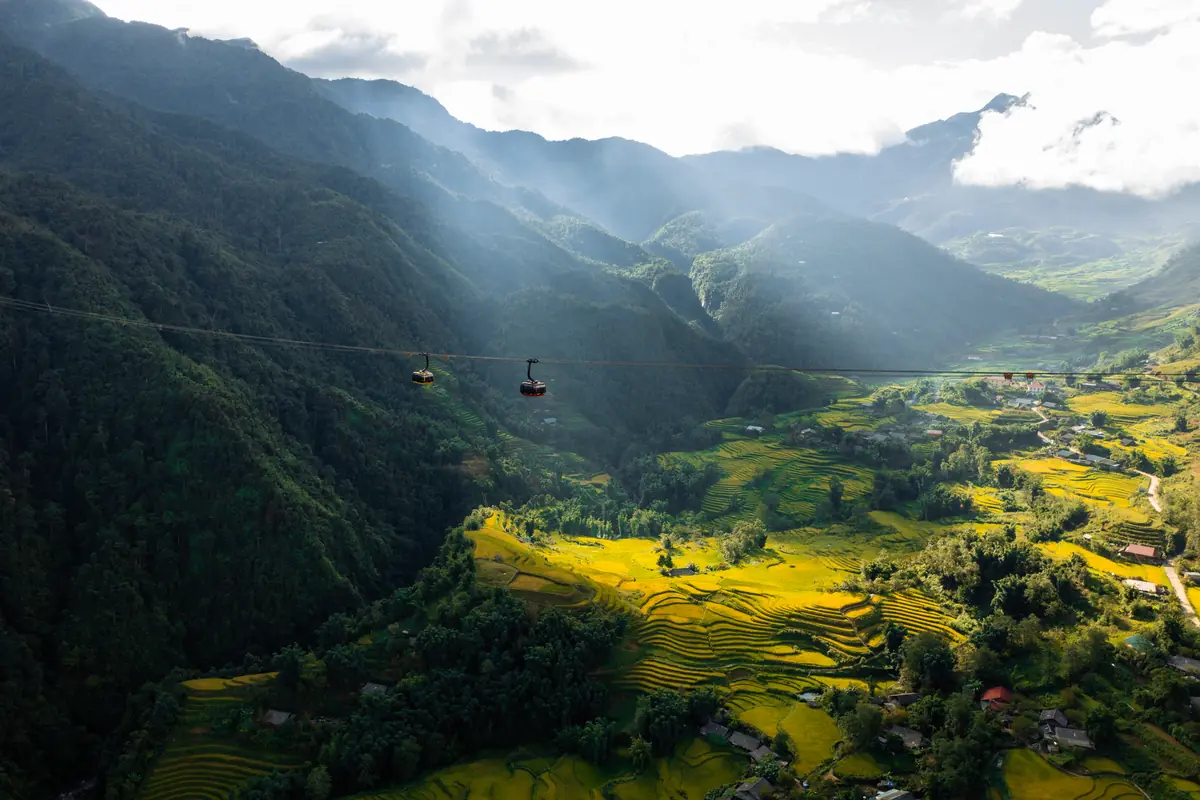
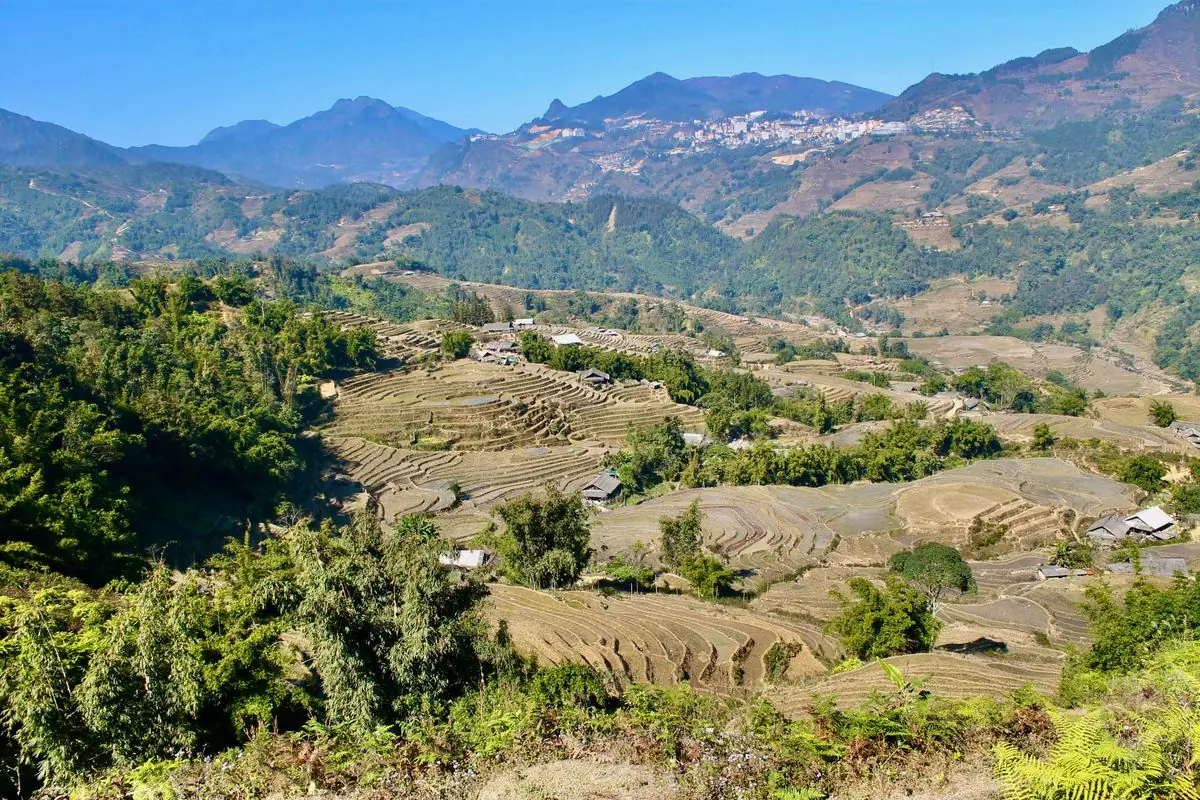
Rice terraces turning gold in Muong Hoa Valley as Fansipan cable cars glide past the cloud-wrapped slopes.
Before booking your accommodation in Sapa, decide whether you want to see golden rice terraces, walk through mountain villages, or reach the summit of Fansipan. These experiences don’t necessarily fit into the same season. September brings the rice harvest but still plenty of rain, October is generally more comfortable for walking, and December gets properly cold after sunset. A jacket that works perfectly well in Hanoi may not be warm enough at an altitude of over 3,000 meters.
Sapa temperature and rainfall by month
Sapa town sits at roughly 1,500-1,600 meters above sea level, so its weather is noticeably different from Hanoi and Lao Cai city. Summer daytime temperatures usually hover around 24-25°C (75-77°F), while winter mornings can fall below 10°C (50°F).
Temperature isn’t the only thing worth checking. A month with pleasant temperatures but rain almost every day may not be ideal for trekking on unpaved trails.
The table below shows the average temperature in Sapa by month, along with rainfall and the number of rainy days.
| Month | Avg. High | Avg. Low | Rainfall | Rainy Days |
|---|---|---|---|---|
| January | 15.5°C | 7°C | 98 mm | 14 |
| February | 17°C | 8°C | 78 mm | 14 |
| March | 21°C | 11.5°C | 126 mm | 18 |
| April | 24°C | 15°C | 161 mm | 19 |
| May | 25°C | 17°C | 203 mm | 25 |
| June | 25°C | 19°C | 338 mm | 29 |
| July | 25°C | 19°C | 362 mm | 29 |
| August | 25°C | 19°C | 426 mm | 29 |
| September | 24.5°C | 18°C | 238 mm | 25 |
| October | 22°C | 15°C | 143 mm | 17 |
| November | 20°C | 12°C | 55 mm | 11 |
| December | 16°C | 8°C | 49 mm | 10 |
Data note: Figures are based on ERA5 historical weather data accessed through Open-Meteo for coordinates 22.336, 103.844. The returned grid cell is centered at 22.25, 103.75, with elevation adjusted to 1,514 meters to represent central Sapa. Values are averages for 2016-2025. Highs and lows represent the averages of daily maximum and minimum temperatures. Monthly rainfall is averaged across the ten years, and a rainy day means at least 1 mm of precipitation. These are long-term climate averages, not forecasts for a particular day or week.
Sapa receives approximately 2,280 mm of rainfall annually, but it isn’t distributed evenly throughout the year.
June, July, and August each average around 29 rainy days. That doesn’t mean it rains continuously for 24 hours. It means most days record at least 1 mm of precipitation. You might still get a sunny morning, spend several hours sightseeing, and find yourself caught in a downpour by the afternoon.
November and December have far fewer rainy days. However, less rain doesn’t automatically mean clear blue skies. Low clouds and fog can still cover the entire Muong Hoa Valley during the colder months.
January is the coldest month in this dataset, August receives the most rain, and December receives the least.
When is the best time to visit Sapa?
If you’re looking for a balance between comfortable temperatures, mountain scenery, and opportunities for walking, October is one of the strongest choices. April is another good option for travelers who prefer warmer weather, although rain is more frequent.
If your trip revolves around a particular landscape, the answer changes.
March-April: for sightseeing, village walks, and mild weather
After the colder winter months, temperatures begin to rise. March averages around 21°C (70°F) during the day, increasing to 24°C (75°F) in April.
This is comfortable weather for exploring the town center, visiting nearby villages, or spending a day around Muong Hoa Valley when conditions are dry.
It’s also a convenient period for international travelers combining Hanoi, Ninh Binh, and Ha Long Bay with a few days in the mountains. You won’t need an entire suitcase of winter clothing for your time in town.
However, March and April still average around 18 and 19 rainy days respectively. Don’t assume that spring automatically brings dry trekking trails.
Late August-September: for golden rice terraces
The rice terraces around Lao Chai, Ta Van, and Muong Hoa Valley usually turn golden between late August and September. The exact timing of ripening and harvesting varies with elevation, location, and weather conditions each year.
The trade-off is rainfall.
September still averages 238 mm of rain and around 25 rainy days. You may see beautiful golden fields, but you should also be prepared for muddy village paths, slippery earthen steps, and trekking plans that need adjusting.
October-November: for walking and mountain views
Sapa in October averages a daytime high of around 22°C (72°F) and a nighttime low of approximately 15°C (59°F). Rainfall drops considerably compared with September.
November is even less rainy, averaging just 55 mm across 11 rainy days. The cooler weather can be pleasant for short or moderate walks, provided trails have dried out after previous rainfall.
There is one important distinction: beautiful October weather doesn’t guarantee golden rice terraces. Many fields may already have been harvested.
December-February: for cold weather, fog, and winter atmosphere
Sapa weather in December is noticeably cold, particularly early in the morning and after dark. January tends to be colder still.
This period suits travelers who enjoy chilly mountain towns, warm cafés, mist-covered hillsides, and a trip to Fansipan when conditions are favorable.
Snow or ice can occur during particularly strong cold spells, but neither is a regular feature of every winter visit.
Sapa weather month by month
January: the coldest month, short days, and frequent fog
January averages a daytime high of 15.5°C (60°F) and a nighttime low of 7°C (45°F).
On a sunny afternoon, it may still be comfortable enough to walk around Sapa Stone Church, the central square, and nearby streets. Once the sun goes down, the temperature feels very different.
This isn’t the easiest month for long-distance walking if you’re unfamiliar with cold weather or haven’t packed a windproof jacket and suitable shoes.
In particular, don’t use the lunchtime temperature to decide what you’ll wear all day.
Fog can make viewpoints overlooking the valleys almost useless for sightseeing. If Fansipan is on your itinerary, leave yourself some flexibility rather than committing to a single time slot well before you arrive.
February: still cold, sometimes damp for long periods
February is slightly warmer than January, with an average high of 17°C (63°F) and low of 8°C (46°F).
You might enjoy sunshine at midday before low clouds settle over the hills later in the afternoon. During periods of drizzle or damp fog, jackets and shoes can take longer to dry than expected.
If you’re visiting around Lunar New Year, remember to consider holiday crowds and changes in service schedules as well as the weather.
Thermal clothing, a sweater, and an outer jacket are still useful. For children and anyone particularly sensitive to cold, a hat covering the ears can make a real difference when spending long periods outside.
March: warmer days, but rain is still common
With average daytime highs of around 21°C (70°F), March feels considerably more comfortable than January or February.
On some afternoons, a light long-sleeved shirt may be enough. However, the average low of 11.5°C (53°F) means you’ll still want a jacket for mornings and evenings.
March averages around 18 rainy days, so spring doesn’t necessarily mean dry trekking conditions.
For a two-day visit, you could spend the first day exploring town and a nearby village, then choose the clearer day for Fansipan.
Swapping the order of those two activities is usually easier than rearranging your entire trip.
April: warm days and plenty of outdoor options
April averages a high of 24°C (75°F) and a low of 15°C (59°F), making it one of the more comfortable months for travelers who dislike cold weather.
You can plan village walks or explore routes around Muong Hoa Valley, although rainfall still needs checking before heading onto unpaved paths.
The average monthly rainfall is 161 mm, which isn’t insignificant.
On a sunny afternoon, a T-shirt may be perfectly comfortable. Later, when clouds roll in or you’re traveling along an exposed mountain road, a light jacket becomes useful again.
Don’t leave your raincoat at home just because the forecast shows 24°C.
May: water-filled rice terraces and increasing rainfall
May marks the beginning of a wetter period in Sapa.
Daytime temperatures average around 25°C (77°F), with nighttime lows near 17°C (63°F). However, rainfall rises to 203 mm, spread across an average of 25 rainy days.
May and June are also associated with the rice-terrace flooding season, when farmers begin preparing fields for cultivation.
The water-covered terraces can reflect the sky and surrounding mountains, producing a landscape quite different from the golden harvest season.
Paths around the fields may be soft and slippery at this time.
Choose routes that local residents or guides confirm are safe, and avoid stepping onto rice-field embankments just to find a better photo angle.
June: cooler than Hanoi, but rain almost every day
Many travelers visit Sapa in June to escape the summer heat.
The average daytime high of 25°C (77°F) is certainly more comfortable than the hot weather often experienced in Hanoi. However, 338 mm of rain and approximately 29 rainy days are difficult to ignore.
Walking around town, stopping at cafés, visiting places connected by paved roads, and traveling by car can still work well when planned flexibly.
A full-day trek involving steep dirt paths is another matter.
Heavy rain can raise stream levels and make routes that are normally manageable unsafe.
Little experience walking in mountainous terrain? Don’t choose a difficult trail simply because the summer temperatures are mild.
July: heavy rain and slippery mountain trails
July has temperatures similar to June, averaging around 25°C (77°F) during the day and 19°C (66°F) at night.
Rainfall increases to approximately 362 mm.
During this month, waterproofing your belongings matters more than packing heavy winter clothing.
A pair of shoes soaked the previous day may not dry in time for your next outing.
Rainfall also varies between different slopes and valleys. The town center might be dry while trails around Ta Van remain affected by earlier downpours.
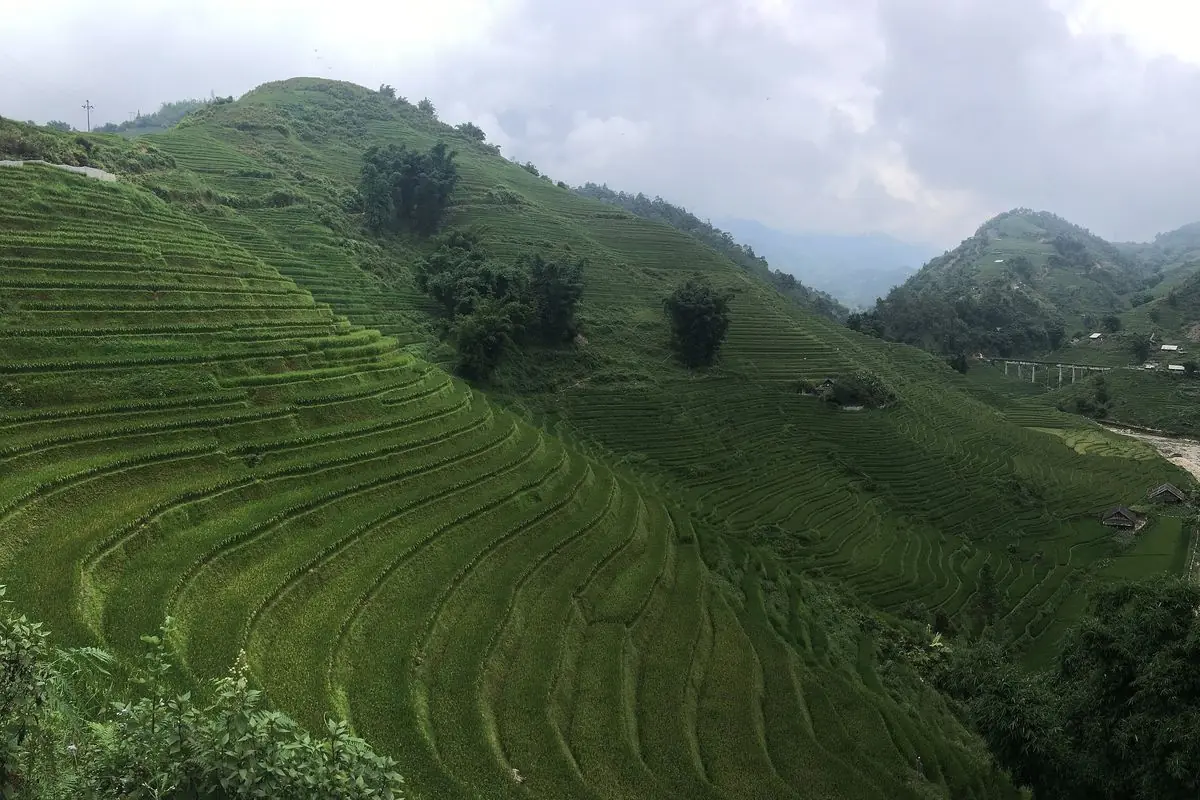
Ask your accommodation or trekking operator about the actual condition of your chosen route. Rain stopping doesn’t necessarily mean a trail is safe again.
August: the wettest month, with the first golden rice fields
August receives an average of 426 mm of rainfall, the highest monthly total in the dataset, with roughly 29 rainy days.
From the middle toward the end of the month, rice in some areas begins changing color.
This is also when travelers hoping to photograph the terraces need to balance the scenery against difficult travel conditions.
A brief spell of sunshine can produce wonderful photographs. But heavy rain just before departure may force a guided walk to be shortened or canceled.
For first-time visitors with a fixed itinerary, August isn’t the easiest month to choose.
Travelers who’ve already booked should keep a road-based sightseeing option available in case trekking becomes impractical.
September: golden rice season, but still plenty of rain
September is particularly attractive for travelers who want to see Sapa’s rice terraces before harvesting.
Average temperatures range from a high of 24.5°C (76°F) to a low of 18°C (64°F). It isn’t especially cold, so light daytime clothing generally works well.
However, rainfall still averages 238 mm.
That’s considerably less than August, but around 25 rainy days show why proper rain gear remains necessary.
Around Lao Chai and Ta Van, some fields may already have been harvested while others are still golden.
Booking a homestay specifically for its rice-terrace views? Ask the host about the fields in that particular area during the week of your visit.
October: cooler, less rainy, and excellent for a first visit
Sapa in October offers one of the better balances between sightseeing and walking.
The average daytime high is around 22°C (72°F), while nighttime temperatures average 15°C (59°F).
Compared with September, rainfall falls from 238 mm to 143 mm, and the number of rainy days decreases from 25 to 17.
You could spend the morning walking around a village, stop for lunch, and return to town before the evening temperature drops.
October also works well for international visitors adding Sapa to a northern Vietnam itinerary. You won’t need particularly heavy winter clothing for most activities in town.
However, if your main objective is photographing an entire valley of golden rice, October may already be too late.
The harvest doesn’t wait for your holiday dates.
November: less rain and the return of colder weather
November averages a daytime high of 20°C (68°F) and a nighttime low of 12°C (54°F).
Rainfall drops to around 55 mm, with approximately 11 rainy days.
It’s a month worth considering when walking and mountain scenery matter more to you than rice terraces.
Morning fog or low clouds can still reduce visibility, though.
You’ll notice the temperature difference most clearly when leaving a restaurant in the evening. A T-shirt that felt comfortable in the afternoon sunshine may no longer be enough for a walk across the central square after dark.
A light sweater, windproof jacket, and long trousers are more practical than shorts and summer sandals.
December: the least rainfall, cold days, and misty valleys
Sapa weather in December averages a daytime high of 16°C (61°F) and a nighttime low of 8°C (46°F).
Monthly rainfall averages just 49 mm, the lowest figure in the dataset.
Still, lower rainfall doesn’t guarantee you’ll see Fansipan every morning. Low clouds and fog can hide the surrounding mountains for hours, sometimes longer when conditions are unfavorable.
Travelers who enjoy cold mountain towns may find December particularly appealing.
If you’re bringing only a thin hoodie, however, spending extended periods outdoors could become uncomfortable.
Temperatures on Fansipan are considerably lower.
This is a month to prioritize thermal layers, insulation, and a windproof outer jacket rather than relying on one thick sweater.
Sapa in October vs. December: which is better?
These are two popular months to compare when planning a northern Vietnam trip toward the end of the year.
| Factor | October | December |
|---|---|---|
| Average daytime high | 22°C | 16°C |
| Average nighttime low | 15°C | 8°C |
| Average rainfall | 143 mm | 49 mm |
| Average rainy days | 17 | 10 |
| Outdoor walking | More comfortable temperatures | Cold; warm layers needed |
| Rice terraces | Usually harvested or nearing the end of harvest | After the harvest |
| Fog | Possible | More important to plan around |
| Clothing | Several light layers | Thermals and windproof outerwear |
For a first visit lasting two or three days, October is generally easier to organize.
You can combine village walks, sightseeing, Fansipan, and time relaxing in town without dealing with the same level of cold.
December is a better fit if winter weather is part of what you’re looking for.
Chilly evenings, hot meals, and mist drifting across the mountains become part of the experience rather than simply an inconvenience.
However, fewer rainy days don’t automatically make December better for every activity.
A heavily foggy morning can produce worse visibility from the summit than an October day with a short shower.
And don’t choose December solely because you’re hoping to see snow. Snowfall depends on specific cold-weather events, not a predictable seasonal schedule.
How much colder is Fansipan than Sapa town?
This is probably the most important difference to understand when packing.
Central Sapa sits at approximately 1,514 meters in the weather dataset used here, while Fansipan reaches 3,143 meters above sea level.
That elevation difference of roughly 1,600 meters means the summit is estimated to be about 10°C (18°F) colder than the town center.
The following table compares three representative months.
| Month | Sapa Town (Avg. High/Low) | Fansipan Summit (Estimated High/Low) |
|---|---|---|
| January | 15.5°C / 7°C | 5°C / -3°C |
| July | 25°C / 19°C | 14°C / 8°C |
| December | 16°C / 8°C | 5°C / -2°C |
Fansipan temperatures are estimates adjusted for the summit’s elevation of 3,143 meters, not direct weather observations from the summit. Wind, moisture, and fog can make conditions feel considerably colder.
Imagine a December morning.
In Sapa town, you might wear a sweater and feel cold but comfortable enough to explore.
By the time you reach Fansipan, the estimated average daytime high is only around 5°C (41°F), before accounting for wind across the exposed viewing areas and stairways.
That’s why a jacket suitable for town may be inadequate on the summit.
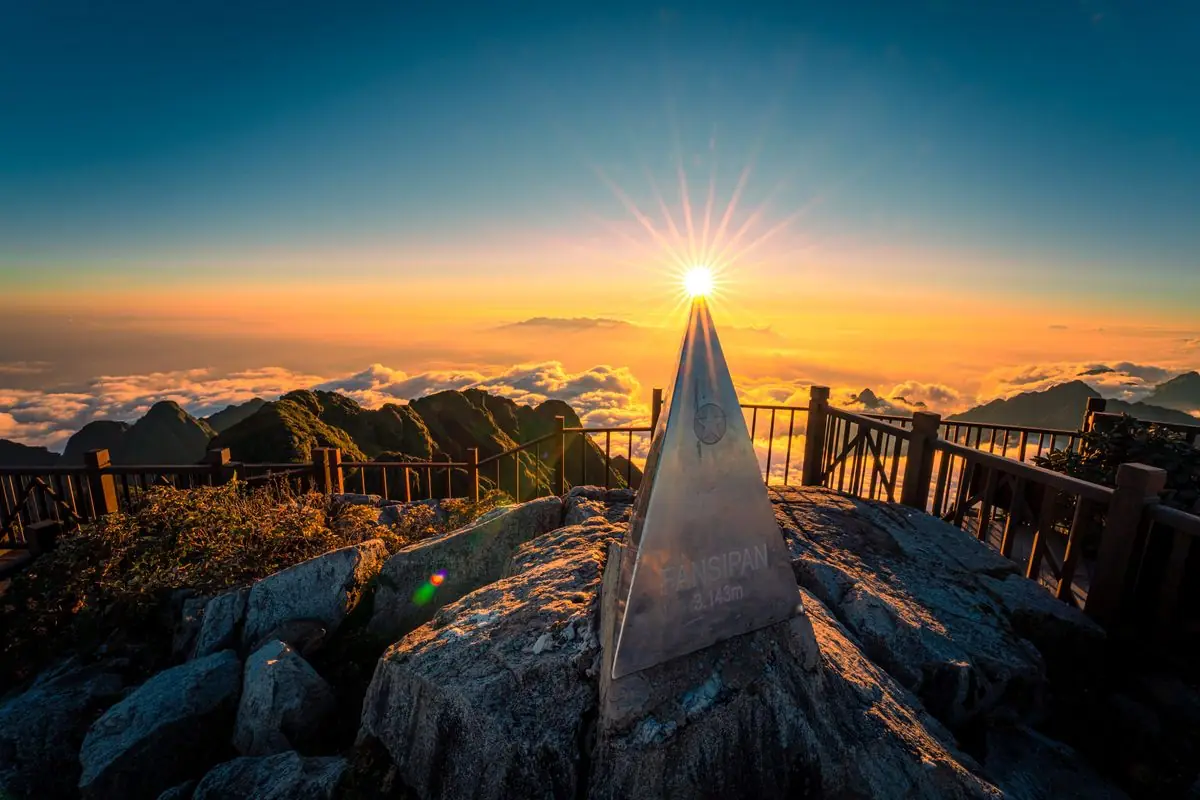
Even in July, when Sapa town averages around 25°C (77°F) during the day, Fansipan’s estimated average high is only about 14°C (57°F).
Taking the cable car in summer doesn’t mean you can comfortably spend the whole trip in a T-shirt and shorts.
If it’s sunny in town, will Fansipan be clear?
Not necessarily.
Clouds may sit halfway up the mountains, cover the cable car route, or surround the summit itself.
At times, Sapa town can be hidden beneath low cloud while brighter conditions exist above it.
The opposite can happen too: sunshine in town doesn’t guarantee clear views of the Hoang Lien Son mountain range from the summit.
When planning your visit, consider three separate questions.
Will the temperature be comfortable? Could wind or rain affect cable car operations? And will visibility be good enough to enjoy the scenery?
The answers won’t always be the same.
What time should you visit Fansipan?
Morning is often worth prioritizing for a summit visit, although the actual forecast should guide your decision.
According to the Sun World Fansipan Legend operating schedule published on September 28, 2026:
These hours may change because of weather or operational requirements, so check the current schedule before visiting.
If you have two full days in Sapa, avoid putting Fansipan on your final afternoon just before returning to Hanoi.
Bad weather or a change in cable car operations would leave you very little room to rearrange your plans.
How does fog affect a trip to Sapa?
Fog can look beautiful when you’re watching it through the windows of a warm café or from a viewpoint above the clouds.
It’s a different experience when you’ve traveled to a famous overlook and can see nothing but white mist.
In Sapa, it’s important to distinguish fog from rain.
A day without measurable rain can still be cloudy, with poor visibility and no clear views across the valley.
Conversely, clouds may separate after a rain shower, briefly revealing sections of the surrounding mountains.
During the colder months, low cloud and fog are worth considering when booking scenic activities. Summer also brings misty conditions because of high humidity and frequent rainfall.
There is no particular hour when fog is guaranteed to clear.
Don’t base your plans on the promise that reaching Fansipan before 9:00 AM always means seeing a sea of clouds.
What should you do when fog is thick?
Suppose you’ve reserved the morning for Fansipan, but the mountains are barely visible from central Sapa.
Start by checking the visibility forecast, cloud conditions, wind, and cable car operating status.
Don’t automatically assume the weather at the summit is identical to the weather in town.
If conditions aren’t favorable for sightseeing, consider switching to activities around the center.
You could visit Sapa Stone Church, explore the central square, walk along Cau May Street, or choose a suitable indoor attraction.
Anyone booked for a trek toward Ta Van should ask their guide whether fog, rain, or slippery ground will affect the route.
Poor visibility isn’t only a photography problem.
On mountain roads, it can also make driving more difficult, particularly if you’re traveling independently by motorbike.
Which months are most difficult for trekking in Sapa?
Rain is usually an inconvenience when you’re walking on paved streets around town.
On dirt paths, stone steps, and mountain trails, it can become a genuine safety concern.
June through August require particular caution because rainfall is so heavy.
September is less rainy but shouldn’t automatically be treated as a month with dry mountain trails.
A steep dirt path may remain slippery even when the sun is shining.
Areas near streams also need careful assessment during periods of heavy rain because of rising water, flash floods, and landslide risks.
Choose your walking route based on the conditions
One easily overlooked factor is the weather before your visit.
A dry day doesn’t erase the moisture absorbed by the ground after several days of heavy rain.
Before booking a trekking tour, ask how much of the route involves steep dirt paths, whether any stream crossings are required, and what the operator does when heavy-rain warnings are issued.
What to wear in Sapa during each season
The most practical approach is to pack clothing you can wear in layers.
You can remove a layer while walking at midday and put it back on when you’re standing at a windy viewpoint.
March-April: long sleeves and a light jacket
During the day, a T-shirt or long-sleeved top is often comfortable.
Bring a light jacket for early mornings, evenings, and trips to higher elevations.
Quick-drying trousers are more practical than thick jeans if you’ll be walking down to the villages.
Trainers with decent grip can work on easy paths, while proper trekking routes call for more suitable hiking footwear.
A compact raincoat or waterproof jacket is worth packing because these months still have plenty of rainy days.
May-September: quick-drying clothes and waterproof gear
You generally won’t need especially thick clothing in central Sapa during these months.
Breathable T-shirts, quick-drying trousers, a lightweight jacket, and footwear suited to your planned activities are practical choices.
Keeping your belongings dry matters more.
Bring a waterproof pouch for your phone, passport, money, and electronic devices.
An extra pair of socks is also useful when you need to head out again the next morning.
Avoid shoes with smooth, slippery soles when trekking.
Easy-to-remove sandals can be useful around your accommodation, but they shouldn’t replace proper footwear on muddy trails.
October-November: layers for changing temperatures
What should you wear in Sapa in October?
A practical combination is a T-shirt, a long-sleeved top or light sweater, a windproof jacket, and long trousers.
While walking during the day, you may be able to remove the jacket and put it in your backpack.
By evening, you’ll probably want it again.
November calls for slightly warmer middle layers, particularly if you get cold easily or plan to stay in a homestay outside the town center.
Footwear with good grip remains important.
October still has a fair amount of rain, so a jacket with some water resistance is more useful than one designed only for warmth.
December-February: thermals, insulation, and wind protection
In winter, it’s sensible to pack at least three layers: a thermal base layer, an insulating middle layer, and a windproof outer jacket.
Long trousers, warm socks, closed shoes, and a scarf are useful when spending time outdoors.
If you’re particularly sensitive to cold, consider thermal leggings as well.
You won’t necessarily need a bulky winter coat all day in town.
You may feel too warm when entering a café or walking uphill.
Layering makes it easier to adjust.
Beyond clothing, check whether your accommodation has heating, a suitable heater, or an air conditioner with a heating function.
A room with beautiful floor-to-ceiling mountain views won’t feel particularly appealing at night if it doesn’t stay warm.
What extra clothing do you need for Fansipan?
Whatever month you’re visiting, consider bringing:
- A windproof jacket, preferably water-resistant.
- An additional insulating layer.
- Long trousers and shoes with good grip.
- A warm hat, scarf, and gloves during colder months.
- A small waterproof pouch for your phone and important documents.
In December and January, thermal layers and a proper winter jacket are particularly useful.
Don’t rely entirely on a loose rain poncho or umbrella in strong winds.
A fitted jacket that closes securely and doesn’t get in the way is more practical when moving along exposed walkways and steps.
How to plan two days in Sapa around the weather
For a two-day, one-night or three-day, two-night visit, try to keep at least two activities interchangeable: Fansipan and sightseeing in the valley.
For example, if you have two full days:
- Day 1
Town and a nearby village
Explore the town center, central square, and a nearby village.
When the weather is dry, spend more time around Lao Chai or Ta Van. If rain develops, shorten the outdoor walking and choose activities in town instead.
- Day 2
Fansipan
Visit Fansipan if the forecast, visibility, and cable car operating schedule are favorable.
Aim for the morning rather than arriving shortly before uphill entry closes.
You can easily reverse this order.
Prioritize Fansipan on your first day if it looks clear and the second day is forecast to be wet.
Longer guided treks are different. Check with the trekking operator before changing dates or routes independently.
Why is a three-day trip better for weather flexibility?
An additional day gives you more room to rearrange plans when conditions change.
A three-day itinerary might include one day in town, one day for Fansipan, and one day walking through Muong Hoa Valley.
If rain affects one activity, switching the order is less likely to disrupt the entire visit.
This can be particularly useful during September or October, when a spare day may save you from choosing between walking on wet trails and missing a planned attraction altogether.
For international travelers on a tightly connected itinerary between Hanoi, Sapa, and Ha Long Bay, flexibility matters even more.
Avoid scheduling your most important activity during the final few hours before your bus leaves Sapa.
How to check the Sapa weather forecast before traveling
Monthly climate averages are useful when choosing travel dates several weeks or months in advance.
As your departure approaches, you need a more specific forecast.
- 5-7 days before
Weather trend
Check the temperature trend, expected rainfall, and whether any cold fronts might affect your visit.
This is a good time to adjust your packing list, reconsider outdoor tours, and arrange a backup activity.
- 24-48 hours before
Hourly forecast
Check the hourly forecast, particularly for trekking and Fansipan.
Don’t look only at the sunshine or cloud symbol on a weather app.
Three pieces of information are particularly useful: expected precipitation, wind, and visibility.
In winter, also pay attention to the forecast minimum temperature and any severe cold-weather warnings.
- On the morning
Cable car and guide
Check cable car announcements or confirm conditions with your trekking guide.
Mountain weather can change from what was predicted the previous day.
A forecast showing a 20% chance of rain doesn’t mean it will rain for 20% of the day.
Likewise, a sunshine symbol doesn’t guarantee the valley will be free of fog.
During the rainy season, consult heavy-rain, flash-flood, and landslide warnings from official meteorological services, and ask your guide about the actual trail conditions.
Don’t use Hanoi’s weather to predict Sapa’s
Hanoi and Sapa are both in northern Vietnam, but their elevations, temperatures, and terrain are very different.
On the same day, Hanoi may be hot and sunny while Sapa is cool, rainy, or foggy.
Even within the Sapa area, the town center, villages lower in the valley, and Fansipan summit experience different conditions.
When checking a forecast, select the correct location.
Use Sapa for your time in town, and check the mountain conditions separately when planning Fansipan.
For villages farther away, combine the forecast with information from your accommodation or local guide.
Choosing a month for Sapa on a northern Vietnam itinerary
If you’re putting together a Vietnam trip, Sapa can be combined with Hanoi, Ninh Binh, or Ha Long Bay.
Just don’t expect the same clothing to work equally well everywhere.
Northern Vietnam in March-April
This is a period when you can combine city sightseeing, scenic destinations, and time in the mountains.
Sapa will generally feel cooler than Hanoi, particularly early in the morning and after sunset.
A light jacket is practical for much of your time in town, but add warmer clothing for Fansipan.
Keep trekking plans flexible because rainfall is still relatively frequent.
Northern Vietnam in September-October
These months work well for travelers interested in rice terraces and mountain scenery.
September is the better choice for the rice harvest, while October generally offers more comfortable walking conditions.
If you’re choosing just one month and golden fields aren’t essential, October is often the more balanced option.
For a short visit, try to spend at least two nights in Sapa so that the journey from Hanoi doesn’t take up most of your available time.
Northern Vietnam in December-January
You’ll need to prepare for two different winter experiences: cooler weather in Hanoi and much colder conditions in the mountains around Sapa.
A jacket suitable for walking around Hanoi may be enough for some afternoons in central Sapa, but Fansipan requires additional insulation and wind protection.
When panoramic valley views are your main priority, allow some flexibility because fog can reduce visibility.
On the other hand, if you enjoy a relaxed holiday in a chilly mountain town, December has an appeal of its own.
Are you going to Sapa for the golden rice terraces, mountain trails, or chilly winter atmosphere? Decide what you’d most like to experience, then match it with the month’s temperatures, rainfall, and fog conditions before you pack.
Frequently asked questions
How cold is Sapa in December?
December averages a daytime high of around 16°C (61°F) and a nighttime low of 8°C (46°F) in central Sapa. Strong cold spells can bring temperatures considerably below these long-term averages. Pack a sweater or thermal layer and a warm jacket for town, with additional winter clothing for Fansipan.
What is the best month to visit Sapa?
October is a well-balanced option for many visitors because temperatures are comfortable, rainfall is lower than in summer, and walking conditions are generally more favorable. March and April are also good choices if you prefer warmer weather. For golden rice terraces, aim for late August through September and check the local harvest timing before booking.
Can you still see golden rice terraces in Sapa in October?
You may find some fields that haven't been harvested, depending on the location and the year. However, don't assume the valleys will still be covered in golden rice. The main harvest season around Sapa typically falls between late August and September. Ask your homestay or a local contact about current field conditions before booking specifically for rice-terrace views.
How much colder is Fansipan than Sapa town?
Fansipan is estimated to be around 10°C (18°F) colder because its summit is approximately 1,600 meters higher than central Sapa. In December, the town's average daytime high is about 16°C (61°F), while the summit's estimated average high is around 5°C (41°F). These summit figures are elevation-based estimates, and wind and fog can make conditions feel colder.
What should I pack for Sapa in October?
Pack T-shirts, a long-sleeved top or light sweater, a windproof jacket, long trousers, and shoes with good grip. October averages around 22°C (72°F) during the day and 15°C (59°F) at night, but still has approximately 17 rainy days. Bring an additional warm layer if you're planning to visit Fansipan.