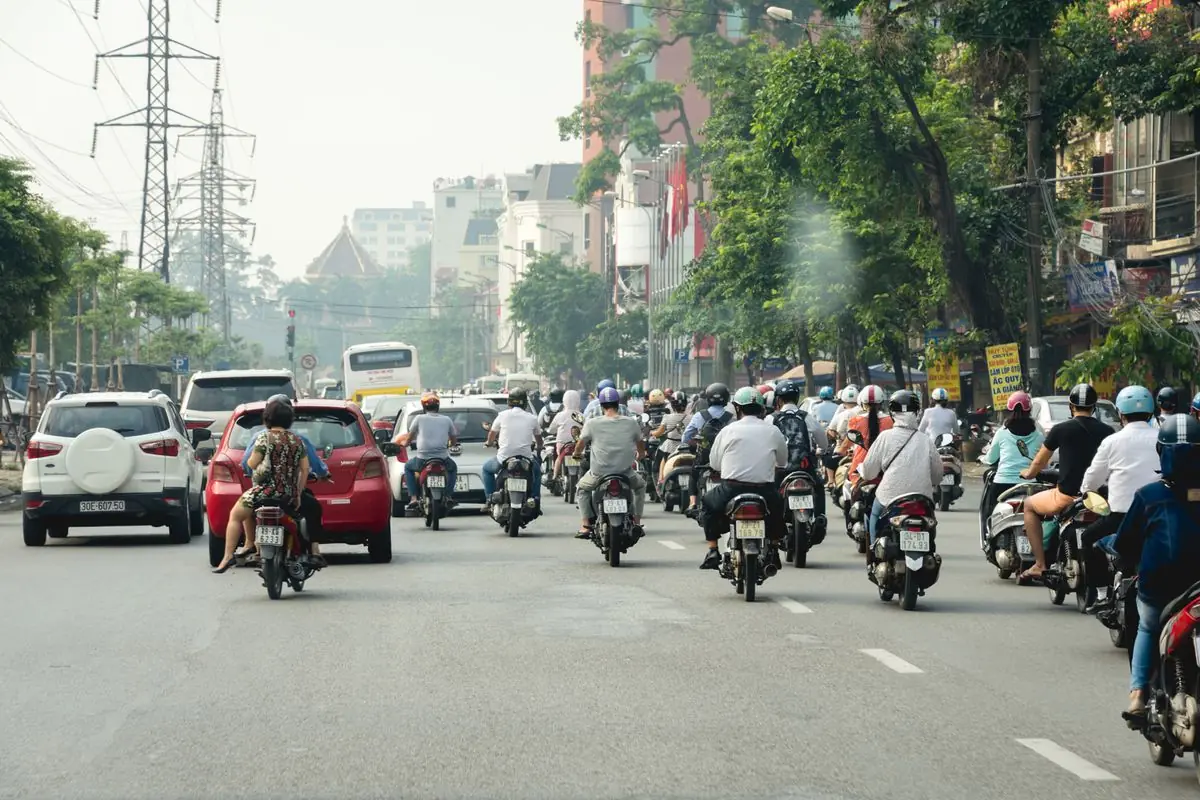
Why can a short trek in Sa Pa leave your legs so tired?
In Sa Pa, steep hills and trails made slippery by rain tire you out more than the distance does. Pick the right route and you can walk through terraced rice fields and mountain villages without exhausting yourself.
 18 min read
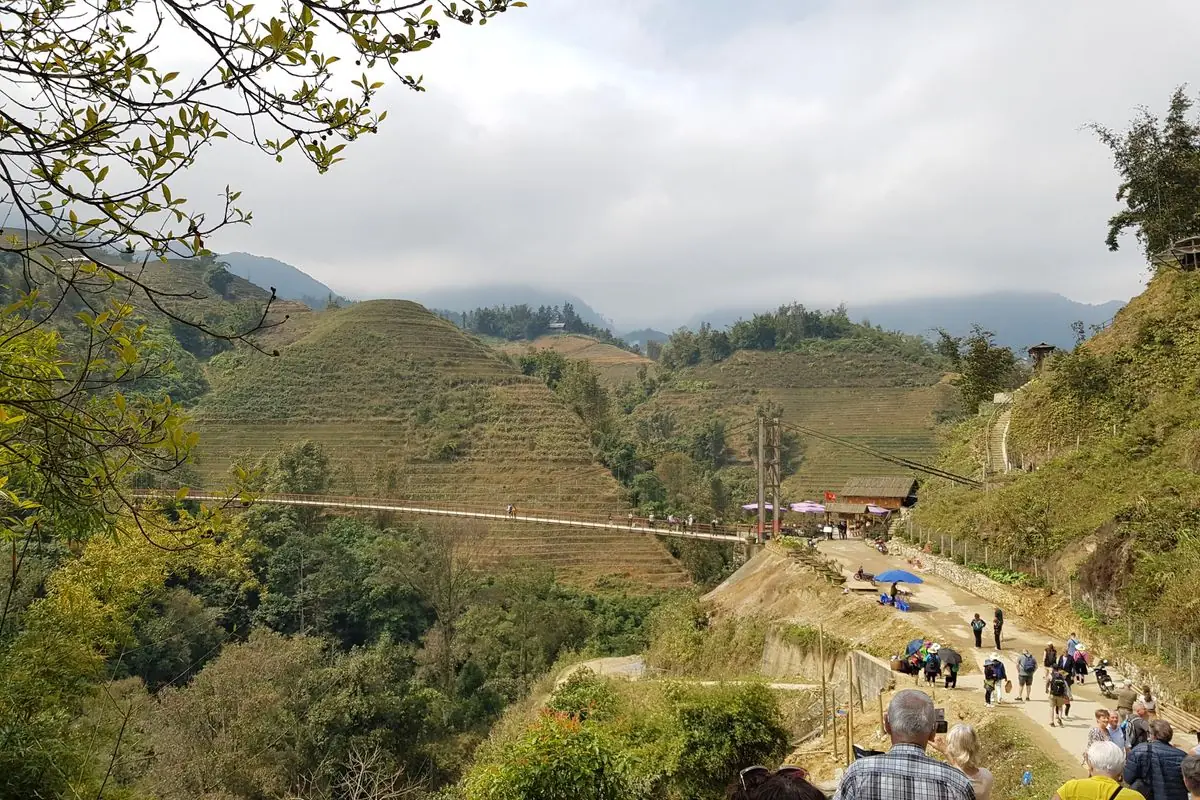
Walkers file down a dirt path into the Muong Hoa valley, a suspension bridge strung across ahead and the terraced hills still bare in March.
The walk down to Cat Cat Village looks easy enough, until you realize that the same gentle-looking road becomes a steep climb on the way back. Meanwhile, a longer trek from Lao Chai to Ta Van can feel easier thanks to gentler terrain and plenty of places to rest. So pick a Sa Pa trekking route by gradient, trail surface, and weather, not just distance.
1. Which Sa Pa trekking route is right for you?
Most of Sa Pa’s popular trekking routes run through or around Muong Hoa Valley, where terraced rice fields stretch across the hillsides and trails connect villages inhabited by H’Mong and Giay communities. Cat Cat is much closer to the town center, while Ta Phin lies to the north and offers a different cultural experience centered around the Red Dao community.
A day trek through the villages needs little more than comfortable shoes with good grip and a manageable itinerary.
| Trekking route | Approximate distance | Walking time | Difficulty |
|---|---|---|---|
| Cat Cat Village | Around 3-4 km within the sightseeing area, excluding the full walk from town | 2-3 hours | Easy to moderate, with steep sections |
| Lao Chai - Ta Van | 5-6 km between the villages; 7-12 km depending on the starting point | 2-5 hours | Easy to moderate |
| Y Linh Ho - Lao Chai - Ta Van | 12-15 km | 5-6 hours of walking | Moderate |
| Ta Phin Village | Varies depending on the village trails and attractions | Around half a day | Easy to moderate |
| Two-day trek with a homestay | Some tours cover around 20-28 km over two days | 2 days | Moderate, requiring reasonable stamina |
These distances are approximate rather than fixed. Two tours with the same name might differ by several kilometers depending on whether the guide follows rice-field paths, village roads, or a route with a different vehicle pickup point.
Cat Cat Village
Best for beginners with half a day
Cat Cat Village is about 2 km from Sa Pa’s Stone Church by road. Walking down from the town center usually takes around 30-45 minutes, following a winding road along the mountainside.
Inside the village are Tien Sa Waterfall, traditional water wheels, H’Mong houses, and small shops selling embroidered textiles. The tourist area has clearly organized walking routes, plenty of stone steps, and several places to stop for photographs. Cultural performances are often scheduled on weekends, although the program can change.
Cat Cat works well for first-time visitors, families, and travelers who want to combine a short walk with sightseeing.
The return is harder: much of the route back toward town is uphill, and the stone steps around the waterfall can become slippery after rain.
Walk down, explore at a relaxed pace, and arrange transport back to the center, and you skip that climb and keep the afternoon free for other plans.
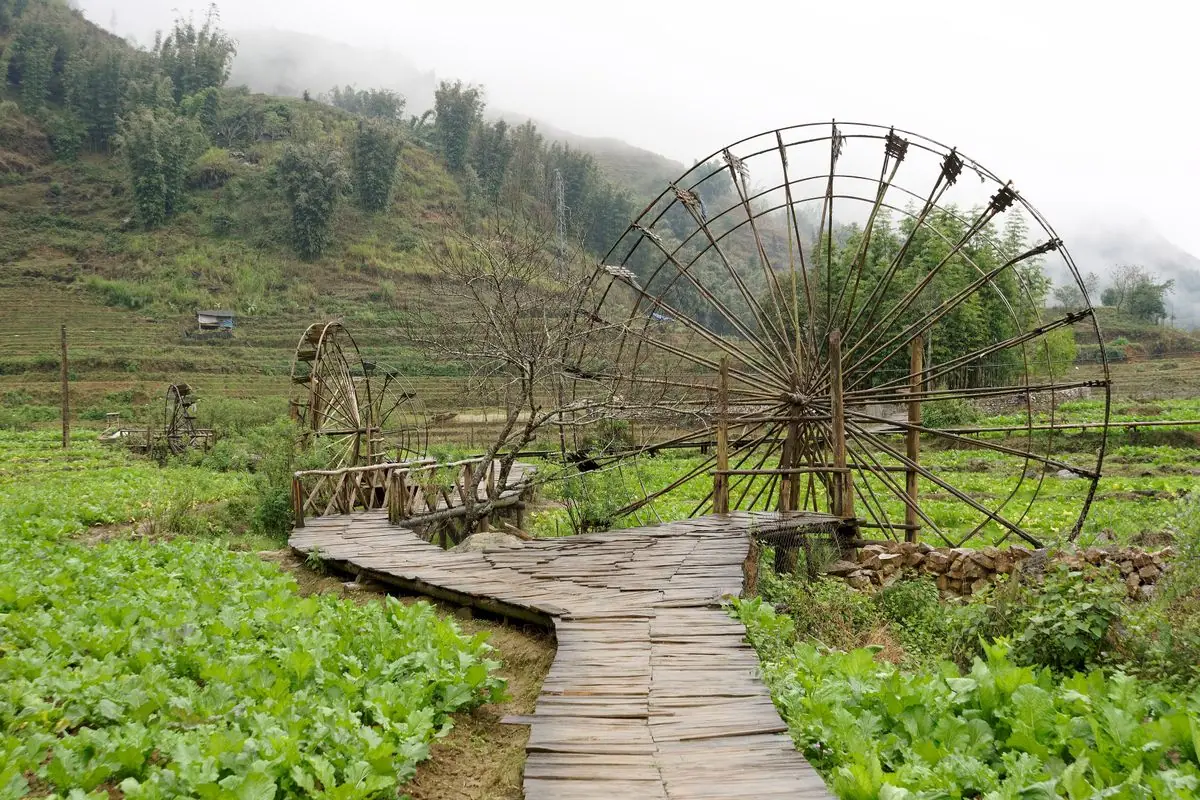
Lao Chai - Ta Van
The best all-round route for first-time trekkers
Lao Chai is approximately 9.5 km from central Sa Pa by road, while Ta Van is around 11-12 km away. Both villages lie along Muong Hoa Valley, where terraced fields descend toward the stream below.
In Lao Chai, you’ll pass H’Mong settlements with houses scattered among the rice fields. Continuing toward Ta Van, you’ll find a sizeable Giay community, along with family-run homestays where visitors can stay overnight or enjoy a home-cooked meal.
The main walk between the two villages is around 5-6 km and takes approximately 2-3 hours, including short breaks. Longer routes starting higher up the hillside or taking detours through the terraces can stretch to 7-12 km.
The easiest arrangement is to take a car or motorbike taxi to Lao Chai, walk through to Ta Van, and arrange a ride back to town.
Independent travelers can also use Muong Hoa Road, Provincial Road 152, to reach the area. Near Ta Van, a small red iron bridge is a familiar landmark for finding the village.
Walking along the rice-field trails is generally more scenic than staying on the paved road. Some narrow paths lead directly through farmland, so stick to established routes and don’t cut across planted fields.
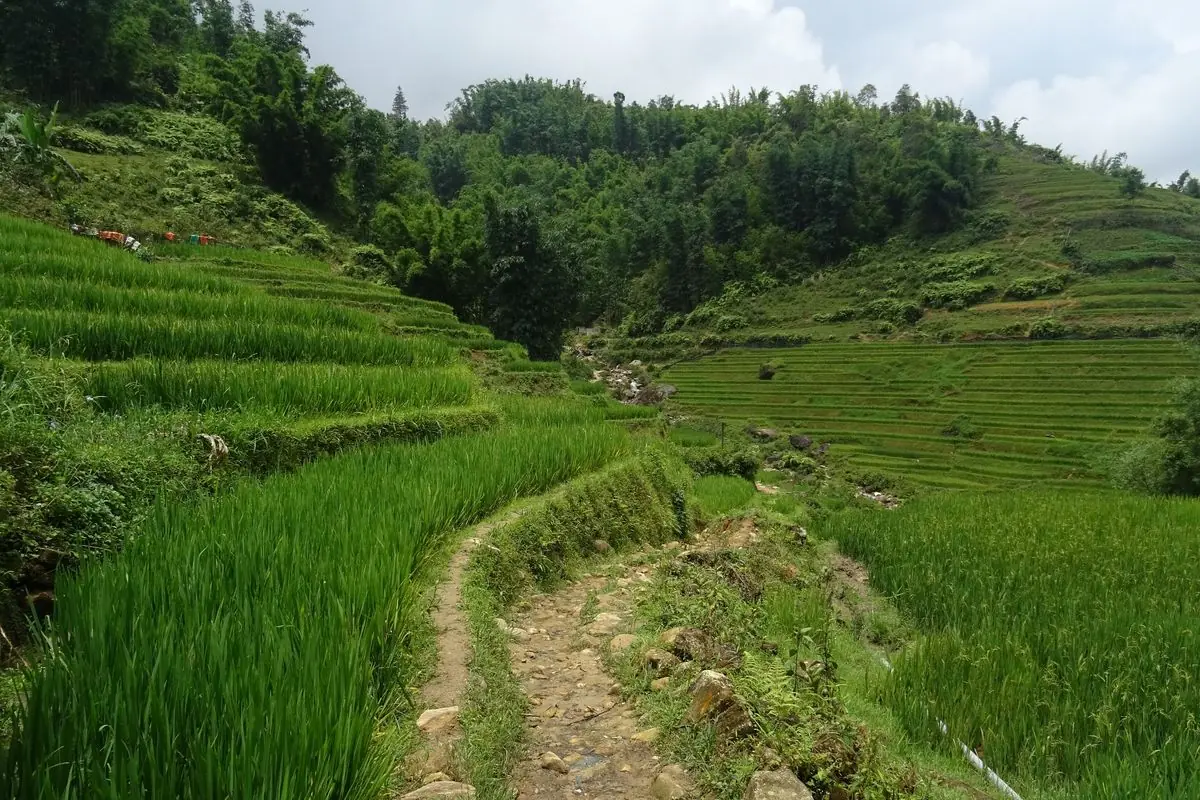
Y Linh Ho - Lao Chai - Ta Van
For travelers who want a proper hike
Y Linh Ho, sometimes written as Ý Linh Hồ, is a Black H’Mong village on the slopes of Muong Hoa Valley. It’s a popular starting point for longer day treks.
The Y Linh Ho - Lao Chai - Ta Van route covers about 12-15 km, with 5-6 hours of actual walking, not including transfers by vehicle.
Along the way, you’ll encounter narrow earth paths beside rice terraces, uneven stones, and repeated climbs and descents.
The scenery keeps changing. One moment you’re walking beside bright green paddies, and the next you’re looking across the entire valley from a hillside. During the rice harvest season, afternoon sunlight falls across the terraces and turns the slopes into layers of gold.
This route suits someone who is already comfortable walking for several hours and cares more about natural scenery than visiting busy tourist attractions.
After heavy rain, the clay trails can become extremely slippery, with mud sticking to your shoes and making even short sections surprisingly slow.
Ta Phin Village
Red Dao culture, village walks, and herbal baths
Ta Phin is roughly 11-12 km north of Sa Pa’s center, away from the Lao Chai - Ta Van trekking corridor.
The village is home mainly to Red Dao families, along with a smaller H’Mong population.
Half a day in Ta Phin is enough to walk through the village, watch traditional embroidery, and visiting the remains of Ta Phin Monastery or the nearby limestone cave.
Longer routes linking Ta Phin with Ma Tra and surrounding hillsides are also available; check current trail conditions with a local guide first.
Ta Phin is known for the traditional Red Dao herbal bath.
Local families prepare the bath by boiling a mixture of mountain plants and pouring the herbal water into wooden tubs. Some family-run facilities offer basic baths for around 80,000-150,000 VND per session. More developed establishments with private rooms and additional services may charge approximately 150,000-350,000 VND.
A typical soak lasts about 15-30 minutes. People with heart conditions, pregnant travelers, or anyone who has recently consumed alcohol should avoid using hot herbal baths without appropriate medical advice.
Ta Phin suits a second day, after a longer trek through Muong Hoa Valley.
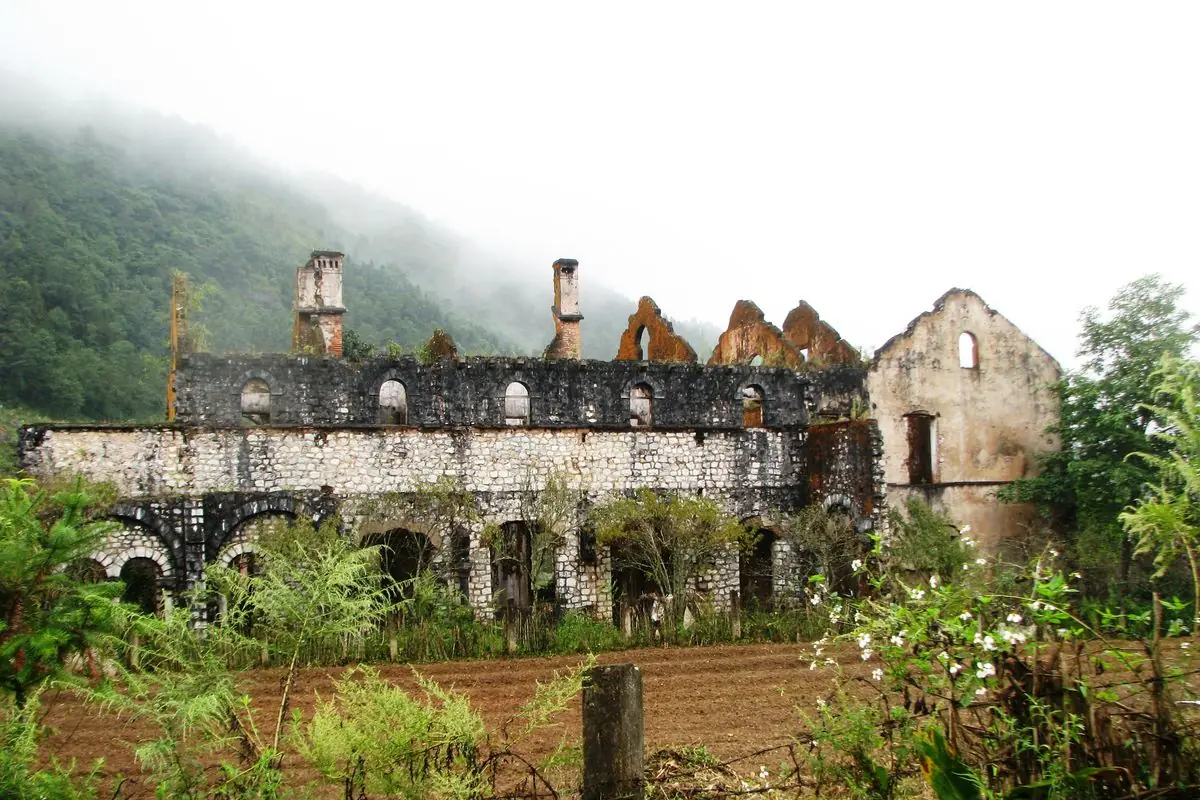
Two days and one night
Stay in a village homestay
A night in a village changes the trip. By evening, most day-trip groups have returned to town. The village roads become quieter, and the atmosphere feels more relaxed. The following morning, you can wake up among the rice terraces and begin walking directly from your accommodation.
Some two-day itineraries follow the route from Sa Pa through Y Linh Ho, Lao Chai, Ta Van, and Giang Ta Chai.
Certain tours cover around 28 km in total, with roughly 16 km on the first day and 12 km on the second. Gentler itineraries shorten the walking sections or arrange additional vehicle transfers.
A two-day trek is a good choice for international visitors who want to experience village life, travelers with reasonable stamina, and anyone who prefers not to rush back to Sa Pa before evening.
Pay close attention to the walking distance for each day when booking. Two tours advertised as "2 days, 1 night" can involve very different levels of physical effort.
2. Cat Cat and Lao Chai - Ta Van entrance fees in 2026
Entrance fees are easy to get wrong when budgeting a Sa Pa trek: Cat Cat operates as an organized tourist attraction, while the fees historically collected along the Muong Hoa Valley route have been governed by different regulations.
Cat Cat Village entrance fee
The adult entrance fee is 150,000 VND per person, payable at the entrance.
Children’s tickets cost approximately 70,000-90,000 VND depending on the applicable height category, while children under 1 meter are generally admitted free.
Children’s prices can change, so families traveling with children should check the posted rates at the ticket counter.
An electric shuttle running from Gate 2 toward the central village area costs around 10,000 VND per person per ride.
Traditional costume rentals, photography services, and shopping are charged separately.
Anyone planning to arrive very early or remain until late evening should confirm the opening hours before visiting.
Is there still a 75,000 VND entrance fee for Lao Chai - Ta Van?
In previous years, travelers entering Muong Hoa Valley often encountered a ticket checkpoint along Provincial Road 152. Adults paid 75,000 VND to pass.
From January 1, 2026, Lao Cai Province’s new fee list no longer includes Muong Hoa Valley, Lao Chai, and Ta Van among the sightseeing sites that charge an entrance fee. The new regulation replaced the earlier fee rules.
Even so, a checkpoint on the road toward Ta Van has kept operating in 2026, although no official notice sets a replacement charge there.
3. Do you need a guide for trekking in Sa Pa?
For Cat Cat and the main Lao Chai - Ta Van route on a dry day, independent trekking is possible.
You can arrange transport to the starting point, download an offline map, and follow the established village roads and permitted walking trails.
Things become less straightforward on the smaller paths around Y Linh Ho. Some junctions between rice terraces have no signs, and online maps may not show recent landslides or changes to local trails.
A local guide knows which paths are suitable in different weather conditions, where vehicles can collect hikers, and how to communicate with families along the route.
Many trekking guides are H’Mong women who live in the villages themselves.
International visitors should check the guide’s spoken languages before booking. English is common among guides serving foreign travelers, but French, Korean, and Chinese-language services vary between individuals and companies.
How much does a trekking guide cost in Sa Pa?
Prices depend on whether you hire a guide privately, join a group, or book a complete package with meals and transportation.
| Service | Approximate price |
|---|---|
| Half-day Vietnamese-speaking guide | 250,000-500,000 VND |
| Full-day Vietnamese-speaking guide | 400,000-800,000 VND |
| Half-day foreign-language guide | 400,000-700,000 VND |
| Full-day foreign-language guide | 700,000-1,200,000 VND |
| One-day group trekking tour | Around 420,000-730,000 VND per person |
These are indicative market prices rather than official fixed rates. The amount you actually pay depends on group size, language, distance, and included services.
Sapa Sisters, a local trekking company that works with H’Mong women guides, publishes these private-tour prices:
| Group size | 1-day tour per person | 2-day, 1-night tour per person |
|---|---|---|
| 1 person | 55 USD | 130 USD |
| 2 people | 45 USD | 98 USD |
| 4 people | 39 USD | 85 USD |
| 8-10 people | 32 USD | 77 USD |
The one-day tour includes a guide, lunch, the valley entrance arrangements handled by the operator, and transport back to Sa Pa town.
Tours lasting two days or longer also include an overnight stay in a shared homestay room, dinner, and breakfast.
Transport from Hanoi to Sa Pa, accommodation in town, drinks, and travel insurance are not included.
Booking directly with local trekking groups can give you more flexibility over the trail and daily pace.
Before paying, confirm the total price, maximum group size, daily walking distance, included meals, and where the vehicle will collect you at the end.
Is hiking Fansipan the same as trekking through the villages?
No. Walking through villages in Muong Hoa Valley and entering the forests of Hoang Lien National Park are two different activities.
In September 2025, two German travelers became lost while trekking independently in Hoang Lien National Park during heavy rain. Rising stream levels delayed the rescue effort until the following morning.
Plan Fansipan as a separate mountain expedition, not an improvised extension of a village walk around Ta Van.
4. How much does a homestay in Ta Van cost?
Ta Van has a wide range of homestays surrounded by rice terraces, located beside streams, or perched on hillsides overlooking Muong Hoa Valley.
The drive from central Sa Pa takes about 30 minutes under favorable road conditions.
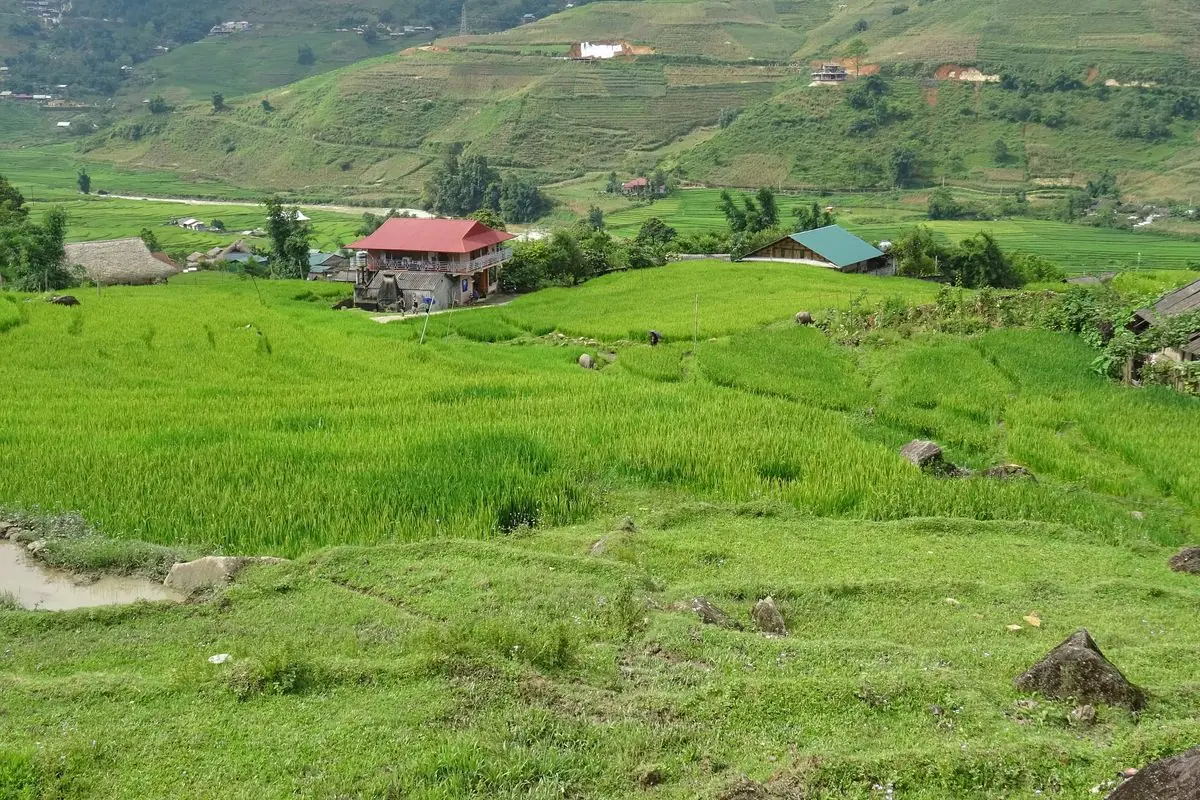
Accommodation comes in two styles.
Traditional family homestays may provide mattresses in a shared room or upstairs sleeping area, shared bathrooms, and meals prepared by the host family.
Modern homestays, eco houses, and bungalows are more likely to offer private rooms, ensuite bathrooms, and terraces overlooking the fields.
Typical 2026 accommodation prices are:
| Accommodation type | Approximate nightly price |
|---|---|
| Bed in a shared dormitory | From around 200,000 VND per person |
| Simple private homestay room | Around 450,000-700,000 VND per room |
| Scenic bungalow or eco house | Around 650,000-1,200,000 VND per room |
On booking platforms, some properties around Ta Van appear from approximately 18-25 USD per night, depending on travel dates and occupancy.
Prices can rise during the rice harvest season and on weekends, particularly for properties overlooking the terraces.
When booking, check the exact location on a map and ask whether a vehicle can reach the entrance.
Some homestays sit below the main road, requiring guests to carry luggage down narrow, steep village paths.
Traditional properties often provide Wi-Fi, charging facilities, bedding, and basic toiletries, although amenities vary. Not every homestay has heating.
From November to February, nights in the valley are cold and damp.
Foreign guests should bring their passports, as accommodation providers must register their stay with the local authorities.
Also confirm whether dinner, hot water, a private bathroom, and luggage storage are available.
For first-time visitors, one night in Ta Van is enough to see village life without packing much.
5. When is the best time to go trekking in Sa Pa?
Sa Pa has two particularly photogenic rice-field seasons: the water-filling season around May and June, and the golden harvest season from late August into September, depending on the year.
Both seasons fall in rainy months.
Across the ten years from 2016 to 2025, rainfall around Sa Pa varied sharply from month to month.
| Period | Typical conditions | Best suited for |
|---|---|---|
| March-April | Mild temperatures, increasing rain, occasional fog | Gentle treks and village exploration |
| May-June | Water-filled terraces, increasingly muddy paths | Rice-field reflections and photography |
| July-August | Heavy rain and higher landslide risk | Avoiding long treks during wet spells |
| September | Golden rice terraces, with frequent rain still possible | Harvest scenery and photography |
| October | Less rain, cooler weather, many fields already harvested | Longer trekking routes |
| November | Relatively dry, pleasant days, cold nights | Village trekking with less mud |
| December-February | Cold, misty, and damp | Shorter walks with flexible schedules |
June through August recorded average monthly rainfall of approximately 340-430 mm, with around 29 days per month receiving at least 1 mm of precipitation.
September averaged around 240 mm and 25 rainy days, while October dropped to approximately 140 mm and November to about 55 mm.
These are long-term averages, not a forecast for a particular day. Weather can change quickly between different elevations and slopes.
When is rice harvest season in Sa Pa?
Muong Hoa Valley generally produces one main rice crop per year.
The terraces usually begin turning golden in late August or early September, with harvesting taking place progressively throughout September.
Some fields remain unharvested until later in the month, depending on weather and planting schedules.
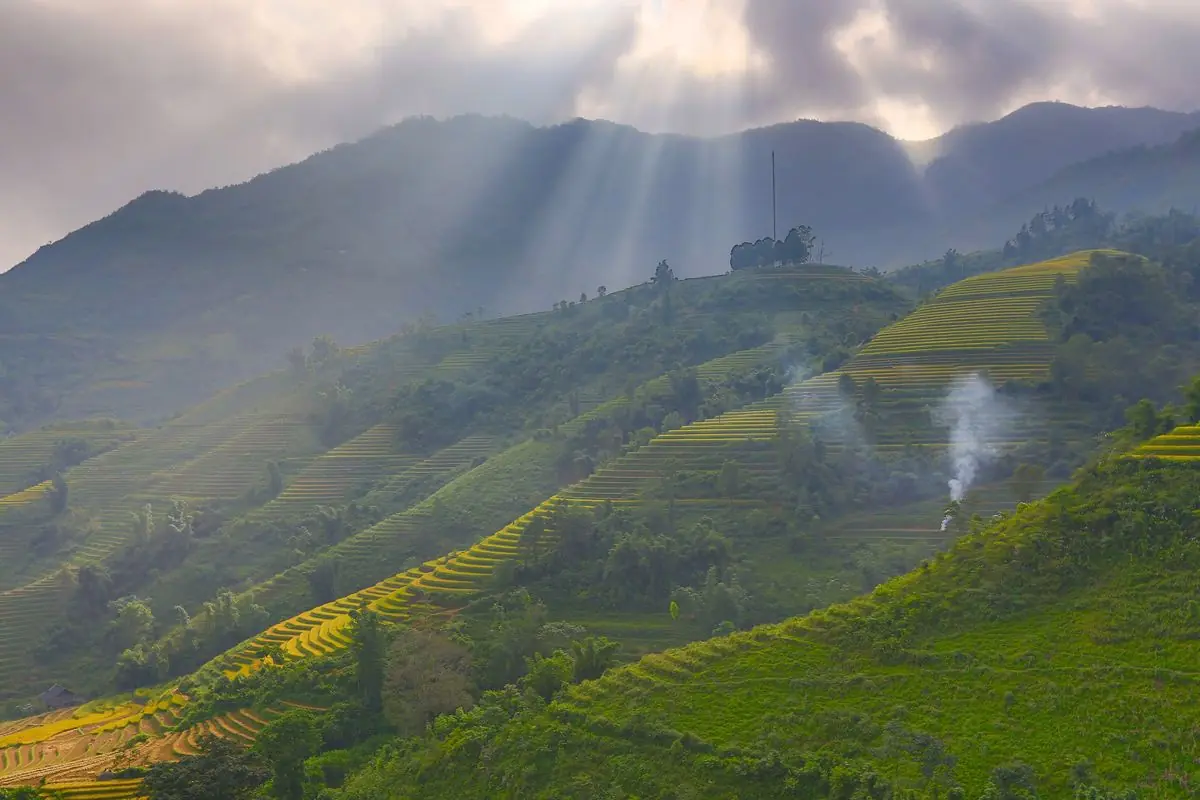
In 2026, many rice fields around Muong Hoa were already golden in early to mid-September, while some areas still had standing rice toward the end of the month.
Popular viewpoints include Y Linh Ho, Lao Chai, Ta Van, Hau Thao, and Sin Chai.
Early morning and approximately 3-6 PM often bring softer angled sunlight that highlights the layered terraces.
Harvest dates shift from year to year, and a one-week shift can change the whole view.
Before booking a room for the golden season, ask the homestay one specific question: have the rice fields immediately around the property already been harvested?
Which month is best for first-time trekkers?
October or November suits someone who prioritizes comfortable walking conditions and a lower chance of heavy rain.
Temperatures are generally mild during the day, and the trails are often less muddy than in midsummer, although fog can still roll in.
March and April are also worth considering, especially for travelers interested in spring scenery and village life rather than golden terraces.
September is the better choice for anyone whose main goal is seeing the rice harvest, provided they’re comfortable adjusting their plans around the rain.
6. What should you pack for trekking in Sa Pa?
A day trek through the villages needs only a small backpack; extra weight makes the uphill sections harder.
- Footwear: Trainers with good grip are usually sufficient for dry village roads. Proper trekking shoes with grippy soles are better for wet limestone, clay, and muddy trails.
- Clothing: Lightweight, breathable clothes, a thin long-sleeved top, a hat, and a waterproof jacket.
- Water and snacks: Carry enough drinking water for the first section, refill or purchase more at village stops, and bring something small to eat.
- Sun and insect protection: Sunscreen is useful even on cloudy days, along with mosquito repellent if you’re staying overnight.
- Phone essentials: Downloaded offline maps, a power bank, your homestay’s phone number, and the contact details of your return driver.
- Overnight clothing: From November to February, bring warm layers and a dry change of clothes for sleeping.
There are small shops and drink stalls along parts of the Lao Chai - Ta Van route, but they’re not available everywhere.
Carrying some Vietnamese dong in small denominations also makes village purchases easier.
What should you do if it rains or gets foggy?
Light rain is common in Muong Hoa Valley; prolonged heavy rainfall is what turns clay paths slippery, raises stream levels, and increases the risk of landslides.
Sa Pa experienced several landslide incidents during the 2026 rainy season.
Overnight on July 28-29, soil and rocks covered part of the Sau Chua road, preventing vehicles from passing at the time. Sections of the access roads into Sa Pa, particularly below steep cut slopes, have also been subject to warnings during heavy rain.
Thick fog can reduce visibility surprisingly quickly.
On trails with multiple unmarked junctions between rice fields, retracing a familiar route is safer than trying an unknown shortcut downhill.
Having a return vehicle option already arranged can also prevent your entire day from depending on the weather.
7. How to handle persistent street vendors on trekking routes
While walking through the villages, you may meet local women who accompany visitors along part of the trail, chatting and offering handmade bracelets, embroidered bags, or scarves.
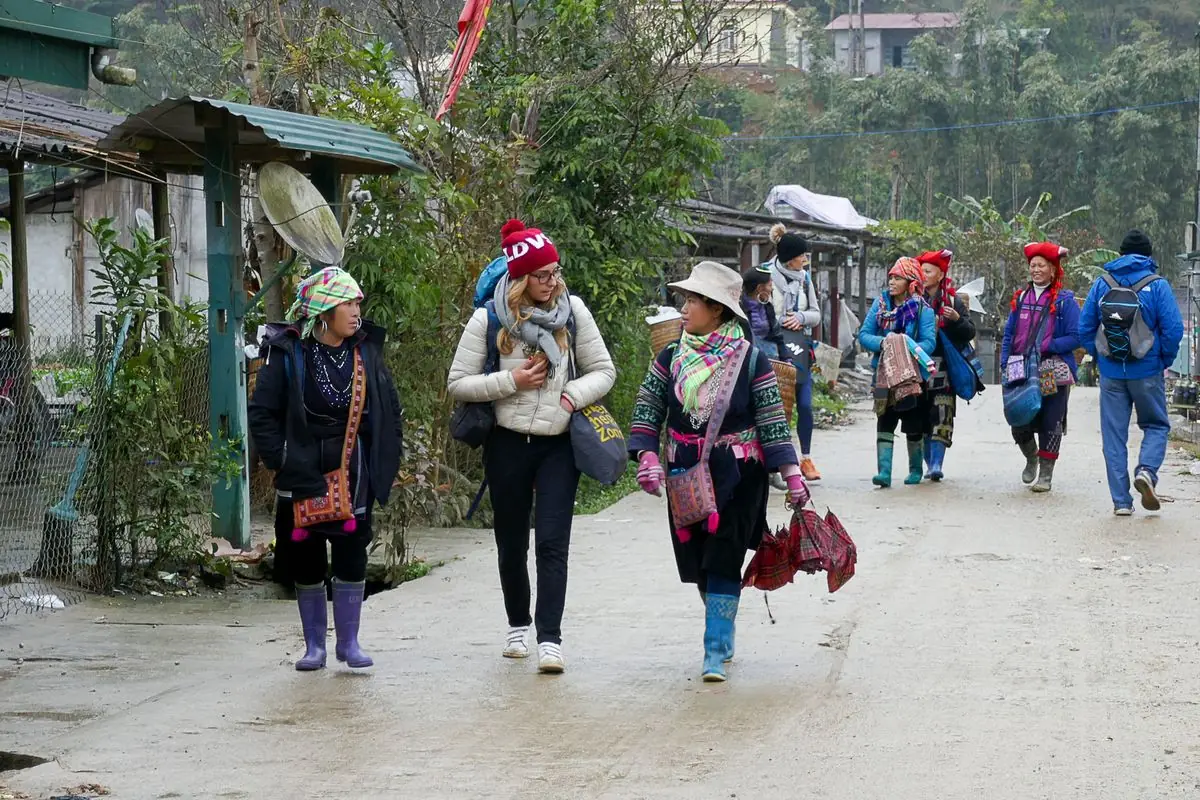
Some are genuinely friendly and happy to point out landmarks or explain something about village life.
At the same time, help or conversation may come with an expectation that you’ll buy something afterward. Saying no is normal.
Then continue with your plans.
Avoid accepting merchandise to hold or try on when you have no intention of purchasing it, and don’t promise to buy something later just to end the conversation.
When you’re trekking with a guide, you can ask them to help communicate.
However, vendors and guides may live in the same village, know one another, or even be relatives. That can make it difficult for a guide to insist that someone leave.
For children selling souvenirs, respond kindly but avoid giving money in exchange for photographs or encouraging children to spend their time selling to tourists instead of attending school.
These villages are people’s homes and workplaces. Ask before photographing someone, entering a family courtyard, or watching a craftsperson at close range.
8. Sa Pa’s new administrative addresses after the 2025 merger
On July 1, 2025, the new Lao Cai Province was formed through the merger of the former Lao Cai and Yen Bai provinces.
Vietnam also introduced a two-tier local government structure, removing the former district and town-level administrative tier.
Many hotel listings, transport services, and online maps still display older addresses.
| Destination | Current administrative address |
|---|---|
| Central Sa Pa and the Stone Church | Sa Pa Ward, Lao Cai Province |
| Cat Cat, Y Linh Ho, Lao Chai, and Ta Van | Ta Van Commune, Lao Cai Province |
| Ta Phin Village | Ta Phin Commune, Lao Cai Province |
| Ban Ho Village | Ban Ho Commune, Lao Cai Province |
The new Sa Pa Ward combines the former wards of Sa Pa, Ham Rong, O Quy Ho, Sa Pa (Sa Pả), Cau May, and Phan Si Pang.
The new Ta Van Commune combines the former Hoang Lien, Muong Hoa, and Ta Van communes.
The new Ta Phin Commune includes the former Ta Phin and Trung Chai areas, while the new Ban Ho Commune combines Ban Ho and Thanh Binh.
Older addresses such as "Sa Pa Town," "Hoang Lien Commune," or "San Sa Ho Commune" may still appear on booking websites.
Usually only the administrative name has changed, and the accommodation is where it always was.
When arranging a taxi or motorbike transfer, send the exact property name, a map pin, and the specific village.
Simply saying "Ta Van Commune" may not tell the driver whether you want to reach Lao Chai, Ta Van Village, or another settlement within the larger administrative area.
9. Suggested Sa Pa trekking itineraries and budgets
- Half a day
Explore Cat Cat Village
Start in the morning from Sa Pa Stone Church and walk down to Cat Cat.
Visit Tien Sa Waterfall, explore the traditional village area, and take your time at the viewpoints.
Allow around 2-3 hours for sightseeing before either walking uphill or arranging transport back to town.
The minimum adult sightseeing budget includes approximately 150,000 VND for admission, plus any food and transport expenses.
This itinerary works particularly well when you’ve just arrived in Sa Pa after an overnight bus journey or have other activities planned for the afternoon.
- One day
Lao Chai - Ta Van trek
Begin in the morning with a vehicle transfer to the Lao Chai area.
Walk through the villages and rice terraces, stop for lunch at a local restaurant or homestay, and continue toward Ta Van before arranging your return ride to central Sa Pa.
For independent visitors, expect approximately 250,000 VND for a one-way taxi ride between central Sa Pa and the Ta Van area, depending on the vehicle and exact pickup point.
Food and the return journey are additional expenses.
Group trekking tours that include a guide, lunch, and transportation commonly cost around 420,000-730,000 VND per person.
- 2 days, 1 night
Y Linh Ho - Lao Chai - Ta Van
On the first day, walk from Y Linh Ho toward Lao Chai, continue down into the valley, and spend the night at a homestay.
Dinner can be a home-cooked meal shared with your host family or other guests.
The following morning, continue through Ta Van, possibly extending toward Giang Ta Chai depending on the tour, before returning to Sa Pa by vehicle.
A private two-day tour with a company such as Sapa Sisters currently ranges from 77 USD per person for groups of 8-10 to 130 USD for a solo traveler, with several services included that independent trekkers would otherwise pay for separately.
Before choosing the longer route, consider the walking ability of everyone in your group, particularly anyone who isn’t used to mountain terrain.
Frequently asked questions
What is the easiest trekking route in Sa Pa for beginners?
Cat Cat Village is the most accessible option because it's close to the town center and has clearly marked sightseeing paths and several resting points. Lao Chai - Ta Van is another beginner-friendly choice when you select a 5-6 km walking section and arrange vehicle transfers at both ends.
How far is the Lao Chai - Ta Van trek, and how long does it take?
The main walk between the villages is usually around 5-6 km and takes approximately 2-3 hours with breaks. Longer versions starting higher up the valley or following additional rice-field trails can cover 7-12 km and take half a day or more.
Do you need a guide for trekking in Sa Pa, and how much does one cost?
A guide isn't compulsory on the common village sightseeing routes. A one-day group tour generally costs around 420,000-730,000 VND per person, while private guide rates depend on language, duration, and group size. Trekking inside Hoang Lien National Park is subject to separate permit and guiding requirements.
How much are Cat Cat Village tickets and Ta Van homestays?
The adult entrance fee for Cat Cat Village is around 150,000 VND in 2026. In Ta Van, beds in shared accommodation may start from approximately 200,000 VND per person per night, while private rooms and bungalows typically range from several hundred thousand to over one million VND per night.
When is rice harvest season in Sa Pa, and which months have less rain?
The rice terraces in Muong Hoa Valley generally turn golden from late August through September, depending on the year and location. October and November tend to receive less rain than June through September, making them more comfortable for trekking on relatively dry trails, although most rice fields have already been harvested.