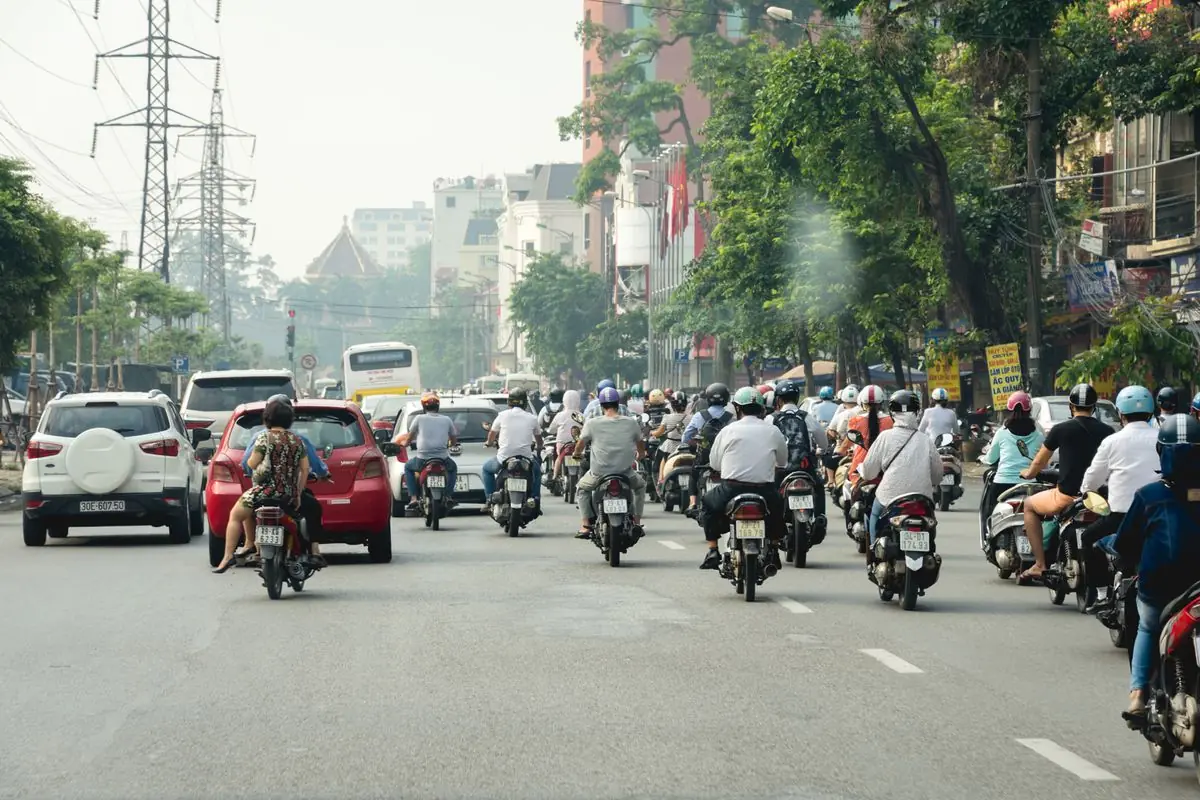
Why does Pu Luong deserve three days when it's so close to Hanoi?
Pu Luong needs at least three days and two nights: an afternoon to arrive, a full day of trekking between villages, and a slow last morning. Choose the right place to stay, book your return transport early, and avoid periods of heavy rain.
 18 min read
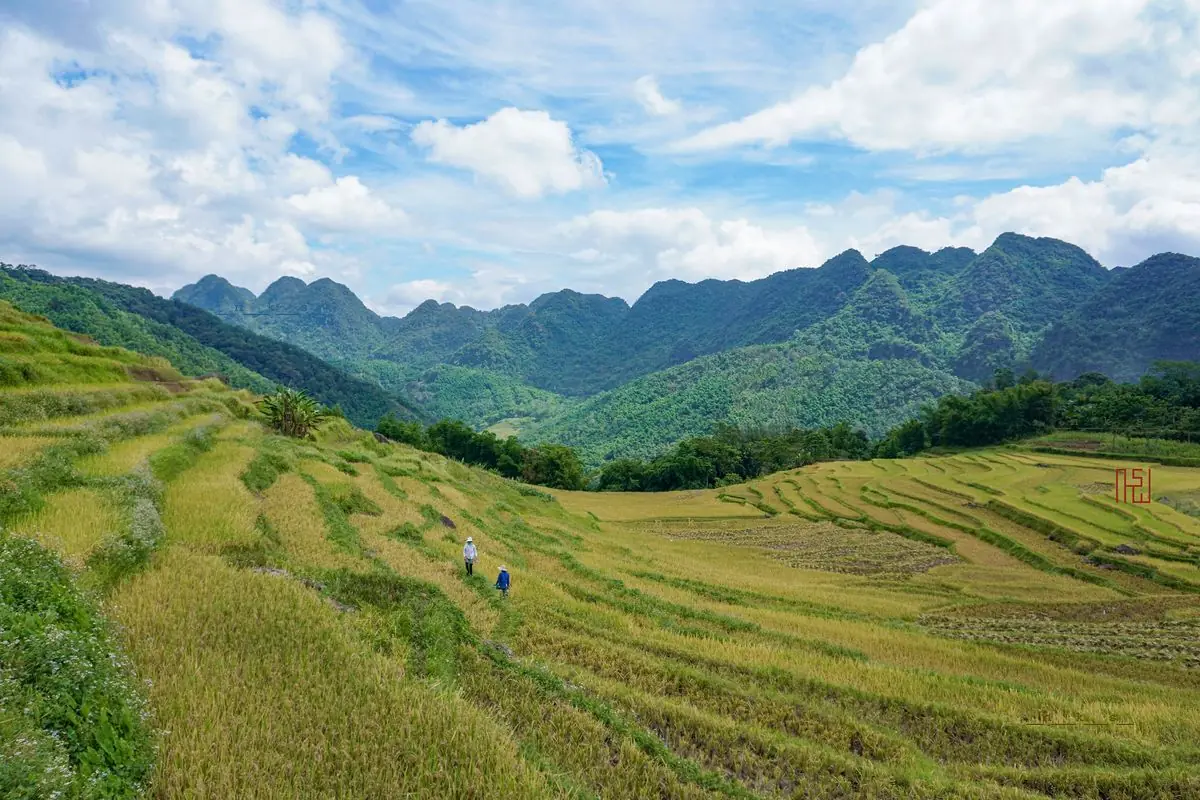
Pu Luong's terraces at harvest time, with people walking along the paddy edges below the limestone hills.
Pu Luong is 4.5-5 hours by road from Hanoi. Spend most of your first day traveling and your next morning checking out, and you might barely get beyond the view from your balcony. Three days and two nights give you enough time to walk between villages, wander through bamboo forests, and see the rice terraces without constantly watching the clock.
Where is Pu Luong, and what makes it special?
Pu Luong is a mountainous nature reserve in northwestern Thanh Hoa Province, known for its forests, valleys, terraced rice fields, and traditional villages of the Thai and Muong ethnic communities.
Established in 1999, Pu Luong Nature Reserve covers approximately 17,662 hectares across the former Ba Thuoc and Quan Hoa districts.
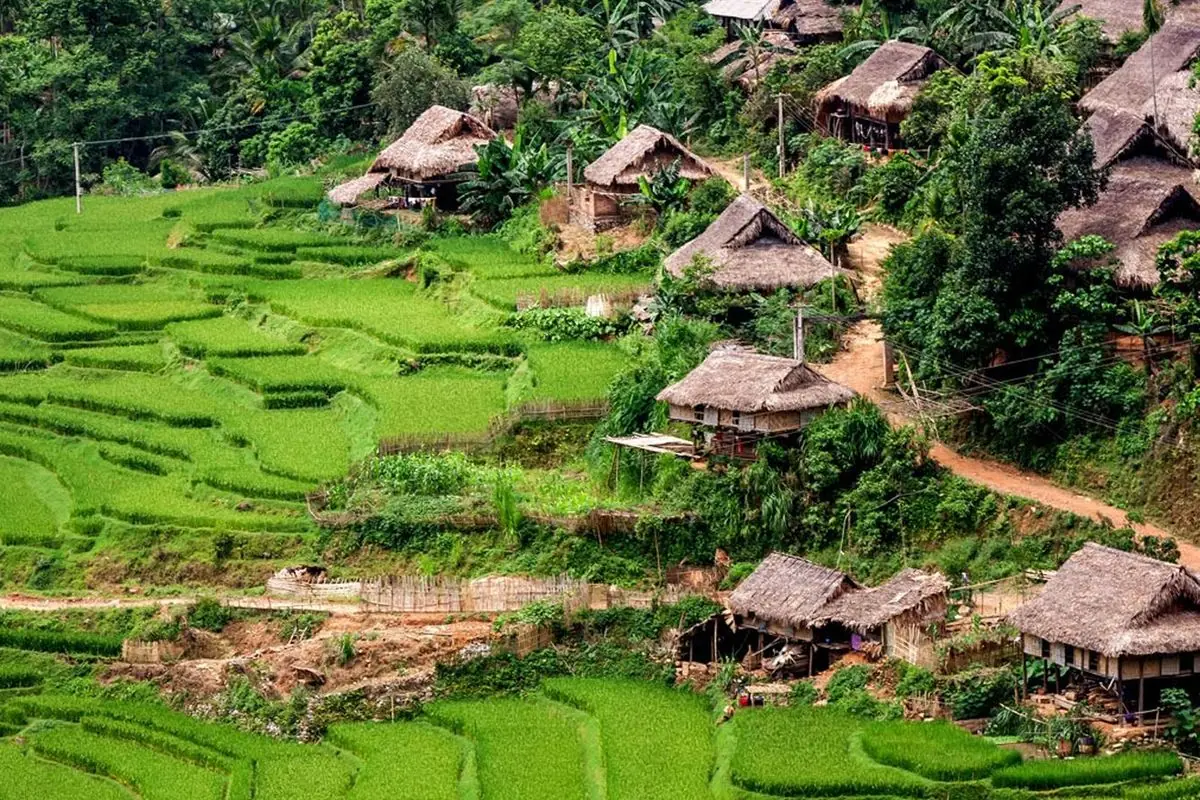
The landscape changes quickly here. One moment, you’re traveling beside bright green rice fields. A few bends later, wooden stilt houses appear beneath limestone mountains, with bamboo groves and narrow paths winding between them.
Some villages still follow a quiet agricultural rhythm, while Ban Don has developed a growing collection of homestays, restaurants, and scenic ecolodges.
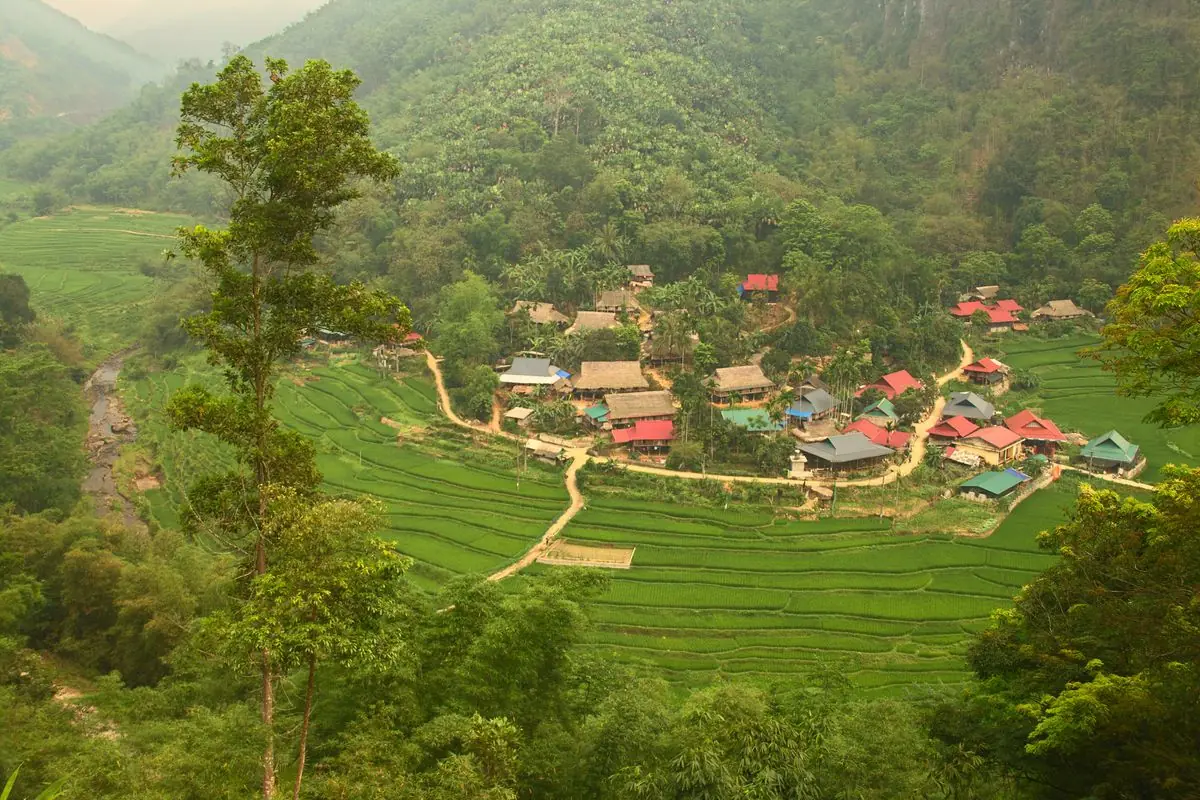
Pu Luong is calmer than Vietnam’s more famous mountain destinations, though weekends, public holidays, and rice harvest periods can get busy.
During the 2026 New Year holiday, Pu Luong welcomed nearly 32,000 visitors, and many accommodation properties reported full occupancy. Book ahead if your trip falls on a Vietnamese holiday.
Pu Luong’s new administrative addresses after July 2025
Vietnam reorganized its local administrative divisions on July 1, 2025. Thanh Hoa Province remained unchanged, but the former Ba Thuoc District was dissolved as part of the removal of district-level administration.
| Destination | Current administrative address |
|---|---|
| Ban Don, Kho Muong, Pho Doan | Pu Luong Commune, Thanh Hoa Province |
| Ban Hieu, Hieu Waterfall, Son - Ba - Muoi | Co Lung Commune, Thanh Hoa Province |
| Former Canh Nang Town | Ba Thuoc Commune, Thanh Hoa Province |
The new Pu Luong Commune combines the former Thanh Son, Lung Niem, and Thanh Lam communes. Co Lung Commune combines the former Lung Cao and Co Lung communes.
You’ll still see older addresses such as "Ba Thuoc, Thanh Hoa" or "Thanh Lam, Ba Thuoc" on booking websites, Google Maps, and bus listings. Confirm the village name, map location, and exact pickup or drop-off point before making a reservation.
How to get from Hanoi to Pu Luong
Pu Luong is approximately 156-161 km from Hanoi, depending on your destination within the reserve, and the journey takes around 4.5-5 hours by road.
For most travelers, especially those without experience driving in Vietnam’s mountains, a limousine minivan is the easiest option.
Hanoi to Pu Luong by limousine
Most services use 9-16-seat vehicles, collecting passengers from central Hanoi before heading toward Pu Luong.
| Operator | Hanoi departure | Main pickup area | One-way fare |
|---|---|---|---|
| Pu Luong Excursions | 6:40 AM | Hang Ngang and Hang Dao, Old Quarter | 350,000 VND |
| Tien Minh Luxury Bus | Around 7:00 AM | 1 Trang Tien, near Hanoi Opera House | 339,000 VND |
| Lan Anh Limousine | 7:00 AM, 1:30 PM | Hanoi Opera House | 350,000 VND |
There are roughly five limousine departures a day on this route, although not every operator runs the same schedule every day.
The 1:30 PM Lan Anh departure is one of the latest you can catch out of Hanoi.
Prices and timetables can change with travel dates, seat availability, and operator arrangements.
Check carefully where the vehicle actually drops you off.
Some services stop at Gateway Inn Puluong, others along National Highway 15C, and some near the Pu Luong 0KM restaurant area.
Not every vehicle can reach every homestay, particularly those hidden down narrow or steep village roads.
Send your accommodation’s location to the operator before departure. Many homestays can arrange a short transfer from the main road if necessary.
What time is the last bus from Pu Luong to Hanoi?
Return services are usually concentrated around midday and early afternoon.
| Operator | Pu Luong departure | Hanoi drop-off | Approximate fare |
|---|---|---|---|
| Lan Anh Limousine | 1:00 PM | Hanoi Opera House | 350,000 VND |
| First Class Puluong | 1:15 PM | 13 Hang Muoi Street | 400,000 VND |
| Pu Luong Excursions | 1:15 PM | Hanoi Old Quarter | 350,000 VND |
| Tien Minh Luxury Bus | 1:30-1:32 PM | Hanoi Opera House area | 339,000 VND |
The last return bus usually leaves around 1:30-1:32 PM, not late afternoon or evening.
The trip back to Hanoi generally takes 4.5-5 hours.
There isn’t a centralized intercity bus terminal inside Pu Luong. Drivers usually collect passengers from agreed meeting points, roadside locations, or accommodation properties.
Book your return ticket in advance and confirm the pickup location with both the operator and your host.
Getting to Pu Luong from Ninh Binh, Mai Chau, or Tho Xuan Airport
Pu Luong fits easily into a longer northern Vietnam itinerary. From Ninh Binh or Mai Chau you can transfer straight to the reserve without returning to Hanoi.
From Ninh Binh to Pu Luong
The journey from Tam Coc to Pu Luong covers approximately 142 km and usually takes 3.5-4 hours by minivan.
Two operators run this route:
- Expats Way Travel: departures around 7:30 AM and 1:30 PM from Tam Coc, with tickets starting at approximately 400,000 VND.
- The Long Travel: departures around 7:30 AM and 1:30 PM, with fares around 420,000 VND.
These are reference ticket prices and may exclude booking fees. Actual arrival times can vary by around 30 minutes depending on traffic and passenger stops.
It suits a Hanoi - Ninh Binh - Pu Luong - Hanoi loop: a couple of days around Trang An or Tam Coc, then into the mountains without backtracking.
From Mai Chau to Pu Luong
Mai Chau and Pu Luong are relatively close, connected by mountain roads including National Highways 15 and 15C.
The transfer normally takes around 1-2 hours, depending on your starting point and accommodation.
Shared vans and limousine services may cost approximately US$9-27 per person, with departures spread from about 11:30 AM to 5:00 PM.
Services are limited compared with the Hanoi route, so ask your Mai Chau accommodation to confirm transport before your travel day.
One night in Mai Chau followed by two or three nights in Pu Luong makes an easy pace.
Both destinations have traditional Thai stilt-house villages, but Pu Luong offers more extensive forest trails, steep valleys, and terraced landscapes for hikers.
From Tho Xuan Airport
Travelers flying from Ho Chi Minh City or other parts of southern Vietnam can fly straight into Tho Xuan Airport in Thanh Hoa.
The airport is approximately 85-95 km from many Pu Luong accommodation areas, with a road transfer typically taking more than two hours.
Travel times vary with weather, road conditions, and your exact destination.
Arrange a private airport pickup in advance, preferably through your accommodation. Ride-hailing services are not a reliable option once you’re in the nature reserve.
Should you drive to Pu Luong yourself?
Driving gives you more freedom to stop at viewpoints, visit Mai Chau, and explore different villages.
However, the final mountain sections include sharp bends, steep gradients, narrow roads, and occasional poor visibility.
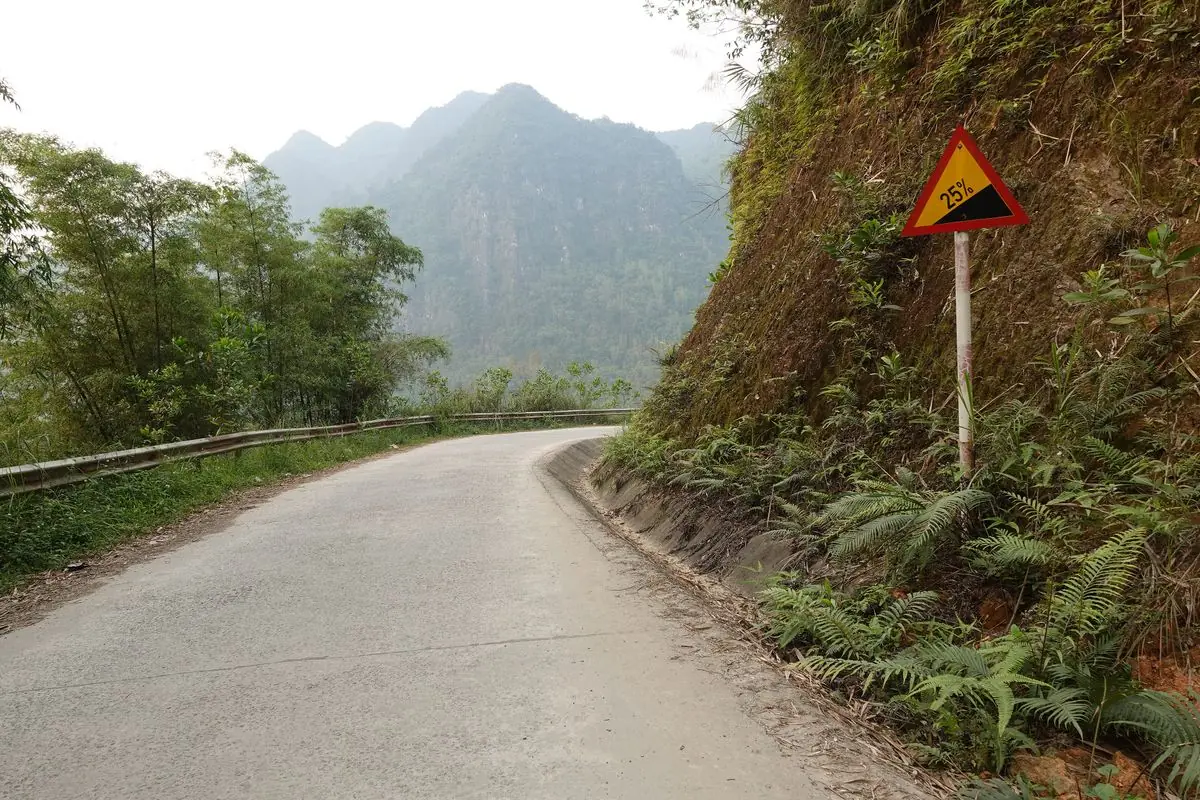
There are two main approaches from Hanoi.
Via National Highway 6 and Mai Chau: this route passes through the Thung Khe Pass area, continues toward Mai Chau, and connects with National Highways 15 and 15C into Pu Luong. It suits travelers who want to combine both destinations.
Via the Ho Chi Minh Highway: this approach travels through the wider Cuc Phuong and Cam Thuy areas before continuing toward the former Ba Thuoc District.
Bus operators may choose different routes depending on the day’s traffic, weather, and road conditions.
Drive in daylight and dry weather whenever possible. Rain and fog can make mountain bends much harder to judge.
Can foreign travelers ride motorbikes in Pu Luong?
If you’re unfamiliar with Vietnamese mountain roads, hiring a driver or using shared transfers is a much more comfortable choice.
How many nights should you spend in Pu Luong?
A day trip from Hanoi is possible on paper, but with nearly 9-10 hours of travel in both directions, you’d have very little time left for the villages, rice terraces, or walking trails.
Pu Luong 3 days 2 nights itinerary
This itinerary suits first-time visitors, couples, and small groups who want a relaxed introduction.
- Day 1
Hanoi to Ban Don
Take a morning limousine from Hanoi and arrive around lunchtime.
After checking in and having something to eat, spend the afternoon walking around Ban Don, photographing the terraces, or cycling along the quieter village roads.
Have dinner at your homestay. Depending on what’s available, you might try bamboo-tube rice, local chicken, forest vegetables, and other regional dishes prepared by your hosts.
- Day 2
Trekking between villages
Dedicate the day to exploring Pu Luong on foot.
For an easier outing, try the route between Ban Don and Ban Bang. More active travelers can choose a longer trek toward the Ban Hieu area.
You could also combine a walk with a visit to Hieu Waterfall, using a vehicle transfer in one direction to avoid retracing the entire route.
Start early, carry enough drinking water, and ask your accommodation about a packed lunch or places to eat along the way.
- Day 3
A slow morning and return to Hanoi
Enjoy breakfast, take a final walk through the fields, and check out before your scheduled transfer.
With most return services leaving around 1:15-1:30 PM, you still have time for a peaceful morning.
If it’s Sunday, consider visiting Pho Doan Market early, as long as you can comfortably return to your pickup point.
Pu Luong 4 days 3 nights itinerary
Three nights make more sense if you love trekking, photography, or exploring areas away from the main accommodation hubs.
- Day 1: arrive in Ban Don, settle into your accommodation, and explore nearby rice terraces.
- Day 2: take a longer trek through the villages and discover Kho Muong and the area around Bat Cave.
- Day 3: visit Hieu Waterfall and Pho Doan, or join a guided full-day hiking route.
- Day 4: have breakfast, buy a few local products, and return to Hanoi or continue toward Ninh Binh or Mai Chau.
If you’re planning to climb Pu Luong’s summit, reserve an entire day or join an organized overnight expedition. It’s not an activity to squeeze into the morning before your return bus.
Where to stay in Pu Luong: homestay or ecolodge?
A modest budget still gets you a bed among the rice terraces.
Traditional stilt-house homestays, private village rooms, bungalows, and ecolodges with infinity-style pools are all available.
How much does accommodation in Pu Luong cost?
The following are approximate nightly accommodation prices for two adults.
Actual prices vary by room type, travel date, booking conditions, taxes, and peak-season demand.
| Accommodation type | Approximate nightly price | Examples |
|---|---|---|
| Budget homestay | US$11-30 | Pu Luong Jungle King 1, Pu Luong Serenity Lodge |
| Mid-range lodge | US$40-80 | Inh La Home, NaCo Lodge |
| Resort or ecolodge | US$100-160 | Pu Luong Eco Garden, Pu Luong EcoLuxe, Ebino |
| Luxury accommodation | Several hundred US dollars | Jardin de Puluong |
Rooms start at approximately US$11.50 for budget accommodation, while several ecolodges exceed US$100 per night.
High-end properties can sometimes approach US$400 a night.
Traditional homestays are ideal if you want to spend time with local families, share meals, and experience village life. Some offer shared sleeping areas and basic facilities, so check whether your room includes a private bathroom and air conditioning.
Mid-range lodges offer a comfortable balance between nature and privacy. You’ll often find private rooms, attached bathrooms, balconies, and small restaurants.
Resorts and ecolodges suit couples, families, and travelers who want more relaxation than trekking. Pools overlooking rice terraces push prices up during the most scenic months.
Puluong Retreat in Ban Don is an example of a property offering different accommodation styles, from traditional stilt houses to bungalows and villas overlooking the valley.
It also organizes outdoor activities such as hiking, cycling, and local excursions.
Should you stay in Ban Don, Kho Muong, or Ban Hieu?
Ban Don
Best for first-time visitors
Ban Don is one of the most convenient places to stay in Pu Luong.
It’s a large Thai village with plenty of homestays, resorts, and restaurants, with views over the surrounding rice terraces.
The winding S-shaped road through the fields is a favorite photography spot.
Ban Don is also a practical base for organizing guided walks and transfers.
The trade-off is that it can become busy on weekends and holidays.
Kho Muong
Best for peace and trekking
Kho Muong sits in a more secluded valley surrounded by limestone mountains.
The approach road includes steep and winding sections. At the end are stilt houses and rice fields under the cliffs.
You can explore village paths, walk toward the Bat Cave area when access conditions allow, and stay in small locally run homestays.
Kho Muong is a good choice if you value quiet surroundings more than convenient transport or restaurant options.
Ban Hieu
Best for waterfalls and outdoor activities
Ban Hieu lies in Co Lung Commune and is best known for Hieu Waterfall.
The waterfall features several small cascades, rocky sections, and clear pools surrounded by vegetation.
Some areas may be suitable for bathing when conditions are safe, but water levels and currents change significantly after rainfall.
Stay near Ban Hieu if you want to spend more time around streams, waterfalls, and rural landscapes.
Pu Luong trekking: which trails are best for beginners?
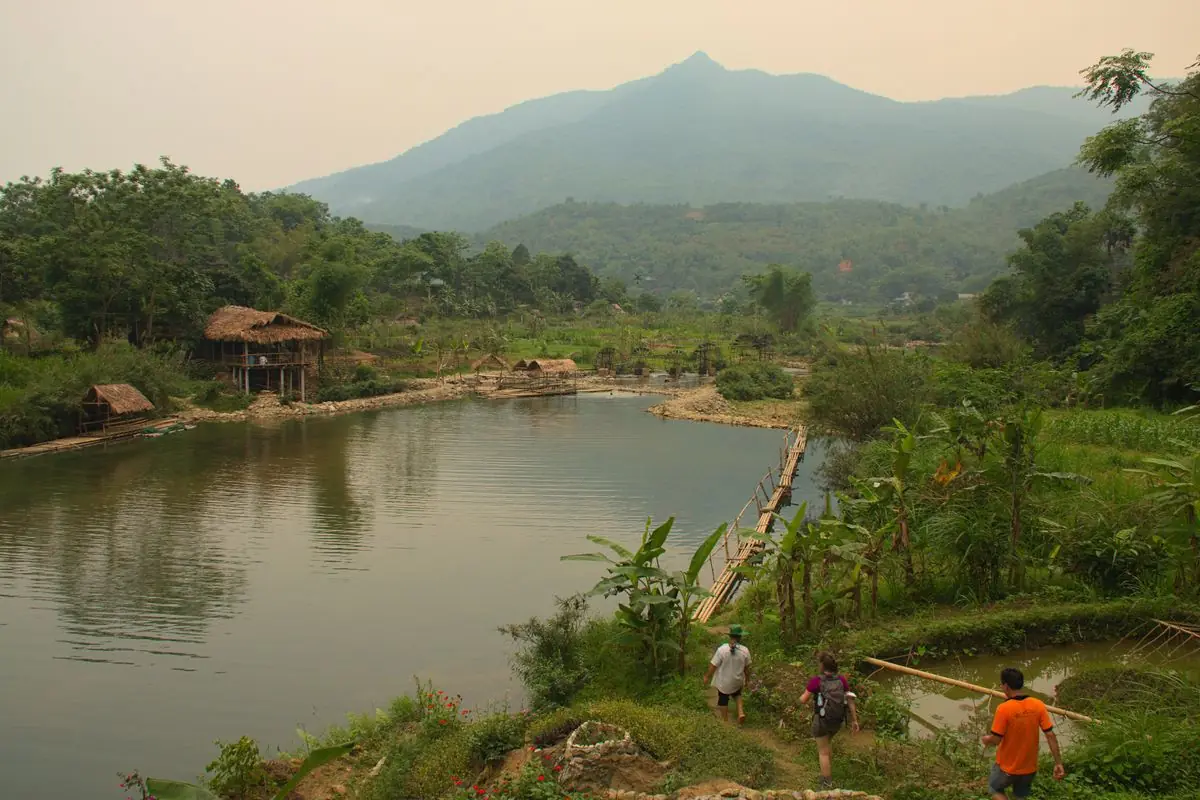
Pu Luong offers everything from gentle walks across rice fields to demanding forest hikes.
Many routes suit anyone used to walking, though some paths between villages involve real climbs.
Popular trekking routes in Pu Luong
| Trekking route | Approximate distance | Walking time | Difficulty |
|---|---|---|---|
| Ban Don - Ban Bang | 5 km | 1.5 hours | Easy |
| Pho Doan - Ban Hieu | 6 km | 2 hours | Easy to moderate |
| Ban Don - Ban Hieu, longer route | 8-12 km | 3-5 hours | Moderate |
| Ban Hang - Eo Ken, Kho Muong area | 8 km | 4 hours | Moderate |
| Multi-village full-day trek | 15-20 km | 7-8 hours or longer | Challenging |
Distances are planning estimates, because guides may use different starting points, field paths, forest trails, and finishing locations.
Ban Don to Ban Bang: an easy walk through rice fields
This is a gentle introduction to trekking in Pu Luong.
The route passes small rice terraces, traditional houses, agricultural paths, and stretches of relatively flat countryside.
It suits travelers who want to take photographs and stop often without committing to a demanding hike.
Pho Doan to Ban Hieu: village life and waterfalls
This route is a good option for combining local culture with natural scenery.
You can walk through the village landscape toward the Ban Hieu area and continue to Hieu Waterfall.
Arranging a vehicle to collect you at the end makes the day much easier, especially if the weather is hot.
Ban Don to Ban Hieu: a longer countryside trek
The longer route between Ban Don and Ban Hieu involves more climbing and descending.
You’ll encounter a mixture of village roads, footpaths, and sections that cross or overlook agricultural land.
Arrange transport at one end so you only walk it one way.
Kho Muong and Eo Ken: rice terraces and bamboo forests
Paths in the Kho Muong area move between terraced fields, bamboo stands, forest vegetation, and small valleys.
Certain sections become muddy after rain, and not all trail junctions are clearly marked.
Go with a local guide here.
Do you need a guide for trekking in Pu Luong?
Not every walk requires a guide.
For short, clearly visible village paths around Ban Don, independent exploration is generally reasonable in good weather after confirming the route locally.
Hire a local guide for longer treks that cross multiple villages, enter forested areas, or involve remote trails around Kho Muong.
Local guides know which paths have been damaged by recent rainfall, where crossings have become unsafe, and which routes pass through private agricultural land.
Before confirming a trekking tour, ask about the total walking distance, estimated duration, elevation changes, lunch arrangements, and transport at the end.
Foreign visitors should also confirm whether an English-speaking guide is available. Not every accommodation automatically provides one.
Climbing Pu Luong Peak at around 1,700 meters
Reaching Pu Luong’s summit is a different experience from walking between villages.
The ascent can include steep forest paths, exposed roots, slippery rocks, and uneven mountain slopes.
Some organized routes allocate around 5-6 hours for the main climbing section, while longer mountain traverses approaching 20 km may require 7-10 hours or more.
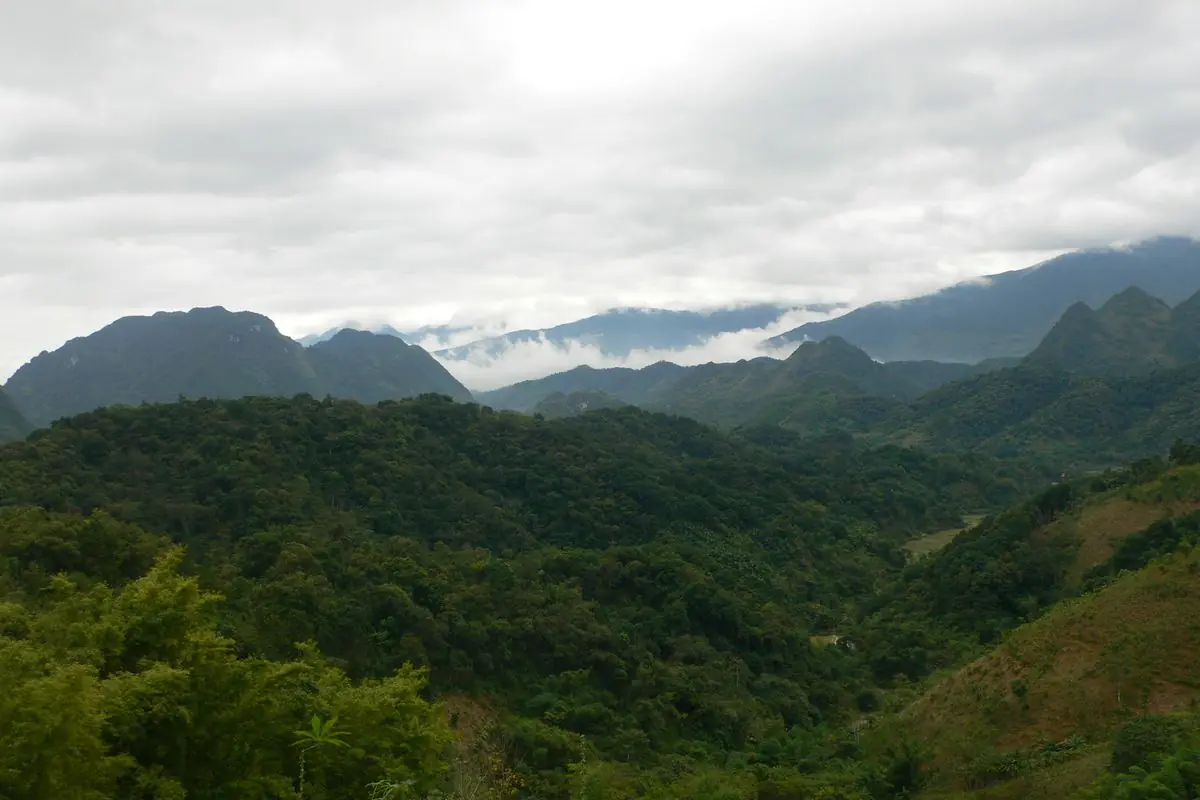
The summit is for fit travelers with some hiking experience, going with an experienced local guide who knows the current trail conditions.
Accommodation providers and tour operators may offer full-day climbs or two-day expeditions with an overnight component.
Camping in protected forest areas shouldn’t be organized independently without checking the reserve’s regulations and obtaining any required permission.
Make sure your operator has a suitable route, weather plan, and emergency arrangements.
Pack proper hiking shoes, long trousers, drinking water, insect repellent, protection against leeches, a rain jacket, and a flashlight.
Warmer layers are useful during cooler months, even when daytime temperatures feel comfortable.
What else can you do in Pu Luong besides trekking?
Visit Hieu Waterfall
Hieu Waterfall works for a slower outdoor afternoon.
Water flows over several rocky levels, passing through greenery and creating small pools along the stream.
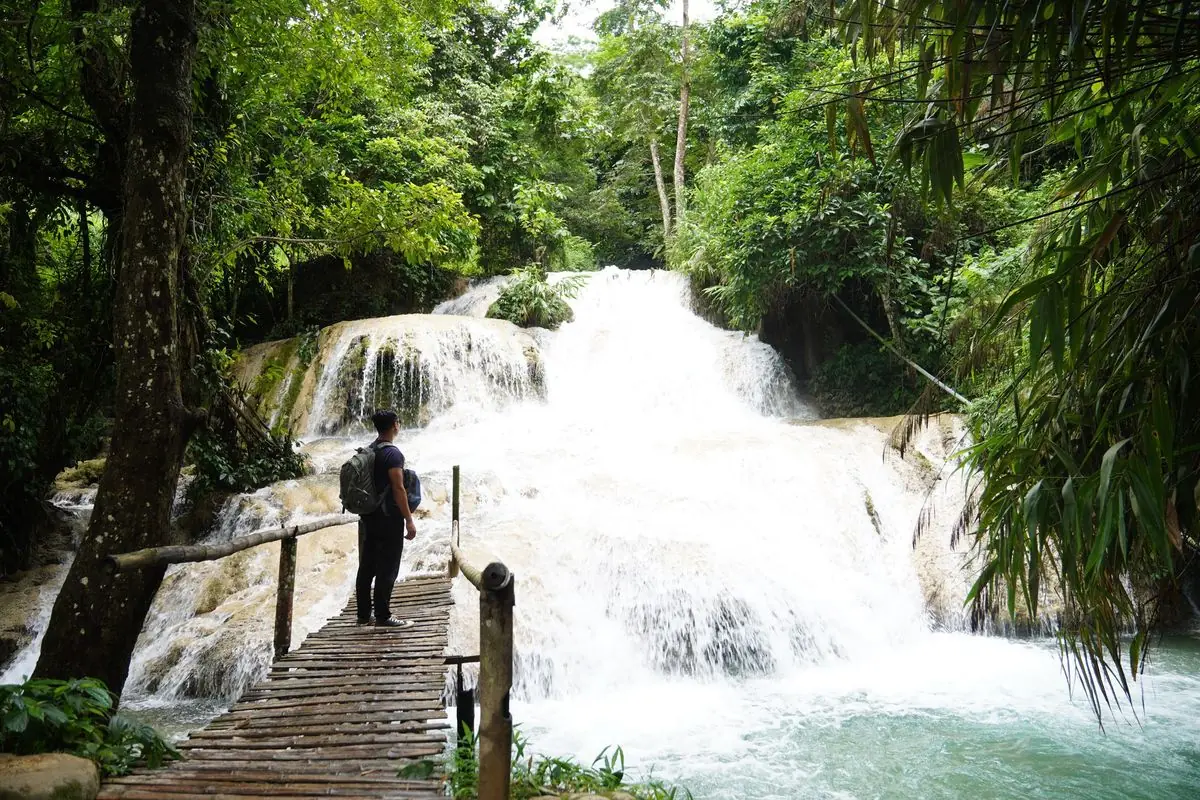
During drier conditions, the water is often easier to observe and the surrounding paths may be more manageable.
After heavy rain, however, water levels can rise, currents become stronger, and rocks become extremely slippery.
Only enter areas where conditions are safe and access is permitted. Avoid deep pools, strong currents, and restricted sections.
Explore Pho Doan Sunday market
Pho Doan Market shows a side of Pu Luong beyond the resorts.
The traditional market is usually held on Sunday mornings.
Local Thai, Muong, and Kinh communities bring vegetables, forest products, fruit, textiles, and handmade goods to sell.
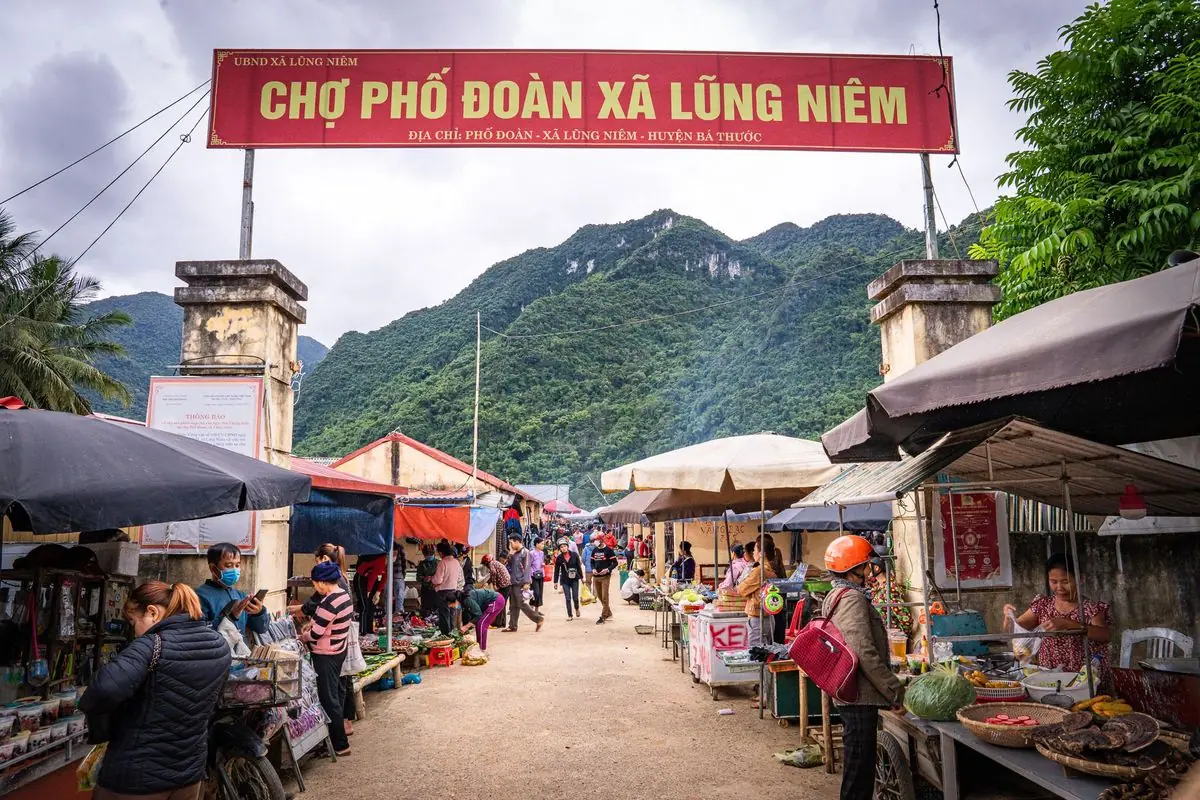
Arriving early gives you a better chance to experience the market while it’s active.
When photographing vendors, ask permission first.
Cycle through the rice terraces
Many homestays provide bicycles for guests, either free of charge or for a small rental fee.
The easier roads around Ban Don are enjoyable for relaxed cycling, especially in the morning or late afternoon.
Longer mountain cycling routes can be much more demanding, so check the bike’s condition and the terrain before setting off.
There are plenty of places to stop on the way: a small irrigation canal, someone working in the fields, a bamboo grove.
When is the best time to visit Pu Luong for golden rice fields?
Pu Luong usually has two rice-growing seasons each year, creating two opportunities to see the terraces turn golden.
Harvest dates vary between villages and from one year to another.
One field might be bright yellow while another has already been harvested, and a nearby terrace may still be green.
The most photogenic golden period often lasts only two or three weeks in each area.
Some sticky-rice fields in Pu Luong mature later than those in other northern Vietnamese mountain regions, meaning you may occasionally find golden terraces toward the end of October.
Which months offer the best balance of scenery and weather?
| Period | Typical scenery | What to consider |
|---|---|---|
| March-April | Fresh green rice fields and hillsides | Too early for golden terraces |
| Late May - mid-June | First golden rice harvest | Warm, humid weather and occasional heavy showers |
| July-August | Lush forests and full streams | Heavy rain, muddy trails, and higher landslide risk |
| Late September-October | Second golden rice harvest | Storms and heavy rain remain possible |
| November-February | Cooler, generally drier landscapes | Fewer golden fields after harvest |
Averaged over 2016-2025, August is Pu Luong’s wettest month, with approximately 460 mm of rain.
July averages around 360 mm, September around 320 mm, and October around 200 mm.
Monthly rainfall from November through February is generally below 75 mm, with December among the driest months at approximately 40 mm.
These are historical modeled averages for a representative location, not measurements from every village or predictions for your particular travel dates.
For golden fields, plan around late May to early June or late September through October.
For longer forest treks, avoid the days right after several days of rain.
About a week before arrival, message your homestay and ask for recent photos of the fields around their village. A fresh photo from a local host tells you more than a general online rice-season calendar.
Is Pu Luong safe during the rainy season?
Pu Luong’s steep mountain terrain, forest slopes, and roadside embankments make heavy rain a real hazard.
Prolonged rainfall can trigger landslides, damage road surfaces, create slippery trails, and reduce visibility on mountain passes.
During storms in October 2025, roads around Ban Don experienced landslides and serious damage, including cracked surfaces, ground subsidence, and sections affected by fallen utility infrastructure.
Local authorities subsequently organized repair and stabilization work.
New periods of heavy rain can create fresh hazards, even on roads that were repaired.
One or two days before traveling, ask your accommodation whether the access road is open, whether nearby trekking routes have been inspected, and whether heavy rain or landslide warnings are in effect.
Getting around Pu Luong and practical travel tips
Grab and similar ride-hailing services aren’t widely available within Pu Luong.
Getting around usually involves walking, cycling, renting a motorbike, or arranging a local vehicle through your accommodation.
If your plans include both Kho Muong and Hieu Waterfall, organize transport in advance; drivers are hard to find along the way.
- Cash in small denominations: useful for village meals, local transport, and market purchases.
- Offline maps: mobile reception may be unreliable in more remote valleys.
- Shoes with good grip: ordinary fashion sneakers or sandals aren’t ideal for muddy mountain paths.
- Meal arrangements: some villages have very few restaurants, particularly after dark.
- A reusable water bottle and rubbish bag: keep trails and agricultural areas clean during your walks.
Do foreign visitors need a passport for homestays?
Yes. Foreign guests should bring their passport and valid immigration documents when checking into accommodation in Vietnam.
Homestay operators, like hotels, are responsible for reporting foreign guests’ temporary residence information to the authorities.
Electronic registration must be made when the guest arrives.
For paper declarations, the standard submission deadline is 12 hours, extended to 24 hours in remote areas.
Confirm that your accommodation accepts international guests and can handle the required registration.
You should also check transport arrangements and language support before arriving, especially in smaller villages.
How much money do you need for a Pu Luong trip?
Your total budget depends mainly on accommodation and how much private transport you need.
For a three-day, two-night trip from Hanoi, return limousine tickets typically cost approximately 680,000-800,000 VND per person at reference rates.
Accommodation varies enormously.
Budget homestays can cost only a few hundred thousand Vietnamese dong per night, while many ecolodges and resorts with pools charge several million dong per room during popular travel periods.
Beyond transport and accommodation, leave room in your budget for meals, local transfers, guided trekking, and unexpected changes caused by weather.
Solo travelers can save money by choosing shared stilt-house accommodation and group transport.
Friends traveling together may find it worthwhile to split the cost of a private vehicle or guide.
Couples and families choosing resorts should pay attention to location, room views, and transfer arrangements rather than selecting a property solely because of its swimming pool.
Frequently asked questions
What's the easiest way to get from Hanoi to Pu Luong?
A 9-16-seat limousine minivan is the most convenient option for most visitors. One-way fares are usually around 339,000-350,000 VND, and the journey takes approximately 4.5-5 hours. Book your return ticket early and confirm whether the vehicle stops at your accommodation or a nearby pickup point.
How many days do you need in Pu Luong?
Three days and two nights are ideal for a first visit, giving you enough time for a relaxed arrival, one full trekking day, and a quiet morning before departure. Four days and three nights are better if you also want to explore Kho Muong, Hieu Waterfall, or longer mountain trails.
Do you need a guide for trekking in Pu Luong?
Not necessarily for short, clearly marked walks around accessible villages in good weather. However, longer forest trails, remote routes around Kho Muong, and Pu Luong Peak are best explored with an experienced local guide who understands the terrain and current conditions.
How much do Pu Luong homestays cost, and where should you stay?
Budget homestays may cost around US$11-30 per night, mid-range lodges about US$40-80, and many ecolodges US$100 or more. Ban Don is convenient for first-time visitors, Kho Muong suits travelers who want a quieter village, and Ban Hieu is a good base for exploring the waterfall area.
When is Pu Luong's golden rice season, and should you visit during the rainy months?
Golden rice fields usually appear from late May to mid-June and again from late September through October. July and August are among the wettest months, making long forest treks and mountain driving more challenging. Rainy-season trips are best planned with flexibility, reliable local advice, and careful attention to weather and road warnings.