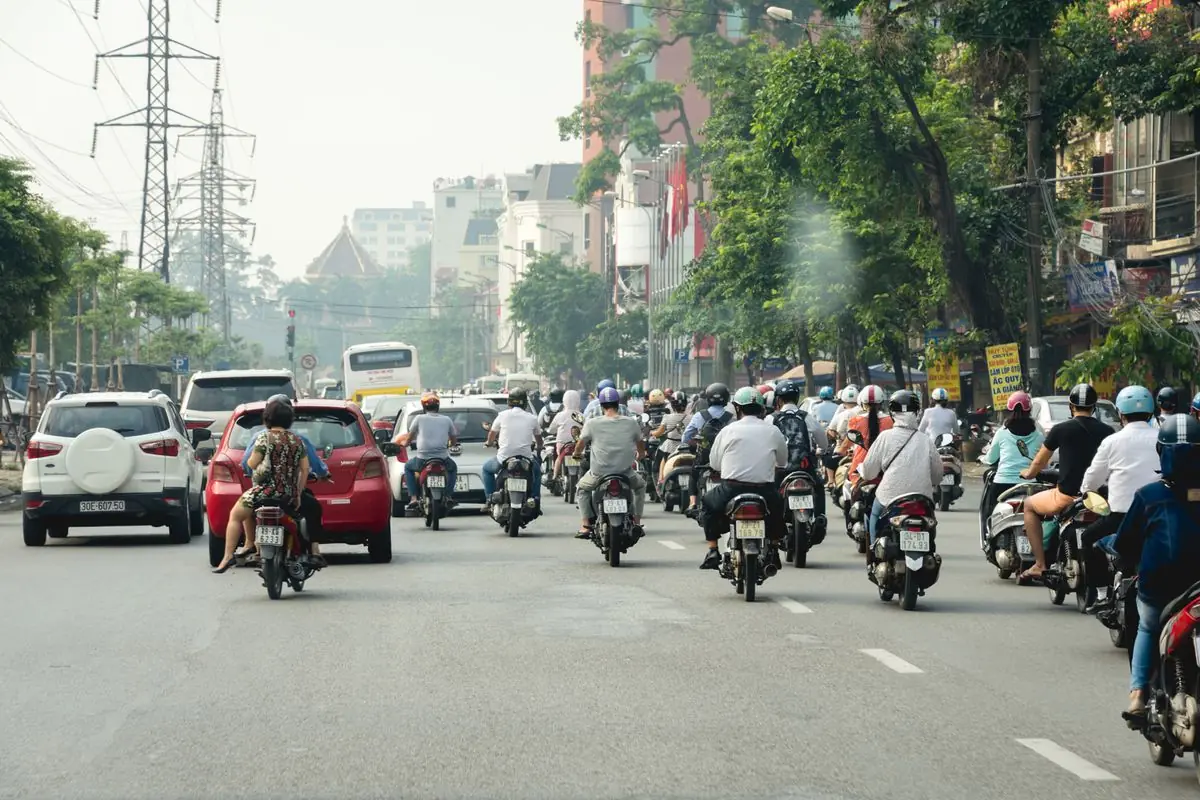
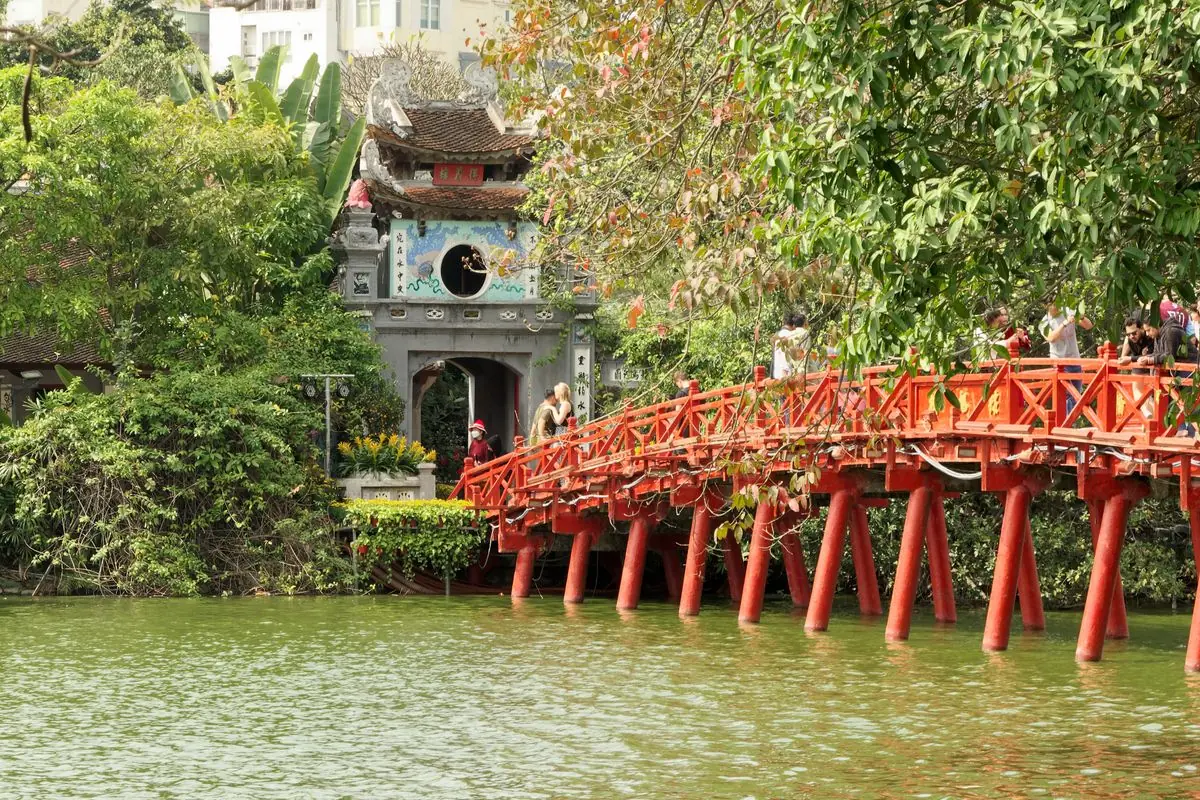
Mai Chau from Hanoi: day trip or overnight stay?
Book a Mai Chau bus by its destination name alone and it may drop you outside the valley, or leave you without a convenient ride back. Settling the itinerary, transport and accommodation from the start makes the whole visit far less of a hassle.
 18 min read
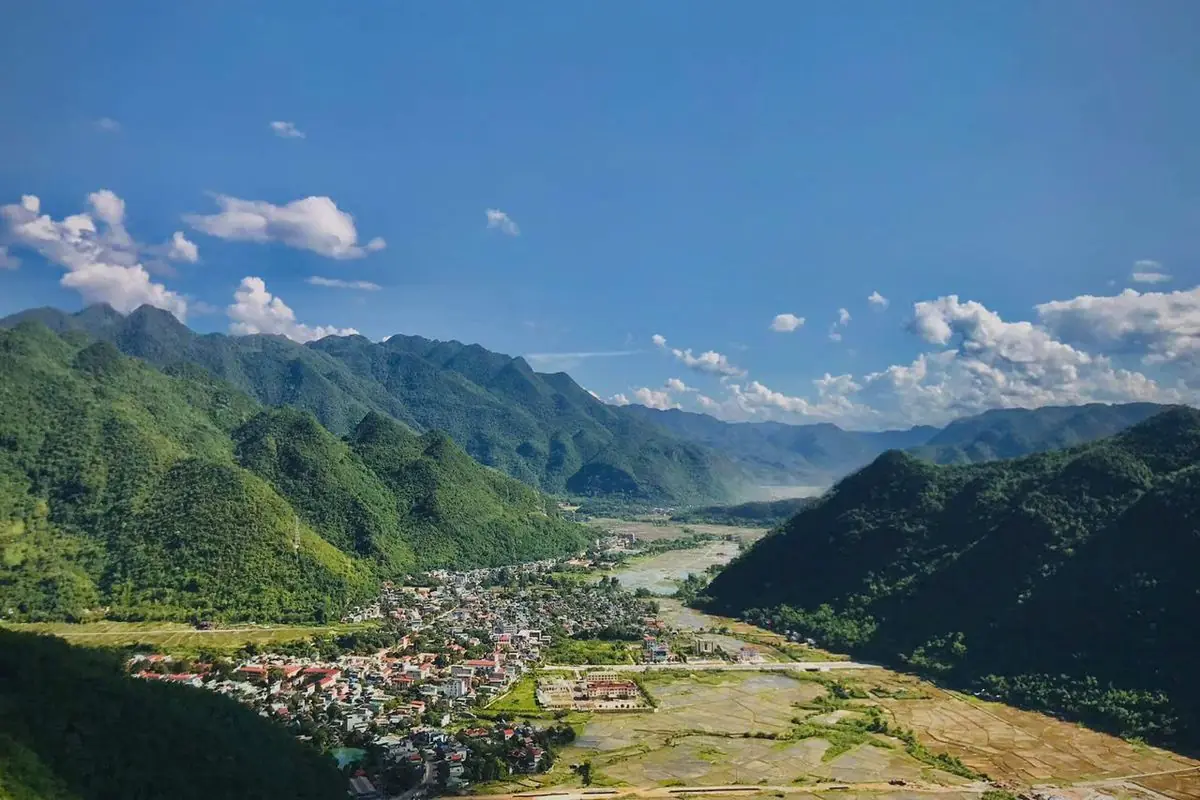
From the Mai Chau flag tower, the town hugs the foot of the mountains, with flooded paddies spread between the two ranges.
Mai Chau is best enjoyed on a 2-day, 1-night trip from Hanoi, staying at a homestay in the valley and cycling through traditional Thai villages. A day trip is possible, but you’ll have limited time to explore after spending several hours on the road. For a first visit, stay overnight: that buys a relaxed afternoon and an unhurried morning among the mountains and rice fields.
Where is Mai Chau, and why is it worth visiting from Hanoi?
Mai Chau is a peaceful valley surrounded by limestone mountains, approximately 130-150 km west of central Hanoi, depending on your starting point. There are no grand attractions here. People come for the rice fields stretching between mountains, traditional wooden stilt houses, and everyday life in villages inhabited mainly by ethnic Thai communities.
A day here can be a slow ride along quiet concrete paths, watching farmers work in the fields, a stop at a traditional weaving house, and dinner back at your homestay. Most places are close together, so the itinerary can stay loose instead of packing it with activities or spending the day moving between distant attractions.
For international travelers already staying in Hanoi, Mai Chau makes an easy countryside escape. Limousine vans connect Hanoi with the valley, and once you arrive, bicycles cover the villages.
Unlike Sapa, which is famous for its high mountains and terraced rice fields, Mai Chau has a relatively flat valley floor. That makes leisurely cycling one of the most enjoyable ways to experience the area.
Mai Chau’s new administrative address after the 2025 merger
On July 1, 2025, the former Hoa Binh Province merged with Vinh Phuc and Phu Tho to form the new Phu Tho Province. Vietnam also removed the district level of local administration, so Mai Chau’s official addresses have changed.
The main tourist villages are now located in:
- Lac Village (Ban Lac): Mai Ha Commune, Phu Tho Province. Mai Ha Commune was formed from the former Chieng Chau, Van Mai, and Mai Ha communes.
- Pom Coong Village: Mai Chau Commune, Phu Tho Province.
- Na Phon and Na Chieng: Mai Chau Commune, Phu Tho Province.
The new Mai Chau Commune was formed from the former Mai Chau Town, Na Phon, Thanh Son, Tong Dau, and part of Dong Tan Commune.
You may still see "Mai Chau, Hoa Binh" or "Mai Chau, Hoa Binh Province" on booking websites, bus platforms, and online maps. These refer to the old administrative boundaries, not a different destination. Searching by homestay or village name lands you on the right spot.
How to get from Hanoi to Mai Chau
From Hanoi, the options are limousine van, local bus, or private car. A limousine van is generally the most convenient option for travelers unfamiliar with Vietnam’s mountain roads, because some services drop passengers directly in the valley.
Hanoi to Mai Chau by limousine van
The journey typically takes 2.5-3.5 hours, although traffic, weather, and additional pickup stops may increase travel time. Tickets generally cost around 220,000-300,000 VND per person, one way, with some departures priced closer to 330,000 VND.
Operators commonly listed on the route include Manh Kien, Huong Kien, Anh Dung, Phuong Ha Mai Chau, and Mai Chau Smile Limousine.
Pickup points in Hanoi may include areas around the Opera House, Trang Tien Street, Big C Thang Long - Tran Duy Hung, or the operator’s own office. Choosing a pickup point close to your hotel usually beats automatically booking the cheapest departure.
Some vans leave Hanoi as early as 6-7 AM, allowing you to arrive in Mai Chau before lunchtime. Afternoon and evening services are also available, although schedules vary between operators.
Before confirming your ticket:
- Search for Hanoi to Mai Chau services, including those still listed under Hoa Binh.
- Choose a morning departure, ideally between 6 and 8 AM.
- Check the exact drop-off location, preferably close to your accommodation.
- Confirm pickup instructions, luggage allowance, cancellation policies, and payment options.
- Consider booking your return journey at the same time.
International visitors can also ask their hotel in Hanoi or their Mai Chau homestay to help confirm the pickup location. This is particularly useful when a company operates several pickup points in the same neighborhood.
Mai Chau to Hanoi: what time do return buses leave?
Book the ride back before you leave Hanoi; on a day trip, the whole day hangs on it.
Around 74 limousine departures run on this route each day, including services that pick up passengers outside the main valley. Typical fares remain around 220,000-300,000 VND.
Sample return departures by operator:
| Operator | Approximate departure | Pickup location |
|---|---|---|
| Mai Chau Smile | 12:30-1:00 PM | Mai Chau Lodge |
| Manh Kien | Several morning departures until around 2:30 PM | Mai Chau Lodge |
| Huong Kien | Service around 3:30 PM | Mai Chau Lodge |
| Online Travel | Service around 4:00 PM | Mai Chau office |
| Moc Chau Limousine | Service around 7:00 PM | Tong Dau Junction |
These are published schedules, not confirmation that seats are available for your travel date.
Local buses and driving yourself
Ordinary buses can be cheaper, with some routes departing from My Dinh or Yen Nghia bus stations. However, certain services only stop at Tong Dau Junction. From there, you’ll need a motorbike taxi or a transfer arranged by your accommodation to reach the valley.
Driving yourself? The usual route follows Thang Long Boulevard, the Hoa Lac - Hoa Binh road, then passes through the Cao Phong and Tan Lac areas before crossing Thung Khe Pass toward Mai Chau.
Thung Khe Pass has winding sections and can become foggy with little warning. Drive it in daylight, especially if you’re unfamiliar with mountain roads. Slow down when visibility drops, and avoid stopping on bends to take photographs.
Mai Chau day trip or 2 days 1 night: which is better?
A day trip leaves around 4-5 hours in the valley; staying over adds an afternoon and a morning.
| Day trip | 2 days, 1 night | |
|---|---|---|
| Time to explore | Around 4-5 hours | One afternoon and one morning |
| Activities | Lunch, cycling, village visits | Cycling, stilt-house stay, local dinner, sunrise |
| Cost | Lower | Includes overnight accommodation |
| Best for | Travelers with very limited time | First-time visitors, couples, families, weekend trips |
| Main drawback | Lots of travel for a short visit | Requires advance accommodation booking |
When is a Mai Chau day trip worth it?
A day trip makes sense when you have just one free day in Hanoi and want to see Vietnam’s mountainous countryside without changing hotels.
Leave Hanoi around 6-7 AM and you arrive before lunch, with time for a local meal and approximately two hours cycling around the villages. Afterward, head back to your pickup point for an afternoon departure to Hanoi.
That’s enough time for a glimpse of the valley. Add a far-off stop and most of the day goes to sitting in vehicles.
What an overnight stay adds
Mai Chau looks its best at two times a day-tripper rarely sees: early morning, when mist still hangs around the mountains, and late afternoon, when soft sunlight spreads across the rice fields.
Staying overnight also gives you a chance to experience a traditional stilt house, enjoy a local dinner, and walk through the village after many daytime visitors have left.
A Mai Chau 2-day, 1-night trip fits easily into a longer Northern Vietnam itinerary without taking up too many days. Leaving on Saturday morning and returning Sunday afternoon works particularly well for Vietnamese travelers planning a weekend escape.
Where to stay in Mai Chau: Lac Village, Pom Coong, or an ecolodge?
Mai Chau offers everything from traditional shared stilt houses to comfortable private rooms and upscale countryside resorts. First-time visitors usually pick one of these three.
Lac Village homestays
Lively, convenient, and easy to explore
Lac Village, also called Ban Lac, is the valley’s best-known community tourism destination. The village has a history stretching back more than 700 years and is closely connected with the culture of the White Thai people. Community-based tourism began developing here in the 1990s.
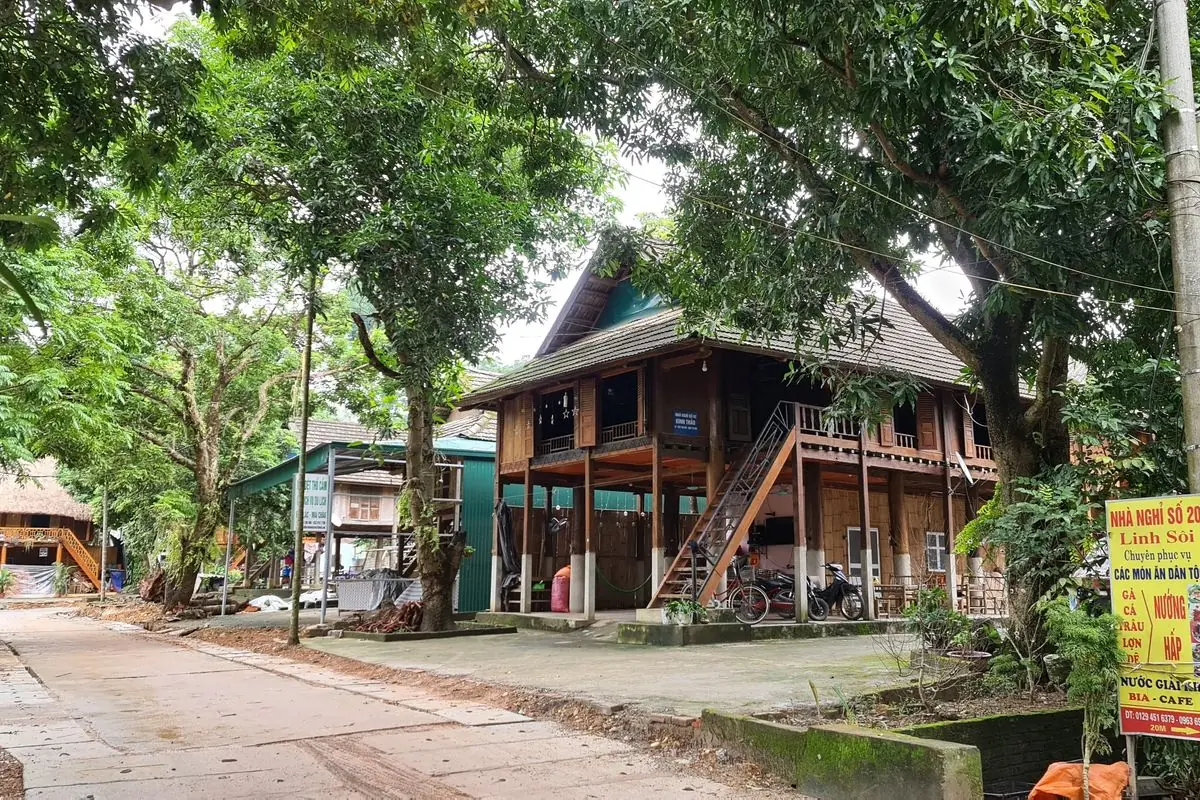
Walking through Lac Village, you’ll see rows of wooden stilt houses, textile shops, small restaurants, and visitors exploring on foot or by bicycle.
Its biggest advantage is convenience. You’ll find plenty of homestays, bicycle rental options, places to eat, and accommodation owners who can help arrange your return transport to Hanoi. It suits travelers visiting rural Vietnam for the first time, families, or anyone who prefers having restaurants and services nearby.
The downside is that Lac Village can become busy during weekends and the rice harvest season. Some stilt houses cater to larger groups, so conversations, music, and group activities may continue into the evening.
For a first trip, Lac Village is the easy choice; a room on the edge of the village or overlooking the fields is quieter.
Pom Coong Village
Quieter and closer to local village life
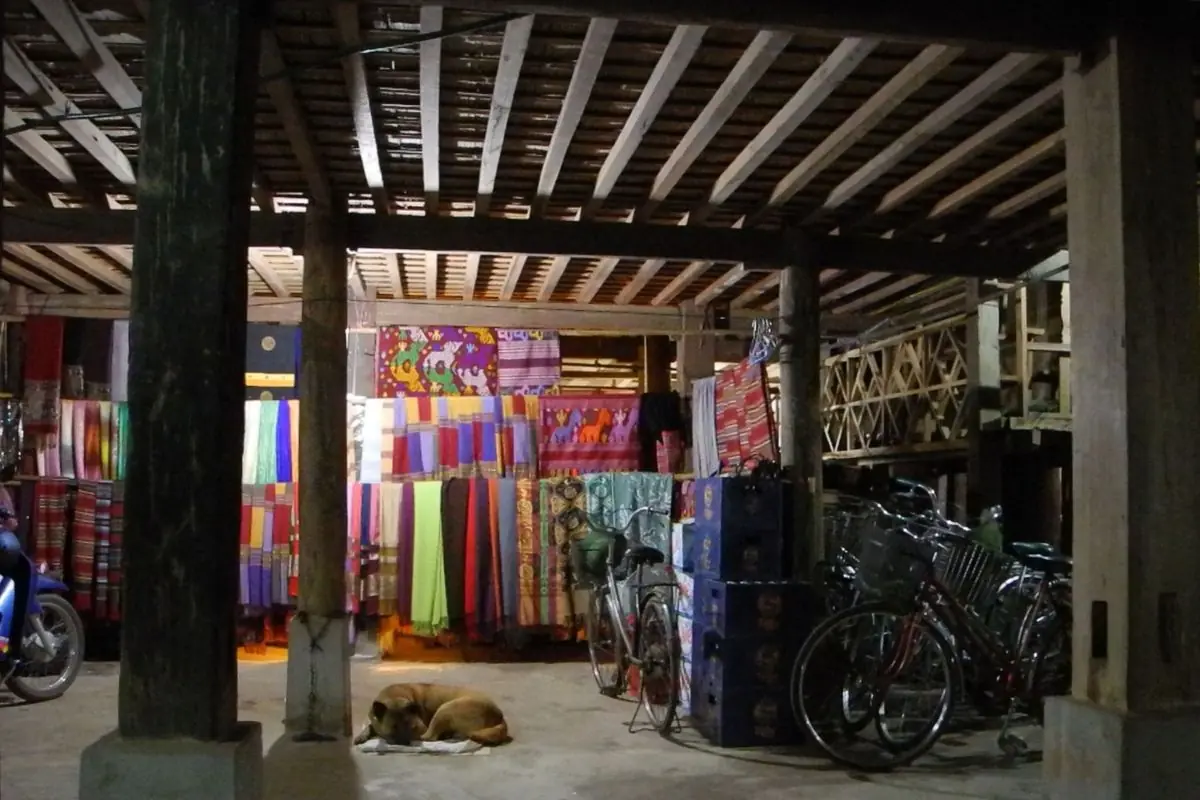
Pom Coong is another traditional village located close to Lac Village, within Mai Chau Commune. Its houses are typically built from wood, bamboo, and other local materials, with living spaces raised above the ground. Beneath some of these stilt houses, you’ll find weaving looms and colorful textiles made by local women.
Compared with Lac Village, Pom Coong generally feels quieter, although the atmosphere still depends on the particular homestay and whether you’re visiting during a busy weekend.
Pom Coong keeps the valley’s main attractions within easy reach, without sleeping in its busiest tourist area. In the morning, take a bicycle and follow the village roads past rice fields and traditional houses.
Dinner is cooked by the family that runs the homestay. Some hosts also arrange traditional Xoe dancing, bamboo dancing, or cultural performances depending on the number of guests and their schedule.
Mai Chau Ecolodge
Is the ecolodge worth the extra money?
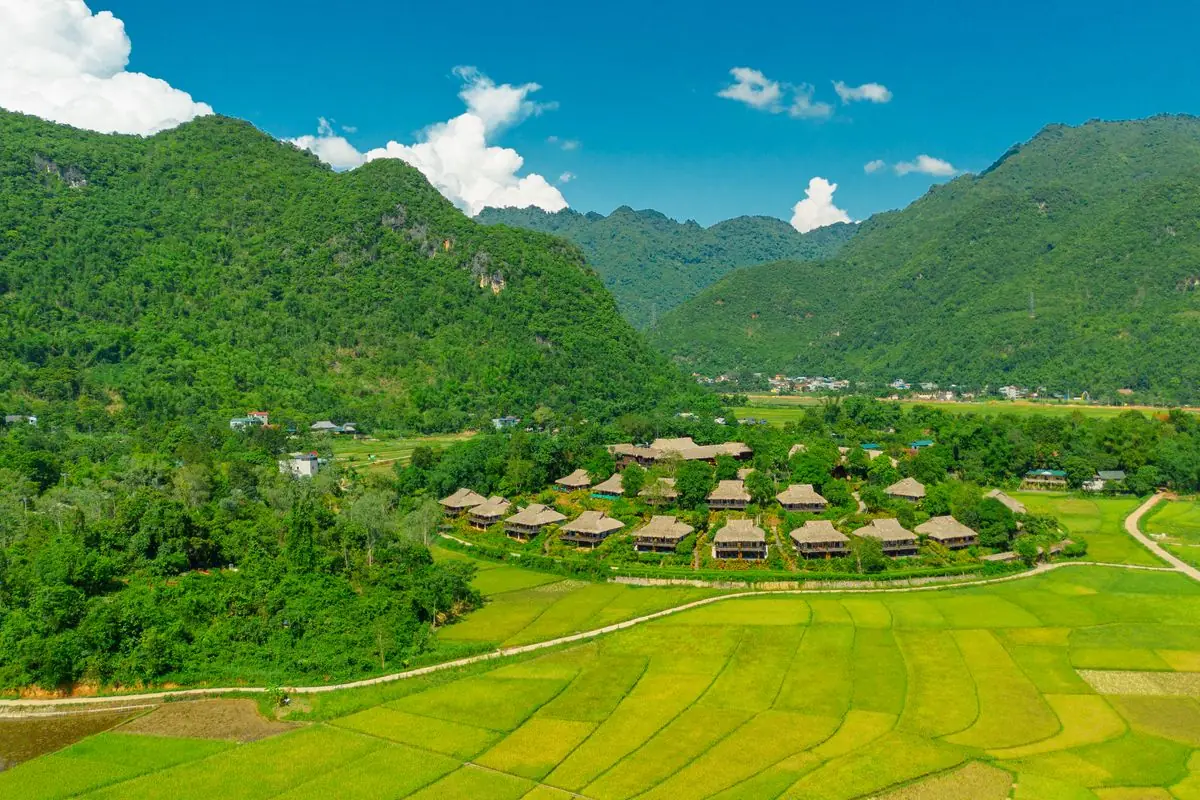
Mai Chau Ecolodge is located in Na Chieng, Mai Chau Commune, surrounded by rice fields and green mountains. Nearby villages are within cycling distance, and Lac Village is roughly five minutes away by car.
Unlike a traditional shared stilt house, the ecolodge offers several categories of private accommodation, a restaurant, spa facilities, an outdoor swimming pool, and more carefully designed relaxation spaces. Some room categories also feature private soaking facilities.
The resort organizes half-day and full-day cycling tours with local Thai guides. Seasonal farming activities let visitors experience agricultural work, while gardening may be offered when rice farming activities aren’t suitable.
Check-in begins at 2 PM, and checkout is before noon.
Room prices vary considerably depending on the category and travel date. Some advertised rates start around 1.65-2.7 million VND per night, while an international booking site has displayed average rates starting at approximately £98 per night.
So, is Mai Chau Ecolodge worth it? Yes, for couples, families, or travelers who want privacy, a swimming pool, comfortable facilities, and plenty of time to relax at the resort.
However, for visitors who mainly want to cycle, eat traditional meals, and experience village life, a homestay in Lac Village, Pom Coong, or Na Phon may offer better value. The money you save could go toward local meals, cultural experiences, or an additional night in the countryside.
Do traditional stilt-house homestays have private rooms?
Yes, but room arrangements differ considerably between properties.
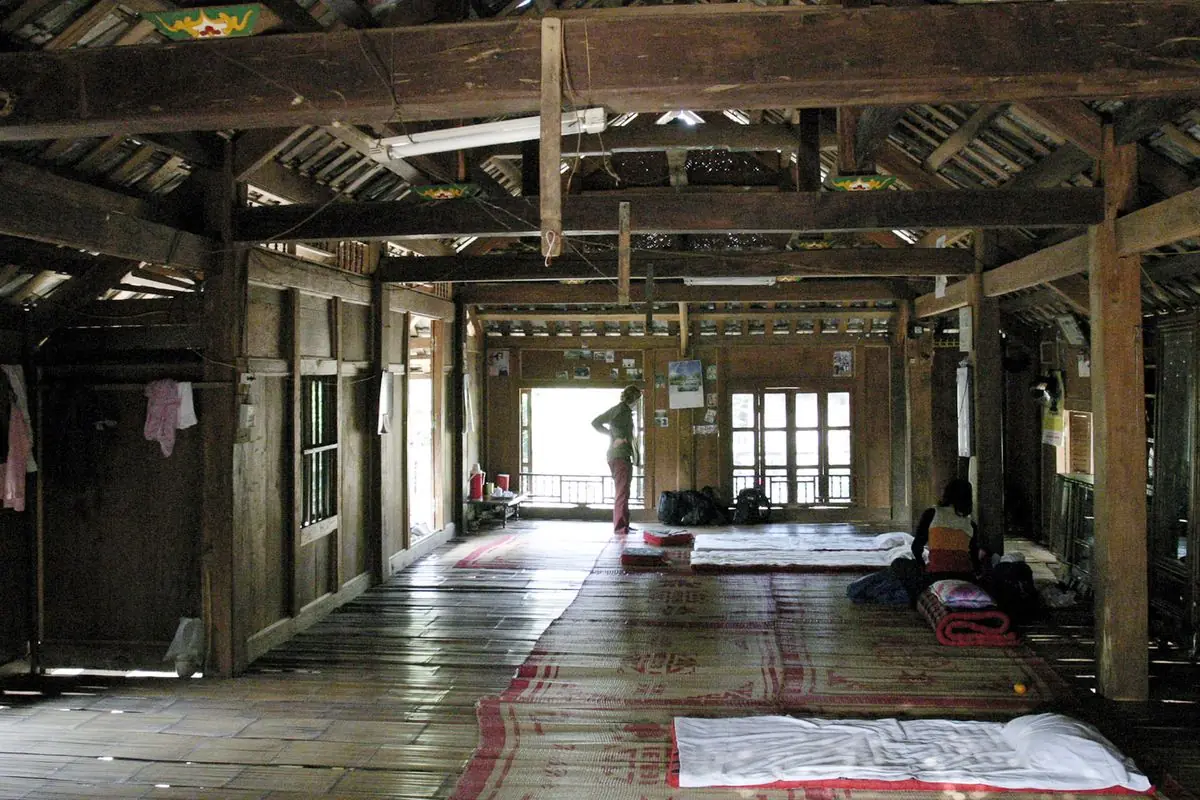
The most traditional setup is a large shared sleeping area on a wooden floor, with mattresses laid out for multiple guests. Hosts usually provide blankets, pillows, mosquito nets, and shared bathroom facilities. Some properties have curtains separating sleeping spaces, although privacy is not comparable to a hotel room.
Many homestays now offer private double rooms or family rooms, sometimes with air conditioning and en-suite bathrooms. In Na Phon, for example, some properties have converted older stilt houses into accommodation that combines traditional architecture with modern comforts.
Typical accommodation prices are:
| Accommodation type | Approximate price per night |
|---|---|
| Shared stilt-house sleeping space | 150,000-250,000 VND per person |
| Budget homestay double room | 300,000-550,000 VND per room |
| More comfortable private room | 500,000-900,000 VND per room |
| Mai Chau Ecolodge | Around 1.65 million to over 3 million VND per room |
Some homestays on international booking platforms also advertise double accommodation starting around US$11-20 per night. An international booking site displayed an average homestay price of approximately US$32 per night in Mai Chau.
Before booking, confirm whether the room is private or shared, how many other guests may sleep nearby, whether the bathroom is private, whether breakfast is included, and the cancellation conditions. A private room is usually worth the additional cost for light sleepers.
During peak periods, particularly September and October weekends and Vietnamese public holidays, the better rooms go early.
Cycling around Mai Chau: the best villages and rice fields
A bicycle is the easiest way to get around Mai Chau. The villages sit relatively close together, and narrow concrete roads wind through rice fields, with limestone mountains and wooden stilt houses in the background.
The valley floor is flat enough for casual riders. A basic bicycle, some drinking water, and a cool morning or afternoon are all a loop needs.
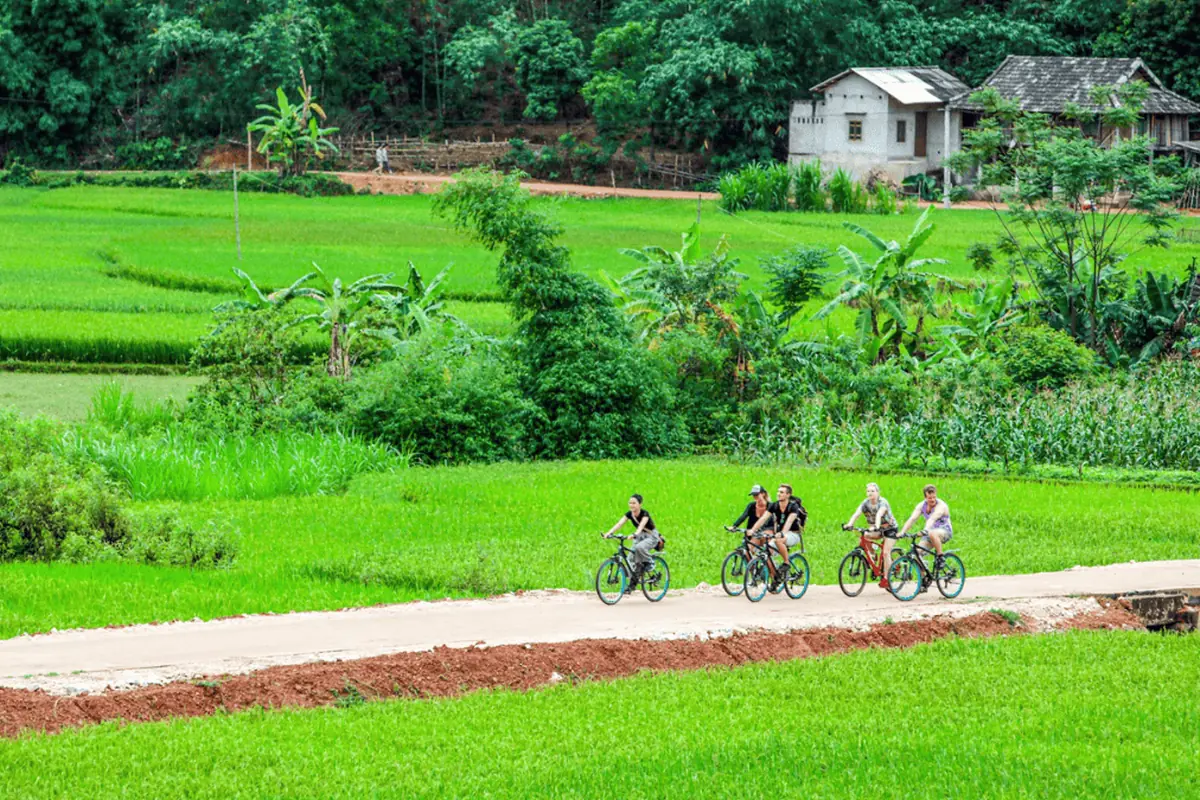
A scenic cycling route through Mai Chau’s villages
A relaxed route is to cycle from Lac Village to Van Village, continue toward Na Phon, pass through Pom Coong, and return to Lac Village. The exact route depends on your accommodation and the local paths you choose.
The loop runs roughly 6-10 km; allow two to three hours with stops.
In Lac Village, you’ll pass traditional stilt houses and handicraft stalls. The landscape opens up along sections near Van Village, where the roads run beside fields. Around Na Phon, you’ll encounter everyday rural life, while Pom Coong makes a pleasant stop to learn about traditional textile weaving.
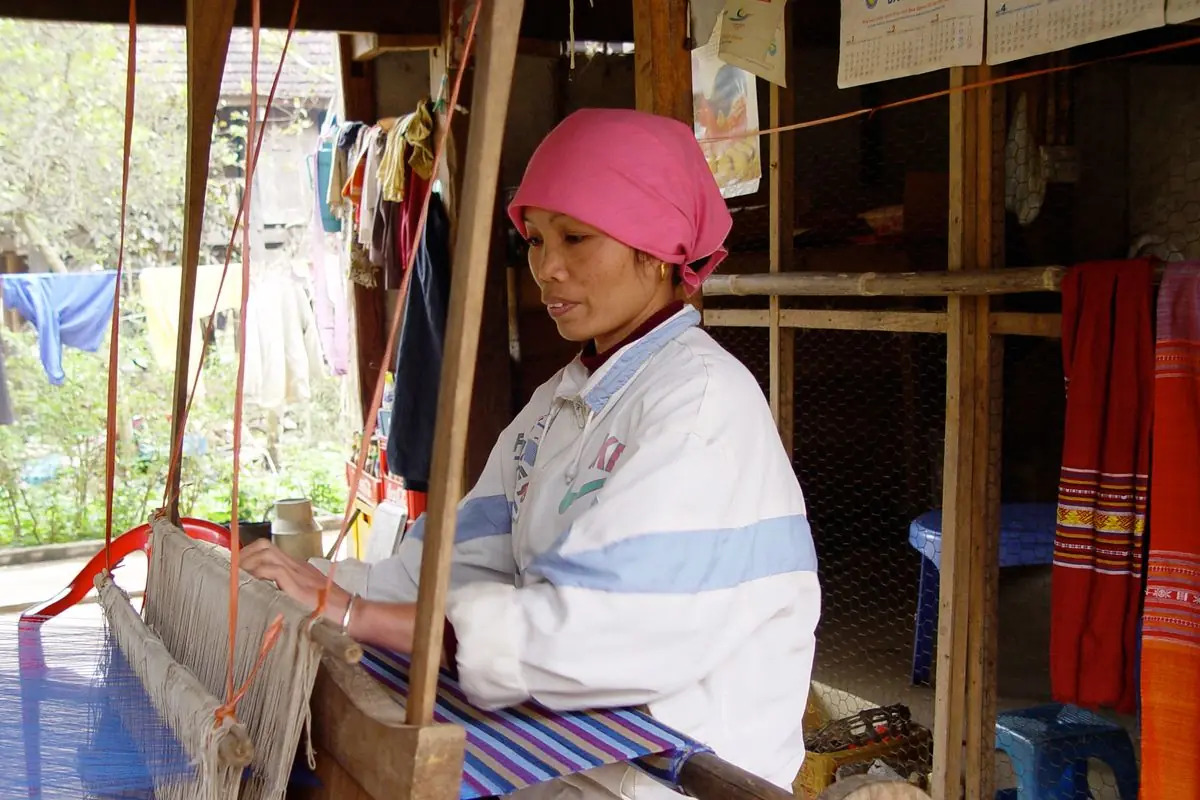
Early morning, approximately 6:30-9 AM, and late afternoon after 3:30 PM are often the most comfortable times to ride. On misty mornings, the surrounding mountains appear in soft layers, while the fields catch the first light of the day.
How much does bicycle rental cost in Mai Chau?
Many homestays and resorts offer bicycles for guests to rent or borrow. Indicative rental prices are around 30,000 VND per hour or 80,000-90,000 VND per day. Some accommodations include bicycle use in the room rate.
Before setting off, check the brakes, tires, and saddle, and ask your host how to return to the property. Village roads are relatively narrow, sometimes with irrigation channels beside them. Ride slowly, give way to local residents, and avoid cycling during heavy rain.
When is rice harvest season in Mai Chau?
Mai Chau grows two main rice crops each year, giving visitors two opportunities to see golden fields as well as several months of lush green scenery.
| Time of year | Rice field scenery | What to expect |
|---|---|---|
| March-April | Young, green rice | Pleasant for cycling and village walks |
| Late May - early June | First golden rice harvest | Golden fields, increasingly warm weather |
| July | Harvested fields, preparation for the next crop, some flooded paddies | Scenery varies with planting schedules |
| August - early September | Lush green rice fields | Great for travelers who love green landscapes |
| Late September - early October | Rice turns golden and harvesting begins | Peak time for golden fields |
| Late October - February | Many fields already harvested | Better for relaxation and cultural experiences |
Late September to early October: the best golden rice season
This is the period to pick for a Mai Chau trip focused on photographing golden rice fields.
The weather is generally cooler than in summer, and the second rice crop is approaching maturity or being harvested. As you cycle through the valley, you’ll see shades of green and gold, sometimes alongside fields that farmers have already harvested.
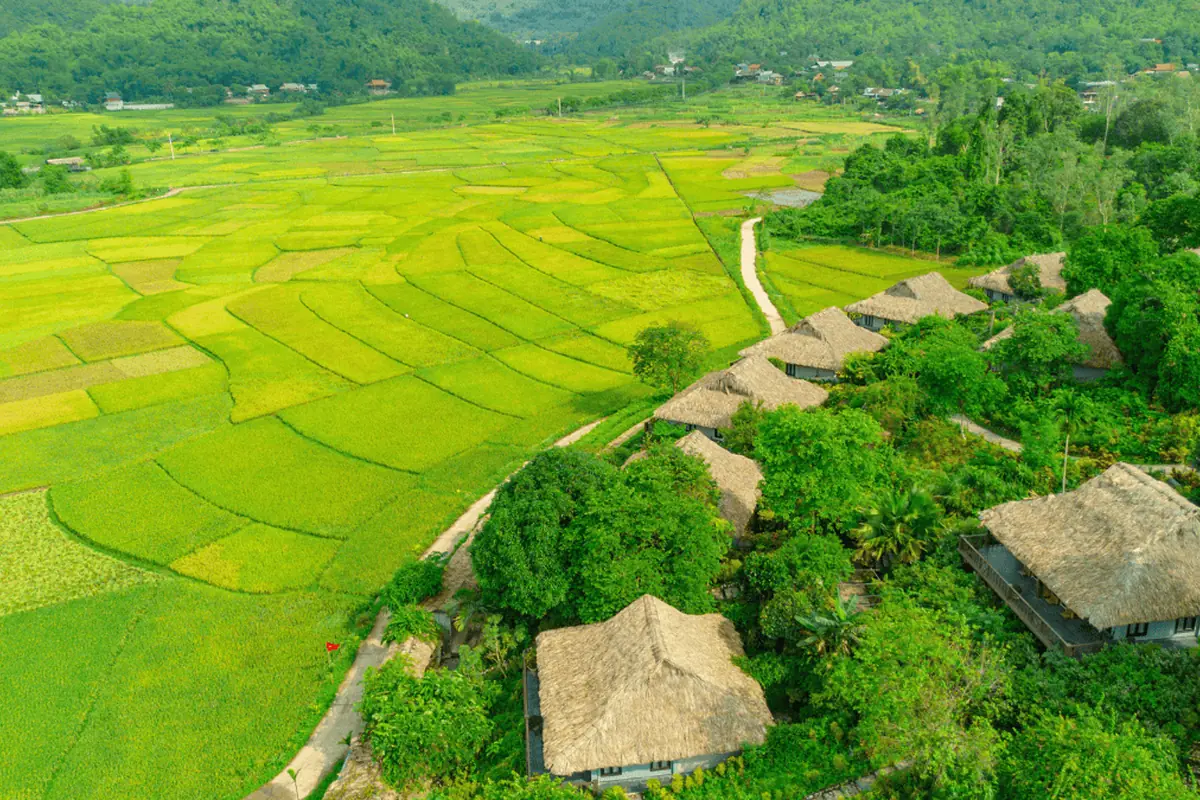
However, the rice doesn’t ripen everywhere at the same time. Harvesting depends on rice varieties, planting schedules, and weather conditions. One field may be golden while another nearby has already been cut.
For that reason, ask your homestay how the fields look in the week before your trip.
April and May: green rice fields and a relaxed countryside atmosphere
Prefer lush green scenery, quieter village roads, and gentle mornings? April and early May fit that.
Rice plants are growing, creating broad stretches of fresh green across the valley, good for unhurried cycling and landscape photography. By late May, some fields begin turning golden as the first harvest approaches.
Summer also brings warmer, more humid weather and the possibility of rain showers. Plan outdoor activities for early morning whenever possible, and carry a lightweight rain jacket.
In winter the valley goes quiet. The rice fields are no longer green or golden; instead there are misty mornings, cooler temperatures, and seasonal blossoms in surrounding areas.
Mai Chau 2 days 1 night itinerary from Hanoi
This itinerary is built for a first visit: village walks, cycling, local food, and downtime, without a private car or a packed sightseeing schedule.
Day 1: Hanoi - Mai Chau - Lac Village - Pom Coong
- 6:30-7:30 AM
Board in Hanoi
Board your limousine van in Hanoi. Have breakfast before departure and bring some drinking water.
- 10:00-11:00 AM
Arrive in the valley
Arrive in Mai Chau. Leave your luggage at your homestay or resort, then take a short walk around the property. Check-in may not be available yet, so confirm luggage storage beforehand.
- 11:30 AM-1:30 PM
Lunch and rest
Enjoy a local lunch and relax. Cycling can wait until the hottest hours of the day have passed.
- 2:30-5:30 PM
Cycle through the villages
Rent a bicycle and explore Lac Village, Van Village, and Pom Coong. Stop at a traditional weaving house, enjoy a drink, and slowly make your way back along the rice fields.
- 6:30-8:00 PM
Dinner at your homestay
Have dinner at your homestay. A traditional meal might include bamboo-tube sticky rice, grilled meat, free-range chicken, stream fish seasoned with mac khen pepper, seasonal vegetables, and other dishes prepared by your host.
- After 8 PM
Cultural evening
Relax at your accommodation or join a cultural activity when available. Traditional Xoe dancing and bamboo dancing aren’t organized at every homestay every night, so ask ahead if these activities interest you.
Day 2: sunrise cycling - breakfast - return to Hanoi
- 6:30-8:00 AM
Sunrise ride
Wake up early and cycle or walk to the rice fields near your homestay. At this hour the village roads are still quiet and the light is soft.
- 8:00-9:00 AM
Breakfast
Enjoy breakfast, coffee, or tea, and take your time getting ready.
- 9:00-11:00 AM
Village stroll
Walk a little more of the village, browse the textile shops, or stay put at your accommodation. Keep the last morning close by rather than squeezing in a distant attraction.
- 11:00 AM-noon
Check out
Pack, check out, and have an early lunch if your bus schedule allows.
- 12:30-3:30 PM
Back to Hanoi
Catch your pre-booked limousine back to Hanoi. Depending on your departure time and traffic, you’ll usually arrive in the capital by mid- or late afternoon.
Mai Chau day trip itinerary from Hanoi
With just one day, the plan shrinks to this:
| Approximate time | Activity |
|---|---|
| 6:00-7:00 AM | Depart Hanoi |
| 9:30-10:30 AM | Arrive in Mai Chau and collect a bicycle |
| 10:30 AM-noon | Cycle around Lac Village and nearby rice fields |
| Noon-1:00 PM | Local lunch |
| 1:00-2:30 PM | Visit Pom Coong and explore traditional textiles |
| 2:30-4:00 PM | Return to the pickup point and board your bus to Hanoi |
Book a confirmed return service that picks up passengers inside the valley first, then fit the times above around its departure.
How much does a trip to Mai Chau cost?
Mai Chau can be an affordable countryside getaway when you take a limousine, stay at a homestay, and explore by bicycle. Your costs will increase considerably if you choose a luxury resort or hire private transport.
The estimates below are per person, assuming two travelers share a room.
| Expense | Day trip | 2 days, 1 night |
|---|---|---|
| Return limousine tickets | 440,000-600,000 VND | 440,000-600,000 VND |
| Homestay accommodation | 0 VND | 200,000-400,000 VND |
| Food and drinks | 150,000-300,000 VND | 250,000-450,000 VND |
| Bicycle rental | 0-90,000 VND | 0-90,000 VND |
| Water, short transfers, and small extras | 50,000-100,000 VND | 50,000-150,000 VND |
| Estimated total per person | 640,000-1,090,000 VND | 940,000-1,690,000 VND |
These figures are planning estimates, not fixed package prices. The accommodation budget assumes a double room costing approximately 400,000-800,000 VND per night, shared between two travelers. Food expenses depend on your restaurant and meal choices. Souvenirs, guided tours, and additional transfers from distant pickup or drop-off points aren’t included.
For two people, a Mai Chau 2-day, 1-night independent trip could cost approximately 1.9-3.4 million VND in total. Keep a small amount of extra money available too, especially when visiting during weekends or the golden rice season.
At Mai Chau Ecolodge, room rates alone may range from approximately 1.65 million to over 3 million VND per night. For a couple, a more comfortable resort-style trip can easily reach around 3-5 million VND or more, depending on room category, meals, and activities.
Things to know before visiting Mai Chau
Book your return transport before arriving, especially for a Sunday back to Hanoi, and pick a van that collects passengers inside the valley rather than one that leaves you arranging a transfer to Tong Dau Junction.
When booking a homestay, confirm whether you’ll have a private room or shared sleeping space and whether breakfast is included. Even a listing described as a "traditional stilt house" won’t always give you the entire house or floor to yourself.
Pack comfortable walking shoes, sunscreen, a lightweight jacket, and rain protection for the season. In the colder months, wooden stilt houses get cold, particularly early in the morning and at night.
Dinner is a good time to ask your host about the food, weaving, or the rice-growing calendar.
Is Mai Chau worth an overnight stop on a northern Vietnam itinerary?
Yes, especially for travelers spending several days in Hanoi who want to see a different side of northern Vietnam.
The trip is about staying in the valley, cycling along small village roads, eating a home-cooked dinner in a stilt house, and waking up surrounded by mountains.
Choose Lac Village for convenience, restaurants, and a lively atmosphere. Consider Pom Coong or Na Phon for a quieter stay and a closer connection to everyday local life. Want more privacy, a swimming pool, and full resort facilities? Mai Chau Ecolodge is a comfortable alternative.
For a first trip, the best fit is two days and one night in late September or early October: an afternoon cycling through golden rice fields and a slow morning in the valley. Only have one free day in Hanoi? A day trip still makes sense, even with limited time to explore.
Frequently asked questions
How long does it take to get from Hanoi to Mai Chau, and what's the best transport?
Mai Chau is approximately 130-150 km from Hanoi. Limousine vans generally take 2.5-3.5 hours, although travel time can increase because of traffic or poor weather. For first-time visitors, a limousine dropping passengers in central Mai Chau or near their homestay is usually the most convenient option. Tickets typically cost around 220,000-300,000 VND per person, one way.
Is Mai Chau worth visiting on a day trip?
Yes, particularly when you have only one free day in Hanoi. However, the return journey takes up a considerable part of the day. Staying overnight adds time for cycling, a traditional stilt-house dinner, and a slow morning in the valley.
Should I stay in Lac Village or Pom Coong? Do homestays offer private rooms?
Lac Village is busier, with more accommodation and services, making it convenient for first-time visitors. Pom Coong generally feels quieter and suits travelers interested in local community life. Both villages have homestays offering private rooms, although some traditional stilt houses provide only shared sleeping areas. Check the room arrangement before booking.
Is Mai Chau Ecolodge worth the price?
Mai Chau Ecolodge is worth considering for couples, families, and travelers looking for comfortable private rooms, a swimming pool, spa facilities, and a more resort-focused experience surrounded by rice fields. It costs considerably more than a traditional homestay. Travelers mainly interested in cycling and village experiences may find a local homestay better value.
When are the rice fields golden in Mai Chau?
Mai Chau generally has two golden rice seasons: late May to early June and late September to early October. The autumn harvest is particularly popular because of the pleasant weather and beautiful scenery. Harvest timing varies each year, so ask your accommodation about the fields before finalizing your dates.