From Hanoi to Mu Cang Chai: when to catch the golden rice season
Before booking your September trip, ask your homestay host for photos of the rice terraces taken that week. You'll have a much better chance of catching the fields at their golden peak, especially when you know which villages to visit and how to fit Tu Le Valley into your journey.
 17 min read
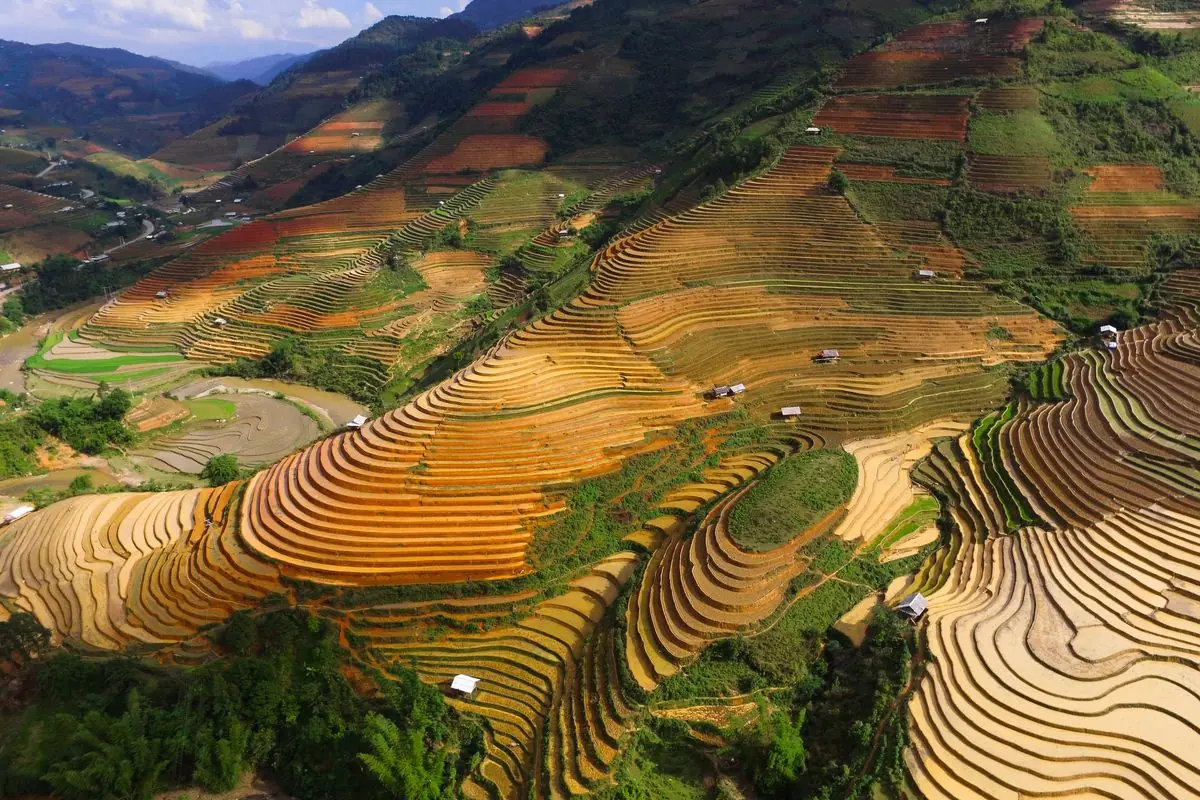
Che Cu Nha from above, terraces turned gold and brown layered down the slope, a few tin-roofed huts among them and hazy mountains beyond the valley.
For golden rice terraces stretching across the mountains of Mu Cang Chai, aim for late September to early October, then check the harvest conditions for your travel year. The journey from Hanoi takes around 6-8 hours by road, and three days give you enough time to explore the villages, admire Khau Pha Pass and visit nearby Tu Le Valley.
Where is Mu Cang Chai after Vietnam’s administrative changes?
Mu Cang Chai lies in the mountains of western Lao Cai Province, nearly 300 km from Hanoi. Until July 1, 2025, it was a district of Yen Bai Province. Following the merger of Yen Bai into Lao Cai and the removal of the district-level administrative system, several familiar place names became part of newly established communes.
There are three new commune names worth knowing when booking accommodation or searching for directions:
- Mu Cang Chai Commune: Includes the former Mu Cang Chai town and the areas of Kim Noi, Mo De and Che Cu Nha. This is the main town area, convenient for restaurants, accommodation and bus connections.
- Pung Luong Commune: Covers the former Nam Khat, La Pan Tan, De Xu Phinh and Pung Luong communes. The famous Mam Xoi Hill is located here.
- Tu Le Commune: Combines the former Cao Pha and Tu Le communes, along National Highway 32 near Khau Pha Pass. This is the place for valley views, rice terraces and paragliding.
The terraced rice fields of Mu Cang Chai cover approximately 2,200 hectares. Generations of Hmong farmers have shaped these steep mountainsides into productive agricultural land.
In 2007, the terraces in La Pan Tan, Che Cu Nha and De Xu Phinh received national scenic heritage recognition. At the end of 2019, the wider Mu Cang Chai terraced landscape was designated a Special National Monument.
When is the best time to visit Mu Cang Chai?
Mu Cang Chai has two particularly photogenic seasons: the water-pouring season in early summer and the golden rice harvest in autumn. The same mountainsides look remarkably different at each time of year.
September to early October: the golden rice harvest
The rice harvest usually takes place from September to early October. For the best chance of seeing entire hillsides covered in golden terraces, the second half of September is often a good choice, although some years the peak extends into early October.
Rice does not ripen everywhere at the same time. Altitude, sunlight and planting schedules vary from one village to another. You might find La Pan Tan glowing yellow while parts of De Xu Phinh are still noticeably green.
The 2026 season was a good example. Visitors started arriving in early September, but many fields did not reach their golden peak until late in the month.
Before fixing your dates, check recent photos from the exact villages you plan to visit. A picture taken a few days earlier can tell you far more than a fixed annual calendar.
Autumn also brings the Mu Cang Chai Golden Season Festival. In 2026, the opening ceremony took place on August 29, with activities running from August 31 to October 4.
Events included traditional Hmong khen performances, sticky rice cake pounding, traditional costume displays, local agricultural markets and sporting activities.
The festival makes the region particularly lively. If you enjoy cultural celebrations, plan around the festival dates. For quieter photographs of the terraces, weekdays are generally more comfortable than weekends.
Late May to June: Mu Cang Chai’s water-pouring season
The water-pouring season begins when early summer rains fill the terraces. Farmers repair the earthen banks, plough the fields, channel water from mountain streams and prepare for rice planting.
At this time of year, the terraces resemble enormous mirrors stacked along the slopes. In the morning, they reflect clouds and the pale blue sky. Toward sunset, entire hillsides can turn silver, soft gold or pinkish orange.
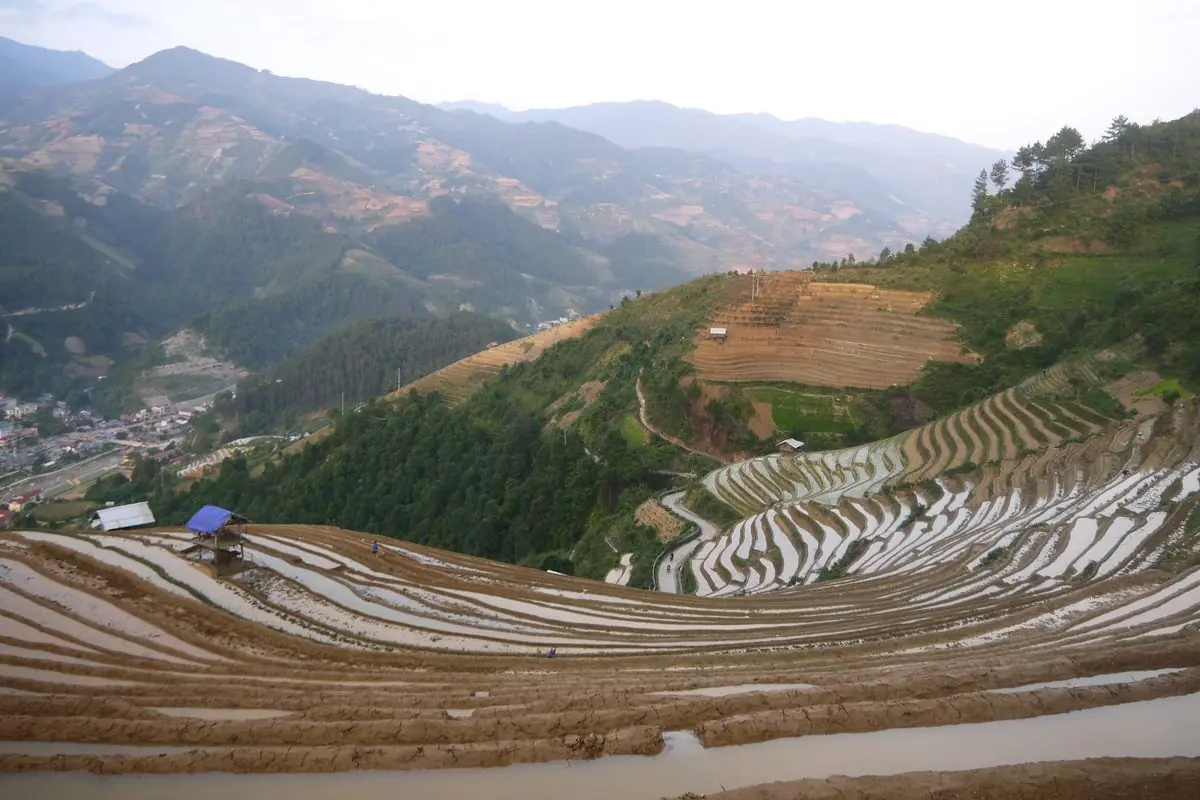
The season usually falls between late May and June, but the timing depends heavily on rainfall.
In 2026, the water arrived unusually late. Some terraces in Mu Cang Chai Commune did not have enough water for field preparation until early July.
Around May 1, 2026, the commune also held its first terraced-field climbing event, called Footsteps of the Water-Pouring Season. That year, though, the water only reached the fields in early July, two months after the event.
The water-pouring season is quieter, with reflections that shift with the light. Whole mountainsides of golden rice belong to the autumn harvest.
How to get to Mu Cang Chai from Hanoi
Mu Cang Chai is approximately 287-300 km from Hanoi, depending on your starting point and route.
Most road journeys follow National Highway 32 through Nghia Lo and Tu Le, cross Khau Pha Pass and descend toward central Mu Cang Chai.
Sleeper buses from Hanoi
Sleeper buses are generally the most affordable way to travel.
Many services actually operate between Hanoi and Than Uyen or Lai Chau, stopping in Mu Cang Chai along the way.
The following are reference schedules and fares from 2026:
| Bus operator | Hanoi departure | Approximate one-way fare |
|---|---|---|
| Thao Nguyen | 10:00 AM, My Dinh Bus Station | 250,000 VND |
| Hoang Anh | 5:00 PM, Giap Bat Bus Station | 220,000 VND |
| Son Phuong | 6:45 PM | 300,000 VND |
| Hung Thanh | 7:45 PM, My Dinh Bus Station | 250,000 VND |
| Cuong Lan | 11:30 PM, Ho Tung Mau area | 250,000 VND |
Anh Tu and Ngan Ha have also operated afternoon and evening departures from the My Dinh area, although exact pickup times should be confirmed directly.
Vexere usually has no suitable Hanoi-Mu Cang Chai departures to book, though the operators are still running.
With buses continuing toward Lai Chau, contacting the operator directly is often more practical.
Limousine services from Hanoi
Limousine services are another option, particularly for travelers who prefer more spacious seats and pickup points around the city.
Anh Khang Authentic has offered the following approximate schedule:
- 10:00 PM: Big C Long Bien.
- 10:20 PM: Hanoi Opera House.
- 11:00 PM: Thuong Mai University.
- Around 5:30 AM the following morning: Arrival in central Mu Cang Chai.
The reference fare is approximately 380,000 VND per person, with a journey time of 7-7.5 hours.
Some schedules have also included a morning departure from the Big C Thang Long area, which is better for travelers who want to enjoy the scenery along the way.
Departure times, vehicle types and pickup locations may change, particularly during the busy harvest season.
Returning from Mu Cang Chai to Hanoi
Return departures are fewer than outbound ones, so book the way back early.
Ha Trang (Lai Chau) has a sleeper-bus service leaving Mu Cang Chai at 8:30 PM and reaching Hanoi’s My Dinh Bus Station around 4:00 AM the next morning.
The pickup point is around Agribank Mu Cang Chai, with a reference fare of approximately 300,000 VND per person.
Anh Khang Authentic has offered a return limousine departure at around 5:20 AM.
Other buses traveling from Lai Chau toward Hanoi may collect passengers along National Highway 32 during the afternoon or evening. Their arrival times in Mu Cang Chai depend on when they leave Lai Chau.
Traveling from Hai Phong to Mu Cang Chai
From Hai Phong, the simplest arrangement is to travel to Hanoi first, then connect to an overnight bus or limousine to Mu Cang Chai.
You can take a limousine or intercity bus from Hai Phong to Hanoi and choose a drop-off point that makes it easier to reach My Dinh, Giap Bat or your mountain-bound operator’s pickup location.
Allow extra time for traffic and travel across Hanoi.
There are no direct Hai Phong-Mu Cang Chai buses on Vexere in either direction.
Groups can hire a private vehicle with a driver experienced on mountain roads instead.
Leaving Hai Phong in the afternoon can still work with an overnight departure from Hanoi, provided you’ve booked your ticket and allowed enough time to change vehicles.
5 beautiful rice terrace viewpoints in Mu Cang Chai
Mam Xoi Hill
The most famous viewpoint
Mam Xoi Hill, often called Raspberry Hill, is located in Hang Song Village, formerly part of La Pan Tan and now within Pung Luong Commune.
It lies roughly 8-10 km from central Mu Cang Chai, depending on the exact access point.
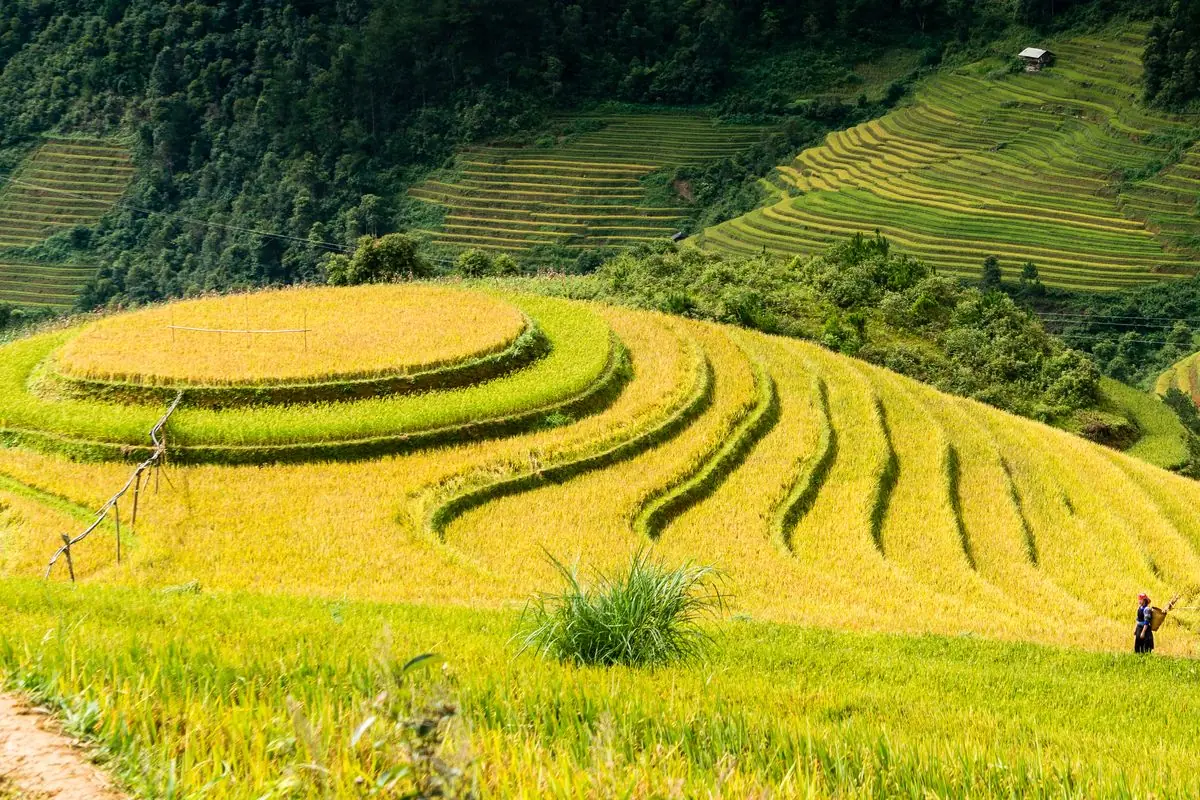
The terraces curve around a rounded hilltop in almost perfect rings, creating the appearance of a traditional mound of sticky rice.
During harvest season, the hill becomes a striking golden centerpiece surrounded by layers of terraced fields.
Come in the morning, when the mist begins to lift and sunlight slowly reaches the individual terraces.
The entrance fee for the main Mam Xoi viewpoint was approximately 40,000 VND per person in August 2026, up from the 30,000 VND that was common in 2024.
A local motorbike taxi from the lower access road may cost around 100,000 VND per person for a return trip. At Little Mam Xoi Hill, owners of the viewing huts charge about 10,000 VND per visit.
Although access has improved, the uphill road remains steep, with several narrow bends.
For visitors unfamiliar with mountain motorbike riding, using a local driver is the more sensible choice. Agree on the return fare and pickup location before setting off.
La Pan Tan
A whole valley of layered fields
Mam Xoi Hill is only one part of La Pan Tan’s appeal.
Beyond the famous viewpoint, terraces stretch across the hillsides and between small villages. Along some sections of road, you barely need to walk before finding a wide view of the fields below.
La Pan Tan is now part of Pung Luong Commune.
Give La Pan Tan a whole morning and work through several viewpoints, not just Mam Xoi.
The landscape is also part of the terraced-field area recognized as a national scenic site in 2007.
These are working agricultural fields, so stick to established paths and avoid stepping onto growing rice or damaging the earthen banks.
Che Cu Nha
Beautiful terraces along the main road
Che Cu Nha is approximately 7 km from central Mu Cang Chai in the direction of Hanoi. It now belongs to Mu Cang Chai Commune.
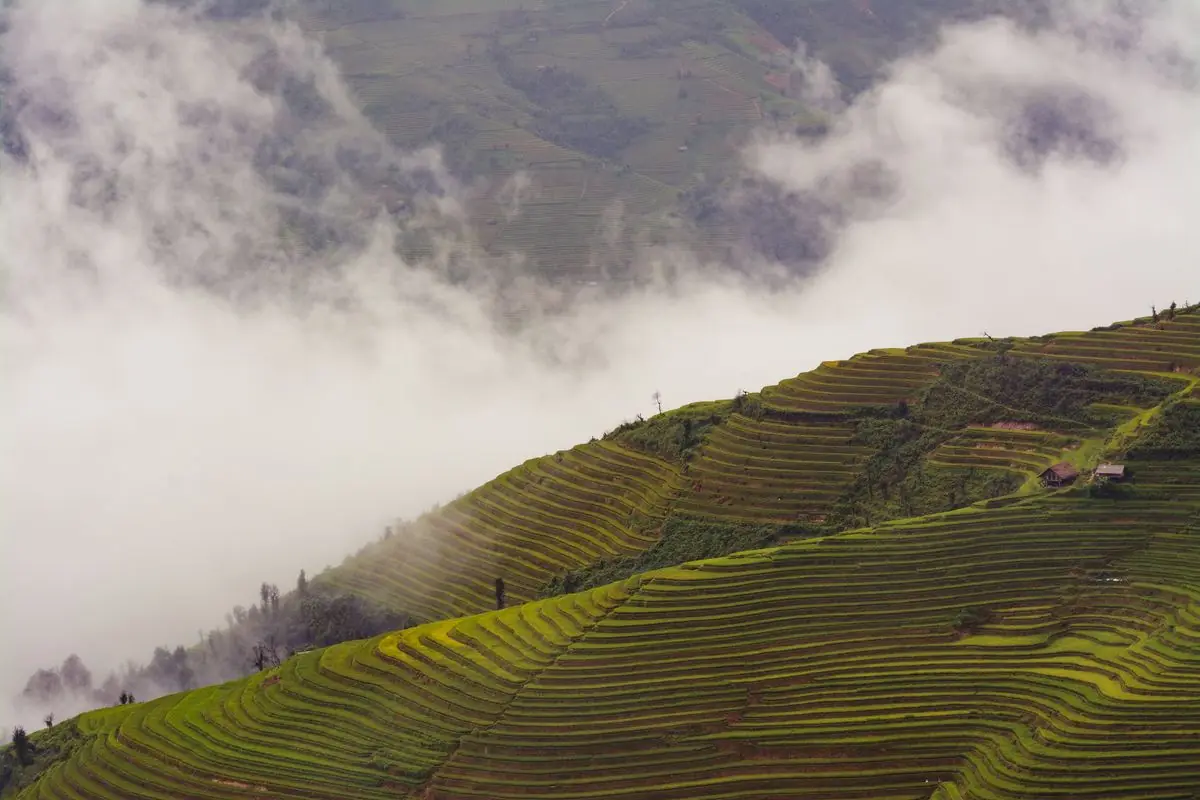
Many terraces are visible close to National Highway 32, making this one of the easiest places to stop and admire the landscape.
From several viewpoints, you can see broad stretches of rice fields, scattered houses and narrow paths winding toward the mountain villages.
It’s a convenient stop for anyone with limited time or who would rather avoid steep hiking trails.
Choose a safe and legal parking spot away from blind bends before getting out to take photographs.
De Xu Phinh
Wide mountain slopes and layers of rice
De Xu Phinh, now part of Pung Luong Commune, has a more expansive landscape, with terraces following the natural contours of the mountains.
From a distance, the fields appear to climb across several elevations.
The sunlight hits each level differently, creating alternating bands of bright and deep gold.
Some roads leading into the villages are narrow and steep, becoming slippery after rain.
A local driver or guide makes it easier to reach the more secluded viewpoints without getting lost.
Mong Ngua Hill
Golden terraces at sunset
Mong Ngua Hill, or Horseshoe Hill, is located near central Mu Cang Chai.
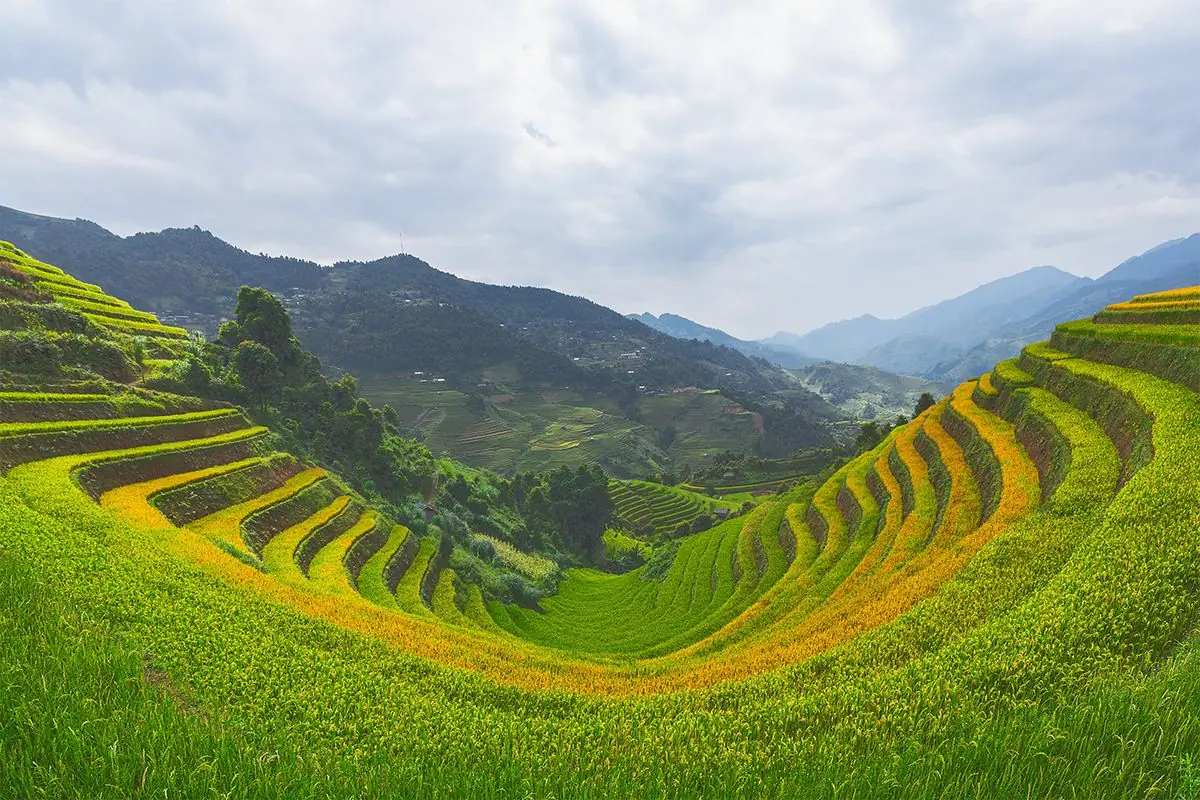
Its name comes from the curved pattern of the terraces, which resemble a horseshoe when viewed from above.
Go in the late afternoon.
Low sunlight highlights the contours of the fields, while the surrounding mountains gradually deepen into shades of blue and green.
The 2026 entrance fee was approximately 30,000 VND per adult, excluding motorbike taxi or parking charges.
The viewpoint tends to become busy close to sunset, so arriving around 4:00 PM gives you more time to find a good position.
With extra time, add Mo De Bamboo Forest or the Kim Noi rice-field area.
Both are relatively close to town, although access may involve steep roads, narrow tracks or some walking.
Khau Pha Pass and the paragliding experience
Khau Pha is one of the most famous mountain passes along National Highway 32, connecting the Mu Cang Chai area with Tu Le Valley.
Its name means "Horn of the Sky" in the Thai language, a fitting description of the high mountains rising into the clouds.
The pass extends for more than 30 km, with numerous sharp bends and sections overlooking deep valleys.
Its upper stretches lie roughly 1,200-1,500 meters above sea level.
From the pass, you can look toward the terraced fields of Lim Mong, the Lim Thai area and the villages scattered around Tu Le Valley.
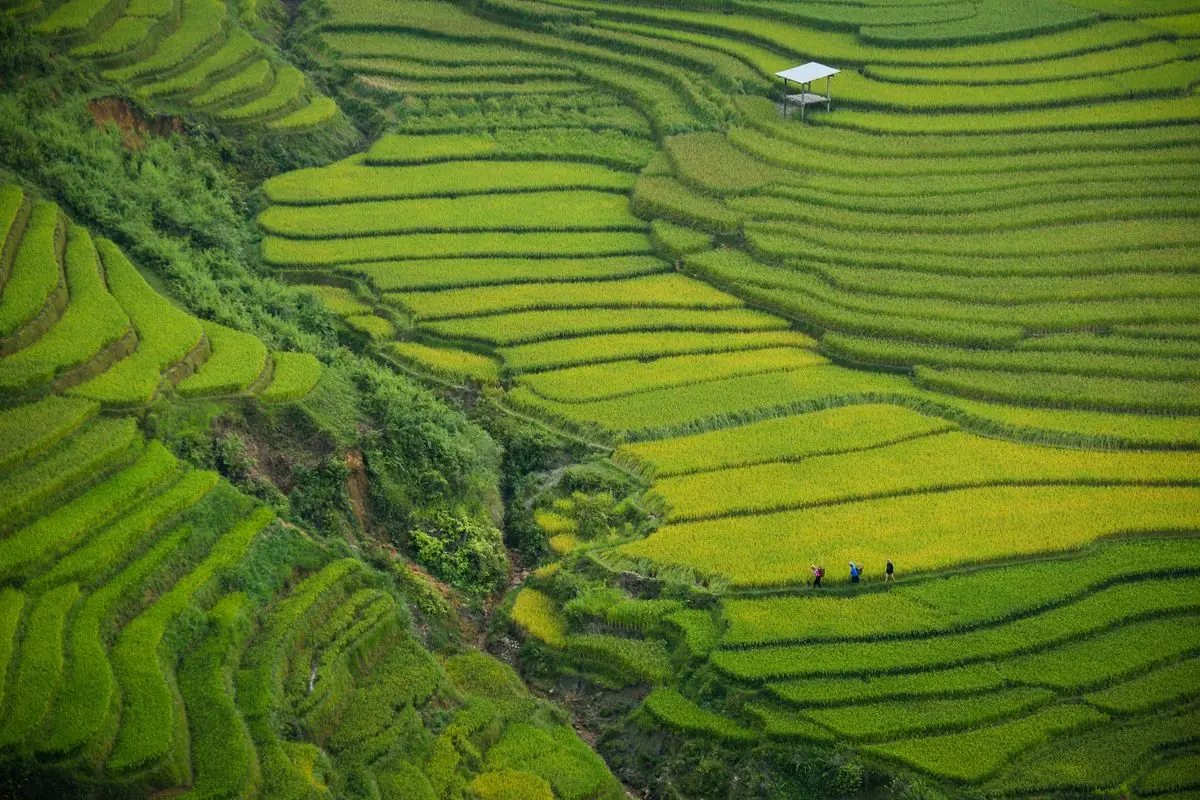
During harvest season, golden rice fields spread from the slopes down toward the valley floor.
How much does paragliding at Khau Pha cost?
Khau Pha offers tandem paragliding flights with experienced pilots.
Visitors take off from the mountain-pass area and descend toward a landing site in Tu Le Valley.
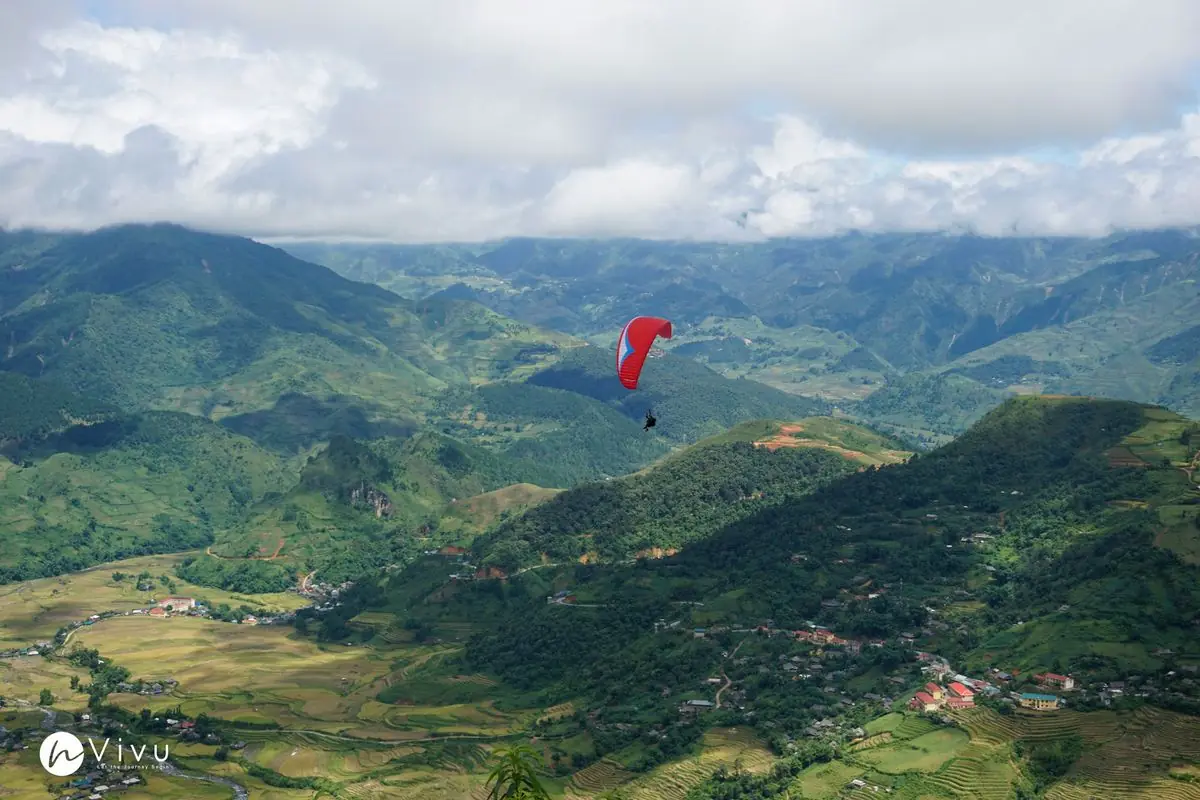
The service price is approximately 2,190,000 VND per flight, including insurance.
Some booking platforms have listed higher weekend prices of around 2,590,000 VND.
Confirm the current price, what’s included and the cancellation policy before paying.
Flights generally last around 10-20 minutes, depending on wind and weather conditions.
First-time visitors fly with a pilot and do not need to control the paraglider themselves.
Two major paragliding events took place in 2026:
- Flying Over the Water-Pouring Season: April 29 to May 5, around Tu Le.
- Tu Le Golden Season Paragliding Festival: August 30 to September 30, involving approximately 100 pilots from Vietnam and abroad.
Both events have already concluded for 2026. The schedule for future seasons will need to be confirmed through new announcements.
Is paragliding at Khau Pha safe?
Paragliding carries inherent risks, even when you’re flying with an experienced pilot.
Before takeoff, passengers receive instructions on the running launch, sitting position and landing procedure.
The operator must check the wing, harness, helmet and weather conditions.
Tu Le has seen minor injuries, such as scrapes during takeoff or landing.
No serious accidents have been reported since 2023, but that does not guarantee that every flight will be risk-free.
Even without flying, watching colorful paragliders drift over the terraces from a Khau Pha viewpoint is worth a stop.
Where to stay in Mu Cang Chai
Accommodation in Mu Cang Chai ranges from simple guesthouses and village homestays to ecolodges and high-end resorts.
Central Mu Cang Chai is the easiest area for travelers arriving by bus.
Restaurants, motorbike rentals and return-bus pickup points are relatively convenient. Budget properties such as Moon Hotel and Quang Minh are worth checking.
La Pan Tan and Pung Luong are better suited to visitors who want to wake up surrounded by rice terraces.
Homestays such as Pu Nhu, A Lu and other village-based properties offer a more rural atmosphere.
The trade-off is that transport and evening meals may need to be arranged with your host.
For a more comfortable retreat, options include Chiba Ecolodge Mu Cang Chai and Garrya Mu Cang Chai, which cater to travelers looking for more privacy and amenities.
Approximate accommodation prices on booking platforms:
| Accommodation type | Approximate nightly price |
|---|---|
| Budget guesthouses | From US$9-15 |
| Simple homestays | US$10-25 |
| Ecolodges | From US$43-50 |
| Luxury resorts | From US$186-200 |
These are mostly low-season prices, not guaranteed rates for September.
During harvest weekends, prices can rise substantially and popular rooms may sell out well in advance.
Some homestays also rent motorbikes for approximately 150,000-200,000 VND per day.
For those who aren’t confident riding on steep mountain roads, ask your accommodation about local motorbike taxi services or hiring a vehicle with a driver.
Mu Cang Chai itineraries: 2 days or 3 days
2 days, 1 night: focus on the golden rice terraces
This itinerary suits travelers with limited time who can take overnight buses in both directions.
The two days refer to your time at the destination, not the two nights spent traveling.
- Before Day 1
Overnight bus from Hanoi
Board an overnight bus from Hanoi and arrive in Mu Cang Chai early the following morning. Leave your luggage at the homestay, get some rest and have breakfast.
- Day 1
Pung Luong and Mong Ngua Hill
Visit La Pan Tan, Mam Xoi Hill and other viewpoints in Pung Luong Commune. Return toward the town in the afternoon and visit Mong Ngua Hill for sunset. Stay overnight in Mu Cang Chai.
- Day 2
Che Cu Nha, Khau Pha, Tu Le
After breakfast, visit Che Cu Nha and continue along National Highway 32 toward Khau Pha Pass. Stop in Tu Le to admire Lim Mong and Lim Thai, then have lunch in the valley. Return to Mu Cang Chai in the afternoon, collect your luggage and catch your prearranged evening bus to Hanoi.
This is a fairly compact schedule, so allow time for the mountain roads and journeys between villages.
3 days, 2 nights: rice terraces and a night in Tu Le
Three days are more comfortable for first-time visitors, particularly international travelers based in Hanoi or planning a longer journey through northwestern Vietnam.
- Day 1
Hanoi, Nghia Lo and Tu Le
Leave Hanoi in the morning by private car or a vehicle with a driver.
Follow National Highway 32 through Nghia Lo and arrive in Tu Le during the afternoon.
Check into your accommodation, wander around the valley, enjoy the Lim Mong terraces and try local Tu Le green rice flakes when they’re in season.
Spend the night in Tu Le.
Travelers using public buses may be able to arrange a drop-off in Tu Le, but it must be confirmed with the operator beforehand.
- Day 2
Khau Pha Pass, Mam Xoi Hill and La Pan Tan
Travel over Khau Pha Pass in the morning.
Stop at viewpoints overlooking the valley and watch the paragliders if flights are operating.
Continue toward Pung Luong to explore Mam Xoi Hill and the La Pan Tan terraces.
In the afternoon, visit De Xu Phinh or return toward Mong Ngua Hill before sunset.
Spend the night in central Mu Cang Chai or at a homestay in Pung Luong.
- Day 3
Che Cu Nha and the Return Journey
Wake up early, have breakfast and head toward Che Cu Nha.
Those who enjoy walking can explore a short village trail, while others may prefer a relaxed morning admiring the rice terraces from their accommodation.
With a private car, aim to begin the drive back to Hanoi after lunch so you cross the mountain pass in daylight.
Bus travelers can continue sightseeing during the afternoon before heading to their confirmed pickup location.
For anyone returning to Hai Phong, add time for the Hanoi-Hai Phong connection.
Is Tu Le Valley worth adding to your Mu Cang Chai trip?
Yes, particularly on a three-day itinerary.
Tu Le lies directly along the journey from Nghia Lo toward Mu Cang Chai, below the Hanoi-facing side of Khau Pha Pass.
You’ll pass through the area when following National Highway 32, so visiting does not require a lengthy detour.
Alongside the terraces of Lim Mong and Lim Thai, Tu Le is known for its fragrant sticky rice, green rice flakes, sticky rice dishes and local mountain cuisine.
During the autumn harvest, fresh green rice flakes are often available.
Near the foot of the pass, you’ll also find restaurants serving salmon and sturgeon in grilled dishes, salads and hotpots.
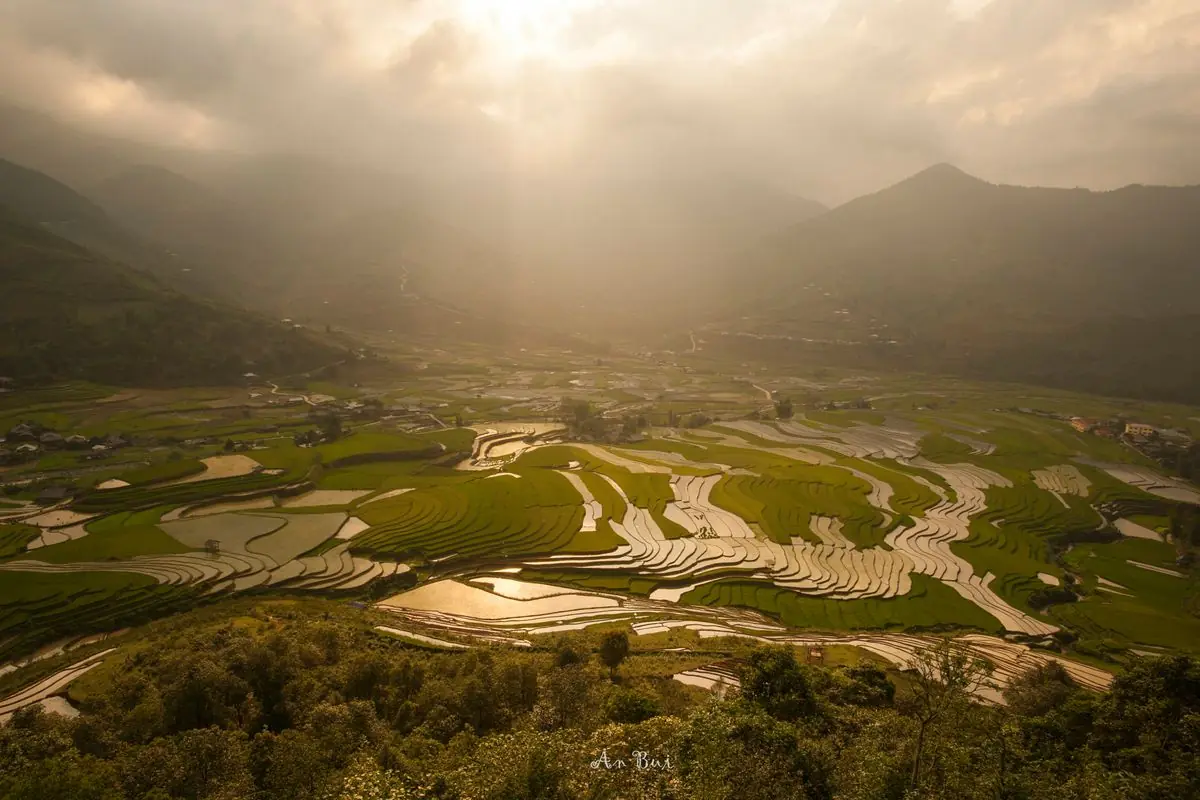
Stay overnight in Tu Le and, early in the morning, mist can linger across the valley while distant mountains slowly emerge behind village rooftops. After breakfast, you can begin the climb over Khau Pha Pass toward Mu Cang Chai.
On a two-day trip, Tu Le works as a scenic stop along the way.
With three days, spend a full night here.
Staying safe on Mu Cang Chai’s mountain roads during the rainy season
The road to Mu Cang Chai is a demanding drive, especially during the rainy months from approximately June to September.
Khau Pha Pass has numerous tight bends, frequent mist, slippery surfaces and a risk of falling rocks or landslides.
In late August 2025, heavy rainfall caused landslides along several sections of National Highway 32 around Tu Le and Khau Pha, temporarily cutting off road access to Mu Cang Chai.
- Check rainfall forecasts and Lao Cai Province traffic notices, especially for National Highway 32 and Khau Pha Pass.
- Avoid driving mountain passes in heavy rain, thick fog or darkness when you’re unfamiliar with the road.
- Never park directly below unstable slopes, close to visible landslide areas or around blind bends.
- Choose transport and accommodation with reasonable cancellation or rescheduling policies during the rainy season.
- Follow road closures and instructions from local authorities. Wait for official confirmation that the route is safe before continuing.
Access roads to places such as Mam Xoi Hill, Mong Ngua Hill and the bamboo forest may be considerably steeper than the main highway.
After rain, local transport with an experienced driver is generally the safer option.
In late September, standing on a hillside above Mam Xoi, you’ll see rings of golden rice wrapping around the rounded hill, with tiny rooftops scattered across the mountains beyond. One break in the clouds is enough for a shaft of sunlight to change the color of the entire valley.
Frequently asked questions
What month is the rice harvest in Mu Cang Chai?
The rice harvest generally begins in September and continues into early October. Late September often offers the best chance of seeing large areas of golden terraces, although the peak varies with weather, elevation and harvesting schedules in each village.
How long does it take to get from Hanoi to Mu Cang Chai?
The journey covers approximately 287-300 km and usually takes 6-8 hours by bus. Overnight services may arrive early the following morning. Private vehicles should allow additional time for breaks and scenic stops.
Where is Mam Xoi Hill, and is there an entrance fee?
Mam Xoi Hill is located in the former La Pan Tan area, now part of Pung Luong Commune in Lao Cai Province. The main viewpoint had an entrance fee of approximately 40,000 VND per person in 2026, with local motorbike taxi transfers charged separately.
How much does paragliding at Khau Pha cost, and is it safe?
A tandem paragliding flight costs approximately 2,190,000 VND, including insurance, with potentially higher weekend rates. Paragliding carries risks and depends on the weather, equipment and pilot. Book with an authorized operator and follow all safety instructions.
How many days should I spend in Mu Cang Chai? Is Tu Le worth visiting?
Two days are enough to see famous viewpoints such as Mam Xoi Hill, La Pan Tan and Mong Ngua Hill. Three days give you a more relaxed experience, particularly if you want to cross Khau Pha Pass, try paragliding or spend a night in Tu Le. For first-time visitors, three days are a good choice.