Moc Chau travel guide: pick the flower season first, then the sights
Two days in Moc Chau are enough to explore tea plantations, visit ethnic villages, and enjoy the highlands in bloom. The trade-off is choosing between relatively expensive attractions and scenic valleys scattered outside town, since two days won't cover everything.
 17 min read
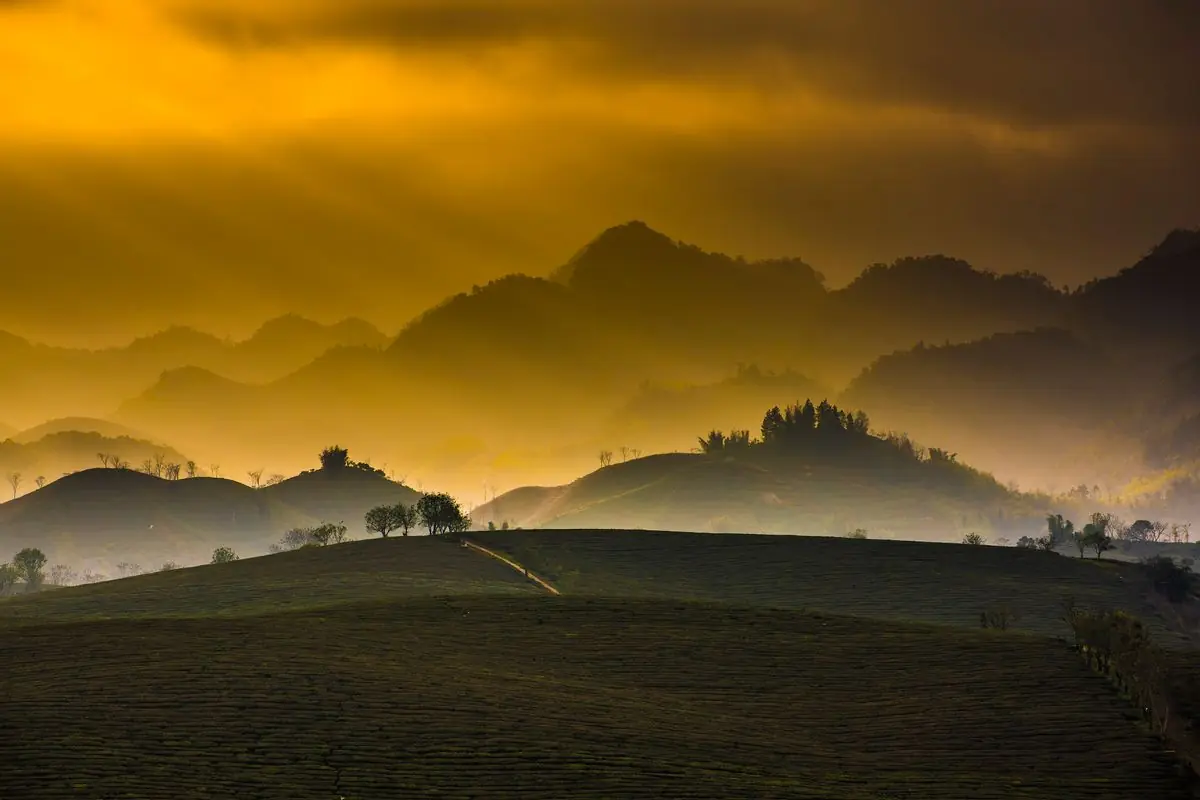
Moc Chau's rolling tea hills in golden light, with layers of hazy mountains beyond.
A poorly planned trip to Moc Chau can easily turn into a full day on the road, arriving at a flower garden after sunset or missing your bus back to Hanoi. Choose one flowering valley, add a tea plantation and a couple of nearby attractions, and two days are enough to get a feel for the highlands. The rest comes down to finding a convenient bus and booking accommodation in the right area.
Where is Moc Chau, and how many days do you need?
Moc Chau is a highland region in Son La Province, sitting at an average elevation of around 1,050 meters. It is approximately 190-207 km from Hanoi, depending on your starting point, and the drive usually takes four to five hours. The climate is relatively cool, with rolling tea plantations stretching between villages, dairy farms, and plum-growing valleys.
Two days and one night in Moc Chau is a reasonable amount of time for a weekend getaway from Hanoi. You can spend your first afternoon exploring attractions near the center, visit a tea plantation or flower valley the next morning, and return to the city in the afternoon.
Coming from Hai Phong, a three-day, two-night itinerary works better. The journey is considerably longer, and several direct buses arrive late at night or in the early hours of the morning. An extra night means less exhaustion and more time to enjoy the flowers when they look their best.
Understanding Moc Chau’s new administrative addresses
Son La remains a province of its own, but since July 1, 2025, Vietnam has operated a two-tier local government system, removing the district and town-level administrative tier.
Some familiar locations now have new administrative names:
| Former location name | Current administrative name |
|---|---|
| Mộc Lỵ and Mường Sang wards, Chiềng Hắc Commune | Mộc Châu Ward |
| Đông Sang and the former Mộc Sơn Ward | Mộc Sơn Ward |
| Cờ Đỏ and the former Thảo Nguyên Ward | Thảo Nguyên Ward |
| Bình Minh and the former Vân Sơn Ward | Vân Sơn Ward |
| Tân Lập and Tân Hợp communes | Tân Yên Commune |
| Chiềng Sơn and Chiềng Xuân communes | Chiềng Sơn Commune |
For example, Bach Long Glass Bridge and Dai Yem Waterfall are in the former Muong Sang area, now part of Mộc Châu Ward. Ban Ang Pine Forest belongs to Mộc Sơn Ward, while the tea plantations around the former Tan Lap area are in Tân Yên Commune.
When is the best time to visit Moc Chau?
Moc Chau changes a lot with the seasons. November and December bring white mustard flowers, while the plum blossom season in early spring covers whole valleys in white.
| Period | Main attractions | What to expect |
|---|---|---|
| November-December | White mustard flowers, ripe oranges, persimmons, pink grass | Cold mornings and frequent mist |
| Late December-February | Plum and peach blossoms | Flowering dates vary each year |
| March-May | Green tea plantations, ripening plums | April and May are good for plum picking |
| June-September | Waterfalls at their fullest, lush hills | More rain and potentially slippery village roads |
White mustard flower season: November or December?
White mustard flowers generally begin blooming in November, with the best displays appearing from early to late December. Green hillsides gradually turn white as large patches of flowers spread across the fields.
The former Chieng Xuan area, now part of Chiềng Sơn Commune, is known for its extensive mustard flower fields. It is around 30 km from central Moc Chau when taking the more accessible route for cars.
There are two main ways to get there. The shorter route through the pine forest and Coc Village includes steep dirt-road sections, while the longer route via Dai Yem Waterfall, Chieng Ve, and the Chieng Son border guard area is generally more suitable for cars.
Smaller flower fields can also be found around Pa Phach, Na Ka, Bo Bun, and the tea plantations. On a two-day trip, stick to fields closer to town. Spending several hours driving to a distant field just for photographs can take up most of your day.
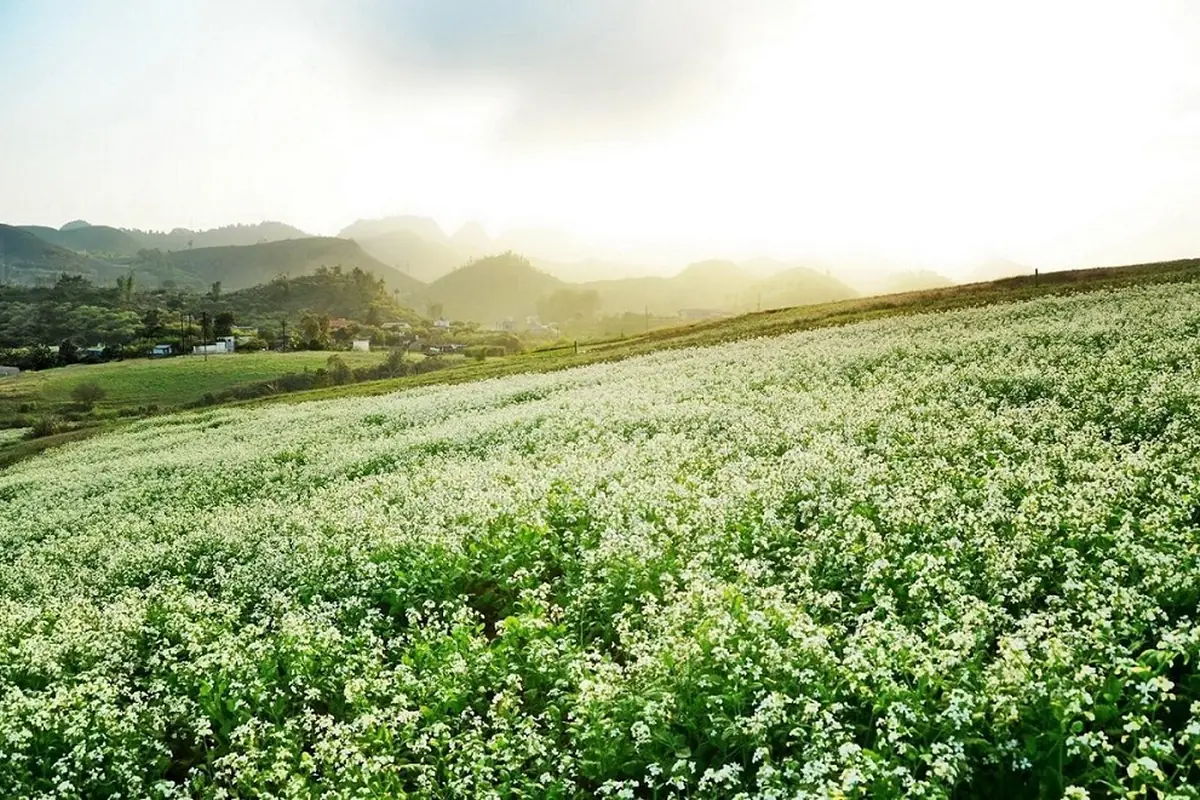
Mustard is a planted crop, and each field blooms on its own schedule. About a week before your trip, look for recent photographs shared by garden owners or local residents.
When do plum blossoms bloom in Moc Chau?
Plum blossoms usually appear from late December through mid-February, with January often offering the most impressive displays. In some years, though, the flowers arrive early and fade before Lunar New Year.
Na Ka Valley is the most famous plum blossom destination, approximately 16 km from central Moc Chau. Its low, spreading plum trees create broad patches of white flowers between the surrounding hills.
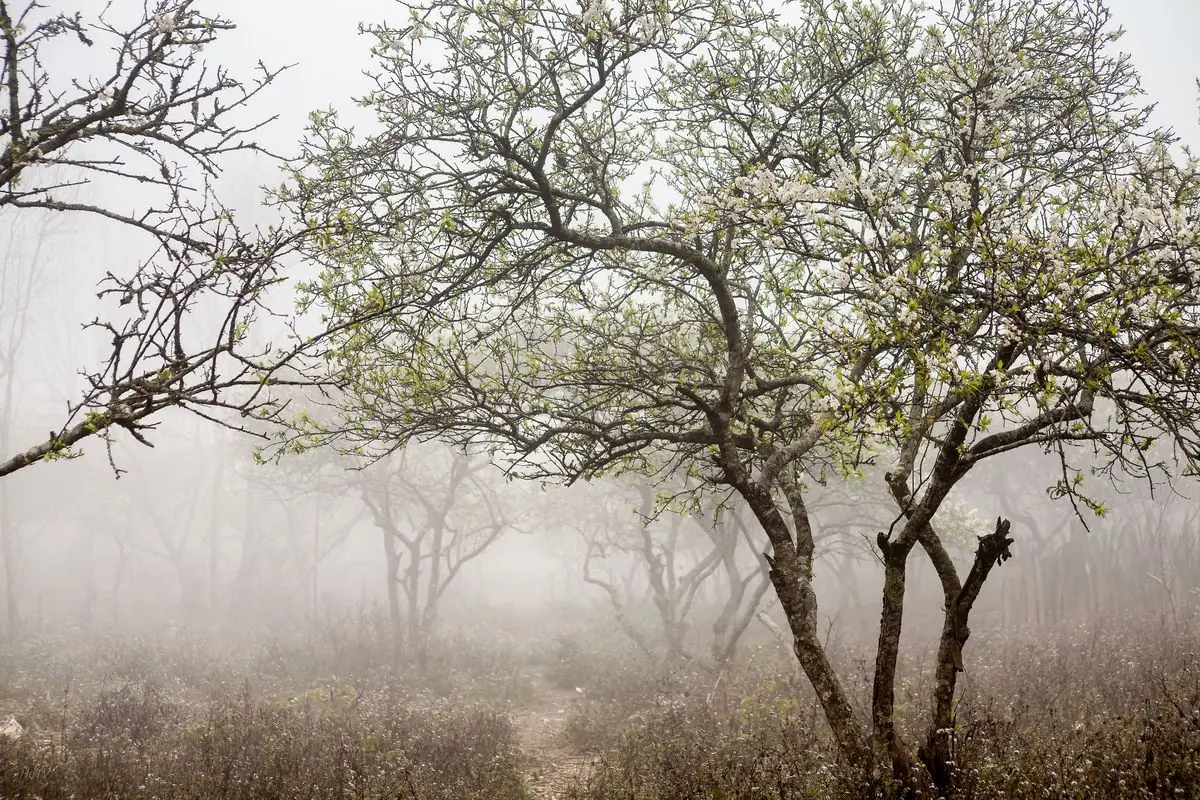
Other places worth exploring include Mu Nau, Cho Long, Pa Phach, and orchards around the former Tan Lap area. Most orchards are privately owned, with admission generally costing around VND 20,000-40,000 per person, depending on the garden and season.
How cold does Moc Chau get in December and January?
Daytime temperatures on the plateau are often around 15-20°C, but winter nights and early mornings can be much colder. During strong cold spells, temperatures may fall to around 5°C, occasionally approaching freezing in higher areas.
Morning mist is common, particularly around the tea plantations and valleys. Pack a light puffer jacket, thermal layers, a scarf, and closed shoes.
Travelers hoping to see a sea of clouds can explore Mu Nau, Pa Phach, or the tea plantations around Tan Lap. Still, a cloud inversion depends on humidity, wind, and that morning’s weather rather than any fixed schedule.
How to get to Moc Chau from Hanoi or Hai Phong
Hanoi to Moc Chau: limousine vans are the easiest option
Limousine vans are a practical choice for travelers who are not driving. The journey generally takes four to five hours, with tickets commonly costing VND 250,000-450,000 each way, depending on the vehicle type.
| Operator | Departures from Hanoi | Approximate fare |
|---|---|---|
| Mộc Châu Limousine | 6:00 a.m., 7:00 a.m., 8:00 a.m., 9:00 a.m., 4:30 p.m. | VND 280,000 |
| Vinh Anh | 8:00 a.m., 2:00 p.m. | VND 300,000 |
| Hải Vân Xuân Tráng | Multiple morning, afternoon, and evening services | VND 250,000-400,000 |
| Ngọc Anh | Afternoon and evening services, approximately 1:00-9:15 p.m. | VND 280,000-330,000 |
Common pickup locations include My Dinh Bus Station, the National Convention Center area on Pham Hung Street, Nguyen Tuan Street, Yen Nghia Bus Station, and certain locations near Noi Bai Airport. Each operator has its own pickup arrangements.
On a weekend trip, leaving Hanoi between 6 and 8 a.m. gets you to Moc Chau around lunchtime, giving you enough time to eat, check in or drop off your luggage, and begin sightseeing.
There are several options for the return journey. For example, Moc Chau Limousine lists departures at around 3:30, 4:00, 5:00, and 6:00 p.m., with fares starting at approximately VND 280,000. Hai Van Xuan Trang operates numerous services throughout the day, including evening departures.
Travelers who want to stop for photographs along the way can arrange a private car with a driver. Approximate one-way prices start at VND 2.5 million for a sedan and VND 3 million for an SUV, with larger vehicles costing more.
If you drive from Hanoi, the route heads toward Hoa Binh before joining National Highway 6, passing Tong Dau Junction and Thung Khe Pass. Motorcycles are not permitted on the Hanoi-Hoa Binh expressway and must use roads where motorcycles are allowed. The motorcycle journey usually takes around five to six hours.
Is there a direct bus from Hai Phong to Moc Chau?
Yes, although direct buses take around eight to ten hours because of the distance and multiple pickup and drop-off stops.
Two operators worth checking are Hai Ninh and Quang Tuan.
Hai Ninh has listed departures from Kien Thuy Bus Station at around 6 a.m. and 5 p.m., with journeys taking approximately nine hours and fifteen minutes. VIP cabin tickets have been listed at around VND 650,000.
Quang Tuan has an afternoon service from Vinh Niem Bus Station at approximately 2:30 p.m. Depending on the route, it may pass through the Quan Toan area and reach Moc Chau around midnight. Prices vary by seat or cabin type, generally around VND 400,000-600,000.
For the return journey, Hai Ninh has listed departures from Moc Chau at around 10:05 a.m. and 9:05 p.m., arriving in Hai Phong that evening or the following morning. Quang Tuan also operates overnight services through Moc Chau, but the exact pickup time at your stop needs to be confirmed.
Direct buses from Hai Phong are hard to fit into a two-day, one-night trip: morning services arrive mid-afternoon, while afternoon services reach Moc Chau at night. Traveling through Hanoi and transferring to a limousine van is another possibility, although it adds transfer time.
Getting around Moc Chau
Moc Chau’s attractions are spread across different areas rather than concentrated in one walkable town center. Public transport mainly serves major roads, so reaching tea plantations, plum valleys, and remote villages generally requires your own transport.
Roads leading into Na Ka, Mu Nau, and remote villages can be narrow, steep, and slippery in misty weather. Travelers unfamiliar with mountain motorcycling are better off hiring a car with a driver. A local motorcycle taxi from central Moc Chau to Na Ka may cost around VND 120,000 one way, depending on the pickup point and agreed fare.
The best places to visit in Moc Chau
Heart-shaped tea hill and Moc Suong Oolong Tea Plantation
Tea hills stay green all year, so they earn a place in a Moc Chau itinerary even outside the flowering seasons.
The heart-shaped tea hill is in the former Tan Lap area, now part of Tân Yên Commune, approximately 10 km from the center. Its carefully trimmed tea rows form smooth curves that show clearly from above. The paved access road is relatively straightforward for both motorcycles and cars.

Early morning often brings gentle light and a little mist. The most popular photography areas can become crowded on weekends, so arriving early gives you a better chance of enjoying a quieter atmosphere.
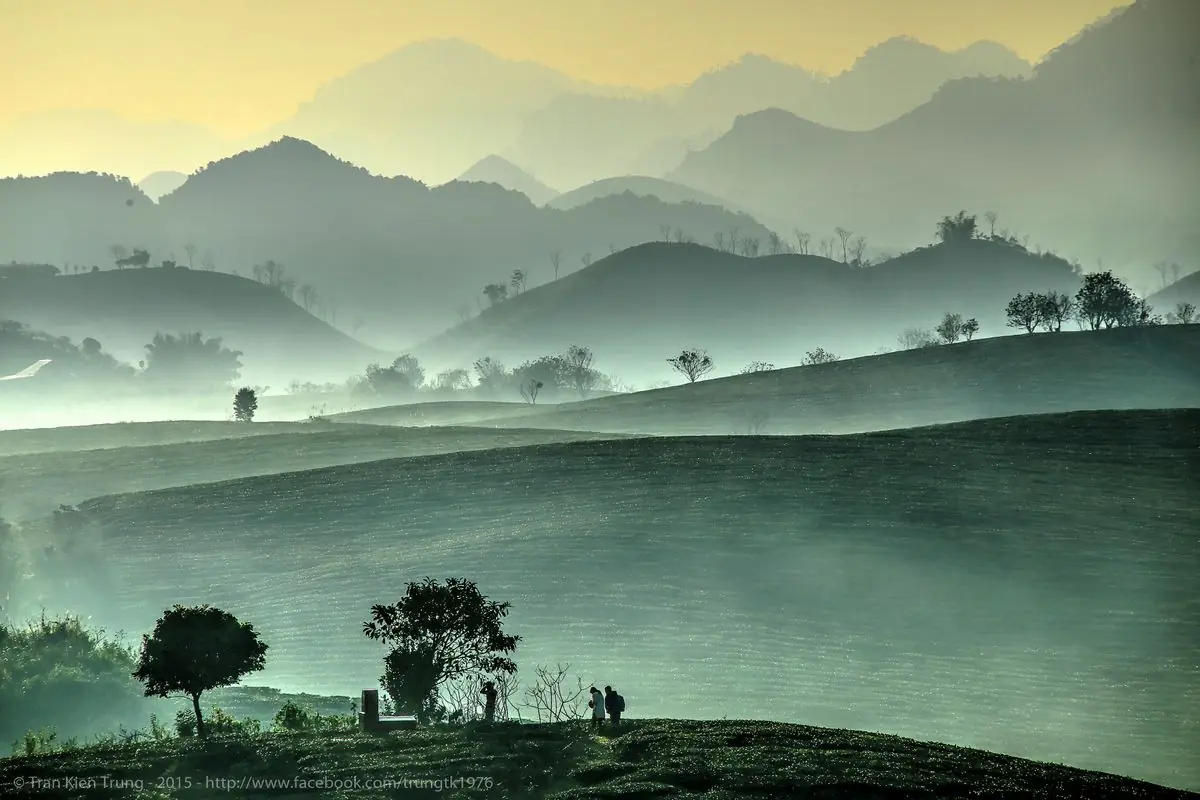
Moc Suong Oolong Tea Plantation is slightly farther away, approximately 15 km from central Moc Chau. Besides taking photographs, visitors can explore local tea products and buy packaged tea to take home.
Many roadside tea hills have no entrance fee, although some privately managed photography areas or experiences charge admission. Ask the owner or manager before entering, especially where tea plants are being cultivated.
Bach Long Glass Bridge: is it worth the ticket price?
Bach Long Glass Bridge is located inside the Moc Chau Island tourist complex, in the present-day Mộc Châu Ward. The bridge stretches 632 meters, combining a section suspended between two mountains with a walkway along a cliff face. In 2022, Guinness World Records recognized it as the world’s longest glass-bottomed pedestrian bridge.
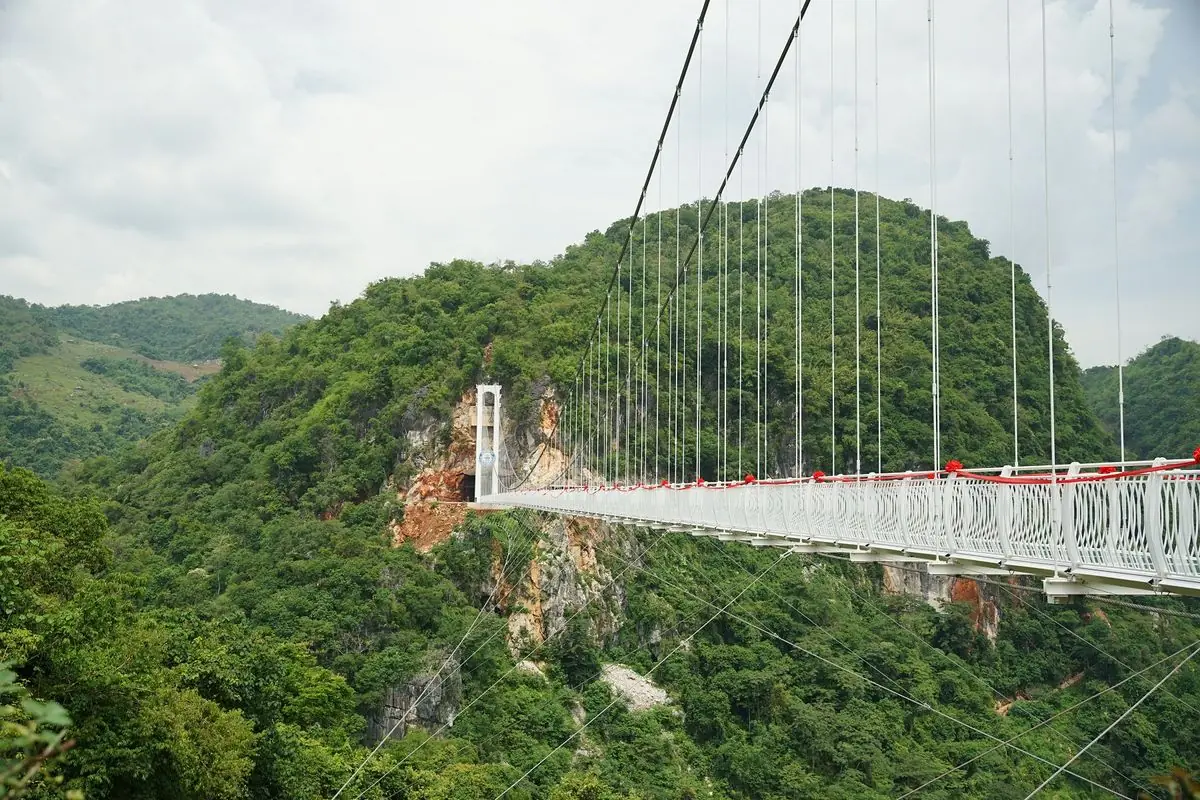
It is a different kind of outing from tea plantations or villages: you step onto a transparent bridge high above the valley before continuing toward Chim Than Cave.
Reference ticket prices on the Moc Chau Island booking system:
| Ticket type | Monday-Thursday | Friday-Sunday and holidays |
|---|---|---|
| Glass bridge, adults | VND 550,000 | VND 650,000 |
| Glass bridge, children 1-1.4 m tall | VND 350,000 | Confirm for your selected date |
| General park admission, adults | VND 100,000 | VND 150,000 |
| General park admission, children | VND 60,000 | VND 100,000 |
| Sky Tour: glass bridge and zipline, adults | VND 699,000 | VND 799,000 |
Weekend glass bridge prices for children differ between some of the attraction’s published pages, with figures of VND 350,000 and VND 450,000 appearing. Confirm the final price after selecting your visit date on the official booking system.
Children under one meter tall are admitted free under the published policy. The complex also offers discounted rates for Son La residents and certain eligible visitors.
So, is it worth paying more than half a million dong to walk across the bridge?
Yes, for travelers who enjoy heights, want to try an unusual glass walkway, or are visiting with family and looking for a larger entertainment complex. On the other hand, travelers coming primarily for flowers, tea plantations, and highland scenery may prefer to skip it and put that money toward better transport or accommodation.
For tickets, use Moc Chau Island’s official booking channels or call 1900 2829 to confirm prices and admission conditions.
When is Dai Yem Waterfall at its best?
Dai Yem Waterfall is located around Ban Vat, approximately 10-15 km from the center, along the road toward Long Sap. Water cascades over several rocky tiers surrounded by greenery.
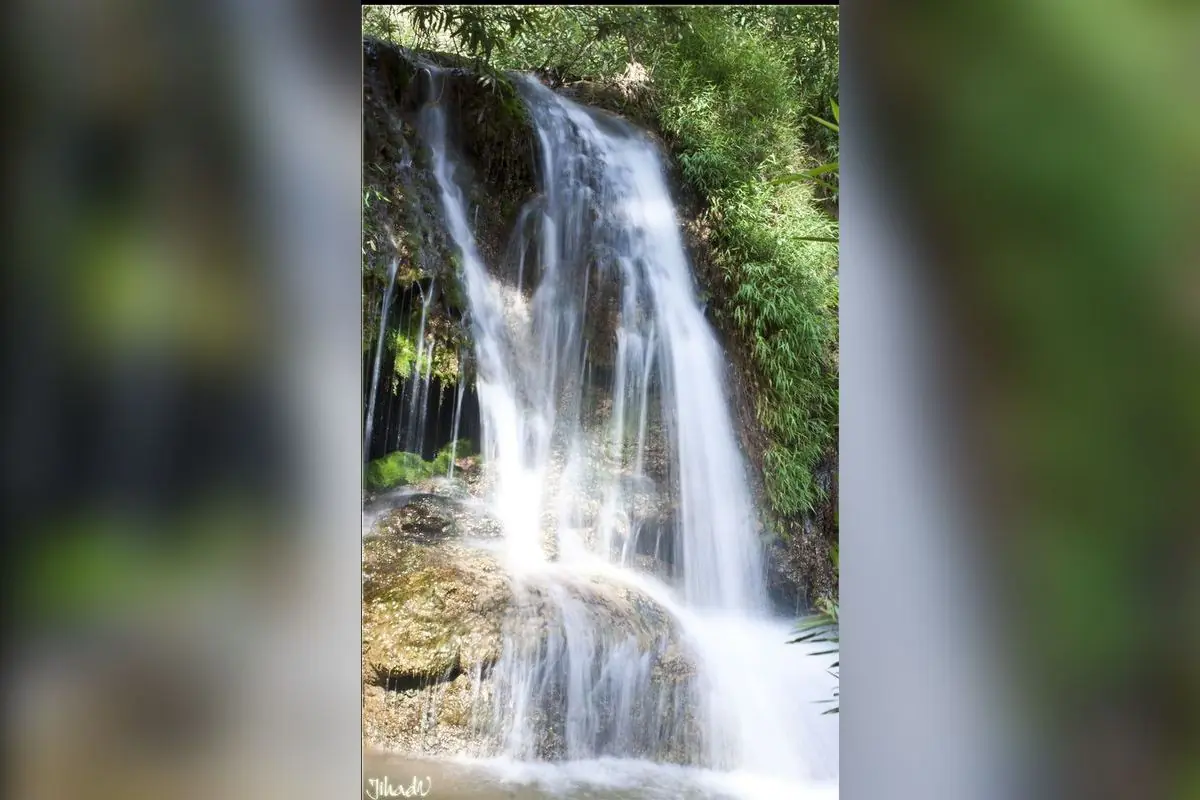
The waterfall is generally at its fullest between June and September. In winter, the flow may be lighter, but the area remains pleasant for a walk.
Ticket information differs between published price lists. One notice effective from January 20, 2025, listed admission at VND 150,000 per adult for a package including Love Glass Bridge.
Meanwhile, another seller lists waterfall admission at VND 80,000 per adult and a separate Love Glass Bridge ticket at VND 100,000 per adult, with the same prices on weekdays and weekends. Purchasing both separately would therefore cost VND 180,000.
Confirm the available package and inclusions at the ticket counter or with your chosen booking provider. Love Glass Bridge here is only around 22 meters long and is entirely different from Bach Long Glass Bridge.
The tourist area is generally advertised as operating during the daytime into early evening, but actual closing times should be confirmed before visiting, particularly in winter.
What is there to do at Ban Ang Pine Forest?
Ban Ang Pine Forest lies in Mộc Sơn Ward, approximately 2 km from central Moc Chau. It is a convenient stop on your first day, especially after a long journey when you may not feel like traveling farther.
Rows of pine trees surround a lake, creating a pleasant setting in the early morning and late afternoon. The area now has tourist facilities, cafes, photography spots, and recreational activities, so it feels more like a lakeside park than untouched wilderness.

You can walk around, cycle, stop for coffee, or explore the nearby Ban Ang village. Entrance fees and prices for activities within the developed areas vary by operator and season.
What to eat in Moc Chau
Evenings in Moc Chau are for local food; leave the distant photo spots for the morning.
Bê chao, or flash-fried young veal, is one of the area’s best-known dishes. Small pieces of veal are seasoned and quickly fried in hot oil, leaving the outside golden and fragrant while the inside stays tender. The meat is usually served with herbs and dipping sauce.
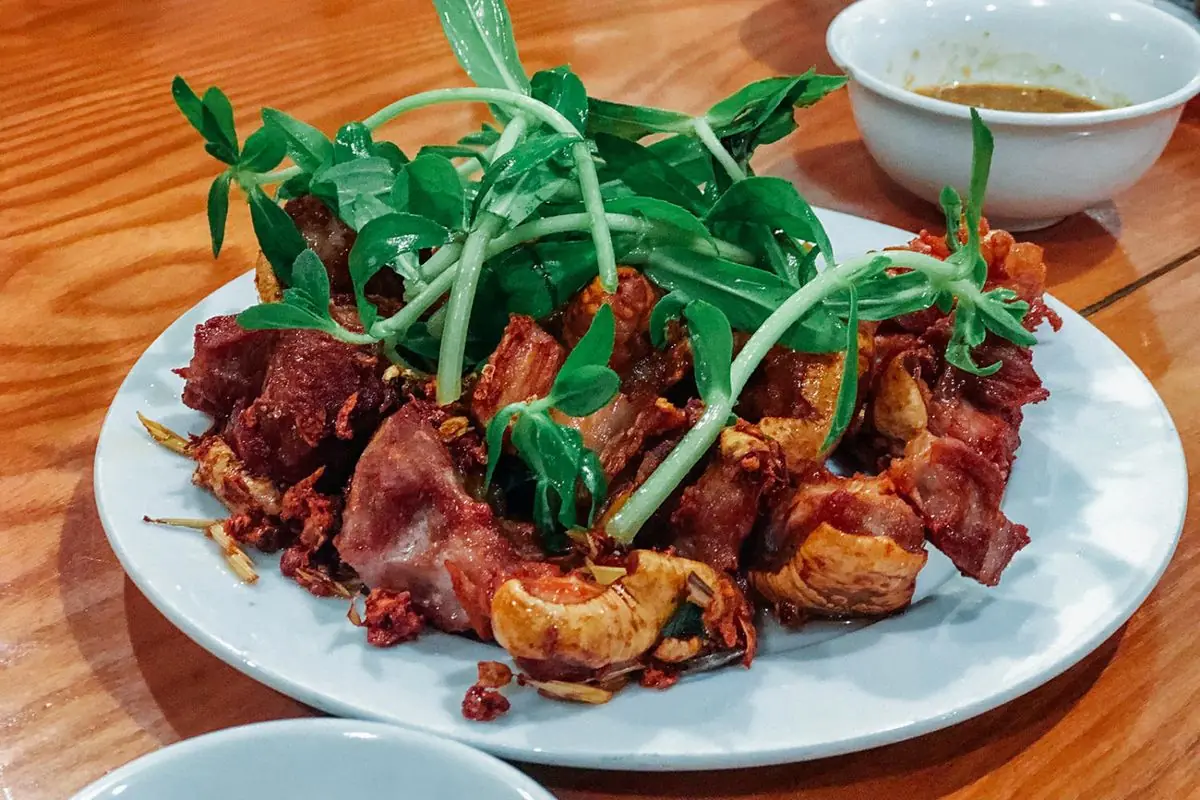
On cold evenings, you might enjoy veal hotpot, fresh milk hotpot, or a meal featuring locally farmed cold-water salmon and sturgeon. Salmon meal sets at restaurants often cost around VND 300,000 per person, depending on the menu. Fresh milk hotpot combines a bone-based broth with milk, vegetables, and different meats, giving it a mildly creamy taste.
Other dishes worth trying include grilled stream fish, local mustard greens, smoked buffalo meat, and nậm pịa. The last has a particularly distinctive flavor and aroma, making it better suited to adventurous eaters curious about traditional highland cuisine.
Moc Chau is also famous for its dairy farming, so fresh milk and yogurt are easy to find. A 180 ml carton of locally sold milk may cost around VND 8,000-15,000.
For souvenirs, consider green tea, oolong tea, dairy products, or smoked buffalo meat. Everyday green tea can cost approximately VND 50,000-100,000 per 100 g, while high-quality oolong and Shan Tuyet tea are generally more expensive.
Where to stay in Moc Chau and how much to budget
Travelers arriving by limousine without private transport will find the central areas around Mộc Châu Ward or Thảo Nguyên Ward more convenient for restaurants and bus pickups.
Those with their own vehicle who prefer somewhere peaceful can choose homestays near tea plantations, Ban Ang, or the surrounding villages.
Typical accommodation prices per night are approximately:
| Accommodation type | Expected price |
|---|---|
| Basic guesthouse | VND 100,000-200,000 per room |
| Village homestay | VND 100,000-250,000 per person |
| Scenic guesthouse | VND 250,000-500,000 per room |
| Bungalow near tea plantations | VND 500,000-1,000,000 per room |
| Resort | VND 1,000,000-3,000,000 per room |
Some upscale properties cost more. For example, rooms at Bullet Hotel inside Moc Chau Island have been listed at around VND 2.2 million on certain weekend nights.
During plum blossom season, Lunar New Year, and popular weekends, room prices can rise considerably. Booking one or two weeks ahead is generally reasonable, while major holiday periods call for earlier reservations.
For an overall budget, someone traveling from Hanoi for two days and one night might allow around VND 1.3-2.2 million per person when using buses, staying in a budget homestay or guesthouse, eating modestly, and sharing local transport costs. This estimate excludes Bach Long Glass Bridge and other expensive activities. Solo travel, hiring a private car and driver, or choosing a resort will cost more.
A practical 2-day, 1-night Moc Chau itinerary from Hanoi
This itinerary is designed for first-time visitors leaving Hanoi on Saturday morning and returning Sunday afternoon. Attractions are grouped geographically to avoid unnecessary backtracking.
Day 1: Hanoi - Ban Ang Pine Forest - Dai Yem Waterfall - Moc Chau Island
- 6:30-11:30 AM
Hanoi to Moc Chau
Take a limousine van from Hanoi and arrive around lunchtime. Try local veal or another regional dish, then check in or leave your luggage at your accommodation.
- 1:00-2:30 PM
Ban Ang Pine Forest
Visit Ban Ang Pine Forest, walk around the lake, stop for coffee, and take it easy after the long drive.
- 2:30-4:00 PM
Dai Yem Waterfall
Continue to Dai Yem Waterfall and explore the waterfall area, with the option of visiting Love Glass Bridge.
- 4:00-6:00 PM
Moc Chau Island
Visit Moc Chau Island if you have already chosen to purchase Bach Long Glass Bridge tickets and an appropriate admission time is available. To explore it properly, drop either Ban Ang or Dai Yem Waterfall and reserve most of the afternoon for Moc Chau Island. Check opening hours and bridge entry times in advance.
- Evening
Dinner in the center
Return to the center for hotpot or salmon, then spend the night at your homestay.
Traveling on a budget? Skip Moc Chau Island; Ban Ang and Dai Yem Waterfall already make for an enjoyable afternoon.
Day 2: seasonal flower valleys - tea plantations - Hanoi
- 6:30-8:30 AM
Seasonal flowers
Have breakfast and head to Na Ka Valley during plum blossom season, or choose a mustard flower field closer to town in November or December. At other times of the year, you can spend the morning exploring tea plantations.
- 8:30-10:30 AM
Tan Yen tea hills
Visit the heart-shaped tea hill or Moc Suong Oolong Tea Plantation in Tân Yên Commune. Enjoy the scenery, take photographs, and sample local tea.
- 10:30 AM-12:30 PM
Lunch and souvenirs
Return to the center for lunch, and buy tea or dairy products as souvenirs.
- 1:00-3:00 PM
Rest and check out
Rest, check out, and prepare your luggage. A cafe near your pickup point makes an easy last stop.
- 3:30-6:00 PM
Back to Hanoi
Board your pre-booked limousine van for the return journey to Hanoi, depending on your chosen departure time.
During white mustard flower season, visiting the large fields in Chieng Son requires more travel time than this schedule allows. Dedicate the entire morning to that area and skip the tea plantation, or extend your trip by another day.
Should you combine Mai Chau and Moc Chau?
Mai Chau lies along the National Highway 6 corridor between Hanoi and Moc Chau, making the two destinations fairly convenient to combine. Traveling from Mai Chau to Moc Chau generally takes another 1.5-2 hours by car, depending on your starting point and road conditions.
Mai Chau is known for its valley landscapes, rice fields, and Thai ethnic villages such as Lac Village. Moc Chau offers tea plantations, dairy farms, plum valleys, and larger tourist attractions.
For a combined Mai Chau and Moc Chau trip, plan three days and two nights. Spend your first night in Mai Chau, then continue to Moc Chau and stay there on the second night.
It is possible to visit both in two days and one night with a private car, but sightseeing time will be limited. Connecting by public transport is less straightforward because a separately ticketed Mai Chau-Moc Chau bus route is not always available.
International travelers on a longer Northwest Vietnam route can continue Hanoi - Mai Chau - Moc Chau - Son La before heading back, with more time in local villages and on mountain roads.
A few tips for international visitors to Moc Chau
Moc Chau is a good option for travelers who are staying in Hanoi and want a short highland escape. Buses only run along the main roads, though, so reaching the sights takes private transport.
English signage, information boards, and menus are not available everywhere. Some homestays offer excellent English-speaking assistance, but in villages farther from the center, a translation app and saved addresses on your phone will come in handy.
Visitors unfamiliar with Vietnamese traffic should consider hiring a car with a driver. Bus companies may also use different pickup and drop-off locations, making it important to confirm the exact address and meeting time.
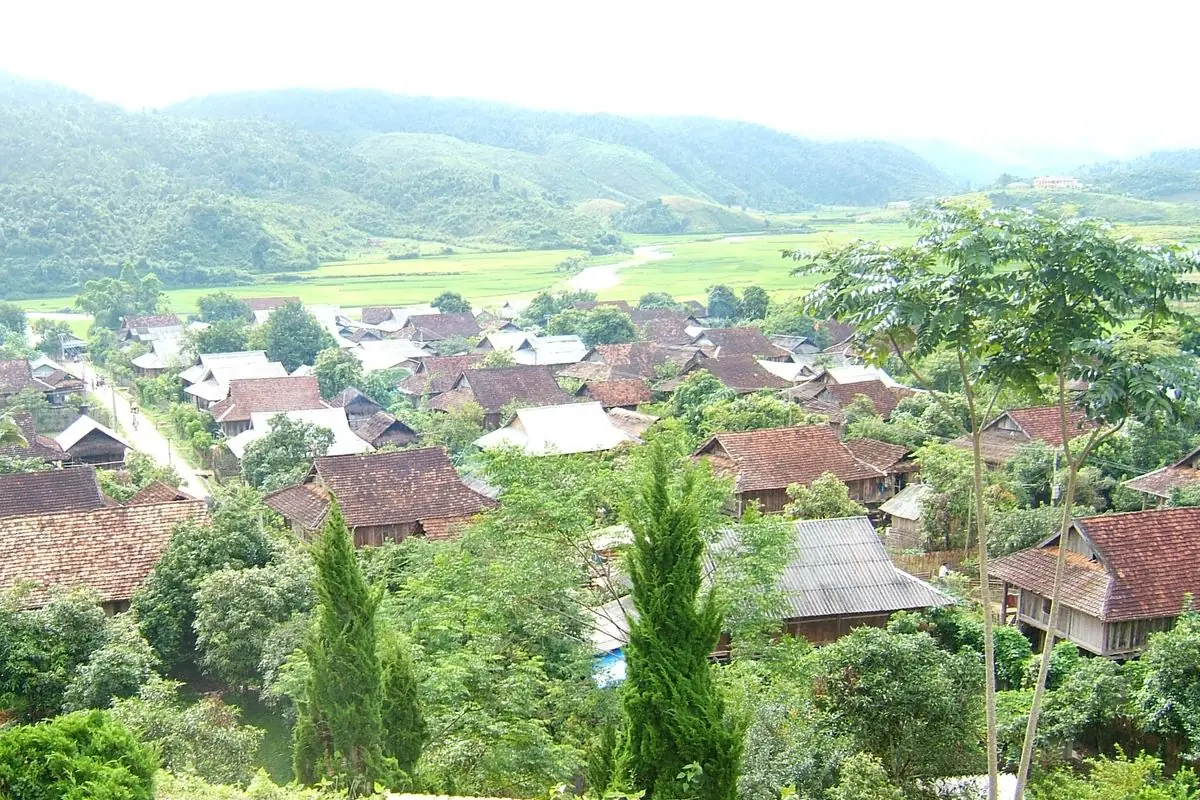
When visiting Thai or Hmong villages, ask permission before photographing residents, homes, or everyday activities. Tea plantations, plum orchards, and mustard fields are working agricultural land, so respect designated paths and the owners’ rules.
Final thoughts
Choosing the flowering season and grouping attractions by location works for a Mai Chau getaway or a longer journey through Northwest Vietnam too. In Moc Chau itself, an unhurried morning among tea hills or plum trees is worth more than one last photo stop squeezed into the schedule.
Frequently asked questions
How do you get from Hanoi to Moc Chau, and how long does it take?
A limousine van is the most convenient option for most travelers. The journey takes approximately four to five hours, with one-way tickets generally costing VND 250,000-450,000. A private car takes roughly the same amount of time, depending on traffic, while traveling by motorcycle usually requires five to six hours because riders must use roads where motorcycles are permitted.
When is white mustard flower season in Moc Chau, and where can you see the flowers?
White mustard flowers usually bloom from November through December, with December often providing the best displays. Popular areas include the former Chieng Xuan area in Chiềng Sơn Commune, Pa Phach, Na Ka, and fields near tea plantations. Flowering dates vary with weather conditions and each year's planting schedule.
How much are Bach Long Glass Bridge tickets, and is the experience worth it?
Reference adult ticket prices are VND 550,000 from Monday to Thursday and VND 650,000 on Fridays, weekends, and holidays. The attraction is worth considering for travelers who enjoy heights and unusual glass walkways. Those mainly interested in flower valleys and tea plantations may prefer spending their budget on other nature-focused experiences.
What should you visit on a 2-day, 1-night trip to Moc Chau?
On the first day, choose between Ban Ang Pine Forest, Dai Yem Waterfall, and Moc Chau Island. Spend the second day exploring a seasonal flower valley and the heart-shaped tea hill. This itinerary works well for travelers leaving Hanoi early in the morning and returning the following afternoon.
Is it worth combining Mai Chau and Moc Chau in one trip?
Yes. Mai Chau is conveniently located along the route from Hanoi to Moc Chau. A three-day, two-night itinerary works best, allowing one night in each destination. With just two days and one night, focusing on a single destination is more relaxing and reduces time spent on the road.