Ba Be Lake in two days: transport, homestay and boat route
For your first visit to Ba Be Lake, booking a transfer directly to the lake and staying in Pac Ngoi Village saves you a change of vehicle. If you're driving or want a slower pace, spend two nights: one day for a boat trip and another for walking the villages.
 18 min read
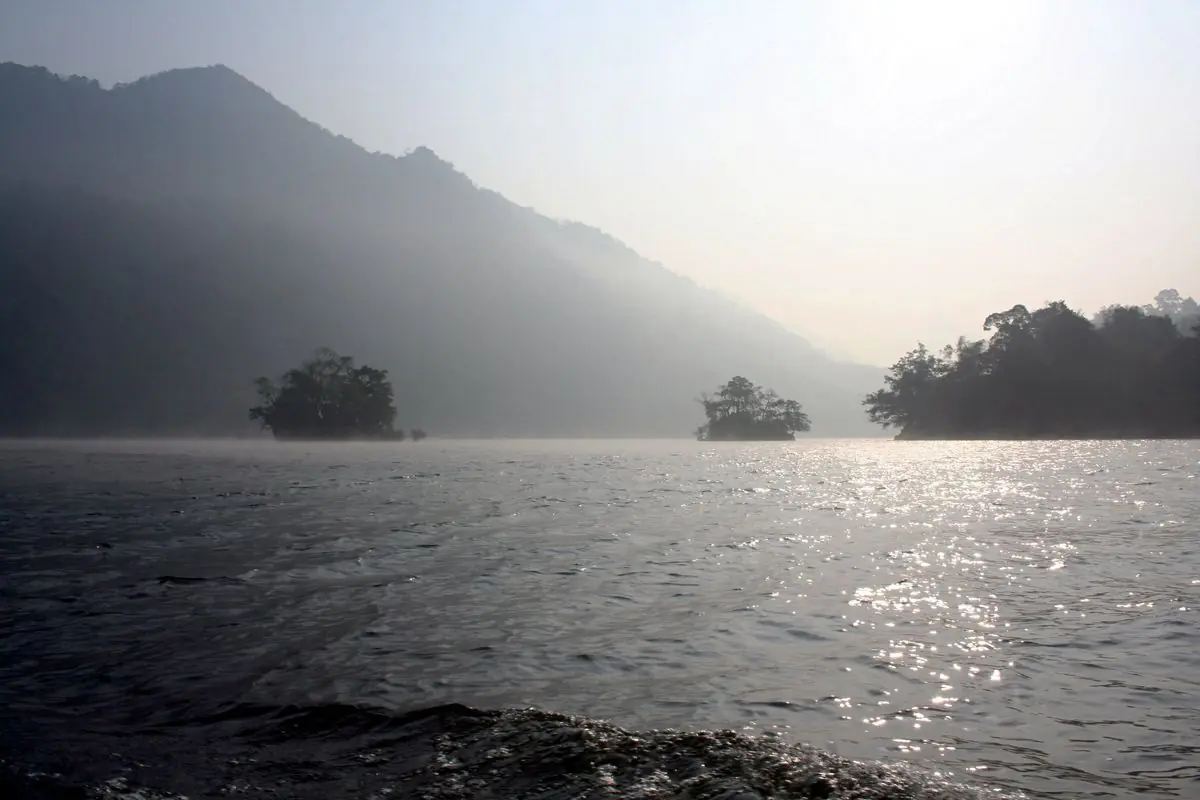
Early morning mist on Ba Be Lake, with small tree-covered islets and hazy ridges behind.
At Ba Be Lake, you can spend an entire hour sitting on the wooden veranda of a traditional stilt house, watching the mist lift from the water before heading out on a boat. Give it at least two days and one night: a night at a lakeside homestay and one boat route chosen to fit your time.
Where is Ba Be Lake, and how is it different from Sapa or Ha Giang?
Ba Be Lake is located inside Ba Be National Park, roughly 220 km by road from central Hanoi. Since July 1, 2025, its official administrative address has been Ba Be Commune, Thai Nguyen Province, Vietnam, following the merger of Bac Kan Province into Thai Nguyen.
The former communes of Cao Thuong, Nam Mau, and Khang Ninh were merged into the new Ba Be Commune. That’s why you may still see addresses such as "Nam Mau, Ba Be, Bac Kan" when booking transport or accommodation. These refer to the same area, not a different lake.
Ba Be is surrounded by forest-covered limestone mountains, at an elevation of approximately 145-150 metres above sea level. The lake stretches for around 8 km and consists of three connected sections: Pe Lam, Pe Lu, and Pe Leng. The water winds between steep hillsides, revealing a different view around almost every bend.
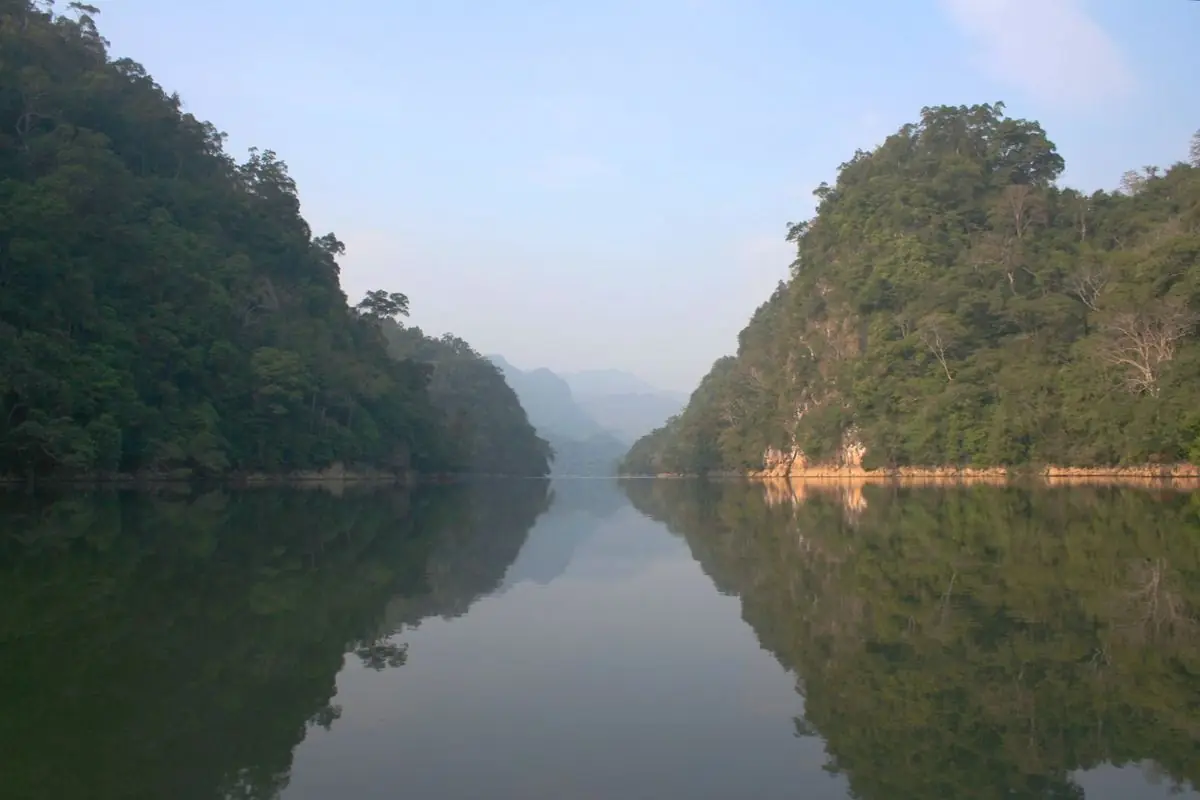
Established in 1992, Ba Be National Park covers 10,048 hectares. It is recognised as an ASEAN Heritage Park, and Ba Be Lake was designated a Ramsar wetland site in 2011.
Unlike Sapa, with its busy viewpoints and mountain tourism infrastructure, or Ha Giang, famous for its dramatic mountain roads, Ba Be is best suited to travellers who enjoy nature and a slower pace.
A typical day here might involve a boat ride, a limestone cave, a walk through a Tay village, and a home-cooked dinner with your hosts.
For international visitors who are already travelling in northern Vietnam, Ba Be can be a peaceful alternative to the region’s better-known destinations.
Tourism is generally less concentrated here than in Sapa or Ha Giang, although weekends and public holidays can still be busy.
How to get from Hanoi to Ba Be Lake
Ba Be has no nearby train station or airport, and direct public transport from Hanoi to the lakeside villages is limited. Booking platforms list some services only on selected dates.
A private car takes around 4.5-5 hours. Shared transfers and local buses may take 5-7 hours, and longer still when you need to change vehicles.
Tourist shuttle: the easiest option for international visitors
International travellers unfamiliar with Vietnamese transport booking systems are best off starting with a tourist shuttle that offers pickup in central Hanoi and drop-off near Ba Be Lake.
A 16-seat transfer departs from the Hanoi Opera House area at 3:30 PM, arriving at the Ba Be Lake pier at approximately 8:30 PM.
The fare is around 430,000 VND per person, one way.
Other published schedules have included departures around 6:20 AM, 12:30 PM, and 3:35 PM, with indicative fares between 320,000 and 465,000 VND, though not all of them run or go on sale every day.
Before booking, check three things: whether you need to change vehicles, the exact drop-off location, and whether the transfer reaches your homestay.
Arriving in the evening? Contact your host in advance. Transport and dining options in the lakeside villages thin out after dark.
Hanoi to Bac Kan by limousine: convenient, but not direct
Another option is taking a limousine minibus from Hanoi to the former Bac Kan city centre, then arranging transport to the lake.
Indicative fares from a few operators:
| Operator | One-way fare | Departure information |
|---|---|---|
| Minh An Limousine | From 180,000 VND | Services around 4 AM, 7 AM, 9 AM, and 1 PM from the Nuoc Ngam area |
| Tuan Anh Travel | Around 333,000 VND | Around 6 AM, near Hanoi Opera House |
| Tam Nghia | Around 225,000 VND | Around 9:30 AM from My Dinh Bus Station |
The journey to the former Bac Kan city centre usually takes around 3-4.5 hours. Drop-off points may include the Bac Kan Vincom area or other stops along the route.
Send your bus ticket details to your homestay and ask what a pickup from Bac Kan would cost. For solo travellers, this final connection can make the journey more expensive than booking a tourist shuttle directly to the lake.
Direct buses from Hanoi to Ba Be
Local transport companies such as An Binh and Thuong Nga have previously operated services between Hanoi and Ba Be or Cho Ra.
Indicative fares range from approximately 200,000 to 300,000 VND per person, with departures at various times in the morning and early afternoon.
An Binh has been advertised with Hanoi departures around 6 AM, 12:30 PM, and 3:30 PM.
These schedules may be out of date: on some days, major booking platforms show no An Binh departures going straight to the lake.
Ask your homestay to confirm the service with the operator and check whether the final stop is Cho Ra, the national park entrance, or a boat pier. Cho Ra is still approximately 20 km from the lake area.
Private car or self-drive from Hanoi
A private car can make the journey much more comfortable for families or groups of three to five people.
A chauffeured transfer with hotel pickup in Hanoi has been advertised at approximately 2.7-4.7 million VND per vehicle, one way, depending on vehicle size and travel date.
If you’re driving yourself, the usual route follows the Hanoi-Thai Nguyen Expressway, connecting with National Highway 3 before turning onto local roads toward Ba Be.
Several sections are winding, particularly closer to the lake. Drive in daylight and add time for breaks to the Google Maps estimate. During prolonged rainfall, check road conditions and possible landslide risks before setting off.
Ba Be National Park entrance fees in 2026
You may find older travel guides listing Ba Be Lake entrance tickets at 70,000 VND for adults and 40,000 VND for children.
Those were the 2025 figures, and the official fee regulation changed for 2026.
From January 1, 2026, Thai Nguyen Provincial People’s Council set these sightseeing fees:
| Attraction | Official 2026 fee |
|---|---|
| Ba Be Lake scenic area | 60,000 VND per person |
| Hua Ma Cave | 40,000 VND per person |
| Tham Phay Cave | 150,000 VND per person |
| Nang Tien Cave | 10,000 VND per person |
The same rules exempt eligible groups, including children under 16, older people as defined by Vietnamese law, people with severe or particularly severe disabilities, members of poor households, and people with recognised meritorious service. The old rules gave many of these groups only a 50% discount.
The 60,000 VND figure is the regulated sightseeing fee; a ticket or package sold at the pier can cost more. Some travel websites continue to show a 70,000 VND ticket, which may bundle extra charges on top of the fee. Check the current price board and ask whether any additional service or insurance charges apply.
Ba Be Lake boat prices: which route should you choose?
See Ba Be from a boat. From the water, the limestone cliffs, forests, and mountains look completely different from what you see on the road.
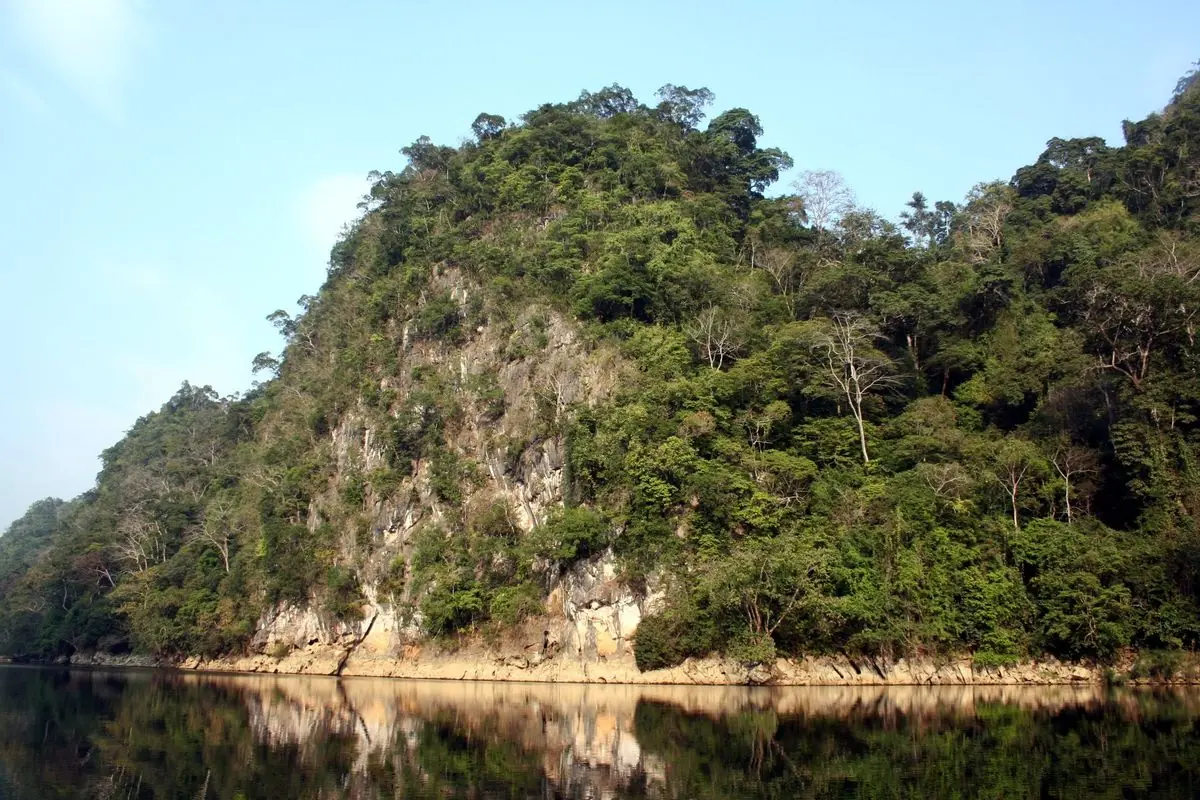
Motorboat tours are generally priced per boat or per trip, rather than per passenger, so a solo traveller or a couple pays the same boat price as a larger group.
The prices below come from one local Ba Be boat operator; the board at the pier on the day sets the actual fares and stops.
| Boat route | Duration | Indicative price per boat |
|---|---|---|
| Lake circuit - An Ma Temple - Ao Tien - Ba Goa Island | 1.5-2 hours | 700,000 VND |
| Lake circuit - Ao Tien - Dau Dang Waterfall - Ba Goa Island | 2.5-3 hours | 900,000 VND |
| Lake circuit - Ao Tien - Puong Cave - Ba Goa Island | 3.5-4 hours | 1,000,000 VND |
| Lake circuit - Puong Cave - Dau Dang Waterfall - Ao Tien - Ba Goa Island | 4.5-5 hours | 1,200,000 VND |
Prices may vary between providers and departure piers. Some shorter routes include only An Ma Temple, while other services depart from Buoc Lom Pier on the Nang River.
For a group of four sharing a boat costing 1,200,000 VND, the boat fare works out to 300,000 VND per person, excluding entrance fees and other expenses.
The announced capacity for six inland waterway piers at Ba Be covers passenger boats carrying up to 12 people. The number actually allowed on each boat depends on its approved operating conditions, and some service schedules set lower limits for international groups. Confirm the limit before arranging a shared trip.
The 2-hour lake circuit: best for a short visit
The short route around the lake, including An Ma Temple, Ao Tien, and Ba Goa Island, is a good choice for first-time visitors, families with young children, or travellers returning to Hanoi the following day.
An Ma Temple is a small religious site beside the lake, closely connected to local spiritual traditions.
Ba Goa Island is a tiny wooded island in the lake, associated with a local legend about how Ba Be was formed.
Ao Tien, often translated as Fairy Pond, covers approximately 3,000 square metres.
After reaching the landing point, visitors take a short walk to the pond, where the still water and surrounding greenery create a quiet atmosphere.
Dau Dang Waterfall route: best for river scenery
Dau Dang Waterfall lies on the Nang River, approximately 3 km from Ba Be Lake.
The river flows between large boulders, forming a series of cascades through the forest.
The scenery here feels more dramatic than the calm lake, particularly after rainfall, though high water can also restrict access to the waterfall area.
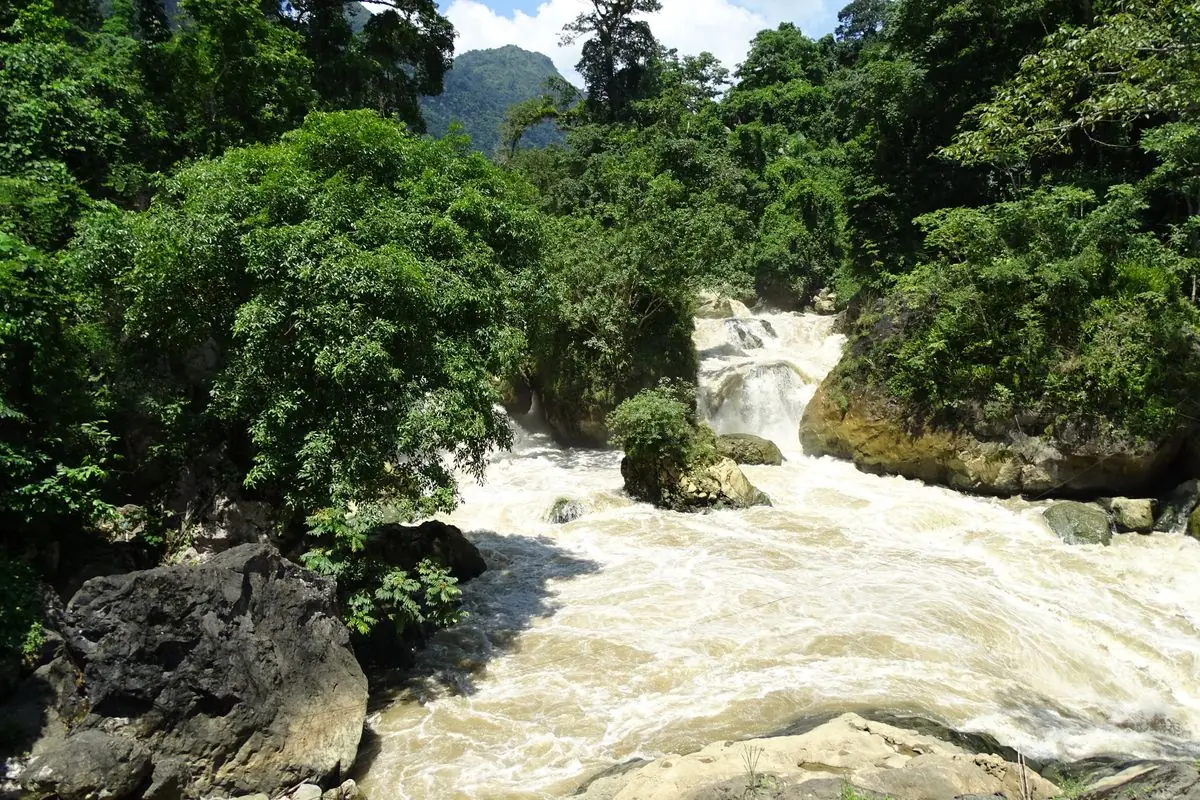
A route lasting about three hours offers a good balance for a two-day trip, combining the lake with a contrasting riverside landscape.
Puong Cave route: best for cave exploration
Puong Cave is a large limestone cavern through which the Nang River flows.
The cave is more than 20 metres high and approximately 30 metres wide, with the river passing through the mountain for around 300 metres.
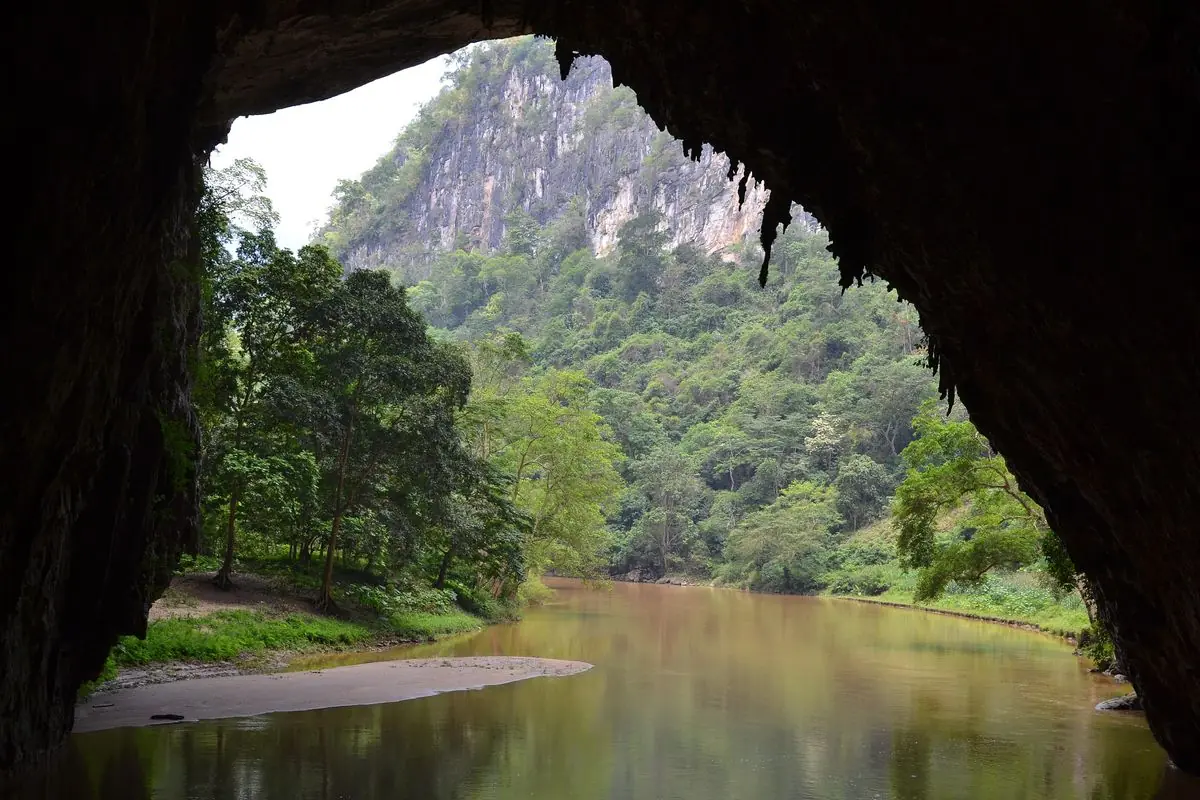
The boat takes you toward or through the cave, past the rock walls and under the cavern roof.
Compared with Ao Tien or Ba Goa Island, Puong Cave feels a little more adventurous.
It’s a good option when you have at least half a day free and don’t mind spending several hours on the water.
Is the full Puong Cave and Dau Dang Waterfall route worth it?
The full four-and-a-half to five-hour route is worth it when you have an entire day at Ba Be, the weather is favourable, and there’s no rush to catch a return bus.
For a two-day, one-night trip from Hanoi, a two-to-three-hour route is more practical. Start the five-hour route at 7:30 AM and you’re back on shore around 12:30 PM, right when return transport leaves.
Before booking, ask your boat operator how long you’ll stop at each attraction, whether walking time is included, and which additional fees you might need to pay.
Can you kayak on Ba Be Lake?
Kayaking and stand-up paddleboarding were previously offered by several homestays and local activity providers around the lake.
In 2025, rentals cost approximately 150,000 VND per hour for a two-person kayak, or 1.2-1.5 million VND per day for a group of three kayaks.
However, kayaking is currently suspended.
From July 7, 2026, the Ba Be Commune People’s Committee issued a notice temporarily suspending recreational activities on Ba Be Lake and the Nang River that had not been properly authorised or did not meet safety requirements.
The notice covered activities such as kayaking, SUP, inflatable boats, informal rafts, swimming, and diving.
The suspension targets activities lacking the necessary legal and safety conditions; authorised tourist boats still run.
For regular sightseeing boats, use an approved pier and licensed vessel, wear a life jacket throughout the trip, and avoid standing or changing seats while the boat is moving.
Pac Ngoi, Bo Lu, or Coc Toc: where should you stay?
At a Ba Be homestay you might wake up to conversations beneath the stilt house, eat a family-style dinner, or watch the mountains and water from a wooden balcony.
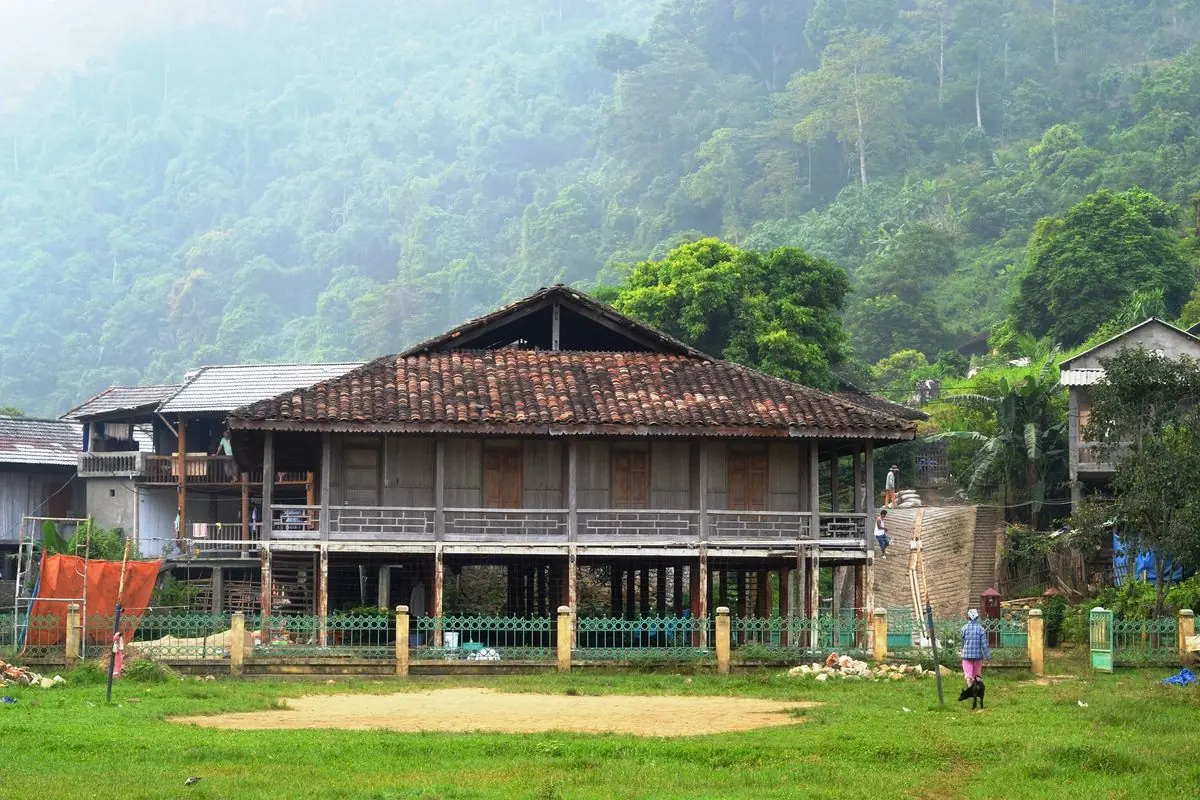
The three main lakeside areas to consider are Pac Ngoi, Bo Lu, and Coc Toc.
Pac Ngoi
Best for first-time visitors
Pac Ngoi is a traditional Tay village known for its wooden stilt houses.
It’s also one of the most established areas for homestays and visitor services around Ba Be Lake.
The village is accessible by road and has access to boat services, making it a convenient base for exploring the lake.
You can walk through the village, see the surrounding rice fields, arrange a boat tour through your host, or join a home-cooked family dinner.
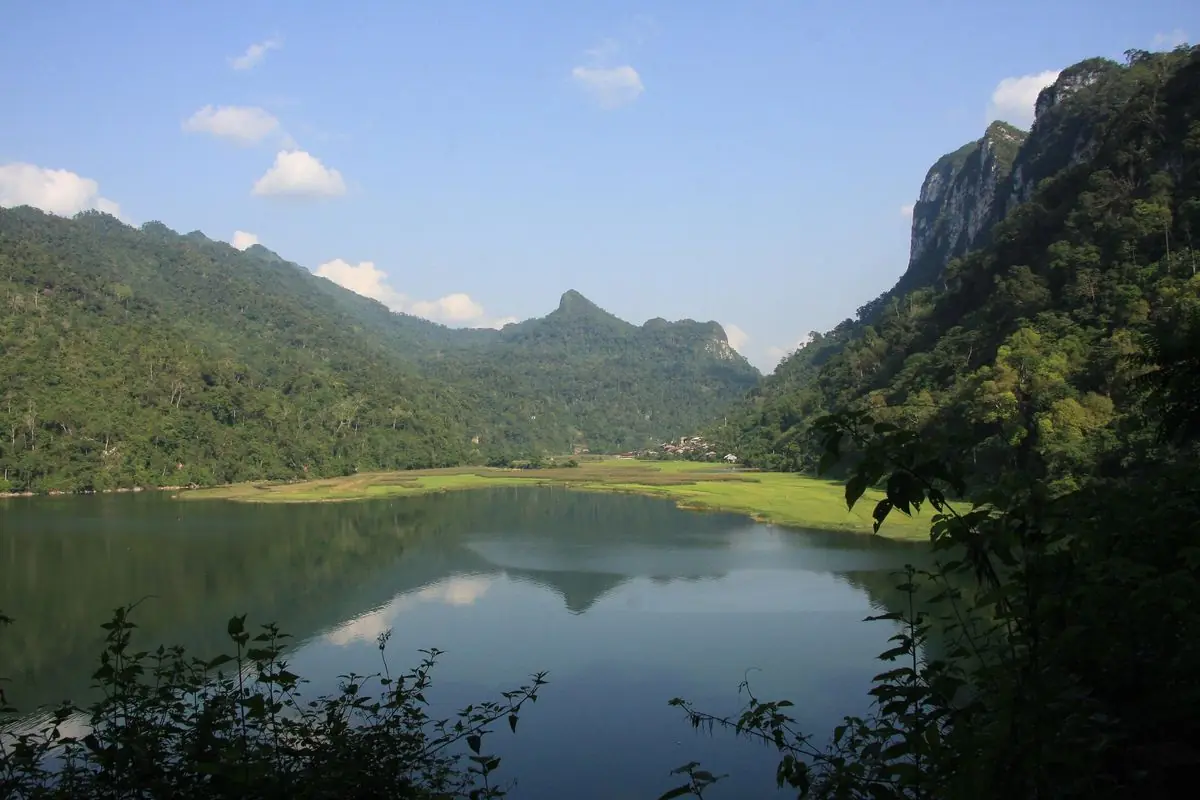
International travellers often choose Pac Ngoi because some homestay owners are familiar with welcoming overseas guests and helping arrange transport.
Indicative accommodation prices include:
- Mattress in a shared traditional stilt-house sleeping area: approximately 100,000-200,000 VND per person per night.
- Private double room in a homestay: generally around 250,000-600,000 VND per night.
- More comfortable private rooms or bungalows with scenic views: approximately 700,000-1,200,000 VND per night.
Some online booking platforms show lower promotional prices, especially on weekdays.
Check how many guests are included in the room rate and whether breakfast is provided.
Bo Lu
Best for a quiet lakeside stay
Bo Lu is another lakeside settlement with family-run guesthouses and homestays, including properties facing the water.
Compared with the busier accommodation area around Pac Ngoi, Bo Lu suits couples or travellers who want to read, rest, and look at the lake.
Rooms in several houses face the water, a few with balconies.
Dining and transport options are thinner here; outside the busiest periods, arrange dinner with your host before arriving.
Coc Toc
Best for nature lovers
Coc Toc is home to traditional stilt houses and accommodation surrounded by mountains and forest.
The lake is visible from some properties.
This area works well for travellers staying two nights or longer, especially those who enjoy walking, relaxing, or escaping the more developed visitor areas.
Some homestays have private bedrooms, ensuite bathrooms, and hot water.
Others still use shared bathroom facilities, so confirm the bathroom setup with your host before booking.
What should you ask before booking a homestay?
Before confirming your reservation, send your host a quick message about the room type, private or shared bathroom, air conditioning or fans, dinner and breakfast options, and transport from your arrival point.
International guests may also want to check whether the host can communicate in English or another language they’re comfortable using.
Bring your original passport when checking in, as homestay operators must complete the required temporary residence registration for foreign guests.
Ba Be doesn’t have the same late-night restaurants or convenient ride-hailing services as Hanoi. Arriving after 6 PM, book a family dinner with your host in advance, or you may find nowhere to eat.
Ba Be Lake 2-day, 1-night itinerary from Hanoi
The following itinerary works best when you’re travelling by private car or have booked a transfer arriving around midday.
If your shuttle reaches Ba Be at 8:30 PM, you’ll need to skip the first afternoon’s activities and plan a shorter boat tour the following morning.
Day 1: Hanoi - Ba Be Lake - Pac Ngoi Village
- 6:00-7:00 AM
Leave Hanoi. Have breakfast before departing or stop for a meal along the way.
- 11:30 AM-1:00 PM
Arrive in the Ba Be area, depending on your transport. Have lunch and continue to your homestay.
- 2:00-4:30 PM
Check in and explore Pac Ngoi Village on foot. If you arrive early and your host can arrange it, you could also take a short afternoon boat trip.
- 5:00-7:00 PM
Return to the stilt house, relax, and enjoy dinner.
Local home-cooked meals may include freshwater fish, forest vegetables, grilled meat, and seasonal dishes prepared with ingredients available to the family.
In the evening, chat with your hosts, learn about Tay culture, or turn in early and wake up to the lake the next morning.
Day 2: Ba Be Lake boat tour - return to Hanoi
- 6:30-7:30 AM
Have breakfast, enjoy the scenery around the village, and prepare your luggage.
- 7:30-10:30 AM
Take a two-to-three-hour boat tour, visiting Ao Tien, An Ma Temple, Ba Goa Island, or Dau Dang Waterfall, depending on your chosen route.
- 11:00 AM-12:00 PM
Have lunch, collect your belongings, and check out.
- 12:30-1:30 PM
Depart for Hanoi, subject to your confirmed transport schedule.
- 5:30-7:00 PM
Expected arrival in Hanoi by private car or a suitable transfer, depending on traffic and road conditions.
The boat trip sits in the morning, when the air is cool and the mountains are reflected in the water. Places such as Hua Ma Cave or longer forest walks are better saved for a longer stay.
Should you stay one night or two nights?
One night is enough for a weekend escape, a boat trip, and an evening in a traditional lakeside homestay.
It’s also a reasonable option when Ba Be is part of a larger Hanoi-Ba Be-Cao Bang journey.
Two nights give you considerably more freedom.
You can dedicate a full day to a longer boat route, then spend another day visiting Hua Ma Cave, walking between villages, or exploring permitted forest trails.
Some walking routes around Cam Village cover approximately 4 km and take around two to three hours, depending on the path and your pace.
For routes deeper into the forest, arranging a local guide is sensible, particularly after rainfall or when you’re unfamiliar with the terrain.
Best time to visit Ba Be Lake
You can visit Ba Be throughout the year, but the lake and surrounding landscape feel quite different between the wet and dry seasons.
| Period | Typical conditions | Best for |
|---|---|---|
| March-April | Generally pleasant temperatures, green scenery, before the heaviest rains | Boat trips, village walks, homestays |
| May-September | Hot, humid, and rainy; lush forests but potentially slippery roads | Summer landscapes and flexible itineraries |
| October-November | Cooler weather and generally less rain | Relaxing, lake views, walking |
| December-February | Drier but colder, sometimes misty | Winter scenery and quiet homestay stays |
March-April or October-November suit a first visit best.
Temperatures are generally comfortable for travelling by road, taking boat trips, and spending time outdoors.
Rainfall increases considerably from May through September, particularly during the middle of summer.
Heavy rain can affect mountain roads, water levels, and boat operations, so this isn’t the best season for an inflexible itinerary.
Winter tends to be drier, but mornings by the lake can feel surprisingly cold.
Traditional wooden stilt houses may be breezier than enclosed hotel rooms, making a warm jacket and suitable bedding important.
The Ba Be spring festival, linked to the tenth day of the first lunar month, is another good time to go.
It’s an opportunity to experience local traditions and a livelier village atmosphere, although accommodation may need to be booked earlier and the area will feel less secluded.
How to combine Ba Be Lake with Cao Bang and Ban Gioc Waterfall
Ba Be is well positioned for a longer journey through northeastern Vietnam, particularly if you want to visit Ban Gioc Waterfall.
Depending on the route, the distance from Ba Be Lake to Cao Bang city centre is generally around 130-160 km, requiring approximately 4-5 hours by car.
Public transport on this section is relatively limited, so arrange this leg in advance.
Hanoi - Cao Bang - Ba Be - Hanoi in 3 days
- Day 1
Travel from Hanoi to Cao Bang and stay overnight in Cao Bang city.
- Day 2
Visit Ban Gioc Waterfall and other attractions that fit your route, then continue to Ba Be and stay at a homestay in Pac Ngoi.
- Day 3
Take a two-to-three-hour boat tour of Ba Be Lake and return to Hanoi.
This itinerary covers two of northeastern Vietnam’s highlights, but it involves several hours of driving each day.
Some organised three-day, two-night tours have been advertised from approximately 2.5 million VND per person, typically including one night in a Cao Bang hotel and one night in a Ba Be homestay.
Always check the current departure price and whether entrance fees, boat trips, meals, and transfers are included.
A 4-day trip is more relaxed
- Day 1
Travel from Hanoi to Cao Bang, explore the town, and stay overnight.
- Day 2
Visit Ban Gioc Waterfall, Nguom Ngao Cave, and other nearby attractions. Spend another night in Cao Bang.
- Day 3
Travel to Ba Be Lake, check into your homestay, and enjoy a quiet afternoon around the village.
- Day 4
Take a boat tour before returning to Hanoi.
The route also works in reverse: Hanoi - Ba Be - Cao Bang - Hanoi.
Travelling by public transport, ask your homestay about connections from Ba Be to Cho Ra or Phu Thong, where you may be able to continue toward Cao Bang.
Local departures are not frequent, so leaving in the morning is preferable.
Groups may find a private transfer from Ba Be to Cao Bang more convenient, with indicative prices of approximately 1.8-2.8 million VND per vehicle.
How much does a 2-day Ba Be Lake trip cost?
This example budget is for two people travelling from Hanoi by shared transfer, staying in a private double room, and booking their own three-hour boat tour.
| Expense | Estimated cost for 2 people |
|---|---|
| Return shared transfers, Hanoi-Ba Be | 1,720,000 VND |
| One night in a homestay | 300,000-600,000 VND |
| Ba Be Lake sightseeing fees at the regulated rate | 120,000 VND |
| Approximately 3-hour private boat tour | 900,000 VND |
| Food and drinks | 400,000-700,000 VND |
| Estimated total | 3,440,000-4,020,000 VND |
That works out to approximately 1.7-2 million VND per person for this two-person itinerary, excluding any additional local transfers, insurance or separate service charges, and optional activities.
Travelling as a group of four makes the boat tour considerably cheaper per person.
Solo travellers, on the other hand, may find a private boat relatively expensive.
Your homestay can ask other guests about sharing a boat. Just make sure everyone agrees on the route, departure time, and how the cost will be divided.
What to pack for Ba Be Lake
Bring comfortable walking shoes with good grip, a light jacket even in summer, a compact raincoat, insect repellent, sunscreen, and a waterproof bag for your phone.
If you’re prone to motion sickness, consider bringing suitable medication. The final sections of the road toward Ba Be have plenty of bends.
During the rainy season, check the weather forecast and road conditions a day or two before leaving.
Heavy rain may cause boat operators to adjust or temporarily suspend tours for safety reasons.
Save your homestay’s phone number and the exact pickup or drop-off point for your transport, even when you already have electronic tickets.
Before leaving Ba Be, confirm your return transport and how you’ll get from your homestay to the pickup point, especially when there’s a boat crossing or mountain road involved.
Frequently asked questions
How do I get from Hanoi to Ba Be Lake, and how long does it take?
You can take a tourist shuttle, travel by limousine to Bac Kan and arrange a connecting vehicle, hire a private driver, or drive yourself. Private cars usually take around 4.5-5 hours, direct shared transfers approximately five hours, and journeys involving connections can take 6-7 hours or longer. For first-time international visitors, a transfer reaching the lake or homestay is usually the easiest option.
How much are Ba Be National Park entrance tickets and boat tours?
From 2026, the prescribed sightseeing fee for Ba Be Lake is 60,000 VND per person, with exemptions for eligible groups, including children under 16. Boat hire is charged separately, with indicative prices ranging from around 700,000 VND for a 1.5-2-hour route to 1,200,000 VND for a 4.5-5-hour route. Confirm the current total ticket price and any additional charges at the pier.
How much does a Pac Ngoi homestay cost, and are private rooms available?
Pac Ngoi offers both shared mattress accommodation in traditional wooden stilt houses and private double rooms. Shared sleeping arrangements typically cost around 100,000-200,000 VND per person per night, while private double rooms are generally around 250,000-600,000 VND per night. Some properties offer ensuite bathrooms, hot water, and air conditioning, but facilities vary, so confirm before booking.
Should I spend one or two nights at Ba Be Lake?
One night works well for a short weekend visit, allowing time for a boat trip and an evening in a traditional homestay, especially if you're travelling by private car. Two nights are better for travellers using public transport or anyone interested in Puong Cave, Dau Dang Waterfall, village walks, and a more relaxed lakeside experience.
Can I visit Ba Be Lake and Ban Gioc Waterfall on the same trip?
Yes. A common route is Hanoi - Cao Bang - Ba Be - Hanoi, or the reverse, with a minimum of three days and two nights. Ba Be is approximately 130-160 km from central Cao Bang by commonly used road routes, taking around 4-5 hours by car. Public transport connections are limited, so independent travellers should arrange this section in advance. Four days and three nights are preferable for a more comfortable itinerary.