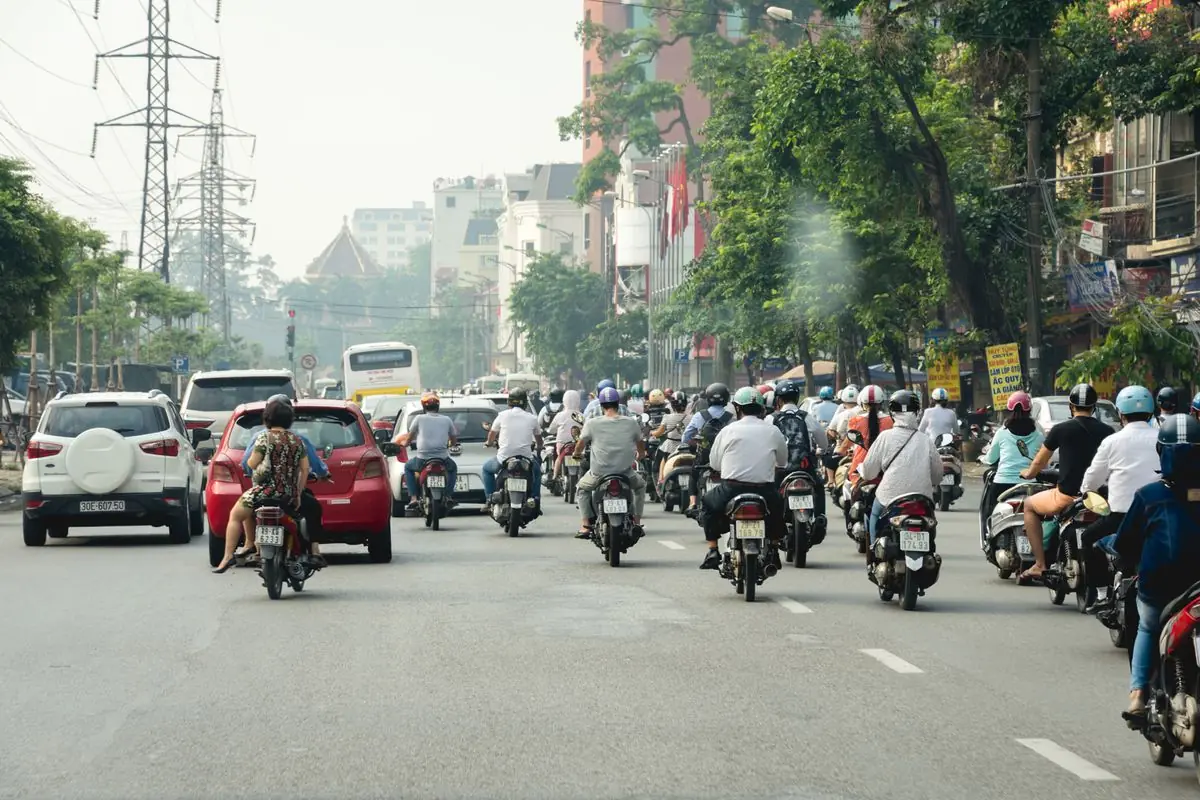
How to travel from Hanoi to Hue: flights, overnight trains or sleeper buses
Flying is faster, but getting to and from the airports adds several hours. Overnight trains and sleeper buses take longer, yet they can save you a hotel night. The better choice depends on your budget, schedule and how well you can sleep while travelling.
 25 min read

Hue railway station's pink facade, with a clock on top and a bilingual welcome sign, on Bui Thi Xuan Street.
At Hanoi Railway Station on Le Duan Street, train SE3 departs at 7:20 PM and is scheduled to arrive in Hue at 7:50 AM the next morning. You could also fly directly from Noi Bai to Phu Bai Airport in around 1 hour 15-25 minutes, or board an overnight sleeper bus on Tran Quang Khai Street and wake up in central Hue. The difference isn’t just the number of hours spent travelling. It’s where you’ll wake up, how much you’ve spent and whether you’ll have enough energy to explore Hue the following day.
What’s the best way to travel from Hanoi to Hue?
There are three main ways to travel from Hanoi to Hue: flying, taking a train or booking an overnight sleeper bus. All three offer direct journeys without having to change vehicles in Da Nang.
| Factor | Flight | Overnight train | Sleeper bus |
|---|---|---|---|
| Time on board | 1 hr 15-25 min | Around 12.5-14 hours | Usually 11-14 hours |
| Total hotel-to-hotel time | Around 4.5-6.5 hours | Around 13.5-15 hours | Around 13-15.5 hours |
| 2026 sample fares | Around VND 1.1-2.5 million for November 10 | Soft seats from roughly VND 450,000; standard sleepers around VND 830,000-1,220,000 | Queen Cafe Bus from VND 450,000-600,000 |
| Arrival point | Phu Bai Airport, outside the city centre | Hue Railway Station, near the centre | Depends on operator; some stop centrally |
| Overnight journey | No, for daytime flights | Yes | Yes |
| Save a hotel night? | Usually no, if arriving in the evening | Usually yes | Usually yes |
| Sleeping comfort | No need to sleep on board | Generally better in a four-berth cabin | Depends on vehicle and road conditions |
| Best for | Short trips, families with children | Travellers exploring Vietnam from north to south | Budget travellers who want convenient pickup and drop-off points |
Prices are examples from operators and booking platforms in 2026, not guaranteed fares for every departure. Hotel-to-hotel estimates are for planning and exclude unusual delays, cancellations or severe traffic.
For first-time visitors to Vietnam who plan to continue south towards Da Nang and Hoi An, the overnight train is worth considering. You can spend the day exploring Hanoi, have dinner, board the train and arrive in Hue the following morning.
But don’t book a train solely because it saves a hotel night. If you struggle to sleep with noise, movement or air conditioning, 13 hours on a train can feel considerably longer than the timetable suggests.
With only two days in Hue, flying may be worth the additional cost. You can spend less time travelling and avoid beginning your visit exhausted.
How far is Hanoi from Hue, and how long does it take?
The distance depends on how you measure it.
- By road: approximately 665 km from the Hoan Kiem Lake area to Hue Imperial City, depending on the exact route.
- By rail: approximately 688 km between Hanoi Railway Station and Hue Railway Station.
- By air: approximately 574 km in a straight line between Noi Bai and Phu Bai airports.
That’s why you may see distances ranging from 650 km to nearly 700 km on different travel websites. Some use road distances, others use railway distances, and a few measure the distance between the cities without specifying the route.
As for travel times, the SE3 train takes around 12 hours 30 minutes, while sleeper buses typically need 11-14 hours or longer depending on the route and stops. A direct flight takes a little over an hour in the air, but the complete journey is considerably longer.
Imagine you’re staying near Hoan Kiem Lake and have booked a flight departing at 5:40 PM. To arrive at Noi Bai Airport roughly two hours before departure, you may need to leave your hotel at around 2:00 PM.
After landing at 6:55 PM, you’ll still need to disembark, collect your luggage and travel into Hue.
By the time you reach your hotel, it could already be 8:00 PM.
Flying from Hanoi to Hue: fastest, but remember the airport transfers
Direct flights from Noi Bai to Phu Bai
Flights between Hanoi and Hue use two airports:
- Noi Bai International Airport (HAN): serves Hanoi.
- Phu Bai International Airport (HUI): serves Hue.
Both Vietnam Airlines and Vietjet Air operate direct flights on this route in the November 2026 schedule.
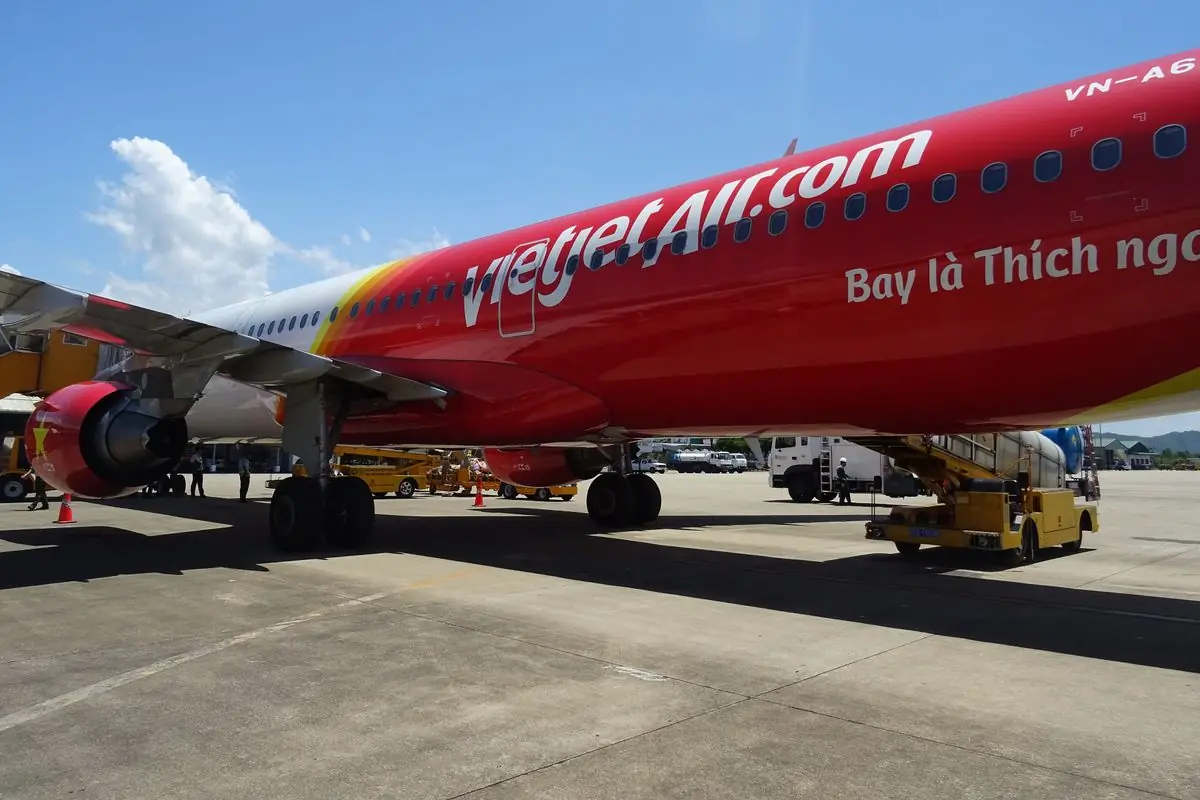
Here are some examples for November 10, 2026:
| Airline | Flight | Hanoi departure | Hue arrival |
|---|---|---|---|
| Vietnam Airlines | VN1541 | 5:55 AM | 7:15 AM |
| Vietjet Air | VJ567 | 6:00 AM | 7:15 AM |
| Vietnam Airlines | VN1545 | 4:30 PM | 5:50 PM |
| Vietjet Air | VJ565 | 5:40 PM | 6:55 PM |
| Vietnam Airlines | VN1549 | 8:00 PM | 9:20 PM |
These are scheduled flights, not guaranteed operating times for every day of the year.
An early flight gets you to Hue before breakfast. It sounds excellent until you realise that a 5:55 AM departure may require leaving central Hanoi around 2:30-3:00 AM, particularly if you have checked luggage.
Landing at 7:15 AM after sleeping only three hours doesn’t necessarily make for a pleasant sightseeing day.
An afternoon flight is often easier to manage when there’s no need to be in Hue first thing in the morning. You can have lunch, check out of your Hanoi hotel and then head to the airport.
How much are Hanoi to Hue flights?
Airfares change according to the date, airline, ticket type and booking time.
For a concrete comparison, the following table uses one-way fares for a flight on November 10, 2026.
| Flight | Listed fare |
|---|---|
| Vietjet Air VJ567, 6:00 AM | VND 1,121,781 |
| Vietnam Airlines VN1541, 5:55 AM | VND 1,276,181 |
| Vietjet Air VJ565, 5:40 PM | VND 1,391,781 |
| Vietnam Airlines VN1549, 8:00 PM | VND 1,405,181 |
| Vietnam Airlines VN1545, 4:30 PM | VND 2,508,181 |
These are sample prices, not reserved tickets or guaranteed checkout prices.
Vietjet’s Hanoi-Hue route page also displays promotional base fares from VND 90,000 on selected dates in 2026. That figure should not be treated as the total cost of flying. Taxes, fees, checked baggage and optional services can increase the final amount considerably.
This matters especially if you’re an international traveller spending several weeks in Vietnam. A cheap Eco ticket without checked baggage might not remain cheap once you add a large suitcase.
Before choosing between airlines, continue to the final price breakdown and check the baggage allowance and ticket-change conditions. Paying a few hundred thousand dong more for a convenient departure time can be worthwhile.
Getting from Hanoi Old Quarter to Noi Bai Airport
Domestic flights depart from Terminal T1 at Noi Bai Airport, not the international Terminal T2.
From the Hoan Kiem Lake area, you can take a taxi, ride-hailing service or airport bus.
Taxi or ride-hailing service: usually takes around 40-70 minutes from the centre, potentially longer during busy periods. Noi Bai Airport lists an indicative taxi fare of VND 200,000-400,000 for travel between the airport and central Hanoi. Check the fare for your particular direction and booking before leaving.
Bus 86: connects Hanoi Railway Station, parts of the city centre and Noi Bai Airport. According to published 2026 route information, tickets cost VND 50,000 per person. The service stops at T1 and passes through central Hanoi.
The bus is practical for solo travellers with light luggage and plenty of time. For an early flight departing before 7:00 AM, don’t assume a bus will run early enough to get you to the airport before check-in closes.
Getting from Phu Bai Airport to Hue city centre
Phu Bai Airport is not beside Hue Imperial City or the walking streets around Vo Thi Sau.
The road journey from the airport terminal to Hue Railway Station is approximately 16 km. To Hue Imperial City, it can be around 18-19 km, depending on the entrance and route. Allow about 25-40 minutes in normal conditions.
There are three practical options.
Taxi or pre-booked car: the simplest choice when travelling with suitcases. Vietnam Airlines lists indicative fares from around VND 160,000 for certain taxi services, while taxis booked directly at the airport may cost approximately VND 250,000. One local airport-transfer provider advertises private four-seat cars from VND 170,000 per trip.
Pre-booked transfer rates and airport taxi fares can differ. Confirm the total price, any additional fees and your hotel address before getting in.
Public bus: Vietnam Airlines lists routes 02, 07, 10 and 11 as services accessible from the airport junction area, with indicative fares of VND 7,000-10,000 per passenger. These should not be assumed to offer pickup directly outside the terminal. Check the walk to the stop, route direction and current operating hours before relying on them.
Hotel transfer: some hotels can arrange a private pickup. This is often the easiest option when arriving late, travelling with children or unfamiliar with Vietnamese ride-hailing apps.
For example, flight VN1549 is scheduled to land at 9:20 PM. Once you’ve left the aircraft, collected your suitcase and driven into the city, you may not reach your hotel until approximately 10:15-11:00 PM. Let the property know you’ll be checking in late.
Hanoi to Hue by overnight train: which departure should you choose?
Travelling by train is particularly convenient when exploring Vietnam from north to south. You board in central Hanoi, get off close to central Hue and don’t need to change trains in Da Nang.
Hanoi to Hue train timetable for 2026
These are the main services listed in the November 2026 railway schedule:
| Train | Departs Hanoi | Arrives Hue | Journey time |
|---|---|---|---|
| SE7 | 6:00 AM | 7:38 PM, same day | 13 hr 38 min |
| SE5 | 8:00 AM | 9:35 PM, same day | 13 hr 35 min |
| SE9 | 1:00 PM | 3:07 AM, next day | 14 hr 07 min |
| SE3 | 7:20 PM | 7:50 AM, next day | 12 hr 30 min |
| SE19 | 7:45 PM | 8:45 AM, next day | 13 hours |
| SE1 | 9:45 PM | 10:25 AM, next day | 12 hr 40 min |
Among these services, SE3 offers one of the best combinations of departure and arrival times.
You can eat an early dinner in Hanoi, reach the station around 6:30-6:45 PM, board the train and arrive in Hue before 8:00 AM the following morning.
SE19 arrives at 8:45 AM, another convenient time to begin your day. It also carries several premium tourist sleeping-car services sold by private operators.
SE1 departs later, at 9:45 PM. It’s worth considering if you want more of your evening in Hanoi or don’t like arriving too early. However, its 10:25 AM arrival means you’ll spend most of the morning travelling before reaching your hotel.
SE9 is less convenient for most tourists because it arrives at 3:07 AM. The fare may be attractive, but you’ll need transport in the middle of the night and somewhere to rest when most hotels aren’t ready to check you in.
Where are Hanoi and Hue railway stations?
Hanoi Railway Station is on Le Duan Street, not far from the Old Quarter. From Hoan Kiem Lake, the drive usually takes around 10-20 minutes in favourable traffic.

Hue Railway Station is on Bui Thi Xuan Street, south of the Perfume River. From the station, hotels around Le Loi, Nguyen Hue and the main tourist district are generally about 10-20 minutes away by taxi, depending on their location.
Hue Railway Station is not almost 30 km outside the city, despite what some confusing search results might suggest. You won’t need a long airport-style transfer after arriving by train.
Soft seat, six-berth sleeper or four-berth sleeper?
On a journey lasting more than 12 hours, your seat or bed type matters almost as much as the departure time.
Air-conditioned soft seats: cheaper, but difficult for sleeping
Soft seats recline and are in air-conditioned carriages. They suit daytime journeys or travellers working with a particularly tight budget.
The lowest soft-seat fares on some services were around VND 455,000 per person. A soft seat on SE3, for example, started from VND 569,000.
But spending an entire night in a reclining seat isn’t the same as sleeping in a bed. Your back and neck remain in a relatively fixed position, while corridor lights and passengers boarding at intermediate stations can interrupt sleep.
Saving a few hundred thousand dong by choosing a soft seat for a 13-hour overnight journey could leave you too tired to enjoy your first day in Hue.
Six-berth sleepers: lower fares, less privacy
A six-berth compartment has three stacked beds on each side. Lower berths are generally easier to access but cost more; upper berths require climbing a ladder and offer limited room for sitting upright.
Vietnam Railways fares showed approximately VND 832,000-1,070,000 for six-berth sleepers on the Hanoi-Hue route, depending on berth position and carriage.
These compartments work well for solo travellers, younger groups or people accustomed to overnight trains. You’ll be sharing with more passengers, however, and may be disturbed when others board or leave.
Travelling with older relatives or carrying several bags? Consider lower berths and avoid the top tier where possible.
Four-berth sleepers: the best balance for most travellers
A four-berth compartment contains two beds on each side, arranged in upper and lower tiers. There are fewer people sharing the space than in a six-berth compartment, which generally makes overnight travel more comfortable.
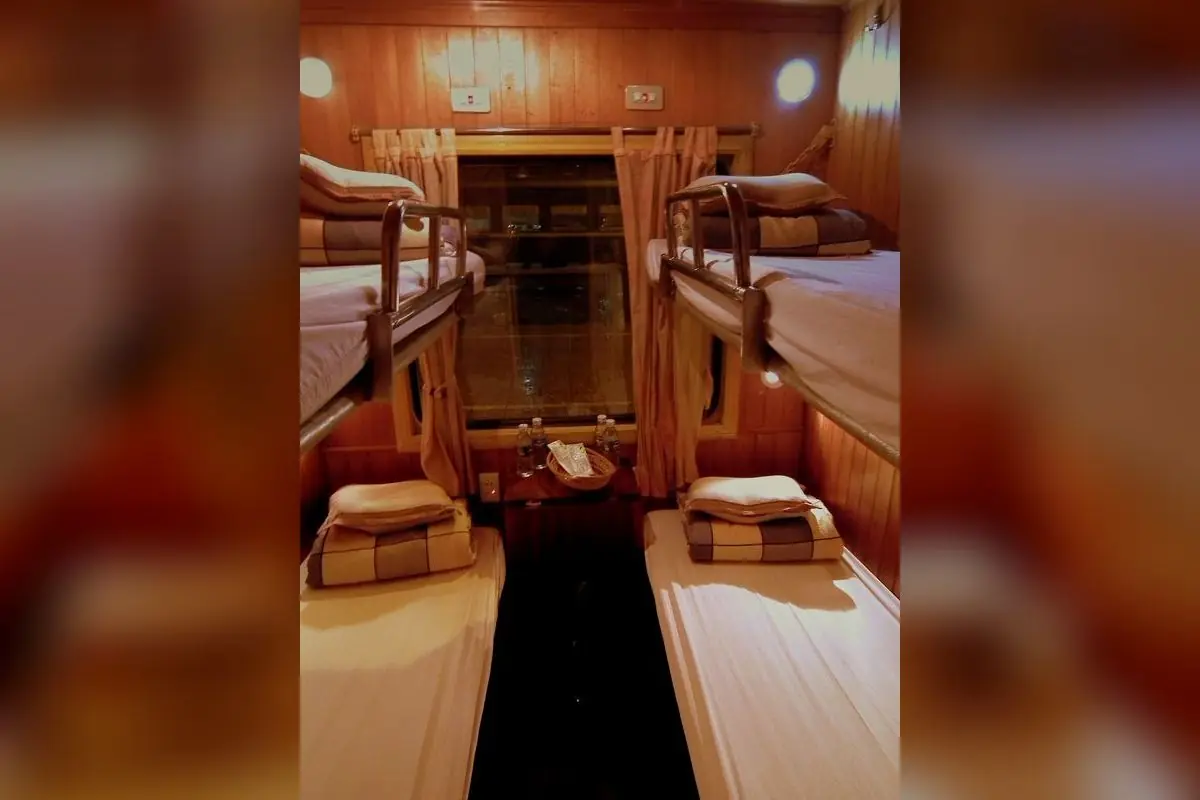
Indicative 2026 fares for regular Vietnam Railways four-berth soft sleepers were approximately VND 1,139,000-1,218,000, depending on the bed and carriage. Actual prices vary by departure date.
For couples, booking two berths in the same compartment is convenient, ideally two lower berths if available. However, buying two tickets does not give you exclusive use of a four-person compartment.
If you want complete privacy, check whether the operator offers an entire-compartment booking and how many tickets are required.
Are luxury sleeper trains from Hanoi to Hue worth the extra money?
Several private operators sell tourist sleeper accommodation on trains between Hanoi and Hue, including Livitrans Express, Violette Trains, Lotus Train and Laman Express.
These services use special tourist carriages or compartments attached to regular SE trains. They are not separate high-speed trains, so the journey isn’t faster.
Some of these options are priced as follows:
| Operator and accommodation | Train | Indicative fare/person |
|---|---|---|
| New Livitrans Express, four-berth cabin | SE3 or SE19 | VND 1,900,000 |
| Violette Trains, four-berth cabin | SE3 or SE19 | VND 1,900,000 |
| Lotus Train, four-berth cabin | SE19 | VND 2,000,000 |
| Laman Express, four-berth cabin | SE19 | VND 2,300,000 |
These are advertised fares through a booking platform, not permanent prices guaranteed by each operator. Private two-person compartments and more luxurious categories may be priced differently.
Tourist sleeper services generally place greater emphasis on cabin interiors, bedding, amenities and additional services. But the train’s speed, station stops and much of the movement remain the same.
Laman Express on SE19 offers Deluxe four-berth compartments, two-person VIP compartments and two-person Premium compartments. When reserving a double cabin, check carefully whether the quoted price covers the entire compartment or one berth.
If all you need is a clean, air-conditioned place to sleep, a regular Vietnam Railways four-berth sleeper is usually more economical. The difference of almost VND 1 million per person could pay for a better hotel room in Hue.
On the other hand, if the overnight train is part of the holiday experience, or you’re travelling for a special occasion and want a more private, attractive cabin, the premium options may be worthwhile.
Where to book Hanoi to Hue train tickets
You can book directly through the official Vietnam Railways ticketing website, dsvn.vn, through its officially announced booking channels, or at the railway station.
Platforms such as Vexere, Baolau and 12Go also allow you to compare departures, accommodation classes and ticket prices. They can be particularly convenient for international visitors who prefer an English-language interface or international payment methods, although service fees may apply.
When booking:
- Select Hanoi as your departure station and Hue as your destination.
- Enter the date the train leaves Hanoi, not the date you plan to arrive in Hue.
- Compare train numbers, arrival times and available accommodation.
- Choose the correct berth level, cabin type and number of tickets.
- Enter passenger names and identification details exactly as requested.
- Save your electronic ticket, booking reference, carriage number and berth number.
International travellers should use the name shown on their passport and carry their passport when boarding. Save an offline copy of the ticket instead of relying solely on a link in your email.
If you’ve booked a premium tourist sleeper, check the operator’s name, the train number and the instructions for finding your carriage. Don’t expect the station’s departure board to display “Laman” or “Lotus” as a separate train service.
Sleeper buses from Hanoi to Hue: overnight services from VND 450,000
Sleeper buses are a strong budget option, particularly if you’re staying in Hanoi Old Quarter and want to be dropped near your hotel in Hue.
Not every bus leaves from My Dinh, Giap Bat or Nuoc Ngam bus stations. Many tourist-oriented operators use their own offices as pickup points, saving visitors the journey to a major bus terminal.
Queen Cafe Bus: an example of the 2026 timetable
Queen Cafe Bus publishes the following Hanoi-Hue service details:
| Information | Details |
|---|---|
| Hanoi pickup | 208 Tran Quang Khai Street |
| Scheduled departure | Around 6:00-6:30 PM |
| Hue drop-off | 07 Doi Cung Street |
| Expected arrival | Around 7:00 AM the next morning |
| Scheduled journey | Approximately 12.5-13 hours |
One-way fares published by the operator on August 15, 2026:
| Bus type | Fare/person |
|---|---|
| Standard 36-berth sleeper bus | VND 450,000 |
| 32-berth limousine sleeper | VND 500,000 |
| 22-cabin VIP sleeper | VND 600,000 |
The operator notes that these prices do not necessarily apply during major holidays and do not include meals.
The departure point on Tran Quang Khai Street is relatively convenient for travellers staying around Hoan Kiem Lake. The drop-off at 07 Doi Cung is also within urban Hue, making it easy to continue towards many hotels south of the Perfume River.
Still, check the exact drop-off address for your selected departure and vehicle category. One operator may use different pickup and drop-off arrangements across its services.
Standard sleeper, limousine or VIP cabin?
A standard sleeper bus suits travellers who want to keep costs down. You’ll have a reclining sleeping space, but privacy and room to change position can be limited.
Limousine-style sleepers, often with curtains or more separated berths, can feel more comfortable for solo travellers.
VIP cabins are worth considering for couples or passengers who prefer an enclosed space. However, a “double cabin” doesn’t automatically mean that the advertised fare covers two people. Always check the number of passengers included, cabin dimensions and booking conditions.
Besides price, look at photographs of the actual vehicle, luggage restrictions, toilet facilities and scheduled rest stops.
A bus with an onboard toilet offers a different experience from one that relies entirely on roadside stops. On a journey of more than 600 km, that’s worth checking before paying.
Can you sleep comfortably on an overnight bus?
That depends quite a lot on the traveller.
Trains can be noisy and move from side to side, but passengers lying in a berth generally experience fewer sudden braking, cornering and lane-changing movements than on a road vehicle.
Sleeper buses also make stops, and passengers may be disturbed by lights, horns or activity at rest areas.
A private cabin improves privacy but doesn’t eliminate vehicle movement.
People prone to motion sickness or who find it difficult to sleep when vehicles repeatedly change speed may find a sleeper train the better choice. Compare the price of a VIP bus cabin with a six-berth or four-berth train ticket on your actual date, rather than choosing based only on how attractive the interior looks.
How to book a sleeper bus from Hanoi to Hue
Tickets can be purchased directly through the operator’s official website or contact channels, or through bus-booking platforms such as Vexere.
Before paying, confirm four details in writing: departure date, required check-in time, exact pickup address and Hue drop-off point.
Queen Cafe Bus publishes a departure window of approximately 6:00-6:30 PM. That doesn’t mean you should arrive at 6:30 PM. Aim to be at the confirmed meeting point at least 20-30 minutes in advance.
The day before travelling, send the operator your hotel location or pickup pin and ask them to confirm the address. A meeting point only a few hundred metres away can still become inconvenient when you’re dragging a suitcase through a busy street.
Comparing the real hotel-to-hotel journey time
The departure and arrival times on your ticket only tell part of the story.
For a fair comparison, start counting when you leave your accommodation in Hanoi and stop when you reach your accommodation in Hue.
Let’s assume you’re staying near Hoan Kiem Lake in Hanoi and have booked a hotel around the tourist district south of the Perfume River in Hue.
Option A: an afternoon flight
Using Vietjet flight VJ565 on November 10, 2026, as an example:
| Time | Journey stage |
|---|---|
| 2:00 PM | Leave your Hanoi hotel |
| 2:50-3:15 PM | Arrive at Noi Bai Terminal T1 |
| 5:40 PM | Scheduled flight departure |
| 6:55 PM | Scheduled landing at Phu Bai |
| 7:20-7:45 PM | Leave the airport after collecting luggage |
| 7:50-8:20 PM | Arrive at your Hue hotel, depending on traffic |
The entire journey could take around six hours or a little more.
You’ll spend relatively little time on the aircraft, but you’ll normally still need accommodation in Hue that night.
Option B: overnight train SE3
| Time | Journey stage |
|---|---|
| 6:10 PM | Leave your Hanoi hotel |
| 6:30-6:45 PM | Arrive at Hanoi Railway Station |
| 7:20 PM | SE3 departs |
| 7:50 AM, next day | Scheduled arrival at Hue Railway Station |
| 8:15-8:45 AM | Reach your hotel, depending on location |
Total journey time: approximately 14-14.5 hours.
You’ll spend the night on the train, avoiding the need to pay for a hotel room for that night.
Option C: Queen Cafe Bus
| Time | Journey stage |
|---|---|
| 5:00-5:15 PM | Leave your Hanoi hotel |
| 5:30-5:45 PM | Reach the meeting point at 208 Tran Quang Khai |
| 6:00-6:30 PM | Scheduled bus departure |
| 7:00 AM, next day | Expected arrival at 07 Doi Cung |
| 7:20-8:00 AM | Reach your accommodation in Hue |
Total journey time: approximately 14-15 hours, potentially longer with heavy traffic or additional stops.
A bus scheduled to arrive at 7:00 AM doesn’t guarantee you’ll be standing outside your hotel at 7:20 AM. You’ll still need time to collect your bags, arrange onward transport and travel through the city.
Can saving a hotel night change the best option?
Absolutely, especially on a longer trip.
Imagine checking out of your Hanoi hotel at midday on November 10. You leave your suitcase at reception, spend the afternoon exploring, have dinner and board an overnight train.
You sleep on the train on November 10 and arrive in Hue on the morning of November 11.
If you fly to Hue on the afternoon of November 10, you’ll need a hotel room there that night.
When comparing costs, the flight option should therefore include that night’s accommodation. An overnight train might cost more than a sleeper bus, but it may provide a more comfortable place to sleep.
Total costs: solo travellers versus couples
A VND 450,000 sleeper bus ticket looks considerably cheaper than a flight costing over VND 1 million. But airport transfers, baggage charges and overnight accommodation can change the comparison.
Travelling alone
Consider Vietjet flight VJ567 on November 10, 2026, with a fare of VND 1,121,781.
If you take a taxi to Noi Bai at an indicative cost of VND 200,000-400,000 and book a Phu Bai airport transfer for around VND 170,000-250,000, your flight and two transfers already total approximately VND 1.49-1.77 million.
That doesn’t include any additional checked baggage or optional services.
By comparison, Queen Cafe Bus advertised its standard sleeper service at VND 450,000 per person in 2026, excluding any short transfer to its Hanoi office or from its Hue drop-off point.
A regular four-berth train sleeper might cost around VND 1.14-1.22 million, plus any short taxi journeys at either end.
The actual difference depends heavily on how you travel to and from the airports and whether an extra hotel night is required.
Travelling as a couple
Two people can share the cost of a taxi to Noi Bai and another from Phu Bai to their hotel. This lowers the airport-transfer cost per person considerably.
For trains, both travellers need their own sleeper tickets. A four-berth cabin is still shared accommodation unless you’ve booked the entire compartment.
For VIP bus cabins, confirm the fare and number of passengers permitted in each cabin.
Groups of three or four benefit even more from sharing airport transfers, although a larger vehicle may be necessary if everyone has a suitcase.
What should you do after arriving in Hue early in the morning?
On SE3, you may reach Hue at around 7:50 AM. Queen Cafe Bus is scheduled to arrive around 7:00 AM. Both times are convenient for breakfast, even though your hotel room may not be ready.
After leaving your bags at the hotel, you can find somewhere to eat before beginning your sightseeing.
Two named places to look up on the map are Bun Bo Me Keo on Bach Dang Street and Banh Khoai Hong Mai on Dinh Tien Hoang Street. Opening hours can change, so check before going rather than assuming every restaurant serves breakfast early.
Avoid packing three imperial tombs into your first day after an overnight journey. The tombs are spread outside central Hue and require time to travel between them.
After a poor night’s sleep, a relaxed morning around the Perfume River or the Imperial City makes more sense.
For the Hanoi-Hue journey, just make sure you know exactly where your accommodation is.
Travelling from Hue to Hanoi: how to book the return journey
The return trip isn’t always as simple as reversing the destinations on your ticket. Train and bus schedules can be quite different in the opposite direction.
Flying from Phu Bai to Noi Bai
Vietnam Airlines and Vietjet Air operate direct Hue-Hanoi flights.
Some services listed for November 10, 2026, include:
| Airline | Flight | Hue departure | Hanoi arrival |
|---|---|---|---|
| Vietjet Air | VJ566 | 7:45 AM | 9:00 AM |
| Vietnam Airlines | VN1540 | 7:50 AM | 9:10 AM |
| Vietnam Airlines | VN1544 | 6:25 PM | 7:45 PM |
| Vietjet Air | VJ564 | 7:25 PM | 8:40 PM |
| Vietnam Airlines | VN1548 | 9:55 PM | 11:15 PM |
To make the most of your final day in Hue, an evening flight is more convenient than an early morning departure.
However, a flight leaving at 9:55 PM could mean arriving back in central Hanoi after midnight.
If you’re connecting to an international flight from Noi Bai, check the connection time carefully and whether both flights can be booked on the same itinerary.
Don’t book two separate flights with a very short connection and assume that checked luggage will transfer automatically or that the airlines will protect your onward journey if the first flight is delayed.
Trains from Hue to Hanoi
These northbound trains are worth considering in the November 2026 schedule:
| Train | Leaves Hue | Arrives Hanoi |
|---|---|---|
| SE10 | 12:15 PM | 3:40 AM, next day |
| SE4 | 3:10 PM | 4:36 AM, next day |
| SE2 | 3:54 PM | 5:42 AM, next day |
| SE20 | 8:48 PM | 11:10 AM, next day |
SE20 has an especially convenient combination of departure and arrival times. You can spend almost the entire day in Hue, leave the station at 8:48 PM and arrive in Hanoi late the following morning.
SE4 and SE2, on the other hand, arrive very early. They may suit travellers who need to be in Hanoi at the beginning of the day, or those who already have a plan for their luggage.
But your Hanoi hotel may not be ready to check you in.
When booking a round trip, choose each direction independently based on the timetable. Taking SE3 to Hue doesn’t mean you have to take SE4 back to Hanoi.
Sleeper buses from Hue to Hanoi
Queen Cafe Bus lists its Hue pickup point at 07 Doi Cung Street, with published afternoon pickup times around 3:00 PM and 5:00 PM, depending on the service.
These services can arrive in Hanoi early the following morning.
However, the company also operates routes through other destinations in central Vietnam. Confirm the actual boarding time in Hue and the expected arrival time in Hanoi rather than relying on the original departure time from Hoi An or Da Nang.
When booking, ask whether the bus drops passengers at an office, a bus station or another designated point. A bus arriving in Hanoi at 5:30 AM may still require a taxi journey if the drop-off is far from your hotel.
Which transport option fits your Vietnam itinerary?
Only two days in Hue: choose a flight
When Hue is a short stop and you’re continuing elsewhere soon afterwards, flying from Hanoi reduces the amount of time spent in transit and avoids an overnight journey.
Choose a flight that gets you to Hue early enough to have dinner, rest or prepare for sightseeing the following day.
A slightly cheaper ticket that forces you to stay awake for almost the entire night may not be a worthwhile saving.
Three days in Hue, travelling north to south: consider an overnight train
For an itinerary covering Hanoi, Hue, Da Nang and Hoi An, overnight trains SE3 or SE19 are particularly practical.
You can spend your final day in Hanoi, sleep on the train and dedicate the next two days to Hue.
Afterwards, you can continue to Da Nang by rail or road, then travel on to Hoi An.
There’s also a heritage-themed tourist train connecting Hue and Da Nang.
Travelling on a tight budget: choose a bus carefully
Sleeper buses often offer the lowest fares and convenient central pickup and drop-off points.
However, if you sleep poorly, experience motion sickness or carry a lot of luggage, saving a few hundred thousand dong may leave you exhausted on your first day in Hue.
Comparing Queen Cafe Bus’s VND 600,000 VIP cabin fare with actual six-berth and four-berth train prices for your date is more useful than looking only at the cheapest fare advertised by a booking platform.
Travelling with children or older relatives: flying may be easier
For families, flying is often more convenient because it avoids spending 12-14 hours on a train or bus.
Families who still prefer the overnight train can choose a four-berth compartment with lower berths for anyone who may struggle to climb.
Confirm child ticket conditions, seating requirements and any assistance needs before booking.
Travelling during the rainy or typhoon season: keep some flexibility
Central Vietnam can experience heavy rain, typhoons and flooding, particularly during autumn. Severe weather may affect roads, railways and flights.
If direct Hanoi-Hue tickets aren’t available at suitable times, you can also check flights to Da Nang followed by road or rail transport north to Hue.
This is a useful backup, although it isn’t necessarily faster than flying directly to Phu Bai.
Checklist before booking Hanoi to Hue transport
Before paying, make sure you’ve checked the details that will actually affect your journey:
- Decide which day you want to arrive in Hue, then select the departure date for an overnight train or bus.
- Compare arrival times with your accommodation’s check-in policy.
- Check the final fare, including baggage and booking fees where applicable.
- Confirm the exact railway station, airport terminal or bus office address.
- For trains, select the correct soft seat, six-berth sleeper, four-berth sleeper or premium tourist cabin.
- For sleeper buses, confirm how many passengers and beds are included in the ticket.
- Save your e-ticket, passport or required identification details and the operator’s contact information.
- Arrange a Phu Bai Airport transfer or decide how you’ll travel from Hue Railway Station to your hotel.
- Check return schedules separately, particularly SE20 and late-evening flights.
Hanoi to Hue is a straightforward journey when you account for both ends of the trip, rather than just the time spent on the plane, train or bus.
The same comparison works when continuing from Hue to Da Nang, Hoi An or back to Hanoi: measure the journey from one hotel door to the next, including waiting times and any overnight accommodation costs. Sometimes the slower option on paper fits your trip much better.
Frequently asked questions
How far is Hanoi from Hue, and how long does it take?
The road distance from the Hoan Kiem Lake area to Hue Imperial City is approximately 665 km, while the railway distance between Hanoi and Hue stations is around 688 km. Direct flights take about 1 hour 15-25 minutes, popular train services take approximately 12.5-14 hours, and sleeper buses usually take 11-14 hours. The complete hotel-to-hotel journey takes longer.
Is it better to fly or take an overnight train from Hanoi to Hue?
Flying is generally better if you're short on time, struggle to sleep on trains or are travelling with young children. An overnight train is an excellent option for longer Vietnam itineraries because it can save a hotel night and brings you close to central Hue in the morning. In the November 2026 timetable, SE3 departs at 7:20 PM and arrives at 7:50 AM the next day.
Are luxury sleeper trains from Hanoi to Hue worth it?
They can be worthwhile if you want a more attractive compartment, additional amenities or a private cabin for two people. If you mainly need somewhere comfortable to sleep, a regular Vietnam Railways four-berth sleeper is usually more economical. Premium tourist carriages attached to SE trains do not travel faster than the trains carrying them.
How do I get from Phu Bai Airport to Hue city centre, and how much does it cost?
You can take a taxi, book a private transfer or use certain public bus routes. In 2026, one local provider advertised four-seat private transfers from VND 170,000 per trip, while airport taxis could cost around VND 250,000. Public buses accessible from the airport junction area have indicative fares of VND 7,000-10,000 per person, but you should confirm their operating hours and stop locations.
Are there overnight sleeper buses from Hanoi to Hue, and can I book a return trip?
Yes. Queen Cafe Bus advertised sleeper and VIP cabin options from VND 450,000-600,000 per person in 2026, with pickup at 208 Tran Quang Khai Street in Hanoi and drop-off at 07 Doi Cung Street in Hue. Return tickets can be booked directly with operators or through bus-ticket platforms, but confirm the departure time, pickup address and Hanoi drop-off location for your specific service.