Is Hue worth visiting for 2 days? The best routes, sights, and costs from northern Vietnam
Two days in Hue cover the Imperial City, three royal tombs, Thien Mu Pagoda, and an evening of traditional music on the Perfume River, which suits travelers who like history, architecture, and local food. There are no nonstop flights from Hai Phong, so go via Hanoi or Da Nang, and expect heavy rain and flooding in October and November.
 18 min read
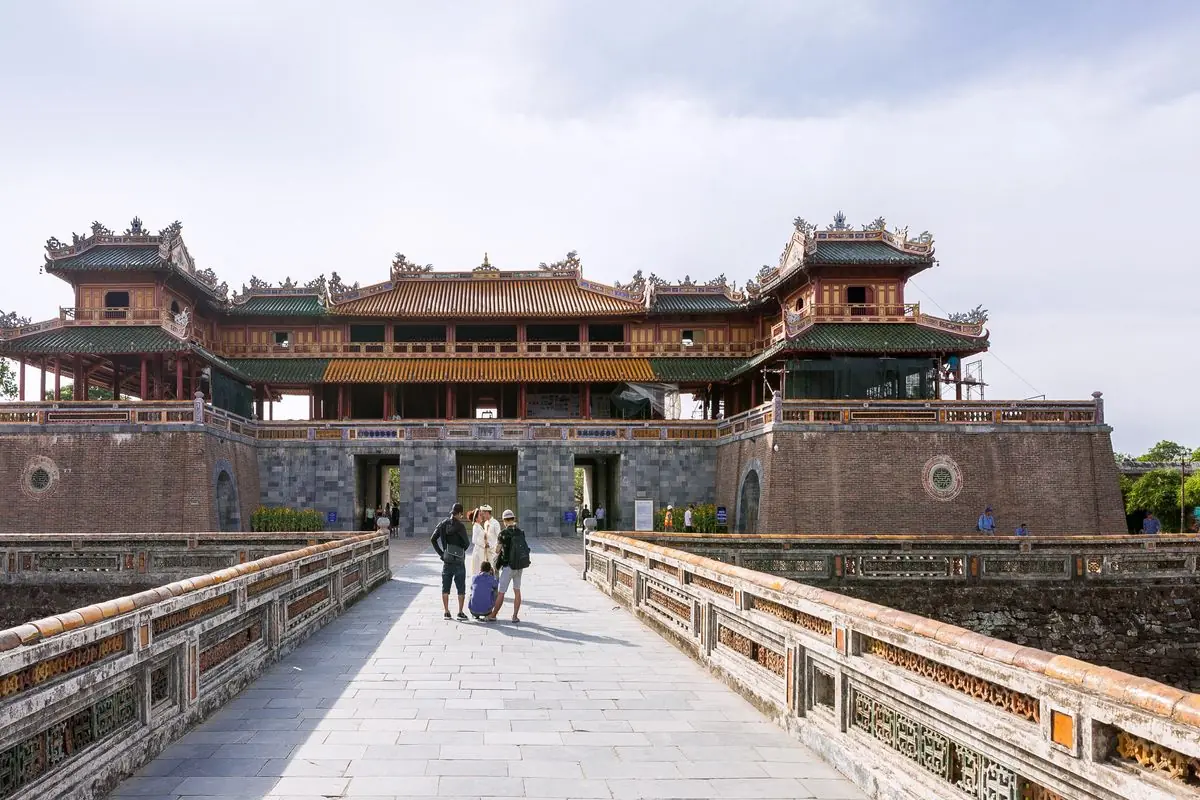
Ngo Mon seen straight on from the stone walkway, its yellow-roofed Five Phoenix pavilion sitting on a brick base above the gates into the Imperial City.
Early in the morning, sunlight begins to touch the golden roof tiles of Ngo Mon Gate, while a few visitors wander across the broad courtyard outside the Imperial City. Two full days cover the Imperial City, the famous royal tombs, Thien Mu Pagoda, and an evening of traditional music on the Perfume River.
1. How to get to Hue from Hanoi or Hai Phong
Hue lies along Vietnam’s north-south travel corridor, between Hanoi and Da Nang. It has its own airport, a railway station close to the city center, and intercity bus connections, making it a convenient stop on a longer Vietnam itinerary.
On January 1, 2025, Hue officially became a centrally governed municipality. Further administrative changes followed in July 2025, so you may still see older addresses referring to Thua Thien Hue Province or former district names on maps and hotel booking websites.
From Hanoi: is flying better than taking an overnight train?
Flying is usually the most practical option for a short visit to Hue. A direct flight from Noi Bai International Airport to Phu Bai International Airport takes approximately 1 hour 15 minutes to 1 hour 20 minutes, excluding airport transfers and check-in time.
Vietnam Airlines and Vietjet both operate this route. One-way economy fares with Vietnam Airlines may start at around VND 1-1.2 million, depending on the travel date. Vietjet sometimes advertises much lower promotional base fares, although taxes, fees, and checked baggage can increase the final price.
Phu Bai Airport is around 13-15 km from central Hue. The drive takes 20-30 minutes, and you have several transport options:
- Ride-hailing services: approximately VND 150,000-250,000 per car.
- Metered taxis: around VND 200,000-300,000 per car.
- Airport buses or shuttle services: approximately VND 50,000-60,000 per person, depending on the service.
An early flight from Hanoi leaves plenty of time to start sightseeing on the same day. The overnight train is slower and suits travelers who are not in a hurry.
Trains from Hanoi to Hue take approximately 12.5 to more than 14 hours, depending on the service.
These three overnight services all reach Hue in the morning:
| Train | Hanoi departure | Hue arrival | Best for |
|---|---|---|---|
| SE3 | 7:20 PM | 7:50 AM next day | Starting sightseeing early |
| SE19 | 7:45 PM | 8:45 AM next day | A comfortable overnight journey |
| SE1 | 9:45 PM | 10:25 AM next day | Travelers preferring a later departure |
For a two-day trip, SE3 fits best: board at 7:20 PM, sleep on the way, and step off in Hue at 7:50 AM.
Hue Railway Station is close to the city center on the southern bank of the Perfume River. From there, it is relatively easy to reach your accommodation, leave your luggage, and begin exploring.
Air-conditioned soft seats on some services may cost approximately VND 480,000-600,000. Standard sleeper berths generally range from around VND 830,000 to VND 1,220,000 or more, depending on the carriage, berth position, and travel date.
Premium private sleeper carriages are available on selected trains at higher prices.
Tickets are available through Vietnam Railways’ official booking system. Timetables and prices can change during public holidays, Tet, or railway maintenance periods, so always check your specific departure date.
From Hai Phong: are there direct flights to Hue?
There are currently no regularly scheduled nonstop flights between Cat Bi Airport in Hai Phong and Phu Bai Airport in Hue.
Some itineraries marketed as Hai Phong-Hue flights involve a connection through Tan Son Nhat Airport in Ho Chi Minh City. Total journey times may reach five hours or longer, with Vietnam Airlines fares sometimes around VND 2.3-2.8 million one way, depending on availability.
Travelers already in Hai Phong, or arriving from Cat Ba Island or Ha Long Bay, have two other routes that work better.
Option 1: Travel to Hanoi, then fly or take an overnight train to Hue.
Reach Hanoi from Hai Phong by bus, limousine van, or private vehicle.
From there, continue directly to Noi Bai Airport for a flight or head into central Hanoi to catch an overnight train.
This route works well when you find reasonably priced nonstop flights from Hanoi to Hue.
Option 2: Fly from Cat Bi Airport to Da Nang, then continue to Hue.
Direct flights operate between Hai Phong and Da Nang, with a flight time of roughly 1 hour 20 minutes.
Once you arrive in Da Nang, travel north to Hue by road or train.
The road distance is approximately 100-105 km, with several transport choices:
- Limousine van: from around VND 143,000 per person, usually taking 2-3 hours.
- Private car: from approximately VND 800,000 per vehicle, depending on the operator and pickup location.
- Train: approximately 2.5 to nearly 4 hours, depending on the service.
The Central Heritage Connection train follows the coast through Hai Van Pass and past Lang Co Bay.
The Da Nang-Hue run takes roughly three hours and suits travelers who want to watch the scenery on the way.
Train HD2 departs Da Nang at approximately 7:05 AM and reaches Hue at 11:03 AM, while HD4 departs at 3:20 PM and arrives at 6:15 PM.
Add the transfer from Da Nang Airport to the railway station on top of that.
Flying into Da Nang also makes sense when you plan to visit Hoi An after Hue.
2. Hue Imperial City ticket prices in 2026: which combo is best?
The Complex of Hue Monuments includes several attractions with separate admission fees.
Buying individual tickets is straightforward, but combination tickets can offer better value when you plan to visit the Imperial City and two or three royal tombs.
Individual admission prices for 2026
Vietnamese and international visitors pay the same prices.
| Attraction | Adults | Children aged 7-12 |
|---|---|---|
| Hue Imperial City | VND 200,000 | VND 40,000 |
| Minh Mang Tomb | VND 150,000 | VND 30,000 |
| Tu Duc Tomb | VND 150,000 | VND 30,000 |
| Khai Dinh Tomb | VND 150,000 | VND 30,000 |
| Gia Long Tomb | VND 150,000 | Free |
| Dong Khanh Tomb | VND 100,000 | Free |
| An Dinh Palace | VND 50,000 | Free |
| Hue Museum of Royal Antiquities | VND 50,000 | Free |
Other attractions, including Nam Giao Esplanade, Hon Chen Temple, and Thieu Tri Tomb, generally charge VND 50,000 for adult admission.
Children under seven are admitted free of charge under the applicable regulations. Visitors eligible for other exemptions or discounts should bring the necessary identification or supporting documents.
Should you buy a 3-site, 4-site, or all-sites combo?
| Ticket type | Adult price | Savings |
|---|---|---|
| Imperial City + 2 of the 3 major royal tombs | VND 420,000 | VND 80,000 |
| Imperial City + all 3 major royal tombs | VND 530,000 | VND 120,000 |
| All-sites heritage pass | VND 600,000 | Best for visiting many sites |
For the two-day itinerary in this guide, the VND 530,000 four-site combination ticket offers the best value.
Spend the first day at the Imperial City and the second at Khai Dinh, Tu Duc, and Minh Mang Tombs.
The four-site combination ticket is valid for up to two days from the start of your visit. The all-sites pass is valid for up to five days.
Other ticket types show their validity period during purchase.
Tickets can be purchased at official counters or through the Hue Monuments Conservation Centre’s electronic ticketing system.
When booking online, double-check the selected attractions and the number of adult and child tickets before paying.
Can you visit Hue Imperial City at night?
Hue Imperial City has no regular paid nighttime admission.
In April 2026, the special Magical Imperial Palace program opened parts of the complex free of charge on four evenings, from April 25 to 28, beginning at 8 PM.
That event was part of Hue’s festival activities rather than a permanent nightly opening schedule.
Regular ticket-selling hours are generally:
- March 16-October 15: 6:30 AM-5:30 PM.
- October 16-March 15: 7:00 AM-5:00 PM.
Visitors already inside may have additional time to leave after ticket sales close, although actual closing arrangements can change due to conservation work or special events.
You can still walk the public areas outside Ngo Mon Gate in the evening and see it lit up; going inside the palace depends on the official opening schedule.
3. The perfect 2-day Hue itinerary: Imperial City, royal tombs, and the Perfume River
This itinerary works best when you arrive in Hue the previous evening or early on your first morning.
The stops are grouped by area to cut down on backtracking, with late afternoons and evenings left for slower plans.
Day 1: Imperial City - Thien Mu Pagoda - Perfume River - traditional Hue music
- 7:30-11:30 AM
Hue Imperial City
The Imperial City stands within the historic Citadel in Phu Xuan Ward.
Once the political and ceremonial heart of the Nguyen Dynasty, the complex includes the Imperial Enclosure and Forbidden Purple City, alongside surviving and reconstructed royal buildings.
Begin at Ngo Mon Gate, continue through the Great Ceremonial Courtyard, and visit Thai Hoa Palace before exploring the other accessible areas of the complex.
Thai Hoa Palace was the main hall for court ceremonies, while the The Mieu Temple complex and Hien Lam Pavilion show how the royal family worshipped its ancestors.
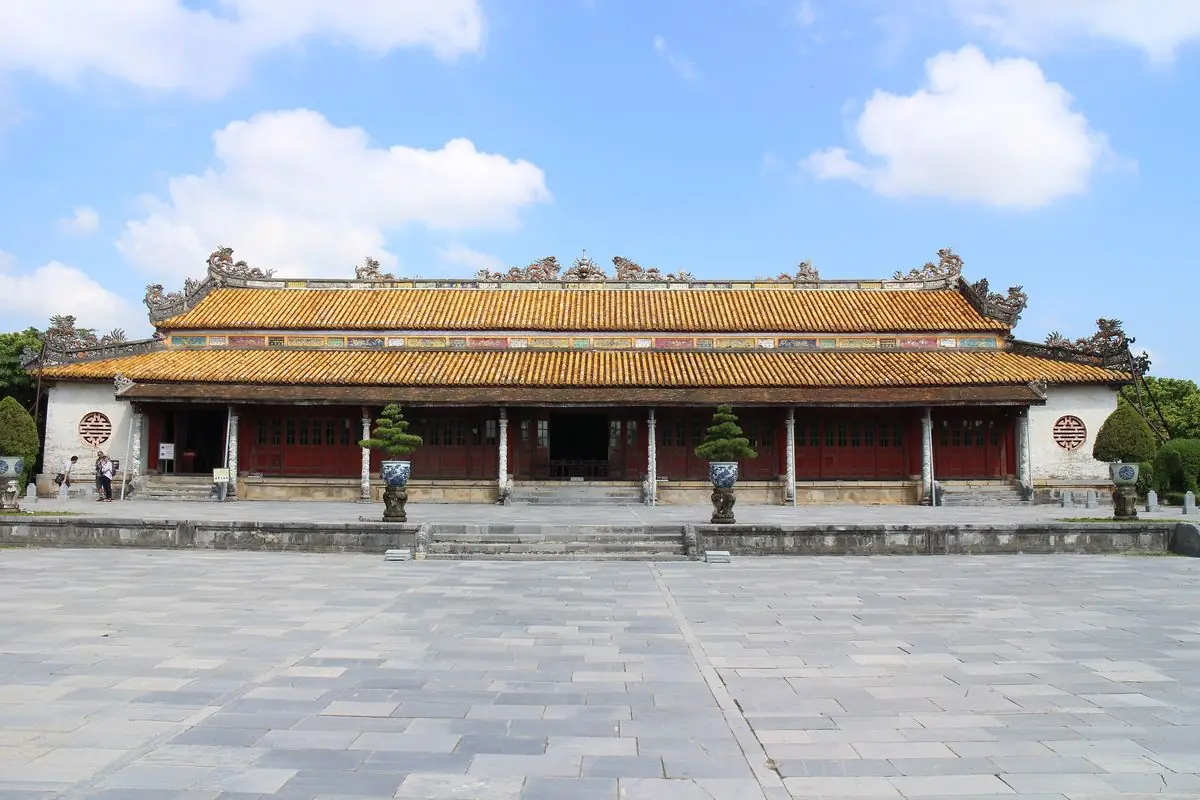
Thai Hoa Palace with its double yellow-tiled roof and red columns, fronted by a wide stone courtyard that gets hot around midday. The grounds are extensive. Allow approximately three to four hours to cover the main sights, or longer if you enjoy reading historical explanations and taking photographs.
The open brick courtyards get very warm around midday in the hotter months, so bring comfortable walking shoes, water, and a light hat.
- 12:00-1:30 PM
Lunch and a short break
After a morning on foot, stop for a bowl of bun bo Hue.
You will find plenty of local noodle shops around the Citadel, including several along Nguyen Chi Dieu Street.
Consider returning to your hotel for a short rest before heading out again.
- 2:00-4:30 PM
Visit Thien Mu Pagoda
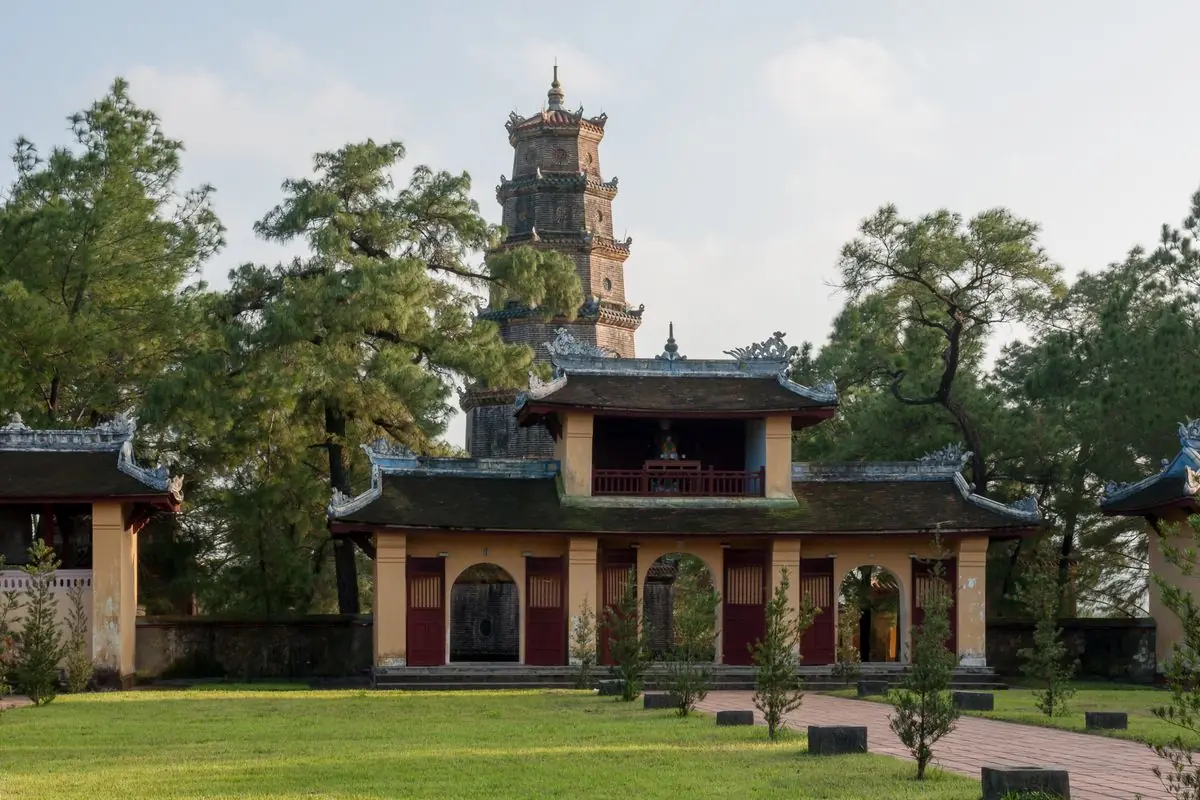
Thien Mu Pagoda stands on Ha Khe Hill along the northern bank of the Perfume River, approximately 4-5 km upstream from the Citadel.
The pagoda was founded in 1601 during the rule of Lord Nguyen Hoang.
Its most recognizable feature is the seven-story Phuoc Duyen Tower, standing approximately 21 meters tall and built in the nineteenth century.
Phuoc Duyen Tower rises behind the gate building of Thien Mu Pagoda, with pines on both sides and a green lawn in front. From the pagoda courtyard, you can look down toward the Perfume River flowing between tree-lined banks.
Late afternoon up here is much more comfortable than midday.
The pagoda also preserves an Austin car linked to the 1963 self-immolation of Buddhist monk Thich Quang Duc in Saigon.
Admission is free, and 45 minutes to an hour is generally enough to explore the main areas.
As this is an active religious site, clothing that covers your shoulders and knees is appropriate.
You can also go upriver by boat from Toa Kham Wharf to Thien Mu Pagoda.
Shared boat excursions typically last one to two hours and may cost from around VND 200,000 per person, depending on the route and service.
The boat replaces one leg by road, so check departure times before planning the afternoon.
- 5:00-6:30 PM
Walk along the southern bank of the Perfume River
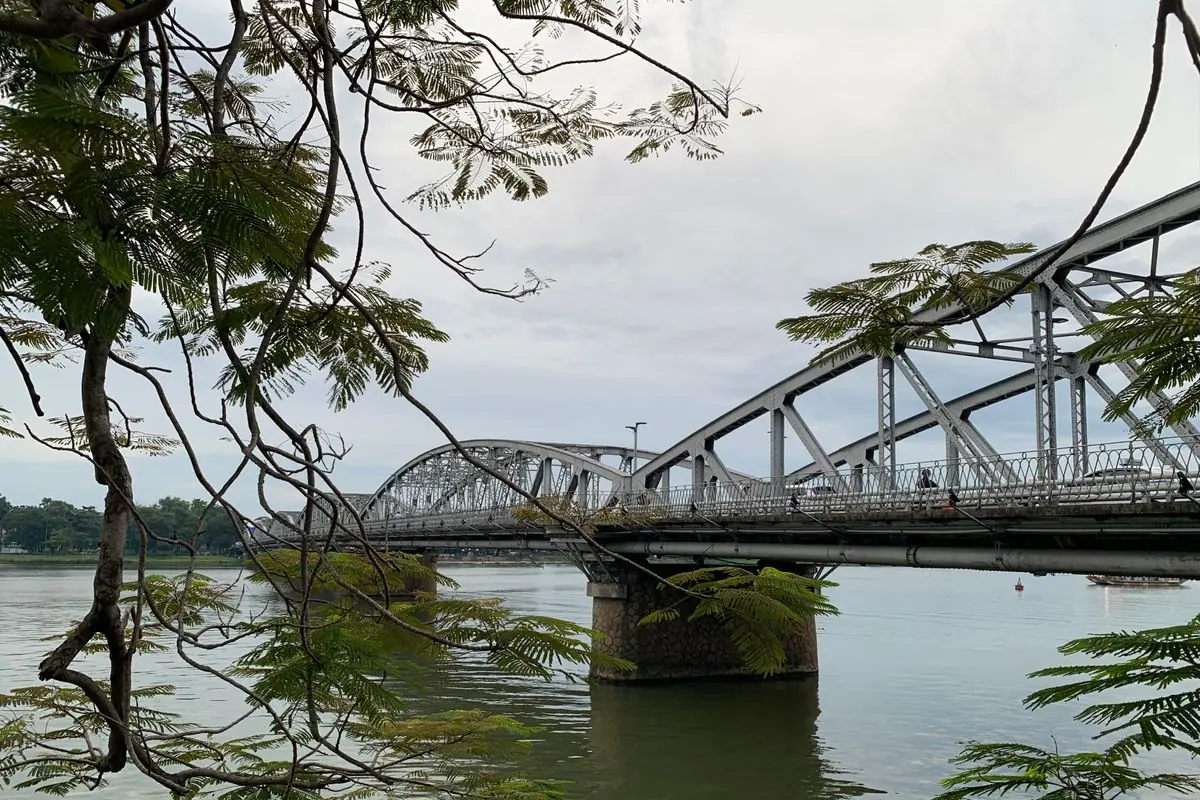
Back in central Hue, spend some time around Truong Tien Bridge, Le Loi Street, and Toa Kham Wharf.
At this hour locals gather along the riverfront, cafés light up, and the arches of Truong Tien Bridge stand out against the evening sky.
The arched steel spans of Truong Tien Bridge cross the Perfume River, seen from the bank through flame tree leaves. - 7:00 or 8:00 PM
Enjoy traditional Hue music on a dragon boat
Listening to ca Hue, a traditional form of Hue chamber music, on the Perfume River is one of the city’s signature cultural experiences.
Dragon boats depart from Toa Kham Wharf near 49 Le Loi Street.
Tourist dragon boats moored one after another along the Perfume River bank, each with a carved dragon head at the bow and a green roof. Common departure times are 7 PM and 8 PM, with an additional 9 PM performance available on some days.
Each session lasts approximately 50-60 minutes and features traditional vocalists and instrumentalists.
Some programs also include a floating lantern activity.
Published ticket prices are approximately VND 100,000 for Vietnamese visitors and VND 150,000 for international visitors.
Prices through booking agencies may be lower, so confirm the performance details and final cost before purchasing.
During heavy rain or periods of high river levels, boat departures may be changed or suspended for safety reasons.

Day 2: Khai Dinh Tomb - Tu Duc Tomb - Minh Mang Tomb - Con Hen Island
Hue’s three most famous royal tombs are spread across the southern and southwestern outskirts of the city.
Because they are some distance apart, hiring a driver or arranging suitable transport is more efficient than returning to your hotel between visits.
Going from Khai Dinh to Tu Duc and then Minh Mang shows three very different approaches to royal tomb architecture.
Start around 7:30-8:00 AM and expect the visits to continue into the early afternoon.
Trying to squeeze all three tombs into a short morning would feel rushed.
- 7:30-9:00 AM
Khai Dinh Tomb
Khai Dinh Tomb stands on Chau Chu Mountain in Thuy Xuan Ward, roughly 10 km from the city center.
Its architecture differs dramatically from that of other Nguyen royal tombs.
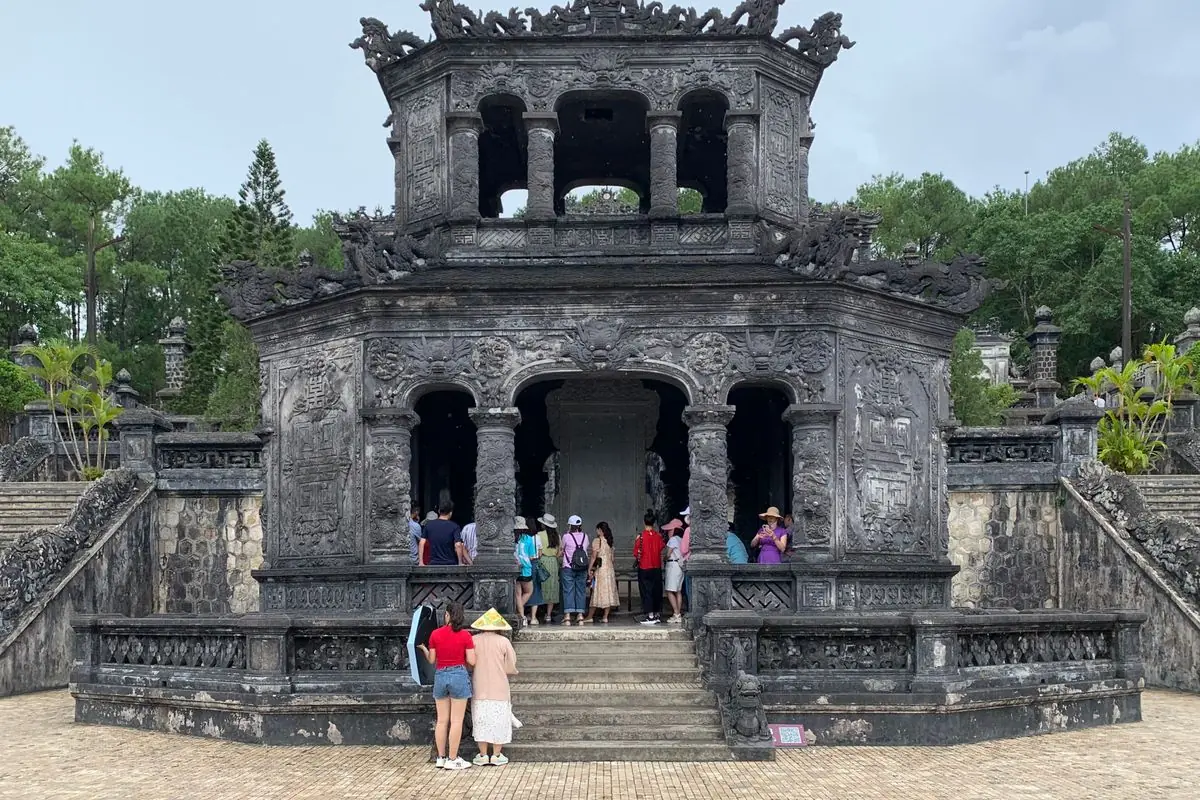
The exterior combines stone and concrete with a monumental, almost fortress-like appearance. Inside Thien Dinh Palace, mosaics of ceramic and glass pieces fill the interior with color.
The densely carved grey stone stele pavilion at Khai Dinh Tomb, with visitors crowding the steps in front. Reaching the main palace involves climbing several flights of stairs.
Arriving early makes the climb much more comfortable during the hot season.
- 9:30-11:00 AM
Tu Duc Tomb
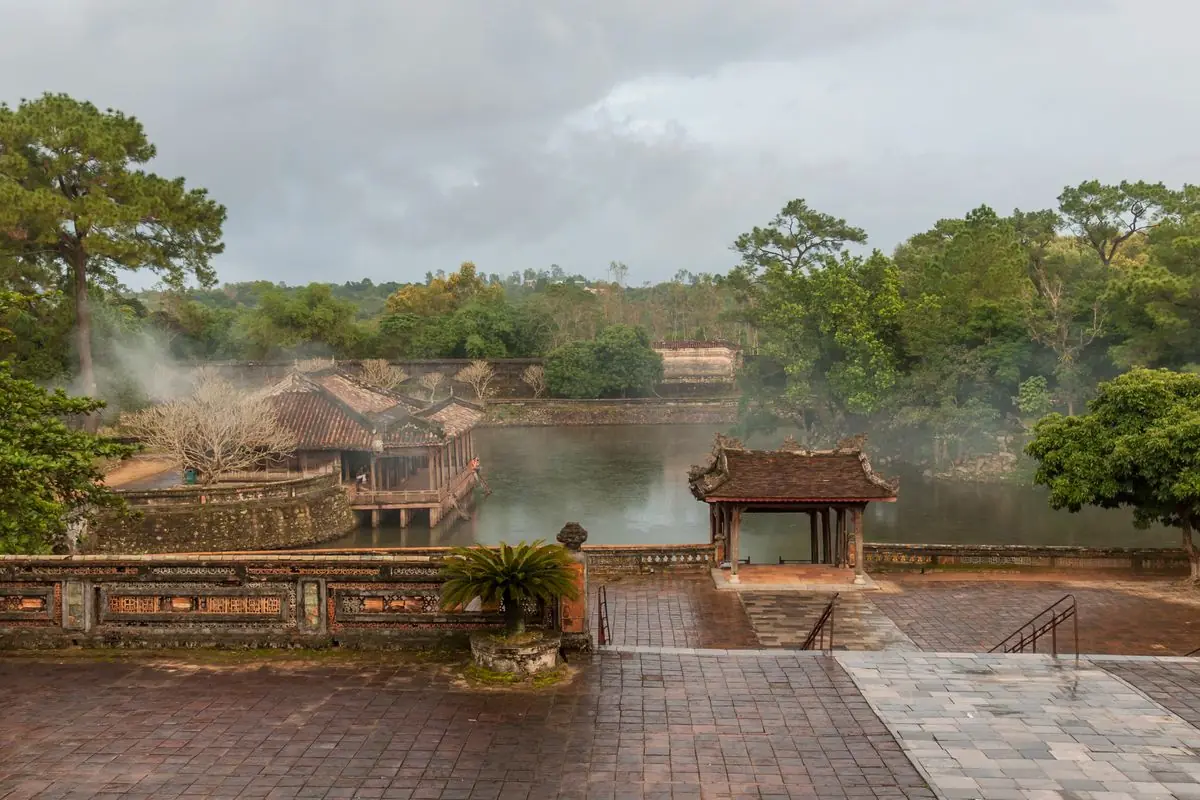
Tu Duc Tomb has a quieter atmosphere, with ponds, pavilions, winding paths, and mature trees throughout the grounds.
The complex was built during Emperor Tu Duc’s lifetime and served as a retreat where he could relax, compose poetry, and contemplate life.
It was also part of the preparations for his eventual resting place.
Luu Khiem Lake and Xung Khiem Pavilion are good places to stop and sit for a while.
The lake at Tu Duc Tomb after rain, with tiled pavilions at the water's edge and mist over the trees behind. The grounds are spacious enough for a leisurely walk, with plenty of architectural details to discover.
Compared with Khai Dinh Tomb, Tu Duc feels softer and more closely connected to its natural surroundings.
- 11:30 AM-1:00 PM
Minh Mang Tomb
Minh Mang Tomb lies southwest of Hue, near the meeting of waterways beyond the city, within the present-day Kim Long Ward.
The complex follows a carefully balanced central axis, with lakes, stone bridges, ceremonial courtyards, and traditional structures arranged among wooded hills.
As you pass through successive gates and courtyards, it becomes clear how Nguyen Dynasty architects used the natural landscape to create an integrated architectural composition.
Khai Dinh is striking for its decoration, Tu Duc feels poetic, and Minh Mang stands out for its overall layout: symmetrical, with wide green spaces.
- 2:00-4:00 PM
Late lunch and local food on Con Hen Island
After returning to central Hue, spend the rest of the afternoon exploring the city’s food scene.
Con Hen, now part of Vy Da Ward, is especially associated with com hen and bun hen, dishes made with small freshwater clams.
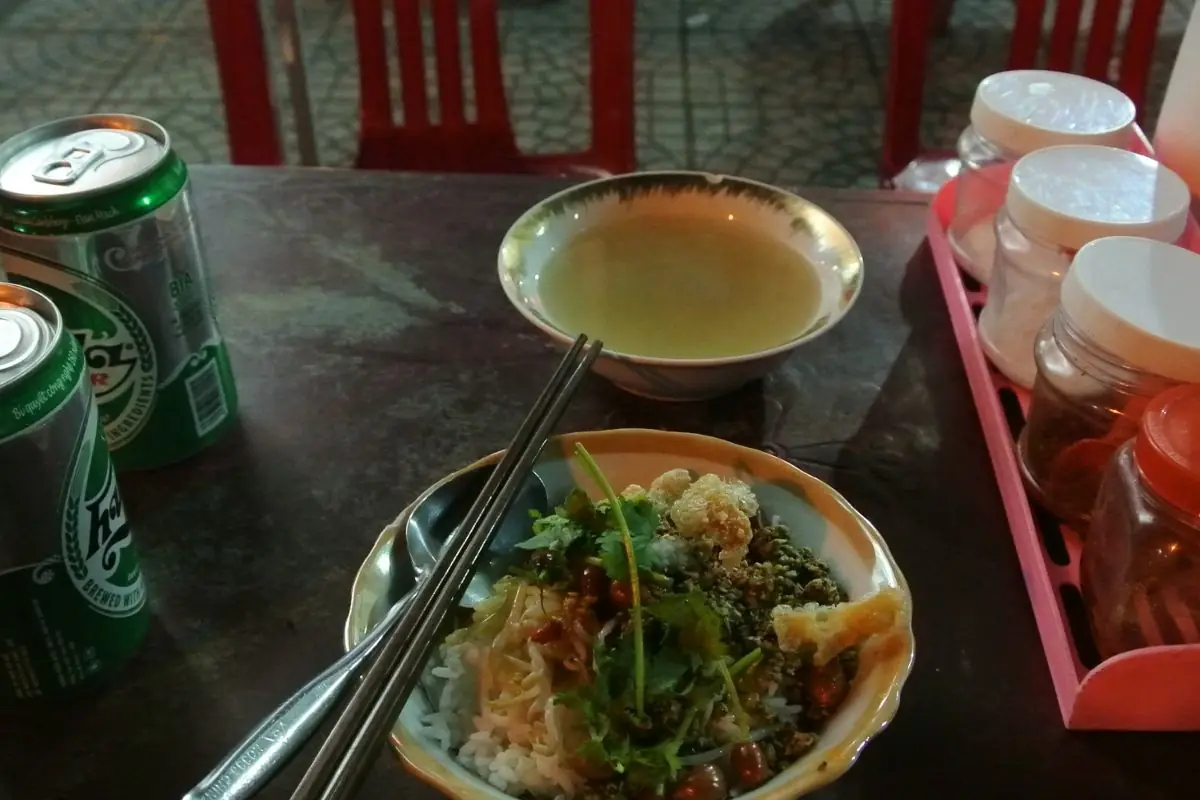
A typical serving of com hen combines cooled rice, clams, herbs, peanuts, fermented shrimp paste, and other seasonings.
It usually comes with a small bowl of hot clam broth.
The flavors are bold, aromatic, and often spicy. Many restaurants serve additional chili separately, allowing you to adjust the heat.
Use the rest of the afternoon to pick up a few local specialties before leaving Hue.
Travelers catching a flight on the second evening should allow enough time to collect luggage, reach Phu Bai Airport, and complete airport procedures.
The same applies to anyone continuing by train or bus.
4. Which royal tomb in Hue is the most beautiful?
Minh Mang, Tu Duc, and Khai Dinh are all worth visiting, although each offers a very different experience.
Khai Dinh Tomb is ideal for travelers who love architecture, elaborate decoration, and striking photographs. Its relatively compact grounds make it easier to explore within a shorter visit.
Tu Duc Tomb suits those who enjoy quiet gardens, lakes, and historic buildings surrounded by greenery. Go on a mild, sunny morning.
Minh Mang Tomb stands out for its architectural symmetry, scale, and landscaped setting. Travelers interested in the history and symbolism of the Nguyen Dynasty will find plenty to appreciate here.
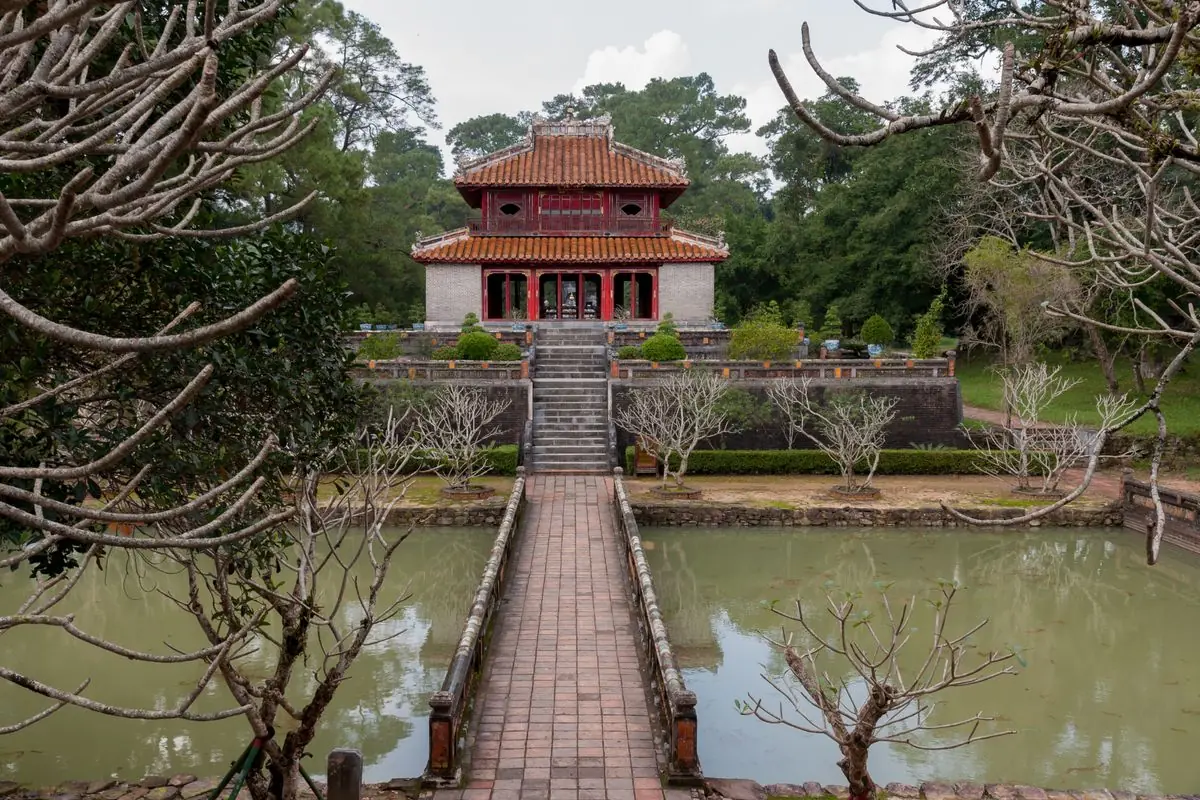
With time for only two tombs, Khai Dinh and Minh Mang make the best pair.
The first is all about elaborate decoration, while the second shows how imperial planners laid a tomb out across the landscape.
Swap Minh Mang for Tu Duc if you prefer a quieter, garden-like visit.
5. What to eat in Hue and how much does it cost?
Hue is famous for its small, flavorful dishes, many of which remain relatively affordable.
Portions are small, so spread them across breakfast, lunch, and afternoon snacks and you get to try more.
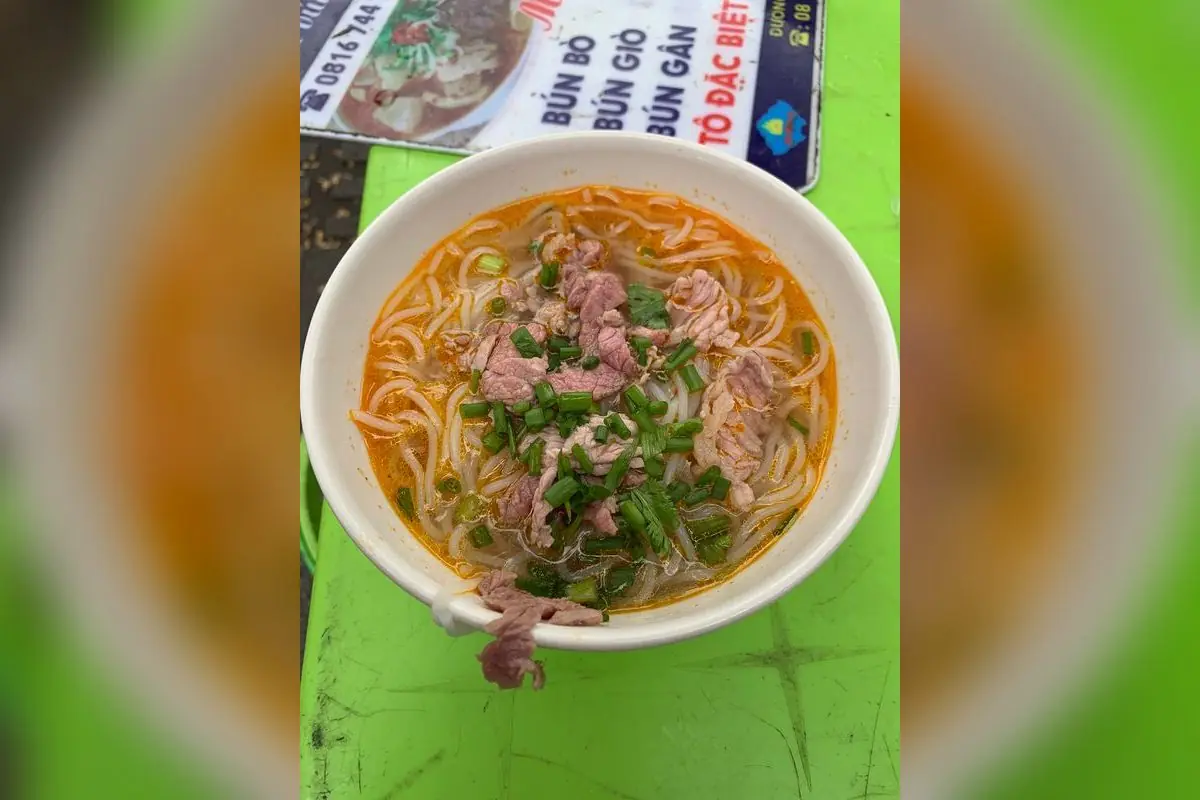
Bun bo Hue - Hue-style beef noodle soup
From around VND 45,000 a bowl
Bun bo Hue is known for its fragrant lemongrass broth, rich savory flavor, thick rice noodles, and toppings such as beef and pork.
A generous bowl generally starts at around VND 45,000, depending on the restaurant.
Local options include Mu Roi, Ba Nga on Nguyen Chi Dieu Street, and Hanh on Dang Van Ngu Street.
Com hen and bun hen - rice or noodles with clams
Around VND 20,000-25,000 a serving
Com hen is one of Hue’s most distinctive dishes.
A typical serving costs around VND 20,000-25,000, although some simple neighborhood stalls charge less.
Con Hen is a good area to look for traditional versions.
The fermented shrimp paste may taste quite strong at first, but mixed with herbs, peanuts, clams, and other ingredients, it becomes part of the dish’s distinctive character.
Banh beo - steamed rice cakes
VND 25,000-35,000 for 8-10 dishes
Banh beo consists of small steamed rice cakes served in individual dishes, usually topped with dried shrimp, crispy pork fat, and seasoned fish sauce.
A serving of approximately eight to ten small dishes generally costs VND 25,000-35,000.
You can try local shops such as O Lan on Chua Ong Street.
Order banh nam and banh loc on the side.
Che Hue - traditional sweet desserts
Around VND 15,000-20,000 a cup
Hue has many varieties of che, including bean-based desserts, sweet corn pudding, and chewy tapioca sweets.
A cup costs around VND 15,000-20,000.
After an afternoon walking along the Perfume River, stop at a small dessert shop to rest your feet.
A food budget of around VND 190,000-250,000 per person per day covers these everyday local dishes.
Expect to spend more when dining at restaurants or ordering several additional dishes.
6. Where to stay in Hue: north or south of the Perfume River?
The Perfume River divides central Hue into two main areas, each with its own atmosphere and practical advantages.
South bank: best for restaurants, transport, and evening activities
The area around Le Loi Street, Truong Tien Bridge, and the central streets of Thuan Hoa Ward is especially convenient for first-time visitors.
You will find a good selection of restaurants, cafés, vehicle rental services, and easy access to Toa Kham Wharf.
Travelers arriving by train also benefit from staying on this side, as Hue Railway Station is located south of the river.
Private rooms in guesthouses and budget accommodations often cost around VND 200,000-400,000 per night.
Mid-range hotels commonly range from VND 600,000 to VND 1.2 million per night, depending on the location and season.
For a two-day itinerary with evening activities, the southern bank near Truong Tien Bridge is the easiest base: after the boat performance, you can walk back to your room.
North bank: best for historic atmosphere and quieter mornings
The northern bank is home to the Citadel and Imperial City, along with many streets connected to Hue’s royal history.
It suits travelers who want to spend more time around historic landmarks, enjoy quieter surroundings, and take morning walks through older neighborhoods.
Restaurants and tourist services are generally less concentrated here than in the main southern-bank area.
Still, crossing between the two sides is relatively easy by car, motorbike, or on foot across the central bridges.
7. Best time to visit Hue: should you avoid October and November?
Hue experiences noticeable seasonal changes.
The drier months often bring plenty of sunshine and high temperatures, while the final months of the year can be affected by prolonged rainfall.
February to April is the easiest period for visiting Hue’s Imperial City and royal tombs.
Temperatures are generally more comfortable than during the peak summer months, and rainfall is usually lower than in late autumn.
From May to August, sunny days are common, but daytime temperatures can reach approximately 33-35°C, particularly in June.
Open courtyards around the Imperial City and Khai Dinh Tomb can become extremely hot around midday.
Rainfall increases from September, and October and November are the months most prone to heavy rain and flooding.
Historical climate data for central Hue from 2015 to 2024 indicates average rainfall of approximately 572 mm in October and 439 mm in November.
These are historical averages, not predictions for any particular travel date.
During the rainy season, the Perfume River and surrounding waterways can rise rapidly following prolonged heavy rain in upstream areas.
In early November 2025, flooding forced several Hue heritage attractions to temporarily close.
A section of the Citadel wall near Hoa Binh Gate also collapsed.
8. How much does a 2-day trip to Hue cost?
For an adult planning to visit the Imperial City and all three major royal tombs, the following provides a starting budget.
| Expense | Estimated cost per person |
|---|---|
| Imperial City + 3 royal tombs combo | VND 530,000 |
| Food for two days | VND 380,000-500,000 |
| Traditional Hue music boat trip | VND 100,000-150,000 |
| Two nights in a shared budget room | VND 200,000-400,000 |
| Estimated subtotal | VND 1,210,000-1,580,000 |
This subtotal excludes flights or trains from Northern Vietnam, airport transfers, transport between the royal tombs, optional daytime boat excursions, shopping, and other expenses.
Depending on arrival and departure times, you may only need one night of hotel accommodation.
Small groups can hire one private vehicle for the three tombs and split the cost, which is easier than booking multiple separate rides.
Solo travelers may prefer a shared sightseeing tour, but check which attractions, entrance tickets, and services are included in the price.
9. Is Hue worth adding to a northern Vietnam itinerary?
Hue suits travelers who have already been to Ha Long Bay or Cat Ba Island and want more of Vietnam’s history and culture before continuing to Da Nang or Hoi An.
After days among limestone islands and boat excursions, Hue switches to the Imperial City, royal tombs in wooded hills, and richly flavored local dishes.
Two days are enough to appreciate the city’s most recognizable landmarks.
Travelers interested in exploring the Nguyen Dynasty in greater depth, visiting traditional craft villages, or discovering lesser-known historic buildings will probably enjoy staying three or four days instead.
Frequently asked questions
Are there direct flights from Hai Phong to Hue?
There are currently no regularly scheduled nonstop flights between Cat Bi Airport and Phu Bai Airport. You can travel to Hanoi and fly directly to Hue, take an overnight train from Hanoi, or fly from Hai Phong to Da Nang and continue by road or rail. Connecting through Ho Chi Minh City generally takes longer.
Is it better to take a train or fly from Hanoi to Hue?
Flying is better for travelers with limited time who want a quicker, less tiring journey. Overnight trains are ideal for those who enjoy rail travel and want to combine transportation with a night's sleep. SE3 is the handiest of the night trains, arriving in Hue at 7:50 AM.
How much are Hue Imperial City tickets in 2026?
Adult admission to the Imperial City costs VND 200,000, while children aged 7-12 pay VND 40,000. The combination ticket covering the Imperial City and two major tombs costs VND 420,000 per adult. A four-site ticket covering the Imperial City and all three major tombs costs VND 530,000, offering better value than purchasing each ticket separately.
Is Hue Imperial City open at night?
The Imperial City does not have regular nighttime ticketed admission. Special events such as the Magical Imperial Palace program take place on selected dates. You can still admire the illuminated exterior around Ngo Mon Gate in the evening, but access to the palace complex depends on official opening arrangements.
Is October or November a good time to visit Hue?
Visiting Hue in October or November is possible, but these months carry a higher risk of heavy rain and flooding. Keep your itinerary flexible, especially for Perfume River boat trips and outdoor heritage sites. Travelers who can choose their dates freely will generally find February to April more comfortable for sightseeing.