Ride the Fansipan cable car to the summit in half a day
The cable car makes Vietnam's highest summit accessible without a mountain trek, but it does not carry you from the town square all the way to the summit marker. The trade-off is a little planning: three separate transport services, a final staircase and an early last ride down.
 18 min read
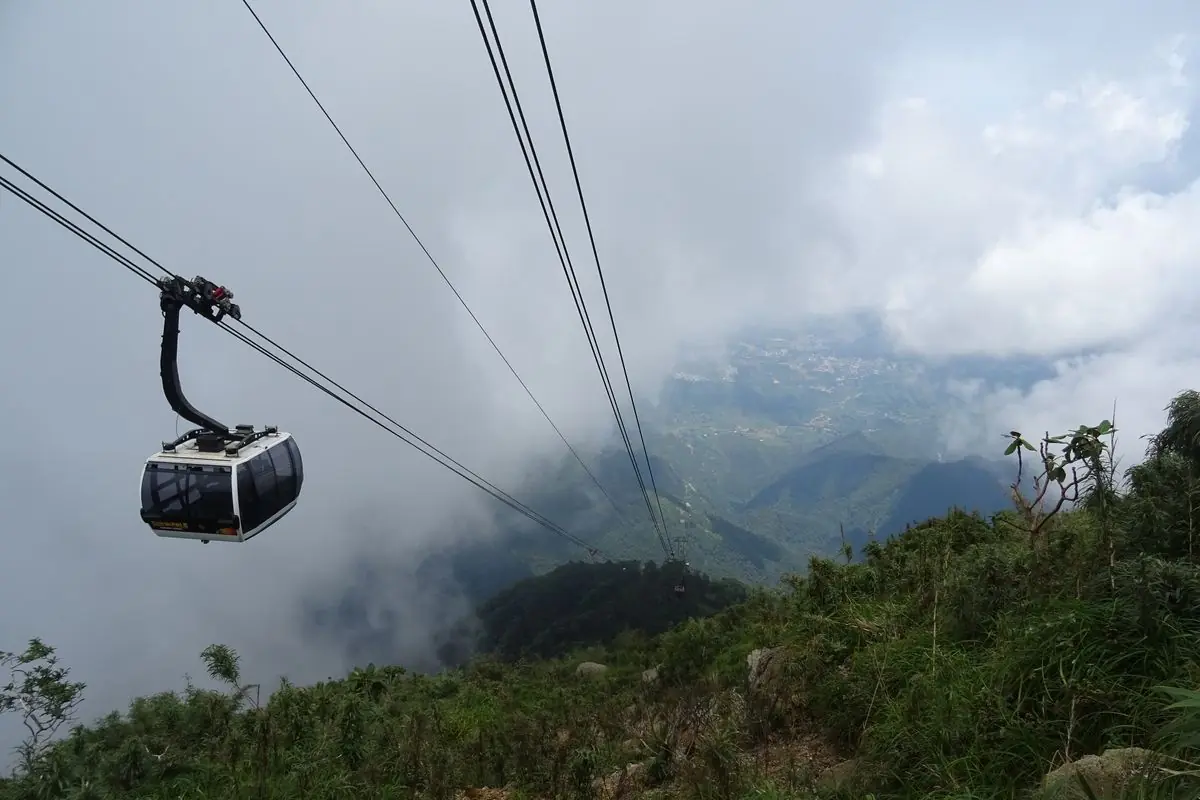
Each cabin ride takes about 15-20 minutes one way.
How to take the Fansipan cable car from Sa Pa
The Fansipan cable car does not leave from Sun Plaza in central Sa Pa. Sun Plaza contains Sa Pa station, where the optional Muong Hoa mountain train takes you toward the lower cable car terminal, Hoang Lien station. Since July 2025, central Sa Pa has been part of Sa Pa ward, Lao Cai province; older maps and hotel addresses may still say Sa Pa town.
Fansipan rises 3,143 meters above sea level, the highest point in Vietnam and the Indochina region. The tricky part of the cable car route is knowing how its stations connect. The actual cable ride is around 15-20 minutes each way. From leaving your hotel to getting back to town, plan on a four- to five-hour outing, more on busy weekends and in bad weather.
The names are what confuse first-time visitors. One ticket might say cable car, another says Muong Hoa monorail, and a third mentions the Fansipan funicular or summit train. They are three separate rides through the mountain complex.
First, understand the route and the station names
| Stage | Where you go | Travel time, excluding queues | Included in a basic cable car ticket? |
|---|---|---|---|
| Muong Hoa mountain train | Sa Pa station inside Sun Plaza to Muong Hoa station, then a short transfer to Hoang Lien station | Around 6 minutes on the train | No |
| Fansipan cable car | Hoang Lien lower terminal to Fansipan upper terminal | Around 15-20 minutes one way | Yes, return cable ride |
| Summit section | Walk up from Fansipan station, or board the summit funicular at Do Quyen station for Truc May station | Walking varies; funicular takes a few minutes | No |
| Final steps | Truc May station to the summit elevation marker | Roughly 50 steps | Everyone walks this short section |
You may see both Muong Hoa station and Hoang Lien station on the same diagram. Muong Hoa is where the train from Sa Pa arrives; Hoang Lien, right next to it, is where the cable car leaves. Signs lead you across on foot.
The cabin stops at Fansipan station, still below the 3,143 m marker. From there, the full walking route involves roughly 600 stone steps. The alternative summit funicular starts at Do Quyen station and finishes at Truc May station, leaving approximately 50 steps to the marker. Your energy, the weather and the tickets you have bought decide which of these last sections to use.
Ask a driver for “Fansipan station” and you may end up at the wrong place, since that name also belongs to the upper terminal. For a road transfer, use the full name Hoang Lien cable car station, Sun World Fansipan Legend. For the town train, use Sa Pa station at Sun Plaza.
Where to start: Sun Plaza or a taxi to Hoang Lien station?
Sun Plaza is the easiest landmark for most visitors staying around Sa Pa Square, the Stone Church or Fansipan Street. The large building has a green-and-yellow exterior and a prominent clock; its station entrance is inside. Follow the signs for Sa Pa station and the Muong Hoa mountain railway.

The Muong Hoa line, opened in 2018, runs for nearly two kilometers along the mountainside, and the train journey takes roughly six minutes. The windows make it a scenic introduction to the valley, especially when the lower slopes are visible. The whole transfer, however, takes longer than six minutes because you still have to present your ticket, wait for the next departure and walk to the cable car boarding area.
Paying for this train from a central hotel can be worth it simply to avoid finding a taxi and navigating to the lower terminal. The arrival point connects straight to the cable car complex. Families who prefer a simple, predictable route often find it convenient.
The other option is a taxi straight to Hoang Lien station on Nguyen Chi Thanh Road, which skips the Muong Hoa train and its ticket. You might prefer it if your accommodation is outside central Sa Pa, if you already have a private driver, or if you are deliberately buying only the cable car ticket and walking the upper steps.
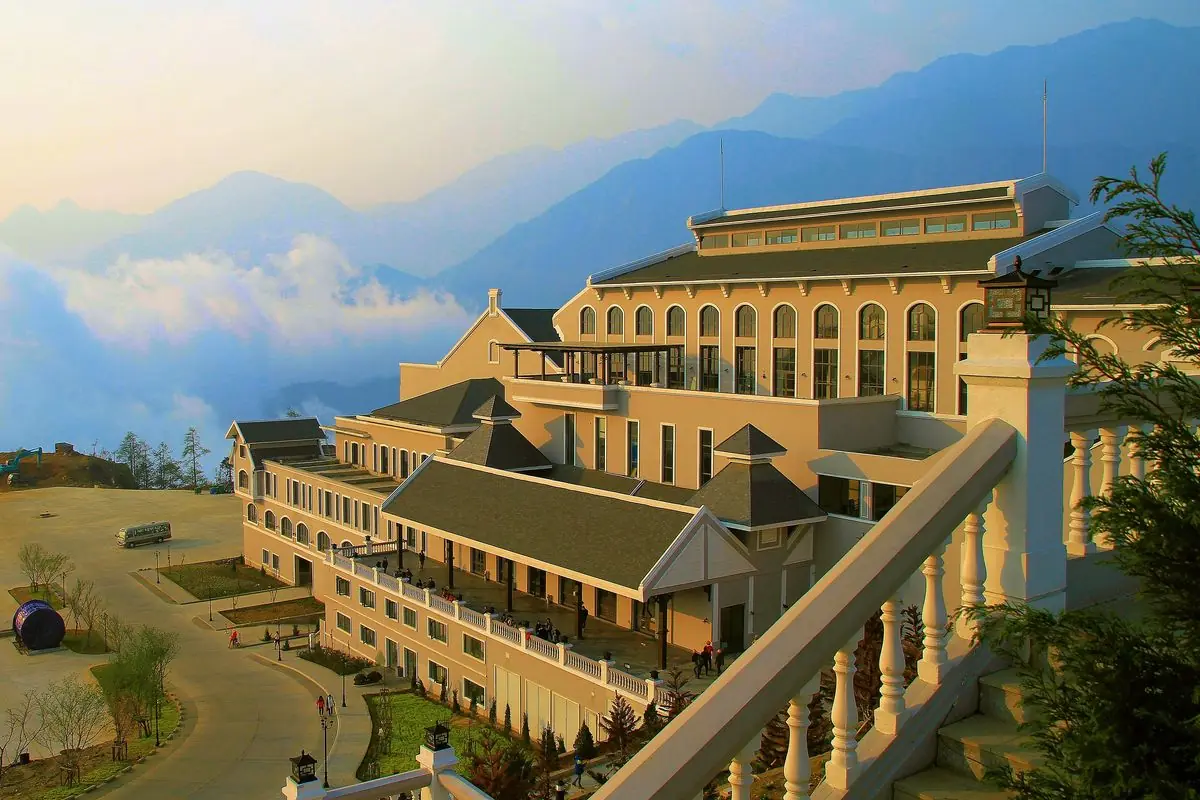
Taxi fares vary by pickup point; check the estimate in a ride-hailing app or agree a fixed fare with the driver before setting off. The drive time a map app shows leaves out parking, walking into the building and the ticket queue. The gap matters most for anyone trying to catch the first cable cars of the morning.
The Muong Hoa train is a scenic convenience and an optional extra to the cable car. Train or road is the first choice that shapes your budget and how much you walk.
Fansipan cable car ticket prices in 2026
The table below shows Sun World Fansipan Legend’s 2026 ticket prices, in Vietnamese dong. Child categories are based on height, not just age. A visitor who is 1.4 meters tall or taller pays the adult rate.
| Ticket | Adult / height 1.4 m and over | Child 1 m to under 1.4 m | Under 1 m |
|---|---|---|---|
| Return Fansipan cable car | VND 850,000 | VND 550,000 | Cable car ticket free |
| Return cable car + Muong Hoa train + Fansipan summit funicular package | VND 1,370,000 | VND 1,070,000 | Check the rules for each included service |
The adult full transport package costs VND 520,000 more than the basic return cable car ticket. In exchange, the package adds return rides on the Muong Hoa mountain train and the summit funicular. That is useful for parents with young children, older travelers, people trying to minimize stair climbing and anyone who prefers to make one booking rather than buy extra tickets at separate stations.
Keen walkers can skip the full package. You could take a taxi to Hoang Lien, ride the cable car, walk to the top and come back the same way. Another compromise is to buy the cable car and Muong Hoa tickets, then decide whether to purchase an uphill or return summit train ticket. A photo of the slope tells you little; on the day, the weather decides how hard the steps feel.
When comparing online offers, read the included services line by line. Cable car + buffet is not the same as cable car + both mountain trains. Some funicular offers also distinguish one-way from return travel. A cheaper headline price is not a bargain if you arrive at the final transfer and discover that your downhill ride is missing.
The 2026 prices above can change for public holidays, promotions or later travel dates. The applicable fare and ticket conditions appear when you select your visit date at booking. Check the date printed on your booking confirmation. Some tickets only work on the date you picked, so a cloudy Tuesday does not carry over to Wednesday.
International visitors may encounter Vietnamese and English names for the same stations, and intermediaries sometimes use monorail, mountain train and funicular somewhat loosely. Match the starting and ending stations rather than relying only on the product title. Keep a screenshot or offline copy of the booking QR code, as mobile reception can vary in mountain areas.
Fansipan cable car opening hours: the 2026 day-by-day schedule
These are the regular cable car operating hours since services resumed on 28 September 2026. Each row gives the uphill boarding window and the time of the last downhill cable car.
| Day | Uphill boarding window | Last downhill cable car |
|---|---|---|
| Monday-Thursday | 08:00-14:30 | 16:00 |
| Friday | 08:00-15:30 | 17:00 |
| Saturday | 07:30-15:30 | 17:00 |
| Sunday | 07:30-14:30 | 16:00 |
The Muong Hoa line has its own operating window. Uphill services from Sun Plaza run 07:45-14:15 Monday-Thursday, 07:45-15:15 Friday, 07:15-15:15 Saturday and 07:15-14:15 Sunday. The corresponding last trains back toward Sa Pa are 16:30, 17:30, 17:30 and 16:30. The live timetable is on the boards at the station. The summit funicular also has a last service time, and it can finish before the cable car does.
Build in a buffer before the final departure. A 16:00 last cable car down means finishing the summit visit and reaching the boarding area before then.
Storms, strong winds, technical checks and icy conditions can interrupt service. Conditions above 3,000 meters can differ sharply from a fair forecast in town. Check Sun World’s official website or the Sun World Fansipan Legend fanpage on the morning of your visit. The operator’s contact number is +84 948 30 8888; it is especially useful when you have a tight onward connection or an unusual ticket.
How long does the Fansipan cable car take, including transfers?
The cable ride is the short part of a half-day trip. The three-rope line is 6,292.5 meters long, with about 1,410 meters of elevation difference between its terminals. Built with the involvement of Doppelmayr Garaventa, it opened on 2 February 2016 and received two Guinness World Records at the time for its length and elevation difference. The cabin journey takes approximately 15-20 minutes each way.
That is only the section between Hoang Lien and Fansipan stations. The optional Muong Hoa train takes another six minutes of actual movement. Then come security and ticket checks, the walk between platforms and the wait for your boarding group. A queue lasting 20 minutes is longer than the cable ride itself; on particularly busy days it can be much longer.
Your pace matters from the upper station onward. Walking the roughly 600 steps up toward the summit might take a brisk visitor 15 minutes, while a more comfortable plan allows 20-40 minutes or longer, especially with children, a camera or frequent rests. The funicular takes only a few minutes, but it has its own boarding process and leaves a final flight of around 50 steps.
Reserve 45-90 minutes at the top if you want to see the summit marker, watch the clouds, visit a few nearby viewpoints and descend at an unhurried pace. The upper area includes temple architecture and viewing platforms spread across several levels.
On a day without heavy crowds, allow three to four hours from entering the first station to leaving the last. Starting and ending in the town center, four to five hours is a more realistic target. Add extra time for a weekend, a rainy day, a large family or a meal on the mountain. Use these times to plan your day; trains and cabins can run a little earlier or later.
Do not book a bus from Sa Pa to Hanoi for the exact time you expect to finish the descent.
The last climb: steps or the summit funicular?
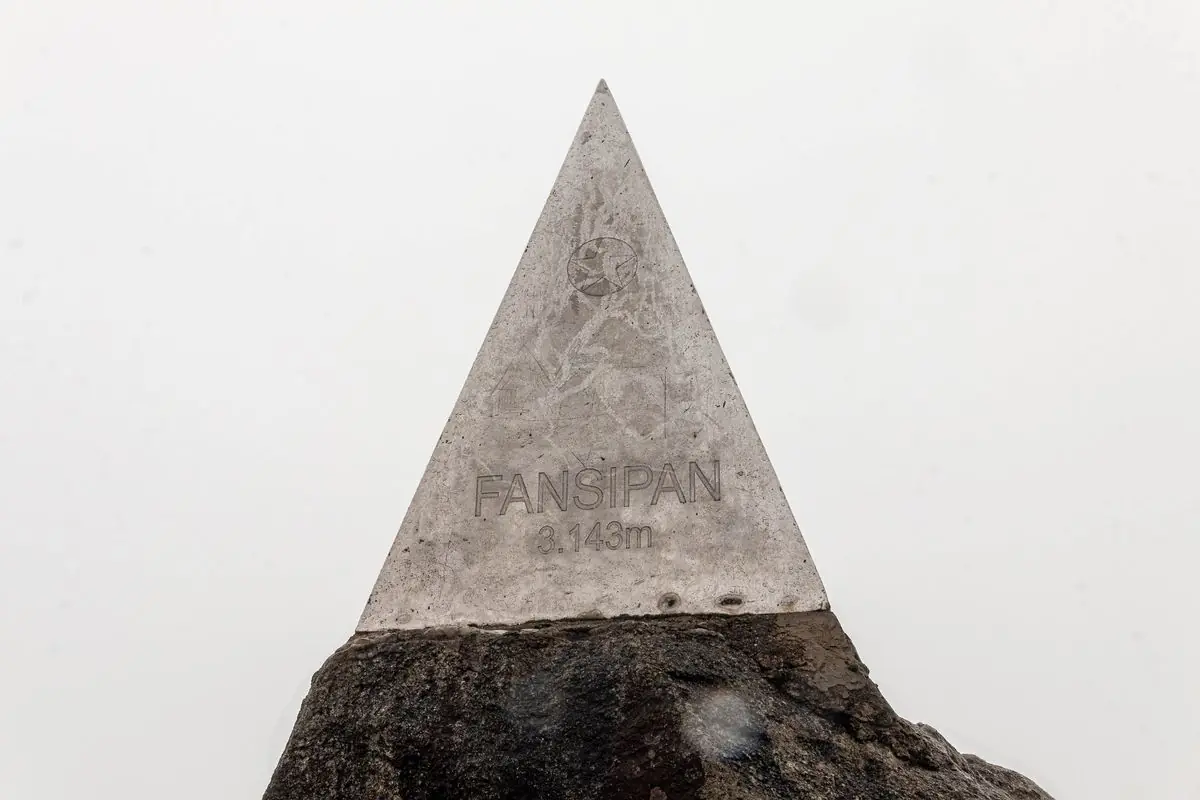
Visitors sometimes hear that a cable car takes them “to the top of Fansipan” and assume that means the summit marker is immediately beside the exit. It is not. The upper terminal is near the top of the mountain, but the well-known 3,143 m elevation marker is still above it, along a route of approximately 600 stone steps.
The steps are built paths through the summit complex, with places to pause and see the surrounding landscape. Still, they can feel strenuous at this altitude. The combination of wind, steep stair sections and a thinner atmosphere often makes a 15-minute climb feel more demanding than an ordinary city staircase.
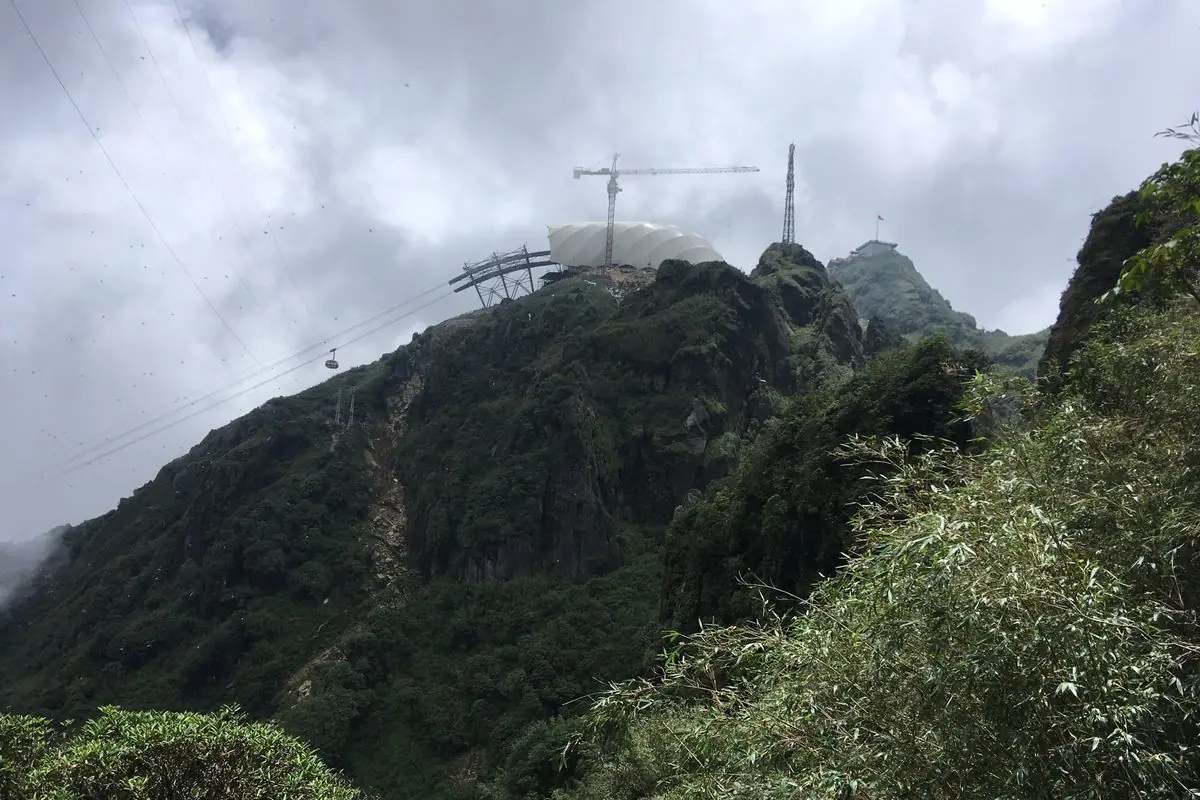
Walking offers something the direct train cannot: you pass more of the religious and architectural sites as you ascend. The large Amitabha Buddha statue, temple courtyards and viewpoints sit within the upper complex. Moving gradually between them is enjoyable on a clear morning. On a wet or windy day, the same steps can feel very different, particularly in smooth-soled shoes.
The Fansipan summit funicular links Do Quyen station near the lower part of this section with Truc May station close to the top. From Truc May, you still climb roughly 50 steps. Travelers with a stroller, a mobility aid or a condition that makes stairs hard should ask the operator about access on their date, because the train still leaves steps to climb.
If you are reasonably fit but want to preserve energy, taking the train uphill and walking down can be a nice compromise. You get the easier ascent and can explore the architecture at your own speed on the return. If the stairs are wet or a relative is tired, the return train may be more sensible. A full transport combo removes the need to revisit this decision at the top.
The summit has a flag-raising area, viewing platforms and the elevation marker. The photo that proves you reached 3,143 m is taken at the marker; the flag is somewhere else.
A realistic morning itinerary from Sa Pa town
The outline below is a comfortable plan for a regular Monday-to-Thursday visit. It assumes you are staying fairly close to central Sa Pa, have already checked the day’s opening hours, and encounter no extended weather stop.
| Approximate time | Plan |
|---|---|
| 07:30-07:45 | Reach Sun Plaza, check your ticket and find Sa Pa station |
| 07:45-08:15 | Take the Muong Hoa train, transfer to Hoang Lien, enter the cable car queue |
| 08:15-08:45 | Ride up toward Fansipan station, depending on the queue |
| 08:45-10:30 | Take the summit funicular or steps, see the 3,143 m marker and nearby sites |
| 10:30-11:30 | Return to the cable car terminal and ride down |
| 11:30-12:30 | Use Muong Hoa train or taxi to get back to Sa Pa town |
On Saturday, regular services start earlier, but so can the crowds. Arriving at opening time still leaves the walk to the right entrance and the boarding checks. With children, add 30-60 minutes for toilets, snacks and rest stops; the plan above is paced for adults.
For an afternoon visit, plan backwards from the last downhill cable car. Aim to be back at the upper boarding area comfortably before a 16:00 final descent.
Coming up from Hanoi on an overnight bus, avoid booking a cable car slot close to your arrival time. After the bus arrives, you still have to check in, eat breakfast, change into warm clothes and get to Sun Plaza. Sleeping in Sa Pa first and visiting the mountain the following morning gives you more control.
Morning or afternoon: when can you see a sea of clouds?
There are really two different views people want from Fansipan. The first is the sea of clouds, where a white layer lies below the ridgeline while the summit sits in clearer air. The second is a completely unobstructed mountain panorama, with the valley and distant peaks visible in detail. They do not always come together.
September to November is the main season for a sea of clouds, particularly after wet weather followed by a clearer morning. Early departures can put you above low cloud before the daytime conditions change. But no season or departure guarantees the experience. Sometimes the summit is wrapped in thick fog all morning. On other days, the cloud lifts late enough that a mid-morning visit offers much better visibility than sunrise.
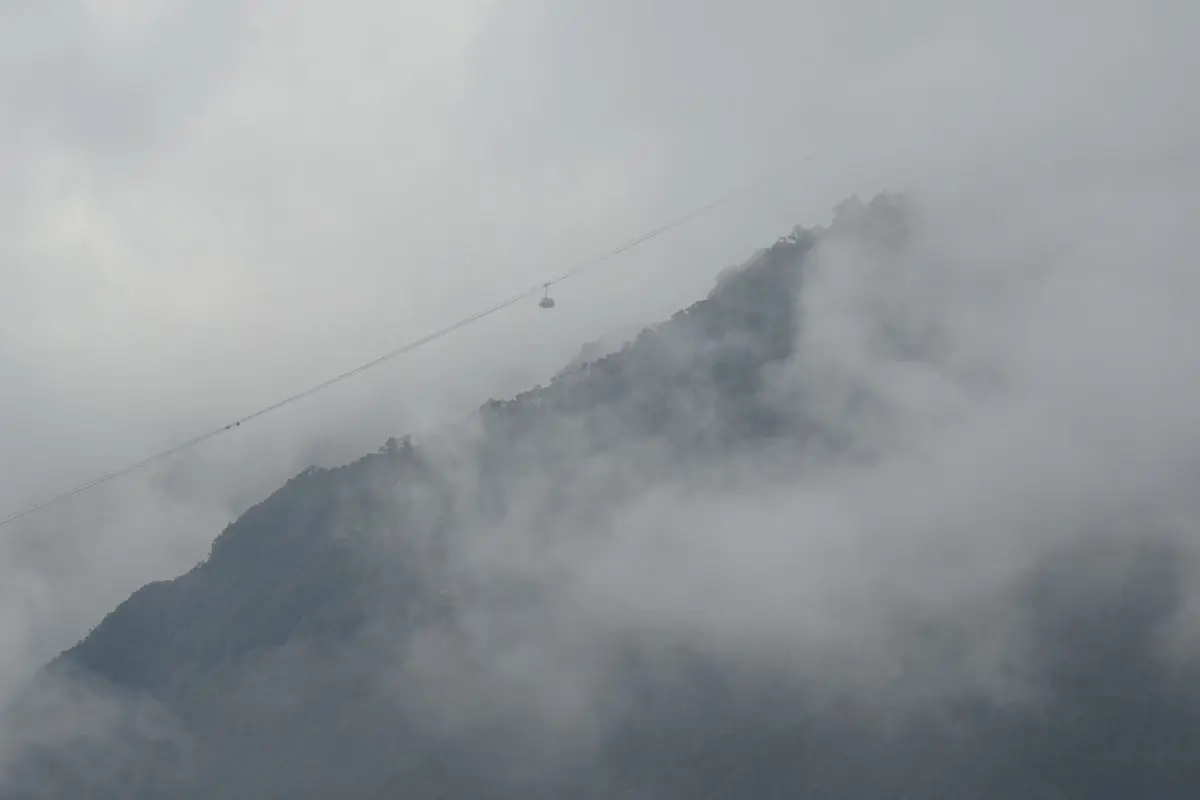
For a first visit with flexible plans, morning is the safer overall choice. Morning leaves more time before the last descent, more room to wait for cloud to shift, and less pressure to rush through the upper complex. Clear views of distant mountains need a different forecast: check visibility and wind near the summit, not only the weather icon for Sa Pa town.
Afternoon can be appealing for softer light or a quieter feel on some days, but it comes with the operating-hour constraint. The cable car finishes uphill boarding at 14:30 on Monday-Thursday and Sunday. Starting your entire outing just before then leaves almost no flexibility for a delayed train, a foggy spell or a slow walk to the marker.
Weather in Sa Pa’s streets can be misleading. The town may be overcast while the mountain rises above a cloud layer; the reverse is also possible. Two full days in Sa Pa give you a choice: place Fansipan on the more promising morning rather than locking it into your arrival afternoon before you have seen the forecast.
What matters for this trip is whether the line is running and whether the view is worth half a day.
What to wear at 3,143 meters
The summit is often around 7-10°C colder than Sa Pa town, with wind sometimes making it feel colder still. A day that seems mild when you leave your hotel can feel properly wintry once you step out of the upper station. An 18°C day in town might mean around 8-11°C at the summit; use it to pack, then check the forecast for your day.
In summer, bring a lightweight windproof jacket even if the streets below feel warm. Wear comfortable trousers and shoes with grip. Stairs, potentially damp paths and busy viewing areas rule out smooth leather soles, slippery sandals and shoes chosen only for photographs.
Autumn calls for layers you can adjust as you move between sheltered stations and exposed platforms. In winter, a warm outer jacket, scarf, beanie, gloves and non-slip footwear make a substantial difference. A spare pair of dry socks is helpful when rain or dense mist is expected. A compact waterproof layer is easier to manage around other visitors than a large umbrella in strong wind.
The temperature change also matters for children. A child warmly dressed for a cold summit may become uncomfortable in a crowded indoor station, so use layers that are easy to remove. Keep hats and small items secure on windy platforms. Carry a small amount of drinking water, but check the site’s current rules on food and items allowed inside cabins.
Fansipan cable car maintenance in 2026: is it open again?
Yes, the September 2026 maintenance closure has ended. The Fansipan cable car and Muong Hoa mountain train paused operations from 21 through 27 September 2026 for scheduled inspections and reopened on 28 September 2026.
Mountain weather and new technical notices can still affect any given day.
Look for official Sun World Fansipan Legend announcements three to five days before travel, check once more the evening before, and confirm again on the morning you intend to ride. Many visitors only heard about the September closure a few days before it began.
Read the notice carefully to see which service is affected. If the cable car itself is closed, taking the Muong Hoa train to the lower terminal will not get you to the summit. If the upper summit funicular alone is unavailable while the cable car and paths remain open, capable visitors may still be able to use the stairs, subject to the operator’s instructions. A weather-related suspension should not be treated as a fixed maintenance closure with a predictable reopening time.
Keep the booking number and understand the refund or change policy of whoever sold you the ticket. A ticket purchased directly from Sun World and one bought through a third-party agent may have different support processes. Changing your travel day means contacting the actual seller instead of assuming station staff can amend any booking.
The 5 a.m. sunrise cable car in November 2026
There is one important exception to the regular opening hours. Sun World runs a special sunrise package on Saturdays and Sundays in November 2026, starting 7 November and excluding 1 November. The first special cable car leaves from 05:00, with 100 places available per day under the promotion.
The 2026 package fare is VND 1,250,000 per adult or VND 900,000 per child. It includes the cable car, an uphill ride on the Fansipan summit funicular, and a drink and pastry at Cafe Du Soleil. The package does not include the Muong Hoa railway from central Sa Pa, the downhill summit train or a buffet.
With this ticket, the question is where to check in for the 5 a.m. departure and how to get there; the regular Muong Hoa timetable does not apply. Check your ticket confirmation or ask Sun World how to reach the boarding station before dawn.
A clear sunrise above the clouds can be extraordinary, and the smaller ticket allocation may appeal to photographers. The trade-off is leaving your accommodation very early, dressing for the coldest part of the day and accepting that the weather may not provide the expected view. For visitors who only want the summit marker and a relaxed return before lunch, a normal morning ticket is usually the simpler decision.
Food, toilets and the return journey
A half-day mountain visit does not require you to book a meal package. Breakfast in Sa Pa followed by an early cable car often works well if you want to use the clearest hours for sightseeing. The Van Sam restaurant is in the lower Hoang Lien station complex, while food and drink near the summit depend on the day. Cafe Du Soleil is the café in the November sunrise package.
Opening times, weather and visitor numbers affect service on the mountain. If someone in your group needs to eat at set times, bring food with you. A quick snack stop is easier than relying on an unverified lunch reservation near the summit.
Set a personal turnaround time on the summit, well before the final cable car. Allow enough minutes for the stairs or upper funicular and for the walk into the boarding area. 16:00 or 17:00 is when the last cable car leaves; wait until then to leave the marker and you are too late.
Leave Ham Rong Mountain, the glass bridge or an alpine coaster for another half day instead of squeezing them between cable car transfers. Trekking through villages or walking up Fansipan from a trailhead is a different kind of trip altogether, one that deserves its own plan. The same goes for getting from Hanoi to Sa Pa and choosing a hotel; plan those separately.
Small decisions that make the day much easier
Most avoidable problems come from one of three assumptions: that the basic cable ticket includes every train, that all three services share identical opening hours, or that the cable car delivers you directly to the 3,143 m marker. Check those details once, and the trip becomes much easier to arrange.
Traveling with older relatives? Budget for the full transport package and more time for the last 50 steps. Traveling on your own with good walking shoes? You can save money by going straight to Hoang Lien and using the steps. Visiting for photographs? Start early, but keep your expectations flexible when clouds hide the view. Trying to catch a bus the same day? Plan your return to town with a generous margin rather than counting backwards from the last possible cabin.
The route does not change just because the season does. A return trip in winter can use the same stations and fares, with heavier clothing and more time allowed for icy conditions. Visiting with children later is the same planning exercise: keep the scenic cable ride, adjust the extra train tickets and make room for slower steps.
Frequently asked questions
What is the Fansipan cable car ticket price in 2026?
The 2026 fare is VND 850,000 for an adult return cable car ticket and VND 550,000 for a child 1 m to under 1.4 m tall; children under 1 m have a free cable car ticket. The return package with the Muong Hoa railway and summit funicular is VND 1,370,000 for adults and VND 1,070,000 for children. Prices can change by date, so check again when you book.
What are the Fansipan cable car opening and closing hours?
After the September 2026 maintenance, uphill boarding begins at 08:00 Monday-Friday and 07:30 Saturday-Sunday. Last uphill admission is 14:30 Monday-Thursday and Sunday, or 15:30 Friday-Saturday. The final downhill ride is 16:00 on Monday-Thursday and Sunday, or 17:00 on Friday and Saturday. Weather can change services.
How long does the Fansipan cable car take, and is walking required?
The cable car ride takes about 15-20 minutes each way. The optional Muong Hoa mountain train takes about six minutes. From the upper cable car station, expect around 600 steps to the summit, or use the summit funicular and walk approximately 50 final steps. Allow half a day, about four to five hours there and back from central Sa Pa if all goes smoothly.
How high is Fansipan, and how long is the cable car line?
Fansipan's summit is 3,143 m above sea level. The three-rope cable car line measures 6,292.5 m, rising about 1,410 m between its stations. It received Guinness World Records recognition for these engineering figures when it opened in 2016.
Was the Fansipan cable car closed for maintenance in 2026?
Yes. The cable car and Muong Hoa train were temporarily closed 21-27 September 2026 and reopened 28 September 2026. That closure has finished, but you should still check current Sun World announcements and the weather before leaving your hotel. The special 5 a.m. sunrise service in November 2026 is separate from the normal timetable.