Before you go to Tuyet Tinh Coc Hai Phong, check if you can get in
Before inviting friends on a photo trip, ask whether the lake area lets people in, because check-in photos online prove nothing. Get the route right, pack light and keep another stop ready so the day isn't wasted.
 16 min read

The lake fills an old limestone quarry in Trai Son.
Is Tuyet Tinh Coc Hai Phong worth visiting?
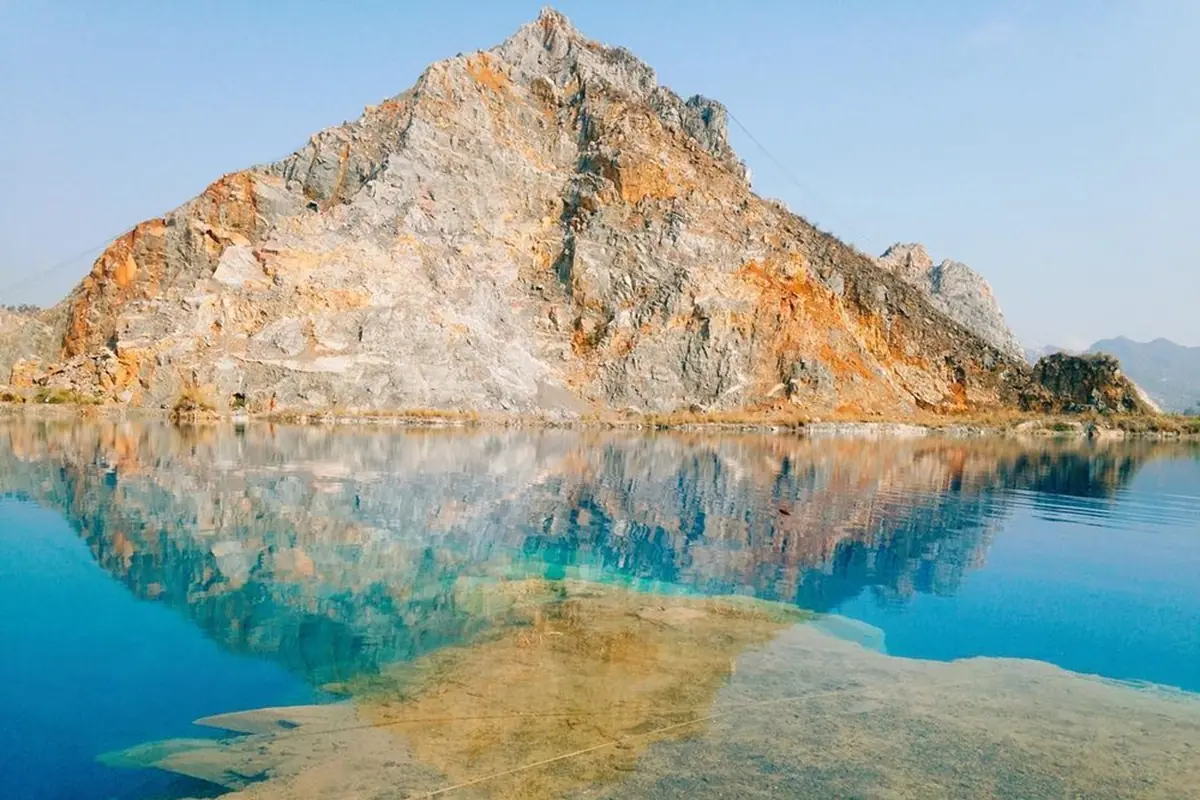
Leaving the city center, you cross Binh Bridge or Hoang Van Thu Bridge toward the former Thuy Nguyen area, and the lake is nowhere near An Lao. Tuyet Tinh Coc Hai Phong is a striking blue quarry lake in Trai Son hamlet, Viet Khe commune, in the former An Son area of Thuy Nguyen, roughly 20-30 kilometers from central Hai Phong depending on your starting point and route. It formed from stone quarrying and has no services or path down to the water for visitors.
Pale limestone rock rises behind an unusually blue surface, making it look different from the streets, cafes and waterfront scenes found around the city center. But the lake also has an important history of entry restrictions, dangerous quarry edges and deep water. Local authorities installed fresh deep-water warning signs here in May 2026, and the site has not reopened for visitors to wander freely. Skip any plan for a picnic at the water’s edge, and don’t slip through a fence just because others do.
Tuyet Tinh Coc is in Trai Son, in the old Thuy Nguyen area
People often call the place Tuyet Tinh Coc, meaning something like a secluded romantic valley, although the landscape was created by industrial activity rather than untouched nature. Other descriptions refer to Trai Son lake, the blue lake at An Son, or a limestone quarry lake. All of these names may appear when you search maps, blogs or older photographs.
Until the end of 2024, the address was An Son commune, Thuy Nguyen district, Hai Phong. An Son became part of Ninh Son in January 2025. The next local-government reorganization placed Ninh Son within Viet Khe commune, Hai Phong, from July 1, 2025. So an old photo caption mentioning An Son and a newer local government report mentioning Viet Khe can refer to the same lake.
For navigation, the most useful pairing is “Tuyet Tinh Coc Hai Phong” and “Trai Son, Viet Khe, Hai Phong.” Compare both searches rather than trusting the first map pin. A result pointing to An Lao is the wrong place: An Lao has its own hills and the well-known Nui Voi area, but this quarry lake is not there. Confusing those two districts can turn an easy morning into a frustrating drive across the wrong side of the city.
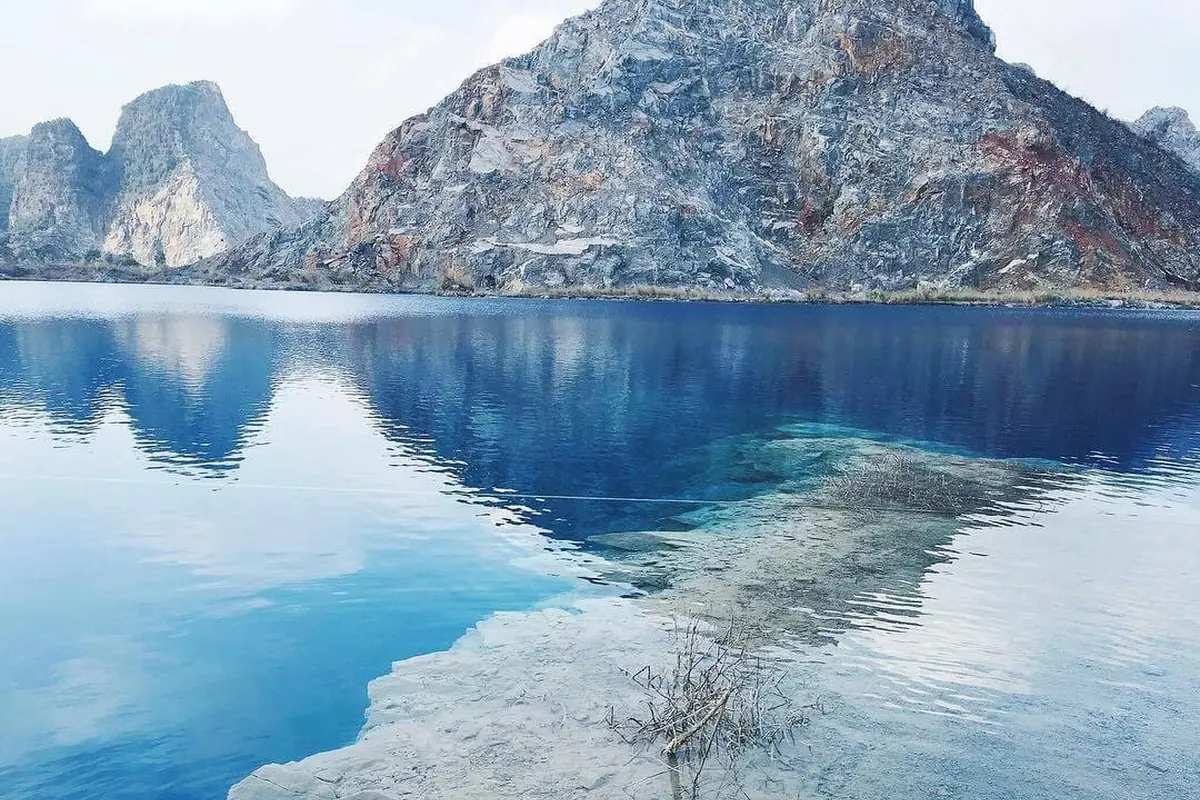
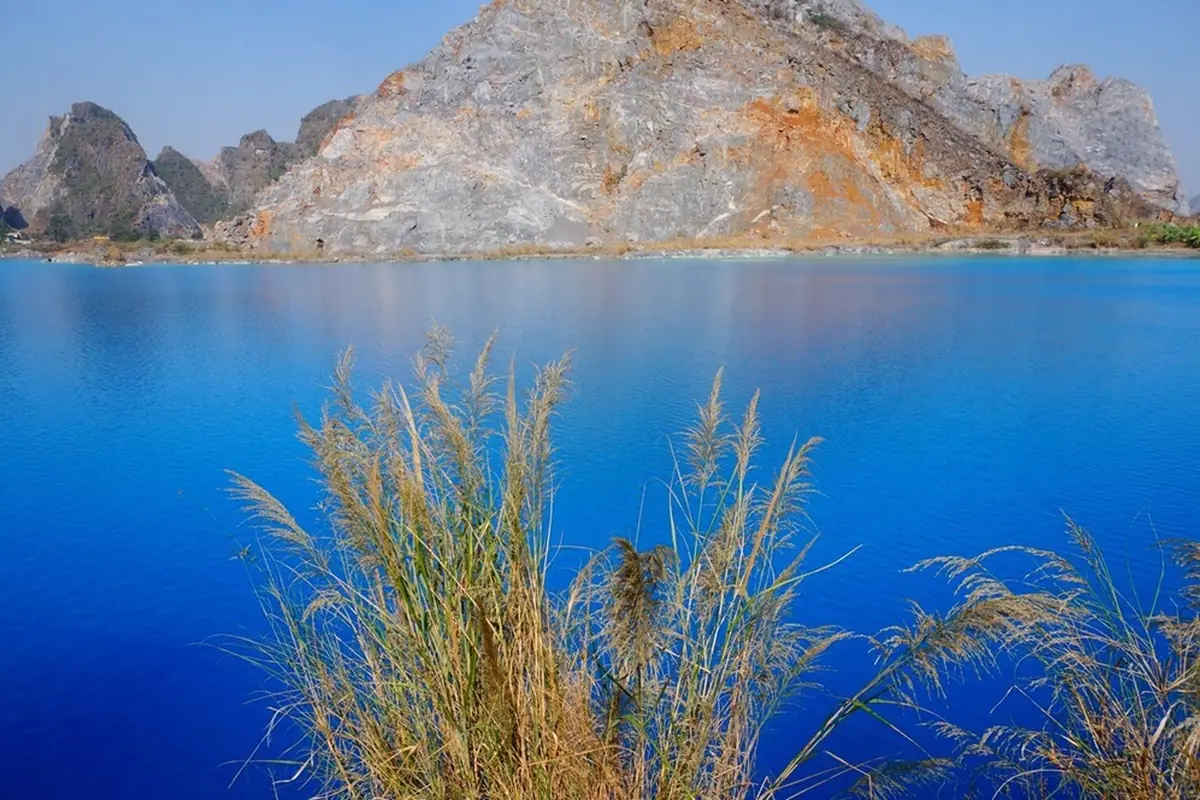
The lake formed in excavated limestone pits that gradually filled with water. The quarry faces are steep and the water is deep. The blue color varies with lighting, suspended material, minerals and the angle from which the water is viewed. One photograph may show turquoise, another dark cobalt. Neither shade proves the water is clean, shallow or suitable for contact.
The route from central Hai Phong and how long it takes
For a day trip from Hai Phong city, start by choosing a clear departure point. The Opera House area and Cau Dat street are familiar central references. Head north across Binh Bridge or use the Hoang Van Thu Bridge approach, then follow the road network toward the former Thuy Nguyen area. National Highway 10 is the usual landmark before the local turnoffs toward An Son and Trai Son.
That last part is where you need to pay attention. Roads around an old quarry are not the same as paved visitor paths within a ticketed attraction. Local lanes can be narrow, dusty or used by working vehicles. Maps may show a track reaching the lake without telling you whether it is public, open, or safe for tourists. A line on a screen is not permission to pass a barrier.
You will see the distance given as around 20 kilometers or nearly 30 kilometers from the city center. The difference largely reflects where the journey begins and which roads are used. Allow around 45-70 minutes each way from the central districts, plus time for traffic or a wrong turn.
A scooter may seem convenient on the smaller roads, especially for a couple of friends. Bring a helmet, a dust mask and suitable clothing. A family car is more comfortable for children or older relatives, but it still has to stop well back from the edge of the excavation. Turn around where there is enough room and where stopping is permitted. Never block a quarry entrance, a residence or a working road just because the map route ends nearby.
Don’t follow outdated directions based on a particular clothing shop or unnamed turning. Businesses move and signs change. Save the destination area on your phone, but also save an alternative attraction before leaving. Before the day, look up the latest local notice on whether the lake is open to visitors. Until you find a safe, permitted viewpoint, treat the lake as a dot on the map and switch to a managed attraction instead of trying one hidden track after another.
The lake is not open to visitors and sells no tickets
In 2017, authorities restricted access to the quarry lake and prohibited activities including recreational photography inside the dangerous area. They ordered fencing because of the deep pits, unstable rock and nearby quarry operations. In December 2022, some visitors were still cutting through fencing to reach the lake for pictures. Local authorities did not treat it as a tourist attraction.
On May 28, 2026, Viet Khe commune installed deep-water warning signs at Tuyet Tinh Coc lake in Trai Son hamlet, including messages against unsupervised swimming. Authorities still see the water as a real hazard.
None of this tells you which approaches are locked on the day you arrive. Visitors still post photos by the lake from 2025 and 2026, even though the site does not allow people in.
Tuyet Tinh Coc Hai Phong has no official ticket price. Some people say entry is free, others mention a small charge. And never pay a stranger to lead you through the fence.
Parking, and asking the price before you hand over the key
Unlike a managed attraction, the quarry lake has no proper visitor parking with a posted fee. Informal parking near the area costs about VND 10,000-20,000. That is not an official parking fee. In 2022, local authorities also had to deal with complaints about people demanding money to watch vehicles near the lake.
On a motorbike, do not leave it on a bend used by trucks or at the entrance to a house. With a car, avoid blocking service roads or private property. Only park where the responsible landholder or parking operator can clearly authorize you to stop. Ask the price before handing over a key. Photograph your parking location and take valuables with you.
A person offering to guard your vehicle has no say over who enters the lake. A parking payment cannot override a barrier, warning sign or restriction imposed by the relevant authority. Treat a gap in the fencing as a reason to leave. There is no need to investigate it on foot.
Families should make this decision early. A short walk across uneven ground might sound manageable for adults but be very different with a toddler, a stroller or an older relative. The last few meters toward quarry water are precisely where an improvised photo outing can become dangerous.
No swimming, wading, paddleboarding or sitting at the edge
Parts of the lake are roughly 30-40 meters deep. Quarry edges may drop away steeply, underwater contours can be unpredictable, and rock or soil around the edge can be unstable. The fact that you can see a stone through blue water says almost nothing about the depth just beyond it.
The same advice applies to inflatable boats, stand-up paddleboards, homemade rafts and fishing from precarious edges. A life jacket does not remove the danger of a falling rock, a collapse beneath your feet or the absence of a safe rescue route. Improvised boats and paddleboards have been ordered off the lake before.
Do not bring children near a quarry rim just so they can look at the color more closely. Keep everyone on established, permitted paths outside restricted land. A parent photographing the lake cannot simultaneously supervise a child exploring behind them on loose stones. For an outing where children can run around, snack and use a toilet, a managed heritage site or public park is a far better choice.
What time of day is best for photographs?
For outdoor light, 7:00-9:00 a.m. and 3:30-5:00 p.m. are the easy times to shoot on clear days. Softer light can make faces look more natural, preserve highlights on the rock and give the landscape more depth. The precise effect depends on the season, clouds and where the limestone walls cast shadows.
At midday, hard sunlight can bounce off pale rock and make the water difficult to expose correctly. Portraits may develop dark shadows beneath the eyes. Overcast skies can soften faces but make the famous turquoise look more muted. Don’t chase stronger color after rain if the access road is muddy or the ground is slippery.
From a viewpoint outside the restricted area where the manager allows photos, keep the setup simple. Use your phone’s standard lens for a wide composition of water and rock. The 2x camera may compress the scene so the hills appear larger behind the subject. Tap the brightest part of the water and lower exposure slightly if the highlights are blown out. Set up on level ground with plenty of distance from slopes and edges.
Agree on the camera position before anyone poses. The photographer should never tell someone to take “one small step back” toward an unseen drop. Long lenses, careful framing and cropping can preserve the sense of place without entering a hazardous spot.
Light colors such as cream and white can stand out against a blue background, while terracotta or muted red offer stronger contrast. Footwear matters more. Sneakers with decent grip beat heels or slippery sandals, and a lightweight crossbody bag is easier to carry than several props. Save outfit changes for a proper restroom or cafe elsewhere; do not turn an industrial verge into a makeshift dressing room.
A heart-shaped shot of the lake or a view from above is not worth bringing a drone here. Flying near quarry or restricted land must follow Vietnam’s airspace rules and needs the site manager’s consent.
No food stalls or toilets around the lake
Plan as though there are no dependable visitor services at the lake. There is no regular cafe, restroom, trash point, shaded seating or picnic ground at the quarry, even if informal stalls have appeared at busy times. A casual online description of a “hidden gem” should not be read as a promise of facilities.
That matters for a group carrying sandwiches, a blanket and a portable speaker. Picnic gear is only useful where you have somewhere permitted and suitable to put it down. Broken rock, dusty tracks and steep edges do not make a safe picnic lawn. Avoid lighting fires, leaving rubbish or using loud speakers near homes and industrial land.
Have breakfast in town before setting off, bring your own drinking water and plan lunch away from the lake. On the way back to Cau Dat street, you can stop at Banh da cua Ba Cu at 179 Cau Dat street for the city’s crab noodle specialty. A serving there costs about VND 40,000-50,000. Ask for the current price when ordering. You can try soup noodles or a mixed, less brothy version, depending on the day’s menu.

Traveling with children? Choose a meal stop with seating, a sink or a restroom rather than stretching lunch out until everyone is tired. Friends who want a long afternoon in a cafe can settle in Thuy Nguyen or back in the city. It is much easier than searching for a stall on the roadside near a closed or restricted quarry.
What to pack for the blue lake
A small bag is enough for a flexible day. Bring drinking water, sunscreen, a hat, a dust mask for the roads, tissues and a charged phone. A power bank is helpful if navigation keeps running while the group changes plans. Good walking shoes are more important than a tripod or extra camera lens.
Pack a light rain layer when the forecast is uncertain and a rubbish bag so you can take everything away. For a family, add wipes, spare children’s clothing, snacks they will actually eat and any usual medication. Make sure there is enough water for the journey, not just for the imagined hour beside the lake.
Leave the tent, grill, inflatable boat, portable stove and oversized photo props at home. They add weight without solving the central problem: the quarry is not an established recreation facility.
Choosing the season and day
Clear, dry weather generally makes outdoor photography easier and road surfaces more predictable. In the hot months, try to avoid a long exposed stop between approximately 11:00 a.m. and 2:00 p.m. The sun can be harsh and there is no reliable shade or refreshment service at the quarry. Carry water even for a brief roadside stop.
Rain is more than a photographic inconvenience here. Loose stone and muddy ground become slippery, and old quarry slopes are not somewhere to test your balance after a storm. After heavy downpours or strong winds, drop the lake from the day’s plan altogether. Clear skies after rain leave the rock wet and the soil loose for a while.
Weekends can bring more people to popular Hai Phong photo spots, but crowds are not a safety certificate. Several parked scooters beside an improvised track do not prove that access is permitted. Parking that spills into a working road means it is time to go somewhere else. You should be able to spend the day without disturbing residents or blocking traffic.
During winter, sunset comes earlier and the late-afternoon photography window needs adjusting. Never plan to walk along an old quarry edge at dusk. Even in good weather, return toward the main road while it is still fully light. Small obstacles and loose stones become much harder to see at the end of the day.
Three nearby stops to fill the day
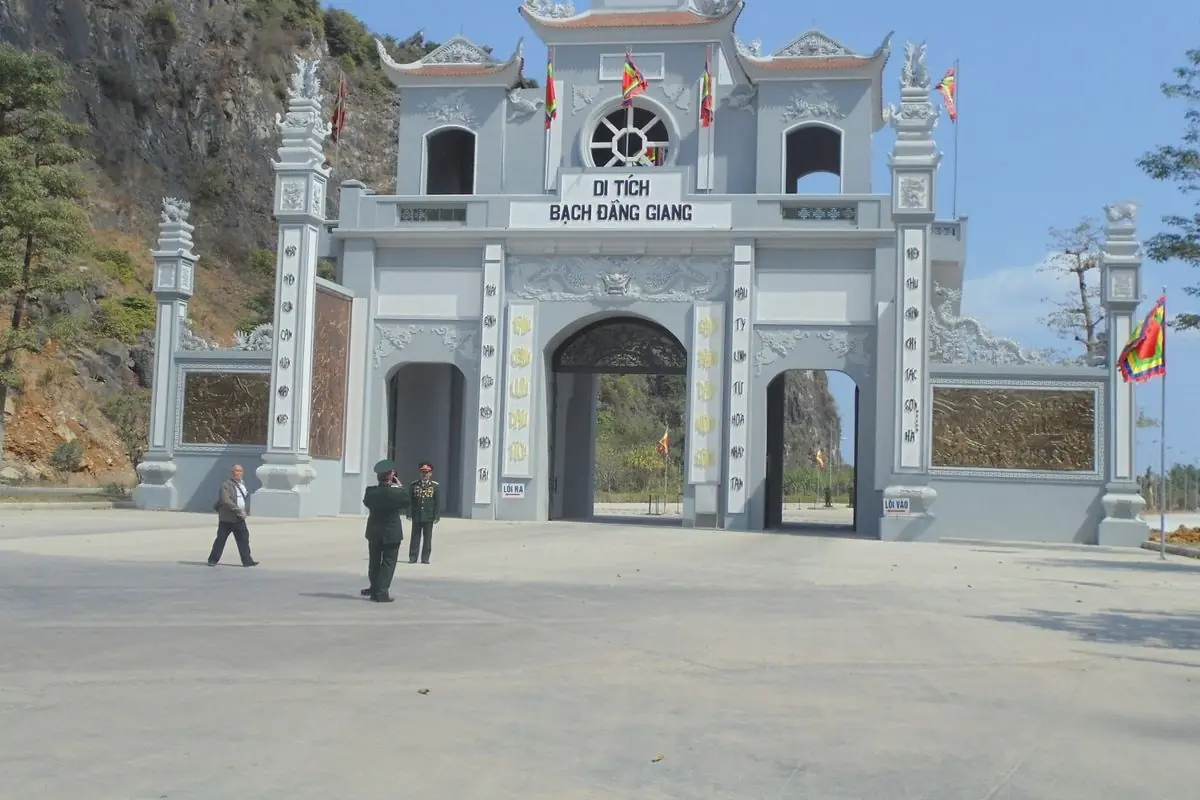
Bach Dang Giang historical site
A reliable anchor for a family outing
Bach Dang Giang historical site in the Trang Kenh area, Bach Dang ward makes a much more structured centerpiece for the day. It combines temple architecture, landscaped grounds, river and mountain scenery, an exhibition space and monuments recalling the historic battles associated with the Bach Dang River. You can enjoy outdoor photographs without making a disused quarry the focus of the outing.
The site is open 7:00 a.m. to 7:00 p.m. daily. The complex charges no admission and no parking fee. That free entry applies only at Bach Dang Giang. Its vegetarian-meal service is temporarily suspended, so plan lunch somewhere else.
Allow around 60-90 minutes for a relaxed visit, or longer if someone in the group enjoys reading exhibitions and exploring the architecture. Dress respectfully in the worship areas and lower your voice around people visiting the temples. Families will find it easier to organize a meeting point and keep track of children than on uncertain paths around a quarry.
For photos, try the grand square, distant hills and the river landscape. The site offers a different style of photograph from the turquoise lake, but it still has a strong sense of northern Vietnam’s scenery and history.
Cao Quy stake site
A short history-focused addition
Cao Quy archaeological stake site, now in Luu Kiem ward, is a second worthwhile stop for anyone interested in the Bach Dang battlefield story. The conservation area covers roughly three hectares, with preserved wooden stakes, a covered archaeological zone and an exhibition building. It is not a playground, but it gives a group something specific to learn and talk about.
Cao Quy preserves archaeological evidence on site. The stake displays at Bach Dang Giang also help tell the story of the river battles, but they should not be confused with the conserved finds at Cao Quy. For a family with school-age children, this can make the trip feel more substantial than collecting another set of selfies.
Visit in daylight and check whether the exhibition facilities are open before setting out. Cao Quy has no fixed ticket price or closing time.
Le Ich Moc temple
A quieter cultural stop
Le Ich Moc temple, in the Thanh Lang area of Le Ich Moc ward, is another option within the former Thuy Nguyen area. It commemorates a historic scholar associated with Hai Phong’s tradition of education and learning. A visit is mainly about the temple, its architecture and a quieter cultural atmosphere rather than adventurous outdoor activity.
This is a sensible addition when older relatives are traveling, when everyone would appreciate a calmer stop or when the weather is too unsettled for an exposed landscape. Dress appropriately and check locally for any changes during festivals or maintenance.
Do not squeeze all three heritage sites into the same afternoon. Pick Bach Dang Giang plus either Cao Quy or Le Ich Moc, allowing space for a proper lunch and an easy drive back. Even without the quarry lake, the day can still feel complete.
Three workable day-trip plans
For a family with children
Have breakfast around 7:30 a.m. in central Hai Phong and drive toward Bach Dang Giang around 8:30 a.m. Aim for a relaxed visit from roughly 9:15 to 11:00 a.m., then find lunch in a residential area on the way back. Return home or stop for coffee early in the afternoon.
This version deliberately removes the quarry lake. It is the most comfortable option when someone needs toilets, shorter walking sections and a clear place to sit down. Nobody has to improvise a route across loose stone.
For friends hoping to take photographs
Check local access information the previous evening and agree not to enter fenced or restricted land. Leave at about 7:00 a.m. for the Thuy Nguyen area, but keep the first photograph at a permitted public location. Without a safe, authorized view of the lake, head straight to Bach Dang Giang. Add Cao Quy in the late morning if the group still wants another stop, and have lunch around 12:30 p.m.
This plan avoids spending an hour driving through tiny quarry lanes looking for a back entrance. The photographs may be different from what you originally imagined, but no image is worth ignoring a clear warning.
For a quieter half-day out
Leave around 8:30 a.m. and make Le Ich Moc temple the first stop. Continue to another confirmed-open cultural destination or settle in for lunch in the former Thuy Nguyen area. Return toward the city around 2:00 p.m., with the option of a drink or a walk along Cau Dat street. This is a gentler choice for mixed-age groups who want to get out of the house without turning the outing into a long expedition.
Whichever version you choose, give one person responsibility for navigation and another for checking the day’s weather and any access updates. Keep the group together when plans change. Good communication is more useful than squeezing one extra stop into the route.
What to do at a fence or when someone offers to take you in
Read the sign in front of you. A deep-water, no-swimming sign gives you no right to enter the land beyond it, so follow the people managing the site.
Anyone offering to lead you past the fencing for a fee should get a firm no unless they can show clear, lawful authorization from the responsible operator. Do not follow strangers along an unstable slope, squeeze through damaged fencing or open a gate yourself. An offered shortcut is especially poor advice when the site has a documented history of dangerous excavations.
On May 28, 2026, local authorities were still installing deep-water warnings at Tuyet Tinh Coc in Trai Son. Confirm permission before planning any lake photographs; otherwise, Bach Dang Giang opens at 7:00 a.m. and makes a much easier day out.
Frequently asked questions
Where is Tuyet Tinh Coc Hai Phong? Is it in An Lao?
It is in Trai Son hamlet, Viet Khe commune, Hai Phong, formerly An Son in the Thuy Nguyen area. It is not in An Lao. Use the hamlet and commune names when comparing map pins, especially if you find an older guide with the previous administrative address.
How long is the drive from central Hai Phong?
From the city center the drive takes about 45-70 minutes each way. Travel time depends on your departure point, bridge, traffic and the approach roads.
Is Tuyet Tinh Coc lake free, and can I park there?
The lake has no ticket gate or official parking area. Some people run informal parking and charge for it, but paying to park still does not let you into restricted land. Confirm access and parking before traveling.
Can you swim in Tuyet Tinh Coc lake?
No. Local authorities identified the lake as a deep-water danger and installed signs against unsupervised swimming in May 2026. The former quarry has steep edges, a risk of rockfalls and no lifeguards.
When is the best time to photograph the blue water?
On a clear day, softer outdoor light is often available around 7:00-9:00 a.m. or 3:30-5:00 p.m. These are not opening hours. Only take pictures from a viewpoint that is legally accessible and safe, without going beyond a fence or standing near a drop.