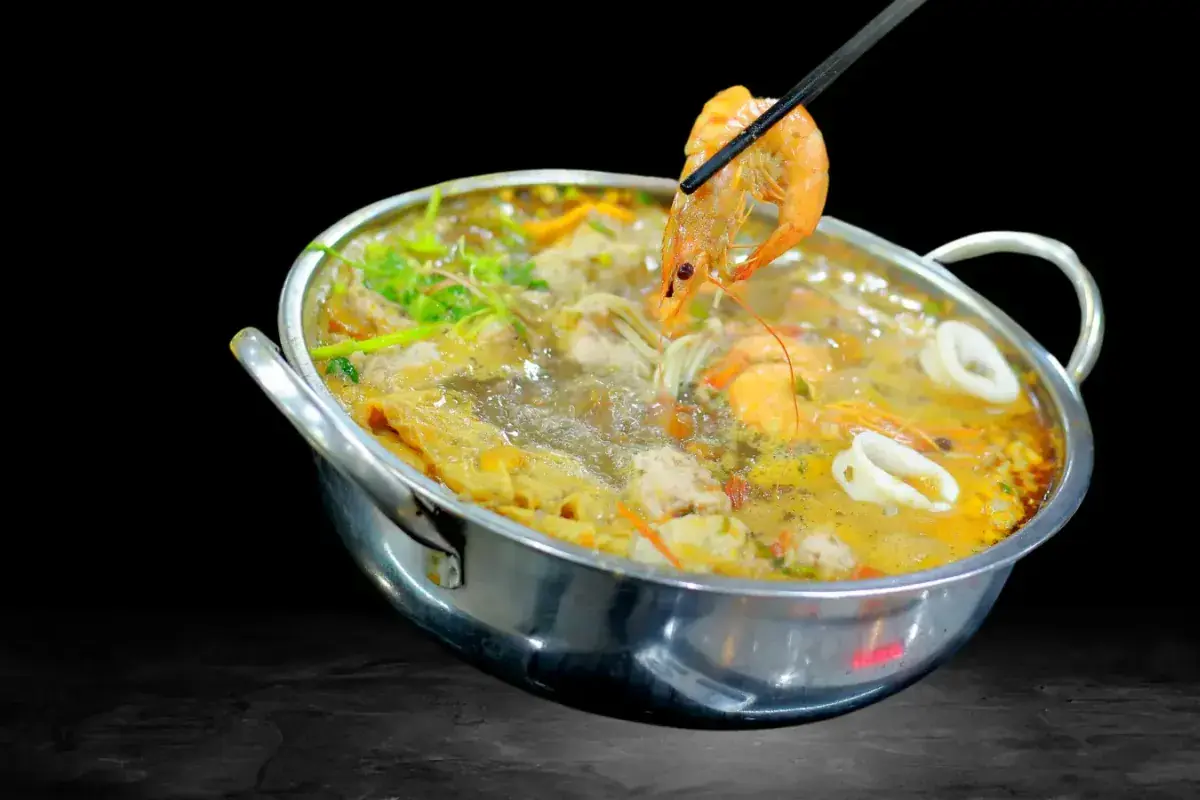
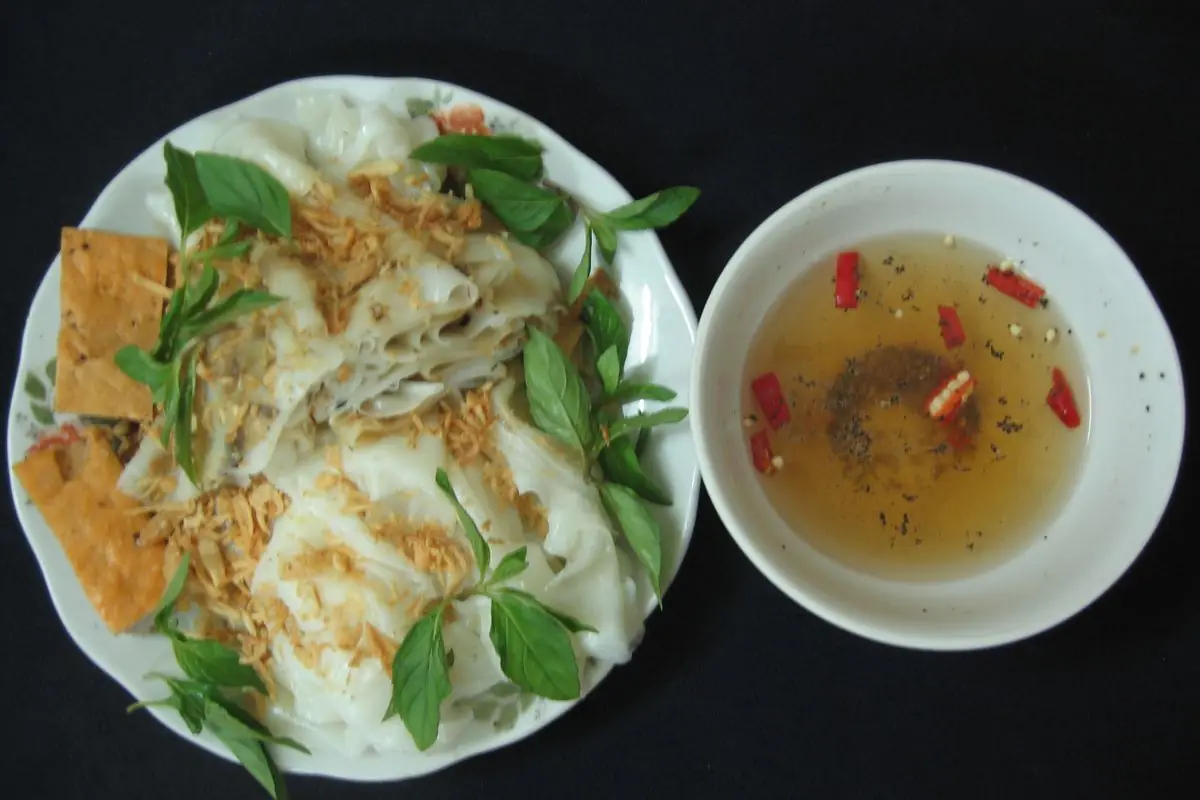
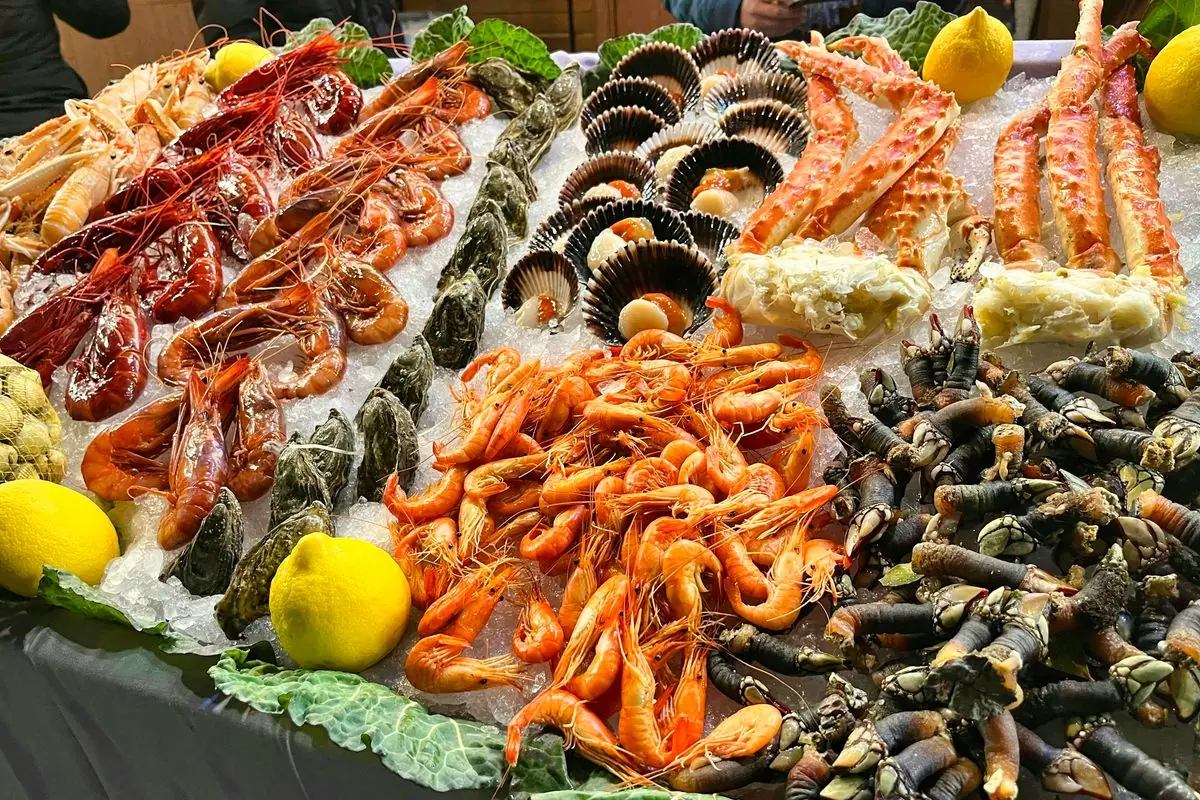
Fresh seafood is the one thing you shouldn't miss on Cat Ba
A fresh seafood dinner is well worth one of your evenings on Cat Ba, as long as you check the prices and how the meal is charged before you order. Beyond seafood, the island has plenty of local dishes for solo travelers, families, and anyone who prefers something other than fish or shellfish.
 16 min read
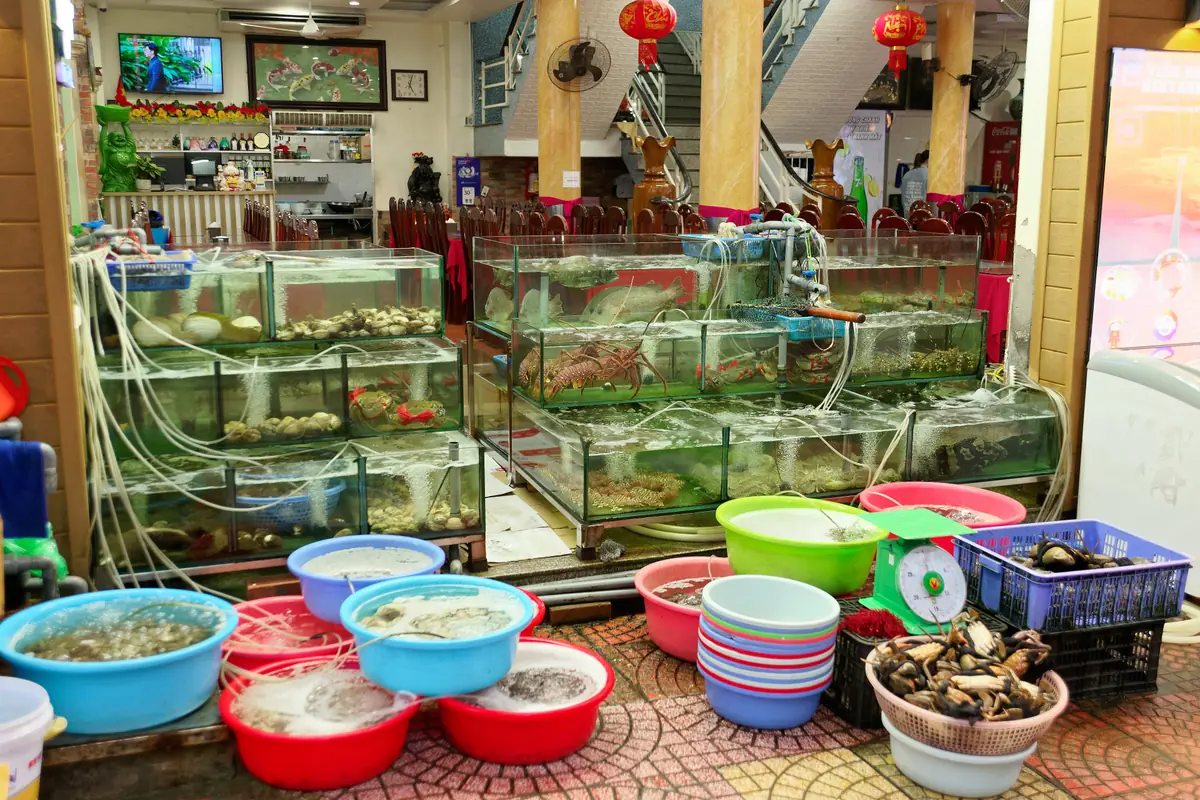
Tubs of shellfish and a basket of crabs crowd the entrance.
Some of the most satisfying meals in Cat Ba are simple ones: a plate of steamed mantis shrimp, a bowl of hot clam soup, or rice served with locally raised chicken. Wondering what to eat in Cat Ba? Start with a few regional specialties, then choose somewhere that suits your appetite, budget, and travel companions.
What to eat in Cat Ba: local dishes worth trying
Cat Ba belongs to the Cat Hai Special Administrative Zone in Hai Phong City. Most visitors still call the main tourist center Cat Ba Town, and it’s where most of the hotels, seafood restaurants, markets, and cafés are.
You can pick live seafood from a restaurant tank and ask the kitchen to prepare it your way, or sit down at a small local eatery for a simple rice meal without ordering an entire seafood platter.
With only a few nights on the island, put these dishes near the top of your list.
Mantis Shrimp
Steamed or Salt-Roasted
Mantis shrimp, known locally as be be or tom tit, is one of the easiest Cat Ba seafood specialties to find.
At first glance, it doesn’t look particularly easy to eat. The shell is firm, and getting to the meat takes a little patience. Inside, the meat is sweet and tender.
Steamed mantis shrimp is a good choice if you want to enjoy its natural flavor. It’s usually served with a simple salt, pepper, and lime dipping sauce. Salt-roasted mantis shrimp is another popular preparation, a more flavorful choice when you’re sharing with friends.
Before ordering, ask whether the shrimp are live or previously frozen, what size they are, and how much they cost per kilogram.
Mantis shrimp have relatively heavy shells, so one kilogram of whole shrimp gives you less than a kilogram of edible meat.
Geoduck Clams
Grilled with Scallion Oil or Steamed
Geoduck clams, known in Vietnam as tu hai, are another specialty of the Cat Hai area.
They have thick, slightly chewy meat and a delicate sweetness that works well with simple cooking methods.
Grilled geoduck with scallion oil is rich and aromatic, making it a nice dish to share. To taste the clam itself, have it steamed.
The price depends on the size and type of clam, as well as the season.
Ask whether the price is per piece or per kilogram, how much each clam weighs, and whether preparation costs extra.
This is especially helpful if you’re trying geoduck for the first time and aren’t familiar with its typical serving size.
Grouper
Steamed with Soy Sauce or Cooked in Soup
One grouper makes a good shared main course for two to four people.
Grouper, called ca song or ca mu in Vietnamese, has firm white flesh that holds together well when steamed.
Steamed with soy sauce, ginger, and scallions, grouper keeps its natural sweetness. If you’re having rice, fish soup or a sour fish broth goes well with it.
There are several types and sizes of grouper, so prices can vary considerably.
Before you commit, have the restaurant weigh the exact fish you picked and give you a rough total.
A large fish may sound like a good idea until you realize how much it adds to the bill, especially if you’ve already ordered several other seafood dishes.
A small group is often better off choosing a moderately sized fish and adding vegetables or soup.
Phu Long Clams, Swimming Crab, and Fresh Squid
Phu Long clams are among the local products the Cat Hai area is known for. They’re particularly good steamed with lemongrass or ginger, or served in a light soup.
There’s something comforting about a bowl of hot clam broth after spending the day by the sea.
Steamed swimming crab is another favorite, especially if you enjoy cracking shells and dipping the meat in salt, pepper, and lime.
When ordering crab, check the size, whether it’s still alive, and how much the selected portion weighs.
Fresh squid is an easy choice for groups with different tastes. It can be steamed with ginger, grilled, or stir-fried with vegetables.
If you don’t enjoy spicy food, simply ask the kitchen to leave out the chili and serve the dipping sauce separately.
A first seafood dinner in Cat Ba can be as simple as one squid dish, some steamed clams, a fish to share, and vegetables. That’s plenty of variety without running up the bill.
What if you don’t eat seafood?
You can still eat very well in Cat Ba.
Although seafood is a major part of the island’s food culture, plenty of restaurants serve chicken, pork, eggs, vegetables, tofu, rice, and noodle dishes.
Lien Minh chicken
Lien Minh chicken is a local breed from Cat Ba Island, known for its firm meat and traditional free-range raising methods.
Depending on the restaurant, you may find boiled chicken, ginger-fried chicken, grilled chicken, or chicken hotpot.
Traveling with friends? Ask whether you can order half a chicken rather than a whole one.
It’s a good way to try something local without eating seafood.
Vegetables and home-style rice meals
Hien Hao taro and Gia Luan oranges are also among Cat Hai’s agricultural specialties. Both are seasonal, and only some restaurants serve them.
For everyday meals, it’s much easier to find steamed rice, stir-fried greens, eggs, tofu, pork, and chicken.
Solo travelers often find small family-style restaurants around Cat Ba Market and the town’s residential streets simpler than seafood restaurants specializing in whole fish and large shared platters.
Vegetarians should tell the staff whether they can have fish sauce, oyster sauce, or meat-based broth.
A vegetable dish may look completely vegetarian but still contain fish sauce or another animal-based seasoning.
Travelers with fish or shellfish allergies should tell restaurant staff before ordering. The kitchen can pick that ingredient out of the dish and still leave traces behind.
Where to eat in Cat Ba: market, restaurant, or floating restaurant?
Rather than chasing a restaurant described online as the best on the island, choose the kind of meal first: a market rice plate, a waterfront seafood dinner, street food at VUI-Fest, or a meal on the water.
Cat Ba Market
Best for Breakfast, Lunch, and Solo Travelers
Cat Ba Market, around Nui Ngoc Street, is worth visiting if you’d like to see fresh seafood, buy dried specialties, or find a simple local meal.
The market is liveliest in the morning. It’s open roughly 5 AM to 7 PM, although individual stalls follow their own schedules.
Alongside vendors selling fish, squid, shrimp, vegetables, and dried products, you’ll find places serving ready-to-eat meals.
One local eatery at Cat Ba Market offers basic rice meals starting at VND 50,000, while seafood rice meals range from approximately VND 70,000 to VND 150,000, depending on the dish and portion.
For a solo traveler, a rice plate with squid or shrimp, some vegetables, and a bowl of soup works well. It’s filling, easy to budget for, and much simpler than ordering a whole fish that you might struggle to finish.
The market is also a good place to become familiar with the different kinds of seafood available before deciding what to order for dinner.
April 1 Street
Best for Seafood Restaurants and Waterfront Dining
April 1 Street, also called Duong 1 Thang 4, is one of the main streets in central Cat Ba.
The waterfront area and nearby streets have plenty of seafood restaurants, casual eateries, cafés, and tourist services.
Staying at a nearby hotel makes it easy to walk around and compare a few menus before choosing somewhere to eat.
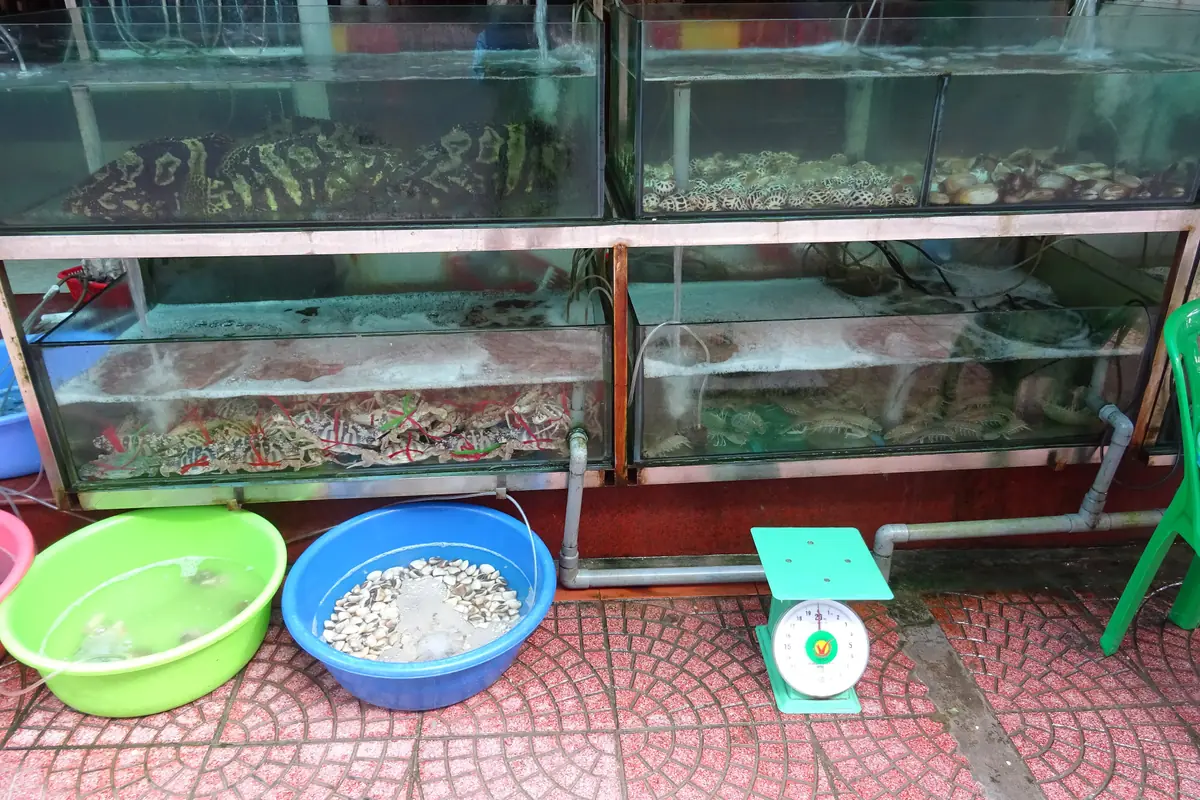
This area suits families, groups of friends, or anyone who wants a comfortable table and a broad selection of cooked dishes.
International visitors who don’t read Vietnamese will have an easier time at restaurants with clear menu pictures, visible prices, and staff who can explain ingredients and serving sizes.
A restaurant that clearly displays prices and units is a safer bet than one promising "fresh seafood at a great price" without providing any details.
Take your time choosing, even when staff at the first restaurant you pass invite you inside.
VUI-Fest Cat Ba
Best for Street Food and a Lively Evening
Not in the mood for a long sit-down dinner? VUI-Fest is another option.
Located around the central bay near April 1 Street, this creative waterfront market opened on April 25, 2026.
It has nearly 150 kiosks with seafood, street food, international dishes, shopping, and entertainment.
VUI-Fest operates daily from 9:30 AM until midnight. Individual stalls and shows may change their hours with the season, the weather, or the operator’s schedule.
From around 6:30 PM, the waterfront area becomes a pleasant place to walk, have dinner, and enjoy the evening atmosphere.
The entertainment program can include DJ sets, live music, violin performances, and fire shows, and it changes from night to night.
Nearby, Sun Bavaria Cat Ba offers craft beer and restaurant dining, with room for more than 690 guests.
VUI-Fest works well for groups who want to try different snacks, families looking for a variety of food options, and international visitors who aren’t yet familiar with Vietnamese dishes.
VUI-Fest and the traditional Cat Ba Market are two different places: VUI-Fest focuses on waterfront dining and entertainment, while the market around Nui Ngoc Street is part of everyday local shopping and food culture.
Floating Restaurants
Beautiful Views, but More Planning Required
At a floating restaurant, instead of sitting along a busy town street, you’re surrounded by water, fishing structures, and views of the bay.
Some floating restaurants are linked to fish farms, allowing visitors to see seafood kept in floating enclosures before ordering.
Unlike a restaurant in town, you may need a boat to get there.
Before booking, ask exactly where the restaurant is located, who provides the boat transfer, when the return trip operates, and what happens if the weather changes.
Also confirm two separate costs: the boat transfer and the meal.
If you’re traveling with young children, someone prone to seasickness, or a group planning to return late, a waterfront restaurant on land may be the more comfortable choice.
Is seafood expensive in Cat Ba?
Cat Ba offers everything from affordable seafood rice meals to expensive seafood feasts.
A simple meal at the market can cost only a few tens of thousands of Vietnamese dong, while a restaurant dinner featuring grouper, geoduck clams, lobster, and crab can become much more expensive.
The final cost depends on the species, size, season, supply, restaurant, and preparation method.
That’s why seafood prices quoted per kilogram in old travel blogs are a poor guide.
For lobster, large grouper, and geoduck clams in particular, ask for the current price, confirm the size and weight, and agree on the total before the kitchen starts cooking.
To keep to a budget, choose one seafood dish as the highlight of your meal and add rice, vegetables, and soup.
How to order seafood by weight without overpaying
Billing misunderstandings often start with units: a customer assumes the quoted price is for one plate, while the restaurant is charging per kilogram.
- Step 1
Check the price and unit
Look at the menu or displayed price board.
Is the seafood priced per portion, per piece, per 100 grams, or per kilogram?
Vietnamese law requires displayed prices to include applicable taxes, fees, and charges, and sellers must not charge more than their displayed prices.
A menu or price board with clearly stated units gives you something to refer to when checking the bill.
- Step 2
Confirm the seafood type and size
Ask which variety of lobster or grouper you’re selecting, its approximate size, and whether it’s live or previously frozen.
Don’t simply ask, "How much is one kilogram?" if the tank contains several different types of fish or shellfish.
- Step 3
Watch the seafood being weighed
Ask the staff to weigh the exact fish, lobster, or shellfish you’ve chosen.
Check the weight displayed on the scale before the seafood is taken into the kitchen.
Weighing with a container, bag, or extra water? Ask whether that weight will be deducted.
A quick photo of the displayed price and scale reading can be helpful, as long as the restaurant agrees.
- Step 4
Ask about cooking fees and the total price
Steaming, salt-roasting, cheese-grilling, and preparing seafood for hotpot may involve different cooking charges.
Ask whether preparation is included in the seafood price.
Also check whether vegetables, noodles, rice, or dipping sauces are charged separately.
For example, if your fish weighs 0.8 kg, the fish costs 0.8 times the agreed price per kilogram. Any additional preparation or side-dish charges should then be added as previously agreed.
- Step 5
Check the bill before paying
Review the dish names, weights, unit prices, cooking charges, drinks, and quantities.
Ask the staff to explain any unfamiliar charge before paying.
A photo of the menu or displayed price list can help resolve a genuine misunderstanding.
Questions to ask the staff:
- "Is this price per kilogram or per piece?"
- "Can you weigh it before cooking?"
- "Is the cooking fee included?"
Don’t order every seafood dish at once before you know the portion sizes. Start with a few and order more if you’re still hungry.
Which seafood dishes should you be careful with?
Avoid raw or poorly stored seafood
Oysters, clams, snails, and other shellfish are generally safer when thoroughly cooked, especially for children, pregnant travelers, older adults, and people with weakened immune systems.
Avoid seafood that appears dead when it should be sold live, has an unusual smell, or has not been stored appropriately.
For grilled seafood, check that the inside is properly cooked rather than judging only by its exterior color.
Lime juice, mustard, and alcohol do not replace safe food handling and adequate cooking.
What food souvenirs should you buy in Cat Ba?
Cat Ba Market, specialty stores around the town center, and shops near April 1 Street are good places to look for dried seafood, fish sauce, and honey.
Dried squid, dried fish, and dried shrimp
Dried squid is a familiar specialty in many Vietnamese coastal destinations.
You may find whole dried squid or products that have already been cleaned or prepared.
Before buying, check the smell, dryness, packaging condition, origin, and expiry date where available.
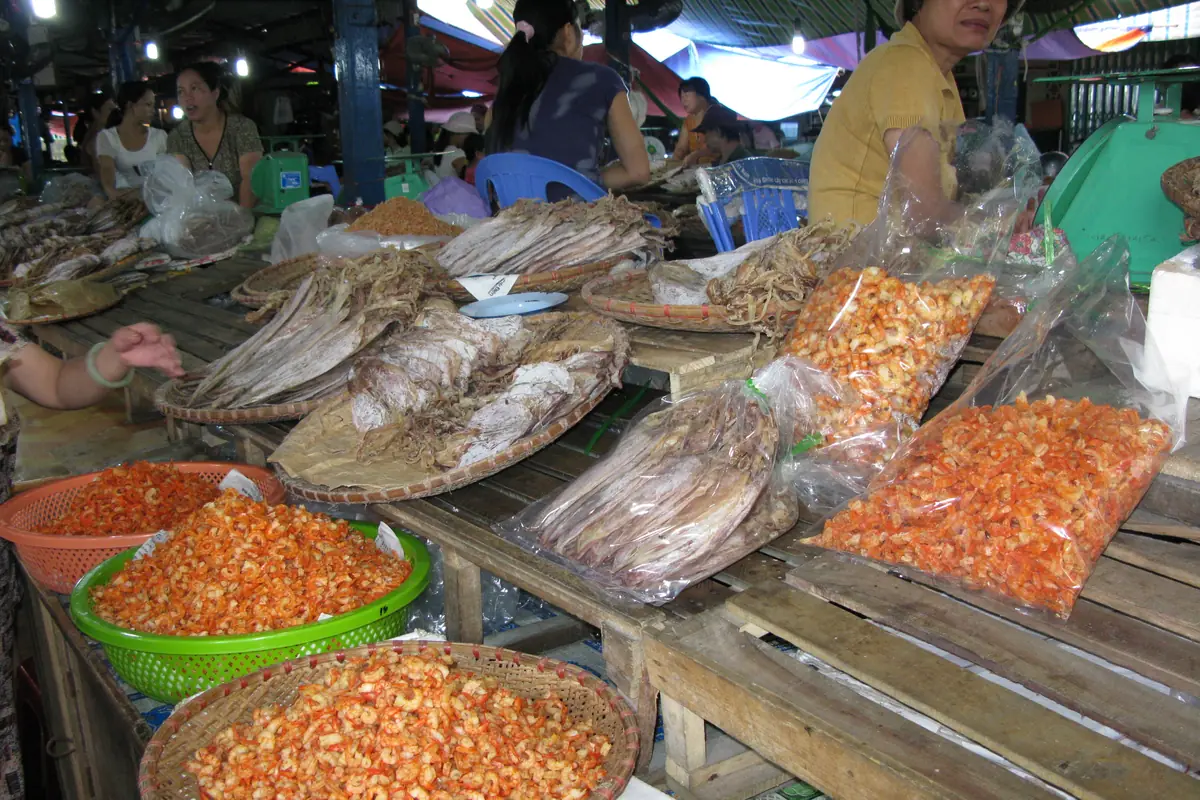
Besides squid, you’ll also find dried fish and dried shrimp.
Be careful to distinguish fully dried products that can be stored at room temperature from semi-dried seafood, often described as one-sun dried, which may still require refrigeration even when vacuum-sealed.
Cat Hai fish sauce
Cat Hai fish sauce is one of the best-known traditional specialties of the area.
Its production is associated with the long-established fish sauce industry on Cat Hai Island.
Traditional fish sauce products including cot ca nham from Cat Hai Seafood Processing and Services Joint Stock Company and traditional pure mackerel fish sauce from Quang Hai Company have received five-star OCOP recognition.
OCOP stands for "One Commune One Product," a Vietnamese program recognizing and promoting local products.
When shopping, choose properly labeled bottles showing the producer, ingredients, volume, expiry date, and intact seal.
Cat Hai fish sauce is produced in the wider Cat Hai island area, so a bottle sold in Cat Ba Town may not have been made on Cat Ba Island itself.
Cat Ba honey
Honey is another product closely associated with Cat Ba.
Local honey tends to be dark golden, thick, and rich in flavor, and the spring harvest is said to give the best honey.
Color and thickness alone can’t prove that honey is pure or genuinely local.
The "Cat Ba Xanh" certification mark, protected by Vietnam’s Intellectual Property Office since November 27, 2018, is one sign worth looking for on eligible honey and fish sauce products from the Cat Hai area.
Look for clear producer details, proper labeling, and traceability information where available; a seller’s word that it’s genuine wild forest honey is no substitute.
Can you bring dried seafood, fish sauce, or honey overseas?
Each country sets its own rules, and they differ by type of food.
An airline may let you fly with it, but customs or biosecurity officers at your destination decide whether it gets in.
Australia, for example, has strict biosecurity controls.
Travelers must declare food items that fall under its declaration requirements, including relevant packaged products.
Dried shrimp carried for personal use may be considered for entry if it meets the applicable conditions and passes inspection for dryness, live insects, soil, and other contamination.
A declared item can still be refused entry, but failing to declare food that must be declared can result in penalties.
Travelers returning to other countries should also check their destination’s current food import requirements before shopping.
Airline restrictions on liquids, checked baggage, carry-on luggage, and fish sauce packaging are separate questions.
For those details, read our guide to bringing Vietnamese food souvenirs on a plane, since airline rules and import requirements can vary by carrier and route.
How to pay for food in Cat Ba
Larger restaurants usually offer more payment options than small market stalls or street food vendors.
Cross-border QR payment services between Vietnam and China were launched on December 2, 2025, allowing supported Chinese payment applications to work with participating VietQRGlobal merchants.
A Vietnam-South Korea cross-border QR payment connection was also launched on April 23, 2026.
Thailand is another country connected to Vietnam through cross-border QR payment arrangements.
However, not every ordinary Vietnamese QR code works with international payment apps, and not every business in Cat Ba participates in these networks.
Ask about accepted payment methods before ordering.
Check the amount in Vietnamese dong after scanning a QR code, and confirm that the transaction has succeeded.
Carry some Vietnamese cash in smaller denominations for snacks, local markets, and situations where mobile connectivity is unreliable.
How to plan your meals for two or three nights in Cat Ba
With a few nights in central Cat Ba, you can eat a different way each evening.
On your first morning, find a noodle shop, try banh da cua (Hai Phong-style crab noodle soup), or enjoy a simple breakfast near your hotel.
Lunch is a good time to visit Cat Ba Market for a rice meal. It leaves you with more time and budget for a leisurely dinner.
On your first evening, choose a seafood restaurant around April 1 Street.
Steamed mantis shrimp, grilled squid, clams, rice, and vegetables cover the island’s best-known flavors in one meal.
The following evening, change things up with a walk through VUI-Fest, trying a few smaller dishes and enjoying the waterfront atmosphere.
If you’re interested in a floating restaurant, set aside a separate evening when the weather is suitable and you’ve confirmed the boat transfers.
Before leaving the island, stop at the market or a specialty shop to look for dried squid, fish sauce, or honey.
Restaurants get much busier during public holidays.
Across the nine-day holiday period covering the Hung Kings Commemoration and April 30-May 1 holidays in 2026, Hai Phong recorded more than 1.45 million visitor arrivals, while many accommodation providers in Cat Ba were fully booked on peak days.
During a busy holiday period, plan to eat a little earlier or reserve a table in advance, particularly for larger groups.
A great meal in Cat Ba doesn’t have to be expensive
You can eat well in Cat Ba without spending a fortune. A simple meal of chicken, rice, vegetables, and hot soup has its own appeal. So does sharing steamed mantis shrimp with a few friends.
Wherever you eat, know what you’re ordering and how it will be charged, and choose somewhere that suits your health needs, appetite, and budget. Our Cat Ba travel guide covers the island’s main attractions and practical travel information for the rest of your stay.
In no hurry? Try sitting by the waterfront over a relaxed seafood dinner as the town lights come on.
Frequently asked questions
Is seafood expensive in Cat Ba?
Not always: it varies with the dish and the place. You can find relatively affordable seafood rice meals at local markets, while restaurants offer seafood priced by weight. Premium dishes such as lobster, large grouper, and geoduck clams can be significantly more expensive. Before ordering, ask the price on the spot, confirm the unit, and agree on the cooking charge.
Should I eat at Cat Ba Market, a restaurant, or a floating restaurant?
Cat Ba Market is a good choice for affordable local meals, solo travelers, and food shopping. Restaurants in the town center are more convenient for families, groups, and anyone who prefers a clear menu and comfortable seating. Floating restaurants let you eat out on the water, but you'll need a boat transfer, good weather, and a separate deal for the boat fare.
What can I eat in Cat Ba if I'm traveling alone or don't eat seafood?
You can easily find rice meals, chicken, pork, eggs, vegetables, tofu, and noodle dishes. Lien Minh chicken is the local specialty to look for if you don't eat seafood. Vegetarians and travelers with allergies should explain their dietary restrictions carefully, including whether fish sauce, oyster sauce, or meat-based broth is acceptable.
Is it safe to eat horseshoe crab in Cat Ba?
Horseshoe crabs and the toxic marine species known locally as *so bien* are different animals, but they can be confused. *So bien* may contain dangerous tetrodotoxin, which is not eliminated by normal cooking. Vietnam's Food Safety Authority strongly warns against using *so bien* as food. If the restaurant cannot clearly identify the species or verify its origin, it's best not to order the dish.
Where can I buy dried squid, fish sauce, and honey in Cat Ba? Can I take them overseas?
Try Cat Ba Market or specialty shops around the town center. Choose products with clear labels, origins, and appropriate packaging. Whether you can take them overseas is up to your destination's import rules, while flying with them depends on your airline. Check both before buying.