Yen Tu in one day: 7 things to know before reaching Dong Pagoda
Yen Tu is well worth a day trip when you start early and take the cable car, but hiking the entire mountain may not be the best choice if you're short on time or energy. Buy the two-line cable car ticket and pack a warm layer for the summit.
 17 min read
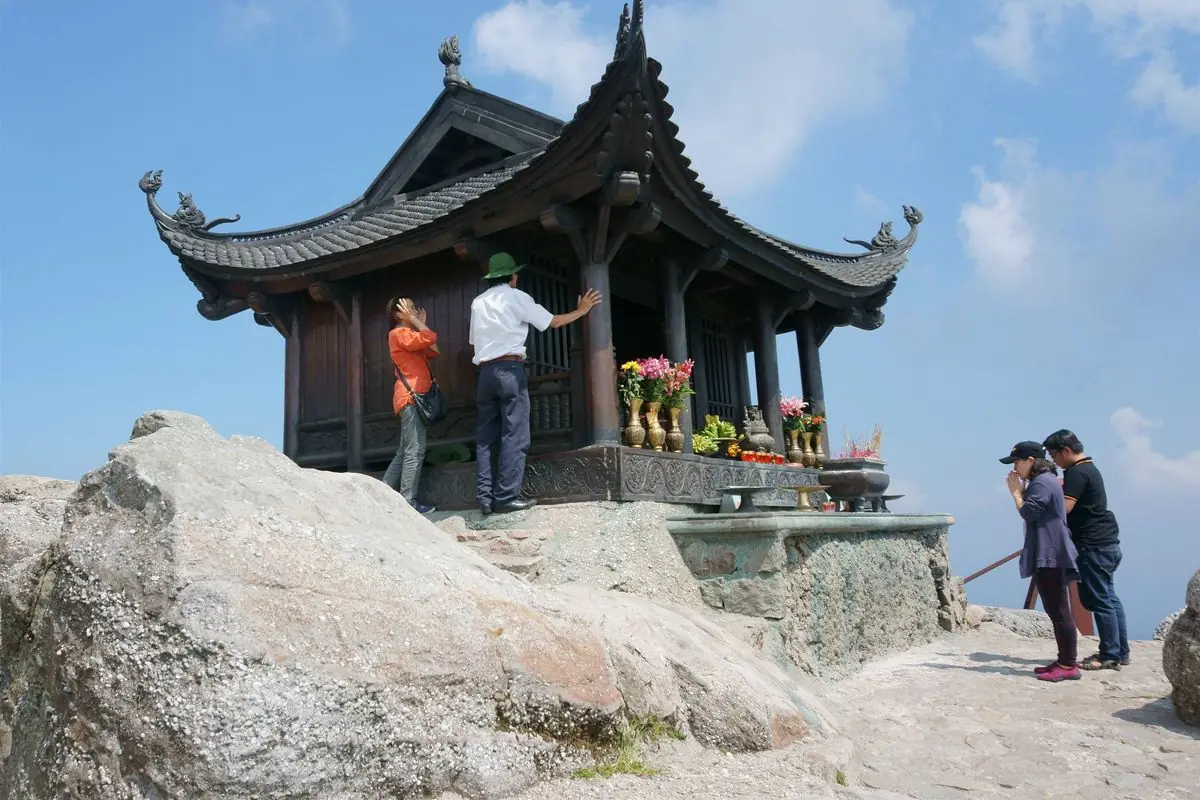
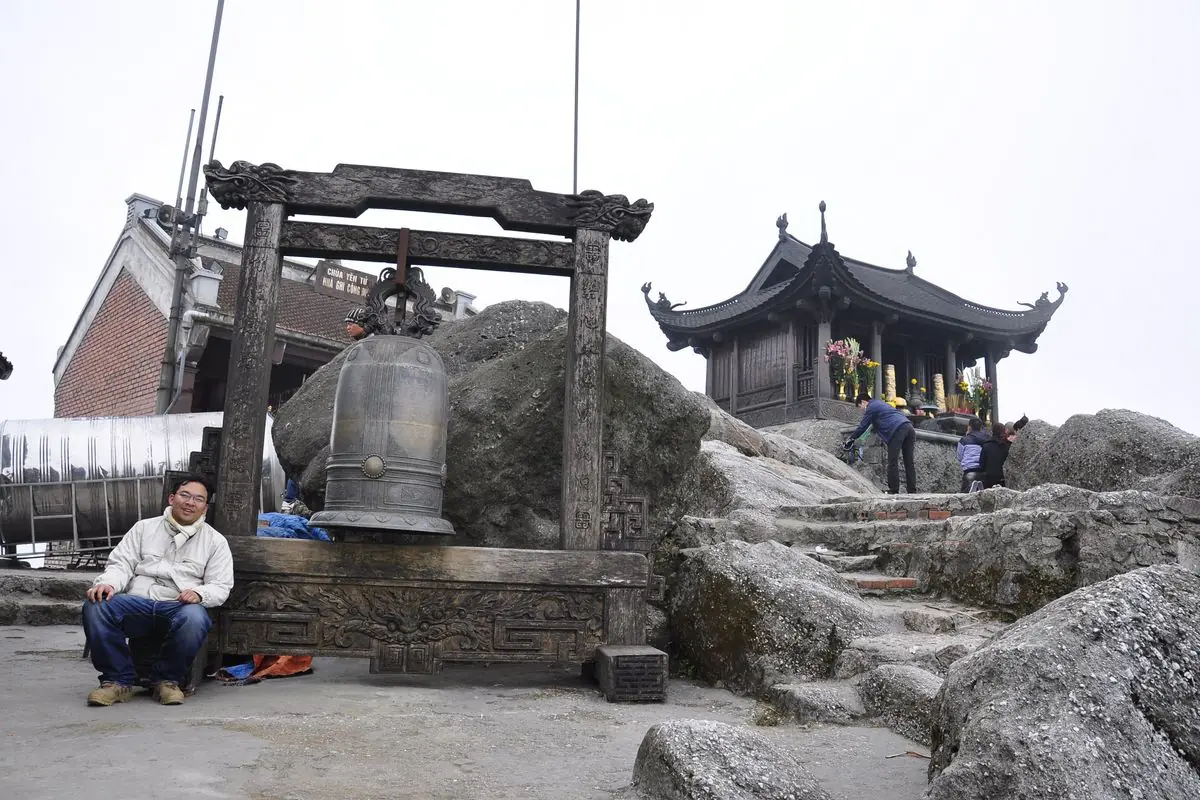
Dong Pagoda sits on a rock ledge at the summit, its cast bronze roof sharp against a blue sky as a few visitors pray at the altar.
Buy a ticket for only the first cable car line and you’ll be dropped at the Ancestral Tower, well below Dong Pagoda. Yen Tu has two separate cable car routes, and even after riding both, you’ll still need to climb a final stretch of stone steps to the summit. So choose how you’ll travel up the mountain before deciding when to leave, which ticket to buy, and where to stop along the way.
Is Yen Tu worth visiting even if you’re not on a religious pilgrimage?
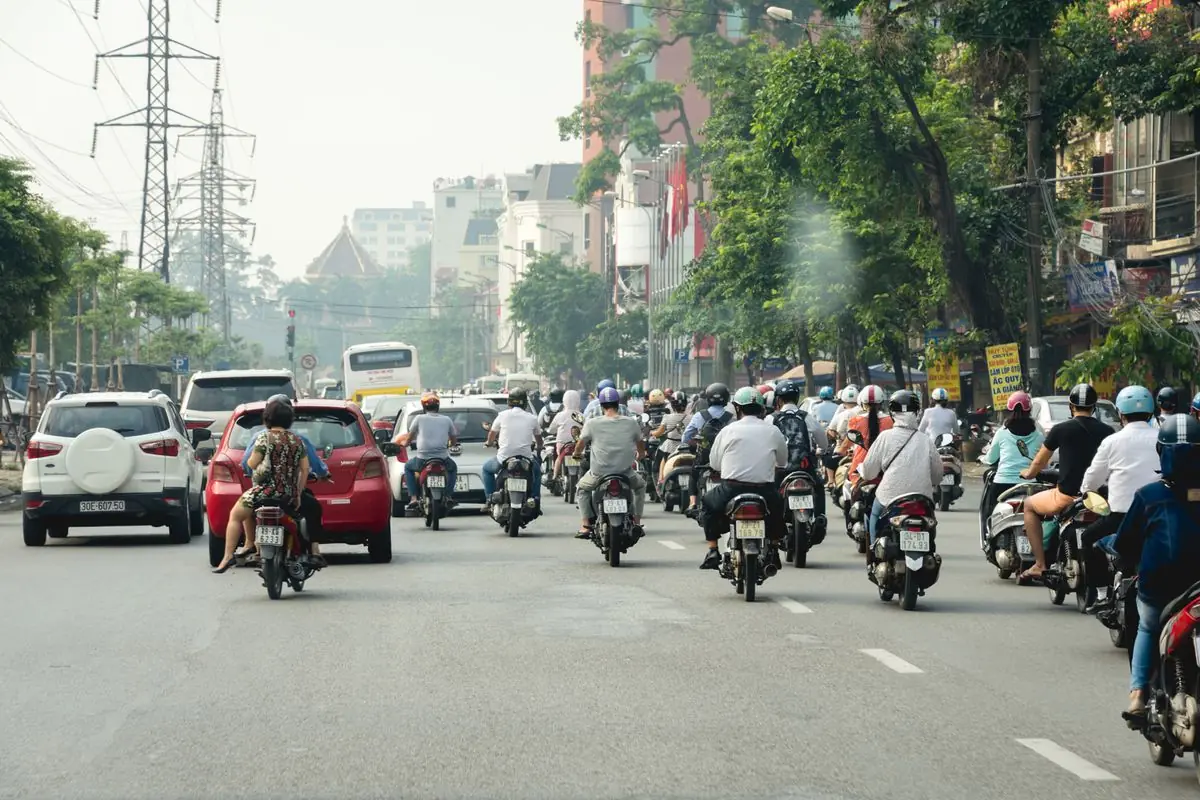
Yen Tu Mountain lies in the Dong Trieu mountain range in Quang Ninh Province, northern Vietnam, with a summit rising 1,068 meters above sea level. It’s approximately 140 kilometers from Hanoi and relatively close to Hai Phong, making it suitable for a day trip or a longer journey combined with Ha Long Bay.
Beyond the mountain scenery and the bronze pagoda high above the valleys, Yen Tu is tied to one king’s story.
In the 13th century, King Tran Nhan Tong led Dai Viet, the historical name of Vietnam, through two successful campaigns against the Mongol-led Yuan forces. After handing the throne to his successor, he embraced Buddhist practice and settled on Yen Tu Mountain in 1299.
Here, he established the Truc Lam Zen Buddhist tradition, a distinctly Vietnamese school of Buddhism emphasizing spiritual practice within everyday life.
He later became revered as the Buddha Emperor, or Phat Hoang Tran Nhan Tong. His successors, Phap Loa and Huyen Quang, became the second and third patriarchs of the Truc Lam tradition.
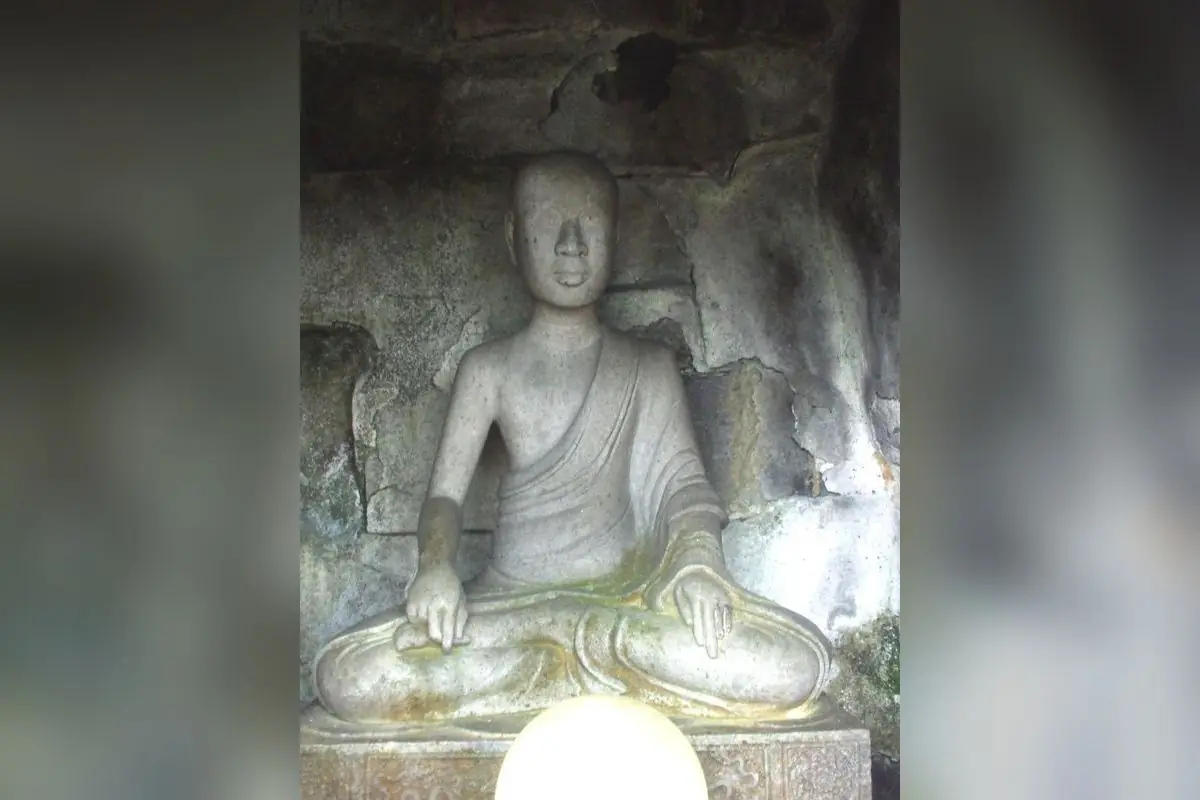
On July 12, 2025, the Yen Tu - Vinh Nghiem - Con Son, Kiep Bac Complex of Monuments and Landscapes was inscribed on the UNESCO World Heritage List. Yen Tu is an important part of this multi-province cultural heritage complex rather than a separate World Heritage Site consisting only of the mountain.
For international visitors, especially those interested in Vietnamese history beyond museums and major cities, Yen Tu offers something quite different. You can walk between centuries-old pagodas, pass ancient pine trees, and discover why a king who once commanded armies chose to spend his later years practicing Buddhism in the mountains.
For Vietnamese visitors, the journey carries an additional meaning: a pilgrimage to honor the Buddha Emperor and pray for peace, good health, and happiness in the year ahead.
Should you take the Yen Tu cable car or hike to Dong Pagoda?
Settle this before anything else. Both options lead toward Dong Pagoda, but the experience, travel time, and physical effort are very different.
| Comparison | Cable car | Hiking |
|---|---|---|
| Time to the summit | Around 2 hours, including walking and sightseeing | Around 4-5 hours |
| Physical effort | Moderate, with some steep stone steps | Challenging, with over 6,000 steps |
| Best for | Families, casual visitors, day-trippers | Fit travelers and hiking enthusiasts |
| Cable car cost | Depends on the ticket selected | No cable car ticket needed |
| Experience | Forest views from above and less strenuous climbing | Ancient paths, temples, and a closer connection with nature |
These are approximate ascent times under reasonably favorable conditions. During the spring festival, queues and heavy foot traffic can make the journey considerably longer.
Taking the Yen Tu cable car: two lines, neither goes directly to Dong Pagoda
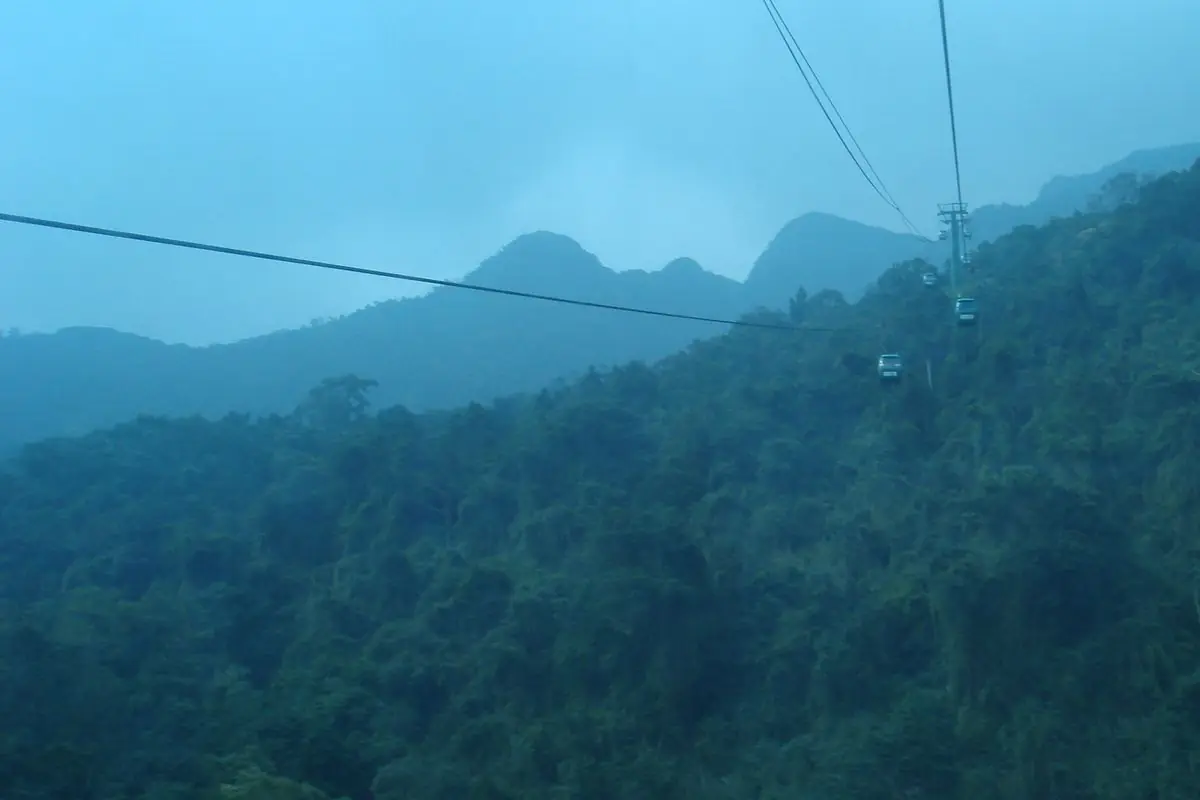
The Yen Tu cable car system stretches approximately 2,079 meters in total, divided into two separate routes connecting different sections of the mountain.
Line 1 - Hoang Long
About 1,200 m, up to the Ancestral Tower
The first line is approximately 1,200 meters long. It begins near Giai Oan Pagoda at the foot of the mountain and takes visitors up to the area near the Ancestral Tower, known as Hue Quang Kim Thap.
From here, you can walk to Hoa Yen Pagoda, one of the most important religious sites on Yen Tu, before continuing toward Mot Mai Pagoda and the second cable car station.
On this stretch the cabins pass right over the forest canopy. On misty days, temple roofs appear and disappear among the trees, creating an atmosphere quite unlike the busy tourist attractions in the lowlands.
Line 2 - Bach Long
About 879 m, up near An Ky Sinh
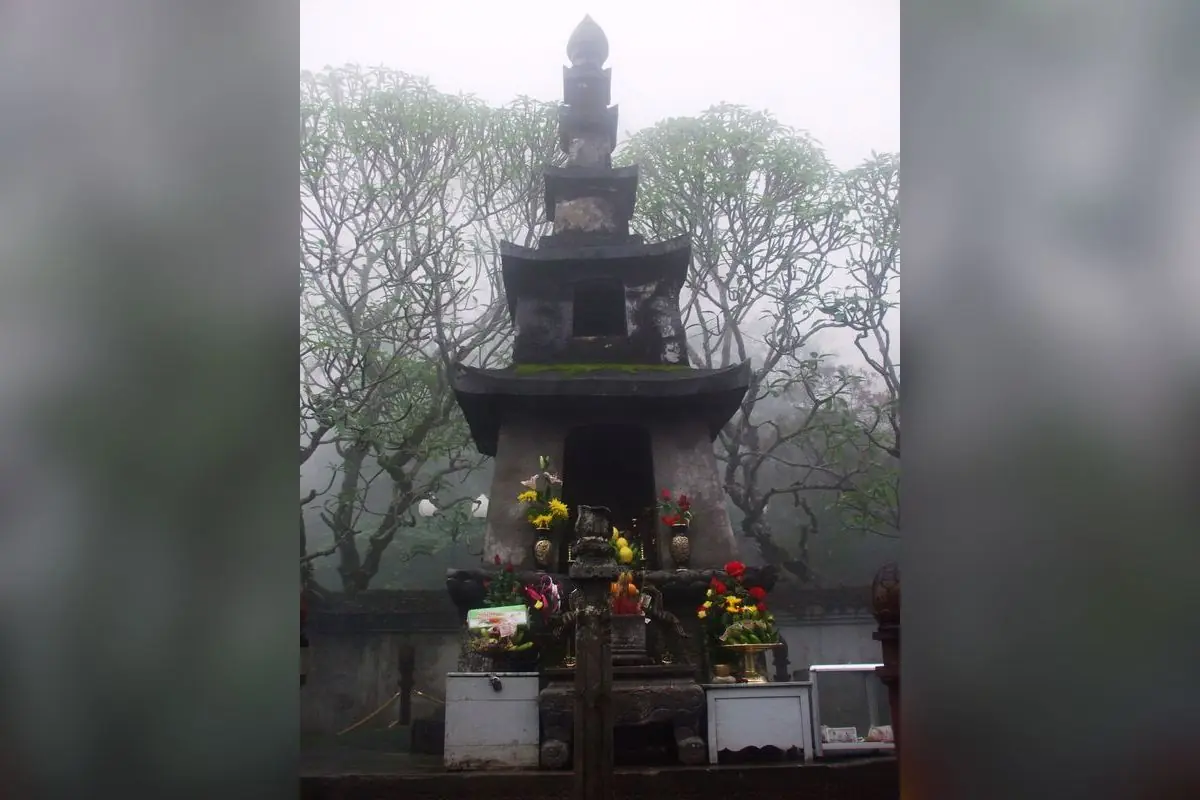
The second line is approximately 879 meters long, running from the eastern side of Mot Mai Pagoda toward the area near the An Ky Sinh statue.
After leaving the upper station, you’ll walk approximately 200 meters toward the An Ky Sinh statue and the Buddha Emperor monument square, at an elevation of around 912 meters.
From there, another stretch of roughly 300 meters of stone steps leads to Dong Pagoda.
The final ascent often takes more than 30 minutes, depending on your fitness and the number of people on the path. Some sections are steep, with uneven stone steps, so cable car riders still have a climb ahead.
How long does it take to hike Yen Tu Mountain?
Hiking from the foot of the mountain to Dong Pagoda usually takes around 4-5 hours for someone with good fitness and a steady walking pace. The full ascent involves more than 6,000 stone steps, including several demanding sections.
Along the way, you’ll pass Giai Oan Stream, Giai Oan Pagoda, the ancient pine tree path, the Ancestral Tower, and Hoa Yen Pagoda before climbing toward An Ky Sinh, the Buddha Emperor monument, and finally Dong Pagoda.
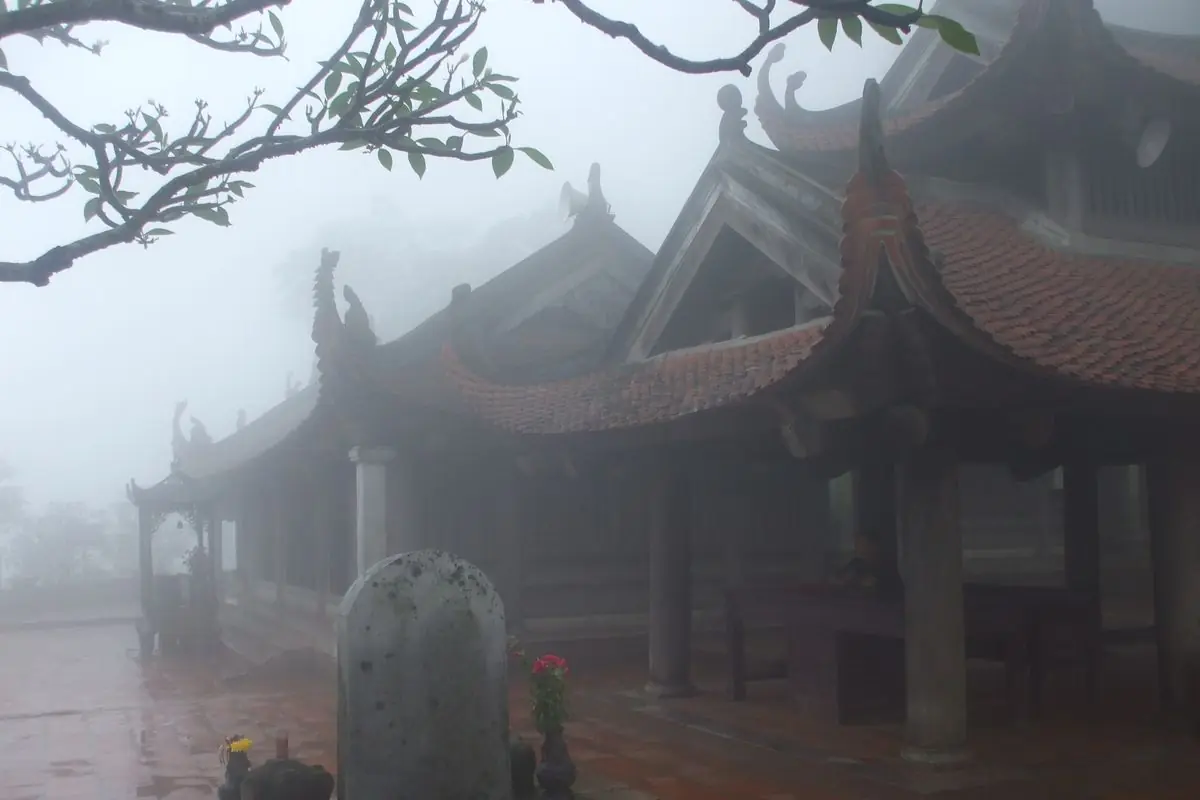
On foot, every stretch has somewhere to pause: it might be an enormous old pine tree, a moss-covered pagoda courtyard, or a sudden view of the valley through a gap in the forest.
However, descending can be just as challenging as climbing. Repeatedly stepping down steep or slippery stones can put considerable pressure on your knees.
How much are Yen Tu cable car tickets?
The latest official fare schedule available from the Yen Tu cable car operator covers August 15 through December 31, 2026.
| Ticket type | Adult price and children 1.2 m or taller |
|---|---|
| Round-trip ticket for both cable car lines | 390,000 VND |
| Round-trip ticket for Line 1 only | 320,000 VND |
| Two-line round-trip ticket with set meal | 520,000 VND |
| Yen Tu scenic area admission | Free |
The round-trip tickets for both lines and for Line 1 include the electric shuttle service specified by the operator.
For travelers who want to reach Dong Pagoda and return by cable car, the two-line round-trip ticket is generally the most convenient option.
A Line 1 ticket makes more sense if you’re planning to explore the Ancestral Tower, Hoa Yen Pagoda, and Mot Mai Pagoda, or if you’ve already decided to continue hiking from that area.
The published policy doesn’t clearly specify how children measuring exactly 80 cm are treated, so parents should confirm directly with the ticket office.
The senior discount also has a nationality requirement and shouldn’t be assumed to apply automatically to international visitors.
The 520,000 VND meal package was advertised for 2026, with certain periods excluded during the festival season. It should not be treated as a guaranteed price for Tet 2027.
Is there an entrance fee for Yen Tu?
From February 5, 2026, through December 31, 2028, admission to the Yen Tu scenic and historical site is set at 0 VND per person per visit.
Previously, entrance tickets cost 40,000 VND for adults and 20,000 VND for children.
Free admission covers the heritage area only, not paid visitor services. Cable cars, meals, accommodation, and other optional services may still have separate charges.
Parking for cars and motorbikes at the Ha Kieu parking area is also free through the end of 2026 under the announced policy. The rules for 2027 should be checked before traveling.
You can review ticket information and book cable car services through the official Yen Tu Tung Lam website.
The fares above run until December 31, 2026, so for the 2027 festival, check the website for current prices before you go.
When is the Yen Tu festival in 2027, and which days are the busiest?
The Yen Tu Spring Festival traditionally begins on the 10th day of the first lunar month and continues through the end of the third lunar month.
In 2027, Lunar New Year’s Day falls on Saturday, February 6. Therefore, the 10th day of the first lunar month falls on Monday, February 15, 2027, the expected opening date according to the annual tradition.
Plan around February 15 for now; the opening ceremony time and event schedule will come in announcements from Quang Ninh authorities and the festival organizers.
The opening ceremony traditionally takes place at the Truc Lam Yen Tu Cultural Center, also known as Truc Lam Palace.
Activities may include prayers for national peace and prosperity, ceremonial bell ringing, traditional drum performances, and cultural celebrations.
After the opening ceremonies, pilgrims make their way up the mountain, with Dong Pagoda remaining one of the most significant destinations.
Which days should you avoid if you dislike crowds?
Although the official festival traditionally begins on the 10th day of the lunar month, Yen Tu attracts large numbers of visitors from the earliest days of Tet.
On the third day of the 2026 Lunar New Year, the site reportedly welcomed around 20,000 visitors. The crowd gathering around Dong Pagoda made walking and worship considerably more difficult.
The likely busiest days in 2027:
- February 6-10, 2027 (Tet Days 1-5): The Lunar New Year holiday usually brings heavy pilgrimage traffic.
- February 15, 2027: The expected traditional festival opening date.
- Weekends during the first and second lunar months: Popular periods for organized pilgrimage groups and families.
- Major Buddhist holidays: Visitor numbers may be higher than on ordinary weekdays.
These are periods likely to be busy based on previous years and local festival traditions, not precise visitor forecasts for 2027.
If you’re excited to experience the atmosphere of a Vietnamese spring pilgrimage, the festival is a memorable time to visit.
On the other hand, if you’d rather hear the temple bells, take photographs, and walk through the forest without rushing, a weekday outside the busiest festival period is far calmer.
When is the best time to visit Yen Tu? Is it cold at the summit?
There isn’t one perfect season for Yen Tu. Your ideal time depends on whether you prefer the spring pilgrimage atmosphere, lush green forests, or relatively dry weather for hiking.
From the first through the third lunar month, the mountain is filled with spring festival activity. The weather is generally cool, vegetation is green, and traditional celebrations take place around the heritage complex.
The trade-off is that paths and cable cars can be crowded, especially on weekends.
April through October is generally quieter, making it appealing to travelers who prefer to explore without large pilgrimage crowds.
The forests are particularly green, although rainfall increases significantly between May and September. August is typically among the wettest months, making the stone stairways more challenging and potentially slippery.
November and December generally have fewer rainy days. They’re good months to consider for hiking, provided you bring warm clothes and check the weather forecast beforehand.
How much colder is the summit than the base of Yen Tu?
The summit stands 1,068 meters above sea level, so temperatures can be approximately 5-6°C lower than around the mountain’s base.
Estimated climate data derived from ERA5 historical records for 2016-2025, adjusted for elevation, suggest the following monthly averages:
| Month | Average summit temperature | Average temperature near the base |
|---|---|---|
| January | 10.2°C | 16.0°C |
| February | 11.1°C | 16.8°C |
| March | 14.6°C | 20.1°C |
| April | 17.7°C | 23.2°C |
| June-July | Around 22°C | Around 27-28°C |
| December | 10.9°C | 16.7°C |
These figures are estimated long-term averages rather than actual forecasts for specific travel dates.
Wind and mist can also make the summit feel colder than the thermometer suggests.
What should you wear and bring to Yen Tu?
A reliable pair of shoes is more important than a stylish outfit.
Yen Tu’s trails include numerous stone steps, some uneven, damp, or covered with moss. Comfortable sneakers with good grip or proper hiking shoes are much better choices than flip-flops or high heels.
Since you’ll be visiting Buddhist temples, choose modest clothing that’s comfortable enough for climbing. Very short skirts, revealing outfits, or excessively tight clothing aren’t practical for either temple visits or mountain walking.
A small daypack should ideally contain a warm jacket during the cooler months, a lightweight raincoat, drinking water, snacks, personal medication, and perhaps a walking stick if you’re planning a longer hike.
When the mountain is wet or covered in mist, slow down on steep sections rather than trying to maintain your usual pace.
Look up a forecast for the mountain itself; one for central Quang Ninh or Hai Phong won’t tell you about summit cold and mist.
How to get to Yen Tu from Hanoi or Hai Phong
Yen Tu is located in Yen Tu Ward, Quang Ninh Province.
Following Vietnam’s administrative changes on July 1, 2025, the official address was updated. However, many maps and booking platforms still use the former place names Thuong Yen Cong and Uong Bi.
These refer to the same general area, not a different Yen Tu destination.
Searching for Yen Tu Historical Site or Legacy Yen Tu should help you identify the visitor complex at the foot of the mountain.
Traveling from Hanoi to Yen Tu
The distance from Hanoi to Yen Tu is approximately 140 kilometers, with a typical driving time of 3-3.5 hours.
A common route follows the Hanoi-Hai Phong Expressway (QL5B), then connects with National Highways 10 and 18 before taking the final road into Yen Tu.
Another option is to follow National Highway 18 through Bac Ninh and Dong Trieu toward Chua Trinh, then turn onto the access road leading to the mountain.
For travelers without a private vehicle, intercity buses and limousine vans toward Uong Bi or Ha Long are possible options.
Some limousine services stop directly at Legacy Yen Tu, which can be particularly convenient for international travelers carrying luggage.
On the Hanoi-Yen Tu route, certain services take approximately three hours, with reference fares starting around 310,000 VND per journey.
Ticket prices and schedules may change depending on the travel date.
Traveling from Hai Phong to Yen Tu
From central Hai Phong, Yen Tu is approximately 40-50 kilometers away, depending on your starting location. The journey typically takes around 1-1.5 hours by car when traffic is smooth.
Follow National Highway 10 toward the Da Bac Bridge area, then connect with National Highway 18 near Uong Bi and follow signs toward Chua Trinh and the Yen Tu heritage area.
The final approach includes several curves and uphill sections. During the spring festival, leaving early helps reduce the risk of getting caught in heavy traffic.
From Hai Phong, traveling by private car, rental car, or taxi is usually the most straightforward option.
On some days, buses to Uong Bi have no onward connection to Yen Tu, so check the timetable for your exact travel date.
Can you visit Yen Tu on the way to Ha Long Bay?
Yen Tu lies along the broader travel corridor connecting Hanoi, Hai Phong, and Ha Long, making it possible to combine the mountain with a longer northeastern Vietnam itinerary.
However, it’s not the kind of roadside attraction where you can stop for 30-60 minutes and see everything.
Taking both cable cars, visiting the temples, and walking to Dong Pagoda requires several hours even on a relatively quiet day.
For a Hanoi - Yen Tu - Ha Long journey, a more comfortable plan is to devote most of the day to Yen Tu and continue to Ha Long in the late afternoon or evening.
This works especially well when you have a private vehicle and don’t need to return to Hanoi on the same day.
A one-day Yen Tu itinerary from Hanoi or Hai Phong
With the cable cars and short stops, one day is enough. This plan is for visitors leaving Hanoi by private car.
- 5:00 AM
Depart from Hanoi
- 8:00-8:30 AM
Arrive at Yen Tu, park, and buy tickets
- 8:30-9:00 AM
Visit Giai Oan Pagoda
- 9:00-10:00 AM
Ride cable car Line 1 and explore the Ancestral Tower and Hoa Yen Pagoda
- 10:00-11:30 AM
Continue on Line 2, pass An Ky Sinh, and climb to Dong Pagoda
- 11:30 AM-1:00 PM
Descend by cable car
- 1:00-2:00 PM
Have lunch near the mountain base
- 2:00-4:00 PM
Relax, explore the pilgrimage village, or visit another nearby attraction
- After 4:00 PM
Begin the return journey to Hanoi
This itinerary assumes relatively light crowds and smooth cable car operations. It isn’t a guaranteed timetable.
During the spring festival, leave extra time for queues and be prepared to skip less important stops if the mountain gets crowded.
For lunch, you might try local specialties such as free-range chicken, bamboo shoots, and mountain vegetables.
Restaurants around the mountain base are generally more suitable for a full meal, while snacks are useful during short breaks along the trail.
Visitors departing from Hai Phong have the advantage of a shorter journey and can start a little later, though arriving at the mountain in the morning still pays off, particularly on weekends.
If you’re hiking all the way to the summit, start early, bring enough water, and dedicate most of your day to the ascent and descent.
Leave other attractions for another day.
Should you stay overnight at Legacy Yen Tu?
A day trip keeps costs lower and works well if reaching Dong Pagoda is your main goal.
An overnight stay becomes more appealing when you’re traveling with family, looking for a relaxing mountain retreat, or hoping to enjoy the atmosphere around Yen Tu early in the morning.
Legacy Yen Tu - MGallery
Legacy Yen Tu sits within the heritage area at the foot of the mountain. Its architecture draws inspiration from Vietnam’s 13th-century Tran Dynasty.
The resort focuses on wellness, culture, and relaxation rather than lively entertainment.
In 2026, Legacy Yen Tu received One MICHELIN Key, recognizing its distinctive hospitality experience.
Staying here gives you the evening and early morning at the foot of the mountain, instead of climbing and heading straight back to the car.
Tho Quang Restaurant serves Vietnamese and Western cuisine, including refined vegetarian options.
The Am Tue Tinh Wellness Center offers relaxing experiences such as meditation, yoga, and wellness treatments.
Accommodation categories include Superior, Deluxe, Junior Suite, and Presidential Suite.
Room rates start from approximately 3 million VND per night, but prices vary by date and room category. Check the actual rate for your travel dates rather than relying on this as a fixed price.
Legacy Yen Tu - MGallery Collection
Address: Yen Tu Historical Site, Yen Tu Ward, Quang Ninh Province, Vietnam.
Telephone: +84 203 6259 888.
More affordable accommodation around Yen Tu
Lang Nuong Yen Tu, or Yen Tu Pilgrimage Village, offers a different experience with traditional-style accommodation near Giai Oan Stream.
It’s a good option for visitors who want to stay close to the attractions while enjoying the atmosphere of a traditional Vietnamese pilgrimage village.
Rooms here go from around 1.2 million VND per night, depending on the room type and season.
There are also simpler guesthouses, dormitory-style rooms, and basic accommodation options around the mountain base.
A few dormitory beds go for under 200,000 VND per person per night, although availability, facilities, and current operating conditions should be confirmed before booking.
During the spring festival, especially around Tet and the first busy weekends of the season, booking accommodation two to three months in advance gives you a better choice of rooms.
Temple etiquette: how to visit Yen Tu respectfully
International travelers, non-Buddhists, and people interested mainly in history are welcome to explore the temples, provided they respect the religious setting.
Inside worship halls, speak quietly, avoid pushing through crowds, and follow any photography restrictions.
It’s also considerate not to stand directly in front of people praying simply to take photographs.
For those participating in religious offerings, vegetarian items such as fresh flowers, fruit, incense, and traditional sticky rice offerings are appropriate.
Meat offerings should not be brought to Buddhist altars. Avoid placing cash directly on statues or altar surfaces, and don’t burn paper offerings where it’s prohibited.
Around Dong Pagoda, some visitors have been observed rubbing banknotes against bronze surfaces in the belief that it brings good luck.
This isn’t a custom you need to follow. Repeated rubbing, touching, or placing money on religious objects can damage heritage features and undermine the peaceful atmosphere of the site.
On the way up, take breaks whenever you need them, make space for elderly pilgrims, and turn back if the weather becomes unsafe.
Open your calendar, choose a day that suits your fitness and the mountain weather, then check the latest cable car prices and operating hours before confirming your Yen Tu trip.
Frequently asked questions
How much is the Yen Tu cable car, and is there an entrance fee?
Under the fare schedule valid from August 15 to December 31, 2026, a round-trip ticket covering both cable car lines costs 390,000 VND per adult, while a round-trip ticket for Line 1 only costs 320,000 VND. Admission to the Yen Tu scenic and heritage area is free through the end of 2028. For a 2027 trip, check current cable car fares before you go.
How long does it take to get to Yen Tu from Hanoi or Hai Phong?
Yen Tu is approximately 140 kilometers from Hanoi, with a typical driving time of 3-3.5 hours. From central Hai Phong, the distance is around 40-50 kilometers, usually taking 1-1.5 hours by car. Both journeys may take longer during Tet and the spring festival.
How long does it take to hike to Dong Pagoda? Do you still need to walk after the cable car?
Hiking from the mountain base to Dong Pagoda generally takes 4-5 hours and involves more than 6,000 stone steps. Taking both cable car lines saves considerable time, but you'll still need to walk approximately 500 meters from the upper station through the An Ky Sinh and Buddha Emperor monument areas, including a steep final section of stone steps leading to Dong Pagoda.
When does the Yen Tu festival start in 2027?
The festival traditionally opens on the 10th day of the first lunar month, corresponding to Monday, February 15, 2027. The ceremony time and full schedule come in the organizers' announcements. Tet, the opening day, and weekends early in the festival season are generally the busiest periods.
Is it cold at the summit of Yen Tu, and what should I wear?
The summit is typically around 5-6°C cooler than the mountain base. In January and February, estimated average summit temperatures are approximately 10-11°C, with colder conditions possible, particularly in the early morning. Wear modest, comfortable clothing, bring a warm jacket, choose shoes with good grip, and carry a lightweight raincoat in case the weather changes.