Why does Hoi An come alive after dark?
Arrive in Hoi An around midday, wander a few streets, and head back to Da Nang before the lanterns light up, and you leave just as the Old Town gets busy. Stay overnight, buy the right sightseeing ticket, and start walking in the late afternoon to fit in both the heritage sites and the river at dusk.
 18 min read
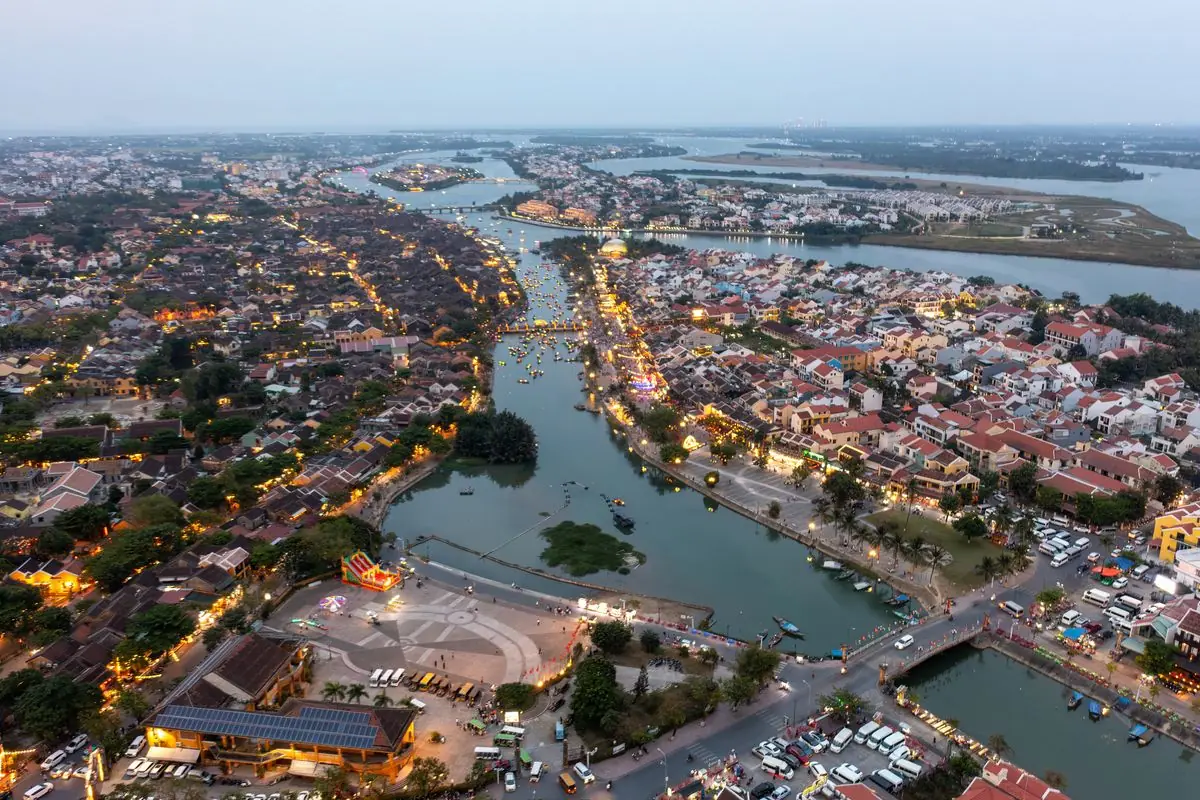
At dusk the old town starts to light up and boats gather along both riverbanks.
Hoi An is small enough that you might find yourself back on a familiar street after just a short walk, yet a full day here still isn’t enough, because the town changes with the hours: mornings belong to green vegetable gardens, afternoons bring a golden glow to old buildings, and evenings turn the Hoai River into a reflection of hundreds of lanterns. Stay one or two nights and you catch all three.
1. Where is Hoi An, and how far is it from Da Nang?
Hoi An Ancient Town lies approximately 28-30 km south of central Da Nang. Once a busy international trading port, it still preserves centuries-old merchant houses, Chinese assembly halls, tiled roofs, and the famous Japanese Covered Bridge. UNESCO recognized Hoi An as a World Heritage Site in 1999.

On July 1, 2025, the former Quang Nam Province was merged into Da Nang City, and the former city of Hoi An ceased to exist as a separate administrative unit.
The Hoi An area is now divided into:
- Hoi An Ward: home to the Ancient Town, Japanese Covered Bridge, Hoi An Market, and the streets along the Hoai River.
- Hoi An Dong Ward: includes the former Cam Thanh area, Bay Mau Coconut Forest, and Cua Dai Beach.
- Hoi An Tay Ward: covers Tra Que Vegetable Village, An Bang Beach, and Thanh Ha Pottery Village.
- Tan Hiep Commune: covers the Cham Islands, also known as Cu Lao Cham.
You may still see "Hoi An, Quang Nam" on hotel websites and booking platforms. It’s an old address rather than a different destination. Searching for the familiar place name is fine, but check the hotel’s exact map location: some properties advertised as Hoi An are quite far from the Ancient Town.
2. How to get from Da Nang Airport to Hoi An
Da Nang International Airport (DAD) is the most convenient gateway to Hoi An, with domestic flights from cities such as Hai Phong, Hanoi, and Ho Chi Minh City, as well as international connections. The drive from the airport to Hoi An takes around 45-60 minutes in normal traffic.
Hai Van airport bus: VND 120,000 per person
The Hai Van airport bus is the cheapest way in, good for solo travelers and couples with light luggage.
Allow approximately 60-90 minutes for the bus journey, depending on traffic and stops. The final stop is not directly in the middle of the Ancient Town, so check which drop-off point is closest to your accommodation.
Tickets can be booked through the official HAIVAN app, website, or hotline at 1900 6763. The company has warned travelers about websites impersonating its Hai Van Limousine service, so avoid sending payments through unfamiliar links.
Taxi and ride-hailing services: best for luggage and groups
Taxis are available outside the arrivals halls at both Da Nang Airport terminals, 24 hours a day. A one-way journey to Hoi An costs around VND 300,000-500,000 per vehicle, depending on the company, vehicle type, pickup time, and destination.
Some taxi companies add an airport entry fee of approximately VND 10,000-30,000, while others include it in their fares. Reference taxi prices are displayed near Pillar 02 in the public arrivals area.
Grab, Xanh SM, and pre-booked private transfers show the estimated fare before you confirm the ride.
Carry Vietnamese dong for conventional taxis: only some operators take Visa or Mastercard, among them Tien Sa and VinaSun on some services.
Arriving after 4:00 PM? The scheduled Hai Van airport bus has stopped by then, so take a taxi, ride-hailing car, or pre-arranged transfer.
Use officially marked taxis or make sure the license plate matches your booking app. Avoid unsolicited transport offers from strangers inside the terminal.
Traveling from Da Nang City to Hoi An
From the My Khe Beach area or central Da Nang, taxis and private cars take the coastal route along Vo Nguyen Giap and Truong Sa roads.
Families and groups are easiest in a car. Experienced motorbike riders can ride down on their own and stop at the Marble Mountains on the way, provided they hold the appropriate license and follow Vietnamese traffic regulations.
On a day trip, allow time for the ride back to Da Nang. Stay overnight and you’re still in town when the riverside lanterns begin to glow.
3. Hoi An Ancient Town entrance tickets in 2026
Hoi An entrance tickets are a little confusing because the published sightseeing ticket packages and the updated 2026 fee regulations do not present prices in exactly the same way.
The Hoi An World Cultural Heritage Conservation Center lists two sightseeing ticket packages:
| Ticket | Included attractions |
|---|---|
| VND 80,000 | General Ancient Town sightseeing, either the Japanese Covered Bridge or Quan Cong Temple, plus 2 additional heritage attractions of your choice |
| VND 120,000 | General Ancient Town sightseeing, either the Japanese Covered Bridge or Quan Cong Temple, the museum system, plus 3 additional heritage attractions of your choice |
Depending on the ticket and the sites included, you may visit places such as the Fujian Assembly Hall, Cantonese Assembly Hall, Tan Ky Ancient House, Quan Thang Ancient House, or Tran Family Chapel.
Where to buy tickets and whether they’re mandatory
Official ticket counters are located at several entrances to the Ancient Town.
The heritage conservation authority asks visitors to purchase sightseeing tickets before entering the heritage area, especially when planning to visit historic houses, assembly halls, museums, and other ticketed monuments.
If you only want to walk the streets, see the lanterns, or eat at local restaurants, ask the ticket staff whether you need a ticket and which one. They will tell you what applies to the route you plan to take.
Exemptions under the regulations include children under 16, students, Vietnamese citizens aged 60 and above, eligible Vietnamese people with disabilities, and certain diplomatic or other designated groups.
Sightseeing tickets have previously been valid throughout a visitor’s stay, up to a maximum of three days. Check the validity printed on the ticket you purchase and keep the ticket stub for subsequent entry.
Groups buying eight or more tickets can get a free guide. For ticket assistance, call the Center on 0843 42 8888.
4. What is the best time to explore Hoi An Ancient Town?
Hoi An feels like two different places in the morning and late afternoon.
Between approximately 6:00 AM and 8:00 AM, streets such as Tran Phu, Nguyen Thai Hoc, and Bach Dang are relatively quiet. Shopkeepers begin opening their doors, bicycles pass weathered yellow walls, and residents go about their morning routines. You can photograph the houses before the daytime crowds arrive.
From around 4:00 PM, the sunlight becomes softer and picks out the lanterns, tiled rooftops, shaded courtyards, and bougainvillea-covered walls. At this hour there’s still time to visit an open heritage site before wandering toward the river for sunset.
Hoi An pedestrian street hours
The Ancient Town operates designated pedestrian and non-motorized vehicle zones daily.
| Area | Summer | Winter |
|---|---|---|
| Main Ancient Town pedestrian zone | 9:00 AM-9:30 PM | 9:00 AM-9:00 PM |
| Phan Chau Trinh pedestrian section | 5:30 PM-9:30 PM | 5:30 PM-9:00 PM |
Motorbikes and cars are restricted during these hours. These are traffic restriction periods, not universal opening hours for museums and historic buildings, and individual attractions may close earlier.
If your hotel is tucked inside a pedestrian-only street, the taxi may have to drop you nearby rather than at the door, so ask the hotel before arriving with heavy luggage.
5. What happens on Hoi An lantern night?
Hoi An’s traditional Ancient Town Night takes place on the 14th day of each lunar month, from around 6:00 PM to 9:30 PM.
On these evenings, some electric lighting is reduced to make room for candles and traditional lanterns. The streets host cultural performances and activities, including folk music from Quang Nam, traditional musical instruments, Bai Choi singing, chess, martial arts, and other local performances.
The last two Ancient Town Nights of 2026 fall on:
- Sunday, November 22, 2026: the 14th day of the 10th lunar month.
- Tuesday, December 22, 2026: the 14th day of the 11th lunar month.
On the other nights of the month, lanterns still glow along many streets, and the night market, riverside restaurants, and boats run as usual.
During the day, traditional art performances run at 10:15 AM, 3:15 PM, and 4:15 PM. At the Japanese Culture Exhibition House, 6 Nguyen Thi Minh Khai Street, Japanese tea ceremony sessions run at 9:30 AM and 4:30 PM. Schedules can change, so confirm locally if you are planning around one.
Taking a boat ride on the Hoai River
As darkness falls, the area around An Hoi Bridge and both sides of the Hoai River becomes busy with small wooden rowing boats.

A boat ride lasts around 20 minutes. The fare board dates from 2022, and in 2026 riders still pay around these rates:
- VND 150,000 per boat for 1-3 passengers.
- VND 200,000 per boat for 4-5 passengers.
The fare at the jetty may differ, so before boarding ask about the total cost per boat, maximum number of passengers, ride duration, and whether floating lanterns are included.
Small floating lanterns are often sold separately for approximately VND 10,000-20,000 each. The ride itself doesn’t require one.
Purchase your boat ticket at an official booth near the river rather than following unauthorized touts. Wear the provided life jacket throughout the journey.
6. Best places to visit beyond Hoi An Ancient Town
Two days in Hoi An leaves room for a half day outside the old streets. A few kilometers out, the scenery shifts from tiled roofs and merchant houses to vegetable fields, coconut waterways, and sandy beaches.
Tra Que Vegetable Village
Cycling through herb gardens
Tra Que Vegetable Village is located in Hoi An Tay Ward, approximately 3 km from the Ancient Town. In 2024, UN Tourism recognized Tra Que as one of its Best Tourism Villages.
You can cycle there from the Ancient Town, on a route past quiet residential lanes, gardens, and small agricultural plots.
Once at the village, you can learn how local farmers cultivate herbs and vegetables, prepare soil, and water their crops using traditional shoulder poles and buckets.
Cooking classes also introduce visitors to dishes made with fresh herbs and vegetables grown locally.
The village is known for cultivating more than 40 types of aromatic herbs and vegetables.
The reference entrance fee is approximately VND 35,000 per person, with visitor hours generally listed from 8:00 AM to 6:00 PM. Guided farming experiences and cooking classes normally cost extra.
Allow one to two hours for a relaxed visit. A full cooking class will take longer and is better reserved in advance.

Bay Mau Coconut Forest
A basket boat ride through the palms
Bay Mau Coconut Forest lies in the former Cam Thanh area, now part of Hoi An Dong Ward, roughly 5 km east of the Ancient Town.
Unlike the tall coconut palms growing beside tropical beaches, the water coconut palms here form dense clusters close to the water.
Small round basket boats, known locally as thung chai, travel through narrow waterways beneath the leaves.
During the ride, local boat operators may sing traditional songs, demonstrate crab fishing, or share stories about life in the coconut forest.
Some operators also offer fast-spinning basket boat performances.
They’re entertaining to watch, but the spinning can be uncomfortable for people prone to motion sickness. Families with young children or visitors who prefer a peaceful ride can request a slower experience without the spinning demonstration.
Prices vary considerably between operators and depending on what’s included. In 2026 one seller charges VND 150,000 for Vietnamese visitors and VND 200,000 for international visitors, but not every operator in the area uses that price.
The area has experienced complaints about aggressive touting and improper parking charges. Choose an operator with a clearly displayed ticket price, confirm the complete cost before boarding, and avoid paying unexpected extra fees.

An Bang Beach
A different side of Hoi An
An Bang Beach is in Hoi An Tay Ward, approximately 4-5 km from the Ancient Town.
In light traffic, it takes around 10-15 minutes to reach by motorbike or car.
The atmosphere changes quickly. Instead of narrow yellow streets, you’ll find beach cafés, seafood restaurants, homestays, and resorts along the coastline.
Early mornings are particularly pleasant for a stroll, coffee, or a swim when sea conditions are safe.
However, the Hoi An coastline has experienced serious erosion over many years.
During 2026, local authorities began constructing approximately 1,950 meters of emergency coastal protection works across sections of Hoi An Dong and Hoi An Tay.
Some beachfront sections were still undergoing construction, finishing work, or site restoration toward the end of 2026.
As a result, the beach may look different from older hotel photographs, and some access routes may be affected.
Before booking a beachfront property, check its current surroundings, nearby construction, and beach access. Avoid swimming when the sea is rough or warning flags are displayed.

7. How long does tailoring take in Hoi An?
Visitors come to Hoi An’s tailor shops to have dresses, shirts, trousers, suits, and traditional Vietnamese ao dai made to measure, often in a short time.
The process usually begins with choosing fabric and discussing the design. The tailor takes your measurements, arranges a fitting, and makes any necessary adjustments before collection.
Simple shirts or trousers may be completed within several hours at some shops. Suits, lined dresses, and more elaborate garments generally need around a day or longer.

In one order for two suits, the fitting came after approximately 22 hours, followed by another three hours of adjustments. That is not a guaranteed turnaround: the actual schedule depends on the shop’s workload, fabric, design complexity, and number of fittings required.
Before paying a deposit, clarify the full price, fabric specifications, number of fittings, completion deadline, and what happens if the finished garment needs further alterations.
A complex suit or several fitted outfits is easier with two nights in Hoi An.
8. What to eat in Hoi An
You can find much of the local food around Hoi An Market and the surrounding streets.
Cao lau
Make time for Cao Lau, even on a short visit.
It features thick, slightly chewy yellow noodles topped with slices of pork, fresh herbs, bean sprouts, and crispy pork cracklings.
Traditionally, water from the ancient Ba Le Well was associated with making the distinctive noodles.
Unlike a typical noodle soup, Cao Lau is served with only a small amount of flavorful sauce or broth.

Mi Quang
Mi Quang is another Central Vietnamese noodle specialty, with a shallow amount of rich broth rather than a full bowl of soup.
Common toppings include pork, shrimp, quail eggs, fresh herbs, roasted peanuts, and crispy rice crackers.
The noodles are often broad and soft, making the dish quite different from Cao Lau.
Hoi An chicken rice
Known locally as com ga Hoi An, this dish features rice cooked in chicken broth, giving it a fragrant flavor and pale golden color.
It’s usually served with shredded chicken, fresh herbs, onions, pickled vegetables, and a savory dipping sauce.
Banh mi
Hoi An’s banh mi is an easy choice for breakfast or a quick meal between sightseeing stops.
Fillings vary from shop to shop, with combinations of meat, pate, cold cuts, herbs, pickled vegetables, and house-made sauces.
Banh dap with stir-fried baby clams
Look for this one around the Cam Nam area.
Banh dap combines a crisp grilled rice cracker with a softer rice sheet, usually eaten alongside stir-fried baby clams, herbs, and a flavorful dipping sauce.
Banh beo
These small steamed rice cakes are served in individual dishes or bowls.
They’re often topped with savory ingredients and crispy pork cracklings, making them a good afternoon snack.
For a casual food walk, start around Hoi An Market, continue through Tran Phu and Nguyen Thai Hoc streets, and cross toward Cam Nam when you have more time. Many good places are tiny family-run spots with a handful of low tables and a short menu.
9. Where to stay: Hoi An Ancient Town or An Bang Beach?
With only one night, where you sleep sets the pace of the trip, and the Ancient Town and An Bang Beach are two quite different bases.
Staying near the Ancient Town
Easy evenings on foot
The areas around the former Cam Pho and Minh An neighborhoods, now part of Hoi An Ward, are convenient for first-time visitors.
From many hotels and guesthouses, you can walk to the Japanese Covered Bridge, Tran Phu Street, Hoi An Market, and the Hoai River.
After dinner, the lantern market, or a boat ride, you walk back to your room.
Streets close to the night market can be noisy, and rooms inside historic houses may be compact, with narrow staircases and limited parking.
For a one-night trip focused on sightseeing, stay near the Ancient Town. It saves the taxi rides and leaves the evening free.
Staying at An Bang Beach
Quieter mornings by the sea
An Bang is better suited to travelers who want a quieter atmosphere, mornings by the sea, and time to enjoy cafés or beachfront restaurants.
You’ll need transport to reach the Ancient Town, usually by taxi, bicycle, or motorbike. That extra distance matters more at night, after dinner or the lantern market.
With two nights in Hoi An, a base at An Bang lets you spend one day on heritage sights and one on the beach.
During the rainy season, prioritize accommodation with easy road access and flexible cancellation or rescheduling conditions.
10. Does Hoi An flood in October and November?
October and November are among the months with the highest risk of heavy rain and flooding in Hoi An.
Central Vietnam experiences its rainy season during this period, while water levels along the Thu Bon River system can rise rapidly after prolonged rainfall.
Not every day is flooded, and some weeks are fine for sightseeing, but a severe flood can overturn travel plans within a day.
The Ancient Town is located on low-lying land beside the Hoai River. During smaller floods, water often first reaches riverside streets such as Bach Dang before spreading into neighboring areas.
Severe floods can inundate entire streets, force businesses to close, and interrupt transport.
What happened during the October 2025 floods?
The flooding in late October 2025 was particularly serious.
Water began entering the Ancient Town on the morning of October 27 and remained for around a week.
On the morning of October 30, the Japanese Covered Bridge area was under approximately half a meter of water.
By November 3, parts of Bach Dang Street were still flooded to depths of around two meters.
Boats were used to evacuate residents and visitors, while access to dangerous streets was restricted.
Is Hoi An worth visiting in October or November?
Yes, there can still be enjoyable days during these months, particularly when rainfall is light and local services are operating normally.
However, a trip that coincides with severe rain or a flood warning may require major changes.
Before traveling, check the latest weather forecast, official flood warnings, and road conditions.
Contact your accommodation to ask whether access roads are flooded, whether vehicles can reach the property, and what cancellation or date-change options are available.
On ordinary rainy days, indoor experiences such as local food, craft workshops, and tailoring may replace beach visits or basket boat rides.
During a serious flood threat, postponing the trip or changing destinations is the safer choice.
11. Hoi An 2-day, 1-night itinerary from Da Nang
This itinerary works well for travelers arriving in Hoi An during the morning or around lunchtime, staying one night, and leaving the following afternoon. Shift the times to fit your flight, accommodation, and weather.
- Day 1
Da Nang - Bay Mau Coconut Forest - Ancient Town - Hoai River
9:00-11:00 AM: Travel from Da Nang Airport or your Da Nang hotel to Hoi An. Leave your luggage at the hotel if your room isn’t ready yet.
Visit a tailor shop early to choose fabrics, have measurements taken, and schedule a fitting for the next day.
11:30 AM-12:30 PM: Enjoy Cao Lau or Hoi An chicken rice for lunch, then take a short break.
1:30-3:00 PM: Head to Bay Mau Coconut Forest for a basket boat ride through the water coconut palms.
3:30-5:30 PM: Return to the Ancient Town. Purchase the appropriate sightseeing ticket at an official counter, visit the Japanese Covered Bridge and a historic house or assembly hall covered by your ticket.
Walk along Tran Phu and Nguyen Thai Hoc streets as the afternoon light softens.
5:30-7:00 PM: Head toward the Hoai River to watch the lanterns illuminate the old streets. Take a rowing boat ride or enjoy the view from An Hoi Bridge.
7:00-9:00 PM: Have dinner, explore Nguyen Hoang Night Market, and watch a Bai Choi performance or other local cultural activities if available.
Stay overnight near the Ancient Town.
- Day 2
Tra Que Vegetable Village - An Bang Beach - return to Da Nang
7:00-8:00 AM: Start with a local breakfast, perhaps banh mi and Vietnamese coffee.
8:00-9:30 AM: Cycle or take a taxi to Tra Que Vegetable Village.
Walk through the gardens, learn about local farming, and join a pre-booked agricultural experience if you have arranged one.
10:00 AM-12:00 PM: Continue to An Bang Beach. Enjoy a walk, relax at a beachfront café, or swim when the conditions are safe.
12:00-1:30 PM: Have lunch near the beach, then return to your hotel to collect your luggage. Many hotels can hold your bags after checkout.
2:00-4:00 PM: Return to the tailor for your fitting or final collection. Use any remaining time to shop for souvenirs or try one more local dish.
From 4:00 PM: Travel back to Da Nang or head directly to the airport, depending on your onward plans.
A longer cooking class, more beach time, or tailoring that needs several fittings calls for a second night.
Estimated costs for a Hoi An trip
| Activity or transport | Approximate cost |
|---|---|
| Da Nang Airport-Hoi An bus | VND 120,000 per person, one way |
| Da Nang-Hoi An taxi | VND 300,000-500,000 per vehicle, one way |
| Ancient Town sightseeing ticket | Published packages of VND 80,000-120,000; confirm how the new fee rules are applied at the counter |
| Hoai River rowing boat | Around VND 150,000-200,000 per boat |
| Tra Que Vegetable Village entrance | Around VND 35,000 per person |
| Bay Mau basket boat experience | Around VND 150,000-200,000 per person, depending on the seller |
Accommodation, meals, tailoring, and transport between individual attractions are not included. Tour and experience prices can vary depending on the operator, season, and services included.
A little note before you go
Leave at least one Hoi An evening unplanned: wander past the yellow houses, stop for something to eat, and sit by the Hoai River for a while.
Frequently asked questions
Is the Hoi An Ancient Town entrance ticket mandatory in 2026?
Visitors entering ticketed heritage buildings and monuments are expected to purchase an appropriate sightseeing ticket. The Conservation Center has published VND 80,000 and VND 120,000 packages, while regulations effective from August 10, 2026, set a fee of VND 20,000 per person per heritage site for both Vietnamese and international visitors. For general walking and dining visits, check the current access and payment requirements at an official ticket counter.
How long does it take to get from Da Nang Airport to Hoi An, and how much does it cost?
A taxi or private transfer usually takes 45-60 minutes and costs approximately VND 300,000-500,000 per vehicle. The Hai Van airport bus costs VND 120,000 per person and operates from 7:30 AM to 4:00 PM. Allow additional travel time for bus stops.
Does Hoi An flood in October and November?
Yes. October and November carry a significant flood risk, particularly in low-lying streets along the Hoai River. Flood severity varies each year, from localized flooding to major events lasting several days. Check official weather warnings and accommodation access conditions shortly before departure, and favor flexible bookings during this period.
Is it better to stay in Hoi An Ancient Town or at An Bang Beach?
Staying near the Ancient Town is more convenient for walking, restaurants, lantern viewing, and evening boat rides. An Bang Beach is better for travelers seeking a quieter coastal stay. For just one night in Hoi An, accommodation close to the Ancient Town usually saves the most travel time.
How long does it take to have clothes tailored in Hoi An?
Simple shirts or trousers may take only several hours at some tailor shops, while suits and more complicated dresses typically require around 24-48 hours or longer. Place your order on the first day, agree on a fitting schedule, and leave enough time for alterations before departure.