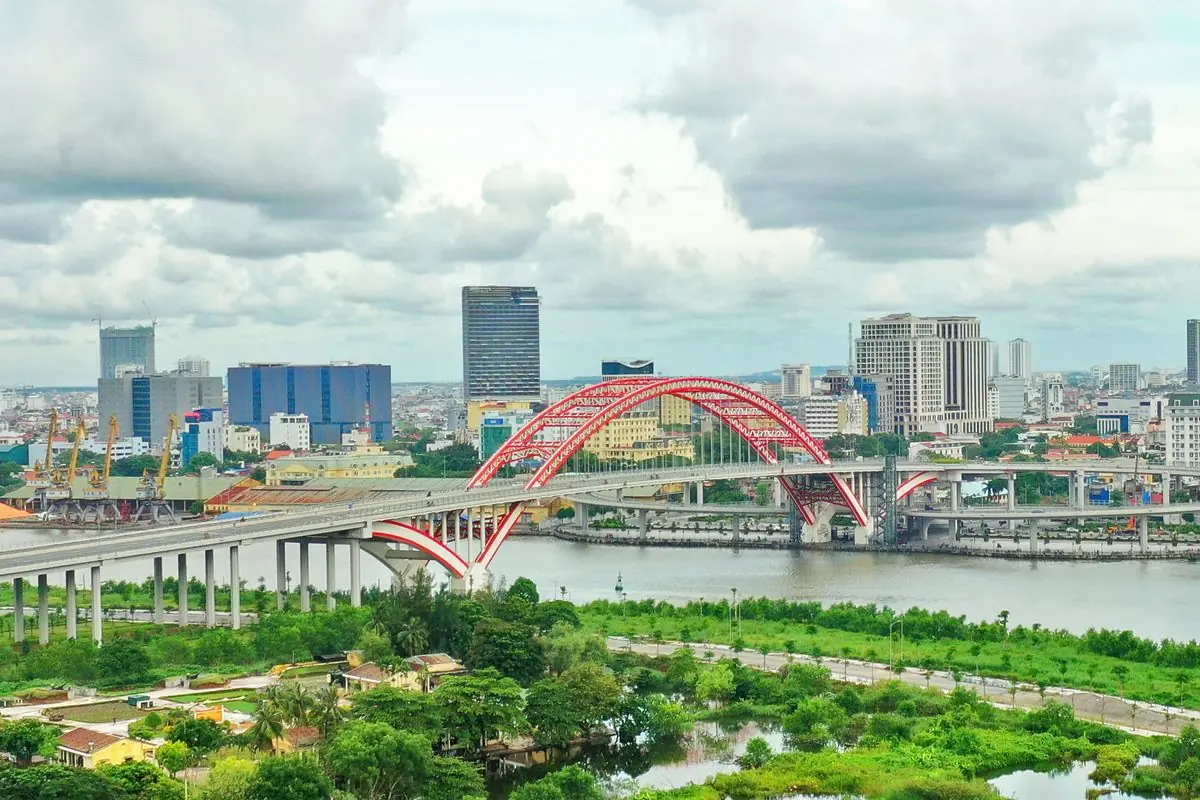
Where is Hai Phong Port, and how many terminals does it have?
If you're looking for a port terminal on Google Maps, search for its exact name rather than simply typing "Hai Phong Port." The port stretches from the Cam River to Lach Huyen, and this guide explains where the main terminals are, which codes to use for shipping documents, and where you can safely watch ships.
 22 min read
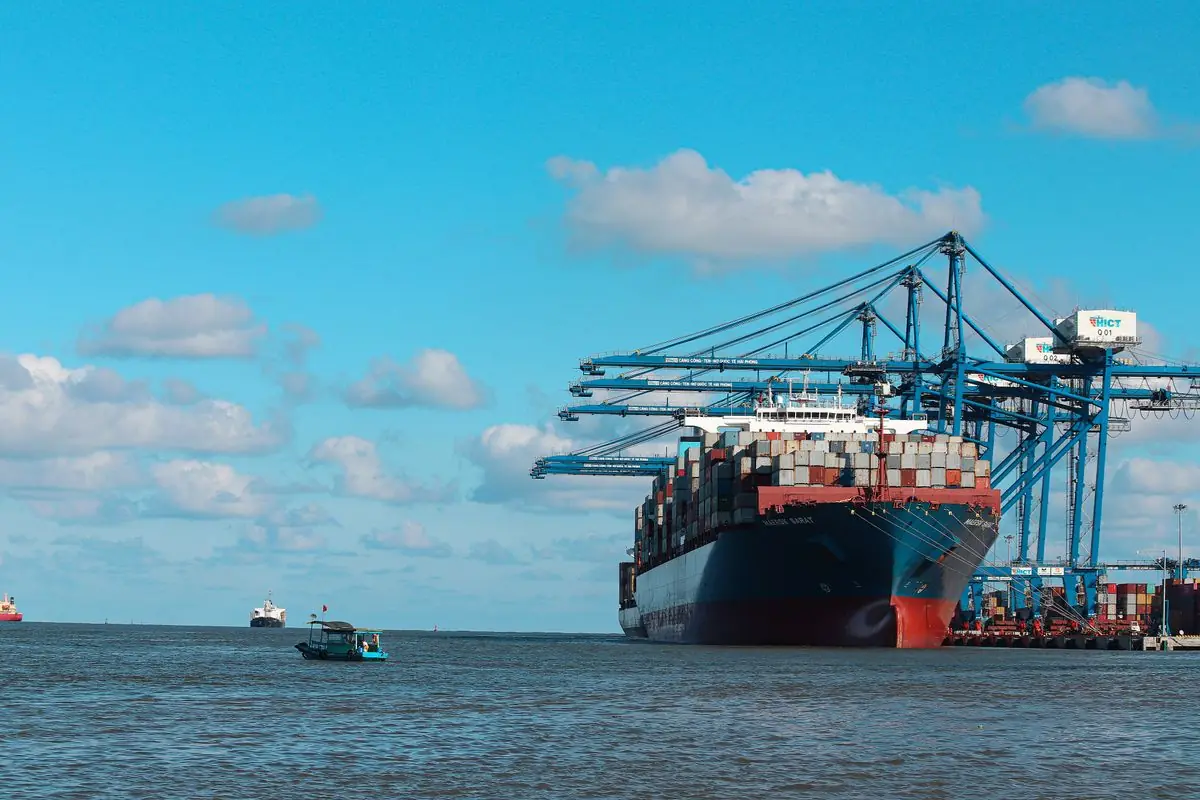
The Maersk Sarat under the HICT quay cranes.
If you’re visiting Hai Phong for business, collecting cargo or hoping to see some enormous container ships, your first step is to identify the correct terminal. Hai Phong Port is not one single location. Hai Phong Seaport consists of 52 port terminals and 93 quays, spread across several areas. The best-known include Hoang Dieu, Chua Ve, Dinh Vu, Tan Vu and the deep-water port complex at Lach Huyen.
Where is Hai Phong Port located?
Hai Phong Port is located in Hai Phong, a coastal city in northeastern Vietnam, where the river network connects with the Gulf of Tonkin.
It is one of northern Vietnam’s main gateways for international trade, serving industrial zones, logistics centers and shipping routes connecting Vietnam with overseas markets.
On a map, the port system becomes easier to understand if you follow it from the city center toward the sea.
- Cam River area: Where Hai Phong’s port took shape in the 19th century, associated with Hoang Dieu, Chua Ve and several other cargo terminals.
- Dinh Vu area: A large downstream port and industrial zone, with container terminals, general cargo facilities and logistics services.
- Tan Vu area: An important container-handling location along the road connecting the mainland with Cat Hai.
- Lach Huyen area: The deep-water container port complex near Cat Hai Island, developed to accommodate much larger international vessels.
These areas are not all within walking distance of downtown Hai Phong. Traveling from the old waterfront along the Cam River to Lach Huyen means heading east through industrial roads and eventually crossing the Tan Vu - Lach Huyen sea bridge.
The change in scenery is quite noticeable.
Near the city center, you’ll find bridges, older buildings and reminders of Hai Phong’s trading history. Farther east, warehouses, container trucks, cranes and wide port access roads begin to dominate the landscape.
One more thing matters when navigating in 2026: Hai Phong’s administrative addresses changed following Vietnam’s local government restructuring in 2025.
For port visits, it’s better to search for the operator’s name, the terminal name or the specific port gate instead of relying entirely on an older district or ward address.
How many ports are there in Hai Phong in 2026?
In 2026, Hai Phong Seaport has:
| Category | Number |
|---|---|
| Official seaport named Hai Phong | 1 |
| Port terminals within Hai Phong Seaport | 52 |
| Listed quays | 93 |
These figures refer to three different levels of the same port system.
A seaport is the officially designated port area. Within it are multiple port terminals, and each terminal may contain one or several quays, where ships berth to load or unload cargo.
For example, Tan Vu Terminal has five listed quays, while the HTIT facility at Lach Huyen operates quays No. 3 and No. 4.
Both belong to Hai Phong Seaport, even though they are located in different areas and are run by different operators.
The list also includes specialized terminals for petroleum products, gas, industrial materials and shipbuilding. This is why counting the active container terminals will not give you the same number as the official count of all port terminals.
There is also a distinction between a terminal appearing in an official register and one actively handling commercial cargo.
Hoang Dieu is a good example. Its name is still on the list of port terminals, although the former port area had already undergone substantial relocation and land handover for the Nguyen Trai Bridge project and surrounding urban redevelopment.
If another website quotes a different number of quays, check the date of the count and what exactly it is counting.
Operating quays, quays in an administrative register and quays in a development plan may not add up to the same number.
Is Hai Phong Port the same as Hai Phong Port Joint Stock Company?
No. The two terms are easily mixed up, especially in business news or English-language documents.
Hai Phong Seaport (Port of Hai Phong) refers to the overall port system designated by the Vietnamese authorities. Within that system, many companies operate terminals and provide cargo handling, storage, forwarding and transport services.
Hai Phong Port Joint Stock Company, on the other hand, is one specific company, trading on the Hanoi Stock Exchange under the ticker PHP.
Its history is closely connected with the city’s first port.
In 1874, the French established port facilities with six large warehouses along the waterfront. The location became known as Ben Sau Kho, meaning the Six Warehouses Wharf.
This area later became Hoang Dieu Port.
Over more than 150 years, the company expanded beyond the old waterfront, developing operations associated with Chua Ve and Tan Vu and investing in quays No. 3 and No. 4 at Lach Huyen.
However, many other terminals, such as Nam Dinh Vu, VIP Greenport and Hateco, aren’t all run directly by Hai Phong Port Joint Stock Company.
What are the main ports and terminals in Hai Phong?
1. Hoang Dieu Port - the birthplace of modern Hai Phong Port
Hoang Dieu lies along the Cam River, close to Hai Phong’s historic urban center.
For much of the city’s modern history, this was one of the most recognizable port areas.
The story goes back to 1874, when six large warehouses were built to support commercial shipping. From this riverside facility, Hai Phong gradually developed into a major trading port in northern Vietnam.
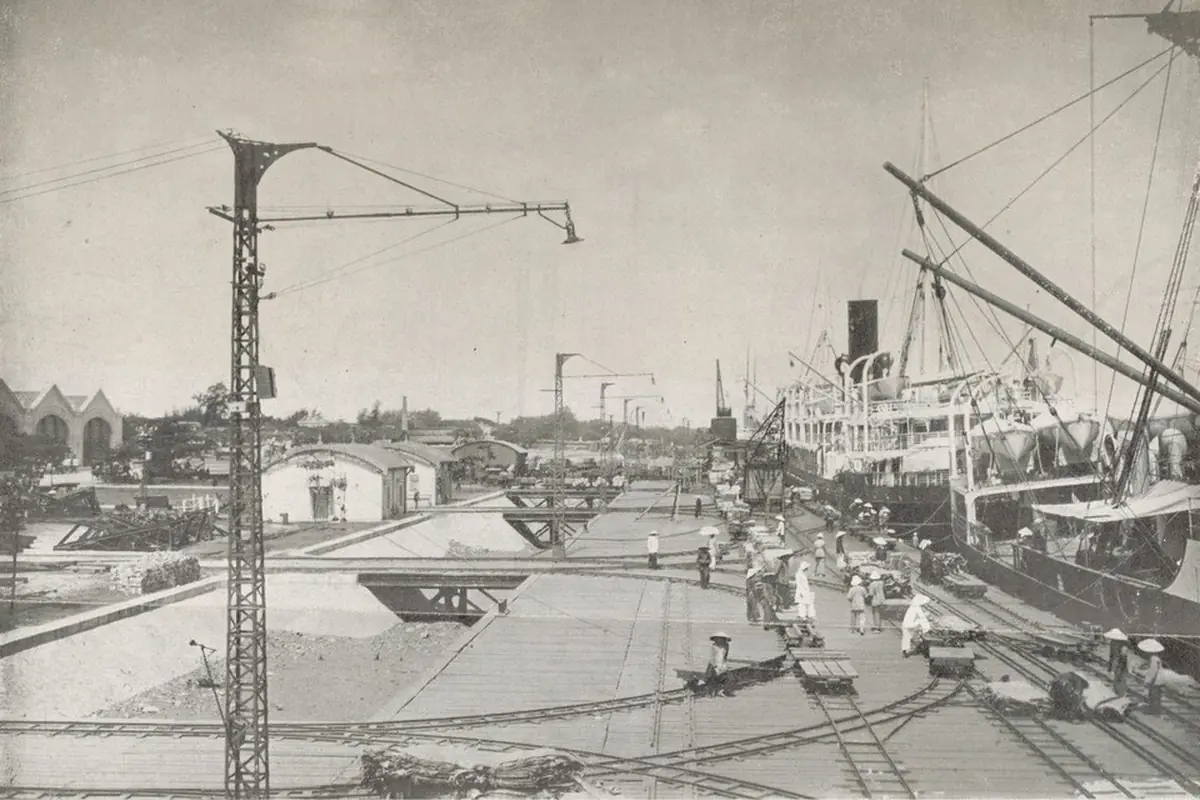
Over the decades, Hoang Dieu handled general cargo, bulk goods and warehousing activities. Its location brought port operations directly into the surrounding urban area.
But in 2026, don’t expect to find the old Hoang Dieu Port operating in the same way.
The area has been undergoing relocation as part of the Nguyen Trai Bridge project and wider waterfront redevelopment.
Shipping agents, shipping lines and cargo owners were instructed to remove goods and equipment from relevant storage areas before August 22, 2024.
By December 2025, Hai Phong Port Joint Stock Company had carried out the handover of the remaining port land covered by the project.
Port operations and resources have been shifting toward facilities such as Tan Vu and Lach Huyen.
Although Hoang Dieu is still on the list of port terminals, it should not be described as a conventional cargo terminal continuing its former operations.
Its importance for visitors is increasingly historical and urban rather than operational.
The former port land is being transformed through new transport infrastructure and waterfront redevelopment.
You can pair this part of the city with a walk around Hai Phong’s French-era streets, where old commercial buildings still reflect the period when shipping helped shape the city.
2. Chua Ve Port - a container terminal near the city
Chua Ve is located farther downstream along the Cam River, in the Dong Hai area, along the route from central Hai Phong toward Dinh Vu.
It’s one of the most familiar names for businesses handling imports and exports through Hai Phong.
As container shipping expanded, Chua Ve became an important part of Hai Phong Port Joint Stock Company’s operations.
Chua Ve Terminal has five quays.
The surrounding area also includes other port-related and industrial facilities.
One thing you’ll notice when approaching Chua Ve is how different the roads feel compared with downtown Hai Phong.
Container trucks, tractor-trailers, cargo vehicles and port service vehicles use routes connecting Nguyen Binh Khiem Road, Chua Ve and Dinh Vu Road.
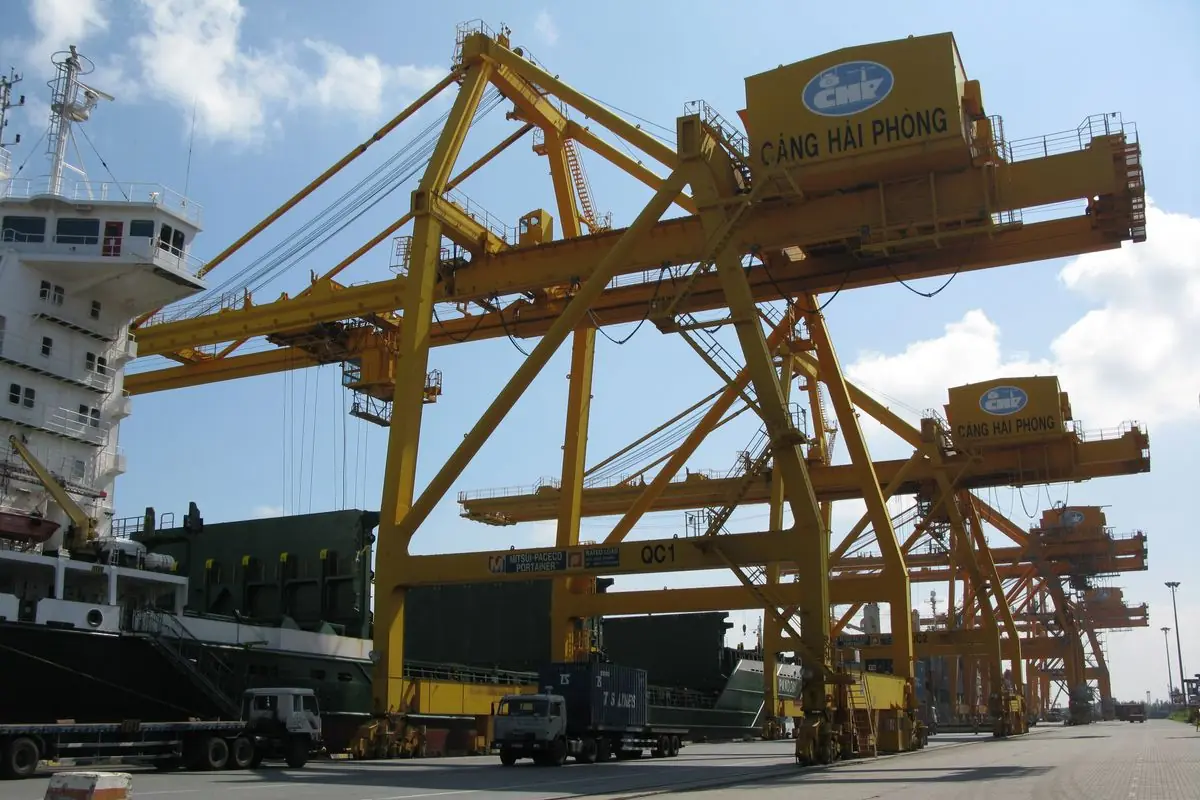
If you’re collecting a container, simply knowing that your shipment has arrived in Hai Phong is not enough.
You need to confirm whether the container is actually at Chua Ve, Tan Vu or another terminal.
Even terminals belonging to the same port operator may have separate entry gates.
Chua Ve isn’t a public sightseeing attraction either. Access to cargo yards and berthing areas is controlled.
3. Dinh Vu Port - a major cluster of cargo terminals
When someone mentions "Dinh Vu Port," they may be referring to a specific terminal named Dinh Vu or to the wider port complex on the Dinh Vu Peninsula.
That small difference matters when giving directions to a driver or a business partner.
The wider area includes facilities such as Dinh Vu Terminal, Nam Hai Dinh Vu, VIP Greenport, VIMC Dinh Vu, Nam Dinh Vu and several specialized terminals.
These facilities handle different cargo types, including containers, general cargo, industrial materials and specialized shipments.
Many have their own container yards, cranes, cargo reception areas and supporting logistics services.
Dinh Vu lies along the main transport corridor connecting central Hai Phong, the Hanoi - Hai Phong Expressway and Cat Hai.
As a result, heavy commercial vehicles are a regular part of local traffic.
You will hear several terminal names containing the words "Dinh Vu," but they are not interchangeable.
For example, Dinh Vu Terminal and Nam Dinh Vu Terminal are separate locations in the official port register.
If you tell a driver only "Dinh Vu Port," they may take you to the wrong entrance.
The simplest solution is to use the exact terminal name shown on the delivery order and share its location before departure. Don’t just pick the first search result.
4. Tan Vu Port - an important container gateway
Tan Vu is located in the Dinh Vu area, close to the main route leading toward the Tan Vu - Lach Huyen Bridge.
It is an important container-handling facility operated by Hai Phong Port Joint Stock Company.
Tan Vu Terminal has five quays.
The name frequently appears in import and export documents for businesses moving goods through northern Vietnam.
Cargo from industrial zones may be transported here for loading or onward movement through the shipping network.
Tan Vu’s development is also closely connected with the shift of commercial port activity away from the old city center.
As Hoang Dieu underwent relocation, Tan Vu became one of the locations supporting the reorganization of port operations.
For business visitors, three questions are particularly useful before setting out: Which yard holds the container? Which entrance should you use? Have the necessary cargo procedures been completed?
Even at the correct terminal, a missing delivery order, incomplete paperwork or an unconfirmed vehicle appointment may still leave your truck waiting.
For tourists, Tan Vu is mainly a place you might notice while traveling toward Cat Hai.
It isn’t a destination where visitors can casually walk into the container yard.
5. Lach Huyen Port - Hai Phong’s deep-water container gateway
Lach Huyen is located near Cat Hai, close to the coast, within the Dinh Vu - Cat Hai Economic Zone.
It represents one of the most significant modern developments in Hai Phong’s port system.
While the older terminals along the Cam River reflect the city’s trading history and ships sized for the river channel, Lach Huyen was developed specifically to accommodate much larger container ships on long-haul international routes.
From central Hai Phong, the road to Lach Huyen heads east through Dinh Vu and crosses the Tan Vu - Lach Huyen sea bridge toward Cat Hai.
The landscape gradually changes from city streets to industrial facilities, bridges, logistics yards and large container terminals.
The Lach Huyen area has three main terminals:
| Terminal | Quays | Main information |
|---|---|---|
| TC-HICT | No. 1, No. 2 and 1A | International container terminal developed during the initial phase |
| HTIT | No. 3 and No. 4 | Joint venture involving Hai Phong Port and MSC’s Terminal Investment Limited |
| Hateco | No. 5 and No. 6 | International container terminal operating from 2025 |
The TC-HICT terminal began operations in 2018, marking the first major phase of Lach Huyen’s development as a deep-water container port.
On April 5, 2025, Hateco’s terminals No. 5 and No. 6 officially began operations, expanding the area’s capacity to accommodate large container vessels.
On May 13, 2025, the international container terminal at quays No. 3 and No. 4 was inaugurated.
These facilities are operated by Hai Phong International Terminal (HTIT), a joint venture involving Hai Phong Port Joint Stock Company and Terminal Investment Limited (TIL), part of the MSC shipping group.
Together, HTIT’s two quays extend approximately 750 meters, with a water depth of around 16 meters alongside the berths.
They were designed to accommodate large container vessels, including ships of up to 165,000 deadweight tonnes and vessels of 200,000 deadweight tonnes under appropriate reduced-load conditions.
A useful example of Lach Huyen’s scale came on September 23, 2025, when the MSC KALINA arrived at HTIT.
The ship was more than 366 meters long, with a deadweight tonnage of 162,867 tonnes.
That’s longer than three football pitches placed end to end.
It’s a very different scale from the older river terminals.
You may see the names "Lach Huyen Berths 3 and 4" and "HTIT Quays 3 and 4" in different documents.
In this context, they refer to the same operating location, although official shipping paperwork should always follow the precise terminal and quay names provided by the relevant operator.
How is Lach Huyen different from the ports along the Cam River?
The biggest difference is the location and the size of the ships the facilities can accommodate.
Traditional terminals along the Cam River sit farther inland.
Their operations depend on factors such as river channel dimensions, available water depth, vessel draft, maneuvering conditions and infrastructure developed during different periods.
Lach Huyen is much closer to the open sea.
Its navigation channels, quays, cranes and container yards have been developed with large international container vessels in mind.
That brings three major changes.
First, larger ships can call at Hai Phong on international services, reducing the need for some cargo to be transshipped through another overseas hub.
Direct connections still depend on each shipping line’s services.
Second, more import and export activity can be concentrated in modern terminals away from the historic city center.
This helps explain why Dinh Vu and Lach Huyen have become increasingly important parts of the local port network.
Third, the roads connecting the port with industrial zones, warehouses and neighboring provinces must accommodate significant container traffic.
Lach Huyen has not replaced every older terminal.
Bulk cargo, general goods, domestic shipping and specialized industrial operations continue to require different facilities in suitable locations.
If you’re choosing a port for a shipment, don’t assume that the deepest port is automatically the best option.
The vessel schedule, the shipping line, your warehouse location, inland transport costs and the cargo delivery deadline are what decide it.
How much cargo passes through Hai Phong Port?
The figures for 2025 give a good picture of how large Hai Phong’s port operations have become.
Hai Phong Seaport’s 2025 results:
| Indicator | 2025 result |
|---|---|
| Total cargo throughput | More than 115.6 million tonnes |
| Annual cargo growth | 8.7% |
| Container throughput | 8.35 million TEUs |
| Container throughput growth | 13% |
| Vessel movements into and out of the port area | 41,520 |
| International shipping service routes | 30 |
TEU stands for Twenty-foot Equivalent Unit, a standard measurement of container capacity.
One typical 40-foot container represents 2 TEUs, so 8.35 million TEUs does not mean exactly 8.35 million individual containers.
The figure of 41,520 vessel movements also covers shipping activity across the wider port area, not just large container ships calling at Lach Huyen.
For 2026, the port area set a target of 122 million tonnes of cargo, including 9.1 million TEUs and 42,500 vessel movements.
These three figures are targets set in early 2026; the full-year results aren’t in yet.
The numbers help explain why port activity affects so much of life in Hai Phong.
Beyond the ships themselves, the industry supports warehouses, customs services, trucking companies, maritime businesses and the large industrial zones around the city.
What is the Hai Phong Port code: VNHPH or something else?
The UN/LOCODE for Hai Phong is VNHPH.
UN/LOCODE is the United Nations Code for Trade and Transport Locations, maintained by the United Nations Economic Commission for Europe (UNECE).
The code contains five characters.
VN represents Vietnam, while HPH identifies the Hai Phong location.
On international shipping documents, VNHPH is commonly used when Hai Phong is the port of loading or port of discharge.
However, this code does not identify every individual container terminal within the port system.
Some locations within Hai Phong also have their own UN/LOCODE entries.
| UN/LOCODE | Location |
|---|---|
| VNHPH | Hai Phong (Haiphong) |
| VNDVU | Dinh Vu Terminal |
| VNCVE | Chua Ve Terminal |
| VNNHD | Nam Hai Dinh Vu Port |
For Lach Huyen, the UN/LOCODE directory does not list a separate location code specifically named Lach Huyen.
VNHPH remains the general location code for Hai Phong.
However, using the correct UN/LOCODE is only one part of preparing shipping documents.
It does not replace a terminal code, customs facility code, storage location code, a shipping line’s own port code or the codes used for electronic declarations.
For example, a container arriving at HTIT in Lach Huyen may have Haiphong - VNHPH recorded as its port of discharge.
But the exact destination terminal must still be identified according to the shipping line’s instructions.
If you enter VNHPH and leave the terminal field incomplete when a system requires it, the information may not be sufficient to identify where the container should be collected.
HPH is also the IATA airport code for Cat Bi International Airport.
The HPH shown on an airline ticket and VNHPH used in international maritime documentation belong to different coding systems.
If you’re flying to Hai Phong for a port-related business trip, you’ll probably see both.
Visiting Hai Phong Port for business: what should you prepare?
For someone visiting Hai Phong for the first time, one of the most common mistakes is not the wrong road but the wrong location.
A meeting with a shipping agent, paperwork collection at a company office and a cargo inspection inside a port terminal may all happen at different addresses.
Before booking transport, confirm the company name, terminal, entrance gate and contact person’s phone number.
If your visit involves cargo handling, ask about vehicle registration, identification requirements, entry permissions and any documents needed for the shipment.
You’ll also need to distinguish between the office where procedures are completed and the operational cargo yard.
Arriving at the correct port entrance does not necessarily give you access to the container storage area or quayside.
International visitors who need access to a controlled port area should ask their host company to confirm the applicable entry procedures in advance.
For surveys, photography or filming, obtain permission from the relevant operator where required.
If you’re arriving through Cat Bi International Airport, it also makes sense to choose accommodation based on where you’ll be working.
A hotel in central Hai Phong is convenient for restaurants, walking around the city and meeting business contacts in offices.
But it may not be the most practical choice if you need to be at Lach Huyen early in the morning.
For several consecutive days of terminal visits, check the actual driving route to the entrance.
The distance shown on a map won’t always account for waiting time at junctions, industrial roads or stretches with heavy trucks.
Do international cruise ships dock at Hai Phong Port?
Hai Phong is a major port city, but that doesn’t mean it is a regular destination for large international cruise ships.
Hai Phong Seaport’s terminals are dominated by commercial cargo, industrial and maritime service facilities.
It does not identify a dedicated international passenger cruise terminal within Hai Phong Seaport.
Ha Long International Cruise Port, in the Bai Chay area of Quang Ninh Province, has facilities built specifically for international cruise ships.
On January 1, 2026, the Celebrity Solstice arrived in Ha Long carrying more than 3,000 visitors.
Later, on October 13, 2026, the Dream Cruise brought more than 2,300 passengers to the same port.
If your cruise itinerary says Ha Long Bay, check the terminal name and disembarkation details on your booking confirmation.
Don’t arrange a transfer to a container port in Hai Phong simply because the two destinations appear close together on a map of northern Vietnam.
You can travel overland between Hai Phong and Ha Long, but allow enough time if you need to return to your ship before departure.
What about boats and ferries to Cat Ba Island?
Passenger transport to Cat Ba and commercial cargo handling at Hai Phong’s container terminals are separate services.
One common way to reach Cat Ba is to travel by road across the Tan Vu - Lach Huyen Bridge to Cat Hai, then take the Dong Bai - Cai Vieng ferry to Cat Ba Island.
This ferry carries passengers and vehicles and runs separately from the Lach Huyen container terminal complex.
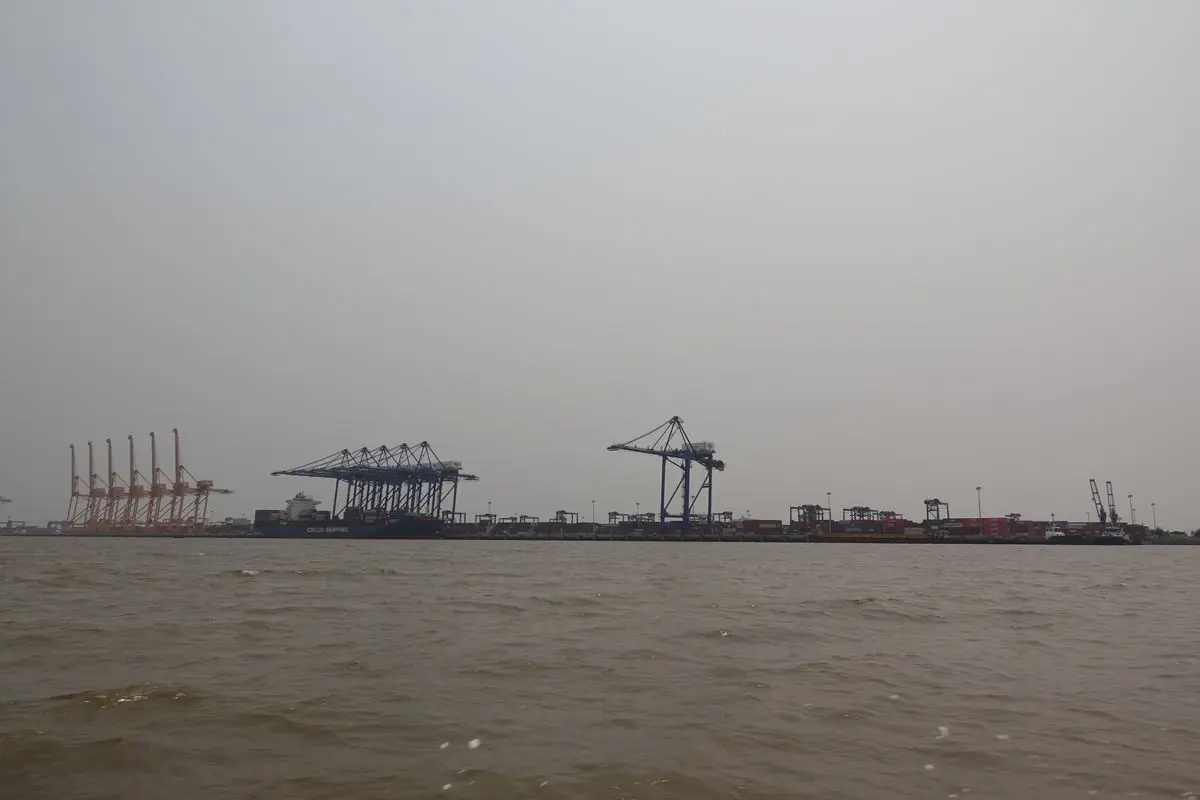
From September 1 through December 31, 2026, the last scheduled ferry from Dong Bai is at 18:00, while the last from Cai Vieng is at 17:30.
Schedules may still change because of operating conditions.
Before buying a speedboat ticket from the Ben Binh area, check the operator, departure point and arrival pier.
Searching for "Hai Phong Port" alone is not enough to identify the correct passenger terminal.
Where can you watch ships in Hai Phong?
Not everyone searching for Hai Phong Port is involved in international trade.
Some visitors simply want to see the ships, waterfront cranes and river scenery that give the city its character.
There are two areas worth considering, depending on what you’re hoping to see.
Ben Binh and the Cam River waterfront
Convenient for a city walk
Ben Binh is close to Hai Phong’s older central neighborhoods.
It is a useful area for understanding how closely the city’s history is connected to the Cam River.
From publicly accessible parts of the waterfront, you can enjoy views of the river, nearby bridges and vessel movements.
This is a better choice for someone interested in the atmosphere of a working port city than for someone hoping to photograph a huge container ship at close range.
Morning, roughly between 7:00 and 9:00, can be a pleasant time to visit, particularly during the hotter months.
That window is picked for the light and has nothing to do with ship schedules.
The location is also convenient for exploring older streets and French-era architecture afterward.
If you’re interested in Hai Phong’s trading history, a waterfront walk is much more practical than traveling all the way to an industrial port gate just to look at it from outside.
Parts of the Cam River waterfront are under renovation, with changes to traffic arrangements.
Stick to pedestrian paths that are open, and stay out of construction zones or fenced-off areas.
Near Hoang Van Thu Bridge
A wider view of the river
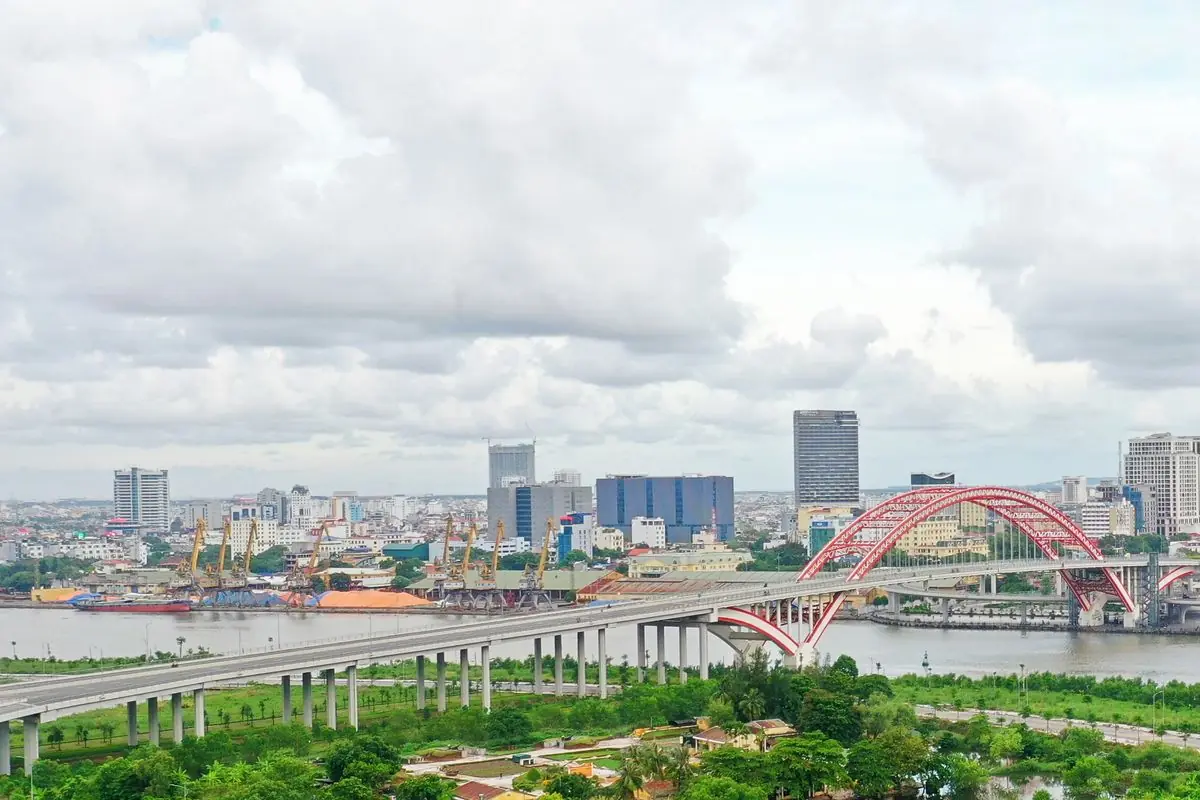
Hoang Van Thu Bridge crosses the Cam River, connecting the historic urban area with the northern bank.
From suitable publicly accessible locations along the river, you can see parts of the waterway, passing vessels and the changing urban landscape.
This area shows the contrast between old and new Hai Phong.
On one side are neighborhoods that developed around the city’s historic trading port. On the other are newer urban developments extending across the river.
However, this is not a dedicated container port observation deck.
The deep-water terminals at Lach Huyen are much farther toward the sea.
On a motorbike or in a car, don’t stop on the bridge to take photographs.
Find a legal parking area and use the public pedestrian routes available nearby.
Waterfront areas under construction should not be used as viewpoints.
Is it worth going to Lach Huyen just to see container ships?
Usually not, unless you have an appointment with a port company.
The roads leading to Lach Huyen serve industrial facilities and heavy commercial traffic.
Container yards, port entrances and quays are controlled operational areas rather than ordinary tourist attractions.
You may be able to see cranes and parts of the port landscape from public roads, but visibility depends on the location.
There is no guarantee that you’ll have an unobstructed view of a large ship being loaded.
For city photography, the Cam River waterfront is generally a much more enjoyable choice.
For someone seriously interested in container operations, a properly arranged technical visit will be far more informative than standing outside the port gate.
How does container traffic affect Hai Phong’s streets?
One distinctive feature of Hai Phong is how closely the city’s road network is connected with the maritime industry.
Container trucks are a familiar sight, particularly along the major routes linking the port terminals with industrial zones and expressways.
Heavy vehicles are common on roads such as Nguyen Binh Khiem, Chua Ve, Le Thanh Tong, Dinh Vu and Bui Vien, as well as the roads leading to the eastern container terminals.
Several junctions in eastern Hai Phong experience recurring congestion.
These include the area near Port 128, the Dinh Vu - Dang Kinh junction and connections with the expressway.
Driving here feels different from moving through a typical tourist district.
Large tractor-trailers need much more room and time to turn, merge and change lanes. Even one broken-down vehicle at a narrow junction can cause a long queue behind it.
What time should you avoid container truck traffic?
There is no single time when all container trucks in Hai Phong begin or finish operating.
Port activity depends on vessel schedules, cargo handling operations and trucking arrangements.
Still, if you have no essential business at the port, two busy periods of city traffic are worth watching out for:
| Approximate time | What to expect |
|---|---|
| 6:30-8:30 AM | Commuter traffic mixing with commercial vehicles |
| 4:30-6:30 PM | Evening congestion, particularly around major junctions |
| 9:30 AM - 3:30 PM | Can be more convenient for flexible trips, though container traffic continues |
If you have an appointment at Dinh Vu or Tan Vu, avoid relying only on the journey time shown by a navigation app under light-traffic conditions.
An 8:30 AM meeting does not automatically mean leaving your downtown hotel at 8:00 AM will be sufficient.
The actual time also depends on the gate location, road conditions and the last stretch of the trip.
For international visitors unfamiliar with Hai Phong’s industrial roads, a car with a driver who knows the port area can be more convenient than renting a motorbike.
What if you’re riding a motorbike to Cat Hai or Cat Ba?
You’ll share part of the road network with vehicles serving the ports, particularly along the Dinh Vu corridor and toward the Tan Vu - Lach Huyen Bridge.
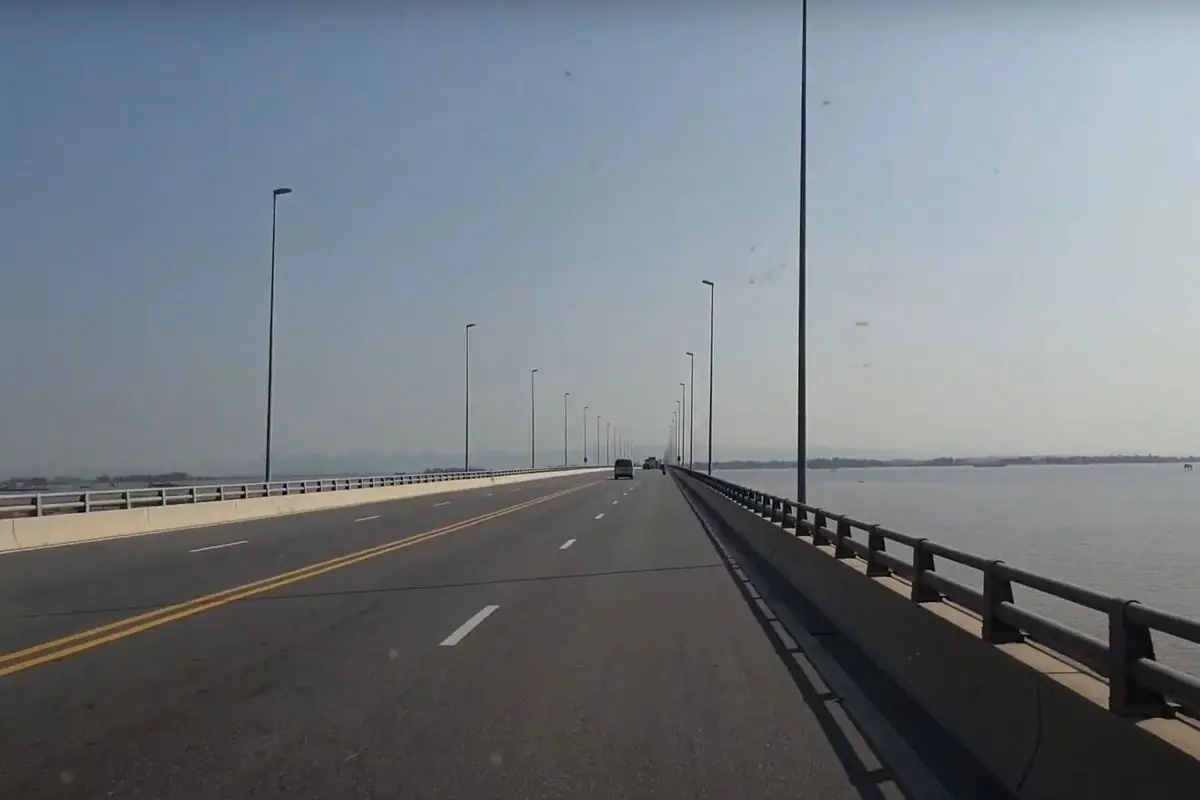
Watch for multi-lane sections, heavy trucks and large intersections. Don’t ride close alongside tractor-trailers, don’t try to overtake when they’re turning, and avoid stopping on bridge approaches.
Heading to Cat Ba, you’re aiming for the ferry terminal or passenger pickup point. Don’t turn into a container port gate by mistake.
These locations may appear relatively close on a map, but they serve completely different purposes.
What else can you visit around Hai Phong Port?
A half-day tour of Hai Phong as a port city doesn’t need to cover every terminal.
A simple plan is to begin in the historic center, learn a little about the old trading port and then walk toward Ben Binh to see the Cam River.
From there, spend some time in the French-era streets and around the buildings that reflect Hai Phong’s development as a commercial city.
This gives you a sense of how the river influenced the city’s growth without spending most of your time traveling along industrial roads.
An extra day lets you explore the modern side of the city on the northern bank of the Cam River and Vu Yen Island.
These places reflect how the city’s urban development is expanding beyond its traditional center.
If Cat Ba is already part of your itinerary, the journey through Dinh Vu and Cat Hai offers a different perspective.
Along the way, you’ll see some of the industrial infrastructure and container cranes associated with Hai Phong’s shift toward its coastal terminals.
For business visitors, it may make sense to organize the day differently.
Downtown office meetings are easier to combine with restaurants and city sightseeing.
Appointments at Lach Huyen deserve their own travel window rather than being squeezed between meetings elsewhere.
On a short business trip, choosing a hotel close to where you actually need to work is often more useful than choosing one simply because it has a river view.
The figure worth remembering is 52 port terminals and 93 quays. Heading toward Dinh Vu, Tan Vu or Lach Huyen around 6:30-8:30 AM and 4:30-6:30 PM, allow extra road time rather than assuming the journey will be traffic-free.
Frequently asked questions
What are the main ports and terminals in Hai Phong?
The main port areas include Hoang Dieu, Chua Ve, Dinh Vu, Tan Vu and Lach Huyen. There are also many other terminals handling containers, general cargo, petroleum products, gas, shipbuilding materials and specialized industrial goods. In total there are 52 port terminals.
How many seaports are there in Hai Phong in 2026?
There is one officially designated seaport named Hai Phong Seaport, comprising 52 terminals and 93 quays. This doesn't mean there is only one port operator. Multiple companies run facilities within the wider seaport system.
Is the Hai Phong Port code VNHPH or HPH?
VNHPH is the UN/LOCODE for Hai Phong, used in international trade and transport documentation. HPH is the location element of that code and also the IATA airport code for Cat Bi International Airport. Shipping documents may additionally require terminal-specific or customs codes.
Does Lach Huyen Port have its own port code?
The UN/LOCODE directory does not list a separate location code specifically named Lach Huyen. VNHPH remains the general code for Hai Phong. However, shipments must still identify the relevant terminal, such as TC-HICT, HTIT or Hateco, according to the shipping line's instructions.
Can tourists enter Hai Phong Port to watch container ships?
Container yards, quays and working port facilities have controlled access and are not open sightseeing attractions. For river views and passing vessels, try publicly accessible areas near Ben Binh or along the Cam River. To visit an operating terminal, contact the relevant port operator in advance and arrange the necessary permissions.