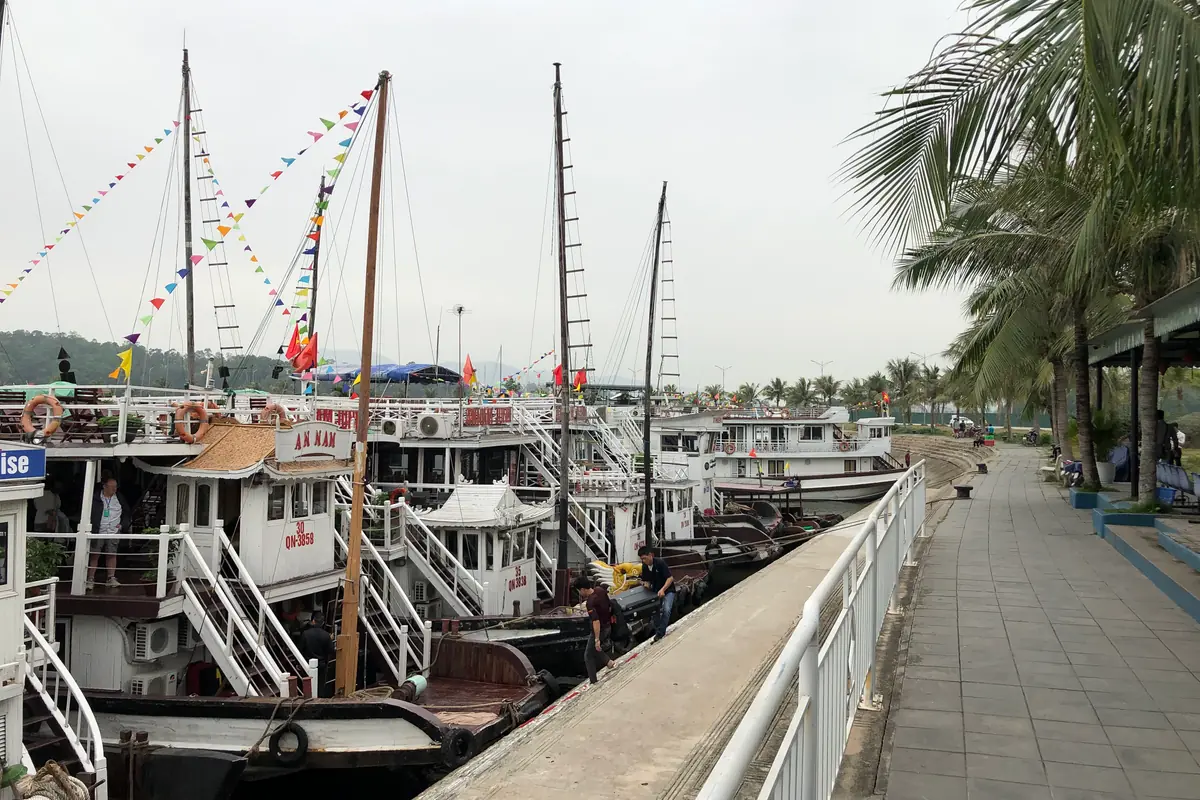
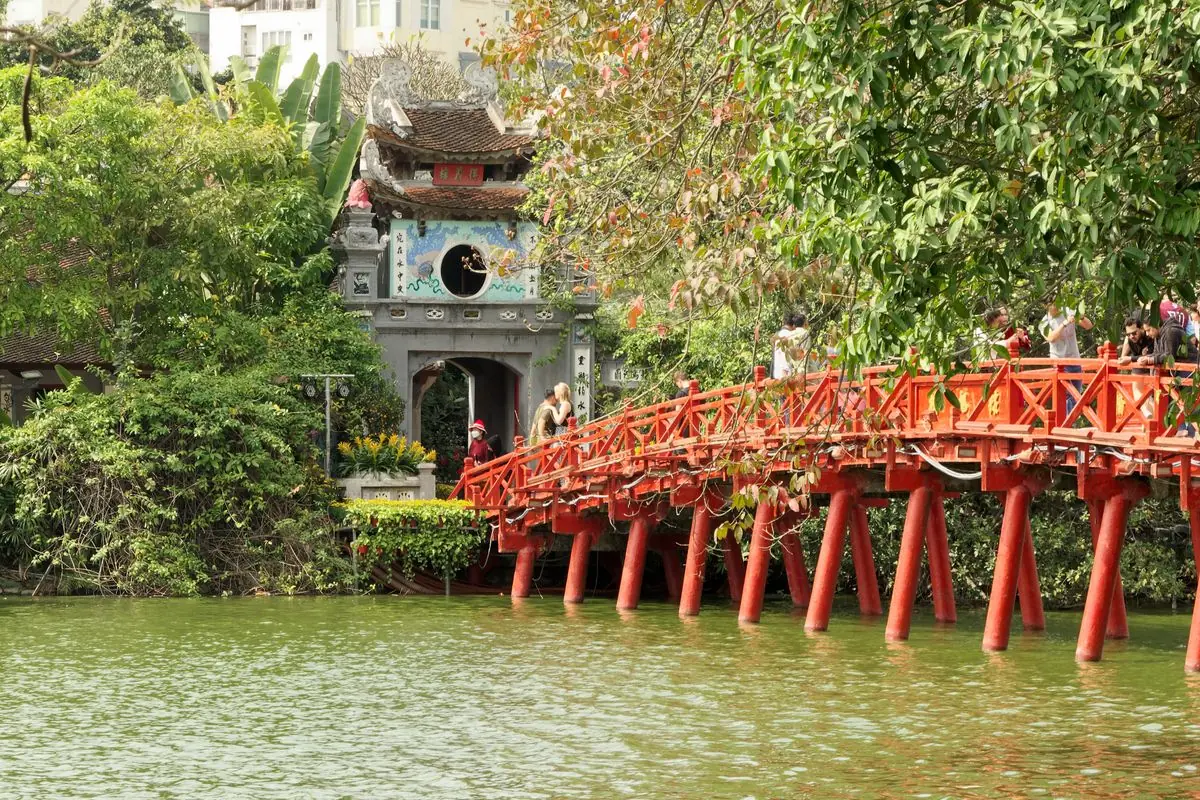
Choose the right ferry and plan a 2-day trip to Quan Lan Island
Quan Lan Island works well for a 2-day, 1-night beach getaway, provided you choose the ferry terminal closest to your accommodation and plan your return journey carefully. The island combines peaceful beaches, traditional fishing villages and comfortable seaside resorts.
 19 min read
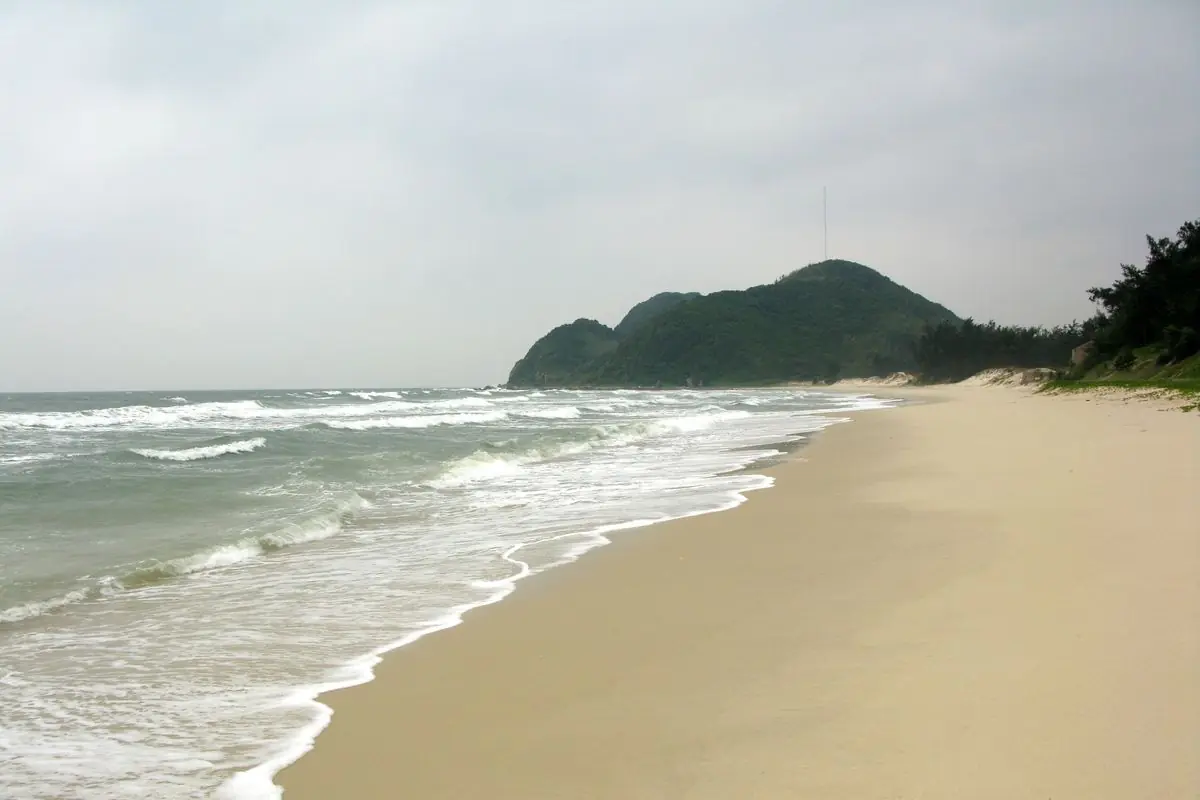
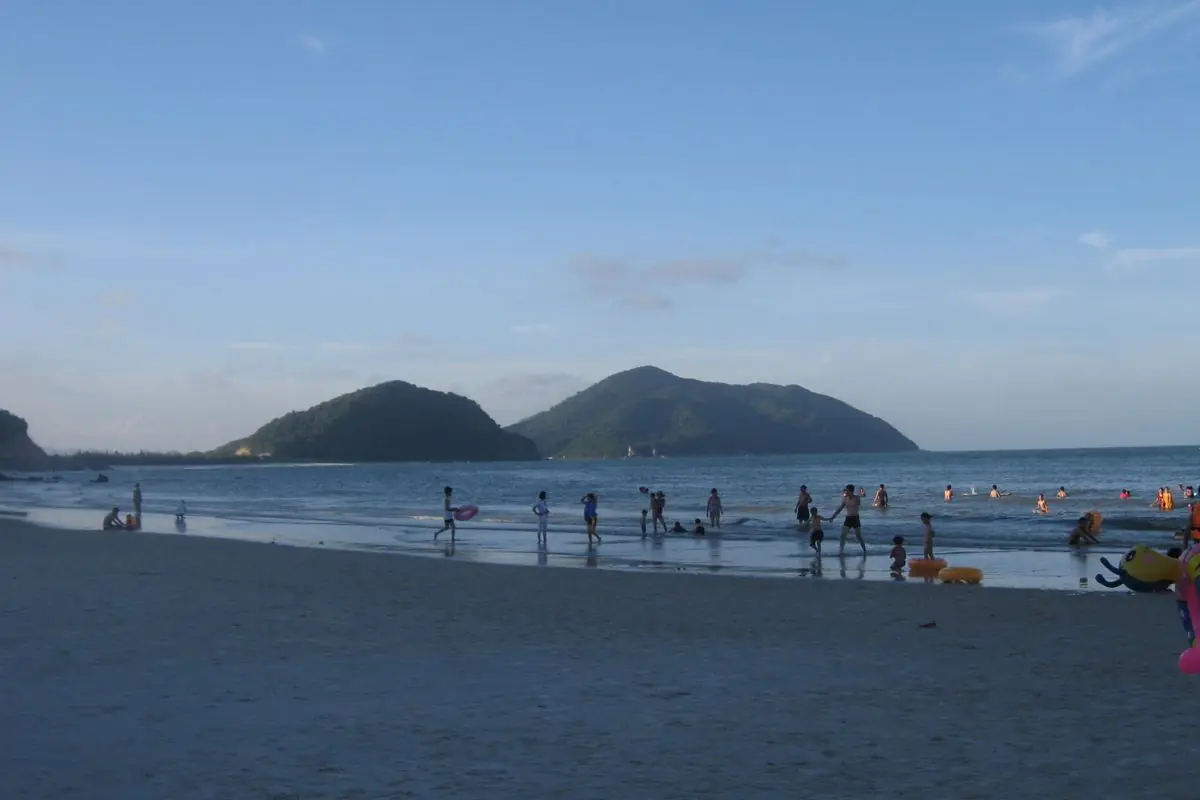
Son Hao Beach on an overcast day: a long strip of sand, white surf and a forested hill at the far end.
It’s easy to book a beachfront hotel on Quan Lan Island, only to discover that your ferry arrives at the opposite end of the island. Both Quan Lan and Minh Chau have passenger ferry terminals, but they’re not in the same place. Choosing the right arrival point means more time swimming, exploring traditional villages and enjoying fresh seafood instead of arranging another transfer after a long journey.
Where is Quan Lan Island, and how is it different from Ha Long Bay?
Quan Lan Island lies in Bai Tu Long Bay, within Van Don Special Zone, Quang Ninh City, northeastern Vietnam. This is its current administrative designation following the establishment of Van Don Special Zone on July 1, 2025, and Quang Ninh’s transition to a centrally governed city on September 1, 2026.
Older maps, hotel listings and ferry booking websites may still refer to Van Don District, Quang Ninh Province. The names Quan Lan and Minh Chau remain widely used to distinguish the island’s two main tourist areas.
A small island, Quan Lan sits among the forested islands and limestone formations of Bai Tu Long Bay. Unlike a typical Ha Long Bay cruise, where the experience revolves around sightseeing from a boat, a visit to Quan Lan is about staying on an island, walking along sandy beaches and spending an evening in a coastal village.
The island has three main beaches: Quan Lan, Son Hao and Minh Chau. Between them are quiet roads, patches of woodland, local neighbourhoods and historic buildings connected to the former Van Don trading port.
For international travellers who have already taken a Ha Long Bay cruise, Quan Lan means trading the boat cabin for a beachfront room and a day or two at your own speed.
It’s equally appealing to Vietnamese travellers from Haiphong and Hanoi looking for a short summer escape without travelling far into the open sea.
How to get to Quan Lan Island: Ao Tien or Hon Gai?
From Haiphong to Ao Tien Port
The most common route from Haiphong is to travel by road to Ao Tien Port in Van Don, then take a speedboat to Quan Lan Island.
The road journey is approximately 100 km and usually takes 2-3 hours, depending on your pickup location and traffic.
Limousine operators serving the Haiphong - Van Don route include Son Hai, Hoang Phu, Phuong Huy, Duy Khanh and Trung Thanh. Reference fares are around VND 220,000-250,000 per person, one way.
Services generally operate between approximately 5:00 AM and 8:00 PM, although each company has its own timetable. Some operators offer pickups from central Haiphong.
Travelling early from Haiphong generally makes it easier to catch a ferry at 10:30 AM or 1:30 PM. The 7:30 AM departure can be difficult to reach, especially when your road transfer involves multiple pickups.
From Hanoi to Quan Lan Island
From Hanoi, you can travel by car or limousine towards Van Don using the expressway network. The journey usually takes around 3.5-4.5 hours, sometimes longer depending on your starting point and the service you choose.
Several limousine operators serve the Cai Rong and Van Don areas. Some terminate at a transfer point rather than Ao Tien Port, so allow extra time for the final transfer.
For a 2-day, 1-night trip from Hanoi, an early-afternoon ferry fits best. You won’t need to leave quite so early, and there’s still time to check in and enjoy the beach later that day.
Travellers who want almost a full first day on the island may prefer spending the previous night in Van Don and catching a morning ferry.
Direct ferry from Ha Long to Quan Lan
If you’re already staying in Ha Long, there’s another option: the Thanh Hung speedboat service from Hon Gai Passenger Port, near Long Tien Pagoda and Ha Long Market 1.
The schedule in effect from March 2026 includes:
- Hon Gai → Quan Lan: 9:00 AM.
- Quan Lan → Hon Gai: 12:00 PM and 3:30 PM.
- Fare: VND 300,000 per person, one way.
The crossing generally takes around 60-90 minutes, depending on the vessel and sea conditions.
This route is particularly convenient for travellers finishing a Ha Long Bay cruise, as it avoids the additional road journey to Van Don.
Still, check exactly where your cruise disembarks. Ha Long has several passenger ports, and the cruise terminal may not be the same place where your Quan Lan ferry departs.
Are Ao Tien Port and Cai Rong Port the same?
No. They are two separate ports in Van Don.
Ao Tien Port began operating in 2023 and has become the main departure point for many passenger ferry services to Quan Lan, Minh Chau and Co To.
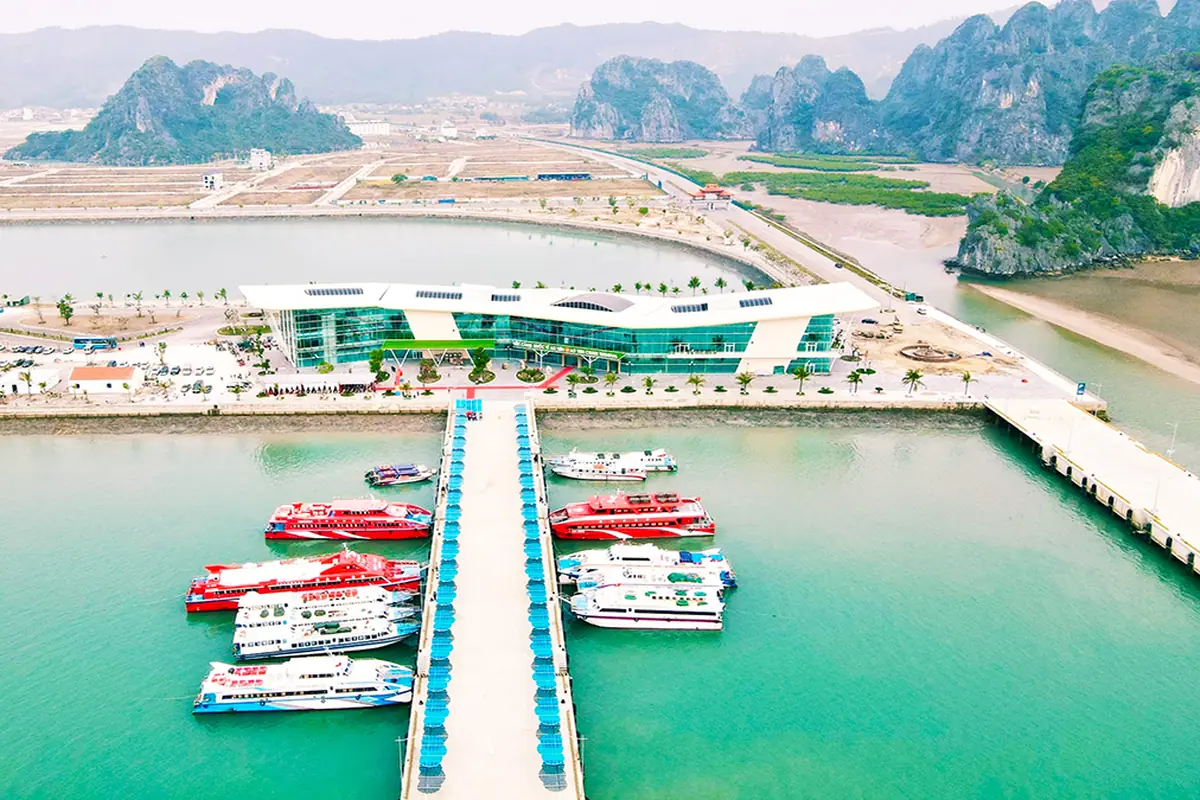
Cai Rong remains a familiar location for transport companies and local residents. Some passenger services and maritime activities may still use the Cai Rong area.
When booking, check the exact departure port printed on your ticket rather than relying on a general description such as "Van Don to Quan Lan ferry".
Quan Lan ferry guide: terminals, schedules and ticket prices in 2026
Quan Lan Island has two main passenger ferry terminals serving different parts of the island.
| Ferry route | Journey time | Best for |
|---|---|---|
| Ao Tien - Quan Lan | 45-60 minutes | Staying near Quan Lan village, the market, communal house and Quan Lan Beach |
| Ao Tien - Minh Chau | 45-55 minutes | Staying near Minh Chau Beach and hotels in the Minh Chau area |
The Quan Lan terminal is convenient for visitors interested in village life and historical sites. Arriving at Minh Chau is generally easier for travellers staying near Minh Chau Beach.
From Minh Chau terminal, many nearby hotels are approximately 5-10 minutes away by electric vehicle, depending on the property’s location.
Ao Tien - Quan Lan ferry schedule
Here are the 2026 schedules for some operators:
| Operator | Ao Tien → Quan Lan | Quan Lan → Ao Tien |
|---|---|---|
| Thanh Hung | 7:30 AM, 10:30 AM, 1:30 PM, 3:00 PM | 7:00 AM, 9:00 AM, 1:30 PM, 3:00 PM |
| Quang Minh | Selected departures around 7:30 AM, 10:30 AM, 1:30 PM and 3:00 PM, depending on the operating day | Confirm when booking |
| Nguyen Viet | 7:30 AM, 10:30 AM, 1:30 PM, 3:00 PM | 8:30 AM, 9:30 AM, 12:30 PM, 1:30 PM, 3:00 PM |
Treat these as a guide: not every departure runs every day.
Services can vary between weekdays and weekends, during the low season and in response to weather conditions.
On the Ao Tien - Minh Chau route, Quang Minh runs departures at 7:30 AM and 1:30 PM. Other operators, including Hao Thinh, Chung Huong and Minh Chau, also serve this part of the island, with schedules varying by season and passenger demand.
The last return ferries generally leave the island in the afternoon. Don’t assume that all operators share the same final departure time, particularly when arranging onward road transport or flights.
How much does the Quan Lan ferry cost?
One-way adult fares from selected operators:
| Operator and route | Reference fare |
|---|---|
| Quang Minh: Ao Tien - Quan Lan | VND 200,000 |
| Quang Minh: Ao Tien - Minh Chau | VND 180,000 |
| Thanh Hung: Ao Tien - Quan Lan | VND 250,000 |
| Thanh Hung: Hon Gai - Quan Lan | VND 300,000 |
Thanh Hung’s fares apply from March 2026 and include VAT and passenger insurance. Other operators may have separate policies for children and luggage.
Passengers departing from Ao Tien must also account for the port access fee. It costs VND 50,000 for anyone aged 6 and over and VND 20,000 for children aged 3-5 and people aged 70-80. Children under 3 and people over 80 go free.
This fee is generally charged when departing Ao Tien for the islands, rather than again on the return journey.
Book directly through the ferry operator or an established ticket agent that confirms the travel date, departure time and exact ports.
Before paying, check the cancellation or rescheduling policy in case rough seas prevent the ferry from operating.
Can foreign tourists visit Quan Lan Island independently?
Yes. International visitors can take a public speedboat to Quan Lan Island without joining an organised tour.
This applies to travellers of any nationality, provided they meet Vietnam’s entry, residence and relevant area-access requirements.
Quan Lan is located in a coastal border area where special management regulations apply. However, the recognised Quan Lan - Minh Chau tourist area falls within an exception to the border-area permit requirement under the applicable rules.
Travel beyond permitted tourist areas, including certain restricted coastal or offshore locations, may require additional authorisation.
When staying overnight, your accommodation provider is responsible for checking the necessary information and submitting the required temporary residence declaration for foreign guests.
For a normal hotel stay, this process is usually handled by the property, so you do not ordinarily need to visit the police station yourself.
Anyone planning to explore smaller offshore islands, restricted maritime areas or locations outside established tourist zones should verify the access requirements with their organiser and the relevant authorities first.
Arriving at the ferry port about 30-45 minutes before departure gives you time for ticket checks and identification procedures.
English may not be widely spoken by every local driver or port employee, so keeping your hotel’s Vietnamese name, port name and booking details saved on your phone lets you show them the screen.
Where to stay: Quan Lan village or Minh Chau?
Both areas are on the same island, but they offer slightly different experiences. Choosing your accommodation before booking the ferry makes the journey much easier.
Quan Lan village
Local markets and traditional island life
Quan Lan village is a good base for travellers who prefer affordable accommodation, local restaurants and historical attractions.
Guesthouses, small hotels and homestays are concentrated around the village, close to the market and Quan Lan Communal House.
In the morning, you can walk to a local breakfast shop, explore the market and arrange transport to the beach.
Budget accommodation starts at approximately VND 300,000 per night, although rates increase during summer weekends and public holidays.
The trade-off is that this area offers fewer upscale beachfront resort options than Son Hao or Minh Chau.
Minh Chau
For a beach-focused holiday
Minh Chau suits couples, families and visitors who want to spend much of their holiday on the sand.
Accommodation options in the area include Minh Chau Pearl Hotel & Spa, Minh Chau Beach Resort and Grandpearl Resort.
Staying near Minh Chau Beach makes early-morning walks and late-afternoon swimming much more convenient. Tourist facilities are also relatively concentrated around the hotels and beach access points.
Son Hao
A more comfortable resort escape
Between Quan Lan and Minh Chau lies Son Hao Beach, home to Angsana Quan Lan, part of the Banyan Group.
Opened in 2024, the resort features 156 rooms and suites alongside beachfront leisure facilities.
It fits a relaxing resort holiday, a family trip with a larger budget or international visitors who prefer full-service accommodation.
Across the island, nightly room prices range from a few hundred thousand dong to several million, depending on the property, season, room category and included services.
Getting around Quan Lan Island
The island’s main road is relatively straightforward, connecting its villages, beaches and accommodation areas. Distances are long enough that some form of transport is useful.
Motorbike rental is generally the most flexible choice for two people who want to explore independently.
Reference prices are around VND 150,000 per day without petrol or approximately VND 200,000 with petrol included.
Riders need the appropriate valid driving licence, must wear helmets and follow local traffic regulations. International visitors should check that their licence is legally recognised for riding in Vietnam.
Electric vehicles are convenient for families, older visitors and groups. A full-day private hire may cost around VND 1,200,000, depending on passenger capacity, route and operating time.
Tuk-tuks are another local transport option, with full-day hire sometimes priced around VND 700,000.
For a short journey between the ferry terminal and your hotel, ask for a quote based on the specific route rather than automatically paying a full-day rate.
Some sections of the island road are used by fast-moving electric vehicles and tuk-tuks. The route towards Eo Gio can also be dusty, with trucks passing through parts of the road.
The best beaches on Quan Lan Island

Quan Lan Beach
Convenient and relatively quiet
Quan Lan Beach lies close to the village, market and Quan Lan ferry terminal.
Its sand isn’t quite as pale and fine as Minh Chau’s, but the beach is spacious and the water can be pleasantly clear in favourable weather.
This end of the island often feels less crowded than Minh Chau.
You can enjoy a swim in the afternoon and return to the village for dinner without a lengthy drive across the island.
Son Hao Beach
A long stretch of sand
Son Hao lies between Quan Lan and Minh Chau, with a long sandy shoreline and an open coastal setting.
Wave conditions can be stronger than on more sheltered sections of the coast. At high tide, the exposed beach becomes noticeably narrower.
Check warning signs and designated swimming areas before entering the water, especially when the sea is rough.
Minh Chau Beach
Fine sand and clear water
Minh Chau is among the island’s most popular beaches, known for its pale, fine sand and relatively clear water.
Early mornings suit a quiet walk, while late afternoon brings softer light and more comfortable conditions for relaxing by the shore.
The main access area can become busy on summer weekends.
Further towards Ben Trui, roughly a kilometre beyond the busiest section depending on where you start, there are generally quieter stretches.
On windy days, marine debris may wash ashore, so beach conditions are not identical every day.
Robinson Beach
A more secluded coastal spot
Robinson Beach has a less developed atmosphere, surrounded by natural scenery and patches of woodland.
It’s appealing to travellers who enjoy coastal photography, quiet walks and places away from the main tourist crowds.
Access roads can be narrow and signposting is limited, so ask locally about the route and current conditions before setting off.
Services and lifeguard coverage may also be limited. Remote sections without clearly designated swimming areas are better explored from the shore.
Eo Gio
A viewpoint rather than a swimming beach
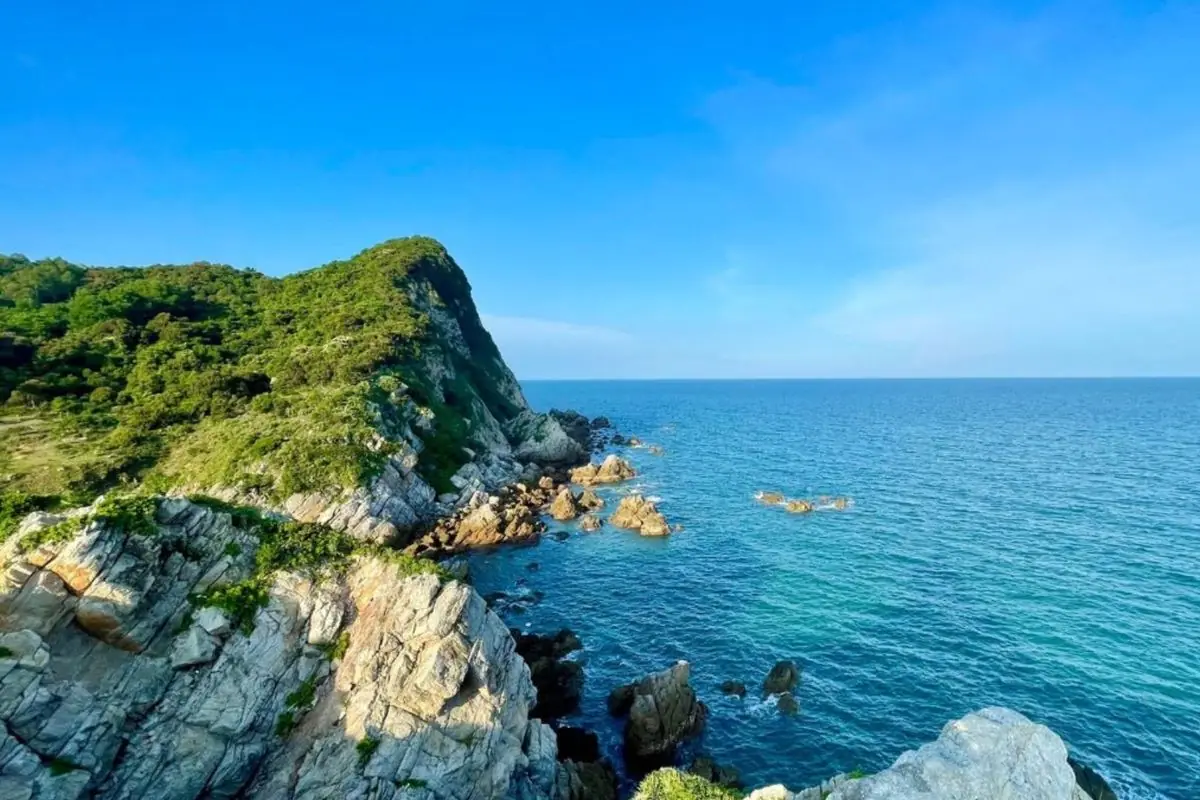
Eo Gio is located towards one end of the island, around 6 km from Quan Lan ferry terminal.
From elevated viewpoints, visitors can look out across open water and distant coastal formations.
However, some parts of the approach are uneven, steep or slippery after rain, and exposed edges can be hazardous.
It’s not a suitable outing for small children or anyone uncomfortable with rough terrain. Eo Gio is best treated as a coastal viewpoint, not somewhere to enter the water.
Quan Lan Communal House and the traditional boat racing festival
Quan Lan was linked to the historic Van Don trading port, an important maritime commercial centre in northeastern Vietnam.
Quan Lan Communal House, known locally as Dinh Quan Lan, stands in Doai Hamlet near Ben Dinh.
Originally established during the Later Le period, the building has been relocated and reconstructed several times. Its present location dates to around 1900.
The communal house follows a traditional Vietnamese architectural layout resembling the character Công, with extensive use of man lai timber and decorative carvings featuring dragons, phoenixes and floral motifs.
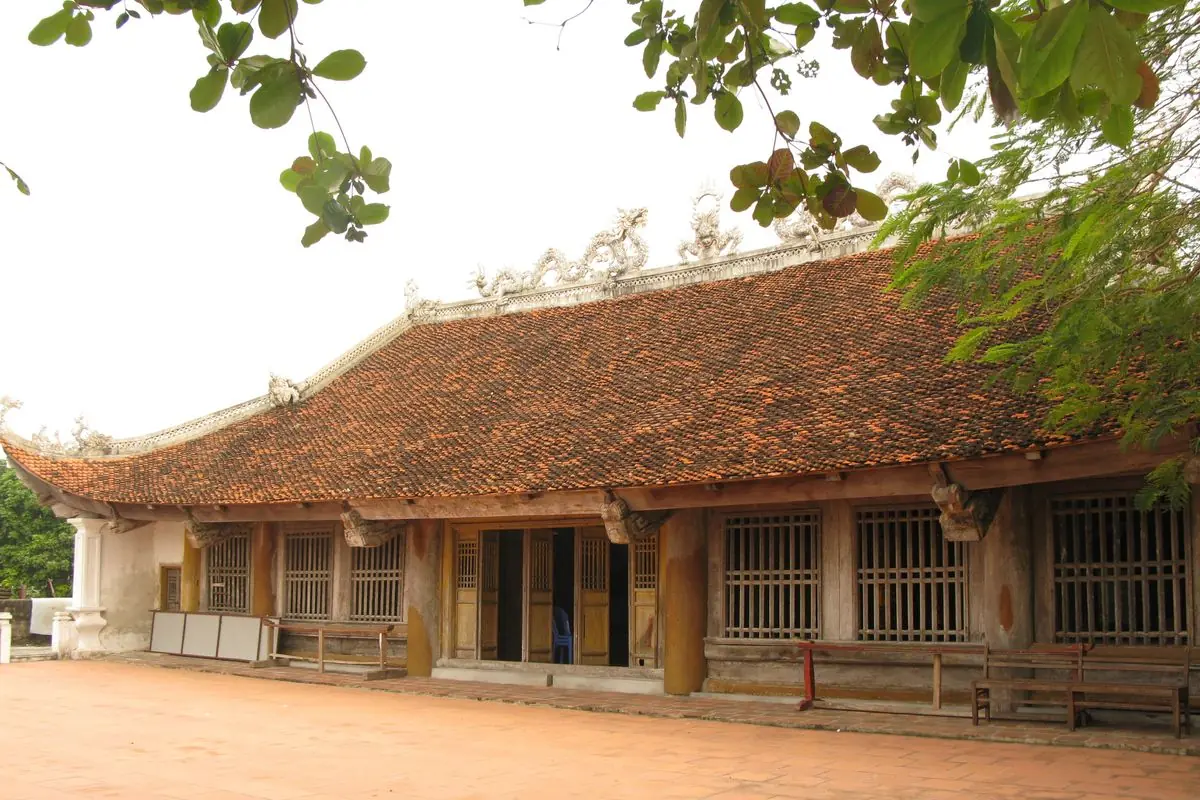
It honours village guardian spirits, early settlers, King Ly Anh Tong and General Tran Khanh Du.
The complex of communal houses, pagodas, temples and shrines in Quan Lan received national recognition for its historical and architectural significance in 1990.
On an ordinary day the communal house is calm, unlike the island’s busy summer beaches.
The Quan Lan boat racing festival
The traditional Quan Lan Festival, also tied to the historic Van Don area, generally takes place from the 10th to the 20th day of the sixth lunar month.
The main celebration falls on the 18th day of that lunar month.
One of its most anticipated events is the ceremonial boat race between the Dong Nam Van and Doai Bac Vo groups.
Decorated wooden boats with dragon-shaped details participate in rituals recalling the Vietnamese victory in the Battle of Van Don in 1288, associated with General Tran Khanh Du during the resistance against the Yuan forces.

The festival was recognised as a national intangible cultural heritage in 2019.
In 2026, celebrations ran from July 23 to August 1, with the main festival day on July 31.
The Gregorian-calendar dates and detailed programme for future years need to be confirmed through local festival announcements.
What to eat on Quan Lan Island
Sa sung and other local seafood
Sa sung, a type of marine peanut worm found in sandy coastal environments, is one of Van Don’s best-known delicacies.
It may be stir-fried, roasted or dried and used to add a rich, savoury flavour to broth.
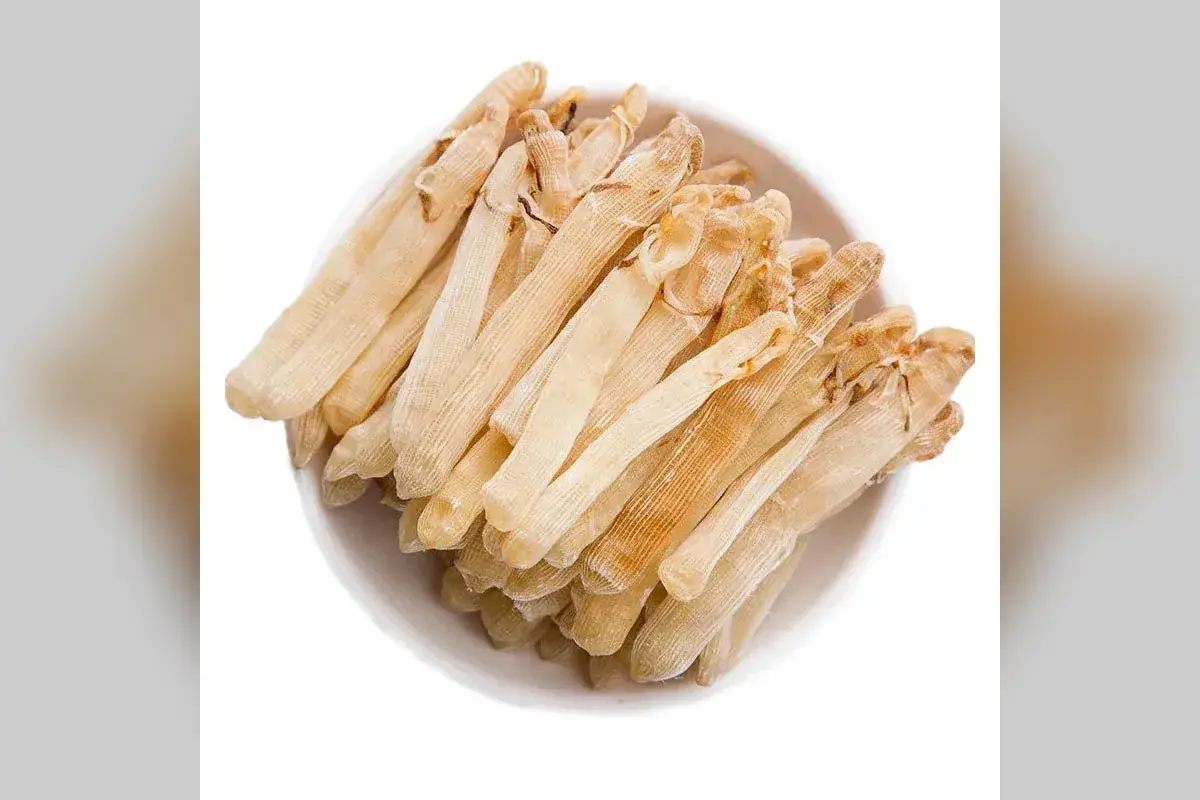
Dried sa sung can be particularly expensive, so check whether a restaurant’s quoted price refers to fresh or dried seafood and whether it’s charged per portion or by weight.
Other local specialties include cu ky, a type of crab, ca ghim, and seasonal fish, prawns, squid and other seafood caught around the island.
Where to eat without overspending
The area around Quan Lan Market has local restaurants that are convenient for travellers staying in the village.
Some seafood sellers near Quan Lan Communal House sell their catch by weight and can arrange cooking for customers.
The Viet My beachfront area near the pier also has restaurants overlooking the sea, suitable for an uncomplicated lunch or dinner.
Restaurants around Minh Chau Beach and the resort areas vary in price depending on location, service and seafood selection.
For dishes sold at market prices, agree on the weight, unit price and preparation charges before the kitchen starts cooking.
When is the best time to visit Quan Lan Island?
April to June is generally the most favourable period for a Quan Lan beach holiday.
Temperatures are warm enough for swimming, and the risk of tropical storms is generally lower than later in the summer.
May and June are especially popular with families, although Minh Chau can become crowded on weekends.
From July to September, the weather is hotter and the region is more vulnerable to heavy rain, tropical depressions and typhoons.
Quan Lan’s location within Bai Tu Long Bay means parts of the surrounding water are sheltered by other islands, but this does not prevent ferry suspensions during unsafe weather.
Autumn can bring pleasant temperatures and quieter beaches, although rain and rough seas remain possible.
Quan Lan Island 2-day, 1-night itinerary
This itinerary works well for travellers arriving from Haiphong, Hanoi or Ha Long, especially those reaching the island between late morning and early afternoon.
Day 1: ferry arrival, historical village and beach time
- Morning
Travel to Ao Tien Port, complete the boarding procedures and take your speedboat to the island.
A 10:30 AM or 1:30 PM ferry may work best, depending on where you’re travelling from.
On arrival at Quan Lan or Minh Chau, take a local vehicle to your accommodation, leave your luggage and have lunch.
Many hotels have fixed check-in times, so arriving early may mean waiting until your room is ready.
- Early afternoon
If you’re staying near Quan Lan village, visit the communal house and wander around the neighbouring streets.
It’s a pleasant opportunity to see traditional architecture and learn a little about the island’s former role in maritime trade.
Travellers staying in Minh Chau may prefer to relax at the hotel or take a short walk around the beach area.
- Late afternoon
Head to Quan Lan, Son Hao or Minh Chau Beach for swimming and relaxing.
Rather than trying to visit every beach on your first day, choose one that is convenient for your accommodation.
- Evening
Enjoy a seafood dinner, perhaps trying cu ky crab or a seasonal sa sung dish, before taking a quiet walk near your hotel.
Quan Lan has a much quieter nightlife scene than major coastal resorts. Evenings are mostly about eating, unwinding and enjoying the relaxed island atmosphere.
Day 2: morning beach walk, another island stop and return ferry
- Early morning
Walk along the beach or swim near your hotel while the shoreline is relatively quiet.
After breakfast, you can explore another part of the island by motorbike or hired vehicle.
For example, travellers staying near Quan Lan village could head towards Minh Chau to experience its soft sand. Those based in Minh Chau could visit Son Hao or explore Quan Lan’s village centre.
- Late morning
Return to your hotel, check out, have lunch and prepare for the journey to your booked ferry terminal.
- Early afternoon
Take your confirmed ferry back to Ao Tien or Hon Gai.
For a short 2-day trip, a return departure around 1:30-3:00 PM is often more comfortable than trying to fit sightseeing into the final hour before the last ferry.
Travellers visiting during the traditional boat racing festival will need to adjust the itinerary to the main celebration day, when festivities can last several hours and visitor numbers increase.
How much does a 2-day trip to Quan Lan cost?
For two people travelling together from Haiphong, sharing a budget room and renting one motorbike, the following estimate provides a useful starting point.
| Expense | Estimated cost per person |
|---|---|
| Return limousine transfer: Haiphong - Van Don | VND 440,000-500,000 |
| Return speedboat tickets | VND 360,000-500,000 |
| Ao Tien port access fee | Around VND 50,000 |
| One night’s accommodation, shared by two | VND 150,000-400,000 |
| Shared motorbike rental | VND 75,000-200,000 |
| Food and drinks | VND 300,000-600,000 |
| Estimated total | VND 1,375,000-2,250,000 |
This is a planning estimate rather than a fixed package price. It excludes shopping, optional activities, additional petrol and potential holiday or weekend surcharges.
Staying at an upscale resort or ordering premium seafood will increase the overall budget substantially.
Quan Lan vs Co To: which island should you visit?
Quan Lan and Co To are both attractive destinations for travellers interested in northeastern Vietnam’s islands.
Both can be reached by speedboat from Ao Tien, but the experiences are quite different.
| Feature | Quan Lan | Co To |
|---|---|---|
| Ferry time from Ao Tien | Around 45-60 minutes | Around 55-75 minutes |
| Reference one-way fare | VND 180,000-250,000 depending on terminal and operator | Around VND 230,000-400,000 depending on operator and seat class |
| Atmosphere | Fishing villages, long beaches and resorts spread across the island | Several coastal attractions and more opportunities for island exploration |
| Highlights | Minh Chau Beach, Son Hao Beach, Quan Lan Communal House | Beaches, lighthouse and scenic island viewpoints |
| Best for | Beach relaxation, local culture and short stays | Exploring multiple locations over a longer trip |
Quan Lan sits within Bai Tu Long Bay, where surrounding islands shelter some routes and beaches from open-sea conditions.
That said, wave conditions still vary considerably with wind direction, season and the weather on the day.
For a 2-day, 1-night trip, Quan Lan is the easier pick, especially for families or international travellers who have already visited Ha Long Bay and want a relaxing night near the beach.
Co To becomes more attractive when you have extra time to explore its various coastal attractions.
Is 2 days and 1 night enough for Quan Lan Island?
Two days and one night are enough to experience some of Quan Lan’s main attractions: the ferry journey through Bai Tu Long Bay, one or two beaches, the historic communal house and a seafood dinner.
Staying close to the beach you most want to visit saves crossing from one end of the island to the other.
Visitors arriving from farther away, or anyone who prefers a slower holiday, may find two nights considerably more comfortable.
Return ferry times can change because of sea conditions or operational adjustments. Keep the ferry company’s contact details and confirm your departure before checking out of your hotel.
Frequently asked questions
Where do ferries to Quan Lan depart, what time do they leave, and how much do they cost?
Most speedboats to Quan Lan or Minh Chau depart from Ao Tien Port in Van Don. Selected operators advertise departures between approximately 7:30 AM and 3:00 PM, with reference fares of VND 180,000-250,000 per adult, one way, depending on the destination terminal and operator. Thanh Hung also advertises a 9:00 AM service from Hon Gai to Quan Lan at VND 300,000 per person. Always confirm the schedule for your exact travel date.
Can foreigners travel to Quan Lan Island without a tour?
Yes. International visitors can use public speedboats to reach the recognised Quan Lan - Minh Chau tourist area, provided they hold valid immigration and residence documents. Bring your original passport and appropriate visa or exemption documents. Your accommodation provider will handle the normal temporary residence declaration. Additional access rules may apply outside permitted tourist areas.
Is it better to stay in Quan Lan or Minh Chau?
Quan Lan village suits travellers after local markets, historical attractions, traditional island life and affordable guesthouses. Minh Chau is better for travellers who want to stay close to fine sandy beaches and tourist facilities. Son Hao fits a more comfortable resort holiday.
What can you do on Quan Lan Island in 2 days?
On your first day, take the ferry to the island, visit Quan Lan Communal House and relax at the beach in the late afternoon. Spend the following morning at Minh Chau or Son Hao Beach, enjoy local seafood and catch your return ferry. Robinson Beach and Eo Gio are optional additions when conditions and ferry timings allow.
Should I visit Quan Lan or Co To for a weekend?
Quan Lan is well suited to a short beach break with long sandy stretches and opportunities to experience traditional island life. Co To appeals to visitors who want to explore several coastal attractions and have more time available. For a simple 2-day, 1-night holiday, Quan Lan is often easier to organise.