Hai Phong license plates in 2026: don't mistake 34 for another province
Since July 1, 2025, vehicles registered under the former Hai Duong prefix 34 have also been part of Hai Phong's license plate system. Existing vehicle owners do not need to replace their plates simply because provincial boundaries have changed.
 22 min read
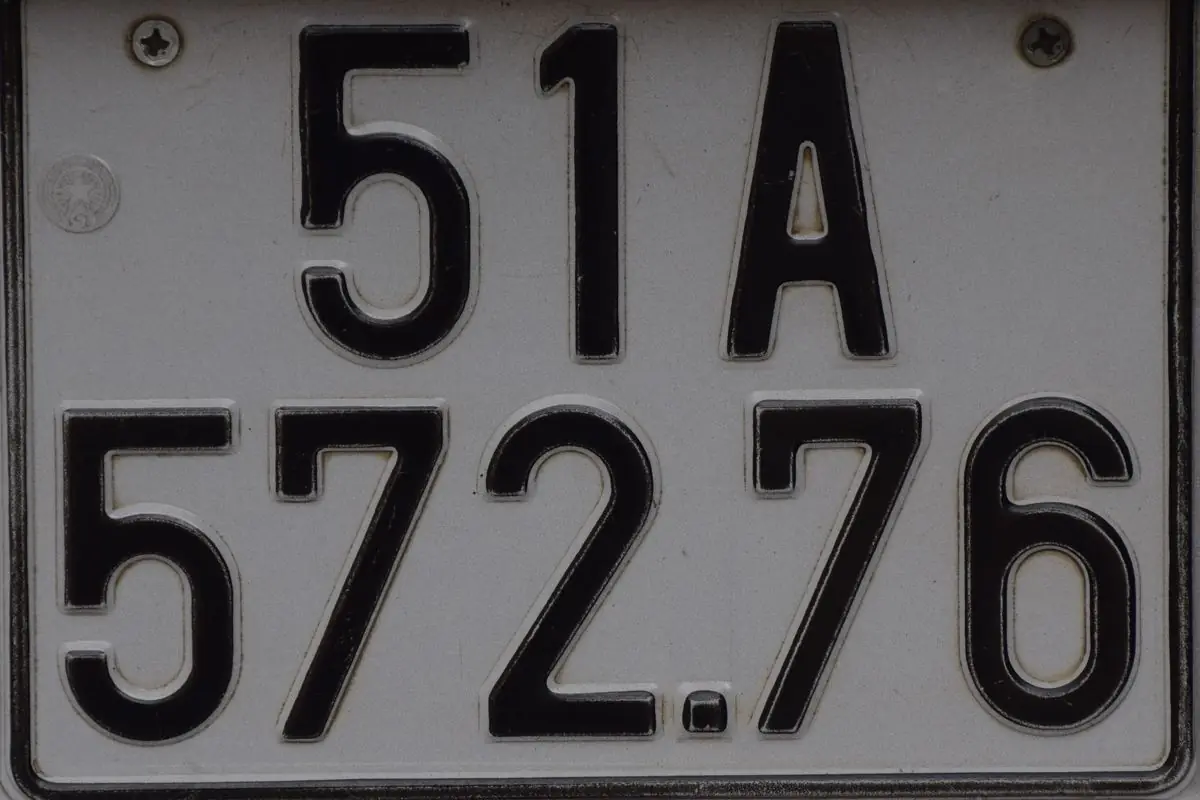
A two-row plate with area code and series over five digits.
Hai Phong license plates use three prefixes: 15, 16 and 34. The change took effect on July 1, 2025, when Hai Phong merged with the former Hai Duong Province. Prefix 34, which previously identified vehicles registered in Hai Duong, is now one of Hai Phong’s official registration prefixes.
These numbers apply to both cars and motorcycles. If you already own a vehicle with a valid 15, 16 or 34 plate, the merger alone does not require you to replace it. For newly registered vehicles, the authorities follow an issuance sequence rather than automatically assigning prefix 34 to people living in the former Hai Duong area.
1. What are Hai Phong’s license plate numbers after the merger?
Under the Ministry of Public Security’s plate code rules that took effect on July 1, 2025, Hai Phong has three official vehicle registration prefixes.
| Prefix | Province or city before the merger | Current locality |
|---|---|---|
| 15 | Hai Phong City | Hai Phong City |
| 16 | Hai Phong City | Hai Phong City |
| 34 | Hai Duong Province | Hai Phong City |
So a car with a 34 plate on Lach Tray Street or a motorcycle with the same prefix on Cat Ba Island is nothing unusual.
Prefix 34 is now part of Hai Phong’s registration system.
The difference is when the plate was issued.
Before July 1, 2025, prefix 34 belonged to Hai Duong Province. From that date, Hai Duong ceased to exist as a separate provincial-level administrative unit and became part of the expanded Hai Phong City.
A vehicle previously registered with prefix 34 does not have to switch to 15 or 16. Nor did the government introduce an entirely new prefix solely to mark the merger.
Instead, the existing prefixes were retained and incorporated into the new administrative structure.
Why do some websites still say Hai Duong uses plate 34?
Many license plate lookup tables were created before Vietnam’s 2025 administrative reorganization.
Under the former system of 63 provinces and centrally governed cities, Hai Phong used prefixes 15 and 16, while Hai Duong used 34.
That information was correct at the time. It is simply incomplete for 2026.
If you search for "Hai Phong license plate number" and find a website listing only 15 and 16, check when the information was last updated.
July 1, 2025 is the key date to look for, as it marks the implementation of the new prefixes.
2. Is a vehicle with plate 34 from Hai Phong or Hai Duong?
Under Vietnam’s current administrative system, prefix 34 belongs to Hai Phong City.
Historically, however, it was Hai Duong’s registration prefix.
Both descriptions can be correct, depending on the period being discussed.
For example, a vehicle issued a 34 plate in 2022 may originally have been registered under Hai Duong Province. By 2026, that same prefix falls within Hai Phong’s official license plate allocation.
But you cannot assume that every driver using a 34 plate currently lives in the former Hai Duong area.
Vietnam’s identity-linked license plate system allows registered owners to retain their plate numbers when they move, under specified conditions. A vehicle can also be sold, re-registered or used somewhere other than where its plate was first issued.
A plate tells you something about the vehicle’s registration. It does not reliably tell you where the driver lives today.
Can a vehicle with plate 34 be driven normally in Hai Phong?
Yes.
A legally registered vehicle displaying prefix 34 can continue operating under the normal traffic rules.
Its owner does not need to request a 15 or 16 plate just because Hai Duong has become part of Hai Phong.
The same applies to vehicles bearing 15 or 16 plates that are used in the former Hai Duong area.
And, of course, a Hai Phong registration does not limit a vehicle to driving within the city.
A car with prefix 34 can travel to Hanoi, Quang Ninh, Hung Yen or elsewhere in Vietnam without changing its plate at each provincial boundary.
The vehicle must be legally registered, roadworthy and properly documented, and the person driving it must meet the applicable legal requirements.
3. Which prefix will a newly registered vehicle receive in Hai Phong in 2026?
This is where the rules become a little less obvious, especially if you have just bought a motorcycle or car.
Under the license plate issuance rules introduced following the administrative reorganization, the prefixes belonging to the locality that retained its name are used first.
Only after those prefixes have been exhausted does the registration system move to the remaining prefixes in ascending order.
For Hai Phong, the sequence is:
- Prefix 15.
- Prefix 16.
- Prefix 34.
The registration rules also set out the general issuance sequence. Prefixes are issued in ascending order, and twenty serial series under one locality prefix are used before moving to another prefix, regardless of vehicle type.
People living in the former Hai Duong area are not assigned prefix 34 by default, and those in the former Hai Phong area do not receive 15 or 16 by default either.
New plates follow a citywide registration system and the applicable issuance order.
There is, however, a distinction between obtaining a newly issued number and reusing an identity-linked plate already assigned to the same owner.
If a person has a retained plate that is eligible for reissuance, that plate may be assigned to another vehicle they own.
This is why you should not assume that a newly purchased car with prefix 34 must have been registered outside the normal rules.
Can you choose between 15, 16 and 34?
Not simply because you prefer one number.
For ordinary new registrations, owners do not automatically have the right to select their preferred provincial prefix.
License plates are issued according to the registration system, available allocations and legal procedures.
There are two different cases for using a particular plate number: reusing your own identity-linked plate, or obtaining a plate through Vietnam’s license plate auction system.
Auctioned plates are subject to separate requirements concerning registration and ownership rights.
For someone buying a car or motorcycle for daily use, however, prefixes 15, 16 and 34 do not create different rights to use the road.
Can someone living in the former Hai Duong area receive a 15 plate?
Yes, that is possible.
After the merger, residents of the former Hai Duong Province are residents of the expanded Hai Phong City.
New vehicle registrations follow the city’s overall issuance arrangements rather than a strict division between the old provincial territories.
You also do not need to travel to central Hai Phong to get a plate beginning with 15.
A more useful question is whether your chosen registration office can process the type of vehicle and application you are submitting.
This is particularly worth checking when registering a car.
4. Do owners have to replace old 15, 16 or 34 license plates?
No. Changing administrative boundaries does not, by itself, require vehicle owners to replace their existing license plates or registration certificates.
Here is how the rule applies to common situations.
| Situation | Replacement required solely because of the merger? |
|---|---|
| A motorcycle with an existing 34 plate | No |
| A car with a 15 or 16 plate | No |
| A registration certificate showing an old Hai Duong address | No |
| An owner who moves within the city after the merger | No |
| A damaged or illegible plate | Replacement may be required under general rules |
| A vehicle sold or transferred to a new owner | Ownership transfer procedures apply |
This distinction matters for people who have owned their vehicles for years.
If your motorcycle still has a valid 34 plate, there is no general requirement to visit the police just to replace it with a Hai Phong prefix.
When is a registration certificate or license plate replacement necessary?
There are several circumstances in which registration certificates or plates may need to be replaced.
Examples include:
- A registration certificate or license plate becoming damaged or illegible.
- A vehicle being modified or repainted.
- A car changing between ordinary use and commercial transport operations, requiring a change between white and yellow plates.
- Changes to the owner’s name, identification number or other relevant registered information.
- A registration certificate reaching the end of its validity period.
- An owner requesting an eligible replacement to reflect a new address or another permitted change.
Not every case requires both the physical plate and the registration certificate to be replaced.
The procedure depends on what information or component needs changing.
Updating an administrative address is a separate matter from selling the vehicle, changing ownership details or replacing a damaged plate.
Do older three-digit or four-digit plates have to become five-digit plates?
A vehicle that still legally uses an older three-digit or four-digit plate is not required to switch immediately to a five-digit plate solely because Hai Phong and Hai Duong were combined.
However, if the vehicle subsequently undergoes a registration procedure that requires a new plate under current regulations, the registration authority may issue a plate in the present format.
The rules are different for existing five-digit plates that are managed as identity-linked plates.
For an older vehicle, first establish which registration rules apply to its particular plate and documents.
5. What is an identity-linked license plate in Hai Phong?
Vietnam’s identity-linked license plate system connects a registration number to the registered owner’s identity in the vehicle registration database.
It does not mean the plate has a special appearance or contains the owner’s personal identification number.
License plates belonging to Vietnamese citizens are managed using their personal identification numbers.
For organizations, the system uses the relevant electronic identification code or other information specified by law.
Foreign vehicle owners are managed using the applicable identification and residency documentation.
In the registration system, a plate number is associated with a registered owner.
Can you keep your 34 plate after selling your motorcycle?
Yes, provided the plate is covered by the ordinary identity-linked plate rules and the required revocation procedure is completed.
Suppose you own a motorcycle registered with prefix 34 and decide to sell it.
Under the normal rules, the plate does not pass to the buyer along with the motorcycle by default.
The registration authority revokes the old registration and retains the number for the previous owner under the applicable conditions.
The retained plate can later be assigned to another vehicle that you own.
The same principle applies to prefixes 15 and 16.
This is particularly relevant when buying used motorcycles.
The physical plate attached to a motorcycle at the time of sale is not necessarily the plate that the new owner will receive.
Special rules may apply when transferring vehicles associated with auctioned license plates.
How long can an identity-linked plate be retained?
An identity-linked plate can be retained for five years from the date of official revocation.
During that period, the retained number can be reassigned under the applicable rules to another eligible vehicle the owner registers.
If five years pass without the owner using it again, the number returns to the allocation pool and may be issued to someone else.
The starting date is important.
The five-year period does not begin when you first buy the vehicle or when you sign a private sale agreement.
It begins from the date the relevant registration authority officially revokes the registration and plate.
Are five-digit plates issued before 2023 considered identity-linked?
Generally, yes, subject to the transitional rules.
When Vietnam introduced the identity-linked system on August 15, 2023, previously registered five-digit plates that had not already been revoked were treated as identity-linked plates belonging to the registered owners.
This means you can enter the system without purchasing a new vehicle or applying for a replacement plate.
A vehicle with a five-digit 34 plate issued several years ago may already be registered under its owner’s identity.
But you should not assume that every old five-digit number is still available to its former owner.
Plates revoked before the relevant transitional date may be handled differently.
The registration status matters more than the number of digits alone.
Will you lose your identity-linked plate if you move?
No.
The registration system allows owners to retain their identity-linked numbers when they move, subject to the applicable registration requirements.
For example, someone who originally registered a motorcycle in Hai Duong may later move to central Hai Phong without automatically losing their existing 34 plate.
This is one reason why license plate prefixes are not a reliable way to determine where a vehicle owner currently lives.
6. Where can you register a car or motorcycle in Hai Phong in 2026?
Since July 1, 2025, eligible individuals and domestic organizations have been able to choose between the Traffic Police Division and commune-level police registration offices within the province or centrally governed city where they reside or are headquartered.
In Hai Phong, the relevant authorities include:
- The Traffic Police Division of Hai Phong City Police.
- Eligible commune-level, ward-level and special-zone police registration offices within Hai Phong City, according to their assigned registration responsibilities.
The former district-level police structure is no longer the registration level under the reorganized administrative system.
However, being able to choose a registration office within the city does not mean every commune-level police office handles every type of vehicle.
Whether a specific location processes car registrations or specialized vehicle applications can depend on local implementation and the registration powers assigned to that office.
Before registering a car, it is worth checking whether the office you intend to visit accepts your particular application.
For motorcycle registration, identify an appropriate local registration point and confirm its current procedures.
That saves you losing half a day at the right agency but the wrong office.
Do residents of the former Hai Duong Province need to register vehicles in central Hai Phong?
Not as a general requirement.
Because the former Hai Duong area is now part of Hai Phong City, residents can use eligible registration authorities within the expanded city under the applicable rules.
There is no general need to travel all the way to central Hai Phong simply because the provincial name has changed.
What you need to establish is whether your chosen office handles the specific vehicle category and registration procedure.
Some special cases may still need to be processed by the Traffic Police Division rather than a commune-level office.
What documents are needed to register a new vehicle?
The exact requirements depend on the vehicle and registration procedure.
For an ordinary new car or motorcycle, registration generally involves the owner’s identification documents, proof of the vehicle’s origin, purchase or ownership transfer documentation, and evidence that applicable financial obligations have been fulfilled.
A practical sequence is:
- Step 1
Check the documents supplied by the seller
Make sure the purchaser’s details, vehicle identification number, chassis number and engine number match the relevant paperwork.
A small discrepancy can delay the registration process.
- Step 2
Complete the applicable registration-related tax and fee procedures
Declare and pay the amounts required for your vehicle type and registration circumstances under current regulations.
- Step 3
Choose the appropriate registration authority and application method
Depending on the procedure, applications may be supported through public service portals, approved digital identification services or direct submission.
- Step 4
Complete the required vehicle inspection and plate issuance procedure
The registration authority checks the application and, where required, the vehicle itself before processing the license plate and registration certificate.
- Step 5
Receive the registration result
Use one of the available delivery or collection methods supported by the relevant procedure.
A dealership that offers registration assistance handles some steps; ask which ones, and whether you must attend any appointment personally.
Are electronic vehicle registration certificates available on VNeID?
New rules that took effect on June 8, 2026 introduced additional provisions concerning electronic vehicle registration certificate data, including integration with VNeID and VNeTraffic.
Under the applicable rules, registered vehicle information can be accessed and verified electronically through supported services.
If you recently registered a vehicle and its information has not yet appeared in the app, check your account details and application status.
A delay in displaying information does not by itself mean the vehicle has not been legally registered.
For a recently purchased or transferred vehicle, matching the registered owner and license plate details is more important than the particular provincial prefix.
7. How to read a Hai Phong license plate
A standard Vietnamese vehicle license plate generally contains a locality prefix, a series of letters or numbers, and the vehicle’s registration number.
For an ordinary Hai Phong plate, the first two digits are particularly useful:
- 15: Hai Phong.
- 16: Hai Phong.
- 34: Hai Phong.
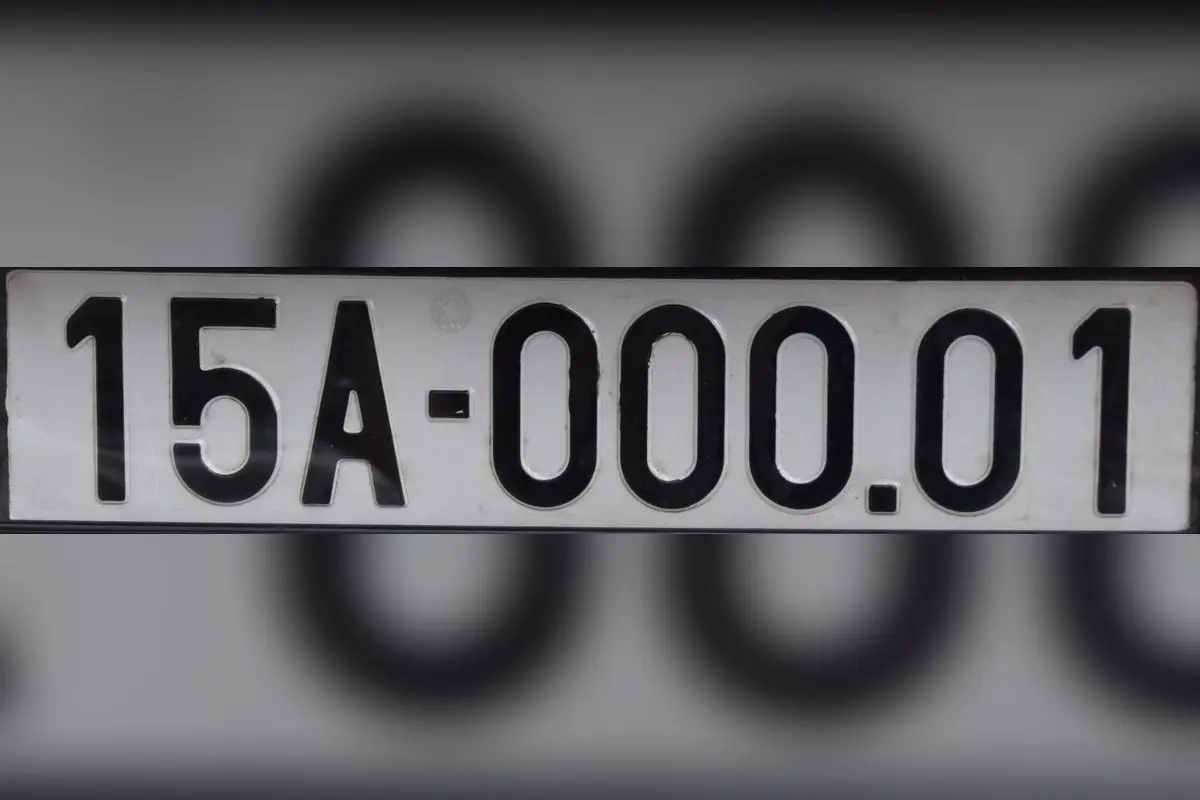
A simplified example of a car plate format would be 15A-xxxxx or 34A-xxxxx.

The first two digits identify the locality prefix, the letter forms part of the serial designation, and the following five digits form the registration number.
Motorcycle plates may use a different combination of letters and numbers in their series, such as the illustrative format 34-B1 xxxxx.
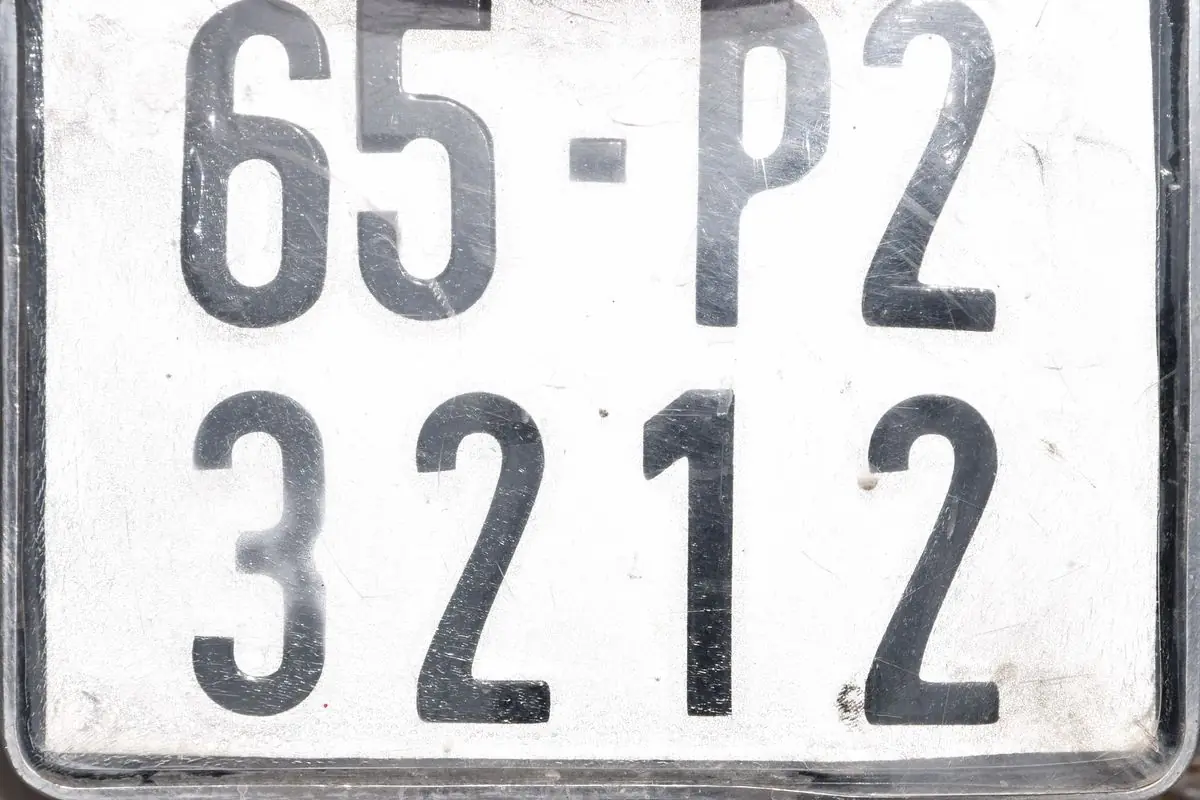
These are examples of plate structure, not actual verified registrations.
Can you identify a particular ward or commune from the plate series?
Not reliably.
Older motorcycle plate lookup tables often associate particular letters and numerical series with former districts.
Those tables may still provide historical context, but they should not be treated as accurate guides to a vehicle owner’s present address.
Administrative boundaries have changed. Previously issued plates remain in use, and owners may retain identity-linked numbers even after moving.
A serial letter following 15, 16 or 34 is therefore not enough to establish which ward or commune the owner currently lives in.
Even knowing where the plate was originally issued does not establish the driver’s current place of residence.
For a used-vehicle purchase, rely on the registration certificate and legally verifiable ownership information rather than an old district-by-district series table.
8. What do different license plate colors mean in Hai Phong?
The color of a Vietnamese license plate can tell you something about the category of vehicle or organization using it.
The main categories include:
| Plate appearance | General vehicle category |
|---|---|
| White background, black letters and numbers | Vehicles belonging to eligible domestic individuals and organizations |
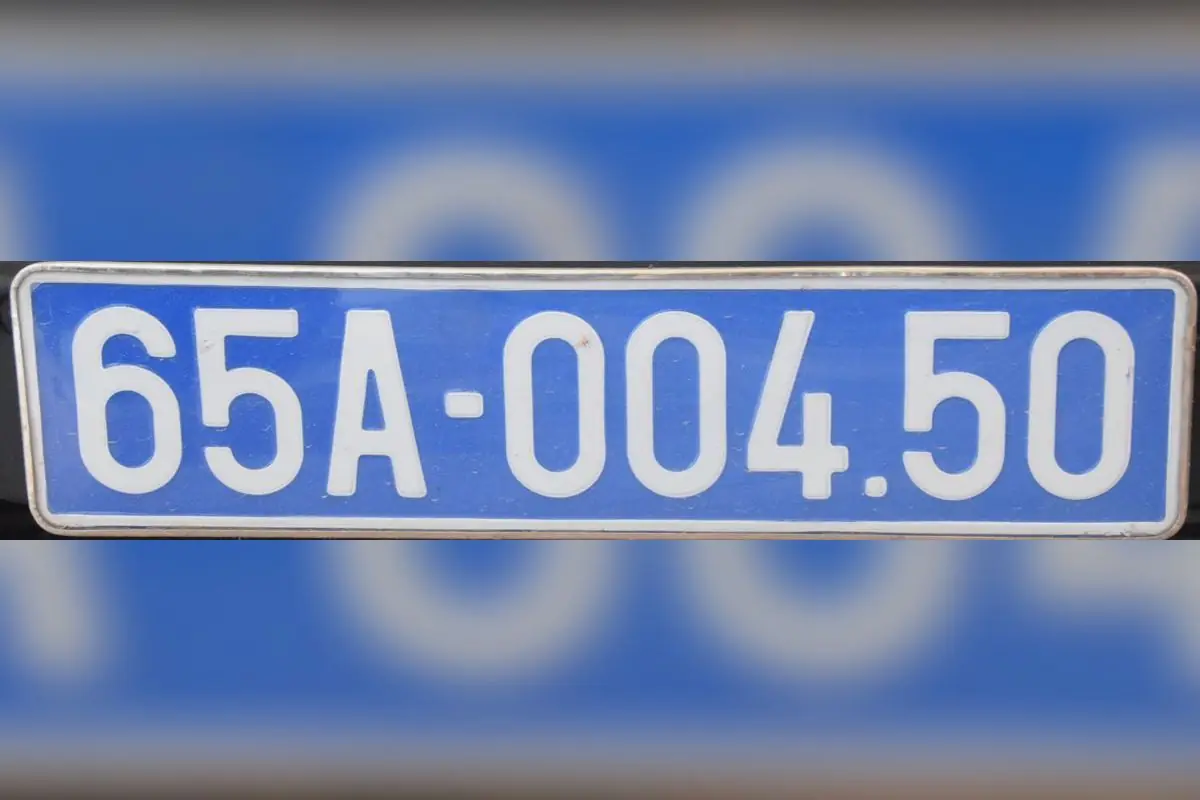
| Blue background, white letters and numbers | Vehicles belonging to eligible state agencies and other specified organizations |
| Yellow background, black letters and numbers | Commercial road transport vehicles |
| White background with red NG or QT designation | Diplomatic and international organization categories |
| White background with CV or NN designation | Relevant foreign organization and individual categories |
White plates with black characters
Private cars and motorcycles
These are the ordinary plates you will commonly see on privately owned cars and motorcycles.
A white plate beginning with 34 is not unusual or less valid than a plate beginning with 15 or 16.
All three prefixes belong to Hai Phong.
Blue plates with white characters
State agencies
Blue plates are issued to vehicles belonging to government agencies and other organizations specifically eligible for this category.
Not every vehicle owned by an organization qualifies for a blue plate.
The category depends on the legal status of the registered owner and the applicable regulations.
Yellow plates with black characters
Commercial transport
Yellow plates are commonly used for commercial road transport vehicles, including many taxis and other passenger transport vehicles.
They can help you recognize a commercial vehicle, but a yellow plate does not prove that a particular car is the one assigned to your booking.
You still need to check the full registration number.
NG, QT, CV and NN plates
Foreign missions and owners
These letter designations relate to specific groups of foreign diplomatic, international organization and foreign-owned vehicles.
- NG: Diplomatic vehicle category.
- QT: Vehicles associated with eligible international organizations and related diplomatic categories.
- CV: Vehicles associated with eligible administrative and technical personnel holding the relevant official identification.
- NN: Vehicles of qualifying foreign organizations, representative offices and foreign individuals.
Not every foreign national living in Hai Phong drives a vehicle with an NN plate.
The appropriate category depends on the owner’s legal status and registration circumstances.
Military vehicles also use a separate red plate system, which should not be confused with the blue plates used by certain civilian state organizations.
9. Using license plates to identify your taxi or ride-hailing car
For travelers, license plates become especially useful when it is time to find the correct car.
You might be waiting outside Hai Phong Railway Station, near the Opera House, at Cat Bi Airport or in front of a busy hotel.
Several vehicles may be arriving and collecting passengers at the same time.
There is no reason to reject a car showing a 34 plate in your ride-hailing app just because you previously associated that number with Hai Duong.
Instead, check the following:
- The complete license plate against the registration shown in the app.
- The car’s make, model and color.
- The driver’s name and available profile information.
- The pickup location, destination and current booking status.
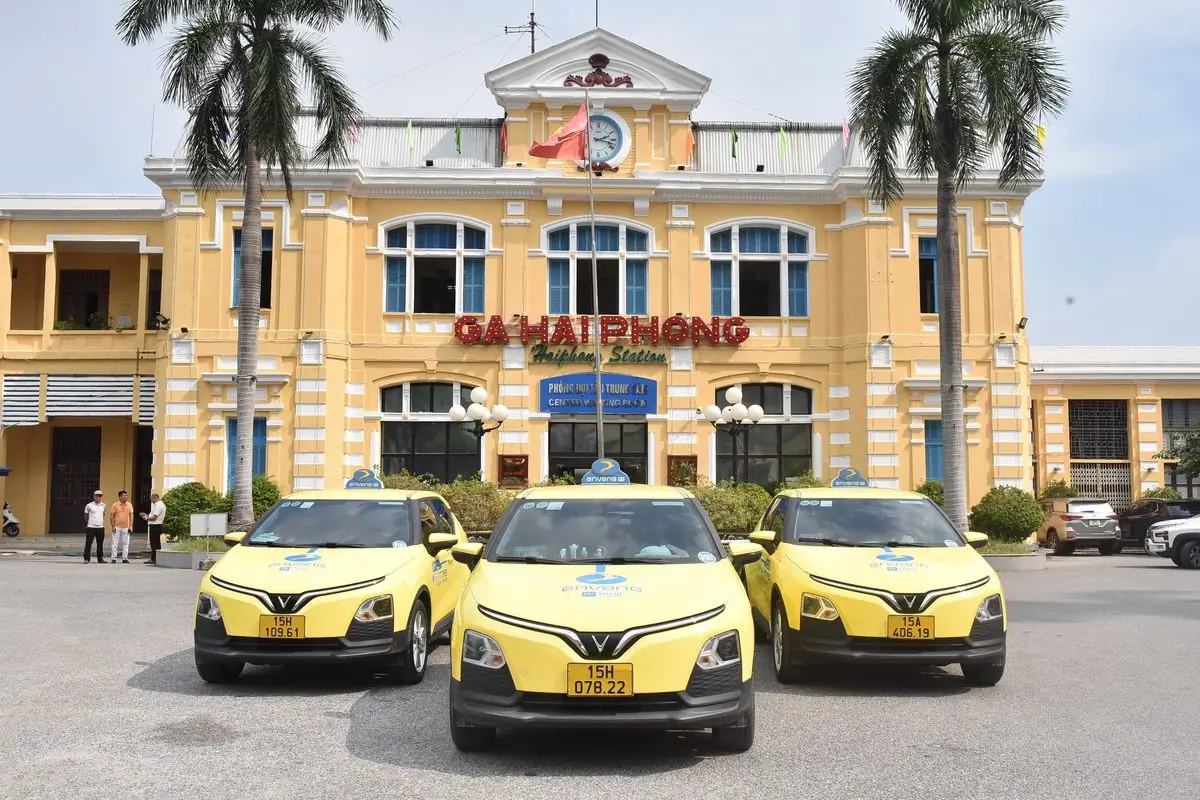
The full plate number matters much more than the first two digits.
Two different cars can both have plates beginning with 15. That tells you almost nothing about which one is yours.
What if the arriving vehicle has a different license plate?
Do not get in immediately.
Check the trip details and contact the driver or the platform through the official app.
If the vehicle information does not match and the discrepancy cannot be properly resolved, it is safer not to accept that ride.
The same applies to someone claiming to be your driver without matching the booking details.
10. Renting a motorcycle with a 15, 16 or 34 plate
If you are renting a motorcycle in Hai Phong, the provincial prefix should not be your main concern.
This applies whether you plan to travel around the city center, visit Do Son or use a rental motorcycle on Cat Ba Island.
Plates beginning with 15, 16 and 34 can all be legally registered Hai Phong plates.
Before accepting the motorcycle, check:
- Whether the physical license plate matches the registration documents.
- Whether the vehicle identification details are consistent with the paperwork.
- The condition of the brakes, lights, horn, tires and mirrors.
- Whether your driving license legally allows you to operate that type of motorcycle in Vietnam.
- The rental terms, deposit, responsibility for damage and accident procedures.
Ask the shop to confirm the agreed price and return time in writing, preferably in a message or rental agreement.
A motorcycle with a 34 plate is not suspicious merely because its prefix originally belonged to Hai Duong.
Equally, a motorcycle with a 15 plate is not guaranteed to be well maintained or properly documented.
Foreign visitors and residents should pay particular attention to driving license recognition in Vietnam.
The fact that a rental business is willing to hand over a motorcycle does not mean the renter is legally qualified to ride it.
11. License plate numbers of provinces near Hai Phong in 2026
If you travel along National Highway 5, the Hanoi-Hai Phong Expressway or routes connecting Hai Phong with Quang Ninh and Hung Yen, you will encounter vehicles registered in several neighboring provinces.
The 2025 administrative reorganization changed more than just Hai Phong’s list of prefixes.
Several newly expanded provinces now use multiple numbers inherited from their former administrative units.
The table below shows the prefixes in effect since July 1, 2025.
| Current province or city | License plate prefixes | Notes |
|---|---|---|
| Hai Phong | 15, 16, 34 | 34 formerly belonged to Hai Duong |
| Hanoi | 29, 30, 31, 32, 33, 40 | Existing Hanoi prefixes |
| Quang Ninh | 14 | Prefix unchanged |
| Hung Yen | 89, 17 | 17 formerly belonged to Thai Binh |
| Bac Ninh | 99, 98 | 98 formerly belonged to Bac Giang |
| Ninh Binh | 35, 18, 90 | 18 from Nam Dinh, 90 from Ha Nam |
| Lang Son | 12 | Prefix unchanged |
| Thai Nguyen | 20, 97 | 97 formerly belonged to Bac Kan |
| Phu Tho | 19, 28, 88 | 28 from Hoa Binh, 88 from Vinh Phuc |
As the table shows, having several vehicle registration prefixes within one province is now quite normal.
Hung Yen has both 89 and 17. Bac Ninh has 99 and 98. Ninh Binh has three prefixes: 35, 18 and 90.
Hai Phong follows the same pattern with 15, 16 and 34.
However, a prefix appearing in the official list does not mean all listed prefixes are necessarily being issued to new vehicles at the same time.
New registrations follow the prescribed allocation and issuance rules.
Are plates 17, 18 and 34 still associated with their former provinces?
Historically, yes. Administratively, those areas now belong to different provincial-level units.
For current reference:
- 17: Hung Yen, formerly Thai Binh.
- 18: Ninh Binh, formerly Nam Dinh.
- 34: Hai Phong, formerly Hai Duong.
Similarly, prefix 98 previously belonged to Bac Giang and now falls under Bac Ninh.
This distinction is especially useful when reading guides written before July 2025, buying used vehicles or discussing registration details with people who still refer to the former provinces by their old names.
The plate tells you the vehicle’s registration prefix. It does not tell you the driver’s journey, current home or hometown.
12. Can you tell which province a car came from by its license plate?
Only to a limited extent.
A standard license plate prefix identifies a registration locality or the locality associated with a retained registration number.
It does not tell you where the vehicle has been driving today.
For example, a car with prefix 30 carries a Hanoi registration prefix.
That does not prove its driver left Hanoi that morning.
The vehicle could have been in Hai Phong for several days, regularly operate there or belong to someone who has moved while retaining an identity-linked plate.
Likewise, a vehicle with a 34 plate could be traveling between central Hai Phong and Cat Ba without its driver having any current residential connection to the former Hai Duong Province.
If you are meeting a friend, collecting a chartered car or identifying a pre-booked vehicle, ask for the full license plate and confirmation from the person or company responsible.
Can you look up a vehicle owner’s name from a license plate?
A license plate identifies a vehicle in the registration system, but it is not an unrestricted public directory of its owner’s personal information.
Vehicle ownership information must be checked through lawful channels and appropriate procedures.
When buying a used vehicle, request the registration certificate, relevant ownership documents and the legally required transfer paperwork.
If you suspect a fake plate, mismatched registration or impersonation, keep the relevant details and contact the appropriate authorities or service provider.
13. Common misunderstandings about Hai Phong license plates
Mistake 1: Hai Phong only has plates 15 and 16
That information reflects the system before July 1, 2025.
It is incomplete for 2026.
Hai Phong now has three official registration prefixes: 15, 16 and 34.
If you maintain a vehicle lookup table or need to recognize local plates, include 34.
Mistake 2: all 34 plates must be replaced with 15 plates
There is no general requirement to do this.
A legally registered 34 plate remains valid after the merger.
Owners need to complete a replacement procedure only when it is required under the applicable registration rules or when they make an eligible voluntary request.
Mistake 3: people living in the former Hai Duong area always get 34 plates
Not true.
New registrations follow Hai Phong’s common issuance sequence rather than being permanently separated by the old provincial boundary.
If an owner has an existing identity-linked 34 plate that can be reassigned, that is a separate situation.
Mistake 4: selling a car means selling its identity-linked plate
Under the ordinary identity-linked plate system, the number remains associated with the original owner following the required revocation procedure.
It does not pass to the buyer with the car.
Both parties must complete the appropriate ownership transfer and registration procedures.
Special rules apply in certain cases involving auctioned plates.
Mistake 5: the letters on the plate reveal the owner’s exact ward
They do not reliably establish that information.
Administrative boundaries have changed, plates may remain in use for years, and owners can move without automatically receiving new prefixes.
An old district-by-district series list should not be treated as definitive evidence of someone’s current address.
14. When does the license plate prefix actually matter?
Whether a car with a 34 plate belongs to Hai Phong’s current registration system has a simple answer: yes.
If you are buying a new vehicle, it helps to understand the city’s three prefixes and the sequence in which new plates are issued.
But the registration paperwork, the right to reuse an existing identity-linked plate and the correct registration office are more important than choosing between 15, 16 and 34.
Selling a vehicle means paying attention to ownership transfer, plate revocation and the five-year retention rule.
The fact that the plate begins with 34 does not change these basic responsibilities.
And if you are waiting for a taxi, rental car or relatives at the station, concentrate on the full license plate rather than the first two digits.
Imagine standing outside Cat Bi International Airport and seeing a ride-hailing booking for a vehicle beginning with 34A.
Remembering only that Hai Phong once used 15 and 16, you might assume the app has assigned you a car from another province.
But with the updated system, a 34 prefix is completely ordinary in Hai Phong.
That still does not mean you should accept the first vehicle displaying 34A.
Check the remaining characters and numbers, the vehicle details and the driver information before getting in.
A few seconds spent verifying the complete plate are far more useful than trying to guess which neighborhood the vehicle originally came from.
If your pre-booked transfer leaves early in the morning, confirm the full license plate and pickup point with the operator by 8:00 p.m. the evening before. Whether the car has a 15, 16 or 34 plate, the important things are getting the right vehicle, the right departure and the right pickup location.
Frequently asked questions
What are the Hai Phong license plate numbers in 2026?
Hai Phong has used 15, 16 and 34 since July 1, 2025. Prefix 34 previously belonged to Hai Duong Province but is now officially included in Hai Phong's license plate allocation.
Do vehicles with 34 plates need to change to 15 or 16 after the merger?
No. Existing, legally registered vehicles with 34 plates do not need to change their numbers solely because Hai Duong merged with Hai Phong. Replacement is necessary only in circumstances covered by the general registration rules or through an eligible voluntary procedure.
Which plate number will a new motorcycle receive in the former Hai Duong area?
Newly issued plates follow Hai Phong's common allocation rules, with prefixes 15 and 16 used before 34 according to the prescribed sequence. Living in the former Hai Duong area does not automatically mean you will receive a 34 plate. Reassignment of an existing identity-linked plate is handled separately.
Can you keep your Hai Phong identity-linked license plate after selling your vehicle?
Yes. Under the ordinary identity-linked plate system, the number can be retained for the previous owner for five years from the date of official revocation, provided the required procedures are completed. It may then be reassigned to another eligible vehicle owned by that person. Different rules can apply to auctioned plates.
Can foreigners living in Hai Phong register vehicles with 15, 16 or 34 plates?
Foreign nationals who meet Vietnam's legal registration requirements may register vehicles under the applicable procedures and plate categories. Some foreign owners or organizations receive special registration designations, depending on their legal status. Not all foreigners use NN plates, and a prefix such as 15, 16 or 34 does not establish the owner's nationality.