Choose a homestay in Hai Phong by neighborhood and room type before you book
A homestay makes sense when you want a more personal room, a kitchen or space to share with friends. A hotel may be the easier choice for very late arrivals, a staffed front desk or a predictable one-night stop.
 22 min read
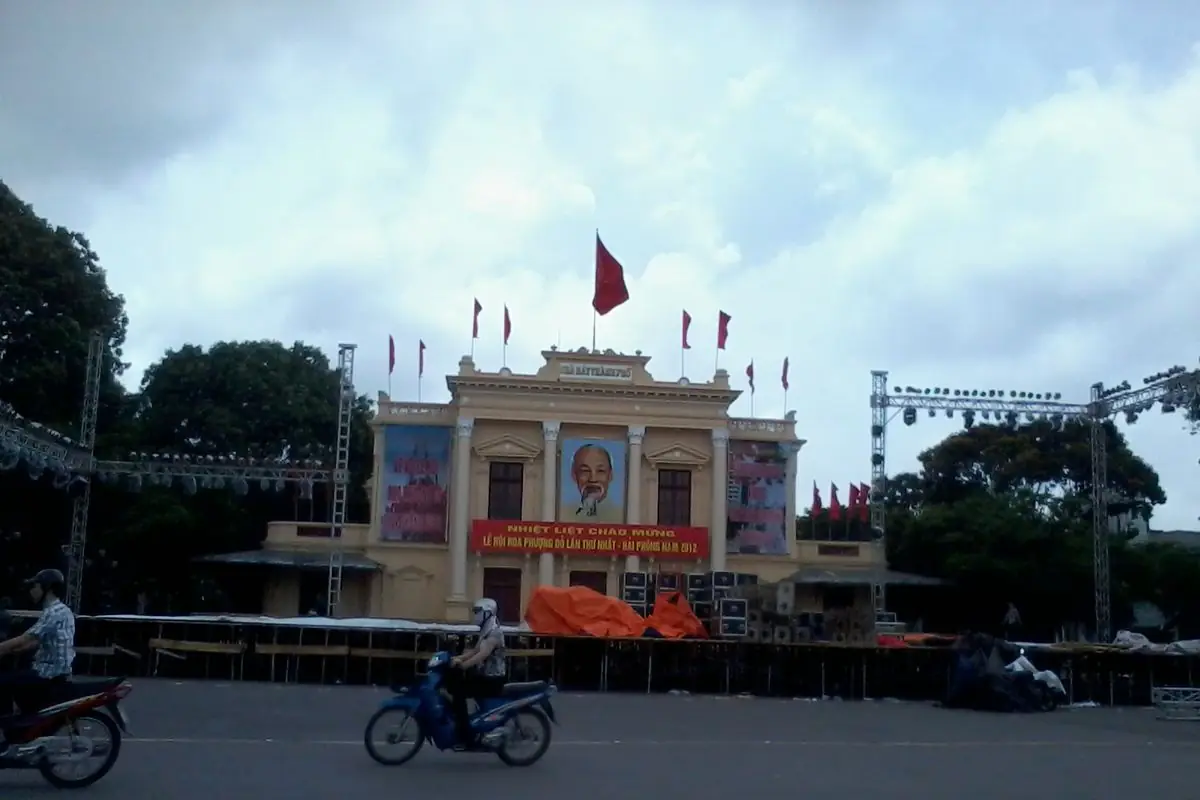
The Opera House anchors the old center.
10 p.m. is the arrival time to think about before booking: will someone meet you, or will you need a door code to enter? For a first visit, start your search for a homestay in Hai Phong around the Opera House, Hai Phong Railway Station and the surrounding central streets. Lach Tray, Van Cao and residential apartment developments are better bets for a kitchen, workspace or larger apartment; for an early flight, focus on access to Cat Bi Airport instead.
Where should you stay in Hai Phong?
Hai Phong does not have a single homestay district. Short-stay rooms appear in family houses, narrow residential lanes, apartment buildings and larger urban developments. Some listings use “homestay” for a hosted bedroom. Others use the same word for a completely private studio or an entire home. The label tells you much less than the location and house rules.
Start with what your days will look like. Are you arriving by train for a one-night food trip? Do you have meetings around Le Hong Phong? Are you flying out before breakfast? Will four friends arrive in one car? Those details narrow your search faster than scrolling through dozens of attractive bedrooms.
Put three points on your map: where you arrive, where you expect to spend most of your time, and where you leave the city. Then compare properties by actual walking or driving route. A cheap room on the wrong side of town may not be a good deal after several rides across Hai Phong.
Loading map…
- Opera House: 28 Tran Hung Dao, the central landmark
- Tam Bac: Older streets by the lake
- Hai Phong Railway Station: 75 Luong Khanh Thien
- Lach Tray: Private rooms and small apartments
- Van Cao: Good for longer stays
- Cat Bi International Airport: Hai An, handy for early flights
- Vinhomes Imperia: Apartments for families and groups
- Vinhomes Marina: Apartment development near An Bien
- Roygent Parks Hai Phong: Serviced apartments, Waterfront City
| Area to search | Best for | Check before booking |
|---|---|---|
| Opera House, Tam Bac and historic center | First visits, food walks, seeing the city on foot | Street noise, parking, precise entrance |
| Hai Phong Railway Station, Le Loi and Tran Phu | Train arrivals, short stays and food trips | Real walking distance, luggage storage |
| Lach Tray, To Hieu and Hai Ba Trung | Couples, younger travelers and everyday city life | Stairs, lane access, street-facing rooms |
| Van Cao and Le Hong Phong | Longer visits, work and nearby dining | Traffic noise, desk, Wi-Fi and laundry |
| Hai An, Dang Hai and Ngo Gia Tu | Cat Bi Airport departures and transit nights | Vehicle route to the terminal, late check-in |
| Vinhomes and other apartment developments | Families, friends and extended stays | Exact building, visitor rules, lift access and parking |
Two units on the same street can feel completely different. One faces traffic and restaurant lights; another looks into an inner courtyard. A property pinned to a residential compound might be a long walk from the gate you actually need to use. Ask for the exact entrance rather than trusting the broad neighborhood label.
Opera House and Tam Bac: the easiest base for the historic center
For visitors wondering where to stay in Hai Phong old quarter, the Opera House at 28 Tran Hung Dao is the most useful place to begin. The surrounding central streets offer a practical base for exploring older architecture, stopping for coffee and planning a food-focused day without using a car for every outing. Search around Tran Hung Dao, Hoang Van Thu, Tran Phu and Tam Bac as well as the Opera House itself.
“Old quarter” is just a handy name for the older streets here; unlike Hanoi’s Old Quarter, it has no formal boundary. A listing that calls itself “old town” can still sit at the far end of a long street. Check its map pin, the entrance location and the route to the places you actually want to visit.
The trade-off for that convenience is noise. Restaurants, passing motorbikes and activity on busy streets can make a street-facing room less peaceful at night. Hai Phong has also hosted scheduled walking, street-food and performance events around the central gardens and Opera House, but they are not a nightly fixture. Light sleepers should ask whether the bedroom faces the road or an internal space, and read recent comments about noise rather than relying on a description that simply says “quiet.”
The other issue is parking. Old central streets can be enjoyable on foot but less straightforward for a driver carrying luggage. “Parking available” may mean a paid lot away from the front door. Ask whether overnight parking is secure, what kind of vehicle fits and how far you need to walk from the parking space to the room.
On a one- or two-night visit, a modest private room near the center may serve you better than a glamorous apartment farther away. You can spend the day out tasting local food and return without planning a long ride at the end of the evening.
Hai Phong Railway Station: useful for a short train-based trip
Hai Phong Railway Station is at 75 Luong Khanh Thien. It is a natural point of reference if you travel from Hanoi by rail and want to fit a compact food trip into one or two days. Start with Luong Khanh Thien, Le Loi, Tran Phu and nearby streets, then compare the walking route for each address.
A straight-line measurement does not tell you whether the pedestrian entrance is around the back of a building or whether a lane is accessible with a suitcase. Use walking directions rather than the general map overview. Ask about luggage storage too, in case your train gets in before the room is ready.
The station area is particularly sensible for travelers who prefer short journeys and few moving parts. A private bathroom, working air-conditioning and a comfortable bed are often all you need for a one-night food itinerary. Paying extra for an elaborate kitchen makes little sense if every meal will be outside.
An early departure the next morning raises another question: is check-out genuinely self-service? Some hosts request an inspection or an in-person key handover. Having that detail settled the day before makes an early departure much easier.
Lach Tray, To Hieu and Hai Ba Trung: lively, everyday Hai Phong
The Lach Tray area and connecting streets such as To Hieu and Hai Ba Trung are worth considering for a young couple, friends exploring the city or someone who wants a neighborhood with everyday services rather than a landmark outside the window. You can find private rooms, apartment-style accommodation and places that are convenient for local cafés and food stops.
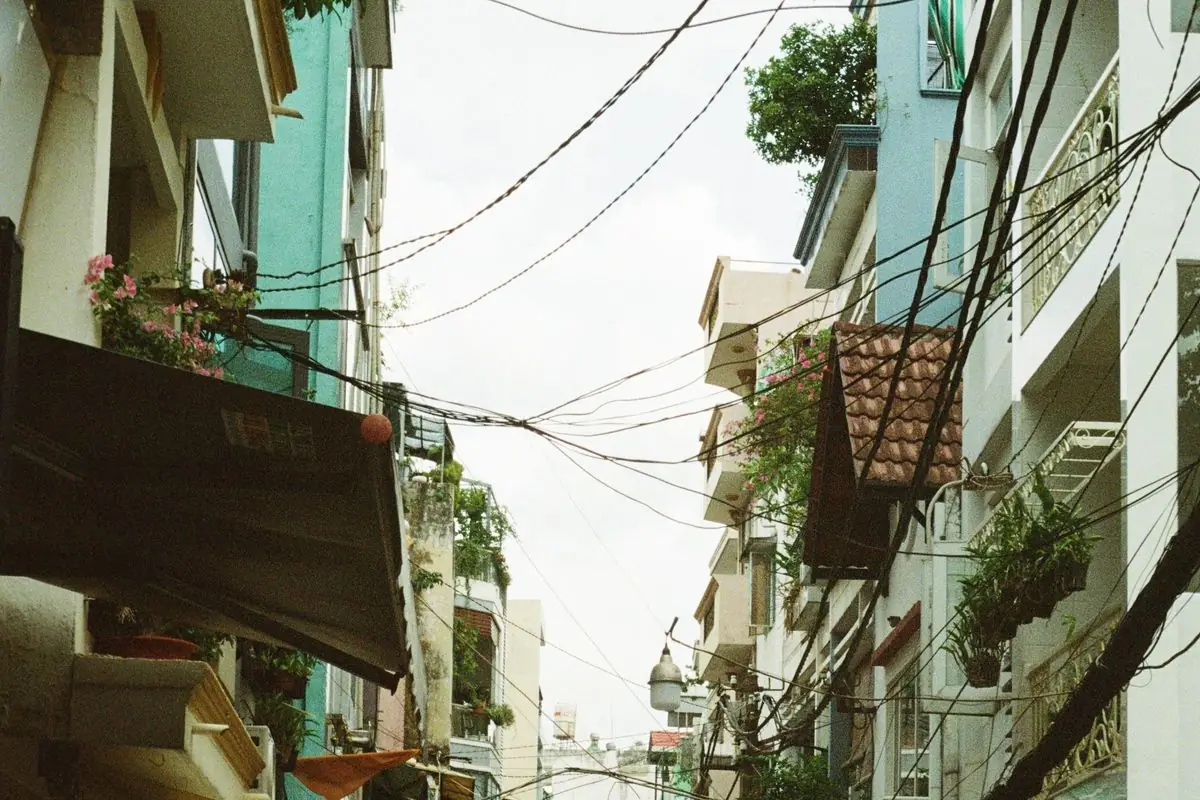
Lach Tray is a long road, so a listing with that name does not pinpoint one small neighborhood. A room by a major junction may be easier for a taxi to find while also having more vehicle noise. An apartment tucked into a lane can be calmer but leave you walking from the drop-off point. With a large suitcase or a companion who has limited mobility, ask how far a car can reach.
Buildings that look like small hotels online may actually be tall townhouses. A fourth-floor room may mean climbing stairs. Anyone carrying heavy bags will care more about stairs than mattress quality or bedroom decoration.
Check access after dark as well. Does the owner lock the main gate? Is entry by key, keypad, phone call or shared access card? Having a private bedroom and being free to come and go are two different things. In a house where the family also lives, you may need to respect quiet hours and shared-space rules.
This area can work well for a casual food trip, but the exact location still matters. Compare the distance to your chosen restaurants and to the station rather than assuming every centrally described room is equally convenient.
Van Cao and Le Hong Phong: practical for longer stays
Van Cao and Le Hong Phong are useful search corridors when the trip lasts several days and everyday convenience matters. They offer access to restaurants and services, as well as a range of accommodation from small rentals to apartments designed for more independent living. The Van Cao area is also familiar to many international residents and visitors, although that does not guarantee English-speaking staff at every property.
A work trip calls for different details than a weekend getaway. You may need a usable desk, enough electrical outlets, strong Wi-Fi, a laundry option and a quiet place for video calls. A stylish table photographed by a window can be hard to work at all day. Ask for a picture of the desk setup and whether the Wi-Fi network is shared across multiple units.
Noise needs attention here too. Streets with busy shops and restaurants can be useful during the day but loud late at night. Even modern apartment developments can be noisy. Ask about the bedroom windows, nearby venues and construction activity. Recent guest reviews may be more revealing than marketing photos.
On longer stays of a week or more, confirm how often the property changes bedding and cleans the room. Is there a washing machine in the apartment or a shared laundry area? Is cleaning part of the rate? What happens if the air-conditioner fails? These operational details can make a serviced apartment more comfortable than a cheaper basic room.
Near Cat Bi Airport: choose the actual terminal route
Cat Bi International Airport, code HPH, is in the Hai An area, around 8 km from the central city. An airport-area room can be the sensible choice when you land late, depart very early or have business in this part of Hai Phong. Search around Dang Hai, Ngo Gia Tu and nearby residential streets with convenient road access to the airport.
Be careful with the phrase “near the airport.” A room by the boundary fence can still be a long drive from the terminal entrance. Measure the road distance to the terminal and check where your car will pick you up. Map the drive at the hour you expect to leave instead of trusting the distance in the listing.
Ask whether the host can arrange a car for your flight day or tell you where app-based drivers usually stop. Leaving before the street wakes up means checking whether the main gate will be open and how to return your keys. After 10 p.m., self-check-in instructions need to work without someone coming to unlock a shared entrance; confirm that in advance.
Once you add up the rides into town, a budget stay near Cat Bi can end up costing more for a sightseeing trip. Spend most of two days around the Opera House and central food streets, and repeated rides across town may cost more time and money than you save on the room. Staying near the airport makes the strongest sense for a transit night or a schedule centered on Hai An.
Vinhomes and other apartment developments: confirm the building and its rules
Listings in Vinhomes Imperia, Vinhomes Marina and other residential developments may appear under “homestay,” “holiday apartment” or “entire home.” Such properties can be appealing for families and groups, particularly when they offer separate bedrooms, a living area and a kitchen. But the development name alone is not enough information for a reservation.
Ask for the exact tower or building, where guests enter and whether the owner is permitted to receive short-stay visitors under the building’s arrangements. Clarify how you register with building security and whether everyone needs access cards. A code for the apartment door may not open the main lobby or operate the lift.
Facilities are another common source of misunderstanding. A gym, pool or garden in the compound photos may not be open to short-term guests for free. Ask which amenities belong to the unit, which belong to residents and which carry separate conditions or fees.
A two-bedroom apartment might be ideal for four people, provided the two beds really suit your group. Other listings count a sofa bed as an additional sleeping place. Ask for the precise bed layout, the number of bathrooms and whether each couple will have adequate privacy. Also check the building’s quiet hours before planning any late-night gathering.
Travelers with a car should settle parking before payment. An apartment in a modern building can still have different parking rules for residents, visitors and short-term renters. Do not rely on a photo of the underground garage as confirmation that a space is included.
Which type of accommodation should you book?
In travel listings, Hai Phong homestay is a broad label; staying with a Vietnamese family is only one version of it. Three styles deserve separate consideration: a room in someone’s house, a private studio or serviced apartment, and an entire house for a group. Each suits a different trip.
A private room in a home
This can be an appealing option for solo travelers and couples who want a simple place to sleep, perhaps with a host available for local suggestions. However, you need to know precisely which spaces are private. Is the bathroom inside the room? Is the kitchen shared? Does your bedroom have an independent lock? Can you come back late without disturbing anyone?
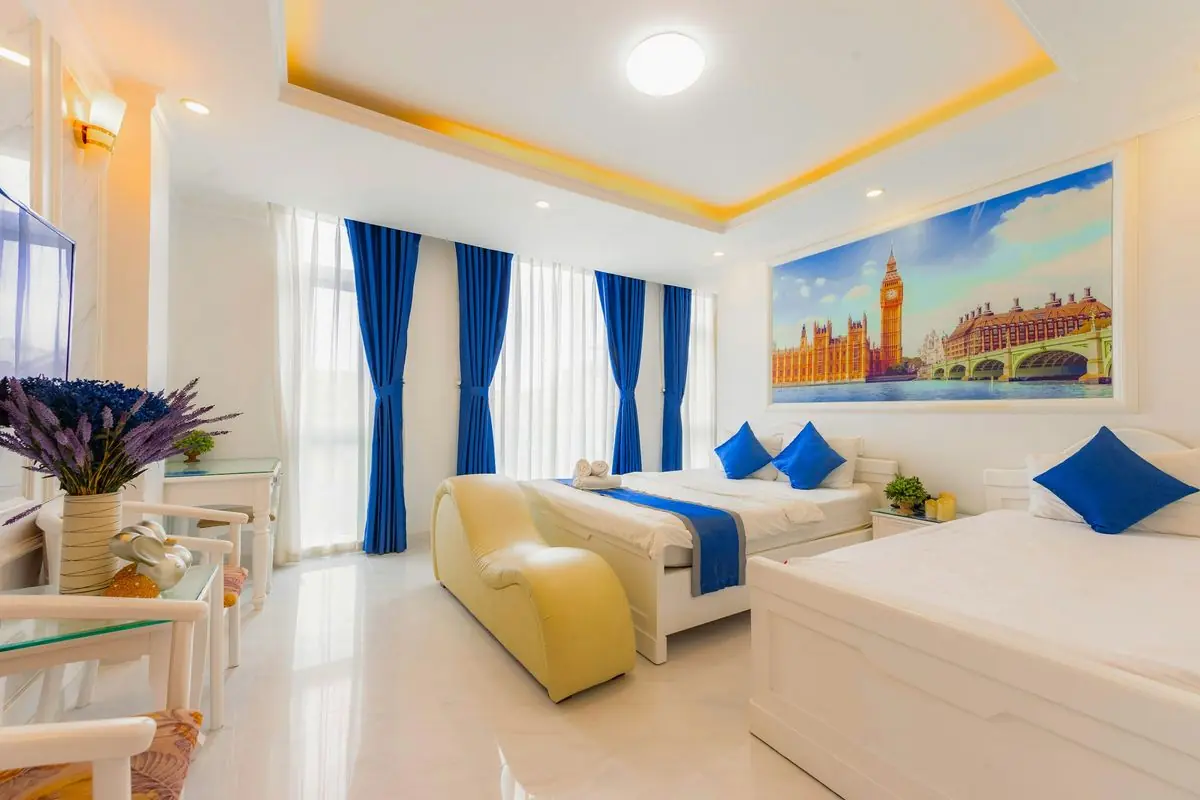
A “private room” listing can describe different arrangements across platforms. Never assume a private bathroom merely because the room photos show a shower. Look at the full amenities and ask the host if the listing is unclear. International visitors in particular need to check whether the accommodation accepts foreign passports and handles the legally required temporary residence declaration.
This format can be good value for short stays. It tends to work best when your main plan is to be outdoors, enjoy food and explore the city. If you need daily housekeeping, a reception desk and guaranteed luggage storage, a hotel may suit you better.
A studio or serviced apartment in Hai Phong
A serviced apartment in Hai Phong works well for stays that need a kitchen, fridge, washing machine, work table or more living space. Yet “serviced” means different things from property to property. One apartment may offer only a clean, furnished unit and a remote check-in. Another may run more like a hotel, with regular housekeeping, reception and support.
Roygent Parks Hai Phong in Waterfront City is a clear example of professionally operated apartment-style accommodation. Its studios have an individual kitchen and a washer with a drying function. Shared facilities come with the serviced-stay setup as well. Those amenities show the gap between a furnished apartment and a serviced one.
Before booking, turn each feature into a practical question. Does the kitchen have a working cooking surface, pans, dishes and utensils? Is the washing machine inside the unit, or do you share one with other guests? Are electricity, water, cleaning and internet included in the quoted nightly or weekly rate? Do you get a fresh set of towels during a long stay?
Remote workers will want to check Wi-Fi quality and seating. With children along, check whether the bedroom can be closed off from the kitchen and whether there is a safe place to put bags and shoes. More square meters do not always mean a more comfortable layout.
An entire house for friends or family
Renting an entire home makes sense when several people want to stay together and genuinely use a lounge, kitchen or dining area. It can also simplify shared meals and laundry on a multi-night trip. But a whole-house listing often comes with more rules and responsibilities than a hotel room.
Start with three numbers: proper beds, bathrooms and available parking spaces. A house for eight guests may rely on extra mattresses or sofa beds. Two bathrooms can make a big difference when everyone plans to leave at the same time in the morning. If anyone needs a separate room, confirm it rather than assuming the stated guest capacity guarantees privacy.
Ask about visitors, parties, noise restrictions, cooking and rubbish disposal. Renting the whole house does not give you permission to disregard neighbors or building rules. Clarify whether the host charges for extra guests and whether a refundable damage deposit is separate from the room payment.
Two people staying one night gain little from a whole house, and it means extra work. You may need to coordinate keys, clean up after cooking and manage a formal check-out inspection. For a group staying several nights, those same responsibilities may be worthwhile for the extra shared space.
What does a budget homestay in Hai Phong really cost?
There is no reliable single nightly price for all Hai Phong homestays. Starting prices run around US$17.49 per night at Êm Attic Hai Phong Old Town, US$19.10 at GM Homestay and US$34.98 at Peaceful Paradise Homestay 2. These are reference prices before you pick check-in and check-out dates; the real rate and availability depend on when you travel.
The final amount depends on the calendar, number of guests, room category, stay length, holiday demand, refundable or non-refundable terms and any additional fees. An apartment with an attractive nightly figure may still add cleaning or extra-person charges. A slightly more expensive room in the historic center may cost less overall because you walk instead of booking several rides each day.
When comparing a budget stay Hai Phong option with a budget hotel, use exactly the same dates and guest count. Compare the total checkout price and cancellation terms, not just a headline nightly rate. Ask ahead which documents the operator can provide when you need a work receipt or invoice. International travelers should also check the total in their payment currency and any bank conversion charges.
A simple comparison works well: room total, mandatory cleaning charges, parking, likely transport costs, late check-in fees and the cost of any services you actually need. Do not pay extra for a swimming pool you cannot access or a full kitchen you will never use.
The cheapest useful room is usually the one that meets your non-negotiable needs. Location, a secure door and a private bathroom may matter most on a one-night food trip. For a week of work, a decent desk, a kitchen and reliable laundry can justify a higher nightly price.
Parking and self-check-in are worth discussing in detail
“Parking available” is one of the least informative phrases in a short-stay listing. It might mean a small area for motorbikes, a roadside parking space, a paid garage or a separate lot several minutes away. Drivers need to know whether a car can reach the entrance, where it stays overnight and whether there is a height restriction or additional fee.

Motorbike travelers should ask whether the vehicle can be locked inside the property or is left outside, and whether there is someone responsible for the area overnight. And after a late night out, can you still retrieve or park the bike? A group arriving on four scooters needs more than a spot for one.
Self-check-in may involve a lockbox, a keypad, a smart lock or a key handover arranged remotely. Ask for complete instructions in advance: full address, entrance, floor, lockbox location, code delivery time and a working contact if the lock fails. A photograph of the front door and building sign can be more useful than another photograph of the bedroom.
Apartment-building access needs special attention. The door code for your unit may not open a guarded lobby, compound gate or lift. Group members coming back at different times will each need a way in, so check how many access cards are provided and whether guests can enter independently.
“24-hour check-in” and “24-hour messaging” are not the same thing. A host may respond to chat at night but have nobody nearby to fix an entry problem. Travelers with children, elderly relatives or a late flight should think carefully about that distinction. A staffed property sometimes offers better value than a charming but complicated self-check-in apartment.
Should you book through an app or contact the host directly?
A booking platform makes it easier to filter by location, review room descriptions, compare policies and keep a written record of your reservation. That can be especially valuable when you do not know the city. However, platform protection is not a reason to skip the details. A room can still have strict cancellation rules or require prepayment under the conditions shown at booking.
Contacting a host directly can be useful when you need two adjacent rooms, unusual check-in times, motorbike parking or a longer booking. A direct arrangement should still state the exact room, dates, guest count, total payment, included services, deposit and cancellation conditions. Save the agreement in messages or email. A phone conversation alone is difficult to check later if expectations differ.
A host may offer a lower direct rate than an app shows. Compare the whole agreement, not only the number. Is your booking documented? What happens if the room is unavailable? How and when can you cancel? Who handles a dispute? Saving a small amount is less attractive if the property address, identity of the payee or refund conditions are unclear.
Do you need to pay a deposit?
Not every homestay requires a deposit. Some accept payment at the property, some take part or all of the room charge in advance, and some require an additional refundable amount for possible damage. These are different payments with different refund rules. On Booking.com, prepayment requirements depend on the property’s policy, and cancellation terms may vary between rate plans.
Before sending a direct bank transfer, get written confirmation of the amount, the recipient, the room being held and the precise refund deadline. A damage deposit raises its own questions: when the unit is inspected, what counts as damage, how deductions are documented and when the remainder comes back. “Deposit” on its own is not enough information.
Never publish a passport image or identity document in a public comment thread to show that you are a genuine guest. Send documents for check-in and residence reporting only through a private, verified channel, and ask what information is actually needed.
Plans that could change because of work, weather or onward travel make a more flexible cancellation option worth considering, even at a higher price. Check the exact deadline for free cancellation, including the property’s local time, rather than relying on a large “free cancellation” badge.
How does foreign guest registration work at a Hai Phong homestay?
A foreign traveler staying overnight in a Hai Phong homestay, private house or serviced apartment must be covered by Vietnam’s temporary residence declaration procedure. Booking through Airbnb, Booking.com or another intermediary does not remove this requirement. It also applies to a one-night stay. The accommodation operator, manager or authorized person is responsible for making the declaration in the prescribed way.
Under the rules applied in 2026, the accommodation checks the foreign guest’s passport or valid international travel document and relevant permission to stay in Vietnam. Electronic declarations must be made as soon as the guest arrives. Where the paper declaration route is used, the responsible person must submit it to the local commune-level police within 12 hours, or 24 hours in remote areas, after arrival.
The practical step for a guest is straightforward: before booking, ask “Can you accept foreign passports and handle the temporary residence declaration? Who will do it when I arrive?” At check-in, provide the necessary lawful travel and residence details. You should not have to invent a separate registration arrangement because an apartment host has never dealt with foreign guests before.
Hai Phong police have made it clear that renting through agents, online platforms or delegated property managers still carries the reporting obligation. A host who says “private apartments do not need to register foreigners” is a sign to choose a property with a clear process instead. A professionally run guesthouse or serviced apartment may be easier for a first-time visitor who needs reliable documentation.
Moving to a different property during your time in Vietnam means the new accommodation must handle the declaration for the new place of stay. Raise any questions about your passport or stay documentation before payment. Passport details belong in a private verified channel, never a public group or open comment thread.
Twelve questions to send before you book
Skip any question the listing already answers clearly. Use this as a checklist for anything that remains uncertain:
- What is the exact check-in address, and does the map pin mark the correct entrance?
- Am I booking a bedroom in a shared house, a private apartment or the whole property?
- Is the bathroom private, and are cooking facilities actually usable?
- How many proper beds are provided, and does guest capacity include a sofa bed?
- Which floor is the room on, is there a lift, and can a car reach the building?
- Does the bedroom face traffic or an inner courtyard, and are there nearby noise sources?
- Where can I park a motorbike or car overnight, and what will it cost?
- What are check-in and check-out times, and how do I enter after 10 p.m.?
- Can you store luggage before check-in or after check-out?
- Does the final price include cleaning, utilities, extra guests and building charges?
- What happens to the room payment and any deposit if I cancel or change dates?
- For a foreign passport holder, who completes the temporary residence declaration?
A couple planning a food-focused weekend should prioritize privacy, noise, check-in and location. A group should focus on the bed layout, parking, shared spaces and added fees. A foreign guest should settle question twelve before paying, well before reaching the door after a long day of travel.
When a reply is vague, ask the host to confirm the exact point in writing. “There is parking nearby” and “your car can stay in a secured space overnight for a stated fee” are not equivalent answers. Neither are “self-check-in available” and “you can enter every building gate at midnight without assistance.”
Three realistic ways to choose a place
Two people arriving for a Saturday-to-Sunday food trip
Begin with the Opera House and station area. A private bathroom, secure place for bags and easy access to the food streets will probably matter more than a large kitchen. Pick a quiet side-street room for a good night’s sleep, and ask whether your bags can stay after check-out on Sunday.
Four friends driving to Hai Phong for two nights
Search for a two-bedroom apartment or entire house, but filter by confirmed car parking before comparing the décor. Verify the real bed arrangement, number of bathrooms, access cards and any noise restrictions. A well-managed apartment slightly outside the historic center may be easier than a central townhouse where the car must stay far away.
One international visitor working for four nights before an early flight
Start with Van Cao, Le Hong Phong or a serviced apartment offering a proper desk and laundry. Moving to an airport-area room for the final night only pays off if the flight timing and baggage justify the extra check-in. Confirm foreign guest reporting, invoice availability if needed and the road route to Cat Bi before payment.
What about Do Son?
Do Son is better considered a coastal trip than a substitute for an inner-city neighborhood. A beach-focused visit is best based close to the part of Do Son you plan to explore. But if your days revolve around Hai Phong Railway Station, the Opera House and central food streets, a Do Son address will create longer transfers.
The wider Hai Phong destination also includes places that are not part of the compact city center, including Cat Ba Island. Accommodation platforms may show these in a broad Hai Phong search. Always return to the map before paying. Two listings can share the city name and still belong to very different itineraries.
Make the final choice
To start a central search, enter Hai Phong Opera House, 28 Tran Hung Dao, Hong Bang ward into your map and look at nearby rooms. Train travelers can switch the reference point to Hai Phong Railway Station, 75 Luong Khanh Thien; with an early flight, check the drive to Cat Bi International Airport before sending any deposit.
Frequently asked questions
What is the most convenient area for a homestay in Hai Phong?
For a first visit focused on food and central sights, look around the Opera House, Tam Bac and Hai Phong Railway Station. Van Cao and Le Hong Phong may suit longer stays or work trips. Near Cat Bi Airport is better for early departures and transit nights than for a full city sightseeing itinerary.
Can I find a homestay in Hai Phong's old quarter?
Yes, there are short-stay rooms and apartments around the older central streets near the Opera House, Hoang Van Thu, Tran Phu and Tam Bac. “Old quarter” is an informal search description here, so check the exact property address and walking route rather than relying on the listing's name.
Is a homestay cheaper than a hotel in Hai Phong?
Not always. A simple private room can be excellent value, while an entire apartment may add cleaning, parking or extra-guest fees. Compare full prices for the same dates and number of guests. A hotel may be worth a little more if you need 24-hour reception, luggage storage or reliable late check-in.
Do I have to send a deposit before arrival?
Some properties ask for one and others do not, depending on the rate plan. Some bookings are paid on arrival; others require prepayment or a separate damage deposit. Confirm the amount, recipient, payment method and refund terms in writing. On a booking platform, pay only through the process that platform allows.
Do foreign visitors need temporary residence registration at a homestay?
Yes. The accommodation operator or authorized manager must carry out the required temporary residence declaration for an overnight foreign guest, even for one night and even in an apartment booked online. Ask who handles the procedure before booking and bring the appropriate passport and stay documents.